Addam’s Evve

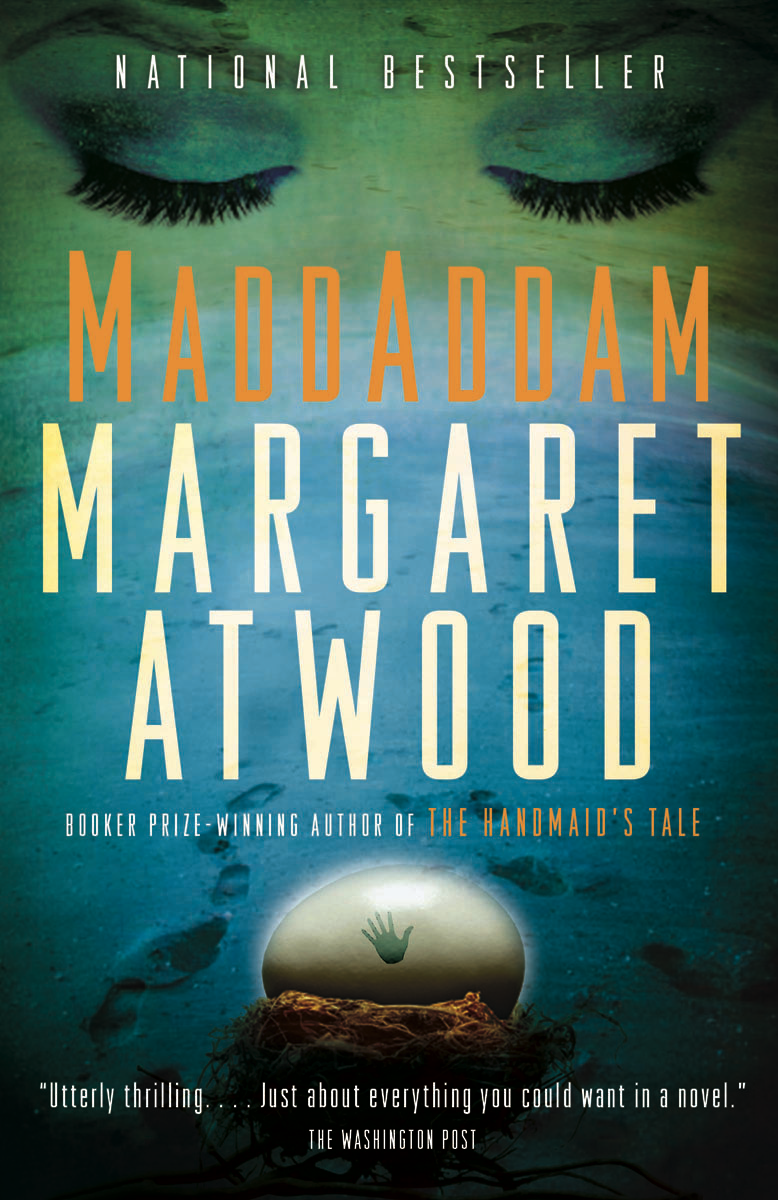
MaddAddamDystopias can be optimistic. I just finished reading Margaret Atwood’s MaddAddam, and came away from it strangely at peace. The third of its eponymous trilogy, the story takes place in a future that is simply a continuation of where we are at the moment. Things have gotten pretty bad—most of humanity has been wiped out, genetic engineering has taken dreadful liberties with creatures human and non, and corporations have fulfilled their dreams and have taken over at last. The few good people left are tormented by those society has made into sociopaths. Global warming has proven the naysayers false, and yet, despite all this, there is room for hope. Tying together the various strands from the previous two books, Oryx and Crake, and The Year of the Flood, MaddAddam is probably the most eco-conscious trilogy on the planet.

Apart from the many obvious biblical allusions (I often wonder what it must be like to miss so much, for want of familiarity with holy writ), the book also introduces a fully functional faux church. Atwood can be at her best when taking on the charlatans of piety. Cynical and calculating, “the Rev,” father of two of the ensemble cast, is everything a televangelist is, and more. Indulging in all that he denies his flock, even Elmer Gantry would have trouble keeping up. The Church of PetrOleum represents the most damaging of industries in a world already suffering the consequences of the greenhouse effect. Corporations make it rich while the Rev takes out his personal issues on his wives and children. Instead of being on the side of paradise, the church introduces chaos.

Through the gloomy scenario she’s foreseen, Atwood is able to see glimmers of a future that has possibilities. The protagonists are the members of a commune of a green religion, earth-centered and bearing a resemblance to both Wicca and monastic Christianity. That spiritual tradition, an offshoot of more established churches, is seen as dangerous by the corporations. And with good reason. Despite what televangelists tell us, spiritual truth is not on the side of big business. Jesus was no trickle-down economist. Reagan was no messiah. Corporate greed leads to blocking laws to clean up our world. We do not have control over what geneticists are doing, and, in fact, most of us have no idea what we’re eating or wearing any longer. Or what it is they’re packaging our food in. We are the consumers. Taught always to consume more. And the more that we are told to consume is the very planet that gave us life. My hat is off to Atwood, who still seems some possible cause for hope.
Under Who?

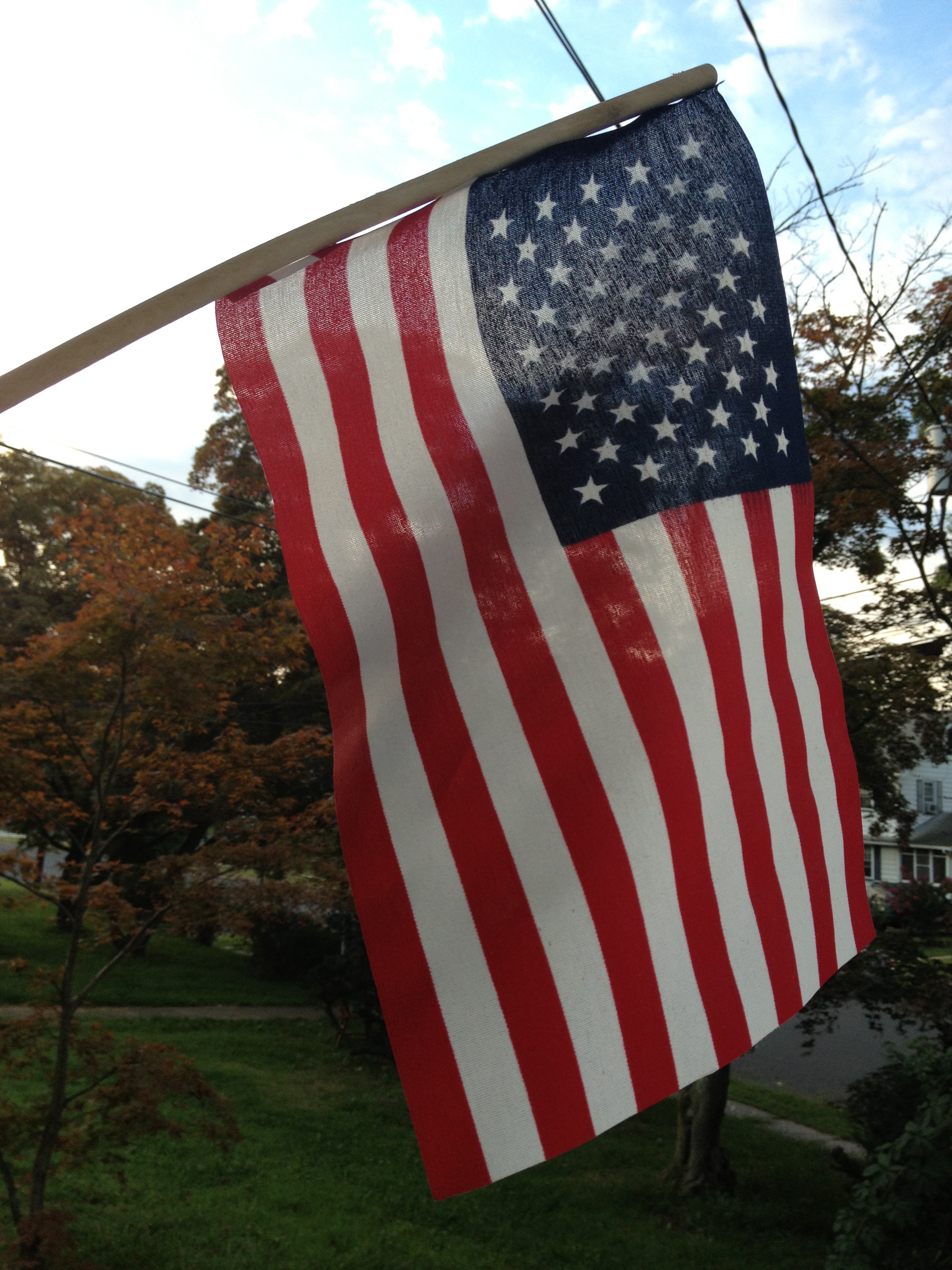
Who is God anyway? The question occurred to me as I read about the current Superior Court decision in New Jersey that “under God” in the Pledge of Allegiance remains constitutional. The American Humanist Association had sued to have the offending prepositional phrase removed, based on first amendment rights to religious freedom. I’ve always found the whole indoctrination of swearing to a flag somewhat provincial and perhaps even damaging to the unity of humankind. Nations, after all, are about keeping things for ourselves, something that the God of the Bible seems to find naughty. During the Cold War, waged against the “godless Communists,” the questionable phrase was added in 1954, only after we’d secured nuclear weapons. Does any nation that has the bomb have the right to declare divine sanction? I guess so, on second thought.

IMG_0962In his decision Judge David Bauman said that God, in this context, is not about religion, but about the state’s history. Granted, one of the New Jersey delegates to sign the constitution was a clergyman, and president of Princeton College. The same Princeton that became the home of the man who would open physics enough to let us begin a nuclear reaction. But I’m getting ahead of my story. This concept of God being an arcane aspect of history as opposed to a present and active force motivating people’s lives is a curious one. In order to keep the deity, he (and the historical God is male) must be demoted to an historical relic. If that is true of divinity, what does it say about the concept of nationhood itself? Have we come to admit that it is all a fiction to keep status quo ante?

Humanist and atheist groups have argued for years that public school (which no government takes that seriously) should not be a forum for religious indoctrination. Some religious groups (such as Creationists) clearly see such schools as a mission field ripe for proselytizing young minds. Such was clearly the case in 1954. Today we see the Russian Orthodox Church becoming a supporter of the government in Russia, where godlessness might be more a factor on the ground than on paper. In the United States we have a culture that provides lip-service to the almighty while the true god is secreted away in the shrines of bank vaults and expense accounts. It is really about a way of life, after all. Should we keep or remove “under God” from a pledge to personal gain? It is all a matter of how you define “God.”


Jedi Night

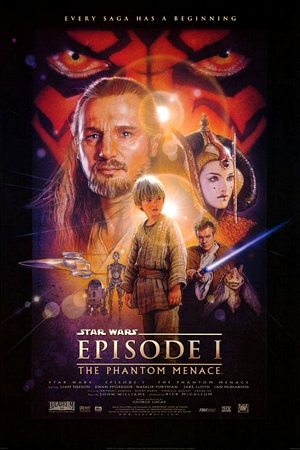
Star_Wars_Phantom_Menace_posterIt all began with that trailer. You know, the teaser for the new Star Wars movie. I was among those many small-town boys crowding into theaters in 1977 to have their small-town minds blown with a Luke Skywalker, somehow just like us, getting to go on a galactic adventure and conquering evil. It was a transformative experience. Later I was to learn that noted Jungian mythologist Joseph Campbell had advised on the story, helping to produce image after archetypal image that spoke to deep levels of viewers’ psyches. Hungrily we watched, as even through some missteps, the franchise grew to trilogy proportions, creating its own cultural memes (has “I am your father” ever been the same since?). Then somehow I missed The Phantom Menace, or episode one. It could be that work at the time (Nashotah House) was an epic struggle in its own right. With a small child and not sure about baby-sitting options, taking a night out to watch the prequel to a story that had already nicely resolved itself felt kind of pointless. We already knew how it ended. But that trailer. Now it seems, the story will continue.

So it was that my wife and I decided to catch up. Over the weekend we watched The Phantom Menace. Of course, I’d seen clips before. I’d also read the reviews that were less than complementary (Joseph Campbell had died in the meantime and George Lucas couldn’t seem to come up with archetypes on his own). I was curious, but not curious enough to rent the video (as people did in those days). So The Phantom Menace, cast from the same die as episode 4, also has a strong religious resonance. The Jedi (and already the religion of Jediism has begun to appear) filled the backstory with near invincibility, and all the aliens seemed somehow comic, yet we are told remarkably little about the Force. Perhaps episode 4 had said enough. When Darth Vader is introduced as a prescient boy, the audience (at least this audience) finds it hard to believe he is the result of a virgin birth. Indeed, Lucas throws us the midi-chlorians as a sop, but we know that when a woman gives birth with no male intervention we’re in messianic territory. And of course, non-Muppet Yoda tells us straight up that he may be the chosen one.

Introducing the Sith, who are the embodiment of the dark side of the force, we are treated to a devil in only a thin disguise. The red and black greasepaint warn us that when he removes his hood he will have horns. Although we’re not shown, I suspect he has cloven feet as well. So through the movie with its gratuitous cameos of creatures we already know from episode 4, we come to an end that is strangely familiar. We’re back where we started. The Jedi favor earth tones over white, however, and the Sith is neither all red nor all black. The evil of the galactic empire seems to be no more than the very real overtaxation of the poor. And yet for all my disappointment, there’s that trailer we all saw in December, and using my own version of the Force, I foresee an attack of clones in my future.


High and Dry

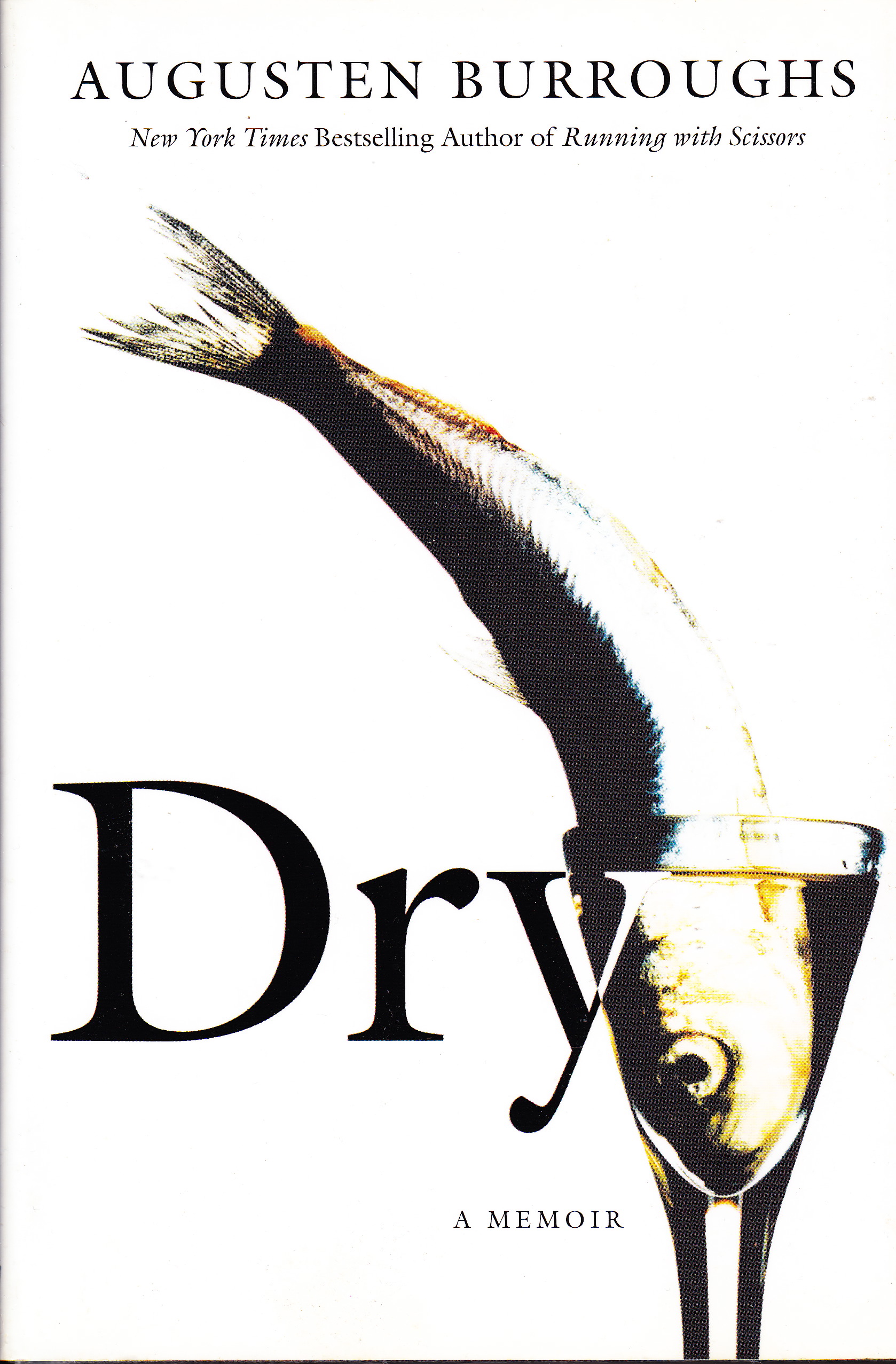
DryAlthough I frequently, and unapologetically, express my opinions on this blog, I try not to reveal too much about myself.  The books we read, however, are formative for who we are.  Anyone looking over the hundreds of books on which I’ve posted over the last few years will have a reasonable idea about my inner life.  One aspect I don’t often discuss is the fact that I grew up in an alcoholic household.  It is difficult for me to discuss and I tend not to read about such things because it is too much like therapy and I end up feeling pretty lousy afterwards.  Nevertheless, a friend who is a recovering alcoholic gave me a copy of Augusten Burroughs’s memoir Dry a few years back.  Guilt at not having ever read it caught up with me and so I decided to make an honest friend of myself.  Despite the very clever language and some laugh-out-loud moments, it was hard for me to read.  Time flew by as I had the book open, but too much turmoil attended it.
 
Once I attended an Al-Anon session.  This was a seminary assignment; we were to observe and take notes and write up a report for a sociology of religion class.  Instead, I found myself participating.  I know recovering alcoholics who dislike Al-Anon—it is an organization for families of alcoholics—because it can be judgmental.  The fact is, however, that those who are part of an alcoholic family do suffer.  I didn’t go back to Al-Anon, and I religiously avoid self-help books.  I do know, nevertheless, that my outlook was profoundly shaped by my youngest years and the insecurity that dogs me every day of my life has its origins then.  I also thought about how memoirs of alcoholics can become bestsellers.  The jacket blurbs say how funny they are. I don’t hear so much about memoirs of those who were collateral victims.  Don’t get me wrong—I’m not blaming alcoholics.  Alcoholism is a disease. It may be treatable, but it is tragic for those afflicted with it. That doesn’t diminish the impact of having to live with it when you’re too young to have a choice.
 
When I was in college an erstwhile friend took me to see Arthur.  Dudley Moore was rocking the critics with his performance.  I smiled through my horror.  There was nothing here to laugh at.  So a book like Dry makes me feel…? Conflicted.  What do I understand now that I haven’t before?  I read about how even prestigious colleges are increasingly renowned for their parties, lurching about under their laurels.  Some will experience it as a temporary fling and will move on. Some will never graduate.  What can be done?  We can listen.  I suppose that’s why my friend gave me the book in the first place.  I need to put aside my pain and fear. I need to listen.


Sporting Chance

IMG_0997

I didn’t watch the SuperBowl last weekend. In fact, I haven’t had television service for over two decades now. I don’t really miss it too much since I don’t have time to watch TV (the commuting life leaves time only for sleeping and working, except on weekends). Still, for special events, I think, it might be nice to see things live. (My wife raises this point every time the Olympics roll around. I seem to recall them being every four years, but now it seems they’re seasonal, and about twice as frequent. Could it be that advertising revenues are really that important? Maybe I missed that, not having television…) Even when I have managed, over the last couple of decades, to pull the SuperBowl onto a fuzzy, snowy screen, it was for one major reason—the commercials. I wonder what that says about a society? I now spend precious weekend time watching commercials on YouTube, sometimes having to watch a commercial for the privilege of watching a commercial. The substance without the fluff of the actual entertainment.

So it was that I saw the Mophie commercial about the apocalypse (here’s the link, in case you’re as entertainment-challenged as I am). So as the world comes to an end, the weather goes even more wonky than we’ve already made it go, Fortean fish fall from the sky, dogs walk their owners and priests steal plasma television sets. Then the punchline, God’s cell phone dies and the end of the world ends. It isn’t the shock of seeing an African-American God—Morgan Freeman led the way there with Bruce Almighty—but rather the technique, the divine delivery, if you will, that is the shock. Not even God is anything without his cell. (I wonder when we’ll see a Latino woman as God? Dogma came close, but not quite.) Is the smartphone really not the deity here?

God, it seems, has become a null concept. I don’t mean because of different racial or gender presentations, but I do mean that the concept itself is completely up for grabs. God, according to Anselm of Canterbury, is that being greater than which nothing can be conceived. In fact, God seems to be that which people worship, more of a Tillichian ultimate concern. A wired world should, in theory, be a world headed toward peace and equality. If we know what’s going on everywhere, shouldn’t we be doing our best to ensure that it is fair and just? The truth of the matter gives the lie to such optimistic musings. I would hate to confess just how much my phone bill is every month. Even without the “triple play” (no television) it is the biggest expense after college tuition and rent. And it goes on, in saecula saeculorum. When I pull out my smartphone, I gaze upon the face of the Almighty. And perhaps that’s a good thing, because how else would I entertain myself without television?


They Might Be

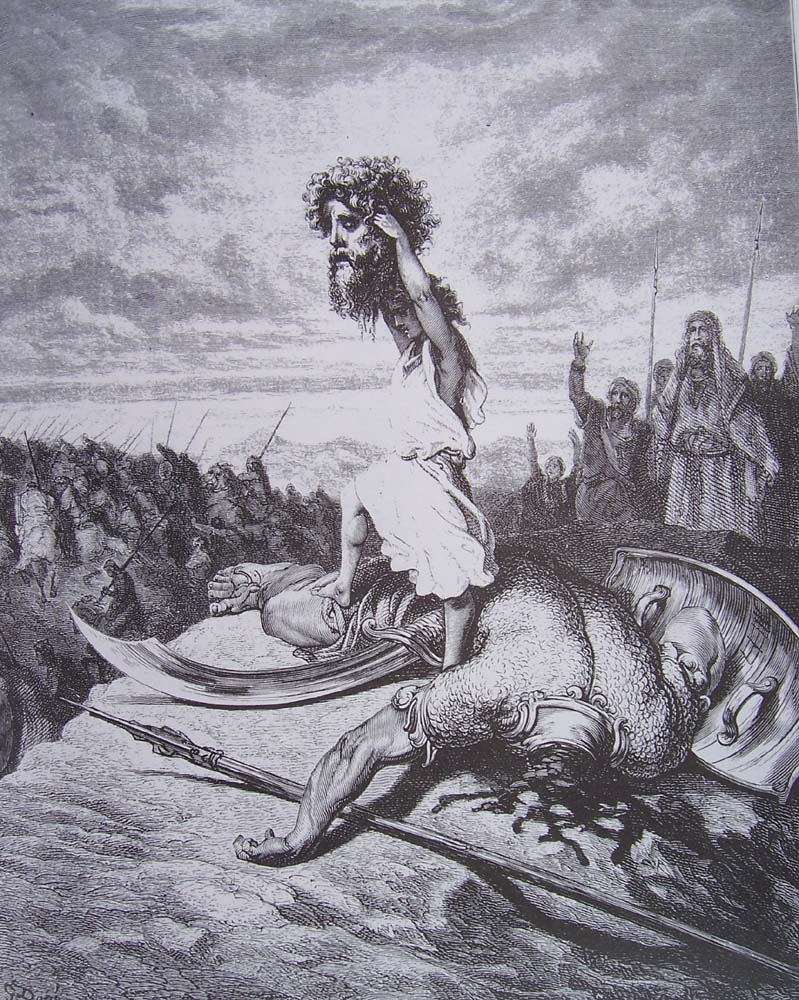
Last week I mentioned that a letter-writing friend had sent me two articles from the 1868 Prescott Journal newspaper. Some time ago I did some research into the history of newspapers since many of the stories from the early days of the medium seem difficult to accept. Perhaps it was a more credulous time, or perhaps newspapers were a form of entertainment as well as information, but the occasional hoax made its way into the pages of even reputable papers. I’m always surprised how many tales involve a kind of biblical literalism, whether stated or not. The second story from the aforementioned Wisconsin newspaper has to do with a giant skeleton unearthed at the Sauk Rapids. At ten-foot-nine, this veritable Goliath was estimated to have weighed some 900 pounds when alive. This prodigy sparked some piety in the writer, who concludes by stating, “We hope ‘642’ [the article doesn’t hint at the referent here] may learn humility from this dispensation of Providence, and that a view of the ‘femur’ and ‘fibula’ of this deceased stranger, may teach him the futility of all attempts at fleshy greatness in these degenerate days.”

Quite apart from the pious closing, the idea that giants once inhabited the earth is indeed biblical. Studies have been undertaken that speculate on why people of antiquity believed in giants, and one of the more plausible explanations has to do with the discovery of megafauna bones. Not having a conceptual world wherein dinosaurs or mammoths might fit, giant leg-bones and ribs, for example, look pretty much like those of people. Only much larger. Whatever the reason, people all over the ancient Mediterranean believed in an era of giants, and that belief made its way into the Bible as well as into Greek mythology. Only, if the Bible says it, it must be true, no? And so, finding giants in the earth is not to be unexpected.

Goliath_Bible

Interestingly enough, this craze of finding giants has not ceased. The internet keeps bogus photos of unearthed giant skeletons alive and the explanations we’re given amount to proof of the flood. After all, the Bible says giants came before the flood, and if Noah wasn’t a giant, well, they had to have been wiped out, right? But then they show up again later in the form of the Anakim or Goliath and his kin. The question of whence the giants 2.0 came is not answered, but if it’s literally true then there should be no surprise if one should turn up in Wisconsin. After all, other oddities have turned up in that same state, some of which still defy explanation in the rational world of the twenty-first century.


Psalms of Lament

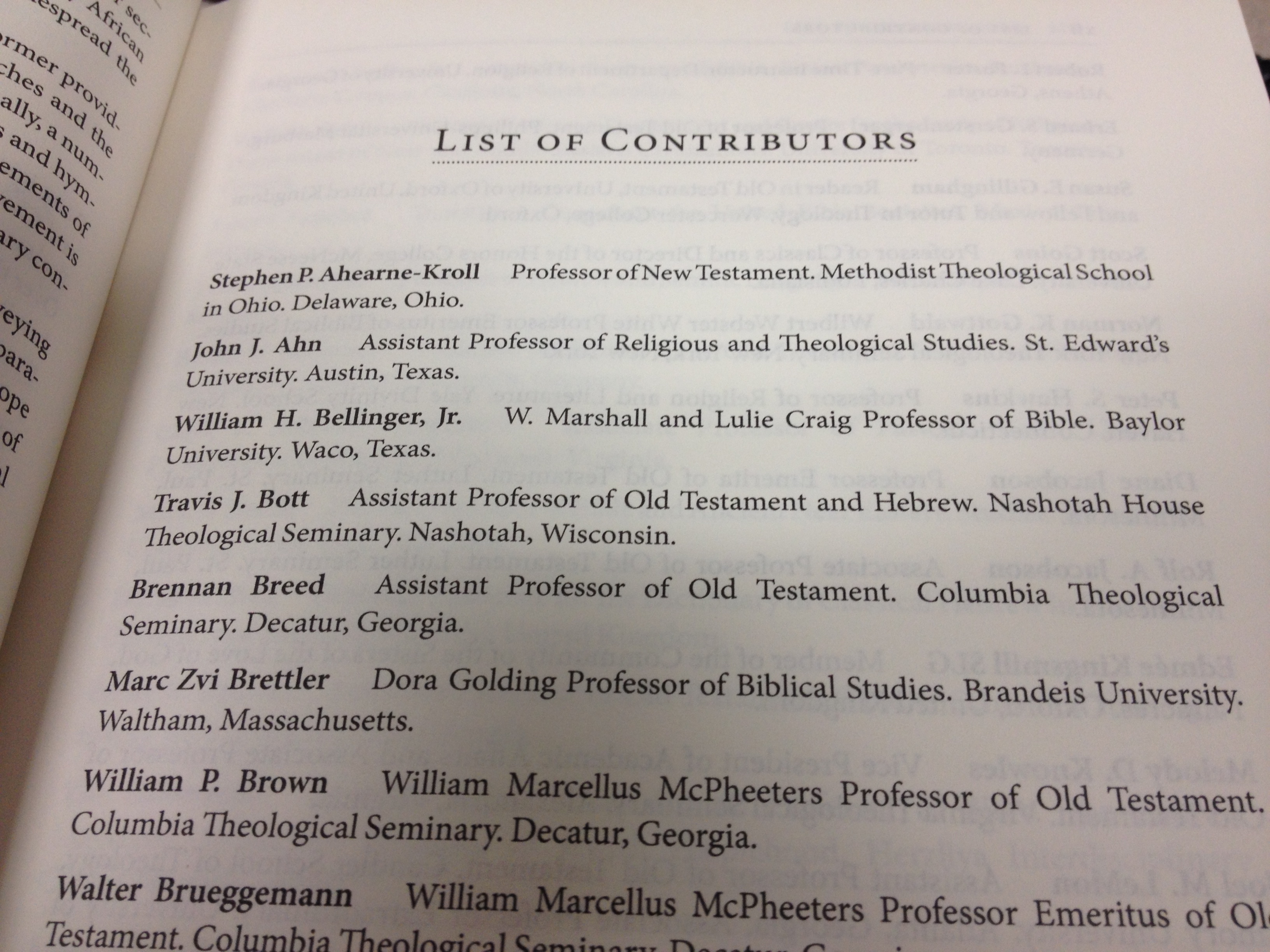
Fate can be decidedly cruel sometimes.  Accidental discoveries can be the most painful of all.  As my regular readers know, I wrote a book on the Psalms (Weathering the Psalms, Wipf & Stock—on sale now!) while teaching at Nashotah House seminary.  I sent the manuscript to Oxford University Press, and it was declined on the basis of one review.  Subsequently, I met the reviewer at a conference reception and he is now working on a book proposal for me.  Such are the ironies of life.  I can let that go with a chuckle of existentialist bonhomie.  The twist of fate comes in through helping a colleague with a question about the Psalms.  I grabbed the nearest book at work that would help, the newly published Oxford Handbook of the Psalms.  I’d glanced through it before, but this time it fell open to the contributor’s page and the words “Nashotah House” fell upon my eye.

IMG_1898
 
During my years at the seminary, I published at least one academic article a year, as well as a book, and I attended and delivered papers at the major professional conference every year.  No one ever approached me about contributing to a Handbook, apart from my advisor and friend Nick Wyatt.  I labored at building an academic career for 14 years in obscurity.  Now, the newly hired replacement (not the faculty member hired to replace me) gets invited to contribute to a major reference work.  I do not know the man.  He may be a perfectly personable chap.  Some of us, however, can work our hardest and never get noticed.  It seems as if the world of scholarship is really just a house of cards. 
 
Perhaps in times of schlock and flaw, such as these, I should turn to Ecclesiastes for comfort, rather than Psalms.  Yes, the Psalms say some pretty challenging things to God—not as challenging as Job or Jeremiah, but still.  Ecclesiastes, however, is the one to calm the intellectual’s soul.  There are those who claim that the Bible no longer has any utility in a post-Christian society.  Wise Qohelet, I’m sure, might just agree, even as he disagrees.  I tried, without benefit of sabbatical, and with additional administrative duties, to make an academic life for myself.  I was, in reality, just shuffling the deck with old Solomon.  We took turns building layer upon layer, he and I, both knowing that our house, like any built on sand, could never stand.  It must be some of that sand in my eyes; otherwise I can’t explain why they are watering so.


Duck Overboard!

Moby-DuckI remember the moment precisely.  I was in Santa Barbara, California on a campus visit for Routledge.  I stopped into the university bookstore to see which of our/their books were being used.  From the cover of one of popular books in the general reading shelf stared a friendly yellow duck.  My thoughts went, as they often do, to my daughter back home.  The cover copy explained that this was the true tale of a bunch of “rubber” ducks lost at sea and the captivating story of how they ended up in diverse places.  I bought it for my daughter since rubber duckies had been a kind of childhood theme, and when I saw it on her shelf recently I also grew curious again.  I’ve always been fascinated by the sea, even applying for jobs at the Maine Maritime Academy just to be near the water (and in Maine). 
 
Of course I’m referring to Moby-Duck by Donovan Hohn.  It wasn’t really as cute and cuddly a book as I thought it might be—that duck on the cover sure looks happy—but it was far more important.  As Hohn explains, he was a teacher captivated by the story of a cargo container holding plastic (not rubber) bath toys falling into the Pacific Ocean on a crossing from Asia.  The ducks (and frogs, turtles, and beavers) spread out as far as Alaska and points south on the west coast of the US, and some perhaps made it back east.  Some were even reported in Maine (but Hohn came to doubt they are the right ones).  So he set off on several ocean voyages to follow the trail of the toys.  He has left us a moving and thoughtful memoir of the journey, and also much more.
 
The oceans are incredibly polluted.  As Hohn points out at several points, entire cargo containers—sometimes several at a time—tumbling into the ocean and being left behind is not uncommon.  Add to that the trash, particularly the plastic, that otherwise makes its way into the ocean, in some places forming islands of garbage so large that they can be spotted by satellites, and I begin to grow truly alarmed.  Hohn learns about plastics and how toxic they might be, as well as how thoughtlessly they are hurled into the oceans.  Not written as an environmental manifesto, Moby-Duck—literate, witty, and very human—nevertheless narrates how a father came to see the world through the eyes of parenthood.  And some of what he finds is truly frightening.  My takeaway?  Little things matter.  Immensely.  That, and we need to clean up our act before it’s too late.  No bath will wash away the stains we’re still in the process of creating.


Ancient History

In the white heat of rhetoric, my word processor froze up. I don’t have much time for writing with my commuting schedule, so the full forty-five minutes lost between the typing of a letter “s” that apparently caused the meltdown and being able to access my text was lost in a prayer that my work hadn’t been lost. I remember the days when everyone used Microsoft Word and there was this joke going around about the Devil and Jesus being tested on their computer skills. I can’t remember the joke but I do recall the punchline: “Jesus saves!” So it was in those days that you had to hit “save” every few minutes or your work would be lost. Many laments could be loudly heard of students having lost an entire paper because they’d forgotten their prophylactic “save”s. I found that working on a Mac that such problems weren’t always so bad. But then, system upgrades became more frequent. Two programs that you needed open simultaneously, Word and Internet Explorer (called something else in those days, but I can’t remember what), were a sure recipe for mutually assured destruction. The memory required would freeze even an Apple to its core, and so the systems gurus made improvements and things got better.

Of course, those of us who’ve spend the Gross Domestic Product of a small country on Apple devices have been lulled to complacency. Over the years (since the fiasco of the original iMac) we’ve come to learn that Apple will save our work, and that crashes, while infrequent, will bring our files back onto the screen after recovery. You really don’t need to save since autosave is capable of being the messiah of all computer files. Then the gurus upgraded the system. For the past several months I can’t run a word processor and internet browser simultaneously on my computer without freezing up the system. Imagine my chagrin when, having less than an hour to write, copy, paste, and post my blog entry for the day, my word processor decides that it doesn’t recognize the letter “s.” Of course, Apple long ago stopped being compatible with Microsoft Word. Those of us who used both Macs and Word cheered when the two finally became compatible about a decade ago, but in the battle for computer supremacy, we no longer have that option. My Mac can open Word files and save documents as Word files, but it can’t run Word. Instead it runs word processors that don’t recognize that most rare of characters, the insidious “s.”

So I went to back up my files over the weekend. I keep some files on a memory stick (so called) because they take up a lot of space and I don’t use them that often. The memory stick failed in the middle of a save (doesn’t Jesus save anymore?) and I spent an entire Saturday trying to recover files that were already saved. According to some Christian traditions, once saved, always saved. You can’t be unsaved. After losing an enormous amount of work that equated to many hours of precious weekend time, I’m beginning to have my doubts about my faith. Using Pages, Apple’s version of Word, is sure to lead to a crash. This has been happening since at least September. I get systems upgrades more frequently than calls from telemarketers. I really don’t ask for much. I’ve got about an hour to get my writing done in the morning and I would really, really appreciate it if forty-five minutes of that hour weren’t taken up by Pages trying to recognize the letter “s.” After all, not even Jesus can save without it.

In the beginning was Word...

In the beginning was Word…


Thor’s Return

Once as I sat in the office of an Ivy League professor of Greek religion, I asked about the myths of the Classical gods. The professor (who knew that I had taught religion as well, but at more like a Noxious Weed League school) appeared genuinely insulted and told me in no uncertain terms that scholars of religion didn’t take that nonsense seriously. The study of “myths” was left to Classicists, not actual scholars of religion. Is it any wonder, then, that we don’t really have a grasp on what the average person believes? Being a blue-collar scholar, I always took seriously what students told me about their beliefs. It wasn’t really a great surprise, then, when my wife pointed me to a story in The Guardian about a temple to the Nordic gods being built in Iceland. According to the story, the modern adherents of Ásatrúarfélagið (thank you unicode) don’t really believe in a literal Odin or Thor or Frigg, but see them as metaphors to help them face the way life is. A millennium after becoming Christian, some Icelanders are apparently getting back to their roots.

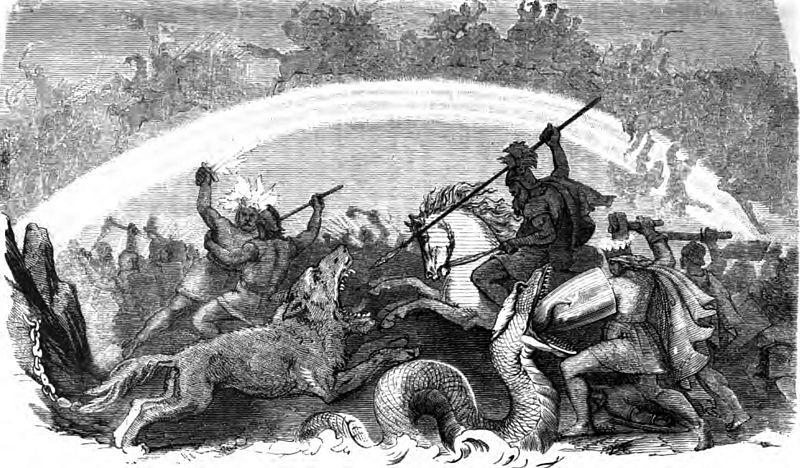
There has always been, to me, a fascination with the Nordic gods. These rough-and-tumble deities inhabited the harsh and snowy regions where daily life was often a struggle to survive against the elements. Frost giants were enemies and nobody really emerges as the winner after Ragnarok. In the Bible Yahweh does sometimes come out swinging, but for the most part he seems a deity content to sit on his throne and issue commands. The Scandinavian gods were characters of action. In some sense they seemed to struggle just like the rest of us do. They are, of course, more powerful and as the movie makes clear, Thor has a charisma that more self-righteous deities appear to lack. Lest anyone be ready to run to their priest at this point, please be aware that this too is a metaphor.

On the other side of the equation there are sure to be critics who argue that building a temple to fake gods in this day and age is obviously a waste of human talent and resources. Such are people with no imagination. Religious belief, metaphor or not, has been part of the human psyche from the very beginning. Elsewhere I have suggested that animals show the same behaviors as what we Homo sapiens would declare rudimentary religion. Rationalism has not provided a reasonable alternative to religious expression. Even a Stoic knows to appreciate art, although beauty provides no essential element to simple survival. Simply put, humans enjoy the finer things of life. Perhaps unappreciated since long sublimated, among those finer things are the old Nordic gods. And their return is a kind of resurrection.

The Battle of the Doomed Gods

The Battle of the Doomed Gods


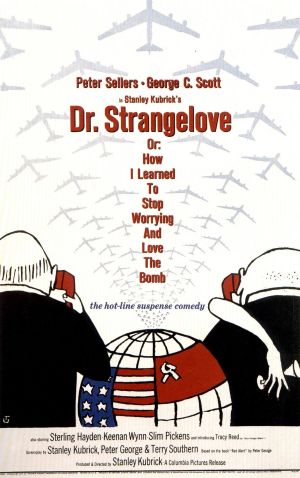
Dr._Strangelove_poster

In honor of the fifty-year anniversary of the release of Dr. Strangelove this past week, my wife and I sat down to rewatch the movie this weekend. Psychologically, as Kubrick found out, dark humor was the only way to deal with the sense of doom that pervaded the world into which those of my generation were born. Nuclear weapons had been developed and the Cold War was in full swing. Somehow, even in small-town America, I didn’t find Communism to seem so awful. After all, I grew up reading the Bible and it sounded quite a bit—at least in theory—like the arrangement the apostles had made in the book of Acts. The idea of private property, the very spine and muscular system of capitalism, was considered a sure way to lead to God’s kingdom not being established on earth. Nevertheless, that is the way, as the phrase goes, that the money went. And Communism threatened the right of one percent to horde all the money, so we were ready to annihilate all human life for it. Talk about taking your marbles and going home! No child should grow up knowing the meaning of the phrase “mutually assured destruction.”

Dr. Strangelove has held up well for the half-century since its release. Despite the thawing of the Cold War, the big chill isn’t over yet. And humor still seems the only way to keep sanity and deal with the state of the world. There are still many General Turgidsons out there (some of whom have held very high government offices, and this is no joke). There are at least, as far as we know, fewer General Rippers. So we hope. As the bomber crew nears its target, Major Kong goes over the contents of the government issued survival kit, among which is a comically small Russian Phrase Book and Bible combined. Kubrick, a master of satire, has the godlessness of Communism thrown time and again across the lips of the hawks. It is better to kill everyone than to allow the godless to rule. Even the Bible, however, shares space with the Russian phrasebook, making us wonder whether it is a tool of conversion or an admission of inevitability. Still the bomber, piloted by a Texan, flies on.

Perhaps the biggest moral dilemma we face is our ability to destroy hope. Capitalism promises opportunity to all. Like many who grew up poor, however, I have found lies hidden in plain sight. It is not easy to move ahead if you choose to mire yourself in debt to get an education. In fact, if you lose a job in higher education you can easily find yourself adrift for a decade or more, not earning any retirement money and being frequenly sought out by your local universities as an adjunct instructor. In fact, at many points your career might look like the end of the world. So it is that I take great comfort in settling down to watch Dr. Strangelove again. At least it is an honest movie, and that hasn’t changed in the past half-century. And I think I may have been wrong about how few General Rippers there really are.


Good, Evil, and Normal

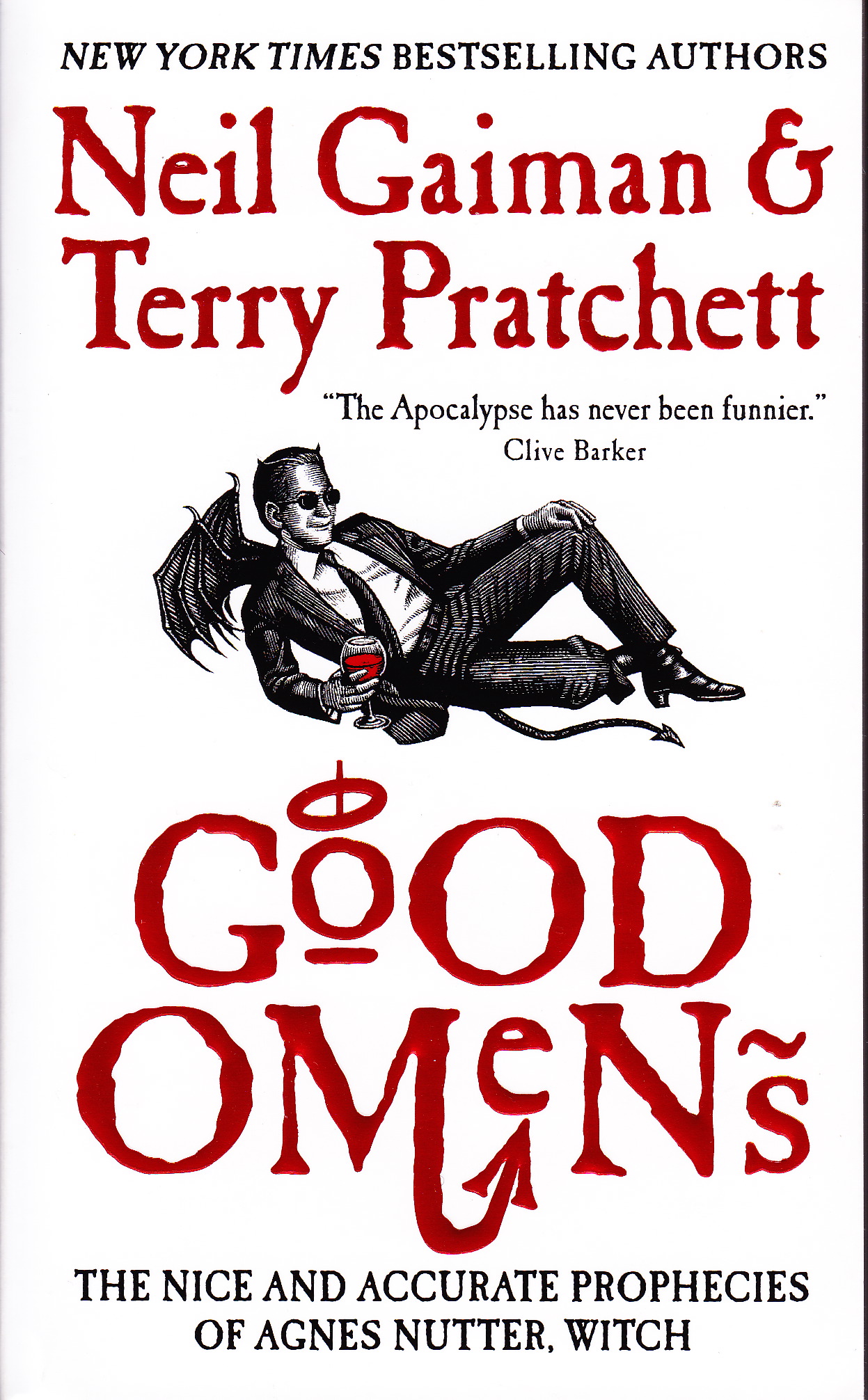
GoodOmensTo date I’ve read a fair number of Neil Gaiman novels. One of my students started me out on American Gods and I pursued his others on my own after that. I was a little unsure about Good Omens, however. I guess I’ve always been dubious about the quality of co-written books. Terry Pratchett, an accomplished novelist in his own right, paired up with Gaiman on this one, and it took the wisdom of another student, albeit recently graduated, to assure me that it was worth the effort. Given that it’s about the apocalypse, or perhaps an apocalypse that doesn’t quite take off, there seemed to be no reason not to give it a try. It is, at the end of the day, a charming book with colorful characters and an Antichrist who gets switched at birth and grows up in a normal household and herein lies the tale.

One of the most common religious themes in novels is the end of the world. The four horsemen of the apocalypse are one of the most striking literary tropes of the first century, if not of all time. The real question about the end of the world, it turns out, is—why can’t it be funny? For those who’ve pondered that, Good Omens is the book for you. It actually does help, however, if you’ve read the Bible. It adds to the cumulative effect. Subtitled The Nice and Accurate Prophecies of Agnes Nutter Witch, the book revolves around the certainty of the written word. Prophecy, however, just as in the book, only achieves verisimilitude in retrospect. The prophets didn’t always get it right, even in the Bible. Human choice often causes a breakdown in divine plans. In Good Omens, you’re pretty sure from the beginning that the world won’t end, but you’re not quite sure how it won’t end. The unfolding of the story eventually addresses how a prophecy can fail.

Free will, those who specialize in theology and philosophy will say, is among the more difficult of phenomena to pin down. Some predestinarians would say it’s all an illusion. We are programmed to do what we do. Ironically, some reductionistic materialists would say the same thing. Each of us, however, trudging through out days of toil and play, feels like we’re making our own decisions. True enough, sometimes circumstances decide for us, but if we were given the choice of good or evil, wouldn’t we approach it the way we approach just about everything else? Along the way, the demon Crowley asks a pointed, poignant question: why would God make people inquisitive and then forbid them some obvious, desirable fruit? Isn’t the conclusion foregone? Any writer today would know the outcome before the first sentence was finished. And so, free will is off and running. I hope that the fact that the world doesn’t end won’t be a spoiler for anyone, because I also hope that others will read Good Omens and learn a great deal about how demons can be good, angels can be naughty, and people will always just be people.


White Carrots

Acronyms are useful in a complex world, although they are frequently opaque to outsiders. Taking a new job you’re found constantly swimming in an alphabet soup of abbreviations that can drown you as easily as ABC. Each the church has them. As an undergrad religion major at a Presbyterian school I had to memorize TULIP (Total Depravity, Unconditional Election, Limited Atonement, Irresistible Grace, and Perseverance of the Saints), all of which but the last I had to reject on the grounds of sanity. As aids to memory they can serve as mnemonic devices, or they may simply be frustrating caricatures of reason. In any case, we all know them. In universities departments or divisions are known by acronyms, local businesses and landmarks may be as well. The internet has only speeded the process up, with countless abbreviations, some of which are definitely NSFW.

IMG_1889So it was that I learned an acronym that is current in the publishing industry. I always thought of the parsnip as a rather curious root vegetable, somewhat like a white carrot. As a child I severely disliked them, but I’ve come to appreciate them, roasted and glazed, as an adult. The word itself is somewhat fun to say: PARSNIP. It is also an acronym of things publishers, particularly those who publish textbooks in English as a second language, have to avoid. PARSNIP stands for, according to the popular explanation, Politics, Alcohol, Religion, Sex, Narcotics, Isms, and Pork. Interestingly to me, at least four of these things have their traditional taboo status because of religions. Clearly Religion is one of those, but restrictions on Alcohol, Sex, and Pork are also based on religious rules. One could argue that Narcotics also fits into that category as well. As I’ve mentioned many times on this blog, religion, substances, and sex are all deeply intertwined.

One of the curious things about this is that our post-Christian society has declared that religion is not worth discussing, or even learning about. We slash religion departments from universities and then wonder why we can’t discuss things like sex and alcohol, without which our society would apparently collapse, freely in other cultures. When I was a child, reading MAD magazine, I quickly learned two things that adults didn’t discuss were religion and politics. The list has grown since that time, but apart from the fact I have no idea which Isms are to be avoided, I see PARSNIP as the white carrot of religious taboos. And politics. In this secular world, we’ve become very politically correct, although we really shouldn’t mention politics in that phrase. Now I’m wondering if maybe I should reevaluate TULIP after all. At least the first part.