
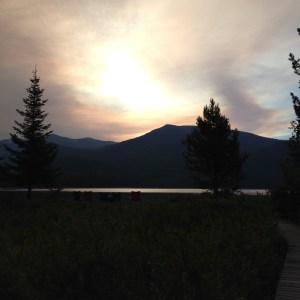
Here I am in a natural setting, with nature close at hand. From these windows I can see mountains, a mercury-smooth lake with fish breaking its silvery sheet, and trees aspiring for the sky. I hear a red squirrel chattering from one of those trees, and the call of a lonely osprey looking for its morning meal. It took a day of arduous travel to get here, and I am staring at a computer screen as nature puts on her show for me. I think, “it’ll still be there when I get done.” Then I think about what I think. Will it be there? This world we’re creating in our own image demands more and more of the planet we inhabit. To which we feel entitled. As I stood at the airport staring at the monitor, I couldn’t believe that my flight had been cancelled. What? I arrived at the airport at 5 a.m., flew countless miles, only to have you tell me my flight has been cancelled? Am I not owed better than this?
This attitude, I reflect, may be what brought us to such a place to begin with. This incredibly beautiful world was never ours to own. We’re guests. Invited perhaps, but guests nevertheless. And we all know that guests are supposed to be gracious and to act as if they wish to be invited back. So why am I rudely sitting here, ignoring my host? We are part of nature, but we tend to think of those closely attuned to nature as “uncivilized.” They don’t dress like city dwellers. Their hair is worn differently. They value things money can’t buy. They don’t play the entrepreneur’s game.
I travel to “get away from it all.” That which I’m getting away from is my life every other day of the year. How did we come to call this “civilized”? There’s no denying the creature comforts of a place to call home and a routine that seldom varies. But sitting here, amid nature, I realize the tremendous cost. Even as soon as it began to warm up in New Jersey we tried to carve out the time to explore local parks. To be outdoors among nature before heading back to the office on Monday. The whole point of worship is to break the flow of everyday time. To stop and think of the good that we have been invited to enjoy. I find myself amid this splendor, and I sit at my computer while nature awakens around me.
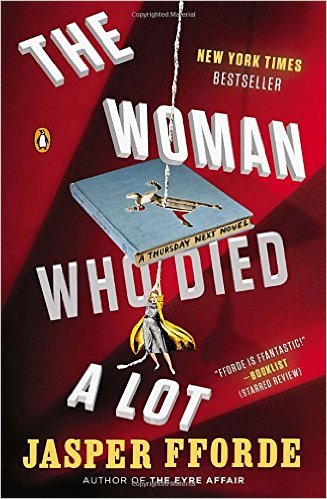 Jasper Fforde is one of those writers who blends nonsense, deep thought, constant plot twists, and polished writing into compelling novels. His labors are always fun to read and often leave me with something profound to ponder. I haven’t followed his Thursday Next stories in any kind of strict sequence, but I figure that I can sacrifice a few of his abundant references to previous events to read through the latest installment I can get my hands on. The Woman Who Died a Lot was the most recent of these books for me. Thursday Next is a literary detective and her exploits often lead, certainly intentionally, to a feeling that in Fforde’s world libraries and reading are even more than fundamental. Everyone wants to be prided on literary achievement. His universe wouldn’t exist without books and those who love them.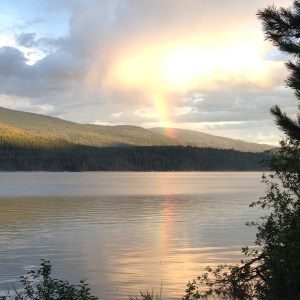


 Steve A. Wiggins