The Grammar of Evil

I stepped into a devil of a situation. Elevators are strange spaces. Given the choice, I’ll take the stairs any time. At work, however, as one of the many quirks of Manhattan, our elevators only stop on certain floors and we’re not able to use the stairs unless it’s an emergency. After a meeting on a floor where the only option was to elevate out, I stepped into a crowded elevator where a conversation was going. “You always capitalize Satan,” someone was saying. The usual questions among non-religion editorial staff ensued. Why is that? What about “devil”? “It’s never capitalized,” came the reply. My profile at work is about the same as it is on the streets of New York. Not many people know who I am or what I do. Although I’ve struggled with this very issue before, on a professional level, I kept silence and waited for my floor.

So, was the elevator authority right? “Satan” has become a name, rather along the lines of “Christ.” Both started out as titles. In the Hebrew Bible “satan” is “the satan.” The accuser, or the prosecuting attorney—something like that. As one of the council of gods, the satan’s job was to make sure the guilty were charged of their crimes. Diabolical work, but not evil. By the time of early Christianity, however, Satan had evolved into a name. It is therefore capitalized. It was specifically the name of another title, “the Devil.” Or is it “the devil?” Do we capitalize titles?
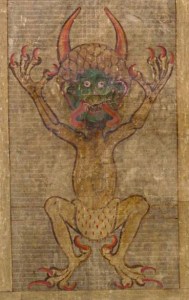
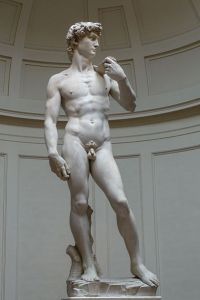
The Devil wears underpants.

The Devil wears underpants.

In seminary and college the received wisdom among those of my specialization was that there is only one Devil and the title should be capitalized. My elevator colleagues were discussing the number of devils when I stepped out. Traditional theology says there’s only one. Not that the Bible has much to say about the Devil—he’s surprisingly spare in sacred writ. Demons, however, are plentiful. Some people call demons devils, just as many believe that when good people die they become angels. The mythology behind demons seems to be pretty well developed in the biblical world, but again the Bible says little. Demons can be fallen angels or they can be malign spirits who cause illness. Either way they’re on the Devil’s side. But should we capitalize his title? The Oxford English Dictionary doesn’t help, giving examples of both minuscule and uncial. I suppose that’s the thing about the Devil; you never really know where you stand.
The Whole Truth

In a thoughtful piece on NPR, Adam Frank discusses “Are Scientific Truths Better Than Other Truths?(.)” He describes a Ivy League conference called to discuss this point, and although I get about as much attention as adults give Barney, I’ve been blogging about this topic for years now. If only I had an institution. Or an ivy leaf. But never mind that. The topic’s the thing, and indeed it is long overdue. Science works (at least most of the time) and so we don’t require any convincing on that point. The very title of the article, however, raises the specter of the question: are scientific truths better? There’s a lot of unpacking to do and I haven’t even left home yet. First of all, “truths.” Science provides the best explanation of phenomena that we have, given the data at the moment. Since science is, by definition, falsifiable, it doesn’t provide truths. As much as scientists must begrudgingly admit it, truths are spun out by philosophers and—God help us!—theologians. The scientists who want to give us truths should probably take philosophy 101.

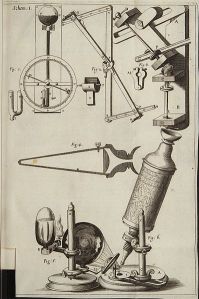
microgaphia_schem_1_instruments

Then there’s that surprisingly difficult adverb “better.” Good, better, best. These are value words. Science cannot assess value. Gold is “worth” more than the lint in my pockets because humans have agreed that it is. Inherently, both substances are made of the same thing: atoms. The lint in my pocket may have more exotic elements than pure gold, but nobody’s going to pay anything for it. Value, as has been endlessly demonstrated, is in the purview of religion, ethics, and philosophy. If you have to you can add the dismal science to the mix, but even that is just a social science. No physicist can tell you if this meal is better than that. It’s a matter of perspective. If I value my beans enough, not even your pâté will tempt me.

I want to stick with this latter word “better” just a little longer. Perhaps because as an underemployed thinker I’m especially sensitive to the subject. In what sense is science “better” than humanities? Show me a scientist who’s never listened to music and I’ll show you a sad individual. When we come home from the lab we still want the creature comforts that people have devised whether through science, culture, or even religion. If you value that weekend, be sure to thank a monotheist. Science tells us no day of the week is any different than any other. In my experience there’s a world of difference between Saturday and Monday. For this inveterate and unrepentant humanities student, that’s the truth.


Twice Bitten

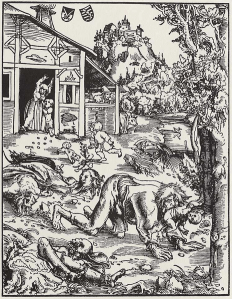
I should be aware of what happens next. I’ve seen it in movies often enough. Man gets bitten by a wolf, and he turns into a werewolf at the full moon. That gives me two days. And it wasn’t a wolf, but a pit bull. I fear what I might become. You have to understand that after a long commute—they’re doing construction along a stretch of a major artery where my route passes—and having been awake since 3:30 (a.m.) when I get off the bus I’m not always thinking clearly. I’ve done some calculating and it turns out that apart from work, commute, and sleep (or at least trying to sleep) I’m left with three and a half hours per day to do my own stuff, like write these blog posts, eat breakfast and supper, and pay bills. So when I get off the bus for my short walk home, my main concern is getting across a busy street where New Jersey drivers routinely ignore the state law that they must stop for pedestrians in a cross walk. But last night the dogs were out.

The sidewalks in my town are narrow. Nine days out of ten I meet no one on my way home. There’s one guy with a tiny dog that’s feisty and it is amusing how the little guy—just a puppy—growls and barks its tiny barks and strains to get at me. Dog owners around here pull their dogs off the sidewalk to let walkers pass. It’s a friendly town that way. Last night the young woman was no match for the two pit bulls she was walking. The street was unusually busy since two guys had just walked past me, one, commenting on the dogs, said “I don’t take my beasts out any more.” The woman pulled the dogs off the walk and they barked and snapped and as I walked past one lunged and bit me. Tore a good pair of pants. The woman they owned was aghast and offered to pay. I didn’t want her to know how cheap my clothes were. Besides, I couldn’t hear her over all the barking.

It’s been years since I’ve been bitten by a dog. This was really just a scratch and the frantic woman assured me the dogs had had their shots. But I’ve seen the movies. I know what happens next. Two nights from now I’ll be roaming the streets after dark, half human, half dog. The Hunter Moon (the official name for October’s full moon) comes on Sunday. I can’t blame the dog—it was only doing what aggressive dogs are bred to do. My commute, however, has a new hazard. Not only do we deal with construction zones, I now have to arouse myself to watch out for werewolves on the way home. It must be October.

Me, in two days.

Me, in two days.


Scary Thoughts

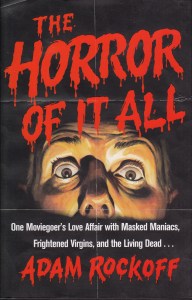
rockoffThose who know me personally—and not just through the internet—sometimes are surprised to learn that I watch horror movies. After all, I’m a pacifist, vegetarian, and a very caring person. Plus I’m squeamish and I eschew violence. Why, then, do I watch such things? I don’t have a good answer for that, but I might be a bit closer now that I’ve read Adam Rockoff’s The Horror of It All: One Moviegoer’s Love Affair with Masked Maniacs, Frightened Virgins, and the Living Dead. Now, I’ve never met Mr. Rockoff, but from reading his book I get the impression that he’s a descent human being and fun to hang out with. He’s also a family man and a sympathetic individual. The Horror of It All is an extended discussion of that troublesome question: why do some of us watch movies of this kind?

It’s pretty clear from this book that Rockoff is way ahead of me in the number of horror movies seen. I’m sure he doesn’t mention all of those he’s watched, but there are some I’ve seen that didn’t make this book and, in my own way, I hope, show that I’m no slouch when it comes to the genre. I’m not in the media like he is and those of us trying to be respectable ex-academics have to read weighty tomes to keep any street cred at all on campus. That having been said, it was fascinating to read how many of the same triggers are at work in not just Rockoff and myself, but in other horror watchers he’s known and interviewed. These films are, for the most part, not just degenerate trash. Many of them have redeeming value and an unexpected profundity. Academics and other society people don’t like to get caught watching what hoi polloi do, but just take a look at the box office take and you’ll see that horror sells. We are not alone.

Ultimately every horror viewer has to struggle with this monster him or herself. Why do we watch? While in grad school I had a sociology doctoral candidate interview me to explore just that question. Why? At the time, admittedly, I had seen only a fraction of the films that I’ve moved on to see since then. One thing I can definitively say—I’m looking for something. Life is plenty scary as it is. A world where a good job can be yanked away from you at will and the specter of a life on the streets leers, can be an intimidating place. In the horror movie you see how it could be even worse. So as my waking hours are increasingly spent in the dark, as if the sun itself is afraid, I see books like Rockoff’s as a kind of flashlight through this forest. If I run into monsters, I want to have prepared myself.


Fictional Fact

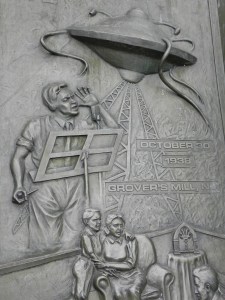
Do you remember that tragic sinking of a Staten Island ferry when a giant octopus pulled it under? Sounds vaguely familiar, but I wasn’t living near New York at the time. A story in The Guardian tells how Joseph Reginella, a sculptor, made his commemorative piece of art for Battery Park for a fictional incident. Like the memorial for War of the Worlds in Grover’s Mill, New Jersey, this is something we remember that never really transpired. We remember what never happened. It’s easy to forget that memory evolved for specific purposes. Mainly we remember for survival. Our brains evolved to keep us alive. If we don’t recall where we found water, or where that hidden cliff edge is, we don’t last for long. But we remember other things as well. The time that Oog borrowed your stone axe and didn’t give it back. Our social memory made us human, so we’re told.

dscn4239

No doubt it is possible to develop a keen memory. Precise recollection of events just as they happened, in sequence. It’s also possible, even collectively, to misremember things. We tell stories. We make myths. There was no giant octopus incident. Maybe we saw such a thing in a movie one time. That movie, paired with the plausible evidence of a public monument commemorating the event becomes a modified reality. I’m just sure I can remember it happening, can’t you?

Studies of such phenomena tell us that memories aren’t what they seem to be. To make distant recollections Holy Writ, for example, we have to rely on divine inspiration. Without it we might just be remembering a story somebody told once upon a time. And where did I put the car keys? Yes, our memories are open to manipulation. Things that never happened become real this way. George Washington did not chop down a cherry tree and confess to his father because he could not lie. And yet we believe. We make myths because they give our lives meaning. Face it, evolution is a pretty boring explanation for why we’re here. Natural selection has no goals in mind. Things that work best tend to survive in the gene pool. And in some people’s memory there may be a giant octopus in that pool as well. Did the the Cornelius G. Kolff get pulled under or not? Would a ship with such a name ever be made up? Myths are still born every day, even as the octopuses cower in their caves, awaiting the next naive ferry to transcend reality.


Only October

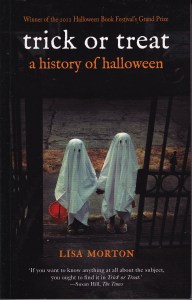
trickortreatComfort may be a strange word to describe Halloween, but it is accurate. I’m no specialist on the holiday, although I’ve read a few books on it—most recently Lisa Morton’s Trick or Treat: A History of Halloween. Growing up in what felt to me like an uncertain environment, holidays—and especially Halloween—have left me with positive impressions. Morton’s book explores this strange combination of fear and fun and suggests that many people of my generation do find comfort in its celebration. I grew up without a father in a conservatively religious home. Yet I loved the escape of putting on a mask and being someone else. Coming home with a bag of candy was a bit like that dream I still have of finding a penny on the ground and then realizing there are thousands of them just beneath the surface. There’s a security in that dream and I always find a tear in my eye when I awake from it.

Halloween is, appropriately, a chimera of holidays. It is solidly pagan. It is equally solidly Christian (specifically Catholic). Perhaps to placate those troublesome Celts, the Roman Church moved its commemoration of All Saints and All Souls to November 1 and 2, allowing for the Eve of what used to be called “All Hallows” as a holdover of Hibernian lore. Morton goes beyond the northern European fascination with the darkening of the year to explore other regions and how they mark the season. The southern hemisphere, obviously, doesn’t have the same pattern of autumn and spring, and the holiday has had less success there. The threat of the light never returning has to be real to make the fear stick. The warmest memories of my childhood seem to come from the days artificially lengthened by electric lights and the holidays they spawned: Halloween, Thanksgiving, Christmas. Comfort.

The air has begun to turn chilly around here. I’ve found myself shivering a morning or two while waiting for the bus. As I pull on my coat and step out into the pre-dawn dark, a stop sign creaks eerily on the deserted street. I’m headed to a long day in a city of stone and glass and warmth will be difficult to find. Halloween decorations get lost in the enormity of New York City and its constant quest for money. So I recall Halloweens of my small-town childhood. I tend not to go out at night, but I haven’t always been this way. When there was an unspoken comfort awaiting at home, no matter how frightening it could be at times, I would brave the dark and ask strangers for candy. Is it any wonder that Halloween still glows in a world somehow grown too cold?


Love, American Style

If you’re going to thump the Bible, at least try to read it once in a while! Donald Trump, showing his true colors yet again, degrades women in the crudest terms imaginable and the religious right (what used to be called the Moral Majority) quickly falls in line. Videos swiftly emerged with conservative commentator Sean Hannity saying “King David had 500 concubines, for crying out loud.” Did he? David, I mean. Try to count that high and you’ll run out of fingers. But according to the Bible amorous King David stopped well short of 500. In fact, his affair with Bathsheba almost ruined him politically. And this was in the day when polygamy was supported by the law. I think Mr. Hannity was groping for the story of King Solomon, David’s frisky son. Solomon, famed for his 700 wives and 300 concubines, was underestimated by Hannity by half. And maybe if he’d read to the end of the chapter (come on, it’s only 43 verses) he might’ve stopped to think that the comparison did his candidate no favors.

Back in biblical times things were different. Even a monogamous man might have several wives since childbirth claimed a disproportionate number of young women’s lives. The average fella only lived to be about 40 himself. Lust existed, to be sure, but marriage was a practical affair. For the average citizen, you needed children to help out around the farm where you grew your own food. No golden arches in those days. Attitudes towards women back then were just plain wrong, in any case. The marriages of Solomon were political affairs, not prurient in origin. There are those with Trump signs in their yards that would like to see us return to such days, although they have no idea what such days were like. The consensus is that David had about 8 wives, but who’s counting?

Photo credit: Jörg Bittner Unna, Wikimedia Commons

Photo credit: Jörg Bittner Unna, Wikimedia Commons

Women are more than playthings for men. How have we ever reached the point where someone born in the last century doesn’t know that, and can get to less than a month before the election with that ignorant platform? This should make any American shudder. Make America great again? Treat women as equals. Treat people of color as equals. Treat those of differing sexual orientations as equals. Honor the principles upon which this nation was founded. Don’t just grab someone by the polls. And read your Bible, Mr. Hannity. The point behind King Solomon’s 300 concubines is that he died a sinful, disgraced king in the mere shadow of David. The next time you want to quote the Bible, try reading it first.


October Weekend

img_2973

Bright orange pumpkins under a cloudy gray sky. October is surely here. But this is an urban area of the kind in which northeast New Jersey specializes. As I approach I see that it’s a church. A church that has made a truce with Halloween. Judging from the number of people here, it’s a cordial detente. So much of American society lies mired in contradiction that I have to ponder this. Halloween in an age of nones may be simply fun. An opportunity to spend money on pumpkins that won’t be eaten and gourds that can’t be. Decorations for a mildly scary night that somehow makes us feel comfortable and snug at home. October is like that.

Churches have been struggling to maintain active memberships. And although the antagonism has been overblown, Halloween has been an uneasy part of the church calendar. It has, however, become a major commercial opportunity. Depending on the commodity, only Christmas or Easter will draw more lucre from people. The devils and demons and ghosts of Halloween sit awkwardly in the pew next to the victory over death that is the main draw to traditional Christianity. But people will predictably spend their cash for the privilege of carving a pumpkin. Just the memory of the scent, the feel, the contentment of creating a jack-o-lantern makes me want to stop and support whatever denomination this might be.

It is a weekend, however, and I have many errands yet to do. I content myself knowing there are happy people in this temporary pumpkin-patch. The faith of Linus is a powerful thing. To get ready for the week ahead in which I’ll have time only for working, commuting, and sleeping, I keep moving. The orange fades from sight. The cheerful memories of childhood pass. I go on to my next stop. My first errand began at 6 a.m.this morning. Noon is fast approaching. I need a tiny piece of hardware that can only be found in a big box store. I prefer to support the local economy but that shop is all the way across town. Inside the Depot plastic Christmas trees of every description fill the front of the store with winter dreams of even more spending. I forget what I came in here for.


Thousand Words

I could easily spill a thousand words, but I have no picture. You see, as a tuition-paying parent I seldom carry cash—pin money is a luxury I just can’t afford. I saw the perfect photo-op, but had to walk on by. On my way to work I saw a homeless man in Manhattan. That’s not so rare. In fact, it’s distressingly common. This man had written a sign: “Give me $1 or I’ll vote for Trump.” It was followed by a tasteful laughing face emoticon. Old school. On paper. I would gladly have paid him a dollar to take a picture, but I had no money on me and I was left to remember and ponder the implications of a statement that struck me as rather profound.

boweryrm

It isn’t at all strange that the homeless have a sense of humor. There’s a deep, deep irony that pervades a nation where even those who follow all the rules end up finding themselves unemployable. Exploitation is the new capitalism. What surprises us is when these dehumanized economic units show they have feelings. I try to read the many signs the homeless write. They’re not so different from me. I’ve sat on the other side of the desk and been told that I’m just not quite what the employer wants. These affable commodities sit on their shelves, expiration dates passed, trying to raise a smile. Perhaps open a wallet. Their stories could be written down, but who would buy such a book? Nobody likes a downer.

The nature of the sign’s threat is worth considering. The dismal science tells us that it’s all about goods and products that change hands. One fervent disciple of this crooked system wants to be our president. He doesn’t pay any taxes, but he’s never had to live in a cardboard box like so much breakfast cereal. And this poor man in front of me is casting the most noteworthy threat that the disenfranchised can—he’ll vote for this travesty if we don’t pay him. The fine interplay of threat, extortion, fear, hopelessness, and humor tell me that I’m in the presence of a man who has a valuable contribution to make. More valuable than that which is being offered to us by the guy who’s been benefitting from our dimes for nearly two decades while giving nothing back. And if I had a single, or even a five, I’d be glad to exchange it for a photo to remind me of what a true American looks like.


Twist of Lime

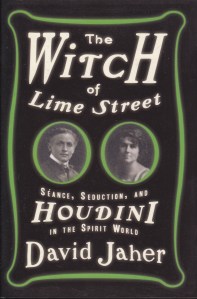
witchoflimeOctober enters as a liminal month. A few remaining hours of lingering summer but more shortening days of winter’s encroaching wolf. A time of harvest and celebration. Lengthening nights bearing strange noises. It was a couple of Octobers ago that I noticed The Witch of Lime Street either on Amazon or some bookstore shelf. I knew I’d read it this time of year, but I had to find the time to appreciate it appropriately. David Jaher’s debut book, subtitled Séance, Seduction, and Houdini in the Spirit World, spins a story appropriate to this time of year. The story of Mina Crandon, aka Margery, is as misty as the ghost she apparently conjured during the roaring ‘20s. The story is all the more remarkable in that the medium who’d attracted so much attention has been all but forgotten now that mediums and psychics tout their wares “for entertainment purposes only.” No one wants a fraud misdemeanor on his or her record, just in case.

Margery emerged during a contest set up by Scientific American that offered $2500 for any medium whose effects could not be explained by science. A board of experts, including Harry Houdini, was established and the contestants tried their best. Unlike most mediums Margery was from a secure household, being the wife of a surgeon. In other words, she didn’t need the money. Some of the feats she performed, according to the records scoured by Jaher, are truly amazing. So amazing that she had nearly convinced the prize committee that she deserved the prize. Houdini, however, led the opposition. During the course of all this she had, at points, convinced Harvard faculty that she was genuine, and submitted herself to controlled conditions. Some very intelligent men, including Sir Arthur Conan Doyle, believed she was authentic. Never actually caught in trickery, evidence suggests that she faked some manifestations, but many educated observers nevertheless believed in her powers.

This engaging account has as many twists and turns as a corn maze, and features several prominent players. Houdini and Doyle clearly top the charts, but for those who’ve read about the history of parapsychology there will be some familiar names throughout. The one who is least known is Margery herself. Being an historian, Jaher can’t proclaim his own verdict on the medium’s claims. His account, however, is even and provocative. Based on the many records that were available on the subject before seances became artifacts of a more gullible age, this book will leave you scratching your head. Then, you may wonder, were those my fingers or those of someone else doing the scratching?


Majority Report

In your mind’s eye, picture American 500 years ago. What do you see? Even those of us who’ve studied history have trouble envisioning the past with so different a set of parameters. At least if we’re honest with ourselves. 1516. The Salem Witch trials are almost two centuries in the future. The landscape is occupied by Native Americans. There are some European settlements. Protestantism is something new. In fact we’ll need to wait another year for Martin Luther to drag out his hammer and nails, theses in hand. The America we see then, not called “America,” let alone “United States,” is a diverse—some might say “wild”—world of decidedly non-European sensibilities. Global warming wasn’t an issue, and King James hadn’t even been born yet, let alone been commissioning the most famous Bible in English ever. So why am I asking you to look back?

luther_at_erfurt_-_justification_by_faith

This presidential campaign has largely been a waspish one. During the turmoil, books have been published proclaiming the end of “white, Christian America.” In an interview on PBS one of the authors of such a book, Robert Jones, talks about how America has changed. He notes that what he really means is that white Protestants are, statistically speaking, no longer the majority. Just a few centuries ago that was also the case. Think about Protestants a minute. They’re the ones who invented the Bible as we know it. Oh, the book had been around, in some form or other, for a couple of millennia (well, a millennium and a half, back then). Other than scholars in need of more fresh air, few spent much time with it. The church told Europeans what God demanded and the majority of people just got on with their daily lives not worrying about what some book they couldn’t even read might say. How things have changed!

We worry about the end of our majority. I like to look back and see that this world we’ve built is one based largely on a book that was mainly the invention of those who had some discussion points with the church. Not quite a hundred of them, even. They were largely Anglo-Saxons. If they knew about “the New World” their knowledge was hazy and imprecise. From that perspective it doesn’t seem like much is being lost in the changing religious demographics of this country. Back in the old world, if one wished to feel nostalgic for such things, they would’ve taken their complaints and found the nearest church door. Now we nominate candidates who think this country was ours in the first place, without ever even reading the Bible used to support that myth. What a difference a few centuries can make.


The Science of Being Human

Not so long ago, when I was still a professor, a colleague told me he had no interest in science. We studied religion, he reasoned, and science had little to add. I was in the midst of a research project at the time. That project was exploring how what we know of evolution (or knew at the time) might inform our understanding of ancient texts. Of course, I was working in relative isolation, noting in my cover letters to universities that my research would benefit from an institution with a cooperative and collegial atmosphere between the sciences and humanities. If you’ve read this blog before, you know how that ended. No cooperative schools ever thought such research was worth sponsoring. After all, there are younger, less expensive specialists out there examining ancient religions in microscopic detail. The rest of the world, of course, wonders why.

This divide, as so eloquently delineated by Marcelo Gleiser in a piece on NPR, is starting to grow narrower. Science is taking us, in many fields, very close to the humanities. And we can’t make sense of some of it without admitting our human limitations. This is what I so admire about Gleiser’s writing—he is a scientist who understands that arrogance has no place in intellectual inquiry. Biology, as I long ago expected, holds one of the keys of this dilemma. Our brains evolved for a specific purpose—to help us survive in a predatory world. They did not evolve into processing systems to comprehend, as one sage put it, life, the universe, and everything. No one brain can hold all that knowledge. Like it or not, that brain in human. And humans need humanities.

Some scholars among the humanities like to claim that science has reached too far. The problem is, any scholar who is a true scholar is also a scientist. We use scientific methods to understand our admittedly speculative, or at least subjective, subject matter. Science isn’t the enemy here. Arrogance is. As Gleiser has stated in other venues, we have to approach the world with humility. We know so very little. Part of that world is that beyond human reach, and part of that world is what humans have done. They’re both part of the larger picture. But humans live on a small planet that we now know is only one of many, many more throughout the visible universe. And we know the visible universe is only part of the story. But we can’t be honest if we forget that the minds trying to understand all this are, no matter how evolved, only human.

dscn6303


Silverbacks

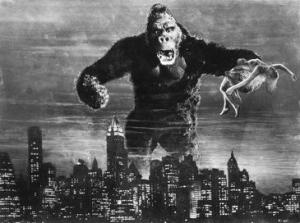
kong33promo

It’s been decades since I’ve seen the original King Kong. A none-too-subtle racist and sexist flick it may be, but it stands as one of the original “horror” films of the early thirties and it has had a profound influence on movies ever since. King Kong wasn’t very nice to Fay Wray, and had to be euthanized by biplane, if I recall correctly. I work one block from the Empire State Building, and sometimes I subtly glance up, looking for the giant ape. There are more fearful sorts in New York these days. I can see Trump Tower, for instance, from the pantry at work where I keep my lunch. But I digress. For its day, King Kong was a violent movie. Like many films, however, it is also a parable.

Recent studies have shown that some 98 percent of mass murderers are male. Men deal out, by far, more than their share of death to others. Some have suggested that when women experience failure they look internally, blaming themselves. Men, on the other hand, go postal. They seek someone else to blame. In our culture—maybe in all “western” cultures—man are acculturated to think of themselves in terms of success. Quite often this means business success—affluence and its discontents. Do you have more money than your neighbors? Good for you! You have succeeded, and, for some warped perspectives, God has blessed you. In reality, the system we’ve constructed has set many people up for failure. This is no excuse, but men who have no other way of measuring self-worth may find comfort in firearms. After all, it’s society that should take the blame. Right?

Gun lobbies claim that collecting firearms is a harmless hobby. Like collecting stamps, only a little louder. A bit of psychology might go a long way here. Might we not stop and think what happens when you give arsonists matches to play with? I suppose if we took away these toys, boys would use baseball bats, or rocks, to take out their aggression. I can’t help but wonder, however, if the problem might not be the system that measures a man by his money. Could there be a better way? There have been those throughout history who’ve made such a claim. They often die violent deaths. Once King Kong has begun his ascent with lust and violence in his eyes, we should all cast a wary eye on the Empire State Building and wonder what it all means.


Buying Faith

Can belief be quantified? Apparently yes. I’ve spent my life trying to avoid the dismal science, yet it seems that everyone else is pretty much agreed that money is the measure of all things. Higher education has certainly been chasing that rabbit for years. My choice of “careers” has always been aimed at those which downplay finance while paying enough to cover the bills. One has to be practical. My wife recently sent me an article in The Guardian by Harriet Sherwood entitled, “Religion in US ‘worth more than Google and Apple combined’.” At first, I have to admit, a kind of triumphalism overcame me. A vindication that I had chosen a valuable aspect of human existence with which to while away my years here on earth. Then came the troubling implications.

img_1264

We tend to hear only the bad news about religion. Religion, we’re told, is only super-sized superstition. It supports prejudice. It capitalizes on fear. And nobody really believes anymore. And so the trite truisms march past like tin soldiers on their way to a real war. You see, if we can’t put a dollar value on religion—or any belief system—then we have no way to assess whether it’s worth wasting our time on or not. Maybe people will begin to pay attention now. There’s gold in them thar hills. Yes, the religious are more likely to open their wallets and keep the economy moving than are the wealthy. Yes, those are antithetical groups, for the most part. When we can start toting up dollars and pence it is time for those with more dismal scientific interest to take notice.

Religions, like all human institutions, have faults. They are prone to takeover by self-interested individuals who look for the angle that will lead to personal power or fame. They do often insist that they alone have the correct interpretation of what life means and how we should go about pleasing a deity that only they truly understand. And they bicker amongst each other. It’s easy to forget that religions are based, without exception, on the belief that human life can be improved. We can do better, people. Takeovers, sometimes hostile, can occur. One sect may take out a contract on another. Love may be recast as hatred. Overall, however, religions are, to borrow a phrase from a sage, “our better angels.” And of course, the fact that you can put a dollar value on that only sweetens the deal. The dismal science has studied the matter and its conclusions are indisputable.


Dead Sea, Live See

501px-1qisa_b

Nothing fascinates quite like the Dead Sea Scrolls. That is, unless you’re a disgruntled Ugaritologist. Mention the Dead Sea Scrolls and the journalists will form a queue. Never mind the relative importance of Ugarit. But I digress. There is something quite dramatic about the discovery and recovery of the scrolls. It involves science and sculduggery and that utterly captivating name “Dead Sea.” This past week the scrolls were in the news again as a new technology was used to read an illegible roll. The New York Times story by Nicholas Wade describes how something like a CT scan can be used to find the ink on an unrolled scroll and software can be devised that associates the ink to its nearest surface. A little virtual unrolling and you have a legible document that has no visible letters that the naked eye can see. Turns out this one happens to come from Leviticus. Figures.

You might think this would lead to joyful leaping on the part of someone who used to make a living reading ancient documents, but such are the times in which we live that even silver linings turn to lead. Years ago I learned about Van Eck phreaking from Neal Stephenson. I thought it was sci-fi, but in fact it is a legitimate—or illegitimate—method of reading a person’s electronic device without being able to see the screen. Since so few people are eager to read my blog, I can’t think anyone would be wanting to spy on my laptop. Nevertheless, with the advent of new technology that can—think about it—read a closed book, I have to wonder about the implications. Reading some dead scribe’s Dead Sea Scroll is one thing. Your sister’s locked diary can be quite another.

Being more of a clay-and-stick man, I was pleased when it was discovered that rapid flashes of light around the circumference of a clay tablet could lead to a virtual computer model that could be rotated 360 degrees with illumination from any angle. The technology had other applications as well, of course. (It certainly wasn’t developed to read forgettable texts.) With a clay tablet we can be reasonably certain that nothing too private was being impressed. But then that’s what you’d expect an Ugaritologist to say. It seems that my days of reading ancient documents are a closed book anyway. But that’s just the problem. Not even a closed book is safe any more. If I were in any danger, I’m sure it would show in my stats before anyone bothered to park a nondescript van outside my door and scan through all the countless tomes with which I surround myself daily. But I do wonder.