Right to Remain Silent

img_3101

My daughter has a set of nesting Russian dolls. “Matryoshka dolls,” as they are known, fit one inside the other so when you open one you find another inside. Just when you think you’ve reached the last one, you see that yet another can fit inside. I never thought of these dolls as anything more than a toy. Then I started reading the headlines. Or lack of headlines. We now know that Russia tampered with our election process. The major newspapers, however, have turned their attention elsewhere. If we’re lucky it may make the front page, but for the most part this is “old news” and old news doesn’t sell papers. After all, hadn’t Putin and Trump bragged about this months ago? Now, on the eve of the Electoral College’s voting, we hear virtually nothing about it. I wonder if media moguls shouldn’t have to take a kind of Hippocratic Oath. Or at least read us the Miranda Rights.

Although only one major newspaper endorsed Trump before the election, they’ve all silently endorsed him since. The choice of what to tell the public is indeed assent. I’ve signed at least three petitions a day asking the President, congress, my next door neighbor—anybody who will listen—to inform the Electoral College of this. Electors, you see, are like automatons. And we want to preserve the democratic process even when we know it isn’t handled democratically. Especially when it isn’t handled democratically. 2.8 million more people voted for Hillary Clinton than did for Donald Trump. It now looks like even some of those Trump votes came from Siberia. My, it’s been chilly outside the last few days! I’d better brush up on my Dostoyevsky.

Even as a child I wasn’t the kind to take the Apocalypse lying down. We have rights. Our rights include electing our own President without the interference of some other country. In just about any sport interference leads to a penalty. Unless that sport is electing an incompetent to the White House. Already the GOP has been discussing how to restrict voting rights for Americans while opening the voting booth curtain to Moscow. Don’t get me wrong—I hold nothing against the garden-variety Russian. Unlike the unlikely Republicans accepting former Soviet help, I’m not a xenophobe. It’s just that I believe in keeping things in their place. Like matryoshka dolls—you can’t fit a bigger one inside its smaller sister. You wouldn’t know that from reading the newspapers, though.

American Possession

the_exorcism_of_emily_rose

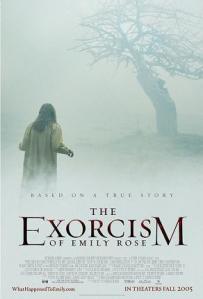
Exorcism seems an especially appropriate trope these days. Embedded evil has to be faced squarely and forced out before it kills its host. I recently rewatched The Exorcism of Emily Rose. This is a most unusual horror film in that the story is born by a courtroom drama over whether the priest overseeing the ritual was responsible for the death of Emily Rose. Famously based on a true story, the movie raises a more basic question than whether it “really happened”—what is the viewpoint through which we view the world? We see from the very beginning that the case is actually a contest between two powerful law firms. Each wants a lawyer that can shred the case of the other. The prosecutors engage Ethan Thomas, a very religious Methodist, against the defense’s Erin Bruner, an agnostic. Believing Emily’s case to be purely medical, Thomas asserts that had she stayed on her medication Emily would’ve remained alive with the prospects of a healthy life. Fearing a complete loss, Bruner takes a risky counter-approach: what is Emily really was possessed?

The obligatory scary scenes are shown, of course. They are flashbacks inserted into the course of the trial, but nevertheless disturbing for all their calm, rational framing. The real question, as the story plays out, is can a supernatural worldview be allowed in a court of law. Ironically, such a worldview is already present when a witness swears on the Bible. This particular movie doesn’t show those scenes, but it would’ve been a fair point for Ms. Bruner to make. Clearly the court can’t decide if demons are real, but it can allow that possibility. It’s a classic case of science versus religion. Nevertheless, both sides make use of science. The anthropologist on the stand is dismissed by the religious Mr. Thomas. He has no time for Catholic, or any other religions’, superstition.

Many strange choices were made for this particular cinematic piece, but the story works nevertheless. Those who believe in spiritual realities are allowed to live them out only to a point. The legal system decides if a religion has gone too far. I couldn’t help but wonder if, in a post-truth world, any clear standard of rationality can possibly hold. But questioning universally accepted truths and subverting them to personal preferences its almost if we’ve actually reached the stage of “all those in favor of general relativity say ‘aye.’” As I say, the film was more timely than anticipated. Demons, after all, often appear in the guise of an angel of light. Especially for those motivated by fear.


Making Believe

Sanity is always temporary. I can say that because we all know that no one acts rationally all the time. Our brains evolved (or were created, if you roll that way) for the simple purpose of survival, not reason. Reasoning, no doubt, helps with survival, but so does feeling. Emotions may be harder to control, and they often take charge despite what we know to be true. When we do something in passion that we can’t justify, our logical brains have developed rationalization to explain it. I’ve been hearing a lot about rationalization lately. Many people who disagreed with just about everything that Trump said still voted for him. Their reasons are various shades of rationalization, but they generally come down to emotion. That’s not to say Hillary supporters didn’t also vote with their feelings. Her historical win of the popular vote demonstrates that very clearly. We didn’t want a demagogue, but we can rationalize our stupidity after the fact.

img_2986

I wonder if we haven’t entered an era of international madness. Brexit was an example of what happens when emotion trumps reason. As much as I like the idea of a Pirate Party, when it wins actual Icelandic elections one has to wonder what’s in those volcanic fumes. Talks are underway elsewhere about departing the European Union. Instead of working together it’s each man (literally) for himself. We used to think about politics and leave emotions for our personal lives. Mr. Spock, I’m sure, is somewhere shaking his head. “Illogical,” I can hear him saying.

As a creative person I value the emotional response. Who can say that falling in love is ever rational? There may have been a time when procreating enough to keep the species going may have applied, but we’ve far surpassed that goal and yet we keep on going. In fact, in much of life emotion is far more important that reason. The question, however, as to whether it makes for good government is one with a clear and salient answer. We must elect with our heads, not our hearts. Some will accuse me of playing favorites—after all I’m a bleeding heart liberal. But I’m writing this with reason on my side. Did I think that Ronald Reagan with his trickle-down oppression was a better, more rational leader than Walter Mondale? Have you ever listened to any of Reagan’s speeches? There’s a time—perhaps much time—for emotions to take control. Elections, however, are not one of those times. Anything beyond that is pure rationalization.


Engendering Fear

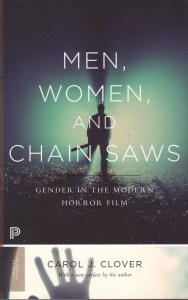
menwomenchainsawWe live in fear. At this point in history, it seems, with good reason. Horror films, apart from being considered low art, teach us to deal with some of these fears. I hadn’t been reading about the genre for very long before I began to notice the repeated references to Men, Women, and Chainsaws: Gender in the Modern Horror Film. This is Carol J. Clover’s seminal study of gender theory and horror. Probably best known for first identifying the trope of “the final girl,” Clover gives much more than that to the conscientious reader. Her chapter on possession movies is among the most insightful that I’ve read. And yes, she does make a very good case for the final girl.

Using theories of gender, she explores why both boys and girls (the former numerically more obvious) flock to such disturbing movies. Although she suggests masochism has something to do with it, is isn’t simply that boys enjoy seeing girls suffer. Quite the opposite. Boys often see themselves in the place of female victims. As with most things associated with gender, it’s far more complicated than it seems. In that sense, this is a book for our time. We live in what George Banks calls “the age of men,” and while Mary Poppins can hardly be called horror, the underlying narrative bears some warning tones. Men, left to their own devices, will seize what power they can grasp. We’ve spent the last five decades teaching men that this is no longer appropriate, only to have that message wiped away with the final trump. Horror can be remarkably pro-feminine. Business, as we’ve seen over and over, is less so.

Not having ever formally studied gender theory, some of the intricacies of Clover’s argumentation were no doubt lost on me. I was, however, able to gather a remarkable amount of appreciation for the subtexts in many of the movies I’ve watched. Gender, you see, touches everything we do. It behooves us to be aware that careless, or thoughtless support of misogyny does not lead to the results that many men suppose. Some horror movies are truly difficult to watch. Not all conform to the standard expectations. What Clover has shown, however, is that often the women are able to draw from a depth of strength to which the male characters lack access. They don’t do so willingly. In fact, they are often reluctant. When the horror is at its end, however, the final girl emerges triumphant.


Surfeit of Ego

img_3098

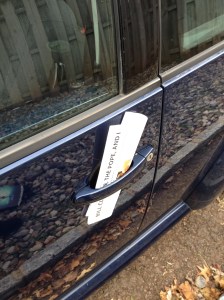
In a world with finite resources, many commodities are in short supply. One clear overabundance is that of ego. We’ve seen that clearly in the long, long months of this year’s political campaign and the single month since then. Running a nation is no longer to be a servant to the people but to the self. So it was while out on an errand I noticed a tract stuck in my car door handle. I’ve mentioned Tony Alamo before. This incarcerated evangelist has a disturbing number of supporters in New York City, at least to go by how prevalent his flyers are in Midtown. I’d never, in my suburban Jersey neighborhood, had my car violated by one before, so this was something new. What caught my eye was the grammatically inept headline: “Bill Clinton, The Pope, and I.” As a title it should have said “and Me.” Letting that foible pass, we’re still left with a religious zealot classifying himself with duly elected world leaders.

I know that the Roman Catholic Church is not a democracy, by the way. Popes, however, are elected from among their peers, and so it’s not purely a matter of one man putting himself forward as the people’s choice. Alamo’s headline screams of a wounded ego. Donald Trump’s famously thin skin does the same. Not that that makes me for one second sympathetic. I grew up with a religion that taught self-denial, self-abnegation, and putting others before oneself. Self, self, self. Selfishness used to be a sign of poor manners or bad breeding. Now it’s the way to the highest political office in the land. We clearly have a surfeit of ego. The same is true for the terrible plague of racism and sexism that have become the flavor of the day. Too much concern with self.

Not only is this a political aberration, it also goes against human nature. In the literal sense. Our species has thrived because of its sympathy for others. We see this is primate societies. When one individual, even—or especially—an alpha male, asserts himself beyond the good of the group, he is taken down. In addition to our opposable thumbs, we’re also endowed with a sense of fairness, of sharing. Call it the ethics of nature. Not only that, but most religions agree—the sign of a just society is one where everyone is cared for. So it may be that we don’t have enough coltan to make all the smart phones we need but we do have enough ego at the top to go around, and then some. Might I suggest it might be time for a fire sale?


Stand Up

dscn4678

At first glance, we had little in common. In fact, of all the people in the room the only one I knew was my wife. We were gathered together to find ways to defend ourselves against our government. Those who normalize Trump and claim that his nearly 3 million vote loss qualifies as a mandate are blind. Those of us who have been complacent, believing that our government—even with obviously inferior candidates such as the Bush family offerings—was in the process of self-balancing have found the bar of the scales of justice broken. Founded as a democracy, we’ve “elected” our first dictator, who, if unchallenged, has already indicated that our civil and human rights are just chattels to be bargained away around the boardroom table. Once those of us who survive the next four years stagger out, I wonder if it won’t be time to establish a test to be president. A basic competency test.

For my job, I’m evaluated on basic competencies. An editor, for example, has to understand both the language in which the job is undertaken and possess a fair amount of skill in a variety of administrative tasks to perform adequately. Why doesn’t the most powerful job in the nation require a set of basic competencies? Things such as a basic vocabulary test and being able to point to foreign nations on a map? It may sound elitist, but I grew up in a working class family and although I’ve never run for political office, even I knew the value of legitimate education. Watching a politician surrounding himself by fact-deniers in a cabinet of untruth should demonstrate to even those who voted for him that we’ve put an incompetent politician in power. We’ve batted our eyes at a man we don’t know and have asked him to dance.

I’ve made it more than half a century without needing to be political. We now all have to become political. It’s distressing to see others my age saying “what can you do?” with a shrug of the shoulders. We can organize. We can resist. We can insist that the values that 3 million more voters showed in an historic win of the popular vote be represented by our government. This is not status quo ante. This is not just another political snafu. We all face a challenge to basic democracy and a level of untruth unprecedented even by politicians in the past two centuries. Don’t sit still. Get involved. Stand up for human rights, because your government elect has made it clear that it won’t.


What You Eat

The future of Sleepy Hollow is uncertain. The successful FOX television program has suffered the slings and arrows of outrageous scheduling over the past year and speculation abounds that the current fourth season may be its last. It has been, in my experience anyway, one of the most literate supernatural horror shows ever. Books and reading abound and an interracial team fights evil week after week. Having done some research on the first season of the program, I continue to be surprised just how detailed the homework of the writers is. My wife sent me a story from Atlas Obscura on the “sin eater.” This is a term, I readily confess, that I never heard before the introduction of Henry Parrish to Sleepy Hollow. Ichabod Crane, guilty over the death of a freed African American freedom fighter, ingests poison to kill himself and severe his connection to the Headless Horseman. Abbie Mills, believing there is another way, locates the sin eater.

The idea is fairly simple, if unorthodox. A sin eater can literally devour the sins of another. In Sleepy Hollow this comes at a considerable cost, but the article by Natalie Zarrelli demonstrates that this too reflects research on the subject. There were, it turns out, sin eaters in the early modern British Isles. Often a poor person with no other options, a sin eater would consume bread placed on the chest of the deceased, incorporating, in an almost Christ-like way, the sins of the recently passed. The dead could then be safely buried, forgiven, while for a pittance a poor soul could walk around with someone else’s sins in his or her body. Sounds like capitalism writ large, to me.

Watching Sleepy Hollow I had assumed this idea was invented for the show. Like so many details, however, it turns out that some digging had brought an obscure historical practice to the surface. Sin eating, as the article makes clear, was never sanctioned by the church. People have often worried that official religion might not deliver the salvation it so readily promised, bound up with rules and rites as it was. Here was a sacrament of the people. Bread could be visibly consumed and symbolically, or literally, sin with it. The sin eater was paid, making this a legal transaction. Although sin eating is thought to have died out, it seems that with the recent, high-level resurgence of evil-doing, perhaps it is a practice that should be recalled. In many ways Sleepy Hollow has been ahead of the times since the beginning.

IMG_1960_2


Publishing Weakly

Those of you who aren’t professional religionists might not understand the cultural impact of the American Academy of Religion and Society of Biblical Literature annual meeting. Every November a largish city (New York and Los Angeles are too expensive, but many of the other biggies have hosted us) is inundated with religion scholars. Nearly a literal myriad of them. Church attendance spikes, that weekend, as do the takings in the local bars. Restaurants near convention centers are swamped and tips, I expect, aren’t that great. And publishers show up in spades. We tout our recent books, attractively displayed for the book-hungry, and hope the cash rolls in. It’s not a cheap conference to which to send your staff. Books, though, make you think and we have to get our ideas out there.

img_3042

The conference is big enough for the book industry that Publishers Weekly, a standard periodical for the biz, generally has a story about it. Even when people were worried about the election results, we had to get together and discuss what’s God got to do with it. Or so it would seem. In the story by Emma Koonse and Lynn Garrett, it is noted that InterVarsity Press, a stalwart of conservative Christian publishing, has generated its own Trump-like crisis. Owned by InterVarsity Christian Fellowship, the press has been instructed that anyone who disagrees with the parent company’s stance against gay marriage must resign. They hasten to add that this doesn’t apply to their authors. There is such a thing as a double-standard, you know. You need to bring in that money, otherwise you can’t afford to oppress your employees.

The idea behind publishing is that ideas should be—must be—shared. There is an educational imperative. Many IVP readers may be surprised to learn that the Bible says nothing about gay marriage. I’m pretty sure it doesn’t mention Donald Trump either, although reading the account of Balaam I might have to admit being wrong about that. It’s funny what you can make the Bible say when your theology is merely thinly veiled prejudice. Perhaps we should put belief meters on our government houses. Of course, if we did that I’m not sure the national budget could cover the cost of all the lie detectors they’d need to install as well. Publishers, of all people, should be the ones with the most open minds. Unless they find the wallet more compelling than the truth. Let’s just ask Jesus’ wife about that.


Somewhere out There

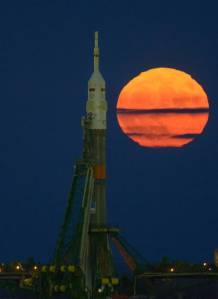
If last month’s election taught us anything it’s that nobody really knows anything. For many years now I’ve been saying that the sign of an educated person is s/he admits how little s/he knows. Socrates may have beat me to that idea, but there are still people whose intellect appears so great that we should pay attention. To my mind, such as it is, Stephen Hawking is one of those people. I don’t understand his formulas, but some of the concepts I can grasp. So when Prof. Hawking says we have approximately 1000 years before we make our planet unfit for human life, I think we should take notice. In just a decade we’ve gone from a Wall-e White House to a Dumb and Dumber one, and old mother earth is due to take a beating. Hawking, according to a story in The Washington Post, advises us to look for another planet to colonize.

 Photo Credit: (NASA/Bill Ingalls)

Photo Credit: (NASA/Bill Ingalls)

Colonization seldom ends well. I wonder how the rest of the universe feels about us moving into the neighborhood. We dump our waste into anything pristine enough to carry it away so that people can make some of their number wealthy so that they can feel better about themselves. We can’t go one year without a war somewhere in our world and we kill one another just because we look different. We can’t even elect a president who’s smarter than any random undergraduate. Not exactly the kind of invasive species you want living next door. Any system can be gamed—capitalism most of all—and if it were up to me I’d prefer to have thoughtful neighbors. Perhaps the universe is politely saying to Dr. Hawking, “not in my backyard.”

What I find truly amazing here is that religion gave us the entitlement. Believing that the gods are like us, or that one deity made us in his white, male image, we’ve figured out this world’s ours to destroy. Just like entitled kids with too many toys. Daddy can always buy you another. So now we’re in the market for a new planet. One that’s not too hostile, but easily exploitable. A capitalist planet, but one that doesn’t mind a bit of help from former communists. You see, once we’ve figured out how to exploit another planet, there’ll be no stopping us. I have great admiration for Stephen Hawking. It’s just this time I think that we need to set our own house in order before we start inviting ourselves to somebody else’s home.


Monsters and Men

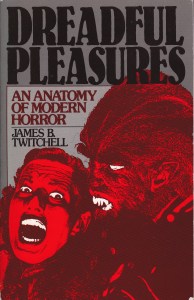
dreadful-pleasuresHorror films are something you either “get” or you don’t. I have no empirical evidence for that, but then again, “getting” is hardly a precise verb. In my recent desire to find some explanation for my own fascination with the genre, I turned to James B. Twitchell’s Dreadful Pleasures: An Anatomy of Modern Horror. This is a smart book. Twitchell, an English professor, knows to include Gothic novels in his accounting for this strange addiction. He has several insightful things to say about the differences between terror and horror. He gives a fairly complete analysis of the “big three”—vampires, Frankenstein monsters, and werewolves/wolf men/Jekyll and Hydes. Still, at the end, I have to wonder if he really “gets” the monsters he explores. Part of this is his early admission that he didn’t grow up with monsters, but that he was introduced to them academically. Another part of it is his sometimes dismissive style when talking about movies that meant a great deal to us monster boomers when they came out. Either you get it or you don’t.

Still, I recommend this book for those who want to make sense of some of the hidden dynamics of classic monsters. That the analysis is sexual should come as no surprise. Twitchell finds evidence for a sublimated incest in many of his creatures, but the true fan knows there is more to them than that. The monster does indeed cross boundaries—that’s what monsters do, after all—but that’s only scratching the surface with their claws. Of course, the book suffers from having been written perhaps a little too early. Although there is protest to the contrary, horror films have grown up considerably since the 1980s. Not all of them, of course. The same thing could be said of the kids I knew in high school.

Having a single theory to approach a phenomenon is respectable. So respectable that it’s called Occam’s Razor and everyone is expected to shave with it. I’ve never liked shaving. The more I reflect on reality, the more it seems to me that answers are more complex than single causation. Sometimes the simplest answer isn’t the most parsimonious. Sometimes there is far more going on than meets the cyclops’ eye. In my experience, limited though it may be, the horror movie has unexplored dimensions. One of them is the coping ability that they offer when evens such as 11/9 occur. There’s no simple way to understand monsters, but if we see them around enough, we might just be able to survive them.


December Demons

Conversations with friends, inevitably, turn to the fiasco this country faces with Donald Trump. My response, apart from attempting a measure of optimism and combativeness, often involves escapism. Regular readers know that I watch horror movies. They may not know that I watch such films to help me cope with the very real fears of living in what has all the signs of being an out-of-control autocracy. With this in mind, I’ve been reading about horror films to try to understand myself a bit more. Perhaps a roundabout way to psychological insight, but it is cheaper than seeing a therapist. Over the weekend I again watched The Exorcist. A classic of the horror genre, it is rare in having been nominated for Best Picture at the Academy Awards and having received mainstream critical acclaim. What made it particularly interesting at this particular viewing is the fact that demons are such poorly understood monsters.

Mikhail Vrubel's demon, Wikimedia Commons

Mikhail Vrubel’s demon, Wikimedia Commons

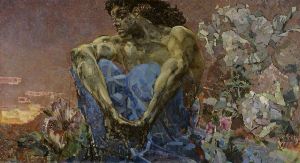
One of the reasons for this is that no single entity known as “demon” fits all the ancient ideas about such spiritual beings. The earliest demons we know about, from ancient Mesopotamia, aren’t necessarily evil. They seem to be in control of natural forces that harm people, but that isn’t always intentional. From the human perspective this is bad, but from the point of view of the divine world, it’s neutral. Sumerians and those of the Babylonian and Assyrian empires did not believe in Hell. There was no Satan and therefore “fallen angels” intent on harming people weren’t part of their worldview. The Greeks, who gave us the word, referred to as “daimons” nature spirits that were generally benign. In the biblical world, influenced by Zoroastrianism, a dualistic understanding of the universe emerged and eventually demons came to be understood as angels that followed the Devil in revolt against God.

Complicating the picture, possession, in world religions, is not always a negative thing. In some cases it is a way of having a deity inhabit one’s body—something of a blessing. In the New Testament demons may have been an explanation for epilepsy. They were, however, understood in that day as possessing spirits of evil intent, in league with Satan. Thoroughly evil, they could evoke paranormal phenomena and could completely control a person unless expelled. In modern media, where reality television dictates the terms, demons are responsible for some hauntings. They are disembodied entities “that were never human” and they are always malevolent. One of the reasons they are so scary is that no one really knows what they are. And in cases where one has no idea what to expect, fear is a natural result.


Hoping for Light

Although the stores have been playing Christmas music for some weeks now, it is technically Advent. I think we could all use a little Advent as days grow shorter and dark nights increase their influence over our lives. As a nation we’ve been brutalized by a minority candidate and this has become a bleak December that Poe would certainly have understood. The spinning mind occasionally falls upon George W. Bush who somehow has begun to look normal. The president who told us when America was under attack we should shop. After all, that’s what people do in December, right? We buy things to make ourselves feel better. It sure is dark outside most of the time. Advent is all about candles and light and hope.

img_2638

One of the more endearing aspects of human beings is our ability to see the positive amid negativity. Darkness is the natural state of the universe. Stars are tiny points of light in an endless cold and dark universe. Most of what’s out there has no light beyond those willing to burn bright enough for others to see. We, however, see the light of daytime as normative, slumbering away the hours of darkness. We thrive in light and the light has to be augmented by candles as we struggle against the natural darkness that would, if it could, encompass the universe. Darkness, despite its emptiness, is endlessly hungry. Advent reminds us that we must be light if we want anyone to see in the growing nighttime.

We miss this important dynamic if we leap straight from Halloween to Christmas, pausing briefly for Thanksgiving. The church has made its fair share of mistakes, but Advent wasn’t one of them. Experts tell us Jesus wan’t born in December. Christmas isn’t really a physical birthday. It’s an ancient rite concerned with the return of light to darkened skies. A fervent appeal for our colorful lights and candles to encourage the light that we know, we believe, is out there to return to us. Scientists tell us that it’s just that the earth lolls at 23 degrees on its axis and all of this is just a balancing act. That may be so. I’ve never been off the earth to check. Down here on the ground, however, the days come only reluctantly and the nights linger longer and longer. And we can choose to see darkness as our natural state, or we can ignite a candle to encourage the light to return.


Protest Reading

In these days of bold ignorance, reading in public is an act of resistance. A world that follows the uninformed to perdition requires those who stand as witnesses. Those who read. As a cabinet of the wealthiest people in the country is being assembled we need to remind each other that wisdom and wealth aren’t the same thing. Not even close. We read to improve our minds and we find, in such reading, that wealth increases happiness only to a point. Excess wealth leads to misery, but like the addicted, those who have it just can’t stop. Stop, I say, and pick up a book. To help with this my wife sent along the Banned Book Advent calendar. That’s not to say we can read a book a day, but I believe the world would be a better place if we could. Especially if those books were banned.

You see, banned books cause us to think. That’s the payoff. I’ve read many, many banned books. Some of them I didn’t like very much, but that’s not the point. Liking what you read may lubricate the process, but it is the reading itself that stretches the mind. Makes use of mental muscles we didn’t know that we had. Those who ban books want prejudiced minds to prevail. Think about it: prejudice comes from the combination of the prefix for “already” and the root for “judging.” The prejudiced have already decided. Reading challenges. It has from the earliest days of myths on clay down to the era of ordered electrons on a flat screen. Reading makes you question. The thought police prefer mindless acquiescence. Want to show your true colors? Pull out a book and read.

IMG_0899

The season of Advent is one of anticipation. We all know what’s behind door 25, but the journey is the point. That journey is better when it’s literate. When I travel my carryon always has books. More than I can read on the trip, just in case. Books are banned because we fear knowledge. Once exposed to an idea we must deal with it. Far simpler to lock it away in some sealed room and continue to do things like it’s still the 1450s. Before Twitter started revolutions, books did. When we put down our books we are opening an invitation to ignorance. Last month showed what happens when that invitation is given. I won’t make it through a book a day this season, but I flip out my reading material whatever chance I get. And I believe a better future will result.


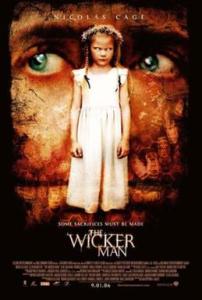
The Wicked Man

I confess, it was a moment of weakness. Or I could say that it was dedication to research. In either case, I subjected myself to watching the remake of the 1973 classic, The Wicker Man. The reviews that I’ve read over the past decade since its release had warned me not to subject myself to it. Not only did I, but I had my wife gamely watch it with me. If you plan to watch the flick but haven’t, I’ll first of all beg you to save your time and secondly warn you of spoiler alerts. So here goes.

By Source, Fair use, Link

By Source, Fair use, Link

In a movie that may be either pro-feminist or misogynistic, depending on which way you look at it, this version of The Wicker Man takes place in the United States. We’ve got all kinds of New Religious Movements in this country, so that much is believable. The film has a group of women who mute, deafen, and enslave their males moving from Salem, Massachusetts, across the country to Puget Sound where they can find an island to be left alone with their rituals. Superfluously adding an “s” to the original’s Summerisle, they come up with the sloppy-sounding Summersisle where they can raise bees. They worship the great mother-goddess, which is cool enough, but their religion appears to be cobbled together in a way that suggests those responsible for the movie didn’t do their homework. Although Sister Summersisle (five “s”es—count ‘em!) claims this to be a Celtic religion there are merely the weakest echoes of such.

To make matters worse, Edward Malus goes around beating up women when they get in his way. Yes, he is the unwitting victim—we’ve seen the original and know how this plays out—but it makes the viewer uncomfortable watching this unsympathetic protagonist punching, kicking, and even bicycle-jacking with a gun, the women of the island. A man comes ashore and the first thing he does is try to take over. Were there evidence of a deeper plot here it might suggest that this was intentionally written into it. As it turns out, however, as we enter a fearful era of the rich white man’s revenge, such scenes only suggest that Mr. Malus had it coming. Perhaps the movie is prophetic after all.

I really don’t recommend spending your time on the remake of what has become a horror classic. If you’ve seen the excellent original, you already know how it ends. And despite his brusque manner Neil Howie didn’t shout invectives at women or punch them in the face. In short, he took his fate in what might be a way that is also prophetic.


Fear of the Artificial

As someone who dedicated four years—particularly long winter nights—to the cause of high school robotics, I found myself knowing quite a bit before I walked into the room. Now let me post a disclaimer here: I’m no techie. I’ve studied the humanities throughout my education and although I’ve been able to engineer a bookshelf or two, and even the occasional project with moving parts, the technical eludes me. I claim absolutely no expertise in it. So where was I going that robotics came to mind? A lecture on Artificial Intelligence. AI. You see, I’ve been a bit concerned about it for some time because I’ve seen what robots can do. A friend recently showed me some episodes of Battle Bots on YouTube (the relative who started this blog for me was doing quite well in the competition last season), and from my own experience watching hours of FIRST robotics competitions, I know enough to be afraid.

What could possibly go wrong? (DARPA photo)

What could possibly go wrong? (DARPA photo)

The lecturer assured us that we had nothing—or next to nothing—to fear. Artificial Intelligence, he assured us, is a misnomer. Machines have no will. No mind. There’s nothing they want. They do as they’re told. You write a program and feed it to your bot and your mechanical friend can do only what it’s told to do. This sounds uncomfortably like slavery to me and although I know I’m projecting, I have to wonder if robots think the same way about it too. No, the lecturer assured us, they do only the tasks assigned. They don’t think at all. Then he said something that made me shiver. That wasn’t his intent. He said something like, “We don’t even know what consciousness is, so how can we replicate it?” That was meant to be reassuring.

I took this idea and flipped it over in my head. Rotated it. Ran it through my own programming. If we don’t know what consciousness is, how can we be sure we haven’t accidentally created it? Herein lies the heart of fear. Scientists have been trying for decades to define, to explain empirically, what consciousness is. We simply don’t know. We all recognize it when we see it in other humans. We’re finally starting to recognize it in animals (long overdue). How do we know that it isn’t a function of complexity? And when does something become complex enough to qualify? I don’t know about you, but videos of swarm robots send me hiding under the bed. Not that it will do me much good. They’ll know where I’m hiding. Maybe I could use some intelligence right now. Even something artificial might help to stop me from shivering.