Strange Worlds

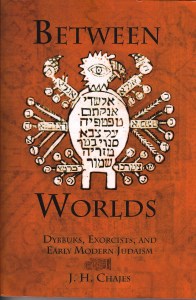
The Bible can lead you astray sometimes. Don’t worry, it’s unintentional, I’m sure. It has less to do with the Bible itself than with the way it was compiled. Any book written over centuries by different people is bound to show some inconsistencies. Unfortunately some of those inconsistencies are about things people really want to know. What happens when you die, for instance. Pretty important to get that one straight. The Bible has shifting views about that, and those views led to ideas such as Heaven, Hell, Purgatory, and reincarnation. Wait, what? Reincarnation? Isn’t that an eastern religion thing? That’s what I always thought. Then I read the provocative Between Worlds: Dybbuks, Exorcists, and Early Modern Judaism by J. H. Chajes. This started for me, as things often do, with a scary movie.

Some time back I watched The Possession. For those of you who haven’t seen it, it regards a Jewish exorcism—based on a true story, it says, but aren’t they all? Now demons exist in the Hebrew Bible, but the monster in this movie wasn’t exactly a demon. It was a dybbuk. Sharing the Gentile liability, I wasn’t aware of what a dybbuk was. A religion professor in the movie tried to explain it, but I had to read a book. Between Worlds seemed the best place to start. What a fascinating book this is! Anyone who’s interested in the history of exorcism, whether Christian or Jewish (and perhaps even Muslim) will find abundant information here. Jewish exorcism? Much of it depends on how one understands the concept of “soul.” It also depends on who’s doing the possessing. A dybbuk is a displaced human soul from someone deceased. If it can’t get into Gehinnom (which Jesus mentions a time or two) it reincarnates into an available body, often sharing it with the resident soul.

From there things only get more unusual. For those of us who know about exorcism from the movie (you know the one I mean) or even from Chick tracts, the idea that a human soul (which can be good or bad, depending) can possess someone is unexpected. The fact that reincarnation developed from the same Bible that gave us Heaven and Hell is equally surprising. I suspect it’s because the Good Book doesn’t give a clear picture of what comes hereafter. The Hebrew Bible has Sheol, and the New Testament adds Heaven, Gehenna, Hell, and the underpinnings of Purgatory—a buyer’s market for the afterlife. With that being the case I suppose it’s to be expected that some spirits prefer to move from house to house. To learn what’s available Chajes is an excellent choice.


Alt Bible

A friend recently sent me a story from Anonymous titled “Why Did The Vatican Remove 14 Books From The Bible in 1684?” This piece reminded me of just how rampant biblical illiteracy is in this Bible-worshiping culture. To begin with the obvious, Roman Catholics are the ones who kept the Apocrypha in their Bibles—it was Protestants who removed the books. No doubt, retaining the Deuterocanonicals was a rear-guard action of the Counter-Reformation, but still, if you’re going to complain about the Papists it’s best to get your biblical facts straight. The story is headed with a picture of The Key to Solomon’s Key. Ironically, Solomon’s Key is actually an early modern grimoire that the author seems to think is the same as the Wisdom of Solomon, one of the books of the Apocrypha. Reading through the post it was clear that we have an Alt Bible on our hands.

(For those of you who are interested in the Key of Solomon, my recent article in the Journal of Religion and Popular Culture on Sleepy Hollow discusses the Lesser Key of Solomon, a famous magic book. It features in one of the episodes of the first season of the Fox series and, I argue, acts as a stand-in for the iconic Bible. One of my main theses (don’t worry, there aren’t 95 of them) is that most people have a hard time discerning what’s in the Bible and what’s not. But I obviously digress.)

The post on Anonymous states that the Bible was translated from Latin to English in 1611. The year is partially right, but the facts are wrong. The translators of the King James Bible worked from some Greek and Hebrew sources, but their base translation was the Coverdale Bible which had been translated into English and published some eight decades before the King James. Myles Coverdale relied quite a bit on German translations, but the King James crowd went back to the original languages where they could. The KJV was published in 1611, but the translation from Latin was actually something the Catholics preferred, not Protestants. The Vulgate, attributed to and partially translated by Jerome, has always been the favored Roman base text. Ironically, and unbeknownst to most Protestants, the King James translation did include the Apocrypha. I like a good conspiracy theory as much as the next guy, but they certainly make a lot more sense when the known facts align without the Alt Bible unduly influencing the discussion.


Blizzard Warning

The dangers of prognostication were well known in antiquity. Most prophets, who didn’t so much tell the future as warn about probable outcomes, weren’t the most popular of people. They knew that feeling of walking into a crowded room and announcing their career had something to do with religion only to have the place fall silent. Cricket chirps. We all have our secret sins we’d rather not have some stranger judge. So it is with the weather. Something like this must’ve been in the back of my mind as I was trying to write Weathering the Psalms. I lived in Wisconsin in the days before Paul Ryan and, like said Ryan, tornados could strike at any time, unannounced. My family and I spent an anxious afternoon or two in the spider-infested basement based on the inherently uncertain predictions of how a nearby tornado might move.

Those of us in the northwest are sitting here wondering about this monster nor’easter. It’s been in the making for several days and the forecasters, unlike the prophets of old, have been hedging their bets. If this massive cold front from the midwest fails to meet up with the intense storm off the east coast we could end up with only a smattering of snow. If the two collide, well, Isaiah, Jeremiah, and Ezekiel together can’t help us. It’ll be like the book of Revelation. Only colder and with far more snow. Oh to be able to predict the future! It would certainly help when it comes to deciding whether to climb onto that bus or not. I mean a simple rainstorm can add two hours to the homeward commute without the threat of a meteorological Trump coming our way. I thought Punxsutawney Phil didn’t see his shadow.

Although predicting the future wasn’t really what prophets did, it didn’t take long before people thought that’s what they were up to. People have always wanted to have the advantage of being able to see disasters before they arrived. Wouldn’t it have been helpful to know the results of 11/9 before Thurston Howell the President was elected? We could’ve bought our Russian grammars and dictionaries before there was a run on the local Barnes and Noble. At the same time I politely dispute the saying that hindsight is 20/20. If we could see anything that clearly we would be such Untied States at the moment. Right now the glass seems to be falling and the wind’s picking up from the northeast. What does it mean? Nobody really knows.


Neologism

I like a good neologism as much as the next guy. Oxford English Dictionaries recently released a covey of new words added to the famed lexicon. Most of them, it seemed to me, had to do with dangers of technology, like “drunk text” and such fare. Still, increasing vocabulary is one of those rare joys in life that is continues to be free, so I indulge. A friend sent me a BBC story about another new word: champing. Well, my spell-check recognizes that one so maybe it’s not new. In any case, this champing is derived from two words “church” and “camping.” Some locations with medieval churches—which kind of rules out anything on these shores—are now opening them up as camping spots, thus church-camping. The article asks what it’s like to stay overnight in such a place.

Growing up in western Pennsylvania, medieval churches were hard to find, but I spent more than one night sleeping in sacred spaces. It’s an uncanny experience. In what may have been more innocent days, our United Methodist Church allowed youth group sleepovers, as long as there were counselors present. (Ever naive, I only learned later that there were ways around such obvious strictures.) On a Friday night, then, we could occasionally gather with our sleeping bags and slumber under the sanctuary. For theological reasons we couldn’t sleep in the sanctuary itself (although that couldn’t be prevented on the occasional very long sermon) but we could go in. Churches are scary at night with the lights out. We may give lip service to holy ground, but large, cavernous spaces suggest so much by absence and implication that it would take a stout soul indeed to sleep there.

Looks okay from the outside.

Sleeping in sanctuaries in ancient times was an acceptable practice. In fact, there’s a name for doing so: incubation rituals. A person who slept in a sacred place believed any dreams had that night were a message from God. Knowing the dreams I tend to have, I do wonder. Once, at the United Methodist camp called Jumonville—famous for its large white, 60-foot, metal cross visible in three states—we counselors (still naive) had our charges sleep outdoors at the foot of the sigil on the bare top of the mountain. In the morning my champers gleefully informed me that I’d been praying in my sleep. “You kept saying ‘Amen. Amen,’” they told me. Alas, I don’t remember the dreams of that night. Perhaps when I find a medieval church on my journeys I’ll be brave enough to try an incubation ritual once again. This time I’ll take a tape recorder.


Rising of the Sun

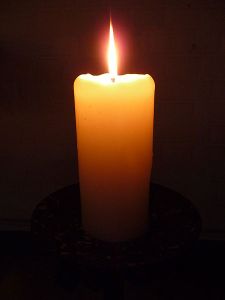
“When the trumpet of the Lord shall sound,” the old hymn goes, “and time shall be no more…” Before Trump’s election I always supposed this might have something to do with the useless ritual of setting our clocks ahead. Apart from the fact that we’re all a bit cranky because, well, we lost an hour of sleep last night, this day is a fine illustration of how rituals form. Daylight Saving Time was a wartime initiative to help keep things going during the darker months of the year. Since things seem pretty dark all the time now I’m not sure that changing the clocks will do any good, but it does call to mind many religious rituals that started out for practical purposes and accreted symbolic meaning over time. One of my favorites is the use of candles.

Photo credit: 4028mdk09, Wikimedia Commons

In the days before electricity, sanctuaries (which were sometimes devoid of windows) required a source of light. The menorah in Jerusalem is perhaps the most famous example, but by no means the only one, of a necessary piece of furniture that grew religious significance. Oil lamps were widely used before candles were invented and they work on the same principle. It didn’t require any special illumination to realize that light is symbolic for creatures that rely heavily upon sight. If you see something, say something. And before you know it candles themselves acquire religious meaning. Just last month some Christians celebrated Candlemas where the title of the day appears to suggest the candles themselves are somehow sacred. Ritual begets ritual. We are meaning-making beings.

Now that we’ve somewhat ironically set the clocks ahead under Trump it might be a good time to reassess. “Rage,” Dylan Thomas wrote in a more modern hymn, “rage against the dying of the light.” Even though Thomas’ light itself extinguished prematurely his message lives on. We’ve lost a month’s worth of morning light. When I step outside this morning it will be darker than it was this time yesterday. But humans habitually look ahead. If I allow myself that luxury as the roll’s being called up yonder, I can perhaps make my way home in the light now that time’s changed. Nature took the light and is now giving it back. Maybe this isn’t the final trump after all. In my more optimistic moments I do believe that candles can be magical in their own right. That’s the power of ritual.


Ready, Ames,

Ames, Iowa is famous for many things. Not only is it where my wife grew up and where we were married, but it’s also the home city of Howard Bannister from What’s Up Doc? and it served as the staging ground for the crew of Twister, which includes some scenes shot in the area. Probably its greatest claim to fame, apart from the sadly defunct Do-Biz Cookies, is being the location of Iowa State University. Often I lingered near campus during family visits, wistfully hoping that someday someone in the religion department would welcome me among the faculty. My academic curse, however, is a powerful one. And that brings me (finally!) to the topic of this post—the haunted history of ISU.

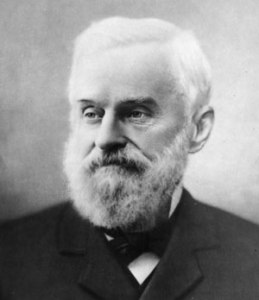
Even the first president had a biblical name.

The website onlyinyourstate (we’re evolving out of the need for a spacebar) has a whimsical story about the hauntings on ISU’s main campus. The story isn’t scary at all, but it does raise that interesting specter of the ghosts of higher education. I’ve read a few of Elizabeth Tucker’s books about haunted campuses (Tucker teaches at another family school, Binghamton University) and, having spent a good deal of my life in academia, I’ve heard many tales first-hand. The very institutions that repeatedly bash our heads with facts can’t escape their own spooky pasts. Even conservative Christian Grove City College had its share of hauntings that we all knew about. You know, the Ketler ghost, and the spirit of the basketball player who broke through a glass door and bled to death right there on campus? Every campus I’ve known has had its baleful wraiths.

Sometimes I wonder if such stories aren’t a natural reaction to having the wonder excised from the world as we mature. Most of us can make it through high school somehow believing in the real possibilities that the world might offer, only to graduate from college to a 9-to-5 existence robbed of any supernatural splendor at all. Is it any wonder coeds see ghosts? Just the other day I read that a tree trimmer with a high school education in Iowa makes a much higher salary than I do with a Ph.D. working in New York City. Maybe that’s why I enjoy the movie Ghostbusters so much. When the reality of higher education and its politics and cruelty become clear escapism can be your best friend. And if you find yourself in Ames, you might want to avoid Friley, just in case.


Heal Thyself

One thing we can say about the misguided leadership of this country is that they’re taking the Bible seriously. As the Republicans roll out a “healthcare” plan that would leave the elderly and poor at the mercy of the rich—known for their compassion—they’ve clearly displayed their belief that the followers of Jesus who voted them into office will once again rely on the carpenter from Nazareth for their healing. Those of us who’ve spent more than a few devotional hours with the Good Book may be a little less sanguine about the prospects for our aging parents (and let’s be honest, none of us is getting any younger). I guess we can call “Trumpcare” a blatant trumpet blast for the Second Coming.

It truly amazes me that Trump supporters don’t see the shady practices of the age-old business deal at work here. Cut my costs, offer you something that you don’t really want, and walk away looking like the guy who was only trying to help. As Kenny Rogers reminded us decades ago, you’ve got to “know when to hold ‘em, and know when to fold ‘em.” Only folding’s not on the table any more. If enough dissatisfied people die off in the next couple of years you won’t even have to worry about midterm elections, I guess. As a member of the human race who’s watched my elders age I don’t see how anyone could ask to have the healthcare taken away from their parents. But then again, this will save the uber-rich in this country quite a bit of money, so there must be a silver lining after all.

It’s unfortunate that nobody seems to care that irony is in such short supply. Presidential campaigns waged on hate deliver when it comes to taking away the services of those who voted them into power. Swamp dwellers all. A healthcare bill to make our country sick and weak—who could’ve thought of such a stroke of genius? You’ve just got to trust the rich to have everyone’s best interests at heart. Isn’t it clear that they always do? I often see them hobnobbing with the people who live in cardboard boxes on the streets of Manhattan. I seem to recall a guy with a reputation for healing once saying something about it being easier for a camel to pass through the eye of a needle than for a rich person to get into his hospital. Only he didn’t come up with a healthcare plan before he left. Does anybody have Jesus’ smartphone number?


Seeing Belief

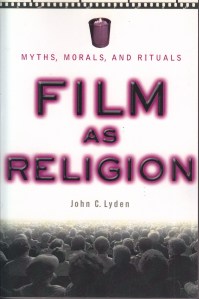
Although most of us can recognize it on sight, we have a difficult time defining religion. In the early parts of Film as Religion: Myths, Morals, and Rituals, John C. Lyden discusses this lack of definition and offers some broad categorizations since his thesis depends upon it. How can one assert that film may be understood as religion if religion isn’t identified? Lyden makes clear that this book won’t be about an ideological or theological interpretation of film. It’s more about popular culture and how elements of that culture, such as cinema, may be religion. This leads to the discussion of the topics of his subtitle: myths, rituals, and morals. These all share some conceptual territory with movies, therefore understanding them is important.

To me the most interesting part of the book is the consideration of genres (westerns, gangster movies, melodramas, romantic comedies, children’s movies, science fiction, thrillers and horror) as exemplars of various aspects of this religion. Each genre includes the discussion of a feature film, and some even have two. Of course, Lyden’s book is a few years old now and other studies have shed further light on both how religion and film interact and also on the interpretation of various genres of movie. The hope of the book—that it may be the start of a new kind of discussion about religion—has to some extent been realized, although the analysis has taken off in several directions at once. There can be no doubt that cinema taps deep spiritual needs in a way not unlike a religious ceremony.

It seems that society has come to distrust the usual purveyors of religion. Dishonesty almost as deep as that of the government has been found in it and the responses are remarkably similar—cover-ups and denials and many species of prevarication. Cinema seems downright credible in comparison. What you see is what you see. The big difference between movies and religion, however, is that we’re only too glad to acknowledge the human sources of celluloid. Many religions, especially in the monotheistic tradition, rely on direct divine revelation as their origin. Lyden isn’t suggesting that film substitutes for religion in that way, but on a more practical level it may. It meets our needs. We trust we’ll get what the poster and trailers promise us. We sit reverently in the dark awaiting illumination. And yes, there’s an exchange of money involved for any kind of worship involves an offering. No religion’s free of cost.


All There Is To Know

I’m sorry, I didn’t mean to be rude but I just had to laugh. A friend sent me an article from Science Alert titled “A Physicist Just Explained Why the Large Hadron Collider Disproves the Existence of Ghosts.” Intrigued, I read, “there’s no room in the Standard Model of Physics for a substance or medium that can carry on our information after death, and yet go undetected in the Large Hadron Collider.” One of the reasons, I believe, science has trouble among hoi polloi is such arrogant statements as this. I don’t know about ghosts, and for a very good reason. There is no experimental way to test for that which doesn’t exist in the material world. The LHC may tell us all we can know about the world that we perceive (although I doubt it) but it can’t tell us about that for which there is no measure (e.g., consciousness). I don’t mean to get all complex here, but let’s stop and think about this for a moment.

What we know of the universe is what we can perceive and extrapolate from that perception by reason. We, however, don’t perceive everything. Our five senses evolved for one purpose and one purpose only—to survive in this particular environment. That’s a trait, hate to admit it as much as we might, that we share with other animals. It helps to be able to see, hear, touch, taste, and smell things clearly. These traits give us valuable information about the world around us—is that plant poisonous? Is this heat going to kill me? Should I avoid approaching that large, angry-looking bear? Things like that. What our senses don’t tell us is the aspects we didn’t evolve to perceive. We understand everything about nothing. Put another way there is nothing that we understand completely. Entire books can be written about the concept of zero and that’s just an abstract. We only experience a small piece of this universe.

That’s the problem with being in the backwater of the galaxy. I grew up in a backwater so I know what I’m talking about. Things might be different if we lived near the galactic hub, where beings with different senses may well exist. We know, for example, that even on our planet some animals perceive magnetic fields. Who knows what kinds of abilities might have evolved on worlds that posed different challenges to survival than our own? Who are we to say that here in our basement on earth we have a machine that can uncover every possible permutation of anything in the known universe? I don’t know about ghosts, but, I suspect, they’re laughing too.


Do unto Yourself

Selfishness goes by many names. One of the strangest is “Christianity.” I wouldn’t presume to define a religion, but some time back my wife sent me a story about the prosperity gospel. Written by Michael Horton, himself an evangelical, the pre-greatest inauguration of all time piece is called “Evangelicals should be deeply troubled by Donald Trump’s attempt to mainstream heresy.” Horton goes on to describe the belief system of the prosperity gospel that includes people becoming gods and the idea of positive thoughts drawing good things to you. Quite apart from completely ignoring most of what Jesus is recorded to have taught, the prosperity folk tend to think the Almighty wants them to be, of all things that most shallow, wealthy. “More for me” also goes by many names. The most common is “selfish.”

I grew up evangelical as well. One of the messages drilled into my malleable head was that Jesus taught putting other people before yourself. “Do unto others” was the least you could get away with and still call yourself “Christian.” Part of the disconnect here is that nobody has the authority to define a religion. Not even the Pope can say unilaterally what Christianity is. Protestants aren’t obligated to agree. And with prosperity gospelers with their enormous cash flow telling us that it’s God’s will, well, heresy looks mighty attractive. We’ve come to see the error of heresy, however. Nobody can claim their brand alone has the answer. It’s a theological anything goes. I suggest we go old school and call a cad a cad. Selfishness by any other name would smell as bad.

It’s poor taste to claim your own self-gain as a benefit to society. I, of all people, would handle my wealth properly so that nobody suffers. Except those I don’t like. Doth not Scripture saith, “ I have said, Ye are gods”? Yet earlier in the same Psalm come those easily ignored words, “Defend the poor and fatherless: do justice to the afflicted and needy.” Missing are “build a wall across your southern border,” and “speak untruths when it is convenient to do so,” and “distrust those who speak a language not your own.” Oh what the Bible would say if only we could write it ourselves! But fear not, for we have many who believe the prosperity gospel. And they’ve already got the task well in hand. And their lexicon doesn’t even include the word “selfish,” so you need not worry about such uncomfortable thoughts. Get rich and all will be well.

Photo credit: Kriplozoik, Wikimedia Commons


Excarnation

To those raised in the Christian tradition incarnation is a familiar concept. The idea, more complex than it sounds, is that God becomes human. In a world of DNA and general disbelief in anything non-physical, it boggles the mind how disincarnate “matter” (for lack of a better word) might bond with the double-helix in order to create something new. Since science can’t explain such things spiritual, believers have long hung the cloak of mystery here and passed on to more practical matters. But what about excarnation? It’s actually not the opposite of theological incarnation, but it does involve spiritual practice. A friend sent me an article on Vintage News (much better than fake news, in my humble opinion) titled “The Towers of Silence: Ancient reminders of an eerie Zoroastrian burial ritual.” This was a nice find because I’ve been reading about the Zoroastrians again recently, and if ever there’s been a case of an important religion going underground, their’s is it.

I don’t mean to sound patronizing about it, but Zoroastrianism has been one influential religion. Having roots in the world between Vedic and Semitic religions, it had an impact on both. In my teaching days when I covered Zoroastrianism my Hindu students remarked on how similar the concepts were to their tradition. More reluctant were those of the Judeo-Christo-Islamic side to see that key concepts such as Heaven, Hell, the Devil, and Armageddon have their ultimate roots in the dualism that Zoroastrianism put on offer. Thus spake Zarathustra. We know very little about this founder of the religion. We do know that he set out to create a “systematic theology” that explained the world he saw. The result has changed the world many times over.

Those of you drawn in by catchy titles may be wondering what excarnation has to do with it. Believing dead bodies to be inherently corrupt, burial wasn’t the best Zoroastrian option since it only polluted the ground. The response was the ultimate in up-cycling—expose dead bodies until the vultures eat all the polluting flesh and then handle the dry bones afterward. This practice is arguably the most natural way of disposing of human remains, but it’s distasteful to many people. Who wants to be eaten? Unless, of course, you’re a believer in incarnation. For in that tradition God incarnate told his followers to eat his body and drink his blood. The more squeamish have done what religions have always excelled at—they turned earthy reality into a metaphor. Even vultures have to eat.

Image credit: John Gould, HC Richter, Wikimedia Commons

Image credit: John Gould, HC Richter, Wikimedia Commons


An Apple a Day

Have you ever bitten into a piece of rotten fruit? I suspect most of us have had the unpleasant experience. From the outside the apple looks fine but that first bite sinks into a brown and corrupt interior that turns your stomach. There’s no rehabilitating it—once fruit’s gone bad it’s bad. Jesus is once said to have said “by their fruits you will know them,” them being the righteous. Over the last several days we’ve watched, not exactly surprised, as the news revealed Attorney General Jeff Sessions lied under oath—what used to be a very serious crime—about consorting with the Russians. The difference between that and the apple I described is that this one didn’t look so good from the outside either. Eve, I think, would’ve chosen a different piece.

The strange thing about this is that evangelical Christians of the sort that voted for Trump should know about the fruits passage. Not the Eve one, the other one. Growing up in a Fundamentalist context I frequently heard about knowing others by their fruits. People are capable of deception, even under oath. That’s why we have a name for it. Thing is, we expect better from those who hold the highest offices in the land. And we’d expect honesty on the part of the evangelical crowd. Once you’ve bitten into that apple there’s no turning back. Ideology trumps theology, it seems. Even the Bible. That’s one of the great mysteries of our time—those who loudly proclaim they live their lives by the Bible count on others not having read it. Kind of embarrassing to be caught with your bias showing. Those whose sins you’re willing to overlook in the name of principle.

As the rogue’s gallery that we now recognize as the presidential cabinet was being nominated, many in this nation suffered shock wave after shock wave of incredulity. Steve Bannon later admitted that their role was to dismantle the agencies they’d inherited—so much for the meek inheriting the earth bit—while power-blinded Republican leaders followed like, well, sheep. The evangelical crowd, ignoring that troublesome leather-bound book they love, refuse to criticize. Who hasn’t forgotten meeting with the Russian Ambassador from time to time? I’m old fashioned enough to believe there’s a difference between biting into an apple that to all appearances is fine and one that’s obviously rotten from the start. In one case you end up disappointed. In the other you get what you deserve.


Beating around the Bush

You know things are bad when another president who couldn’t win the popular vote criticizes you. Don’t get me wrong—criticism is good. In my academic existence (on life-support for over a decade now) I’ve received plenty. The point is you can’t improve if you’re not willing to take a few blows. Defensive academics don’t survive long. The problem seems to be, if I may speculate from my knowledge of biblical studies, the word “criticism.” Growing up, one of the last things I wanted to have was criticism. Already overly self-conscious of my sins, criticism only felt like making an already bad situation even worse. Then I was introduced to biblical criticism.

Biblical criticism sounds like the worst kind, but in reality it’s absolutely necessary. The idea is to study the Good Book rationally. I knew, and still know, many people who believe biblical criticism to be evil. If you trust any history—either secular or divine doesn’t matter—you quickly learn that nothing is simply one-sided. The Bible itself offers examples of this: did God or the Devil tempt David to take a census? Just how many angels were in that tomb on Easter morning and who arrived there first? Only one answer can be right. Criticism is, typical of academics too long out of the sun, a poor word choice. Nobody’s picking on the Bible. All the biblical critic is trying to do is to find out what it really says by asking questions of the text.

IMG_1163

That’s the heart of the matter. Autocrats don’t like questions. The assumption that the inherent authority of a position should be unquestioned undermines any attempt at democracy. As I was often told in church—Christianity isn’t a democracy. Our political system, we’re told, is. That why checks and balances were built into it. Either extreme and the applecart is upset. No matter what believers believe the same applies to biblical studies. Some rampant Harvard toadyism remains, but for the most part we recognize that a scholar with—shall we call them “critical skills”? may emerge from even a school shorn of ivy. We understand that’s how learning works. No one’s above criticism. Only those with something to hide can’t take their lumps like the populace that allow them to claim the name populist. Nobody likes it, but we all have to take criticism from time to time. Even the Good Book.


The Cargo of Cults

Among religious studies scholars “cult,” in the popular sense, is a swear word. Professionals in the field don’t use it because it implies that a belief system—usually modern—is somehow less important than an established religious tradition. Instead, we’ve been taught to call these “New Religious Movements,” or NRM for short. Looking around it seems that political correctness is now gone and open advocacy of white power is the new norm. After all, the minority of the American electorate voted for it so we can change the rules on that basis. Even before the election, however, Rebecca Nelson wrote an important article on GQ about the cult of Trump. As a person, what’s there not to dislike? A long history of shady business deals, lawsuits, and sexual harassment (we just couldn’t get beyond Bill Clinton and Monica Lewinsky just a couple of decades ago, but all that’s water over the dam) such a man couldn’t have been elected even in the W era. Well, cult thinking explains that.

Nelson cites the work of Rick Alan Ross, an expert (back from in the days when we still had those) on cults. The rise of Trump followed exactly the pattern of how cults work. A single man (nobody voted for Pence) who is able to fix this great broken machine called America. He can do it by referring to a black box that nobody may open to examine, but yes, believe me, the solution’s in there. Stir the muck and tell people things are awful when life expectancy is better than it’s ever been, everybody has health care, and the economy’s finally starting to stabilize, and you’ve got yourself a cult leader. As Nelson insinuates, the Kool-Aid is in the future.

We learned a sum of zero from Jim Jones, David Koresh, and Marshall Applewhite. We wrote them off as weirdos getting off on a power trip. Swept away by the mere fact of being followed. Mentally unstable with delusions of grandeur. Narcissistic to a fault. Wait, what? We ignored them so well that we’ve elected a candidate who took not just a page from their playbook, but an entire chapter. Back in the days of political correctness, when there was still such a thing as experts, I sensed that things were pretty good. As horror movies should’ve taught me, too good. Caligula insisted that his statue be set up in the Jerusalem temple next to where Yahweh resided. The temple may be gone, but the desire to be worshiped will always be with us.

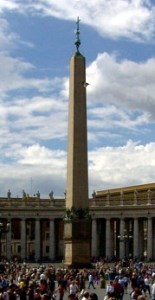
Wait, that's not the Washington Monument is it?

Wait, that’s not the Washington Monument is it?


World Stories

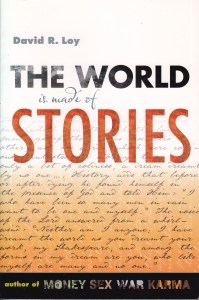
worldofstoriesAlthough I’ve not formally studied it, Buddhism has long been part of my thought process. Like Thomas Merton—and this may be the only point of comparison between us—I find little difference between the contemplative worlds of Buddhism and Christianity. Mindfulness knows no denominations. I suspect David R. Loy’s book The World Is Made of Stories would cause anxiety for some. Those not comfortable, for example, with paradox. Or those who believe that only the literal is meaningful. Separated by the vast land mass of Asia, eastern and western ways of thinking about the world—telling their stories about the world—diverged widely in antiquity. There was a kind of “rediscovery” of south and east Asian thought in the late nineteenth century western hemisphere. Since then occasional famous explorers such as the Beatles, or professional practitioners such as the Dalai Lama, have brought Buddhism’s ideas to the mainstream, but because they coexist well with Christianity there has been no cultural reason to displace them.

I found Loy’s world compelling. All is narrative. That’s the way human brains work. If you’re reading this right now, you’re following my narrative. If you’re not really paying attention, another narrative has gripped you. Science is a narrative just as religion is. It is the way we think. The internal monologue. Consciousness itself. Stories. People will follow a story quite naturally, which is one of the reasons it’s such a shame so few people read for pleasure. We can watch our stories (what is a sporting event but a narrative playing out before a fan’s eyes?) and many people do. The written story often, however, takes us deeper.

Contemplation is an endangered species. Although I found the enforced quiet days at Nashotah House (such as Ash Wednesday) to be an onerous rule, I would arrive home with little to say in any case. The world of busyness that we’ve made our business can choke the meditative spirit. Although some workplaces offer yoga sessions (themselves based on Hindu spirituality) they hardly encourage meditating at your desk. It seems the natural enemy of productivity when, in reality, it increases it immensely. Who doesn’t work better after a vacation? The business world often presents the religious life as one of indulgent non-productivity. I remember being made to feel stupid asking for one Good Friday off while working my first full time job in retail. When cash transactions grew to be too much I’d find a church on my lunch hour and just sit. Now I only find time to read Buddhist books on the bus on the way to work. Look deep enough and there’s a story in that.