Overdone

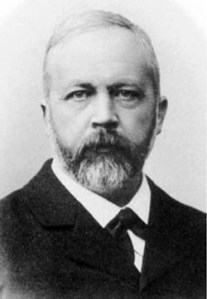
One of the things you see quite a lot of as an editor is “the next big thing.” Authors with an ego that awes me ensure me that this book will be the sea change we’ve all been waiting for. Things will be different after this is published. I don’t blame them. The trades all say that you’ve got to convince the editor that this project is worth her or his while. Overstating the case is par on this course. All of this got me to thinking. If you’ve read biblical studies seriously you’ll recognize the name Wellhausen. I don’t even have to use his first name—you know who I mean, right? Well, we’ve gone beyond the days when you could be a Wellhausen. When I was a student people spoke of the Wright, Bright, and Albright school. We knew who each of these gentlemen was. Now there are so many spoons in the pot that we’re not even certain what’s cooking.
Have you seen this man?

I’m not sure what the attraction to advanced degrees in this area is. If my case is anything to go by (and I don’t claim that it is) you grow up in a Bible reading family and you want to take the next logical steps. When you’re far enough along on the path to realize what’s happened, it’s too late to turn back. Many things in life are that way. There is a tipping point, a moment of crisis, then nothing will be the same. Then you learn you’ll never be the new Wellhausen. There was only one, and that was a couple of centuries ago now. I run into some pretty strange stuff when it comes to ways of reading the Bible. When the dust settles, however, we’ll still be counting J, E, D, and P on our fingers.

This isn’t a field for fame. Don’t believe me? Approach a stranger on the street and ask them if they know who Wellhausen is. Alas and alack, one of our greatest names is nobody outside the academy! In my own days among the privileged professorate, I never suspected I’d be anything but one of many voices trying to be heard. After all, my training was really more in history of religions than Bible in the first place. Dead languages had to be negotiated, but that’s all part of becoming an expert in something nobody really cares about. But then I think of Wellhausen. There was a time when all of this could make a nation such as Germany sit up and take notice. That day was centuries ago, and I’d better check that pot—I think maybe whatever’s in it may be done.

Living Challenged

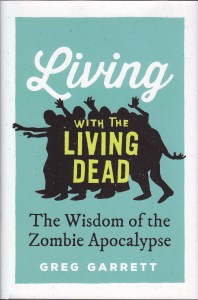
One of the surest signs of hope for the world is that academics are beginning to notice monsters. A trickle began some time ago and it’s probably best to call it a trickle still, nevertheless, the quality of the trickle is improving. Some serious publishers are now counted among the mix of those who pay attention to the lovable unlovable. Greg Garrett’s Living with the Living Dead: The Wisdom of the Zombie Apocalypse is one of the more recent approaches to the undead that looks for religious themes among them. They’ve been there from the beginning with zombies, of course, but few with tenured positions bothered to look. It’s an open question how long the current fascination with the undead might last, but Garrett’s treatment finds them useful sources of theological thought.

Perhaps the aspect of my own fascination that I feel most often compelled to explain is why fear has such an appeal. Garrett makes the point that fear often causes people to make bad choices, and I would have to agree. It is, however, the fear of fear that takes a greater toll. You see, fear is a survival instinct. Without fight or flight we’re all zombie food. Some of us learn this harsh lesson early in life, and if we manage to survive long enough we might even become nostalgic for it. It’s not that I like be afraid, but I do know that if we fear fear—if we avoid looking at what scares us—we put ourselves in danger that the flight response might well prevent.

Garrett’s treatment is helpful in demonstrating that there is a reason for such stories. In fact, according to his analysis zombies can leave you with a profound sense of hope. He uses the living dead as a means of thinking about community, ethics, and apocalypse. Not all end of the world scenarios are that bad. How we treat the living dead may tell us quite a bit about our own rectitude or lack thereof. In other words, zombies are more than their puerile thrills might suggest. There’s something of substance here. I don’t agree with all of Garrett’s conclusions, but he offers a stimulating tour of the current media frenzy around the living challenged and is surely correct that there is more going on with monsters than many of our parents would like to have a religion expert admit. Those childhood years might not have been wasted on monsters after all.


The Birds

While waiting for the bus, now that it’s light out that early, I like watching the birds. They have complex interactions and so many different styles of flying. They have ways that are a closed book to our species. From human eyes they seem so playful that it’s difficult to believe they participate in a struggle for survival. Evolution tells a different story, of course. Living not far from the great human nest of Newark’s Liberty Airport, it’s not unusual to see an engineered flying machine soaring high over their avian heads. Which, I wonder, are the better fliers? Birds, after all, evolved. Flying wasn’t planned, as far as we can tell. Although not so much around here, some birds don’t even fly.

I once read—many years ago and I can’t recall where—that if a person were to fly they would need an enormous chest to beat the very large wings they’d need for lift-off. Birds, apart from being naturally aerodynamic, have hollow bones which make them a touch fragile, but less tied to gravity. Our planes and jets, unlike the escape vehicle in Chicken Run, don’t flap. Bernoulli’s law keeps them aloft, along with some meticulous engineering and heavy fuel consumption. Humans may imitate nature, but they supersede it when they can. Still, I have to wonder why, if birds were a special creation as our literalist friends claim, God didn’t make them more like a plane.

Holding your wings out stiff all day, I’ll allow, would get pretty tiresome. Still, if you’re designing a critter to fly you might as well go with the best parts available, right? If not, I’m going to have a talk with my mechanic and ask for some of my money back. Birds, for all their charm, are very good illustrations of evolution at work. Dinosaurs taking to the air is so poetic that it has an organic feel. Flying is a great way to escape your land-bound predators. That step from long leaping to flying may be a doozie, but it seems to explain the shape of birds better than any intelligent design. Among bipeds, though, only one claims the place of being god-like in shape. Having said that, there are some flaws that a good biomechanical engineer might address. But then, who said God majored in engineering? When I went to college I was firmly under the impression that he’d majored in religion. And that, as many engineers might suppose, is for the birds.


O Absalom

It feels like confession every time I go to get my hair cut. I sit in the chair and a girl younger than my daughter looks perplexed when I explain it’s been a few months since my last shearing. “Forgive me, daughter, for I have sinned…” Haircuts take too much time is the truth of it. I’ve never been one to worry overmuch about outward appearances. I’m an internal kind of guy. I’ve never liked shaving and I can’t really see giving up ten more minutes of my busy morning than I have to, only to hover a sharp blade near my already beauty-challenged face. No, the scissors trim takes just a few minutes once a week or so, and everything’s good for a few more days. But the haircut is more on Absalom’s time schedule. Frankly, I just don’t think about it. Suddenly hirsute.

Absalom’s hair was both his pride and his fall. Usurping the kingdom from David, Absalom had a head of hair that left the girls screaming. Then, routed in the forest, his head got caught in a tree. The Bible doesn’t say specifically that it was his hair, but use your imagination. In antiquity, hair meant something. Alexander the Great was known for his luxurious locks. Even the word “Caesar” means “hairy.” Hair was considered a natural head covering, a kind of piety that required little effort. Ironically in evangelical circuits the Roman haircut and clean-shaven look predominated. I had a job after college that required me to shave my beard since “customers don’t trust a man with facial hair.”

But I’m not into hair for the fame. I just don’t have the time. Weekends are scarce and short and I’ve got a lot to do. I’ve got a book that needs publishing and a life that needs living. I can do it with long hair. I can’t do it without time. Absalom spent his free time plotting. His coup was the result of careful planning. I’m sure he didn’t stand there outside the city gates thinking, “people would like me better if I had short hair.” Quite the opposite. In this country of clean, biblical living, however, we’ve opted for the razor and scissors. I’ve had people ask if a beard is hard to keep clean, as if I’m a dirty old man under these silver strands. Hair and beards can be washed and be as hygienic as any person can be in New York City. I just take care to duck when I go under trees.


Flat Devils

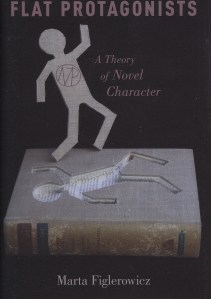
Fiction is a framework to approach reality. People are drawn to stories because they help us to make sense of a bewildering world which wasn’t, in reality, custom made for us. Marta Figlerowicz’s Flat Protagonists: A Theory of Novel Character explores the types of characters that modern novelists are taught to avoid. She points out, however, that they occur in great novels beginning from the early stages of the category up through fairly contemporary classics. The flat protagonist, in short, isn’t believable. I’m not enough of a literary critic to judge her examples, but I have been thinking of one such character that occurs in popular culture all the time—the personification of evil. In my reading on writing I’ve learned this is to be avoided. Nobody is pure evil. Popular media begs to differ.

Being of working class sensibilities I can’t separate myself from the lowbrow crowd, I’m afraid. My fascination with Sleepy Hollow is pretty obvious on this blog. One of the recurring themes in the series is the antagonist that is indeed pure evil. Whether it’s Moloch, Death, Pandora, or the Hidden One, those who are evil represent the dark side of humanity, or the universe. They glory in destruction. Of course, in late Judaism and early Christianity this was a role taken by the Devil. As a child I was taught that it was wrong to feel sorry for Satan. This clashed in my head with the idea of forgiveness and with the love of all. Could God not love his (and he was masculine) own enemy? How could we hope to do the same, then?

In the most ancient of religions, as far as we know, evil wasn’t personified. Yes, evil happened, but it was simply part of the matrix of being. Some gods tended toward good while others tended the other direction, but a being of pure evil doesn’t seem to have existed. Even Tiamat loved her children, at least until they killed her consort. The stark black-and-white world of monotheism can’t explain evil without an divine enemy. A flat protagonist, to be sure, but one you can always count on to do the wrong thing. The closest we come to that in real life is the Republican Party. Insidious, sneaky, using every possible loophole to shove their agenda through, they are the perfect flat protagonists. No, I’m not inclined to believe in the Devil. Or at least I wasn’t until November of 2016.


The Nature of Evidence

Home alone on a Friday night, I turned to Werner Herzog’s Nosferatu. Not a typical horror film, this art house production is an updating and remaking of F. W. Murnau’s technically illegal 1922 adaptation of Bram Stoker’s Dracula. It has been a few years since I’ve watched it, but the beauty of the cinematography kept coming back to me at unexpected times. Klaus Kinski is an unforgettable Count Dracula, hideous and compelling simultaneously. He draws pity and revulsion. When he’s not on camera you can’t wait for him to appear. There’s not much new in the story, of course, as it follows Murnau pretty closely, with some shots being nearly identical. One exception to this is the plague. Wherever Dracula appears the Black Death accompanies him. This leads to one of the most unusual twists of this retelling—the role of Dr. Van Helsing.

Instead of being the authority on vampires and leader of the attack, Van Helsing is here a reluctant rationalist who doesn’t accept superstition. He encourages the town elders to respond calmly to an outbreak of the plague. When Lucy Harker insists that Jonathan has been the victim of a vampire (which he has) the professor again urges caution. He insists that this must be approached scientifically, empirically. You don’t pull up wheat to see if it’s growing, he notes philosophically. Take time, trust science, and all will be well. Meanwhile the audience knows the reality of the vampire. There is a supernatural threat and it is moving fast. Lucy knows they must strike against Dracula before the vampire destroys the whole town. Despite the mounting number of deaths by plague, Van Helsing still clings to slow and steady evidence, only realizing after Lucy’s death that she had been right all along.

There’s quite a bit to unpack in this retelling after all. A female takes the lead. Lucy is the one determined to stop the vampire. She does so out of belief. Van Helsing rightly points out that this is a dangerous way to approach a problem. One ponders what might’ve happened had science been allowed to run its course. Van Helsing, if science be science, would’ve had to at last come to the same conclusion that Lucy had experientially. She’d read Jonathan’s diary and she had a late night conversation with Dracula where he did not appear in her mirror and did shy away from her crucifix. She too is evaluating evidence, only she has to allow for the reality of the supernatural. Since the story is old and the production artistic, this is no bloodbath horror spectacle. It is a thoughtful, almost quiet reflection on how we perceive reality. Even among the many vampire films it remains a thing of beauty.


Keeping Pace

I had no idea my life was in danger. I was out for a weekend walk with my wife, when suddenly, there they were. Snails. In case you think I’m over-reacting, take a look at Christopher Jobson’s piece on Colossal titled “Why Knights Fought Snails in the Margins of Medieval Books.” One of the main points is that the snails were symbols. We tend to forget the power of symbols today. Even modern vampires no longer react to crucifixes—what are we supposed to do? For those who are willing to linger a moment instead of rushing on immediately to the next thing, snails give us quite a bit to contemplate. In a world that hates slow-pokes, “consider,” as my friend Ecclesiastes might’ve said, “the snail.”

As highly evolved cousins of the snail, we suppose we were cut out for greater things. We build towers. We make new nations. We watch them both crumble. On the ruins of those walls we find snails. They have very little to do and expend no worries about getting there on time. Nobody emulates them, although some masticate them. They tend to disappear when the sun is hot. They don’t like the limelight. Yet snails contribute to our world in ways we simply don’t take the time to contemplate. Our time has been commodified. We’re told when to sleep and when to wake for our jobs. Then we’re told none of it matters anymore since 45 has decided to change the rules with his latest tweet. And still the snails crawl.

Before I learned to fear them, I remember happy childhood moments finding snails. This was generally not at home since we rented even then, and landlords have a weird compulsion about landscaping. When wandering far enough from home I’d find snails crawling on stalks of damp grasses early in the morning. They fascinated me. If I plucked them off, they’d pull in their eye-stalks and retreat into their shells. So secure. So symbolic. Eventually I learned that I was obligated to move fast. Keep pace. Be measured by my productivity. Pharaoh’s watching, after all, and that quantity of bricks required isn’t getting any smaller. Not many, I would learn, share my appreciation of snails. It takes a great deal of confidence to go slowly. Those who routinely ignore speed limits won’t understand my symbolism here, I know. Still, I can’t help but think we have a great deal to learn from our cousins who remind us that time isn’t everything after all.


Analyze This

Reading other people’s scripture is a privilege. Although somewhere in my long study of the history of religion I must have read excerpts of The Analects, I have not concentrated on reading them through before. Reading other people’s scripture is like being invited into their houses. You can learn a great deal in a little time, but that doesn’t make you an expert. Confucianism is about the same age as classical Judaism. The foci of the belief systems are clearly culturally bound, and those of us raised in cultures heavily influenced by Judaism and Christianity find scriptures like The Analects somewhat bewildering. For those raised in Confucian cultures, the Bible must also be like coming into an unfamiliar country. That’s the way scriptures are, and it doesn’t mean that any are more or less valid than others. That’s often difficult to accept.

I don’t know much about Confucianism, but it is clear that The Analects are intended as a guide particularly for those who seek public office. In Confucian thought, unlike that of the current United States, only the brightest are believed to be worthy of high office. Indeed, it is impossible to read The Analects at this time in history and not see that Trump is so wrong in multiple languages. Master Kong’s description of “the small man,” the petty sort who has no business governing, is the job description of the GOP right now. Is it possible that one political party has ruined two religions? Probably far more.

Learning—even in small increments—of the religions of others takes away the need to feel superior. In fact there are many commonalities between religions, particularly on the ethical front. Reading other people’s scriptures isn’t easy. There’s so much that’s foreign in them. But like the fact that foreign trade brings desirable things from abroad for us, so should be the study of other religions. There is much of value here. I don’t read Chinese. I’ve never been to China. Reading The Analects, however, demonstrates that the noble minds of different cultures have much to learn from one another. No scripture is perfect. All are necessary. It’s only when one faith decides that it alone is true that religious strife begins to replace religious respect. I’m not about to become a Confucianist, but I do have a a slightly better sense of what it might mean to be one. And small steps can lead to impressive places for those willing to learn.


Fame and Fortune

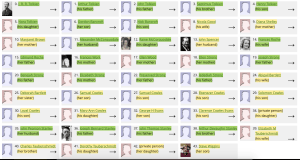
I was that awkward introvert in high school. Actually, I’m still that awkward introvert now, as easily talked over in editorial board meetings as I always have been at the lunchroom table. As a consequence I’ll gladly take any help I can get on my street cred. No doubt it will have to come from others. I get rejection emails from agents saying I’m just not famous enough to merit attention, so I guess I’ll have to bask in the glory of strangers. I do have a famous brother-in-law. It also turns out that I’m also only 43-degrees separated from J. R. R. Tolkien. I’ll take it!

One of the beauties of genealogy is that we learn we’re all connected. As much as we might want to distance ourselves from any unsightly Trumps in the family tree, we are all, at some remove, related. J. R. R., as those of us in the fam like to call him, had a common great uncle who had some descendants who by marriage became connected to the obscure Tauberschmidt family, of which I’m a member. I posted some time back on my degrees of separation from Bob Dylan, but the closest near miss to fame in my background is Melvin Purvis, “the man who shot Dillinger.” Even he’s only related by marriage. Still, I can’t help but wonder if we all took our relations seriously if it might not help to understand that when we oppress anyone we’re actually violating our own family. Makes you think.

Wiki-Tree is a great place for finding connections. Unfortunately I don’t have much time for genealogy anymore. I used to spend quite a bit of time at it and now I can’t even find my paper files. Those of us on the obscure end of the human continuum have to take whatever jobs we’re offered, even if it means moving so many times that those family tree files from pre-electronic days get buried in the back of some attic crawl space in your rental. So it goes. I’m sure J. R. R. had his own rough times. At least he doesn’t have to try to get published in today’s market. I suspect that if the Inklings were to meet today they’d all be chatting about the merits of self-publishing on Amazon. In ebook form. Publishing’s not for the feint-hearted. So as I open yet another pinhead email, I think of my 43rd cousin and smile.


Filmy Substance

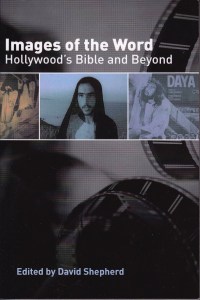
It’s all about Jesus. Well, that’s an overstatement, even in context. One of the amazing things to me about books addressing the Bible in film is just how often Jesus movies come up. If it’s not Jesus movies, it’s movies that have a “Christ figure” or some such Christian trope. Don’t get me wrong—I have no issues with Jesus. It’s just that the Bible and film have so much more in common than this. David Shepherd’s edited collection, Images of the Word: Hollywood’s Bible and Beyond, has some insightful pieces in it and some of what has become “standard fare” already in a field that’s so new. I found Richard A. Blake’s response fascinating. Maybe this was because he doesn’t approach the topic from a biblicists’ point of view.

I’m not really complaining about scholars who look to cinema for a rich source of reception history. I do it myself from time to time. Most of the books on this topic are collections of essays and collections are, by default, uneven. There’s an amazing amount of biblical material in movies that simply goes overlooked. Also, I would suggest, movies offer valid interpretations of the Bible. Somewhere along the development of the discipline we seem to have slipped into thinking that only certain people can legitimately interpret the Good Book. If it is a sacred text, however, it is as much in the public domain as any text can be. And texts in the public domain can legitimately be interpreted by hoi polloi. That’s the nature of being a text with universal assertions, I suspect. Directors and writers, therefore, are legitimate interpreters. We could learn a lot about the Bible from going to the theater.

Like many who’ve taught Bible to undergrads, I sometimes discussed films with them. I always believed students were legitimate interpreters of Scripture, too. This is a dialogue. One of the more interesting aspects of Shepherd’s collection is the pieces that focus on non-Hollywood movies. I don’t see a problem discussing Hollywood since we can assume a larger body of those who’ve seen the film. It is nice, however, to be reminded that “foreign” films also delve into what is sometimes treated as propriety material by Christians. Hindu representations of the life of Jesus? That’s a very interesting idea! Of course, not everyone likes to know how “outsiders” see them. That’s one of the beauties of using cinema as a means of interpreting the Bible. Those of us who study it don’t have the money to influence movies enough to make them in our image. It’s fun to watch someone else’s interpretation.


Bull

Bulls have long been symbols. If I write “that’s bull” your mind will likely fill in the missing implied word. In ancient times the king of the gods, El, was known as “bull El”—probably for a very different reason than the veiled scatological reference above. Bulls were powerful and, to those in settled, agrarian societies, necessary for life. Of course, they can turn on you and kill you with little thought. Even in our high-tech, urbanite world, we keep our bulls at hand. “Charging Bull,” a golden calf if there ever was one, is a famous Wall Street statue erected to the glory of mammon and greed. On May 7, to celebrate International Women’s Day, a statue called “Fearless Girl” was placed in front of “Charging Bull.” Our symbols require some reevaluation. In a kind of Trump-up, another artist placed a statue of a dog lifting its leg on the girl, according to the Washington Post.

We creative types can be sensitive about our work. Apart from writing I’ve dabbled in drawing, painting, and sculpting, although few have seen the results. I know that the space around an artwork is part of the art. I’ve posted before about Grounds for Sculpture, one of my favorite places in New Jersey. The idea of a sculpture park is that the context of the image is important. Statues show up fairly frequently in New York City. The ever-changing art along the pedestrianized part of Broadway in Midtown keeps the walk to work interesting. Interacting with art is performance. At the same time, the respectful viewer knows, artists are making a statement. Placing a girl before a charging bull says so very much.

“Fearless Girl,” unlike the great lummox she faces, is temporary. Nevertheless, the statement she makes is loud and clear. Wall Street might more aptly be named Ball Street for the amount of testosterone that surges through the place. Men erected a system to keep women out of positions of power. And even when a small symbol of female resistance is placed, some man has to have a pug pee on her. I wonder what our society’s become. We’re hardly agrarian any more, yet we still feel “bullish” about things. When’s the last time anyone used “girlish” as a compliment in a business context? “Fearless Girl” will be allowed to stand until February. The pug is temporarily gone, but will be back. When the girl goes the pug will follow. All that will be left in Bowling Green Park will be bull.


Girls to Men

Seminary in the 1980s was a time of endless debate. Some of my classmates at Boston University School of Theology thought me too conservative—I’d made progress from my Fundamentalist days, but these things wear off slowly. Part of the issue, however, was that I look at things in terms of history. (That’s how I ended up teaching Hebrew Bible although my work is generally history of religions.) I remember an argument over changing a text from reading “man” to “human.” The latter, of course, still has the offensive root, but language is only so flexible. My thought at the time (which has changed since then) was that English “man” derives from German “Man.” In German the noun is masculine since all nouns have gender, but it can refer to either a female or a male. “Man,” in origin, is gender-neutral on the human side of the equation. Mark Twain once famously wrote an essay on the barbarities of the German language where he highlights this.

I’d studied German seriously in high school. After four years of the language I felt that I could understand it in a way that comes when you begin the think of certain expressions and wonder how you say that in English. I had come from strongly Teutonic stock on my mother’s side, and German felt quite natural to me. Of course, in college I had little opportunity to use it. Even less so at seminary, so the details had begun to slip considerably. If “Man” could mean “woman” what was the problem, I wondered. Then I started to think of it from a woman’s perspective. As English speakers, “man” is an exclusive term. It refers to males. Over time it has come to refer to males only. Retaining it in hymns or Bible translations makes them exclusive. We need language to meet new ways of thinking.

The other day I was consulting an Oxford dictionary for something. My eye fell on the word “girl.” To my surprise, I read that “girl” originally referred to a small child of either gender in its germanic roots. This is an archaic usage to be sure, but it helped to explain old photographs where toddler boys were dressed as girls and had long, flowing hair. The young were girls, the adults were men. Gender, I have come to see over the years, is a concept that doesn’t conform to simple binaries. Intersex individuals don’t fit into the either/or paradigm. Language struggles to keep up with reality. Traditionally we all started out as girls and ended up as men. And those would be fighting words these days, whether in seminary or out.


Hex Marks the Spot

Public versus private has been on my mind quite a bit lately. Partially it’s because I’ve been reading about magical beliefs and their persistence. It always amazes me how publicly we declare ourselves rational and uninfluenced by the supernatural. Once we get behind the closed doors of our domiciles, however, a transformation takes place. Our insecurities and uncertainties surface. Given the right circumstances we might even confess that we believe in magic. I know I’m generalizing here, but private space does allow for private thoughts and getting out with others can bring a much-needed relief. I was reading about Hex Hollow in an article a friend sent me from Roadtrippers. Hex Hollow is a small town in my native Pennsylvania where a murder took place over witchcraft. I won’t go into the details here—the Roadtripper story is quite brief and tells the tale—but it turns out a man was killed for being a witch. His murderer was also a witch who’d been sent to him by yet a third witch. The crime took place in 1928.

Think about the timeframe for a second. It was between the World Wars. Technology was fairly advanced. Witch trials had ended centuries ago. Still, some people believed enough in witches to kill for their conviction. Historians of religion have pointed out that Americans have never really outgrown the belief in magic that we deny so assiduously. I’m not trying to single out one nation here—there is widespread evidence that magical thinking is endemic to the human thought process. We aren’t so quick to let something go that, according to reason, has served us well. Had magical thinking been purely detrimental it should’ve died out long ago. We need our magic.

As yesterday, so today.

I’m not suggesting witchcraft is real. At the same time I know that it’s natural enough for thoughts to move into familiar terrain when stressed out. In Hex Hollow the man who did the murdering was convinced he’d been hexed by his victim. Perhaps he’d climbed the ladder of inference (what we tend to call confirmation bias) to a rung where the only way down was a criminal act of desperation. That’s no excuse to kill someone, of course, but it fits with what we know of an all-too-human form of stress relief. Nor is it rustic rubes to blame. Psychics in New York City are abundant and even US presidents have been known to consult the stars a time or two. Of course, once I step outside that door I’ll say it’s all nonsense.


The Preacher

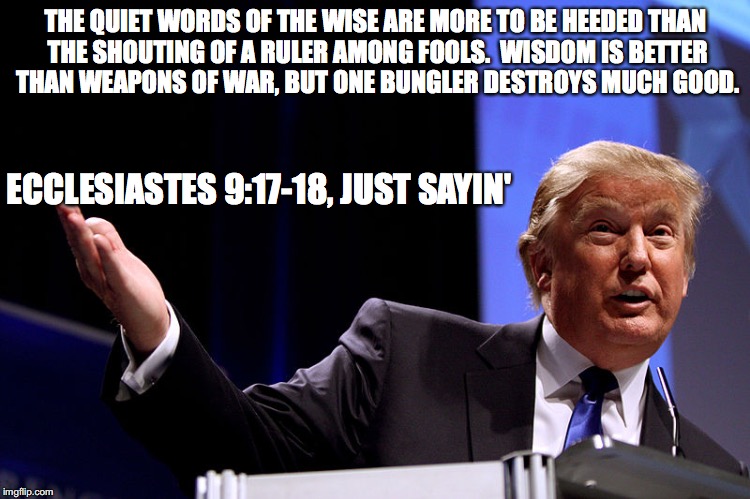
Ecclesiastes, I used to tell my students, is one of the most unusual books of the Bible. And that’s saying something. When we think of the Good Book we think of pious thoughts and lofty feelings—you know, the white-shirt, evangelical sort. The Bible, however, isn’t what most people think it is. Ecclesiastes, nestled right there near the geographic center of the Protestant Bible (and there’s more to say about this) is a book unlike any other. It is philosophical, weighty, and somewhat gloomy. It is a book where God can’t be relied on to help you and the world may very well be against you. It honestly admits that things just aren’t as they should be. “The quiet words of the wise are more to be heeded than the shouting of a ruler among fools,” it says, “Wisdom is better than weapons of war, but one bungler destroys much good.” (That’s 9:17-18, in case you want to check me out.)

America used to be known around the world for its pragmatism. Now it’s being laughed at as the master of irrationality. I remember when elections were matters of gravitas and serious consideration of the issues. They’ve now become high school popularity contests, even including the locker-room talk. Trump insults his own party and they kiss up. We have a president more impressed by kid’s toys in Saudi Arabia than by the top-notch research universities in his own country. I turn to Ecclesiastes for consolation. It’s a good book to read when everything’s going wrong. “For there is no enduring remembrance of the wise or of fools, seeing that in the days to come all will have been long forgotten.”

My white-shirted friends will surely object. I’m taking verses out of context—prooftexting, it’s called. But, my evangelical friends, you say Scripture is the word of God. Fully inspired and inerrant, is it not? How can you dismiss the wise, wonderful, woeful book of Ecclesiastes? The world is a complex place. Those who seek office as public servants should at least be able to distinguish the servant from the master. They lay their hand upon the Bible to take a sacred oath of office. Beneath that withered hand lies the book of Ecclesiastes, forsaken among its more cheerful siblings. Do not forget Ecclesiastes. It is the book that best makes sense of our day. “Better is the end of a thing than its beginning; the patient in spirit are better than the proud in spirit.” Herein lieth the truth.


Sea Around Us

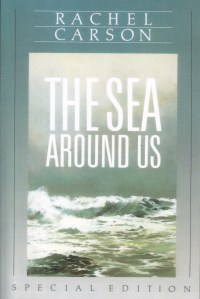
Re-reading books is something I do somewhat too infrequently. One of the obvious reasons is that I won’t possibly finish everything I want to read in my lifetime as it is, and once something’s in the vault I tend to move on. I keep books, however, because I frequently go back to them to refresh my memory. Wholesale re-reading takes commitment. I just finished re-reading Rachel Carson’s The Sea Around Us. It’s difficult to describe the impact this book had on me when I first read it, years ago. Even though modern editions state that it retains its authority (broadly it does) I couldn’t help but be struck by a number of things this time through. Carson thought of herself as a writer. In her day that meant adhering to the conventions of language, which was, I admit, embarrassingly masculine. The assumptions of the 1940s and ‘50s against which Carson struggled set the very frame for the discussion. I recall being told in school, by female English teachers, that the only proper pronoun to use when the subject was of indeterminate gender was the masculine. I raised my eyebrows, but being good at following rules, I didn’t raise my hand.

Not that this takes away from the poetry and mastery of The Sea Around Us. It is a wonderful book. It also made many people stop and think about the ocean for the first time. Really think. And that’s a second observation about my re-reading. Hearing the recitation of how, historically—or prehistorically—the oceans covered much of North America. Thinking about how my hometown, far, far inland would’ve been underwater for eons really made me ponder. We’ve built our coastal cities rapidly, and with typical human short-sightedness. Even without our generous input, global warming has been ongoing for centuries. Sea-levels have been rising. Our desire for wealth, settling as close as possible to the water to facilitate trade, didn’t take into account what would happen in the perhaps foreseeable future. Even now when the warning is loud and clear the businessmen of the White House are in full denial.

There’s a kind of strange justice to this. You see, one of the other features of The Sea Around Us, and one of the most compelling aspects of the book, is Carson’s narrative of how we came from the sea and our desire is to return to the sea. Our blood evolved from ocean water. We rely constantly and in significant ways on the oceans. They, for example, are the powerhouses and condensation points for almost all of our weather. They separate us and bring us together. The very origin of life itself basks in pelagic profundity. Indeed, the ocean supplies the very concept of “profound.” The deeps. Although it had a beginning, it seems the world ocean will outlive our tribal little race. Damaged and poisoned by our greed, in eons it will recover. And those beings that survive will find their own wisdom beneath the waves.