Moon Base

Late last year scientists announced that a tunnel they’d found on the moon (remotely, of course) would make an ideal location for a human colony. The moon, you see, is quite cold and, lacking an atmosphere, constantly exposed to naked solar radiation. It’s a tough sell, even for first-time buyers. Still, with a little hole to crawl into, and some homey touches, this might be the future of humanity. Of course, offshore relocation has been a staple of science fiction from the beginning. Technically encumbered by the whole speed of light thing, we’re left with neighboring planets and moons that are either too hot or too cold, our species having evolved on the Goldilocks of solar system real estate. Moving to the moon might sound like a good idea right about now, but it’s going to take more than Two Guys and a Truck to get us there.
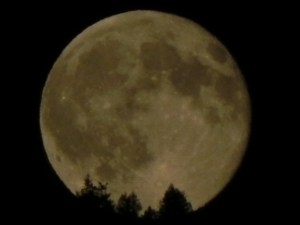
Fantasies of moving abroad come in two varieties—those of optimism and those of pessimism. Either things are going so well that we want to spread the evangel of our soaring success to the universe or things are looking so terribly Republican that even the dark side of the moon seems enlightened. There’s no question which phase we’re in at the moment. The moon is relatively close after all. It has been a fairly quiet neighbor over the millennia. We’ll want some good insulation, however, and despite the Weir version of Martians, we’ll depend on those back earth-side to send us some grub every now and again.

In ancient times the moon was frequently a goddess. Some ancient cultures pegged our satellite as masculine, but many saw her gentle light as more befitting a powerful female. Heading outside in the predawn hours with a full moon overhead is a pleasant, if chilly, reminder of just how bright our constant companion can be. Light without heat. Ancient desert-dwellers found the moon more benevolent than the sun, for night was relief from the fierce heat of day. Still, moving to the moon would meaning making a new world in our own image. Nothing, I suspect, would defile a goddess quicker. Our costly detritus already litters the once untouched face of Luna, and our size-nine-and-a-half prints are permanently left behind there. Heaven has always been that undiscovered country somewhere over our heads. The discovery of tunnels on the moon where we might snuggle down and be free may sound great. But we need to get things settled out on the ground first, otherwise our one and only satellite will merely become our next victim to exploit.

Kings and Fiends

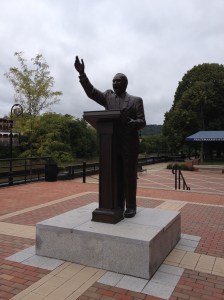
Martin Luther King Jr. was, and is, a symbol of hope. This day, as we’re encouraged to think of progress, we’re mired under leadership that less than a week ago used derogatory language to describe people that aren’t white enough for his liking. Those who, like King, have a dream, are under attack by a government that has pledged its allegiance to the dollar. The dollar in the hand of the white man. From the days of the prophets on the dream of a just and fair society has been the ideal. Instead we find ourselves under the ultimate party of privilege that likes to quote the Bible but which admires Pharaoh far more than Moses. They claim to see the promised land, and that land belongs only to them.

I was too young, as a seminary student, to appreciate I was walking the same halls as Dr. Martin Luther King. Sitting in the same classrooms. It had all been before my time. Because of the Bible I first took an interest in history—eager to learn how we’d come to this place. Ronald Reagan—who now amazingly seems rather benign—was making it difficult for the poor by promoting “trickle down economics.” We all saw how that worked. The modern-day Pharaohs may not wear the impressive headdress of antiquity, but they’re no less fond of owning slaves. King understood that non-violence comes with a cost. It takes time. Unlike the present administration, he understood the difference between right and wrong.

The Pharaoh in the White House makes it difficult to appreciate any progress at all. We have come to see what it means to be a nation that solely, utterly worships Mammon. The voice of the Bible is weak and shouted down by those who see no gain in it for themselves. There were surely those in Egypt who were poor but who appreciated the Pharaoh. At least he was enslaving those from somewhere else, according to Exodus. According to the Good Book it was God himself who opposed this system, but now, according to the evangelicals, God has blessed it. It is the will of God to rob the poor of their health care so that the rich can add even more to their too much. On this Martin Luther King day we struggle to find hope in such a world. The hope is there, but we have to be willing to dare to dream.


Street Clearing

Not driving to work definitely has its advantages. Although studies suggest commuting takes a great toll on hapless riders, the stress of driving in traffic—more often just sitting in traffic—also takes its pound of flesh, and more. A recent snowstorm had me reflecting on this. Once in a while I like to demonstrate that the male of the species is worth keeping around, so after the Bomb Cyclone that closed schools and offices in the trial-state area a couple weeks back, I went out to brush off and start the cars. It’s not that women can’t do this, but it’s more the fact that nobody wants to do it that motivated me. Besides, I have a secretly fond memory of the years of enforced, Dr. Zhivago-esque labor on our Lake Erie snow-belt blessed driveway. My stepfather’s shack sat atop a long, unpaved driveway. Ironically, although he drove the borough snow plow, he insisted that we boys do the shoveling at home. Maybe that’s where I get it. A poor family, our winter coats were substandard and aching fingers and toes, not to mention frozen faces, were pretty typical. I hated every minute of it. Or did I?

Bundled up against the arctic winds that had brushed a noticeable breeze past my face the night before (in the present-day) when I climbed into bed, I stepped out in first light. Immediately the cold found the small gap between my gloves and sleeves and began to work it’s chilling magic. Before the powdery snow was even off the car my fingers were numb and painful, reminding me of an unfortunate frostbite episode as a child. Unconsciously I found myself smiling. I’m no longer forced to do this. Kindness is a far better motivator than hate. At least as a renter I didn’t have to shovel the drive.

Afterwards, inside an apartment that we all habitually decry as too cold, I quickly warmed up. There’s a pleasure in doing something so that someone else doesn’t have to. I miss that, working in New York City. Focused on getting to work, it’s far too easy to step past those for whom even a glance is a blessing. Those who sleep in cardboard boxes on nights like that through which I felt an annoying draft, although secure inside. I see the police “evicting” tenants of paperboard towns even as I glimpse Trump Tower in the distance. The storm they called a Bomb Cyclone. We clear the streets quickly so that we might get back to work and make more money for the one percent. Studies show commuting is killing us. It seems the cold is doing so as well.


Plain Speaking

When the president of the United States utters words too vulgar to print here, I think of the old They Might Be Giants’ song “Your Racist Friend.” The song is all about the indefensibleness of racism. We knew that back in the 1980s. What has made it acceptable now, in the highest office in the land? The fact that Trump is a racist was known to most of us well before he was “elected.” And, of course, the Republicans stand beside him. I feel sorry for the GOP, I really do. Those who simply wanted a fiscally conservative leader (wrongheaded in my view, but understandable) decided to go with a man who would want to revisit 1776, if he knew the meaning of the date, to ensure that this would always be white-man’s land. Hear this Republicans—by standing by Trump now you’re declaring, “He’s only saying what I’m thinking.” There’s no way to defend what he’s said about Africa, along with several nations elsewhere.

As we watch this bizarre space opera of an administration do its best pratfalls we don’t even have to go back all the way to the 1770s to wonder what went wrong. Bill Clinton was impeached for having an extramarital affair in the 1990s. Less than 30 years later we have a misogynistic, racist bully who’s on his third wife running this country like a casino. And the “Party of Lincoln” laps it up. They refuse to censure anything this bumbling excuse for a leader does. They’d be embarrassed, of course, but they haven’t considered, and refuse to consider, the consequences. I’m wondering what the musical 2016 will be like, but I have a guess.

As the Russia probe gets closer, the GOP tries to shut it down. That’s how we handle facts we don’t like now. Who would’ve thought that three decades on we’d be saying “mere adultery” was grounds for impeachment? Perhaps there were good people on both sides of that affair too. Science has demonstrated that “race” is a fiction, a human construct. But science no longer matters. Anything we disagree with we call “fake news” and FOX will be there to slurp it up and spew it wide. As Friday unfolded after 45’s statement about the status of an entire continent, his verbal incontinence still dribbling, his party rushed to defend “what he really meant.” What he really meant, he said. And what he said, if you don’t denounce him, is what you’re thinking too.


How Did We Get Here?

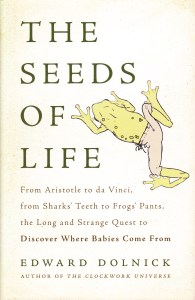
Where do we come from? Leaving aside the puerile snickers of our younger selves, we eventually learn “the facts of life” and get on with it. The funny thing is, conception wasn’t really understood until the late nineteenth century. Obviously people had been reproducing from the very beginning. Chances are they were curious about the matter even then. Scientific investigation was a long way off, however. Edward Dolnick tells the story of the discovery in a wide-ranging, entertaining, and informative way in The Seeds of Life. The subtitle gives an idea of the range and quirkiness of the account: From Aristotle to da Vinci, from Sharks’ Teeth to Frogs’ Pants, the Long and Strange Quest to Discover Where Babies Come From. I used to tell my students that using the Bible for sexual ethics was difficult because biblical writers really didn’t understand what was going on “down there.” I think Dolnick would back me up on that.

Ancient people generally made the connection between sex and babies, of course. What was actually happening, however, wasn’t understood because sex cells require a microscope even to be seen, and that doesn’t make it obvious what they’re doing. Dolnick’s tale looks at advances in various sciences and, perhaps more importantly, the religious constraints under which they operated. The idea of the atheistic scientist is a fairly new one. Up through most of the nineteenth century scientists tended to share the worldview of others that God was assumed and that religious rules applied to such mysteries as life. That’s amply demonstrated in this book. True insight was slowed down considerably by religious presuppositions.

That’s not to say Dolnick blames religion—this book is much too congenial to do any blaming. A number of ideas had to coalesce, however, before it was understood that both women and men contributed to the developing embryo. Medicine was often looked down upon by science, and religion often crossed its arms and stood in the way. Despite all that, careful observation, and putting unexpected things beneath a microscope, finally led to the answer. It was sea urchins who finally yielded up the mystery’s clue. This book will take you some strange places. The individuals described are a curious lot. For the most part they’re also a religious lot. Persistent theorizing and persistent peering through a microscope and a willingness to question convention all had to combine to answer a question as basic and profound as where it is we come from.


Addicted to Heaven

I once wrote a scene—please don’t look for it; it’s never been published—in which a character awakes after attending a concert the night before. In my own life this kind of thing is very, very rare. Even when I had a full-time job in the relatively inexpensive Midwest, shows in Milwaukee were a bit out of our range for regular consumption. Here on the East Coast you have to scrimp and save to pull it off once in an every great while. In the scene I wrote, the character awoke wondering why the world looked so different the morning after. I’ve been pondering that because of my own recent Broadway experience, and a realization came to me. Such events involve an altered state of consciousness.

For all of science’s dowdy physicalism, there are very few practitioners who’d deny that altered states of consciousness exist. Nearly everyone experiences them. Perhaps the most common form is the dream. We know it’s not real, but most of us have had one or two that we just can’t shake. Upon awaking, going to work, dealing with the drudgery of everyday, we come home still feeling as if the preceding daylight hours were somehow less than real. Shows, some movies, and meaningful music can all induce alternate states of consciousness. Perhaps rare these days, but so can religious services. Such states continue after the event ends, and cushion our harsh reentry to “reality” with pleasant reminders that there’s something better somewhere else. Historically these moments have been highly valued. More so than even money. They’re addictive.

Attempts to induce such alternate brain chemistry through drugs are now a national crisis. One draw of opioids is their ability to bring on such altered states of consciousness. Our experience informs us that such things must exist, and they are likely behind the very idea of Heaven itself. The cost for altered states of consciousness is, of course, daily life. As physical beings we could not and cannot survive in a perpetual state of bliss. What is truly sad is that physicalism has convinced many that such alternative states are “not real.” Materialism leads, so often, to misery. The tendrils of altered states, however, interweave themselves among the synapses of our gray matter, sparking just often enough to make us realize that yes, those transcendent moments were just as real—if not more real—than this illusory world we daily inhabit. My character, awaking the morning after, was learning something she already knew to be true. Even if it was only fiction.


Jedi Bible

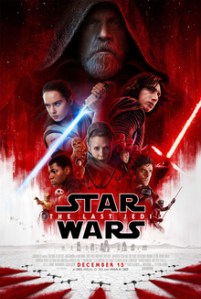
A long time ago in a galaxy far away there was no paper. This is something I didn’t realize until I read a book of essays by Ryan Britt a couple years back. George Lucas, although a limited visionary, saw a Star Wars universe without paper. When I thought back over the original trilogy, and the harsh prequel trilogy, that seemed to be true. Nobody picks up a piece of paper to read anything. Like many people I went to the theater to see The Force Awakens and left stunned. After being battered by episodes I through III, it was good to see the old form return. It was as if the force really had awakened. Then I went to see The Last Jedi.

Overly long and often plodding, I wondered, after it was over, what was so different this time. Not only was Luke Skywalker annoyingly noncommittal to the force, but backstory and counter-backstory made the truth hard to discern. There was a lot more talk of the Jedi religion as a religion. From my perspective, of course, this isn’t a bad thing. I would like to know more about this. There’s a secret tree on Luke’s island wherein are the sacred Jedi scriptures. Yoda shows up and calls down lightning like a little green Elijah and burns the Jedi library and its Keebler home. Then it hit me: not only is there paper in this universe, there are actual books. Scriptures.

We’re never shown the inside of any of the books, but if the fact that fans tend to fill in the blanks holds true we may well see future publications of the Jedi Bible. H. P. Lovecraft’s Necronomicon, a fictitious tome, now exists because his devotees couldn’t live in a world without it. And paper scriptures add an entirely new dynamic to any religion. Most world religions (at least on this planet) have some form of text. Books tell us what to believe and how to live our lives. Given enough time people will realize that they were written by other people and need to be interpreted by people. After all, if God could write the Bible, what would prevent him from writing the Qur’an, or the Book of Mormon? So stuck here in the middle of a trilogy the rules have changed. First paper has appeared in Star Wars. And although it’s a little too early to be sure, it looks like Jediism will never be the same.


Middle Age Demons

One of the consequences of watching horror movies is the interest in the origins of various monsters. Since many such films feature demons, their backgrounds and origin stories have always been a point of curiosity. Time is always an issue and Juanita Feros Ruys obliges that hurried sense by packing a lot of information into her short book Demons in the Middle Ages. Covering the basics in the introduction, she moves on to discuss demons in the desert—the bane of the early monastic, and demons in the monasteries of populous Europe. A chapter on the Scholastics describes how early science was applied to incorporeal beings, and a final chapter on learned magic, i.e., raising demons via magic books, finishes off this brief study.

What is particularly striking here is that the Bible says surprisingly little on the topic. It says, however, just enough to kickstart the Late Antique and Medieval interest in the subject. Vast amounts of speculation were raised in the Middle Ages concerning what exactly demons were and what they were made of and what they could or couldn’t do. Ruys points out the trajectory of the male necromancer giving way to the female witch just as early modernity was getting started. The results, we all know, were horrific. Throughout it is remarkably clear that belief in demons was strong. People took them very seriously—the Bible says they’re there, so there. Belief, as always, has consequences. Beginning with the Scholastics, however, a reasoned understanding of the spiritual world was deeply desired.

Reason and faith aren’t really the strangers they’re often portrayed to be. Medieval monks could be quite clever and scientific in their outlook. Human mental faculties, created, as they believed, by God, were necessarily good. Something I’d never considered, but which Ruys explores, is the belief that God cannot experience emotions. Being an “unmoved mover” meant not experiencing emotion (which, she points out, includes a noun of movement). This also meant that demons, according to some, had no feelings. This is a very cold spiritual world, particularly when it’s put into conflict with the human one. Spiritual, rational beings subjected to emotions, we’re the ones at the mercy of supernatural beings more powerful than us, yet incapable of the warmth we crave. About a millennium and a half of shifting beliefs in demons crowd this tiny book. Although not intended to be especially profound, it gives the reader plenty to ponder. Including why some of us watch horror movies at all when religion can do the trick all by itself.


Setting Terms

I never met Jonathan Z. Smith, although he was hard to miss at conferences. By the time I was a doctoral student his writings were deemed essential reading in several areas of religious studies. Smith, like a few renegade scholars, had doctoral training in one area but went on to teach himself far more diverse subjects, earning him rare accolades as someone who understood a vast amount about religion. That’s something you can do if you have a university willing to back you up. The usual formula for academic success (degrees from Ivy League schools, one of which must be Harvard, dissertation published by Oxford University Press, and letters of recommendation from one or two key players) encourages extreme specialization. Siloed thinking. Only when you’ve found a school that believes in you can you branch out like Smith did. Like most people in my field, I’ve read his stuff.

Scholars can be remarkably naive about how “the system” works. Most, for instance, don’t know that Academia.edu is a for-profit website. Not that there’s anything wrong with that; most of my old papers are available on Academia. The thing is, publishers may not want you to post your research there. You see, academics often believe the results of their research should be free. Thing is, someone has to pay for publishing it. It’s not cheap to publish books or journals. Undercutting a publisher may seem like fun, but then the book prices go up and everybody’s mad. These things are interconnected. Jonathan Z. Smith would’ve understood that.

For reasons poorly comprehended, some academics get publishers’ eyes and they want to build this person up. It may be—more than likely is—that an early book sold well. Nothing says academic veracity like lucre. The more books printed with one’s name on them, the better known said scholar becomes. Some even make it to the level of public intellectuals. It’s not a journey over which an individual has much control. Quite often it’s the support structures offered—steady, tenure-track job, ready acceptance at prestige presses, media exposure. Smith, like my doctoral advisor John C. L. Gibson, never used a computer. Try to get a university post today with that stance. I dare you. He set his own terms. In a world where being an academic means knowing an awful lot about a very little, the shadow of those who’ve earned the right to say a lot about a lot lies long on the ground. But it’s a good idea to ask your publisher before you decide to post things on Academia. Be informed about this little bit.


The Big Shill

Once in a while I have to shill. As an erstwhile academic I’m aware of the cachet my employer bears for colleagues and the elite among the general public. Still, I find articles on the Oxford Dictionaries blog irresistible. I don’t work for the Dictionaries division, but I sometimes wish I did. A recent post by guest blogger Rebecca Teich discusses pulp fiction neologisms that have made their way into mainstream vocabulary. It’s not so much the individual words that interest me as much as does the phenomenon itself. Pulp fiction is antithetical to the sophisticated literature of the cultured class. Yes, there is status snobbery involved in such an assessment—we know those who find anything “common” to be vulgar and indicative of a lack of good breeding. The fact, however, that pulp fiction words make it to the mainstream belies the singular direction of cultural influence.

Many of us who grow up in working class families aspire to better things. We see (or used to see) on television and in movies how other people live. They have things and experiences that we covet. We work hard for many years to try to get there, often being kicked back down the stairs along the way. And yet we find some of our cheap, common vocabulary creeping into the consciousness of those who can afford better. There’s even a phrase for it. Guilty pleasures are those enjoyable books or other media that are really “beneath us,” but which we secretly enjoy. I post once in a while about Dark Shadows novels which are, quite literally, among the pulp fiction I grew up reading. They reached cultural cachet with a decidedly disappointing Tim Burton movie based on that universe, but regardless, they reached mainstream respectability.

Respectability. I suspect that’s what it’s all about. We want to be shown that our dirty collars and rolled-up sleeves mean something in this world of billionaire playboy presidents and congress that aspires only to greater wealth for itself. My first job, which I started when I was 14, involved physical labor. Brooms, paint rollers, and sledge hammers. I spent my evenings watching television and some of my weekends writing fiction. Pulp through and threw. Part of me finds its bliss in knowing that other rough-hewn writers have stamped their hallmark on the literary world by pounding out gritty stories of authentic human experience. Yes, I may be a corporate shill in this respect, but then, the shill is a respected member of the pulp fiction community.


What Year?

Dave Barry’s end of year review is part of our annual ritual for changing over the calendars. For those unfamiliar with Barry’s work, he was a columnist with the Miami Herald and is the author of numerous humor books. Known for his light touch, as well as his friendship with Stephen King, Barry has a way of finding the fun in what are often trying times. It should be no news that Barry’s work was quite easy this past year. 2017 was so bizarre that few humorous garnishes were required to make it look ridiculous. Even as Barry embellished the facts just a little bit, 45 was starting off 2018 in an even more unbelievably surreal mode. Congressional Republicans, of course, noses permanently stained brown, lock step with him.

I have to wonder when world leaders became so unaware. Perhaps because of the ad hoc declaration of fake news people like Trump think they can rewrite history. History, however, takes a long view. There’s no doubt whatsoever that the Trump administration will be remembered (if there are any of us left here to do so) as one of the strangest and most foolish periods of American history. Even Rome, of course, had its Caligulas. The thing was the evangelical would’ve despised the antics of such an emperor. If Trump had an ass he’d make it a senator. And the GOP would quickly confirm it. Rumor has it that he’s already attempted this.

Those who ignore history, to paraphrase George Santayana, are condemned to live through it again. And Trump, it is clear, doesn’t know history. As the Roman emperors grew more and more decadent, the Visigoths quietly awaited the implosion. When we see the beast and the false prophet squabbling we know that the end of time is near. A cold snap hits the east coast and the pretender-in-chief says we could use some global warming. Global warming, of course, is what triggers such erratic weather. The problem is you have to read to find out such things. And you have to read what you, as emperor, have decreed to be fake news. Historian Barbara Tuchman once stated that you need about fifty years to pass before writing history about an event. Right now we have a White House trying to rewrite history of last January, as if anyone alive then is incapable of remembering what happened a paltry year ago. And what a paltry year it was. Read Dave Barry’s take and find out for yourself.


Sticky Labels

Who gets to decide on their own label? We all generally know how we’d like people to think of us, but labels are limiting and divisive. An article by Tom Gjelten on NPR describes why “2017 Has Been A Rough Year For Evangelicals.” The label “Evangelical” is so protean that most people outside the specialist camp really have no idea what it means. A colleague of mine at Nashotah House used to defensively declare himself an Evangelical while holding somewhat progressive social views. I know Evangelicals who find the whole Trump charade distasteful and, quite frankly, wrong. They are, however, pasted with a label that has passed its expiration date. This label doesn’t come off easily.

The real issue is not Evangelicalism, but politics. In the version of Evangelicalism in which I was raised was non-weaponized. Yes, we believed that others should convert to “true Christianity” but whether they did so or not was their decision. In college, fellow Evangelicals in a very conservative setting declared that legislative morality was no morality at all. This was in the Reagan Era, when the GOP “discovered” the huge “bloc” of untapped voters—the Evangelicals. They discovered that this particular bloc could be rather easily swayed from voting in its own best interests, socially and financially, but emphasizing certain hot button issues. It was a political game that many Evangelicals simply didn’t recognize. You love Jesus, you vote Republican. Now these Jesus lovers must love Trump.

This discord is what Gjelten is addressing. Some Evangelicals are discussing changing their label. This can happen, of course, over time. The Moral Majority became the Religious Right became the Christian Right. Powered by televangelists when television was king, they now have to try to control the internet so the mediating influence of secular thought can be dammed. Among the casualties along the way is Jesus. The modern Evangelical movement no longer adheres to the teachings of the carpenter from Nazareth. The issues on which he spoke plainly and repeatedly have been relabeled as “liberal” and therefore evil. If you can keep the Jesus brand, eviscerated of its core beliefs, you can gather a bloc of dupes who’ll flush their own healthcare and financial wellbeing simply because sheep will follow any shepherd. Ironically, the Bible itself warns of the dangers of following false shepherds. None of that matters anymore. And those who joined the group because of that Bible wonder now who they really are.


Science and

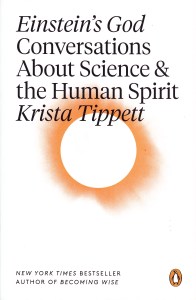
Do science and religion have to fight? It’s not evident that they do, but some on each side of this divide like to keep the conflict going. Many religious believers feel threatened by the incredible success of scientific explanations. The gods who used to explain everything are now responsible for so little that it’s easy to feel foolish for believing. It doesn’t help that the most vocal scientists have made religion their personal court jester, adding ridicule to the mix. Krista Tippett’s book of interviews with scientists, Einstein’s God: Conversations about Science and the Human Spirit, is a refreshing counter to this trend. Although it’s a few years old now, the book just landed under my tree, so I started off the new year with it.

A blend of interviews with scientists, quotes from their books, and personal observations, Einstein’s God is a fascinating and quick read. Covering topics from the wonder many scientists feel about their discoveries to medical understandings of how spirit effects healing to the ongoing debates about evolution, this book looks at the big picture. The scientists Tippett interviews, although some are atheists, don’t dismiss religion. In fact, many of them suggest religion in some form is necessary for healthy human living. As scientists they don’t dismiss science either. It’s refreshing to read about how those with scientific bona fides sometimes come to the same conclusions that those of us without the credits have surmised.

Once I began working at age 14, one of my earliest purchases was a subscription to Discover magazine. I was a charter subscriber. I was also a Fundamentalist. Not realizing that science and religion should be squabbling, I read science that could be digested by someone without professional training. Until I felt the tug of the ministry, I had intended to be a scientist. The only professional religionist interviewed in Tippett’s book is John Polkinghorne. A physicist cum priest, Polkinghorne has come to prominence among those involved in the debate between how we know what we know (the fancy term is epistemology). I wondered as I read this how it might differ from the other direction. Some of the interviewees were raised religious—Jewish and Hindu, notably—but none started out as professional religionists who went into science. That, I learned after college, is a much harder transition. Perhaps it says something about the nature of reality that to move into science as a career you must start with the undergrad prereqs if you ever hope to make the switch. Otherwise, those who start out with A’s in high school physics end up watching from the sidelines while others set the terms of the conversation.


Gaston Avenue Freeze-Out

I was not, as yesterday’s post indicated, looking forward to the renewed commute into New York City. We’ve been having a cold snap here in the Northeast, and although it’s nothing by Midwest standards, standing in it waiting for a bus isn’t the most comfortable of situations. It was cold enough that I didn’t dare take my gloves off to check the time, but my body clock told me the bus was late. The cold was creeping through all my layers and the thermometer said it was in the single digits, and breezy. I’d been a human popsicle for about a quarter of an hour when a pair of headlights pulled in the parking space nearest me. The driver got out—one of the regular commuters on my line—came over and said, “The bus is running late, won’t you sit in my car?” I was truly touched.

It’s easy to think people just don’t care. Those of us on the early morning commute know each other by sight, but not by name. We all awake far too early and put up with expensive, but unreliable bus service. We don’t talk on the bus, each of us using the time as we see fit. It feels like being alone. This offer of kindness was a welcome start to 2018. Many women would be rightfully leery of letting a man they don’t know sit in their car in the dark. Human kindness, however, is a quality that overlooks differences in times of need. She asked what line of work I was in. When I said “publishing” she replied “Ah, so that’s why you read all the time!” I was surprised she even knew that about me. Commuters touch only at the edges, like marbles in a jar.

In the Middle Eastern desert regions there’s a law of hospitality. If you find anyone lost in the wilderness, you help them. It doesn’t matter if they’re a friend, enemy, or stranger. Knowing that anyone might find themselves in such a hostile environment needing help, the tradition is to give assistance. You give water to the person in need. In these days of foreigner-bashing, I feel compelled to note that this woman is not a native-born American. Standing in the exposed cold of my shelterless bus stop I was at the mercy of the weather and human kindness. In a nation bent on expelling “the other” I could’ve had an even more uncomfortable long wait for an expensive government service for which I handsomely pay and which often doesn’t deliver. There are parables everywhere for those with eyes to see.


The Grind

I’m headed back to New York City after a staycation of almost two weeks. Even shifting standard arising time back only an hour from 4:00 a.m. seems cruel and unusual punishment this morning. New York is a very different place to go for work than it is for play. Serious New Yorkers, of which I am not one, tend to avoid the fun places visitors go. Times Square is simply a venue from which the hike to work begins. Most of the buildings are gray and dedicated to the making of money. My thoughts go back to my one transgressive trip in over the holidays to see a show. How different New York was then! Ethereal lights, sublime music, and the magic of story. Today it will be unsmiling crowds surly to make cash flow again. The concrete underfoot today will be much harder.

When I come in with family I feel less cold. New York can be very lonely for such a crowded place. Indeed, it isn’t unusual for me to go for days with no one at the office saying a single word to me. That’s the kind of place Manhattan is. Too many humans to be humane. Unless you’re here to play. Such play is, however, costly. Magic never comes for free. The holiday lights will still be up here and there. Warm memories of the past few days will linger for a little while. Soon the steel and cement will be the only realities once again. Soft skills meet the cold razor of cash with predictable results.

It seems to me that I’m yearning for boyhood once again. Those first tentative years of learning about life are all misleading. Suddenly it dawns on you that good will is reserved for the holidays and the remainder of the year is dedicated to money and things others deem as important. The bus is approaching, but the last time I was in the city was for fun. Today I won’t even glance at the theater district as I dodge cars to get out of Times Square as quickly as possible. There will be the all-too-familiar lines at the Port Authority during rush hour this afternoon. I’ll leave work wondering how a city can possibly be so schizophrenic. Yes, I’ve been profoundly happy in New York City. I’ve also been ground down to the very nub by the exact same place. Such is the nature of a world where money reigns.