The Problem with Shaving

Evil may be an abstract concept, but that doesn’t mean it isn’t real.  Sorry for the double negative—finding the right angle of approach is difficult sometimes.  I say that because I believe that the misattribution of evil is tearing civilization apart.  Science has rightfully taught us the tricks for understanding the material universe.  Problem is there’s more to the universe than material.  If all our minds consist of are electro-chemical signals, well, this batch swirling in my head isn’t alone in doubting itself.  (Think about that.)  So, here’s the problem—those on the opposite side of the political spectrum rending the United States into shreds aren’t evil.  They’re doing what they believe is right, just like the lefties are.  The evil comes from forces trying to tear good people on both sides apart.  The simplest solution, Mr. Occam, isn’t always the best.

Putting it out on the table, right and left have some basic disagreements.  By far the majority of them are sexual.  Both sides believe what they’ve been taught or what they’ve learned.  Sex, of course, is one of the great dividers of humankind.  It brings us together and it tears us apart.  Religions have always been very interested in sexuality—who does what to whom and what to make of the consequences.  None of it is easy to sort out.  Since the Bible voices first-century (and earlier) opinions on a matter they understood even less than we, the situation is very complex indeed.  Especially since many people wrote all the self-contradictory words within its stolid black, pigskin leather covers.

Complexity reigns in the world of explanation for both politics and sex.  Put them together and see what happens (if a Clinton, impeachment, if a Trump, nothing).  The issue with Occam’s razor is that the simplest solution doesn’t always explain things best.  It’s not evil to suggest woman plus man equals marriage.  Unenlightened, maybe, but not evil.  The truth is that things are more complicated than they seem.  A society taught, in many ways, that only one solution works could easily boil it all down to one size fits all.  Evil is the desire for political power that draws its energy from making each group think the other is evil.  I realize this courtesy often goes in only one direction.  That too is part of the evil machinations of a system that divides instead of seeks common ground.
Collinsport

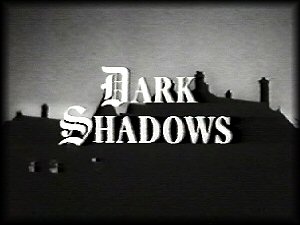
Nothing is ever wasted.  That’s my economy of the soul.  I spent my tween years mooning about Maine.  I’d grown up watching Dark Shadows after school and I’d begun reading the pulp fiction based on the series by Marilyn Ross.  My mother wondered how I could waste my time on vampire nonsense when there was sun shining outside and other kids to play with.  Little did she know that I was learning valuable lessons for the future.  My fascination with Maine—still intact—led me to vacation there whenever possible and over my career I’d applied to more than one or two jobs there based primarily on the potential reward of living in the same state as Collinwood and its spooky mansion  atop the cliffs overlooking the stormy Atlantic.  Once some friends in Norwalk, Connecticut took us to see the  Lockwood–Mathews Mansion, used for Collinwood in the movie House of Dark Shadows.   Such is the draw of childhood imagination.

What were these lessons I’ve mentioned?  Well, Collinwood stands outside the quaint fishing village of Collinsport.  Both are named after the family that houses some very dark secrets, as well as shadows.  Barnabas Collins is a vampire.  He has run-ins with many supernatural creatures, including ghosts, witches, and a few Scooby-Doo kinds of cases where someone’s faking the paranormal.  But Barnabas isn’t the only monstrous Collins.  His cousin Quentin, whom I kind of remembered being his ally, was an unstable werewolf.   Of course, I’m not sure there is such  a thing as a stable werewolf, but still.  Those in the family stay loyal, despite the beasts that lurk within their walls.  Some of the early Collinses were involved in the slave trade.

The Collins family has a long association with the state of Maine.  During the groovy 1970s they seemed somewhat progressive while maintaining the aloofness of the aristocracy they’d become.  Despite Tim Burton’s spin on it, they were the undisputed lords of Collinsport.  You felt you could trust them.  Unelected though they were, they possessed an innate sense of social responsibility.  I also learned as a child that, as appealing and tortured as they might be, you could never really trust a Collins.  Barnabas was not evil, but he was a vampire.  He required blood to survive, and his victims, like those of the current Collins of Maine, Susan, were female.  Any girl who trusted a Collins was in danger, unless she was their willing servant.  I was not squandering my childhood afternoons.  I was learning lessons about trust and its costs.


Aporripsophobia

I’m proposing a new word.  Given that there are lengthy lists of phobias available on the internet, and since fear and I are well acquainted, I was surprised to discover that fear of rejection has no name.  It is simply called “fear of rejection.”  That makes it sound so juvenile that it need not be taken seriously.  Without revealing too much (I don’t know how you might use this information—you could reject me!), this is one of my lifelong fears.  I have theories as to why this may be, but if you want to hear them you have to get to know me first.  In any case, I am proposing the word “aporripsophobia” for fear of rejection.  Before you turn this down, let me assure you that I took four years of Greek in college, and even taught it for a year.  “Aporripsē” is Greek for rejection, and, of course “phobia” is fear.  The standard euphonic vowel before the o in phobia is open for grabs, but since it’s my word, I’m suggesting another o.

Unless it’s a keyboard smash, a web search on Google that brings no results is rare.  Just to be sure, I checked out aporripsophobia and the mighty search engine turned up no results.  One thing I’ve learned about the writing life is that rejection is part and parcel of it.  Almost every writer has a history of rejection slips because, until someone takes a chance on you and makes some money off you, who wants to risk it?  The first few I received nearly solidified my slavery to aporripsophobia.  My advice to other writers, however, should they want it, is keep on trying.  In the past two years I’ve been asked to write two academic articles and a book.  I’ve also been asked to contribute to some online resources.  None of these are big or visible projects, but to someone with aporripsophobia, that’s fine.

Even introverts, you see, need other people.  Many of us suffer from a form of over-stimulation when around too many people.  Some of us are extremely alert to our senses, finding it difficult to ignore strong odors or weak pains.  Lots of people around can be frightening—crowds are loud and there’s so much—too much—going on!  That doesn’t mean, however, that the quiet don’t need others.  In fact, the quiet with aporripsophobia may get into a feedback loop where the need for alone time is translated as snobbery or arrogance when in reality it’s simply a way of handling the stress of being around too many people.  The feeling of rejection then rushes in.  I have probably said too much already, but I wanted to get aporripsophobia out there before someone louder did.  I missed meteorotheology as a coined word, so, like my advice to writers, this is how I keep on trying.  Finding aporripsophobia on Google some day down the road could lead to its opposite, I think.  Its rejection, on the other hand, would be the supreme irony.


Writers Reading

A lot of misconceptions about books abound out there.  One of those misconceptions that has become clear to me is that authors write books to teach.  (Or to make money.  Ha!)  That may well be part of the motivation, but for me, the larger part has been writing books to learn.  You see, the frontiers of human knowledge cannot be reached without stretching.  Writing a book is a way of learning.  Long gone are the days when a person could read every known published work.  Indeed, there aren’t enough hours on the clock for anyone even to read all published books on the Bible, let alone the far bigger topics these days.  And so writing a book that deals with a biblical topic—let’s say demons—is the ultimate learning exercise.  It’s a very humbling one.

I recently read an article where book pirates (yes, there is such a thing!  I should explain: there are those who believe authors are ripping off society by getting royalties for their books.  These pirates, like those of galleys of yore, take ebooks and make them available for free on the internet.) call authors “elitists” for wanting to earn something from their labors.  These folks, I’d humbly suggest, have never written a book.  Most books (and I’m mainly familiar with non-fiction publishing here, but the same applies to the other kind) take years to write.  Authors read incessantly, and if they have day jobs (which many do) it is their “free time” that goes into reading and writing.  They do it for many reasons, but in my case, I do it to learn.

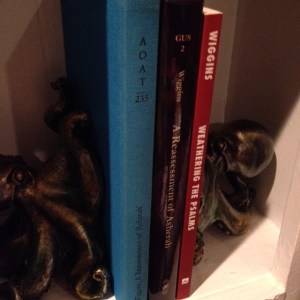
The doctoral dissertation is accomplished by reading as much as possible beforehand and writing up the results quick, before someone else takes your thesis.  It is the practice I also used for my second book as well, Weathering the Psalms.  The third book, Holy Horror, was a little bit different.  Yes, I read beforehand, but much of the research went on after the body of the book had largely taken form.  I had to test my assumptions, which are on ground most academics, needing and fearing tenure, tremble to tread.  I read books academic and popular, and having been classically trained, often went back and read the books that led to the first books I read.  It is a never-ending journey.  I could easily spend a lifetime writing because I’d be learning.  But like other misconceptions, those who write books don’t lead lives of luxury.  They work for a living, but they live for the chance to learn.  And that’s worth more than royalties.  Besides, the nine-to-five demands constant attention.


October Devotee

Here it is October and I have hardly written about monsters.  Apart from the US government, that is.  I suspect that I could use a little escapism right about now, and most of the boxes are unpacked from the move.  Perhaps it’s time to watch a little horror and feel better about the world.  Monsters, you see, crop up in the most unexpected places.  Yes, in October we expect them to be crouching in dark corners and in dismal swamps as the light begins to fail.  Yet the trees are still mostly green around here and I think I might be in need of some new material.  As with most people my age, I get lost on the internet—someone needs to offer a roadmap to it.  Preferably on paper. 

I admit being stuck in the past.  As any music therapist will tell you, a person’s musical tastes often reflect the sounds of their youth, and some of us believe that rock hit its high point in the 1980s.  My work doesn’t lend itself to background music, so I seldom listen to the radio, and I wouldn’t even know what station to try to hear contemporary offerings.  Fortunately I know some people half my age who find their tunes on the internet, and I was recently introduced to Panic! At the Disco via YouTube.  I’m old enough to remember when music videos first appeared, although I never saw them.  We lived in a small town and, besides, we couldn’t afford cable.  Kids at school, however, talked about MTV and other places—there was no world-wide web then, kids!—that they had seen the latest, coolest video that I could only imagine.  When my contemporary young friends showed me “LA Devotee” by Panic! I was stunned.

If you haven’t seen it, just look up the official video on YouTube.  You’ve got the whole internet at your fingertips!  While the lyrics seem innocent enough—young person wants to make it big and so imitates the Los Angeles lifestyle—the video is horror show.  Literally.  Borrowing from M. Night Shyamalan the opening sequence is a cross between The Village and Signs.  Then it becomes a torture chamber for a young boy (from Stranger Things, no less, a show I binge-watched when it came out on DVD).  And Satanism.  Yes, taking on the LA lifestyle is compared to selling your soul to the Devil.  The stunning visuals kept me clicking the replay button.  Even as I felt my age, I also felt October growing.  And I was glad to see the monsters are still there.  Too bad we can’t banish them from DC, however.


Classic Education

A few months ago now, just after moving, our garage flooded.  Our books, unpacked, were stored there at the time, resulting in many casualties.  As I sorted through what was destroyed—a process still ongoing—I decided that if I replaced books I would re-read them as I did so.  Emily Brontë’s Wuthering Heights was the first replaced, and therefore re-read, volume.  For those who never had the opportunity to attend seminary, I would note that it is the ideal time for reading.  One of my professors, Harrell Beck, although he taught Old Testament, encouraged wide reading.  The Bible, he suggested, didn’t stop at the last verse of Revelation.  It was in seminary that I discovered the Brontë sisters and their remarkable literary achievements.

Wuthering Heights is fine autumnal literature and Heathcliff one of the greatest protagonist villains of literature.  An interloper among the privileged classes, Heathcliff finds delight in making others share in his suffering.  One of the more memorable characters is Joseph, the Bible-toting, Bible-quoting caretaker who sees nothing good in the younger generation.  Even Emily Brontë, the daughter of a clergyman herself, spies the hypocrisy so clear in the lives of literalists.  Joseph enjoys scolding as much as reading Scripture, and even the other servants find him tiresome.  Born in the year Frankenstein was published, Emily had Gothic sensibilities.  With the protracted death scenes and atmosphere  of loss and mourning, this classic can be a restorative in an era such as ours.  In more than one way.

Since Wuthering Heights is a classic, there’s no need to recount the story of lost love and damaged human beings.  What is important is to realize that we continue to support a social structure that repeats the sins of nineteenth-century England.  And like that setting, we do it firmly believing we are a “Christian” nation.  Joseph would surely nod in agreement.  Stripping the safety nets from the vulnerable so that the privileged classes might enjoy more of their ill-gotten gain, we live the hypocrisy of the self-righteous.  It the era of the Brontë sisters, women were not encouraged to write.  They, like the servants of the wealthy, were believed to exist for the comfort and pleasure of the master.  Not paying attention to the classics, we’ve come back to that era, claiming that wealthy white men are the true victims in all of this.  The denizens of the swamp will find their place in history next to Josef Stalin, Mao Zedong, and Benito Mussolini.  Wuthering Heights, like 1984, will, however, remain a classic that sees through hypocrisy.


Graymalkin October

It’s not like you need an excuse to read ghost stories in October.  At least that’s what I hoped other passengers on the bus would think.  Yesterday on my way into and out of New York City I read the next in the series of Ed and Lorraine Warren books, this one titled Graveyard, and written by Robert David Chase.  Now, you need to realize that I’d heard of the Warrens long before The Conjuring came out.  Those of us curious about ghosts to the point of reading at least semi-serious books on them know the brand.  What I don’t know is how to find out much about what “the Warrens” actually wrote.  These books are being (have been) republished by Graymalkin Media, after having originally been published by mainstream publishers.  This one was originally released by St. Martin’s Press.  Those of us in publishing believe that stands for something.

Loosely tied together around graveyard stories, featuring for half the book Union Cemetery near the Warrens’ Monroe, Connecticut home, the book ranges far and wide concerning ghosts.  Here we meet a man or two who turned into demons—I wonder how that works?—and a good demon punishing an evil person.  Some of these stories seem straight out of the high school scare-your-date playbook, while others are actually pretty scary.  A mix of accounts by either Ed or Lorraine, and stories embellished, it seems, by Chase, this book is like a trick-or-treater’s Halloween bag—you never know what you’re going to get.  It’s a little too bad because I’ve read some sober, and serious treatments of ghosts over the past several autumns, and with the Warrens’ vast experience, it’s a unfortunate that the accounts had been so dolled up.

It’s a shame that scholars of religion can’t be more forthright about their interest in the spiritual world.  I know many that I won’t call out here that are secretly—some openly—exploring these kinds of questions.  That won’t get you tenure anywhere (something the Ghostbusters reboot got right).  Even in the world of science there are forbidden topics.  That’s because, as this little book points out, spirits creak open the doors to all kinds of uncertainties.  I suspect that’s a similar reason that scholars of religion are treated with a certain mistrust by other guilds within the academy.  We need to play it straight and prove that we aren’t given to flights of fancy that might suggest something as unsophisticated as belief.  Still, as Graveyard shows, ghost stories are extremely common.  In fact, no October would be complete without them.  So I hope the other passengers think.


Getting Dirty

Composting is a very biblical activity.  Adam, according to the second creation account in Genesis, was formed from the divinely created dirt.  Some scholars try to capture the word-play in that story by suggesting “human” was made from “humus,” but since that sounds like chickpea dip it may not help so much after all.  Besides, we now know that soil has a complex and fascinating history.  Erosion grinds up rocks.  Organic matter dies and decays, forming the loosely packed substrate in which plants can survive, slowly breaking up the more dense pieces through the transformative power of water.  It is, imprecisely speaking, a miracle.  When Adam drops dead, he becomes once more part of the soil from which he was formed.  It’s poetic.  Elegant.  Economical.

Now that we have a house we’ve decided to try our hand at composting.  We’d considered it many times over the years since, what with recycling and hoarding, we’d managed to get our weekly garbage down to one fairly small bag.  Besides, since our government won’t be nice to the planet, somebody has to.  Institutional people that we are, my wife and I had to read up on composting before giving this very natural decomposition a try.  Things have to be just so for the process to work perfectly.  It was in the process of this reading that the biblical aspect became clear to me.  

The trick is to make sure the neighbors don’t complain about the smell.  That, in part, determines what can or can’t go into the compost bin.  Meat and dairy can’t go into the mix.  Since I’m primarily vegan such things aren’t generally here to be disposed of in any case.  Even the drier lint can go there, for the clothes that we wear become part of who we are, right Henry David?  And here’s where there’s a danger of TMI, although it’s good theology—cast-offs from our selves can also be composted.  Hair, for example.  The composting literature we have seems to take Adam himself out of the equation by specifying pet hair, but hey, mammals are mammals.  The longer I thought about this, the more obvious it was that burial, ideally, is a form of composting.  Giving back to the earth from which we’ve sprung.  That simple wire bin out by the garage is in the process of making the substrate for new life.  We may not be farmers, or gardeners like Adam, but composting feels like giving back somehow.  It’s an act of creation.


Look It Up

So my current book project involves addressing The Conjuring universe.  A few weeks back I posted on The Nun, the newest member of that diegesis and one with no claim to be based on real events.  Nevertheless, the film circles back at the end to “Frenchy” and his exorcism shown in the original movie.  One of the frustrating aspects of Ed and Lorraine Warren ’s oeuvre is that documented sources are difficult to locate.  When I found out Satan’s Harvest (by Michael Lasalandra and Mark Merenda, with Maurice and Nancy Theriault) was the “true story” behind Frenchy Theriault’s possession, well, let’s just say working on a book is a good excuse.  Overly dramatized, and somewhat padded, this account may be the closest we can come to this particular demonic encounter.

I don’t pretend to be certain about many things, so I reserve judgment about what actually might’ve happened to Maurice Theriault.  Unlike portrayed in The Nun’s storyline, he never lived in Romania.  He was physically abused by his father and was made to participate in unwanted sexual acts.  His was not an easy life.  Still, when Lasalandra and Merenda try to explain the origin of possession they go back to the same source as the original movie—Salem.  Credulously claiming that the Devil was behind what happened in 1692, they believe that demonic possession accounted for that unfortunate miscarriage of justice.  It’s difficult to say if they considered that such speculation implies that the innocents killed there were actually witches.  (They state that the Devil asks people to sign his book.)

Herein lies part of the problem with academics and the supernatural.  Sensationalized claims don’t help since academics are all about being taken seriously.  At the same time it’s clear that conventional explanations don’t always fit.  Neither credulousness nor extreme skepticism will lead to solving such mysteries.  This is why we need the monstrous.  That which falls outside the parameters of what quotidian experience leads us to expect.  Science can make everything fit only by leveling off the exceptional.  Academics won’t risk exploration of the anomalous.  This leaves the curious few means of finding out what happened beyond simple dismissal or overly gullible popularizing accounts.  Satan’s Harvest contains information that calls out for explanation.  Perhaps a hoax was involved, but that doesn’t add up when all the evidence is in.  Beyond that, we’re left to guess.  And some things it feels better to be sure about.


Beyond the Facade

Over the summer the New York Historical Society had an exhibit, now over, on Norman Rockwell, Franklin Roosevelt, and the Four Freedoms.  I think we may be down to one or two freedoms by now, but nevertheless.  One weekend my wife and I went to the exhibition.  She’d just read a biography of Rockwell, and although his Americana is my America, I suppose, his pluck is sometimes unnerving.  You see, an artist has to show emotions on people’s faces and in their gestures.  Long ago I learned that if you show what you’re feeling in real life, people will quickly take advantage of you.  I learned, even as a teen, to be subtle.  If you think you’ve got me figured out, here’s a hint—that subtlety continues even into my writing.  It’s often not what it appears to be.

Some months back I wrote a funny piece on this blog.  Some people who actually know me—or the part that I let be known—thought I was depressed.  Or angry.  Or both.  That’s a side effect of subtlety.  Episcopalians have it down to a science.  At least they used to.  The only place they showed emotion was in high mass, and that, if done right, packs a wallop.  One of my brothers comments that I seldom smile.  I might say too much about myself if I did.  What would you do with that knowledge?  In my earliest experience, you might use it to hurt me.  Walking through Manhattan to the exhibit, I noticed the stone facades.  Some buildings have solemn stonework, almost gothic is aspect.  Behind the windows, however, I can sense emotion left unshown.  It’s not very Rockwell.

I admire Rockwell’s outlook.  Indeed, I might share more of it than I want to reveal.  Rockwell, according to the exhibit, believed in America for all races and all creeds.  Strong women dominate his paintings and illustrations.  Equality was what America used to stand for.  And although I’m reluctant to admit it, when my writing’s most serious an element of humor enters in.  Like a Rockwell painting.  He wished to be taken for a serious artist, but had a difficult time suppressing the irony of life itself.  I get that.  It’s just that if other people see what’s beneath the surface—what goes on behind that stone facade?—they will find a means of extorting it.  Best to be subtle.  Words can mean the opposite of what they say or can be literally true.  The shades between the extremes are endless.


Sinful Thoughts

Nothing is quite so scary as that which is undefined.  I learned that as an Evangelical child.  There’s a verse in the gospel of Mark—I’ll use Mark because it’s the earliest, by consensus—that reads, “Verily I say unto you, All sins shall be forgiven unto the sons of men, and blasphemies wherewith soever they shall blaspheme:  But he that shall blaspheme against the Holy Ghost hath never forgiveness, but is in danger of eternal damnation.”  Now, that was heavy stuff for a kid.  There was an unforgivable sin.  Naturally, the mind goes to what exactly blasphemy against the Holy Ghost might be.  I hadn’t learned much about context by the point, but Mark places this statement right after the good people of Capernaum accuse Jesus of casting out a demon by the power of Satan.  In context the unforgivable sin in stating that what comes from God is of the Devil.  By extension, vice versa.  Keep that in mind.

A few chapters later Jesus is describing sin again.  This time he lists: “evil thoughts, adulteries, fornications, murders, thefts, covetousness, wickedness, deceit, lasciviousness, an evil eye, blasphemy, pride, foolishness.”  If you read the news these characteristics sound very much like the repeated and continued behavior of 45.  Jesus himself cites this as evil—and here’s where it’s important to remember the unforgivable sin—to claim that such things come from God is blasphemy against the Holy Ghost.  Yet Evangelicals are doing precisely that.  Every time they exonerate Trump and his ground in behavior that for any other human being would be condemned as “sinful,” they are committing the unforgivable sin.  And they’re not even scared.

When I was a child, Evangelicals took the Bible seriously.  It was more important than anything—even railroading anti-abortion judges through to the Supreme Court.  Little known fact: Evangelicals of the 1950s supported abortion.  Since that time they’ve lost their faith.  And their mind.  Sucked into a political activism controlled by forces they don’t understand—if any man have ears to hear, let him hear—they committed the unforgivable sin that kept me awake countless nights with the fires of Hell roaring in my head.  I set aside the gospel of Mark and scratched my head.  How’d we come to this?  A nation, one might say a house, divided against itself.  The kind that Jesus, again speaking of Satan, declared could not stand.  No wonder Evangelicals avoid the Bible these days.  It is a very scary book.


Fear Factory

Every politician knows that fear wins elections.  Just how deep into Orwellian territory we are became clear at 2:18 p.m. on Wednesday.  A man I loath and distrust, who happens hold high office sent out a national presidential alert to cell phones everywhere.  After being awakened at odd hours a time or two over my cell phone owning years, I’d turned off my smart phone alerts.  I wasn’t out driving to spot amber alert situations in the middle of the night.  If there’s a severe thunderstorm coming, I’m already awake.  The idea that if everyone with a phone is on the lookout we’ll all be safe seems a bogus one to me.  There is, however, no way to turn off a presidential alert.  Like most Americans I was working when my phone went off.  I wasn’t afraid.  Just annoyed.

Random scary sounds are among the most frightening things people experience.  I recently started writing in the attic (if you read this blog regularly you won’t even ask why).  As I was writing this post a gust of wind blew and it sounded like the roof might collapse upon me.  Sudden load sounds make us look for comfort in a strong person.  On a national scale that means, God help us, politicians.  When my phone alert goes off, it’s telling me to vote for the party in power.  There’s psychology afoot here.  This was no accidental coincidence.  Midterm elections are just weeks away.

I know something about fear.  Not only do I write about horror films, I grew up with so many childhood phobias that my mother wondered how I would ever get along.  Those phobias may have gone underground when I became an adult, but they never truly left me.  I don’t encounter them on a daily basis, but I can draw on them for my fiction.  I don’t, however, appreciate my government using them against me.  Perhaps this sounds paranoid.  If paranoid it’s by design.  Even if 45 can’t see beyond his own proboscis, those on his team know the fear factor works.  Winston will come to love big brother.  Fear robs rationality.  We’re mere primates, after all.  Was it coincidence that there was what appeared to be an impromptu Trump rally later that afternoon?  There is a difference between paranoia and naiveté.  We’re a wired nation and the Republican Party has the phone number of each and every one of us.  If this is not a drill, you know where to find me. 


Goblins out There

From Wikimedia Commons

You step away from the telescope for a few months and see what happens.  That may sound like a recipe for some kind of cosmic soup, but as we find ourselves so busy with earthly matters it’s hard to keep up with the heavenly.  I’ve just been reading about the discovery of “The Goblin”—appropriate as we tiptoe into October.  The Goblin is officially a dwarf planet named 2015TG387, which falls trippingly off the tongue.  For those of us who never even saw Pluto before it was demoted as a planet, the distance of this planetoid boggles the mind.  It also makes space feel somehow less empty.  In fact, our solar system’s much more crowded than it was when I took astronomy class in college.

The universe—space—is close kin to our ideas of religion.  “God,” however defined, is “up there.”  As Galileo encouraged telescopes turned outward we began to discover mundane, if complicated, ways of explaining the universe.  Nobody looked through the eyepiece and saw the deity waving back.  Space was cold, dark, and largely empty.  Then the idea eventually grew that it was full of dark matter which, like spiritual entities, can’t be seen.  Unlike spiritual entities, however, it can be hypothesized.  Calculated, even if not measured.  And since it isn’t supernatural, it’s just fine to keep in our cosmic soup.  The problem with any recipe, however, is that it seems that each time you make it the results are slightly different.

It’s somehow appropriate that our new space neighbor is called the Goblin.  The idea of a cosmos devoid of any intelligent life—supernatural or no—is somewhat scary.  Looking at the headlines of what we’re doing to one another down here, and nobody willing to take the reins of reason, we increasingly hope for something beyond mere nature in the cold, dark reaches above.  And that we’ve found such a thing as a goblin—a supernatural entity if there ever was one—is telling.  In fact, all our planets are named after gods.  We can blame the Greeks and Romans (and even the Mesopotamians) for that.  Still, the tradition continued onto the worlds they couldn’t see: Neptune and Uranus and, for a while, Pluto.  We can’t escape the idea that what’s up there is more powerful than our minuscule human troubles.  Our slowly eroding atmosphere is all that keeps us alive down here.  And now there’s a goblin circling all around us, so far away that few will ever even catch a glimpse.


IAGY?

Here’s how messed up “America first” is.  As we’re forced to try to protect ourselves from a drunken, sexually abusive Supreme Court nominee, Indonesia is trying to recover from an earthquake and tsunami that have killed at least 1,400 people.  Of course, it’s “America first.”  The powers that be want us to buy their narrative that we only are important, the chosen ones.  You don’t even have to be non-American to be excluded.  Just ask the people of Puerto Rico.  No, it is far more important to railroad through an anti-abortion judge so we can cause misery to countless numbers of people in America first.  Natural disasters strike even here (Florence), and we can only glance away a moment from the constant drama being roiled in that ever bubbling swamp.  I thought it was supposed to be drained by now.  They did find some slimy choices for high offices, in any case.

This new form of Manifest Destiny is as bad as the old one was.  People are suffering from a terrible tragedy and our lips are chapped from calling our senators to try to get them not to vote for someone a vast majority of normal citizens find highly objectionable.  The Republican abuse of power is only overshadowed by its abuse of women.  When even Kellyanne Conway speaks out stating that we need to listen to the victims, it’s clear something is amiss.  How slowly they awaken, these creatures of the swamp.  “America first” looked like a party game for a while, but now that its true and ugly agenda is being shown those who climbed aboard that bus aren’t quite sure how to signal that they want off.

What of Indonesia?  What of a president who can’t even point to it on a map?  It’s not here, so it’s not our problem.  Nice drunken frat boys who feel up women are the best we can offer for the highest court in the land.  Elsewhere in the world they’re trying to address the global warming that is causing more and more extreme weather.  We can charge tariffs and still call ourselves Republican.  If we can’t start actual wars we’ll start trade wars.  You can’t be great until others bow before you, even if they’re bowed in grief for a natural disaster that claimed hundreds of lives.  We’ll make America first even if we have to fall into last place to do it.


Rich Rule

The perils of plutocracy should be obvious, but clearly they’re not.  This is somewhat ironic among its biblical fan base, which seems to be where the GOP draws its energy.  As the truth about Brett Kavanaugh becomes public knowledge, his religious supporters dig in their heels and blame the victims.  As one of the many who grew up far from privilege I found Shamus Khan’s analysis in the Washington Post eye-opening.  Khan makes the case that those who grow up in rich families and attend the “best schools” are endowed with the constantly reinforced message that the rules do not apply to them.  They can get away with things that others cannot and, in general, they are let off the hook for things that lead to imprisonment for other citizens.  What’s surprising is the Bible-thumpers applaud this.

It also explains more than Kavanaugh.  Trump is also a child of privilege and his entire term in office so far has been one of personal exceptionalism.  Many actual presidents were impeached or censured for acts far less offensive than those 45 commits.  The wealthy, however, are not held accountable.  Where is the Bible when we need it?  The Good Book is no friend to those who enjoy great riches.  In fact, one of the most constant refrains of Scripture is that against the privileged.  With great wealth comes great responsibility—the obligation to help those less fortunate.  The idea of getting away with what you can is hardly evangelical.

If the literalists can overlook the misuse of wealth, it is still more surprising that they can pardon lying.  Since the rules do not apply to the privileged, their own narrative bears the conviction of righteousness.  They can’t have made a mistake since their money proves them right.  Morality can be counted in dollars and cents.  It is for those of the underclasses to come up with high-minded ideals and hold themselves to them.  Wealth is its own justification.  Back in the days when America was young, the French lost patience with governance by the elites.  But then, the Fundamentalist class didn’t have much of a voice then.  It was the Age of Reason.  An Age out of which we’ve apparently grown.  Fake news, alternative facts, heavy-drinking frat boy justices, and women-groping presidents.  Can we not see the parallels with the other great plutocracy of the Roman Empire?  Ironically, it survives today only in the form of the church it sanctioned.