Documented Error

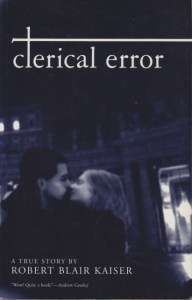
Back in September I wrote a post on documentaries.  One of those I’d watched was Hostage to the Devil, on the life of Malachi Martin.  Curious, I began looking for biographical information, only to find conflicting reports.  Robert Blair Kaiser, a journalist, was interviewed in the documentary and he claims that Martin is not to be trusted.  Given that Martin had academic credentials and academic publications, it’s clear that something is up here.  So I decided to read Kaiser’s Clerical Error.  As an award-winning journalist, Kaiser had written a book on Vatican II that sold fairly well, establishing his own credibility.  Clerical Error is a book, in large part, that was intended to discredit Malachi Martin because Martin had an affair with Kaiser’s wife.  That spices things up a bit.  (And explains the cover photo.)

It’s an odd book, overall.  Kaiser begins by describing how he became a Jesuit.  Autobiographical works are generally most interesting during the early years, and Kaiser does a good job illustrating how he was naive and probably joined the Jesuits out of fear of sexuality.  Some of the disciplines (including self-flagellation) are difficult to reconcile with the twentieth century (when they took place) but demonstrate the command religion can have over life.  Confronting church politics, he decided to become a journalist instead of a priest.  When he was assigned to Vatican II a couple things happen—his book gets lost in the weeds, and, he meets Malachi Martin (spelled Malachy throughout).  At first taken with Martin, the two became friends.  Martin helped him access places in the Vatican that would’ve otherwise been blocked to him, as a layman, even if a former Jesuit.

Then the tale becomes sordid.  According to Kaiser, Martin, still a Jesuit priest, began an affair with his wife.  The final third of the book has the draw of a soap opera as Kaiser tries to confirm what he suspects.  Overworked, he checked into a mental health facility, and this fact gave his detractors the grounds for claiming that Kaiser was mentally unbalanced and that Martin was really as he presented himself—a Jesuit priest, academic, and exorcist.  According to this book, which never made a large splash, the evidence is clear.  And the ability of the church to cover up scandals is legendary.  The most damaging parts, in my purposes for reading the book, are the allegations that Martin was a pathological liar.  (Why do we have so many of these?)  If true, nothing he wrote can really be trusted.  This is the very reason that of late I’ve been obsessed with the idea that lies are a clear sign of the one the Bible calls “the father of lies.”
Aging Music

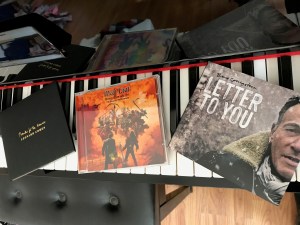
Poignant is the word that comes to mind.  Perhaps in stark contrast to my listening to My Chemical Romance, I’ve also been listening to the latest albums by artists such as Bruce Springsteen (Letter to You) and Meat Loaf (Braver Than We Are).  And Leonard Cohen (Thanks for the Dance).  In the last case the album was so late as to be posthumous.  Before that I spend quite a bit of time with David Bowie’s Blackstar.  These albums are, at least in part, about growing older and dying.  Now death is nothing new to rock-n-roll, but it seems as if as some of my favorites age they’re sending a message out from the autumn of their careers.  We may still be here, but we won’t be forever.


I’ve never really been afraid of dying.  In fact, as a kid I often imagined myself as an older man with some anticipation.  Now that I’m approaching that threshold of elderhood the view is just a touch different than it was to a small boy with a lifetime in front of him.  Leonard Cohen, at least, was dealing with aging as early as Various Positions, the album where he gave the world “Hallelujah.”  And Springsteen has toyed with it in various places, such as Devils & Dust.  What I’m hearing in these songs, however, is a kind of acceptance that isn’t really fearful at all.  It’s as if rock suddenly matured.  So many of the original pioneers died young and tragically, and those who survived have been calling to us like ghosts to let us spend our worn-out days in peace.

Perhaps it’s just that it’s November.  Light is becoming a rare commodity, and it will remain in short supply until around the middle of March or so.  Music helps us through the transitions.  There are albums that convince me I’m immortal.  If I weren’t so tired at the end of the day I might continue to believe that.  On a weekend when I had a few free moments I went to a local CD store.  Wearing mask and gloves, I could see that only people about my age were there to buy actual discs.  We’re not the streaming generation.  It gave me some comfort to see the names of bands I’d almost forgotten.  These artists, of course, will continue to live on after they’re gone.  They’ve left us a legacy.  We’d be wise to consider their advice from time to time.  And take a moment or two to reflect on the coming of December.


Constipated Democracy

Vows apparently mean nothing anymore.  I suppose that’s what happens when you begin your administration with “alternative facts” and keep it up for four years.  When you vow to uphold the Constitution—hand on the Bible—that means you’ll play by the rules.  Instead we find ourselves with a bad case of constitutional constipation and we all know that we need a national enema.  It has been a week now since it’s been mathematically impossible for Trump to win the electoral college.  Yet even his evangelical followers can’t seem to recall that hand on the Bible, that promise to obey.  Apparently it’s okay to lie before God, if you think like we do.  If you don’t want to have conversation but want to talk at others and say you’re right.  It saddens me that so many Americans simply don’t care what the majority clearly wants.

This is especially the case because Trump is being treated as some messianic figure.  An overweight, womanizing, pathologically lying Jesus.  And people are saying, “Yes, that’s what the Bible tells us is good, and right, and just.”  Those who are settled in good paying jobs—people of my generation—have been beneficiaries of the systems of education and government programs that the Trump administration has spent four years dismantling.  And they have the audacity to call themselves Christian while their lives are saying “I got mine, I don’t care about anybody else.”  And they’re the ones who wore WWJD paraphernalia just a couple decades ago.  WHCB?  What Has Christianity Become?

Many of us (the excluded majority, in fact—Trump won the 2016 election while losing the popular vote) knew the greatest danger would be that he would be “normalized.”  This would all come to be seen as the normal course of politics.  People from Trump’s own family have gone on record that his run for office was a publicity stunt meant to drum up business for his failing empire.  And those who acted/wrote/supposed that he had any “plan” or “strategy” at all were simply failing to see a career grifter fleecing the country while playing golf and having his “fixers” do the work.  Until he one-by-one threw them under the bus.  This was all done in the public eye and yet his followers think he really has the best interests of this country at heart.  He has torn countless families apart, and not just at the border.  And now that he’s been defeated he keeps the charade going while his followers bow down and worship.  Excuse me, but I think I need to use the restroom.


Demonic Monsters

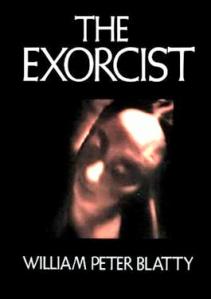
One of the perils of writing books is that you often realize something after the book has gone to the printer.  Book production is a lengthy process.  I submitted the manuscript for Nightmares with the Bible in January.  The procedure of getting it ready has stretched eleven months.  In that time, as any writer knows, you keep thinking about what you wrote.  That’s where blogging comes in handy.  In any case, as I was pondering demons the other day I realized that they really only became the objects of horror with The Exorcist.  Now I’m not alone in noting the importance of The Exorcist in kicking off the modern interest in demons.  But what I’m now thinking is that in making them the subject of a horror film—intended to be realistic—The Exorcist made demons monstrous.  Let me explain.

Demons have generally, in Judaism, Christianity, and Islam, been evil.  They cause suffering and misfortune.  They also, however, have a mischievous nature.  In other words, they can be playful.  So can grizzly bear cubs, did I hear you say?  That’s precisely my point.  Grizzly bears aren’t evil.  Powerful, yes.  Dangerous, certainly.  Evil, no.  One of the threads I take up but don’t spend too much time weaving into my book is the idea of the playful demon, or sometimes, the playful Devil.  In the Middle Ages such ideas weren’t rare.  Think about imps.  Do people really fear them?  Not so much.  And the often scatological behavior of demons in that time period made them a little less than serious.

I’m not suggesting that possession and exorcism are to be taken lightly.  I know they existed before William Peter Blatty ever decided to write a novel about them.  It was that novel, however, and the subsequent film, that made demons into monsters.  They joined the unholy pantheon of creatures like vampires, ghosts, and zombies.  They had the added frisson of being accepted as real by many religious traditions.  They continued to evolve in popular culture until they proliferated around the cinematic and television worlds.  Now we pretty much instantly recognize demons as monsters when we spot them.  I suspect they would not have been seen in a similar way in the Middle Ages.  Troublesome and evil they could be, but would they have been thought of in that mental category that we call monsters?  I have my doubts.  Perhaps it is good I didn’t think of this before sending my book off.  I doubt the publisher would’ve been happy if I’d added an extra chapter at the last minute.


Childhood’s End

Childhood.  It’s a time of many lessons that we soon learn to apply to all of life.  One of those earliest lessons is “Don’t be a sore loser.”  When someone else wins you congratulate them with a smile, even if you’re inwardly aching.  Fair play, it’s called.  Or morality.  All of these characteristics are sadly lacking in the Grand Old Party, it seems.  There has been no evidence of voter fraud, Biden currently leads by over 5 million votes, and yet Trump refuses to concede.  Not only that, the dissembler in chief, Mitch McConnell encourages such behavior.  In my fundamentalist church you’d have failed Sunday School for less than that.  And where are the biblical literalists?  Right there with them, thumping their Bibles but not reading them.  What happened to turn the other cheek?  Or even, for God’s sake, an eye for an eye?

Instead the world is watching as a putatively grown man throws a temper tantrum about losing.  Hilary Clinton conceded on the night of the election.  I’m sure it didn’t feel good to do so.  Nor did it feel pleasant for the 44 other losing candidates (in fact, more) who had to go home with their hats in their hands.  Not content to act like a king, Trump is behaving like a monarch for life.  His followers, perhaps aware that Americans will never again put up with such a travesty of a presidency, insist that someone must’ve miscounted by about five million.  They won’t be content until they can count themselves, throwing away any ballots they disagree with.  And they’ll continue to call themselves Christians.  Because, like the Donald, they can.

I’ve reached the stage in life where childhood has become a lingering preoccupation.  I sure got some things wrong.  Not being a sore loser isn’t one of them, however.  Like all people I’ve lost my fair share of contests.  Sometimes the stakes have been very high.  If you want to retain any dignity or moral standing at all, you know you simply have to admit, “I lost.”  We knew as soon as Trump was nominated in 2016 that he wouldn’t admit he lost then, even if he had.  We knew four years ago he’d never admit he lost when he would.  The Republican enablers stoked those fires in which to burn the Constitution.  Some of us, at least 77 million at latest count, are tired of all this political theater.  Big boy pants, it seems, are difficult to locate this season.


Bible Lesson

I was recently reading the revised preface and “To the Reader” (in draft form) for the NRSVue.  In case alphabet soup’s not your thing, that’s the New Revised Standard Version updated edition.  Of the Bible.  As I read through these seldom referenced pages it occurred to me, not for the first time, the care and concern with which scholars approach the original text of the Bible.  No matter what Fundamentalists may say, we do not have the original text.  In some places the translations you read are the best guesses of those who’ve spent their lives trying to understand what an obviously corrupted copy was intended to reflect.  Such care reflects the widespread (but shrinking) sense that this text somehow magically informs daily lives and should lead to political action.  I’m sure Jesus would’ve arched an eyebrow over that.

Biblical scholarship is hampered by the fact that the manuscripts that have survived are copies of copies of copies (etc. etc.).  Translators—yes, including those of the King James Version and the New International Version—are making some informed guesses on an Urtext we simply don’t have.  Lives, however, are often sacrificed on the basis of the belief that we have here some object to be worshipped instead of read and understood.  I like to tell my skeptical friends that the Bible is actually full of really good things.  There’s some nasty stuff in there too, but we can learn from the parts that convey deep spiritual wisdom.  Listening to your elders is a good idea, but it’s not the same as worshipping them.

Humans have a deep desire to make things sacred.  Maybe it’s because after watching us muddle around down here we want to believe there’s something better out there.  It’s problematic, however, when we make an earthly object, put together by humans, into a deity.  There are those who get around this by claiming the Bible is from God in the original.  The point is we don’t have the original.  There are some words (especially in Hebrew) of which the connotation and denotation are unsure (for words have no inherent meaning).  Reading, we know, is a complex enterprise.  That’s why it takes years to master it and constant practice to maintain it.  Those who leave off reading after school may, I fear, fall back into literalism when they encounter a text.  Bible scholars take great care at trying to reconstruct the original, and all of that can be undone by a failure to just keep reading.


Another Turn

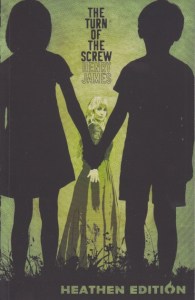
I have read The Turn of the Screw before.  Henry James’ most famous ghost story is a classic of ambiguity.  My previous reading, maybe a decade ago, was in an edition of James that insisted on stuffing other stories into the same binding, most of which I’ll probably never read.  I located a reasonably priced edition containing only the novella I wanted and it is published by Heathen Editions.  Obviously priding themselves on the unorthodox, Heathen Editions provides books with some little commentary, particularly pointing out unfamiliar words or explaining circumstances that many modern readers lack the training to spot.  The edition ends with James’ own afterword to the story, something my larger James volume lacks.  The story I remembered in part, but the notes also engaged me.

These notes aren’t numerous and they don’t distract.  In my case I understood the words defined, but I appreciated some of the historical or literary context supplied.  With so much literature available these days modern readers have to be drawn back into the classics.  James’ style tends toward the choice of more words than would be strictly necessary to tell the tale.  The fact that it was serialized helps to explain that.  Like Middlemarch and The Woman in White, both of which I’ve posted on in the past, being serialized encourages a kind of verbosity that modern publishers of fiction eschew.  At least in my limited experience.  For The Turn of the Screw the slow building to the climax requires spreading out.  The story itself could be summarized in a paragraph (which I won’t do, because you should read it yourself), but the feeling of dread has to grow as bits are slowly revealed.

One of the notes particularly caught my attention.  In an oblique reference to David and Saul, the editor expanded the footnote a bit.  The scene is when Saul is being tormented by an evil spirit sent by God and David is called in to help him with a kind of music therapy.  David plays his lyre and Saul’s demons temporarily leave him.  This is subtly referenced in chapter 18 of the Heathen Edition.  The note briefly explains Saul and David and then, for the only time in the book, goes on to provide a reception history of the reference by informing the reader that Leonard Cohen also refers to this episode in his song “Hallelujah.”  I’m sure the opening lines are familiar enough that I don’t need to risk violating copyright to quote them.  So it was that while reading a ghost story the Bible was introduced, which, of course has been my research agenda for a few years now.  A turn of the screw indeed.


Music Time

Although I love music I rarely have time to listen to it.  My work demands concentration and if I have music on I have trouble paying attention to the task before me.  I awake early to write, and if I try to listen to music while expressing my thoughts through my fingers I find myself conflicted.  I work until supper and the debriefing time that follows work is often fraught—we’re all experiencing frustrations with our new, pandemic reality.  By the time supper’s over, I’m ready for sleep and one of the things that can keep me awake is an ear-worm.  Awake predawn the next day and repeat.  On rare occasions when I have a thoughtless task to complete on my job, I’ll be able to put on some tunes.

Photo credit: Al Aumuller/New York World-Telegram and the Sun, from Wikimedia Commons

When that rare syzygy came the other day I put on MCR, or, for those who like to spell things out (such as me), My Chemical Romance.  Every time I listen to MCR I wonder why I don’t do it more.  I suppose it’s because I have only two of their albums and I don’t want to wear them out.  What struck me as I listened to The Black Parade was how religious language sometimes creeps in, even when the band is secular.  This is important because rationalists have long been trying to dismantle religious thinking, falsely associating it with only certain amorphous groups such as “Fundamentalists” or “extremists.”  Religion, however, is very much a part of being human.  If we deny it, it simply crops up in another form.  It may take some time for the new shape to be recognized, but when it is it’ll be called religious.

I often wonder why universities, which are supposed to be such curious places, tend to show so little interest in religion.  It’s like that embarrassing uncle at a family gathering—the one everyone else avoids.  Still, our political system is run by religious ideology—take a look at the Supreme Court and try to deny it.  Our daily life is suffused with it like the air in a room with a scented oil diffuser.  Religion is all around us and the academic response tends to be “meh.”  I might be less distressed by this lack if it could be demonstrated that people are becoming less religious, but they’re not.  MCR doesn’t (in the albums I have) exude religious thoughts often, but they are there.  They also appear in other secular music, almost as often as sex and drugs.  If only I had more time I might be able to listen for more examples.  Right now, however, it is time to get to work.


Favorite Color

Blue has always been my favorite color.  Even growing up Republican, I preferred it.  Like many Americans I awoke last Wednesday to a national map mostly red and pink, and watched gradually as more and more states turned blue.  I don’t mind confessing I wept when Biden took the lead in Pennsylvania.  These past four years have been torture against all that’s descent and humane.  White people killing blacks and being told there are very fine people on both sides of the issue.  Watching a virus run out of control here like nowhere else in the world because one man can’t be bothered with the troubles of 330 million (stop and think about that number) people.  A man personally enriching himself while not paying his own taxes and getting breaks for those wealthy like himself.  Endless lies.  Loud, brash, and crude.  Groping women as if they are commodities to be owned.

We have, at the embarrassingly late age of 244, finally elected a female vice-president.  Many other nations have realized that gender should not be the basis for electing leaders.  Poisoned by various forms of Christianity that assert male superiority, our culture has feared female leadership since it has become a real possibility.  I voted for Geraldine Ferraro as much as for Walter Mondale in that fateful year of 1984.  We’ve actually reached Orwell’s vision of it in 2016, but now it seems there might be legitimate hope.  I could never have imagined a presidency that would make me think Nixon, Reagan, and Bush weren’t so bad after all.  (And they weren’t good.)  This reconstruction of the Republican Party has been courtesy of the religious right, which is really neither.

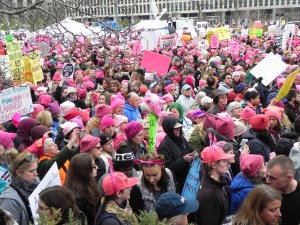
Today, however, I’m enjoying my favorite color and thinking that hopefully we’ll have some peaceful years to work on true equity and the ideals on which this nation was founded.  I’m hoping it will signal to the other fascists of the world that gaming elections only works if people with consciences are complacent.  I’ve been told that many Trump supporters think Democrats incite violence.  The Dems I know are tree-hugging, owl-saving, vegan types.  We value all people, even Republicans, and ask only that all people be accepted.  We don’t tote weapons to state houses or threaten those who are counting ballots.  Yes, we may fear election outcomes—we’re just humans—but we believe in the process.  The many protests in which I’ve marched over the past four years have all been peaceful.  And I breathe, as I tear up again at the sight of blue, dona nobis pacem.


Seeking Knowledge

So, I’m doing some research into a seventeenth-eighteenth century alchemist named Johann Konrad Dippel.  He lived in what would become Germany, and had a bit of a reputation.  The first stop for information these days is Wikipedia.  Now, as any academic knows, you can’t rely on what you find on the site.  I use Wikipedia to help start my bibliography.  The references here are rather slim.  I see there’s an Encyclopedia Britannica article (1911 edition) available for free.  I check their references.  They wouldn’t have passed my 100-level courses.  They contain the initials of the authors, no titles for their books, years and cities of publication but not the publishers.  Okay, so I’ll google/ecosia the authors with just their initials.  And the years.  And the cities.  Nothing comes up.

The next step is WorldCat.  It’s never let me down before.  Indeed, my first search brings up the bibliographic information on one of the mysterious, initialed authors.  (The WorldCat entry doesn’t even have a last name.)  The book is in German and the nearest copy is at Yale.  Looks like I’d better keep looking.  The next book doesn’t show up on WorldCat at all.  No combination of author (with only initials and surname), place, and date appears.  What was Encyclopedia Britannica 1911 thinking?  It’s at times like this that I miss paper research.  Although the privilege is no longer mine, roaming an academic library stack to stack, checking the card catalogue, breathing in the perfume of old books, acquiring new knowledge, these come back to me with the force of meeting an old friend after many years’ separation.

Less about the subject and more about the journey, seeking knowledge used to be an embodied thing.  I suspect somewhere in a bio-mechanical future with the internet coursing through our veins, it will seem quaint to think of oldsters like me tapping away at a keyboard and peering at a screen to find information about a nearly forgotten dead white man.  But even with all the knowledge of the web in intravenous electronic supply, will our future selves be able to put it all together?  Will they solve the problems of sexism, racism, capitalism, and dare we go any further than that?  Of will they elect leaders who care only for themselves and call on Christians to join them in deep corruption and fraud?  Or will, after some collapse, future Leibowitz stumble across a mysterious piece of melted plastic and wonder if there really was anything here before?


State of the Nation

It has been a long week.  With an incumbent who refuses to tell the truth, we’ve faced three days of knuckle-biting so far and each day stirs up the butterflies of election day.  How we could’ve become a nation that is so easily duped into following a man who’s told a record number of bald-faced lies in the West Wing (and anywhere he appears, in fact) is an inscrutable mystery.  I guess many people don’t read.  Or think critically.  This should’ve been barely a contest at all.  The Associated Press national map is seared into my eyeballs like a computer monitor left on the same page too long without a screen saver.  Going back every few minutes to check for a touch more blue.  A sign of hope.  Meanwhile, 45 is doing his best to prevent votes already cast from being counted.

We’re a nation under extreme stress.  Whoever wins will need to bring deeply divided people back together, but here’s the rub.  We know from four years of terrible first-hand experience that Trump can’t do it.  Won’t even try.  He’s already compared himself to the greatest leaders we’ve ever had.  He has no reason, and no capacity to change.  Joe Biden is about as mild a Democrat as they come.  In saner times he’d likely have been considered a closet Republican.  Still, 45’s supporters rail as if he’s some socialist seeking to overturn the American system.  Excuse me, but look at the past four years—what precisely do you think was overturned during them?  The coronavirus rages, hitting record numbers.  The response from the White House?  Absolutely nothing.

Even with this there’s uncertainty in the air.  I wonder what America’s collective blood pressure is right now?  I know my systolic doesn’t feel too good.  Any legitimate leader would never fear an honest election.  One who tries to tamper with the results has already shown his true character.  And priorities.  And so we wait.  Yesterday the lines from V kept going through my head—“Remember, remember, the fifth of November.”  I finished the poem somewhat differently but the word “treason” remained.  I could use a little fantasy just about now.  As I write this the counters are all asleep.  Biden leads in the popular vote by almost four million, a greater lead than Hillary had just four years ago.  And it is now November 6, but just barely.  At least it’s Friday.  We need to appreciate the small things as they come.


Looking to the Stars

American Indian culture fascinates me.  As my usual readers know, so does the unusual.  A few years back I read Ardy Sixkiller Clarke’s Encounters with Star People.  Clarke is an American Indian who holds a Ph.D. and had several years of university teaching and administration to her credit.  She has degrees in psychology and education.  In other words, she’s credible.  Being American Indian she’s also aware of the cultural belief in star people.  Those of European descent, often expressing their self-supposed superiority, deny such things exist.  Interestingly the mainstream media seems to have taken an interest in the subject of UFOs lately, and that is also the phenomenon that Clarke investigates in her books.  Her follow-up More Encounters with Star People: Urban American Indians Tell Their Stories is another compelling glimpse into a different way of looking at the world.

The book consists of contextualized interviews with people of American Indian ancestry, and, as Clarke points out, with nothing to gain by telling their stories.  They don’t want their names or locations to be revealed.  They don’t want money.  Many of them don’t even want to be mentioned in a book.  These stories will take you into very strange places.  Places without the filters most of Anglo culture puts before anything that might hint at the paranormal.  I’m intrigued by the nearly universal (outside a narrow European outlook) belief that the world is not as it seems.  Because European-based cultures developed the most sophisticated weaponry and an economic system that takes no prisoners, its view, by default is considered the accurate one.  Time may tell on that.

I read quite frequently about indigenous cultures.  Often widely separated and not in any direct contact, such groups often drew very similar conclusions about the world.  These views are actually shared by those of European stock, but only when carefully labeled as fiction: fantasy, science fiction, speculative stories of any sort.  All of these are widely consumed.  They are also safely considered “not real.”  I’ve been rewatching The X-Files over the past several months.  Its success and its continuing fan base show that as long as we can agree that we’re watching something not true, we enjoy monsters and aliens.  And besides, Halloween wasn’t that long ago.  Still, I wonder if we’re missing out on things we might learn if we’d be willing to consider what the original inhabitants of this continent have believed.  It would take us to some strange places, but we might just emerge wiser.


Strange Reading

The internet has changed things.  Perhaps forever.  I’m thinking particularly of the way we read.  Not just ebooks, either.  I’m primarily a book reader.  That is to say, I prefer long-format, print writing.  Since we’re fairly isolated (this applied to me even before Covid-19), one of the ways we discuss books is via social media.  There are any number of sites where this takes place such as Book Riot or Goodreads.  I tend toward the latter because that’s what publishers tend to pay attention to.  Each year I participate in a couple of reading challenges.  On Goodreads my goal is a set number of books.  But this has a hidden aspect as well.  What counts as a book?

As a matter of course I don’t count the odd Dr. Seuss book I pick up and read in a matter of minutes.  Nor do I count the many, many books I read as part of my job.  The ideal method of tracking reading on Goodreads is to use the ISBN.  Older books, especially, come in multiple editions, often with differing content.  One way that publishers make money on public domain books is by adding a new introduction or preface to which they own the copyright even though the majority of the text is in the public domain.  The first commandment of capitalism includes the phrase “what the market will bear.”  You can price up until people stop buying.  In order to get value for money, short books are often bound together with other material.  This especially applies to novellas.   Who’s going to pay ten bucks for a book of under 100 pages?

The problem is counting them on Goodreads.  In order for the ISBN to count, you really need to read all the stories in a book.  In steps Amazon.  Making it simple to self-publish, many individuals have rushed in and have saturated the market with public domain material bound and distributed by their own print-on-demand editions.  If I want to read Joseph Conrad’s Heart of Darkness, the older dilemma was you couldn’t buy it alone.  It was almost always bound with some stories I didn’t want to read.  Now, however, some savvy book smith can download an electronic copy, word-process it, format it and sell it to you at a nice markup.  And you can enter the ISBN and get credit for only what you actually did read.  This is a strange new way of reading.  Before I had challenges to complete I’d read a short story or novella and not worry about the rest of the book.  For now, anyway, my reading patterns have changed just to keep up with the challenge.


Please Vote

If you haven’t done so already, please vote.  This day has never felt so portentous before.  I’ve been voting since the 1980s and we’ve had some real unsavory choices in some past years.  Never had we had a monstrous incumbent set on destroying the very nation that made him what he is.  Those who don’t, or won’t read the facts haven’t learned what’s obvious even to lifelong Republicans I know—Trump cares only for himself.  His family confirms it.  His policies, such as they are, show it.  He provides lip service to anti-abortion while using stem cells from fetuses to cure his own case of Covid-19 that he caught only by ignoring the science that tells us masks and distancing are necessary.  Even as our infection rates pass what they’ve ever been before, he fiddles while America burns.

Some of us have noticed a profound quiet for the past week or so.  It’s like the country’s running a low-grade fever.  Republicans have been attempting to prevent people from voting, wanting a country more like them, mean and unforgiving, that they can call “Christian.”  To me this feels like 9-11 did, only we have known the plot all along and have been too stunned to do anything about it.  Democracies are founded on the principle of the choice of the electorate.  The only way that we can make that choice known is to vote.  It’s the only way left to be a patriot.

Dietrich Bonhoeffer was faced with a similar situation in his native Germany.  An evangelical Christian, he didn’t acquiesce to Hitler, glorying in the rush of power.  He wrote that when a madman is driving the wheel must be wrenched from his hands.  Bonhoeffer was hanged by the Nazis he tried to displace, but his spiritual eyesight was clear.  Faith can blind believers to the truth.  We’ve seen this happen time and time and time again.  Instead of condemning we need to help them since they cannot help themselves.  This is the truest form of what Jesus stood for.  Read the gospels if you doubt.  This year the decision isn’t for Democrat or Republican, it’s for clear-eyed assessment or self-adoring narcissism.  If a mirror’s held too close, we can’t see what’s truly reflected.  We must vote today to show what we want America to be.  The eyes of both the past and the future are upon us.  How will we want them to be remembered?


Dreamland

I don’t keep a dream journal, but with my odd sleeping habits I’m thinking maybe I should.  You see, waking in the middle of a dream is a good way to remember it.  Often I bolt awake in the middle of the action.  Well, I assume it’s the middle of the action, but how would I know?  Dreams are that way.  Whether in the middle or at the end, I wake up able to remember them in some detail for a few hours.  I have noticed a pattern over the past several months.  Not surprisingly, the characters in my dream worlds know about the pandemic.  It often plays a role in the story.  I have yet to remember a dream where the people are wearing masks, however.  They sometimes talk about it, but never do it.

The subconscious is a slippery place.  Although psychologists are often fascinated by dreams, nobody can say for sure what they mean.  One class of dream that I often have on an annual basis is the AAR/SBL anxiety dream.  The American Academy of Religion and Society of Biblical Literature annual meeting has been a fixture throughout my professional life.  Usually I have a dream where I’ve forgotten something important for the conference, such as forgetting to stop in the exhibit hall to see the new books.  I recently had my annual conference anxiety dream.  This year the conference is virtual so I’m not actually going anywhere.  In the dream I did.  And nobody was wearing masks.  The dream, however, was mainly about keeping my boss happy.  That’s simple enough to understand.

Most years I get several blog posts out of the conference (which takes place in November).  The virtual conference has been postponed until after Thanksgiving, and lengthened out by over a week.  Accommodating all those papers (thousands of them) via Zoom must be a logistical nightmare.  Since editors go to these for meeting people, there’s no reason for me to sign up.  Instead, I’ll be right here in eastern Pennsylvania, huddled down waiting for the pandemic to be over.  I’ll be wearing a mask whenever I venture off my own property.  It is my hope that others might do the same.  I read of covid-weary people burning their masks, putting themselves at risk as the number of infections continue to rise.  In my subconscious mind I’m somewhere else.  Perhaps I can convince them to wear masks in my imaginary world.  After all, anything is possible in dreams.