Afghanistan

As much of the world watches in dismay, the Taliban have taken over Afghanistan.  Most religious rule ends up being harmful to women, it seems.  We have centuries of male-run Catholicism showing how both witch hunts and heretic murder became common in Europe.  Do we expect any better now that religious extremists have taken over a nation next door to Iran?  The mix of politics and religion has generally not been favorable and unfortunately if the Republican Party could have its way we would see a similar thing here in the United States.  An ill-executed coup d’état on January 6 of just this year led to the epiphany that the Republican jurists would protect those who tried to overthrow the US constitution in the name of religion.  And we know how they feel about women’s rights.  We should look at Afghanistan and tremble.

It seems difficult to believe that less than a century ago we went to war to defend democracy.  Senators alive to witnesses the privations of war are now recklessly trying to remake America in the image of a fascist state.  Instead of looking at Afghanistan as a mirror, the only thing they can see is this is a Muslim nation.  Christians would surely never try to take over a capital by force.  They turn a blind eye to our own insurrection, not yet nearly a year old.  Ironically the book they claim to follow contains a often quoted but more often ignored statement: “He that is without sin among you, let him first cast a stone…”   It’s no accident that their intended victim was a woman.

Religious politics can be maintained by force of arms or legal maneuvering. Both are evil.  The result is the same either way: women and thinking people suffer while the self-righteous rule.  Even such basic assumptions as protecting their own people from a horrible disease by the simple expedient of a free vaccine has been politicized for purposes of keeping in power.  When the moderates in their own party speak up they are shouted down.  How different is this than the shouts of triumph heard in Kabul?  The alternative—government that allows the freedom to believe what you will as long as all people are treated fairly—has been made out to be a sin.  The god worshipped both by Republicans and the Taliban has little sympathy for humanity.  He, and most certainly he is male, is all about power.  We watch in dismay.

Photo by Joel Heard on Unsplash

Defining God

What, exactly, is a god?  Our viewpoint, which is largely based on the culture that grew out of the Bible, may not encompass all the possibilities.  I remember reading, as a child, that God—the only true god, of course—was omniscience, omnipotent, and omnipresent.  These three omnis sure impressed me as a kid.  Since I read this in the back matter of a Bible I knew it had to be true.  And since there was only one, all false gods weren’t gods at all.  Divinity had to be defined in the same way as the biblical God.  More advanced study over the years led to the realization that gods weren’t necessarily immortal, and that the Good Book itself didn’t present God as omniscient (he has to ask people things), omnipotent (he can’t make Israel be faithful), or omnipresent (just ask any Psalmist).  So the question of definition arises.

There are cultures, it turns out, where people are gods.  At least some form of divinity.  Clearly we don’t create physical universes, but like the biblical God we’re larger and more powerful than some other creatures, and we often impose our will upon them.  Some people believe themselves to be deities.  Others suggest we have a spark of divinity in ourselves and that each person participates in the divine.  The fact is we have no way to measure this is a laboratory.  Defining deity is a matter that must be left to “theologians,” but that won’t prevent the average lay person from deciding for her or himself.  Nobody really reserves the right to decide definitively when it comes to gods.

Many cultures have included people, often in leadership roles, who were declared gods either during or after their earthly lives.  Who’s to say they’re wrong?  Science is no help here as the supernatural is outside its current remit.  It can only measure empirically.  The intangible is a whole other universe.  Deciding what a deity actually is may be an impossibility.  Those of us reared in monotheistic traditions suppose that a single, personal, divinity stands behind all of this.  Notwithstanding Xenophanes’ horses, our gods tend to be human at least in form.  In collegiate discussions, one conservative roommate would clap his hands over his ears if we began talking about God in non-anthropomorphic terms.  One of my friends likened God to a “cosmic aerosol” (this really sent my roommate over the edge).  What do we really know about gods?  Without a scientific method to help, it remains an open question.


Camera Ready

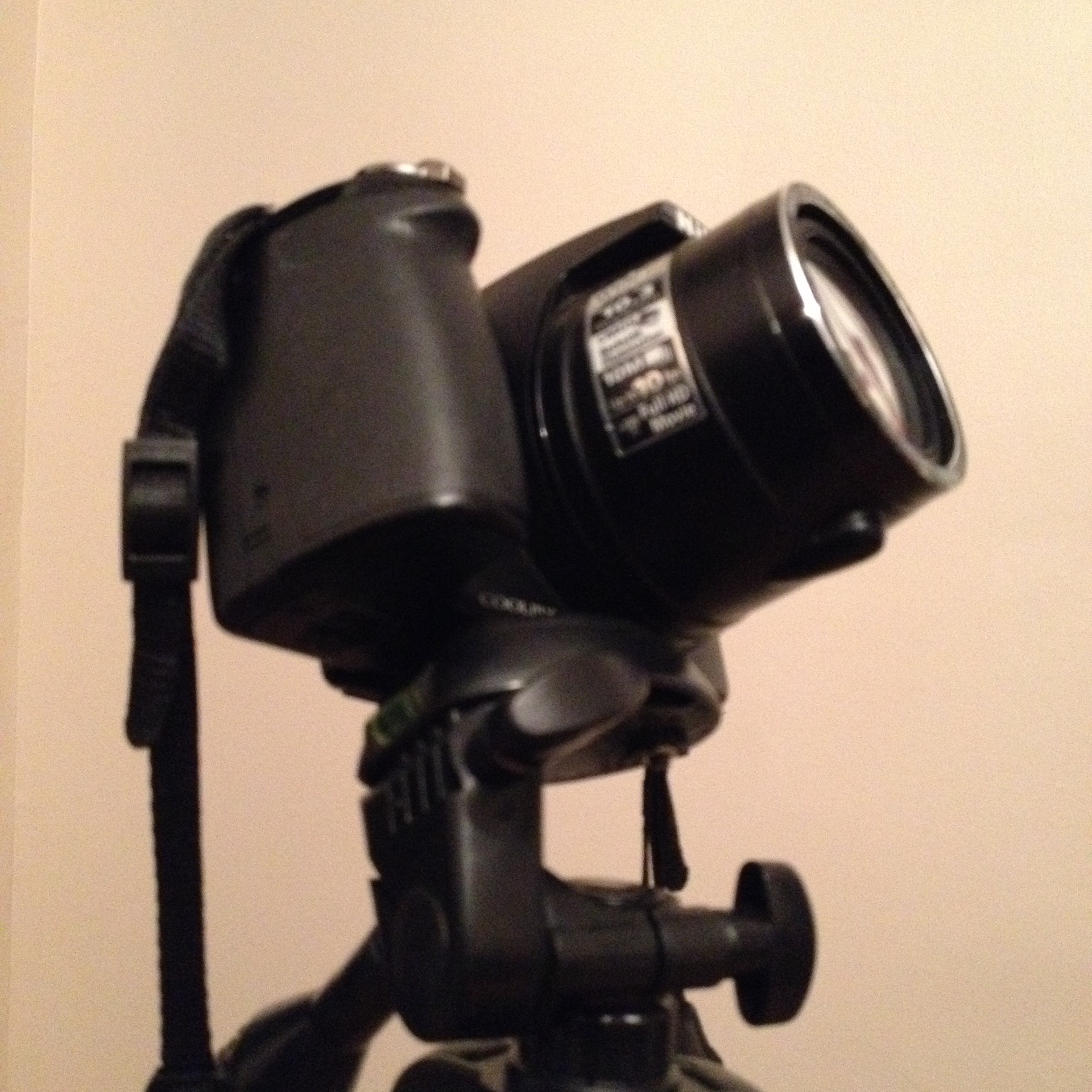
A friend recently asked me about cameras. I’m no expert, but after I finished my master’s degree I worked at Ritz Camera for about a year. It wasn’t an ideal job, but I learned a lot.  (Interestingly, I say that about most of the varied jobs I’ve held—janitor to editor.)  The conversation led me to dig out my box of pre-digital photographic equipment so that I could familiarize myself with f-stops and shutter speeds.  Handling my old Pentax K-1000, I reflected on how actual cameras (not that device in your pocket) transitioned from using actual film (which is superior for capturing images) to emulating that experience for the needs of digital photographers. Taking a stunning picture was more than just framing and lighting—it involved manual control.  The modern digital camera will allow the photographer control over things like shutter speed, aperture, and film speed (even if in altered terminology).

At the camera store, as in much of retail, waiting was involved.  Sometimes quite a lot of it.  Between customers coming in—and you had to be ready for that at any time—you had to find ways to amuse yourself.  Some would restlessly straighten up counter displays, restock the film (remember film?) bins, or find something that required putting away.  Most (and this was a young adult’s job) found ways of goofing off.  Immaturity takes a long time to settle into more reflective adulthood.  I often used the opportunity to read through the photography books we sold.  Well, in actual fact, I don’t remember ever actually selling one of those books.  If you’ve looked at the pictures most people take that will be evident.  That’s how I learned the little I know of photography.

At least you could see this kind.

We live in an era of disputing experts.  We like to think that we know just as much as the next guy.  Trump’s bull-headed tenure only made this fashionable.  Photography, on the other hand, no matter whether digital or print, is an art where the truth is clearly evident.  Gifted photographers take better photos.  The rest of us can learn some tips, but we all know when we see a stunning photograph.  We might even question if it’s real.  Although cameras can be made to lie—all photographs are fragments of the past—photography is perhaps the most impartial form of art.  Learning about it can improve results, but the camera is a revelatory device.  In the hands of an expert it can change the way we see the world.


Don’t Google Yourself

The internet has made us all less significant, in some ways.  Specifically I’m thinking about names.  “Wiggins,” when I was growing up, was an unusual surname.  In fact, people in Pittsburgh would sometimes send me clippings when a Wiggins appeared in the paper, it was so unusual.  Now with the internet I find plenty of Wigginses out there, and, in my case, several Steve Wigginses.  Not only that, but there are other academic Steve Wigginses, prompting Academia.edu to send me emails asking if I was the Steve Wiggins who wrote this or that article, often about agriculture or some other aspect of anthropology.  Who would’ve guessed?  There’s actually at least a third Steve Wiggins academic out there, an applied mathematician.  Perhaps there’s some mystical draw to higher education with a name like this?

But not so fast!  The most popular Steve Wiggins online seems to be the one who shot and killed a Dickson County, Tennessee deputy.  His act of violence, probably not for a Herostratic motivation, has nevertheless placed him in a pool of internet of fame.  So much so that a supervisor emailed me, jokingly, in June 2018, asking why I’d done it.  It’s difficult to build a good family name when some of us are going around shooting people.  A simple web search reveals that he is currently the best known Steve Wiggins in the country.  It could be because his trial was just last week, but still, but still…

One of my earliest blog posts here on Sects and Violence in the Ancient World was about the gospel singer named Steve Wiggins.  Prior to the murder of a police officer, this Steve Wiggins came to the top in any Google search.  To become well known you must release content.  In my world, which is small, that still means in print form.  Widely distributed.  And reasonably priced.  It’s clear I’ve got my work cut out for me.  The lessons we learn when we’re young have a way of staying with us.  It’s still easy to believe Wiggins is an uncommon surname—people still have no idea how to spell it—but the internet shows that’s just not true.  Even with both names there’s a significant number of both famous and infamous Steve Wigginses out there.  We all like to think we’re unique.  That we all have some kind of contribution to make.  Maybe mine is in the realm of horror movies.  Or Doppelgängers.  Only time will tell.

Who are you?

Science, Religion, and Ghosts

August starts to suggest autumn.  Even with record-breaking heat, the quality of the air definitely suggests fall is on its way.  Ghosts are on our mind.  So a recent story on Religion Dispatches explores how ghost hunting is tied to enchantment.  In “What a Spooky Summer Trend Says about Enchantment in the Late Modern U.S.” Daniel Wise considers how, unlike predictions made to the contrary, science and rational thinking haven’t eradicated spiritual outlooks.  Church numbers are down, yes, but belief remains alive and well.  I have to wonder if the reason science and religion don’t get along is that specialists in the one really don’t know as much about the other as they should.  That, and once someone moves from private to public intellectual they think they have the authority to speak on that which they haven’t studied.

My role as experiencer, on the religion side of the artificial science-religion divide, is one of often being told why my field of study isn’t rational.  Those on the religion side sometimes lash out and retort that science is also based on belief.  What it really comes down to, as recent elections have shown, is how many people you can convince you’re right.  With the evidence of climate change all around us, many of us in the middle wonder how deniers can still exist.  They often take their information from somewhere else.  Many literalists groups, and other religious specialists as well, teach that this world isn’t the final reality.  There’s more going on than meets the eye.  As Wise points out, many find their own evidence of this in ghosts.  Most scientists simply dismiss the possibility without really looking into it.

Religion tends to be more experiential.  Those who practice it know it’s real because they feel it.  And they can be rational about it.  No doubt scientists feel similarly about the material world and their discoveries about it.  A funny thing happens, though, when you reduce it to only the physical.  Religion and science should have nothing to fight about, and they might well not if each side weren’t to make absolute claims to the exclusive truth.  Ghosts are a good middle ground.  Why can’t we admit that we just don’t know?  It’s no sign of weakness to be honest about such things.  Ghosts have been seen and reported for all of human history.  If they’re spiritual they can’t be measured yet, not in any real way.  As autumn creeps in, perhaps we should ponder such things.

Henry Justice Ford, via Wikimedia Commons

Being Prey

Since we’ve thought our way to the top of the food chain, I suspect we’ve forgotten what it’s like to be prey.  All our top predators are pretty much under control—so much so that when a lion, tiger, or bear kills a person it makes the news.  Even sharks are in decline.  This thought comes to me while on my morning constitutional I spy with my old eye young rabbits.  Lots and lots of rabbits.  During the summer they appear in such profusion that I suspect most of us don’t stop to look at them any more.  We don’t really eat them any more (and besides, I’m a vegan), so what use are they too us?  They’re here to be prey animals.

A lot happens in the dark.  I’m an early riser and sometimes I hear the animals cavorting in the night.  Sometimes I find what’s left of a bunny in the back yard—evidence that someone was hungry during the wee hours.  What must it be like to be a food animal?  Rabbits have a reproductive biology that permits a doe to become pregnant before she has born the litter she’s already carrying.  This seems to be evolution’s way of ensuring survival for creatures so often eaten.  Emotional ties between parent and child must be passing at best.  When I see the young out on their own I often wonder how they can care for themselves at such a tender age.  Of course the average lifespan of the eastern cottontail is only 15 months with merely a quarter of the population making it to two years.  After that they may have one more year.  They rarely ever die of old age.  No time for emotional attachment.  Either that or it’s brief but very intense.

We take a fairly long lifespan for granted.  It’s sometimes difficult to realize that for most of human history life expectancy—for those who survived childhood (not many)—was the forties.  For women it was more likely the twenties.  Young couples started families early and kept the kids coming.  We were not exactly prey, but like the rabbits we had to learn to say goodbye too soon.  We’ve thought ourselves to not only the top of the food chain, but to the point of prolonging our lives so much that deaths can be utterly devastating.  I look at the rabbit nibbling the overgrown grass in my backyard and smile.  The only yard nearby without a dog, I like to think they feel safe here, even if just for a little while. From the perspective of prey, every second counts.


Reduce, Reuse

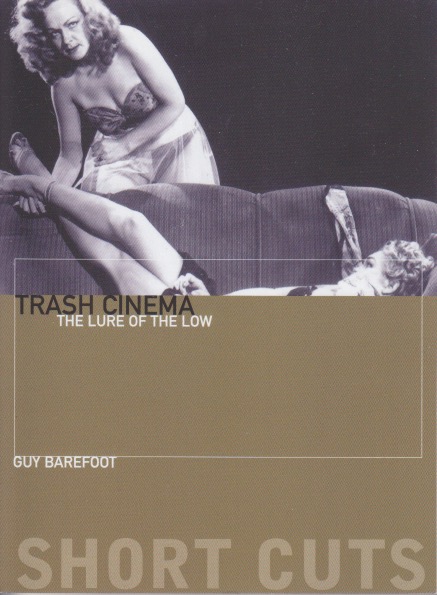
Today’s trash day in my neighborhood. I suspect I’m not alone in having a soft spot for bad movies.  Perhaps it’s because I don’t like to see things wasted.  That, mingled in with my dislike of A-list culture where the people with all the advantages get all the notice.  I appreciate those who struggle.  Maybe that’s why I picked up Guy Barefoot’s Trash Cinema: The Lure of the Low.  That, and because I’ve read other books in the Short Cuts series and found them intelligent and informative.  And yet again, many horror movies are considered “trash”—indeed, Barefoot mentions quite a few of them—which makes me curious.  You see, even back when I was a grad student it was still thought, among some, that film wasn’t sufficiently intellectual to justify academic treatment.  The fact that media now dominates culture gives the lie to that assertion, especially since so many cerebral movies exist now.

In any case, Barefoot takes the subject seriously, using great care to define “trash.”  Given that the series stipulates brief books, this isn’t a comprehensive treatment, but it has a big takeaway for me.  Trash is simply what the majority of people don’t want.  As our landfill crises show, it never really goes away.  (We began composting when we bought our house, and the amount of trash dropped precipitously.  Food scraps can also become something useful.)  There are any number of reasons a producer or director might attempt trash—it’s quick and cheap, it shocks viewers, or it says something about our society.  Yes, even trash can teach us about ourselves.  Really, there’s a value to keeping things and trying to find the beauty where others see only garbage.

From my youngest days experiencing cinema (it was a rare treat then), I realized this was a powerful medium.  I still remember movies I saw as a child, imperfectly no doubt, even today.  And they still speak to me.  Some of them are great and others were almost forgettable.  Some are like gems while others seem like trash.  That doesn’t mean they shouldn’t be watched, however.  A great number of trash films have become cult classics.  They may not reach the esteemed halls of academy award winners, but they are sometimes honest efforts without the money behind big studios.  I tend to root for the underdog.  Having said that, I haven’t seen most of the films discussed here.  Another way of looking at it is that my wishlist has grown.  


Just Like Us

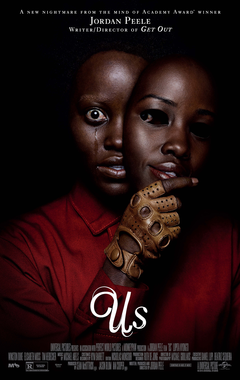
Jordan Peele has been noted for his intellectual, black horror films.  His work is good at making clear that African-American experience is different than white experience in America.  That was especially on view in Get Out, a haunting treatment of being “the other.”  His more recent Us, two years old already, takes a somewhat different angle but still comes to a similar point.  Since the movie has a notorious twist ending that I’d rather not spoil for anyone slower than I am, I’ll try to focus on the film’s use of Jeremiah 11:11—“Therefore thus saith the Lord, Behold, I will bring evil upon them, which they shall not be able to escape; and though they shall cry unto me, I will not hearken unto them.”  This message of the prophet was a warning that Jerusalem would fall to the Babylonians, but clearly it has wider applications.

It’s safe to say, I suppose, that the movie is about substitute people.  Each person has a doppelgänger that shares her or his soul, but is a puppet—it’s not too far to stretch to say “slave”—that must do whatever it is we have it do.  When those doubles, or shadows, arise and organize, things start to get real scary real fast.  Although the metaphors run deep, the biblical citation comes near the start of the movie, setting the tone of what follows.  This is divine judgment for the mistreatment of others.  While it isn’t ostensibly about race, at least not obviously so, the story follows the black Wilson family as the uprising begins.

Jeremiah’s message, although delivered to a specific situation at a particular time in history, could well apply whenever one people threatens another.  Like most prophecy, it’s less about prediction than it is about changing behavior.  Jeremiah presents a good warning tone because he was a prophet who loved his people but also saw that they had to fall in order to be redeemed.  His is a strong message for a country at a crossroads.  Peele has a lot going on in this movie and I suspect more than one viewing will be necessary to pick up on some of the points.  Not all parables have a single message.  Not all prophets are heeded in their time.  Jeremiah 11:11 provides context, and it rewards the biblically literate who know the context it which it originally applied.  Fitting it into the world of black horror is an example of how prophecy continues to be relevant.


Mystical Trip

It’s easy to believe we live in a “post-Christian” world.  People aren’t tied down by Scripture strictures the way they used to be.  Sunday mornings are free for lots of people.  We don’t spend our time hunting for heretics.  One thing that might not be obvious, however, is that our underlying culture is deeply Christian.  Beyond mere assumptions, this goes down to the very presuppositions of the way we think.  While society might not be overtly Christian, it remains so at a deeper level.  I’m reminded of this when I’m out and about (which is starting to happen again) and able to hear, or overhear, people talk.

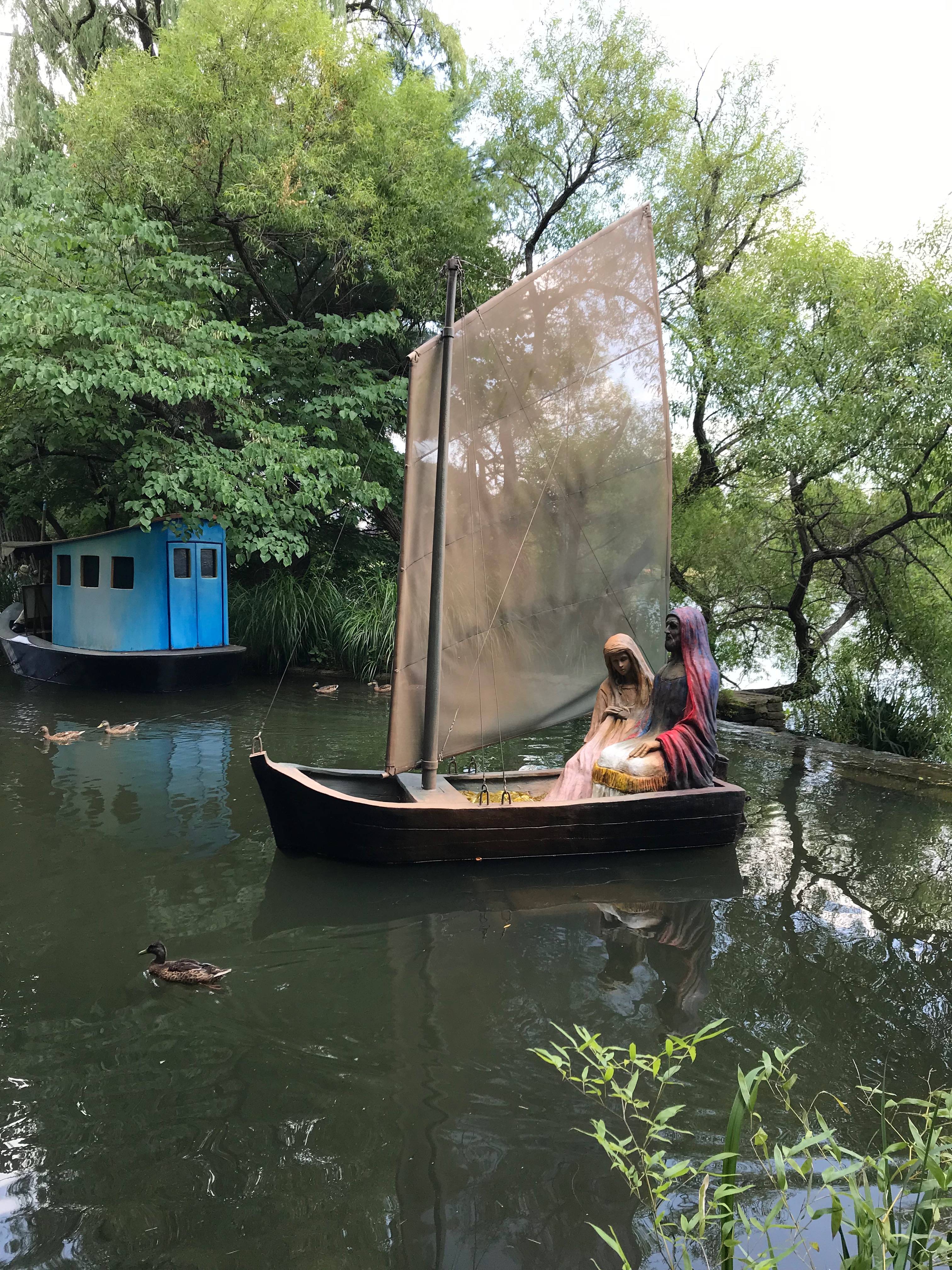
Grounds for Sculpture is a whimsical, fun space to visit in New Jersey.  It consists of acres and acres of a former fair grounds with sculptures of many different kinds scattered along the shore of a small lake on one end and a busy road on the other.  Many of the statues were designed by Seward Johnson, showing people in a wide variety of activities.  Since the displays change over time multiple visits are rewarded with new insights and displays.  It seems to be a popular place since pandemic restrictions have started to lift.  So much so that the usual seclusion that is part of the charm of a visit is somewhat stifled.  In a typical art gallery, the visitor has some space to reflect and contemplate.  The sheer number of visitors leads to a “wild animal in Yellowstone” situation where, if a creature dares appear, it’s immediately swamped by city-dwelling humans who’ve never seen a bear in the wild before.  This leads to some interesting overhearing.

One of the sculptures I don’t recall having seen before is “Mystical Treasure Trip.”  It is a fantasy scene in which a couple, attired in what could be biblical garb, is sailing across the water in a boat filled with gold.  Perhaps it’s the dress of the characters.  They look like Mary and Joseph, perhaps fleeing from Herod, but with a boat full of gold.  Overhearing others commenting on what they thought it was I heard “they’re going to the ark.”  Admittedly, this is something I would never have come up with on my own.  Noah, according to Genesis, was six centuries old at the time and was commanded to collect animals, not gold.  Material for trading would’ve been pretty useless in a world devoid of other people.  Still, when our imaginations stretch for the interpretation of something we don’t understand, often they reach for the Good Book.  It’s its own kind of mystical trip, really.


Finding Freedom

I recently discovered The Incarcerated Christian website.  To be more factual about it, the women who run the site (Robin Mitchell Stroud and Debra Levy Martinelli) reached out to me about an interview concerning Holy Horror.  I hustled on over to the website to see what it was about and I was impressed.  In my own fumbling way, I would describe their use of “incarcerated” as people damaged by Christianity.  Imprisoned by various groups that require later healing.  Far more than a religion, Christianity has, of course,  become a cultural system removed from the teachings of its founder—the Trump administration made this abundantly clear—and bent on power over the lives of others.  In its efforts at control it leaves a lot of damaged people in its wake.  I must say that my interview with them convinced me that they really get what I was trying to do with Holy Horror.

Not that I have a great deal of confidence in my ability—life leads you to question such things—but a lot of my writing is on more than one level.  Here on this blog, several of my metaphorical pieces have raised objections from readers who took what I was saying literally.  Isn’t literalism often a problem?  In philosophy class we learned to call it “naive realism.”  Things may not be what they appear to be.  Getting underneath the surface requires some digging.  Maybe that’s why I enjoyed being on an archaeological dig so much.  To anticipate the posting of the interview a little bit, what some people automatically associate with horror is lack of depth.  In fact, much of horror runs into the profound, for those willing to watch.

Part of it, I must say, is that horror attracts outcasts.  The “Christianity” that dominates western culture actively seeks to create outcasts.  Creating, even if imaginatively, “the other” is a way of asserting one’s own superiority.  Reading the New Testament somehow I don’t think that’s what Jesus had in mind.  The cultural Christianity we see today has very little to do with Jesus.  “Believing in” has replaced listening to his words, or doing as he did.  Throughout the Gospels, if I recall correctly, joining the movement was voluntary.  They wanted to make the world a kinder, more compassionate place.  Look around at those who wear the badge loudly these days and tell me if that’s what you see.  What does all of this have to do with horror?  Listen to the interview when it’s posted on the podcast in October.  Don’t worry, I’ll let you know.  In the meantime, your hours spent on The Incarcerated Christian will be rewarded.


Conjuring an Exorcist

In both Holy Horror and Nightmares with the Bible I discuss The Conjuring.  In the latter I actually go through the universe that the films spin around the investigations of Ed and Lorraine Warren.  Like most series where the writers and directors shift, the story line isn’t always consistent.  I suppose that one of the features of the series that appeals to those of us who love monsters is the fact that many of the movies have more than one.  The main threat, however, always seems to be demonic.  I enjoyed exploring this in both my book and in my recent piece on Horror Homeroom—check it out here.  

This series, in financial terms, has been highly successful.  There is little that attracts attention in any media more than money.  The Conjuring universe also shows that people are very interested in the topic.  A materialistic worldview doesn’t work for everyone.  We sense that there’s more going on that what the laboratory reveals.  I’ve often wondered why we can’t consider the world “both and” rather than “either or.”  We seem to think knowledge is some kind of zero-sum game.  I suppose that’s because the spiritual interferes with the material.  If there are outside forces working against the “laws” of physics then all that hard work is open to question.  It’s far easier to suggest that human beings (and other animals) who experience something “supernatural” are deluded.  Or superstitious.  Demons are a good case in point.  If they exist it would complicate the world of science.  And yet people pay good money to see movies based on them.

The Conjuring franchise pays off most of the time.  Some of the stories—those of the main series especially—are based on cases that the Warrens actually investigated.  There’s sometimes an element of the sideshow (the amazing Warrens!) to some of their work, but that doesn’t necessarily detract from the experience of real people.  Experience is an important way to navigate this strange world in which we find ourselves.  I’m not the only one who finds horror films to be a reasonable guide through this territory.  The Warrens’ case files leave lots of opportunities to explore this strange world of demons, and there are further movies in the franchise currently under development.  The most recent film, The Conjuring: The Devil Made Me Do It, changed basic concepts from its early days.  It was delayed by the pandemic.  And yet, it made money.  There must be a lesson to be learned here.


Who Are You, Really?

It’s just an ordinary thing—renewing your driver’s license.  I remember waltzing in (actually, one never waltzes into the DMV, “trudging” is more accurate) to the DMV to get my new license.  Apart from the federally mandated several-hours wait, it wasn’t too bad.  You finally get to the counter, they snap your photo, laminate it, you pay, and you leave.  You’ve wasted a good part of the day, but you can legally continue to drive.  Then September 11 happened.  Fake IDs were deemed a national security threat.  You had to prove who you are before you could get that renewed license.  Never mind that for the rest of the days during those past four years nobody gave a fig who you were, for this day of your life you have to prove it.

Now we’re taking it a step further with REAL ID.  Forget your past, fake news ID.  Now you really have to prove it.  Mostly by bringing in documents that are all electronic now.  Your gas or electric bill?  Uh, don’t look while I type in my password.  My phone counts every step I take and knows exactly where they were taken.  It wants my fingerprints to even open.  Doesn’t this prove I’m me?  Can’t I just show you I can open my phone?  Besides, I know no one else who wants to be me, but now I’ve got to bring a stack of paperwork in (and some of it could easily be faked online by people who know far more about computers than me), stand in that endless line, to have my nation rest secure at night that I actually am who my driver’s license says I am.  Of course, we self-reflective types often wonder who we really are anyway.  Don’t they read my blog?  Given the strictures I have to sign into my own work laptop, I can only conclude that the internet has made us extremely insecure.

My issue is more philosophical.  Who am I?  An editor?  A writer?  An ex-professor?  A husband, father, son, brother, uncle, and cousin?  A pacifist?  A vegan?  A critical thinker? I suppose it depends on who you talk to (and that’s presuming anyone wants to talk to someone else about me).  When I walk out with my shiny new driver’s license I guess that will all be resolved.  Of course, you need to take the word of the bored-looking woman behind the counter who will cursorily examine my paperwork, knowing that there are approximately 5,280 other people she’ll see today, cataloging and certifying each one.  Does she really know who I am?  Does that magic box in front of her face have the answer to my question?  They hand me a plastic card.  Who am I?  A potential driver with proven ID.


Review Copy

You reach an age, or maybe a stage, where it’s difficult to recall details.  Too many emails about too many things and you just have trouble recalling where you read this or that.  Someone a few months ago, perhaps on this blog, lamented not being able to afford Holy Horror.  I wanted to let that person (or any other interested party) know it is now available free—for review—on Reading Religion.  Feel free to drop me a comment if you don’t know how to get this thing started.  When I was a grad student I learned about reviewing.  It was the way to get ahold of expensive books for free.  I’m no longer able to do them (conflict of interest), but I still think they’re one of the greatest perks for the literate.

Reading Religion does not require a Ph.D. to permit an interested party to volunteer.  Since it’s a religion site, many clergy do reviews.  If you’ve been talking to anyone about Holy Horror (and I’m just sure you have!) and they want to read it, let them know.  There’s nothing more embarrassing to have nobody wanting to read your book when it’s available for free.  Besides, reviews are how people find out about books.  Over half-a-million new websites are created each and every day, my friends.  We’ve got to help each other out!  I’ve been providing free content here daily for twelve years now—I need someone to review my book.  I know people are busy.  There are an estimated 1.7 billion websites, many with multiple pages.  Who has time?

I try to post about lots of books here on Sects and Violence in the Ancient World.  I know it’s not a frequently visited website (I’m a realist) but I know at least two publishers have taken blurbs from my words here to promote their books.  Those of us who read have to stick together.  Writing, to me, is how you pay back for all the reading you get to do in life.  It helps, of course, if people know about your books.  By the way, if you have an interest in religion at all you should check out Reading Religion.  It’s a great site to figure out what’s going on in books.  And you might even find something there you’d like to read.  I’d do reviews myself, but that’s no longer permitted.  I’ll put my thoughts here on this blog, though.  It’s only doing to others what I would appreciate being done back.


Belated Lughnasadh

We’re accustomed to think of summer as a “non-holiday” season beyond the bookends of Memorial and Labor Days, and the midsummer Independence Day.  Still, ancient people felt the turning of the year at the start of August with the festival of Lughnasadh.  I often forget it myself, although I’ve been feeling a tinge of autumn in the air this past week.  You can smell it at the very tip of your nose if you’re sensitive enough.  The cool of the pre-dawn air presages changes to come.  The wheel turns constantly.  Lughnasadh was actually Sunday (August 1).  Along with Samhain (Halloween), Imbolc, and Beltane (May Day), it divides the year into quarters (now called cross-quarter days since they fall roughly midway between the solstices and equinoxes).  It reminds us that summer is getting on; Lughnasadh was the festival of early harvest.

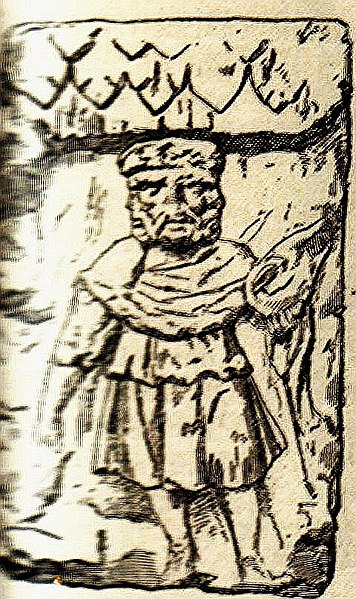
Lughnasadh was originally said to have been initiated by Lugh, one of the most prominent of Celtic deities.  Several European cities, such as Lyon, have names that likely derive from Lugh.  A warrior god renowned for his ability with crafts, he was also a savior god.  Although I’m no expert in Celtic mythology, it’s difficult to live in a Gaelic country for three years and not absorb some of the fascination for it.  Unlike Greek mythology, there aren’t large numbers of ancient literary pieces that tell the full story.  There are tales enough to know that Lugh was a major god of pre-Christian Europe and that as Christianity spread he was challenged by another savior god.

Although now rather obscure in much of the world, the Christian holiday of Lammas, or “Loaf Mass” was settled on August 1, likely to draw attention from Lughnasadh.  It too was a celebration of first fruits, for as reluctant as we are to let the light and warmth of summer go, plants are beginning to feel the onset of fall.  Lammas is a festival of communion—thus the loaf—and continues to be celebrated with local customs.  It includes the blessing of bakeries or of bringing bread to church to be blessed.  Lost in the modern rendition of summer, Lughnasadh or Lammas is barely recognized by most of us.  I’d never heard of it until I began researching holidays for a book I wrote that was never published.  Festivals that celebrate the changing seasons have an appeal to those of us isolated indoors behind screens all the time.  Perhaps it’s time to bring some summer holidays back. Lugh says yes.

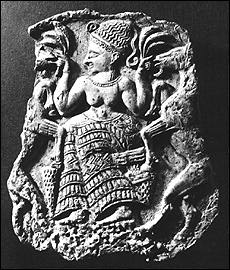
Perhaps Lugh, via Wikimedia Commons

Fear of the Other

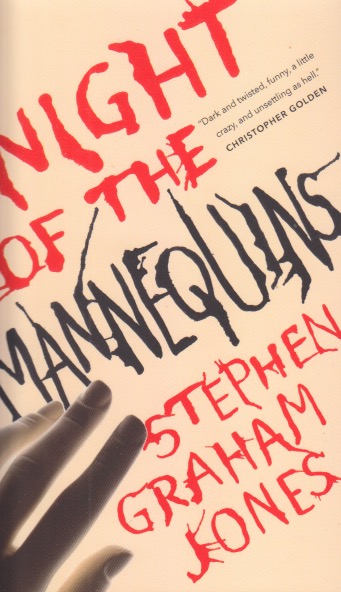
Two things: I’ve been reading about and materials by American Indians lately, and I learned about Stephen Graham Jones through a video of him reading one of his stories.  I was immediately hooked.  It seems to me that those of us who’ve gone through trauma—either personally or ethnically—are disproportionately represented among those who like horror.  I’m not suggesting a simple equation, but simply noticing a trend.  Jones has been winning awards as a horror writer and I was anxious to get started.  Night of the Mannequins didn’t disappoint.  Jones is a member of the Blackfeet nation and, according to the author bio, a real slasher fan.  This story isn’t really a slasher but it is an exploration of what happens when an idea takes over someone’s life.

More about growing up in Texas than being First Nations, it follows a group of teens who find an abandoned mannequin and a practical joke that goes terribly wrong.  It’s a story will a real feel for what it means to grow up beneath the middle class.  The realities for those who do are somehow quite different than from those who can take some measure of financial security for granted.  It also makes a good setting for horror stories as the protagonist tries to figure out what’s going on without the aid of authorities and adults.  It makes for a compelling read.  Jones’ no-nonsense style draws you in and it doesn’t let you go.

The book is fairly recent and I don’t want to give too much away.  I do often think about how a writer’s personal experience leads to the books s/he writes.  The horror genre is wide-ranging and can be deep and intelligent.  Despite its brief extent, there’s a lot of depth here.  The straightforward writing style gives the book verisimilitude.  You could see this actually happening.  Monsters, after all, are frequently in our minds.  That doesn’t make them any less real.  Mannequins tend to inhabit the uncanny valley—they’re human and yet, at the same time they’re not.  There are aspects of growing up in “white” culture that must suggest the same to those who’ve been and who continue to be, oppressed by that culture.  There is a real fear to being controlled by others whose intentions, it must be clear by now, are to make themselves rich.  The world is a richer place, however, for having books by Stephen Graham Jones in it.  I’ll be coming back for more.