Heat Wave

Kim Stanley Robinson’s The Ministry for the Future wasn’t my favorite book read the first half of this year, but reading the headlines about India’s heatwave took me back to it.  That’s precisely the way the book starts out—with an intense, deadly heat wave in India.  As a nation lacking infrastructure in relation to the size of its population, and lying near the equator, India is particularly vulnerable to global warming.  We all are.  As the planet heats up and weather becomes more erratic and extreme, food shortages will appear.  At the moment we’re concerned because Covid and Putin-War have driven inflation to incredible highs.  A trip to the grocery store or gas station is like a horror film.  Meanwhile the planet’s heating up and Republicans are pushing for four more years of Trump environmental degradation.  Can we please open a window here?

Global warming has been challenged by many because of their religious conviction that the world ought to end.  Apocalypse is probably the Bible’s most dangerous teaching.  Speaking only for myself, I didn’t know there was an Indian heatwave until headlines took a break from Putin-War and America’s mass shooting crisis.  And oh, India’s sweltering under temperatures over 110 degrees.  People are dying.  Birds are falling from the sky in mid-flight.  We had a couple days in the 90s around here before the end of May.  Those were some uncomfortable times.  Meanwhile in India it was twenty degrees hotter.
The human ability to ignore life-threatening problems we create for ourselves in service of our theology is remarkable.  Even as experts declare religion is no longer important, it’s slowing killing us.  We focus our resources on making money, as if money will do us any good when we’re the lobsters in the pot.  As a species we’re amazingly capable.  Billionaires can afford their own private spaceships—something most nations in the world can’t spare cash to buy—and we have proven ourselves endlessly inventive.  When it comes to the basics—the need to believe, for instance—we turn a blind eye and pretend it’ll just go away.  Religion scorned is a very dangerous thing.  I once heard a talk by a scientist presenting a rosy technological future.  I raised my hand and asked about religious objections and he mused, “I hadn’t even thought about religion.”  His future was progressive and optimistic.  Robinson’s is quite a bit less so, although it ends by suggesting we might manage to pull through, with only millions of deaths.  As Donovan says, “It’s time to ask yourself what you believe.”

Capital Idea?

One of the most difficult parables in the New Testament is the one where Jesus praises the fraudster (in Luke 16).  In case you’re a little rusty it goes like this: a steward of the king learned he was losing his job.  Knowing his employment prospects were like those of a mid-career religion professor, he called in his masters’ debtors and slashed the amounts they owed so that they’d think kindly of him.  When the king finds out, instead of growing more angry, he praises the steward for his shrewdness.  The parable seems to not condemn deceit and his left both scholars and laity scratching their heads ever since.  I’ve never, in my long church going career, heard a sermon extolling fraud.  The good book can be tricky some times.

The parable came to mind because I’ve been the victim of the fraudulent use of one of my few credit cards.  I only have two.  One of the reasons for this is that it’s difficult to keep track of everything as it is.  Life is busy.  I have most of my bills set to autopay so that I don’t forget to do it when an email reminder comes.  I don’t remember the last time I used actual money.  Writing a check is a rarity.  How my credit card was hacked I don’t know.  I didn’t notice right away because the charges were always small and spaced out.  I caught on when I hadn’t been using the card in that lull after Christmas and the exact same amount was charged two months in a row.  I called the company and they confirmed that similar small charges had been going on since December.

Now I picture in my head a scene where the criminal is caught and in court they use the Bible in their defense.  I’m sure it wouldn’t happen that way, but it’s an interesting idea.  Who’s going to argue against the Bible?  Heck, most courts can’t get those who know Trump’s many crimes to get their cases ever heard!  What do we do when the Bible distorts the moral narrative?  The fraudster, after all, is breaking at least one of the ten commandments.  Of course, those are negotiable these days.  The right wing’s endorsement of violence to maintain power shows that.  So it seems a prudent time to consider the parable of the fraudster.  We might still have something to learn from the Good Book after all.


Companies

Perhaps you’ve seen them too.  Big companies that express what they do purely in platitudes that apparently impress business types.  I’ve looked at some of their websites and after considerable poking around I can’t conjure even a ghost of an idea of what they do.  Love ‘em or hate ‘em, we all know what companies like Exxon, Random House, or even Planned Parenthood offer.  They have a function—a product or service that you can recognize.  Some of these vague large corporations seem to exist simply to exist.  And get paid for it.  It reminds me of that episode of The Simpsons where Lisa asks a corporate executive woman what her company produces and she answers “Synergy.”  We see these “centers of excellence” popping up here and there.  Excellence in what?  Excellence is a quality, not a commodity.  Or maybe I think too small.

Someone I know recently changed jobs and I looked up the company she’d switched to.  It obviously had money for a slick website and an office in Manhattan.  The list of industries it supports as clients was wide and impressive.  But what does this company actually do?  They spew platitudes.  Corporate climbers apparently like this lingo.  You’ll never catch me citing “best practices.”  Are they trying to imply that the rest of us use worst practices?  Do they mean a better way of doing things?  Why not say what you mean?  I like to play with words.  It doesn’t pay very well, but I’m wondering if I’m perhaps missing an opportunity here.

We could form a company that spins out new corporate phrases to make business sorts sound intellectual.  We wouldn’t actually need to do anything except attend company meetings about our company and throw out a few phrases likely to become trendy.  Maybe hire a publicist to get those phrases going.  Surely some company has the money to spend on that.  Those of us who actually do peddle words for a living have trouble getting big corporate money.  Publishing is a low profit-margin business.  But a company that makes you sound intelligent?  Priceless.  Growing up there seemed to be only a few standard jobs.  Of course, I lived in a small town where the options were indeed limited.  Each of them, however, had a defined role.  You knew what the job entailed.  This new company, which will have a vague name, will be in keeping with the times.  Who’s with me?  Just be sure to bring your checkbook.


Pure Fear

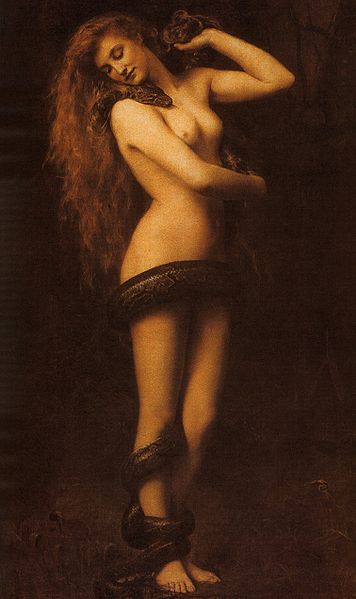
At work we have the opportunity to say a little about ourselves on a shared document for our teams.  This is a fairly new thing, so people I’ve worked with for years have no reason to look at it.  A couple of new hires, however, have noted that I watch horror movies and this has led to some budding friendships.  Since we’re all remote workers it’s mostly a matter of a line or two in an email about whether I’ve seen this or that film.  One of those recommended was the Hulu original Pure.  It’s actually pretty good.  The idea is a bunch of teenage girls are brought to a retreat center for a purity ball with their fathers.  This kind of thing can get very creepy very fast, given the incestuous overtones for such a thing.  Not only is it a religious event, it’s based on the story of Lilith.

Collier’s Lilith

The pastor preaches his first sermon about Lilith, but the girls from cabin 4 sneak out at night to meet some guys.  (Their presence is explained at the end of the movie.)  That night the girls summon Lilith, whom the minister’s daughter says is a demon.  The summoning works.  Lilith begins to interfere with services as the girls are tempted by the guys who are hanging around.  At the end, Lilith “possesses” Shay (the lead girl) and frees them from being controlled by the men in their lives.  The message is a refreshing one, and Lilith ends of being, well, somewhat as Shay puts it, “One man’s demon is another’s angel.”  

Religion and horror make a good couple.  I’ve never seen a movie that features the story of Lilith before.  The thing is, she’s not the scary part of the movie.  The religious believers, the fathers who try to control their daughters rather than giving them support after listening to them, are.  Parenting is tough, no doubt about that.  None of us are born into life with all the answers.  We quite often find ourselves not knowing for sure what we should do.  I couldn’t imagine being a parent claiming to have the solutions for all problems.  I’m a guy who watches horror for a form of therapy!  What I do think, however, is that we can try to be reasonable, loyal, and supportive.  I learn as much from being a parent as I teach.  The same was true of being a professor.  Humility, along with a willingness to continue learning your entire life is the only way that makes sense to me.  Although not a major studio production, this was one of the scariest movies I’d seen in a long time.


Namely Coincidences

One of my very first posts on this blog was about how I am not the Steve Wiggins who is a gospel singer.  There I mused on the coincidence that we share fore and surnames, as well as an interest in religion.  He is far more prominent than I am.  I don’t sing.  Since that time the most prominent Steve Wiggins on Google is the one who shot a police officer in Tennessee.  We don’t even share the same name, technically.  My given name is Steve, not Steven.  The branch of Wiggins I come from, however, is from the south.  Stephen F. Wiggins, even further removed in the name-spelling department, was CEO at Oxford Health Plans.  Now, I work for a publisher that shares one of those three words, and it’s the one that’s most specific.  Are Steve Wigginses drawn to the same places?  Another Steve Wiggins, just a couple years older than me, lived in Russellville, Arkansas.  I grew up in Rouseville, Pennsylvania.  Coincidence?

Our sense of individualism is, it seems, socially conditioned.  If we try to imagine life in earlier human social structures, such as hunter-gatherer society, it looks as though people tended to function more as a collective organism.  The benefit of the group was the deciding factor, rather than what an individual wanted.  No doubt this was a more harsh environment for those who liked to think for themselves, even though evolution had given us that capacity.  Biology, however, seems to have species survival as its goal.  Individuals die while the organism lives on.  In modern society we consider individualism as one of the highest aims.

Our names individualize us.  I sometimes think of countries like China that have a combination of very large populations and a tradition of short names.  With limited numbers of possibilities repeats in names becomes inevitable.  It’s a prominent aspect of our western society that we want name recognition.  We want to feel special.  Unique.  We work against evolution, but evolution has vastly more time than we do.  Perhaps we’ve gone too far with our individualism.  I hope we don’t have to step back as far as The Matrix, but maybe a movement in the direction of the social good over individual wants would be the right thing to do.  Our psychology makes us want to feel special.  Our biology wants us to play nicely together.  Who, in the end, wins out?  It could make a world of difference.


Forgotten Goddess

It’d’ve been nice if someone had told me.  If you’re not a professor, though, you’ve lost your importance.  I’ve only written a book on the subject, after all.  Grousing aside, the headline from the Israeli newspaper Haaretz (“The Land”) read “7,500-year-old Burial in Eilat Contains Earliest Asherah.”  Since my dissertation and first book and several articles were on Asherah, I do still have an interest in the old girl.  I’m curious when new material shows up, even since I wrote my book.  Professors, you see, have the time and resources to keep up with things like that.  When your job is acquiring books in a different field, well, who has the time?  I do keep an eye out for headlines, though.  Skimming a newspaper article now and again I can still manage.

So what’s going on in the resort town of Eilat?  According to the article by Viktoria Greenboim Rich, a rescue operation for expansion going on in the city, led to the discovery of a pre-Israelite burial site.  Among the artifacts discovered was the stump of a juniper tree, upright in what appears to be a cultic setting.  In case your chronology’s even rustier than mine, the Israelites show up on the scene roughly 3,300 years ago.  This sanctuary has been carbon dated to nearly twice that age.  We don’t know a ton about what asherahs (lower case) were, other than that they were made of wood, they stood upright in sanctuaries, and they angered Yahweh.  So was this an asherah that was found?  Are they really that old?

It’s an intriguing question.  Writing hadn’t really been invented that long ago.  There were some rudimentary efforts in that direction, perhaps, but Sumerian, the earliest attested written language, wouldn’t show up for a couple of millennia yet.  That means artifacts are unlabeled and there aren’t any texts to describe what they are when we find them.  Did Asherah have a prehistory that early?  We just don’t know.  The trend even since before I was researching the goddess has been to suggest any upright wooden object found in a cultic context is an asherah.  You can hardly blame archaeologists for suggesting that, since wooden objects don’t survive that well in the levantine climate.  We naturally like to fill the gaps.  If this is an asherah then it would’ve been called by a name we don’t know.  Hebrew hadn’t yet evolved by then, as far as we’re aware.  But why else, so the thinking goes, would anyone stick a tree in the ground before telephone poles (those modern asherim) had even been invented?


At Home Abroad

You would’ve thought it was obsolete.  You see, we have the power to make it end, although the price is very high.  As a Cold War kid, I thought that the next war would be nuclear.  I’d been more or less resigned to that fate by the time I entered high school.  When it didn’t happen I thought maybe mutually assured destruction (right, Dr. Strangelove?) would end war.  Of course it didn’t.  Propagandized as just causes, America intervened in Korea, Vietnam, Afghanistan, and a vague country called “Terror.”  Nukes stayed out of it as we used more old fashioned and nasty ways of killing people.  Now Russia, bristling with nuclear capability, is using that threat to keep others out of its war of aggression against Ukraine.  Still backed by Trump, Putin is killing women and children and threatening to end the world if anyone tries to stop him.

During this war time, several multiple shootings have taken place here in America.  Grocery stores and elementary schools become graveyards even as Americans bray for more guns.  Russia need not invade; we will take care of killing each other, thank you.  Although the pandemic has driven many people to the edge we had this problem long before Covid came along.  Of course, one of the industries to profit from the disease has been the firearm wing.  Nobody feels safe and so they buy more guns, creating a deadly feedback loop.  No other “developed” nation on earth has this level of private gun violence.  The Bible in one hand and the automatic rifle in the other has always proven a deadly combination.

Many of us embrace multiculturalism.  There’s no reason we can’t all get along, accepting others for who they are.  A nationalistic backlash has unravelled this dream.  Violence, domestically generated, if not internationally shipped, has become our hallmark.  There are solutions and they aren’t that difficult to achieve.  Those who bully their way to elected office have already shown their true colors.  Life is cheap when personal aggrandizement is at stake.  Guns do have their fascination.  The sense of power in holding one is palpable.  What if, however, we laid aside our dreams of power for those of the common good?  We want to kill others for being born in a different geographical locality than us.  To think of it selfishly, supply chains and inflation have demonstrated how much we need those from all over the world in order to thrive.  Dreams of power, it seems, quickly become nightmares.


Worth Reaching For

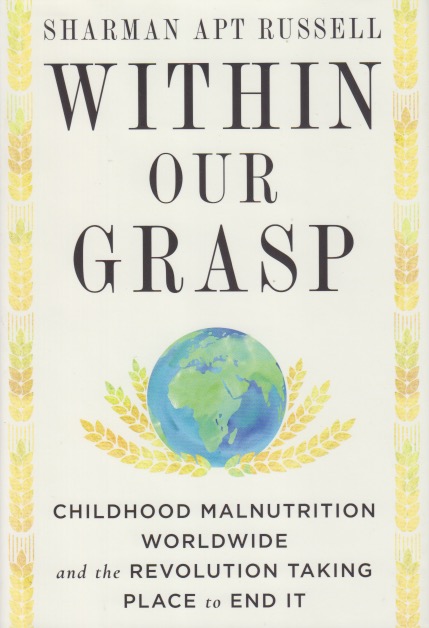
At a recent meeting with a community-building group, the question was raised: what causes can we focus on without triggering the extreme divisiveness that seems to characterize post-Trump America?  There are plenty of things that used to be non-partisan, but that list is growing smaller all the time.  One thing I think we can all agree on is that childhood starvation is a great evil.  Sharman Apt Russell has written an important, and ultimately hopeful book about it: Within Our Grasp: Childhood Malnutrition Worldwide and the Revolution Taking Place to End It.  This is a wide-ranging book with a general orientation toward Africa and a somewhat more specific emphasis on Malawi.  Not limited to that nation, it also addresses childhood nutrition in countries such as India and Vietnam and Brazil.

Russell points out the many developments taking place through the selfless efforts of mostly doctors who’ve seen the effects of malnutrition first-hand.  These individuals aren’t content to let things take care of themselves—their names and organizations are in this book, if you are able to help—and have worked on producing solutions.  One is ready-to-use therapeutic foods (RUTF).  These are inexpensive, fortified compounds that can be distributed to severely malnourished children and very effectively prevent stunting and starvation.  Russell points out that efforts have been made to make such products profitable, otherwise even companies that have some vestiges of social consciousness tend to stay away.  There has to be a way of making money or shareholders just won’t like it, no matter how many children are saved.  Alas, we live in a capitalist world!

A standout, for me, is how much such efforts rely on Non-Governmental Organizations (NGOs).  Governments are often too busy concentrating on power.  We see this world-wide.  Although this book was written before the Russian invasion of Ukraine, one of the things Russell points out is that war is one of the primary causes of childhood malnutrition.   The Putins of the world initiate wars for their own selfish reasons and condemn children to death.  It’s the NGOs that step in and try to make the world a place of a little less suffering.  When I worked in Manhattan this was written on the skyline.  Buildings dedicated to helping were small brick structures huddled next to corporate profit-making giants.  Guess which is dedicated to making the world a better place?  This is a hard book to read at times, but it is ultimately hopeful.  Progress is being made, but we can do more.  And one way to do so is to spread word about Within Our Grasp


Shaping Water

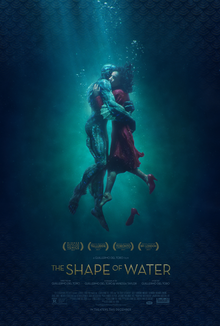
When I write fiction the genre’s difficult to define.  The other thing is I tend to be behind when it comes to pop culture.  It can take me years to find the time to watch a movie.  This preface is an excuse for why I’ve only just seen The Shape of Water.  Is it a horror movie because it features a monster?  It is, of course, primarily a love story.  As a parable the story has many gaps but it’s so enjoyable to watch that you don’t even mind.  In the rare event that you missed the hype, it’s a tale about a woman who falls in love with a somewhat more modern version of the Gill-man.  Indeed, one of the captors, Strickland, mentions finding him in the Amazon—certainly a nod toward the Black Lagoon.

There’s much you can say about a story like this, but one standout feature was that the antagonist (Strickland) frames pretty much the entire movie with the Bible.  He’s not a good man, but he uses the story of Samson to keep Zelda, the Black cleaning woman, in her place.  He uses her namesake Delilah (middle name) to note how she betrayed Samson.  He goes on to say that God is in the image of man, either him or her.  But then he adds, “Maybe a little more like me, I guess.”  This gives you an idea of his character.  He also notes that the creature was thought to be a god in the Amazon.  At the end, as Strickland sets out to kill the creature, he again uses Samson to tell Zelda that he’s going to bring “this temple” down on all of them.  That’s a healthy dose of religious imagery for a species of horror film.

The Creature from the Black Lagoon also begins with a biblical quote.  And like in this movie, the real monsters are the white men who insist on destroying what’s not like them.  Monsters and religion have similar pedigrees and share a number of features.  A concern for those marginalized by society pervades true religion as well as monster movies.  Nevertheless, the academy has trouble giving awards to any movie labelled horror.  There are definitely elements of it here.  It isn’t unusual to see horror defined as a movie that features a monster.  This monster is a god. Interesting, how often that happens. The film’s mood, however, is also romance and a very real concern for the other.  We can all learn from movies like this, even if five years late.


Haunting History

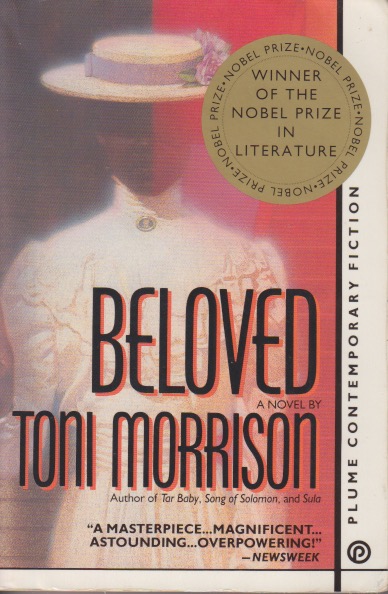
It’s difficult to do without feeling guilty, even if you personally had nothing to do with it.  It does seem that “Whites” have to take the initiative to dismantle systemic racism before any kind of fairness can settle on the world.  Toni Morrison is a great example of why that’s so important.  Beloved is perhaps her best-known work.  Although it involves a ghost it’s not so much a ghost story as it is a haunted story.  Black experience has been one of enforced poverty, after the emancipation proclamation—much like the American Indian experience.  Morrison represents this in a non-accusatory way, but she indicates in her story how the pain and mistreatment persists.  Her work is more important now than ever.  White supremacists are controlling the narrative in much of the country although they are the minority.  They need to read this book.

There will be spoilers here, if you’re even later coming to Beloved than I am.  Sethe was a slave.  The novel is set just after manumission, but she escaped before that.  She had four children and when she was sexually assaulted she realized this could happen to her children and she decided to spare them that fate.  Although she was stopped before she could kill all four, her first daughter, Beloved, was her victim.  This story is about what happens when Beloved returns to live with Sethe and her remaining daughter.  It is a haunting story.  No “boos” or jump startles, it sets up a sad atmosphere of a woman falling apart because of guilt.  Guilt for an event that would’ve never happened if she’d been treated like a human being.

Apart from the schoolteacher and his cohort, the whites in the story are kindly to Sethe.  Her “owner” was a slaveholder who gave his “possessions” respect.  She was saved from hanging after the death of Beloved by a local white man who understood what slavery might do to a person’s mind.  Even so, these kind people think of Blacks as servants rather than as people in their own right.  It’s difficult to read books like this.  That’s one of the reasons that it’s important to do so.  There is a lot to analyze here, much to reflect over.  If we put books like this on reading lists instead of banning them, it would help to bring understanding and sympathy rather than hatred and fear.  The future only improves when we admit our past errors and move to heal the scars we continue to inflict.


False Focus

I seldom use my iPhone.  I admit that I like having a camera with me most of the time and I don’t look like a tourist.  I don’t text and when I feel like tweeting I do it from my laptop.  I often forget where I put my phone and walk out of the house without it.  What I’m trying to say is that it’s not a distraction.  Now I realize companies (which seldom undertake to comprehend those of us who are anomalous) have to appeal to the lowest common denominator.  In iPhone world this means that they now want you to use “Focus.”  In other words, if you’re behind the wheel or in danger of losing your job for being distracted all the time, you can filter what gets through.  I recently had a request from my phone to send me Focus notifications when I’m home.  Of course it knows when I’m home!

It seems unnerving to me that we need to have our devices remind us not to use them.  What does it say about our love-love relationship with devices?  We use them to guide us when we’re driving—no longer experiencing the wonder of getting lost.  We read on them, forgetting the feel, smell, and non-reflective look of a book.  Some people even smoke their devices.  Many people now protect their houses with devices that allow them to see who’s at the door.  Do we really feel safer with our devices taking care of us all the time?  Perhaps we do.  Perhaps the cyborg revolution has already begun.

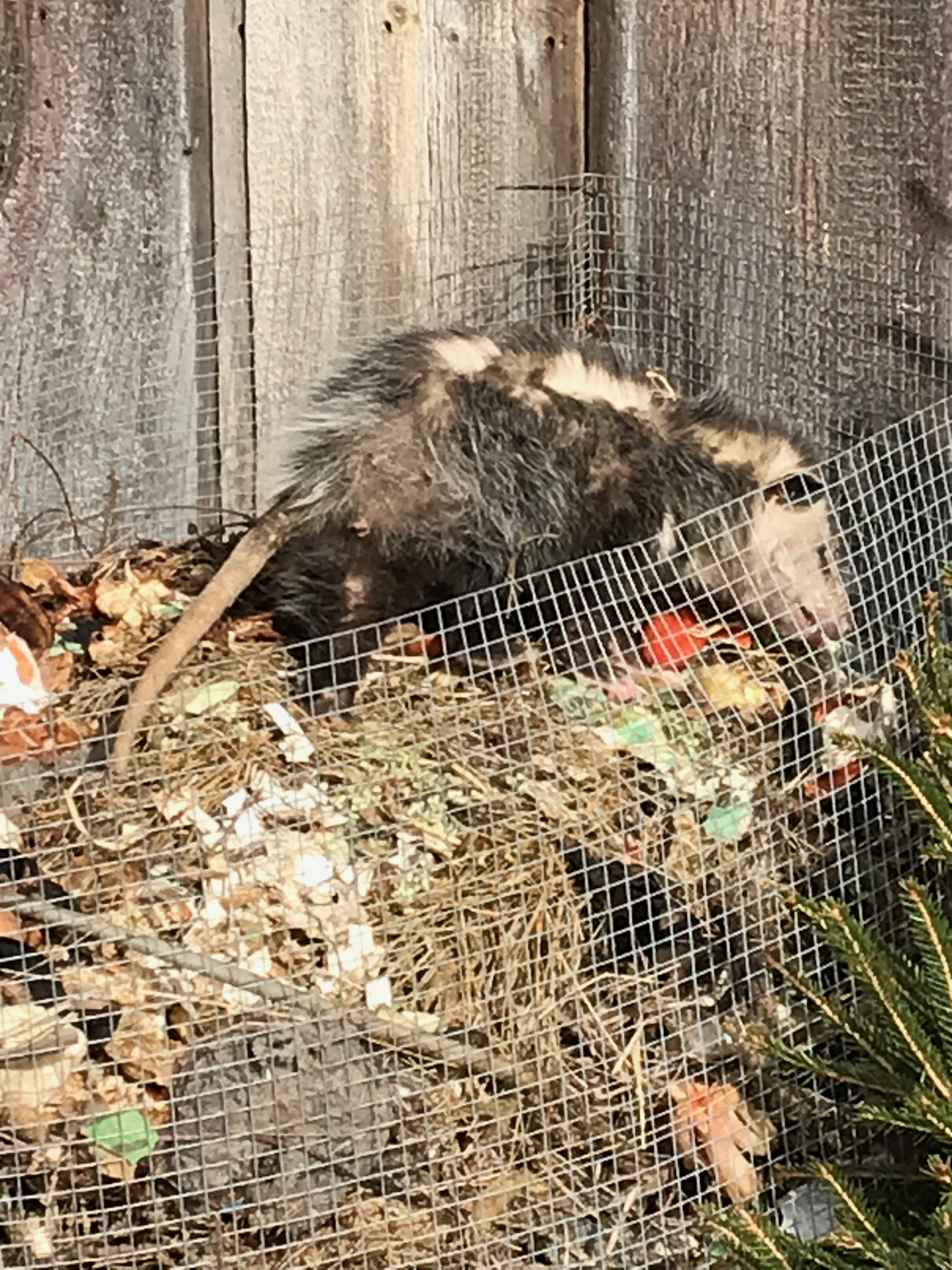
When I see how simple things like telling an apple from a tomato still flummox machine sensors (and even if they learn to tell this difference, the point remains the same), I realize just how much life experience teaches us.  We’re constantly taking in sensory data and interpreting it.  Often subconsciously.  I can smell and feel the difference if the same shirt is dried in a dryer or on a line.  I know which is better but I struggle to find the words to describe why.  I can tell the difference between the taste of this peanut and that one.  Some scents can trigger euphoria while others warn that a mustelid is nearby and wants to be left alone.  I know to look around for a skunk, to honor its wishes.  I can infer that the apples that have started to go bad are why that opossum is in our compost bin.  Perhaps I’ll pull out my phone and take a picture.


On Campus

It’s still the pandemic and I don’t get out much.  It seems prudent and only a little paranoid.  I had the opportunity to meet someone from Lehigh University recently.  The interesting thing is, I’ve become shy about going onto college campuses unless invited.  I can still usually pass for a professor (the beard and glasses help, along with a natural disheveledness) and I behave well in public.  Still, universities are all about belonging.  If you’re an alum you can come in.  You’ve paid a lot of money, and, the thinking goes, hopefully you’ll pay more.  Of course you’re welcome!  The last time I visited Boston University I remember thinking how small it was compared to my younger memories of wider corridors and more welcoming faculty.  Many ways exist for measuring how we grow.

When offered the chance for a quick stroll around Lehigh I had to say yes.  Like Syracuse University, it’s set on a hill.  From downtown south-side Bethlehem you need to walk up.  Even growing up in Pennsylvania I didn’t hear much about Lehigh.  The western part is dominated by the University of Pittsburgh and the eastern by Penn.  In the middle there’s Penn State.  There are actually many colleges in the commonwealth, about 140 if you separate out branch campuses.  Still, I was struck by the classic feel to Lehigh’s campus.  As you come down the hill it grows more modern, but I always like the older buildings.  Something about their solidity is comforting.  How’ve I been here nearly four years and not found it?

My host pointed out one of the libraries and suggested I stop in before leaving campus.  I had a mask and a minute so I did just that.  There’s a danger to stopping into libraries.  It’s too easy to fall in love in them.  I could see myself whiling away the hours there.  I spent plenty of hours in my own undergrad library, even though it wasn’t nearly so nice.  The only bad thing about visiting campuses is that I eventually have to face the exile from them I feel each and every day.  Many people can’t wait to graduate and get away.  Some of the rest of us never want to leave.  I suppose it’s an artificial environment, but if a small segment of the population can make it work, I wonder why we can’t get more of the world to emulate it.  I may not get out much, but I like to make those rare trips worth the effort.


Annotating Irving

Really concentrating on a short story is sometimes difficult to do.  I don’t have a degree in literature (I took a few courses, but my specialization was religion).  I’ve been on a bit of a Sleepy Hollow kick lately and I wanted to move beyond just the short story by Washington Irving.  Although I’m sure working through the entire Sketch Book of Geoffrey Crayon, Gent., the book in which “The Legend of Sleepy Hollow” was published, would probably be rewarding, it would also be time consuming.  Irving was trying to find his way as a writer and this particular story has been his lasting contribution.  So I turned to local historian Henry John Steiner’s annotated edition.  It has a useful introduction, but still wouldn’t be “book length” without several pages of photos and a large font size.

Sleepy Hollow may lay claim to several signs of historical importance.  It featured in the Revolutionary War.  Washington Irving did eventually settle there.  As a getaway it attracted the wealthy and powerful from New York City because it’s not that far from Manhattan.  Several movie and television renditions have been made of Irving’s story.  This book generally provides local place connections in the annotations.  A visitor to Sleepy Hollow might wonder where this or that event in the story was set.  This book will help with that.  Still, it left me looking for a bit more substantial treatment.  Not necessarily a literary-theory kind.  Let’s face it, academic writers tend to write for other academics. No, a bit more of the folklore, I suppose.

It did allow me to slow down and really concentrate on the story.  Books have an endpoint that really helps in that regard.  This little book (as was the one I recently read on the Old Dutch Church) was published when the Fox series Sleepy Hollow was taking off.  That all-important media tie-in helps to sell books.  Interestingly, the details of a closer reading are revealing.  This isn’t, in origin, a Halloween story.  It’s a tall tale told American style.  Steiner indicates it was based on an older legend—this is something I’d be interested in hearing more about.  Writers are great recyclers.  I suppose a book on the folklore of the lower Hudson Valley might have more of what I’m seeking.  Nevertheless I came away from this edition feeling as if I’d gotten to know the story better.  Irving’s “Rip Van Winkle” also appears in his Sketch Book, but perhaps it’s asking too much to have both analyzed together.


Blood Money

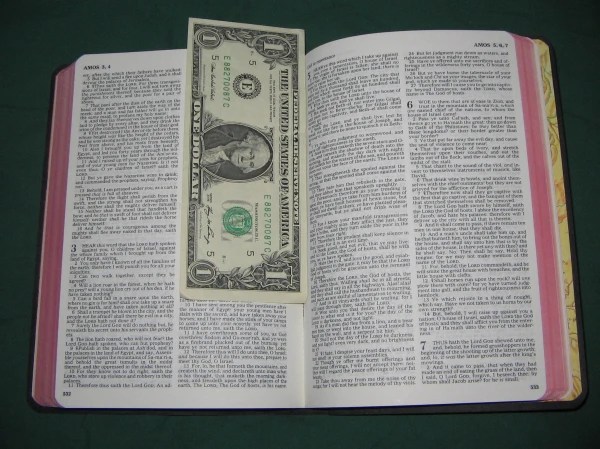
The overdose crisis is very real and very sad.  Even so I couldn’t help being stopped and shocked by how economics was brought into it in a recent New York Times article.  Lab-made drugs are cheaper, so dealers pass on the savings to users.  Does anyone else see the problem here?  Isn’t the real drug capitalism?  Or take the Republican acceptance of violence as a legitimate political tool, also highlighted in a recent Times article.  Their blind followers think it’s about saving unborn babies but anyone who’s studied politics knows it’s about the money.  If you can distract the electorate with an emotional issue you can pick their pocket at the same time.  Capitalism smiles on the wealthy.  And only on the wealthy.

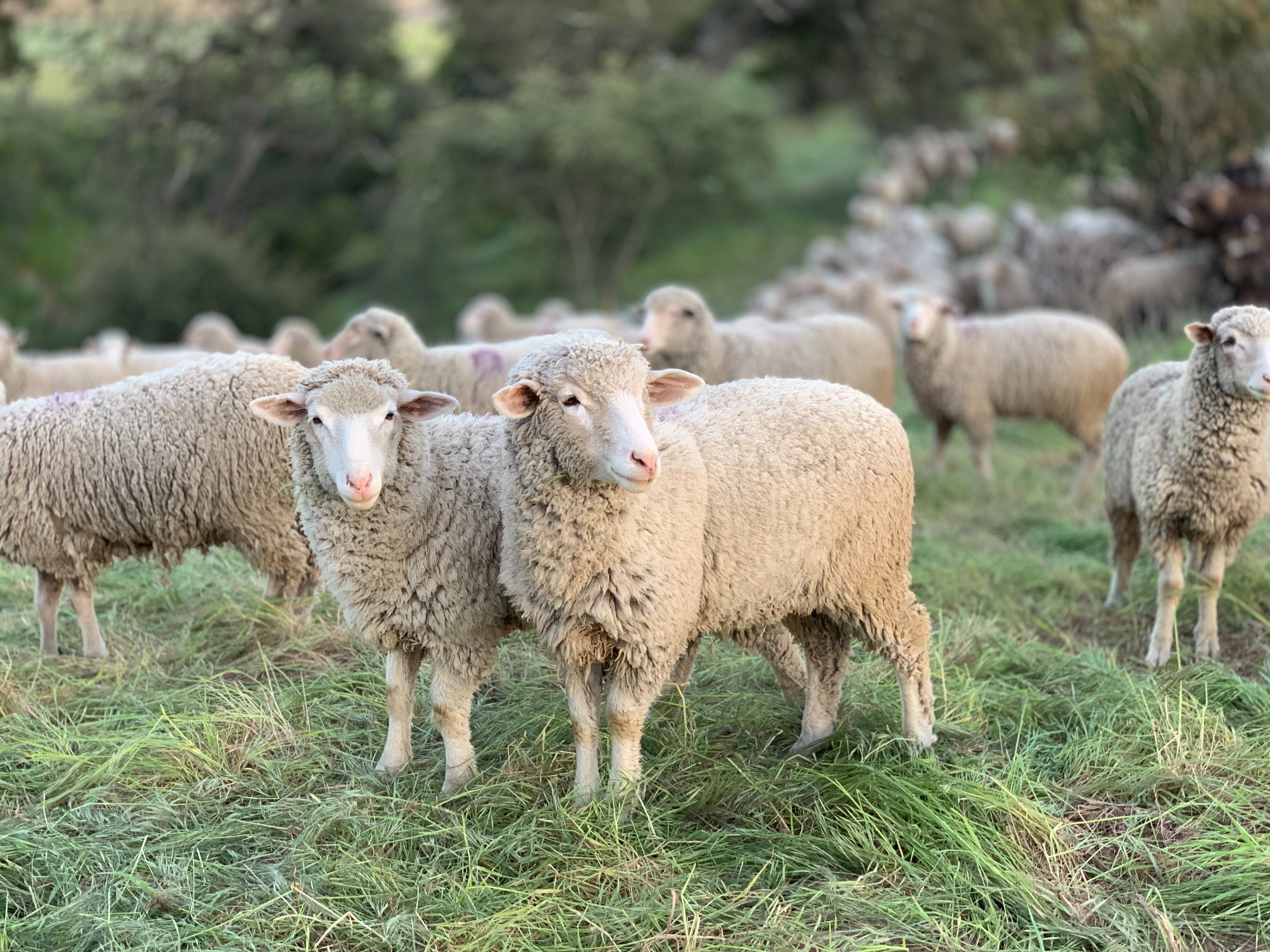
I’m not naive enough to suppose we can do without the dismal science, but the more I learn of economics, the more dismal the dismal science becomes.  I was recently reading about the ranching industry in early American expansion and the amount of power concentrated in those who raise animals for slaughter would make the most bloodthirsty of gods smile.  Indeed, Europeans coming to a new country wanted to make it in the image of their lives back home (they were largely successful).  Especially those who raised specially bred varieties of sheep, goats, and cattle.  Since grazers and browsers require a lot of land, the American west appealed to them.  Although big beef and big dairy produce more environmental problems than most big industry does, we let economics make the decisions.  And in economics the big and the selfish always win.

Photo by Tanner Yould on Unsplash

A bit of wisdom comes from the musical 1776 where John Dickinson explains in “Cool, Cool, Considerate Men” that the common person will always vote for those who preserve the (near impossibility) of becoming rich, the myth of capitalism.  The average person lives each day not worrying that they will be struck by lightning.  Those who are often believe it isn’t likely and remain out in a storm.  What are the chances of a poor person actually becoming rich?  In this economic system?  Don’t go outside in a lightning storm.  Americans have been taught to retch at the word socialism despite the fact that it works extremely well in most of Europe.  Instead we proliferate guns and drugs on the free market model and wonder what could possibly go wrong.  Yes, there really is an elephant in the room.  And we’re burying far too many people because of it.


Evening Out

It feels like magic.  The morning after staying up late for something special has a transcendent quality to it.  You can almost touch the veil.  Now, for me it’s an admittedly low bar.  I get up around 3:00 a.m. most days, so “late” is when I venture past about 8:00 p.m.  And I don’t mean for a board meeting where you’re trying to solve the problems of the world.  No, I mean staying up for something you anticipate.  Or even if it’s something you experience only by association.  I had to pick somebody up in Easton after an evening event recently.  It wasn’t over until after I’m normally asleep, but I made plans to hole up in Dunkin’ Donuts and perhaps even sip a coffee if I had to, for the drive home.

This was a Tuesday night so most businesses were closed.  After parking the car I found out that Dunkin’ wasn’t keeping evening hours either.  I try always to travel with a book.  The one thing I learned from my brief stint in Boy Scouts was “be prepared.”  With no Dunkin’ the only places open were bars and clubs.  Thankfully it was a warm evening, so I found a free bit of curb on which to sit to read my book.  Easton’s a college town so young people were out and about.  It was good to see other folks enjoying life.  Then a woman stopped and leaned down.  She was looking at the cover of my book.  “Just wondering what you’re reading,” she said.  “I’m always on the look out for something good.”

Reading in public

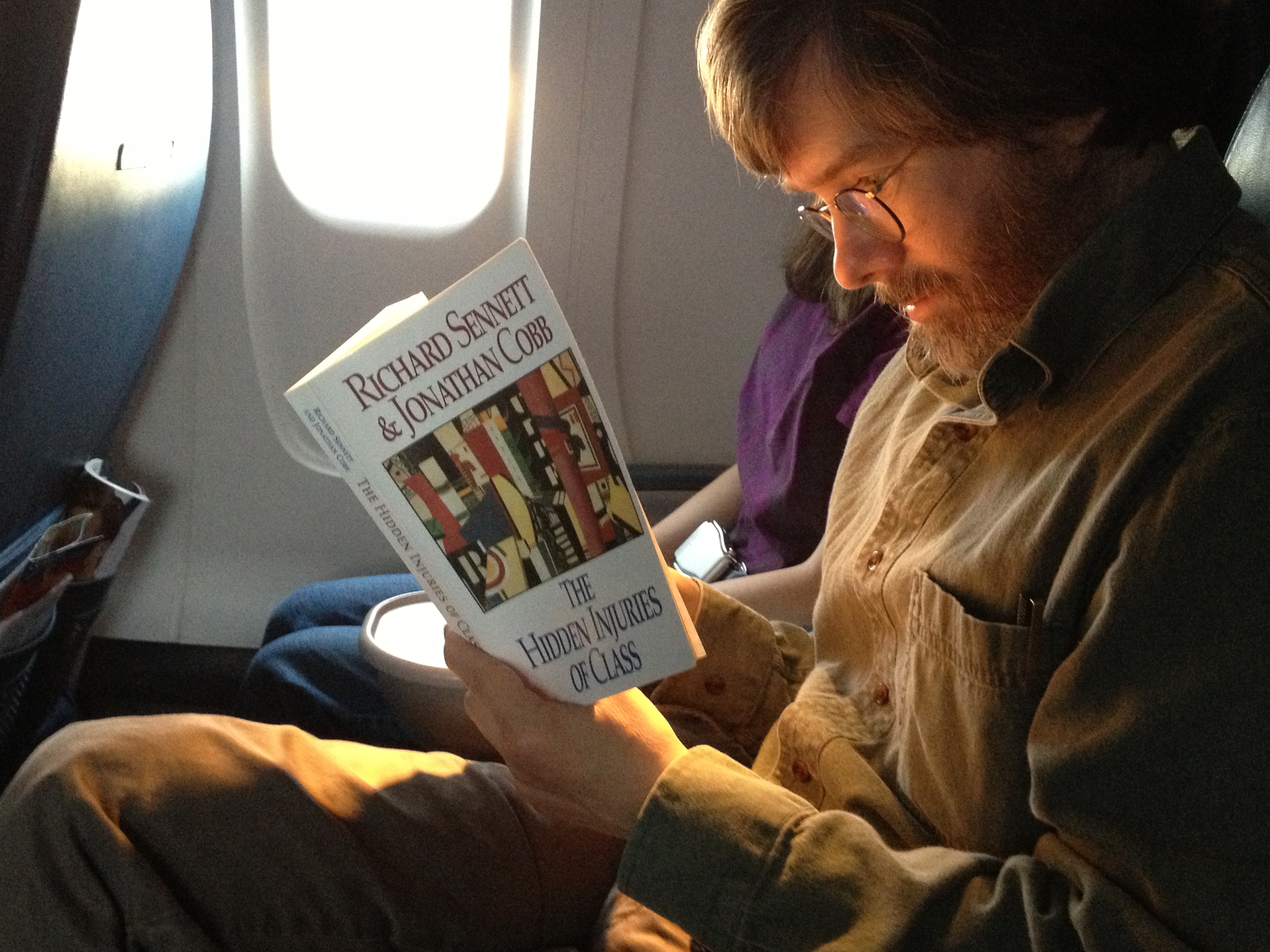
I can’t recall the last time a stranger struck up a conversation with me.  Especially about literature.  I was reading Toni Morrison’s Beloved (more anon) and she asked what it was about.  (You, dear reader, will need to wait a few more days if you don’t already know.)   I told her as best I could in a sentence or two, but I was in shock that someone I didn’t know was taking a moment out of her busy life to ask me about a book.  Her companion was ready to get going, so she left.  Shortly after that the event ended and I picked up my charge and headed home.  The next morning had that magic feeling.  I slept later than normal although it was a work day and when I went for my morning walk a startled bald eagle took off from the ground and flew less than twenty feet over my head.  Staying up late, talking about books, and a dawn-time walk in the morning.  Even everyday life can be magical, when it’s rare enough.