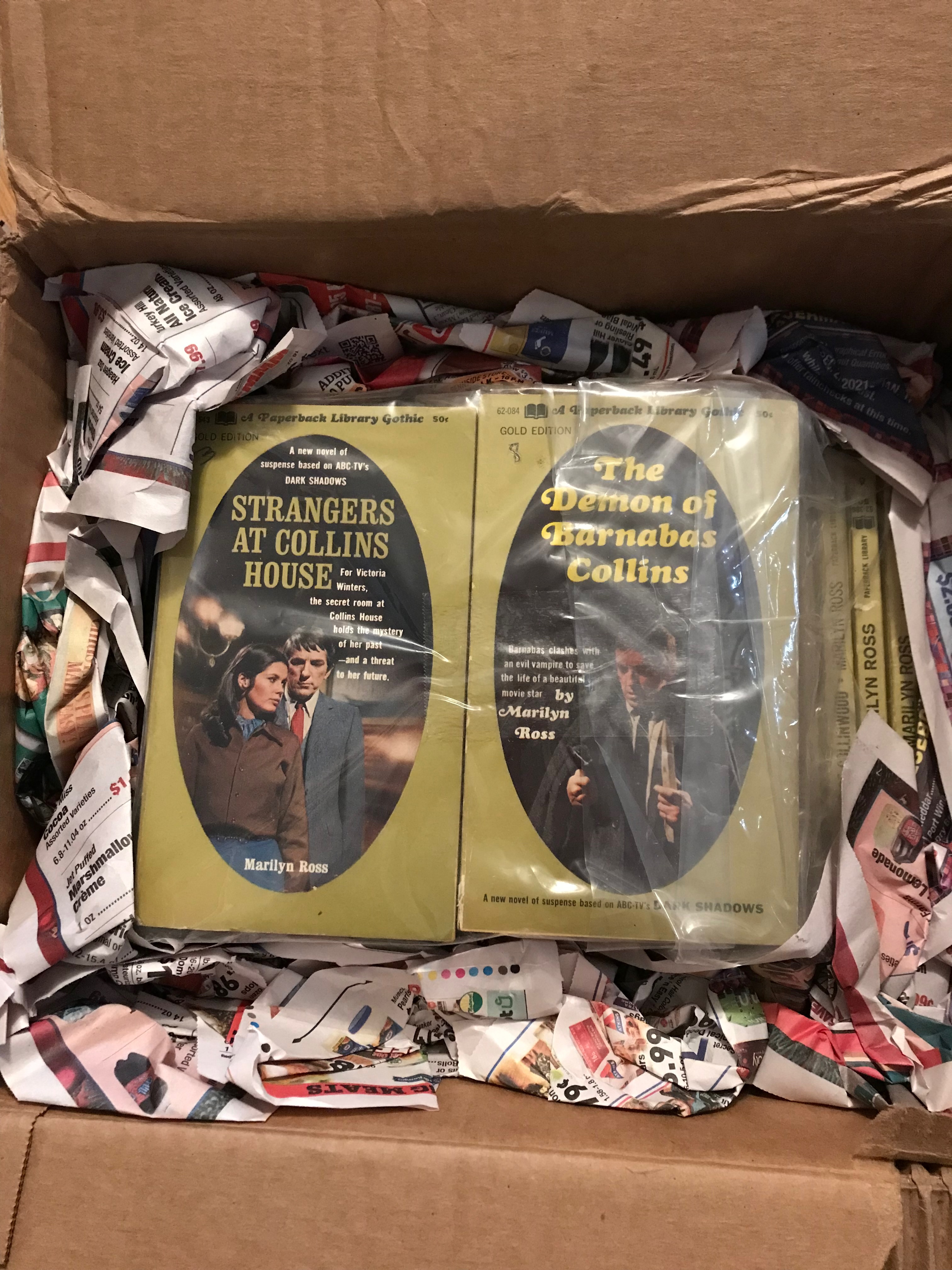
Leaving Soon

I’d been hoping to read the novel before seeing the movie, but there’s nothing like the words “leaving soon” on your streaming service to spur you into action.  So I watched Misery before I was ready to.  I remember the newspaper reviews from 1987, when the novel came out.  I didn’t read any Stephen King novels until those I’ve posted about on this blog.  There’s a full record here!  I do remember the reviews saying it was self-referential.  The protagonist, as in The Shining (is Jack Torrence a protagonist?), is a writer.  And the book is a writer’s nightmare.  When the movie came out in 1990, I had no interest in seeing it.  A couple of things changed my mind, however.  First of all, it is referenced all the time.  I didn’t even know how it ended.  Another factor was that it was a Rob Reiner horror movie.  And Reiner himself had been murdered a few weeks before I sat down to watch it.

I really wanted to read the novel first.  My reading pile is pretty high.  And currently the next Stephen King novel on it is The Dead Zone.  And yes, I have already seen the movie.  Unlike some critics, I think King is a substantial writer.  He has profound things to say, especially about religion.  And, of course, the movie Misery has plenty of that.  Annie Wilkes is a religious fanatic.  She’s also a fan of Paul Sheldon (the writer).  God tells her things.  She wears a cross.  She can’t stand swearing.  But even so, I wonder if King clearly had her religion in mind.  I would’ve guessed that, given her cinematic profile, she would’ve not been a wine drinker.  And I would’ve guessed that the Bible would appear in the movie.  She drinks and she doesn’t even quote the Good Book—at least not that I caught.

Some day, if I keep doing this long enough, I might make the connection between religion and horror plain.  I know scholars, not shackled by a 9-2-5 are working on that.  And like the books I have to read, there’s a waiting list for those I want to write.  One has my particular attention at this point, and I’ll be trying to put that to bed before starting on a new one.  Before working on such a book I’ll have to read Misery, the novel.  I do plan to do so.  I’m not a fast reader and I have quite a big stack.  In fact, I wouldn’t even be thinking about reading it now.  But my streaming service came up with those fatal words, “leaving soon.”


Easter Flowers

Easter is our springtime holiday of hope.  Flowers are starting to bloom and the cold spells, when they come, don’t last too terribly long.  Of course, as a moveable feast Easter can come earlier than this, but here we are, in April with brave flowers making themselves vulnerable.  The weather’s fickle, as is typical of spring, with the lovely warm days often coinciding with when you have to be at work, reserving rain and chill for weekends.  Around here, anyway, it felt like winter lasted quite a long time.  It got cold early and was gray and gloomy for much of the time.  And for around here, we had a lot of snow.  Spring was reluctant to show up.  The timing of Easter was good this year.  The older I get, the more I appreciate the flowers.

As a kid, I appreciated the bright colors, but flowers were too delicate to play with and you could surprise a pollinator with a stinger, which seldom ended well.  As an adult I see that each flower is its own world.  For perennials, a resurrection.  Last year I somewhat clumsily dug up the daffodils that some previous owners had planted where nobody could see, and transplanted them in our attempts at a front garden.  Having already sprouted, they did not like that, and they withered and disappeared.  I hoped I hadn’t killed them.  This spring they showed up, reminding me that life is persistent.  It keeps trying.  That resurrection is possible.

We could spend a lifetime studying a flower and still not comprehend it all.  We see it for what it offers to us without thinking it exists for its own purposes.  All of nature interacts and we are connected, that flower and I.  We share the planet with insects for whom it is a source of life.  And other flowers with which it communicates in ways we can’t even understand.  We have to humble ourselves if we would let them be our teachers.  Our constant narrative of being on top of nature is misguided, you can almost hear them say.  There are riches here that money cannot buy and flowers would exist even without us being here to see them.  Nature carries on.  It urges us to acknowledge that we are part of it.  Easter is a holiday enfolded within hope, inseparable from its flowers.  They may be delicate but they are also wise.  We can learn from them.


Don’t Look

The title of this movie could stop one word shy.  Of course, I had been warned.  Don’t Look Away is a low-budget horror film.  A low budget in and of itself doesn’t make a movie bad.  Poor writing, poor acting, and poor directing do, however.  Since I’m learning to appreciate bad movies, this was an obvious candidate to watch because it was a freebie. So, a group of college-age friends fall afoul of a supernatural mannequin that kills.  Its origin is never really explained, except a vague reference to “the Devil.”  It is being hauled by long-distance freight so that its handler can bury it, rending it harmless.  But truck-jackers in New Jersey try to rob the truck and release the dummy.  It is seen by Frankie and begins following her, killing many of the people it encounters.  No reason is given—it just does.

Frankie’s boyfriend, Steve, is a rather clueless, and completely insufferable, grad student.  Her more reasonable friends realize that the menace is real, but the police don’t believe in killer mannequins.  After a considerable amount of time they realize that the mannequin can’t disappear if someone is looking at it.  They decide to stare at it until they can figure out how to dispose of it.  They need to prevent other people from seeing it, otherwise they will become its victims as well.  It’s all a rather silly premise.  Finally the handler shows up in New Jersey.  Since he’s blind he can’t see the mannequin but he figures if he kills the surviving friends, the menace will be stopped.  Frankie discovers that it’s almost impossible to hide or defend yourself against a blind man.

As far as the horror element goes, it really isn’t scary.  The face on the mannequin is decidedly creepy, but since no explanation is given of how it kills, there is no focus for any fears.  Yes, looking out your window at night and seeing a mannequin standing on your lawn would be frightening.  There’s so much not to like about this movie.  The pacing, the slipshod story, the soundtrack by one artist who is likely a friend of the director.  I’m glad to have seen it although Don’t Look Away isn’t one of those movies that’s so bad that it’s good.  When I next meet with the friend who recommended it, we can compare notes.  It gives you something to talk about.  If you do decide to look, you have been warned.


The Help

Helpmeet was recommended to me by a friend.  Since most of my reading these days seems to be in the form of long books, I welcomed a brief one.  And the story, which is gothic and distinctly creepy, unfolded quickly.  I’ll not give away the ending, but the premise is spooky enough.  Edward is a physician who is married to Louise.  This is in the late 1800s.  Louise is aware that Edward has been unfaithful, but she loves him nevertheless.  He is dying.  His request is to end his days in his ancestral home near Buffalo, New York.  Travel is difficult because his body is literally falling apart.  Other doctors don’t know what’s wrong with him.  Some acquaintances suggest a venereal disease, since, well, he hasn’t kept his love in one place.  Louise agrees to the move.  Edward has lost both his eyes and his nose, and some other extremities.

He has to be wrapped carefully for the move, which is by train.  In a private car.  Secrets are revealed.  The mysterious woman with whom he had an affair.  How she was able to reach inside his body.  And how she is coming to visit in their new location.  After all this the plot takes an unexpected twist, which I’ll leave out in case it’s a spoiler.  Atmospheric and melancholy, this is one of those horror stories that is easy to get into and difficult to put down.  Body horror is a sub-genre that can be disturbing since we all have to deal with bodies and their issues.  And bodies are tied to mortality.  We are pretty sure from the beginning that Edward is not long for this world.  His body has begun to decompose with him still in it.  Louise’s care for that body is also a factor that forces us to look at what we’d rather not see.  Out of love, in her case.  And maybe revenge.

Spare stories such as this can still be powerful.  There’s a supernatural element to the twist, but it doesn’t feel like a deus ex machina.  It has been there from the beginning, but the reader couldn’t see it.  Helpmeet also raises the question of how well we really can know another person.  Even couples have to spend much time apart and individual experiences can change a person.  Edward isn’t a sympathetic character here, but he’s not evil.  Louise has to accept him as a man with weaknesses, and one who requires, as the title suggests, a helpmeet.


No Reservations

Having watched, and liked, Oddity some months ago, I was glad when a friend told me that Caveat was by the same writer/director, Damian McCarthy.  I don’t always pay close attention to director’s names unless I’m writing a book where that’s relevant.  I should pay more attention, since Caveat was also quite good.  And I found it on a streaming service for the price of watching commercials.  The premise is quite creepy.  Isaac is suffering from amnesia.  His landlord offers him good pay to watch his niece for a week.  She has a mental condition, he says, but she’s harmless.  She lives in a remote house and all he has to do is stay with her.  Distressed to learn that the house is the only one on an island, since he can’t swim, nevertheless he takes the job.  But there is a caveat.  He has to be chained in a harness that limits how far he can go.

Olga, the niece, is catatonic when they arrive.  When she starts walking and speaking she’s armed with a crossbow.  She tells Isaac that he was on the island before and that he locked her father in the basement where he shot himself with the crossbow.  His landlord, her uncle, is the one who sent him to do that.  He has no memory of it.  Isaac and Olga distrust each other, each attempting to get the upper hand.  Supernatural events take place while Isaac struggles to remember.  Isaac escapes the harness and locks Olga into it, but she shoots his leg with the crossbow.  There seems to be some indication that  Olga’s mother—killed by her father and uncle and buried behind a wall in the basement—is the source of the supernatural occurrences.  The landlord comes to the island and Olga shoots him and his dead sister-in-law stalks him in the dark.  Isaac manages to escape.

There is a bit of confusion about parts of the film, but it works as a distinctly unsettling horror story.  The toy bunny that Olga, and then Isaac, uses is very creepy.  Mostly it’s the premise that makes this folk horror scary.  Being left on an island with someone of questionable sanity while chained up in a house is already frightening.  The supernatural elements, which are few and brief, add enough fear to tie all of this together as a good example of Euro-horror that has elements of folk horror to it.  I will be adding Damian McCarthy to my list of horror directors to keep an eye on.


First, Kings

Recently I sat down to read 1 Kings.  Of course, I used to teach Hebrew Bible so I have more than a passing familiarity with it.  This time, though, I was reading it through the lens of Game of Thrones.  I wonder how much George R. R. Martin drew inspiration from the biblical book.  Indeed, a movie could be made from it—sex, conspiracy, battles, deception, it’s all there.  Perhaps someone should novelize it.  If you read it without knowing that it’s holy writ, you might be surprised to learn that it is.  Of course, having been edited by the Deuteronomists (so it’s supposed), it’s a bit preachy, but the action is pretty much the same.  In fact, Game of Thrones has quite a few biblical tropes in it.  And 1 Kings, if excised from the Bible, with its chapter and verse format, is pretty gripping itself.

Another thing that occurred to me is how little politics has changed over the millennia.  Powerful families want to retain power and privilege.  They aren’t too concerned with religious niceties but they rely on the backing of religious authorities.  (The priesthood and monarchy were always a tag team for keeping power in “the proper place.”)  And a number of the characters are quite colorful, even if you wouldn’t want them in the Oval Office.  Outside that context they can be quite loved, or at least people love to hate them.  Immature boy kings, seductive queens, and armed conflict at the slightest provocation are parts of the story across the ages.  The truth of power in powerful families plays out even in democracies.  Consider father and son presidents from the Adams and Bush families, husband and wife (nearly), in the Clintons, and countless powerful families represented in the senate or in the house.

Politics never change. Image: Saul threatening David, by José Leonardo, public domain via Wikimedia Commons

Biblical tales are often more earthy than they might be supposed.  Viewed through the lens of faith, we’re willing to excuse behavior that wasn’t even condoned in that day: David’s adultery, (ahem) or literal political assassination (ahem).  Alas, poor Uriah.  The problem arises when these earthy texts are taken for something magical.  People still believe in magic.  Widely so.  This belief drives much of politics in two related nations far apart but bound together by a book.  Reading 1 Kings is a useful spiritual, and practical exercise.  We can learn much about how people behave.  The Good Book isn’t shy about the motivations either.  Sex, power, and fame drove leaders of antiquity even as they continue to do so today.  The Bible tells me so.