Can You Recall?

While recently in touch with a colleague I’ve never met, I agreed to send along a filmography of my two horror movie books, Holy Horror and Nightmares with the Bible.  I tend not to read my own books after sending them to the printer.  Defensively it might be that I can say, “I know what I wrote,” but in reality it’s probably more a lack of self-assurance.  Writers often experience self-doubt and although you’ve convinced an editor and an editorial board you may still have your harshest critic to please.  Even though you’ve read the book many times through—at least fifteen each for these two books—you fear you might’ve overlooked something.  So it was strange trying to recall which films I’d actually discussed.  Or how many.

The latter point became clear in a recent review on Reading Religion.  Knowing how I went about piecing together Holy Horror, I’d forgotten just how many movies I watched and rewatched for it.  While it was never intended to be a comprehensive treatment of the Bible in horror (I haven’t seen all horror films), it nevertheless ranges widely.  After having submitted it I continued to watch horror and I continue to find various Bibles in it.  The amazing thing is just how truly widespread the Good Book is as an iconic symbol.  Indeed, I’d been reading about the Bible as an iconic book and that idea took hold in the early days of putting words down for the book.  As an editor I help authors figure out these kinds of issues all the time.  Physician heal thyself.
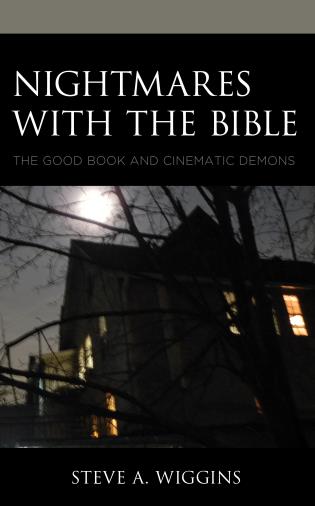
Even though Nightmares with the Bible just came out over a year ago I couldn’t list all the films off the top of my head.  Sometimes you need reminders.  My books are never discussed at work.  The people I interact with on a daily basis have no interest in them.  In other words, unless I’m having an interview or reading a review, I don’t have much opportunity to think about them.  I’ve moved on to my next projects.  The draft of The Wicker Man has been submitted and I have three promised articles to work on.  Still, I’m trying to settle on the next book.  I seem to have found some acceptance among the horror crowd.  Biblical meteorologists and researchers on Ugaritic goddesses are much less seldom in touch.  Monsters are often mixed forms.  I should know that after watching all these movies.

Others’ Weeping

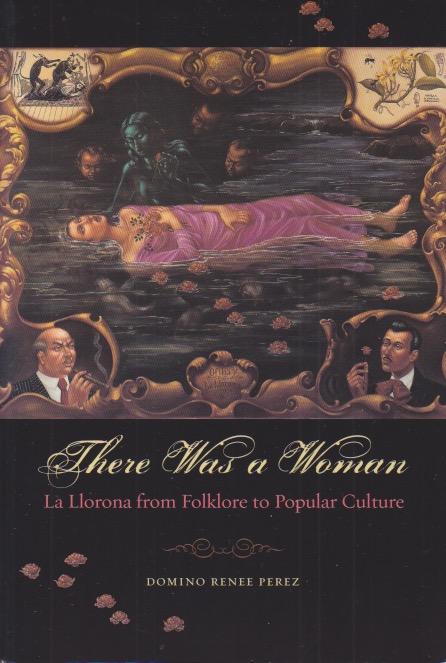
I was first introduced, consciously at least, to la llorona via the movie, The Curse of la Llorona.  The film is part of The Conjuring universe, but just barely.  It was clear from the movie that the weeping woman (la llorona) wasn’t invented for the film.  I’ve never lived in, or even spent much time in, the southwest.  Even less in Latin American countries.  In my rather strange career path, the best source of such things to penetrate my own experience tended to be my students.  (Those who think professors do all the teaching have the equation backward.)  Since becoming more isolated as an editor, my interactions are often someone approaching me with an idea mostly formed, often fully formed, and few of them have to do with ghosts or folklore.  That’s why I found Domino Renee Perez’s book There Was a Woman: La Llorona from Folklore to Popular Culture such a treasure.

As an Anglo reader endowed of white privilege, it’s important to read books where I’m clearly the outsider.  Being a kind of historian, I was curious about the origins of the tale.  As a person living in the modern world I was also interested by its reception history.  This book contains many, many examples of the latter.  It will demand that the outsider reader accept unfamiliar names and cultural conventions.  It will, in some ways, force you to stand “south of the border” and face the suffering our nation has caused and continues to cause in the name of white supremacy and its adjunct, capitalism.  There are other ways to be in this world, but when money gets involved all bets are off.

There’s much to discuss in a packed book like this, but one aspect, near the end, caught my attention.  Briefly, if you don’t know the story, la llorona is a woman betrayed by her husband.  She drowns their two children and is condemned to wander the riverbanks for eternity crying as she searches for them.  Interestingly Perez makes the connection with Rachel in the Bible.  I’ve read the Good Book many times and yet I seem to have missed Matthew’s use of Jeremiah’s interpretation of Rachel’s story.  Joseph was kidnapped and sold to slavery by his brothers but Genesis focuses on the grief of Jacob.  Rachel doesn’t live to be reunited with her lost son like Jacob does.  Perez makes the point that the stories are quite different, but it showed me once again how much I have yet to learn.  We need to pay attention to those who experience life differently.


Write It Down

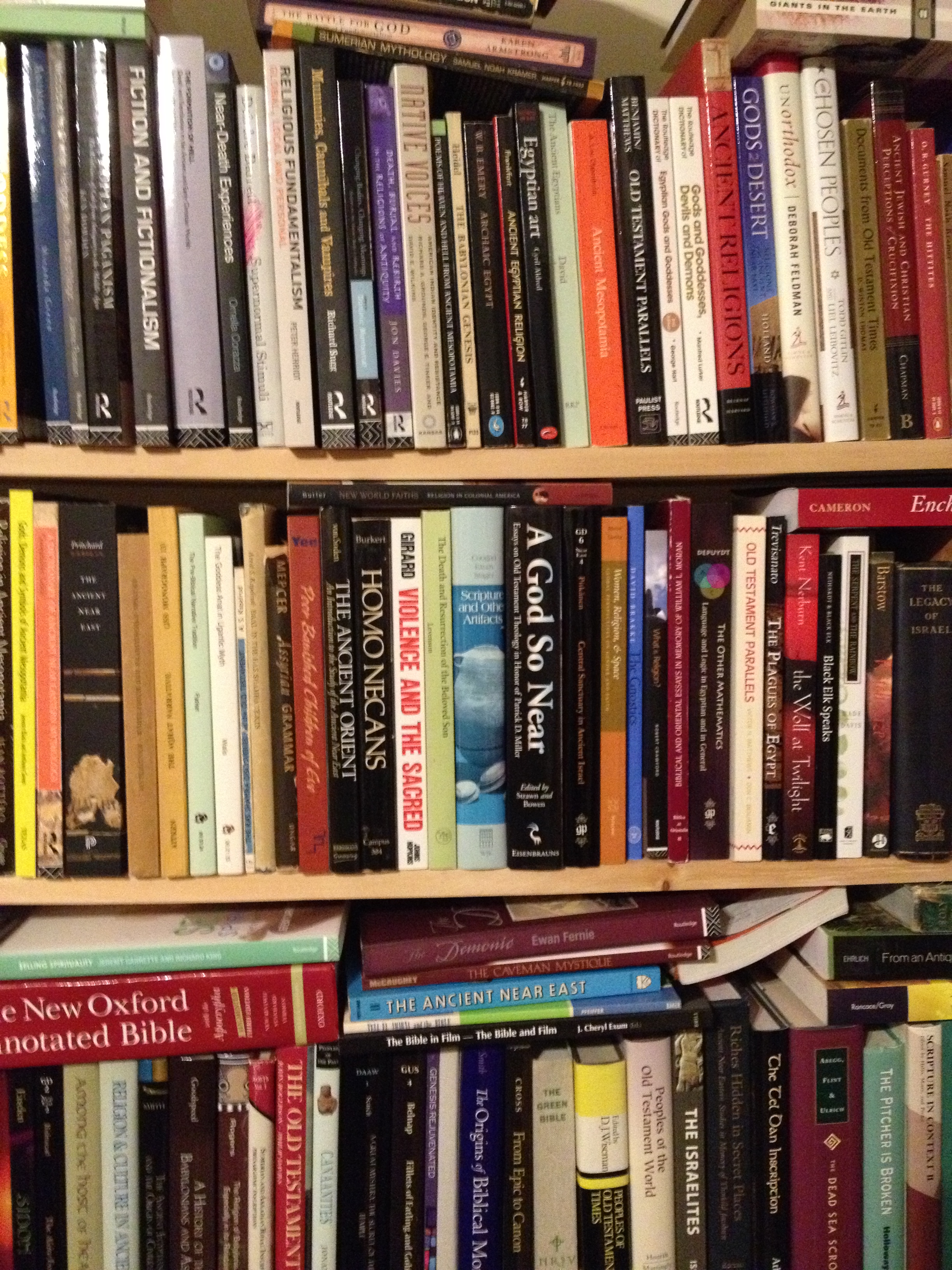
Those of us with a bookish outlook often wish we could look things up.  This comes to mind because of a recent documentary I watched, but the thought has occurred many times when visiting museums, particularly for special exhibits.  I’m pretty easily overwhelmed by too much information at once.  In a museum I have trouble reading all the placards and remembering how they tie in because there are so many interesting artifacts to look at.  I leave inspired and impressed and wishing I could look up the information I just read.  I’ve often wondered why museums don’t sell exhibition books that have photographs of the objects with replications of the placards describing what they are.  Maybe it’d just be a market of one, but I’d buy them.

The same thing is true of documentaries.  I’ll readily admit I’m poor with names.  It takes many interactions before a person’s name sticks with me.  (It’s nothing personal, I assure you—it’s just the way my brain works.)  When I watch a documentary I often wish a booklet accompanied it with the names, and credit lines of the interviewees and (because I know this is available on IMDb) a full bibliography.  The books mentioned.  You see, those of us inclined to research enjoy looking things up.  In the case of a long documentary (and that’s only if you subscribe or buy it instead of “renting” it for a one-time viewing) it means having to skim through it all again to reach the information that you could easily look up in a book.  Books are wonderful.

For me, one of the benefits of books is their stability.  Electronic resources change.  When you go to cite a website as a source you have to list the accessed date because things may have changed.  The book on your shelf remains reliably unaltered.  The few ebooks I’ve read come with marks in them.  There’s probably a way of turning this off, but I don’t want to see what other people think is noteworthy.  I suppose it’s supposed to make reading a communal experience.  Reading, in my experience of it, is mostly a private things.  One of the great joys in life is talking about reading with others, whether it’s the same book you’ve read, or a different one.  Why not add to that by making books to go with other species of information-sharing, such as museums and documentaries?  Those of us with a bookish outlook aren’t hard to please.  We just like to have it down on paper.


Relinquishing Control

Controlling the weather is a dream as old as humanity itself.  Once when I was fervently praying for a rain-free day as a child, my mother pointed out that other people could be praying for rain.  I realized then that weather was a personalized preference and that, on some level, prayers cancel each other out.  Well, it’s Groundhog Day and we’re all wondering whether those who love winter and want more or those who are ready for spring will prevail.  For this we’ll rely on a woodchuck.  The observation of animals for signs of spring seems to have been a germanic practice, and it could also involve badgers (which I’ve never, ever seen in the wild) or bears as well as groundhogs.  The idea is that the majority are looking forward to spring when they can plant and grow food, hopefully enough to last through the next winter.  And so the cycle goes.

We hear a lot about January as a month of transitions.  It is, but so are they all.  February, both the dead of winter and start of spring, provides variety as we continue the cycle.  I’ve already seen my first robin of the year and I’ve been hearing sporadic bird song.  The mating season, after all, comes around the middle of the month.  According to some renditions of the Celtic calendar, Imbolc, which was yesterday, is the start of spring.  Celebrated with fires to encourage the light and warmth, we know that cold and snow and wind chill still lie ahead.  We are reminded, however, that this wheel is still turning.  Slowly, slowly, but ever turning.

I’m writing this post before Punxsutawney Phil even awakes.  The sky is dark and it’s cold outside.  Like Phil Connors I’m thinking about how we want things to stay the same, but when they do they quickly haunt us.  Time forever moves and all seasons are mere transitions to the next.  In this endless cycle we have to come to appreciate where we are at the moment.  There’s a stark beauty to winter.  A snowy landscape can become a transport of rapture.  We have to heat our houses, however, and pay the bills to do so.  We keep our house cool enough that some days I just don’t have the heart to venture outside at all.  Still, I wouldn’t change it.  These cycles are old friends now.  I’ll glance to the west and wonder what Phil might see, but I’ll be praying that we will never control the weather.


Connection

I’ve met a few famous people in my time.  Meat Loaf wasn’t one of them.  In fact, the only real rock concert I’ve ever attended was Alice Cooper, back in the first part of the millennium.  Still, the good folks over at WikiTree like to let you know your degrees of separation from the famous.  With the news of Meat Loaf’s passing recently the connections emphasized were rockers, and I ended up being some twenty degrees separated from Michael Aday.  Every time this happens I wonder why our world doesn’t take better account of how closely related we all are.  Fear is a powerful emotion and fear of strangers runs deep.  Even babes in arms often object to being held by those with unfamiliar faces.  We could benefit quite a bit, it seems, by learning to get comfortable with fear.

Looking at the political mess in the United States it seems pretty clear to me that its main fuel source is fear.  It’s been decades now since I first learned that politicians are well aware of how fear makes people behave at the polls.  This fear is carefully crafted and exploited to try to get the election results desired.  If we could learn to master our fears just think of how things would improve!  Instead, those who have something personal to gain use fear to attain it.  Not that there aren’t real reasons for concern.  Facts such as global warming are real and deserve our immediate attention.  To address them we have to work together.  Instead, many chose to use fear for personal gain, and we let them.

For me personally, engaging with horror is a means of handling fear.  Like most people I don’t want to be afraid.  At the same time I’m fascinated by it.  I can’t scroll past a web page listing scariest books.  I try to go through tallies of the scariest movies made.  In doing so I’ve found that many of my phobias (and there are many) have dulled a bit.  Perhaps that comes with age, but then I’ve read that fear tends to increase with age.  Why not get it out of the way when we’re younger?  What has all of this got to do with Meat Loaf?  I suppose it’s the kind of gothic quality of his songs with Jim Steinman that drew me in.  The songs are all stories and the gothic was among the earliest influences of what would become horror.  Now my fear is nobody will be able to fill that need.  Perhaps the answer is connection.


Earth Haunting

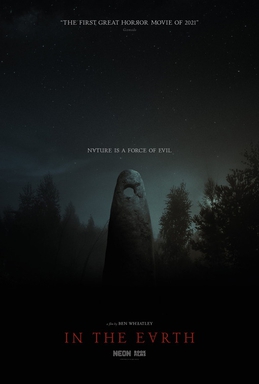
I’m still not sure what I saw.  I’m not even sure how I learned about it (it was likely either Theofantastique or Horror Homeroom), but In the Earth is a very strange film.  I can’t say it’ll be on my shelf of favorites—there’s a little too much Wolf Creek here for that—but I can say it’s something I’ll be thinking about for some time.  Body horror isn’t my favorite, but I do like to remind myself periodically of the dangers of going into the woods.  Released just last year, In the Earth is a pandemic-response film that critics say is funny (I kind of missed that aspect, I’ll admit) about a scientist and a ranger who are journeying into a particularly fecund woodland outside Bristol for research.  Martin, the lead, has an ulterior motive in that the researcher already in the woods is a former girlfriend.

Martin heads out with Alma, the ranger, and they fall into a trap set by Zach, and I suppose the humor comes in Zach’s constant observations that Martin’s wounds have gotten worse and require backwoods surgery.  The couple escape Zach (who’s clearly deranged) after he drugs them and poses them in odd clothes to propitiate the spirit of the woods.  They find their way to Olivia (the researcher/former girlfriend) and her research station only to learn Zach is her ex-husband.  And here things get weirder.  To communicate with the earth, Olivia first used an old ritual book that includes the Malleus Maleficarum and additional material.  This ancient book tells how to decipher the language of the earth through the use of light and sound with the aid of a runic standing stone that’s on no map.

Religion plays a major part in the horror here.  Olivia and Zach both want to sacrifice Martin at the runic stone.  Anyone who can watch this without seeing echoes of Abraham and Isaac probably has fewer religious nightmares than I do.  Martin, they all say, is so innocent and straightforward.  Alma keeps on trying to get Martin out of the woods but either Zach or Olivia, or the forest itself via a toxic cloud of mushroom spores, prevents them.  There are so many flashing strobes and intercut images from the spores and oddly disturbing sounds to make out what really happens at the end of the film, but one thing is clear.  Zach and Olivia have taken a religious text too literally and doing so leads them to sacrifice the innocent.  Almost biblical, no?


Serious Horror

Academically, horror has historically had a difficult time.  It’s one of those genres that people have already made up their minds about (even academics), and therefore nobody talks about this Bruno.  Nevertheless it’s still there and it has a tremendous impact on our culture.  Who hasn’t at least heard about Jaws or The Exorcist?  Some of us are renegades with little to lose, and have taken to subjecting horror to academic study.  So I was delighted to find the recently launched website HorrorLex.  Check it out.  I have no idea who Lupe Lex is, but s/he has a clever website that I’ve only begun to explore.  It lists academic works on horror and is a great resource for those who wonder why professors so seldom talk about it.  They do, and here’s proof.

The website has an alphabetical index of horror movies that will take you to a remarkably full bibliography of sources on any particular film.  If you’ve got grad students working in this area this is a resource they should know about.  It’s an example of what can be done to grow knowledge without a paywall.  Publishers, who have to make money off everything, often give bibliographic aids to those who subscribe.  On HorrorLex, you can simply take a look and find a whole swarm of information.  If you’re like me, it may also be a place where you’ll start to feel a little less alone.  As an editor I’ve been open to academic books on horror and as an editor you’re always pleased to find websites where those books will be made known.

At least half of the research journey is discovering what’s already been published on a subject.  One of the things I’ve missed most about academia is access to bibliographic databases.  Trying to build a bibliography from an individual account on JSTOR and searches on Amazon is somewhat hit-or-miss.  A focused source like this is a real service, especially if it’s shared widely.  You can share this post, or you can use your own means to get the word out, but please do it, no matter how.  This is a real service that’s being offered and the website is attractive and cleverly designed.  I know that I’ve learned quite a bit from my somewhat brief (being a working stiff) visits to the site.  If you’re researching a horror film, this is a resource you shouldn’t overlook.  Go ahead, you can always trust a werewolf!


Sole Food

Perhaps its the pandemic.  Or at least the knock-on effect of shipping delays and supply-chain interruptions.  I can take it.  Unless, that is, it interrupts my soul food.  You see, my father was from South Carolina.  I grew up eating things like grits and black-eyed peas.  Then I probably went for a good two decades without eating either.  Like most people, however, I experience breakfast malaise.  Cold cereal every single day gets old after five-plus decades.  If we have reasonably healthy leftovers in the fridge I’ll sometimes have those.  Several years ago I started cooking breakfast for myself on weekends.  (My family wasn’t interested in my concoctions.)  When I became vegan I couldn’t keep cooking my usual weekend egg, so I turned back to soul food.

On a typical weekend I’ll have grits and black-eyed peas.  As a vegan, I really like beans.  There are so many varieties of legumes and each has its own charms.  Although we don’t eat all of them, there are over 40,000 different types of beans.  Even of those cultivated for human consumption I’m probably still pretty much a novice.  But lately our local grocery store has been having bean trouble.  Since the pandemic began we’ll occasionally go in and find the canned bean shelf bare.  Last week they had no black-eyed peas.  I fretted about it all week.  Was there a national bean shortage?  Was this the new toilet paper for a new year?  As the weekend drew near I decided I’d walk a mile on a snowy Friday to a local health food store where, I was pretty sure, there would be at least organic beans.

Dried beans are, of course, available.  I don’t trust myself to cook them properly.  It takes hours of soaking and boiling and always ends with some uncertainty.  Something about toxins and digestion just don’t mix.  Early on in the pandemic we didn’t horde, but slowly collected necessities, just in case.  Then in the summer it looked like Covid was over so we ate our supplies.  Bemused, I realized how many cans of black-eyed peas I’d storehoused.  Perhaps I had more foresight than I thought.  Supply chains are still stressed.  Backlogs take a long time to clear.  I have accepted that new appliances, cars, electronics might take quite a bit longer to get.  Specialty food items too.  I accept such things with a certain stoicism.  But my soul food, well, that’s a different matter entirely.  Don’t take my soul away!


Zones of Twilight

The other day I saw a beautiful twilight moon.  This was in the morning twilight.  I suspect many people don’t realize that twilight comes twice a day.  Twilight is when dayglow either begins or ends but either before or after the sun itself is visible.  Most people are familiar with evening twilight since they stay awake until after dark.  Morning twilight, so full of hope, is beautiful to the point of being painful.  The other day it was twilight as work was starting—the days are beginning to lengthen since I’ve been starting work in the dark for months now.  A waning gibbous moon shown through a gauzy cloud cover in an indigo sky.  It was very cold outside, so I went to the window to take a picture with my phone.

The modern phone camera often misses the point.  I zoomed in on the moon—phone cameras are wide-angle, by default—and it kept sliding in and out of focus.  The sky was getting lighter by the second, and I was losing the opportune moment.  I tried moving the phone closer to the glass, then back a little.  Still out of focus.  Then I realized what was happening.  My phone was focusing on the dirt specks on the window.  (Hey, it’s winter, hardly the time to be out with the squeegee.)  It occurred to me that a life lesson was being offered.

Thich Nhat Hanh recently died.  He was a Zen Buddhist master, and his passing reminded me of the old Buddhist saying that the Buddha is not the moon but rather the hand pointing at the moon.  Religions often confuse the hand pointing for the truly sublime realm to which it points.  Worshipping the person instead of following her or his teachings is a standard feature of religions worldwide.  It is the reason for much of religious conflict.  Those who worship the figure soon come up with their own teachings that are unrecognizable when held up next to those of the departed leader.  They focus on the window, not the glowing moon beyond.  The sky was growing too light to capture the image that had struck me.  The moon was blurry in a way that my eye hadn’t experienced it.  The moment of teaching was past.  The lesson was over.  The best that I could do was spend  a long day working then try to recapture a moment that had occurred in twilight.


Movie History

We take much for granted.  Consider the movie.  We all know what movies are, and, prior to 2020 we all knew what the experience of going to the theater was.  Some of us even recall the drive-in experience.  Technology (and the pandemic) has changed all that.  People now watch movies at home, or alone on their devices.  Nevertheless, we still recognize what movies are and, being creatures drawn to story, we tend to enjoy them.  In fact, many theorists of myth see cinema as the new mythology.  Myths give us meaning and we tend to find meaning in films.  We also find information in them.  One of the points I’ve argued in my own work is that people learn about their religion from what they consume in the media.

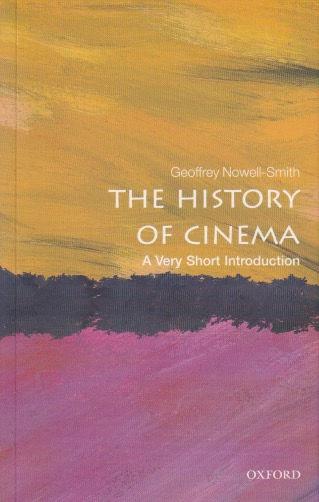
Geoffrey Nowell-Smith offers a compact introduction to how we got here in this little book.  The Very Short Introductions have wide recognition among those who want to learn something authoritative without taking too much time to do it.  This introduction to cinema history is a wonderful overview of a complex subject.  A few things became clear to me in reading it: cinema began as, and remains, an artistic industry.  Other art forms developed as personal expression of visual, aural, or written expression.  They eventually codified into art forms such as painting, symphonic music, or novels.  Cinema, instead, grew out of the film industry and sought to become a new way of expressing artistic ideas.  Clearly it has done so successfully.  Not only that, unlike other art forms, it has always been a business.

Initially, photographic equipment was too expensive for most dilettantes.  Studios brought together people with skills in the many areas required to put a movie together.  You needed actors, directors, film developers, sound engineers, props and crews to make sets.  Indeed, most art—such as book writing, or music albums—is a group effort.  Movies especially so.  And these people have to be paid.  Film has, and has always had, a profit motive.  While you get the sense that many artists would’ve painted even if they starved (and many did), and that most of us who write will do it regardless of not getting any profit from it, cinema would’ve collapsed without it.  There’s a lot packed into this small book.  For those who may have been reading about film for many years it will contain startling insights.  A wide-angle book with a variety of lenses, it brings many things into succinct focus.


Footprints in the Snow

Although my back’s grateful, many of the snowstorms rolling across the country have left just a small bit of snow here so far.  Small bits of snow create their own hazards, however.  A snow covered trail quickly becomes hazardous for jogging, so I walk.  This past week we had a little snow and temperatures low enough to dissuade many of those who normally walk or run the trail.  Those of us with desk jobs really have to make an effort to move.  When I was out I was surprised by a couple of things.  There were no other lunch-time walkers and it was above freezing.  The almost untrodden snow gave under my feet and in the patches where the sun made it through, was actually wet.  I took my usual constitutional and headed back to work.

These short, cold winter days are too treacherous for walking in the dark.  Black ice isn’t a myth unless you can slip and fall on a myth.  The next day it was bitterly cold.  Still, skipping exercise a day is a slippery slope.  I headed back to the trail.  At first my footsteps from the previous day had led to a regular set of tracks where the snow had melted down and the pea gravel had dried out.  Walking was safe here.  As I reached the further, more wooded end of the trail it was quite different.  Sheltered by the trees, my foot prints from the previous day had slightly melted and then refroze, leaving a track of ice that could easily twist an ankle.  I began to think of the concept of following.

We find those whose wisdom compels us.  We hear them in the classroom, the pulpit, or the street corner.  Or we read them in a book.  We might even see them on television or the internet.  They seem to have something we lack, so we follow them.  Their tracks often start out secure enough.  Dry patches in an otherwise slippery covering of snow.  We follow on, thinking we’ve found our way.  Somewhat further down the path, however, the tracks become icy, showing us that even the great leaders have their own hidden secrets.  The places where they too slip and fall.  The wisdom we seek is collective.  No one person has all the answers.  If that were so it should be obvious to us all.  Instead we need to strike out on that nearly unbroken snow to discover for ourselves.


Maudren Saint

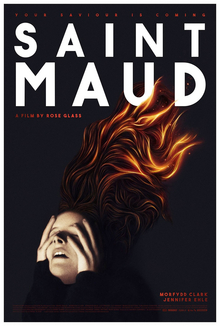
Saint Maud is one of those movies that requires some thought.  (And I’ve been giving it plenty.)   It follows a brief time in the life of Maud, a hospice nurse who becomes obsessed with saving the soul of one of her patients.  Maud has direct experiences of God, like Teresa of Ávila but the film doesn’t make it clear, until the very end, if she suffers delusions.  After the traumatic loss of a patient at the beginning of the film she becomes a devout Catholic and when she feels she isn’t succeeding in her mission she punishes herself by using medieval-level means.  She hears God talking to her and what he (yes, he’s male) demands makes the viewer wonder if she’s found the correct spiritual entity.  Moody, edgy, and theological, Saint Maud is another example of how horror and religion work together.

It’s one of those movies that, when you finish it you start looking around for someone to talk to about it.  Of course, I watched it alone, wearing headphones, so I had dialogue with my own imagination.  One of the founding principles of cinema was the realization that viewers liked to discuss what they’d just experienced.  The other horror fans I know tend to be academics far removed from here.  I don’t know any of them well enough to pick up the phone, or call up on  Zoom, and say “Hey, let’s talk about Saint Maud.”  The thing is, I understand some of the doubts and motivations of Maud.  It’s always that way when religious interactions are with an invisible, petulantly silent deity.  Kind of like watching horror movies alone.

Horror has proven to be a kind of therapy for me.  The stresses of life are many and unrelenting.  Watching someone even worse off can help, as long as it’s fiction.  The world we’ve created is a very unfair place.  Many people suffer so that a few can enjoy more than they deserve.  Their lifestyle is protected by lawmakers that they buy while others suffer.  I’d just spend a day hearing about such injustices, and then paying hefty bills, and it seemed that some weekend horror was just what the doctor ordered.  I’ll probably watch Saint Maud again once I’ve had time to recover, and to think about the implications of the story.  Horror and religion have a viable partnership.  Such films occasionally become blockbusters, but sometimes they’re smaller affairs waiting to haunt us on weekends after hearing about the sad state of the Frankenstein world we’ve all created together.


Prolonged Re-entry

It’s a trope as old as holiday decorations themselves.  We all know the house (or plural) where the Christmas decorations remain until it’s warm and light enough to go out and take them down.  The same thing happens inside our house, on a smaller scale.  Bits of the holiday—whether it be Christmas cards on the mantle, or the not quite spent candles from the Yule log—remain, while we reluctantly reenter BAU (business as usual).  It’s a process best taken slowly.  I suspect many of us find AU (as usual) to be not really ideal.  Too many bills, too much Covid, too much of a demand made on that non-renewable resource, time.  I know people happy to see the holidays go, but I’m already counting the days until they come again.

January, whose end is fast approaching, is a waiting time.  Waiting to recover from perhaps a little bit too much holiday spending.  Waiting for a bit more light and warmth.  Waiting for that package to arrive.  Waiting for the plumber to call back.  Waiting for, well, business as usual.  I read about holidays quite a lot.  They wouldn’t be special if they happened all the time, of course.  And we need the supply chain that demands steady production of goods and services from those not actually chained to a desk all day.  Still, I can imagine a different world.  One in which there is time to get the non-work stuff done as well as filling obligations to capitalism, pouring out our libation to the emperor.  Many analysts are suggesting technology has increased efficiency to the point that a four-day work week is optimal.  Who’s going to pay the same for less, however?

Time is a commodity.  I’ve got a lot of projects outside work that I really want to finish.  Some of them, like that junk car in my step-dad’s yard, could turn a profit if only I had the time to spend on them.  Meanwhile there’s work to be done.  Long days in front of the computer knowing there’s something more exciting after it’s all over.  When work’s done I’m too tired to get much accomplished.  It’s like the endless lapping of the waves on the sea shore.  Unchanging.  Persistent.  Aware there’s always a coming storm.  So I’m sitting here with Tom Petty, waiting.  Even if we don’t know what comes next.  Let’s call it a holiday.


H. P. Luca

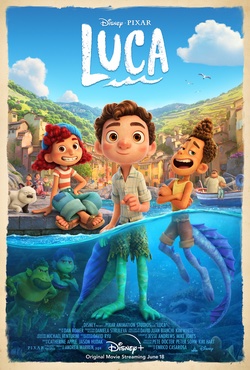
Disney has a lot of cash lying around, which means they can buy things.  One of those acquisitions, some years ago, was Pixar.  In my mind Pixar is now Disney, but in fact it does have a different aesthetic.  One of Pixar’s recurring themes is acceptance of those who are different.  Luca is Disney with a touch of Lovecraft.  This Pixar animation feature is about sea monsters acclimating to human culture, only they turn back into sea monsters when they get wet.  Kind of a combination between The Little Mermaid and Splash.  Even the Italian village in which Luca and his friend Alberto show up looks like the Imboca of Stuart Gordon’s Dagon (yes, I know Imboca is in Spain and I also know it’s fictional).  The villagers are, predictably, terrified of sea monsters since they earn their living from the sea.

In Luca once sea monsters come onto land they become human.  In fact, their culture below the surface is pretty much like human culture above.  The Lovecraftian element comes in the sea “monsters” (those in Luca are generally cute) coming to live among humans.  Lovecraft was, somewhat infamously, a racist.  While there’s no excusing that, there’s also no question that his fear of “the other” often develops the creepy atmosphere for which he became posthumously famous.  Cthulhu and many of the other great old gods dwell beneath the sea.  Human interactions with them generally lead to the humans becoming insane because of the implications.  Here Pixar adds its own twist—maybe humans are insane already.  What we permit in our societies is often less than humane.  At least with Lovecraft we could blame monsters.

Monsters are a reflection of humanity.  We take what we least like about ourselves and project it onto often fictional creatures that dwell beyond the bounds of human habitation.  We fear those who are different.  In more current thinking, that means humans should be accepting of other humans who don’t conform.  Those who think different, or, more especially, those who look different.  Sea monsters, at least hominid ones, hold great symbolic value.  They live in a world we barely know and to which we have little access.  Their lives under the great pressure of all that water must be very different from ours.  It’s only when we get beyond seeing them as monsters that we grow as humans.  If you follow the Creature of the Black Lagoon series to the end you see this playing out in black and white.  Sea monsters have much to teach us.


Out of Hades

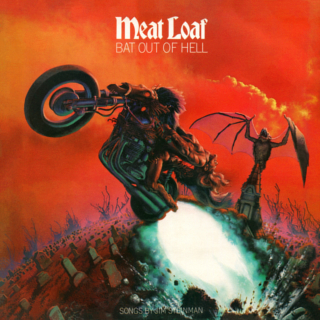
They went together naturally, like chocolate and peanut butter.  Just about seven months ago Jim Steinman died.  Then yesterday, Meat Loaf.  They were both born in 1947 and together they made one of the best selling albums of all time, Bat Out of Hell.  I’m saddened by the loss of perhaps the only truly Wagnerian Rock performer.  After I discovered Bat Out of Hell, raising some eyebrows among those who knew me as a kid, I was hooked.  I bought all the Meat Loaf and Steinman collaborations.  Not only was Meat Loaf’s voice big, it was also sincere.  It was easy to believe the stories he was singing to us, no matter how fantasy-prone they might’ve been.  Once I start listening to one of his albums I end up going through them all.

When we become aware of music helps to define it.  I became aware of Bat Out of Hell during my Nashotah House years.  Still fearful from my evangelical upbringing, I wondered what students might think when they came over.  (Nashotah is a residential campus, and this was largely before the days when faculty were fearful of being alone with a student.)  As strange as it may sound, for a best-selling album, I was unfamiliar with any of the songs before I bought it.  I’ve never been much of a radio listener.  I agonized quite a bit before finally buying the CD.  I quickly came to see why it was so popular.  More than anything, it was the sincerity of Meat Loaf’s voice.

That music saw me through some dark times.  Attending mass in the mornings and listening to Meat Loaf at night proved an effective elixir.  The longer I was at Nashotah the more I came to associate it with the titular geonym.  Eventually Bat Out of Hell II came out.  I was less slow about acquiring it.  The third one appeared only after my teaching career ended.  When things went south at Nashotah, I decided that I would perform some symbolic actions during my departure.  There was nobody there to witness any of them—no person is indispensable to an institution and you’re soon forgotten.  The last thing packed from our on-campus house was the stereo.  I went back alone to get it and the few last-minute belongings from well over a decade in a place of torment.  Just before leaving campus for the last time I cranked the stereo up and played “Bat Out of Hell” at full volume.  An era has come to an end.