The Nature of Epiphany

Last year on January 6 we had an epiphany.  Many of us thought, I suspect, that since the angry mob wanted to kill Republicans and Democrats both that their actions would be condemned unilaterally.  Instead we learned that the Republican Party said, “Boys will be boys.”  And of course boys like to kill things.  A year later the GOP has stalwartly refused to condemn the attempt of a violent takeover of the government by a legitimately defeated candidate.  If the other party tried this they’d be calling “treason.”  We had an epiphany of a double-standard masquerading as evangelical Christianity.  Now, instead of thinking of today as the Christian epiphany, well, wait a minute.  Maybe that’s the epiphany we had—understanding what Christianity can become.

One of the tenets of democracy includes the freedom of religion.  Studying ancient religion can be quite revealing.  For one thing, we get a better idea of what religion was.  Few ancient authorities were concerned about what individuals actually believed.  Religion was largely what the powerful and influential did to placate gods who were easily bribed by sacrifice and praise.  The role of the average person was to be taxed to support this, and the monarchy.  I’ve been watching how, since the 1970s, the United States has been going that route.  We’ve always been a religious nation (“Christian” is much more debatable), but Richard Nixon’s ploy to swing evangelicals to the Republican Party worked.  Those not blinded by ideology will know that evangelicals tended to be staunchly Democrat.  Through the ensuing decades we watched Republican presidents giving our tax money to religious organizations they supported.  Why not throw another lamb on the altar while you’re at it?

The sacrificial system, you see, supported the temple staff.  Somebody had to eat all that meat!  Even in the Bible it was recognized that God didn’t exactly consume it the way a human being would.  Then last year on Epiphany, the party that’s supported just this kind of thing tried to throw all but Trump—yes, even Pence—onto their sacrificial pyre.  A year later we see those very senators saying, “well, it might be useful to have such people in reserve, just in case.”  Early Christians believed that you could tell another believer by their actions.  In that they weren’t wrong.  And those who are able and eager to kill in order to get their way have revealed, by their actions, their true beliefs.  It was, and still is, an epiphany indeed.


Energized

I grew up in Pennsylvania, but there’s a lot I don’t know about the commonwealth.  (I do know that it’s a commonwealth rather than a state.)  My parents weren’t educated—neither one finished high school—so I didn’t have a lot to go on at home.  I recently learned that it is the second largest energy producing state in this somewhat tenuous union.  Texas is, of course, first.  I suspect this is because the Keystone State is old.  Not because it was one of the original thirteen colonies (which it was), but because the Appalachians around here are ancient and abundant in coal, oil, and natural gas.  And speaking of natural gas, the state houses of congress are dominated by Republicans.  The state motto should probably be “Burn, baby, burn.”  Given the number of Republicans, it is also one of the most corrupt states.

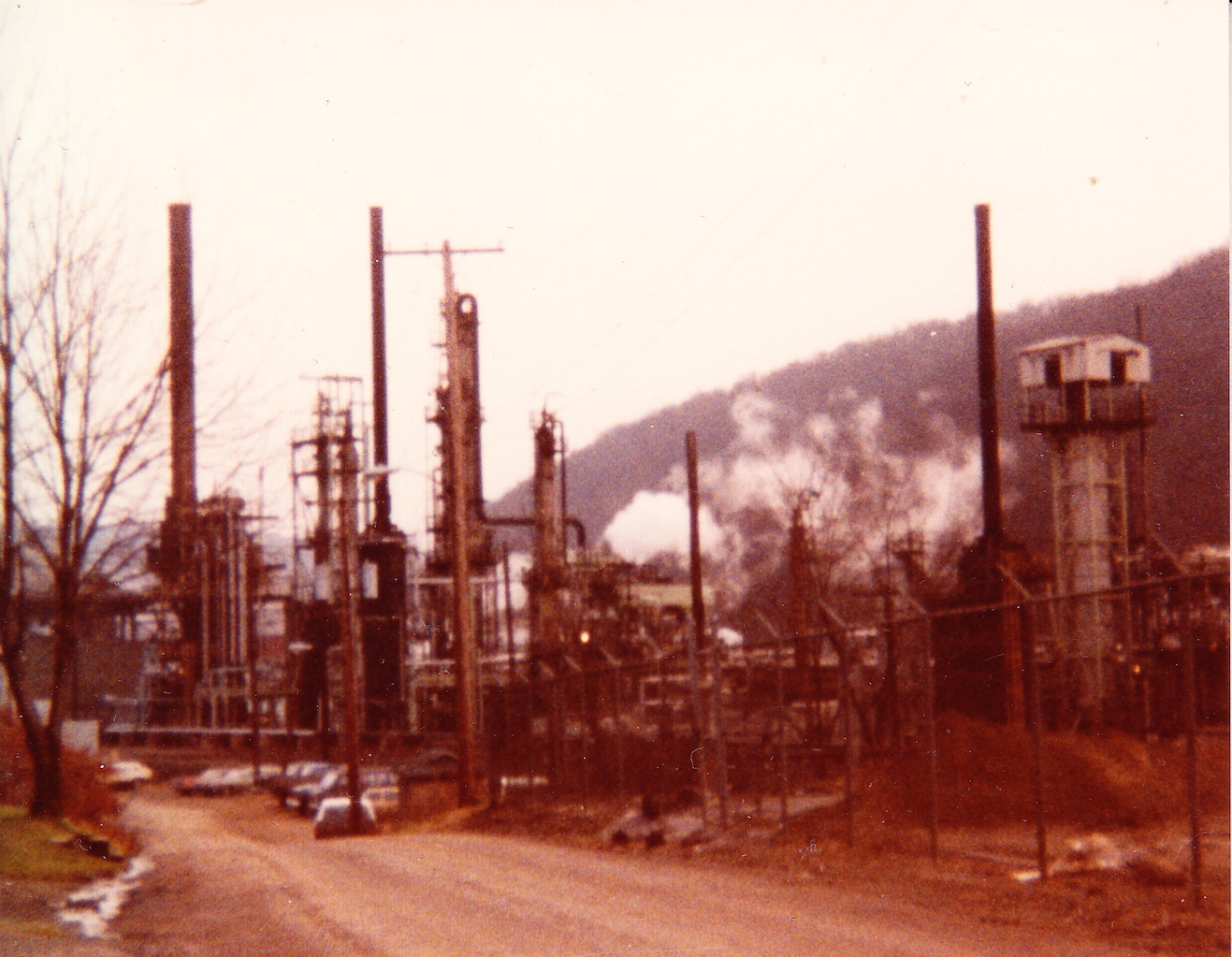
Even in the rural parts where I grew up, it was clear that energy was a huge part of our history.  The petroleum industry began in Pennsylvania.  Col. Edwin Drake’s well at Titusville is still producing.  The oil fields here are shallow (speaking of the GOP), however, and the interest shifted to Texas where, well, everything’s bigger.  Growing up, refineries were a familiar sight.  One of my vivid childhood memories is witnessing a refinery fire.  I was too young to really understand.  My brothers and I were outside playing when it started to snow in the summer.  It wasn’t really snow, it was hot ashes falling from the sky from a refinery fire about five miles away.  We later drove out to see the huge vats melted like wax, charred and rusted under what had been an industrial paint facade.  Petroleum companies are like that.

My second hometown of Rouseville lived under constant threat of a refinery fire.  The small town of about 800 was completely dominated by a Pennzoil refinery that took up much of the valley.  We trembled whenever the refinery sirens went off.  My life may have been shortened by breathing in all those toxic fumes.  Big petroleum comes with massive costs.  We know that alternative sources of energy are available, but we have very rich people who stand to lose some of their vast fortunes if we move away from fossil fuels.  There’s much about Pennsylvania that I don’t know.  I’ve lived here longer than in any other state.  And I, for one, would like to see this fascinating commonwealth work for the betterment of the world it inhabits instead of rewarding the bad behavior of the wealthy.


Carton Thoughts

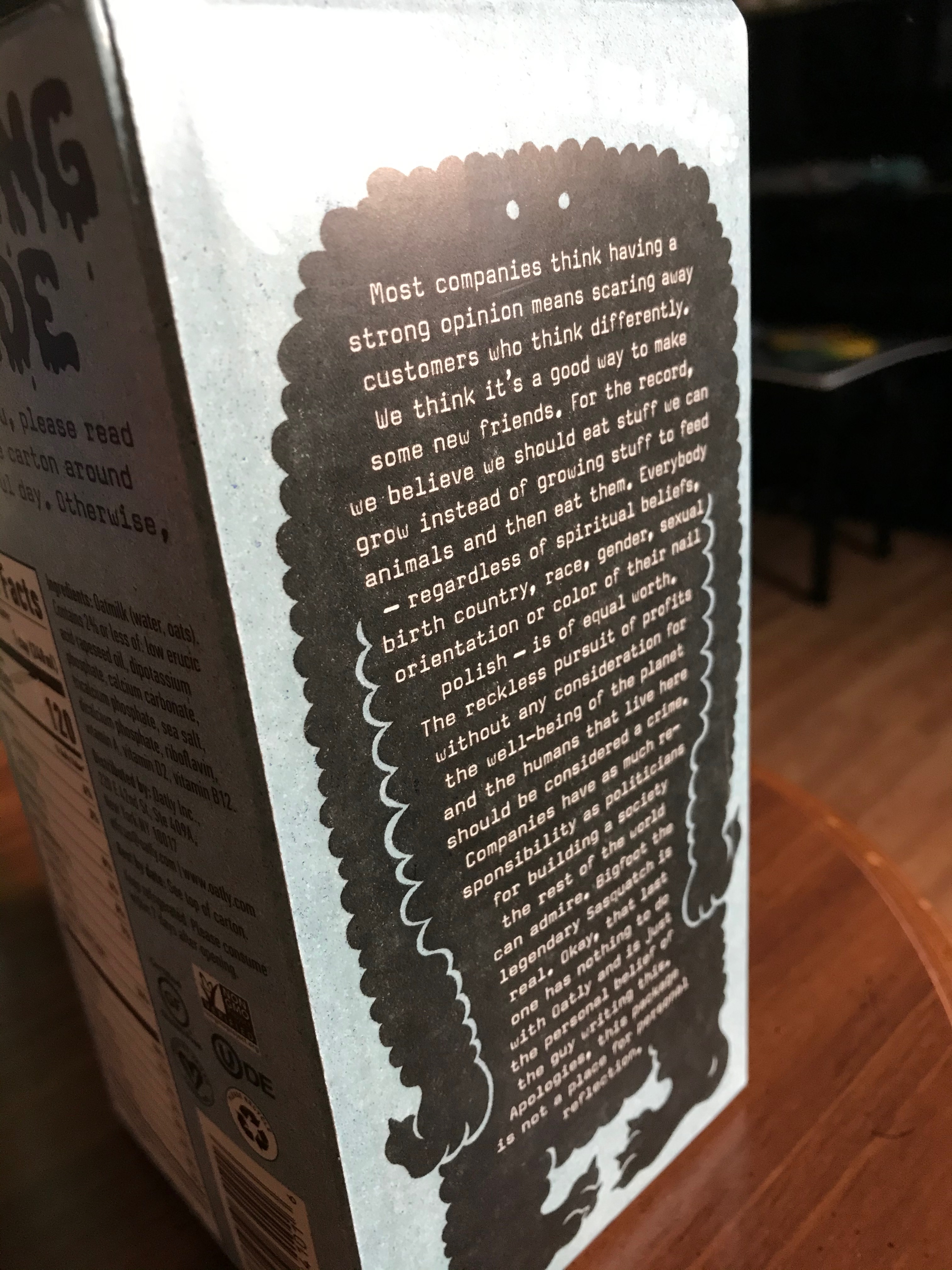
Did you know they’re recyclable?  Milk cartons, that is.  In our vegan efforts we switched to non-dairy milk years ago.  Unfortunately the plant-based milk industry doesn’t use gallon containers, so we buy the 2 quart (sometimes smaller) paper cartons.  Our community has a pretty good recycling program, but it doesn’t include cartons.  They are perfectly recyclable, however.  I’m saving them up to mail to the places Carton Council lists.  We can reduce waste, if we have a will to do so.  I know people who live in states with no recycling programs.  These states tend to lean red.  The world, however, doesn’t belong to anyone.  We need to learn to pick up after ourselves.  Take a look at the Carton Council webpage.  Sign their petition.

A large part of the problem is that we’ve allowed ourselves to be convinced that happiness involves consuming.  Our entire capitalist system is based on consumption.  We over-package what we consume, comestible or not.  There’s the ubiquitous plastic wrap, the box, the inner lining.  Often you can’t find the item you need in a local store so it has to be shipped.  All that wrapping.  All that waste.  One of the things environmentalists know well is that people quickly lose enthusiasm for saving their only planet.  The topic is depressing and overwhelming.  We’ve been living like there’s no tomorrow for at least half a century now.  Small steps can help, however.  Paying to ship recyclables afield isn’t the perfect solution, but it feels better to be doing something.

Economics is called the dismal science for a reason.  At the root of it, it seems, is that we’ve valued money above humanity.  And our environment.  One thing that Christianity got right, before it was sold, is that we should think of others.  Capitalism sees others in terms of assets or liabilities.  If our actions harm others—including the unborn that evangelicals are so concerned for—shouldn’t we be doing something about it instead of sitting around waiting for a miracle?  Some containers simply can’t be recycled.  Some devices can’t be made without rare earth metals.  Some jobs requite on-site workers and the travel they expend.  Not all goods are found where they’re needed.  But we can stop wasting perfectly good recyclable materials.  Clothes returned to online retailers often end up in the trash.  Why can’t what is sold also be given away if returned?  At least the needy could keep warm.  Maybe it’s possible to make that dismal old science smile by taking care of the resources we have.


925

Sometimes you just know.  One of the things I know is that nine-to-five schedules are killers.  Literally.  I grew my permanent teeth as a teacher.  Before that I had been set on being a minister.  Something they have in common is that neither profession relies on a nine-to-five schedule.  The hours are much longer than a forty-hour work week, but they’re flexible.  If you’re not in class, or in church, or a committee meeting, or your office hours, you can dash out to the store if you need to.  You can shut your eyes for a few minutes if you didn’t sleep well the night before.  As long as you get your work done adequately, nobody really bothers you about your time.  My initiation into the nine-to-five, in my mid-forties, was a shock from which I’ve never quite recovered.

A few years into this unnatural territory, my nine-to-five (925 is quicker to type) evolved into the commuting variety.  I didn’t live terribly near New York City, so that meant catching a very early bus.  I’m a morning person, so that’s not really a concern.  The problem is that my brain’s not a 925 brain.  Like one of my professors, I still awake at 1:30 (having gone to bed about five hours before) with an idea that won’t let me go.  When that happens you have to put on heavy layers of clothes against the night’s low thermostat and make your way downstairs to the computer.  By three a.m. your body’s in the fully awake commute mode.  Thing is, you’ve got a 925 day in front of you.  When I was teaching I’d be able to snooze again before even my eight o’clock class (I was never one to object to the early shift) began.

The idea behind the 925 is an atavistic throwback to pre-internet days.  Pre-pandemic days.  Days when you had to be watched to ensure you were working.  When you had to sit in a cubicle where nobody and everybody can see you.  If you’re not staring at your screen or not in a meeting you’re not working.  So this antiquated thinking goes.  Teachers and ministers don’t hold to regular hours.  They identify with their jobs—the very definition of “professional.”  If it’s what you’re born to do you don’t complain.  And if you happen to awake at 1:30 with an idea that just has to be expressed, those who pay you will understand if you yawn a time or two the next day when, ideally, you won’t be stuck staring at a screen.


What’s New?

Now that 2021’s behind us, what will we make of the year ahead?  New Year has generally been a time of reflection.  I don’t put a lot of stock into it because years are just random markers pointing out when we’ve been around the sun once again.  They’re good for organizing things, but does a year have any particular significance?  Many people talk as if 2020 and 2021 were cursed.  I tend to think of the Black Death and the influenza of a century ago and realize that if you’re reading this, we made it through.  Not personally perhaps, but our ancestors did.  The Covid-19 pandemic wrenched us unwillingly from our comfort zones, but isn’t that part of life?  Were things good before?  Was it kind or humane to have Trump in the White House?  Was (is) the death-grip of capitalism on the western world cause for celebration?

Yes, we had to travel less.  Our ancestors—for some of us that may be as recent as our grandparents—would likely have considered our travel excessive.  Why do we always want to be somewhere that we’re not?  What makes a home a home?  What can we do, moving forward, to make that more appealing?  The past two years have changed a number of things, some decidedly for the worse, but some for the better.  I keep reminding myself that our outlook is terribly short.  The planet has hosted life for billions of years.  Some plants live for millennia.  We see only our lifetimes and use them to decide what’s normal.  I’m never quite sure what normal is.

I do know that it’s considered a new year now, for those who celebrate the new start on January 1.  Other cultures have other dates to mark this time.  We call it 2022 based on likely incorrect information about when Jesus of Nazareth was born.  Our Muslim friends mark the years via Muhammad.  Others find yet other markers important to their cultures.  Is any of this normal?  It is normal to be so terribly polarized as a nation, with supporters of one candidate hating those who support another?  Is it normal to complain because we’re surviving through a pandemic, because our conveniences have changed?  I suppose it’s normal to want things back the way they were.  Some of us are ambivalent about this whole internet thing.  There was value in knowing how to fold a paper map.  There will, however, be value in the time allotted before us.  2022 may be just a number, but as we reflect perhaps we should think of how to improve where we find ourselves.

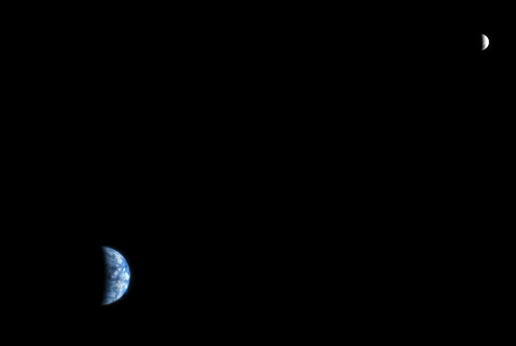
From NASA’s photo library

A Haunting Story

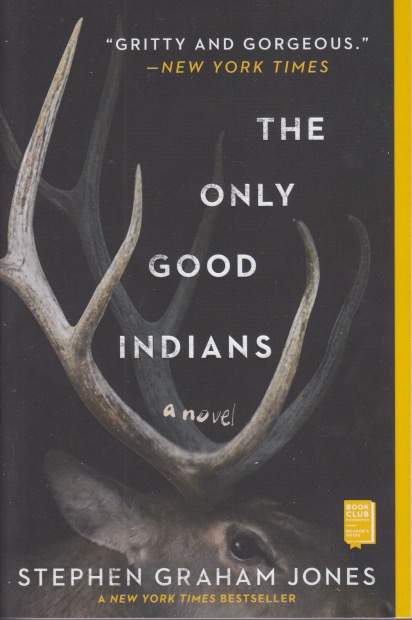
The last book I finished in 2021 didn’t quite make it under the wire for my year-end blog post.  It was the second Stephen Graham Jones novel I read in the year.  I guess I’ve been reading a lot of American Indian books lately.  The Only Good Indians is a horror story and more.  There’s reconciliation.  There’s tradition.  There’s hope.  As part of the privileged “white” class, I’m always a little afraid that writers from oppressed cultures will take it out on me.  It may’ve happened here, but if so it was done in a way that I didn’t feel the sting.  This is a story of friendship, mistakes made, and a monster who has a righteous cause.  There’s a lot going on here.

One of the persistent cultural fears of the unwoke, I suspect, is that there’ll be payback if all things were to become equal.  Perhaps on the scale of karma that’s true, but in reality the people that’ve been oppressed simply want the oppression to stop.  To be recognized and acknowledged as being human.  As if that decision is up to white folk to make.  This novel simply deals with American Indian life as it’s lived.  The characters all pretty much live in poverty but they lack the greed so many white protagonists have.  They’re happy if they have a few hundred dollars, or even a few twenties.  Life is more than playing the capitalist game.  It really all comes down to relationships.  And family.

Stephen Graham Jones writes with a deft hand.  He offers some humor amid scenes of violence and loss.  He speaks plainly and without pretense.  And there are parts of this novel that are genuinely scary.  Since I had no idea how it might end, I wasn’t even sure even while I was on the last page.  

The best monsters are those that teach us to be better human beings.  Quite often they teach us that the truly monstrous ones are those who look and act like people usually look and act.  We take the natural world, assuming it’s ours.  We think our small problems are those of the entire world.  Monsters help to fix our perceptions.  Without them we carry on as if it’s business as usual.  This is a good novel to read in the midst of a pandemic.  There’s hope here that we’ll come out of the crisis better than we went in.  Perhaps scarred and changed for good.  In every sense of the word.