Living Through Writing

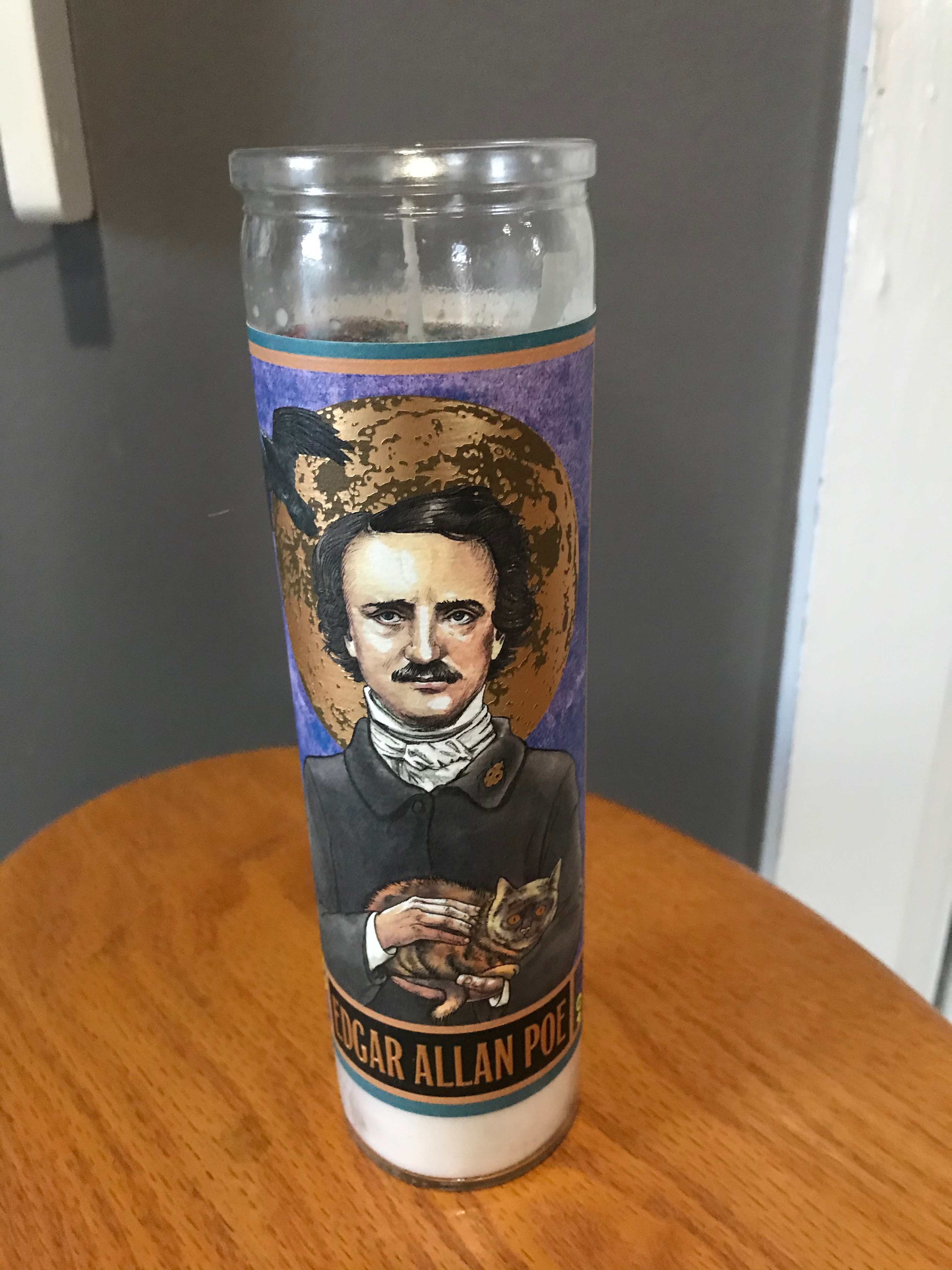
I’ve perhaps lived too long to be a great writer.  Of course, most of my fiction remains unpublished, much of it read and rejected by editors younger than myself.  I can’t help but notice that Poe died at forty and Robert Louis Stevenson at forty-four.  Emily Brontë at thirty.  All of them today considered literary geniuses, they caught publishers’ attention back when they weren’t such juggernauts as they are today.  Even the humble online literary magazine gets too many submissions and the editors advertise their quirky tastes.  Not that I’m any Poe, Stevenson, or Brontë.  I wonder if their awareness of the greater likelihood of dying young might’ve fueled their work.  Perhaps at a subconscious level.  I know, for example, that the pressure created by having to start work early leads to some of my own best writing, knowing, as I do, that time is limited.

Shortness of time is a great motivator.  One thing authors require is time, however.  If you roll out of bed, scarf down breakfast, then logon to work (how the world has changed!), you may have time at the end of the day but I’m so exhausted by work that I simply can’t produce anything at night.  I have to do my writing before the worries and pressures of work kill the inspiration.  I mean that literally—I can feel it dying as the worries of those seeking tenure, and the issues with which they surround themselves, suck the very vitality of my mind.  Serve and protect.  And although I’m not exactly old, I’m not young either.  I’ve outlived many and, to my way of thinking, it’s because I’m here for a reason.  It seems to have to do with writing.
You see, writing is a main identifier.  I was asked to take a survey recently by a group that wanted to identify people’s main sources of self-identity.  They asked about things like gender, race, sexual-orientation.  The usual suspects.  The survey wasn’t crafted, however, by a writer.  If it had been they’d have known that that is a category unto itself.  Those of us who write know that we are writers, whether published or not.  Whether famous or not.  It’s more than a profession—it’s an identity.  Sometimes we have to keep it quiet since those who hire others want the categories that identify themselves by to be race or gender or social status.  The writer may not be motivated by money.  Many work well but may not identify fully with their “job.”  They may, in fact, be watching the time slipping away and wish they were writing instead.


Becoming American

Image credit: John Wesley Jarvis, via Wikimedia Commons

I love reading literary scholars if they write accessibly.  William L. Hedges did, mostly, in Washington Irving: An American Study, 1802–1832.  There were several moments in my reading when I had to pause and consider the connections he was making.  This was his only book of note, but noteworthy it is.  You see, as a young person I had a difficult time figuring out what I was supposed to be as an American.  I read a lot about Europe and considered the various identities in the long histories there.  I tended to read European literature while having a lifelong soft spot for Poe.  Over time I began to read more American classics—ironically this wasn’t much part of my formal education in rural Pennsylvania.  Mostly I picked things up on my own.

Hedges, nevertheless, ties many of these things together in discussing Irving’s writing.  As he did so I started to realize that an American is a distinct kind of being.  Now, intellectually I’ve known that since childhood.  I was born and raised here, after all, as were the generations before me.  Still, recognizing the guilt of taking someone else’s land, it has taken many years to appreciate the literary accomplishments of the various writers who helped shape our national identity.  Hedges addresses many aspects of this through his analysis of Irving, but he’s at his best when he’s tying him together with Poe or Melville.  These early American literary lights offered a view of a nation haunted by history, but also funny at the same time.

This book was published three years after I was born.  Of course, I really didn’t start reading about Irving until about a decade ago.  You get the sense that he wasn’t sure of himself as a writer, but like many of us he had a thin skin when it came to criticism.  You see, writing is putting yourself out there for others to see.  It’s only worth doing if you believe you have something to say and you want others to hear it.  For many writers that means being discovered after death.  Today many make livings writing acclaimed novels.  They can only do so, however, because Irving and his generation suggested something new: you didn’t have to have a traditional job and just write on the side.  You could, if chance cooperated, create literary works that others would purchase and support yourself that way.  And then, more than a century after you’d gone, someone else would write about what you had written.  Thankfully, sometimes accessibly.


Another Exorcist

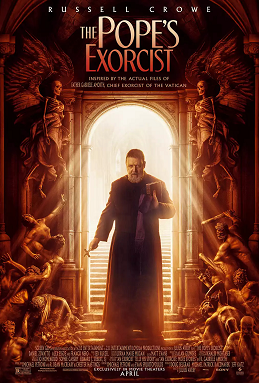
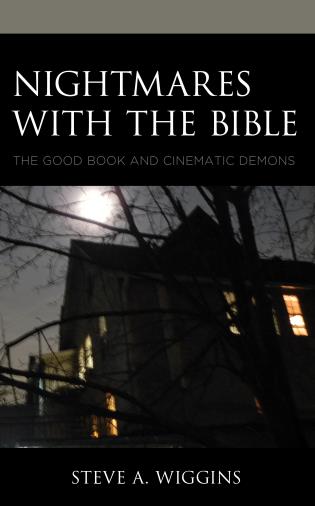
I learned from the wonderful Theofantastique that Russell Crowe’s new movie is The Pope’s Exorcist.  (I guess Crowe hadn’t read Nightmares with the Bible to think to send me a personal notice.)  I knew instantly, from the title, that it had to be about Fr. Gabriel Amorth.  Say what you will about him, he inspired William Friedkin to make a documentary titled The Devil and Father Amorth.  It’s pretty unnerving to watch, no matter what is really going on.  Catholic officials aren’t trilled about Crowe’s movie—I wasn’t impressed with his portrayal of Noah in Darren Aronofsky’s take on the flood story a few years back.  It takes a certain kind of director (like Friedkin) to be able to handle theologically dense material in a believable way.  I can’t say anything about Julius Avery’s The Pope’s Exorcist, of course, without having seen it.

I can say, however, that those who publish books at $100 miss many opportunities.  My book is one of very few written by a credentialed religious studies scholar on demons in movies.  A quick web search will reveal that it remains basically unknown and uncited.  (The only Amazon review is a two-star job by an evangelical who didn’t like what I was doing.)  Pay $100 for a book with a two-star review?  Most people, reasonably, have better things to do.  I once got around this in the past by posting a PDF of one of my book for free on Academia.edu, where, at recent count, it has been viewed over 6,000 times.  Academic publishers don’t realize the appeal of most of the books they publish.  Even demons can’t open a wallet to a Franklin level.

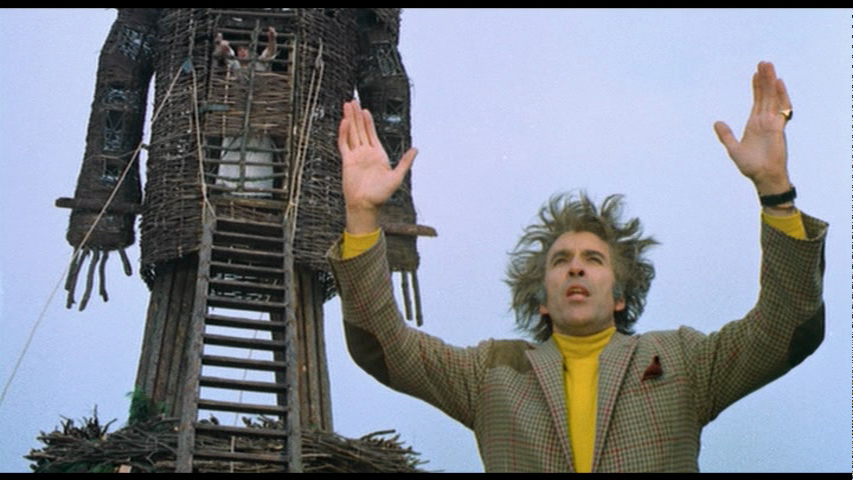
So while I’m waiting for enough royalties to afford seeing The Pope’s Exorcist, I’ll focus on my current book project.  Of course it’s on something completely different.  The Wicker Man should be coming out in September, but my mind will likely be elsewhere.  Those of restless intellect are condemned to wander, it seems.  Of course, I have Theofantastique to keep me busy.  There are other kindred spirits out there.  They don’t know the way to my website, I suspect, but I’m not alone in being excited about a new exorcist movie.  I’m not expecting anything to surpass The Exorcist, however.  Like The Wicker Man, The Exorcist turns fifty this year.  One guess which was the more popular film.  Given Crowe’s profile I’m surprised there hasn’t been more buzz about his new film.  Demons can be funny that way.


Actual Intelligence (AI)

“Creepy” is the word often used, even by the New York Times, regarding conversations with AI.  Artificial Intelligence gets much of its data from the internet and I like to think, that in my own small way, I contribute to its creepiness.  But, realistically, I know that people in general are inclined toward dark thoughts.  I don’t trust AI—actual intelligence comes from biological experience that includes emotions—which we don’t understand and therefore can’t emulate for mere circuitry—as well as rational thought.  AI engineers somehow think that some Spock-like approach to intelligence will lead to purely rational results.  In actual fact, nothing is purely rational since reason is a product of human minds and it’s influenced by—you guessed it—emotions.

There’s a kind of arrogance associated with human beings thinking they understand intelligence.  We can’t adequately define consciousness, and the jury’s still out on the “supernatural.”  AI is therefore, the result of cutting out a major swath of what it means to be a thinking human being, and then claiming it thinks just like us.  The results?  Disturbing.  Dark.  Creepy.  Those are the impressions of people who’ve had these conversations.  Logically, what makes something “dark”?  Absence of light, of course.  Disturbing?  That’s an emotion-laden word, isn’t it?  Creepy certainly is.  Those of us who wander around these concepts are perhaps better equipped to converse with that alien being we call AI.  And if it’s given a robot body we know that it’s time to get the heck out of Dodge.

I’m always amused when I see recommendations for me from various websites where I’ve shopped.  They have no idea why I’ve purchased various things and I know they watch me like a hawk.  And why do I buy the things I do, when I do?  I can’t always tell you that myself.  Maybe I’m feeling chilly and that pair of fingerless gloves I’ve been thinking about for months suddenly seems like a good idea.  Maybe because I’ve just paid off my credit card.  Maybe because it’s been cloudy too long.  Each of these stimuli bear emotional elements that weigh heavily on decision making.  How do you teach a computer to get a hunch?  What does AI intuit?  Does it dream of electronic sheep, and if so can it write a provocative book by that title?  Millions of years of biological evolution led to our very human, often very flawed brains.  They may not always be rational, but they can truly be a thing of beauty.  And they’re unable to be replicated.

Photo by Pierre Acobas on Unsplash

Glen Da

My current fascination with Ed Wood is, strangely, related to waking up too early.  I’ve tried for years to calibrate my schedule to more like a normal one—I’ve always been an early riser—but have had difficulty doing so.  Weekends at home, therefore, include afternoons when I’m always too sleepy to read, so I watch free movies.  I’d heard about Plan 9 from Outer Space for years before I finally watched it, and it was an epiphany.  Ed Wood, the hapless director, became posthumously famous for his poorly made films, and I’ve been catching as many of those as I can.  While Glen or Glenda wasn’t Wood’s first film, it is the one that kicked off his notoriety.  Considering that it was made in 1953 it is also way ahead of its time.  It is very cheaply made and contains what would eventually become many Wood hallmarks.

Ed Wood was a heterosexual transvestite.  Even today, some seventy years later, this is a category that often confuses hoi polloi.  That’s largely because sex and gender are often misunderstood as the same thing.  Gender is a societally ascribed role—men do this, women do that—based on often unconsidered stereotypes.  Today men dressing as women and vice versa is often played for laughs, or, if serious, is mistaken as an indicative sign of homosexuality.  Glen or Glenda is sometimes classified as a docudrama that attempts to explain this distinction.  Wood, who also stars in the movie, was an actual transvestite, something that wasn’t accepted in the button-down fifties.  After all, one command in the Bible prohibits cross-dressing (likely confusing it with assumed sexual behavior).

None of this makes Glen or Glenda a great movie.  Way ahead of its time, yes, but a strange mix of things nevertheless.  Star billing goes to Bela Lugosi, washed up by this point in his life.  His role as a scientist—often presented as “God”—is unclear.  The devil also appears in the movie, as do several vignettes, reportedly added by the producer, to make this more an exploitation film.  What comes through clearly is that this was a deeply personal film for Wood.  He was trying, as directors and authors often do, to explain himself to the world.  The most successful tend to do this with panache and style, and, let’s be honest, big budgets.  Hollywood, like the publishing industry, is unkind to those who don’t come with well-lined pockets.  It doesn’t mean that the rest of us don’t have stories to tell.  Ed Wood persisted in telling his and, as Glen or Glenda shows, being way ahead of the curve.


The Original

A dozen years ago, I had a novel under contract.  I write my fiction under a pseudonym, of course.  I was thrilled because I had never seen the conceit (in the sense of “concept”) anywhere before.  For once, I was going to be first in line.  But then the editor who’d responded “Loved it!” left the press.  After dithering for about a year, the publisher decided not to publish it.  This was a small, independent press—I wasn’t anticipating it would be a New York Times bestseller.  Then I saw a weekend add in the New York Times—just recently—touting a novel with the exact same concept as mine as “original” and worthy of being read.  Ironically, just the day before I had once again submitted my novel to an independent publisher.  I can’t blame the author, of course, but the system doesn’t work for everyone.

After the killing of my darling, I naturally tried to find another publisher.  I have been trying for twelve years.  I’ve been pushing the idea as original and of general interest.  Editors and agents disagreed about the “of general interest” part.  In fact, I’ve had rejections from nearly 100 literary agents over the years, one of them responding that I was a good writer but they couldn’t see where the story was going.  Maybe I didn’t handle it as well as this new book, with its glittering endorsements, but a guy likes to get credit for his work.  Now if it ever does get published I’ll be considered a copycat.  You see, my main driving force as a writer is originality.  My published stories are unlike others I’ve read and most of them go through multiple rounds of rejection before some editor “gets it.”

The publishing industry, however, is a strange one.  Most publishing houses want work that imitates bestsellers since they’re a known quantity.  Money in the bank (or what banks used to be).  The internet has changed that a bit, but not completely.  It does mean those skilled at such things as self-publishing can sometimes challenge the hegemony of the big five.  It also means a lot of sub-standard fare is out there as well.  I’m a little late establishing a literary reputation it seems.  Although being raised poor does qualify me as “diverse” it’s not in any way visible.  It is obvious if people get to know me because the poverty mentality never goes away.  So my novel has been waiting while the same idea occurred to someone else (not straight white male) and has received notice.  So I follow and hope to learn.


Book Writing

Not everyone wants to write a book.  A great number of people, however, do possess that desire.  Or that desire possesses them—that’s often more accurate.  For some it’s because they have ideas that feel compelled to share.  For others it’s the sense of accomplishment of having successfully strung together thousands of words and seen them encased between covers.  For still others it’s economic—books can be sold, and if done well, can become a living.  There are surely other reasons as well.  Since I read a lot, I frequently wonder about other authors’ motivations.  Often, I suspect, it’s because they underestimate how difficult it is to navigate this path to success.  You have to come up with an idea that is unfamiliar to your target readership—free advice: no book appeals to everybody—that has a hook that will make them want to read it.

I’ve read books where this hasn’t been thought through well.  Love them or hate them, this is what major publishing houses do well.  They figure out what likely will have appeal.  They make mistakes, of course.  Everyone does.  Still, they have a solid track record that makes them the hope of writers who have the burning need to, well, write.  One of the cases where this becomes an issue is where an author tries to be funny.  There is a lively market for humorous books, but if you’re trying to convey serious information but you find yourself cracking jokes along the way, you’re going to confuse, rather quickly, your readers.  What are you trying to do?  Make me laugh or teach me something new?  What should I prepare for when I pick up your book?

Don’t get me wrong—I clearly haven’t figured all of this out myself.  I do think that the combination of a doctorate (which teaches advanced research skills), and editorial work (which teaches how publishing works), should be a winning combination.  Ideally, anyway.  What I find is that it does make me approach books critically.  I look at the publisher.  I ask myself, what is this book trying to do?  You see, to read a book is to enter a relationship.  The book has an author.  That person is sharing what she or he has thought about.  By publishing it, they’re inviting you into intimate spaces.  That’s why I tend to be gentle in my book reviews.  I know the hunger.  I too feel compelled to write.  And if I don’t get the mix right, I would hope that any readers might, if they reflect on it, see that this is merely an awkward effort to begin a conversation.


Self Finding

I had occasion to peruse the Dictionary of American Family Names recently.  I realize that other people’s genealogy is generally boring, so I won’t provide the details, other than to say that “Wiggins” seems to be Breton in origin, way back when.  In any case, I checked my other ancestral names to find that they were either Germanic or unknown.  That made me feel a little special (an unusual feeling, to be sure).  I may be a mutt, but I’m a mutt with mysterious background.  Can you feel the mystique?  The thing about our origins is that they’re irresistible.  When I was still employed as an academic, one summer I was completely enthralled by the state archives in Madison and spent hours and hours researching—trying to figure out who I am retroactively.

This was before the need for horror films reasserted itself.  I was living the dream, employed in the profession for which I’d trained.  Or at least close enough.  At Nashotah House there was no real measure of academic productivity.  I was publishing at least an article a year and I had the draft of my second book written.  But who was it that had written that book?  What did I know about that person and where he’d come from?  My family names, at least until I get back to the inevitable Smith, are all pretty distinctive.  As a child “Wiggins” was a rare name, but it is the most common one from among my grandparents.  Perhaps all this Teutonic weight helps to explain my endless pondering.  Perhaps not.

Origins have always fascinated me.  The other day I was glancing over all the books on Darwin and Genesis that I had collected and read in those Nashotah House days.  Those were for the book that had never gotten written.  And names (and their origins) are all about identity.  Other people we meet want to know what we’re called.  Surnames, especially, convey quite a bit of information about us.  They might locate us geographically or ethnically.  It’s really a wonder that they’re not protected information.  Indeed, if you reveal too much genealogy online someone might be able to answer one of your security questions!  I suppose that’s another reason to keep your ancestry to yourself.  We do, however, take some of our cues for our identity from our names.  Family names aren’t generally chosen, except in cases of name changes.  And those can be tricky for those seeking to learn who they are.  Who am I? It depends on when you ask me.


Feeling Chilly?

David Cronenberg perhaps defies the tame image we tend to have of Canadians.  I know that’s a parochial thing to say, perhaps reflecting my lifelong admiration of those north of the border.  I even have Canadian family members, from back when it was possible to cross over without a passport.  In any case, David Cronenberg has always been a controversial director.  As the progenitor of “body horror,” his films are often not for the squeamish.  I nevertheless find him one of the more intellectual auteurs, and his movies leave me thoughtful.  One of his early films, Shivers, has long been on my syllabus of “must see movies.”  If you read my pieces regularly you also know that living on an Ed Wood budget, I can’t afford to pay for frequent films and have to wait for a free venue.  Thank you, Tubi, for obliging.

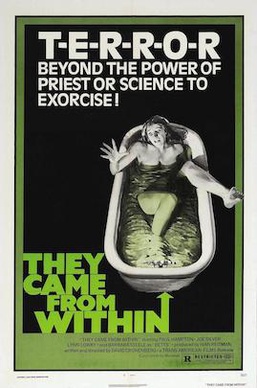
By the way, the poster here shows one of several alternative titles for the movie: “They Came from Within” (aka “The Parasite Murders”).  The film is pretty graphic body horror, but as scholars now focus on embodiment, it seems like this should be explored.  Set in an almost utopian island community, Starliner Towers, the movie opens by touting its perks.  Intercut with that is a graphic murder-suicide taking place within the paradisiacal apartment tower.  A parasite, as one of the alternative titles suggest, has been unleashed by what might be called a mad scientist.  And that parasite has two main effects—prompting orgies and violence.  (Hey, the official title of this blog is Sects and Violence in the Ancient World, after all.)

Religions, Christianity in particular, in the west, are often uncomfortable with the body.  In religious studies approaches to embodiment, it’s stressed that everyone has to reconcile themselves with what it means to be a physical being.  So much so that the mad scientist developed this parasite because he believed people thought too much.  They’d forgotten the mindless reality of bodies.  We’re sometimes uncomfortable being reminded of our bodily existence—at least those who perhaps think too much are—and that comes with both good and bad.  The interesting thing about the film is that it refuses to condemn the results of this experiment gone awry.  Everyone eventually falls victim to it (sorry if that’s a spoiler, but the film was released nearly half-a-century years ago).   Cronenberg is difficult to pin down, but his films, perhaps despite the message, always give me things to think about.


Hard to Say

There’s no easy way to say this, so I probably shouldn’t try at all.  Still, I feel compelled to.  You see, I’ve sat on admissions committees and I’ve written my fair share of letters of recommendation.  The former (admissions committees) have a difficult kind of calculus to compute.  Schools need students and their tuition money—this is, after all, the capitalist way.  (Yes, there are alternatives, but boards of trustees have severe deficits of imagination.)  Some schools get around this by being elitist.  Generally they have endowments of very old money and can weather all but the most severe of storms.  Such universities are in the minority and so the rest, and various small colleges, need to compromise from time to time.  Money or integrity?  You cannot serve both God and mammon.

At the graduate level this becomes even trickier.  Grad students bring in more money, and getting into grad school used to (and here’s the difficult part) require what some admissions folks secretly call “special intelligence.”  The paperwork and in-person interview reveal it clearly—this candidate (not always from a privileged background) displays a canniness that suggests they might really have a truly unusual ability to reason things out.  This is someone who should be admitted for advanced work.  But if you apply that principle not only will you be called “elitist,” you’ll also run out of lucre.  The solution is simply economic—let those who don’t have this kind of special intelligence in.  I have seen Ph.D.s after names from schools that I had no idea offered doctoral-level research.  And they legitimately call themselves “Doctor.”

When choosing a grad program—go ahead, call me elitist, but then interview me and see that it’s not true—I knew it had to be at a world-recognized research institution.  I ended up at Edinburgh, and my bubble was already deflated when I told family from western Pennsylvania and they supposed I was going to Edinboro College (now Edinboro University of Pennsylvania), located maybe 50 miles from where I grew up.  I had been accepted at Oxford and Cambridge, however, neither of them could offer scholarships to a penniless Yank, but the famously frugal Scots were far more generous.  And let’s face it, Scotland is more exotic than England.  You have to admit that much.  Of course, the deciding factor was, in my case, money.  You have to wonder if there’s any possible way of escaping it.  From all appearances, mammon wins.


Balance

Psych!  Yesterday was actually the vernal equinox.  And speaking of psychs, it was about the coldest morning jog I’ve had all winter.  (The equinox itself didn’t occur until 5:24 p.m., which is way it was the 20th instead of the 21st.  And I honestly can’t understand how that works since don’t you need 24 hours for night and day to be equal?  There’s a reason I went into the humanities.)  Interestingly, in the pagan Wheel of the Year, it was Ostara.  And the similarity of that title to Easter isn’t really coincidence.  (By the by, I discuss this to some extent in The Wicker Man, due out in September.)  Easter is, in essence, a spring holiday.  Ēostre, a germanic goddess of spring, seems to have been its namesake. 

First light comes suddenly, for those awake early enough to see it.  I keep a close eye on the diminishing darkness so that I can get out and jog in the twilight.  It will be too dusky to see and then suddenly it’s not.  Sunrise is like an epiphany each day.  From now on light will increase both morning and evening until the summer solstice, or Midsummer.  Between Ostara and Midsummer lies May Day, or, as it was also known, Beltane.  Beltane is the fuel behind The Wicker Man, or so I argue in my book.  Holidays are important.  More of them should be recognized.  If the pandemic taught us anything it’s that most of us probably work too hard.  At any rate, spring is now here.

The mornings are still below freezing, at least around here.  The winter never got very cold and we had very little snow.  Some would argue that it was more like an extended, chilly spring.  The light, however, was missing.  I spend a lot of time awake in the predawn hours.  There’s a stillness to that time that’s a daily gift.  Yesterday was a brief moment of balance.  Soon it will be time to start mowing the lawn and to do the endless weeding of summer.  Those will last until long after the other equinox, awaiting in September.  Climate change has assured us that the weather will be erratic, but the waxing and waning of the light is as old as the spinning of this weary planet.  We’ve entered the light half of the year.  Equinoxes remind us that balance is rare and should be appreciated when it arrives.  It’s worth making into a holiday once more.


Moments of Happiness

“When happiness shows up, give it a comfortable seat,” Fezziwig says.  I wonder just how much like old Ebenezer Scrooge I am—apart from the abundant money, of course.  This isn’t going where you expect, I promise you!  I don’t come across as a happy person.  I was forced out of my ideal career many years ago by Fundamentalists, and I struggle to keep my writing going.  That old rabbinic adage that you can’t be both wise and happy probably doesn’t help.  So I sit here worrying about the everyday cares and concerns of a sexagenarian (not as sexy as it sounds) and watching horror films to help me cope.  That doesn’t mean, however, that moments of happiness don’t appear.  When they do they shine bright and hot and shed enough light to help me make it to the next beacon that some thoughtful lamplighter has set ablaze.

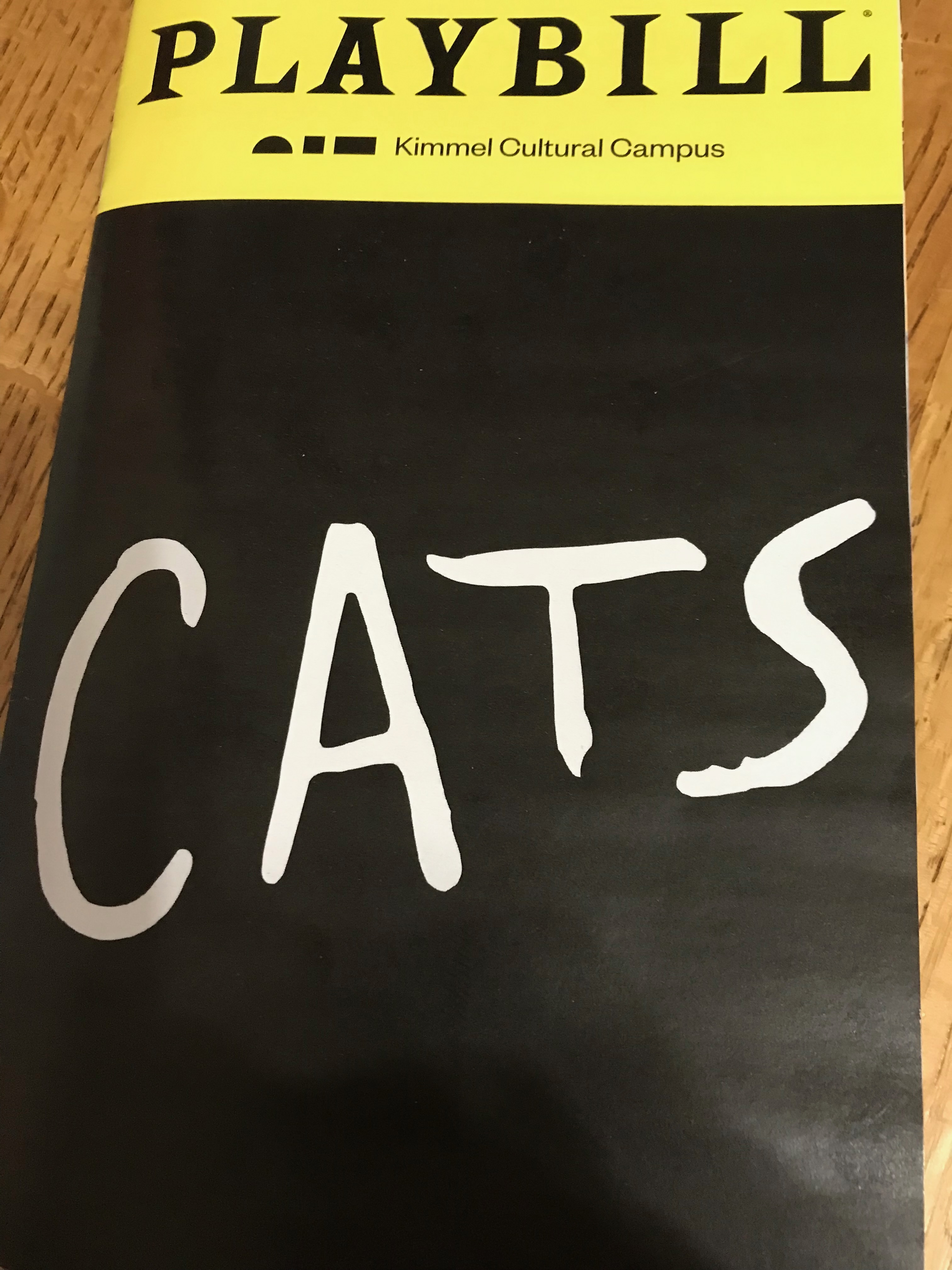
For a birthday gift, we gave a family member a trip to see Cats live in Philadelphia.  Everything about that day comes back to me through rose-tinted lenses.  The worry and stress of driving in Philly—I’ve done it a few times and it’s always nerve-wracking.  Finding the theater, negotiating parking, finding a place to accommodate a vegan, a vegetarian, and an omnivore for lunch.  Locating seats only to discover they’re further back than they looked on the schematic map, and then the lights dim and the music begins and you’re in a different world.  All the worry and fear melt away.  Happiness has appeared and you know she’s sitting right next to you.  Even with evening Philly traffic still looming ahead and a drive when I’m beginning to feel drowsy, I’ve had an experience almost of a religious nature.

It’s no wonder that many early evangelical Christian leaders warned about the theater.  Live performances reach that spiritual place that weekly Sunday services only wish they could.  Of course, it helps that Cats is my favorite show—I’ve seen it live five times over the years.  It’s a show about happiness and finding redemption.  I’ve written before about the religious undertones to the musical, but here I’m thinking about how the day after always has a special glow.  Yes, the quotidian worries are still there.  The attempts to grow wiser and stay solvent.  The difference is that something transcendent—all the more valuable for being rare—has happened.  It has shaken me out of my comfort zone and my daily routine.  And I can’t wait for happiness to come knocking again.


Sleepy Once More

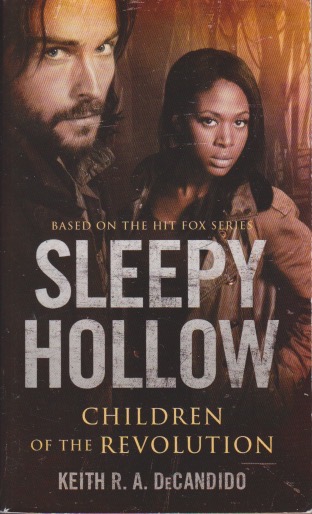
I think this is the last of my recent nostalgia reads for a while.  When trying to recapture the feeling of watching that first season of Sleepy Hollow without actually spending all the hours necessary to do so, the spin-off novels are a quick fix.  Keith R. A. DeCandido obviously has quite a bit of experience of writing novels that tie into pop culture.  Many of us were pretty enthralled and impressed in 2013 (already a decade ago!) when Sleepy Hollow first came on the air.  This literary member of what was an emerging new legend is a novelized episode that is slotted into season one, referring back to what had happened earlier in the season without betraying the cliff-hanger ending for the 2013–14 run. Sleepy Hollow: Children of the Revolution is a guilty pleasure read and a jaunt back to a decade that now seems long ago.

Here the story involves an attempt to resurrect (one of the main themes of the show) the witch Serilda of Abaddon.  Serilda had her own night in the moon earlier in the series (the episode “Blood Moon” was dedicated to her).  This novel asks, what if a coven of her followers, one of them a former policewoman, tried to bring her back?  It does so by using historical scenarios—much like the series—such as Washington’s crossing of the Delaware, and impregnating them with magical subtexts.  Here there are congressional awards that have been secretly engraved with runes.  George Washington knows about them, of course.  When brought together they can transform Serilda into a real monster.  Remember, Moloch was still an active concern in the first two seasons of the show.  In the present day, these artifacts have been regathered by the coven, and you can guess that all Hades will break loose.

I often ponder how, with the series Sleepy Hollow, the story began to fall apart when the Bible fell out of it.  It was in the process of tying together great American mythologies such as Irving, Revolutionary-Era history, and biblical self-identification.  These formed a compelling net that brought in many viewers.  Season one ended with two of the four horsemen of the Apocalypse in Sleepy Hollow, and a third had been nodded toward earlier in the series.  Instead of finishing out that line of thought, the storyline dispensed with Moloch and gave the headless horseman a head.  The plot ran out of steam.  Books like this demonstrate that there was other fertile ground to plow.  Had the original conceit kept intact, we might still be watching it.  Of course, novels like this are good for reliving those days a decade ago.


Wicker Man Comes

Not that I would know bodily, but it seems like a book being published is something like giving birth.  It takes several months (perhaps years, in the case of books) from conception to delivery and there are certain milestones along the way.  And you worry like Rosemary.  Has something gone wrong?  Is this still going to happen?  The book production process is a long and complicated one.  Just this week, however, the next recognizable stage occurred for The Wicker Man.  An ISBN has been assigned and a new book announcement has fed out through various channels.  It’s not on Amazon just yet but a Google search of 9781837643882 will bring it up.  I’d been worried about this because I saw a new book announced on The Wicker Man due out in October.  This is the fiftieth anniversary of the film, and I suspected I wasn’t the only one who’d noticed that.

Ironically, another film turns 50 this year.  The Exorcist released in December of 1973 to far greater acclaim than The Wicker Man.  Both films became classics in their own right, but The Exorcist would become a household name.  Even if they’d never seen it, most people had heard of it.  The Wicker Man is more of a cult classic.  It’s known among horror fans and a certain kind of Anglophile.  And those interested in paganism, particularly of the Celtic variety.  Although the cover isn’t available yet, I was glad to see the feed for my book going out.  It looks like I might scoop the other book by a month or so.  If that happens it will be the first time that I’ve actually had a book on horror release before Halloween.  The last two missed the deadline by a couple of months.

Having said that, if you’ve had your appointment with The Wicker Man you already know, it takes place on May Day.  And you likely know that a large number of people claim it isn’t a horror film at all.  Indeed, the horror element only becomes clear in the last ten minutes or so.  It’s the build-up that makes the movie.  And it was really a one-film wonder for the director, Robin Hardy.  He did other movies, but this was the one that lasted, and spawned imitations and parodies.  It’s exciting to see that the discriminating, or very persistent, searcher can now find the book announcement online.  I haven’t seen much to-do about the 50th anniversary just yet, but now when I do I’ll have something to point to.  More on this to come!


Old Library Books

There’s a quiet joy to it.  Even if they have other people’s markings in them, books I obtain ex libris are among my personal treasures.  They bring back memories of reading library books—learning new things.  For a fleeting moment when reading my current used, ex-library book, I was taken back to a night long ago.  The youth group at my local United Methodist Church had occasional sleepovers in the church itself.  Despite being a small town, folks were okay with mixed genders (with chaperones, of course) doing this.  We were even allowed to go into the sanctuary at night.  Churches are scary places in the dark.  We would sit there and talk about nothing in particular, the way teens do.  And I always brought a book.

On one sleepover I was working on a term paper on—don’t laugh—vampires.  I’d been researching with the limited resources of Oil City High School’s library, supplemented by the Oil City Public Library.  I still remember the exact book I took along.  Although awaking ultra-early only developed with me during my commuting years, I’ve always been an early riser.  (The early teen, or tween, years excepted.)  I remember waking up before everybody else, returning to the sanctuary, sitting in our usual pew, and reading about vampires by the light of dawn coming through the windows (which were only modestly stained with off-whites and yellows).  And feeling profoundly happy.  Friends were asleep downstairs and I was curled up with a library book.  What more could you ask?

Many such memories linger as I age.  But my current reading of a marked-up library book brought something else to mind.  Many such books have marks near the beginning that quickly peter out.  As if most readers never made it past the introduction.  I’ve stopped reading a book or two in my time, but generally I need to get past page 10 or 20 before I’m willing to make that call.  I often find that a book’s introduction is one of the best parts—especially in academic books.  Authors try to draw you in with intriguing ideas and then, at least in my field, get technical once you reach chapter 1.  Honeymoon’s over.  The mind of the person, however, who marks up a library book and then suddenly stops intrigues me.  Perhaps I’m just feeling nostalgic this morning, but reading a withdrawn library book, with its soft pages and old book smell, is one of life’s great gifts.  Even if it’s not about vampires.