A Presence

Presence is a fairly new movie, for me anyway.  I was able to stream it at the price of commercials, so I gave it a chance.  It was provocative and to discuss it I’ll probably need to reveal the ending.  For now, however, I’ll just say it’s a ghost story from the point of view of the ghost.  It reminded me of A Ghost Story, which I also saw shortly after it was released.  Both are melancholy and explore the dilemma of a ghost having to watch as time passes.  In the case of Presence, however, it is a future ghost.  As I say, more will be given away, so be advised.  The movie is about a family of four buying a very nice house in Cranford, New Jersey.  Well, it doesn’t say Cranford, but that’s where it was filmed.  The parents, who have a bit of a troubled relationship, have a teenage son and daughter.  The daughter’s close friend has recently died and they’ve moved, in part, to try to shake her out of it.
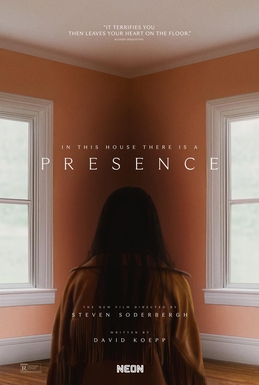
We watch from the ghost’s point of view as the realtor shows them the house, the painters get it ready, and they move in.  The daughter, Chloe, is having trouble adjusting and the presence lingers about her room.  It’s obviously concerned about her.  Chloe sometimes senses it.  When Tyler, her brother, brings a friend over the friend starts to show an interest in Chloe.  The presence tries to intervene to prevent him from taking advantage of her.  When the friend drugs her, intending to kill her (as he did her friend earlier, which, of course, she doesn’t know), the ghost rouses her brother who saves her by tackling his friend out the window, killing them both.  As the family is about to move again, the mother sees in a mirror that the presence is Tyler, their son.  He was protecting Chloe, as a future ghost.

I found it an engaging film.  Sibling rivalry—the parents play favorites with the opposite gender children—and Tyler’s often harsh dismissal of his sister’s grief, dominates their family life.  The fact that Tyler is the presence protecting his sister even when, in real time, they don’t get along, is a form of redemption.  That brief reveal at the end is what makes the movie.  Is it horror?  It has a ghost and there are moments of considerable tension.  As I’ve argued from time to time, horror isn’t a precise genre at all.  I found this listed as horror in a streaming service and although jump startles and visible monsters aren’t evident, the affective aspect is clearly there.  Yes, in my opinion, it’s horror. And it’s well done.


Secrets

It’s a mystery.  All parents do it and even when you’re a parent yourself you’re surprised to find your parents doing it to you.  Keeping secrets, that is.  Parents have their secret lives that they don’t tell their children, and when we’re given a glimpse into that life sometimes we’re shocked.  My mother kept a diary.  Not religiously, and not for much of her life.  I inherited one volume, and I’m afraid to read it.  I tend to be an honest guy.  I try to answer my daughter’s questions with complete openness.  There are, however, some things I won’t talk about.  My secrets.  And despite the fact that I reveal something of myself daily on this blog, I do have many parts of my life that remain unrevealed.  Those of us who write sometimes don’t want everything we put down to be read.  Or maybe we do.

I used to keep a diary.  It was partially to remind me but also, in part, to explain myself.  It’s quite personal and I lost maybe two or three volumes of it years ago.  I stopped keeping it after I got married.  I guess I figured a Ph.D. and publication record would do the job for me.  Probably those missing volumes were with stuff left at home that Mom unwittingly threw away, like our old baseball cards from the early seventies.  Some of my stuff got damaged by water, foreshadowing what’d happen when we moved.  Perhaps they were thrown away then.  They had secrets, I’m sure.  Our private lives are a mystery to others.  That’s one reason that I try to be kind whenever possible.  We don’t know the burdens that others carry.  Why add to them by a sharp reply?  Even typing this, I’m not sure it will end up on the blog or not.  Other pieces haven’t.  Secrets.

Photo by Yogesh Pedamkar on Unsplash

Some intelligent animals try to hide things.  Corvids, for example, look around to see who else is there before hiding food.  I once saw a doe giving birth.  She was in a secluded glen in the early morning and I just happened to be jogging quietly by.  I’ve started multiple autobiographies.  I’m not sure anyone has an interest in reading them, but I have hope.  Despite my secrets, most of which I keep out of the autobiographical musings, I know I have a story to tell.  That’s why I keep at this blog, day after day, year after year.  It brings no money and has only a few followers, but it’s a chance to tell my story.  Even if I keep the secrets closely guarded.


Dark History

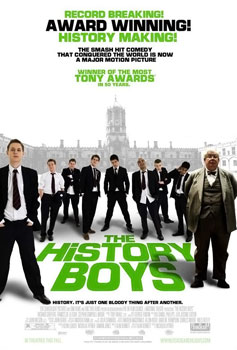
I wouldn’t have watched The History Boys had my current interest in dark academia not emerged.  A comedy-drama based on a play by Alan Bennett, it’s set in a British boys’ school where the seniors who’ve made record-breaking A-levels, are set to try to get into Oxford and Cambridge.  The movie revolves around two teachers, “Hector,” who is unorthodox but full of humanistic spirit and Irwin, who urges the boys to stand out in originality, even if it means bending the truth, or outright lying.  The darkness, although played lightly, is that Hector gropes the boys.  This has led to some criticism of the film since Hector is presented in a positive light.  Bennett, who also wrote the screenplay, pointed out that the “boys” are actually consenting age, and know that Hector does nothing more than fondle them when fully clothed.  This hasn’t protected the film from the furor of those who find the idea offensive.

Beside the divergent approaches of Hector and Irwin’s completely opposite angles, although understated, remains the middle voice of Mrs. Lintott, the history teacher.  She does make the point as the boys prep for their entrance exams, that women have been silenced in history and they should never forget this.  The Cutler’s Grammar School boys all win entry to Oxford, and the movie ends by each of them saying what has become of them.  There’s really too much going on in the movie to chase down every plot line.  For example, the very religious physical education instructor’s story.  He’s brought up short while using Jesus to urge the boys on when one of his students is Jewish and another Muslim.  Of course, school life is all-encompassing, and vignettes are the most that movies might offer.

The History Boys is a film that would bear rewatching for the words alone.  Since the movie is based on a play and the playwright wrote the script, it is naturally very well written.  The dialogue contains many potentially quotable bits.  Dark academia tends to be that way.  At least some of it is.  Often set in educational locations, it recalls how we came to understand our world.  It really is a fraught journey.  Here the coda showing what happened to the boys is a reminder that our fates choose us rather than the other way around.  And that’s what dark academia explores—we may set out to do one thing, becoming an expert, only to find ourselves scratching out a living doing something else.  I know I’d see this again, to continue my own education.


Fragments Etc.

I’ve never counted, but there’s well over a hundred of them.  And a notebook with at least a thousand more.  What have I got in such abundance?  Ideas for stories that remain unfinished.  I’m not exaggerating or inflating numbers, I assure you.  I’ve been writing short stories for a half-century now, many, no, most unfinished.  Thirty-three have been published.  I was reminded of this recently while reading a nonfiction book that suddenly gave me the ending for a story I’d started many months before.  Perhaps even a couple of years.  I started searching through my electronic files for it and couldn’t find it.  Why?  There were too many stories started with frustratingly short titles (my bad).  To find the culprit, I would need to open each one and remind myself what was inside.

A few months ago, I printed out copies of all eight of my unpublished novels.  I also printed out copies of all my published stories as well.  I never got around to the unfinished majority.  I have a feeling that if I printed them I’d find what I was looking for more easily.  This, even with the ease of electronic life, will be quite an undertaking.  I think it may be a necessary one.  Although I’m hardly well known—I’m an obscure, private intellectual, after all—I do have many fiction ideas.  The stories generally come to me with an impression.  The start of an intriguing tale, for instance, or the end of one.  I then begin writing and either write myself into a corner or I scribble until I realize that I don’t know what happens next.  The story sits, unfinished.  Now and again, however, the missing piece is found.  I try to find the story so I can complete it to send out for several rejections.  Such is the writing life.

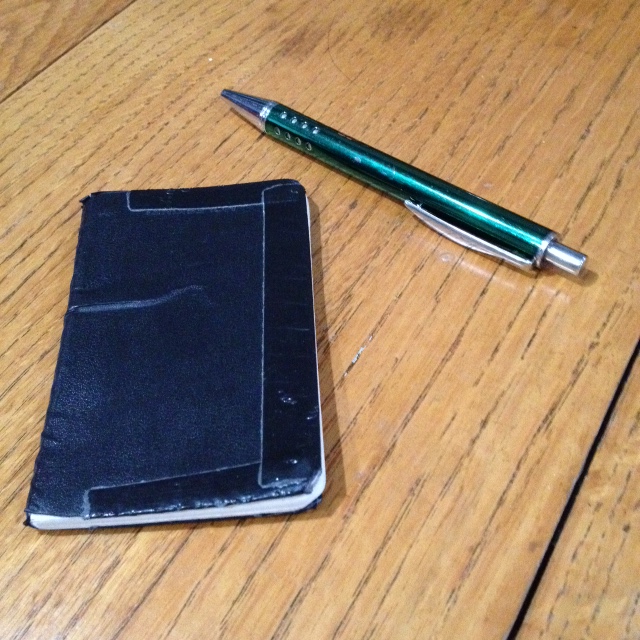
Now, if I could do this for more than the paltry time allotted to personal pursuits, courtesy of capitalism, I’m confident that I’d have far more than thirty-something stories published.  At current count I have seventeen stories ready to send out to literary magazines, several of them already rejected a time or two.  Another twenty finished and nearly ready to send out.  And forty just finished, but requiring a bit of spit and polish.  And these aren’t the fragments.  Don’t get me started on the nearing 6,000 posts on this blog.  Is it any wonder I can’t find anything?  I grabbed my notebook of a thousand fragments and jotted a physical note of how that particular story ends, in case I ever find it again.


More Curtis

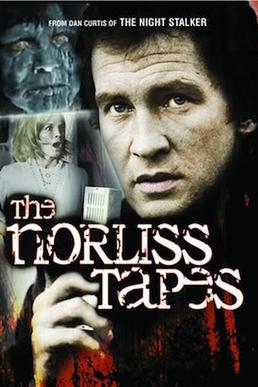
Dan Curtis was the mind behind Dark Shadows, an important part of my childhood.  Reading about his work in film and television, I learned that he produced a lot more than Barnabas Collins, and was an influence in horror in his own right.  A friend recommended that I find The Norliss Tapes, which I did.  This made for television movie was cut from the same cloth as The Night Stalker, which Curtis also produced.  The ending of the movie makes clear that The Norliss Tapes was a pilot for an intended series that never materialized and is a good representation of religion and horror, which is likely why it was recommended to me.  Here’s the story.   David Norliss was given a large advance by a publisher to write a book debunking the supernatural.  Before he can, he goes missing, leaving behind a set of tapes explaining what happened.  The first tape is the pilot episode.

Norliss is contacted by Ellen Sterns Cort, a widow who claims to have had a supernatural episode.  Upon following her dog to her late husband’s studio one night, she encounters her undead husband.  She shoots him, but the police can find no evidence of any body.  It’s revealed that he purchased an occult scarab ring that permits him to return to life to raise a demon who will, in turn, bring him back to real life.  To get the raw materials he needs (such as blood) he has to kill a few people and this again alerts the authorities but they insist on covering it all up.  Removing the ring from his finger will stop him, but that’s easier said than done.  At the end the demon is stopped but this is just the end of the first tape.  His publisher starts to play the second tape.

Dan Curtis productions have a certain feel to them.  I’m not sure how directors and producers do that—I’m not sure of all the tools they have in their box.  What is obvious is that watching The Norliss Tapes brings back echoes of Dark Shadows.  That’s not surprising since Dark Shadows wound down just two years before the Norliss Tapes came out.  The Night Stalker was sandwiched between them, but Kolchak: The Night Stalker was not a Curtis production and doesn’t have a Curtis feel to it.  Even though I’d never seen Norliss before, it was nostalgic watching the movie for the first time.  There’s a trick to it, I just don’t know what it is.


Disney Dark

I write a fair bit about dark academia, but one of the strangest higher education events in my life was when the American Academy of Religion and Society of Biblical Literature held their annual meeting in Orlando.  At Disney World.  Seeing the world’s top academics in the field against a backdrop of Snow White, or whatever, was surreal, expensive, and just a bit off.  I guess others felt that way too, because the conference never returned.  I have never had a desire to visit any Disney theme parks.  It is something that simply has no appeal to me.  As much as I appreciate fantasy in my reading and movie watching, in real life I prefer to visit places with home-grown authenticity.  At the same time, I realize many people adore Disney attractions.  (I just can’t get over why you’d want to visit a manufactured Main Street when there’s a real one not terribly far away.)

The Dark Side of Disney by Leonard Kinsey is one of those books that grew out of a blog.  Believe me, I’ve been tempted more than a time or two to pirate my own work here to try to make something that people would pay to buy.  In any case, Kinsey is a Disney fan.  Growing up poor, I was never accustomed to summer vacations.  One year we made a memorable trip to Washington, DC.  I didn’t realize it then, but that was where my grandmother, who lived with us, had been born.  I remember aspects of that trip and realize that it was my model of what a vacation was meant to be.  Kinsey grew up not far from Disney World and with a mother with a bit more free cash than mine.  This book is his exposé of the less-expected aspects of Disney.  Not only an exposé, but a “how to.”

I do understand the desire to be a “bad boy”—I suspect most of us do (chose your gender-appropriate nouns, of course).  The thing is, I’m not a rule-breaker.  Realizing that the guardrails in life are generally set up to help people, as much as I’m curious about what goes on behind the scenes, I prefer legal means of finding information.  I’m no fan of large corporations, but if they set the rules (you have to pay to get in, and once you’re here agree to uphold the illusion) then that’s the right thing to do.  In my opinion.  Then again, when you’re with a bunch of academics of religious studies there’s a limited amount of trouble to be had.  Unless you read about dark academia.


That’s Odd

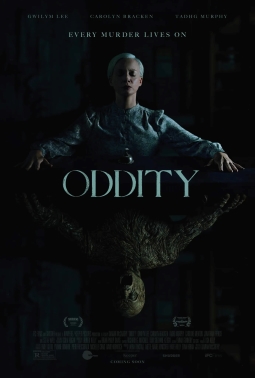
Some vaccines just wipe me out.  The shingles vaccine did it, and so did the pneumonia one.  It was bad enough that I had to take the next day off work.  One benefit of such things is being able to watch movies during the day, when you can stay awake.  The downside, as always, is affording them.  A bit fuzzy-headed, I selected one not on my list (which seems only to consist of expensive movies—I wonder why?) and found a very good one streaming on a subscription service I use.  From Ireland, Oddity is Euro-horror.  And it is distinctly creepy and, perhaps because of my state, made me literally jump once or twice.  (My usual, critical headspace scans for jump-startles on a regular basis, but this one caught me.)  A doctor in an asylum for the criminally insane is on the phone with his wife.  She’s alone at their secluded country house when one of his patients shows up and tells her someone crept into the house while she was at the car.  You don’t know whether to believe him or if someone is locked in with her.  She doesn’t survive the night.

Her identical twin sister, who is blind, runs an antique shop called Oddities.  The doctor has found a new girlfriend and she suspects that his wife’s (her sister’s) death wasn’t accidental.  She sends an oddity in the form of a wooden man, essentially a goy golem, to the house before showing up herself.  Much of the creepiness comes from that life-size figure sitting at the dining table in a shadowy room.  As the plot unfurls, it becomes clear that the husband had met his new girlfriend prior to his wife’s death.  His patient wasn’t her killer, but his orderly was.  Justice only comes when the golem comes to life.  Even so, the doctor gets away with it.  The sister, who is also murdered, sent the doctor another oddity from her shop before expiring.

Much of the movie takes its energy from the utter skepticism of the doctor—he presents himself as completely rational, not believing in anything supernatural—and the clearly paranormal events taking place around the oddities.  Also, the rational doctor is very immoral, preferring murder to telling the truth.  The sister, however, is concerned for justice and the supernatural is on her side.  This makes for a very creepy, compelling film.  I’ve been impressed by much of the Euro-horror that I’ve seen over the last several years.  This one is going into my personal cabinet of curiosities.


Knock-on

When you’re the victim of a scam, the loss of all your money is only the beginning of your problems.  Scammers take away the simple pleasures you’ve afforded yourself.  Your mental security.  Your very sense of balance.  If you have to close your bank account, you’ll need to telephone (sometimes repeatedly) any company with which you have autopay.  You’ll receive threatening notices in the mail that make the rise in your blood pressure audible.   It should come as no surprise to my readers that I’m a Neo-Luddite.  I’m not sure the internet is a good thing and technology has made much of life more difficult.  At the same time, I’m conflicted because I know we have it easier than the vast majority of humans who’ve ever lived.  But still.  

The scammers took control of my laptop, which is not a spring chicken.  I had to have this old rooster scrubbed, which meant all the little fixes that allowed my device to use a very old printer and scanner were also scrubbed.  Now, visiting the websites of the printer and scanner makers, they no longer provide drivers for such ancient devices, so not only do these scamming parasites leave you with muzak earworms but with now useless electronics that have to be replaced.  And no money to do it.  We’ve managed to live for nearing two decades without having to buy a new printer or scanner.  Both work fine.  Now they’re useless because their makers no longer supply drivers and I’m once-burnt-thrice-shy about shady websites that tell you to download such things.  Meanwhile some undeserving soul is using my money to fund an operation to scam even more people out of their legitimately earned money. 

Please pardon my vitriol. Perhaps it’s my fault for thinking the best of people.  I try not to classify anyone as evil, but it’s getting more difficult not to.  After an identity theft there’s a ton of paperwork; things need to be scanned and printed.  Only, oh, yeah, I can’t do that anymore.   I’m very well aware that others have bad circumstances too.  Even worse.  I’m trying to recall Viktor Frankl’s maxim of finding meaning in suffering.  I’m attempting, very hard, to apply it now.  Thank you, dear readers, for being my therapists for this short while.  I do hope that I provide enough provocative content, not focused on my woes, that will reward your reading.  Okay, I’m done venting now.  Back to the usual kind of horror that occupies this blog.  Tomorrow’s post will be about an actual horror film.  I wouldn’t scam you.


Being a Fan

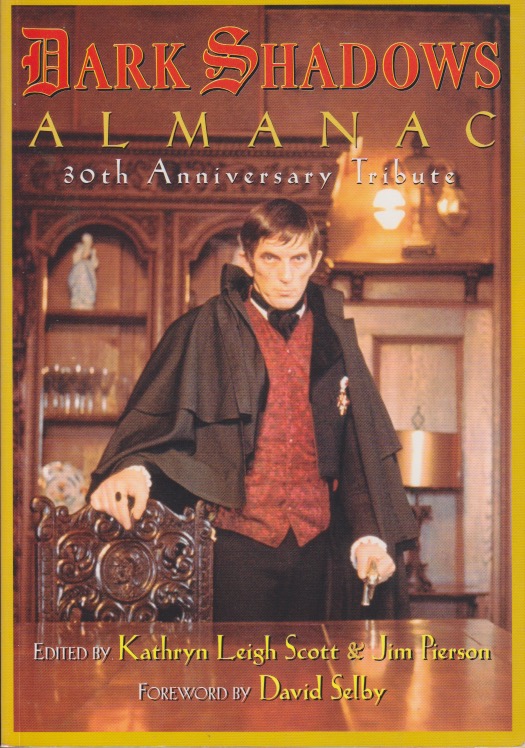
Fandom is a weird thing with me.  Having wide-ranging interests, coupled with an at times obsessive personality, my likes are intense but fall short of the kind of fan who purchases everything associated with their fascination.  A friend kindly sent me the Dark Shadows Almanac, edited by Kathryn Leigh Scott and Jim Pierson.  I try my best to read books friends  send me, and working my way through the Almanac, I realized just how far short of real fandom I fall.  Dark Shadows was likely my gateway to horror.  Watching it after school is one of my early memories.  But I was quite young at the time and beyond Barnabas, Quentin, the wonderfully gothic house, and the opening music and waves crashing into the rocks, specifics didn’t last.  Dark Shadows was one of the earliest fan-congregating shows.  Before Comic-Con, there were Dark Shadows conferences.  Kids eagerly bought all things Barnabas related.

I was about seven when the show hit its zenith.  I do remember watching it, and the wonderful, creepy feeling it gave me.  As a child I couldn’t have named any of the actors.  A lot was happening in my life at the time.  My mother was divorcing my alcoholic father.  My grandmother, who lived with us, lay bed-ridden and dying in what had been our dining room.  We lived in a run-down old apartment with very little money.  Heavy stuff for a kid.  And television also offered funny shows in the evening.  And Saturday morning cartoons (which included, yes, Scooby-Doo). I’ve always been amazed at just how much stuff there is in the world and I yearn to understand it deeply.  It was probably pretty much fore-ordained that I would try to be a professor.

Reading the Almanac not only reinforced how influential the series was, it also made me aware of just how complicated producing a television show is.  Many, many people are involved, specialists in artistic and technical fields.  Most of them make modest livings with, if they’re lucky, mentions in the credits.  The stars we know.  I think, for me, Barnabas Collins was a father stand-in.  What I noticed, even as a child, was that he was sad.  A certain type of person is drawn to sad individuals.  I always want to cheer them up because I know how it feels.  This is the part of me that wanted to be a minister.  I tried that a number of times but it never worked out either.  Reading an almanac like this isn’t really a deep intellectual exercise, but it is a learning experience.  And one of the things we might learn about is ourselves, whether a true fanatic or not.


One of Those Days

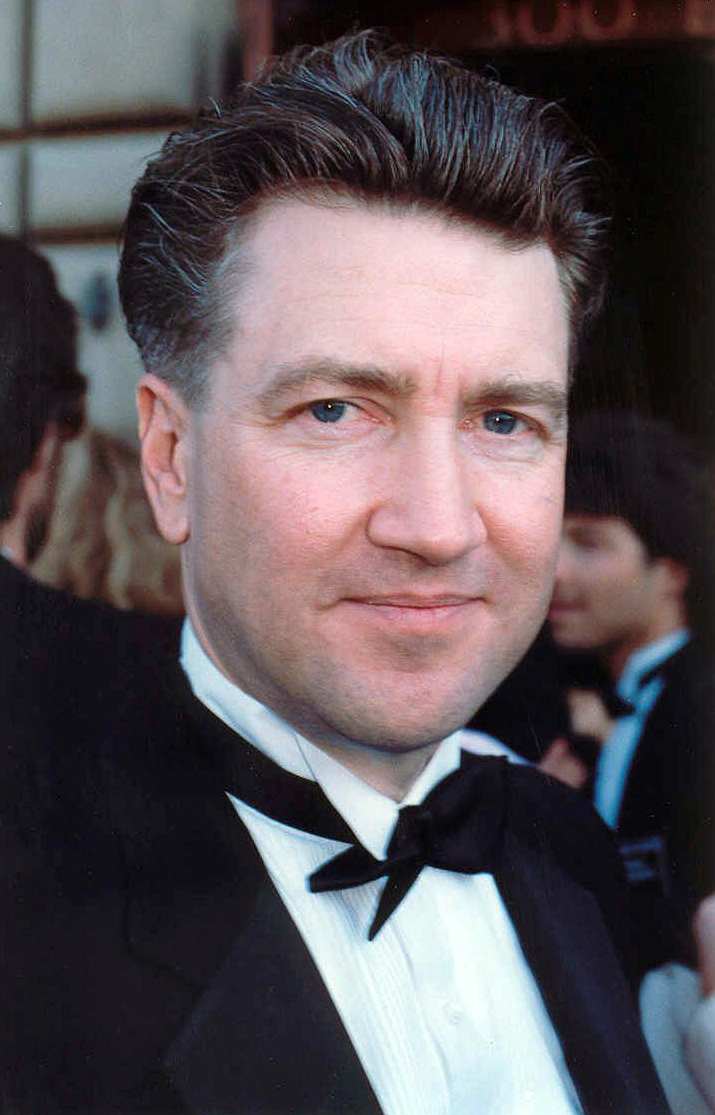
I recently lived a day directed by David Lynch.  Or at least it felt like it.  While I’m not at liberty to discuss the details, I can say it was a surreal experience that left me questioning everything.  Ever have one of those days?  It happened smack in the middle of work, forcing me to take an emergency personal day, if there is such a thing.  I’ve self-identified as an existentialist for many, many years—that may be changing in the light of Frankl—and the part I most identified with was the absurd.  It became clear to me, starting at least in seminary, how absurd my life was.  Strange things happen to me.  Always have.  I had a weird childhood and it hasn’t become any more normal since then.  Even so, some days are brought to you by David Lynch.

When I proposed to my wife, I told her that I couldn’t promise her much (I was functionally unemployed at the time, but applying for Ph.D. Programs) but that our life together would be interesting.  I doubt she would argue the point now, some 36 years later.  Even in a life defined by the odd—let’s use the existentialist word—absurd, some days stand out.  Days when, as Bruce Springsteen might say, you’re toppled over by “things you don’t even see coming.”  This particular day it was the direct consequence of the internet, our electronic metaverse, to borrow a term from Neal Stephenson.  The older I get the more I wonder if the blessing of constant connectedness is more a curse in disguise.  For thousands of years society got along without it.  Yet, as with most devils, there are definite advantages to dancing.

The next morning I saw a great horned owl while out jogging.  I know owls are difficult to spot and I’ve read enough about screen memories to make me wonder if something truly cosmic was going down.  I’d only seen one great horned owl before, and that was while jogging at Nashotah House.  I have been pondering my David Lynch day.  It actually grew into several days in which I felt completely out of control of my own life.  And the pneumonia vaccine didn’t help, donating a restless night and fuzzy head.  Some people, it seems, are magnets for the odd.  We don’t ask for it—it simply happens to us and we have to figure out how to respond.  Recognizing the absurdity may be a good start, right, Mr. Lynch?

Image credit: Alan Light, under the Creative Commons Attribution 2.0 Generic license, via Wikimedia Commons

That Night

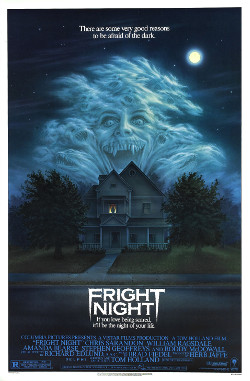
I’m pretty sure I’ve seen Fright Night before.  It seems that it may have been on one of those trans-Atlantic flights where you exit the plane not quite sure what took place during those missing hours on earth.  I do recall that I had the hazy idea I wanted to see the movie under more controlled circumstances—with my feet on the ground and no pressurized cabin anywhere in sight.  It is certainly a passable vampire movie.  Tom Holland’s first as director.  Ironically, just the weekend before I’d had a hankering and rewatched Child’s Play, which he directed a few years after Fright Night.  I hadn’t realized they had the same director.  In any case, since the movie is now forty years old I’m not going to worry too much about spoilers.  Besides, I’d forgotten most of it since my last viewing, which was thirty or fewer years ago.

Copyright HAG ©2008

Charley Brewster and his mother live next door to a fixer-upper.  Charley, who’s a fan of the campy television show Fright Night, keeps getting distracted from his girlfriend Amy by goings on next door.  He immediately and correctly deduces that their new neighbor, Jerry Dandrige, is a vampire.  But nobody believes him, not even Amy.  As a teenager, he’s rather helpless and can’t take on the vampire alone.  When Amy sees their friend “Evil” has been transformed, she believes and eventually the unemployed star of Fright Night, Peter Vincent, styled “the vampire killer,” also joins them.  They have to stop Dendrige before Amy ends up a vampire forever.  There are a few good frights and the story still feels rather fresh.  The weird thing, it seemed to me, was the long, lingering reaction shots of Vincent (Roddy McDowall).  The pacing felt a bit off, but otherwise it was a fine movie.

The name Peter Vincent combines the two stars Holland wanted for the role, Peter Cushing or Vincent Price.  The campy performance of this character balances the body count and gore.  Although it involves teens, it landed an R rating, almost considered necessary for any serious horror movie.  The movie poster also makes it look like this might be more comedic than it is.  It has a distinctly 1980s horror film feel to it.  Now this is going to make me feel old, but I’m starting to be able to discern the differences between seventies and eighties horror films by remembering what those decades were like.  I don’t know when I saw Fright Night before, but I’m glad I saw it again.  And I’m keeping an eye on the neighbors, just in case.


Missing Books

I’ve written before about what we call “the flood.”  Just over seven years ago, we moved into our house.  The movers, complaining every inch of the way, lamented the number of boxes and the lateness of the hour.  Since their truck was just outside our garage, we told them that they could stack about 100 of the boxes in there and we’d haul them to the house ourselves.  This they did.  Torrential rains came a day or two later but being new to the house we didn’t realize the garage flooded in heavy rain.  Many, many books were ruined.  I started a list but haven’t had the time or heart to finish it.  Insurance didn’t cover it and most of the books were never replaced.  That’s not what I’m writing about, though.  I am writing about other missing books.  Often associated with moving.  And perhaps proof of an alternate universe.

I’ve moved a lot in my life, and if you know anything at all about me you know that I’m careful with books.  I never leave any behind.  And yet… yet some manage to disappear.  The first one I recall was my personally annotated copy of Nietzsche’s Thus Spake Zarathustra.  It disappeared between Boston and Ann Arbor, Michigan, when, no exaggeration, all of my worldly goods fit into the back of a rental car.  I unpacked, wondering where it’d gone.  Then moving back to the United States from Edinburgh, our annotated copy of Historic Scotland, the booklet describing all their sites, in which we’d written notes from when we visited, was gone.  Moving from Somerville, New Jersey to our current house, Godwired, by Rachel Wagner, disappeared.  Also, a new translation of The Odyssey that I’d received at work.

Now on this latest move there was nothing left in our Somerville apartment.  And despite the griping movers, there were no boxes left in the truck.  Every box has been opened and sorted and yet, Godwired and The Odyssey aren’t here.  The other day I was looking for Wilkie Collins’ The Woman in White.  I’m pretty sure it was lost in the flood (but it’s not on my list).  I distinctly remember buying it at a used bookstore to replace the one I purchased at Watchung Booksellers in New Jersey.  And it is not here.  I keep careful track of my books, and if one goes missing it’s like the parable of the lost sheep.  I can’t rest until I find it.  None of this helps me if there is an alternate universe that’s sucking select books every now and again.  If so, I’m sure it’s got one of the most amazing libraries in the multiverse.


Eyes Have It

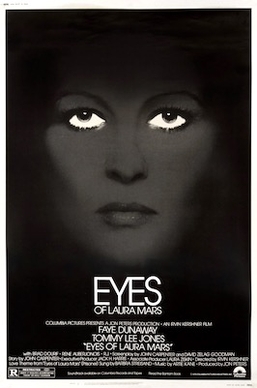
Seeing things from another person’s eyes is perhaps the most important social trait our species has.  We can empathize because we see someone else’s suffering.  It’s a shame to see this breaking down in real time.  Nevertheless, in the case of Laura Mars it may have saved her life.  The Eyes of Laura Mars is a psychological horror film about a controversial photographer (Mars), who suddenly sees things through the eyes of a killer.  The movie is a whodunit, keeping viewers guessing who it is that’s stabbing the eyes out of those Laura works with and cares about.  It’s not a great movie, despite the fact that it was written by John Carpenter.  Both this film and Carpenter’s Halloween were released in 1978.  Eyes is often considered a photo-slasher and Halloween was, of course, a full-blown slasher.  The former was Carpenter’s first major motion picture, while the latter was his first as director.

Screenshot

I’m about to spoil the ending, I fear, so please be warned.  Before I do, however, I will say that the film isn’t bad, even if it isn’t that good.  I had guessed the villain reasonably in advance of the reveal, but the movie did keep me second-guessing my conclusions.  The speculative element of Mars’ ability makes this a supernatural horror film, but one which seems relatively believable.  And the Bible is quoted in it, making it eligible for a Holy Sequel.  The characters—a high society artist and a New York City cop—aren’t terribly religious, but John Neville, the detective, moralizes about Mars’ work at a publicity event.  Okay, so here comes the spoiler.

After floating several possible murderers—a couple members of Mars’ crew are hinted at, as is her ex-husband—it turns out that the detective has dissociative identity disorder and although he and Laura have fallen in love, the moralizing part of his personality is a killer.  He provides Laura with a gun and tells her to shoot the man who comes after her.  When he finally does, he begs her to do it.  The twist ending, at this remove from the original, may be guessed ahead of time, but there is still quite a lot of tension in the story.  The murderer falling in love with his intended victim is a reversal of the more common lover-turned-murderer trope.  It’s not a bad freshman try on the part of John Carpenter, but when his directorial debut came out two months later, his ability in the horror genre was more fully in view.


Ancient Asherah

It seems like ancient history.  Actually, it is ancient history.  Ancient history with a new angle.  A Reassessment of Asherah is finally available in paperback.  Although my research has moved in a different direction, an author cares for all of their books and Asherah is my firstborn.  My doctoral dissertation originally, what separates it from many proposals I now see as an editor, is that it has a broad topic and some native sense of writing.  I have always eschewed technical jargon.  Academese obfuscates.  And is boring to read.  In any case, being young and naive, at the instruction of one of my doctoral supervisors, I sent it to the distinguished series AOAT (Alter Orient und Altes Testament), published in Germany.  It came out as an expensive hardcover and sold through its only print run.

Years later, evicted from academia, I found a foothold in publishing at Gorgias Press.  The owner of the press did something that even Eisenbrauns couldn’t, he talked what was then Ugarit Verlag into granting Gorgias the rights to republish my out-of-print book.  But he decided to do it in hardcover, so it was still too expensive for most potential readers.  Also, to make this a proper second edition, I added all of the articles I’d written about Asherah as well as the original text of the AOAT version.  If I recall correctly, it sold pretty well for Gorgias.  I moved on to other things.  Weathering the Psalms had been written before my career malfunction, but publishing that made me realize I could still write expensive books with low sales.

Four books further along, all on aspects of horror, a friend did the impossible.  He talked Gorgias Press into publishing a paperback of A Reassessment of Asherah, without my prompting.  For the first time in the thirty-plus years that the book has been available, it is now “individually priced.”  Please keep in mind, though, before emptying out your bank account, that “individually priced” here is still in the academic realm.  It seems the minimum price for books in this category is around $40, which is a bit steep for most of us.  But still, it is a new thing in the academic world.  I do hope that someone more persuasive than me might talk to Bloomsbury about a paperback of Nightmares with the Bible.  That has been, as far as I can tell, the poorest performing of all my expensive books.  It’s also the one that, I suspect, would have some individual readers.


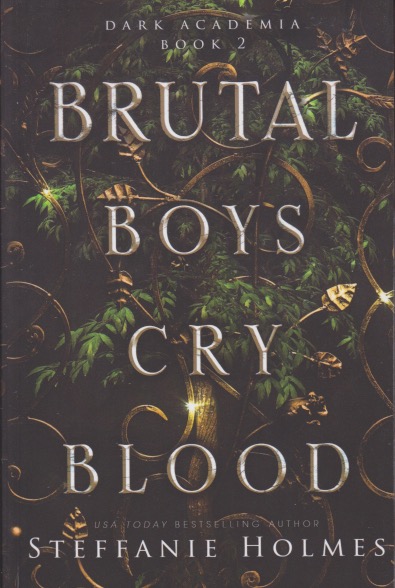
Brutal Boys

Some time back I posted about Steffanie HolmesPretty Girls Make Graves.  It was a first book in a duology and since I’d been trying to keep up with dark academia, it was a recommended exemplar.  As I mentioned in that post, the book ends with a cliffhanger, so I got to Brutal Boys Cry Blood as quickly as I could.  Holmes is a prolific self-publishing author and I found Pretty Girls much better written than the majority of self-published material I’ve read.  Brutal Boys picks up right where the previous novel left off, freeing George Fisher from her predicament and moving her into new ones.  At Blackfriars University, George is investigating the death of her former roommate.  The Orpheus Society, consisting of old money blue bloods, seems to be involved in more than wanton destruction of property and orgies.

Much of the first half of Brutal Boys sets the scene for a relatively happy period in George’s life.  She establishes a polyamorous relationship with the uberwealthy student William Windsor-Forsyth and Father Sebastian Pearce, a teacher and college chaplain.  The three of them are mutually in love, but even as George is admitted the Orpheus Society, a deeper part of the sect emerges.  This group is even more insidious and has designs on human sacrifice.  But I’ve already said too much.

Reading is, of course, a subjective exercise.  My personal experience of this duology is that the first book is better than the second.  It’s not that I feel Brutal Boys is a bad story—it keeps your interest pretty much the whole way through—it just seems to be far more improbable than the first novel.  It is fiction, of course, and there is nothing speculative here.  There are no ghosts or monsters or divine intervention.  Speaking strictly for me, it might’ve helped with believability if there were a little of this.  I was not one of those swept away by Donna Tartt’s inaugural dark academia novel The Secret History, but she did include just a little of a speculative element that allows for a reader to perhaps convince him or herself that this might just possibly happen.  Some writers and readers prefer not to use that escape hatch.  I’ve read good dark academia both with and without speculative aspects to the story, but to me, such mystery adds a little depth to what might be happening.  And I admire self-publishing authors who write well enough to draw you into a second book, which can be a rare thing.