Oh Deere

Strange Harvest seems to have impressed a number of viewers, but for someone attuned to religion and horror it rang false.  The Lovecraftian elements appear with the idea of a serial killer who’s the devotee of an unfamiliar god.  The story is presented as a documentary, interviewing the detectives who resolved the case, intercut with crime scene footage—often quite graphic and gory—and trying to get to the bottom of this case.  So a guy named Leslie Sykes has been killing people in San Bernardino county since 1995.  He took a hiatus in his killing spree to go to Jerusalem, after seeing something in a cave while out hiking and experiencing a religious mania.  From Jerusalem he goes to Damascus and then into Europe, learning about religions, apparently, before stealing a grimoire from a bookshop in Germany.  He’s pretty clearly trying to raise an unorthodox deity, but the police don’t connect the dots.
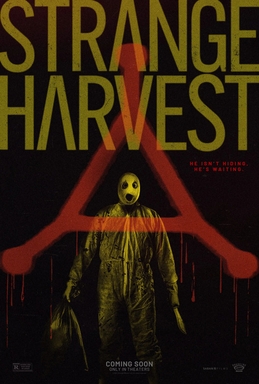
After his years’ long absence, he starts killing again in order to have his last sacrifice ready when a rare triangular alignment of Mars, Jupiter, and Saturn will be visible with the naked eye.  He is stopped from his final murder attempt by the police, but witness cameras captured some strange cosmic event starting to unfold as the final victim is about to be immolated.  I’m not a fan of this kind of movie but what really made it seem less authentic was the stitched together nature of this religion.  It is never spelled out, it is true, but what is shown does not seem to add up to any coherent system.  The movie does an effective job of creating a scary sociopathic killer, but it implies that the religion responsible is real.  A religion of one, however, isn’t really a religion at all.

Again, critics seem to have liked this but I found the actions of the police inscrutable and the grotesque methods of torture and execution unequal to the task of suggesting how these might be connected into even a psychotic religious outlook.  The only thing that seems to connect them is an occult symbol left behind at the crime scenes.  The letters from the killer to the police are read only in part, and that by some kind of synth voice that’s probably meant to make them sound sinister.  This kind of horror can work, but in general, creating new religions is not as easy as it looks.  Lovecraftian isn’t a bad choice, but drawing the threads a little more closely together could’ve helped a lot.

Unexpected Thoughts

The unexpected changes things.  We in the western world live under the false assumption of permanence.  We build something and it remains.  Well, any homeowner knows that constant maintenance is required, but still.  Then something unexpected happens and everything changes.  And it can be in the middle of a work week.  A death can lead to quick decisions and changes of a usual course of actions.  I wrote some funereal thoughts earlier, but a hastily planned drive all the way across Pennsylvania was organized just as a bomb cyclone hit our area.  We were thankfully spared feet of snow, but I had to deal with shoveling before driving early the next day.  After the funeral, a kind family member had invited us to her home, which we’d never visited before.  My wife and I drove there the night of the funeral.  The next day we had to cross the state of Pennsylvania again.  And then back to work on Thursday.

Something has fundamentally changed in my life, but still work expects the same Steve who was somewhat unexpectedly out of the office on Tuesday and Wednesday.  Thursday nothing has fundamentally changed at work, but in my life.  Even my usual morning routine feels off as thoughts constantly wander back to the intense previous two days.  And Monday’s stressful weather.  How the weekend before all plans had to be cancelled to, as the song goes, “let it snow.”  My mind, which operates largely on a routine schedule, has been shaken.  Jarred.  And yet, work persists.  Readjusting on a Thursday is difficult.  It’s as if I’d forgotten how things were usually done.  How did I use to sleep?  How did I use to drink so much water?  How did I jog before sunrise?  It was all routine last Friday.

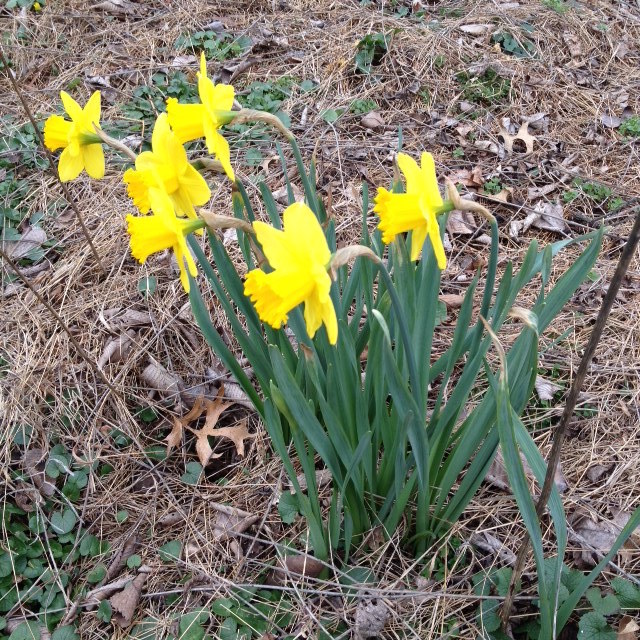
Last Friday.  It was a work day, but I could jog.  The snow had melted.  We knew the drive was coming, but the weather painted a huge question mark over it.  It seems, this year, just when that illusory normalcy has once again been established, winter rudely intrudes.  Some Good Samaritan plowed all the sidewalks on our block on Monday, relieving a bit of the pressure.  But not the anxiety.  February in Pennsylvania is anything but predictable.  It is the poster child of change.  Back home on Thursday I was remembering how to jog on the streets—my usual trail still hasn’t melted—wishing this winter would finally end.  I reached our house where I noticed something where the snow had melted while we were gone.  The daffodils I transplanted last year were beginning to push through the soil.


Gothic Dreams

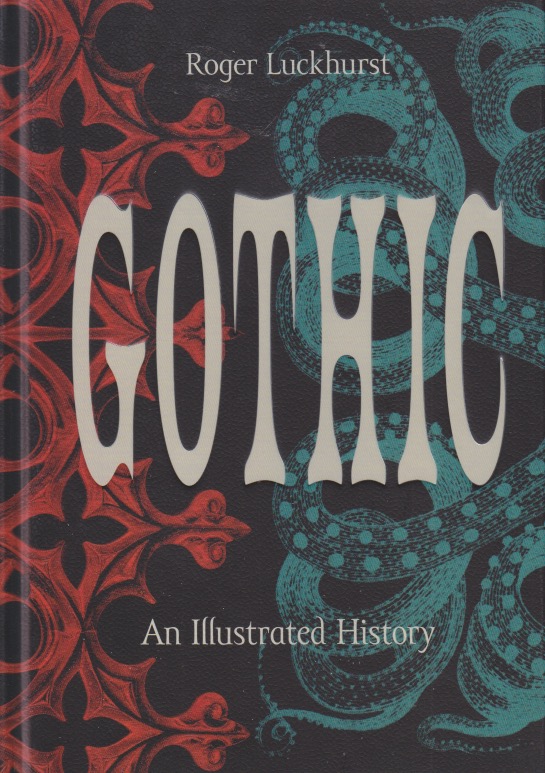
I love this book.  Roger Luckhurst understands that the gateway to horror is the gothic.  In Gothic: An Illustrated History he offers a world-wide, luxuriantly illustrated tour of both classic and contemporary gothic.  As a category, it’s difficult to diagram precisely.  Luckhurst does it through a series of themes: architecture and also form, various landscape settings, how the four cardinal directions appear in the gothic imagination, and, of course, monsters.  Each of these themes is divided into four or five chapters.  Not wanting to rush, I limited myself to a chapter a day, but I’m sure I’ll be dipping back in again.  This is the kind of book that both gives you ideas of new books to read and movies to watch, and affirms the choices that you’ve already made in those regards.  In other words, this is a place horror fans would naturally feel at home.

The gothic entered my life at a young age, partially because I was living it (unwittingly) but mostly because it appealed to me.  It made me feel good watching monster movies and Dark Shadows with my brothers, and later, reading gothic novels.  There’s definitely a nostalgia to it.  I loved gothic architecture from the moment I first saw it.  Not that Franklin had soaring cathedrals, but there were some very nice Victorian houses in town.  And when I saw cathedrals I felt a strange stab of joy.  Although I sublimated my love of gothic while working on my academic credentials, I couldn’t stay away from ruined castles and abbeys  in Scotland.  Although I was trying to be a scholar, I knew what secretly inspired me was made of coal-blackened stone.  Even if I didn’t say it aloud, the monsters of my imagination lurked there.

The narrative accompanying the wealth of images in this book probes what makes gothic tick.  It would be impossible to cover it all in one tome, of course.  My current fascination is with dark academia (an aspect perhaps too new to be in Luckhurst).  Dark academia’s draw is that it revels in the gothic, placing it in educational settings.  But it can occur anywhere, as Luckhurst clearly shows.  Anywhere that there might be shadows or reflections.  Anywhere that experiences nightfall and autumn.  Anywhere people must face their fears.  While my usual avocations always please me, when I see the gothic addressed directly it takes my breath away.  No doubt, mine has been a strange life.  One in which, even before I reached my first decade, I found the gothic vital and necessary to an odd kind of happiness. This book brings it clearly into focus.


Funerals

Attending the funeral of a teen is a somber experience.  I can’t even begin to imagine what tempests the parents are facing.  After having given my condolences last night, I became reflective.  My thoughts went back to my teenage years.  First of all, there was that disturbing song, “Seasons in the Sun.”  The Terry Jacks rendition was popular during my teen years and it haunted me even then.  Perhaps more influential in my own life was Alice Cooper’s album Welcome to My Nightmare.  And the context.  I was a somewhat sickly child.  Raised in the Fundamentalist camp, I thought about dying quite a lot.  I became comfortable with the idea.  In seventh grade I missed a lot of school, having come down with the flu, then chicken pox, then a flu relapse.  And yet another bout.  Lying at home, feeling sick, having had pneumonia as a kid, I’d listen to Cooper repeatedly and read the Bible.

One of the lines from that concept album that stood out to me was one of the spoken interludes.  “I don’t want to see you die, but if that’s the way that God has planned you…”  God has planned you.  There was a fatalism there that in the context gave me a strange sort of hope.  I listened to it over and over again.  Our teenage years are when we’re just starting to get a sense of what our lives might be.  Most of the time our expectations don’t match reality, and sometimes reality is simply outside of our hands, such as a with an incurable disease.  Back to “Seasons in the Sun.”  I found myself without the words I felt I needed to console the parents.  I realize my view is the odd one out.

Early in my own life, I found myself of a philosophical bent.  I wanted to know what the meaning of life was.  I guess I was looking for instructions.  Probably my senior year in high school I discovered existentialism.  I identified with that school, especially after learning that Søren Kierkegaard was a Christian existentialist.  That seemed to mean it was okay.  Existentialists believe “existence precedes essence”—we make our own meaning.  Life has been a lesson in that as I studied and worked in religion, which should be some consolation, for over half a century.  The skies are silent regarding the meaning we attribute to our lives.  The song on Welcome to My Nightmare continues, “You’ve only lived a minute of your life.”  And those words come back to me now.


Deception

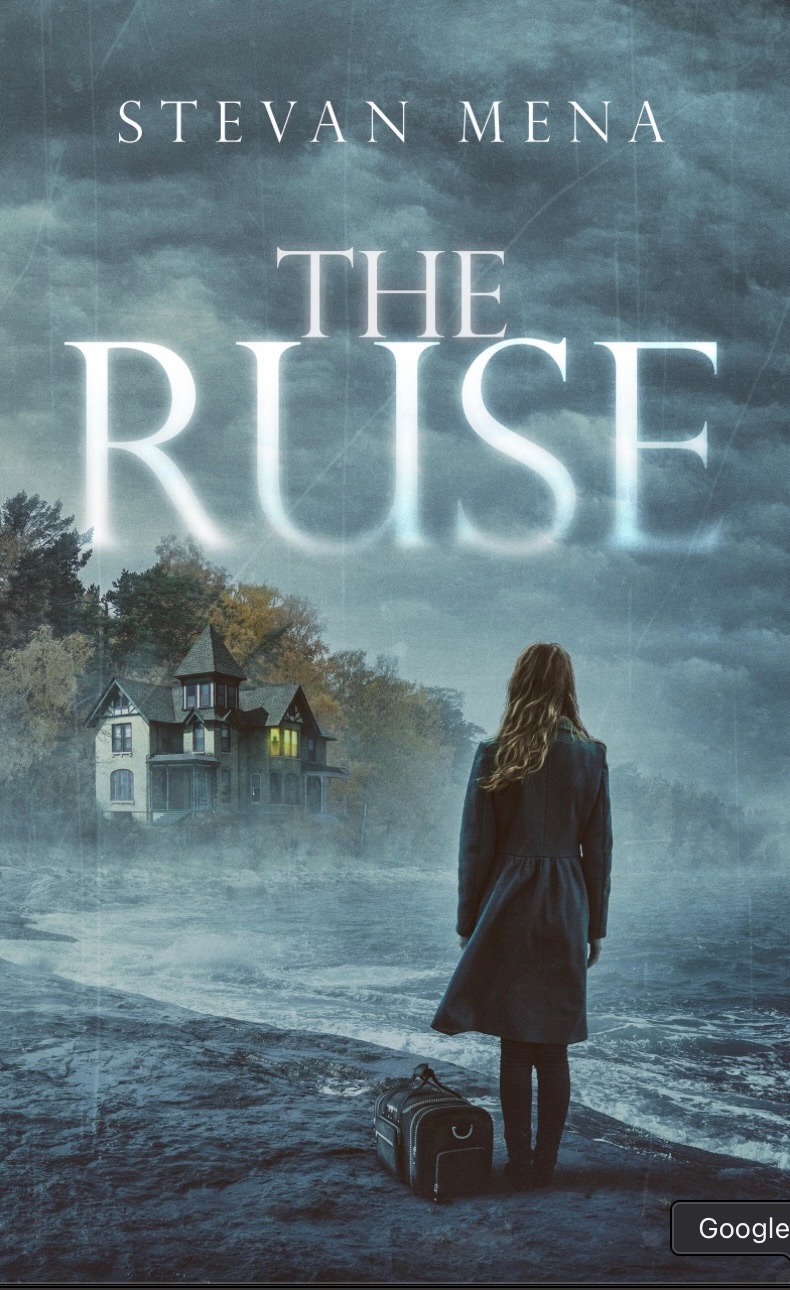
It’s not bad for an independent horror film written and directed by the same person.  Who also did the music.  The Ruse is a moody murder-mystery with several elements that are unnerving.  The main problem is that the resolution is overly complicated and relies on too many factors coming together too perfectly.  Still, it’s worth the time.  Olivia Stone is a woman undergoing hospice in her own home in Maine.  She has dementia, but with moments of lucidity.  Her live-in nurse, Tracy, disappears one night and is presumed dead.  Dale, who really needs the work, is called to the house.  She finds Olivia demanding, while sometimes being very cordial.  Tom, a young man with a daughter, the next door neighbor, helps out when he can.  He has anger issues, according to Jacob, the grocery-delivery guy, also young.  Both of them try to make moves on Dale, which she resists.

Dale, whose relief hasn’t come, becomes convinced that Olivia isn’t really bed-ridden as she seems to be.  Somebody has been blocking the live feed from Olivia’s room and Dale thinks it’s her.  Tom, who is under suspicion, has been arrested, so he’s in jail the night of the attack on Olivia.  When Dale’s relief finally arrives, she is stabbed while trying to revive Olivia.  Dale, who escapes from a locked room, accidentally stabs Jacob, who tries to warn her.  Olivia, not dead from the attack, accuses Dale but then she falls and hits her head, which kills her.  Dale is accused of the murder but is cleared because she’s left-handed and the evidence planted against her shows a right-handed perpetrator.  You get the picture.  Complicated.

The premise, however, is pretty scary in its own right.  A dementia patient who is paranoid and demanding.  She also claims her deceased husband’s ghost is in the house, trying to take her with him.  The Maine scenery is wonderful and the set-up, or “ruse” does work if you follow the lengthy explanation the detective gives.  All of the elements shown on screen are in service of the story, so there’s little that’s extraneous.  Dale’s boyfriend Ben, however, doesn’t really have a role and Dale’s lack of using him for a sounding board is a bit unusual.  Some of the character motivations seem a bit off.  Still, even with these issues, the movie holds together and keeps your interest.  It makes me think that Stevan Mena, the writer-director, has some talent.  The Ruse is better than many films I’ve picked up on the fly.  It’s not bad, even if not great.


Dark Dreams

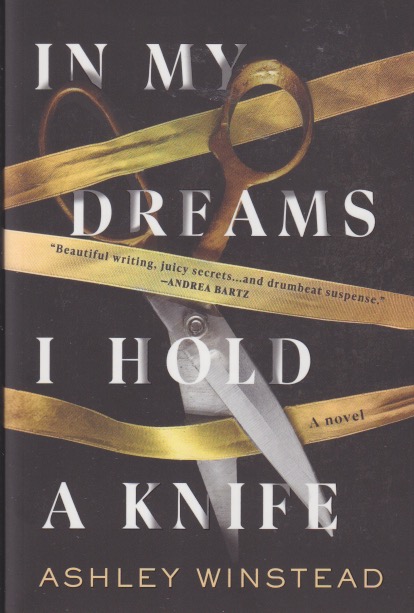
I’ve been pondering the role of religion in dark academia.  While not a major element, it’s certainly present in Ashley Winstead’s In My Dreams I Hold a Knife.  There are plenty of plot twists, and I’ll try to avoid giving away whodunit, at least ultimately.  The basic idea is that a group of seven students, the “East House Seven,” band together at Duquette University, a near-Ivy League school in North Carolina.  They get into some college hijinks, but things turn dark when one of them (Heather) is murdered their senior year.  Jessica Miller, one of the seven, has become a corporate climber, despite her family background, and ten years later she goes to Homecoming to show off her accomplishments.  But things don’t work out as planned.  Heather’s younger brother, who works at Duquette, has been doing some detective work and uses Homecoming to confront those who remain about the murder.

The seven (which actually involves an eighth student) pretty much date among themselves.  Some of them, including Heather, are quite wealthy, but not all.  Jessica isn’t among the affluent, and another of the seven, Coop, ends up dealing drugs to make money on the side.  Heather’s boyfriend was suspected in the murder, but had to be released for lack of evidence, and he decides not to attend Homecoming.  Those present for the event are confronted by Heather’s brother and the story is told as flashbacks from the Homecoming to events that took place during the college years of the seven.  As I say, I won’t reveal who did it, but each of the remaining seven is suspected until the reveal comes near the end.

For me, these kinds of stories are a little difficult to follow because of the number of active players.  Jessica reveals herself to be an unreliable narrator, and although the story felt long to me, it takes quite a bit of space to get to know all the characters well enough to understand their motivations.  Two of them were raised religious, which is what ties this theme into the novel.  The wealthy students aren’t exactly the kinds of people to emulate, and those raised religious end up being the good ones at the end, although they do participate in Greek life with its parties and other activities that college encourages.  (Sorry about the long sentence.)  Overall, this is a good story, but it’s hard to give too much sympathy to the group as they do have shifting alliances and are mostly power-hungry.  Yet, isn’t that like life itself?  It is dark academia. 


Substantial

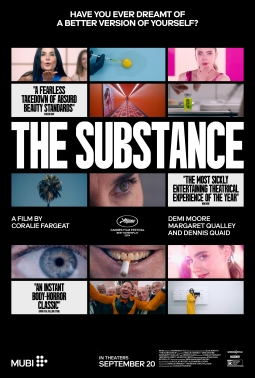
Body horror isn’t my favorite, but The Substance was so widely acclaimed that I figured I needed to see it.  It’s easy to see why it was so well received—it is not only well done, it also packs a lot of social commentary into the story.  I hadn’t read about the plot before seeing it, and it occurred to me that the theme wasn’t dissimilar from Edgar Allan Poe’s “William Wilson,” but from the point of view of a woman who’s been celebrated for her good looks and finds herself aging out.  Elisabeth Sparkle has had a successful television personal fitness series for years.  When she turns fifty, however, studio executives decide she has to be replaced with someone younger.  The men in the movie are portrayed in an unflattering light, unable to curb their appetites, while Elisabeth has to stay in shape, remain “beautiful,” to find any work at all.

Then a doctor furtively informs her about “the substance.”  It comes with few instructions, but it causes a person to create a new version of themselves—younger, more attractive—but they must swap out their existence every week.  One week the younger body is active while the older body is comatose and then they keep on switching weekly.  The younger Elisabeth, named Sue, takes Sparkle’s job and becomes a hit.  Her fitness show, highly sexualized, quickly gains ratings.  Sue has boyfriends and glamour.  Elisabeth awakes to find the apartment a mess and starts to regret the doubling.  The advertising for the substance repeats the message, the two of you are one.  Then Sue starts to “stay out late,” taking a few extra hours before switching.  This causes Elisabeth to age, in pieces, very rapidly.  She takes her revenge on Sue by overeating and leaving the apartment a mess.

Of course this is building to a big finish, which I won’t describe here.  There are a number of themes the film asks us to ponder.  Women are expected to stay young to be valued by the men who control the money.  The divided self comes to hate itself.  And there is little recourse for those whose careers reward them richly for being young but who will live well beyond that with only the memories and regrets of what they no longer have.  Although the movie is deliberately comic in many respects, it is also a sad story.  Expectations are unreasonable and unrealistic, and women have to play by the rules set by men.   The Substance has depth and pathos.  And pointed social commentary.


The Power of Yes

In going back over my fiction writing, I had a realization.  Both the first novel I tried seriously to get published (still not) and the first short story I submitted to a journal were accepted the first place I submitted.  That perhaps seemingly insignificant fact is quite important.  Like most, or at least many, writers, I’m a great self-doubter.  This probably comes from not knowing many other people personally and having a Calvinistic-level assessment of my own work.  Affirmation is rare in my experience.  Having a publisher say, “Yes, we like this” early on in my attempts to publish fiction was a tremendous boost and gave me the courage to try again.  It didn’t take long for the rejections to start rolling in, but I knew that someone believed in me.  Belief is far more important than most people think.  Worlds can be built on it.

The publisher of my debut novel decided to back out of the contract when the acquiring editor left.  I know, different editor, different game.  But this was under contract.  Thirteen years later it remains unpublished, not for lack of trying.  I began re-revising it in recent times since I’ve found a potential publisher and reading it I could see what might’ve frightened off others.  Still, I stand by it.  The book was written in a style very different from most of my subsequent fiction.  Characters speak their minds instead of being beat down by the system.  Readers of my academic work would be shocked.  That’s one reason that I use a pseudonym.  I sometimes wonder what I’ll do if the novel ever does get published.  It’s difficult to promote and keep your identity secret.

The point is that we never know what good we might do when we encourage someone who underestimates themself.  This may seem an odd thing to say when so many arrogant individuals command the world stage these days.  There are many people, however, who might accomplish great things if someone only gives them a little encouragement.  I think of this constantly in my work as well as my private life.  Is all this person needs simply some uplift?  Publishing can be a harsh world.  You put yourself out there and people like to start taking pot shots at you.  I’ve received much criticism over the years, and this has been primarily for nonfiction publishing.  The reviews some fiction writers receive, whether on Amazon, Goodreads, or even in print, can be unkind.  Some of the critique may be deserved, but why not offer it up with a word of motivation rather than Schadenfreude?  It can make a huge difference.


Swing Low

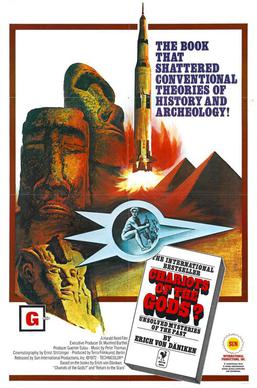
The 1970s were a rare era.  On the cusp of the electronic revolution, we grew up with many old fashioned notions about how things were done and what was possible.  It was a period dominated by both interest in the paranormal and by Hal Lindsey’s Late, Great, Planet Earth, looking for the end of the world.  I was sent scampering to the strange documentary Chariots of the Gods by Gary Rhodes’ Weirdumentary.  I honestly can’t recall whether I saw it growing up.  I know I read Erich van Däniken’s book on which it’s based.  As a kid with little exposure to a truly educated community, I was swayed by the book and that makes me think I may have begged to have been taken to the Drake Theater in Oil City to see the film.  Watching it as an adult, however, is truly an odd experience.

First of all, it’s freely available on multiple streaming services.  All you have to put up with is commercials and, since it’s not a high-demand movie, there aren’t that many of them.  The film, done by a German director and voiced over in English, begins by suggesting religious writings worldwide tell of wisdom from above.  People have always, I expect, felt that there is something divine about the sky.  We still get that impression from our experience of the weather.  The documentary makes the suggestion that Elijah’s fiery chariot was more technologically advanced than supposed.  Same with Ezekiel.  But then it sets out on a worldwide tour of ancient monumental building, stressing how such simple folk could never have built these things all on their own.  Although this doesn’t stand up to scrutiny, there’s nevertheless something compelling about it.

Among the more interesting items are some of the ancient rock carvings.  Without the written context, however, jumping to the conclusion that these were astronauts is foolhardy.  There are legitimate mysteries of history.  We don’t know who built certain structures, or why.  Our own modern fragile skyscrapers raise the same question.  People seem to be compelled to do such things simply because we can.  We don’t need aliens to help us with them.  Placing all of these mysteries together and suggesting a single solution is so 1970s.  Breaking things down and study of them by experts yields quite different results.  No less fascinating, but perhaps with feet more solidly on the ground.  This documentary is a strange period piece of a time I remember well.  And one from which, it seems, an even stranger culture has grown.


Individualisms

As an individual that stands out in the herd, metaphorically (standing out  is always dangerous, I know), I don’t tend to follow trends.  Blending in isn’t my strong suit.  A current, or recent trend, was to be seen carrying a disposable coffee cup when in public.  At least for a while there, everybody was doing it.  Walking down the street, going grocery shopping, at the mall.  It was almost like a fashion statement.  Anybody who was somebody had a cup of warm liquid in their hand.  Perhaps in my case economics and personal choice made the decision not to do this.  Economically, a five-dollar cup of coffee is out of my range; I’m not a hedge-fund manager.  I haven’t gone out for coffee in some years because of the personal choice aspect of it: I gave up caffeine.  This was several years ago.  I didn’t like being addicted to daily coffee, so I stopped, cold turkey.  But I still like the taste of coffee—that was hard earned.

These days the personal water bottle industry must be a good one to be into.  I recently visited friends and I noticed everyone had their personal water bottle.  I tend to leave mine at home.  Yes, I have one for the basic reason that running downstairs to refill a glass with water multiple times a day would mean that I’d miss an awful lot of work.  I drink quite a bit of water in a day.  About a gallon when I’m not traveling.  In my regimented life, I have a water bottle that I fill four times a day.  I know its capacity and, trying to stay healthy, I drink it down whether I feel like it or not.  I tend to leave it at home, however, as I mentioned.  At this gathering of friends (which was at somebody’s house) everyone who didn’t live there had their personal water bottle.  I was just using a glass from the kitchen.

There seems to be a trend of being seen with your water bottle.  I recently had to buy a new one because I’d been using an old stainless steel bottle well over a decade old.  It’d been put in the freezer with water in it before a hike and the bottom had, naturally enough, convexed to the pressure.  Being the thrifty sort, I pulled out a hammer and rendered it unlikely to tip over again.  It worked for years, but had become unstable again. Since it sits next to a computer all day, I couldn’t risk it.  The first thing I discovered is that water bottles meeting my exact specs were very expensive.  It’s a trend.  So at our friends’ house one of them offered to buy me a cup of coffee.  We live in a day when you can get a decaf latte with oat milk, so I indulged in an old habit.  As we walked down the chilly street, coffee cups in hand, I realized that I’m just like everybody else.


Not Too Tired

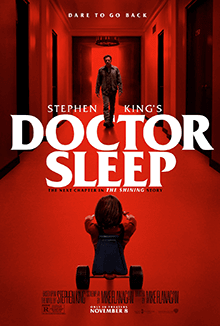
It was the choice of reading a very long Stephen King novel or watching a very long movie.  The fact that Doctor Sleep was leaving Netflix soon decided the toss.  I’d heard that this sequel to The Shining wasn’t bad, but not as good as the original.  Stanley Kubrick’s movie is a masterpiece, so trying to follow it up requires more confidence that I would be able to muster.  Still, Doctor Sleep is not bad.  Danny and Wendy survive, but Dan still sees the Overlook entities coming after him.  As an adult he has shut out the shine and become an alcoholic.  He catches a bus to New Hampshire and meets a recovered alcoholic who befriends him.  In recovery himself, he works in a hospice where he uses his shine to help those whose deaths are imminent, earning him the nickname “Doctor Sleep.”

Meanwhile, entities like those at the Overlook are killing and “eating” kids with shine, but they call it steam.  Abra, a girl with very strong shine, contacts Dan because she experienced the creatures’ latest murder.  The creatures’ leader, Rose, is able to project herself anywhere and she finds Abra and becomes intent on “eating” her.  Dan, who realizes he has to use his shine to save her, with the help of his new friend (actually they’ve now known each other for eight years) goes to trap the entities.  One of them, however, kidnaps Abra and when Dan meets her after the kidnapping he knows they have to lure Rose to the Overlook Hotel.  I think I’ll stop summarizing there, but this gives you an idea of just how large a tale this is.

There are plenty of cues for those who want to be reminded of The Shining.  The climax at the Overlook takes viewers back to the original location and brings back some of the characters.  Overall it’s pretty well done but just what these entities, or creatures, are isn’t really explained.  At a number of points the supernatural becomes almost too much.  There’s no Kubrickian reserve here.  The story is much more about addiction and overcoming it.  Jack Torrance, after all, was an alcoholic.  The movie shows this but the novel dwells on it quite a bit more.  Doctor Sleep make alcoholism key to the tension Dan undergoes as an adult, even when he’s back at the Overlook, paralleling his father’s stopping in the bar.  The movie threads the path between The Shining King didn’t like and his vision of what happened after that episode.  Ambitious, but it does keep your attention, for a long movie.


The Lord

“This article may incorporate text from a large language model. It may include hallucinated information, copyright violations, claims not verified in cited sources, original research, or fictitious references. Any such material should be removed, and content with an unencyclopedic tone should be rewritten.”  So it begins.  This quote is from Wikipedia.  I was never one of those academics who uselessly forbade students from consulting Wikipedia.  I always encourage those who do to follow up and check the sources.  I often use it myself as a starting place.  I remember having it drilled into me as a high school and college student that in general encyclopedias were not academic sources, even if the articles had academic authors.  Specialized reference works were okay, but general sources of knowledge should not be cited.

The main point of this brief disquisition, however, is our familiar nemesis, AI.  Artificial Intelligence is not intelligence in the sense of the knowing application of knowledge.  In fact, Wikipedia’s warning uses the proper designation of “large language model.”  Generative AI is prone to lying—it could be a politician—but mostly when it doesn’t “know” an answer.  It really doesn’t know anything at all.  And it will only increase its insidious influence.  I am saddened by those academics who’ve jumped on the bandwagon.  I’m definitely an old school believer.  So much so that one of my recurring fantasies is to sell it all, except for the books, buy a farm off the grid and raise my own food.  Live like those of us in this agricultural spiral must.

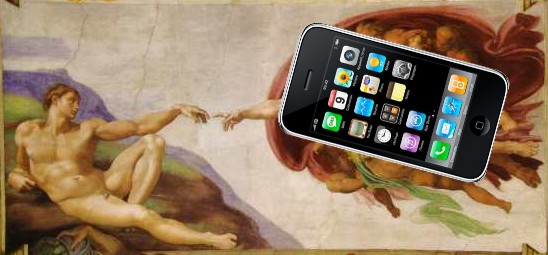
A true old schooler would insist on going back to the hunter-gatherer phase, something I would be glad to do were there a vegan option.  Unfortunately tofubeasts who are actually plant-based lifeforms don’t wander the forests.  So I find myself buying into the comforts of a life that’s, honestly, mostly online these days.  I work online.  I spend leisure time online (although not as much as many might guess that I do).  And I’m now faced with being force-fed what some technocrat thinks is pretty cool.  Or, more honestly, what’s going to make him (and I suspect these are mostly guys) buckets full of money.  Consider the cell phone that many people can no longer be without.  I sometimes forget mine at home.  And guess what?  I’ve not suffered for having done so.  The tech lords have had their say, I’m more interested in what people have to say.  And if Al is going to interfere with the first steps of learning for many people, it won’t be satisfied until we’re all its slaves.


The Queen

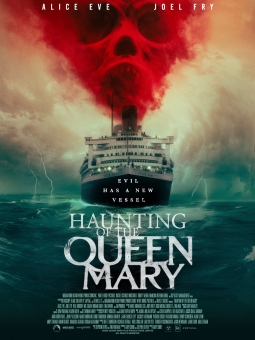
It’s a confused mess of a movie.  I have a fondness for ghost stories, and when I saw Haunting of the Queen Mary on a streaming service I use, I figured why not.  I wish I’d figured differently.  The film does have its charms, but the story is confusing and the confusion gets in the way of any enjoyment of the plot.  What’s more, it isn’t resolved even at the end.  You can tell something’s wrong when a Google search autofills “explained” as a suggestion after typing in the movie title.  Other people have the same issue.  I get that two timelines are slipping into each other, one contemporary and the other from 1938.  I’m not going to worry about spoilers, by the way, since I’m simply trying to figure out how this is supposed to fit together.

The problem seems to have started with a foundation sacrifice.  Back when the vessel was built, a man was sealed alive into a chamber over which a pool was constructed.  This person appears in at least three different characters between the thirties and the present.  In 1938 he appears to have gone insane, killing several people with an axe.  Another plot is that the little girl (apparently his daughter) is trying to get an audition to dance with Fred Astaire, who is a passenger.  Then in the present day, a couple seems to want to pitch a program to help revive interest in the now anchored ship to help save the monument.  A security guard (?) styling himself as the captain, seems to be the foundation sacrifice man, but he also knows that some sort of time slip has occurred.  The modern day people seem to end up in the thirties or the thirties characters show up in the present day.

The lack of clarity seriously detracts from any promise the film may have.  I know when I start looking at my watch during a movie that it has problems.  Added to this, the run time is two hours.  That much time spent only to be confused about everything begins to feel like a real waste.  It did make me interested in the history of the real life RMS Queen Mary.  Some of its history is presented in the movie.  In real life it holds the record for the most people aboard a single vessel at the same time.  Ships make good settings for ghost stories.  If they aren’t too convoluted, they can be quite enjoyable to watch.  In this case, Haunting of Queen Mary is on my not recommended list.


Free Parking

Okay, so I don’t live on my phone.  I use it rarely.  I don’t text.  I don’t watch videos on my phone.  I don’t use it for listening to music.  One place, however, that I’m more or less forced to use it is travel.  Parking is one of the biggest offenders.  I was okay with ParkMobile.  I downloaded the app and began to use it.  It seemed that everywhere around the Lehigh Valley had agreed that this app was pretty nifty and that was the way to go.  Then other apps began to compete.  I had a presentation at the Easton Book Festival back in October.  At a meeting of local writers, I learned that one of the two parking garages in Easton had switched to Park Smarter.  So I downloaded the app so that I could park and do my presentation.  So downloading and registering for a new app.

Photo by Sven Mieke on Unsplash

Then I had to travel for business.  This involved crossing state lines and parking.  The parking garage in which I was to park had changed its “how to park and pay” website just about a week before I left.  I went to the new page and found out that they now use NexPass for parking.  Another app to download.  Another registration to fill out.  I hoped I’d be able to login once I got there.  Even with the familiar—and in my mind original—ParkMobile, that’d sometimes be a problem.  I’d get to the parking lot and my phone seemed to forget how to login.  It asked for my password, which was obscure and unique and forgotten, written down somewhere at home.  So I sat in my car, with an unreliable two bars, and reset my password, which involved checking my email and entering an authentication code they’d texted me.  All to park for an hour.

I’m glad not to have to walk around with a pocket full of change all the time, but all this tech only opens the door for scammers.  Already some of them use stickers that they place over legit QR codes on parking signs.  You scan the false code, enter your credit card number and voila!  You’ve been scammed!  Doesn’t it seem better to have one system that we all agree to use?  Or maybe at most, two?  Whose signs are regularly checked and maintained.  I know that there was a fourth parking app at one time because I had to use one whose name I can’t remember, once upon a time.  For those of us who don’t live on our phones, maybe they should reserve an exit lane for those paying with dimes.


Seasonal Horror

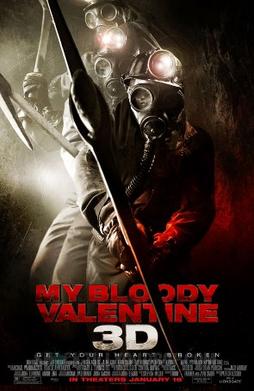
It was a rare combination: Friday the 13th, Saturday Valentine’s Day, and Monday some federal holiday.  One of our first friends as a couple called unexpectedly on Friday to say she was in the area and that led to an impromptu meeting for a late supper at a diner.  Still, being Friday the 13th a horror movie was prescribed.  So I picked My Bloody Valentine.  I’ve seen it before, of course.  (I had a whole life before this blog, as witness this friend.)  But the confluence of Friday the 13th and Valentine’s Day forced me to realize that I’d never posted about it.  And the fact that Monday is Presidents Day made a horror movie mandatory, given the current denizen of the White House.  Back to My Bloody Valentine.  First of all, there was the question of which to watch.  The original from 1981?  Kids in high school were talking about this, but I didn’t watch it until several years later.  Then there was a reboot, My Bloody Valentine 3D, which wasn’t as highly rated, in 2009.  It nevertheless was well made and, it was streaming for free.  Spoilers follow.

I’d forgotten whodunit, so the movie kept me guessing.  Here’s how the story goes: a coal mine cave-in led Harry Warden to kill his fellow miners to preserve the air to survive.  He went into a coma, but after a year he awoke and massacred the hospital staff and kids partying at the mine on Valentines Day.  He was shot dead.  Ten years later, Tom, the son of the former mine owner, one of the kids at the fateful party, returns to town to sell the mine.  Instead, he becomes Harry Warden in his mind and begins killing again.  Viewers don’t know that it’s him since he wears a miner’s mask.  Suspicion is thrown on the sheriff, Axel, who was also one of the kids at the party.   And Tom and Axel are feuding over Sarah, now Axel’s wife, but formerly Tom’s girlfriend.  The movie effectively keeps you guessing whether Axel (who’s a philanderer) or Tom (who has mental problems) is the killer.

The movie has a Pennsylvania feel to it, having been filmed in my home state.  This is more in the industrial part where I grew up, rather than the Bucks County that features in M. Night Shyamalan movies.  The only thing they got wrong is that it doesn’t seem very cold for February.  (February can be a trickster in this state, with temperatures anywhere from the seventies to zero or below.)  It isn’t a bad horror offering.  The 3D effects are campy, but that only adds to the fun.  It was the right choice, given the confluence of red letter days.