Laughing Matter?

I sincerely hope AI is a bubble that will burst.  Some of its ridiculousness has been peeking out from under its skirts from the beginning, but an email I had from Academia.edu the other day underscored it.  The automated email read, “Our AI turned your paper ‘A Reassessment of’ into a shareable comic.”  Let me translate that.  Academia.edu is a website where you can post published (and even unpublished) papers that others can consult for free.  Their main competitor is Research Gate.  Many years ago, I uploaded PDFs of many of my papers, and even of A Reassessment of Asherah, my first book, onto Academia.  This is what the email was referencing.  My dissertation had been AIed into a shareable comic.  I felt a little amused but also a little offended.  I quickly went to Academia’s site and changed my AI settings.

I didn’t click on the link to my comic book for two reasons.  One is that I no longer click links in emails.  Doing so once cost me dearly (and I didn’t even actually click).  I no longer do that.  The second reason, however, is that I know Academia’s game.  They want free users to become subscribers.  They frequently email intriguing tidbits like some major scholar has cited your work and when you go to their website, the only way to find out who is to upgrade to a paid account.  They do the same thing with emails asking if you wrote a certain paper.  If you own that you did, they’ll tell you the wonders of a paid account.  Since I’m no longer an academic, I don’t need to know who is citing my work.  I’d like to believe it’s still relevant, but I don’t feel the need to pay to find out to whom.

I am curious about what a comic version of my dissertation might look like, of course.  I am, however, morally opposed to generative AI.  In a very short time it has ruined much of what I value.  I do not believe it is good for people and I’m disappointed by academics who are using it for research.  AI still hallucinates, making things up.  It is not conscious and can’t really come up with its own answers.  It has no brain and no emotion, both of which are necessary for true advances to take place.  My first book has the highest download rate of any of my pieces on the Academia website.  Last time I checked it had just edged over 9,000 views.  AI thinks it’s  a joke, making a comic of years of academic work.


That House

In this season of deportations, thinking about what it means to be a refugee couldn’t be more important.  The horror film His House makes you do just that.  Bol and Rial are fleeing war-torn South Sudan with their daughter.  After a mishap on the overcrowded boat from France to England, their daughter drowns.  Kept in a refugee camp for months, they are finally allotted a council house in poor repair and a meager income.  If they violate any of the rules, which include living anywhere else or trying to earn their own money, they will be deported.  Bol tries to assimilate quickly while Rial is more tied to her traditional ways.  Then the ghost of their daughter, and other dead from the war and the crossing, begin to haunt them.  All the while they face the threat of deportation.  Some spoilers follow.

Rial recognizes the ghosts come from an apeth, a kind of witch that demands repayment for the crossing.  Bol sees the ghosts too, but denies it.  They will not go back, he insists.  When the social workers come to inspect the house, after Bol asks for a different place, Rial tells them a witch is causing the problems, causing the Englishmen to roll their eyes.  When Rial tries to escape, an alternative reality back in Africa shows that when Bol was denied a place on the overcrowded refugee bus, he grabs a random girl—their “daughter”—to get a place on board as the soldiers begin shooting.  The girl’s mother is left behind, screaming for her child.  The apeth is demanding Bol’s life for that of the girl he used to gain his freedom.  Rial, realizing that Bol will die for trying to make their life better, attacks the apeth and lets go of the image of their daughter.

This is a sad and thoughtful kind of film.  We seldom stop to think that refugees, in culture shock already, are stripped of everything familiar and made to feel as if continuing to live is itself a special favor.  They have their own ghosts too.  The real horror here comes through seeing the world through the eyes of someone who has experienced a high level of trauma.  To do so while Trump’s storm troopers are once again separating families, killing people at will, and deporting refugees, is not an easy thing to do.  Horror can be an instructive genre, and although the threat here is supernatural, as it often is in folk-horror, the real fear is all too human.


Hinge Years

I recently read about “hinge years.”  Some historians use this as a kind of shorthand for a particularly tumultuous year in the history of the world, or of a country.  Curious, a brief search brought up the year 1968 as one of these hinge years for the United States.  No doubt, a lot was taking place at the time.  Since I spent most of that year enjoying my last year before Kindergarten, my political awareness was pretty dim.  I found a website of an historian arguing that this was indeed a foundational period in US culture.  The hallmarks cited were political events (assassinations and their aftermaths, Vietnam, Democratic Convention in Chicago), science (circling the moon in preparation for landing on it), and music (Hair, the Beatle’s White Album).  Now, years are convenient hooks on which to hang events, but many of these events had earlier roots or later consequences.  The Vietnam War began in the fifties, we would actually land on the moon the following year, etc.  But 1968 was a pivotal year for horror movies.

Two game-changing films were released that year.  The unexpectedly influential Night of the Living Dead, by George Romero, changed the horror genre forever.  Low budget, shot in black-and-white, with no famous actors, that movie not only introduced the modern concept of the zombie, its political and social commentary rang through loud and clear, intentional or not.  Today it is considered essential viewing for anyone who wants to claim street cred as a horror fan.  An early “splatter” film, the use of gore was new (even if they used chocolate syrup for blood), and the action took place in rural America—not terribly far from Pittsburgh, but certainly not suburbia.  These departures showed what could be done.  Its success was record-breaking.

That same year Roman Polanski’s adaptation of Ira Levin’s novel Rosemary’s Baby was also released.  This movie brought religion directly in front of the camera to share space with horror.  To some extent this had been done before, but the seriousness with which satanism was played off against Christianity was unprecedented.   Okay, so The Devil Rides Out also appeared in 1968, but it wasn’t exactly a blockbuster.   Rosemary’s Baby was itself decried as satanic in some circles and it opened the door for The Exorcist some five years later.  Horror cinema would never be the same.  1968 was an eventful year, no doubt.  I’m skeptical that it was any more of a hinge than 1967 or 1969, but it sure did change the horror scene forever.


Uncomfortable Truths

Horror makes us confront uncomfortable truths.  I suspect Birth/Rebirth might be the kind of movie to contain triggers for some folks.  I’ve watched enough body horror to be somewhat desensitized, but I was uncomfortable at a point or two.  The movie follows two female medical professionals—Morales, a maternity nurse, and Dr. Casper, a pathologist.  Overworked, Morales feels she’s not spending adequate time with her five-year-old daughter, Lila.  Then the unthinkable happens; her daughter suddenly dies from meningitis while she’s at work.  Casper, who works in the same hospital, handles the corpse of the young girl, but Morales learns the doctor has taken her home and, more than that, brought her back from the dead.  Horror fans know that reanimation is always problematic.  In order to discuss this, however, I may need to resort to spoilers.

Casper, ever since her own youth, has been working on regeneration.  She’s somewhat emotionally disconnected from others, doing this work for the sake of science.  Morales, however, refuses to leave Casper’s house once she learns her daughter is there and alive.  The two work together to supply the serum needed to maintain Lila.  She begins to speak and walk again, but the serum, derived from stem cells, requires a very specific profile that Casper has.  When an infection prevents Casper from conceiving (and providing the necessary tissue) Morales has to start taking amniotic fluid from another woman with the rare profile that matches Lila.  Until the other woman decides to change hospitals.  The story, which drew inspiration from Frankenstein, is sad, just as that book is.  A woman has to lose the same daughter twice, but that’s not the end of the story.

I think I’ll leave it there.  The tale raises ethical issues and probes the lengths we will reach not to let go of those we love.  The maternal bond may go as far as, if not murder, manslaughter.  The bond is emotional and Casper works it for the science of regeneration.  If life can be introduced to apparently dead tissue, why shouldn’t it be?  But the result is never satisfying.  There is a permanent line between life and death that can’t be crossed, no matter the emotional need or scientific curiosity.  And yet.  And yet.  Birth/Rebirth takes us to this juncture and forces us to look.  And it makes the viewer wonder just how far they might go.  The answer might make a person squeamish.  But then, uncomfortable truths are like that.


Unsolved

Strange as it may seem, the world of academic religious studies can have high drama.  On May 21, 1991, Ioan Petru Culianu, a professor of religion at the University of Chicago, was followed into a men’s room and shot through the head.  The murder was never solved.  Culianu was protégé and, many thought, successor to Mircea Eliade, perhaps the most famous religion professor of the last century.  Eliade was a Romanian American, and in his youth supported a fascist political movement, his connection with which he later covered up.  A bit of necessary background: the University of Chicago is a powerhouse school of religious studies.  Its graduates are nearly as influential as those of Harvard.  And Eliade trained many of them.  Including Bruce Lincoln.  Secrets, Lies, and Consequences is a fascinating book, even if it gets into the weeds.  You’ll learn a lot about early twentieth-century Romania if you read it.

Like many Chicago grads, Lincoln has had a distinguished career.  Even though I worked in different areas of religious studies than he does, I knew his name.  I read this book because it is full of intrigue, but also because, until I heard of it, I’d never known anything about Culianu or his unsolved murder.  A scholar’s scholar, Lincoln taught himself Romanian to be able to write this book.  (This is what I miss about being a professor, the freedom to undertake such Herculean tasks and have it be considered “normal” on-the-job behavior.)  The end result is a brief, complex, and wonderful book.  This isn’t a proper whodunit, though, and although Lincoln has some suspicions about what might’ve happened to Culianu, there is no smoking gun.  His murder took place while I was a doctoral student in Edinburgh, whence, as far as I could tell, the news never reached.

Eliade was a towering figure.  He wanted to put Romania on the intellectual map and he succeeded.  His work is still studied and analyzed.  He wrote novels as well as monographs, and some of his ideas have become standard fare in religious studies.  Few figures in the discipline cast a longer shadow.  I was in seminary when he died, but some of his works were recommended reading by that time.  This little book got me thinking about at least two big things: how some people become academic superstars, and how cancel culture sometimes brings them under the microscope.  Humans are raised in a culture and sometimes our young ideas, not fully formed, come to define our entire biological trajectory on this planet.  And sometimes we have regrets.  This is a fascinating study of one such case.


Not Again!

The only reason I heard of Repossessed is because my wife read about it in a local newspaper.  This is true although I’d written a book about the Bible in horror movies and a book about possession movies.  This one’s been buried deep.  Although not a straightforward parody of The Exorcist, it travels the same territory with Linda Blair reprising her role as the possessed girl—now a mom with two adolescent kids.  The movie was critically panned, but I have a soft spot for bad movies and it was much better than The Exorcist II.  What saves the film is the acting on the part of Blair and of Leslie Nielsen, as the exorcist.  Nielsen is pretty funny most of the time, but the gags fall short here time and again.  The humor tends toward the sophomoric, but some jokes are good; the Chappaquiddick one was unexpectedly funny.  And having a false Donald Trump show up to try an exorcism was an added bonus.  These horror tropes classify this as a comedy horror, and it has a kind of cuteness to it that make it worth seeing.

So Nancy Aglet (Blair), after being exorcised by a young Father Mayii (Nielsen), settles down with a family until a televangelist pair—a clear send-up of Jim and Tammy Faye Bakker—actually cause a demon to come through the television.  It  possesses, or repossesses, Nancy.  Since the original movie spends a lot of time in the hospital, she goes to the doctors who can’t figure out what’s wrong.  Nancy knows she’s possessed, however, and tries to find a priest to help, Father Mayii having retired.  The world’s religious leaders gather as the televangelists fail to cast the demon out on national television, but it’s only when Mayii joins the crew that the Devil is driven out.  Not through the rite, but because he can’t stand rock-n-roll, which the religious leaders perform.  It’s rather silly, of course.

There is an aesthetic to bad movies and Repossessed is a good example of that.  Despite its failings, it’s one of those movies that you’re (mostly) glad to have watched.  At least in my experience.  Largely, as I say, because of the performances of the leads.  Although some people today find The Exorcist itself funny, and although some aspects do open themselves to parody, it takes talent to make fun of it.  This film doesn’t do it particularly well.  Ironically, Ted Kennedy couldn’t run for president because of Chappaquiddick but Donald Trump, despite having a much more sordid past, could and did.  Those two moments in this 1990 movie give me pause.  And the fate of the televangelists in it gives me hope.


Optimistic Moves

I’ve been thinking about moving lately.  No, not planning to move, but just thinking about the process.  A family member recently moved, and we have new neighbors in the house next to ours that sat empty for a few months.  In both these cases the people moving are young and, I sincerely hope, optimistic.  Settling into a new place takes quite a lot of energy and pondering my own life, a serious motivation.  It wasn’t so hard when I was young and all I had acquired were books and records.  After moving to college I ended up shifting around quite a bit, each time looking for a better fit.  I moved five times in my three years in Boston.  When I moved to Ann Arbor to be with my betrothed, and then wife, I moved twice in a year.  Then in Scotland, three times within three years.  Each move was optimistic.

Back in the States, we moved four times in three years until we ended up in the house Nashotah, well, House provided.  That was our home for a decade or so and the move was optimistic.  Something happened after that, however.  The move from Nashotah was a step down.  And the move from the first apartment to the second was another step down.  Neither were optimistic moves.  They were middle-of-life, disrupted-life moves.  The perspective was hoping nothing tragic would happen.  The move to New Jersey was quasi-optimistic.  It was very difficult for me to give up my dream of a teaching career—something I had, and then lost.  Still, our place, a floor of a two-family house, was good enough for a dozen years.  Our last move, to our own house, was optimistic but fraught.

Home ownership is a shock to the system best absorbed by the young.  To make matters more interesting, I recently talked to somebody who knows about finance who said buying property isn’t always the best investment.  He urged us to go back to renting.  I have a hard time imagining that now.  Landlords are their own species of problem.  Yes, we’re responsible for repairs and insurance, and lately lots of snow shoveling, but we don’t have an owner telling us what we can’t do.  (Having finances tell us what we can’t do is another matter.)  I always look fondly on the young who move, trying to tap into their optimism.  This place, I very much hope, is better than the last one was.  There is no perfect place to live, I know, but when you start thinking about it, it should be a matter of hope.  And hope should be in greater supply these days.


Beautiful Reality

Although it is central to understanding all human experience, we are far from comprehending consciousness.  It’s clear to me, based on the fact that our senses are limited, that rationality alone can’t provide us with all the answers.  And brilliance often comes at a cost.  These were my thoughts after watching A Beautiful Mind.  Having hung around Princeton quite a bit when living in New Jersey, it was nice to see it in a film.  The movie is, of course, a somewhat fictionalized account of the mathematician John Nash’s life.  Although extraordinary in his grasp of math, Nash suffered from mental illness as well.  A Beautiful Mind takes liberties, but then, most biopics do.  The film is well done from a cinematic point of view, and for those of us without any real knowledge of Nash (although we only lived about 15 miles away) it effectively fools you into mistaking reality.

I wanted to see the movie because it’s often cited as an example of dark academia.  Clearly the mental illness—called schizophrenia here—is the source of the darkness.  Academia is obvious.  This biopic genre of dark academia includes a number of films and many of them explore the disjunction between deep thinkers and social life.  It seems that we may be only in the early stages of mapping the intricacies of the human mind.  I was recently reading that psychology is still, after all these years, struggling to be considered a “real” science.  The human mind is a slippery place and emotion and intuition play into making someone really stand out from the rest of us.  And also, their stories have to be noticed by someone.  In Nash’s case, a book that was later made into a movie.

Academics in general aren’t given much notice.  Many operate in the rarified world of extended study.  Those who, like myself, are expelled, often have difficulty fitting in to other lines of work.  Thinkers often have trouble not thinking.  That can get you into trouble on the job.  Movies like A Beautiful Mind have some triggers for me because I often question what reality is.  I always have.  Please don’t take it personally, dear reader, when I say I’m not sure you’re real.  (You may think the same of me.) It’s just the way I look at the world.  I’m no mathematician, though, nor a scientist.  Not even a philosopher, according to the guild.  Academia, however, was my home and seems to have been what my mind was made to do.  At this point, I’ll settle for watching movies about dark academia.


Luddism

There are books you really want to read, and books you feel you should read.  There are authors who delight in telling you what’s going on, and there are authors whose writing obfuscates.  I’ve always preferred the former in both scenarios, but I felt I should read William Gibson’s Neuromancer.  I guess I’ve grown apart from science fiction.  (It’s not you, it’s me.)  Or at least some of it.  And I encounter too much jargony writing among academics.  I’m a simple guy with simple tastes.  Also, noir has never been my favorite.  Case, the protagonist, is difficult to like.  As a literary achievement there’s no doubt that Neuromancer is amazing.  And highly influential.  It’s the story of a thief/conman (Case) who’s hired for a mission that he doesn’t understand.  Along the way he falls in love (sort of), but, well, noir.  Dames.  The imaginative elements are pretty stunning, and some of them have come true.  AI being one of them.  And maybe that didn’t help sway me to liking it too much.  I’m no fan of AI.

I didn’t read the novel to critique it.  Admittedly, I’m a Neo-Luddite.  I use tech, and even enjoy it sometimes, but I prefer print books, movies (on celluloid) in theaters, and music, if recorded, on vinyl.  Old fashioned.  I do like some of the convenience, however.  Who isn’t addicted to getting tedious things done quickly?  Well, some of them.  In any case, I found the Molly character intriguing.  I couldn’t help but think of Blade Runner the whole way through.  William Gibson claimed that his novel didn’t copy the gritty texture of the movie, and  I believe him.  I’ve written books after thoroughly researching a topic only to discover, too late, that someone else had largely done the same thing already.  It happens.

The plot itself is quite good. Still, there’s an ethical element involved.  I wonder how much AI optimism comes from guys who read such novels as teens.  I have trouble thinking of any way that generative “artificial intelligence” can end well.  It seems a misguided and oversold idea.  Now commercials tell us how much we need Al, and he appears in new devices, wanted or not.  He’s not welcome in my home.  I’m slowly getting used to the idea of having a phone near me most of the time.  I use it seldom, but when I do I’m glad for it.  I don’t watch movies or read books on it.  My favorite times are when it’s sitting there, being quiet.  Some of us are dinosaurs in a cyberpunk world that’s become reality.  And dinosaurs, well, we prefer the world before the electronic revolution.  Maybe even before the rise of the primates.


The Storm

I suppose it would be a fool’s errand to post today on anything other than the storm.  You know the one.  The snow/ice storm that has been affecting the greater part of the lower 48 for the last couple of days and is now set to target the most populous region of the country.  Power outages are expected (so if this blog goes utterly silent, you’ll know why).  Good thing FEMA has been dismantled by the Trump administration.  In any case, we’re all waiting to see what the outcome will be.  I guess we should ask AI.  In any case, our lives have become so completely tied to a constant source of electricity, we barely know how to get along without it.  I have to admit to being a bit puzzled myself.  Without electricity, the heat goes off.  The water pipes freeze up and burst, and a personal apocalypse ensues.

As my wife is fond of saying, the weather is still in charge.  A storm like this shows how fragile our infrastructure can be.  Especially since the last ten years of US history have been dealing with Trumpism or its aftermath.  And one thing that our elected officials don’t do well is deal with reality.  Nation-wide storms do occur.  Democrats do not control the weather.  The “woke” don’t have some great machine buried somewhere generating all the hot air that ultimately leads to global warming which, we all know, is really real.  And so we sit here waiting for the silence to come.  Funnily, having grown up in the Great Lakes snow belt, I remember these kinds of snow amounts not infrequently as a child.  Our house was little more than a shack and it was heated by a  single furnace in the living room, vented mainly by the leaky roof and drafty windows.  Besides, my step-father drove the borough snow plow.

Today things seem much more brittle.  What would we do without Netflix for a day?  And snow days from work are a thing of the past.  Offices never close because they never have to.  As long as the juice flows.  That is reality here in the world of 2026.  I can envision a different world.  One that might be a little more sane and focused on protecting one another instead of one percent of the richest one percent getting even richer.  A world in which snow is pretty instead of some insidious threat.  A world where being human is sufficient for the troubles of the day.


Super Human

There’s a line in the musical 1776 where Stephen Hopkins says “Well, I’ll tell you. In all my years, I never seen, heard nor smelled an issue that was so dangerous it couldn’t be talked about.”  Of course, there are many things that can’t be talked about; some of them so obvious that children can see the truth of the matter.  One of those subjects is what Jeffrey Kripal calls The Superhumanities.  Most of academia laughingly calls this the paranormal and dismisses it.  I have been following Kripal’s work since first encountering Authors of the Impossible, back in late 2011.  He is a brave scholar who argues that since encounters with the impossible have happened throughout human history, and still happen, we should study them.  Mainstream science, which is necessary and good, proceeds by discounting anomalies.  That doesn’t mean anomalies aren’t real, just that if you try to account for everything, well the engine stalls.  Because of this, most academics have followed the general public in ridiculing these things as magical thinking.

That doesn’t stop people worldwide, however, from seeing ghosts.  Or UFOs.  Or experiencing things that just shouldn’t happen.  Many of us are taught to brush off things like disappearing object phenomenon, precise coincidences that happen in a striking series, or episodes of picking up the phone to call someone you haven’t talked to in years only to have the phone ring and it’s that person calling you.  We tell our friends but generally conclude that it’s just “one of those things.”  Moreover, we don’t dismiss family or friends when they tell us about such things.  We know them personally and trust their integrity.  If a stranger walks in, however, we laugh about the event.  Kripal makes the case that something is going on here.  And we ought to pay attention.

The main idea of this book is that humans are “super.”  In order to rescue the humanities, which Kripal teaches at Rice University, we need to acknowledge them as superhumanities.  There’s a lot to ponder in this book.  It’s not an easy book, but it is an important one.  Kripal engages philosophers on their own terms, displaying an incredible depth of comprehension.  I almost didn’t finish the book because it’s so closely argued that I had to put it down for a few months.  It had become literally buried under a stack of other books I had in my to read pile.  I’m glad I picked it up again.  This is a profound book with important, essential conclusions.  It includes dangerous ideas, but, like Hopkins, I believe there should be nothing that can’t be talked (or written) about, especially in the academic world. Ridicule is never good debate.


Hearing White

I really do need to start writing down either the year of movie recommendations or the year of the film.  Many movies share names and I found White Noise on my list and couldn’t remember who or where or when.  I watched the 2005 version knowing in advance that it was panned by critics but it did well at the box office.  Now, I tend to like ghost stories—I’m not much of a slasher fan—but this one was a bit convoluted.  Too much is stuffed in.  So Jon Rivers’ wife dies and he’s contacted by Raymond, who’s been receiving EVP (electronic voice phenomenon) messages from her.  So far, so good.  But then things spiral (including the camera; please, people, hold the camera still!).  Raymond is killed by unseen entities.  Jon finds another client of Raymond and decides to set up his own electronic superstation to hear and see messages from the dead.

A psychic warns him this is dangerous.  He persists, learning that his dead wife is, always cryptically, telling him to go to places where people are about to die.  He’s able to save a baby’s life that way, but he’s getting messages about an abducted woman and wants to save her.  All the while, on the computer monitors three shadowy figures keep appearing—evil spirits, presumably.  Jon discovers that a serial killer has been receiving messages, through a similar tech setup, from these evil spirits and has been torturing and killing people.  The spirits directly attack Jon, killing him, but the police follow the clues Jon has left and catch the killer.  But not, presumably, the three evil spirits responsible for inspiring said killer.  There’s some good ideas here but they aren’t handled very well.  The story is too complicated to really fit into the time allowed.

It is a good example of religion and horror, however.  There are lots of clergy around—there are a few funerals in the movie.  I found a few potential Bible uses, but nothing definitive.  I’m not sure Holy Sequel will ever be written, but the list of potential movies is growing long.  White Noise isn’t a horribly bad movie.  The 2005 version is at least worth watching for the spooky ideas.  The movie’s main claim to fame, at least according to Wikipedia, is that it made studio executives realize that early January was a good release period for horror movies.  If they’d read some history they’d know winter has always been a time for horror films and stories.  As the genre gains some respectability, perhaps those who produce horror will realize that it’s an all season phenomenon.  Even if it tries to base them on electronic voice phenomenon.


Trying to Write

Realizations dawn slowly sometimes.  From childhood on I wanted to be a writer.  Teachers encouraged me because I seemed to have some talent, but in a small town they didn’t really know how to break through.  Besides, terrified of Hell, I was very Bible and church focused—not really conducive to the worldliness needed to be a writer.  The realization that recently dawned is that I’m competing with people who can put full-time into writing.  I’m trying to squeeze it into a couple hours before dawn every day because 9-2-5.  9-2-5.  9-2-5.  It’s exhausting.  I often read about writers, wondering how they get noticed.  Even the people I try to get to publish my fiction read stuff others likely have more time to write than I do.  Why do I keep at it?  Sometimes it’s just impossible to keep ideas inside.

I’ve got ideas.  Some of them would make fascinating movies.  I even had an editor of an online journal that published one of my stories say that.  I’ve got a cinematic imagination trapped in the aging body of a day-worker.  Oh, I’ve got a professional job, of course.  What I really want to do is “produce content.”  I know others in publishing with the same dream.  One of my colleagues has managed to break out and she’s now publishing novels that are getting noticed.  I’m still writing for academic presses because I know how to get published by them.  My fiction has been suffering from neglect.  To stay sharp you have to keep at it.  I’m a self-taught writer.  I’ve not taken a course in it my entire life, and it probably shows.  Not even Comp 101.

Fairness is a human construct and ideal.  Reality lies with Fortuna (cue Carl Orff).  I’m better off than most people in the long human struggle with equity, I realize.  For that I’m grateful.  I do have to wonder, however, if struggle isn’t essential to making us what we need to be.  The writers whose work endures often had to struggle to get noticed.  Many died in obscurity.  I wonder if they ever realized that they were leaving a legacy.  You see, writing is a strange blend of arrogance and self-doubt.  Many of us go through intensely self-critical times when even our published books seem to mock us from their shelves.  The realization, now fully day, that I will always have to struggle to do what I know I’m meant to do sheds light.  Even in the world of privilege, the struggle inside is real.


Seeing Seagulls

It was a seventies thing.  Even though I lived in a small town, even I had heard about Jonathan Livingston Seagull.  At first I didn’t know it was a book.  (A similar thing happened to me in the nineties with a character named Harry Potter.)  It was probably in college that I learned this was a book I should read.  I did, and I followed it up with Illusions, also by Richard Bach.  Now, this was unorthodox stuff.  These novels consider what some would call superhumanities and others self-deification.  The two are related.  In any case, Jonathan Livingston Seagull is a story about a seagull that overcomes limitations.  An inspirational book.  The publisher had no great expectations for it but it ended up becoming a number-one bestseller without any real marketing support, largely through word of mouth.  You’d have had to have been living in a cave in the seventies not to have heard people mentioning Jonathan Livingston Seagull, whether bird or book.

I got a hankering to read it again but alas, it was one of the books destroyed in the flood.  I went to a local bookstore and was disappointed to see that it was out in a new edition—larger, and, of course, more expensive.  Longing eventually overcame reluctance and I bit the bullet.  I’m glad I did.  The story is still as empowering as I remembered it, but the fourth part, the new one, strikes me as very necessary.  In it, rumors of the disappeared Jonathan Livingston Seagull have turned him into a god.  A god, moreover, whose followers are more interested in the orthodoxy of ritual than what he taught.  This was published before Trump’s first election, but it accurately describes what “Christianity” has become under his two-pronged reign of terror.

The idea of Christianity itself has become deified to the point that Jesus—what he did and taught—have become completely irrelevant.  Now, you don’t have to walk all the way with Richard Bach (I read the two books after Illusions as well, The Bridge Across Forever and One), but this book has a message that still rings true after all these years.  The book is over half-a-century old now and I am glad that it’s having a small resurgence.  The message, when the book ended at part three, was perhaps a little lighter.  We still, however, have to learn to overcome limitations.  And there’s a fair amount of wisdom in this little book.  Even though it was a seventies thing, it remains a good thing.


Blushing Brides

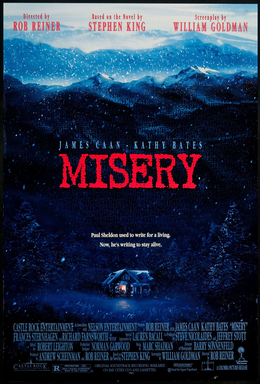
Death does strange things.  But first I have a confession to make: I had never seen The Princess Bride before recently.  Since it is a favorite film of many people and since Rob Reiner had been murdered earlier that week, my wife wanted to see it again (for her).  Given the timing, she must have seen it shortly before I proposed to her, or maybe shortly afterwards.  Perhaps I owe a debt of gratitude to the movie.  I entered into it not knowing anything about the story or even the genre.  Rob Reiner was eclectic in his tastes, directing everything from comedy to horror, Spinal Tap to Misery.  As for Princess Bride, it felt like a light fantasy, generally comedic but with no laugh out loud parts.  It’s a sweet story with intriguing characters.  And a cast of big names.  I have to assume that since I may have been the last person on the planet to see it that the plot is already known.

The fact that it is based on a book makes me want to read it, but I understand it is quite long.  One of the debates that constantly seesaws in discussions of pop culture is whether it’s better to read the book or see the movie first.  Typically I fall on the book side (but you already guessed that).  I think that might’ve enhanced my experience here.  I do try to enter movies fresh, without reading about them in advance or watching trailers.  But then again, I tend to watch horror films as a kind of default.  In The Princess Bride, things turn out alright.  Definitely better than they ended up in Game of Thrones.  Fantasy is a genre that I sometimes read, but the sword and sandal scene isn’t my favorite.  The comedic aspect, however, makes Princess Bride work.

I also wonder if the initial impact had something to do with the cultural moment.  1987 stands out in my mind as a year of cultural significance.  It was a formative year in my life: I went to Israel that summer to work on an archaeological dig.  Pop culture was also in an odd place.  In my mind this mostly tracks with music of that year.  U2’s Joshua Tree came out early, and I recall a number of albums I purchased that were formative to me as a twenty-five-year old.  The one that most spoke to me, as a dark fantasy was Bruce Springsteen’s Tunnel of Love, which I still listen to every October.  I saw a lot of movies that year, but Princess Bride wasn’t one of them.  I feel like I have, in a small measure, temporarily caught up.