Christmas Classic

While it’s a story I know well, I’d never read the book.  I suppose I tend to think of Christmas when it’s already hard upon me, or perhaps I’m just making excuses.  After all these decades I’ve finally read Charles Dickens’ A Christmas Carol.  The story is so well known there’s no point in laying out the action here.  A filmic version of this has been part of our family tradition for many years now and sometimes it’s difficult not to think the cinematic version has somehow got it right while the book might’ve somehow missed something.  I’m generally disposed to read the book before watching the movie, but I believe I saw this as a young person and we had no Dickens in the house.  Besides, who could miss the endless parodies?

It’s a ghost story, yes, but it’s primarily about redemption.  It’s difficult for me to watch (or read) without getting a bit misty about the eyes.  Our world, especially during the Trump years, seemed a hard and heartless place.  Winter all the time while somehow being Hell also.  It will take many years—perhaps I won’t live to see it—before people unlearn the bad habits they saw being modeled each and every day of those four long, long years.  Every year as I watched the movie I thought, “I wonder if 45 has ever seen this?”  Always the answer came back in a resounding “Humbug.”  A miser who cares only for himself doesn’t change as easily as Scrooge.  So the world had to suffer, and so it will suffer yet a good long time.

The thing about redemption is that it can’t be privatized.  It’s on free offer to anyone who desires it.  While A Christmas Carol may not be Dickens’ best work, it nevertheless bears a message well worth the repetition.  Perhaps there aren’t ghosts enough in the world.  We need to learn to listen.  Were it not for the haunting Scrooge never would have changed.  The sad part is that there are people actually of his ilk.  I hold out hope for redemption to all of them.  I’ve known too many people who seem to care only for themselves.  I need to remind myself that they may not have the reinforcement of this tale every year.  The world could perhaps be better if that were the case.  Dickens clearly had fun as a writer.  Sometimes it seems to get in the way.  But if it makes one’s heart light in December, what can the harm be in that?


Great Resignation

Although many people my age are retired, I’m looking at a couple more decades of work at least.  A large part of this is because I specialized in a field I didn’t realize was dying.  I suspect clergy in the eighties, when I had to decide on majors and education choices, thought the declines in church attendance were a blip—a statistical anomaly until things went back to the way they “usually were.”  I majored in religion as an undergrad and then went on to seminary and finally to a doctoral program, all along that trajectory.  At every step of the way I was assured there would be jobs.  I’m seeing now that religionists don’t always look ahead.  It’s important to look back, but society begs to differ.

The reason this comes to mind, apart from being part of my daily reality, is an article a minister sent me.  The piece by Melissa Florer-Bixler  in Sojourners is titled “Why Pastors Are Joining the Great Resignation.”  It explores a number of reasons around pay and working conditions that ministers are quitting.  My thought, unscientific but logical, is that many of them are realizing society has moved away from the standard church model.  They recognize that the insistent biblicism that led to a past of Americans being in church under threat of Hell has diminished.  “Worship,” as it is generally done, no longer speaks to people.  I’ve experienced a great many worship styles and venues.  (I still attend them, but I’m a creature of habit as well as obligated by profession.)  When the realities of the world sink in you start to see the old model of praising an angry God because he demands it just doesn’t make sense.  People like Trump get elected anyway, so what’s the point?

Many pastors are underpaid.  Unless you run a mega-church budgets are tight and the need of people is great.  Much of the effort of the congregation I attend is directed to social justice causes.  There are so many.  So very many.  People are in need and the pat answers of call to worship, opening hymn, and sermon just aren’t doing it for them.  Congregants need pastoral care, as do people unchurched.  I’ve been through seminary and a professor in one long enough to know that few really get the idea of how to inspire by their words.  These are folks looking for a living who don’t fit into the capitalist model.  So there’s a decline.  As I read the piece I wondered what jobs they were switching to.  If my experience is anything to go by, the options are limited.


Sects and Violence

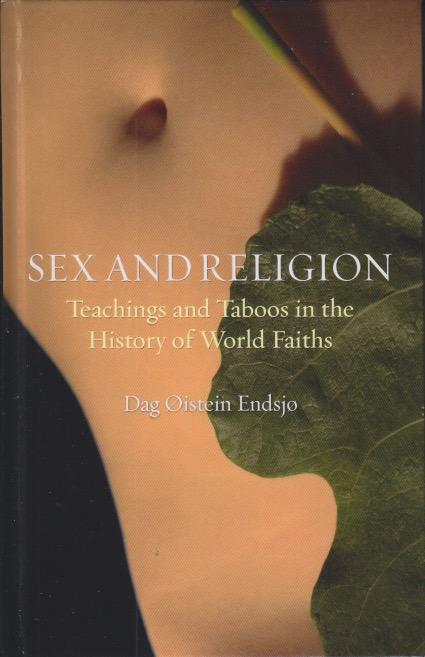
Important books often suffer because of poor distribution.  There are really only five publishers in English (“the big five”) that can reliably get their books into commercial bookstores.  I was reminded of this when reading the very important book Sex and Religion: Teachings and Taboos in the History of World Faiths, by Dag Øistein Endsjø.  The book is virtually unknown here in the States for a number of reasons.  It was originally written in Norwegian.  The author isn’t a household name.  The publisher who bought English rights is British.  It’s not comfortably priced.  None of this, however, gainsays its importance.  This book has much to teach us about hypocrisy and how religions codify prejudices, and, despite rhetoric, still value women less than they value men.  Religion is intimately connected to sex.  As I’ve written before, no religion ignores it completely.

Endsjø offers here a reasoned, logical, and religiously expert analysis of several aspects of human (and to a degree, animal) sexuality.  Contrary to much monotheistic teaching, sex is often treated as a good thing—within limits—in world religions.  Of course, that allows monotheists to step in and claim all others are pagans and debased, a tactic as old as the Good Book itself.  Religions’ real enemy, it seems, is education.  We should be open to compare what others believe—the wisdom their elders have passed down, just like the disciples.  And we should be honest about the fact that we change the rules to suit our situation.  One of the starkest examples of this Endsjø points out is that the Bible is much more stridently against divorce (which evangelicals now freely use) than homosexuality.  But guess which is the political issue?

Religions change, no matter what any true believer says.  We adapt to all kinds of new situations and new information, except when it comes to sexual behaviors we don’t like.  Even though most religions prohibit murder, the punishment for sexual offenses is frequently more stringent.  In other words, as Endsjø points out, religions care less for human life than for their own sexual prejudices.  The fact is just about all monotheistic religions have a male god and favor males over  the other half of the human race.  It even seems likely that Muslim over-reactions to homosexuality arose from copying evangelical Christians in the west.  This is an important book and if religious leaders of all stripes read and comprehend it, we would find ourselves in a much more human, and humane, world.


Myth of Ownership

“Luddite” doesn’t really describe me.  I don’t have a problem with technology, but I often object to how its used.  Let me give an example or two.  You spend your hard-earned money on a device—smart phone, for instance, and/or a laptop computer.  These you use for your personal email, which you’re not allowed to check at work, and for paying bills and buying new stuff.  So far, so good.  But once these devices become ubiquitous enough, others presume the right to use them.  Never mind that you’re paying for the internet plan and your likely unreasonable monthly fees for using that phone.  Employers, for instance, concerned about their own security, require you to use your personal phone for some kind of authentication app to protect their assets.  Hmm, and who is paying for the data use on that phone?  And the wifi that makes it work?

Or consider a volunteer organization that’s taken over by a technocrat.  Suddenly you have to set up Dropbox on your laptop (with its attendant frequent emails asking you to upgrade until he seated on a white horse comes through the skies).  You can’t participate without access to the Dropbox.  Or maybe they want you to join Slack.  The problem, it seems to me, isn’t that we don’t have enough way to communicate.  No, the problem is we don’t communicate well with what we do have.  Terse messages may be understandable for smoke signals or telegrams, but a greeting, body, and closing aren’t too much to ask for an email.  I don’t text largely because too many misunderstandings occur from the brevity, and not infrequently, from auto-correct.

I use technology daily.  For about a dozen years now I’ve been posting daily right here on this very internet.  A have a neglected Twitter account and I glimpse Facebook for, literally, about two minutes per day.  I can be reached on LinkedIn (and no, I don’t have any jobs to offer), Instagram, and yes, even Slack.  We’re all available to each other constantly, but communication breaks down when we don’t communicate clearly.  A writer I greatly respect once told me emojis are cheating.  I tend not to use them, but they may help the terse text go down a little more smoothly.  We are all challenged for time.  There’s so much to do and we’re not getting any younger.  But I was born in an era in which if you use somebody else’s stuff you ask nicely first and said “thank you” after.  Especially if they’re paying for you to use it.

Who owns whom?

Behind Science

Science and religion have been sparring partners for a few centuries now, and I believe this is a generational conflict.  The child, science, arguing with the parent, religion.  You see, religion is all about worldview.  As secular as secular scientists declare themselves to be, their worldview was likely formed by their religious heritage.  Religion can’t be teased out of culture.  Here in the western world modern science was born in a fully Christianized cultural landscape.  That’s not to say that Judaism and Islam didn’t contribute, but European culture was based on some basic Christian ideals.  Creatio ex nihilo, for one—creation out of nothing.  Another aspect is that Occam’s razor accounts for the world we see.  This was a philosophical concept born of the Christian worldview.  And the list could go on and on.

Scientists, focusing on their specializations, generally don’t sit back to think about the origins of their basic cultural presuppositions.  Many of them came directly from their religion.  Ever since college I’ve tended to think back to presuppositions, and question them.  How do we know we know?  Epistemology is as useful as it is disturbing.  And if we discover that the basis for what we know was locked into a worldview we can no longer accept, what does that say about the underpinning method?  Our science is based on the idea that the world is rational because a benevolent deity wouldn’t make it absurd.  Would he?  And why are we still referring to the deity as a male?  Indeed, we still think of him as a human.

It’s difficult to get beyond our basic cultural propositions.  Religions such a Buddhism promote the idea that change is the only constant, yet the science in countries of the east is borrowed from the concepts of the west and its monotheistic sub-structure.  We tend to think that if humans can’t sense it, and quantify it, it doesn’t exist.  So it is that many scientists become atheists, but without perhaps questioning the cultural presuppositions that have led to the scientific outlook in the first place.  Some will go as far as saying philosophy is a waste of time when philosophy is the framework of all rational thinking.  And that’s not to forget that there’s emotional thinking as well.  The big picture is complicated by philosophers writing in lingo that the rest of us can’t understand.  And even they have presuppositions.  Maybe it’s time for me to go back to school and examine them again.


Mining for History

An article by Matti Friedman in this month’s Smithsonian got me to thinking about the Bible’s iconic status again.  Titled “An Archaeological Dig Reignites the Debate Over the Old Testament’s Historical Accuracy,” the story’s about a decidedly non-biblical trope—King Solomon’s mines.  That phrase, as the article makes clear, comes from the title of H. Rider Haggard’s nineteenth-century novel, not the Bible.  As the piece demonstrates, however, many people suppose it to be biblical.  Our society isn’t as biblically literate as it is biblically motivated, so the question of proof keeps coming up.  It’s almost as if historical veracity is far more important than any spiritual truths the Good Book may be attempting to establish.  Those who need the assurance of history (those we tend to think of as literalists) often miss the message in the quest for certainty.

Reading the article makes it clear that archaeologists have discovered good evidence for copper mining in the Arabah.  This is in no way surprising.  Ancient people of biblical times smelted copper and used it to make bronze.  At issue here is the historicity of Solomon’s opulent kingdom, evidence for which we lack.  Archaeologists have been digging for well over a century now, and the magnificence of David and Solomon doesn’t really show up in the archaeological record.  Of course the issue is politicized because land claims are involved.  American literalists tend to support Israel because of its role in “end times prophecy.”  Eager to be done with this wicked old world, they require the assurance of history.  Interestingly enough, that doesn’t seem to have bothered Jesus of Nazareth very much.

Long ago biblical scholars realized that the biblical view of history isn’t the same as what we might term scientific history.  Any history, as those who specialize in it know, isn’t “what really happened.”  Objectivity is impossible.  Histories are versions of what likely might’ve happened, based on the sources consulted.  At the very least there will be the perspective of the other side.  There are facts, of course.  The Holocaust, for example, did happen.  The fascist government of Germany orchestrated and implemented it.  When trying to reconstruct that history, however, differences of opinion often arise.  That’s the nature of history.  Unfortunately we’ve seen the rise of these self-same biblicists denying the known facts of more recent history in order to make themselves appear more righteous.  They want to shield themselves from the genocide of American Indians and the evils of slavery.  Yet they are inspired by such headlines that hint that the Bible might have a tint of historical accuracy after all.  It’s all there in the passage about King Solomon’s mines.


Read Red

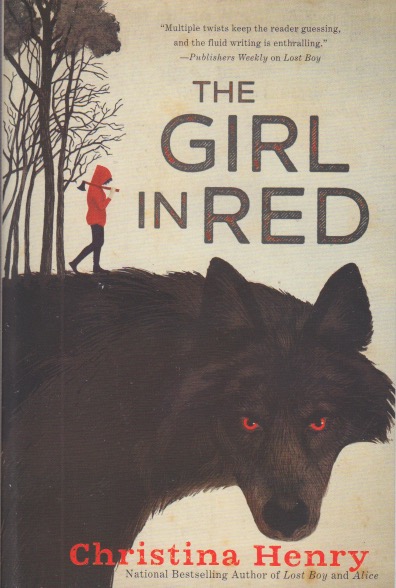
Fairy tales can be pretty gnarly.  I recently picked up a new translation of Grimm but I haven’t read it yet.  For some time I’d been aware of Christina Henry’s The Girl in Red.  As soon as I discovered it I wanted to read it.  The BISAC code says it’s science fiction but I’d call it horror.  More than that, I’d say it is the most tense book I’ve read in years.  Henry knows how to keep readers on edge.  Yes, it’s a take off from Little Red Riding Hood, but in a way that I wasn’t anticipating.  Red is a strong, believable protagonist who finds herself in a pandemic-ravaged world (imagined before Covid-19) where she has to get to her isolated grandmother’s house.  Everything between will surprise, scare, and stun.

The writing carries you along.  A government with secrets, the ever-present threat of roving groups of bandits and militias who are always on the lookout for girls, and the uncertainty of how this will all end make for a powerful tale of what people are capable of.  And not necessarily for good.  Making Red “disabled,” and black, Henry has given us a protagonist we need.  And it’s always a delight when a character finds that watching horror movies has been good training for a world where order has broken down into a Trumpian anarchy.  Scary and witty, the story has so much to like it’s difficult to know where to start beyond the recommendation to read it.

Those who analyze literature sometimes say that the great story-lines have already been taken and that the best modern writers can do is to adapt them.  There may be an element of truth to that, but even if there isn’t the clever retelling of old tales can be quite enjoyable.  This isn’t so much a retelling as a reimagining.  It’s also a poignant reminder that when things start to break down—or even in the status quo—women are put at risk.  Men too quickly resort to guns and violence.  As the story unfolds it becomes clear that Red is capable of surviving in this world, even when at a disadvantage.  There’s also no overcoming of the military.  It’s too well established and too heavily armed.  Red’s run-ins with them allow her to impress those who assume white male superiority.  In that way this is a parable within a fairy tale in a modern guise.  I’ll be reading more of Christina Henry’s books.


Change Management

Calendars fascinate and flummox me.  When I try to convert from Julian to Gregorian, or vice versa, I get hopelessly lost.  The same applies to time zones and that horror known as springing forward or falling back.  Time, as something that is constantly moving, isn’t easy to grasp.  I’m in charge of a scheduling activity at a local organization.  (Whoever thought that was a good idea I’ll never know.)  While trying to sketch out 2022, with fear and trembling, I noticed something for the first time.  In a non-leap year the dates correspond to the same days of the week for January and October.  This is also true for February, March, and November.  And September and December.  This would’ve been helpful to know, it seems, in the previous half-century of my life.  There’s solidity underlying the flux.

It was really only in the 1890s that “eastern religions” were discovered by Americans.  Our nation was so thoroughly biblicized that we had forgotten that there are other ways to view the world.  The idea, prevalent in the sixties and seventies, that we can gain wisdom from exotic religions was probably misguided.  After all, to truly understand them you need to have years of immersive experience in them.  It also helps to be a true believer.  Still, I find the conceptions of change from Buddhism and Taoism particularly helpful.  Change is permanent.  If we spend our lives fighting it we’ll be frustrated rather than enlightened.  Of course, for those of us who are chronologically challenged this isn’t necessarily good news.

Employers are busy hiring change managers.  These people work at a pretty theoretical level that doesn’t always address the desire for stability.  Sometimes I want to say, “Hey, for the first two decades of my career change was slow, and now that I’m aging I’m being told to go faster.”  I do try to keep up, but the automobile hadn’t been invented when my grandmother was born and we were walking on the moon before she died.  Since the internet, however, things have speeded up even more as ideas are shared worldwide and we see new ways of looking at things.  We may desire stability, but change is indeed permanent.  The pandemic has changed much, and things aren’t going to go back to the way they were.  I look to the notebook in front of me.  I probably would never have noticed the correspondence of January and October if I hadn’t been writing the dates out on old-fashioned paper.


Old and New

Annual holiday traditions show just how deeply ritual is established in our behavior.  As the holiday season rolls around we find our familiar customs to be fun and comforting.  I’m not much of a commercialist; for me the end-of-year celebrations are mostly about rest and peace, still a family tradition since settling in the Lehigh Valley is the Christkindlmarkt.  Bethlehem, founded on Christmas Eve by Moravians, has attempted to live up to its namesake and celebrate the season well.  It’s become an established family tradition to visit the Christkindlmarkt and we wander the tents with artisanal goods, some Christmas-themed, and others more just gift-ideas.  We seldom buy much.  It’s the spirit of the holidays that seems to come through and we need something to help us get through winter.

Each year things are a little different.  Many of the mainstays are similar, however, with the same vendors with the same merchandise.  What has changed in the past year is really us.  We’re not the only ones who make an annual tradition of this and we’re not the only ones who see the same scarves, sweaters, pillows, and pottery.  And ornaments—lots of ornaments.  We see new things because we’re different from our selves who’ve wandered through here before.  Hopefully we’re better selves.  Each time I do this I find myself growing more and more reflective.  A celebration of peace and love to all seems to hold, for the most part.  There are lots of people—too many for my comfort at this stage of the pandemic, but we’re wearing masks and hopefully most of these people are vaccinated—peace and love for all.

The end of the year has long been a season of festivities.  Even ancient peoples, especially in temperate regions, longed for the return of warmth and light.  In response to the long hours of darkness around the solstice they instituted holidays.  Times for us to get together and work a little less and relax a little more, recharging our spiritual batteries.  Yule with its Christmas trees and logs, served to bring the message of light into the darkness.  The twinkling of holiday lights is a festive sight, bringing back childhood memories of gifts, special foods, and time off from school.  I’m a different person than the one who’s written a blog post about Christkindlmarkt in the past.  If you’ve read such posts you’re a different person now too.  We all hope that the present person is a better one than the previous as we enter this season of joy and kindness.


After This

It didn’t rock the critics, but it is distinctly creepy.  After.Life came out in 2009 and quickly fell from sight.  It’s an interesting movie nevertheless.  Any film that features an undertaker, for one thing, gets edgy.  The story of a young teacher who never really felt loved and who is killed in a car crash sounds tragic enough.  Then she finds herself conscious in the preparation room where the funeral director, Eliot Deacon, talks to her, assuring her that he can speak with the dead.  As the movie progresses we begin to wonder if Anna, the teacher, really is dead or if she’s being killed by Deacon for having given up on life.  His name is suspiciously religious, fittingly for a film that deals with such a topic as the afterlife.  Overall, however, it’s pretty bleak.  One of Anna’s students also sees her after she dies and Deacon befriends him, offering to teach him his trade.

Although the critics didn’t like it, it is spooky on many levels.  Not the least of which is the question never satisfactorily answered of how to know when you’re really dead.  The movie presents the soul as a fact, and even dead bodies can move around when the situation merits it.  Death is one of those areas that religion generally enters.  Some secularists maintain their lack of religious thought even in this situation, but many people find religion helpful at this ultimate transition and the soul seems entirely natural then.  It’s unclear in the movie whether Deacon is good or bad.  He’s certainly obsequious, accommodating the wishes of families even when unreasonable.  With the dead, however, he takes a firmer stance, having to convince them that they’re no longer living.  The movie’s a bit confusing in the case of Anna—we’re never really sure if she’s dead or not.

Even with commercial interruptions (it’s free to watch that way) I found myself getting caught up in the story.  Deacon kept asking what it is the living really want.  He’s shown throughout doing the work singlehandedly, from picking up the bodies, to embalming, to even digging the grave.  His loneliness is ameliorated by his ability to speak to the dead, each of whom he photographs and puts on his bedroom wall.  Religion may be behind the soul, but no obvious religious talk pervades the film.  I have to wonder if this might not be the reason it fails to frighten its many critics.  Horror that uses religion effectively often becomes successful.  Those that avoid religion like, well, death, often fail to convince even secular critics.


Justice Hungry

Social justice is very important to me.  At the same time I realize I’m just a single individual, and a small one at that.  I have a little group of internet friends (rather strangely called “followers”) but what I do and write has barely an impact with so much wrong in the world.  I suspect most people fall into this same dilemma.  A recent thread on the local Nextdoor app, for instance, reminded me how much people care for strangers in difficult times.  I side with Batman here—people are generally good.  Most of us are easily led, however.  And as we were taught in kindergarten, just one bad person spoils it for everyone.  So we find ourselves in a world disastrously off kilter and with nobody able to fix the problem.  Problems.  There are so many that it’s overwhelming.

Democracy seems like a good idea.  The problem is that the system is easily gamed by autocrats.  World news shows us the Hitler’s playbook is alive and well, even, if not especially, among “Christian” nations.  Jesus had no political power.  As soon as his followers gained it, the message of their master faded.  Today it’s unrecognizable.  “Bible believing” Christians who violate every principle in the Good Book to retain power is hardly something the carpenter from Nazareth would’ve advocated, or even, I venture, comprehended.  Bullies with only their own interests in mind take up the reins of state and convoluted laws allow them to do so.  The selfish win.

Photo by Sarah Ardin on Unsplash

I have great admiration for the people I know who work for social justice incessantly.  The kind of people you tremble to see coming because you know you can never measure up to their level of commitment.  Needed change, however, comes in small steps.  People are fearful and don’t welcome overnight paradigm shifts.  I admire social justice warriors even as I admire hose who throw themselves in front of buses or trains to save others.  I find myself watching their heroic action while calculating the best way to help, overthinking the problem.  I’ve marched in a number of protests, and it felt good.  I’ve not been able to free myself from capitalism long enough to really make a difference, I fear.  An idealist, conceivably, but not, I hope, an unawoken one.  So I struggle for justice and contribute what I can to right causes.  At the same time I’m compelled to acknowledge and thank those who do it so much better than I ever will.


Brooding

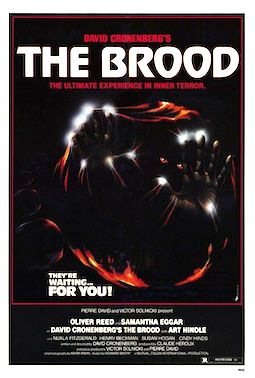
Horror was undergoing a serious development beginning in 1968.  Into the seventies many boundaries were being crossed and new areas of fear were opened.  David Cronenberg is known for his body horror.  Being the squeamish sort, I don’t always seek out his films, but I’d been curious about The Brood for several years.  A holiday weekend afforded the opportunity to see it and, in a strange way I’m glad I did.  The story concerns a psychiatrist who helps his patients embody their neuroses physically in order to deal with them.  The patients manifest in their bodies their deep-seated rage, generally from childhood parental issues.  Those of us who grew up in broken families may seem to wear them on our sleeves, but I suspect most people have issues that were unresolved from that complex parent-child relationship.

The interesting thing here is that there is really no antagonist in the film.  Dr. Hal Raglan isn’t evil, but he does have secrets.  He tries to help his patients, but one of them, Nola Carveth, has major, well, issues.  Abused by her mother, she enters Dr. Raglan’s institute while her husband cares for their five-year old daughter.  Nola’s rage, however, bears a brood of small, gargoyle-like children who, when she focuses her anger on one person, attack and kill them.  Her parents, their daughter’s school teacher, and even Dr. Raglan receive her rage, all murdered by these children born purely from herself.  This strange kind of parthenogenesis makes for a distinct form of body horror.

It’s pretty clear that there is a critique of therapy going on here, but also a kind of therapy is being offered.  I’ve had people ask me if I watch horror as therapy and I freely admit that I do.  The movies I watch are often self-care, or even a spiritual practice.  Many people suggest that horror portrays a negative view of life.  Others of us tend to think of it as more metaphorical.  And besides, the message is often an upholding of conservative social values.  This particular film is difficult to interpret in that regard.  It was written after Cronenberg had gone through a divorce and that makes sense of the central conflict of the movie.  Parenting is as difficult as it is life-changing.  While The Brood may not give solid parenting advice, it may offer a way of understanding ourselves.  If a film does that, it can’t, in my opinion, be all bad.


True Value

It’s a funny idea, net worth.  (Who says Capitalism isn’t a religion?)  We decide what people are worth by what corporate executives and small-minded economics determine what they will be paid.  We seem to think entitled, essentially worthless, inheritors of ancestral money are of more value than the workers who actually fuel the economy.  Economics is called the “dismal science” for more than one reason.  This system can’t help but to make individuals question their self worth, which, according to Capitalism, is different from net worth.  (Net requires taking the cost of goods into account, and is less than the list worth.)  And you must never tell anyone your net worth.  Why do we still hold to this system that future historians will see as just as archaic and cruel as feudalism?

Photo by Sharon McCutcheon on Unsplash

Nashotah House could hardly have claimed to be competitive with salaries.  Still, to those hired the title “professor” indicated you were a cut above many other professions.  Certainly above most clergy, the future cohort of which you were teaching.  Even so, it took a dozen years in publishing for me to reach the salary level at which I was asked to leave said seminary.  Net worth?  I tend to think of it as idol worship.  Many well-meaning colleagues congratulate me on my LinkedIn work anniversary.  None ask “How are you doing there?”  None wonder “Have you yet caught up with your net income of 2005?”  We’re all too busy bowing at the altar of the Stock Exchange.

People are worth far more than money.  For some, money, and only money (which is a symbol only), is worth having.  Some run for president on that very platform.  Holding up a Bible they’re careful that it doesn’t fall open to the place where it says love of money is the root of evil.  There is no such thing as evil in the religion of Capitalism.  Except Communism.  Interestingly enough, the New Testament advocates for a form of communism, but Acts is easily overlooked on the way to Leviticus.  I tend to stop about half-way between, at that comfortably uncomfortable book of Ecclesiastes.  It’s there that we read that all is vanity.  Money is merely a symbol of what we value.  Looking at what those who’ve devoted their lives to it have done with it, net worth sends me back to the cynical old preacher wondering about the meaning of it all.  It seems an appropriate place for the musings of a mere editor aware that his colleagues are valued much more by this “Christian” society.  I think the “net” in net worth should be cast much further.


Devils and Witches

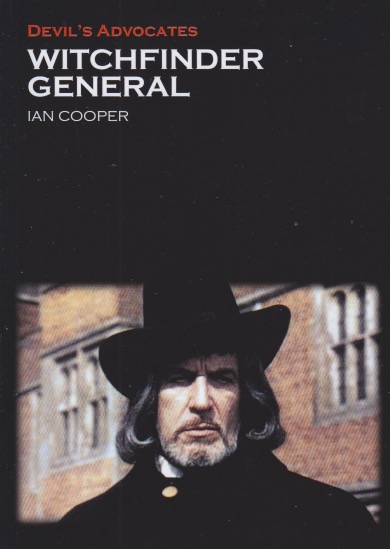
If you’re a regular reader (thank you!) you know that I’m currently under contract to write the Devil’s Advocates series volume on The Wicker Man.  As an editor myself I’m aware that academic series, often unlike fictional series books, tend to vary quite a bit from one another.  I want to try to get my submission close to the goal, however, so I’ve been reading volumes by other authors.  You may also know that The Wicker Man is part of an “unholy trinity” of early British folk-horror, with the other films being Witchfinder General and The Blood on Satan’s Claw.  Of the three my least favorite is Witchfinder General, so I’ve put off reading the particular volume on that film by Ian Cooper.  That has nothing to say about the author, but rather a lot to say about the base film.

The book is quite good.  Cooper is clearly aware of the controversy surrounding the movie and he points out some of the difficulties with it as well as what it does well.  His treatment is quite insightful.  The movie is violent and it’s an representation of the historical violence we thought we outgrew.  Matthew Hopkins was an historical “witch hunter” who was, in reality a serial killer,  mostly of women.  Fearing witches, while getting paid to find them, he was responsible for over 200 deaths.  As Cooper makes clear, the film lingers a bit too long on the abject nature of many of the tortures, not allowing us to look away.  For this reason many critics found the film distasteful.  I personally found it hard to watch.  Education isn’t always easy.

There’s quite a bit of film history in the book.  Cooper does a great job placing the movie in its cinematic context.  Like The Wicker Man, Witchfinder General is sometimes said not to be a horror film.  Indeed, there’s nothing supernatural about it.  Still, it fits the bill for many of those in-between movies that cross over into horror.  In this case it’s due to the violence.  For me, monsters are preferable to human monstrosity.  They’re easier to walk away from.  Although the witch hunts ended centuries ago, violence against women has remained.  Whether it’s legislative or physical or economic, women deserve better treatment than they’re offered by the male establishment.  Movies, and books about movies, like this one may be difficult to watch/read, but they carry important reminders that power continues to corrupt and it must be challenged and changed when it reverts to the mentality of Matthew Hopkins.  His spiritual kin, unfortunately, continue to thrive. 


Standard Maintenance

Something disturbing happened the other day.  My laptop started requiring constant plugging in.  I figured the battery was starting to go—it is several years old now.  Since time is the ultimate commodity in short supply, I made a weekend appointment with a genius at the local Apple store, which really isn’t that local.  I drove out on a rainy Saturday afternoon to get the battery replaced.  That’s not the disturbing part.  Neither is the fact that so many people were flocking around in an Apple store without wearing masks (although that does count as disturbing in it’s own right).  As I sat there watching the giant projection of devices I should consider buying, my daughter mentioned to me how like a dystopia it was: being subjected to advertising aimed at purchasing something you’re in to have repaired.  That wasn’t really the disturbing part, either.

No, what was disturbing occurred when our genius told me I would need to leave my laptop there for three-to-five days for it to be repaired.  I use my laptop daily and extensively each day.  I have no spare and I post daily on this blog.  (Those times when a post doesn’t appear it’s because I think I’ve hit the “publish” button but I haven’t.  That happened to me again recently and I only discovered days later that WordPress was listing it as a draft.  Sure enough, I’d gotten so busy I’d not click “publish”—which happens, ironically, mostly on weekends.)  I was hit with panic.  Could I live for three days, up to a week, without my laptop?  No email.  No blog.  No ubiquitous Zoom meetings outside of work?

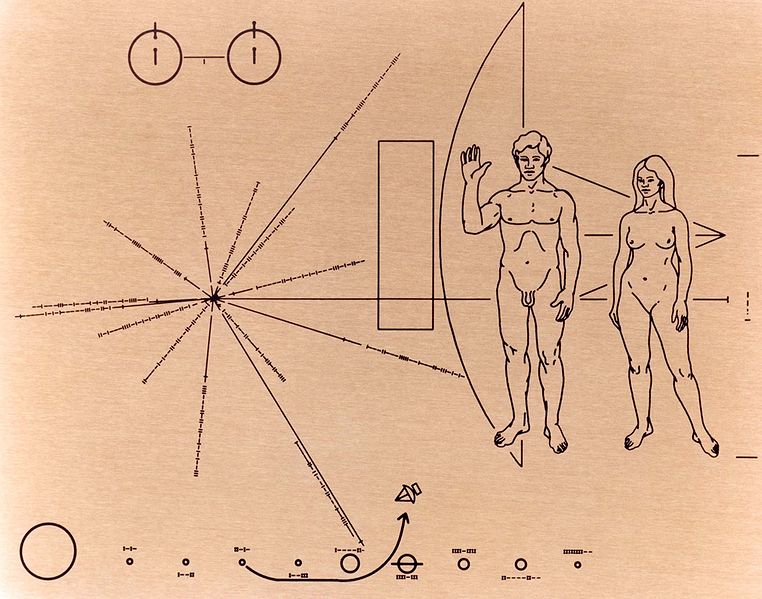
Even before the pandemic the internet had become my lifeline to the larger world.  And the thing is I’m sending my thoughts out like a Pioneer probe to that outer space of the web, not sure if anyone will intersect with it and understand the gold-plated plaque within.  At least I hope it’s gold-plated.  I’ve been blogging here since 2009, at least one laptop ago (or perhaps two).  I’ve posted over 4,500 times.  What would happen if the earth went through the tail of a comet and wiped out all this electronic data?  Would there be anything left at all?  That’s the part I found disturbing.  My ambivalence about technology doesn’t mean I’m not addicted to it.  I was spared an immediate crisis since the genius at the bar told me the battery (being such an old model) was out of stock and would take a few days to arrive.  Meanwhile I could continue to live in my virtual world as normal.