Nihil Obstat

Intolerance within religions has been on my mind lately.  Every religion has a history and the study of that history demonstrates that religious leadership reflects the rise of dominant personalities to the top.  Once that dominant personality reaches the zenith of leadership, he (and it usually is a he) decides what it is proper, or orthodox, for others to believe.  I was thinking about this while seeing a book with an imprimatur.  There is a wide range of belief within Catholicism.  Books which teach official doctrine, or which are used for educational purposes, require an imprimatur for widespread use.  An imprimatur requires a review process and includes a designated bishop to declare the work “without error.”  In the context of scholarship, this practice makes certain assumptions—that humans of a certain rank can declare a statement an error or fact.  A theological fact.

Theological facts don’t really exist.  If a fact is something that has empirical measures to determine its truth or falsity, theology falls outside the pale.  Ultimately it will come down to the word of one person outweighing that of another.  And as doctrine changes over time it would seem that old imprimaturs might expire.  The idea is that when something is declared without error, it is without error at that time.  As centuries progress, new empirical facts are discovered that impinge on theological “facts.”  The idea that any one word is final seems hopelessly time-bound.  I’m not picking on Catholicism here, because many religions have official teachings that rank as non-Catholic nihil obstats. It’s merely a convenient example.

The fact hidden in plain sight in cases of religions not permitting diverse views is that censorship stands behind it.  It’s no wonder that in a world increasingly supportive of diversity that “one size fits all” theology has come to be questioned.  Religions, however, lose their authority if they can’t declare the truth or falsity behind a proposition.  Bishops come from priests.  And priests come from seminarians.  I used to teach seminarians—I don’t know if any of my former students have become Episcopalian bishops or not—opportunities are about as rare as teaching posts.  The point is, those who make such doctrinal decisions had to learn them partially from the academic community that grants degrees.  As the academy opens up to new ways of looking at things, future imprimaturs will reflect the realities of their times.  Religions—all religions—evolve and change.  What may be an error today might look quite different in a future light.  Perhaps tolerance now will anticipate where we’ll eventually be, in the truth of the time.
Photo by Sarah Ardin on Unsplash

The Unholy Trio

Culture has a powerful prophylactic component.  People don’t want to be seen questioning authority and accepted “truths.”  This is especially the case as they grow out of their teenage years and learn to fit in as part of the herd.  Some subjects make this particularly clear because cultural biases deride them, never giving them a fair chance at consideration.  I’ve run into a number of these over the years, but an example will bring these abstractions to clarity.  Recently a commentor sent me to the video “Kaneh Bosm: The Hidden Story of Cannabis in the Old Testament.”  The idea is one I’ve addressed before—that cannabis was used in incense combinations in the biblical world.  Now, I haven’t done research on this, but what becomes clear is that many scholars over the years have dismissed the idea out of hand because, well, it invokes pot.

The reason marijuana—something I’ve never used and have no desire to try personally—has been demonized is one of considerable interest.  This is especially the case since it appears to have been widely used in antiquity.  No respectable biblical scholar, however, would be caught suggesting that it might have been incorporated in the rites of ancient Israel.  The modern stigma of cannabis, in other words, discounts the possibilities that in ancient times it was used in sacred contexts.  The “war on drugs” in the United States was largely led by religious conviction.  The heirs of Christian prohibition.  Sure, some drugs can lead to real problems.  The deeper issue, however, is that society’s structure leads people to the place where drugs seem to be the only answer.  The civilized response?  Make them illegal.

That mark against controlled substances colors our view of history.  If such things are illegal now then they must never have been used.  Chemical analysis of various utensils (what might be called “paraphernalia” today, indicates that ancients knew of and used cannabis.  Our ordered view of ancient Israel as receiving the one true and utterly sacred faith preclude the possibility that our demonized substance could’ve been used in ancient times.  I’ve noticed this with the other topic of the documentary—Asherah.  Conservative scholarship still denies that ancients might’ve thought Yahweh had a spouse.  (My own work does not deny this, but simply questions the nature of the evidence; I think it is likely people believed Yahweh had a consort.)  So we once again collide with a “no go” topic.  So, after we admit the possibility of drugs and sex, so the thinking goes, what we we find next—ancient rock-n-roll? 


Feeling Bookish

It does my soul good to attend a used book sale.  I recently attended one while on a visit to Ithaca.  Everyone was wearing a mask.  Even though it was May, it was quite cold and rainy, and due to the limited number of people permitted in the space, there was a line that took about half an hour to endure.  This did not deter people and it was this that most lifted my spirits—these people were devoted to books.  At times when the media gets me down, informing me that book culture is dying and that all people want are their devices and their distractions, seeing proof of the love of books is restorative.  The used book sale is a place of discovery.

Although it’s easy to nip over to Amazon (or better, Bookshop.org) and order your book, especially during a pandemic, there are things you only find by being where the books are.  I keep an extensive reading list with me.  Before I go into a sale venue I promise myself I’ll stick to my list.  But what a facile promise it turns out to be—how can you make such a vow without knowing what you might find?  Books you’ve never seen or imagined before?  That’s the discovery aspect that sweetens the in-person experience.  And although I still find crowds scary, I tend to trust people who like books.  Besides, the books I tend to read aren’t always in the most popular sections.

The Friends of the Tompkins County Public Library book sale has a dedicated building with permanent shelving.  While wandering is fine, maps are also available.  I’m occasionally ribbed for having too many books.  One of the reasons I dread any move is knowing the movers’ inevitable comments about the fact.  People who love books are made to feel somehow inferior for it.  Fans of Kindle or other such readers extol the virtues of having lots of books that take up no space.  Such books, however, are limited to those converted to electronic form.  The many thousands of books published before the invention of the ebook, many of them out of print and mostly forgotten, can only be found in libraries, used bookstores, and sales like this.  (Google books hasn’t found everything yet.)  It was cold and rainy outside.  In here there were silent companions that speak loudly.  Books, as my daughter said, are like snacks for the mind.  And sometimes you just don’t know what you’re in the mood for until you go to the kitchen and browse.  It can warm your soul.


You Have the Right to Remain

It’s strange sitting in a meeting where you’ve written a book on the topic under discussion and nobody knows about it.  This is one of the problems of publishing with an academic press.  Books get lost and buried.  Maybe the other way around.  A problem we academic editors frequently run into is that authors tend to think a book is a book.  Publishers recognize several different kinds of books, well represented among them those that are destined for the “library market.”  You can tell them by the way they’re priced.  Now I must confess that I’m behind the times in this regard.  I still tend to think twenty dollars is a lot to pay for a book.  I say this even though my job, day after day, includes pouring over book budgets to see how an academic book can be made not to lose money.

It costs a lot of money—most of it overhead—to produce a book.  In order not to run a publisher bankrupt, it needs to sell enough copies to cover its costs.  Library market books are priced that way because they are expected to sell only to libraries.  Certainly, if they were priced lower some academics would buy them, but the truth is not many academics do.  I realize I was an outlier when I was in the academy.  Without a research budget I would spend my own money on a book priced a hundred dollars if I really needed it for my research.  I was aware, even at that time, that others seldom did this.  As an academic colleague once told me, “I like to buy shoes.”  And let’s face it, there are just too many books out there to buy.  “Publish or perish” has more than one meaning.

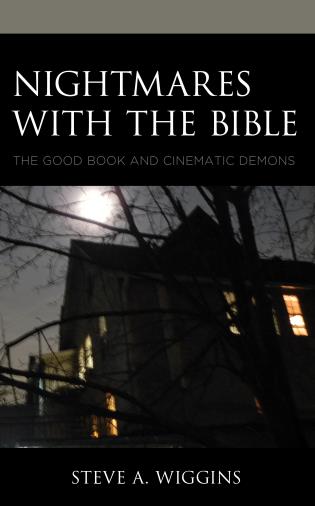
So I’m sitting in a meeting where the topic of discussion is something on which I’ve written a book.  My opinion is not asked—my book is priced for the library market and I know it—so I don’t really expect it to be.  The question is whether general readers will find the subject compelling.  Speaking strictly for me I’m pretty sure they will.  I signed my contract for Nightmares with the Bible before I knew the series would be priced for the library market.  That designation also indicates minimal marketing.  What publisher is going to try to push a book that costs that much when they know individuals can’t afford it?  So I sit in the meeting and keep my mouth shut.


Shunned

Belonging is important for our species.  As much as some of us may be introverts, we still need other people.  Given the wide divisions of human interests and activities, one way people have traditionally come to know one another is through religious organizations.  Let’s face it, getting to know your neighbors can be dicey.  People from work may not be those you want to spend off-hours with.  Joining an organization is a great way to get to know people and, if you’re seeking like-minded friends a religion has been a time-honored way to find them.  Of course, many religions are now becoming as polarized as our society, but even despite that one religious practice seems especially insidious—shunning.

Shunning has been used in Christianity from the beginning.  One of the real issues, verging on torture, is when someone is raised in a tradition and has made all their friends in it.  Many sects encourage this, some overtly, other less so.  Those within the fold will not, it is emphasized, lead you astray.  If you are shunned, then, you lose not only your welcome at social gatherings or worship, you also lose your friends.  For separatist sects—consider the Amish, for one example—integrating into another society is extremely difficult.  You were raised to live one way and how would the shunned even begin to know how to live like other people?  This applies not only to small sects; being part of the group is a major draw for everyone from Catholics to members of an evangelical mega-church.  It’s a means of having a community.

Moving accounts exist of Mormons or other believers being excommunicated or disfellowshiped.  The world they knew is gone.  Religions create community and the lost of that community is a cruel punishment to invoke.  Particularly since the offenses that lead to such exclusion are often doctrinal—matters of personal belief.  People are naturally curious, and the desire to learn more frequently leads into uncharted territory.  Some traditions will then invoke sacred texts—more specifically a certain interpretation of sacred texts—to justify the exclusion of the curious.  Those texts, however, are interpreted by other fallible human beings.  Still, the fact that religions continue to use shunning (call it excommunication or any other name) is an indication of the inherent cruelty that religions can express.  What could be more hurtful, especially among those who separate themselves from the world, than to throw them out of the only enclave that they know?


Looking In

There’s a real danger to the lifelong study of religion.  Learning to look at any tradition from the point of view of an observer will create a sense of being on the outside looking in.  I’m a member of a religious organization.  I occasionally consider pursuing ordination within it—this was my original sense of my calling in life—but I’m compelled to consider the phenomenon of being outside looking in.  When I was an Episcopalian (before the church showed its true colors in my particular case), I wrote a letter to my rector asking how I could get off of the church steps and be invited inside.  My rector wrote back with some insipid advice and was among those who voted, as a trustee, to oust me from my fourteen-year career at Nashotah House.  Outside again.

Studying the history of religions provides dangerous levels of insight.  Simple, mindless acceptance of teachings becomes impossible.  This isn’t arrogance, as any who know me can attest, but rather a form of hyper-awareness.  You can’t emerge from forty-plus years of reading about, and deeply pondering, religion unscathed.  Many, of course, dismiss any observations by those lacking the denominational seal of approval.  “If you knew what you were talking about,” so the reasoning goes, “you’d be a minister or a professor.”  So you speak from the sidelines at best.  Outside.  Even within my own group I have merely the role of “member,” lacking the official piece of paper from the seminary or other accrediting body that states I might know some things.

Of course, I have much yet to learn.  This religion thing is a tough nut to crack.  Were I younger and better paid I might consider undergoing college again to take a different path.  As it is, I’ve invested more than a half-century trying to get where I am, wherever that is.  I sit outside watching the birds.  They’re back pretty much in full force now.  They seem so certain about where they’re going.  How can you fly without a full level of commitment?  Earthbound, I muddle about with my head somewhere above the clouds I cannot reach.  I read about religious traditions unknown to me.  Often I find nuggets of great value in them.  Of course, I’m not clergy so you need not take my word for it.  I, after all, draw inspiration simply by sitting outside, always outside, and watching the birds. 


Our Stories

People’s stories are interesting.  The received wisdom is that if you wish to change a politician’s mind, tell her or him a story.  In fact, it seems that we’re hardwired to enjoy stories.  That’s why it’s so unfortunate that we seldom take the time to listen to other people’s stories.  We’re too busy.  For an organization to which I belong, I recently asked that five minutes of each agenda be set aside so that one member could tell her or his story at each meeting.  That way it’s possible to get to know who it is you’re working with, without the tired “one thing nobody knows about you” trope.  The idea was adopted and it seems a worthwhile use of agenda time.  I don’t know that I’ve ever heard someone’s account and found myself anything less than fascinated.

When we reflect back over our lives, we do it in narrative format.  We tell ourselves a story about our life.  And these stories intersect with other people’s stories.  Some of those people may be famous or wealthy or ordinary, but each is unique.  Considering that there are billions of us on this planet, that’s a lot of tales.  There’s not so much a lesson to be learned from this than there is a simple reminder—it is worthwhile to listen to others.  I’ve run into a few people who are household names in my time.  Some of them are routinely criticized in the media, by people who never met them.  Who don’t know them.  Who don’t know their stories.

Much of our time at “work” is really time trying to earn money for a company.  It may involve dealing with other people, but not closely enough to really know their story.  I think of this every time an author and I could engage in a conversation about our experience of the academic life only to have to keep the discussion to “the business at hand.”  The human element, it seems, is unimportant.  I would read other people’s stories all day, if I could.  We crave a narrative, but getting one’s not a paying position.  How have we come to this place where we have time for only disconnected memes and not the stories behind them?  Bookstore owners know a perennial selling genre is the biography.  We’ll pay to know a famous person’s story.  The fact is each of our lives is also a tale worth telling.  We would all benefit from listening to each other’s experiences.  Tell your story, I’m listening.


Considering the Time

Does anybody else find the name “Office 365” ominous?  Perhaps I’ve been reading too much about Orwell, but the idea that work is waiting for you every single day of the year is worrisome.  The way people unthinkingly buy into technology is a way of being used.  Like Cassandra, however, I get the feeling I’m just talking to myself.  365 could simply mean it’s always available.  For me, however, the PC is symbolic of corporate America.  And corporate America wants everything thing you have, at least if it can be liquidated.  That includes your time.  Now that the weather’s improving I spend beautiful days sitting at a desk behind a screen.  Before I know it that beautiful day’s gone for good and I’ve not stepped outside once.  I’ve been 365ing.

An organization I know has a dysfunction.  It keeps trying to plaster on technological bandages to solve its problems.  Such bandages only pull the wounds open again when they’re yanked off.  It’s the latest thing, the new communication technology that “everyone will use.”  Only it never is.  It’s just one more app that I’ll have to learn and yet another way to invade my private time.  Time I might otherwise spend outdoors.  Look!  The sun is shining!  All day long the birds and bees fly by my windows, celebrating.  I’m sitting here scratching my head.  Yammer or Slack?  And who comes up with these stupid names?  And are they available 24/7?  Do they even take into account that human beings have to sleep?

Studies now show that people my age who routinely get less than six hours sleep a night have a greater risk of developing dementia in their seventies.  Yet Office 365 will be waiting even for them.  Those whose retirement funds were never as secure as they hoped or thought they were face a future at the Office.  It will be there, always waiting.  Like Winston my time comes at a cost.  It’s the chill, early hours of the day.  Even as I work on my personal writing (which is not even done in Word, thank you very much), I know that the Office—which now includes Teams and even holds my calendar in its icy electronic fingers—is waiting.  Perhaps, if it’s a weekend, I’ll be able to stave it off a bit.  Even if I can, however, it will be waiting 24/7, 365.  Only time outside those parameters can be called one’s own.


Just Justice

Like many people raised to believe in democracy, I’m distressed to see that the right wing, worldwide, has taken to a full-on attack against it in an effort to keep power.  In the United States Republicans that stood up against the cult of Trump (who was no architect, but a figurehead only) are now being run out of Dodge by their own party.  Meanwhile a friend in Britain sent me an article about the open and obvious corruption of Boris Johnson and how the Tories are completely overlooking it in an effort to keep “democratic authority.”  It wouldn’t be so bad if the right wing came right out and said “we want to run things, no matter what it takes,” but instead they appeal to religious ideas and try to make it seem like their side alone appeals to “justice” while doing the exact opposite.  Paging Mr. Orwell…

The best test case is Jesus.  Have you noticed how Jesus has fallen out of right-wing Christianity?  Apart from occasionally taking his name in vain, the principles they stand for generally go against the core teachings of the Gospels.  The fascism of the right wing has taken what good there was in Christianity and jettisoned the kernel to keep the shell.  It’s like a bag of pistachios where all the nuts have been discarded, leaving only the hard casings behind.  The really sad thing is that both in the US and in Britain, these power-mongers are in the minority.  They use political loop-holes to make their strong-arm tactics look like the will of the people.  Things like restricting voting access, made possible by courtroom politics.  Isn’t Justice supposed to be blindfolded?

We know for a fact that many of these same people are fully cognizant that fascism led to World War II.  They know Hitler used the same tactics to gain power.  They know that millions and millions of people died.  And now they trumpet the one thing that brought this nation together—the recognition that fascism was evil—as the way of true Christianity.  I’m sometimes asked if I believe in demons, having written a book on the subject.  Demons are, if you look closely, are considered the source of evil in the world.  Quite often stories about them have them possessing good people by pretending to be something that they’re not.  Can demons take over entire political causes?  Did we not see naked evil in the Nazi regime?  How do we not recognize it now that it has taken root in one political party that has claimed the name of “Christian” while simultaneously discarding the teachings of Christ?


Women and Mothers

This is our first Mother’s Day with a female Vice President.  After four years of a female-groping administration, it feels like we’ve made a turn in the right direction.  Ironically, it’s often religions that keep women oppressed, even while women are often more faithful to them.  Religions like to claim to have the answers, and for the monotheistic traditions an origin myth with Eve—the first mother—as the first picker of forbidden fruit, has suggested one answer that has held women down for centuries.  Taking origin stories too literally can cause so much suffering in the world that we’re confronted with the question of their morality.  Religions are for people.  If they exclude half the human race we need to pause to ask if we got something wrong.  It’s Mother’s Day, always on a Sunday.  It’s a chance to think about such things.

Many churches will have sermons honoring mothers today.  Will they work for the wellbeing of women for the remaining 364 days of the year?  Our society, purely on the basis of biology, routinely puts women at risk and underplays the need to help them when that happens.  I’ve seen this firsthand.  We’re finally starting to get some female representation in Congress, yet less than a quarter of the seats are held by women.  Isn’t government supposed to represent its constituents?  Why has half of humanity had to struggle for so long to be treated as equal?  Mother’s Day cannot be a salve to ease our consciences about mistreating women for the rest of the year.  Equity should not be a goal, it should be reality.

We’ll be thinking about our mothers today.  Still under a pandemic, we’ll be Zooming them or calling them.  Those fortunate enough to live close may even get to see them in person.  These mothers sacrificed a lot to take on that role.  Our society could not continue without them.  We’re starting to come to the realization, I hope, that it is male-devised forms of government and business that are the problem.  They protect the wealth and power of a few.  They jealously guard against letting men offer the true justice of equity.  Some religions have begun to address the obvious injustice they have largely originated.  The story of the Garden of Eden was meant to teach a lesson.  That lesson has been abused for centuries as a way of making women seem somehow less than men.  It’s Mother’s Day.  Let’s see if we can’t learn to read more deeply and apply what we have learned.


Artificial Priorities

Maybe it has happened to you.  Or perhaps it only affects ultra-early risers.  I’ll be in the middle of typing a blog post when a notice appears on my computer screen that my laptop will be shutting down in a few seconds for an upgrade.  Now, if you’re caught up in the strengthening chain of thinking that develops while you’re writing, you may take a little while to react to this new information.  If you don’t respond quickly enough, your computer simply quits and it will be several minutes—sometimes an hour or more—before you can pick up where you were interrupted, mid-sentence.  Long ago I decided that automatic updates were something I had to do.  Too many websites couldn’t run things properly with old systems.  It’s just that I wish artificial intelligence were a little more, well, intelligent.

Photo by Markus Spiske on Unsplash

I keep odd hours.  I already know that.  I’ve been trying for years to learn to sleep past the long-distance commuting hour of three a.m.  Some days I’m successful, but most days I’m not.  That means that I write these posts when computer programers assume everyone is asleep.  Doesn’t it notice that I’m typing even as it sends its ominous message?  Is there no way for automatic updates—which send you warnings the day before—can do their work at, say, midnight or one a.m., when I’m never using my computer?  Ah, but the rest of the world prefers to stay up late!  I need the uninterrupted time when few of us are stirring to come up with my creative writing, whether fictional or nonal.  So I have to tell my electronic conscience to be patient.  It can restart at ten p.m. when I’m asleep.

Wouldn’t it be easy enough to set active hours for your personal devices?  After all, they pretty much know where we are all the time.  They know the websites we visit and are able to target product advertising to try to get us to buy.  They data-mine constantly.  How is it that my laptop doesn’t know, after many years of this, that I’m always working at the same time every day?  Is there no way to convince it that yes, some people do not follow everyone else’s schedule?  What about individual service?  You know what brands I like.  You sell my information to the highest bidder.  You remember every website onto which I’ve strayed, sometimes by a poorly aimed click.  I could point out more, but I see that my computer has decided now is the time to resta


Reviewing Nightmares

If you’ve wanted a copy of Nightmares with the Bible but the cost is a little dear, I might recommend you look on the Reading Religion website where, as of my last look, a free review copy is available.  The catch is you have to write a review.  This is, of course, first come, first served service.  I tried, more than once, to get Holy Horror listed on their website for review, so I’m glad to see one of my books finally made it.  The idea of the horror hermeneutic seems to be catching on.  Technically speaking, however, what I’m doing is more history of religions than hermeneutics.  History of religions, at least part of it, examines whence ideas arise.  Nightmares asks that question specifically about demons.

The specific focus on horror in religion is a fairly new field of study.  Biblical scholars—indeed, those who specialize in very old fields of study in general—must keep looking for new angles.  Unlike any other piece of literature, the Good Book has been the target of scholarly interest from the very beginning of the western academic tradition.  It’s easy to forget, when looking at many secular powerhouse schools, that the very idea of higher education arose from what is now the discipline of the lowest paid of academic posts.  Being so old, religious studies, known at the time as theology, is hardly a venerated field.  I tend to think it’ll come back.  If you look at what’s happening in politics in this country, it’s bound too.  And yes, there will be horror.

Horror studies in the field operates by recognizing that horror and religion share common ground.  Like religion, horror is considered backward and uninformed.  Neither is really true of either horror or religion, but perception becomes reality for most people.  Finding themselves in remedial class together religion and horror have begun to speak to one another.  Horror has quite a following, even if those who like it keep mostly quiet about it.  The same is true of religion.  Many of the most effective horror films bring religion directly into the mix, often making it the actual basis of the horror.  The first books that I know of that brought the two explicitly together only began appearing at the turn of the millennium.  At first there were very few.  Now an increasing number of tomes have begun to appear.  For better or worse, two of mine are in the mix.  If you’d like to review the most recent one, you might check out Reading Religion, and maybe spare a kind word or two for what are, after all, baby steps.


Welcome the Stranger

Welcome, sibling! Have you ever contributed to a genealogy online?  I know not everyone’s into their ancestry, but there’s enough of the treasure-hunt to it, and enough mystery to keep you turning the pages.  Some time ago—it was when I was a professor, because I actually had some leisure time—I posted a bit on WikiTree.  WikiTree is a free communal effort to map the world of relationships.  Just about every week there’s a newsletter emailed around, offering how many degrees of separation you are from someone famous.  Often this is tied into the news cycle, so recently Prince Philip was among those measured.  Then Carrie Fisher.  Without fail, over the past several weeks, the family member through whom I’m connected to the famous is a great uncle.  The same great uncle.

I usually lose interest when the relationship starts to get to siblings and spouses.  There are webs everywhere.  Still, this intrigued me.  I’d never knowingly heard of this great uncle (and certainly never met him) but he was under 20 degrees of separation from several famous people.  It made me consider how you never can tell what relationships might lead to connections.  My direct ancestors, as far as I know, were all humble, work-a-day sorts.  One branch of the family had an engineer a couple generations removed, but for the most part they were farmers, laborers, truck drivers, and such.  The web of human relationships includes everyone, of course.  At some point in our family trees, we share a common ancestor, be they Neanderthal or Cro-Magnon (or a blending of the two).  When we harm or hate another person we’re harming or hurting a sibling, distant or close.

Getting along with everyone may be too much for which to hope, but at least tolerating seems worth stretching for.  I once found a long-lost cousin.  This was accompanied by a wonderful feeling of having found a family I didn’t even know.  Genealogy made that particular reunion possible.  Before that I might have passed this cousin as a stranger on the street.  It made me stop and think.  Is that stranger actually someone related?  Traveling back to the areas my ancestors lived I occasionally glimpse a face that could be a distant uncle or aunt.  My mental calculus kicks in, but there’s really no way to know just how close they might be.  Now, if I were my unknown great uncle chances might be somewhat better that I’m only a degree or two removed.  Even so, I should try to treat the stranger as though that were the case.

We’re all interconnected.


Pricing out of Business

Maybe you’re like most normal people and don’t pay much attention to who the publisher of a book is.  If you read a lot, and can get behind the glitz and glam of an Amazon page, you might come to trust certain publishers over others.  The fact is, despite the difficulty some of us have getting published, there are a lot of presses out there.  Some are clearly self-publishing vehicles, but many are small, independent houses that focus on specialized topics.  The sheer numbers can be bewildering.  I was looking for a reputable book on a certain subject the other day and, given my job, I always check the publisher.  Several in a row came up that I had never even heard of before.  I guess there is money to be made in publishing yet, if only one could find the matching pieces.

With academic publishing you can spend five or more years of your life writing a book and you’ll earn royalties that literally won’t cover a month’s rent when you’re done.  Even while this is happening there are people who make a living publishing books with presses you’ve never heard of.  They know how to get average citizens to buy their books.  I’ve been working in publishing for over a decade now and I guess I still don’t have it figured out yet.  It’s complex, and even with online publishing helps like agent-finding sites or Duotrope, you’ll find that each day brings its own changes.  I’ve learned through personal experience that many publishers simply don’t last.

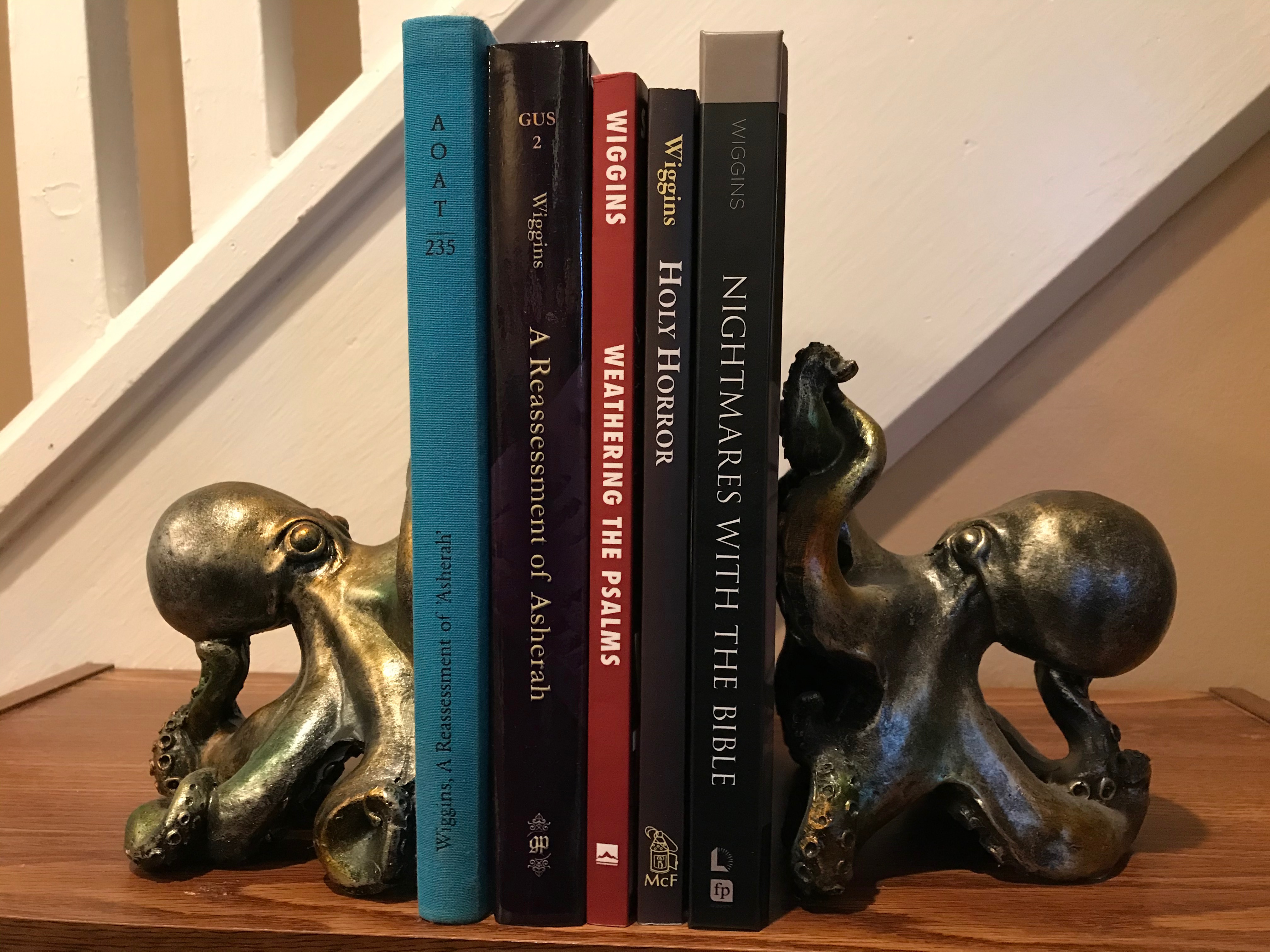
What many of these fly-by-night publishers understand better than established academic presses is that price matters.  Well, let me put that in more precise terms, for all publishers need money—fly-by-night publishers know that average people will buy only the books they can afford.  These presses I’ve never heard of sell books for the industry standard of about sixteen bucks.  My least expensive book sells for about twenty-two and I’ve been told more than once that it’s too expensive for most mortal budgets.  Collectively, my four books cost almost $250, averaging out at sixty per pop.  Two of them were written for general readers who have no hope of being able to afford them.  I tried to find an agent for one of them, and the other was a series book (no agent will touch such a thing).  Perhaps I should’ve tried a lesser-known press that could afford to offer my books at affordable prices.   You could do worse.


As Nature Directs

The news about the “stampede” in Israel last week is tragic.  People like to gather in large crowds once in a while.  Religious events are sometimes such occasions (although not so much the case among mainstream religions anymore).  In this case the celebration, largely among the Ultra-Orthodox, was Lag BaOmer, a festival with unknown origins.  It has to do with counting the omer, a measure, in a biblically based instruction regarding grain offerings.  Since it’s based on the lunar Jewish calendar, it doesn’t fall on the same date of the solar year every time.  To be honest, I’d not heard of this celebration before the tragedy that occurred last week.  Having been confined for over a year, many religious groups are anxious to be back together in numbers.  Nothing reinforces belief better than having the size to be taken seriously.

A few years back, if I recall correctly, it was Muslim faithful at Mecca who experienced a tragic uncontrolled panic.  Religious ideas bring people together, but they can’t always control the results.  I’m reminded of what a Protestant clergyman told me many years ago: after a Billy Graham crusade came to town, the regular ministers were ill-equipped to handle the large numbers of emotionally charged members who normally sat still in the pews.  Religion stirs people, but its psychological nature shows when it leads to tragedy.  No particular group is immune since we are all emotional animals.  One slip on the stairs, one panicked individual, and those nearby can be infected.  Already emotional from the event itself, nature takes its course.

Stampedes are an evolved flight response.  Herd animals, when perceiving a threat, begin to run.  Others, not even directly aware of the threat, join in.  Other animals, not aware of their “herd mentality,” seem to handle this more naturally than do people.  Indeed, our religions often instruct us not to think of ourselves as animals at all.  Our religious events are often removed from our familiar surroundings.  I suspect that may be one reason people don’t find “Zoom church” very satisfying.  The emotion of religion is more easily spread in person.  In a place specifically designed as being outside the norm.  You take your hat off in church.  You sit quietly, reverently, in church.  You do not use coarse language in church.  In a pandemic you try to join in while physically in the environment where the rest of everyday life occurs.  When we gather again, we must do it while being aware of our nature.  Being part of nature itself can often be, if well thought out, cause for celebration.  We mourn those who fall victim to it.