Low Stakes

Elsewhere on this website I refer to myself as an “unfluencer.”  This quasi-serious attempt at humor does bear a kernel of truth.  It’s difficult to get your voice heard on the internet.  By the time I began blogging, vlogging had already become a thing and people prefer watching to reading.  (I do have a few YouTube videos out there, but they take an awful lot of time to put together and I’m kinda busy trying to write obscure books.)  The reason I mention this at all is to make a point.  People sometimes wonder why a guy who has a doctorate in religious studies wastes his time with horror.  There’s a good reason.  People will pay attention when the stakes are low.  Is horror important?  I think it is, but most people don’t.  Genre fiction is easily dismissed as being off in fantasy land, despite the growing number of voices suggesting we should be paying attention to how it influences (unfluences?) religion.

Those who delve in such blue collar things sometimes grow to be taken seriously.  I suspect—since I wouldn’t know—that it’s a matter of sticking with it long enough, and producing enough content that people have some standard for comparison.  And the interesting thing is, you often notice fascinating features along the way.  While working on my next book the other day, I realized a major gap in the study of history of religions.  I can’t say what it is here, of course, because someone without a 9-2-5 may scoop me.  But the gap is clearly there.  And I would never have noticed it if I weren’t spending my time writing about low-stakes monsters.
I’m a blue-collar thinker pretty much through and through.  Talking it over with my brother the other day, I realized that despite the years and years of higher education, I was brought up working class and I look at the world through those lenses.  When I was actually a professor that began to change, but in retrospect, I think that’s why my students liked what I did in the classroom.  I wasn’t some child of privilege handing down tired observations meant to impress other children of privilege.  I’m just a peasant trying to figure things out.  I can point to no highly educated forebears—neither of my parents finished high school.  No, I have been fortunate enough to have clawed my way through three higher degrees only to realize that people only listen if the stakes are low enough.  And I’m alright with that since I get to spend the time with my beloved monsters.

Black History

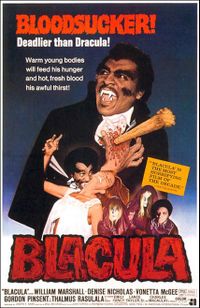
The first of the “blaxploitation” movies, Blacula is a period piece.  In 1972 vampires were still all the rage, following from Dark Shadows and the continuing Hammer hammering of the monster.  They even produced Dracula AD 1972, not to put too fine a point on it.  American International Pictures wanted in on the action and produced the first Black vampire in cinematic history.  Rather than a remake of Bram Stoker’s novel with a Black cast, the story begins with Mamuwalde, an African prince, entreating Dracula (whom he doesn’t know is a vampire) for help ending slavery.  Instead, Dracula turns Mamuwalde into a vampire that he names “Blacula,” and places him under a curse.  In the seventies, a homosexual couple purchases Dracula’s castle, intending to sell the contents on the antique market.  One of those antiques is a locked coffin.

Once he’s freed in America, Blacula quickly runs into Tina Williams, the spitting image of his long-deceased wife.  Meanwhile Tina’s friend Dr. Gordon Thomas, suspects that there is a vampire on the loose in LA.  Although the opportunity for camp is clearly present, this movie is played straight.  Mamuwalde is a monster—he kills several people—but his real motivation is to regain his dead wife, whom, he is convinced, is Tina.  When Tina is shot by a trigger-happy cop in the tunnels below a chemical plant, Blacula turns her into a vampire.  When she is staked, Mamuwalde tells the doctor that he need no longer pursue him.  He voluntarily climbs into the sunlight and dies.

Now, this wasn’t a great movie but it does seem to have a reasonable bit of social commentary.  It was the seventies, but racial and orientation slurs were still widely accepted.  And people dressed like, well, it was the seventies.  The Black characters, however, are portrayed with dignity, and Mamuwalde is presented as nobility.  Perhaps more importantly, this movie opened the doors for further horror films featuring African-American lead characters and plots.  A few decades later Blade, based on a comic book hero, would once again foreground a Black vampire who’s on the side of good.  It’s still some distance from Black Panther, but the process had to begin somewhere.  Watching Blacula was like watching history, and I suppose viewing movies is like a selective piece of history.  By this point AIP was well established, and influential in its own way.  I’d heard about Blacula since childhood, but until streaming it never really came across my screen.  Nevertheless it remains an important piece in this country’s ongoing vampire mania.


Bibliographer for Hire

Why is bibliographer not a job?  Why can’t a person make a living categorizing knowledge?  I ask this because I see YouTube videos of people saying your job should be what you enjoy doing.  What if you enjoy creating bibliographies?  You see, my research methods are a bit unconventional.  They kind of have to be since I have no institutional support for my writing, and yet I want it to be intelligent and informed.  That means I have to locate my own sources and inevitably, when I’m compiling a bibliography, I’m happy.  Even if it means ferreting out obscure sources and trying to learn where something was originally published, I’m still at the top of my game.  (Yes, this is one of those things that the longer you’ve been doing it, the better you get at it.  These days it means learning to engage the internet for research.  Since it’s more of a money-making venture geared towards entertainment, that can be tricky.)

I remember those days of typing out bibliographies by typewriter, smearing White-Out all over, or trying to use that ribbon stuff that was supposed to be able to type over mistakes.  My friends and fellow students hated bibliographies.  Secretly, and perhaps perversely, I was enjoying myself.  You see, a bibliography is gathered knowledge.  When I finish reading a nonfiction book, particularly one where I want to do further reading myself, I go through the bibliography.  I want to know the origins of ideas.  There’s an irony here since my last few books have featured quite a few of my own ideas supported by what I’d read.  And I know that unless I provide a precise footnote, anyone who might read my work might wonder “how I know” what I’m writing.  It’s increasingly becoming one of those “pay attention to your elders” sort of thing, I guess.

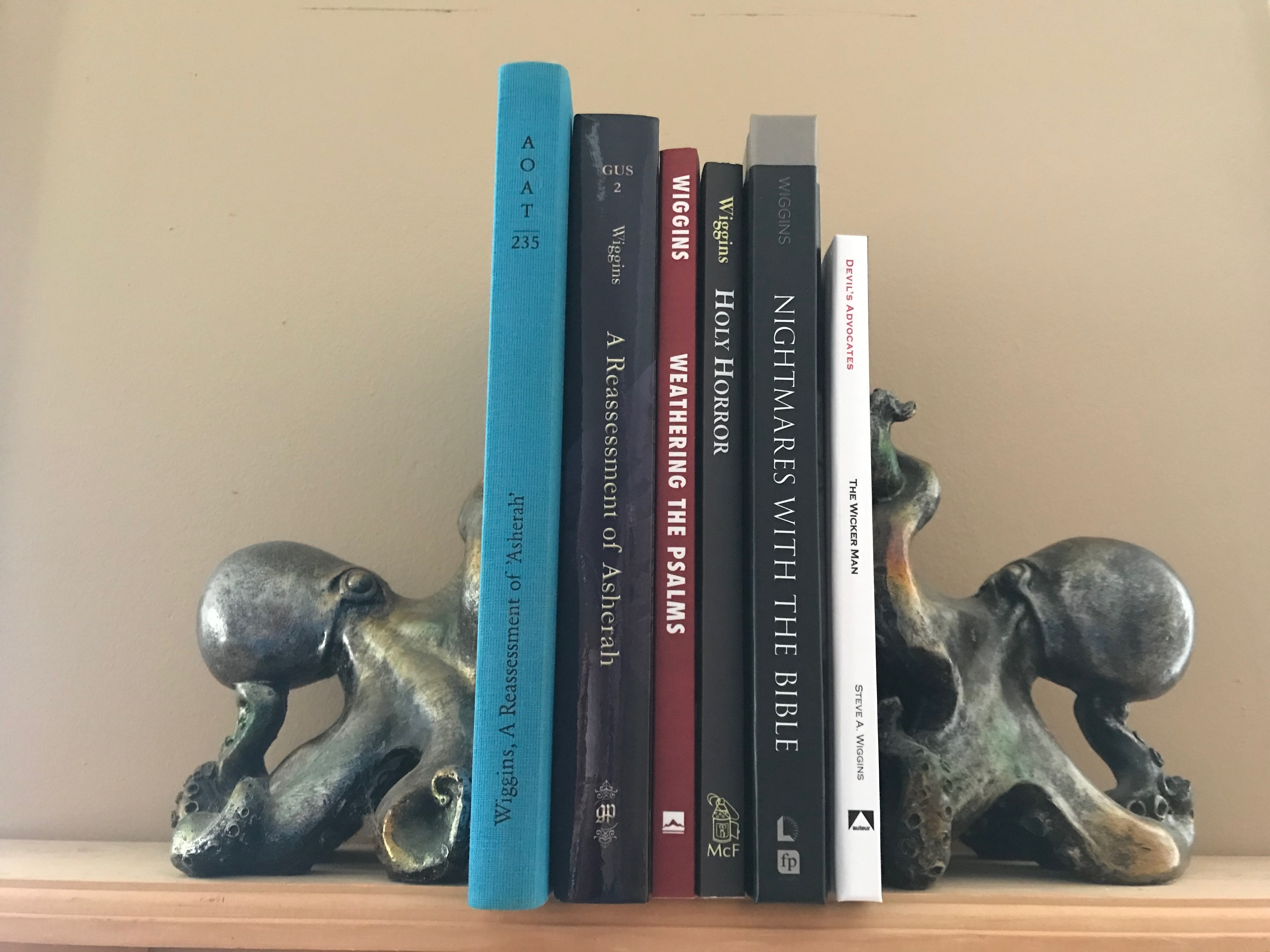
But the bibliographies I could compile!  The really tricky part when writing The Wicker Man was the word limit.  I know authors who struggle bringing the bibliography down to required length, and I feel for them.  I really do.  You see, a bibliography is a record of what it took to get me to write this book.  These are the things I was reading, pondering.  Or found along the way.  There’s an art to a bibliography as well.  Some topics seem to attract authors with last names beginning with a certain letter, for instance.  Or others seem to have a dearth of another letter.  I may be the only person who finds such things fascinating, but can’t that be a paying job?  It is most interesting work, and categorizing knowledge is a full-time job.  If only it was a paying one.


Red Dress

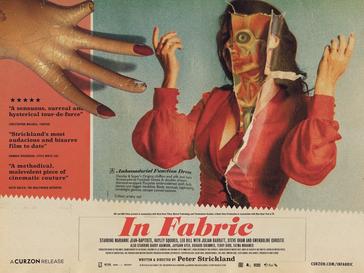
Horror sometimes takes a creative turn.  In Fabric is an art film as well as a horror offering.  The basic premise is that a certain red dress, sold at a bizarre fashion store, causes the death of those who wear it.  Sheila, recently divorced and having trouble with her adult, at home son, buys the dress for a date.  After leaving her with a rash, the dress leads to an arm laceration, a German Shepherd attack, an attack on her son’s girlfriend, and finally, Sheila’s death in an auto accident.  The dress is then picked up by a guy as a stag party prank where the groom has to wear it.  His soon-to-be wife finds it and wears it also.  The man, Reg, loses his job as a washing machine repairman and has no luck finding another.  While Babs, his wife, is shopping at that same strange shop, Reg’s furnace malfunctions, killing him with carbon monoxide.  Babs is trapped in the shop as it catches fire and burns down.  All those killed by the dress are shown working on new ones at the end of the film.

The movie is also called a dark comedy and there are some funny bits.  The sales clerk, Miss Luckmoore, speaks in cryptic, quasi-poetic style, never giving a straight answer to anyone.  The shop’s owner does the same.  And some of the scenarios are amusing.  Although horror, the movie isn’t really scary, but it is stylish.  Unlike some horror comedies, the tone isn’t really funny, but more wry.  And it’s a bit confusing.  The overall story arc is easy enough to follow, but some scenes just confound.  I kept waiting for an a-ha moment when everything would fall into place.  Of course, ambiguity is a hallmark of many intellectual films.

Something that I’ve been noticing, no matter the era that it’s from, is that films really need to justify that last half-hour, if they’re going for 120 minutes.  Maybe it’s just that we’ve become accustomed to the 90-minute feature, but I’ve notice that most two-hour movies (not all) seem to suffer from some pacing issues.  Of course, an art-house movie will defy conventions.  For example, the point of view is Shelia’s for about the first half of the film, then she’s killed and new characters are introduced.  Yes, this shows that the dress goes on killing, but another approach might’ve been to have the protagonist learn about past killings and realize the dress is coming for her.  But then, that might’ve been less creative.


Major Drum

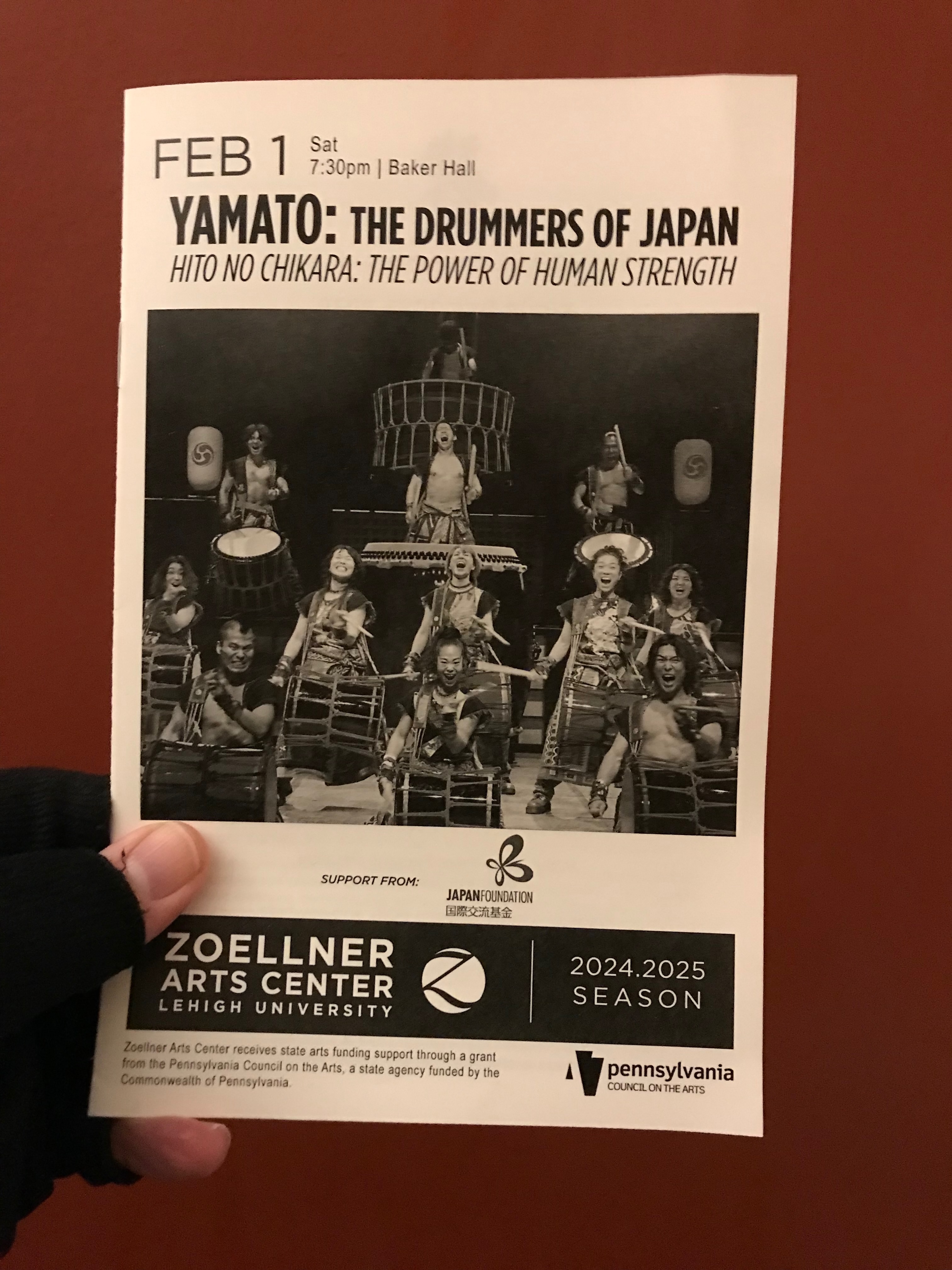
We don’t get out much.  Live shows can be expensive and these cold nights don’t exactly encourage going out after dark.  Living near a university, even if you can’t officially be part of it, has its benefits, though.  Over the weekend we went to see Yamato: The Drummers of Japan.  Our daughter introduced us to the concept while living in Ithaca, a town that has a college or two, I hear.  These drummer groups create what might be termed a sound bath, that is profoundly musical while featuring mainly percussion.  Now, I can’t keep a beat for too long—I’m one of those guys who overthinks clapping in time—but that doesn’t mean I can’t appreciate those who can.  The timing of the members of Yamato was incredibly precise, and moving.  At times even funny.  It’s a show I’d definitely recommend.

This particular tour is titled “Hito No Chikara: The Power of Human Strength.”  Now this isn’t advertising their impressively well-toned bodies, but is a celebration of human spirit under fire from AI.  The program notes point out some recurring themes of this blog: to be human is to experience emotion, and to know physical limitations, and to be truly creative.  Would a non-biological “intelligence” think to wrap dead animal skins around hollowed out tree trunks, pound them with sticks and encourage hundreds of others to experience the emotions that accompany such things?  I live in a workaday world that thinks AI is pretty cool.  Humans, on the other hand, can say “I don’t know” and still play drums until late in the night.  We know the joy of movement.  The exhilaration of community.  I think I can see why they titled their show the way they did.

Bowerbirds will create nests that can only be called intentionally artful.  Something in biological existence helps us appreciate what they’re doing and respond in wonder.  Theirs is an innate appreciation for art.  It spans the animal world.  Japan is one of many places I’ve never been.  I’ve never played in any kind of band and you don’t want me setting time for your pacemaker.  If a computer keeps such precise timing we think nothing of it.  It’s part of what humans created them to do.  When a group of people gets together, stretching their muscles and working in perfect synchronicity, we sit up and take notice.  We’ll even pay to watch and hear them do it.  Art, in all its forms, is purely and profoundly biological.  And it is something we know, at our best, to appreciate with our emotions and our minds.


Grown-up Jane

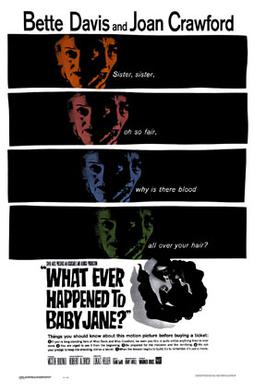
Watching Stephen King’s list of scary movies in the 30 years prior to 1980, I’ve found one or two that hardly strike me as horror.  Some of the others remain remarkably effective today.  I had the wrong idea about What Ever Happened to Baby Jane?;  I’d supposed from the title that it had to do with an abducted child, a topic I generally avoid.  When looking up yet another movie on Tubi that was free, but only in Spanish, I saw Baby Jane on offer and decided to give it a try.  I was pretty impressed.  It’s overly long and drags a bit, but the story is good.  One thing about horror films from the period is that they relied on story because the special effects really didn’t exist to make movies such as many we now see—splashy, but shallow.

In case you’re even more outdated than me, Baby Jane was a successful child actor whose sister grows up to outshine her.  Blanche, the sister, is crippled in a car accident that has been blamed on Jane for the last couple of decades.  Jane really can’t act, and once her sister is disabled, the two live on Blanche’s money until Jane’s growing insanity threatens her wheelchair-bound sister.  Trapped upstairs without any means of communicating with anyone who might help, Blanche is tortured and starved by her sister.  There’s an incredible amount of tension, even if the events begin to seem unlikely as the two hours roll on.  There are a few dropped subplots—the neighbor who harbors no suspicions at all, and the musician Jane hires who discovers her secret—but overall the tension keeps building.

One thing that occurred to me was that part of the plot involves leaving a phone extension off the hook to prevent Blanche from getting help.  I pondered how some young people who only know phones as personal devices might not understand this.  How, when I was a child that if you left an extension off the hook no calls could go in or out.  And that the annoying “off the hook” tone didn’t yet exist.  Ironically, now you could watch the movie on your personal phone that you carry with you at all times.  While this isn’t a perfect movie, it is an engaging one on many levels.  The sisterly rivalry, the growing insanity of Jane, and the helplessness of an invalid all work together to create some frightening moments.  Technology sure makes life convenient, but it cuts off some avenues for horror.  Of course, as Unfriended shows, it opens new venues.  I agree with King—this is one of the actually scary films from before the eighties.


Poking Around

I’ll always prefer indies but ever since James Daunt took over Barnes & Noble it’s become a much better place.  I unfortunately didn’t get to any of Daunt’s stores while living in the UK, but unlike most corporate types, he gets books.  He understands book buyers and, I like to think, he reads.  I happened to need to stop into a local B & N recently on a Saturday morning.  I got there a little early and I saw a line at the door.   Naive as ever, I supposed it was a reading or writing group that’d be meeting there.  The queue had one thing in common: they were all males between thirty and fifty years old.  Who says men don’t read?  I went in and got what I was after, and even browsed a bit.  When I got to the register they were in line.  Hands empty.

Then I noticed that as each one stepped to the register, the sales clerk would step back to a place behind the counter and come with the same thing for each one.  As I got close enough, I saw that they were after Pokémon Prismatic Evolutions.  The Prismatic Evolutions Poster Collection released just the day before when they were probably at work.  The game sells for about a Franklin and the shelf was nearing empty by the time I finally reached the checkout.  I looked back.  At least five more guys had come in and immediately joined the line, no products in hand.  I’ve never seen the appeal of Pokémon but I couldn’t feel smug because I was there because of an obsession as well.  I didn’t buy a game, or cards (one guy bought 14 packs of the same card set, clearing that rack), but I was guilty nevertheless.

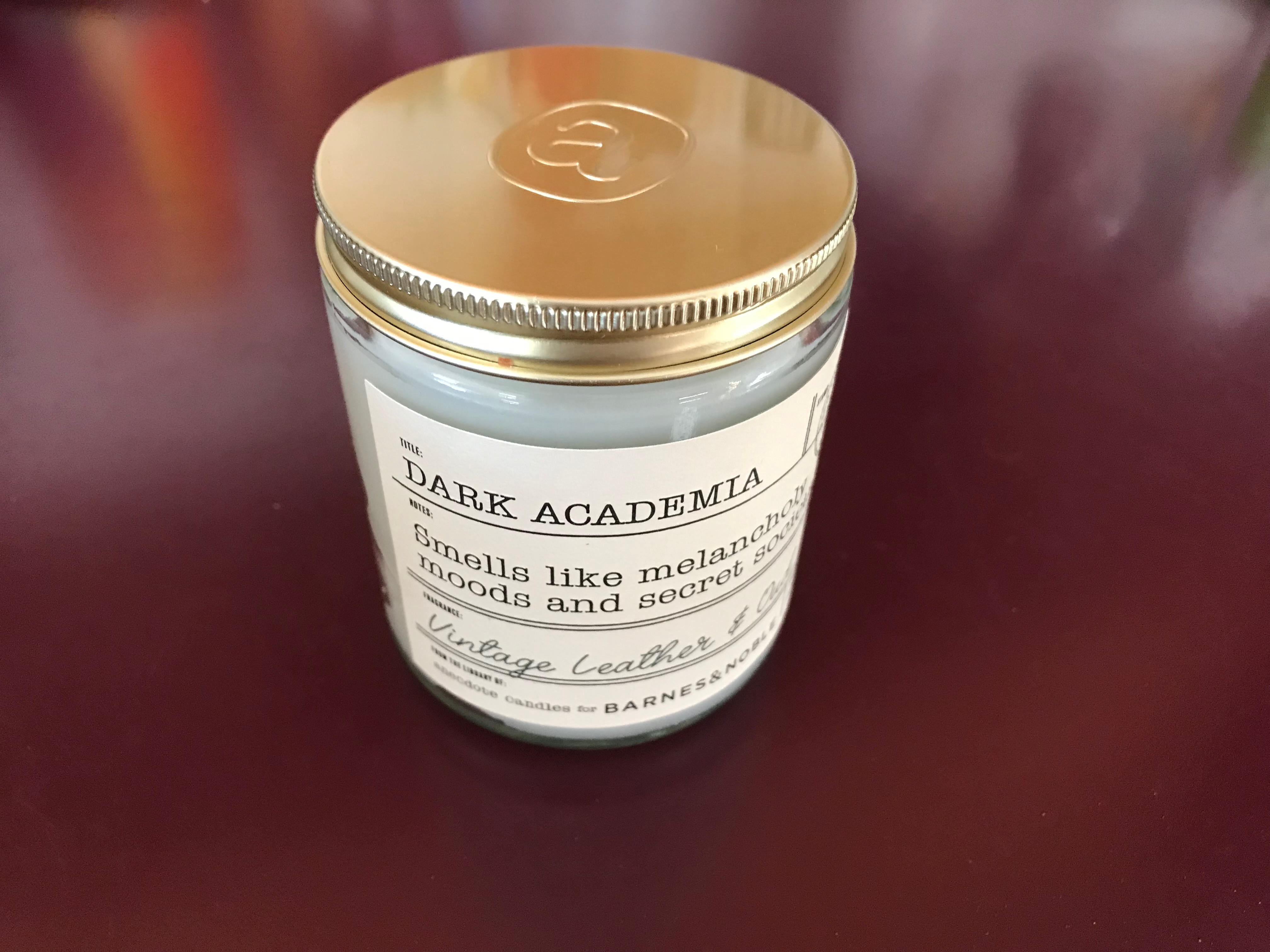
I’ve been fascinated by Dark Academia for some time now.  That week, when I had also been at work, I realized that one of the books I had in that genre had been destroyed in what we refer to as “the flood.”  (The story is here on this blog, but the short version is when we moved into our house, the movers stacked our boxes in the garage because they were complaining it was so late.  Before I could move the boxes into the house—the day after the next, in fact—a torrential rain fell and many of the boxes got wet, destroying at least 100 books and some other items that can’t be replaced.)  I was missing that particular book and it was old enough that I was pretty sure the local indies wouldn’t have it in stock.  Daunt’s B & N did.  So the line that morning contained a bunch of obsessive guys, but one of us, I have to confess, was over sixty.


Like Father

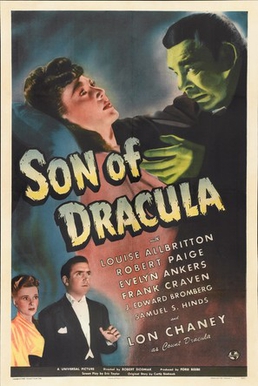
There’s just something about old movies.  After Universal discovered that Depression-Era people would still pay to see scary movies, they made a kind of industry of filming new monsters (for them) or spinning off of their successes.  Several years ago, when Universal was selling collections of their famed monster line up on DVD, I bought a few.  I realized recently that I had never watched Son of Dracula, included in the Dracula DVD set.  While it’s not a great movie, it’s by no stretch a bad one.  The story is complex and soulful, and even though Bela Lugosi’s not in it, the film participates in the ever-growing vampire lore.  It also introduced the world to Alucard, a character that would take off in Japan as a vampiric character in video games and manga.

Katherine, a well-to-do southern belle, met a Count Aculard while traveling in Eastern Europe.  He’s now visiting her in America, much to her fiancé’s chagrin.  A local doctor and friend of the family comes to expect that Alucard, Dracula spelled backwards, of course, may be a vampire.  He brings over a professor acquaintance from Hungary to test his hypothesis.  Meanwhile, Alucard, Dracula’s son, marries Kay and in so doing inherits her estate.  She becomes a vampire, which was her plan all along.  She, however, plans to turn her fiancé into a vampire, after they kill Alucard, so they can spend eternal life together.  The doctor and professor figure out what’s going on, but the local police don’t believe them and are ready to commit the doctor as insane.  Frank, the fiancé, refuses to go along with Kay’s plan, so he kills the Count by destroying his coffin before daybreak, and then also immolates Katherine as well, ridding the New World of vampires.

This is definitely a period piece, but it manages to have a southern Gothic appeal.  The black folk are all servants, and the Hungarian doctor sounds just like Peter Lorre, but the story is complex enough to retain interest.  Lon Chaney, as Alucard, doesn’t have as much screen time as you might expect, but there’s a lot going on in various subplots.  The movie was released in 1943, when there was still a ban on horror movies in war-time England.  The concern about invading foreigners is pretty clearly spelled out but the story is fairly well-told, even with some small holes remaining in the plot.  All of this makes me think I’d better check my other Universal monster DVDs.  There may be some other good bits that I’ve been missing.


Not Afraid

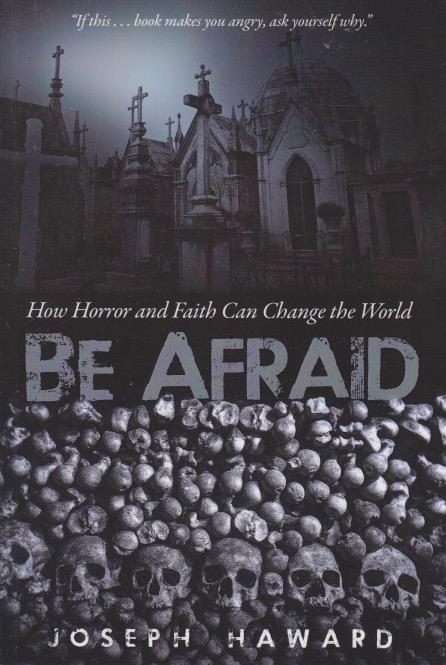
It’s something many of us do.  Trying to explain why, while religious, spiritual, and moral, we find horror fascinating.  I read Brandon Grafius’ Lurking under the Surface, and when I learned about Joseph Haward’s Be Afraid: How Horror and Faith Can Change the World, I figured I’d better read it too.  Haward is a British Baptist minister who seems to support progressive causes.  He also enjoys horror.  He even finds it prophetic.  I have to admit that when I read the foreword by John E. Colwell I was afraid that this would be one of those books.  You know, the kind that only half-likes horror because their religion tells them so.  Colwell is no horror fan, and his foreword doesn’t set the tone for what follows.  Haward finds horror homiletical.

When I was young I used to see movies and analyze them theologically with my friends.  This was in college and seminary, mostly.  We’d discuss the implications of movies—sometimes horror—and how they fit into our Christian worldview.  This book is like that.  It’s Haward’s reading of various horror films, some television, and some novels, integrating them into his theological outlook.  The book is more about theology than it is about specific horror films, although it does mention quite a few.  The discussion is sometimes hard to follow because the paragraphs are so incredibly long and the style is very theological.  I got the feeling that Haward would be an interesting person to have a conversation with.  His book didn’t really do it for me, however. Some things are simply better in person. (I do know Brandon Grafius, and enjoy our talks.)

I’m not into horror for the violence.  Haward tends to point to that element, but I’m generally looking for the mood.  And avoidance.  Also when I was young I learned the truism, “He who lives to run away, lives to run another day.”  I like to think that I’m brave, but violence really bothers me.  My family finds me a contradiction; I won’t watch movies that are based on “true events” unless they’re speculative.  I don’t need reminding that people can be horrible to each other.  I know that from scanning the headlines and from watching the election results.  No, I use horror to help me cope.  And it works best when I know there’s something supernatural going on.  I’ve grown out of theologizing about movies.  I took plenty of theology courses in college and seminary, but they seemed a bit too abstract to be helpful.  Then I’d go out with my friends and watch a horror movie on the weekend so we could talk about it.  There’s a bit of that nostalgia here.


Not Friendly

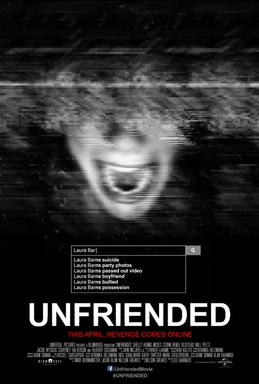
A ghost-revenge story, online.  Unfriended is one of those low-budget horror films that manages to be remarkably effective through the acting and its overall verisimilitude.  It’s also a kind of parable about the dangers of living our lives online.  The only problem is that technology is moving so fast that a ten-year old movie looks outdated.  The scary thing is many people are online even more, especially since the pandemic that came a few years after the movie was released.  Six high-schoolers are chatting on Skype (see what I mean?).  A friend in the group died by suicide a year ago because of an embarrassing video posted of her on YouTube.  Even a mature viewer like me can easily recall how deeply peer pressure cut in high school.  It’s a difficult time for all of us.  In any case, an unidentified person has joined the call and makes threatening comments via chat.

Of course, there are multiple apps (we called them programs long ago) running and nearly the entire movie is on the screen of one of the kids’ laptops.  In real life I was waiting for my low battery warning to come on, because I was watching it on a laptop, and all the notices that appeared on the upper right-hand corner made the thing look real.  Naturally enough, the kids start getting killed off.  Since this is horror their deaths are shown, if briefly, on screen and mostly they’re bizarre.  Hovering in the background is a webpage that warns against opening and answering messages from the dead.  As Blaire (whose screen we’re seeing) comes to realize that the unknown person is the girl who died by suicide, Laura (the dead friend) forces them to play a game of Never Have I Ever.  This leads to dissension and fighting as confessions come out and friends begin dying.

There’s a heavy moral element involved—the teens are being “punished” for typical teen behaviors.  Interestingly, toward the end I noticed that Blaire had a crucifix on her bedroom wall.  The kids don’t talk about religion at all (something I did do as a teen) but they all have a moral sense of what they did wrong.  The webpage about not answering online messages from the dead suggests confessing your sins, if you do open such a message.  Blaire tries to confess, but she has a secret that’s kept until the very end, so I can’t say what it is here.  I wouldn’t want to be unfriended for providing a spoiler.


Trouble on Campus

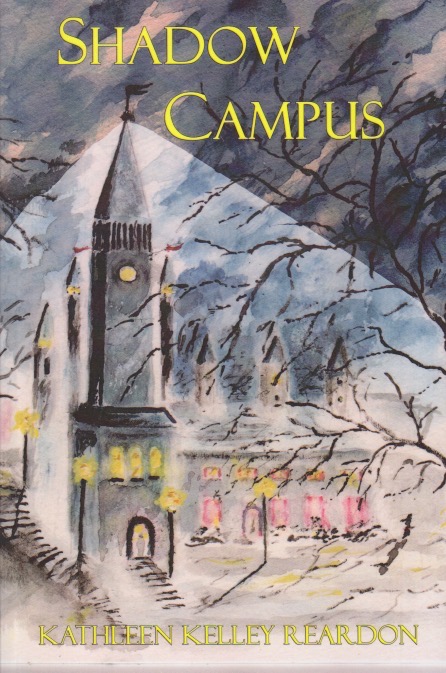
I know what it’s like to have a story living within you.  Academics writing novels don’t always qualify as Dark Academia, but Kathleen Kelley Reardon’s Shadow Campus does.  Continuing my current kick of that genre, I eagerly read of the skulduggery taking place at the fictional Pacific Coast University and found myself nodding with recognition.  Higher education is highly political.  I have to wonder if where two or three are gathered politics will inevitably be in their midst.  Perhaps thus it has always been, but it seems to me that when universities decided to model themselves on corporations, it grew much worse.  In any case, Meghan Doherty is a business professor up for tenure.  Her only family is an estranged brother in Connecticut.  Then one night someone attempts to murder her on campus and make it look like a suicide.

Shamus, her brother, flies to California to see her in the hospital and soon begins to suspect things are not as they seem.  I don’t want to give away too much here, in case you want to read it too.  I can say that sometimes life on campus is like this.  I’ve made the claim to have lived Dark Academia, and I’ll stand by it.  After the unpleasantness at Nashotah House, I was hired for a year as a replacement professor at the University of Wisconsin Oshkosh.  I really enjoyed teaching there, apart from having to leave my family in Oconomowoc; I stayed with a former Nashotah House student to whom I’m eternally grateful.  The department chair and colleagues liked me.  I was a good fit.  There was talk of making this a full-time position for which I’d be the inside candidate.  Then one of the other professors began to dislike me (long story).

I was called into the department head’s office and told that my eight courses for the next year had been reduced to one.  Permission to hire had been granted, but it had to be a specialist in women’s studies.  I was welcome to stay on as an adjunct, of course.  I’m a blue-collar guy and I recognize a boot when I see one.  And that was only the second time something similar had happened to me, and it wasn’t the last.  I’ve paid my dues to academia and yes, it is often dark.  So I enjoyed reading Reardon’s fictional account of underhanded dealings at Pacific Coast.  In my own experience guns were never brandished, but then, you can’t have it all.


Finding the Source

I need to know the origins of things.  Call it a sickness if you will, but I’m compelled to trace things to their source.  This is why I went on to earn a doctorate, and it’s a trait that hasn’t left, despite my career malfunction.  My interest in origins was recently reawakened by the citation, in a book, of a source that was incomplete.  I turned to the internet, of course.  I found the source, reprinted on a Tumblr page, for which I was grateful, but there was no proper citation there either.  Instead, a link to another webpage, which itself consists of yet another link.  Even after pages of googling, I was no closer to finding the source.  This is why I miss libraries.  You were there with books, some of them centuries old, looking at the source.  Outside the academy this rarely happens.  Particularly when you work 9-2-5.

The internet age is one of taking someone else’s word for it.  That’s why it’s important to establish credibility.  The website where I found the information—the top ranked site on both Ecosia and Google—had old books as the background, but no “about” page.  Who had put this information here and where did s/he get it?  The item I was looking for was from the 1700s.  I don’t have a print copy lying around and I was wondering what the source was—a book?  A journal article?  A newspaper?  An actual archive?  And why can’t Google find it in a library?  I know the source actually exists because I also found it referenced in a reputable print book, but one with inadequate citation.  Some of us were cut out for this kind of thing.  Constitutionally researchers.  But you have to work to live.

One of the greatest pieces of advice ever is to stay curious.  It helps keep a mind active, even a 9-2-5 one.  I’ll keep looking for this mysterious source.  I’ll check out likely references in the bibliography.  I’m sure that other people have the same compunction not to take someone else’s word for it.  Particularly not an anonymous poster on some website.  Especially in this day of AI lies.  One of my high school teachers once said that a reputation for being trusted is something you earn by lifelong cultivation.  If people know you are a reliable source, they will believe the things you say.  Anonymous information can be helpful from time to time, but without knowing the source I always remain skeptical.  And curious.


Slimy Monsters

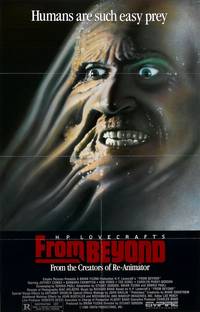
Stuart Gordon apparently had in mind to do an H. P. Lovecraft cycle, as Roger Corman did with Poe.  I first saw Dagon—clearly his best—and some time later picked up Re-AnimatorFrom Beyond was his second Lovecraft movie and it doesn’t have the visual appeal of Dagon, but it is certainly a passable gross-out for those who enjoy slimy monsters.  Gordon was pretty obviously of greater libido than Lovecraft ever was.  From Beyond puts sex in the spotlight’s periphery without making it absolutely central to the story.  A Dr. Pretorius has built a “resonator” that allows him to see extra-dimensional beings.  It does this by stimulating the pineal gland.  His assistant Dr. Tillinghast, is present when a creature from, well, beyond, kills Pretorius by wrenching off his head.  Tillinghast is suspected in his murder but is being held in an asylum rather than a traditional jail.

Dr. McMichaels, the love interest in the film, believes that Tillinghast is sane and that he actually did witness these beings from beyond.  As a scientist, she wants to see if the resonator really works.  It does, but in addition to providing the ability to experience the other realm, it also boosts the sex drive of those under its influence.  She decides, against the warning of Dr. Tillinghast, to try the resonator once more, but this time the other-dimensional Pretorius has become strong enough to prevent her from shutting the machine down.  Tillinghast is transformed into a modified human with an extension from his forehead and as she tries to explain what she witnessed, McMichaels is classified as insane.  She and Tillinghast escape the asylum and McMichaels manages to blow up the machine, ultimately going insane for real.

Lovecraft strenuously avoided sex in his written work, limiting the number of women characters who appear.  I suspect he would not have been pleased with this treatment of his story.  Gordon went on to make one more Lovecraft movie beyond Dagon, a television movie of Dreams in the Witch House (which I haven’t seen).  Of the three theatrical releases, I find Dagon the most convincing since the mood is serious and it seems to capture much of the feel of Lovecraft’s “Shadow over Innsmouth,” one of his best stories.  Lovecraft himself apparently didn’t care that much for that particular tale.  And he was critical of the conversion of stories into movies.  It’s a good thing that one doesn’t have to see eye-to-eye with Lovecraft to appreciate his works.  And some of them transfer to film reasonably well.  Especially if you’re in the mood for slimy monsters.


CSI: Backyard Edition


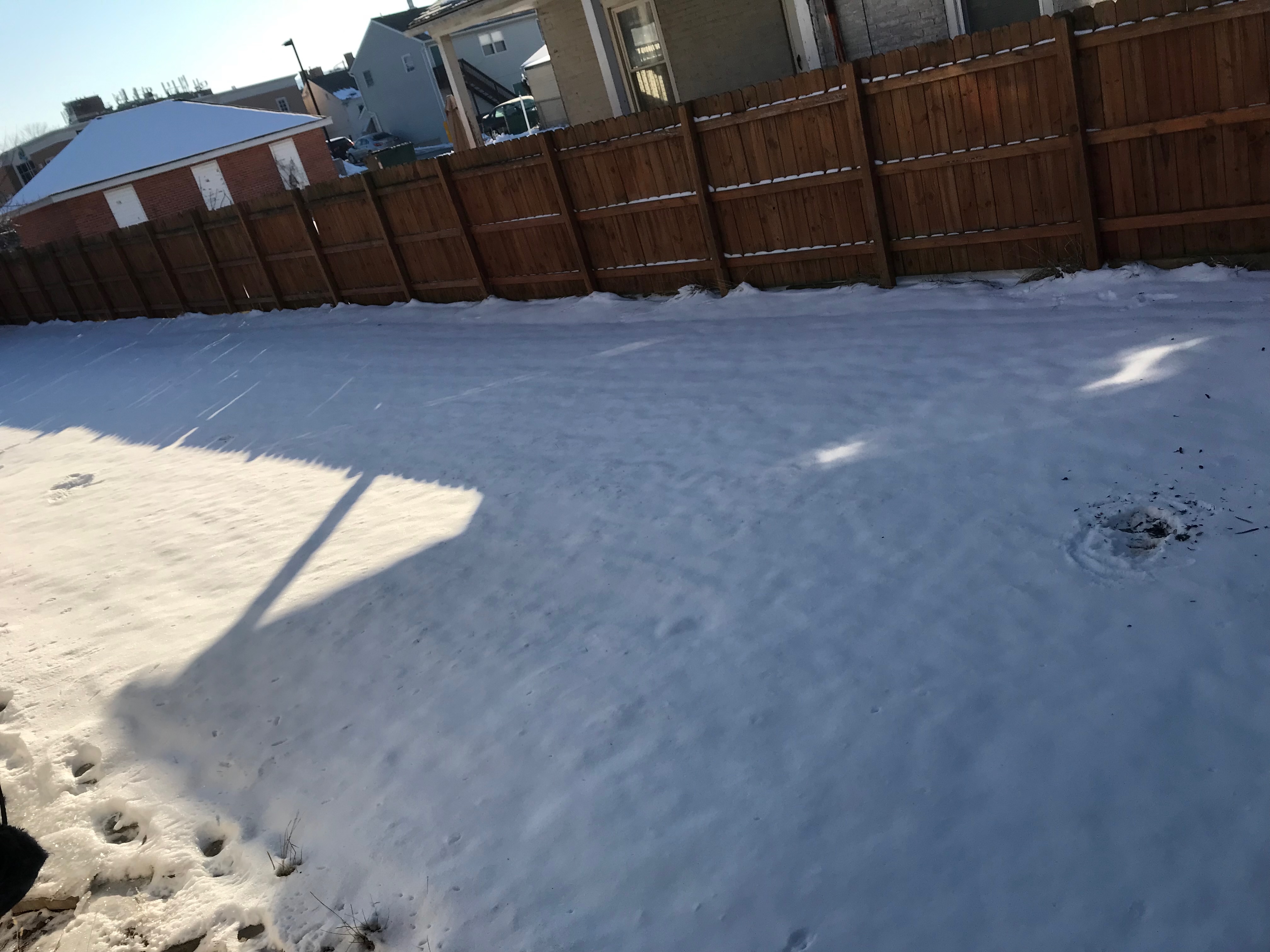
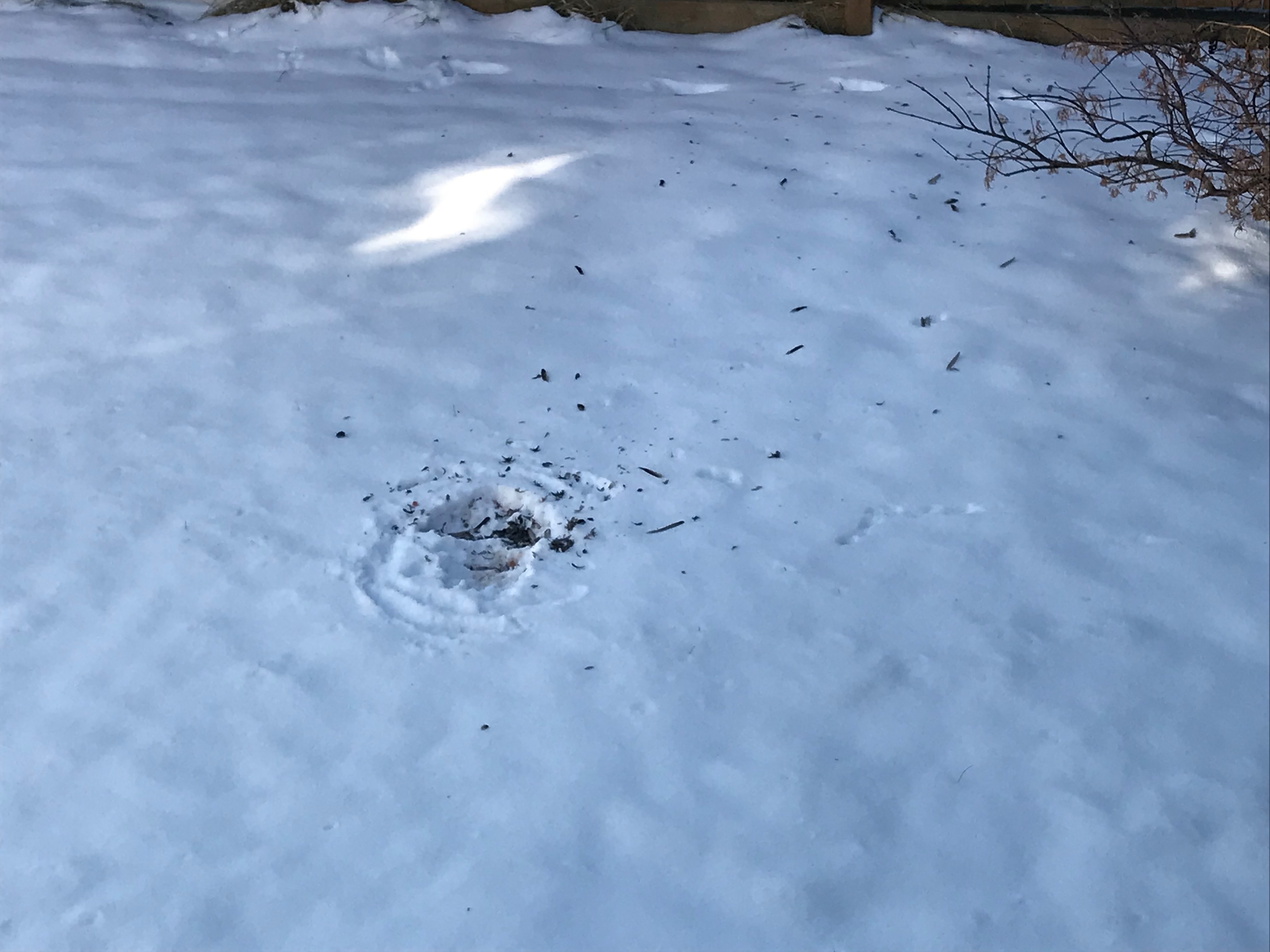
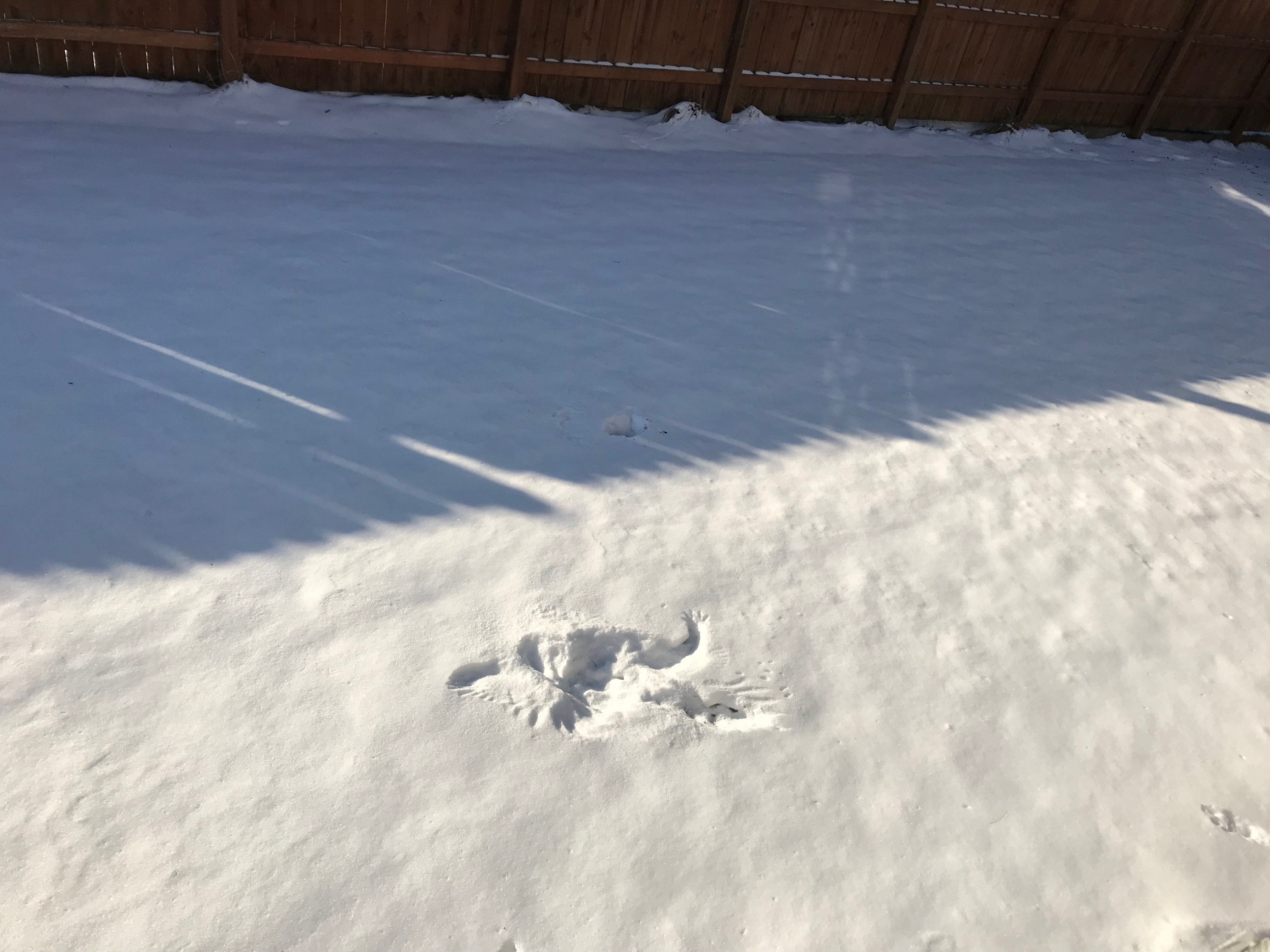
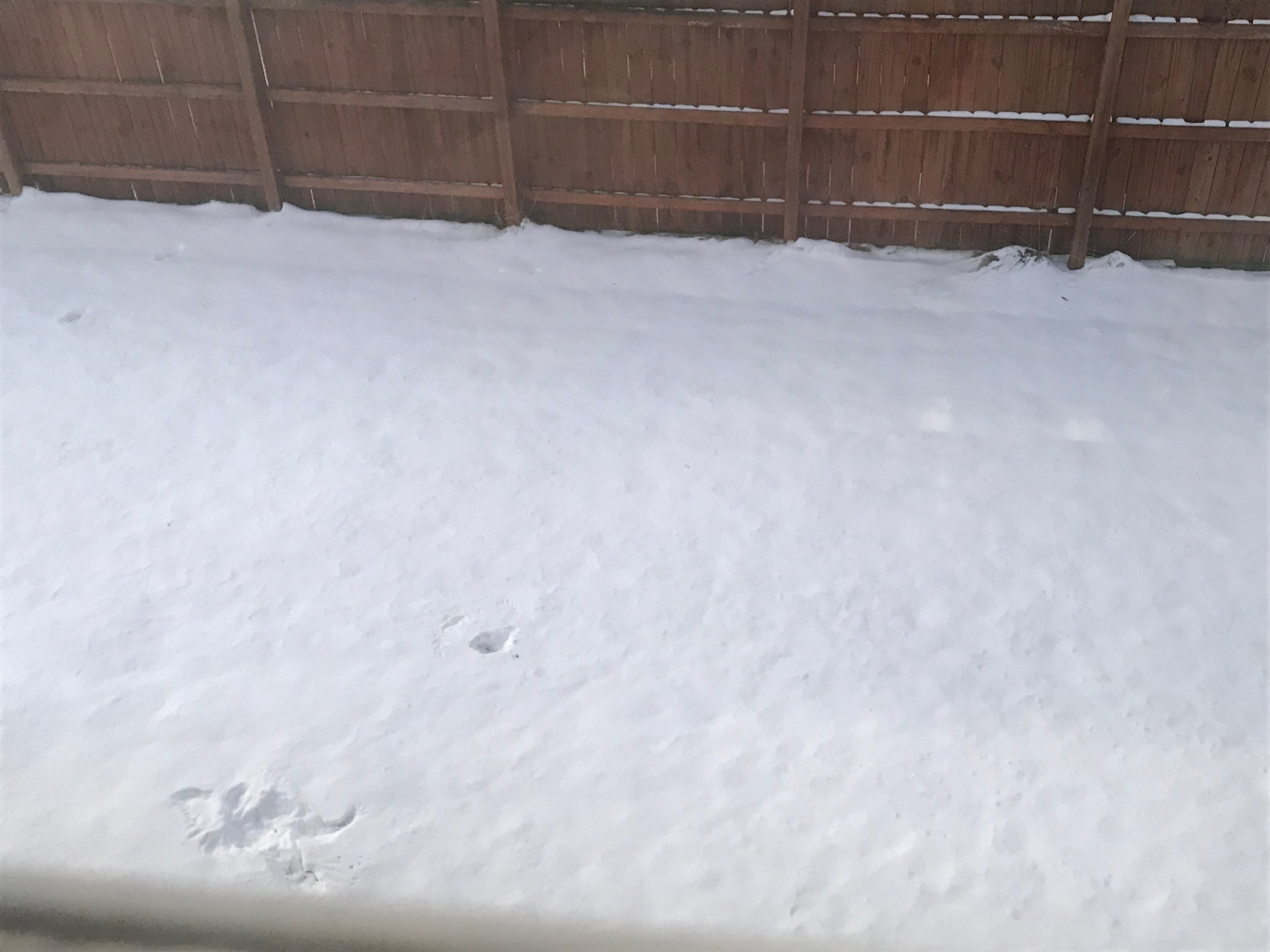
Dateline: January 24.  Location: Backyard.  It was clearly a crime scene.  There were prints in the snow.  Blood.  Signs of a struggle.  The marks hadn’t been there the evening before, so I knew I was looking at a recent offense.  Two indentations in the snow, about 10 yards apart.  Too far for a small animal to have leapt.  A third impression, closer to the second.  Clear feather imprints in the snow.  Earlier on the day in question, I had observed a hawk in the white pine across the street.  Two angry blue jays strafed the interloper, but he appeared unintimidated.  He fluffed his feathers and surveyed the area, including, I presume, my back yard.  In his own time he left, in an unmarked flight.

In the morning, rabbit tracks.  The first impact had been violent.  Debris had been raised from under the snow blanket and scattered toward the southwest.  No footprints leading away from the site.  This led me to conclude the victim had been lifted into the air.  But why the second impact site?  There had been a struggle.  The victim, presumably of the Lepus genus, had tried to make a stand.  The second impact site had bits of blood toward the west.  Neither of these first two scenes of investigation bore any indicative hints to the identity of either the victim or the perpetrator.  I did not have the means to test the blood.  No tracks led from either impression.  The third site clearly involved a struggle.

Impressions of feathers, spread at least two-thirds of a meter across, remained clearly visible in the snow.  Between these wing prints evidence of a scuffle.  Perhaps an argument ensued.  No feathers or fur remained on site.  I had to piece this together before the snow began to melt.  What I am labeling site 1, the initial strike, was near a bush under which rabbits are frequently observed to rest.  A hawk, confident of its ability, swooped down in the night and apprehended the rabbit.  The victim fought back, enforcing an unscheduled landing.  Site 2.  Blood was drawn.  Site 3 was an easy rabbit’s leap from site 2.  Perhaps the rabbit escaped.  The wing and claw marks on the snow suggest that the victim did not survive this third attack.  No solid physical evidence could be recovered.  It was just too cold outside to go and look personally.  I am not paid enough to do that kind of work.  Or I could have it backwards.  Site 3 could be the initial strike, but my reconstruction seemed more likely  Either way, the backyard would, however, never feel safe again.


Non-Believer

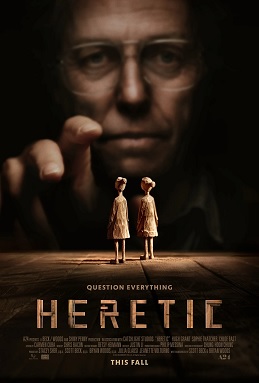
Heretic may be the ultimate horror and religion movie.  It’s also a film you may need to see multiple times to follow the all-important dialogue.  It’s a movie that would’ve been front and center in Holy Horror.  And it’s deceptively simple.  As I’ve written many times before, I try to know very little about a film before I watch it.  This if often difficult with the internet and people wanting to tell you about the latest cinematic marvel.  I managed to watch Heretic knowing only that it was about two Mormon missionaries visiting a potential convert.  If you want to leave your level of knowledge at that point before seeing the movie you might not want to read on.  You have been warned.

e two women in on an inclement evening, assuring them his wife is in the next room.  He then, ever so innocently, questions them about their beliefs and about religion in general.  The missionaries grow increasingly concerned that there is no wife and that Mr. Reed (Grant) has been toying with them.  They find themselves locked in his house as he unrelentingly questions them and asking them what, and why, they really believe.  Charmingly he assures them they can leave at any time, but they have to pick a door—the lady and the tiger-like—marked either belief or disbelief.  (Both lead to the same place, and it’s not out.)  Using a trick he attempts to get them to die by suicide.  When they refuse, he kills one of them but the other discovers the truth, “the one true religion.”  I won’t tell you what it is.

The film is remarkable in that there is no horror without religion.  I made a similar argument about The Wicker Man, in my book on the movie.  When we ask ourselves what makes a horror film scary, seldom is the answer overtly “religion.”  Usually it’s a monster of some description.  Or the threat of annihilation.  Or plain old death.  Religion can be scary.  In fact, it has historically been the nepenthe for death and sorrow in this life.  Some would trace the origin of religion to that very phenomenon.  I’ve been writing for years on this blog that religion and horror belong together.  They overlap.  They blend.  They, on occasion, may be the same thing.  Heretic displays that clearly.  If I haven’t spoiled it for you, I highly recommend it.  I can honestly say it’s the first movie that has literally given me nightmares, in many, many years.