Book Stages

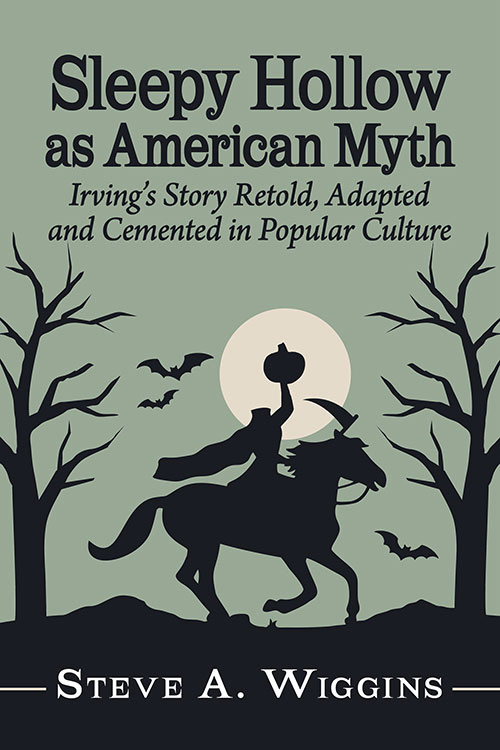
Books appear in stages.  All publishers are different.  These platitudes encapsulate my experience in finding a venue for my ideas.  Sleepy Hollow as American Myth has just appeared in McFarland’s spring and summer catalogue.  I haven’t seen the proofs yet, but I suspect I will before too long now.  What’s with the spring and summer catalogue?  Well, believe it or not, books are seasonal.  Publishers go by seasons.  For many academic publishers there are two seasons: Spring/Summer and Fall/Winter.  The timing of certain books may fall in a specific place within those seasons but many academic books are aimed at classroom adoptions so early spring and early autumn are the most popular times.  It’s no coincidence that academic conferences also cluster around the semester system, the big ones being either autumn or spring.  Academics have a migratory instinct.

Personally, I’m hoping Sleepy Hollow will be out in late summer.  I don’t have any control over that, but it’s about then that normal people’s thoughts start turning toward falling leaves, long nights, and monsters.  Every year there’s a day in August when I step outside and literally smell autumn in the air.  As a kid seasons seemed like something as rigid as a biblical law: spring was March through May, summer June through August, and so forth.  The older I get, the more I realize how negotiable seasons are.  The Celts celebrated the start of spring in February.  Yes, there are lots of cold days yet to come, but the early signs of spring have begun.  For early risers, we finally start to observe earlier sunrises.  (These technically start around January 10, but they’re slow getting out of bed.)

You might think the ideal season for a book on spooky stuff, like Sleepy Hollow, would be timed for release in the fall/winter cycle.  Not necessarily.  Both Holy Horror and Nightmares with the Bible hit the market after Halloween.  Normal people’s thoughts had shifted to Thanksgiving.  I’m pleased that Sleepy Hollow will be released a bit earlier.  Summer is ideal for Halloween-themed books.  And yes, I devote a chapter to Halloween and the Headless Horseman.  They are closely related.  So I was glad to receive McFarland’s spring/summer catalogue and find my book on page two.  I don’t have a publication date yet, but I’m looking forward to being part of the discussion about one of my favorite ghost stories of all time.  Speaking of which, it’s almost time to begin gathering firewood for next winter, or at least it will be in summer.  And it’s not that far away.

Dusk’s Early Dark

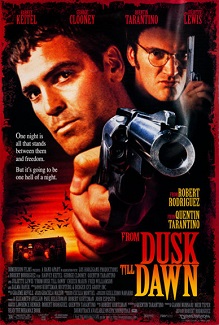
It may be the strangest vampire movie ever, and that’s saying something.  To understand this, you have to realize that I read as little as possible about a movie before seeing it.  I try to avoid trailers, and recommendations from well-wishers play a big part in my choices.  I came across From Dusk till Dawn in a couple of online lists and when I saw it was Quentin Tarantino and George Clooney, I doubted the vampire part.  Indeed, for the first twenty minutes to half hour I was convinced I’d stepped into Pulp Fiction 2.  (Tarantino wrote it, after all.)  Those kinds of movies unnerve me, and just when I was wondering if I’d made a mistake, it became a monster movie.  An action horror film.  Lots of vampires and, surprisingly lots of talk about God.

In case you haven’t seen it, Clooney and Tarantino are brothers out on a crime spree.  Harvey Keitel is an ex-minister out on a road trip with his teenage kids.  After his wife’s death, he lost his faith although he still believes in God.  (Classic theodicy.)  The criminals abduct the family to get them into Mexico where they’ve made a deal with a guy.  They meet at about the most salacious strip club you can imagine, one that caters only to truckers and bikers.  It turns out that the staff and strippers are all vampires and they prey on the patrons.  Okay, so the story doesn’t hold together.  Clooney’s character, which is hardly the sort you’d want anywhere near you, tells Keitel’s that unless he re-finds his faith none of them will make it out alive.

There’s quite a bit of humor packed into the over-the-top fight scene, including dialogue about how to defeat vampires.  A couple of the patrons, it turns out, are pretty adept at that sort of thing, but the human holdouts keep getting bitten and have to be killed.  Finally, the titular dawn arrives, leaving just Clooney and the minister’s daughter alive.  I couldn’t help but to be reminded of Willy’s Wonderworld, in overall story arc, but the two are completely different in tone.  The fact that the movie is 28 years old and that I’d only heard of it recently really surprised me.  Especially since religion is so heavily involved in the story.  Not only that, but the message about religion, in service of the story, is that belief is good.  And this from a murderer and a thief.  Strange indeed, but not easily forgotten.


Worse Seed

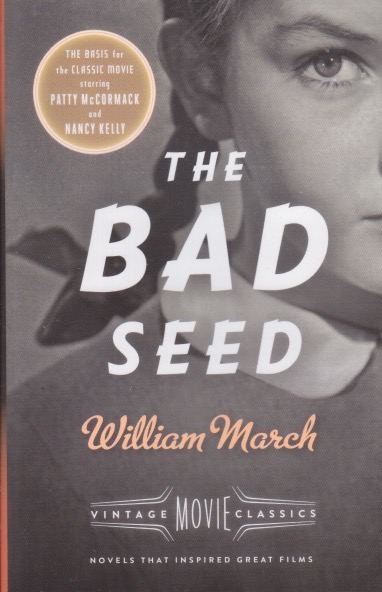
Not too long ago I watched The Bad Seed.  In the 1950s it probably wasn’t considered horror, but it is quite a scary movie.  I’d classify it as horror—not all fifties horror was guys in rubbery suits.  When reading about the movie afterwards, I learned the novel had a darker ending (the movie was pretty dark as it was).  So I decided to read the book by William March.  The movie’s fairly faithful, up to the ending.  As usual, the novel adds more detail and reveals some things rather differently.  For example, Christine Penmark, the mother of Rhoda, can’t ask her father if she’s adopted.  She “learns” this through inference.  Indeed, the book leaves you wondering if she’s actually mentally unstable.  The proof that she’s the daughter of a serial killer is strong but not definitive.  And her father is already dead when the story opens.

The school outing, where Rhoda claims her second victim, is where the movie opens.  Rhoda is expelled from the school because the women who run it can’t abide Rhoda’s dishonesty.  The character of Leroy is very well portrayed in the movie, but he too seems to have some kind of mental illness.  Monica Breedlove is accurately presented as a busybody, but she too spends a lot of time analyzing people, including herself.  Rhoda is, of course, a literal sociopath.  It’s fair to say the novel is an extended exploration of mental illness of various sorts.  I remember from growing up in the sixties that many conditions that are now regularly diagnosed simply weren’t recognized.  Kids were blamed for bad behaviors that were, in all likelihood, caused by being somewhere on the spectrum.

Much water has passed under the bridge since the fifties.  This book was a bestseller then, but I only learned about it last year.  Indeed, it’s been adapted to film three times and was a Broadway play before all that.  There was a sequel released a couple years back.  Rhoda Penmark is herself a trope of the narcissist who lacks empathy.  Hmm, where else do we see that?  It’s still analyzed as primarily a “nature verses nurture” novel, but I suspect there’s something more going on.  We’ve moved beyond Freud and this novel probes what goes on in the minds of those who spend too much time alone, as well as who happen to be the mothers of pathological child murderers.  And the ending is different, but the movie’s is equally as bleak.  The Bad Seed a good book for this particular January.


Old Movies

Something strange is happening.  (“How’s that new?” you might well ask.)  There seems to be a bifurcation taking place in my brain, what techies might call “partitioning.”  Specifically it regards what I think of as “old movies.”  By this I don’t mean movies from the sixties or before.  No, I mean movies I saw some time ago, often on DVD or even VHS, sometimes in theaters, that became part of my standard repertoire.  I imagine most cinephiles have certain films to which they keep coming back.  But for me, the “old movies” are those I haven’t blogged about.  Also, they predate streaming so, in that sense, they are “old.”  You see, I’m not a very internet-savvy thinker.  It took me quite a few years to figure out I could link my posts with other posts on my own blog so that in the rare event that someone might want to read more they could click on the links like you do on Wikipedia.  (Now that you’re here, stay a while!)

Photo by Denise Jans on Unsplash

This blog was started in 2009.  For most of its history it has been daily.  I didn’t automatically start blogging about movies, though.  For a few years I tried to tie all my posts into religion, widely conceived.  Then, kind of establishing my own “brand,” I started writing about less ethereal topics.  Including movies that don’t have religion in them.  By far most of the movies I discuss on this blog are first-time films for me.  Occasionally I’ll go back and address one of my “old movies.”  This occurred to me the other day when I went to link to Tim Burton’s Corpse Bride.  I thought I’d posted about it, but it’s one of my oldies, so I hadn’t.  I don’t even remember when I first saw it.  If feeling nostalgic, I’ll look backward, as an historian is wont to do, but it doesn’t happen often.

Since we can’t see ahead in our lives with any real clarity, I didn’t anticipate this blog focusing on darker themes. When I started, finding a position back in academia seemed like a possibility.  For me this blog is therapy, but this is as good a place as any to talk about movies, and most of mine fall into an ill-fitting genre called “horror.”  Even among these, my “old movies,” like The Exorcist, The Amityville Horror, Sleepy Hollow, or even Paranormal Activity, which now more or less define my research, were missed out for having been too old (having been seen too long ago).  Most of the movies discussed in the past few years here have been streamed.  Many of them are easily forgotten.  But the old ones, they’re stuck, apparently for good. Such is the power of old movies.


Light Shadows

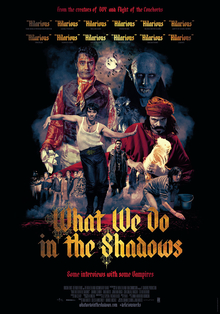
I often do things backwards.  It’s not really intentional.  You see, I’m busy with my day job and something most people may not realize is that researching and writing are also a full-time job.  Only they don’t pay well, unless you’re a professor.  In any case, I find out about things in odd ways.  A friend got me watching What We Do in the Shadows, the current FX television show.  I then realized it was based on a movie so I decided I should see that before going any further.  The movie is funny, but the television show develops some of the same bits so really, it is best to see the movie first.  It turns out that while I’ve been busy working, and writing books on other types of horror movies, this franchise has been developing.  So what’s it about?  Vampires unliving together.

One of the contradictions about vampires, as the undead, is that they live by certain rules that make them distinct.  Going back to Bram Stoker’s Dracula, they don’t always live alone.  In fact, three female vampires live in Castle Dracula (although the Count moves to England without them).  What We Do in the Shadows is based on the premise of vampire roommates in contemporary housing.  How would they get along as roommates?  Many of us have experienced roommates and we know the kinds of conflicts that normally arise.  Would the undead have some other complications?  In case you haven’t gathered so already, this is comedy.  There are a few vampire chase scenes and a hilarious interaction with werewolves, all filmed as a mockumentary.  It’s pretty funny stuff.

There’s nothing too serious here, but there is bloodshed, of course.  And the developing of different characters for the undead and putting them together in one house does lead to all kinds of situations, some of them adult.  The television show is binge-worthy, if you’ve got the time and if you like vampires.  If you want to start from the beginning, the movie sets the premise well.  Vampires are so well established culturally that there’s plenty of room to fly.  Comedy horror has really come into its own.  Vampires have been culturally ascendant for quite some time now.  They are yet another thing I was fascinated by as a child that later became cool.  I wrote one of my senior term papers on vampires in high school, before college convinced me such things were puerile.  Now I’m finding that the culture has gone after them.  As I say, sometimes I do things backwards, even on a large scale.  


Getting By

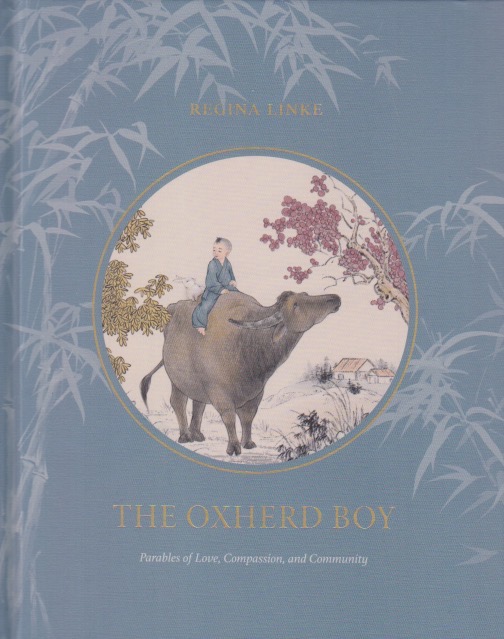
There are some books, such as Trina Paulus’s Hope for the Flowers, or Charlie Mackesy’s The Boy,  the Mole, the Fox and the Horse, that are inherently hopeful and that you like to have around.  Especially in the coming four years full of hate-filled rhetoric.  My wife asked for Regina Linke’s The Oxherd Boy: Parables of Love, Compassion, and Community, for Christmas.  Of course, I read it too.  It is yet another to add to this hopeful shelf.  The thing about these three books is that you could easily read them all in an unrushed afternoon.  All three are profoundly hopeful outlooks on life.  I would recommend having them at hand.  The Oxherd Boy is a combination of beautiful artwork with bits of wisdom drawn from Taoism, Buddhism, and Confucianism that can keep you centered in difficult times.

There’s no real storyline here, but rather reflections.  “Eastern wisdom” is kind of a tired trope, but the “religions” of that part of the world can infuse a bit of sanity into many of the facades western religions throw up.  I’m not anti-Christian; I fear our society is.  It has taken one of these facades and claimed the name “Christian” so that it can get its hate on and feel righteous doing so.  There are seldom positive benefits when politics finds religion.  If any.  The Oxherd Boy reminds us to look for the good in simple things.  A life with friends and one in which love is the primary outlook.  I believe Christianity began that way, but it became politicized in under four centuries and politics tend to engender hatred.  A truly Christian state, through and through, has never, ever existed.  And it’s not coming here.

We know hate mongering will take the norm.  In fact, while out driving recently I noticed an increase in rude and angry behavior on the part of not a few drivers.  There was a noticeable uptick in such behavior shortly after Trump’s first election.  In a nation of people that imitate what they see on the media, I suggest staying inside and reading a book.  I would recommend The Oxherd Boy among them.  As long as you’re stocking up, don’t forget Hope for the Flowers and The Boy, the Mole, the Fox and the Horse as well.  Books don’t need to be written by academics to try to make the world a better place.  In fact, sometimes I wonder about the choices I’ve made.  So I’ll pull down the books that give me hope, and reflect.


Poe Day

Perhaps best known for his rabidly racist The Birth of a Nation, D. W. Griffith was nevertheless influential in early filmmaking.  I’m fascinated by how literature made its way to celluloid, particularly in the early days.  It was thus that I discovered Griffith’s Edgar Allen [sic] Poe, a silent film from 1909.  A dramatized version of Poe’s writing of “The Raven,” this seven-minute movie opens with Virginia Poe—the “Lenore” of the poem—in the process of dying at the Poe’s hovel.  Not able to keep warm or to find nourishment, she languishes on a cot until Poe arrives home and covers her with his coat.  At that moment a raven appears on the bust of Pallas above the chamber door, leading Poe to write the poem in a white heat.  He knows it’s a masterpiece and leaves Virginia promising success.

In a scene only too familiar to any writer, Poe takes the poem to the publishers, three of whom simply dismiss him, the third laughing at his work.  This particular scene rings so true.  A fourth editor buys it from him on the spot.  This is, in fact, how publishing works.  I’ve had 33 short stories either published or accepted for publication.  By far the majority of them were rejected multiple times.  One of them, previously turned down by six editors, ended up winning a prize.  So it goes.  You’ll never find an editor who “gets” you every time.  Even those who like your work may eventually start sending you elsewhere.  I often wonder how many writers of what would be classics died unpublished because of some editor’s choice.  But back to Poe.

Screenshot: public domain,

Newly paid for his work, he buys food and a blanket and returns home jubilant.  Of course, it is only to find Virginia dead.  Poe’s life did have its share of intense drama.  His death remains mysterious all these years later, and Virginia’s death was a severe blow to him.  “The Raven” was published in 1845 and Virginia died two years later, with Poe himself passing yet two years beyond that.  This film, which I learned about from Jonathan Elmer’s In Poe’s Wake, was made sixty years after Poe’s death.  He’d already become an icon by then, instantly recognizable in pancake makeup.  But even now, more than a century later, publishing is still a matter of the same process.  One of my own novels has been declined over 100 times, despite having once been under contract.  I do know the feeling of being rejected by publishers, even as I participate in a ritual as old as writing for publication.  Happy birthday, Mr. Poe.


Steering

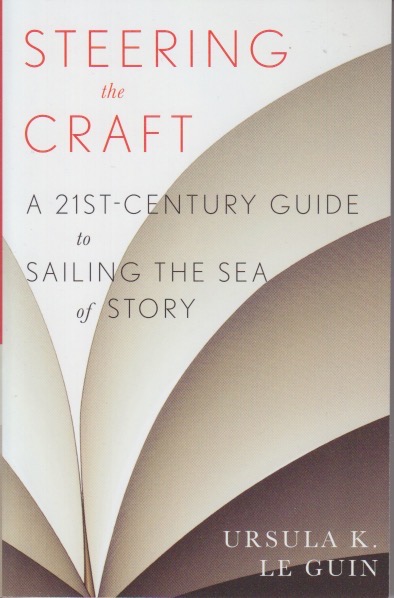
I’ve always been self-critical.  Often when someone points out something I’ve done wrong I’ve already figured out that I’ve made the mistake and the reminder is painful.  I can’t help but think that my childhood made me this way.  In any case, since I haven’t ever found much success is writing, I figure I must need help with it.  Recently I’ve read books on various aspects of writing by Stephen King and H. P. Lovecraft (published posthumously).  I’ve read quite a few more over the years.  I recently saw Steering the Craft: A 21st-Century Guide to Sailing the Sea of Story by Ursula K. Le Guin.  I confess that I haven’t read a ton of Le Guin’s fiction, but she is treated with a great deal of reverence in literary circles that I figured a bit of advice from a master couldn’t hurt.  Besides, it isn’t a long book.

Books about writing aren’t volumes that you fly through, though.  Steering the Craft has ten relatively short chapters and ten writing exercises, some in multiple parts.  As I read through I stopped and did each of the exercises.  I really didn’t want to cheat myself of the experience of learning from a departed sage.  The experience was refreshing.  As will surprise none of my regular readers, I’m in the midst of another writing project.  The thing about steering is that you’re constantly doing it.  And if the captain is someone who’s been through these waters, it’s best to listen.  At the same time—and Le Guin was very aware of this—hard and fast rules tend to be neither.  What spells success for one author becomes abject failure for another.  Some of us write because we must, whether anybody reads us or not.

But the exercises.  Exercise is good for your health.  Even writers with native talent need to stay in shape.  I’ve been doing creative writing, in one form or another, constantly, since at least the Nixon Administration.  Publication began in the academic realm when I was working on my doctorate.  I had my first fiction piece published in 2009.  Keen eyed readers will notice that is the same year I began this blog.  I’d been pretty much booted from academia by then, but I’d been writing in the meantime.  Essays, novels, short stories.  Then I tried a nonfiction book or two.  There is a great gulf between writing and publication.  An ocean, in fact.  And if you hope to cross an ocean, it is always helpful to learn how to steer.  I’m still trying to learn why my boat seems to be leaking, though.


Old Dracula

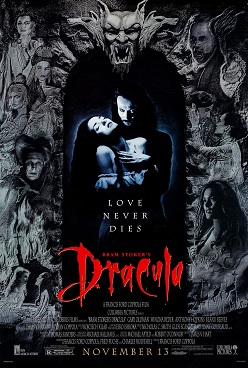
Francis Ford Coppola’s Bram Stoker’s Dracula is one of the “old movies” about which I posted some time back.  I’ve seen it at least a couple of times, and I wrote a previous blog post about it (October 11 2009).  This is a film about which I have conflicted feelings.  It has immense visual appeal and it influenced a tremendous number of followers.  It also did exceptionally well at the box office.  Since 1992 was a year in which I’m pretty sure I saw no movies in the theater (finishing a doctorate, moving back to America, and commuting weekly from Champaign-Urbana to Nashotah House drained my time and energy.  Besides, still being fairly newly married, I had not transitioned to horror movies again (that’s a different story, also involving Nashotah).)  Being a former literalist, when I first saw it I resisted the title since it takes significant liberties with Stoker, but the overall story is probably the closest of any vampire movie I’ve seen.

The strengths of the movie include its interaction with religion.  Vlad begins by renouncing God and becoming an agent of evil, stabbing a cross, and drinking the literal blood that pours out.  A number of Stoker’s own religious elements are also portrayed, and the ending brings God back into the picture, implying a kind of redemption for the defeated vampire.  The stylishness and opulence of the movie also make for engaging viewing.  It doesn’t have the gothic feel that it might—there seem to be some almost Burtonesque elements to it and some of the casting decisions feel ill fitting.  Anthony Hopkins just doesn’t do it for me as Van Helsing.  His one-liners feel out of place, and his interpretation of Van Helsing as a whole doesn’t resonate with me.

I do like Gary Oldman’s Dracula, however.  He’s right up there with Lugosi (but not quite at that level).  The conflicted vampire is an appealing character—much more intriguing than the pure evil kind.  This Dracula forsakes God because church rules about suicide keep his Elisabeta out of Heaven.  Even now the rulings seem not to allow for much nuance.  At heart, the vampire is a religious monster.  Fear of the crucifix may go back to Bram Stoker, but this movie tries to give it a backstory.  It’s a question of theodicy—why bad things happen to good people, essentially.  This is probably the biggest reason people end up turning away from religion, and it’s something theologians ponder.  While it isn’t my favorite vampire movie, Bram Stoker’s Dracula is stylish and accurate to a degree.  But it also turns back the pages a bit further than Stoker’s book does.


Reading Unwritten

There’s a style of writing—I’m not sure what it’s called—where an author keeps revealing new, and necessary information on nearly every page.  The effect on me, as a reader, is almost as if the book is backwards; too much wasn’t revealed up front and that kept me from understanding the story as it unfolded.  I confess that the fault is mine.  I’ve always appreciated a narrative that begins with much of what you need to know and then reveals unexpected things along the way.  This unwieldy preamble is to say that I had trouble getting into the otherwise delightful fantasy The Library of the UnwrittenA. J. Hackwith is a solid writer, but since this is fantasy there’s some introduction to the unfamiliar world that readers like yours truly needs.  At least a bit more than is on offer here at first.

This is a fun book with a fun premise.  Books in Hell’s library are unwritten and restless.  If not watched, their characters come to life and the book goes missing.  The idea of the unfinished also applies to paintings and other creative endeavors.  At first I thought this was going to be like Jasper Fforde’s Tuesday Next novels (several of which are discussed on this blog; you’ll have to use the search function) but the character from a book quickly gets swallowed up in a larger story involving demons with backstories slowly revealed, as well as a librarian and a muse, also with baggage that we only see once the train has left the station.  About halfway through, the story really starts to move and becomes quite enjoyable.  I guess I need more orientation than some readers.

The novel unfolds into a potential battle between Heaven and Hell, but those aren’t the only realms in play.  There’s Earth, of course, as well as Valhalla, and some nameless realms where the gods have died out.  And it focuses on a library.  It’s this final aspect, I suspect, that leads many people to categorize this novel as an example of Dark Academia.  Indeed, that’s where I discovered the book, on a display table with that label.  Although written with a light hand, and often somewhat funny, there is a deeper meaning here, a narrative about the importance of books that faces the reality that some would rather destroy them than read them.  I’m sure there are some religious folk that would see this book as promoting satanism and darkness, but instead it emphasizes loyalty and goodness.  I’ll be pondering it a while.


Burn Out

The Los Angeles fires are terrifying.  In my case, I can’t help but think of the Peshtigo, Wisconsin fire of 1871.  I read two books about it, the first because my daughter, in late elementary school in Oconomowoc, heard about the fire in class.  Embers of October by Robert W. Wells is one of the scariest books I’ve ever read.  After we’d safely moved out of Wisconsin I read Denise Gess and William Lutz’s Firestorm at Peshtigo.  Frightening stuff.  I feel for those suffering from the Los Angeles fires.  America is particularly vulnerable to such things since, according to books I read when writing Weathering the Psalms, the western half of the nation exists in, for the most part, a perpetual drought.  (Those who live in Seattle may disagree.)  Rain doesn’t fall evenly across the country.  I grew up in the relatively moist eastern part (we get a lot of rain), but even here fires are a possibility.  We had a very dry October, and a very dry May the year before.

Image credit: Mike McMillan/USFS, public domain as a work of the US government, via Wikimedia Commons

Global warming will only increase the problems, I fear.  Too long too many people in power haven’t taken it seriously enough.  The weather is a large, extremely complex phenomenon that we still don’t understand.  I sit shivering at my desk on a cloudy January day looking at weather apps that tell me it’s sunny outside.  One thing we do know about it is that if we tamper with it in one place, it affects the weather everywhere.  What if, instead of posturing and fussing with people who live in other countries, with larger entities trying to control them, we all turned our attention to that sky we hold in common?  Trying to understand its needs and temperaments?  Realizing that if crops fail in one country there will be shortages everywhere?

The fires aren’t just Los Angeles’ problem.  Large nations posturing about who has the biggest leader has proven ineffective time and again.  We need cooperators and collaborators, not nationalists.  Embers of October, especially, paints a Hell on Earth.  One that couldn’t be escaped by many of the people in this small town that was utterly wiped out by a natural disaster.  Such things should be required reading.  Instead, small-minded people ban books claiming ignorance is bliss.  Trying to avoid a metaphorical Hell, they introduce a real one here on earth.  And yet, some use even this to divide people against each other.  And people who have no will to help one another is Hell indeed.


Upstate

Unrequited love is sometimes tragic.  Other times it’s merely sad.  People are attracted to places.  Or at least the idea of places.  I was born in Pennsylvania, but to a wandering family.  I keep looking for roots—my tribe.  I didn’t know my father well growing up, but my mother’s family, before taking on that rootless search for greener pastures, was from upstate New York.  For several generations.  I’ve tried many times to land a teaching post somewhere upstate, but in vain.  Even when I knew the people in the department and had been to campus, like that time at Syracuse University.  It was raining when I visited, back in my Routledge days.  I was taken by what I experienced there, never to be welcomed myself.  My family was from a bit further north, around Albany, the head of the Hudson Valley.

At the time I wasn’t aware that my childhood hero Rod Serling was born in Syracuse.  My daughter was at school in Binghamton, which is where Serling grew up.  That I knew.  Nor did I know that Dan Curtis, creator of Dark Shadows—that other childhood staple—had gone to college at Syracuse.  Something about upstate.  I’ve remarked to my family that when traveling in this part of the country I catch glimpses of familial facial features in some strangers.  A passing glance suggests that they might be distantly related.  My unknown tribe.  Economics, however, have always kept me away.  Even when I explained in my cover letters that I felt that special connection my applications were summarily brushed aside.  Probably by folk who knew who their tribe was.  Probably from somewhere else.

In this world of internet loneliness, we long for connection.  We lived in Wisconsin for over a decade.  The only people I really got to know were those I knew from Nashotah House.  And this was even with years of involvement with the PTO, serving on the building committee, and even being president one year.  People were busy even back then.  I was thinking perhaps I’d found my tribe in Wisconsin. But then…  The move to New Jersey put me close to my ancestral state, but not in it (my mother was born in Jersey).  Economics, that dismal science, dictated that a move had to be back to Pennsylvania, where I was born among strangers.  Our nation is one of many tribes, including those we sought to exterminate to steal their land.  We have plenty of space, but we value economics over belonging.  You may buy the presidency, but you can’t buy your tribe.


Car Talk

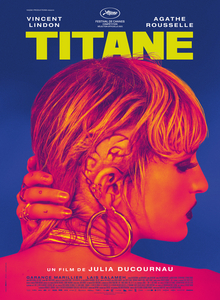
Body horror isn’t my favorite sub-genre, but Titane (French for titanium) had been recommended in several places.  Body horror directed by women takes on a particular cast, especially since pregnancy is, I imagine, kind of scary.  Certainly from a male perspective it can be, so I suspect such major body changes must involve some psychological adjustments for women as well.  The story is strange.  Alexia, after a childhood car accident, has a titanium plate in her skull.  After being released from the hospital, she starts to really love cars.  I mean, really love.  She works as a car model and ends up making love to her showroom car one night.  After that she becomes pregnant.  Emotionally distant from most people, including her parents, she becomes a serial killer.  She’s not a complete sociopath, however, because she realizes this is wrong.

Wanted by the authorities after killing everyone at a house party, she tries to change her identity by cutting her hair, breaking her nose, and wrapping her torso in body tape to pass herself off as a man.  A firefighter chief whose son has been missing for a decade, believes Alexia is his son and he takes her in.  She won’t speak, which he supposes is part of the trauma.  He gives Alexia work among the other firefighters, who are generally sexist and not a little suspicious.  Especially since the chief gives Alexia preferential treatment even though she doesn’t know what she’s doing.  In one scene he tells the firefighters he is God to them and Alexia is his son.  One of the firefighters quips later, that Jesus is white and gay.  (Alexia is pretty and the broken nose only makes her appear androgynous.)

Her painful pregnancy, which involves motor oil, eventually forces her father to acknowledge that she’s not his son, but the lonely man still vows to care for her.  When it’s time to give birth the baby is part titanium (as is Alexia’s distended belly).  She dies in childbirth but her “father” accepts the hybrid baby as his own.  This art-house Euro-horror won several awards.  Exploring issues of both sexism and women’s body changes during pregnancy—particularly an unwanted one—the movie has something to say.  And it’s something that a male writer-director simply couldn’t do.  There are no jump-startles here, and the horror is a slow dread as the viewers’ sympathies tend to be with Alexia.  The first murder we’re shown is when a fan attempts to make love to her (it doesn’t go as far as rape), despite her lack of interest.  She has a motivation and it doesn’t seem evil.  And, of course, there’s a good deal of fantasy at play.  Like most Euro-horror, it leaves you thoughtful.


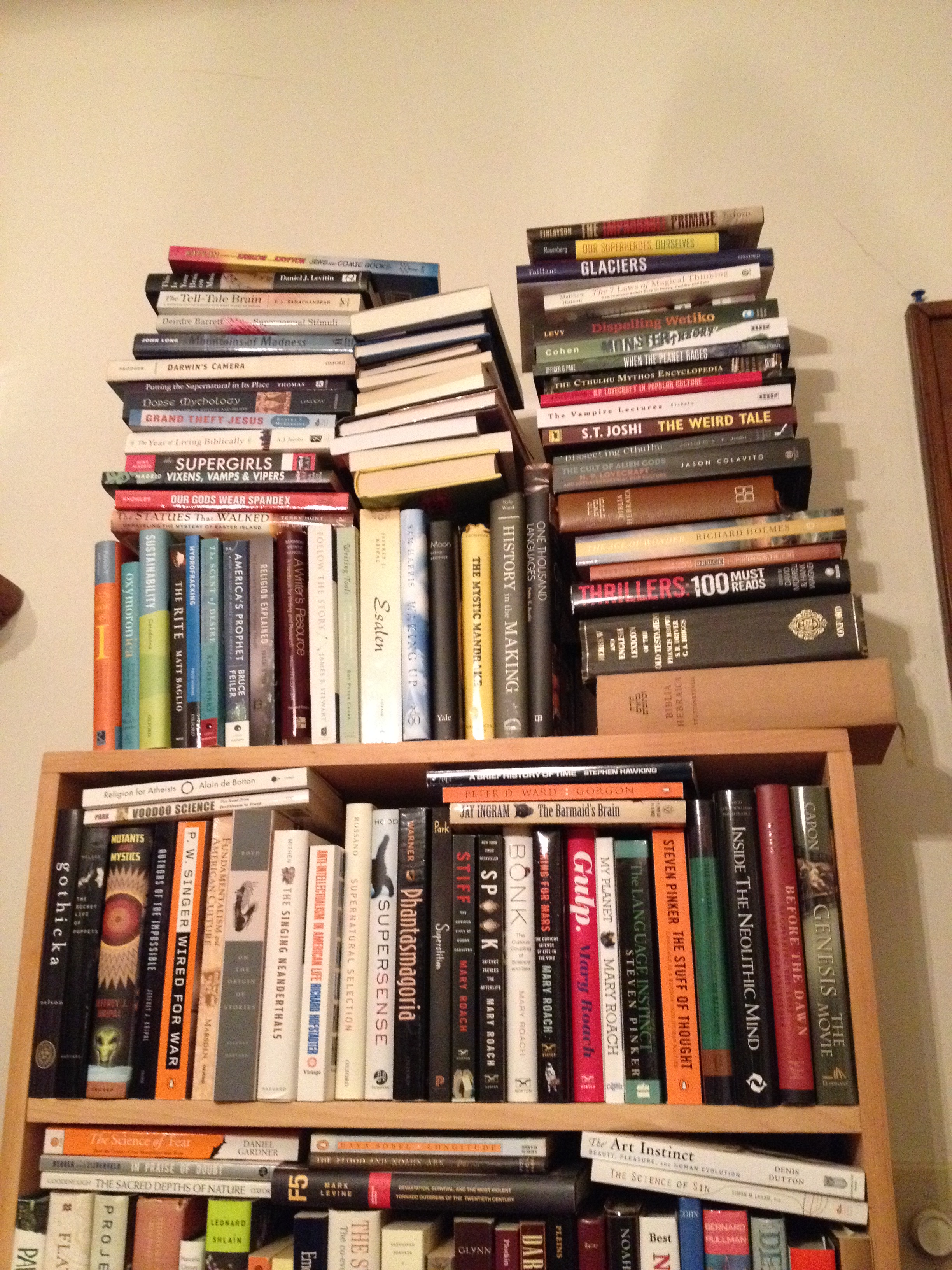
Measuring Books

You know how some email servers stock your inbox with ads?  I almost never pay attention to them.  Then one for Books by the Foot showed up.  I had to click.  The basic idea is simple enough: you want to look smart so you fill your shelves with books by a company that sells them by the linear foot.  You can get color coordination, rainbows, old books, you name it.  Now this isn’t a free ad.  In fact, this is a rather sad state of affairs.  I’m sure their antique books have been vetted for any real treasures, but the fact that people want to buy books just for display evokes, well, melancholy.  I’m pleased that books retain their cachet as symbols of pride, but these are not books for reading.  I’m left with mixed feelings.  The website states that they have over 5 million books on hand.

At least they’re not selling ebooks.  I love books.  They are a wonderful symbol and I suspect they are among the most noble things that humans achieve.  I grew enamored of books as I entered my tweens.  I was terribly shy by that point.  We had moved to a new, and rough small town where I really didn’t know anybody.  Life, which hadn’t been exactly a picnic to that point, seemed to be getting scarier.  So I read.  And I never really stopped.  Ironically, during my professorial days I had less time to read entire books.  Those who’ve dabbled in higher education know that at even the hint of organizational skill you get bumped into administration, whether you want to or not.  And administration is busy work.  Yes, even professors have it too.  In any case, when I got bumped back down to being a mere adjunct, I started reading a lot again.

One time one of my bosses asked me how many books I had.  This was early in the pandemic when we were seeing inside each other’s houses for the first time, via Zoom.  My office is one of my main book repositories.  (Along with the attic and the living room.)  I answered truthfully that I’ve never counted.  I started using Goodreads in 2013 to keep track of the books I read.  In those early days I didn’t put everything in there (who hasn’t read a book they’re embarrassed to admit to once in a while?), but when I started the reading challenges in 2016 I did.  Mine has been a life defined by books.  Starting with the Good Book, and including many quite the opposite, I have earned books by the foot.  But I’m not selling.  Symbols have value beyond cash, at least in my mind.


Meanwhile, on Earth

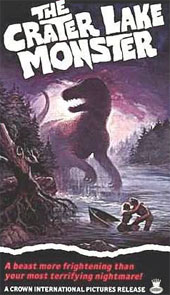
Low budget doesn’t always translate to cinematic disaster, but in The Crater Lake Monster, it unfortunately does.  I have a soft spot for those who attempt to make movies but don’t succeed the way that they’d hoped.  The Crater Lake Monster is poignant in that respect as the production company, Crown International, apparently messed up the financials and insisted on cutting scenes that helped to make a bit more sense of the story.  The actors are certainly not those at the top of their game, but the stop-motion plesiosaur isn’t half bad.  The story itself doesn’t seem to support its tonnage, however.  A meteor crashes into Crater Lake (not the famous one).  Some months later a monster begins attacking people after it eats up all the fish.  There are a handful of characters who are concerned, and some just casually passing through.

The sheriff, at first skeptical, becomes a believer after seeing with his own eyes.  The doctor, who examines a victim’s body, thinks there’s something in the lake.  A couple passing through on their way to Vegas see the monster up close and survive, but their trauma is so great that they can’t talk about it.  A pair of guys who rent out boats to fishers are having trouble because there’s no fish left.  And a pair of archaeologists from “University Extension” insist that the creature should be kept alive since, well, you don’t often come across dinosaurs.  They also figure out that the hot meteorite incubated a fertile plesiosaur egg that had been at the bottom of the lake for millions of years.  There’s even a story of a liquor-store robber thrown in.  The robber’s only tied to the plot by getting eaten by the monster.  The monster is finally killed by the sheriff with a bulldozer.

Some of the people that worked on this film, especially the stop-motion crew, had some recognizable chops in the biz.  One of them had worked on that childhood Christian kids’ show Davey and Goliath, and another was concurrently working on Star Wars and went on to work on Jurassic Park.  Meanwhile, Crater Lake is so bad that it’s a bit surprising that it hasn’t really become a cult classic.  Creature features are a guilty pleasure.  With a bit of coaxing, and financing, this one might’ve been made passable.  Who doesn’t like to see the underdog achieve some success?  Of course, it did come out the same year as Star Wars, with its budget, and clearly couldn’t compete down here on Earth.