Remember November

I didn’t get his name.  I could have, because he was wearing a name tag.  I was too busy thinking, “that won’t be me.”  I ended up being wrong about that point.  He was sitting in that depressing place at the AAR/SBL meeting in Kansas City.  That room for those waiting to see if they’d scored any interviews.  “I’ve got publications,” he told me, “I’ve got years of teaching experience, but no interviews.”  Our capacity to fool ourselves should not be underestimated.  I was just sure that once I was in that place—publications, teaching experience—I would be able to find a professorship.  I did find one that lasted about fourteen years, but after that, my nameless friend, I have to say “you were right.”

I can’t help but think of that when I attend this conference.  It’s a place of lost dreams for me.  I can see my books on display here.  I can see literally hundreds of people that I know.  I’ve gone from a vocation to a job, and there’s no going back.  Sometimes I wonder if adjacent careers are a good idea or not.  I’ve put some books under contract from new Ph.D.s who eventually decide to disappear.  Not to be found anywhere in academia, their books left unpublished.  Perhaps they met my mysterious prophet.  Maybe they came to realize that working in a job right next door to where they want to be will only ever remind them of loss and regret.  We continue to the glamour of a conference that reminds many of what they never found.  El Dorado.
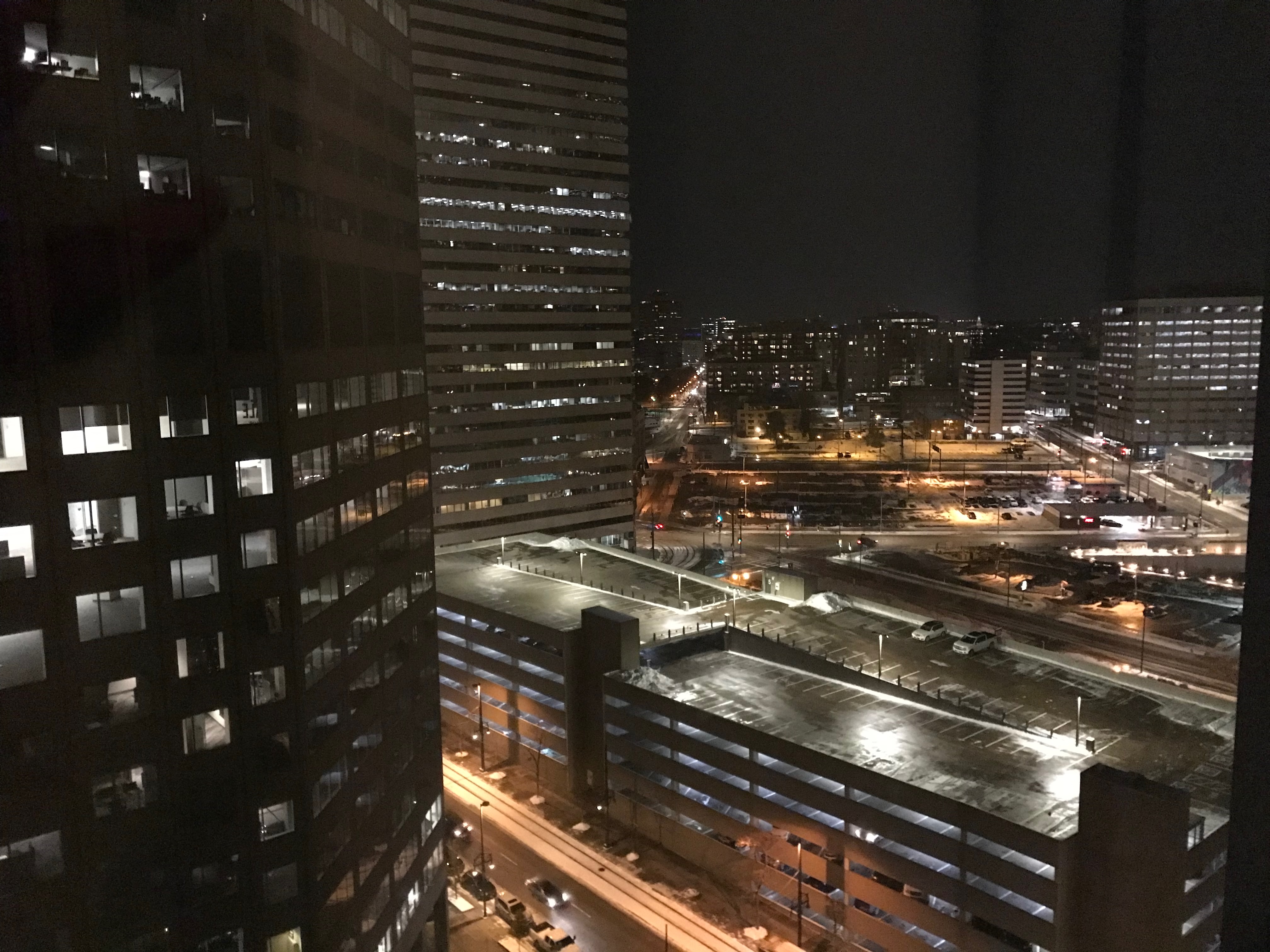
So as I sit here in Denver with my past.  I actually made it to Denver, which is, I suppose an improvement over last time.  There was snow, in Denver, but the locals seem to be fine with it.  Not many people are wearing masks these days, I’ve noticed.  There were a few stalwarts on the plane(s) and a few here at the conference who did.  The pandemic doesn’t bend to the will of people, not even religion scholars.  Viewing Denver from the airport (it’s a considerable way out), it looks so small and insignificant backed by the front range of the Rockies.  Maybe that’s what all of this is about: significance.  My association with this conference spans 31 years.  Perhaps there’s a bit of weariness here too.  The pandemic may never really end, not in any meaningful way.  I do wonder if my nameless friend ever found a job and if he still attends.  If he does I wonder what he would say about all of this.


The Denver Curse

I’m posting this early today because I’m flying to Denver for the American Academy of Religion and Society of Biblical Literature (AAR/SBL) annual meeting.  At least that’s the plan.  I don’t have a good track record with Denver and this conference.  I’d been attending AAR/SBL since 1991.  I can’t recall what year it was when I first attended in Denver.  I was still a professor then and had a paper to read.  I also had free time (something editors don’t have at conferences).  I decided to view the world-famous mineral and dinosaur exhibits at the Museum of Natural History the morning of my paper day.  While at the museum something very embarrassing happened—I got sick in public.  It was scene-from-a-cheap-movie bad.  Literally sprinting to a public waste can to throw up in front of strangers.  I’d never been sick at AAR/SBL before, despite the November timing.  When I went to read my paper that afternoon, the motion of my eyes made me sick again and I had to sit with my head between my knees while a bunch of biblical scholars looked on with what passes for concern in academic circles.

The second, and last, time I was flying to Denver  for the conference there was a small snowstorm.  I was flying out of Newark on an evening flight.  Because of the snow (which ended up being about two inches) my flight kept getting delayed and delayed.  They made the decision to cancel the flight after 11 p.m. by which time all local hotels were full from the earlier cancelled flights.  To make matters worse, there was no way out of the airport.  All public transit shut down.  Even if I could’ve caught a taxi where was I to go?  I live in Pennsylvania.  With no other choice, I slept on the floor of Newark’s Liberty International Airport.  I awoke early, having used my briefcase as a pillow (a step up from a stone, I expect) and found my way to Somerville, where we used to live.  My wife picked me up at the train station there and drove me home.  I missed the conference, needless to say.

And so you see that I’m a bit dubious about trying this again.  I have nothing against Denver.  Before getting sick I was enjoying my time there.  So, if things go according to plan, I’ll be on a plane headed that direction by the time I usually post my daily thoughts on this blog.  Will the Denver curse be broken?  Only the next few days will tell. Watch this space.

Photo by Acton Crawford on Unsplash

Monsters in Common

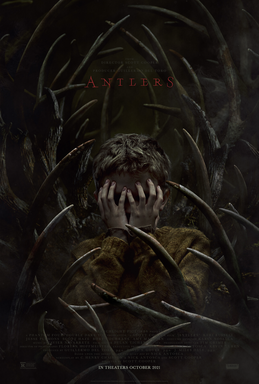
The thing about monsters is once they’re released they go wild.  Antlers is sometimes criticized for cultural appropriation—it takes the wendigo, an American Indian monster, and uses it in an Anglo story.  There’s perhaps some truth to that, but the wendigo is the perfect monster for the social commentary the film makes about the poor.  Those who’ve never been poor can’t really understand, and I can’t blame them for it.  Pointing fingers at symptoms like drug abuse is pretty typical.  It’s not directing the extinguisher at the base of the fire, but at the dancing flames that keep shifting as the base consumes.  In short, I found it a powerful movie, and one that is beautifully filmed.  Yes, it does lift an American Indian monster, but that monster was released long ago.

The wendigo was addressed by Algernon Blackwood in his 1910 story that goes by that name.  It has appeared in other horror venues as well.  Antlers is the first full-fledged horror movie I’ve seen to use it and it builds the story up nicely.  And it does so by tying religion into the narrative.  In brief, Lucas Weaver, a twelve-year old, is protecting his father and younger brother.  After being attacked by a wendigo, his father has become one.  Lucas’ teacher, Julia Meadows, was abused as a child and recognizes it in Lucas.  She become determined to care for him but his father has given over to the spirit of starvation that inhabits him.  

I could’ve used this in Holy Horror because when Julia is searching Lucas’ desk at school she finds, among other things, a Bible.  At one point Lucas’ brother asks if God is dead.  His father has told him that he is.  And when the police are trying to determine what they’re up against, the former sheriff, an American Indian, tells them about the wendigo.  Native beliefs are treated as superstitions, of course.  The wendigo is brought out because of cannibalism.  The use of a native monster and the role of the landscape in the film make this a fine example of folk horror.  And it’s a cautionary tale about the dangers of abandoning the poor.  Those who criticize the film for that have perhaps lost sight of the monster.  Monsters belong to everyone.  The golem, the wendigo, the mummy—these all play a role in someone’s religion and culture.  They also serve to haunt anyone who’s concerned with fairness and justice.  And that’s why we must chase any monster that roams free.


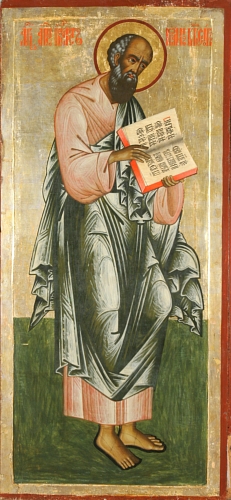
James and John

One of the first questions expectant parents are asked is if they have yet come up with a name for their child.  Quite often, and probably without realizing it, some of the most popular names are biblical.  Jacob is one of the most common boys’ names in English.  It derives from the story of Isaac’s younger son in Genesis.  Its popularity increases exponentially when its variant James is added to the total.  The name James comes into English from Old French where it was derived from the Latin Iacomus.  B and m are, phonetically speaking, bilabials (the former voiced, the latter not).  This Latin form also led to the Spanish name Iago, which many know from the apostolic name Santiago (“Saint James”).  Or Saint Jacob, only nobody calls him by that name anymore.  Biblical names are exceptionally common in the western world.  Even so, it often seems implausible that names like Jimmi could be alternatives to Jacob, but small steps make evolution possible.

It has been popular among evangelicals for years to know that Jesus is the Greek form of the name Joshua.  Having a savior named Josh just doesn’t have the gravitas we’re looking for, however.  Greek is an Indo-European language while Hebrew is a Semitic one.  While these two family trees have points of contact, their vocabulary and syntax developed quite independently.  Names change when they’re translated.  Many of our familiar New Testament names are translations from their Hebrew (or Aramaic) counterparts.  The New Testament was written in Greek and we receive Greek versions of such names.  John, for example, is another name that comes to us in many forms.

The apostle we call John was called Ioannes in Greek.  This was derived from the Hebrew name Yochanan.  John comes into English via the Germanic form Johannes, where the connection to the Greek becomes obvious.  From there it shortens to John.  It comes in many varieties too: Juan, Jan, Ivan, Han, Evan, Sean, Jonas, Giovanni, and even Jack.  The latter sounds more like Jacob, but in their original forms the names are quite different.  Apart from names, Indo-European borrowing from Semitic languages isn’t terribly common.  Throughout the Christianized world, names based on these two apostles, however, have become extremely popular.  In recent times parents have been branching out into more creative names for their children, but many of them still derive from their biblical antecedents.  This is just one more way that the Bible continues its influence in an increasingly secular world.  


Outside In

Work duties necessitate my attendance at the American Academy of Religion and Society of Biblical Literature annual meeting, starting Friday, in Denver.  Given the state of the pandemic I can’t say that I’m thrilled to be attending, but work is work.  What really prompts this post, however, is the travel arrangements.  The agency I used is based overseas.  They customarily send a fact sheet about the country to which you’re traveling—in this case, my own.  It was fascinating to read how the rest of the world rates the United States.  Overall we receive a pretty good score, but there are a few items of concern.  One is that mass shootings are not uncommon.  The guide laconically states “Due to the wide availability and proliferation of arms across the United States, high-profile shootings occur.”  This is not wrong.

It goes on to note that if you can avoid being shot, crime rates are overall low in the US.  Disease, apart from Covid-19, is well under control.  While organized crime and gang problems are mentioned, it notes that open conflict between states does not exist.  It seems that, despite the rhetoric of certain politicians who like to use hatred to get their way, we do tend to cooperate pretty well.  We have plenty of micro-cultures here, and I know that I’m only comfortable living in a northern one.  I like four distinct seasons, and I don’t mind shoveling snow, but I’m getting away from my guide.  Hurricanes are a risk on the east coast through November and wildfires are possible in the west, also largely through November.  Earthquakes are localized and infrequent.  We live with a heightened risk of terrorism, but our medical care is good.  If expensive.  We have good dental.  

While I didn’t really learn anything about the United States per se, I did learn a little about how others view us.  We are a nation with tremendous resources and great potential.  Our melting pot nature is, I believe, the source of our cooperative strength.  We are still, after two centuries, suffering growing pains because there are some who want things the way they used to be in spite of the incessant, almost daily, changes that take place.  There is no turning back.  After the apple has been eaten you can’t unlearn that knowledge.  The recent elections spoke pretty clearly: we believe in democracy and we support women’s rights.  That’s how we see ourselves.  How the world sees us, however, may be quite a different interpretation.


Dangers of Bookmarks

So you’re a busy person and you don’t always have time to act on something immediately.  Or you have to wait until the next billing cycle to afford something.  Daily life comes at you like a Russian missile, so you need to leave reminders around so that you don’t forget.  For me, those reminders often take the form of tabs.  On my browser I leave at least a dozen tabs open to remind me of things—I’ve got to get those cartons ready for mailing to recycle; thanks for reminding me.  I actually look forward to being able to click a tab closed because that means I accomplished something.  There are so many things to do and time is so rare.  Then the inevitable happened.

I was leading a Zoom meeting and I had to keep track of attendance.  Since I was leading I didn’t want to stop in the middle and write a bunch of names down, so I took a screenshot.  My poor laptop got confused and kept the screenshot on top.  Since the screen shot showed all the open windows (it’s not just the browser that’s open, but all the writing projects in the two different programs I use as well, all in various stages of completion), I couldn’t tell how to click out of the screenshot.  I couldn’t see the actual Zoom meeting or if someone was raising her or his hand.  I tried to keep the discussion going while trying to get Zoom back to the front.  I began clicking any window shut that I could.  Finally Zoom reemerged.

After the meeting I had to examine the carnage.  My browser had been closed and when I reopened it, the option to restore all closed tabs from the last session was grayed out.  I would have to rebuild my tabs from memory.  It was because of my overwrought memory that I’d kept those tabs open in the first place!  Before going corporate, when I could take my time and pay attention, I had a very good memory for things like this.  (As a professor I had time to act on things during the day instead of constantly thinking “I’ve got to get back to work.”)  Now too much is happening all the time.  I’m having Zoom meetings after work when I normally get my day to day business done.  So I’ve added a new task to all the others—trying to reconstruct my lost tabs.  Yes, it’s a classic “first world problem.”  At least that’s what I think it’s called—let me open a new tab and check.

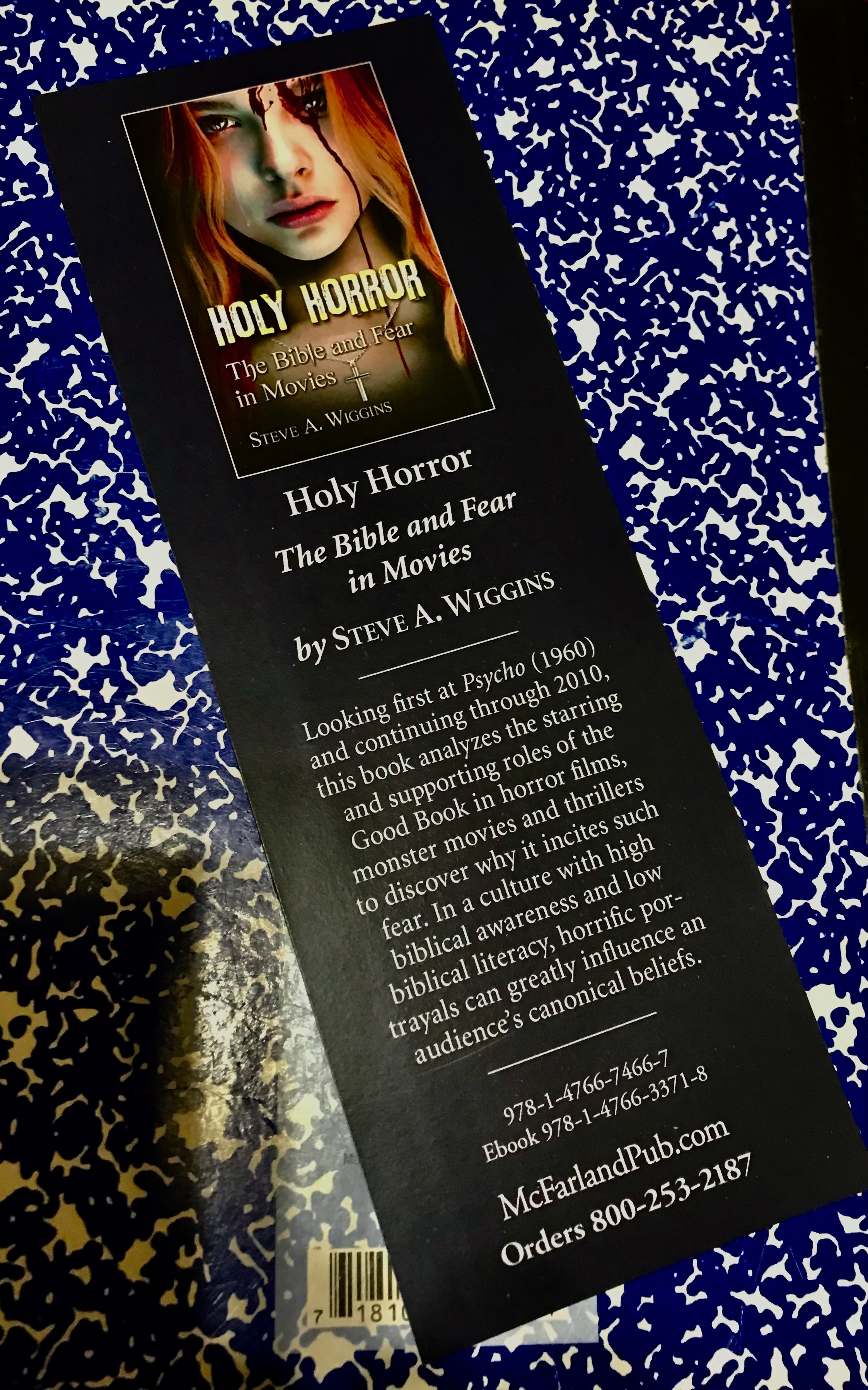
A different kind of bookmark

Complications

That string of ten digits becomes your personal identity.  It’s conveyed by a pocket-sized device that’s so expensive you have to pay for it in installments.  And it’s not a one-time expense.  For a monthly fee that would’ve sent our parents calling on AT&T we carry a compact computer with us at all times and call it a phone because it responds to those ten digits.  The trend is to replace them every two or three years as more and more features become available, many of which, one suspects, are never used.  So, with a notice from our carrier that the card in one of our devices would no longer work at the end of this year, having reached the end of its life, we found ourselves in one of the countless phone stores around the country.

I mused as we waited—buying a replacement phone took two hours out of a Saturday, and that didn’t count driving time—at how complicated life has become.  One of our cars, purchased in 2003, also needs replacing.  My wife and I have to coordinate a day off work to buy one.  It pretty much took a whole day the last time we bought a car.  It’s complicated.  Credit checks, titles, registration, insurance.  And oh so much money.  You can’t, however, live without a car.  Not if you don’t reside in a major city.  You need to get to the grocery store, to doctor’s appointments, the hardware store—and the telephone store.  Many of these places exist in their own carefully zoned commercial habitats and since they have the necessities of life, you need to go to them.  Meanwhile, the internet offers to send them to you.

Ads now tell me you can buy your car online and some smiling stranger will drop it off right at your house.  It’s just that easy!  What they don’t say is all the work that must, I’m assuming, be done in advance.  The insurance, the financing, title transfer, trade in, let alone nothing of the test drive.  Now you have to figure all that out in advance.  Let’s face it—nothing is easy.  If you’re reading this you’re doing it on a highly sophisticated device that may have cost you quite a bit of money.  If it’s a phone it bears your personal ten digits that can be used to reach you at all times and in all places and that, in fact, knows where you are at all times.  Even if you’re out for a virtual test drive.


Deep Life

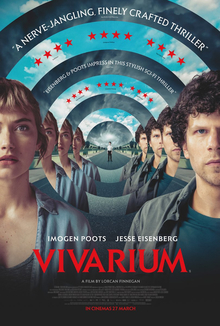
I have a list, you know.  It grows frequently and changes with my moods.  It’s a list of movies I want to watch.  While I never trained as a movie critic, there comes a time when you’ve watched enough, and written about them, that you can’t help but feel you have something valuable, perhaps, to say.  Movies are modern mythology.  At least if they’re done right.  Being a critic of limited means, I often paw through Amazon Prime’s list of freebies for subscribers.  Seldom is anything on my list there, so I try to find interesting offerings for free.  Sometimes they’re lousy (but at least free) and other times they’re provocative and perhaps profound.  Vivarium is a European film that slots somewhere between horror and sci-fi.  It’s like The Truman Show meets Village of the Damned while at a party thrown by the Stepford home owner’s association.  It’s one of the profound ones.

Tom and Gemma, a young couple, agree to see a house that an odd realtor insists they look at.  In a planned community of identical houses, the couple find themselves abandoned and unable to escape.  The house can’t be destroyed and food mysteriously appears.  Then a baby is delivered to be raised by the couple.  The child grows quickly, aging about 10 years in 100 days.  Tom decides to try to dig out while Gemma tries to care for the strange boy.  He mimics them and screams if he wants something.  Tom digs until he sickens.  He finds a body at the bottom of the hole and shortly thereafter dies at Gemma’s side.  The boy, now in his twenties, puts Tom in the hole he dug.  When Gemma attacks him he crawls under the pavement and she follows, only to discover other houses with other trapped parents.  She dies and the boy throws her into the hole and buries her with Tom.  He then replaces the realtor, waiting for other couples to come looking for a house.

The film is full of both existentialism and social commentary.  The boy tells Gemma as she’s dying that mothers raise their children then die.  We learn about two thirds of the way through that the boy is not human.  What he is is never explained.  This is the kind of film I would’ve found mind-blowing in high school.  It’s still very intriguing and will require some thought.  It’s well made, with high production values, unlike much of what I find scrolling through Amazon Prime.  It’s a film worth talking about.  And profound.


Finishing the Set

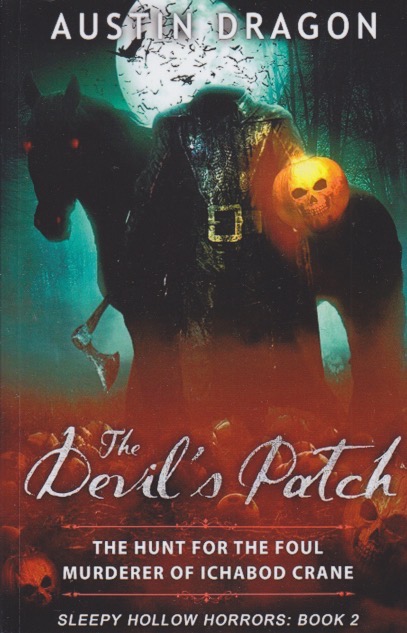
I hope I didn’t leave you hanging too long.  Autumn is always such a good time for mood reading that I had a couple of books I wanted to be sure to cram in before finishing Austin Dragon’s two-volume Sleepy Hollow Horrors set.  I wrote about volume one, Hollow Blood, some weeks back.  I wanted to read The Devil’s Patch to finish out the series before I forgot too much about the first one.  The subtitle is the same as it is for the first volume: The Hunt for the Foul Murderer of Ichabod Crane.  This imaginative retelling shifts the action away from Sleepy Hollow, although part of it takes place there, to the eponymous Devil’s Patch in upstate New York, near the Canadian border.

Instead of focusing solely on Ichabod’s avenging nephew Julian Crane, volume 2 adds an ensemble cast.  The first half of the novel provides the backstory for ten characters who will eventually accompany Crane to the Devil’s Patch to confront the Headless Horseman on his home turf.  The conceit here is that the Horseman, for some reason, has tried to kill each of the posse who eventually form to dispatch him.  Perhaps there’s some prophecy or something that he’s heard.  In any case, once Julian Crane recovers from his own encounter with the Horseman in book one, he begins to gather a group in Sleepy Hollow to go with him further upstate to take care of business.  The group of ten constitute his posse and Brom Bones goes along too.  They encounter the evil and defeat it.

There’s always a sense of accomplishment in finishing a set of books.  What has dawned on me in the process of all this reading is that the story was already told by Washington Irving in one of America’s first literary collections.  If fans want to engage with the story they need to take it in different directions, or tell it from a different perspective.  This is sometimes done cinematically and, increasingly, in literary form.  For me this is an autumn story.  That makes sense since Irving set the climatic scene during a fall party at the Van Tassel estate.  That tradition is frequently carried on in retold versions, but not always.  Whether or not they are set in autumn, they seem to be appropriate reading for this time of year.  That’s in keeping with the spirit of the season, whether in Sleepy Hollow or not.


Eclipsed

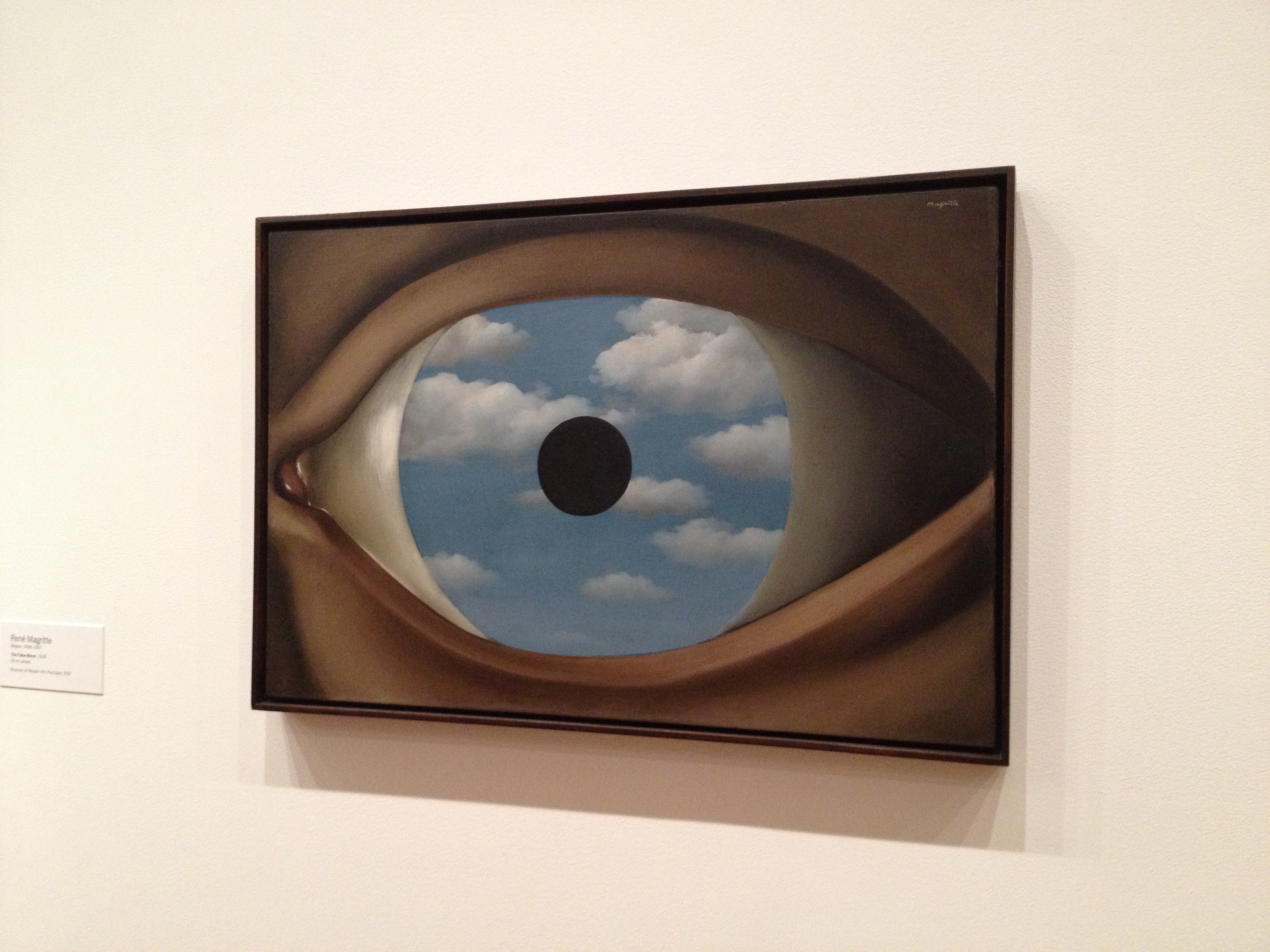
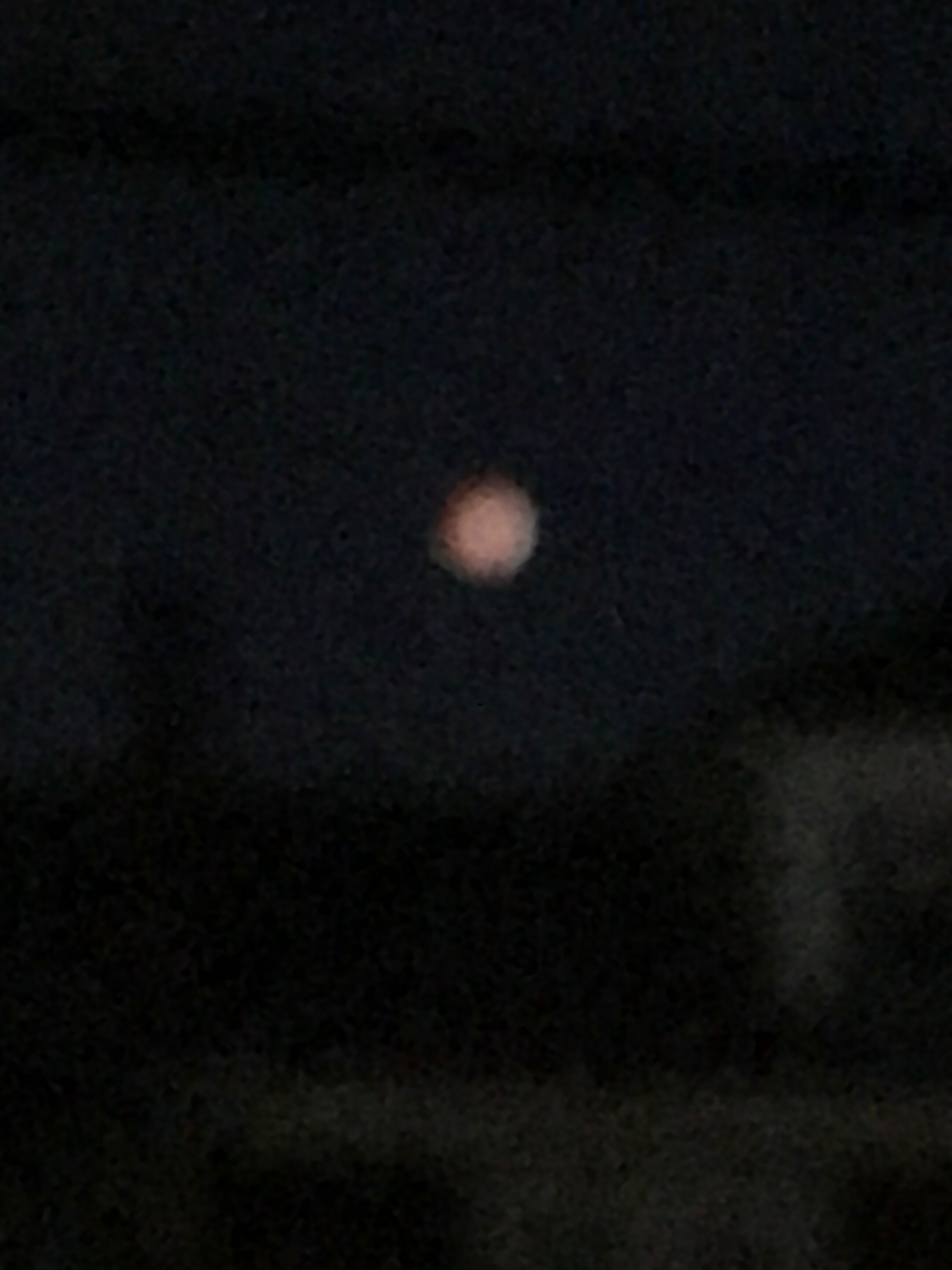
Shooting the moon.  It’s such a simple thing.  Or it should be.  I don’t go out of my way to see lunar eclipses, but I had a front row seat to yesterday’s [I forgot to post this yesterday and nobody apparently noticed…].  I could see the full moon out my office window, and I’m already well awake and into my personal work before 5:00 a.m.  When it was time I went into the chilly morning air and tried to shoot the moon with my phone.  It’s pitiful to watch technology struggle.  The poor camera is programmed to average the incoming light and although the moon was the only source of light in the frame, it kept blurring it up, thinking, in its Artificial Intelligence way, “this guy is freezing his fingers off to take a blurred image of the semi-darkness.  Yes, that’s what he’s trying to do.”  

Frustrated, I went back inside for our digital camera.  It wasn’t charged up and it would take quite some time to do so.  Back outside I tried snapping photos as the phone tried to decide what I wanted.  Yes, it focused the moon beautifully, for a half second, then decided for the fuzzy look.  I had to try to shoot before it had its say.  Now this wouldn’t have been a problem if my old Pentax K-1000 had some 400 ASI film in it.  But it doesn’t, alas.  And so I had to settle for what passes for AI appreciation of the beauty of the moon.

Artificial Intelligence can’t understand the concept of beauty, partially because it differs between individuals.  Many of us think the moon lovely, that beacon of hope in an ichor sky.  But why?  How do we explain this in zeros and ones?  Do we trust programmers’ sense of beauty?  Will it define everyone else’s?  No, I don’t want the ambient light averaged out.  The fact that my phone camera zoomed in to sharp focus before ultimately deciding against it shows that it wasn’t a mechanical incapability.  Sure, there may be instructions for photographing in the dark, but they’re not obvious standing out here and my freezing fingers can’t quite manipulate the screen with the nimbleness of the well warmed.  There were definite benefits to having manual control over the photographic process.  Of course, now that closet full of prints and slides awaits that mythic some day when I’ll have time to digitize them all.  Why do I get the feeling that the moon isn’t the only thing being eclipsed?


Who Bites?

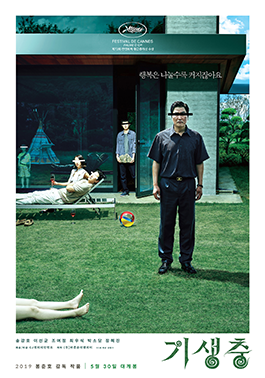
Although I use them, I find genres too constraining.  When Parasite first came out in 2019 many people said it was a horror film.  Others called it a thriller.  A comedy.  A drama.  It has elements of all these things.  As the first non-American film to win an Academy Award for best picture, it was an irresistible draw.  When it would come to a streaming service I already pay for, that is.  And having watched it, I still don’t know how I’d classify it.  And if you haven’t seen it, how would I describe it?  The word that keeps coming back to me begins with the same first couple of syllables: a parable.  In case you’re even more out of touch than I am, here’s the skinny on it.

A South Korean film, it’s the story of a poor family (Kim) that, desperate to get out of their circumstances, finds a way to infiltrate a rich family’s (Park) home.  The Kims live in a semi-basement flat prone to bugs and flooding.  The family’s son gets hired as the Park’s substitute English tutor for their daughter.  He recommends his sister (putatively as someone his cousin knows) as an art tutor for the Park’s son.  The poor siblings then arrange to have their father (presented as a stranger) hired as the chauffeur, and finally the mother as the housemaid.  They live in poverty while working for the wealthy.  Then they discover the former housekeeper kept her own family in a secret basement.  The homeowners discover none of this, then a garden party goes all wrong.

Laugh out-loud funny in parts, it’s a poignant film that, for me, explores the plight of the clever poor.  The wealthy have so much that they can easily support a second family without even noticing any financial loss.  The only reason the Parks employ all the Kims, however, is that they don’t realize the Kims are actually a family.  By pretending to be unrelated they’re able to survive.  There’s a lot to say about this movie.  I can see why some people suggest it might be horror—that’s not the usual genre assigned, though.  It has a Jordan Peelesque nature to it.  The social criticism is fairly intense throughout from trying to syphon off a neighbor’s wifi to cheap solutions to kill the bugs in the apartment.  The Parks live in a walled, gated paradise while those down lower simply have to make do.  If you haven’t seen this one, please do.  You’ll be glad you did.  And please, remember to vote.


Life in the Woods

Early influences are often the strongest.  “If you can’t say something nice, don’t say nothing at all.”  Thumper was the dispenser of this particular wisdom, as prompted by his mother, upon noticing how shaky newborn Bambi is on his long legs.  Now I recall having seen Bambi only once, at an age so early that it’s buried in my personal ancient history, but I’ve tried to live by those words ever since.  I don’t like to hurt anyone’s feelings if I can help it.  When I do, I feel awful myself, often for a prolonged period.  Add that to the fact that I read a lot and review the books, in some fashion, here, and I sometimes face a dilemma.  Particularly when it comes to self-published books.  Most of them just aren’t that good.

My wife once asked me whether I was concerned about my own critical reputation by not pointing out the problems in self-published books.  I had to ponder that a bit.  Just when the keystrokes start to point out the issues, Thumper hops into my mind and I think how I wish my own reviewers would be nicer at times.  You see, we’re all the victims of circumstance.  I’ve read self-published books where the author was clearly trying to make a living and honestly believed that s/he could write.  Ham-fisted keyboarding clearly stood behind some of these books and I realized that an editor serves a vital role in the literary ecosystem.  It’s also why I’ve resisted self publishing.  Before Holy Horror, I’d been compiling a book on monsters that I was ready to take to CreateSpace.  I’m glad I didn’t.  Books need editors just as surely as sparks fly upward.

The problem is the review.  I don’t mind saying critical things about books published in the standard way.  I’m still petting Thumper, though, and keeping it nice.  When it comes to self-published material I realize just about every time why the authors really should pursue a different line of work.  Many of us who write books do so while holding down full-time jobs.  Writing productivity suffers, yes.  I could write a lot more books if I didn’t spend nine hours at work most days.  As much as the criticism of editors (or peer reviewers) always stings, the resulting book is better for it.  You have to convince an editor, first off, that a book is worth doing.  If you can’t, perhaps there’s a hint to be taken.  I’ve never read the story behind Bambi to know if Thumper’s line came from Felix Salten or not, but I know the book was published by the prestigious German publisher Ullstein Verlag.  And self-publishing is, in many ways, a life in the woods.

Bambi: Eine Lebensgeschichte aus dem Walde by Salten, Felix

Cone of Silence

I still get asked occasionally.  Actually, I was never asked when I was employed as a professor.  Peer review is essential to the academic process.  Although I hung my shingle at Nashotah House for a decade and a half, nobody was passing by.  Now I get asked from time to time, to do some academic reviewing.  As an editor I have to ask people to do this on a daily basis.  It always bothers me when some privileged professor says, “I don’t do peer reviews; I’ve got my own writing to do.”  Well, professor, if everyone felt that way you would never be published.  We’ve got to pay our dues, no?  Getting a Ph.D. doesn’t necessarily make you humble (although it should) or considerate.  Although I’m hoping to move away from academic publishing to the more popular trade venue (believe me, I’m trying!), I know that holding a Ph.D. means I should review when I’m asked to.

Right now I’m reviewing a book manuscript that I really wish I could talk about here.  Problem is, peer review is either a singly or doubly-blind process.  The author doesn’t know who the reviewers are—that’s crucial.  And sometimes the reviewer doesn’t know who the author is.  Although this blog doesn’t get a big readership, it’d be just my luck that I’d be spouting off about some ideas I read and the author of said manuscript (I don’t know who it is, in this case) would happen upon my remarks.  That means I have to make this post about the process rather than the content.  Too bad too, because I’ve had a number of conversations about this very topic recently.  Ah, but I must keep my fingers shut.

Peer review isn’t a foolproof process.  I try to remind people frequently that nobody—and I mean nobody—has all the answers.  As the Buddha reportedly said, “Don’t take my word for it, check it against your experience.”  I used to tell my Rutgers students that same thing.  Don’t take my word for it just because I’m standing in front of an auditorium full of students.  Ask others.  Ask yourself, does it make sense?  And don’t believe anyone who claims to have all the answers.  That doesn’t solve my dilemma, though, of wanting to tell the world about the hidden book I’m reading.  It ties in so well with what I try to do on this blog.  And, really, it’s an honor to be asked.  Someone thinks I have knowledge worth sharing.  Only I can’t talk about it.

Photo by saeed karimi on Unsplash


Jason’s Javelin

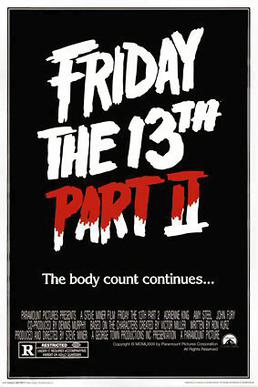
This past weekend was my third this year spent recovering from vaccinations.  The shingles jabs were worse, but this time it was a double-duty flu shot and bivalent Covid vaccine.  That’s as good an excuse as any for admitting to watching Friday the 13th, Part II.  In general I’m not a fan of sequels, but I’d read quite a bit about this one and I was curious because I hadn’t realized before watching the first installment years ago that Jason wasn’t the original killer.  I’m also not a fan of slashers, and I know that many people who dislike horror think all horror consists of such movies.  (It doesn’t.)  But still, Jason is a household name as a movie monster and I was having trouble concentrating with all those vaccines swirling around inside.

Utterly predictable, there are still a few jump startles that’ll catch a first viewing off-guard.  All I really knew about the film was Jason and Camp Crystal Lake and that generally teens get killed for having sex.  As many critics report, this kind of horror tends to have a “conservative” outlook—“sin” is brutally punished and the girl who refrains tends to be the last survivor.  That much you know just from doing your homework.  So as Jason hunts down the teens and dispatches them, along with a police officer and a crazy guy, you almost get bored.  There was one scene, however, that had unrecognized biblical roots.  Interestingly, I haven’t found anyone pointing that out.  When Jeff and Sandra go upstairs for sex, Jason takes a spear and thrusts them through, right in the act.

Analysts trace this scene to the movie Bay of Blood (which I’ve not seen), but in fact the inspiration comes from the Good Book.  In a genocidal mood in Numbers 25, Yahweh tells the Israelites to kill the Midianites among them.  Zimri is seen taking Cozbi into his tent, and Phinehas the priest grabs a javelin, rushes into Zimri’s tent and skewers the two of them in the act.  That scene stuck with my young mind as I read through the Bible, which is probably why it immediately came to mind while watching Part II.  Others may well have noticed this connection, but with the vaccine-induced lethargy I didn’t have the energy to go thumbing through my library to find it.  Besides, when I read things about movies I haven’t seen, they don’t often stay with me (which is one reason I give thorough descriptions of movies when I analyze them in my books).  This particular horror over, I know I don’t have to worry about the flu this year.


What Lurks

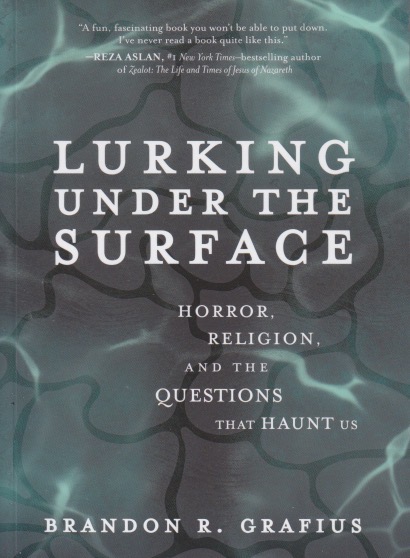
One question that I get asked by those who don’t understand is “Why horror?”  The asker is generally someone that knows I’ve been “religious” all my life, or affiliated with religion—which people think means sweet and light—and who associates horror with bitter and dark.  I know Brandon R. Grafius has been asked such things too, because I’ve just read his Lurking under the Surface: Horror, Religion, and the Questions that Haunt Us.  Like me, Grafius has been writing books on the Bible and horror—I’ve reviewed a few on this blog.  As in my former life, he teaches in a seminary.  People find this juxtaposition jarring.  This little book is Grafius’ struggle with various aspects of this question.  He’s not anti-religion, but he’s drawn to horror.

For those of us familiar with Grafius’ other work, this offers a more detailed explanation of what one religion scholar finds compelling about horror.  Specifically, he shows how various films deal with similar issues to his Christian faith.  The book deals with that for about half its running time, and the other half discusses similar themes in horror.  You get the sense that Grafius has been at this for a long time.  Scooby-Doo seems to have been his childhood gateway to horror and it raised some deeper questions as he explored further along the line.  If you read this blog, or search it, you’ll find such things as Dark Shadows and The Twilight Zone in my background, but then, I’m a bit older.  The point is, being a religious kid doesn’t discount finding monsters fascinating.

As usual with books like this, I’ve come away with several films to watch.  And more angles of approach to that tricky question of “Why horror?”.  A recent post on a panel discussion titled “Religion and Horror” led to an online exchange about religion and fear.  Grafius deals with that here as well, but from a more distinctly Christian point of view.  Although he’s an academic, this book is written (and priced) for wider consumption.  I found it quite informative to hear the story of someone else who grew up with monsters and the Bible.  He had the sense, however, to start addressing this early in his academic career.  We each have different paths to walk and for some of us it will take a jarring experience to chase us back to our childhood monsters.  And being religious is no barrier to that, as this brief book demonstrates.