The Denver Curse

I’m posting this early today because I’m flying to Denver for the American Academy of Religion and Society of Biblical Literature (AAR/SBL) annual meeting.  At least that’s the plan.  I don’t have a good track record with Denver and this conference.  I’d been attending AAR/SBL since 1991.  I can’t recall what year it was when I first attended in Denver.  I was still a professor then and had a paper to read.  I also had free time (something editors don’t have at conferences).  I decided to view the world-famous mineral and dinosaur exhibits at the Museum of Natural History the morning of my paper day.  While at the museum something very embarrassing happened—I got sick in public.  It was scene-from-a-cheap-movie bad.  Literally sprinting to a public waste can to throw up in front of strangers.  I’d never been sick at AAR/SBL before, despite the November timing.  When I went to read my paper that afternoon, the motion of my eyes made me sick again and I had to sit with my head between my knees while a bunch of biblical scholars looked on with what passes for concern in academic circles.

The second, and last, time I was flying to Denver  for the conference there was a small snowstorm.  I was flying out of Newark on an evening flight.  Because of the snow (which ended up being about two inches) my flight kept getting delayed and delayed.  They made the decision to cancel the flight after 11 p.m. by which time all local hotels were full from the earlier cancelled flights.  To make matters worse, there was no way out of the airport.  All public transit shut down.  Even if I could’ve caught a taxi where was I to go?  I live in Pennsylvania.  With no other choice, I slept on the floor of Newark’s Liberty International Airport.  I awoke early, having used my briefcase as a pillow (a step up from a stone, I expect) and found my way to Somerville, where we used to live.  My wife picked me up at the train station there and drove me home.  I missed the conference, needless to say.

And so you see that I’m a bit dubious about trying this again.  I have nothing against Denver.  Before getting sick I was enjoying my time there.  So, if things go according to plan, I’ll be on a plane headed that direction by the time I usually post my daily thoughts on this blog.  Will the Denver curse be broken?  Only the next few days will tell. Watch this space.

Photo by Acton Crawford on Unsplash

Outside In

Work duties necessitate my attendance at the American Academy of Religion and Society of Biblical Literature annual meeting, starting Friday, in Denver.  Given the state of the pandemic I can’t say that I’m thrilled to be attending, but work is work.  What really prompts this post, however, is the travel arrangements.  The agency I used is based overseas.  They customarily send a fact sheet about the country to which you’re traveling—in this case, my own.  It was fascinating to read how the rest of the world rates the United States.  Overall we receive a pretty good score, but there are a few items of concern.  One is that mass shootings are not uncommon.  The guide laconically states “Due to the wide availability and proliferation of arms across the United States, high-profile shootings occur.”  This is not wrong.

It goes on to note that if you can avoid being shot, crime rates are overall low in the US.  Disease, apart from Covid-19, is well under control.  While organized crime and gang problems are mentioned, it notes that open conflict between states does not exist.  It seems that, despite the rhetoric of certain politicians who like to use hatred to get their way, we do tend to cooperate pretty well.  We have plenty of micro-cultures here, and I know that I’m only comfortable living in a northern one.  I like four distinct seasons, and I don’t mind shoveling snow, but I’m getting away from my guide.  Hurricanes are a risk on the east coast through November and wildfires are possible in the west, also largely through November.  Earthquakes are localized and infrequent.  We live with a heightened risk of terrorism, but our medical care is good.  If expensive.  We have good dental.  

While I didn’t really learn anything about the United States per se, I did learn a little about how others view us.  We are a nation with tremendous resources and great potential.  Our melting pot nature is, I believe, the source of our cooperative strength.  We are still, after two centuries, suffering growing pains because there are some who want things the way they used to be in spite of the incessant, almost daily, changes that take place.  There is no turning back.  After the apple has been eaten you can’t unlearn that knowledge.  The recent elections spoke pretty clearly: we believe in democracy and we support women’s rights.  That’s how we see ourselves.  How the world sees us, however, may be quite a different interpretation.


What Lurks

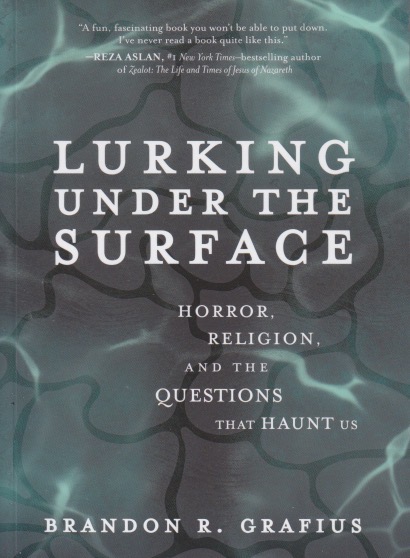
One question that I get asked by those who don’t understand is “Why horror?”  The asker is generally someone that knows I’ve been “religious” all my life, or affiliated with religion—which people think means sweet and light—and who associates horror with bitter and dark.  I know Brandon R. Grafius has been asked such things too, because I’ve just read his Lurking under the Surface: Horror, Religion, and the Questions that Haunt Us.  Like me, Grafius has been writing books on the Bible and horror—I’ve reviewed a few on this blog.  As in my former life, he teaches in a seminary.  People find this juxtaposition jarring.  This little book is Grafius’ struggle with various aspects of this question.  He’s not anti-religion, but he’s drawn to horror.

For those of us familiar with Grafius’ other work, this offers a more detailed explanation of what one religion scholar finds compelling about horror.  Specifically, he shows how various films deal with similar issues to his Christian faith.  The book deals with that for about half its running time, and the other half discusses similar themes in horror.  You get the sense that Grafius has been at this for a long time.  Scooby-Doo seems to have been his childhood gateway to horror and it raised some deeper questions as he explored further along the line.  If you read this blog, or search it, you’ll find such things as Dark Shadows and The Twilight Zone in my background, but then, I’m a bit older.  The point is, being a religious kid doesn’t discount finding monsters fascinating.

As usual with books like this, I’ve come away with several films to watch.  And more angles of approach to that tricky question of “Why horror?”.  A recent post on a panel discussion titled “Religion and Horror” led to an online exchange about religion and fear.  Grafius deals with that here as well, but from a more distinctly Christian point of view.  Although he’s an academic, this book is written (and priced) for wider consumption.  I found it quite informative to hear the story of someone else who grew up with monsters and the Bible.  He had the sense, however, to start addressing this early in his academic career.  We each have different paths to walk and for some of us it will take a jarring experience to chase us back to our childhood monsters.  And being religious is no barrier to that, as this brief book demonstrates.


Holy Nightmares

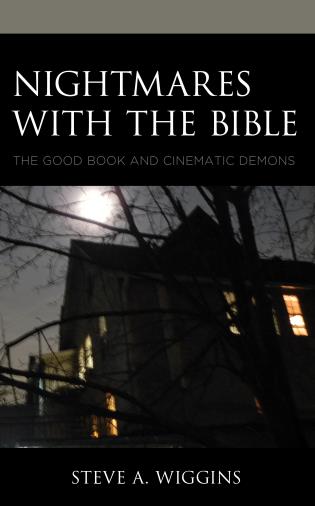
The thing about ratings, as John Green astutely notes in The Anthropocene Reviewed, is that they are in many ways arbitrary.  From the very few reviews of my own Nightmares with the Bible, I get the sense that people misunderstand the book.  Or it could be that they just don’t like it.  To each their own.  To me it is quite a personal book.  It is also a bookend to Holy Horror.  They represent first steps into a new kind of endeavor for me—saying something (hopefully) intelligent about horror films.  And writing books with no institutional support at all.  There are several intentional interlacings between these two books and to understand one it helps to read the other.  For those who want to get a sense of the way this addled brain works, in any case.

Holy Horror was literally one of those “if you see something say something” books.  I had noticed something that apparently nobody else had—the way the Bible is presented in horror films tells us something about the Good Book.  I have not seen every horror movie made.  I know of nobody who has, or even can.  I’d noticed a commonality, however, among those films.  The Bible isn’t rare in horror.  In fact, it’s quite common.  I’ve done quite a lot of reading about religion in horror since then, and this is something that has to be taken into account when considering the effects of Christianization.  It brings fear in its trail.  Nightmares with the Bible is a bit more ambitious and a bit of a hybrid.  That may be why its been reviewed so poorly.  It is a continuation of the thesis—if you want to understand how people really believe, look at what popular culture teaches us.

What do we believe about demons?  What The Exorcist taught us to believe.  Anyone who looks at the history of the idea sees that this concept really only took off, after the Middle Ages, when movies reminded us of the threat.  From the early modern period on, belief in demons and their impact on the world had been in decline.  Anyone looking at the headlines today will have to wonder about the wisdom of that loss of interest.  When The Exorcist hit, it struck a nerve.  Since then demons have been back on the big screen time and time again, each showing providing more information on what to believe.  I suspect those who’ve been rating the book really don’t get what I’m trying to do.  At least, I tell myself, somebody’s reading my work.


Not Over

It’s not over, you know.  Halloween, I mean.  We may have made it through the actual night of trick-or-treating with all of its build-up, but like many holidays from olden times, Halloween was, and still should be, part of a complex of holy days.  People have long believed that something was transitioning at this time of year.  Halloween spun off of its more sacred sibling, All Saints Day.  Before Christianization, Samhain perhaps spanned more than one day.  As a result of relentless capitalism with its parsimonious counting of days off, like pre-conversion Scrooge, has made all holidays one-day events.  Sometimes you need some time to sort out what’s happening and this three-day complex is one of those times.  Día de los Muertos begins today—this holiday’s just getting started.

I’ve frequently suggested to the few who’ll listen that we need to take holidays seriously.  Culturally we tolerate them as days of less productivity.  Who actually gets Halloween off work?  And how many of us work in places where “Happy Halloween” is a regular greeting on the 31st?  I don’t know about you, but in all my Zoom meetings yesterday nobody was wearing a costume.  And yet, at Nashotah House I learned that today is a “day of obligation.”  Attending services isn’t optional (of course, it never was optional at Nashotah).  But this one was really serious.  The Catholic Church moved All Saints Day to November 1 to counter Samhain celebrations encountered in Celtic lands.  People are reluctant to give up their religion, however, and the day before All Hallows allowed for Samhain to retain its identity.  And even today’s not the end of the season.  Tomorrow has traditionally been All Souls Day.  But what company’s going to give you three days off at this time of year? We’re gearing up for Black Friday.

Holidays serve to give structure to the passing of time.  Winter with its privations is on its way.  This autumnal complex of holidays, whether celebrated as Samhain, Día de los Muertos, or Halloween-All Saints-All Souls, reminds us to take a pause and ponder what all of this really means.  And not only ponder, but also celebrate.  Halloween is fun with its costumes and candy and spooky decorations, but it’s more than just that.  It’s a season of existential questions and of preparing for the inevitable cold days ahead.  We ignore such things at our own peril.  There are reasons for holidays, but those who find meaning only in mammon see no reason to offer even one day off, amid a season we most deeply, intensely need.


This Halloween

This year I’ve been making a conscious effort to appreciate autumn.  It’s admittedly difficult when you’re forced to sit in an office, even a home office, for most of the daylight hours five days a week.  (At least I have a window here, which I never had on Madison Avenue.)  Seeing the blue skies and colorful leaves, each individual one of which is a singular work of art, or watching the moody, cloudy skies, I wish for freedom.  Every night before falling asleep, if I can remember to do so, the last word I whisper to myself has been “September,” then “October,” to remind myself of the wonder of this time of year in which I’ve been privileged to live.  Since America is driven by money alone, often in the guise of religion, Halloween is practically over before it begins.  Stores have sold their candy and spooky decorations, now it’s on to the more lucrative Christmas season.

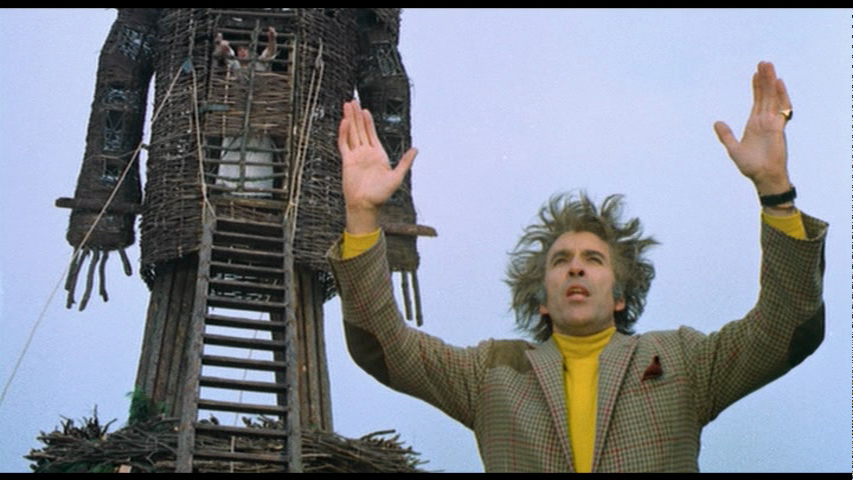
Do we really believe that holidays have any power anymore?  Is Halloween really, perhaps, a time when the veil between worlds is actually thin?  Or have we ceased believing in the other world, the one behind all the money and sham?   Holidays are liminal times.  In an ironic way, it’s my heartfelt appreciation of Halloween that led me to write about The Wicker Man, although it’s set half a year away.  Nashotah House was hardly an ideal place to work, but prior to an administration change, it was the best place I’ve ever lived to celebrate Halloween.  A campus with an in-house cemetery, and surrounded (at the time) by cornfields and woods, was adjunct to really believing.  It was a haunted place.

Out on late nights or early mornings, I often felt it.  Trying to photograph a comet down by the lake by myself, woods on either side, in the total dark.  Or dragging a lawn chair through the trees to the edge of a cornfield at 4 a.m. to try to catch a meteor shower.   Hiding in the graveyard on Halloween night, dressed as a grim reaper to follow the hay wagon of kids that the maintenance director would drive through on that night.  Those memories remain as highlights of my foreshortened teaching career.  Since Harry Potter was in the ascendant, students had taken to calling the seminary “Hogwarts,” and, I was told, I was the master of Ravenclaw.  The leaves, miniature Van Gogh’s each one, are fast falling from the trees.  There’s a decided chill in the air.  Something might, just might, really happen this Halloween.


The Panel

More than one person pointed it out to me, so I guess I must be getting a (small) reputation.  During one of my campus editorial visits I stopped into the center for Religion and American Culture at that venerable institution known as IUPUI—Indiana University Purdue University Indianapolis.  I was immediately impressed and, of course, since I’m no longer in academia I’ve realized that the impact of religion on culture is my real interest in it.  What was pointed out to me, however, was an episode of their “Religion and” series.  This one was held via Zoom and has been posted here, so if you, like me, work, or are just finding out about it, can still see it.  I encourage that behavior.  This particular panel was “Religion and Horror.”

As the word “panel” indicates, it was a moderated group discussion.  The panelists were Douglas E. Cowan of the University of Waterloo, Erika Engstrom of the University of Kentucky School of Journalism and Media, and W. Scott Poole of the College of Charleston.  The moderator was Melissa Borja of the University of Michigan.  What a great way to spend an October afternoon!  It is also good to know that I’m not the only one who’s noticed that religion and horror are similar and even address similar needs.  I’ve read books by Cowan and Poole and have even met the former a couple of times.  No longer a university employee, I largely work in insolation, so it’s great to hear conversation about the kinds of things in my head once in a while.  A number of refrains became obvious during this all-too-brief discussion.

We’ve been conditioned to think of religion as inherently good.  In general, we’ve also been conditioned to think of horror as inherently bad.  As with most black-and-white categories, both of these things get some key points wrong.  Religions, like everything else, have histories.  Those who study those histories learn that much of what’s passed along to believers is intended to make them into repeat, paying customers.  Try teaching in a seminary for a few years and then attempt to dispute that.  And, the panelists pointed out, horror is also a product, intended to sell.  This explains the endless parade of, for example, Halloween movies.  Just when you think you’ve purchased the last one you’ll ever need to buy there’s another.  There was so much squeezed into that one hour that I was glad I was taking notes.  But then, it was a recording—you can see it too, and I urge you to do so.


Small Big World

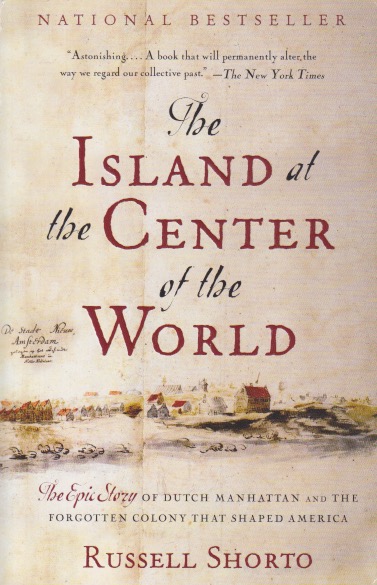
Serendipity may have been over-used in the eighties, but the idea of finding something by chance that turns out to be really good is real enough.  My wife found The Island at the Center of the World, by Russell Shorto, by chance.  You see, used bookstores are places of serendipity.  This one happened to be in Trumansburg, New York.  Subtitled The Epic Story of Dutch Manhattan and the Forgotten Colony that Shaped America, this is the story of an early European incursion into North America.  These days it’s difficult to feel good about any of that, but overlooking the misery we’ve caused for a moment, the early Dutch settlement was, comparatively, not as detrimental to the American Indians as later colonies were.  The Dutch were mainly interested in trading, and unlike the Puritans who settled to the north, they were tolerant of difference, even religious difference.

Shorto chronicles how the settlement of Manhattan from the beginning was one of diverse peoples having to get along and accept one another.  The Dutch, like the Puritans, had been infected by Calvinism, but they took a more practical view.  People get along better if you don’t force them all to think the same way.  The book suggests that this was impressed on New Amsterdam from the beginning, and it remained when it became New York.  It’s a fascinating story partially because it begins the narrative before the point where we’re generally instructed in school.  Europe was warring, at the time, of course.  But it was a Dutch idea—that peace could be the default state, instead of war—that allowed for real civic progress.  Those scrambling for empires, however, continued to squabble, even as they still do today.

There are plenty of unexpected insights from this book.  The Dutch in many ways molded the die that would become European America.  Having built a successful trading colony in Manhattan, they had to surrender it when the English, after the Cromwell debacle, decided to take it by force.  The people of Manhattan did not want to fight a clearly superior army and lose all that they’d gained by their tolerant way of life.  And so New Amsterdam became New York.  The story is filled with colorful characters and incidents that, if you’re like me, you’ve never heard of.  I’m not one of those people who has to read everything published on New York City.  Working there for many years was sufficient for me.  But still, this is one of those books that I’m glad my wife serendipitously found while looking for nothing in particular in a used bookstore.


Free to Listen

It was a delightful conversation, as always.  Robin and Debra from The Incarcerated Christian podcast always amaze me with both their program and their enthusiasm.  I’m still bit nonplussed that they find my work interesting.  They invited me back for an October discussion around Nightmares with the Bible, located here.  Although the book has not yet sold enough copies to have earned any royalties (i.e., it hasn’t covered the cost of its own publication yet), it has nevertheless led to four interviews and even had a Choice review.  Granted, a good part of the lack of enthusiasm is its Elon Musk price point, at least that’s what I tell myself.  I’m still hopeful that a paperback will be out next year.

I suspect people are interested in demons.  Considering that movies keep on being made about them and doing well, I hope it’s only a matter of time.  While I’m waiting, however, I’ve got some good listening over at The Incarcerated Christian.  The podcast addresses a couple of issues: one is spirituality and the other is the effects of being raised in a religion that boxes or cages a person in.  The proprietors are among the few who realize that there’s a spirituality to horror.  I’m reading a book just now that considers thzt question.  And I know of others, active ministers among them, who find spirituality in horror.  I don’t know their backgrounds well enough to know their carceral status, but to me the connection makes sense.

Photo by Marco Chilese on Unsplash

I’ve written before that I’ve come to rely on experience as a source of knowing.  Not entirely, of course, but it’s clear that those who don’t trust their experience end up incarcerated.  My experience of organized religion suggests that it has many issues that require professional help.  That’s one aspect of having been a seminary teacher, and administrator, that has fed into my experience.  Having seen how that happens, and knowing the kinds of people who rise to the top—just look at politicians, particularly on the right-hand side—my experience suggests that ecclesiastical corruption is far more common than most people suspect.  In order to accomplish big things humans have to organize.  And in any organizational structure there will be climbers.  In general you don’t get to be clergy (apart from those non-denominations that’ll hire anyone making certain claims) without seminary.  And seminary isn’t what it seems.  To me, watching horror makes far more sense than befriending the jailer.  Take a moment to listen; it’s free.


Former Education

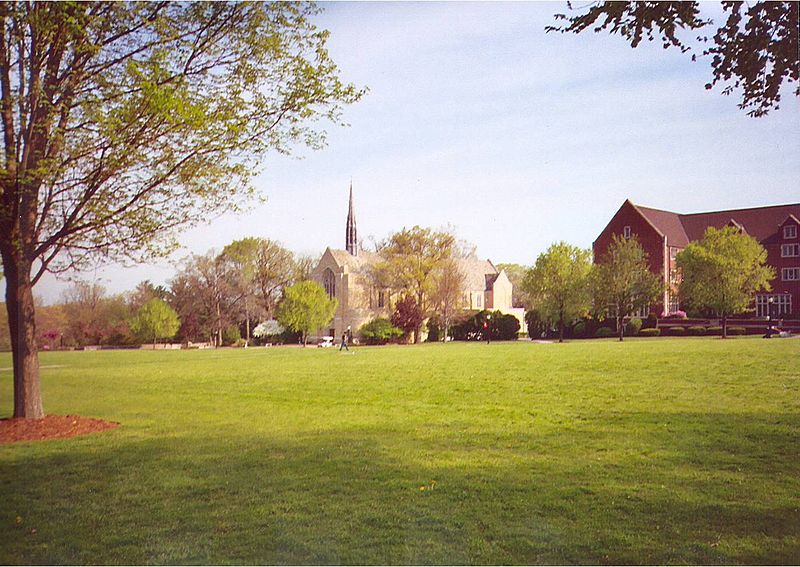
Like most people I don’t have time to sit around thinking much about college.  Once in a while you’re forced into it, however.  This time it was by an NPR article.  I attended Grove City College for a few reasons: it was a Christian school close to home, it wasn’t expensive, and, perhaps most of all, I knew campus because the Western Pennsylvania Conference of the United Methodist Church held its annual conference there.  I’d been several times during high school.  It didn’t hurt that I was a Fundamentalist at the time.  Grove City was a college of the Presbyterian Church and I loved having debates about predestination with professors who actually believed in it.  At the same time, I was encouraged to think things through, which liberal arts colleges are known for promoting. Is it now “conservative arts?”

Photo credit: The enlightenment at English Wikipedia

The NPR story my wife sent me was about how Critical Race Theory is disputed at my alma mater (sic).  I noticed in the article that Grove City is no longer affiliated with the Presbyterian Church.  It’s become much more right wing than that.  At the same time they ask me for money on a regular basis.  What made them think they had to go hard right?  Are they still educating students or are they indoctrinating them?  It reminded me of a sermon I heard at yet another conservative school I was associated with: Nashotah House Episcopal Seminary (or at least it was then).  The priest made an entire sermon about how it was right to be conservative, as if no matter what the issues there was some creed to get behind in staying behind.  As if virtue exists in never admitting you were wrong.

I suspect that my failure to attain a full-time academic position at a reputable school was because of what looks like a conservative outlook, despite the evidence of this blog.  Yes, I grew up Fundamentalist—you grow up the way you were raised.  Hopefully, however, you start thinking after that.  And experiencing.  And yes, using critical thought.  There comes a time when “because I told you so” just doesn’t cut it anymore.  For many of us that’s when we go to college.  If it’s a good one you’ll be encouraged to debate with your professors.  Not one of them has all the answers, I can assure you.  Education is, by its very nature, progressive.  We learn and we continue to learn.  We don’t stand still and say the 1950s was when God reigned on earth.  It wasn’t.  And it wasn’t any time before that either.  Now we know that Critical Race Theory should be taught.  We know Black Lives Matter.  What I personally don’t know is what became of a college that was once conservative, but at the same time, believed in education.


Past Knowing

It’s like watching a fall in a movie in slow motion.  You know you can’t really stop it, as much as you’d like to.  We see the collective world pieces moving into place for a third world war and thinking people worldwide are wondering why countries such as Italy and Sweden are electing hard right candidates.  Especially when Russia is invading countries at will.  I’m no politician and I resent having to be drawn into political topics, but at times you just have to say something.  Even if it won’t change anything.  Parts of the Bible are like that—witnesses simply wanting it to be noted.  Something seen, something said.

My family wasn’t political as I was growing up.  They pretty much just voted Republican, being in a rather Pennsyltuckyish county.  When I was nearing voting age I asked my mother about the political parties.  We’d learned about hawks and doves in school, and having been taught that Republicans tended to be those who started wars I wondered why Christians voted for them.  She really didn’t have an answer for me and I later came to realize that as a certain segment of Protestantism is actively attempting to bring about the second coming, this fits the plan.  One way to do so is by initiating wars—environmental degradation is another—because they believe it’s all going to end soon anyway.  Although Jesus advocated for peace, they choose war, ironically, to bring Jesus back.  That was the start of my journey to the Democratic party.  War serves no purpose.

In democracies worldwide right-wing parties are propagandizing heavily to urge nationalism.  Separatism.  Fear of the stranger.  Many in Russia believe Putin’s rhetoric that Ukraine is a dangerous threat to the largest country in the world.  China, the largest country in terms of population, feels threatened by the small island nation of Taiwan.  Borders around much of India are disputed.  The control of resources, in thrall to capitalism, makes people want to close borders and watch out for their own.  At least their own that are members of their party.  From my perspective it’s difficult to see a peaceful way out of this.  Even the world’s oldest democracy falls prey to the propaganda of a known swindler.  Human society is complex.  We have enough resources to meet the needs of all except the greedy, but it’s the greedy who run for office.  We have, it seems, forgotten the last century entirely.

Photo credit: Remember, public domain via Wikimedia Commons

Roman Mythology

A recent game of Redactle led to a family discussion of Roman mythology.  I had to flex some muscles unused since my last full semester at Rutgers, but I was pleased that the old learning is still there.  One of the first things people notice about Roman mythology is its lackluster nature.  Rather like current-day politicians, the Romans mostly lacked imagination when it comes to compelling stories.  Roman religion consisted largely of cult—that is the enacting of sacrifices and learning how to read omens.  They had no “Bible” and really no other collection of myths, apart from what they borrowed from the Greeks (who borrowed, in turn, much from Semitic mythology).  They mapped their various gods—some from the Etruscans—onto the Greek pantheon and made do with other peoples’ stories.

Rome’s native myths largely focused on their own history and human characters—again, the parallels with Republican sanitized American history are apt—but also deal with serious issues.  In the words of T. P. Wiseman, “How does well-meaning authority turn into murderous tyranny?”  (I resist footnoting blog posts, but this is from the preface of his book The Myths of Rome.)  Like modern politicians, they believed their origins were divine.  The gods had chosen them to be a superpower.  We might scratch our heads and ask ourselves where the Roman Empire is today, even as Italy elects hard-right leaders.  We learn nothing from history.  Nothing.

So let’s turn to mythology instead.  Or at least religion.  Roman religious writing was often kept secret—the purview of priests only.  Some of this survived into early Roman Catholic ideas about keeping Scripture to the priests.  Religious writings are dangerous if they get out there among hoi polloi (or “hot polo” as my autocorrect suggests).  Ironically, those of us sent off to specialized schools to learn this stuff are, in these days, generally ignored.  Roman officials were often anxious to know what oracles said.  Today televangelists and their ilk seem to be the ticket.  Anyone can be an expert if they talk loud enough.  And yet the Romans admired the Greek intellectual life.  The creativity with which they handled their gods.  There was much to be emulated there.  Roman Jupiter was the protector of the military (budget, one is prompted to write—forgive me if my Muse is a little unruly this morning).  And yet it was the Roman authorities who crucified Jesus.  We may indeed still learn something from Roman mythology.

Hebert James Draper, The Lament for Icarus, public domain via Wikimedia Commons

Scary Holidays

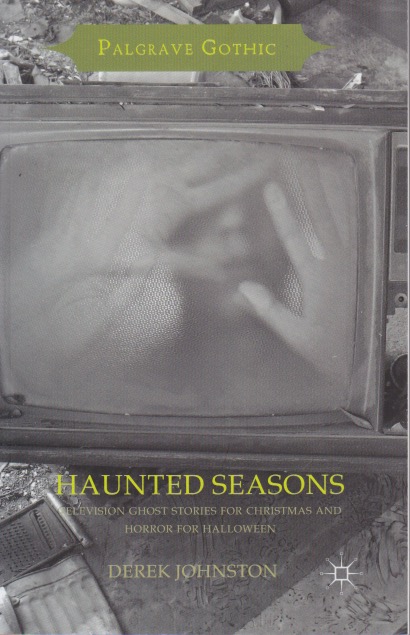
One of the real wonder of books is that they can spawn ideas outside their specific topics.  While revised dissertations can be somewhat difficult to read, Derek Johnston’s Haunted Seasons: Television Ghost Stories for Christmas and Horror for Halloween contains quite a few such moments of birthing ideas.  While being largely British-focused, it nevertheless explores holiday horror, a phenomenon that I’ve been researching for some time.  Not really a television watcher (not any more—as a child things were quite different), I don’t really keep up with many programs.  Still, I learned a lot from this book.  One of the main questions it addresses is something I’ve long wondered about—why is there a connection between Christmas and ghost stories in England?

Johnston points out that Celtic areas tended to have Halloween or its precursors to supply an occasion for otherworldly thinking.  The English, not wanting to think of themselves as these outer-lying cultures (I’m simplifying and abstracting a bit here), developed their own tradition of the Christmas ghost story.  It pre-dates Dickens and probably goes far enough back in history that there’s no way to trace it.  Telling ghost stories around the shortest day of the year makes its own sense.  Dickens’ A Christmas Carol was perhaps the most famous example, but M. R. James’ habit of telling ghost stories (later published) to students and fellow enthusiasts on Christmas Eve also plays into it.  In Britain this led to a series of BBC Ghost Story for Christmas shows.  Meanwhile, in America, where there was quite a lot of Celtic immigration, a taste for Halloween grew.

There are so many ideas that swirl around holidays.  I’ve been exploring the topic for nearly two decades now.  Publishers, always with their eyes on the bottom line, don’t produce much like this, figuring people will only buy it one season a year, and for books that means usually the first year only.  Some people (yours truly, for one) will buy books about holidays out of season.  So much of life is preparing for special times.  I suspect that ancient people also fell into humdrum daily existences also.  Humans require stimulation, we like variety and novelty.  Holidays are a great solution—they don’t occur every day.  If they did they wouldn’t be special.  They bring something different into our workaday world and, in modern times especially, we brand them so that each one is at least slightly different.  I don’t mind seeing the seasonal displays so early in the stores—it reminds me that haunted seasons are just around the corner.


Saints and Freedom

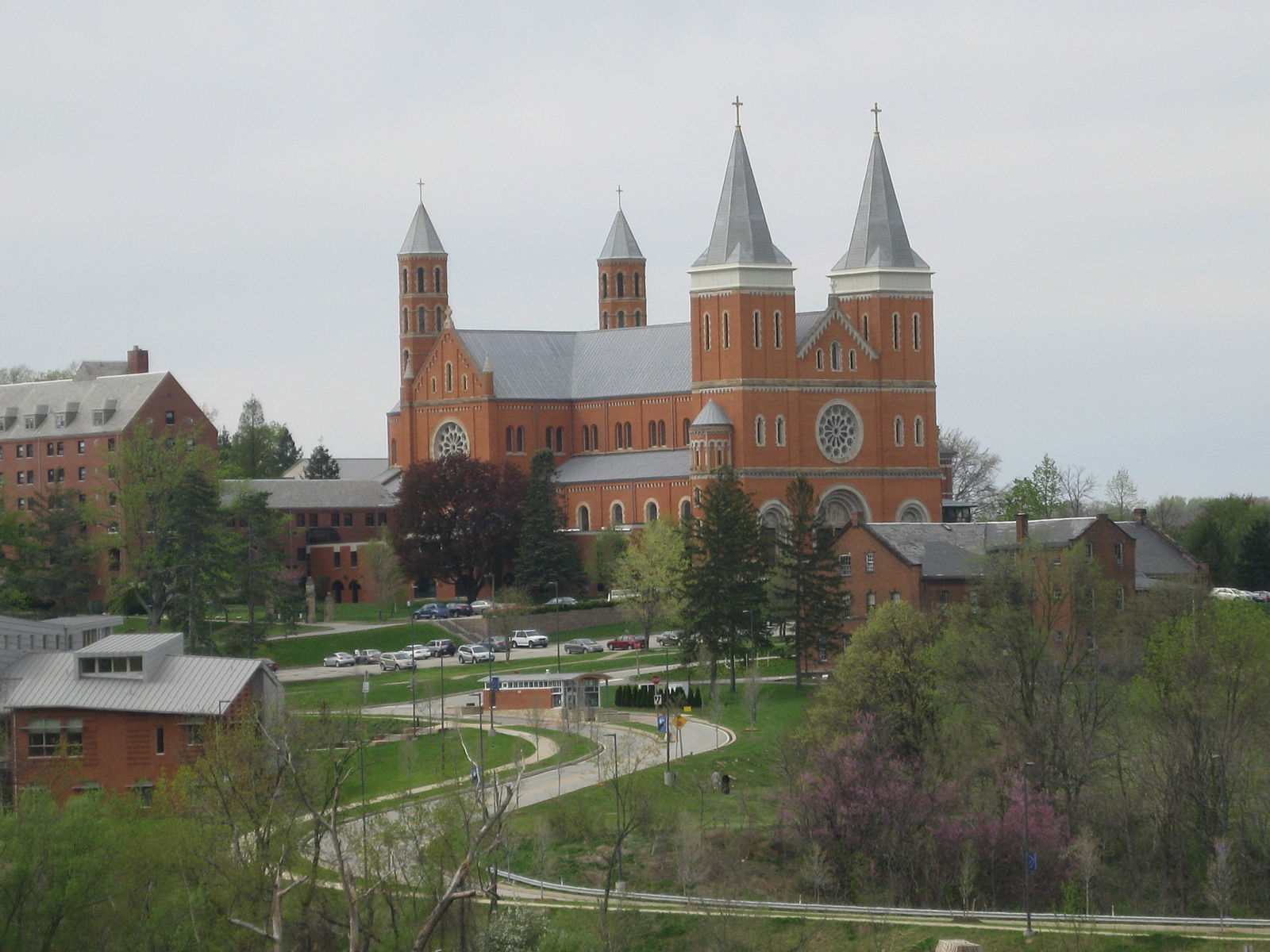
There’s a saying that all elections are local.  I suspect that’s true.  Location is important.  There are famous Americans not recognized in other parts of the world.  And there are, of course, local celebrities.  Having settled once again in Pennsylvania, I’ve taken an interest in local religions.  Although not part of the “Burnt-over District” of upstate New York, Pennsylvania, because of its early laws of religious liberty, has produced some noteworthy figures over the centuries.  And institutions.  When someone mentioned St. Vincent Archabbey, in Latrobe, Pennsylvania, I was curious.  I’m not Catholic and even though I’d considered a monastic life, I really knew little about it.  St. Vincent is the largest Benedictine monastery in the western hemisphere, as well as the oldest in the United States.  

Image credit: Guerillero, via Wikimedia Commons (Copyleft Free Art License)

Latrobe isn’t far from Pittsburgh.  There is a strong Catholic presence in the area.  Like many Catholic institutions, it has a cluster.  St. Vincent College, also in Latrobe, must’ve sent me—in those days, print—a prospectus back when I was looking at schools.  I’ve known about it for a long time.  There’s also a seminary, also called St. Vincent.  Probably it’s largest claim to fame is that the Pittsburgh Steelers use the College (I suspect the seminary has no athletic program) for their training camp.  Monks and football players—they must have some interesting conversations.  I grew up thinking Catholicism was basically some other religion.  Fundamentalists, misunderstanding the basics of history, tend to claim that Catholics aren’t Christians.  Indeed, until the recent politicization of conservative Christianity, they wouldn’t have had much to say to each other.

Catholicism was frowned upon by the early colonists.  While seeking freedom of religion, what they really wanted was freedom of religion for themselves.  In good, charitable Christian fashion, many colonies tried to exclude those that believed differently.  Especially Papists.   Rhode Island and Pennsylvania, however, notably allowed freedom.  I’ve lived in Pennsylvania long enough to know that even legal freedom isn’t protection from those locals who’d rather not have Muslims or Hindus for neighbors.  And in all likelihood William Penn, a good Quaker, probably couldn’t imagine people of “exotic” religions wanting in.  Indeed, the majority of people in this hemisphere weren’t really even aware of “eastern religions” until the 1890s.  The religions here were forms mostly of Christianity and Judaism.  By 1846 the Benedictines could establish a college, monastery, seminary complex in western Pennsylvania.  And it would become the largest and oldest such establishment in a country that still doesn’t grasp true religious freedom.


First Choice

One of the first things I do when I finish a book, unless I know about the author already, is ecosia (google) her or him.  I want to know who it is that wrote this, and the internet’s right there!  So it came as a surprise to see my first (two-star) review for Nightmares with the Bible on Amazon, where the reviewer did no follow-up.  The reviewer is quite upset that I don’t take the Bible literally, but at least s/he bothered to leave a review.  A more positive rating might bring me up to three stars, but I’ve failed classes before.  I’m a big boy, I can handle it.  In any case, if you ecosia me you’ll quickly come upon this humble website that’ll tell you what you need to know.  No, I am no longer a Fundamentalist.  And the book was about demons in movies.  (I was actually searching for reviews of the series.)

I scrolled down.  The named reviews solicited for the book I knew, so I was surprised, and delighted, that further down the page I had a Choice review.  Even a disgruntled evangelical couldn’t bring me down after that!  In case you’re not a librarian, or an academic publisher, Choice is THE periodical librarians use for deciding on which books to buy.  It is very difficult to get a review in it—I work at a prestige publisher and seldom see our books in there.  If you’re a trade author that’s not so important, but if the only sales, or majority of sales, are for libraries, to get a “recommended” status is a big deal.  That’s worth celebrating.

If you’re wondering, authors do not get notified of reviews.  Some editors will let them know (my editor at McFarland hasn’t been in touch for years).  The journals are too busy doing what journals do to send every author a copy of their review.  So I swung by Amazon’s Holy Horror page.  I’ve got four ratings there now, mostly on the lower end of the scale.  If you’ve read it and liked it (not something I assume, of course) a nice review would go a long way.  Disgruntled evangelicals (aren’t they all, these days?) may make the books look bad, but colleagues who’ve read them seem to think differently.  I hold to the publishing adage that there’s no such thing as a bad review, but good reviews feel so pleasant.  I’ve only written one negative book review in my life, and that was because I felt any other would be utterly dishonest in that particular case.  It’s a choice I make because of the Bible: “For with what judgment ye judge, ye shall be judged: and with what measure ye mete, it shall be measured to you again.”