Teaching Tradition

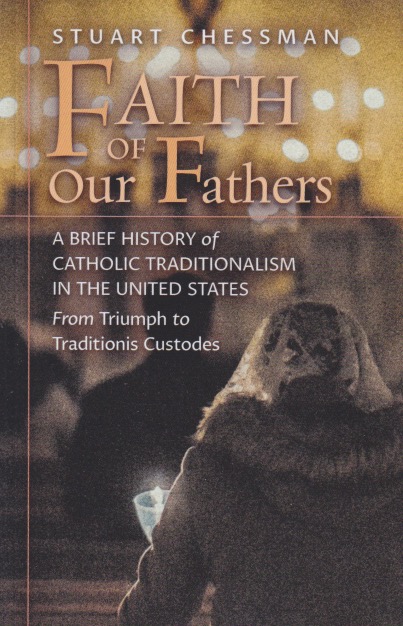
There’s a dilemma.  Many thinking religious conservatives end up arguing against “secular” education and yet wish to make themselves out as rational, and reasonable.  The truth is that underlying their position is the belief that the truth was revealed long ago and nothing has changed since then.  They want educated individuals to agree with this so quite often they establish their own institutions to turn out “experts” who haven’t been challenged in their positions.  This became clear to me yet again when reading Faith of Our Fathers by Stuart Chessman.  Subtitled A Brief History of Catholic Traditionalism in the United States from Triumph to Traditionis Custodes, I was expecting a history.  Instead it is more of a screed, or jeremiad, arguing that the Catholic Church is trying to destroy traditionalism.  What I was looking for, I guess, was a “secular” history.

I’m interested in traditionalism.  I taught, after all, for well over a decade at Nashotah House.  What I learned there I also sensed in this book.  There’s a certain naiveté associated with such theological thinking.  (Political conservatism is much more insidious.)  Small groups tend to think the larger organization has it in for them.  In reality, the larger church (in both these cases) has much more pragmatic things on its collective mind.  The narrow focus of traditionalists, however, interprets everything in the light of—in this case—rejecting the liturgical reforms of Vatican II.  Having the mass in Latin is more important (as is clear here) than coming up with an effective way of dealing with Covid-19.  Traditionalists are proud that they met more frequently during the height of the epidemic.

This kind of thinking is important to understand.  For Roman Catholicism, as a hierarchical organization, the projection of unity is very important.  Anyone involved in the upper levels of any administration knows that money—even for churches, especially for churches—is a major concern.  Reputation influences cash flow, so reputation has to be guarded at all costs.  No organization can appear to be caught up in medievalism in a capitalistic twenty-first century.  I had hoped this little book would contain an actual history of the movement, looking at socio-economic, political, and religious causes and their ramifications.  In other words, why people do things.  Believe me, I understand the draw of traditionalism.  Although it was in English my first Episcopal high mass threw me into a multi-year odyssey to a place (Nashotah House) where I learned what was really going on.  It’s not all about smells and bells.  Not by a long shot. 


Words and Belief

Why do we care so little for the poor?   Part of the answer is surely the misguided idea of meritocracy—if you merit good you will be successful.  This kind of thinking emerges from the wrong end of a bull.  There may be poor people who are lazy but the vast majority of the poor are those for whom our systems make it impossible to thrive.  It’s very easy to put them out of mind as long as we can keep them out of sight and just let our prejudices do the thinking for us.  The poor are the victims of capitalism.  Loud voices proclaim them to be a drain on the system, despite the fact that many of them work—some multiple jobs—and remain unable to keep up.  Capitalism is kind only to the wealthy.

The Rev. Dr. William Barber is one of the organizers of the Poor People’s Campaign.  The full name is the Poor People’s Campaign: A National Call for Moral Revival.  The initial part is taken from an initiative that Martin Luther King, Jr. started before his assassination.  He was shifting towards a movement meant to address the entrenched unfairness deep in American society.  These nearly six decades on, we are just as deeply entrenched.  Barber is doing amazing work, organizing, speaking, and advocating.  He’s trying to give a voice to the people.  I do wonder, however, if using the word “Revival” doesn’t work against the goals of the movement.

Certain words have been poisoned by their abuse among various religious groups.  Especially among the young.  The word “revival” may fall into that category, calling to mind, as it may, repressed people working up to an emotional fever under the banner of Hellfire and brimstone.  Believing a bit too literally a message that was contained in a book viewed magically.  Names can be important.  Many of the younger generation are put off even by the word “church” since so much hypocrisy (something the Republican party has openly embraced) has come to light over recent decades.  I fully agree that we need a moral revival, we need people to wake up and demand that our government promote the justice it claims to seek.  I do wonder if religion, as previously packaged, has the credibility to do it.  No matter how we take on the task, it’s clear that the poor have been abandoned by the system, through no fault of their own.  And some in the church have begun to find their voice in the Poor People’s Campaign.

Photo by Katt Yukawa on Unsplash

Love Your Mother

It’s not exactly a birthday, for we don’t know when exactly she was born.  We choose April 22 to think of our mother—the mother of us all.  For many of us concerned about the environment, not only is today Earth Day, but April has become Earth Month.  To me one of the saddest aspects of our environmental crisis is that certain sects of Christianity are largely responsible for it.  Religion working against the betterment of humankind.  So it was in the beginning, is now, and hopefully we won’t have to finish the triad.  Granted, religions help us to keep our mind on spiritual matters.  The problem is when such things become dogma and the real needs of real people are ignored so that a fervently desired fantasy can be lived out by destroying our planet.

In response there are what have been called “deep green” religions.  It’s difficult to gain a critical mass, however, when many of those who think deeply about the environment have left religion out of the equation.  It seems to me that we’ve got to make peace with our evolved tendencies toward religion in order to have any meaningful discussion about this.  Meanwhile global warming continues.  It does so with the blessing of a kind of Christianity that sees this world as expendable and exploitable based on an idiosyncratic reading of Genesis.  Even though all the evidence points in the opposite direction, we have networks (here’s looking at you, Fox), owned by billionaires who know you can sway Christianity simply by kissing your hand to the moon.

It’s my hope that this Earth Day we might start to think about how to integrate some deep green theology into the kind that sees no room for green in the red, white, and blue.  The self-convinced have no desire for conversation about this and those already certain that religion is nothing but superstition tend to agree.  Since antiquity, however, the wise have realized that progress comes from the middle ground.  Politicians, in their own self-interest, have stoked the fires of division and hatred, knowing that they get reelected that way.  Mother Earth, I suspect, is rolling her eyes.  She will survive even if we succumb to our own mythologies.  We need to learn to talk to one another.  We need to accept that we evolved to be religious.  We need to look for middle ground while there’s still dry ground on which to stand.  It’s not exactly a birthday, but it is a holiday that should be taken seriously. It’s only right to love your mother.

From NASA’s photo library

April Says

I can honestly say that it wasn’t on my bucket list to mow the lawn while it was snowing.  Friday would’ve been better—sunny and sixty—but I have a 925 and I had a meeting after work I couldn’t get out of.  Saturday it rained all day, which, I know, grass loves.  Sunday was the only opportunity left in the weekend, and with stocking cap and gloves on, I went to mow.  Snow started to fall.  It must be April.  I’ve always believed that “April fools” has an origin in the weather.  I can’t prove it, but it seems just when you think it’s safe to go without a coat, suddenly winter.  Back when we lived in Wisconsin we took a family fun trip to Wisconsin Dells for my wife’s birthday in April.  It snowed.  We rode the famous ducks and then played mini-golf amid squalls.  April fools.

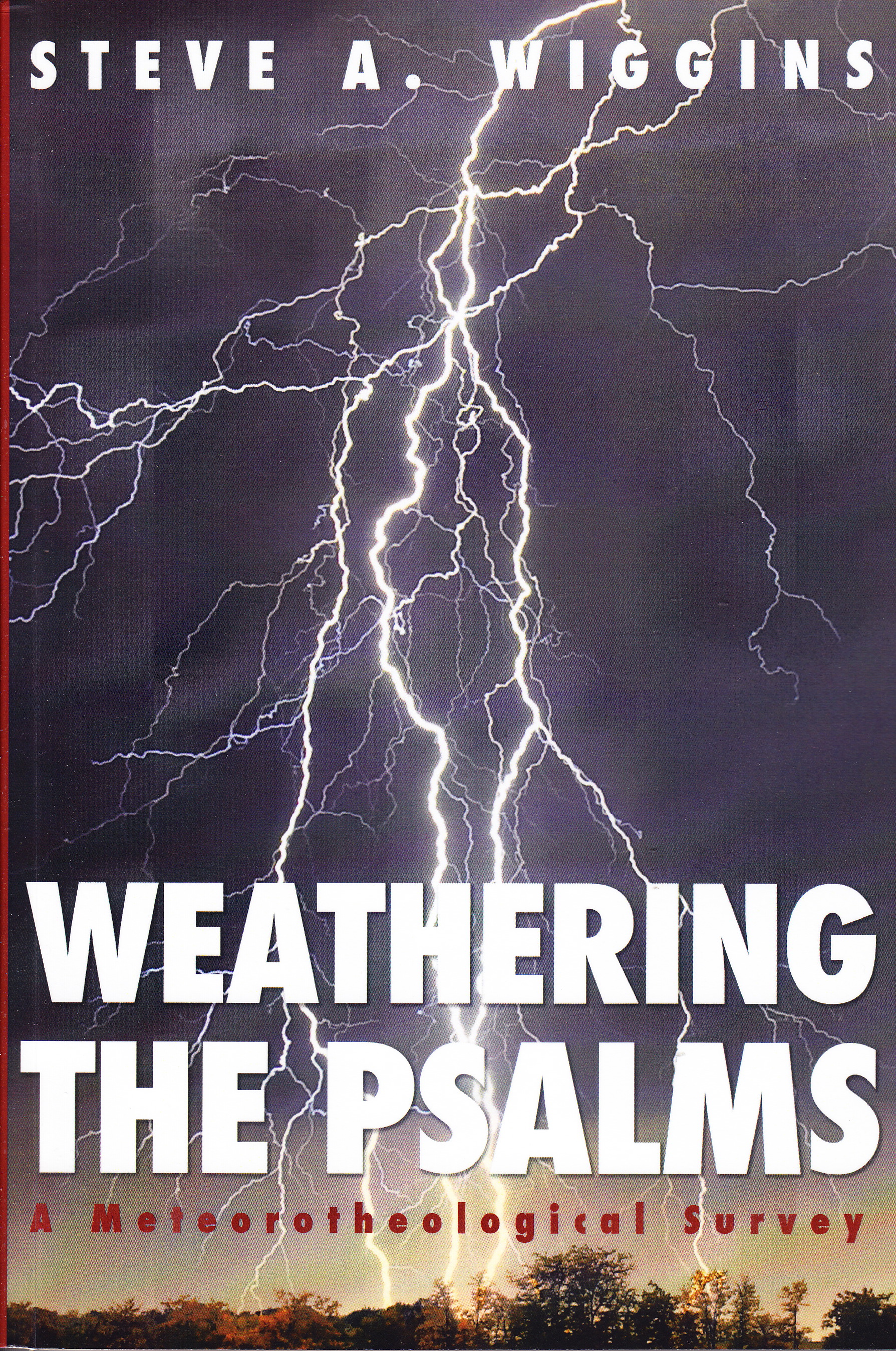
The weather influences many aspects of life.  Why it’s considered a neutral topic I don’t know.  It’s kind of like talking about God.  The only thing we all agree on is that we can’t control it.  Well, we can certainly influence it.  Global warming sets strange weather patterns into motion.  It was in the seventies less than a month ago.  (Which is why grass was unruly just as April began its double-digits.)  Then there’s all the rain.  See what I mean about God?  Divinity and weather were in mind as I worked on Weathering the Psalms.  I still wrestle with how these things relate to each other in the human psyche.  We do tend to think the weather is somehow a judgment or blessing.

My family knows I complain about it religiously.  And mowing isn’t my favorite activity in any weather.  It was late November and I was still mowing.  April (which fools) seems to be a little too soon to be starting that all over again.  Committing at least one day of every weekend until nearly next Christmas to cutting grass.  It’s a long-term commitment.  I suspect those who benefit (monetarily, for we all lose, existentially) from global warming probably don’t mow their own lawns.  They probably have their private jets that don’t need to be jump started because that worrying idiot-light on the dash is on again and they’re afraid to use it.  It’s life in a different key.  Still, we all share the weather.  When it affects crops, or swamps New York City, we’ll all be bound to notice.  Enough grumbling.  It’s time to get the weed-whacker fired up while the icicles start to form.  April fools.


Spring Holidays

March and April, despite having their holidays, tend to be months of pretty solid capitalistic work.  Congress may take its April recess and universities have their spring break, but the working stiffs just keep going.  I’ve worked for a couple of British companies and they have a dilemma in the Human Resources department.  Britain has a lot more days off per year than American business practice does.  The dilemma?  How to tell your colonials that the head offices will be closed around Easter when those of the New World will remain open.  You see, very few American companies recognize what some Christians call Holy Week as a time for anything other than work.  Back in the days when I was still trying to work myself into the Episcopal priesthood, I had to ask my manager for Good Friday off and permission was only reluctantly given.

The two major Christian holidays of Christmas and Easter are vastly different in their public expression.  Despite the outlook of Scrooge, most companies consider Christmas a holiday, even to the point of giving you a Friday or Monday off if it falls on a weekend.  A present, as it were.  Easter, on the other hand, reliably falls on a Sunday.  Viewed in isolation there’s no need to give people any days off.  Since I was a teen, however, I took Maundy Thursday and Good Friday seriously.  You were, even in the Methodist church, encouraged to spend the latter in church, especially around the middle of the day.  If at all possible, it should be raining.  It wasn’t a day off for rest and relaxation, but for contemplating sin and its costs (hardly conducive to capitalism).

Universities, however, have tended to shift spring break to St. Patrick’s Day so as to get the damage of drunken students off campus.  Indeed, Purim, the Jewish spring holiday, also advocates drinking until Haman and Mordecai become indistinguishable when spoken.  Sort of like Hamilton, it was the holiday that saved the book of Esther, just like the Broadway show preserved the ten-dollar bill.  When it comes to business, however, Americans are all business.  (Did someone  mention a ten-dollar bill?!)  Money, as MC reminds us, makes the vorld go round.  And holidays are viewed as constant interruptions.  The typical work calendar will have no holidays from President’s Day in February until Memorial Day at the end of May.  It’s typically the longest stretch without a paid holiday.  Just when the weather’s starting to get nicer.  But let’s not forget, money is fully in charge here, for where your treasure is, there your heart shall be also.


Leathers

It’s an occupational hazard for the vegan Bible editor.  Leather.  Leather Bibles, although expensive, are popular.  If you want free fetishistic deliveries of colored leather to arrive at your door, well, it’s part of a Bible editor’s life.  Morally I’m opposed to leather and I eagerly await the day when cactus leather is considered a suitable alternative.  Leather began being used in bookbinding early on, when books were treasured possessions.  It was readily available because animal slaughter was a part of everyday life.  It’s also extremely durable.  These days it’s just a status symbol.  When Bibles are produced there’s generally a market for whatever translation in leather.  In my time I’ve seen some well enough used to perhaps justify such extravagance, but not very often.  Usually it’s merely for show.

There’s an entire vocabulary associated with leather bookbinding.  Tooling, or engraving the smooth leather to look like something else, embossing, or pressing a design in the leather, gilding, or the use of gold paint on leather, and dentelle, or having a border run around the outside edge.  All of these were (and still are) signs of the artistry of the binder.  The practice dates back to before the nineteenth century when books were bound by booksellers, not publishers.  Perhaps this is why we shouldn’t judge a book by its cover.  In any case, apart from tradition there’s no need to kill animals to bind books any more.  Law books and Bibles are the major purveyors of leather binding.  It continues simply because it continues.

One term used for traditions unwilling to change is “hidebound.”  While this seems originally to have referred to emaciated cattle, it has come to be associated with codified, as in leather books.  Pigskin, or other cheaper hides, are often used.  Or “bonded leather,” which is as much plastic (if not more) than actual leather.  The Bible isn’t a terribly animal-friendly book.  Dogs are unclean and cats aren’t mentioned at all (except the large, wild kinds).  Yes, there are shepherds—both good and bad—but sheep were kept to be exploited.  And perhaps turned into leather.  There’s something strangely symbolic about this.  And not in a propitious way.  Where does obeying the rules get you?  Sheep are praised for their docility, their willingness to be thoughtlessly exploited, slaughtered, skinned, and eaten.  To do the job, a Bible editor must learn about leather.  Perhaps its a profession best left to carnivores.


Future Ministry

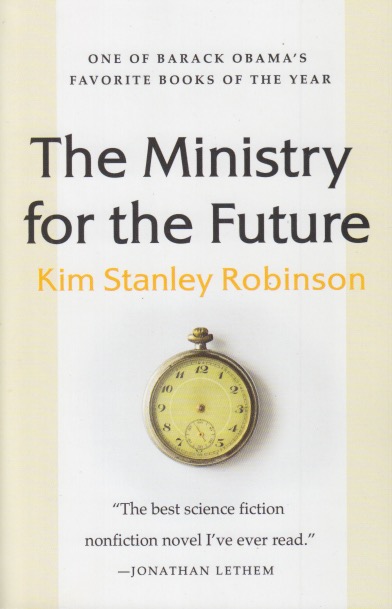
I’ve been on the Green Committee at work almost since I started the job.  Occasionally for Earth Day we’ll have a book discussion.  Usually it revolves around nonfiction books that my press publishes.  This year they selected Kim Stanley Robinson’s The Ministry for the Future.  It’s an environmentalism tale of what global warming may well be like and the political machinations it might take (and the millions of deaths along the way) before we stop burning carbon.  It’s a long and detailed and political story.  Robinson is known as an intellectual science fiction writer and there are sci-fi elements to the book, but its style is realist and its outlook, while ultimately hopeful, is staid.  Even when humans start to move in the right direction.  It’s also a very long book.

Reading it got me to thinking again of a somewhat bewildering truth: environmentalism books tend not to sell overly well and sustained reading, even by supporters, is difficult.  Many of us know that we’re beyond the tipping point for environmental disaster.  The Trump years assured us that it is coming.  One of the elements Robinson makes clear is just how politically entrenched it is.  Perhaps that’s one of the reasons for the despair.  The vast majority of people in the world want a more environmentally conscious government, but plutocracy tends to bring narcissists to the top and the needs of all others are less important.  In Robinson’s version of the story, targeted violence is the only thing that works.  Near the end of the story an interesting idea is raised: the Ministry of the Future (which is a government ministry, not the church kind) concludes a new religion is needed.

The masses of people, you see, are followers.  Religious leaders reinforce the idea that God told their founders—and by extension their followers—the only truth.  Their jobs (and ministries are jobs) include reinforcing those ideas to people who’ve been raised or converted to that particular brand of religion.  A number of New Religious Movements, and even a couple of prescient ancient religions, have been purposely constructed.  The trick is to get followers to accept that the religion is legitimate.  Most western religions around today have been based on the idea that humans can do whatever they want with the planet—even destroy it to force God to return.  I kind of like Robinson’s idea better.  Perhaps that’s why religions form around movies like Avatar.  Not a bad thought, when your job has you reading a sci-fi novel.  A religion saving the earth feels like a novel idea.


D Evil

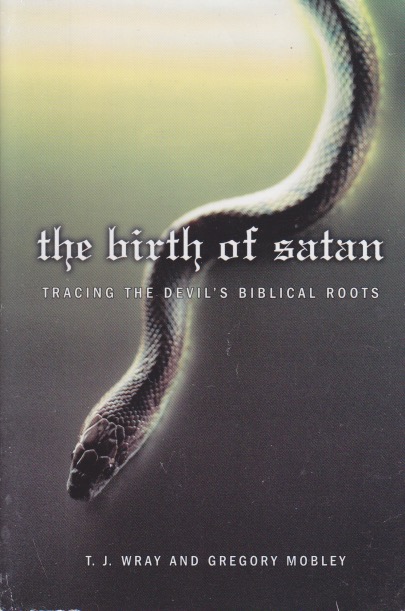
The Devil, they say, is in the details.  T. J. Wray and Gregory Mobley look into those details in The Birth of Satan: Tracing the Devil’s Biblical Roots.  It’s often a surprise to Christian readers that the Devil clearly evolves in the Bible.  From being virtually absent in the Hebrew section, he appears, almost full blown, in the New Testament.  This, of course, flies in the face of the idea that the truth was pretty much revealed from the beginning and that it’s consistent throughout.  The Devil in the details proves that it’s not.  The Bible has multiple suggestions of whence evil arises, God among them.  The Devil came to be one explanation of the origin of evil, but he’s not the only biblical one.

One of the things I found fascinating here, however, was that the authors often refer to popular culture to illustrate their point.  They particularly favor movies.  The authors are biblical scholars and it’s not at all unusual to find movie fans among them.  I suspect that since biblical scholars (apart from the linguists) specialize in stories it’s only natural that movies appeal.  They aren’t given extended discussion here, and indeed, a book about the Devil in the movies would be very thick if it attempted to be comprehensive.  Satan is a movie star.  Since he evolves into the embodiment of evil this is probably not surprising.  A good plot needs some evil in it, and one character in the western canon is the granddaddy of all evil.

Those looking for a fuller biography of the Prince of Evil may be disappointed that this book keeps to its remit—the biblical Satan.  There are, however, many more books about the Devil.  Maybe even more than movies in which he appears.  Scholars and laity both seem interested in this character.  He appears late on the scene, only within the last century or so of the biblical writing period.  His fullest portrait there is the highly symbolic book of Revelation.  And no matter what else you say about it, we can all admit Revelation is tricky to understand.  Since we take the Bible so seriously, one aspect of Satan that isn’t addressed here is his role as trickster.  Folkloric characters who cause chaos (which the Devil does) are often tricksters doing it for no particular reason.  We don’t know why the Devil is bad.  The Bible has no clear origin story for him, since he’s built up from several other cultures’ ideas of bad deities.  To sort it all out requires, well, the details.


When Bible Met Horror

My colleague (if I may be so bold) Brandon Grafius has recently published a piece titled “What Can Horror Teach Us about the Bible?” in Sojourners.  Brandon and I have never met in person, but we’ve worked together a number of times.  We share an interest in horror and we both teach/taught Hebrew Bible.  We’re not the only ones who’ve got this fascination.  When I was able to attend the American Academy of Religion and Society of Biblical Literature annual meetings in person, I would often meet up with others who, apart from their respectable jobs, have a real interest in horror.  There are quite a few of us.  Some journals, like Sojourners, are starting to ask the obvious question: what do these things have in common?

I can’t claim to have watched all the horror movies ever made.  It’s actually pretty difficult to access some of those I’d like to see and, believe it or not, I’m actually a selective viewer.  Often my choices are dictated by research.  Back when I was young, in college and seminary, I’d go to see horror movies with friends.  Since I was living alone in seminary that sometimes led to sleepless nights.  I recall vividly being unable to sleep after watching David Cronenberg’s remake of The Fly.  (To this day I still haven’t seen the original with Vincent Price.  I see that it’s available to stream on Amazon Prime, and since we’ve got the internet back perhaps it’s time I do that.)  What I can claim is that I’ve always watched movies for religious elements and that I often find horror isn’t lacking in that department.

The point of Brandon’s article is that there are horror stories in the Bible.  Indeed, the more I ponder the Good Book the more I see that makes it a frightening text indeed.  Once you get past the sugar coating, there’s fear of substance inside.  Funnily enough, it seems Jesus didn’t often play the fear card, although even he did so from time to time, according to the Gospels.  Religion, which gives us such hope, also makes us so very afraid.  I’m really glad to know that I’m not the only one who’s started to come to that conclusion.  So maybe it’s natural for those raised religious to be fond of monsters.  Getting others to admit it can be tricky, and I’m sure some genuinely don’t like them.  Still, when you’re in a scary place, it’s best not to be alone.


Healing Borders

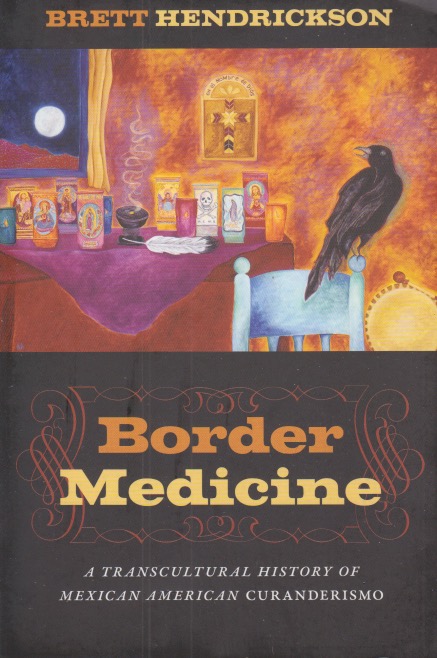
Sometimes you read a book that just gets your head buzzing.  Brett Hendrickson’s Border Medicine: A Transcultural History of Mexican American Curanderismo is one such book.  It brings together so many areas of fascination: healing based on different belief structures than scientific medicine, the role of community in avoiding cultural appropriation, and the cultural blending that takes place at all borders.  The myth of the “pure” has long created problems, particularly in the realm of religion.  Things blend.  They always have.  And this includes belief structures, faiths, religions.  This is most obvious at borders, which makes them very interesting places.  Officially we police them, wanting to keep what is “ours” and keep “them” out.  In reality we are blending with each other and that’s not a bad thing.

In much of educated society, it’s assumed that scientific medicine is the only valid kind.  There are those even among the schooled, however, who pray for the ill.  Curanderismo is a form of folk healing that involves cures that would be rejected out of hand by science.  In a materialist, chemical world, only this can heal that.  Curanderismo looks at things quite differently.  Its practitioners don’t charge an arm and a leg for their work.  They are extremely popular.  And they heal people.  This is part of what makes Hendrickson so wonderful to read—he doesn’t assume up front that this doesn’t work.  Some analysts treat this kind of thing from a perspective of cultural superiority, as if scientific medicine is the only real way to treat illness.  Cultures, however, can heal.

Culture is something we value because it makes us feel secure and comfortable.  We know what to expect.  We speak the language, know the conventions.  (It would help Democrats, I think, to realize that although we’re trying to dismantle xenophobia, it is still very much intact in most of the world.  People follow autocrats because they’re afraid.)  We all live near borders.  Our personal border may be the wall of our apartment or the front door to our house.  It may be the Protestant/Catholic next door (or Buddhist/Atheist/Muslim/Hindu/Agnostic).  It may be the middle class/working class person who lives across the street.  In one town in which I lived it was literally those on the other side of the railroad tracks.  We draw borders for protection, but what Hendrickson shows so clearly is that they can also be places of healing.  


Whose Baby?

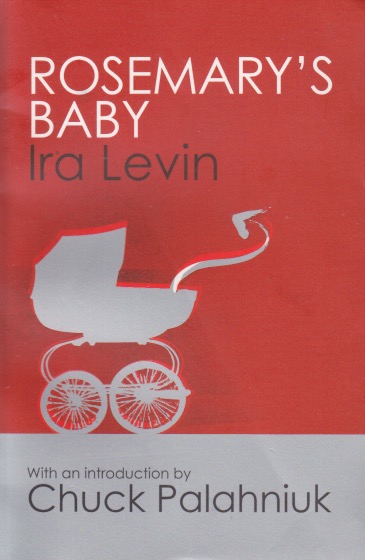
Some books are better known as movies.  I suspect that I, like many, saw the movie Rosemary’s Baby without ever reading the book.  It turns out that they’re very similar.  The book takes the action a few minutes beyond the end of the movie, but otherwise they’re quite close.  Reading a horror novel where you know everything that’s going to happen isn’t exactly the recipe for thrills and chills, but I’m nevertheless glad to have done it.  For a book published as long ago as it was (1967) it still isn’t easily found used.  New copies tend to be just as expensive as new books.  I just wanted to have a read to see if Roman Polanski stayed close to Ira Levin or not.

Levin had a string of successful novels, but Rosemary’s Baby is probably still his best known.  He is quoted as saying he didn’t believe in the Devil and felt guilty that his book (and movie) may have led to many people taking on that belief.  In many ways Polanski’s movie kicked off the age of modern horror, being released the same year as George Romero’s Night of the Living DeadRosemary, however, opened the door to horror with overt religious themes.  It paved the way for The Exorcist and The Omen.  The latter, written by David Seltzer, was another example of a movie based on the Devil by an author who didn’t believe in him.  Personal belief aside, that trinity of movies remade the horror scene and led to one of the strangest cooperations in cinematic history.

In the book versus movie scenario often there’s a clear winner.  On other occasions the movie is so powerfully made that it overshadows its novel.  Rosemary’s Baby, along with The Exorcist, tended to do so.  (The Omen was novelized from the screenplay by the screenwriter.)  I wonder if that might not be because religion pays right into cinematic representation.  The novels, after all, can take several days of reading on a normal workaday schedule.  The film, if well done, transports the viewer there for a couple of hours and leaves you feeling as if you’ve been through, in the case of Rosemary, a traumatic pregnancy.  It so happened that the unholy trinity of religious horror tapped into that rapt storytelling of which celluloid proves so capable a medium.  Still, reading the novel fills in many of the gaps and brings to mind the benefits of the written word.  And this is, like a birth, something to be celebrated.


Reconstructing Celts

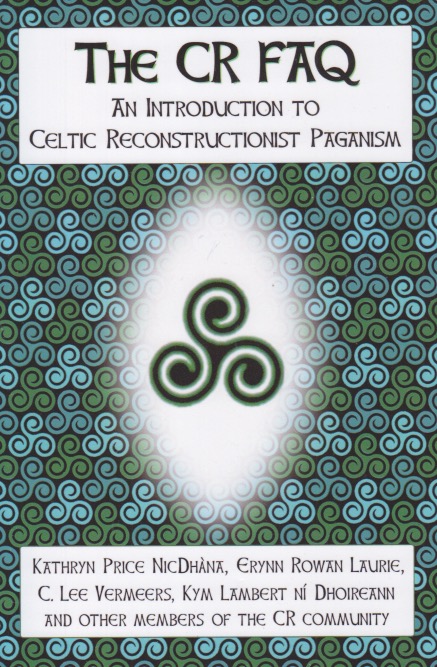
There are myriads of them.  They come in all shapes, sizes, and colors.  They are believed seriously by the faithful.  Of course I’m talking about religions.  Scholars have been inclined to focus on the “big five” or “six” or “seven,” depending on how you count them, but each of those has sects—some with unbelievable numbers of them.  Christianity alone has somewhere in the region of 40,000 denominations.  I tend to think of them as different religions.  A snake handler has very little in common with the Pope, for instance.  Celtic Reconstuctionism is a smaller religion, but it has a very clear idea of what it is.  The group-written CR FAQ, originally a web document, is a question-and-answer format explanation of this particular set of believers.  It’s fascinating to read.

One thing that immediately stands out is that these are very intelligent and deliberate folks.  They are scholarly, sincere, and clear about what they’re trying to do.  Believing that ancient Celtic religions (for again, there are many) can be reconstructed and refitted for modern use, they learn the languages, read the books, look at the archaeological evidence, and critically engage with other modern religions that borrow from Celtic culture.  Indeed, the inauthenticity of some recent religions’ use of Celtic elements led to Celtic Reconstructionist Paganism.  The CR community is well aware that there are other Celtic revival religions.  This particular sect strikes me as among the better informed regarding the origins of their religion.  Most modern Christians have some vague idea how their empire got started, but they tend to be weak on the details.

Religions have sometimes been deliberately crafted, going back to antiquity.  Zoroastrianism, as far as we can tell, was an attempt by Zarathustra to avoid the pitfalls of indigenous Persian religions.  He wanted an ordered, systematic belief system.  As measured in years it was certainly successful.  It is the world’s oldest continually practiced formal religion.  Both eastern and western religious traditions were influenced by it.  CR is an attempt to live a Celtic religion as if its development hadn’t been interrupted.  Obviously, Christianization of the Celts was a major disruption, but it wasn’t an obliteration.  Most religions manage to survive in the colonizing faith.    Groups worshipping ancient Greek, Norse, Canaanite, and Celtic gods are thriving.  Aware that things have changed, they find value in the pre-Christian religions of their heritage.  If CR is anything to go by, they do so inclusively and thoughtfully.  And for those who wish to learn more, they leave written records.


Ignoring or Ignorance?

As someone whose career has always been about the Bible, I’ve noticed that many intelligent people are naive.  They seem to believe that since they’ve outgrown the need for religion that it doesn’t exist among the majority.  I guess that’s another way of saying their thinking tends toward elitist.  The vast majority of people in the world are religious.  Among the elites, since about the sixties, there’s been the fervent belief that religion will die out in the face of science.  That hasn’t happened, of course, and it’s not likely to.  In the meanwhile, the idea persists and replicates itself and religion is ignored until people fly jets into towers or elect Trump or commit some other extremely catastrophic act.  There’s then usually a flare up of interest that dies down when the danger is past.

I wasn’t very socially aware in the sixties.  I was quite religious, though.  The religious, although always in the majority, constantly talked about being under threat of extinction.  There was, even then, a paranoia about being discounted.  Some of the elites realized that by pretending to be religious themselves they could make use of those numbers.  In other words there are forces, not from any divine source, keeping the interest in religion high.  Only the naive ignore it.  That’s one of the reasons it distresses me to see institutions of higher education cutting religion programs.  It plays into the worst sort of elitism to ignore the vast majority of the human population.  Meanwhile, subjects that bring in cash thrive.

Should we look away?

Growing up in an uneducated environment may have been a hidden blessing.  It can sometimes instill a lifelong desire to learn, even if your outlook is discounted.  I’ve always believed in education, and when it wasn’t, or isn’t, available I tend to self medicate by reading.  Reading about religion is always a learning experience.  There’s something profoundly human about it.  Acknowledging that something greater than ourselves is out there, whether you want to face it as divine or natural, seems wise to me.  I think we all know it’s there.  How we choose to respond to it, however, differs widely.  We’ve had glimpses of what the universe would be like if humans were the most puissant beings out there.  The results, based on the headlines, aren’t terribly encouraging.  I see these things and say something, but it’s ever so easy to ignore someone whose career has always been about the Bible.


Others’ Weeping

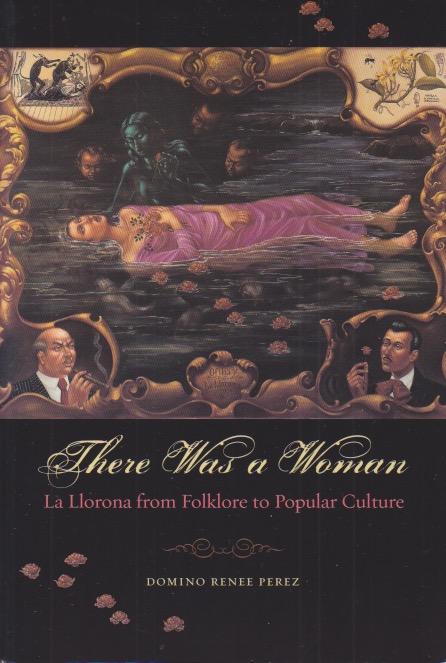
I was first introduced, consciously at least, to la llorona via the movie, The Curse of la Llorona.  The film is part of The Conjuring universe, but just barely.  It was clear from the movie that the weeping woman (la llorona) wasn’t invented for the film.  I’ve never lived in, or even spent much time in, the southwest.  Even less in Latin American countries.  In my rather strange career path, the best source of such things to penetrate my own experience tended to be my students.  (Those who think professors do all the teaching have the equation backward.)  Since becoming more isolated as an editor, my interactions are often someone approaching me with an idea mostly formed, often fully formed, and few of them have to do with ghosts or folklore.  That’s why I found Domino Renee Perez’s book There Was a Woman: La Llorona from Folklore to Popular Culture such a treasure.

As an Anglo reader endowed of white privilege, it’s important to read books where I’m clearly the outsider.  Being a kind of historian, I was curious about the origins of the tale.  As a person living in the modern world I was also interested by its reception history.  This book contains many, many examples of the latter.  It will demand that the outsider reader accept unfamiliar names and cultural conventions.  It will, in some ways, force you to stand “south of the border” and face the suffering our nation has caused and continues to cause in the name of white supremacy and its adjunct, capitalism.  There are other ways to be in this world, but when money gets involved all bets are off.

There’s much to discuss in a packed book like this, but one aspect, near the end, caught my attention.  Briefly, if you don’t know the story, la llorona is a woman betrayed by her husband.  She drowns their two children and is condemned to wander the riverbanks for eternity crying as she searches for them.  Interestingly Perez makes the connection with Rachel in the Bible.  I’ve read the Good Book many times and yet I seem to have missed Matthew’s use of Jeremiah’s interpretation of Rachel’s story.  Joseph was kidnapped and sold to slavery by his brothers but Genesis focuses on the grief of Jacob.  Rachel doesn’t live to be reunited with her lost son like Jacob does.  Perez makes the point that the stories are quite different, but it showed me once again how much I have yet to learn.  We need to pay attention to those who experience life differently.


Out of Hades

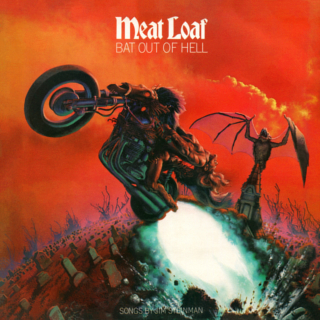
They went together naturally, like chocolate and peanut butter.  Just about seven months ago Jim Steinman died.  Then yesterday, Meat Loaf.  They were both born in 1947 and together they made one of the best selling albums of all time, Bat Out of Hell.  I’m saddened by the loss of perhaps the only truly Wagnerian Rock performer.  After I discovered Bat Out of Hell, raising some eyebrows among those who knew me as a kid, I was hooked.  I bought all the Meat Loaf and Steinman collaborations.  Not only was Meat Loaf’s voice big, it was also sincere.  It was easy to believe the stories he was singing to us, no matter how fantasy-prone they might’ve been.  Once I start listening to one of his albums I end up going through them all.

When we become aware of music helps to define it.  I became aware of Bat Out of Hell during my Nashotah House years.  Still fearful from my evangelical upbringing, I wondered what students might think when they came over.  (Nashotah is a residential campus, and this was largely before the days when faculty were fearful of being alone with a student.)  As strange as it may sound, for a best-selling album, I was unfamiliar with any of the songs before I bought it.  I’ve never been much of a radio listener.  I agonized quite a bit before finally buying the CD.  I quickly came to see why it was so popular.  More than anything, it was the sincerity of Meat Loaf’s voice.

That music saw me through some dark times.  Attending mass in the mornings and listening to Meat Loaf at night proved an effective elixir.  The longer I was at Nashotah the more I came to associate it with the titular geonym.  Eventually Bat Out of Hell II came out.  I was less slow about acquiring it.  The third one appeared only after my teaching career ended.  When things went south at Nashotah, I decided that I would perform some symbolic actions during my departure.  There was nobody there to witness any of them—no person is indispensable to an institution and you’re soon forgotten.  The last thing packed from our on-campus house was the stereo.  I went back alone to get it and the few last-minute belongings from well over a decade in a place of torment.  Just before leaving campus for the last time I cranked the stereo up and played “Bat Out of Hell” at full volume.  An era has come to an end.