Reconstructing Celts

There are myriads of them.  They come in all shapes, sizes, and colors.  They are believed seriously by the faithful.  Of course I’m talking about religions.  Scholars have been inclined to focus on the “big five” or “six” or “seven,” depending on how you count them, but each of those has sects—some with unbelievable numbers of them.  Christianity alone has somewhere in the region of 40,000 denominations.  I tend to think of them as different religions.  A snake handler has very little in common with the Pope, for instance.  Celtic Reconstuctionism is a smaller religion, but it has a very clear idea of what it is.  The group-written CR FAQ, originally a web document, is a question-and-answer format explanation of this particular set of believers.  It’s fascinating to read.

One thing that immediately stands out is that these are very intelligent and deliberate folks.  They are scholarly, sincere, and clear about what they’re trying to do.  Believing that ancient Celtic religions (for again, there are many) can be reconstructed and refitted for modern use, they learn the languages, read the books, look at the archaeological evidence, and critically engage with other modern religions that borrow from Celtic culture.  Indeed, the inauthenticity of some recent religions’ use of Celtic elements led to Celtic Reconstructionist Paganism.  The CR community is well aware that there are other Celtic revival religions.  This particular sect strikes me as among the better informed regarding the origins of their religion.  Most modern Christians have some vague idea how their empire got started, but they tend to be weak on the details.

Religions have sometimes been deliberately crafted, going back to antiquity.  Zoroastrianism, as far as we can tell, was an attempt by Zarathustra to avoid the pitfalls of indigenous Persian religions.  He wanted an ordered, systematic belief system.  As measured in years it was certainly successful.  It is the world’s oldest continually practiced formal religion.  Both eastern and western religious traditions were influenced by it.  CR is an attempt to live a Celtic religion as if its development hadn’t been interrupted.  Obviously, Christianization of the Celts was a major disruption, but it wasn’t an obliteration.  Most religions manage to survive in the colonizing faith.    Groups worshipping ancient Greek, Norse, Canaanite, and Celtic gods are thriving.  Aware that things have changed, they find value in the pre-Christian religions of their heritage.  If CR is anything to go by, they do so inclusively and thoughtfully.  And for those who wish to learn more, they leave written records.


Ignoring or Ignorance?

As someone whose career has always been about the Bible, I’ve noticed that many intelligent people are naive.  They seem to believe that since they’ve outgrown the need for religion that it doesn’t exist among the majority.  I guess that’s another way of saying their thinking tends toward elitist.  The vast majority of people in the world are religious.  Among the elites, since about the sixties, there’s been the fervent belief that religion will die out in the face of science.  That hasn’t happened, of course, and it’s not likely to.  In the meanwhile, the idea persists and replicates itself and religion is ignored until people fly jets into towers or elect Trump or commit some other extremely catastrophic act.  There’s then usually a flare up of interest that dies down when the danger is past.

I wasn’t very socially aware in the sixties.  I was quite religious, though.  The religious, although always in the majority, constantly talked about being under threat of extinction.  There was, even then, a paranoia about being discounted.  Some of the elites realized that by pretending to be religious themselves they could make use of those numbers.  In other words there are forces, not from any divine source, keeping the interest in religion high.  Only the naive ignore it.  That’s one of the reasons it distresses me to see institutions of higher education cutting religion programs.  It plays into the worst sort of elitism to ignore the vast majority of the human population.  Meanwhile, subjects that bring in cash thrive.

Should we look away?

Growing up in an uneducated environment may have been a hidden blessing.  It can sometimes instill a lifelong desire to learn, even if your outlook is discounted.  I’ve always believed in education, and when it wasn’t, or isn’t, available I tend to self medicate by reading.  Reading about religion is always a learning experience.  There’s something profoundly human about it.  Acknowledging that something greater than ourselves is out there, whether you want to face it as divine or natural, seems wise to me.  I think we all know it’s there.  How we choose to respond to it, however, differs widely.  We’ve had glimpses of what the universe would be like if humans were the most puissant beings out there.  The results, based on the headlines, aren’t terribly encouraging.  I see these things and say something, but it’s ever so easy to ignore someone whose career has always been about the Bible.


Others’ Weeping

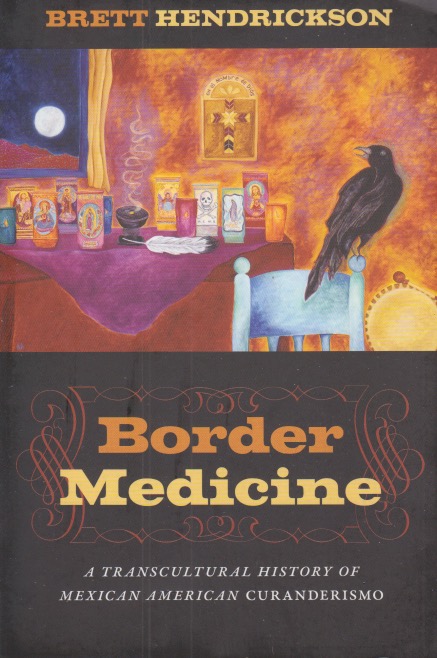
I was first introduced, consciously at least, to la llorona via the movie, The Curse of la Llorona.  The film is part of The Conjuring universe, but just barely.  It was clear from the movie that the weeping woman (la llorona) wasn’t invented for the film.  I’ve never lived in, or even spent much time in, the southwest.  Even less in Latin American countries.  In my rather strange career path, the best source of such things to penetrate my own experience tended to be my students.  (Those who think professors do all the teaching have the equation backward.)  Since becoming more isolated as an editor, my interactions are often someone approaching me with an idea mostly formed, often fully formed, and few of them have to do with ghosts or folklore.  That’s why I found Domino Renee Perez’s book There Was a Woman: La Llorona from Folklore to Popular Culture such a treasure.

As an Anglo reader endowed of white privilege, it’s important to read books where I’m clearly the outsider.  Being a kind of historian, I was curious about the origins of the tale.  As a person living in the modern world I was also interested by its reception history.  This book contains many, many examples of the latter.  It will demand that the outsider reader accept unfamiliar names and cultural conventions.  It will, in some ways, force you to stand “south of the border” and face the suffering our nation has caused and continues to cause in the name of white supremacy and its adjunct, capitalism.  There are other ways to be in this world, but when money gets involved all bets are off.

There’s much to discuss in a packed book like this, but one aspect, near the end, caught my attention.  Briefly, if you don’t know the story, la llorona is a woman betrayed by her husband.  She drowns their two children and is condemned to wander the riverbanks for eternity crying as she searches for them.  Interestingly Perez makes the connection with Rachel in the Bible.  I’ve read the Good Book many times and yet I seem to have missed Matthew’s use of Jeremiah’s interpretation of Rachel’s story.  Joseph was kidnapped and sold to slavery by his brothers but Genesis focuses on the grief of Jacob.  Rachel doesn’t live to be reunited with her lost son like Jacob does.  Perez makes the point that the stories are quite different, but it showed me once again how much I have yet to learn.  We need to pay attention to those who experience life differently.


Out of Hades

They went together naturally, like chocolate and peanut butter.  Just about seven months ago Jim Steinman died.  Then yesterday, Meat Loaf.  They were both born in 1947 and together they made one of the best selling albums of all time, Bat Out of Hell.  I’m saddened by the loss of perhaps the only truly Wagnerian Rock performer.  After I discovered Bat Out of Hell, raising some eyebrows among those who knew me as a kid, I was hooked.  I bought all the Meat Loaf and Steinman collaborations.  Not only was Meat Loaf’s voice big, it was also sincere.  It was easy to believe the stories he was singing to us, no matter how fantasy-prone they might’ve been.  Once I start listening to one of his albums I end up going through them all.

When we become aware of music helps to define it.  I became aware of Bat Out of Hell during my Nashotah House years.  Still fearful from my evangelical upbringing, I wondered what students might think when they came over.  (Nashotah is a residential campus, and this was largely before the days when faculty were fearful of being alone with a student.)  As strange as it may sound, for a best-selling album, I was unfamiliar with any of the songs before I bought it.  I’ve never been much of a radio listener.  I agonized quite a bit before finally buying the CD.  I quickly came to see why it was so popular.  More than anything, it was the sincerity of Meat Loaf’s voice.

That music saw me through some dark times.  Attending mass in the mornings and listening to Meat Loaf at night proved an effective elixir.  The longer I was at Nashotah the more I came to associate it with the titular geonym.  Eventually Bat Out of Hell II came out.  I was less slow about acquiring it.  The third one appeared only after my teaching career ended.  When things went south at Nashotah, I decided that I would perform some symbolic actions during my departure.  There was nobody there to witness any of them—no person is indispensable to an institution and you’re soon forgotten.  The last thing packed from our on-campus house was the stereo.  I went back alone to get it and the few last-minute belongings from well over a decade in a place of torment.  Just before leaving campus for the last time I cranked the stereo up and played “Bat Out of Hell” at full volume.  An era has come to an end.


In the Name of

I recently heard someone who’s obsessed with honorifics opine that we should never mention Martin Luther King Jr. without his full titles.  I think I understand the reason, but I was reminded of my wife’s experience in Edinburgh.  Being Americans we assumed that “Doctor” was the preferred title of academics.  While tying up a letter for one of the higher ups in the medical school, she saw he’d signed himself “Mr. Gordon.”  She corrected this to “Dr. Gordon.”  When she gave it to him to sign he lamented that she’d demoted him.  The highest honorific, beyond the exalted “Professor,” was the humble “Mister.”  I’ve never forgotten that story.  University folk are all about titles.

I made the mistake of addressing my advisor as “Doctor” when we first met.  “Professor,” he corrected me.  In the British system, at least at the time, a department had only one “Professor,” the rest being “Lecturer” or “Senior Lecturer” or “Reader.”  The latter three were all addressed as “Doctor.”  The Professor alone had that singular title.  As my wife discovered, on beyond Professor lay Mister.  I’m a pretty informal guy.  When I was teaching I did insist that students call me “Doctor,” in part because I was young (I finished my doctorate at 29), and I’m small in stature.  And soft-spoken.  So that students didn’t take to calling me “son”—some at the seminary were old enough to have been my father—I kept the boundaries clear.  If I ever get a teaching post again I’ll insist students call me by my first name.

This day is about Martin Luther King, Jr.  He was a remarkable man who accomplished amazing things in the horribly racist America in which he was raised.  Unfortunately Trump has ushered in a renewed era of racism and our Black brothers and sisters find themselves still having to fight for fair treatment.  This reflects badly on the white man, as it should.  Still, to rely on titles is to play the white man’s game.  We honor each other more deeply, it seems to me, when we recognize that titles are, by their very nature, means of asserting superiority.  We offer our personal names to those closest to us, to those who humanize us rather than seeing us as an office.  Honor is important.  Titles can lead to better jobs (but not necessarily).  They can lead to higher pay (but not always).  We honor Martin Luther King, Jr. today by recognizing his great accomplishments and by realizing we all still have much work to do before we all really have names.


Rusticated Fears

I don’t recommend sick days.  This one was weird with all the symptoms of illness but really having them just be the side-effects of a shingles vaccine.  I don’t recommend it, but I was able to use the day, between dozing off, by watching Woodlands Dark and Days Bewitched: A History of Folk Horror.  This late 2021 documentary is over 3 hours long and I’d been wondering when I’d have the chance to view such a lengthy movie.  Besides, when you’re feeling utterly miserable, horror is a kind of elixir to make it all better.  Watching the film made me aware of just how many movies I haven’t seen.  Another way of putting it is that I still have my work cut out for me.

Folk horror, you see, has a natural appeal for those of us who grew up away from urban centers.  Much that we did in the small towns of my childhood was, frankly, weird.  As the interviewees make plain, cities are the centers of economic and cultural power.  The big educational institutions are there and those of us from the hinterlands might not obey the rules that city dwellers seem to absorb through their feet.  In reality, I suspect, urban culture largely derives from folk culture.  Those who venture away into the large cities take pieces of their home with them.  Cities tend to blend all this together and transform it into something different.  Those in rural areas, however, have their own way of doing things.

Perhaps it’s embarrassing to center this much, but it was clear to me in watching Woodlands Dark and Days Bewitched that much of the fear showcased to city folks (for movies tend to be shown in urban settings) is the weird religion of the country cousins.  Both the words “pagan” and “heathen” are references to those who dwell outside urban areas.  “Pagan” comes from Latin for rustic, while “heathen” means those out in the heath.  Mainstream religion is that of the cities—the Vatican is located in Rome, and the large mosques, synagogues, and cathedrals are in population centers.  There’s no telling what the country dwellers might get up to if left to their own devices.  And religion taken seriously can be quite dangerous to outsiders, as we’ve seen time and time again.  Folk horror never really went away but it is undergoing a resurgence at the moment.  As the documentary suggests, this tends to happen in times of social instability.  At least we have something to look forward to as the world collapses around us.  Folk horror will help us cope, if my experience is anything to go by.


Homegrown Haunts

The thing about the unknown is that it’s, well, unknown.  Like many people I’m interested in getting at the truth behind ghost claims, so American Hauntings: The True Stories behind Hollywood’s Scariest Movies—from The Exorcist to The Conjuring, by Robert E. Bartholomew and Joe Nickell looked helpful.  Indeed, it is.  To a degree.  The book, however, devolves at points to debunking cases that aren’t in the movies and frequently asks “Why didn’t somebody take a picture?”  (In cases where there are pictures they say how they could be faked.)  Given the authors, you kind of know none of the claims will be accepted.  Even so, there’s a lot of good information here.  They do a great job of outlining the very probable hoax at Amityville.  For some of the lesser known cases they offer explanations harder to believe than the poltergeists they so abhor.

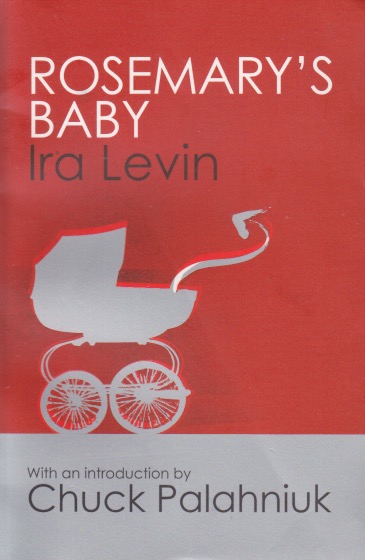
That’s the thing: for all the “hauntings” they default to poltergeists and then explain how poltergeists are faked.  They begin with An American Haunting, and move on to The Exorcist, Poltergeist, The Conjuring, The Amityville Horror, and The Haunting in Connecticut.  Sandwiched in there is also the non-movie Don Decker case.  What struck me as strange is they often seem offended that movies embellish stories.  That’s what movies do.  They’re quite right about the money aspect, however.  They also take in films that make no claims about being true, such as Poltergeist, which drew inspiration from an actual case but didn’t make that assertion.  It’s also odd that they didn’t ask some of the writers about this.  I once met Brent Monahan, author of An American Haunting.  He readily admitted some of it was made up.  In other words, taking offense at the “based on a true story claim” feels a bit naive.

In some cases they speculate what might’ve happened without visiting the location.  It’s hard to tell if a leaky roof can explain things when you don’t specify if the room is on the first or second floor.  Also, suggesting a young boy is faking because a professional magician can duplicate effects raises its own set of questions.  If a kid is as good as a professional, why doesn’t s/he go on the circuit and make some money from it?  That kind of question, by the way, characterizes much of the skepticism in the book.  Why not become a magician?  Because we don’t have the whole story.  It seems to me that dismissiveness doesn’t really help to get at the truth.  Nevertheless, this book contains much that is useful and skeptical voices should always be included when attempting to sort our extraordinary claims, even if you never , ever want to be caught without a camera.


Day of the Lord

The kindly folks at Horror Homeroom recently asked me if I’d review the new movie, The Great and Terrible Day of the Lord.  Since I’ve been occasionally writing on religion and horror for them for a couple of years now, they knew I’d be interested.  The review just dropped and you can read it here.  Since this blog is a less formal place I’ll say a bit more about the film here, while encouraging you also to read the review.  They won’t be the same.  The movie, which is independent of any of the big studios, is hands-down the most theological horror I’ve ever seen.  That’s because it’s fully based on a religious idea.  It consists almost entirely of dialogue, so some will doubt it’s horror at all.  What is being said, however, can be quite scary.

Using only two characters, the movie would work well as a stage play.  The story revolves around a couple on a romantic weekend getaway.  Far from any other people, they’re enjoying a fancy cabin in the woods when suddenly he (Michael) reveals to Gabby (her), that he’s God.  Not all the time.  In fact, he’s come to her at this moment without Michael even knowing it because she’s going to die that weekend.  He wants to ensure she can get to Heaven.  Throughout the weekend Michael switches back and forth between being himself and being God.  Gabby fears she’s trapped with a psychopath, but as God Michael knows things about her that she’s never told him.  They discuss the problems with God’s existence and the issue of theodicy as Gabby slowly comes to accept she will die there.

My Horror Homeroom piece has spoilers, but I won’t put them here.  Horror fans might claim this isn’t horror at all.  There’s no bloodshed, very little violence, and no monsters play a role (unless you count the Devil).  Still, it is psychologically tense and it raises some scary questions.  I was raised as a Fundamentalist.  The fear implanted early that you might die not right with God has stayed with me all through my years of working in religious studies.  From my perspective this was a pretty scary film.  The script is very well written.  So much so that I wonder if Jared Jay Mason, the writer, hasn’t taken a course or two in theology.  My formal review gives quite a bit more detail, but you might want to watch the movie also.  I found it surprisingly effective.


The Nature of Epiphany

Last year on January 6 we had an epiphany.  Many of us thought, I suspect, that since the angry mob wanted to kill Republicans and Democrats both that their actions would be condemned unilaterally.  Instead we learned that the Republican Party said, “Boys will be boys.”  And of course boys like to kill things.  A year later the GOP has stalwartly refused to condemn the attempt of a violent takeover of the government by a legitimately defeated candidate.  If the other party tried this they’d be calling “treason.”  We had an epiphany of a double-standard masquerading as evangelical Christianity.  Now, instead of thinking of today as the Christian epiphany, well, wait a minute.  Maybe that’s the epiphany we had—understanding what Christianity can become.

One of the tenets of democracy includes the freedom of religion.  Studying ancient religion can be quite revealing.  For one thing, we get a better idea of what religion was.  Few ancient authorities were concerned about what individuals actually believed.  Religion was largely what the powerful and influential did to placate gods who were easily bribed by sacrifice and praise.  The role of the average person was to be taxed to support this, and the monarchy.  I’ve been watching how, since the 1970s, the United States has been going that route.  We’ve always been a religious nation (“Christian” is much more debatable), but Richard Nixon’s ploy to swing evangelicals to the Republican Party worked.  Those not blinded by ideology will know that evangelicals tended to be staunchly Democrat.  Through the ensuing decades we watched Republican presidents giving our tax money to religious organizations they supported.  Why not throw another lamb on the altar while you’re at it?

The sacrificial system, you see, supported the temple staff.  Somebody had to eat all that meat!  Even in the Bible it was recognized that God didn’t exactly consume it the way a human being would.  Then last year on Epiphany, the party that’s supported just this kind of thing tried to throw all but Trump—yes, even Pence—onto their sacrificial pyre.  A year later we see those very senators saying, “well, it might be useful to have such people in reserve, just in case.”  Early Christians believed that you could tell another believer by their actions.  In that they weren’t wrong.  And those who are able and eager to kill in order to get their way have revealed, by their actions, their true beliefs.  It was, and still is, an epiphany indeed.


Ghosts and Puritans

One of the victims of capitalism is the tradition of telling ghost stories at Christmas time.  We tend to relegate such downers to Halloween.  Christmas is a cozy time of getting new things, right?  Who wants to think of ghosts?  I recently read Charles Dickens’ A Christmas Carol.  An article in the Smithsonian  a few years back makes the point that Dickens was cashing in on a venerable tradition.  Instead of sending children to bed expecting Santa Claus, it used to be the custom to tell ghost stories on Christmas Eve.  That makes sense in context.  Christmas was established near the date of the Roman festival Saturnalia and the germanic Yule.  These festivities celebrated the passing of the equinox and the slow, but steady increase in light.  A liminal period.  It seems a natural time to tell ghost tales, no?

Image credit: Arthur Rackham, public domain via Wikimedia Commons

The article by Colin Dickey (who has a history of writing about ghosts), calls for bringing back the tradition.  Do we want our cozy capitalism interrupted by revenants?  Why not?  For me the Christmas season is largely about time off of work.  I spend the time working on fiction writing that I tend to put off when I have a book under contract.  Most of those stories I write are some species of horror, often ghosts.  The real haunting factor is I don’t have time during the rest of the year to do the amount of writing that recharges my batteries.  Work seems to take more and more time and the Scrooge-like results are, I think, pretty obvious.  It’s time to bring back the Christmas ghosts.

Dickey points out that one reason Christmas ghost stories never caught on in America was that Puritans had little taste for them.  The more I look at society the more amazed I am at how Puritan we still are, but without their religious ideals (apart from various prohibitions of human behavior).  The fact that this article appeared in the respectable Smithsonian makes me feel a little more accepted for my disposition.  I know there are many horror fans out there.  Poll after poll indicates that people like horror, but, it seems, most don’t like to admit it.  At least among those I know in the neighborhood.  There are a slew of Christmas monsters.  For those who keep track of holiday horror as a sub-genre the most common holiday represented is Christmas.  In fact, I just had a Christmas horror story published (under a pseudonym, of course).  Maybe ghosts will be able to frighten off the specter of capitalism and bring us back the holiday spirit.


Christmas Classic

While it’s a story I know well, I’d never read the book.  I suppose I tend to think of Christmas when it’s already hard upon me, or perhaps I’m just making excuses.  After all these decades I’ve finally read Charles Dickens’ A Christmas Carol.  The story is so well known there’s no point in laying out the action here.  A filmic version of this has been part of our family tradition for many years now and sometimes it’s difficult not to think the cinematic version has somehow got it right while the book might’ve somehow missed something.  I’m generally disposed to read the book before watching the movie, but I believe I saw this as a young person and we had no Dickens in the house.  Besides, who could miss the endless parodies?

It’s a ghost story, yes, but it’s primarily about redemption.  It’s difficult for me to watch (or read) without getting a bit misty about the eyes.  Our world, especially during the Trump years, seemed a hard and heartless place.  Winter all the time while somehow being Hell also.  It will take many years—perhaps I won’t live to see it—before people unlearn the bad habits they saw being modeled each and every day of those four long, long years.  Every year as I watched the movie I thought, “I wonder if 45 has ever seen this?”  Always the answer came back in a resounding “Humbug.”  A miser who cares only for himself doesn’t change as easily as Scrooge.  So the world had to suffer, and so it will suffer yet a good long time.

The thing about redemption is that it can’t be privatized.  It’s on free offer to anyone who desires it.  While A Christmas Carol may not be Dickens’ best work, it nevertheless bears a message well worth the repetition.  Perhaps there aren’t ghosts enough in the world.  We need to learn to listen.  Were it not for the haunting Scrooge never would have changed.  The sad part is that there are people actually of his ilk.  I hold out hope for redemption to all of them.  I’ve known too many people who seem to care only for themselves.  I need to remind myself that they may not have the reinforcement of this tale every year.  The world could perhaps be better if that were the case.  Dickens clearly had fun as a writer.  Sometimes it seems to get in the way.  But if it makes one’s heart light in December, what can the harm be in that?


Great Resignation

Although many people my age are retired, I’m looking at a couple more decades of work at least.  A large part of this is because I specialized in a field I didn’t realize was dying.  I suspect clergy in the eighties, when I had to decide on majors and education choices, thought the declines in church attendance were a blip—a statistical anomaly until things went back to the way they “usually were.”  I majored in religion as an undergrad and then went on to seminary and finally to a doctoral program, all along that trajectory.  At every step of the way I was assured there would be jobs.  I’m seeing now that religionists don’t always look ahead.  It’s important to look back, but society begs to differ.

The reason this comes to mind, apart from being part of my daily reality, is an article a minister sent me.  The piece by Melissa Florer-Bixler  in Sojourners is titled “Why Pastors Are Joining the Great Resignation.”  It explores a number of reasons around pay and working conditions that ministers are quitting.  My thought, unscientific but logical, is that many of them are realizing society has moved away from the standard church model.  They recognize that the insistent biblicism that led to a past of Americans being in church under threat of Hell has diminished.  “Worship,” as it is generally done, no longer speaks to people.  I’ve experienced a great many worship styles and venues.  (I still attend them, but I’m a creature of habit as well as obligated by profession.)  When the realities of the world sink in you start to see the old model of praising an angry God because he demands it just doesn’t make sense.  People like Trump get elected anyway, so what’s the point?

Many pastors are underpaid.  Unless you run a mega-church budgets are tight and the need of people is great.  Much of the effort of the congregation I attend is directed to social justice causes.  There are so many.  So very many.  People are in need and the pat answers of call to worship, opening hymn, and sermon just aren’t doing it for them.  Congregants need pastoral care, as do people unchurched.  I’ve been through seminary and a professor in one long enough to know that few really get the idea of how to inspire by their words.  These are folks looking for a living who don’t fit into the capitalist model.  So there’s a decline.  As I read the piece I wondered what jobs they were switching to.  If my experience is anything to go by, the options are limited.


Sects and Violence

Important books often suffer because of poor distribution.  There are really only five publishers in English (“the big five”) that can reliably get their books into commercial bookstores.  I was reminded of this when reading the very important book Sex and Religion: Teachings and Taboos in the History of World Faiths, by Dag Øistein Endsjø.  The book is virtually unknown here in the States for a number of reasons.  It was originally written in Norwegian.  The author isn’t a household name.  The publisher who bought English rights is British.  It’s not comfortably priced.  None of this, however, gainsays its importance.  This book has much to teach us about hypocrisy and how religions codify prejudices, and, despite rhetoric, still value women less than they value men.  Religion is intimately connected to sex.  As I’ve written before, no religion ignores it completely.

Endsjø offers here a reasoned, logical, and religiously expert analysis of several aspects of human (and to a degree, animal) sexuality.  Contrary to much monotheistic teaching, sex is often treated as a good thing—within limits—in world religions.  Of course, that allows monotheists to step in and claim all others are pagans and debased, a tactic as old as the Good Book itself.  Religions’ real enemy, it seems, is education.  We should be open to compare what others believe—the wisdom their elders have passed down, just like the disciples.  And we should be honest about the fact that we change the rules to suit our situation.  One of the starkest examples of this Endsjø points out is that the Bible is much more stridently against divorce (which evangelicals now freely use) than homosexuality.  But guess which is the political issue?

Religions change, no matter what any true believer says.  We adapt to all kinds of new situations and new information, except when it comes to sexual behaviors we don’t like.  Even though most religions prohibit murder, the punishment for sexual offenses is frequently more stringent.  In other words, as Endsjø points out, religions care less for human life than for their own sexual prejudices.  The fact is just about all monotheistic religions have a male god and favor males over  the other half of the human race.  It even seems likely that Muslim over-reactions to homosexuality arose from copying evangelical Christians in the west.  This is an important book and if religious leaders of all stripes read and comprehend it, we would find ourselves in a much more human, and humane, world.


Mining for History

An article by Matti Friedman in this month’s Smithsonian got me to thinking about the Bible’s iconic status again.  Titled “An Archaeological Dig Reignites the Debate Over the Old Testament’s Historical Accuracy,” the story’s about a decidedly non-biblical trope—King Solomon’s mines.  That phrase, as the article makes clear, comes from the title of H. Rider Haggard’s nineteenth-century novel, not the Bible.  As the piece demonstrates, however, many people suppose it to be biblical.  Our society isn’t as biblically literate as it is biblically motivated, so the question of proof keeps coming up.  It’s almost as if historical veracity is far more important than any spiritual truths the Good Book may be attempting to establish.  Those who need the assurance of history (those we tend to think of as literalists) often miss the message in the quest for certainty.

Reading the article makes it clear that archaeologists have discovered good evidence for copper mining in the Arabah.  This is in no way surprising.  Ancient people of biblical times smelted copper and used it to make bronze.  At issue here is the historicity of Solomon’s opulent kingdom, evidence for which we lack.  Archaeologists have been digging for well over a century now, and the magnificence of David and Solomon doesn’t really show up in the archaeological record.  Of course the issue is politicized because land claims are involved.  American literalists tend to support Israel because of its role in “end times prophecy.”  Eager to be done with this wicked old world, they require the assurance of history.  Interestingly enough, that doesn’t seem to have bothered Jesus of Nazareth very much.

Long ago biblical scholars realized that the biblical view of history isn’t the same as what we might term scientific history.  Any history, as those who specialize in it know, isn’t “what really happened.”  Objectivity is impossible.  Histories are versions of what likely might’ve happened, based on the sources consulted.  At the very least there will be the perspective of the other side.  There are facts, of course.  The Holocaust, for example, did happen.  The fascist government of Germany orchestrated and implemented it.  When trying to reconstruct that history, however, differences of opinion often arise.  That’s the nature of history.  Unfortunately we’ve seen the rise of these self-same biblicists denying the known facts of more recent history in order to make themselves appear more righteous.  They want to shield themselves from the genocide of American Indians and the evils of slavery.  Yet they are inspired by such headlines that hint that the Bible might have a tint of historical accuracy after all.  It’s all there in the passage about King Solomon’s mines.


Old and New

Annual holiday traditions show just how deeply ritual is established in our behavior.  As the holiday season rolls around we find our familiar customs to be fun and comforting.  I’m not much of a commercialist; for me the end-of-year celebrations are mostly about rest and peace, still a family tradition since settling in the Lehigh Valley is the Christkindlmarkt.  Bethlehem, founded on Christmas Eve by Moravians, has attempted to live up to its namesake and celebrate the season well.  It’s become an established family tradition to visit the Christkindlmarkt and we wander the tents with artisanal goods, some Christmas-themed, and others more just gift-ideas.  We seldom buy much.  It’s the spirit of the holidays that seems to come through and we need something to help us get through winter.

Each year things are a little different.  Many of the mainstays are similar, however, with the same vendors with the same merchandise.  What has changed in the past year is really us.  We’re not the only ones who make an annual tradition of this and we’re not the only ones who see the same scarves, sweaters, pillows, and pottery.  And ornaments—lots of ornaments.  We see new things because we’re different from our selves who’ve wandered through here before.  Hopefully we’re better selves.  Each time I do this I find myself growing more and more reflective.  A celebration of peace and love to all seems to hold, for the most part.  There are lots of people—too many for my comfort at this stage of the pandemic, but we’re wearing masks and hopefully most of these people are vaccinated—peace and love for all.

The end of the year has long been a season of festivities.  Even ancient peoples, especially in temperate regions, longed for the return of warmth and light.  In response to the long hours of darkness around the solstice they instituted holidays.  Times for us to get together and work a little less and relax a little more, recharging our spiritual batteries.  Yule with its Christmas trees and logs, served to bring the message of light into the darkness.  The twinkling of holiday lights is a festive sight, bringing back childhood memories of gifts, special foods, and time off from school.  I’m a different person than the one who’s written a blog post about Christkindlmarkt in the past.  If you’ve read such posts you’re a different person now too.  We all hope that the present person is a better one than the previous as we enter this season of joy and kindness.