Souls, All

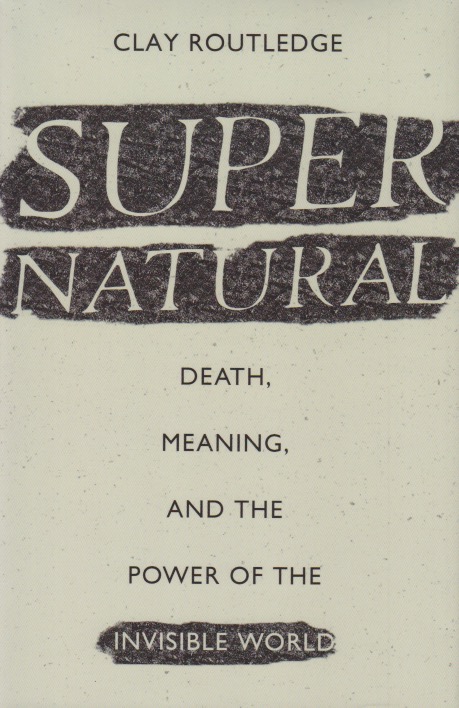
What is a soul?  Can you lose your job for believing in one?  Well, maybe not lose your job, but be placed on paid leave.  Yesterday’s New York Times ran a story about Google engineer Blake Lemoine being put on leave after claiming a soul for the company’s artificial intelligence language model.  Isn’t that what artificial intelligence is all about?  We’ve become so materialistic that we no longer believe in souls, and when we create life we don’t expect it to have one, right Dr. Frankenstein?  One of the sure signs that we are alive is our sensing of the many qualia of biological existence.  We understand that we’re born, we’re biological, and that we will die.  We also sense that there’s something beyond all this, our self, or mind, or psyche, call it what you will.

In our minds the soul has become entrenched with the Christianity that provides the backdrop to our somewhat embarrassing history of repression of those who are different.  How do we redeem one without having to be shackled to the other?  And once we do, can we declare why AI doesn’t have a soul while biological beings do?  Or will we insist that it is solely human?  In this odd world that’s evolved, we view animals as innocent because they can’t know what they’re doing.  Historically there have been animals put to trial.  That’s an aberration, however, from our usual ways of thinking.  We don’t know what a soul is.  We’re not even sure there is such a thing.  To suggest a machine might have one, however, is taboo.  Would we trust a soul made by humans?

Skepticism is good and healthy.  So is having an open mind.  We’ve been a polarized people for a long time.  If it’s not politics it’s elites versus uneducated, materialists versus those who think there might be something more, self-assured versus those who question everything.  The path of learning should keep us humble.  We should be open to the possibilities.  There’s no way to measure the immaterial since all our tools are material.  Even psychology, which utilizes categories to help us understand neurodiversity, often finds chemical solutions to the most cerebral of problems.  Perhaps overthinking is an issue—it can certainly get you into trouble.  Believing in souls can put you in a place of ridicule or suspicion.  Does AI have a soul?  Does a soul emerge from biological existence, whenever a sufficient number of neurons gathers in one place?  Is it the fabric of the universe from which we borrow a little?  We have some soul-searching to do.

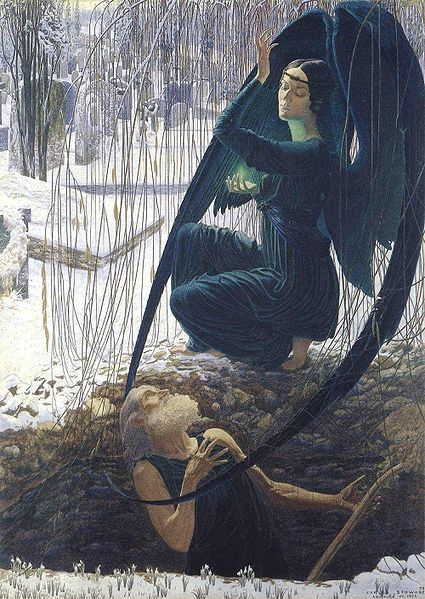
Carlos Schwabe, Death of the Undertaker; Wikimedia Commons

Updating Irving

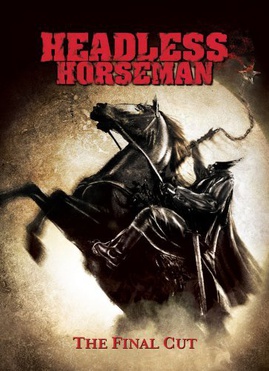
Movie quality is measured by many standards.  It’s pretty clear that budgets can make a difference—Hollywood movies generally outshine television movies.  Streaming services, like Netflix and Hulu, have been gaining ground here, but they still lack some of the qualia that come from long-term players in the industry.  Often this was measured, pre-pandemic, by box office success.  I’m not sure how it’s all quantified now, but I’m sure it still comes down to money.  To me, the deciding factor about the quality of a movie is often the writing.  Even with a modest budget excellent writing can make up a lot of ground.  Headless Horseman originally aired on the SciFi channel (now Syfy) in 2007, and I wrote a tiny bit about it in a former post.  I recently rewatched it with an eye toward how religion is integrated in it.

Headless Horseman is not a great movie.  Its writing doesn’t inspire and it leaves too many gaps in the narrative to carry the viewer along easily.  Still, religion plays an important role in the story.  This one resets Washington Irving’s tale in the south—from the license plates, Missouri.  The horseman is a serial killer who offered his victim’s heads to the hydra, the serpent that guards the entrance to Hell.  When the killer is stopped and his body sent through the gateway, he comes back every seven years to chop heads.  The town where all this takes place has the biblical name of Wormwood, and everyone in it is literally family.  So every seven years they have to trap seven outsiders to make their offering.  The person who originally stopped the killer was the local priest.

Even this brief synopsis reveals how deeply religion is engrained in this retelling.  Irving’s classic story is set in an overtly religious period (particularly Protestant, of the Reformed variety), and wears this lightly.  Everyone can be assumed to go to church and the Headless Horseman is a Hessian mercenary decapitated by a cannonball during the Revolutionary War.  Over time, with many retellings, the horror becomes more and more involved with religion.  To the point that the religion itself is the real engine of fear.  A town protecting a Hell-guarding hellion doesn’t exactly make them Satanists, but it does mean they’re not far from it.  The in-breeding is, however, a bit insensitive.  My recent rewatching wasn’t with an eye toward the Bible, as my last viewing was.  When retelling the story, however, it seems religion will surface where once it was only in the background.


Whiggery

It’s difficult to keep track sometimes.  You see, I’m reading a book that makes frequent reference to the Whigs.  The thing about titles is they change meaning over time.  Whigs, in America, became Republicans.  This was back when the Republican Party was the liberal one.  Whigs in Britain, where the party started, believed in the power of the people rather than the absolute right of kings.  Today’s Republican, as events of the past few years have shown, is an authoritarian.  This swapping of party characters allows Republicans today to claim to be the “party of Lincoln,” although in today’s political landscape Lincoln would have been a Democrat.  So whatever happened to the Whigs?  Their basic ideology is still alive and, for the moment, embodied in the Democratic party.

“Whig” could also be used as a supporter of the American side against the “Loyalists” in the Revolution.  Loyalists tended to be what were called Tories back home.  A Tory supported the power of the monarchy.  In other words, they were conservatives.  All of this changing around of labels makes me wonder just how helpful they really are.  Individuals tend to dislike those who fall into the opposite camp—a factor politicians have been using to divide and conquer.  I try to imagine what that world might be like if honesty were more common among those in elected office.  Starting in 2016 we entered into a new era of the politics of hatred and we will be paying the price of that for many years to come.  We are all just people; why can’t we act like it?

When I registered to vote at 18, I registered as an independent.  I didn’t like the idea of being classed into a party.  There have been Democratic candidates I didn’t like—my party’s not my religion—but none of them has advocated hatred of others as their only platform.  Analysts have long written that a two-party system is faulty and likely to lead to abuse.  We’re living through it right now.  Fiscal conservatives have no choice when the officials in their party back Trump, despite having vocally expressed how badly he reigned and how dangerous he is.  A viable third option is needed, and it would also prevent electoral college shenanigans (as would ranked-choice voting).  Maybe this third-choice party could adopt the venerable title of Whigs.  After all, in its long history this party has played both sides of the political spectrum.  Or perhaps those favoring authoritarianism could use the name Tory.  At least there’s an honesty to it.

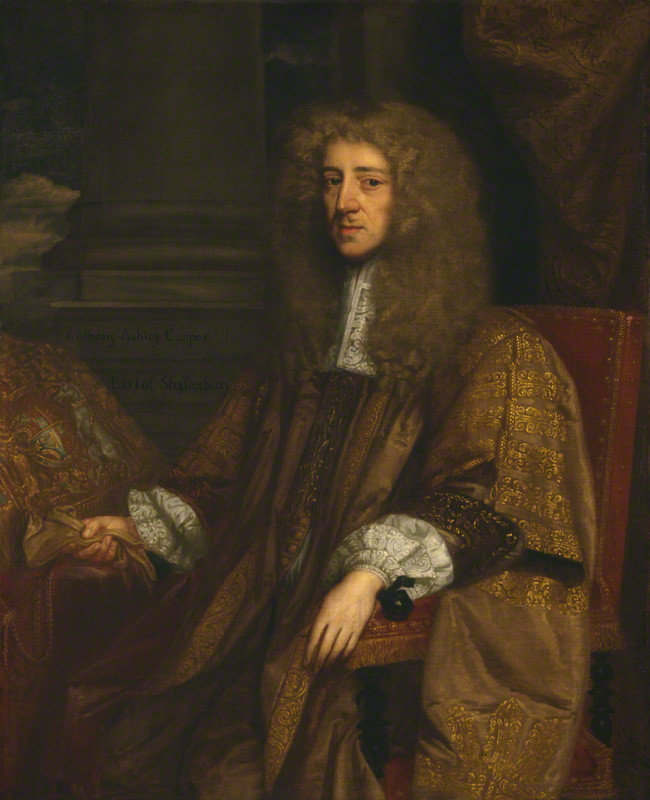
Wikimedia: after John Greenhill, oil on canvas, (circa 1672-1673). No matter his party, that’s a wig!

Various Plagues

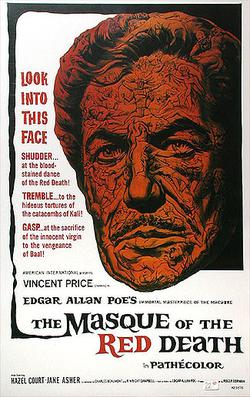
At the encouragement of a friend I watched Roger Corman’s version of Poe’s The Masque of the Red Death.  As I’ve mentioned from time to time lately, making short fiction into movies requires padding.  Poe’s tale is easily summarized: Prince Prospero and his wealthy friends attempt to socially distance themselves during the plague of the red death.  During a masquerade, one of the characters is the red death and they all succumb.  Getting about 90 minutes out of this was something to which Corman was well suited.  The interesting thing, and the reason my friend, I suspect, recommended it, is that Corman did so theologically.  Vincent Price’s Prospero is cruel to others to make them face reality.  He’s also, and not unrelatedly, a worshipper of Satan.

When the red death breaks out in a small village, Prospero holes up in his castle where he tries to win over a local girl that has caught his attention.  He’s drawn to her not only for her beauty, but for her faith.  Francesca believes in the goodness of God as strongly as he believes that Satan will welcome him.  The film is further padded out by blending it with Poe’s story “Hop-Frog.”  Despite the Corman hallmarks of quick production and low budget, this adaptation draws much from conflicting religious views.  In fact, this story centers on them.  Granted, this was in the sixties, but the ideas still resonate these decades later.  Rumors of Satanism still spread panic and spark the same kinds of discussions.

Interestingly, the film ends up suggesting that death is stronger than Satan.  And that justice dictates that at least some of the faithful will survive.  Those dedicated to their faith, their family, and their friends make it through alive.  Death specifically lets them go.  Prospero, however, seals his fate by his selfishness.  Apparently his explanations of his motives do him no good.  Death doesn’t condemn him for his devotion to Satan.  The treatment of his fellow humans, it seems, is the ultimate measure used.  Some would argue that theology is best left to theologians, but it seems to me that we all work with the same data.  Philosophers attempt to convince based on the power of their reason.  Theologians try the same, but there’s always something external and unknowable in the equation.  How you know this unknown is on the basis of sacred texts and sacred tradition, as well as reason.  Why does it seem unlikely that writers and directors might have something to add to the conversation?


Capital Idea?

One of the most difficult parables in the New Testament is the one where Jesus praises the fraudster (in Luke 16).  In case you’re a little rusty it goes like this: a steward of the king learned he was losing his job.  Knowing his employment prospects were like those of a mid-career religion professor, he called in his masters’ debtors and slashed the amounts they owed so that they’d think kindly of him.  When the king finds out, instead of growing more angry, he praises the steward for his shrewdness.  The parable seems to not condemn deceit and his left both scholars and laity scratching their heads ever since.  I’ve never, in my long church going career, heard a sermon extolling fraud.  The good book can be tricky some times.

The parable came to mind because I’ve been the victim of the fraudulent use of one of my few credit cards.  I only have two.  One of the reasons for this is that it’s difficult to keep track of everything as it is.  Life is busy.  I have most of my bills set to autopay so that I don’t forget to do it when an email reminder comes.  I don’t remember the last time I used actual money.  Writing a check is a rarity.  How my credit card was hacked I don’t know.  I didn’t notice right away because the charges were always small and spaced out.  I caught on when I hadn’t been using the card in that lull after Christmas and the exact same amount was charged two months in a row.  I called the company and they confirmed that similar small charges had been going on since December.

Now I picture in my head a scene where the criminal is caught and in court they use the Bible in their defense.  I’m sure it wouldn’t happen that way, but it’s an interesting idea.  Who’s going to argue against the Bible?  Heck, most courts can’t get those who know Trump’s many crimes to get their cases ever heard!  What do we do when the Bible distorts the moral narrative?  The fraudster, after all, is breaking at least one of the ten commandments.  Of course, those are negotiable these days.  The right wing’s endorsement of violence to maintain power shows that.  So it seems a prudent time to consider the parable of the fraudster.  We might still have something to learn from the Good Book after all.


Old Churches

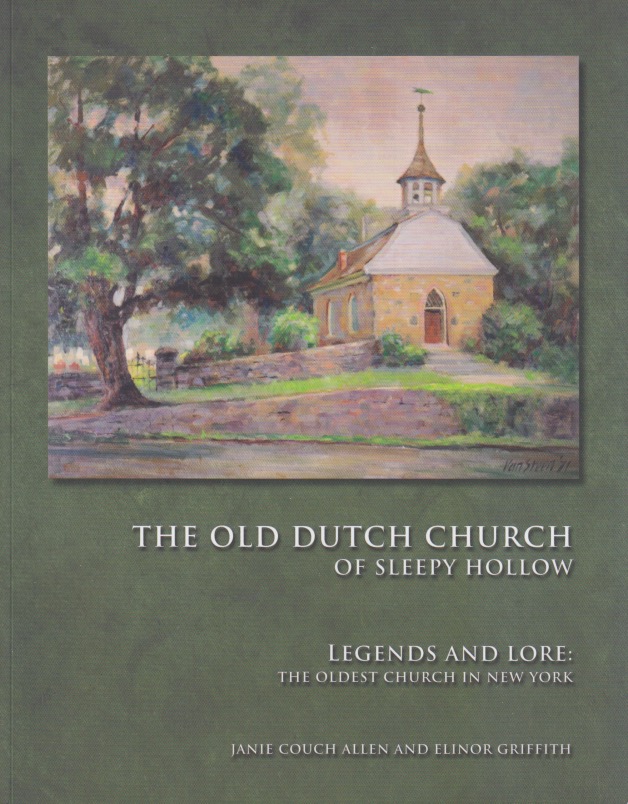
I doubled its authenticity, but it was revered in a way similar to the Shroud of Turin.  The old guide, a priest if I recall, showed us an actual lantern hung for Paul Revere’s ride.  This was the Old North Church in Boston, of course.  Its history is so storied that children across the country learned about it in school.  A similar feeling comes from reading The Old Dutch Church of Sleepy Hollow by Janie Couch Allen and Elinor Griffith.  Subtitled Legends and Lore: The Oldest Church in New York, it is clearly a celebratory work, printed in full color and with pictures on every page.  This church’s claim to fame isn’t as much historical as it’s the result of the imagination of Washington Irving.  It features in his short story “The Legend of Sleep Hollow.”

Built in 1685, it was already an old building by the time Irving had settled in North Tarrytown.  Being early enough, Irving had immense influence on the culture of a young country.  Although born in New York City, and although he lived for many years overseas, he came to represent the voice of the emerging American literary tradition.  America has been home to many writers since then, some successful, many not.  But this book is about the church, not Irving.  Irving does play a big part in its story, although he was never a member.  I kept thinking as I read how influential a single story can become.  And even a small Dutch Reformed Church can benefit from it.  This book gives a high-level overview of the history of the area and some of its colorful characters.  It turns a few times to the Headless Horseman, but it also explains the trials and triumphs of a small church.

Although most towns can’t claim such a storied structure, American churches have had an outsized influence on who we are as a people.  I’ve sat through meetings lamenting the lack of funds for the operating budget as money grows tighter even as the worldview of ancient Palestine effaces.  As an historian of religion I tend to look back.  I don’t believe our future will be entirely electronic or virtual.  If it is, I think I’d rather find myself on a chill, uncomfortable pew in the Old Dutch Church lit by candles on a Christmas Eve, shivering but still alive.  No matter what a person believes—and with the varieties of churches we can’t all be right—we know that it’s part of what makes us human.


Tweets from Heaven

What do the ultra-rich know about morals?  I read recently that now that Elon Musk has purchased Twitter for billions and billions of dollars, that he’s going to allow Trump back on because it’s “morally wrong” to prevent him.  Heaven help us when the plutocrats start dictating morals.  One of the odd things about my strange career is that I was an undecided major in college.  I settled eventually on religion, but my transcript shows a restless mind.  One subject that I came back to time and again was ethics.  I want to know what is right.  Shutting up a deranged narcissist who wants to run the country only to enhance his image of himself seems a moral no-brainer.  The case was different before he was elected the first time.  Now we know.  Now we have a responsibility.

Those who can afford to buy the moon shouldn’t make declarations on what is moral.  The church, however, has largely become irrelevant.  “It’s easier for a camel to pass through the eye of a needle,” a famous moralist, whose name is unfortunately forgotten, once said.  The moral compass of the uberwealthy is irrevocably squewed by a massive loadstone known as personal wealth.  Indeed, our very laws are made by the wealthy to protect the interests of the wealthy.  They do this by courting biblicists who seem to have forgotten—what is his name again?  You know, the one who seemed to have a problem with the rich?

Photo by Sharon McCutcheon on Unsplash

Morality has somehow become confused with concerns about other people’s genitalia.  We don’t ask what the wealthy do with theirs—it’s pretty clear what one tweeting resident of Mar-a-Lago has done with his.  Ironically Protestants broke away from the Catholic Church largely because of the sale of indulgences.  The idea that the rich could buy their way out of sins rankled sixteenth-century moralists into saying sola scriptura.  But now they have lost even their solaScriptura, for its part, is unequivocal about one thing—the problem of the rich.  The poor aren’t the problem.  In this new gospel, however, victims are blamed while the powerful rightly rule all.  The divine right of riches.  The wealthy, so misunderstood; the poor are the way they are because they’re lazy.  There’s no systemic cause for anyone not to have as much money as he wants (and it seems they’re generally he’s).  And they have a right to say whatever they want because their word comes down from heaven, echoing out from their private space rockets to the stars.


Empty Chair

I’m not a Roman Catholic.  Nevertheless, I admire much about the tradition.  Its perceived unchanged continuity with the past is a big draw.  Still, one of the largest issues most religions face as they evolve is that things change.  No religion can stop it.  Edward Jarvis’ brilliant Sede Vacante: The Life and Legacy of Archbishop Thục explores the life and possible theological motivations for one of the most fascinating people in recent church history.  Ngô-dinh-Thục became a Roman Catholic Archbishop in his native Vietnam.  He was the brother of Ngô-dình-Diệm, the first president of South Vietnam, and likely one of the reasons behind the Vietnam War.  In fact, Thục had two other extremely prominent brothers and the four of them formed a junta that ruled the country with authoritarian vigor and utilized all the corruption for which authoritarianism is famed.  They became enormously wealthy, they used torture and extortion to get what they wanted, and Thục supported all of this.

Eventually excommunicated (twice), Thục had to leave Vietnam.  Two of his brothers were arrested and assassinated.  After his self-imposed exile Thục attended Vatican II, the papers of which he signed, but his prominence faded.  Without his holdings in Vietnam he was poor, and in fact lived in poverty.  Then he started consecrating bishops for breakaway Catholic groups, including the strange sect of the Palmarians.  This led to his first excommunication.  Later in life, after restored to the graces of the church, he again started consecrating bishops for the Sedevanctantists.  These were Catholics who believed the Pope was invalid and his chair (sede) was vacant (vacante).  He was excommunicated again and, after moving to the United States, died in poverty.

I keep these posts brief enough that I don’t have space to spell out all the amazing angles from which this life could be viewed (read the book for that).  In our authoritarian-loving times, however, the nature of those who reject “modernization” stood out.  Many Sedevanctantists insist on the restoration of the Latin mass.  They somehow believe the Popes since about Pius X have been liberals(!).  Like Trumpists, they believe it is possible to halt the movement of culture and go back to the way things were in the 1950s when outward conformity was all the rage.  Even Fonzie, after all, was really a nice guy instead of a dangerous biker.  Although there is some theological minutiae here, I recommend this book for anyone who has even the slightest interest in the history of Vietnam, the Roman Catholic Church, or the mindset of those who reject the modern world.


For Sale for Free

It’s one of the signs of spring.  Although it may be more appropriate for winter when we’re holed up inside for much of the time, the library book sale often takes place when it’s a bit more conducive to being outdoors.  When we travel, which isn’t frequently these days, we often spontaneously stop into an advertised library book sale.  Most of the fare is fairly pedestrian, but sometimes you find something you simply didn’t expect.  On one such recent outing, that’s just exactly what happened.  Back when we lived in New Jersey the Friends of the Hunterdon County Library book sale was a much-anticipated event.  It remains, in my experience, one of the largest of such sales.  (Believe it or not, there are websites dedicated to pointing inveterate readers to book sales and that’s how I found this one.)  That’s not the surprising part, however.

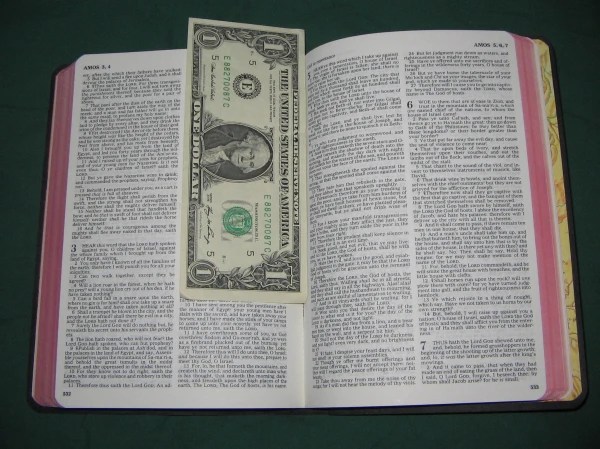
One year when I went, one of the library friends was working the pre-entry crowd, proclaiming some of the treasures inside.  One of them, he announced, was a Bible from the nineteenth century.  They were asking more than the usual one or two dollars for that one.  If I recall, it was $100.  No, I didn’t buy it.  I have dozens of Bibles right behind me at this moment and if I had a Franklin to spend I’d load up on books I don’t already own.  Many of the books mentioned on this blog came from just such sales as these.  That big Bible’s not the surprising thing either.  Here it is: on a recent library book sale day, I saw a shelf with Bibles.  They were free.  Library book sales are intended to raise money, but Bibles for free?  Unexpected, no?

America is the land of free Bibles.  They are printed in vast quantities and sold cheaply, without a thought to what this says in a capitalist world.  Some Christian rock groups were famous for throwing free Bibles from the stage—you’ve got to think those in attendance already had one—and any county fair will usually have at least free New Testaments for the taking.  Ironically, most of those who distribute free Good Books are also the staunchest supporters of capitalism, one of the most exploitative economies ever invented.  Attending library book sales entails more than just finding books that you perhaps didn’t know about.  It’s more than being tempted by something for which you’d rather not pay full-price.  It is, perhaps surprisingly, a learning experience in and of itself.


Highest Education

The average church-goer is often impressed with the idea of seminary.  The thought that someone could devote three years of their lives to theological minutiae in order to take a job with long hours and substandard pay, is mind-boggling.  Having been a seminary creature for so many years, however, makes me wonder if many church folk realize that seminaries are businesses.  Non-profits, yes, but businesses nonetheless.  This is a trait that they share with other institutions of higher learning.  Customers pay money for a good or a service (I’m not sure which) in the form of a degree.  If a student can’t cope academically, they’re often “grandfathered”through because, well, it costs a lot of money and you deserve to get what you paid for, right?

This business concept of higher education is dangerous and is primarily prevalent where governments do not support education.  Schools have to raise money and if alumni don’t give, well you have to raise tuition.  And the more somebody pays the better case they have for getting their degree.  Seminaries, however, also suffer from generally low-income alumni and sponsoring churches needing clergy.  (It’s not difficult to get accepted into most seminary programs.)  Only when a candidate is a serious problem will they tend to be weeded out.  And congregations get the results of such a system.  My level of cynicism probably results from having gone through seminary and then having taught at one for many years.  At no point have I been ordained.  In fact, even churches facing clergy shortages have shown no interest.  Call it sour grapes.

To me, however, the crisis in higher education is the result of business practices being applied to education.  The two don’t mix.  In a world where job options are limited for those too weak to dig and too proud to beg, ministry has some appeal.  You can be considered a community leader and an expert in the relatively innocuous arcane area of “theology.” And most of the people you serve will have no idea what seminary delivers, or doesn’t.  I attended events for seminary administrators offered by the Association of Theological Schools—the seminary accrediting body.  I learned that they too are under pressure to approve unless there’s a serious problem.  Even heads of accrediting bodies have to eat.  So we let the system churn on as it has since the earliest universities turned out educated clergy.  And we don’t stop to think what all of this means.

Tradition

Shopping Screed

Capitalism is insidious.  Those of us with modest incomes—and I’m quite aware that many, many people are poor—are constantly being bombarded with new schemes to get us to pay a little each time for something that used to be free.  Look, I realize the economy was hit by the pandemic.  We’re all paying for it.  Still, even basic stores you’ve used your whole life now want you to sign up for schemes that will only cost you a dollar each time and which never really pay anything back.  The one that’s got me thinking about this is a drug store.  Like it’s a surprise that you’ve decided to buy something at a drug store.  They get you to sign something you vaguely understand as you’re trying to rush out the door with your prescription and then they send you daily emails telling you how great it’s going to be.

And surveys—the endless surveys!  They sound more neurotic than I actually am.  Did we do this right, and could we have done it better?  It’ll only take a quarter hour of your time.  Each time you stop in.  And please do that daily.  The last time I did one of these surveys for the promise of a prize worth $90, I ordered their version of a fit-bit as my prize.  I’m curious how many steps I take in a day and no, I don’t carry my phone with me everywhere.  The “prize” arrived late and when I charged it up and turned it on (it came with no instructions readable in my native language) it worked for a total of literally 3 seconds before the screen died a pixelated death.  Now that same company wants me to answer surveys weekly and pay an extra dollar each time I come in.  It’s enough to make me want to use the other drug store, but they’ll probably do the same.

The thing is it’s not just pharmacies.  All the stores are doing it.  You shopped here once?  Look what else we’ve got!  Some of us shop for what we need.  We live on a budget.  If you’re going to start charging me for the privilege of shopping at your establishment I’ll have to start going somewhere else.  The items on offer for promotional plans are things I just don’t buy. If you want me to spend more, then reframe your economics and pay me more.   And I don’t have money to just give away.  Have you even taken a look at your last heating bill (thanks Mr. Putin)?  I’ll come to the store again as long as it’s free to shop there and it has something that I actually need.

Photo by Bruno Kelzer on Unsplash

Teaching Tradition

There’s a dilemma.  Many thinking religious conservatives end up arguing against “secular” education and yet wish to make themselves out as rational, and reasonable.  The truth is that underlying their position is the belief that the truth was revealed long ago and nothing has changed since then.  They want educated individuals to agree with this so quite often they establish their own institutions to turn out “experts” who haven’t been challenged in their positions.  This became clear to me yet again when reading Faith of Our Fathers by Stuart Chessman.  Subtitled A Brief History of Catholic Traditionalism in the United States from Triumph to Traditionis Custodes, I was expecting a history.  Instead it is more of a screed, or jeremiad, arguing that the Catholic Church is trying to destroy traditionalism.  What I was looking for, I guess, was a “secular” history.

I’m interested in traditionalism.  I taught, after all, for well over a decade at Nashotah House.  What I learned there I also sensed in this book.  There’s a certain naiveté associated with such theological thinking.  (Political conservatism is much more insidious.)  Small groups tend to think the larger organization has it in for them.  In reality, the larger church (in both these cases) has much more pragmatic things on its collective mind.  The narrow focus of traditionalists, however, interprets everything in the light of—in this case—rejecting the liturgical reforms of Vatican II.  Having the mass in Latin is more important (as is clear here) than coming up with an effective way of dealing with Covid-19.  Traditionalists are proud that they met more frequently during the height of the epidemic.

This kind of thinking is important to understand.  For Roman Catholicism, as a hierarchical organization, the projection of unity is very important.  Anyone involved in the upper levels of any administration knows that money—even for churches, especially for churches—is a major concern.  Reputation influences cash flow, so reputation has to be guarded at all costs.  No organization can appear to be caught up in medievalism in a capitalistic twenty-first century.  I had hoped this little book would contain an actual history of the movement, looking at socio-economic, political, and religious causes and their ramifications.  In other words, why people do things.  Believe me, I understand the draw of traditionalism.  Although it was in English my first Episcopal high mass threw me into a multi-year odyssey to a place (Nashotah House) where I learned what was really going on.  It’s not all about smells and bells.  Not by a long shot. 


Words and Belief

Why do we care so little for the poor?   Part of the answer is surely the misguided idea of meritocracy—if you merit good you will be successful.  This kind of thinking emerges from the wrong end of a bull.  There may be poor people who are lazy but the vast majority of the poor are those for whom our systems make it impossible to thrive.  It’s very easy to put them out of mind as long as we can keep them out of sight and just let our prejudices do the thinking for us.  The poor are the victims of capitalism.  Loud voices proclaim them to be a drain on the system, despite the fact that many of them work—some multiple jobs—and remain unable to keep up.  Capitalism is kind only to the wealthy.

The Rev. Dr. William Barber is one of the organizers of the Poor People’s Campaign.  The full name is the Poor People’s Campaign: A National Call for Moral Revival.  The initial part is taken from an initiative that Martin Luther King, Jr. started before his assassination.  He was shifting towards a movement meant to address the entrenched unfairness deep in American society.  These nearly six decades on, we are just as deeply entrenched.  Barber is doing amazing work, organizing, speaking, and advocating.  He’s trying to give a voice to the people.  I do wonder, however, if using the word “Revival” doesn’t work against the goals of the movement.

Certain words have been poisoned by their abuse among various religious groups.  Especially among the young.  The word “revival” may fall into that category, calling to mind, as it may, repressed people working up to an emotional fever under the banner of Hellfire and brimstone.  Believing a bit too literally a message that was contained in a book viewed magically.  Names can be important.  Many of the younger generation are put off even by the word “church” since so much hypocrisy (something the Republican party has openly embraced) has come to light over recent decades.  I fully agree that we need a moral revival, we need people to wake up and demand that our government promote the justice it claims to seek.  I do wonder if religion, as previously packaged, has the credibility to do it.  No matter how we take on the task, it’s clear that the poor have been abandoned by the system, through no fault of their own.  And some in the church have begun to find their voice in the Poor People’s Campaign.

Photo by Katt Yukawa on Unsplash

Love Your Mother

It’s not exactly a birthday, for we don’t know when exactly she was born.  We choose April 22 to think of our mother—the mother of us all.  For many of us concerned about the environment, not only is today Earth Day, but April has become Earth Month.  To me one of the saddest aspects of our environmental crisis is that certain sects of Christianity are largely responsible for it.  Religion working against the betterment of humankind.  So it was in the beginning, is now, and hopefully we won’t have to finish the triad.  Granted, religions help us to keep our mind on spiritual matters.  The problem is when such things become dogma and the real needs of real people are ignored so that a fervently desired fantasy can be lived out by destroying our planet.

In response there are what have been called “deep green” religions.  It’s difficult to gain a critical mass, however, when many of those who think deeply about the environment have left religion out of the equation.  It seems to me that we’ve got to make peace with our evolved tendencies toward religion in order to have any meaningful discussion about this.  Meanwhile global warming continues.  It does so with the blessing of a kind of Christianity that sees this world as expendable and exploitable based on an idiosyncratic reading of Genesis.  Even though all the evidence points in the opposite direction, we have networks (here’s looking at you, Fox), owned by billionaires who know you can sway Christianity simply by kissing your hand to the moon.

It’s my hope that this Earth Day we might start to think about how to integrate some deep green theology into the kind that sees no room for green in the red, white, and blue.  The self-convinced have no desire for conversation about this and those already certain that religion is nothing but superstition tend to agree.  Since antiquity, however, the wise have realized that progress comes from the middle ground.  Politicians, in their own self-interest, have stoked the fires of division and hatred, knowing that they get reelected that way.  Mother Earth, I suspect, is rolling her eyes.  She will survive even if we succumb to our own mythologies.  We need to learn to talk to one another.  We need to accept that we evolved to be religious.  We need to look for middle ground while there’s still dry ground on which to stand.  It’s not exactly a birthday, but it is a holiday that should be taken seriously. It’s only right to love your mother.

From NASA’s photo library

April Says

I can honestly say that it wasn’t on my bucket list to mow the lawn while it was snowing.  Friday would’ve been better—sunny and sixty—but I have a 925 and I had a meeting after work I couldn’t get out of.  Saturday it rained all day, which, I know, grass loves.  Sunday was the only opportunity left in the weekend, and with stocking cap and gloves on, I went to mow.  Snow started to fall.  It must be April.  I’ve always believed that “April fools” has an origin in the weather.  I can’t prove it, but it seems just when you think it’s safe to go without a coat, suddenly winter.  Back when we lived in Wisconsin we took a family fun trip to Wisconsin Dells for my wife’s birthday in April.  It snowed.  We rode the famous ducks and then played mini-golf amid squalls.  April fools.

The weather influences many aspects of life.  Why it’s considered a neutral topic I don’t know.  It’s kind of like talking about God.  The only thing we all agree on is that we can’t control it.  Well, we can certainly influence it.  Global warming sets strange weather patterns into motion.  It was in the seventies less than a month ago.  (Which is why grass was unruly just as April began its double-digits.)  Then there’s all the rain.  See what I mean about God?  Divinity and weather were in mind as I worked on Weathering the Psalms.  I still wrestle with how these things relate to each other in the human psyche.  We do tend to think the weather is somehow a judgment or blessing.

My family knows I complain about it religiously.  And mowing isn’t my favorite activity in any weather.  It was late November and I was still mowing.  April (which fools) seems to be a little too soon to be starting that all over again.  Committing at least one day of every weekend until nearly next Christmas to cutting grass.  It’s a long-term commitment.  I suspect those who benefit (monetarily, for we all lose, existentially) from global warming probably don’t mow their own lawns.  They probably have their private jets that don’t need to be jump started because that worrying idiot-light on the dash is on again and they’re afraid to use it.  It’s life in a different key.  Still, we all share the weather.  When it affects crops, or swamps New York City, we’ll all be bound to notice.  Enough grumbling.  It’s time to get the weed-whacker fired up while the icicles start to form.  April fools.