Screaming Season

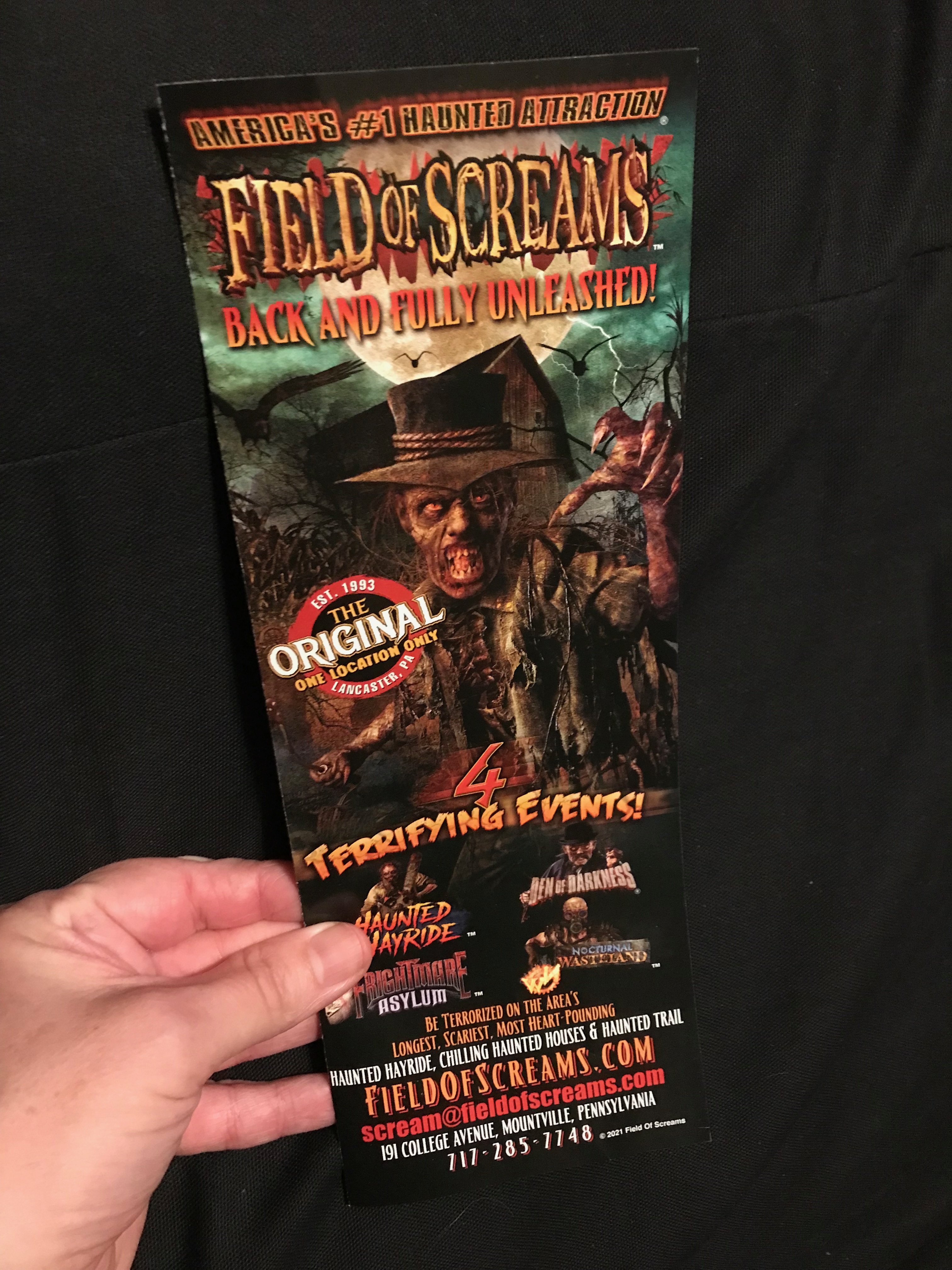
The signs are all around.  The orange and black Spirit Halloween signs are appearing where vacant storefronts stand.  Advertisements for autumnal activities are cropping up.  Brochures broadcasting local haunted festivities now adorn store counters, free for the taking.  I picked up a leaflet for the local Field of Screams the other day although I really don’t like to be in scary situations.  I do appreciate the spooky sense that they generate, however.  This local event runs from early September through early November—the two months enterprising farmers can draw urbanites to their land, cash in hand.  Halloween has been a major money-maker for many years now.  The less doleful minded wonder why, but I think that lots of us are really afraid.  Halloween says it’s okay to be so.
Perhaps it’s the realization that it’s all in good fun and nobody will really hurt you.  I’ve attended a few of these haunted events over the years, but it was more fun to participate in them.  Perhaps it goes back to Nashotah House.  I’m guessing that most of you’ve never been.  Nashotah is a gothic campus, at one time pretty isolated, out in the woods.  Halloween was, once upon a time, a real celebration there.  Our maintenance crew would offer a hayride through farm fields owned by the school, then through the cemetery on campus.  I used to dress in a grim reaper costume and carry a kerosene lamp through the graveyard, awaiting the tractor.  Nobody instructed me to do it, but we all knew it was in good fun.  And I wasn’t the only volunteer who’d pop out from behind headstones.  Students got into the spirit of it too.

These days remembering such shenanigans is more appealing than actually going out at night to have other people scare me.  The last time I went to a haunted maze it was really too unnerving for me to enjoy.  I volunteered instead for a local haunted house in New Jersey.  The run up to Halloween was usually an intensely creative time of designing and fabricating homemade costumes, and thinking of ways to make pumpkins look scary.  Now it’s become a season in its own right.  An important segment of the economy.  I won’t be going to our local Field of Screams, but I will understand those who do.  Changes are in the air.  It’s dark quite a bit earlier these days.  The air is chilly in the morning.  And the local fear fields open this weekend.

Witches of September

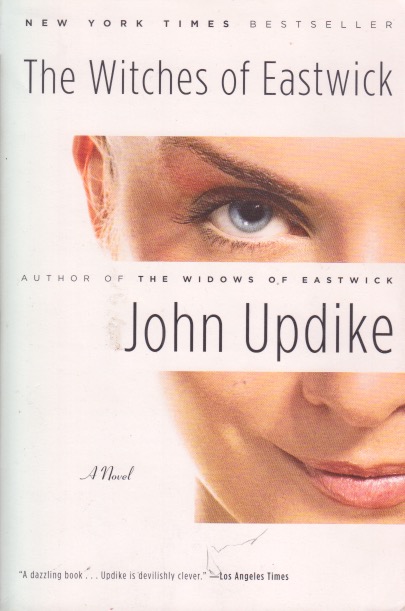
I’ve never read any John Updike before.  I understand that his novels foreground religion, which I didn’t realize.  I have watched The Witches of Eastwick, in movie form, a time or two.  In fact, I wrote a bit about the film in one of my books.  This got me curious to read the novel and I found a copy at a used book sale up in Ithaca some months back.  Now that September’s here, it seemed like an opportunity to see what the original story had to say about witches.  There is a problem, of course, in having watched the movie first.  Not only does it tell you which actors the characters should look like, but it also predisposes your orientation to what will happen.  In this case all that will mislead you.

The movie centers on Jack Nicholson’s Darryl Van Horne—like most Nicholson movies, his character takes over—whereas the novel is definitely centered on the three witches, Alexandra, Jane, and Sukie.  They don’t fall into the background, but neither do they always work in concert.  The movie tells, in other words, a very different story.  Updike’s literary treatment focuses on female characters and the mischief they cause.  Nor is it entirely clear that Van Horne is demonic, as in the movie.  A church features prominently in both versions, amusingly Unitarian in the novel, with Van Horne not upstaging the sermon but giving an invited one himself.  No fear of sacred places here.

The wrath of the witches isn’t directed toward Van Horne either.  A character left out of the film, who marries Van Horne and whose brother is his real target of affection, is hexed and killed by the witches instead.  In many ways this could be construed as a kind of gentle horror story, although it’s never marketed that way.  I kept waiting for certain scenes in the movie to be narrated, as it were, in the flesh.  This led to the revelation that these scenes were invented for the cinematic version.  Both novels and movies are stories.  When shown on the big screen, we expect them to be adapted.  My personal preference is for the film to present the same story.  It can’t always be done, of course.  In this case the movie left some questions open that I hoped the novel would answer.  Since the stories are so different, the questions remain.  I have a feeling I’ll read more Updike down the road, but I’ll avoid watching the movie first.


Which Wednesday

I’m not superstitious but it’s still pretty dusky when I go for my constitutional on cloudy days.  I was walking along thinking about Cernunnos, the way one does, when a black cat darted out of the underbrush and across my path.  My thoughts turned to witches.  Then a large toad jumped out in front of me in the half-light.  Perhaps it was because I picked up a booklet about witches recently, but this felt very uncanny to me.  There’s a place where the woods close in on both sides of the path.  The sun wasn’t yet up, and the clouds meant it wouldn’t have much mattered anyway.  When the bird calls stopped I began thinking about turning around and going home.  Nobody else was out this morning and although I don’t mind starting my day with the weird, I was thinking “not on a Wednesday.”

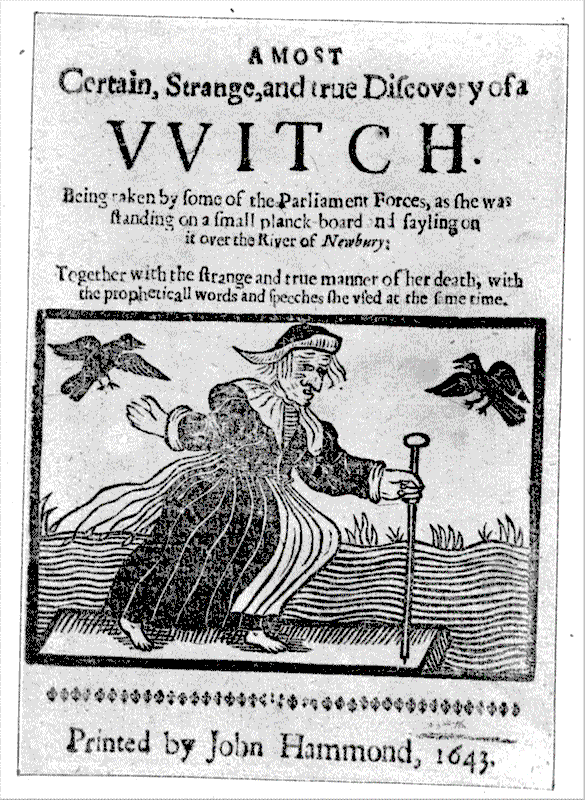
A thick mist lay over part of the path and I realized just how uncomfortable we tend to be when we can’t see clearly.  Despite that, and the black cat and the toad, I’ve never really been afraid of witches.  I guess I try to please people too much to think that someone might want to harm me supernaturally (at least among those who know me).  I recently found a booklet on witches—one of those strange impulse buys after being mostly house-bound for the better part of a year-and-a-half—that perhaps prompted my thinking this morning.  Although it seems to be most interested in earth-centered religions, it has an article about Salem.  Despite the more modern embrace of witchcraft in Salem, historically it had to do with human fear and hatred, a combination that is scary indeed when applied by those who are superstitious.

Cernunnos is a Celtic god generally portrayed with deer antlers.  Although lack of literature means we know little about him, he’s been adopted as the male counterpart to the female earth-goddess in some traditions.  Modern witchcraft is based on an orientation toward nature.  It’s kind of a ground-up religion rather than a top-down one.  Christians traditionally labelled it “Devil worship,” as they tended to do with anything they objected to.  Such demonizing helps no one, of course.  And when these ideas grow into superstitions people get hurt.  So I’m out here in the half-light because in the mornings days are shortening quickly and I have less and less time before work begin after the sun rises.  And I have witchery on my mind.


Monomyth Myth

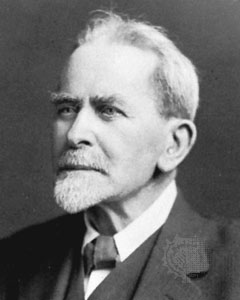
Since I’ve been exploring movies as the locus of truth, and meaning, for contemporary religious culture, I can’t avoid Joseph Campbell.  His interpretation of mythology—long discounted by mythographers of specific cultures—influenced film makers like Stanley Kubrick, the various Batman directors, and, most famously, George Lucas.  Campbell’s interviews and his eventual series The Power of Myth highlighted his work, even as specialist scholars noted the problems with it.  This is the subject of an essay in the LA Review of Books.  This story, written by a couple of professors (Sarah E. Bond and Joel Christensen), exposes the problem with Campbell’s “monomyth,” perhaps best typified by his book The Hero with a Thousand Faces.  This is stuff I realized as a postgrad student—Campbell didn’t footnote much and as Bond and Christensen note,  he “cherry picked” examples rather than looking at myths in context.

Image credit: Joan Halifax, via Wikimedia Commons (via Flickr)

One of my observations, when it comes to movies, is that people take their truths from movies, like they’re modern myths.  In other words, although Campbell’s method may’ve been faulty, he gave us Star Wars and the rest is history.  I rest on the horns of this dilemma.  My dissertation (and consequent first book) on Asherah was based on the idea of contextualizing myths.  In other words, I was arguing against a monomyth.  At the same time I’ve come to see that scholars don’t determine what people believe—culture does.  Consider how distorted the “Christianity” of Trump supporters is and you’ll see what I mean.  People don’t read scholars to find these things out.  Besides, wasn’t Campbell an academic?

Image credit: Wikimedia Commons

Without reaching out to the masses, academia turns in smaller and smaller circles.  Many of us who desperately want to be in its ranks are turned away because there just aren’t enough jobs.  At the same time, people will go to movies and they will be exposed to the monomyth, and they may even build their lives around it.  Isn’t that a way of becoming true?  Mythology, despite popular perception, is a complex subject.  There’s a lot going on in what may appear to be simple, or even naive, stories.  They have similar themes, but as I was warned—stay away from that other great popularizer of folklore, James Frazer.  His “parallelomania” was also out of control.  But Frazer and Campbell both understood something that those long in the academy often forget—people are hungry for stories that give meaning to their lives.  And these stories, even if academically questionable, become truth.


Afghanistan

As much of the world watches in dismay, the Taliban have taken over Afghanistan.  Most religious rule ends up being harmful to women, it seems.  We have centuries of male-run Catholicism showing how both witch hunts and heretic murder became common in Europe.  Do we expect any better now that religious extremists have taken over a nation next door to Iran?  The mix of politics and religion has generally not been favorable and unfortunately if the Republican Party could have its way we would see a similar thing here in the United States.  An ill-executed coup d’état on January 6 of just this year led to the epiphany that the Republican jurists would protect those who tried to overthrow the US constitution in the name of religion.  And we know how they feel about women’s rights.  We should look at Afghanistan and tremble.

It seems difficult to believe that less than a century ago we went to war to defend democracy.  Senators alive to witnesses the privations of war are now recklessly trying to remake America in the image of a fascist state.  Instead of looking at Afghanistan as a mirror, the only thing they can see is this is a Muslim nation.  Christians would surely never try to take over a capital by force.  They turn a blind eye to our own insurrection, not yet nearly a year old.  Ironically the book they claim to follow contains a often quoted but more often ignored statement: “He that is without sin among you, let him first cast a stone…”   It’s no accident that their intended victim was a woman.

Religious politics can be maintained by force of arms or legal maneuvering. Both are evil.  The result is the same either way: women and thinking people suffer while the self-righteous rule.  Even such basic assumptions as protecting their own people from a horrible disease by the simple expedient of a free vaccine has been politicized for purposes of keeping in power.  When the moderates in their own party speak up they are shouted down.  How different is this than the shouts of triumph heard in Kabul?  The alternative—government that allows the freedom to believe what you will as long as all people are treated fairly—has been made out to be a sin.  The god worshipped both by Republicans and the Taliban has little sympathy for humanity.  He, and most certainly he is male, is all about power.  We watch in dismay.

Photo by Joel Heard on Unsplash

Mystical Trip

It’s easy to believe we live in a “post-Christian” world.  People aren’t tied down by Scripture strictures the way they used to be.  Sunday mornings are free for lots of people.  We don’t spend our time hunting for heretics.  One thing that might not be obvious, however, is that our underlying culture is deeply Christian.  Beyond mere assumptions, this goes down to the very presuppositions of the way we think.  While society might not be overtly Christian, it remains so at a deeper level.  I’m reminded of this when I’m out and about (which is starting to happen again) and able to hear, or overhear, people talk.

Grounds for Sculpture is a whimsical, fun space to visit in New Jersey.  It consists of acres and acres of a former fair grounds with sculptures of many different kinds scattered along the shore of a small lake on one end and a busy road on the other.  Many of the statues were designed by Seward Johnson, showing people in a wide variety of activities.  Since the displays change over time multiple visits are rewarded with new insights and displays.  It seems to be a popular place since pandemic restrictions have started to lift.  So much so that the usual seclusion that is part of the charm of a visit is somewhat stifled.  In a typical art gallery, the visitor has some space to reflect and contemplate.  The sheer number of visitors leads to a “wild animal in Yellowstone” situation where, if a creature dares appear, it’s immediately swamped by city-dwelling humans who’ve never seen a bear in the wild before.  This leads to some interesting overhearing.

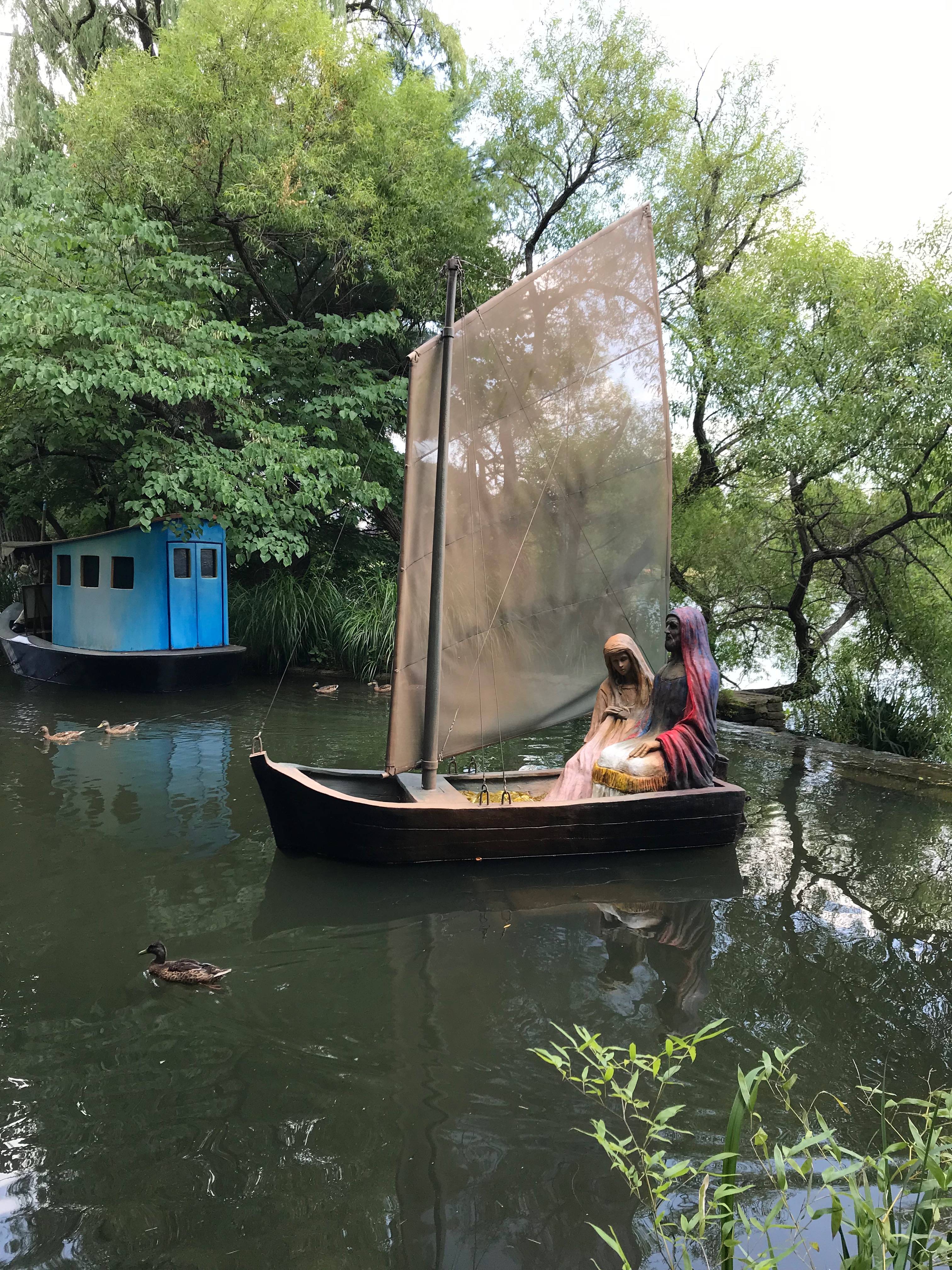
One of the sculptures I don’t recall having seen before is “Mystical Treasure Trip.”  It is a fantasy scene in which a couple, attired in what could be biblical garb, is sailing across the water in a boat filled with gold.  Perhaps it’s the dress of the characters.  They look like Mary and Joseph, perhaps fleeing from Herod, but with a boat full of gold.  Overhearing others commenting on what they thought it was I heard “they’re going to the ark.”  Admittedly, this is something I would never have come up with on my own.  Noah, according to Genesis, was six centuries old at the time and was commanded to collect animals, not gold.  Material for trading would’ve been pretty useless in a world devoid of other people.  Still, when our imaginations stretch for the interpretation of something we don’t understand, often they reach for the Good Book.  It’s its own kind of mystical trip, really.


Freedom of Religion

One of the highly touted liberties in the United States is freedom of religion.  It’s easy to believe this is true when you can walk down any “Church Street” in many mid-size towns and go shopping for a theology that fits your outlook.  What remains hidden here, however, is that the freedom is largely restricted to the “Judeo-Christian” tradition.  (Yes, I know “Judeo-Christian is a disputed category, but it classifies several belief systems that share a basis in the Bible.)  For religions that don’t necessarily agree with the premises of the biblical religions the story is quite different.  That’s because, at least in part, our culture is based on the Bible and its limited worldview.  Colonists, convinced by centuries of Christian hegemony, had assumed the rightness of the Christian outlook.  The indigenous religions they encountered were, from their point of view, heathen.

The word “heathen” covers basically the same territory as “pagan.”  Both mean a religion outside Christianity (and, grudgingly, Judaism).  I’ve recently read that the etymology of heathen goes back to those who live in the heath, or country dwellers.  Although this etymology is uncertain, it does make a great deal of sense.  Christianity became an urban religion fairly early on.  Not only that, it shook hands with empire and became the basis for capitalism.  So much so that the two are now teased apart only with great difficulty.  This also means that indigenous religions have never really had a place at the table.  Especially when they challenged the dictates of the capitalistic outlook.

American Indian religion is closely tied to the land.  As Vine Deloria made abundantly clear in God Is Red, any religion committed to ideas outside those of Christianity will lose when the two come into contact.  One of the reasons is that secular science is based on a Christian worldview.  Indians believe in sacred land.  Since “objective” science is based on the Christian doctrines of creation, there can be no holy land apart from “the holy land.”  At its very root the basic ideas of other religions are dismissed and therefore treated as if they aren’t religions at all.  The Supreme Court continues to make decisions that violate the free practice of Indian religion.  The recent fiasco with the Trump administration should show just how dangerous such thinking is.  Like it or not, religious liberty means you have (for the time being) the right to be the brand of Christian you wish.  Beyond that freedom has a very different meaning.


Mapping the Apocalypse

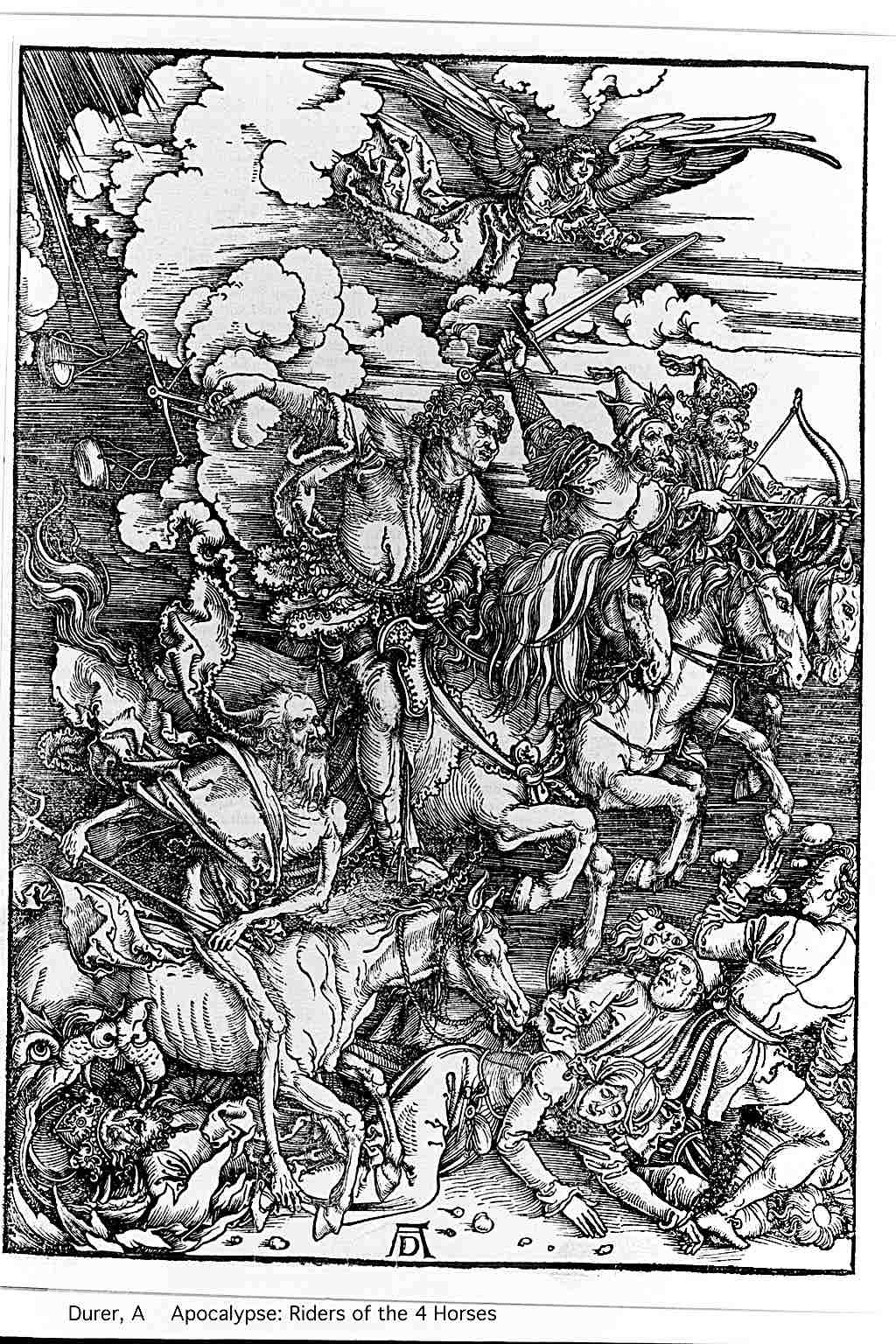
“Is this the end of the world?”  The question came up often early in the pandemic.  The end.  It’s so logical that just about every religion addresses it.  It bookends “the beginning” with the symmetry that we so covet that it’s almost impossible to think the world won’t end.  Even astronomers tell us the sun will betray us, eventually becoming a red giant and consuming our home planet.  Apart from being the greatest equalizer, however, religious speculation places the end way, way before then.  A friend sent me an article in National Geographic by Greg Miller titled “These 15th-Century Maps Show How the Apocalypse Will Go Down.”  It describes literal maps of the eschaton, and guess what?  It was right around the corner back then too.

Maps to the end of the world have been around for a long time.  With a bizarre Schadenfreude, many Christian groups eagerly anticipate the end of all this.  I grew up with charts and maps telling just how it was going to happen.  Like all of you, I’ve lived through many ends of the world.  These folks must be the strangestly optimistic bunch on the planet—when it fails to come on schedule they pencil in another date, preferably in their own lifetime.  They want to see it.  It will, after all, prove that they were right and the rest of the world was wrong.  Who wouldn’t want that kind of validation?  The apocalypse has been around since long before the fifteenth century.  It started in the New Testament, if not before.

This eagerness to end the world would be considered pathological were it not religious.  We’ve been about the closest we’ve been to a human-made apocalypse under Trump.  Make no mistake, some Christians were banking on it when they cast their ballots.  We tend to overlook this destructive way of thinking because some biblical literalists (and they don’t all agree, just put a premillennialist together in a room with a postmillennialist and watch what happens) claim that it’s what the Good Book says.  The rest of society, disinclined to look it up for themselves, accept that roadmaps to the end of the world exist in the Bible.  They don’t, but that doesn’t prevent everyone from fifteenth-century monks to present-day televangelists declaring when it will be.  That there is an end is taken for granted.  The astronomers look at their watches and sigh that we’ve got a couple billion years left, at least.  No, the pandemic wasn’t the end of the world although many Christians were hoping it just might be.


Weathering the Sleep

Weather still has a tremendous, if incremental, effect on life.  Patterns where a repeating weather cycle seems stuck in place are a good example.  While not exactly uncommon in summer around here, thunderstorms develop during the hot and humid days.  Our current pattern is that thunderstorms arrive in the middle of the night.  For days in a row.  We had a few days in our current series.  Some of us can’t sleep through thunderstorms, not least because we have to get up and close the windows, pulling fans out, so that the water doesn’t invade.  This means several nights of interrupted sleep and rather unforgiving work schedules the next day.  Companies don’t often take this fact of the weather into consideration.  I’m not the only one yawning all day.

Of course, other things interrupt sleep as well.  Any parent of a newborn has those perpetually baggy eyes that we’ve come to associate with trying to get an infant to sleep through the night.  Work doesn’t smile on that kindly either.  Both of these (and many others) are very real human concerns regarding slumber.  HR, on the other hand, looks at the clock with a frown.  This sort of work ethic is particularly bad in America where work is a kind of sacred obligation (unless you’re a minor, rich, or retired).  You owe that time, no matter how sleepy you are or sloppily you may work because of it.  In my case it’s the weather that’s been causing my drowsy days.  I guess I shouldn’t have given up caffeine a few years back.

Weather, although it’s treated as a “neutral” subject, affects everything.  There are deniers, but climate change is real.  It’s measured across centuries and millennia, however, and our point of view spans only the few decades of our own lifetimes.  We come again and again to the myth that this planet was created for us rather than the more factual realization that we grew organically out of it.  Our civilization is complex and grows more so all the time, requiring less and less time in nature.  Nature isn’t predisposed to be nice to us, or to any species.  It’s a matter of balance.  So it is with the weather.  This massive atmosphere above us seeks to balance itself out but we’re making it hotter than it should be.  Many suppose that God will sort it all out, if, indeed, forcing a crisis won’t compel divine intervention.  I just hope the “man upstairs” has been getting enough sleep.


Shifting the Narrative

Wide ranging.  That’s a phrase that comes to mind to describe Vine Deloria Jr.’s book God Is Red: A Native View of Religion.  Another phrase is very important.  I know this book has been available for several years and it’s been on my reading list for many of those.  What is it about?  Some books are just difficult to summarize, but the basic answer is that it’s an American Indian view of how Christianity has distorted the world.  An accomplished academic, student of law, and activist, Deloria knew of what he wrote.  His book explains articulately the view of Christianity from the outside and what a religion that reverences the earth really looks like.  What makes the book so fascinating is that Deloria had theological training and could engage with the Christian worldview over a considerable range of topics.

Controlling the narrative is of primary importance and the fact is white men have controlled the narrative and normalized one view of history, science, and our place in the universe.  First nations peoples had, and some still have, a radically different outlook.  Deloria makes the crucial point that even our science developed out of our religion.  That science, in turn, supports the worldview that created it.  It is possible to look at things differently.  In fact, for much of human history those alternate views were predominant.  The triumphalist view of Christianity claims it’s successful because it’s right.  A native view takes a longer view, saying “we’ll see.”

Very concerned about the state of the planet brought on by the Christian/capitalist partnership, Deloria advocated for not only Indian rights, but environmental protection s well.  Not only is the environment central to Indian spirituality, the concept of sacred spaces is very real.  Many of us not raised with indigenous points of view have experienced this as well.  Some places are special to us.  We hesitate, because of that very science created by the Christian worldview and its view of God, to call such spaces objectively sacred.  Even the “objectively” part is determined by a Christian perspective.  Deloria ends up by asking whether this form of religion has improved the state of the world.  There’s no doubt that some of Christianity’s achievements have lessened human suffering.  It is also true that science has achieved great things.  If I understand correctly, Deloria isn’t disputing this.  His point of view is much more essential.  Is this the only way to live on this planet?  From the indigenous point of view, which is far more important that we want to admit, the question is—is this the only way to see it?


Scary Folk

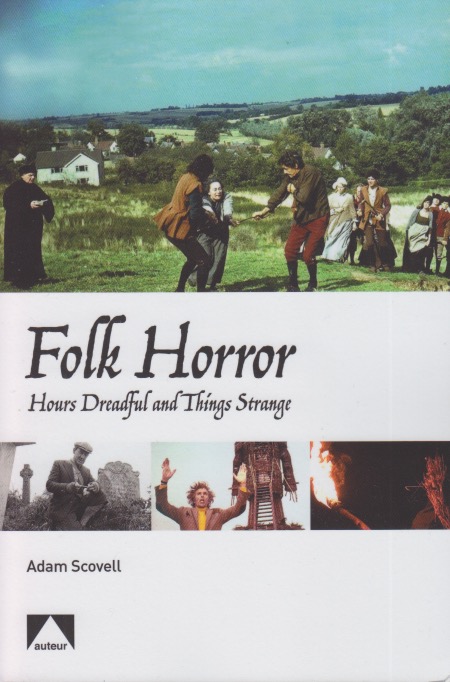
Genre is a useful category.  It can be misused, however.  Straightjacketing a piece of literature, music, or film can lead not only to confusion, but to constraining creativity itself.  Nevertheless, the category of Folk Horror is certainly expansive enough for a book-length treatment, such as Adam Scovell has given it.  Unless you’ve read quite a bit about the subject you might wonder what folk horror is.  A good part of Scovell’s work is definitional—providing the reader to an answer to that very question.   Although it has earlier roots, folk horror was initially a British genre that became particularly noticeable in the late sixties and early seventies.  It comprised movies and television programs that dwell on specific aspects of the landscape—particularly the rural—and isolation within it.

What I find particularly compelling about folk horror is that it is often based on religion.  In the countryside you encounter people who think differently about things.  Believe differently.  Their convictions are enforced upon the stranger who may be there by design or by accident.  Ironically the genre largely emerged in a nation that prides itself for its role in civilized behavior.  It speaks volumes about belief.  Civilization has produced more refined strains of religion, but on its own religion will tend to grow wild, even as the weeds in your yard are distantly related to the cereal grains we cultivate.  Examples of this are everywhere.  Fans of horror can name them off, but even those who don’t care for the genre know the kinds of belief this indicates.

Not all folk horror is about religion, of course.  It can be rural ways in general.  No matter how you classify it, most people can identify Deliverance and the danger it implies about being far from civilization where those who live in the woods can do as they please.  Scovell delves into the urban settings of folk horror as well—most of his examples are British—because it is possible to hide in the city also.  Although the genre reached a high point in the 1970s, it didn’t die out.  The book ends with consideration of some more modern examples, such as Robert Eggers’ The Witch.  The problem, as those of us who write about film know, is that just because you’ve written a book it doesn’t mean future examples won’t change the picture.  The Lighthouse and Midsommar were both released in 2019, after the book was published.  And they demonstrate that the scary folk haven’t gone away.


Altared States

Religion Dispatches is a great website.  I used to write for them from time to time, and according to Google they were probably the most read of my internet publications.  I’m not sure what happened, but a few years back time simply evaporated.  These days literally the only time I have to get things done is on the weekend.  A simple thing like taking the car in for inspection takes advance planning and can throw off my entire schedule for the week.  I have difficulty finding time to write for Horror Homeroom these days.  That’s a long preamble to saying I saw an interesting article by Hollis Phelps on Religion Dispatches titled “Hulu’s ‘Hamilton’s  Pharmacopeia’ Shows that We Can No Longer Ignore Connections between Religion and Drugs.”  There have been a number of suggestions that drugs and religion are related over the years, but our “Christian” culture has declared the former taboo.  (Except wine, of course, and even that’s suspect.)

Photo by Alex Kondratiev on Unsplash

This article has me thinking about chemistry.  Not that I ever did very well in it.  Still, I recall hearing one high school teacher or another saying life is organic chemistry.  I’ve come do doubt the standard definition of life as I’ve aged, but there’s no doubt chemical reactions are a large part of the somatic existence we all experience.  Eating leads to chemical reactions to break down the chemicals in food.  Some of them are good for us, others are not.  Some (but not all) of the really dangerous ones we outlaw.  Drugs are a good example.  I don’t use drugs, but I’m aware that many religions do.  I don’t doubt the altered states of consciousness that reportedly arise from the responsible use of such drugs.

I haven’t watched “Hamilton’s Pharmacopeia” (I have no time).  Still, I have to wonder why Christianity, in particular, came to declare its own war on drugs.  A large part of it, I expect, was the belief in the imminent return of Jesus.  You didn’t want to be caught unawares.  Then there was also the sad fact of abuse of controlled substances.  Alcoholism and the opioid crisis are reminders that these unfortunate aspects can still cause serious problems.  At the same time, research is demonstrating that religious experience and the use of some drugs are related.  American Indians, at least some of the tribes, found religious significance in peyote.  There are present-day religions devoted to cannabis.  Does it all just come down to chemistry?  I don’t know, but if there’s a drug to increase the number of hours in a day that might be a real revelation.


Laugh Out

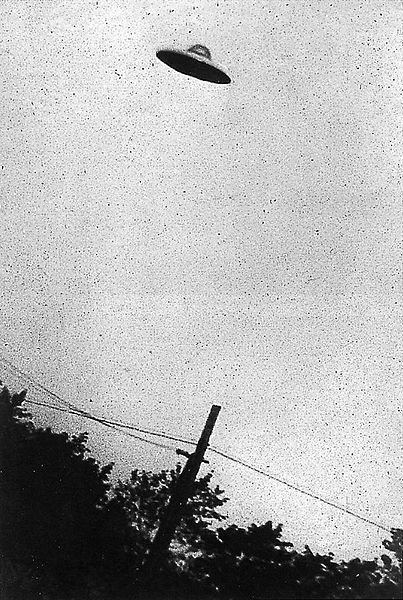
Is it safe to discuss this now, or are people going to laugh at me?  That’s the feeling that has attended any talk of UFOs until recent days.  Ironically, if the Ancient Astronaut people are right, we may’ve been visited from elsewhere ever since we’ve called this planet home.  In any case, now that UAPs are out of the bag, some are beginning to discuss how they might impact religion.  (Yes, “impact” can be a verb.)  Thus I came across a story titled “If UFOs are real, how would they impact our faith?” on Times NewsKingsport Times News, based in Tennessee, ran this as an opinion piece.  While not deeply probing, it did raise the question of how all the recent UFO news affects people’s religious outlooks.

Image credit: George Stock, via Wikimedia Commons

As a country we’re both deeply religious and in denial about the fact that we’re deeply religious.  I’m convinced that this is behind the political woes we face: the educated have become more secular and religious literalism is considered laughable.  Yet it’s clearly there.  Ironically, UFOs were considered laughable until the US Navy admitted that they were real and had no idea what was going on.  Laughing at something we don’t understand is hardly ever a step towards enlightenment.  So the article concludes that even if aliens are here, things will be fine if we continue to go to church as normal.  Any extra-terrestrial visitors change nothing.  Strangely, one of my earliest memories is of attending a rural church service one evening where the program was on flying saucers and Christianity.  This was entirely in earnest, and nobody in the congregation was laughing.

Others interested in the topic have discussed religion and UFOs over the years, but perhaps the answer is yet another of those unknowns.  Religion is a remarkably adaptive phenomenon.  Scientists suggest it’s hardwired into our brains, even as those same brains give us evidence that some of those beliefs are misplaced.  What we can’t do is stop thinking about it.  As I watch politics continue to tear this country apart, I realize it’s not really politics we’re talking about after all.  It’s religion.  Meanwhile people are learning that the government has been keeping secrets about what’s up there in the heavens.  There are elected and appointed officials who’ve gone on the record saying they believe UFOs are demonic.  While that hardly seems like a scientific approach to something truly unknown, it is a religious one.  Only those who laugh rather than listen will find this news at all. 


Heavens below!

Sometimes I miss Ancient West Asian/Near Eastern studies.  I spent a good number of years in that academic field and now that I’m out of it my work is starting to get noticed.  Horror, it seems, helps make sense of things.  In any case, I recently saw a piece on the Agade listserv about the ancient Greek afterlife.  In it Patricia Claus ponders how although the Greeks had Hades in charge of “Hell” (which wasn’t really Hell), there is no god in charge of Elysium, or paradise.  I hadn’t really thought of that before.  Heaven in the sky is originally a Zoroastrian idea, and even then it was really on a very high mountain.  Christianity made it the home of its one God and the place where the faithful end up.

Elysium was where blessed Greeks spent eternity.  Nobody seems to have been in charge.  Would gods have interfered with paradise?  This was a new idea.  Gods, in the ancient imagination, made the rules because they were more powerful than us.  Human social and ethical norms projected on high.  Would humans in paradise act any differently if there were no gods to police them?  Perhaps the most disturbing thing about some strict Christians is that they say if God hadn’t prohibited things we’d all be doing nasty stuff to each other all the time.  I often wonder if that says something about their psychological makeup.  Whether there’s a God or not I wouldn’t want to hurt anyone else.  I think those with a high moral standard might keep those with a low one (e.g. Republicans) in check.

The afterlife has perhaps disproportionately affected how we think.  Life is decidedly not fair.  There are plenty of selfish people who prosper, especially with a capitalistic system.  Many good people suffer and, I suspect, Heaven is a consolation to them for making through a world set against them.  They’re already good, do they need a God to keep them that way?  Some strains of Christianity decided people were innately wicked.  Again, I have to wonder what this says about the Augustines and Calvins and others who could see no good in what they believed God created and declared “very good.”  Their punishing God offers the consolation prize of a Heaven for those who put up with all the strictures imposed by that very deity.  The Greeks, it seems, had a very different idea of the blessed fields.  The heavenly hall-pass was not required.

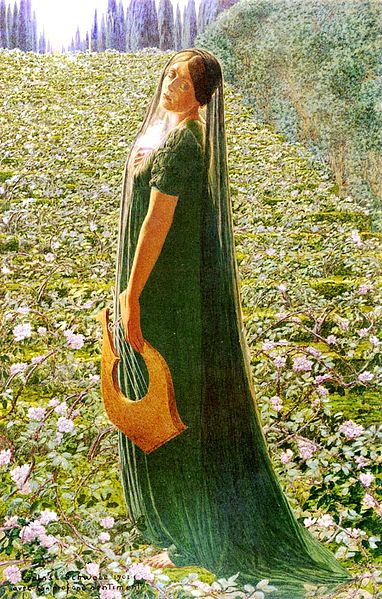
Carlos Schwabe, Elysian Fields, via Wikimedia Commons

More Conjuring

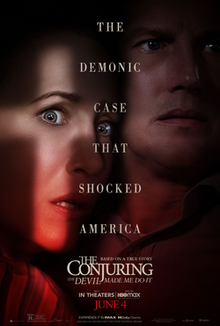
It was an almost surreal experience.  First of all, it’s been well over a year since I’ve been in a movie theater.  Secondly, I’ve never been to this particular theater before.  And in the third place, I’m absolutely alone in here.  I didn’t rent the theater out or anything, but I’ve been wanting to see The Conjuring: The Devil Made Me Do It since June 4.  Actually, since September when it’s initial release was delayed due to the pandemic.  Everyone else around here must’ve seen it already.   I knew the story of Arne Johnson and the Warrens, having found and read Gerald Brittle’s book, The Devil in Connecticut.  Loosely based on that event, this story focuses on the actual fact that this was the first time not guilty by reason of demonic possession was proffered in a US courtroom.  The story is a strange one and the movie, as movies do, makes it even stranger.

I’ve been anticipating The Conjuring: The Devil Made Me Do It, despite the title, for a few years now.  If you’re familiar with Nightmares with the Bible you’ll know that an entire chapter is devoted to The Conjuring franchise.  You may also know that it is the most lucrative horror series of all time, apart from Godzilla in its many, many iterations.  One of the points in Nightmares was to try to make sense of the demonic world presented in the Conjuring universe.  The franchise, for the most part, deals with actual case files from Ed and Lorraine Warren.  Some of the episodes are pure fiction, however, and the explanations given in the films are all, well, conjured for the big screen.  The movies call attention to the Warrens’ work, but in a way that requires an entire chapter to untangle.

My initial impression is that this isn’t the best movie in the series.  I can’t replicate my previous work here, and I’ve only seen the movie once, so there are details I certainly missed.  The demon isn’t named this time.  Indeed, the backstory proposed is drawn from the spin-off film Annabelle.  A fictional satanic group called Disciples of the Ram is posited as causing the trouble.  Like the demon behind Annabelle, they’ve placed a curse on the Glatzel family for some unknown reason.  During the opening exorcism Arne, in an Exorcist move, asks the demon to take him instead of the young David, the brother of his girlfriend.  The movie leaves the Warrens to find out who put the curse on the Glatzels in the first place, and break it.  With some time for pondering I’ll likely come back to this movie again.  I do have to say that the book was probably scarier, although sitting in a theater alone to watch a horror movie is not something I hope to make a habit of doing.