Alien History

If aliens sat down to read earth history, they’d get the impression that we’re a very warlike species.  While, no doubt, this is true for a large part of history, I’d suggest that at least since 1900 it hasn’t been so much that the species is warlike, but that its leaders are.  As long as we have “shallow bastards” (to use Frank Turner’s phrase from “1933”) leading us, is it any wonder?  Even with current world leadership given a pass, looking back over the big ones of the last century, it was mentally unstable leaders with fragile egos that led to wars.  I’m sure some national resentment across borders certainly exists, but would people just go and kill those in the next town over, in the “modern” world, if their leaders didn’t tell them to?  Think of World War II, brought on by a madman.  Yes, Germany had grievances, but war wasn’t the only way to solve them.  And killing Jews did nothing to help anybody.

Or World War One.  The assassination of an Archduke need not have led to nations clashing with excessively deadly force.  Men with inflated egos and personal ambitions seem to have played a large role.  To any aliens reading this, some of us would like to take exception to this warlike generalization.  Human society is complex, and the jury is still out on whether democracy can really work when the electorate doesn’t bother to educate itself.  Or allow itself to be educated.  Still, my sense of my species is that we’ve managed to civilize ourselves out of being warlike, but we do have strong emotions that we need to learn to control.  Watching Washington flirt with war every day because of incompetence, well, dear aliens, we’re not all like that.

Image credit: NASA (public domain)

The world into which I was born seemed to be okay as far as national boundaries went.  Younger generations are raised to realize that colonialism was an evil, exploitive outlook.  There are those alive, unfortunately many of them in public office, who want to go back to acquiring more land.  And countries, sometimes artificially created (generally by Europeans), continue to break apart.  South Sudan became a country only in 2011, but Sudan appears to have been artificially held together by pressure from other nations.  I still don’t see why globalism and lack of war can’t coexist.  If nations had thinking persons in charge rather than macho men eager to show how big they are (aliens, this is a human fascination, I’ll grant you), we might well be able to live in peace.  If you want to take them back to your planet, you are most welcome to do so.


Who Owns It?

Who owns the Bible?  No, you can put your hands down.  I mean who owns the concept of the Bible?  This question occurred to me while thinking about the Apocrypha.  Does the Apocrypha belong or does it not?  This became a polarizing issue with the Reformation and subsequent Protestant ownership of the concept of the Bible.  The Apocrypha was mostly written by Jews, but has never been part of the Hebrew Bible.  The process of narrowing down the books to include wasn’t straightforward and since God hasn’t spoken on the topic, has never really been settled.  The books of the Apocrypha circulated with the Bible, as did a few other books.  Sometimes they were even bound together inside one cover with the standard Protestant 66 books.  Obviously I’m discussing the Christian canon here.

I’m sure you’ve known someone this has happened to, if it hasn’t happened to you personally.  This person is an actual expert on a topic.  S/he goes to a place where an unexpected discussion on their specialization breaks out but nobody asks them to speak to it.  This person then becomes offended, sometimes even speaking out, loudly, that this is their area, they have expert knowledge of it and should be consulted, at the very least.  More likely than not, their opinion should be considered definitive.  This is the image I have in my head with Protestants and the Bible.  Sure, the Catholics had it long before, but they didn’t encourage individual study.  In fact, they discouraged laity from reading it.  Only when they, the Protestants, came along did anyone really pay attention to the Bible, and, it must be admitted, they do have a point.  All the Bible study that goes on today, no matter what faith tradition (if any) would not have happened without the extreme Protestant reverence for the Good Book.

But still, there are other branches of Christianity that disagree.  There are more Catholics than any single sect of Protestants.  And a great many Orthodox Christians as well.  Some of the latter include the books of 1 Enoch and Jubilees in their Bibles.  Even so, any publisher that wishes to make inroads on selling the Bible must defer to the Protestant canon.  This is the case even though the King James Bible included the Apocrypha.  So as I ponder who it is that owns the image of the Bible, my mind keeps coming back to the same place.  Those who make the loudest, and most prolonged claim are the Protestants.  They own the Bible, in the public eye.


End of the Story

You know that feeling?  Like when you’re driving in thick fog and you know you should stop but you’re late and you have to keep going?  There comes a moment as you’re driving when you know that it’s going to end, and probably badly.  Yet you keep on going.  Trump has me thinking of the end of the world quite a bit.  I know there are many evangelicals out there praying for it fervently while the rest of us would like a little more time on this beautiful planet.  I’d be lying if I said I didn’t understand this outlook, because I do.  I grew up with it and I’ve never forgotten the sensation it caused.  And then I pondered that we are story-telling, and story-thinking creatures.  Perhaps other animals don’t think this way, but we constantly tell ourselves stories.

A story has a beginning, a middle, and well, eventually, an end.  We all know, at some level, that we’re mortal.  Life will end, and every completed story has an end.  Why not the world?  It’s a strangely haunting idea, the world continuing on without us here to make it interesting.  Plants will grow in any soil they can find, even microscopic cracks in the pavement.  Every year it’s like one day everything is suddenly green where only the day before we could see the sky through the branches.  And animals continue their quests for food, mates, and shelter.  Some live to hide while others strut.  Each has a role to play and if you watch them closely you’ll find yourself narrating their stories.  That rabbit.  That bluejay.  That fox.  They have a beginning, middle, and end.  If they can’t tell it, we can do it for them.  It comes naturally to us.

Long ago I learned how one version of Bible interpretation came up with the end of the world as we know it.  I also learned that this was contrived, just as all interpretations are.  This particular one has landed, like a seed, in the cracks of our mind.  It grows, just like that weed in the pavement.  This story must have an end.  We can imagine it no other way.  Even when we grow up and realize that the story was only one we told to children—children old enough to handle it, of course—we still have this certainty that an end is coming.  Like driving in the fog, we just know it.  Even when we realize that in reality we should be putting on the brakes.


Bible and Horror

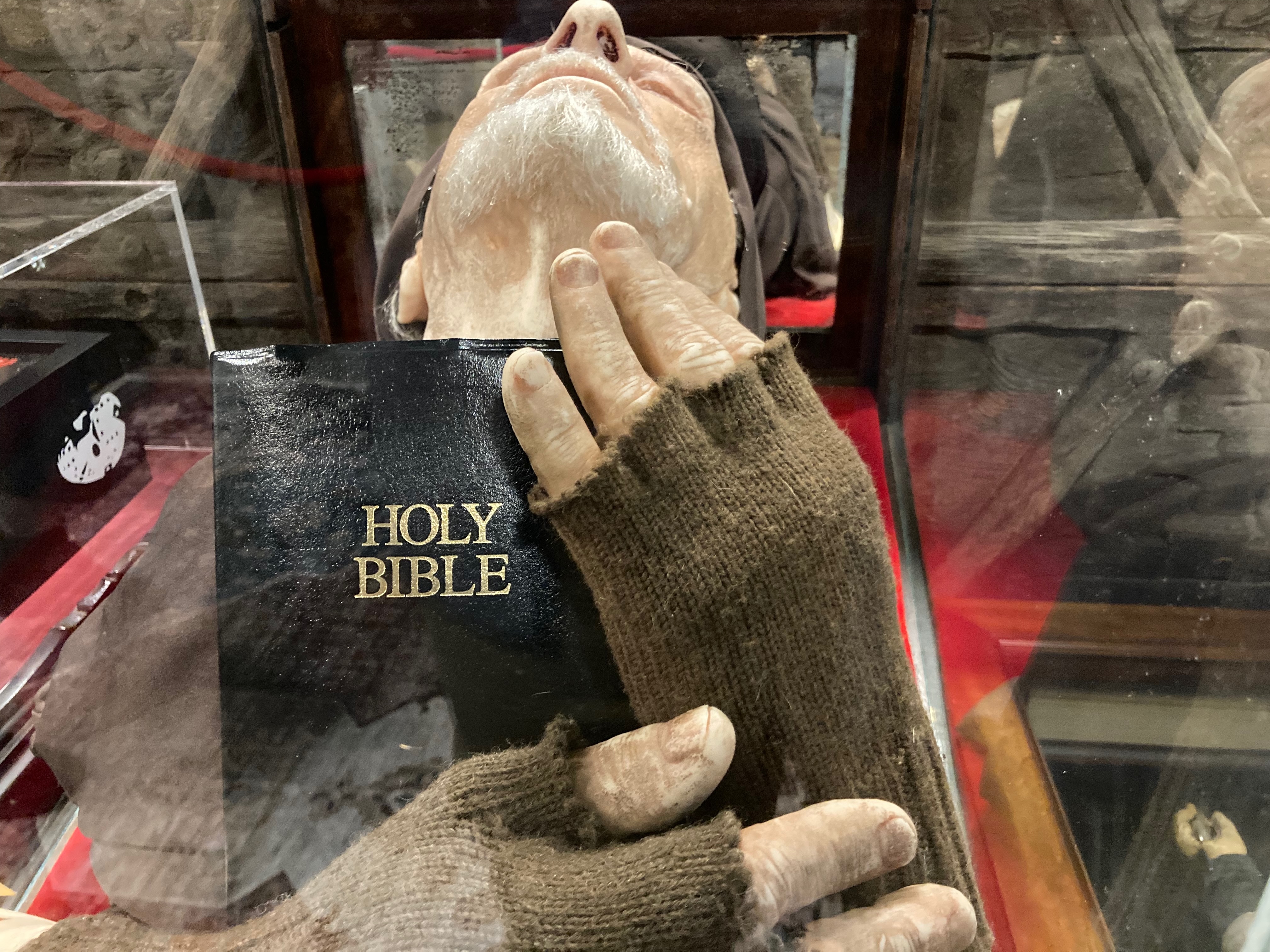
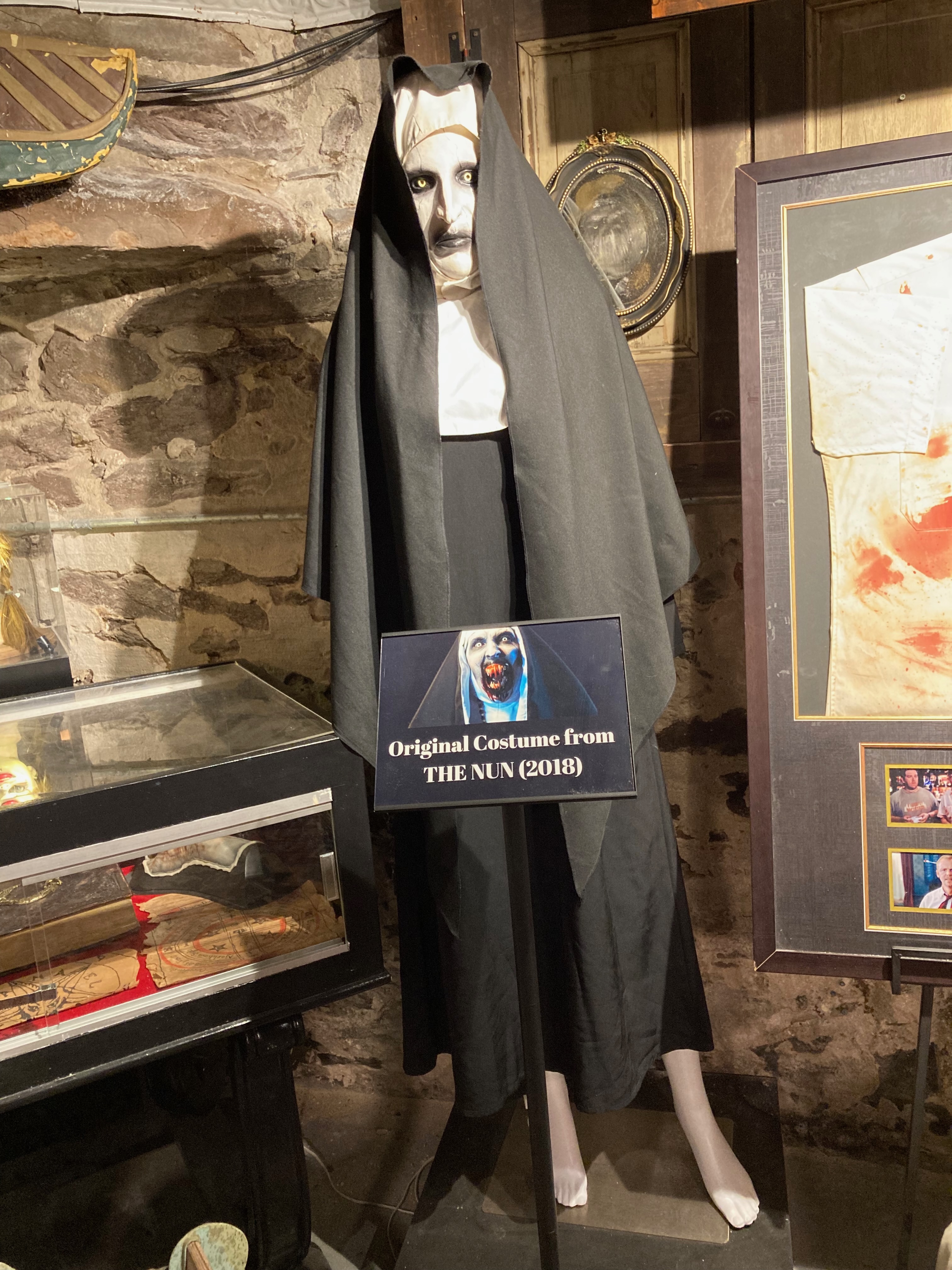
Having written Holy Horror, I keep an eye out for Bibles in horror contexts.  In the context of A Nightmare in New Hope there was the torso and head of Fr. Alameida from Stigmata.  In his hands he clutches a Bible.  Of course, if you’ve seen Stigmata you’ll know that Alameida is already dead at this point, having been so from the start of the film.  Those visiting a horror museum are likely completely nonplussed by seeing a Bible there.  Much of the horror genre builds on religious themes.  Witness The Nun.  The original costume for her is standing over in the corner right there.  If I had enough time (i.e., if I were in an academic post again) I would be spending my time trying to figure out this connection.  I’ve written about religion and horror in four books, in several articles on Horror Homeroom, and in too many blog posts to remember.  There is a connection that only professors have the luxury of thinking time to explore.

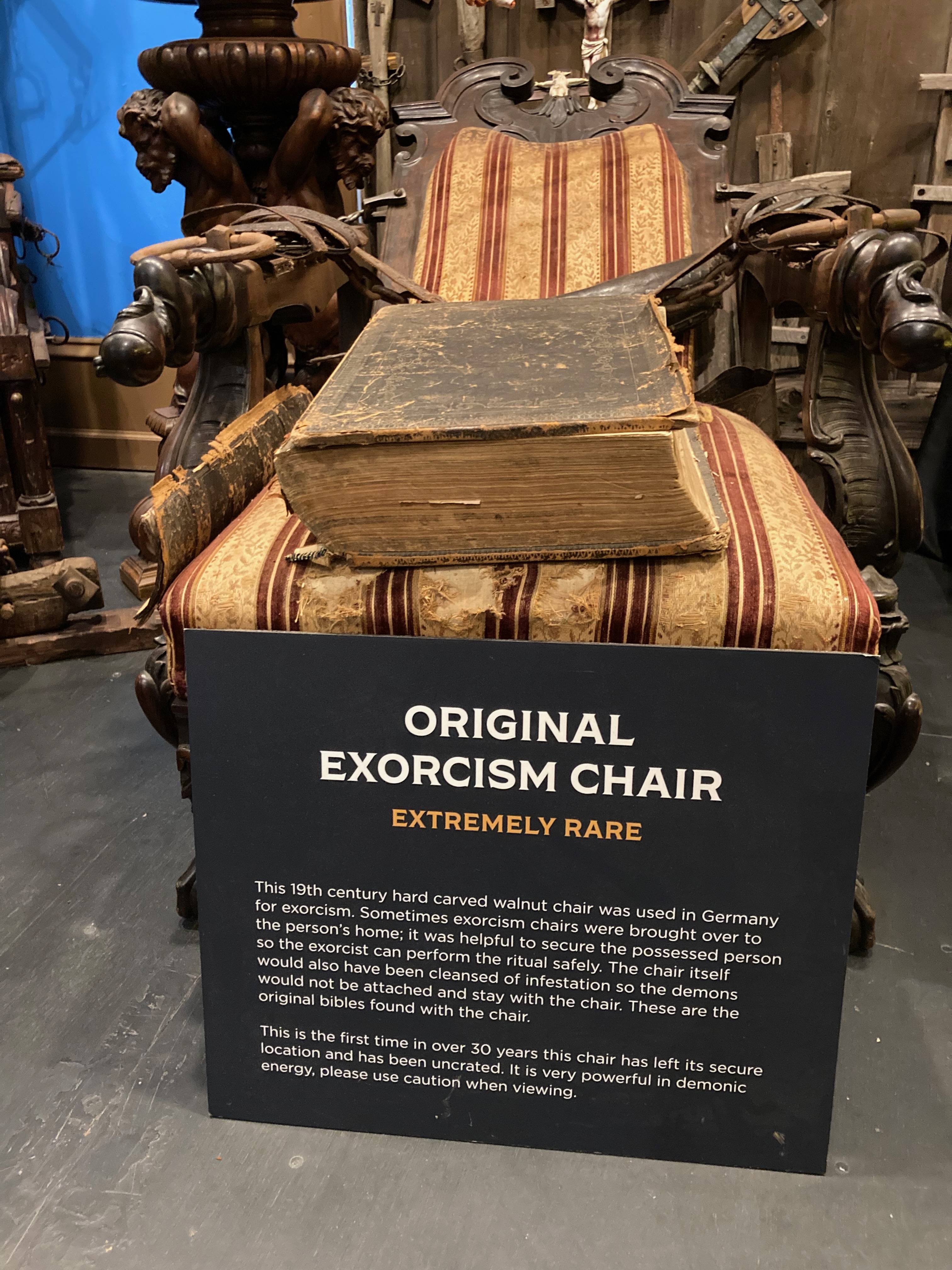
A couple hours later at Vampa, Vampire Paranormal Museum, Bibles were again in evidence.  Indeed, in profusion.  Vampire hunters, it seems, never wanted to be without the Good Book.  Many of the vampire hunting chests (entire chests!) included a Bible.  As noted in a previous post, Michael Jackson owned a vampire hunting kit for a while, until the Jehovah’s Witnesses convinced him he shouldn’t.  In one of nature’s ironies, in the mail when we got back from the museum was a handwritten letter to me from the local JW Kingdom Hall.  Religion and horror.  Vampa also owns a rarity, an exorcism chair.  Things get a bit muddy here since the chair dates from the nineteenth century but exorcism as we know it largely derives from the movie, The Exorcist.  And that takes us back to New Hope.

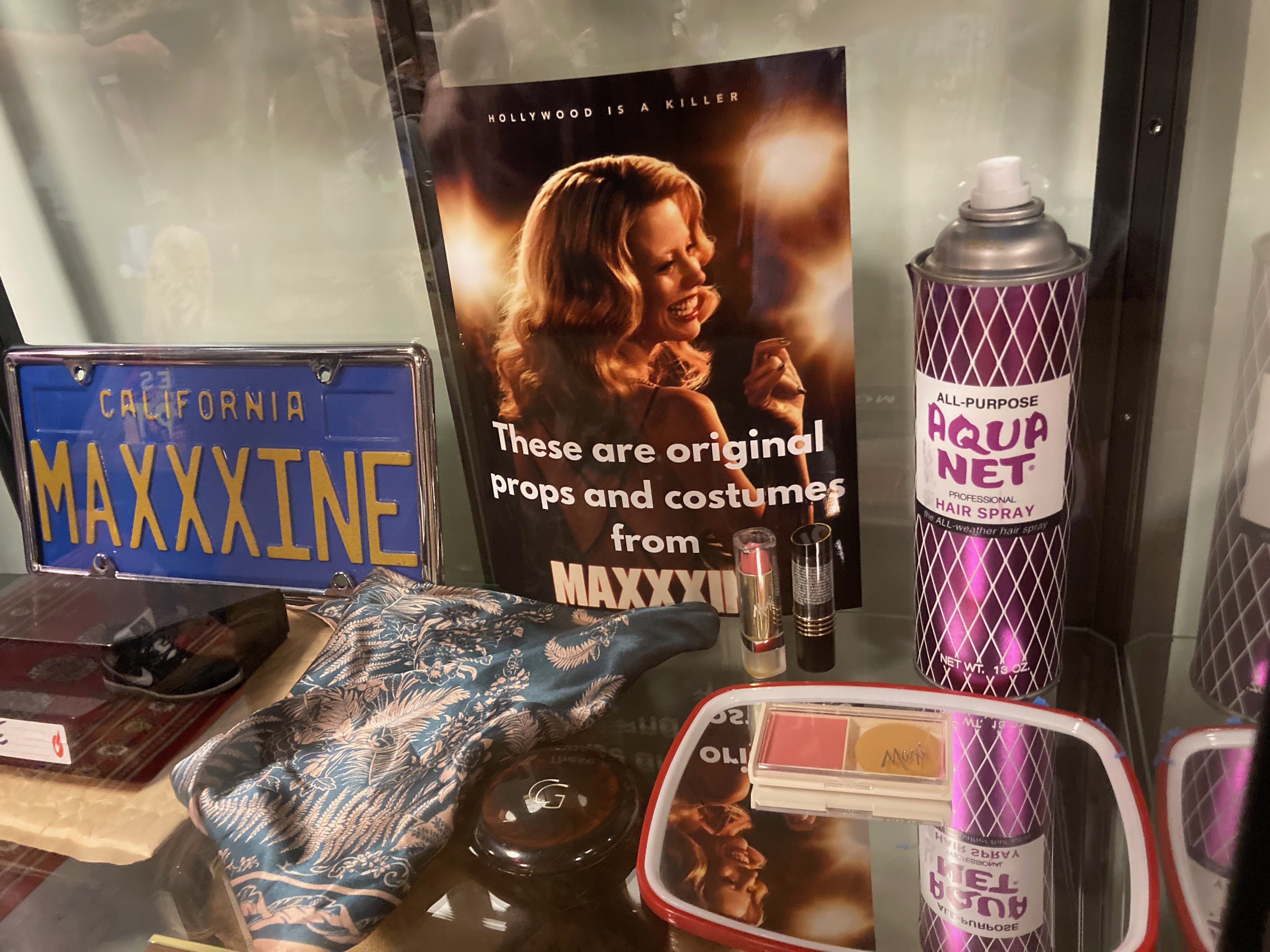
My interest was primarily in artifacts from actual movies.  The Exorcist head of Regan McNeil in Nightmare in New Hope was, I believe he said, a cast.  A horror museum without at least a passing reference to The Exorcist would feel strangely incomplete.  And then there’s Maxxxine.  The entire X trilogy is framed around religion that leads to horror, over a couple of generations.  There’s a connection here and I haven’t found a convincing explanation for it yet.  It’s one of the many books that I’m working on at the moment.  But time is limited.  And Fr. Alameida’s presence in this room, holding tight to his Bible, reminds us that the topic bears exploration.


The Valley

Juneteenth seemed a good day to get to Valley Forge.  With all the nonsense going on in the White House, we need to be reminded what this country was founded on and for.  I like to think that we weren’t the only ones there yesterday for that reason.  In fact, in the gift shop I found a book titled America’s Last King.  By the time we left it was sold out.  Like many Americans, I suppose, I only had a vague idea why Valley Forge was important for our young country.  We took a tour that helped explain it.  A tour that some in Washington ought be be required to take.  Valley Forge was a winter encampment—the third in the War of Independence.  George Washington had just suffered two defeats and the British had taken Philadelphia.  His poorly provisioned army set up winter headquarters in this strategically secure hill country.  Inadequately clothed, barely fed, many dying, they planned how to keep their efforts to survive alive.

What happened that winter of 1777–1778 at Valley Forge that kept the United States alive depended on two things, both brought by immigrants.  Let me say that again, in case ICE is having trouble hearing—immigrants saved America.  The young country was in very real danger of defeat.  What turned the tide was an alliance with France (the name Lafayette still looms large here in the east) and the help of Baron Friedrich von Steuben, a Prussian.  Without these foreigners, America would never have survived to become great.  Oh, and Mr. Kennedy, Washington ordered vaccinations at Valley Forge to prevent so many of his troops from dying from small pox, an inconvenient truth.  What emerged from Valley Forge that winter was a more organized, healthier United States Army that would go on to defeat the British so that we could be free two and a half centuries later.

I needed Valley Forge.  Although it was a hot day and the roads are paved, I needed to be reminded what it felt like to be proud to be an American.  Juneteenth is to commemorate the end of slavery.  History shows that many in Washington’s army were of African descent.  It seems that DC has forgotten what America is and what we were fighting for all those many years ago.  It wasn’t to exclude those who were different.  No, it was to pull together to survive.  Our would-be king spends his idle days planning military parades in his honor.  The US Army was born in Valley Forge.  And as an American with ancestors here from Washington’s day on, I really needed that visit to remind me of how America became great.


Recession Value

While reading about recessions (am I getting old, or what?), I suddenly got the creepy feeling that our entire lives are unduly influenced by those who think they know what they’re doing.  Financially, that is.  The Great Depression and the Great Recession were both times of economic hardship because the rules capitalism put in place defined us as being in an era of lowered GDP, or gross domestic product.  Why?  Because there were no jobs.  Why?  Those who hold the purse strings (capitalists) had pulled them shut with all their might.  Then, like magic, depression and recession end and everyone tries to get back to business as normal.  To me this seems utterly ridiculous.  They call economics the dismal science for a reason, after all.  The fact is the rules are made by us.

Society is very complex.  This is one reason that people should really think hard about who they’ll vote for.  Leaders who think it’s all simple inevitably lead to disaster.  If I could, I would switch the world economy away from capitalism.  If I were president and were to try this, it would be a very, very slow process.  It would take generations.  Why?  Because this is a complex system.  Sudden changes don’t last.  Of course, to people who believe the universe took only six earth days to create and that a big flood wiped out all the dinosaurs (or maybe some were on the ark), complexity is anathema.  Of the devil.  Well, as they say, the devil’s in the details.

Image credit: I forgot where I found this; if anyone recognizes it please let me know!

And so we suffer through depressions and recessions.  To those of us with feet on planet earth, it doesn’t feel like much has changed.  We still need to sleep and eat and all that, but some “experts” are telling us why we have to pay more at the grocery store or at the fuel pump, and why those at the top of the pyramid seem to be all right, no matter what happens to the rest of us.  And we let it carry on.  Economic systems are simply a reflection of what people value.  The things we value most cost the most (it’s called supply and demand, AKA capitalism).  The most expensive material thing I own is my house, and truth be told, it’s mostly owned by the bank.  But the most valuable actual thing I own is my mind.  It can’t be bought.  And one thing it keeps on telling me is that all of this business about recessions and whatnot is rather silly.


Friendly Fear

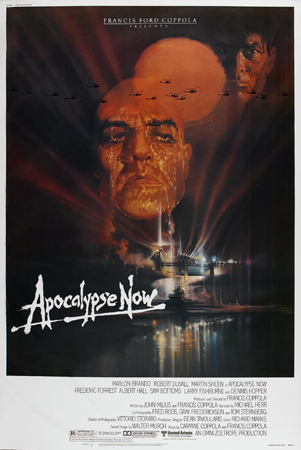
I opened my book Holy Horror with an epigraph taken from Apocalypse Now, a movie I recently watched again.  That quote was from Col. Kurtz: “It’s impossible for words to describe what is necessary to those who do not know what horror means. Horror… Horror has a face… and you must make a friend of horror. Horror and moral terror are your friends. If they are not, then they are enemies to be feared.”  I’ve been thinking quite a lot about how you can make any progress in a discussion with anyone who’s already made up his or her mind (i.e., no matter what you say to them they will not take it seriously.  Think your favorite Trump supporter).  People far smarter than I have noted that the only way to combat this unthinking adherence is to get people to think critically.  That may be correct, but to preserve democracy we need a more assured method in the short term.  That of Col. Kurtz.

Apocalypse Now was based on Joseph Conrad’s The Heart of Darkness.  Both contain a vital truth—fear motivates people.  Democrats have been forward-looking in recent decades, but Republicans run on that fear playbook and it’s very difficult to defeat.  That’s because people are afraid.  It’s important to face fears, but to win elections, you need to seed them.  I know whereof I speak when it comes to phobias.  I was so riddled with fear as a young person that at times I could not leave the house.  At other times even the house didn’t feel safe to me.  I had multiple phobias and difficulty talking to other people.  I’ve grown out of many of these fears, but if I’m honest, I know they’re still with me.  I suspect many other people are also afraid.

Strong men (even if personally weak) appeal to the afraid.  They want someone who can protect them.  I tend to think Democrats think many Americans are better adjusted than they actually are.  You want their votes?  Make them afraid.  I’ve been writing books on fear and its many cinematic manifestations for several years now.  I grew up being afraid of everything.  I don’t advocate creating fear, but when a nation decides Hitler would be better than letting young people read, it’s reached a crisis point.  I do wish progressive political leaders would consider my humble observations.  When afraid people herd together and become the mob with torches.  And just such a mob became the mindless followers of Col. Kurtz.  Just saying.


Little Things

Those on anti-clutter campaigns (whose lives I can’t imagine) claim that we have too much stuff.  That may be true, but when you reach a certain age these realia can serve to remind us where we’ve been.  How we’ve become who we are.  We moved to our house in a whirl.  Neither my wife nor I had enough vacation days to take any time off and we had to move 55+ years of stuff over a weekend.  Lately I’ve been going through some of the boxes of little things you keep.  They were generally mixed in with papers I didn’t have time to file, bits of hardware, and a few things I’m not sure why I kept.  In the archaeology of my life, the layer labeled Nashotah House retains a prominent place.  It took many years before I could look at my little Nashotah House things without being overwhelmed by emotion.  Nearly twenty years on, I hope I’m beginning to get over it.

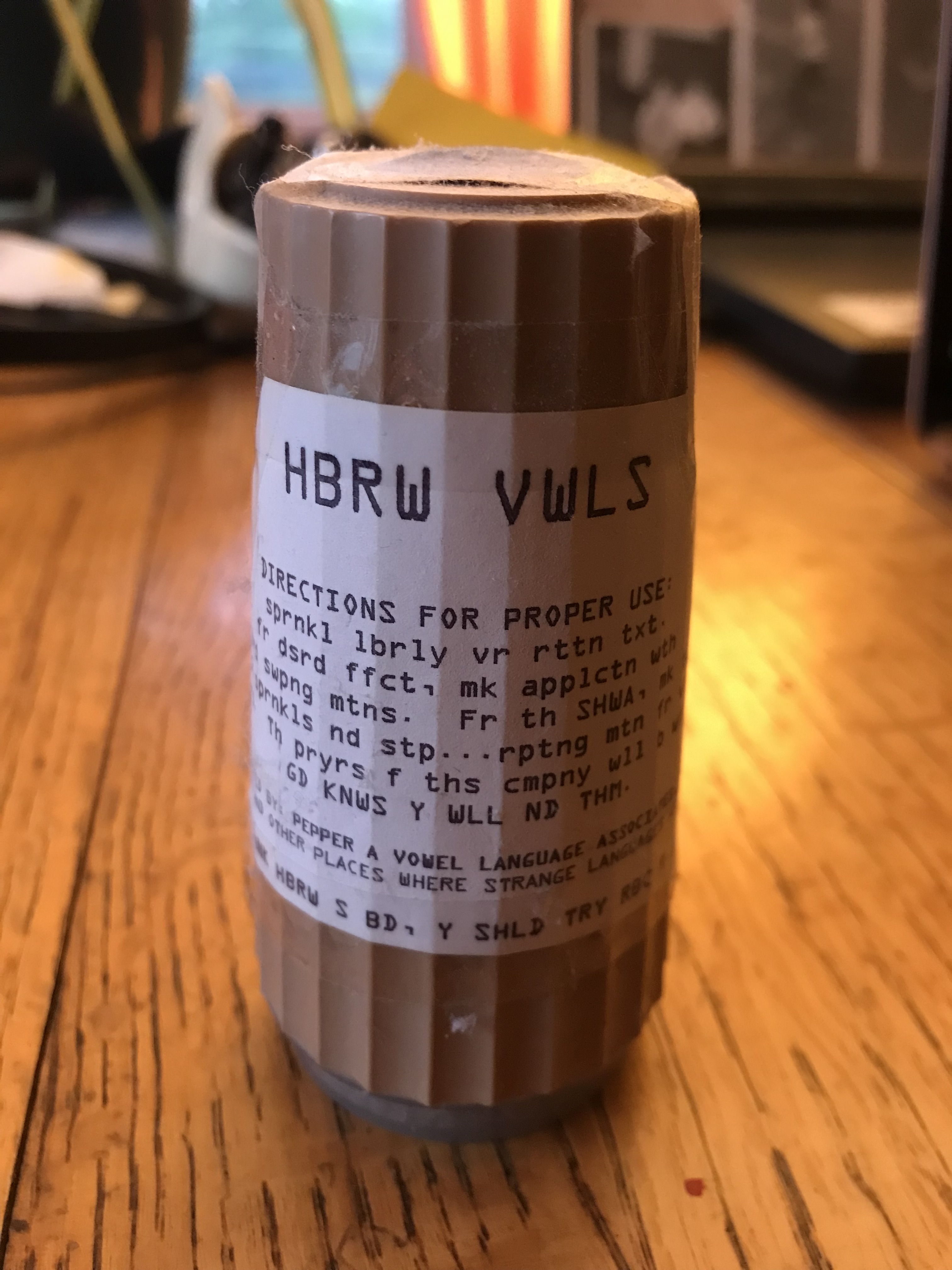
One of the little things I unearthed was a pepper shaker.  One of my students (now sadly departed) had made a label to express her frustration and humor at trying to learn Hebrew as a mature woman.  I’m probably now the age she was then.  This little artifact has been with me through a great number of momentous changes in my life.  It can still bring a little smile, however.  I see it and I remember Judy giving it to me with a laugh.  I probably shared it with the class.  Even now it has two-decade-old pepper in it.  The declutter experts would say it belongs in the dumpster.  They’re wrong.

Nashotah House was the only job on offer following those intense Edinburgh years.  As all of these things recede further and further into the past, they become more valuable.  No matter how small, these objects played a part in what I remember and rubbed me in a way that influenced my shape.  I don’t know what that final shape will be, but I jealously guard my little things, these boxes of years.  They are points of contact between my life and those of others.  I found many other pieces of myself in these miscellaneous boxes.  I know that someday, all things being equal, this stuff will probably end up in some landfill somewhere, waiting for some future archaeologist wondering what realia we kept back in the years when the world went insane.  And if s/he is really brave, they might even try some of the pepper on their future lunch.


Good Hearts

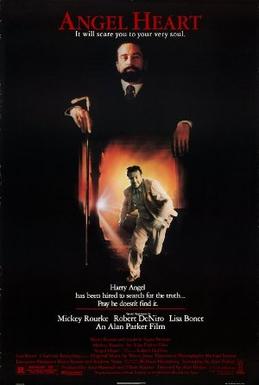
If you’re looking for more religion-based horror, you might try the 1987 film Angel Heart.  As I’m discovering quite a bit lately, I could’ve used this one in Holy Horror as well.  The religious elements are pretty hard to miss, beginning with the protagonist’s name, Harold Angel.  (Hark the, any one?)  A private detective, Angel is hired to find a missing person for a Louis Cyphre.  His search takes him from New York (where a guy keeps a pistol in a Bible (there’s maybe an entire book in this trope), down to New Orleans.  First he meets Cyphre in the back room of a black church but soon he starts getting chased out when he starts to uncover any clues.  Time to head to the Big Easy.

In New Orleans he finds all kinds of occult practices taking place.  And the folks are none-too-friendly when he starts making mention of the guy he’s after.  He ends up witnessing a voodoo ritual and complains about the bad religion he encounters.  The big reveal indicates that there’s been a case of mistaken identity.  Louis Cyphre (Lucifer) has actually been setting an elaborate trap all along.  The portrayal of the Devil as a sophisticated gentleman isn’t new, of course.  There is a scene where Angel and the Devil are in a church and Angel, being a detective, uses inappropriate language.  Lucifer (not yet revealed as such) has to remind him a couple of times to watch his tongue while in a sacred place.  Satan is more pious than Angel.

The movie has multiple issues, but it has become a cult film over the years.  Like many others that I’ve discussed on this blog, the entire plot draws its horror from religion.  Angel has a difficult time with the non-Christian worship he witnesses.  But really, it is the Christian Devil that’s the antagonist here.  Quite often in movies like this, fear of other religions is based on the supposition that Christianity is correct.  That’s been a broad American trait for centuries, and it gives horror room to run.  The idea of a generic Christianity (which is probably what most Christians hold to) overlooks the doctrinal differences, often quite significant, between denominations.  This particular avenue isn’t much pursued in horror films, at least in my experience.  Interestingly, like Cat People (1982), it places this religion-based horror in New Orleans.  There’s plenty to explore in that connection as well.  Angel Heart is not a great movie, but it can lead in some interesting directions; a holy sequel may be necessary.


Eschew Stupidity

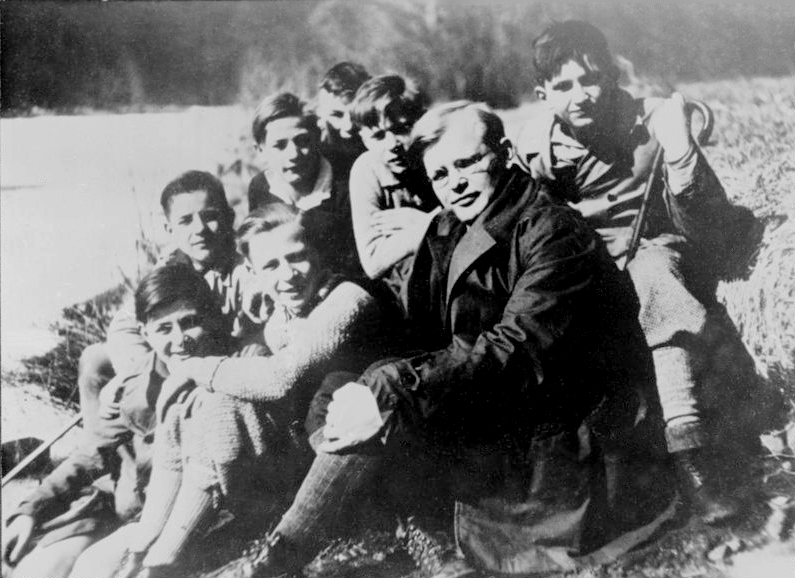
Dietrich Bonhoeffer was a certified evangelical Christian.  His theology often feels a bit pat to some of us who work in religious studies, but there’s no doubt that Bonhoeffer was a brilliant man.   Bonhoeffer believed in Jesus but resisted Hitler.  In fact, that resistance cost him his life.  My brother recently sent me a Facebook Reels video on Bonhoeffer’s observations about stupidity, which Bonhoeffer believed was far more dangerous than evil.  I shared that video in my feed on Facebook yesterday, and it is well worth listening to.  Stupidity isn’t a badge most people would wear proudly.  We all do wear it from time to time since we’re only human.  The real problem, according to Bonhoeffer, is when crowds start becoming stupid.  We’ve seen it time and again.  We’re living in such a time right now.  The antics coming out of DC right now have thinking people everywhere wondering how this is even possible.  Listen to Bonhoeffer.

Photo source: Bundesarchiv, Bild 183-R0211-316 / CC-BY-SA 3.0, Wikimedia Commons

I don’t take Bonhoeffer uncritically.  Some of us—generally without tons of friends—think critically by default.  (The women in college all broke up with me because “You’re too intense.”  I credit my wife with sticking with me, although she tells me they were right.)  Anyone can learn critical thinking.  The problem is, keeping the skill is hard work.  And the internet doesn’t help.  Whenever anyone makes a claim, personally, my default response is “How do they know?”  Yes, I do look up references.  With my particular brand of neurodivergence, I seldom trust other people to know something unless they’re experts.  (This is something the current administration is a bit shy on.)  I even question experts if their conclusions look suspect.  “Nullius in verba” is written in my academic notebooks.  Something, however, is obviously clear.  Bonhoeffer was right about stupidity.

I’m not sure what an unfluencer like myself hopes to gain by discussing this.  I do hope that folks will listen to Bonhoeffer if they have concerns about my thought process.  My deeper concern is that the church often encourages stupidity.  Unquestioning adherence to something the facts expose as untrue is often lauded.  It makes some people saints.  Churches require followers and often distrust critical thinkers.  That once cost me my job, sending my career into a tailspin.  This was well pre-Trump, but some in authority didn’t appreciate critical thinking on the part of faculty.  (Ahem, that’s what we’re paid to do).  I’m not anti-belief.  Anyone who really knows me knows that I believe very deeply in the immaterial world.  And I know that Bonhoeffer did too, right up to the gallows.


Thinking of Home

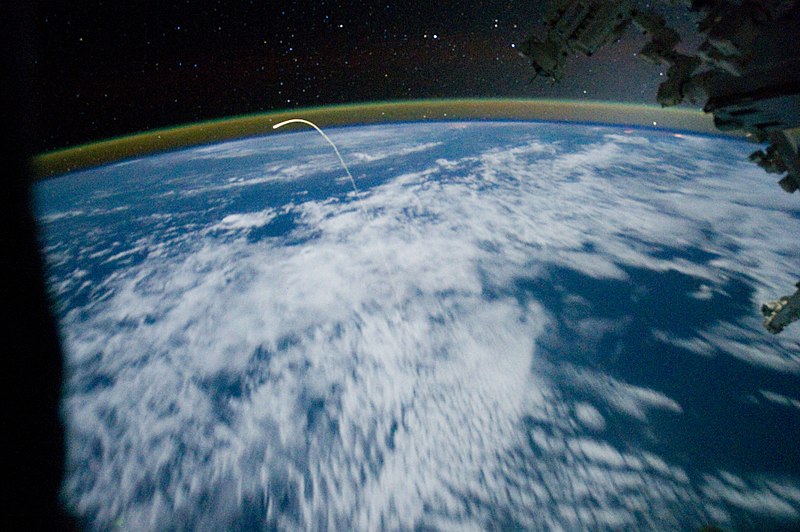
The earth, and even life on it, will, I’m confident, outlive our petty desires for money and being the king of the hill.  Scientists are getting tantalizingly close to demonstrating something that many of us already know—life exists elsewhere.  Chemical signatures of life appear as close as Venus and as far as K2-18b.  I suspect our universe is full of life.  And life is more than just rationality.  We’re creatures driven to survive and that level of will appears to be universal.  As Ian Malcolm says, “Life will find a way,” or something similar.  Earth Day should be a celebration but under too many Republican presidents it has become a plea to please stop intentionally harming our planet.  I grew up in that distorted religion known as Fundamentalism.  I learned that the destruction of the world was necessary to force God’s hand with the second coming.  The planet was here to exploit and waste since he’ll be back any day now.

Unlike many of my cohort, I decided to learn more about that perspective.  The more I learned the more shocked I became.  A warped and twisted message had been passed along as Gospel truth, and that the care the creator bestowed upon creation was merely a smokescreen to hide Jesus’ return.  I still believe we are not capable of completely destroying the planet.  Life will continue with or without us.  Life is persistent and hopeful.  That doesn’t mean we shouldn’t take care of it.  Earth Day has become a rallying point for those who see the world sensibly.  We have so much wonderful life on this planet.  In our arrogance and in our tendency to take mythology literally, we have assumed the worst.  Why not take care of what we were given?  Jesus may not come back, but perhaps the Lorax will.

There are ways to live sustainably on this planet.  It does mean that some of the richest will need to surrender some of their wealth and power.  We need to learn the habits of requiring less and appreciating more what we have.  Like most people born into the world in this era, I struggle against the desire for new things.  Novelty is natural to such curious creatures as ourselves.  But there are other such curious creatures too.  They have a place here, even as those which seem to have no curiosity do.  It’s a planet big enough for all of us.  We just need to be sensible about it.  And remember the earth today and be thankful for our home every day.

Image credit: NASA/ISS Expedition 28, public domain from Wikimedia Commons

Easter Gathering

On Easter I’m thinking of Conclave.  My wife had been wanting to see it and we watched it on Good Friday—a work day, of course, in this “Christian” nation.  In any case, it’s fascinating for a couple of reasons.  One is that, as a drama surrounding the election of a new pope, it draws you in.  The politics and intrigue are, I assure you, quite real within in the church.  People are, in seems, incurably political.  Conclave is fiction, of course.  And in reality, very few people are ever admitted to the chambers where a world leader is elected by those priests who’ve risen to the highest levels of church hierarchy.  This fictional reconstruction may give a window into that.  The other reason that I found it so fascinating is that it was quite a box office success for being a movie about a religious subject that isn’t biblical.  Appropriate viewing for Easter weekend.

There were a few striking scenes.  Here’s the outline, though: a pope has died and Cardinal Lawrence is the deacon in charge of the conclave to elect a new one.  Four main candidates exist—one a staunch traditionalist, one a liberal, one an African who is conservative, and the last a moderate American who has a past.  The pope had appointed a new cardinal shortly before his death and some people think he’d make a good pope, despite his relative youth.  One of the striking scenes is Cardinal Lawrence’s homily to open the conclave.  He preaches against certainty.  Not only is this a powerful scene, for some of us watching he is absolutely correct.  Certainty is the death of faith.  That scene alone is worth watching the movie for.  Go ahead, it’s Easter.

The other striking scene is the twist ending, which I won’t reveal here.  Anyone who’s honest and who’s lived long enough to become a pope has secrets.  Not all of them reach to the level of scandal, but the movie also emphasizes that the pope is also a sinner but must be willing to seek forgiveness.  Indeed and amen.  The problem we face today is that, even and perhaps especially in Protestantism, many people look to condemn sinners without realizing their own faults.  The movie points out that even the holiest acknowledged person within Christendom can’t make any claims to perfection.  If we’d all admit that we’re doing the best we can not to offend deity or fellow human being, perhaps there really would be cause to celebrate this Easter.  Even without a conclave.


To the Maxxx

Okay, so Maxxxine will be difficult to discuss in my usual format here, but I’ll give it the old college try.  Ti West is quite a stylist when it comes to horror movies.  Friends recommended X a couple years back, and then it was revealed that it would be part of a trilogy, with Pearl coming next.  I’d seen these two and knew that I would watch Maxxxine when it came out.  More than just closure, these films all make heavy and obvious use of religion.  So much so that an extended piece could be written on that aspect alone.  I’ll try to restrain myself here.  Maxxxine is a direct sequel to X (Pearl was a prequel), following Maxine as an actress trying to break through in Hollywood.  Following the death of her X-rated film colleagues, she found an agent and has been trying to be cast in a horror film.  The movie starts with a home movie shot by her evangelist father advising her never to give up.

Just as Maxine wins the horror film role, a number of her friends in the adult entertainment industry are murdered.  Maxine refuses to assist the police, even when her best friend, who runs a video store, becomes a victim.  A private investigator is following her and she has him killed.  Those who saw X know she killed Pearl, and she’s willing to do as her daddy said, whatever it takes.  She decides to go to the PI’s client to try to stop the murders.  She discovers the man behind the violence is her father, who has learned about her X-rated work and believes she has a demon.  He has been killing her friends to lure her in and is about to brand her as a follower of Satan when the police arrive and a shootout occurs.

The publicity doesn’t hurt Maxine’s career prospects, even though she ends up killing her own father.  The movie is commentary on movie-making, fame, and Hollywood, as well as the potential evils wrought by religion.  My usual critique of the portrayal of religion applies.  Although Maxine’s father is made out to be a fundamentalist, when his plot is revealed it actually portrays him wearing a cassock.  He’s also shooting a snuff film to demonstrate the Devil’s doings.  A real fundamentalist wouldn’t wear such Catholic getup.  Many films that portray fundamentalists clearly don’t understand what separates them from other Christian denominations.  The entire X-trilogy is based on religion and how its constraints lead to horror.  There’s a lot to unpack here, even with the occasional gaff.


The Sin of Syncretism

Syncretism may not be dead, but it should be.  What is it?  Well, in my field it means a religion that has been “corrupted” by the adoption of some element(s) of another religion.  The term was all the rage while I was working on my doctorate which involved, of course, comparative religions.  By the time I was being edged out of academia, there was a recognition afoot that the concept of syncretism was itself corrupt.  It depends on the idea that there is a “pure” form of a religion and that foreign elements debase it.  There is no pure form of any religion, and the more we learn of the history of religions the more obvious it is that religions influence each other, and have always done so.

What prompts this post is that I increasingly see clergy using the term “syncretism.”  Now, clergy tend to run behind scholars by a fair pace.  Those of us out there trying to figure out what religion is and how it works have a daily duty to analyze and reassess and theorize.  Clergy have many other things to do and read scholarly tomes as time permits.  Syncretism is now only used by conservative scholars who believe a religion (usually the form of their religion that they personally happen to believe) is pure.  Other religions are corruptions.  Ironically, I once heard a Unitarian Universalist minister use the term.  For a religion that accepts all other religions as valid, it struck me as odd.

Photo by Noah Holm on Unsplash

As I used to tell my students, nobody knowingly believes “the wrong religion.”  By far the majority of people accept the religion that their parents taught them.  Often without question.  I know I did.  Then I studied religion.  I began to realize things weren’t as simple as “that old time religion” pretended they were.  Fundamentalism borrows from other religions just as much as any other tradition does.  Religions don’t have sharp boundaries.  There are fuzzy edges between them.  Those edges are permeable and quite wide.  Syncretism was a concept that religion scholars used, often in the context of monotheistic religions, to show where impurities entered.  The thing is, impurities were there from the conception on.  If one religion were born fully grown from the head of Yahweh, it would be obvious, wouldn’t it?  The Bible describes the religion of Israel and how it borrowed and adapted from other traditions.  Thus it was in the beginning, is now, and ever shall be.  The world would be a much better place if we made our peace with this and buried syncretism in the graveyard of obsolete ideas.


More Than It Seems

One of the most fascinating mystical concepts is the idea that words and individual letters have some kind of magical power.  This is perhaps illustrated by the way certain words gather an aura of mystery that can be quite unlike their original denotation.  “Kabbalah” is one such word.  The reason I read Joseph Dan’s Kabbalah: A Very Short Introduction is that I’d found myself growing increasingly confused by the usage of the word.  Given that this is me writing, it was a horror movie that got me wondering.  In one of the movies discussed on this blog (happy hunting and viewing!) one character tells another something like, “It’s the Kabbalah.”  This is said in reference to an ancient and mysterious book.  There is not ancient and mysterious book called The Kabbalah.  So what is it?

I’m not going to be able to give a satisfactory answer to that here.  Dan has about 30,000 words to describe it and he admits that’s not really sufficient.  Sometimes I think, if one could make a living doing it, I’d have been content to sit at the feet of rabbis to learn the depths of the many ancient books Judaism has given the world.  I first became aware of some of them in college, majoring in religion.  At each step of my education and career I’ve uncovered more and more.  Reading this little book added yet further examples.  Judaism, and its direct descendant Christianity, were full of books.  They still are.  And books are full of words and perhaps these words have some kind of mystical power.  But wait, the point of this brief tome is to suggest the word itself isn’t just about mysticism.

Kabbalah can refer to many different things, some of them hardly mystical at all.  For the modern usage of the word, which includes Christian as well as Jewish Kabbalah, we have to get to, well, modernity.  The concept stretches far back in Judaism and means basically, “what is received.”  The initial reference is to Moses on Mount Sinai.  Then there’s the oral Torah, codified in Mishnah and Talmud.  And books, so very many books!  The rabbi is one of those permitted to, and sometimes expected to, come to know these ancient texts and their modern applications.  That’s not to suggest Judaism is particularly mystical.  It can be, just as Christianity can be, but isn’t necessarily so.  It’s complicated.  If you’re curious, whether because of a horror movie or not, I can recommend this book.  It’ll give you plenty to think about, and even more to read and learn.