Thinking of Home

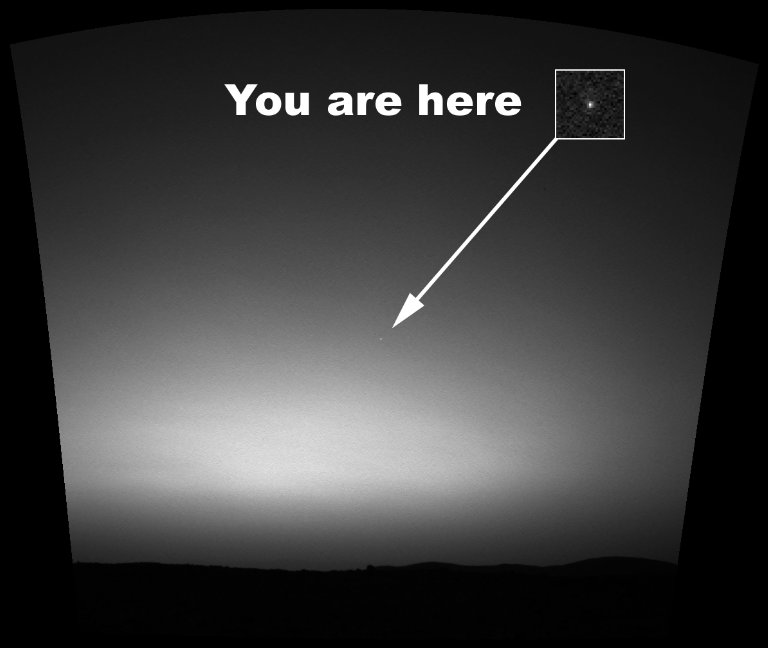
The earth, and even life on it, will, I’m confident, outlive our petty desires for money and being the king of the hill.  Scientists are getting tantalizingly close to demonstrating something that many of us already know—life exists elsewhere.  Chemical signatures of life appear as close as Venus and as far as K2-18b.  I suspect our universe is full of life.  And life is more than just rationality.  We’re creatures driven to survive and that level of will appears to be universal.  As Ian Malcolm says, “Life will find a way,” or something similar.  Earth Day should be a celebration but under too many Republican presidents it has become a plea to please stop intentionally harming our planet.  I grew up in that distorted religion known as Fundamentalism.  I learned that the destruction of the world was necessary to force God’s hand with the second coming.  The planet was here to exploit and waste since he’ll be back any day now.

Unlike many of my cohort, I decided to learn more about that perspective.  The more I learned the more shocked I became.  A warped and twisted message had been passed along as Gospel truth, and that the care the creator bestowed upon creation was merely a smokescreen to hide Jesus’ return.  I still believe we are not capable of completely destroying the planet.  Life will continue with or without us.  Life is persistent and hopeful.  That doesn’t mean we shouldn’t take care of it.  Earth Day has become a rallying point for those who see the world sensibly.  We have so much wonderful life on this planet.  In our arrogance and in our tendency to take mythology literally, we have assumed the worst.  Why not take care of what we were given?  Jesus may not come back, but perhaps the Lorax will.

There are ways to live sustainably on this planet.  It does mean that some of the richest will need to surrender some of their wealth and power.  We need to learn the habits of requiring less and appreciating more what we have.  Like most people born into the world in this era, I struggle against the desire for new things.  Novelty is natural to such curious creatures as ourselves.  But there are other such curious creatures too.  They have a place here, even as those which seem to have no curiosity do.  It’s a planet big enough for all of us.  We just need to be sensible about it.  And remember the earth today and be thankful for our home every day.

Image credit: NASA/ISS Expedition 28, public domain from Wikimedia Commons

Easter Gathering

On Easter I’m thinking of Conclave.  My wife had been wanting to see it and we watched it on Good Friday—a work day, of course, in this “Christian” nation.  In any case, it’s fascinating for a couple of reasons.  One is that, as a drama surrounding the election of a new pope, it draws you in.  The politics and intrigue are, I assure you, quite real within in the church.  People are, in seems, incurably political.  Conclave is fiction, of course.  And in reality, very few people are ever admitted to the chambers where a world leader is elected by those priests who’ve risen to the highest levels of church hierarchy.  This fictional reconstruction may give a window into that.  The other reason that I found it so fascinating is that it was quite a box office success for being a movie about a religious subject that isn’t biblical.  Appropriate viewing for Easter weekend.

There were a few striking scenes.  Here’s the outline, though: a pope has died and Cardinal Lawrence is the deacon in charge of the conclave to elect a new one.  Four main candidates exist—one a staunch traditionalist, one a liberal, one an African who is conservative, and the last a moderate American who has a past.  The pope had appointed a new cardinal shortly before his death and some people think he’d make a good pope, despite his relative youth.  One of the striking scenes is Cardinal Lawrence’s homily to open the conclave.  He preaches against certainty.  Not only is this a powerful scene, for some of us watching he is absolutely correct.  Certainty is the death of faith.  That scene alone is worth watching the movie for.  Go ahead, it’s Easter.

The other striking scene is the twist ending, which I won’t reveal here.  Anyone who’s honest and who’s lived long enough to become a pope has secrets.  Not all of them reach to the level of scandal, but the movie also emphasizes that the pope is also a sinner but must be willing to seek forgiveness.  Indeed and amen.  The problem we face today is that, even and perhaps especially in Protestantism, many people look to condemn sinners without realizing their own faults.  The movie points out that even the holiest acknowledged person within Christendom can’t make any claims to perfection.  If we’d all admit that we’re doing the best we can not to offend deity or fellow human being, perhaps there really would be cause to celebrate this Easter.  Even without a conclave.


To the Maxxx

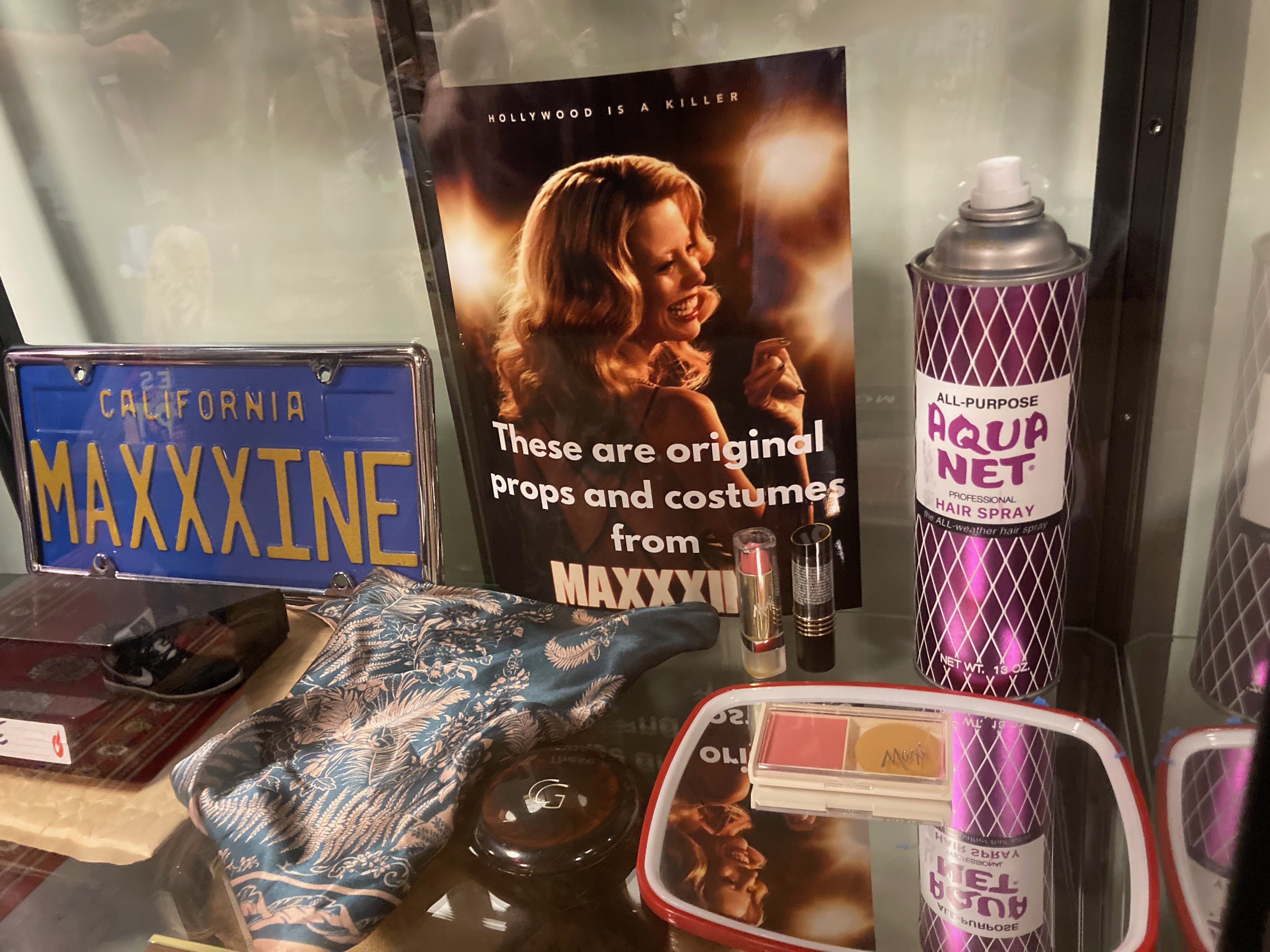
Okay, so Maxxxine will be difficult to discuss in my usual format here, but I’ll give it the old college try.  Ti West is quite a stylist when it comes to horror movies.  Friends recommended X a couple years back, and then it was revealed that it would be part of a trilogy, with Pearl coming next.  I’d seen these two and knew that I would watch Maxxxine when it came out.  More than just closure, these films all make heavy and obvious use of religion.  So much so that an extended piece could be written on that aspect alone.  I’ll try to restrain myself here.  Maxxxine is a direct sequel to X (Pearl was a prequel), following Maxine as an actress trying to break through in Hollywood.  Following the death of her X-rated film colleagues, she found an agent and has been trying to be cast in a horror film.  The movie starts with a home movie shot by her evangelist father advising her never to give up.

Just as Maxine wins the horror film role, a number of her friends in the adult entertainment industry are murdered.  Maxine refuses to assist the police, even when her best friend, who runs a video store, becomes a victim.  A private investigator is following her and she has him killed.  Those who saw X know she killed Pearl, and she’s willing to do as her daddy said, whatever it takes.  She decides to go to the PI’s client to try to stop the murders.  She discovers the man behind the violence is her father, who has learned about her X-rated work and believes she has a demon.  He has been killing her friends to lure her in and is about to brand her as a follower of Satan when the police arrive and a shootout occurs.

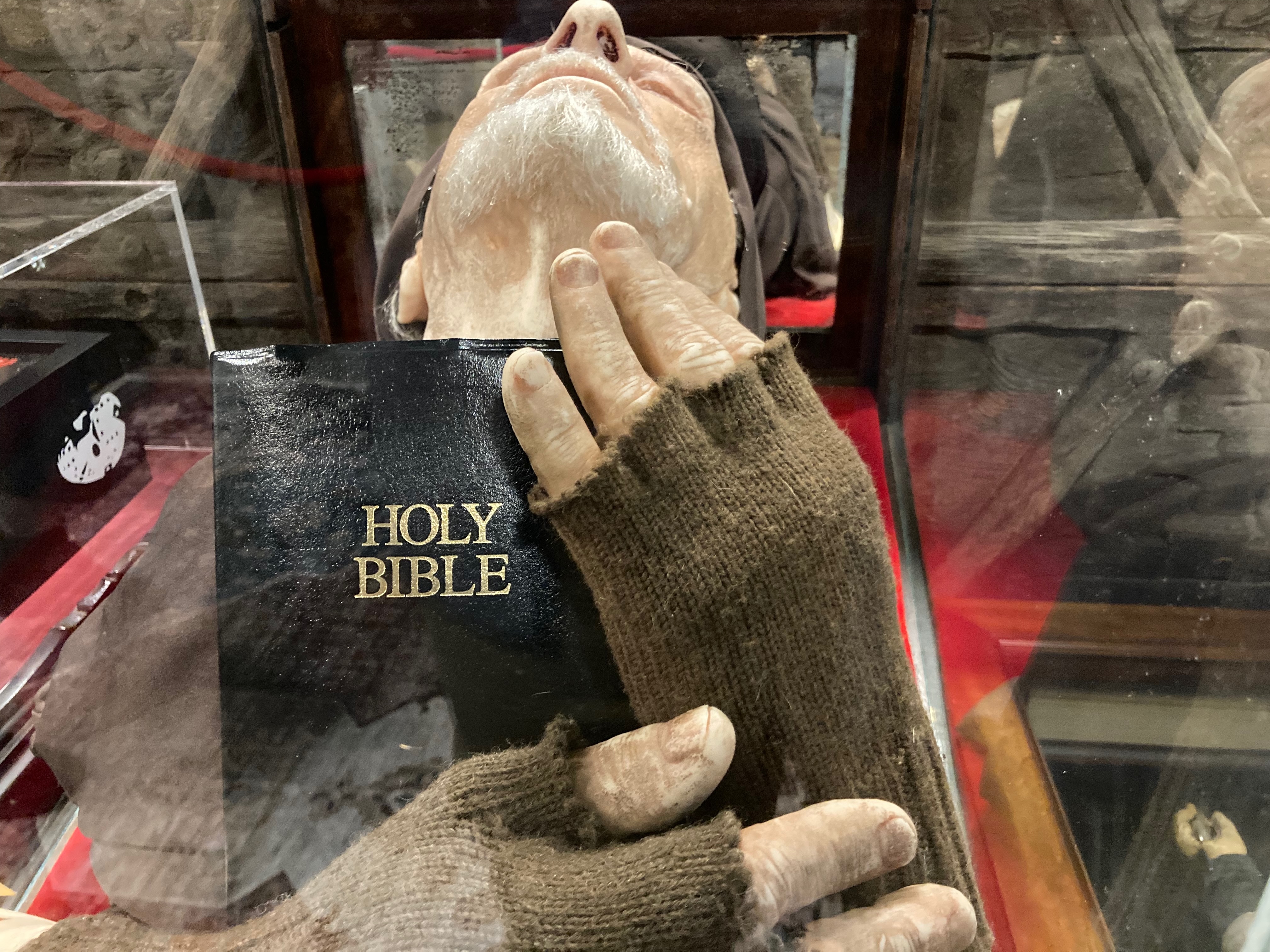
The publicity doesn’t hurt Maxine’s career prospects, even though she ends up killing her own father.  The movie is commentary on movie-making, fame, and Hollywood, as well as the potential evils wrought by religion.  My usual critique of the portrayal of religion applies.  Although Maxine’s father is made out to be a fundamentalist, when his plot is revealed it actually portrays him wearing a cassock.  He’s also shooting a snuff film to demonstrate the Devil’s doings.  A real fundamentalist wouldn’t wear such Catholic getup.  Many films that portray fundamentalists clearly don’t understand what separates them from other Christian denominations.  The entire X-trilogy is based on religion and how its constraints lead to horror.  There’s a lot to unpack here, even with the occasional gaff.


The Sin of Syncretism

Syncretism may not be dead, but it should be.  What is it?  Well, in my field it means a religion that has been “corrupted” by the adoption of some element(s) of another religion.  The term was all the rage while I was working on my doctorate which involved, of course, comparative religions.  By the time I was being edged out of academia, there was a recognition afoot that the concept of syncretism was itself corrupt.  It depends on the idea that there is a “pure” form of a religion and that foreign elements debase it.  There is no pure form of any religion, and the more we learn of the history of religions the more obvious it is that religions influence each other, and have always done so.

What prompts this post is that I increasingly see clergy using the term “syncretism.”  Now, clergy tend to run behind scholars by a fair pace.  Those of us out there trying to figure out what religion is and how it works have a daily duty to analyze and reassess and theorize.  Clergy have many other things to do and read scholarly tomes as time permits.  Syncretism is now only used by conservative scholars who believe a religion (usually the form of their religion that they personally happen to believe) is pure.  Other religions are corruptions.  Ironically, I once heard a Unitarian Universalist minister use the term.  For a religion that accepts all other religions as valid, it struck me as odd.

Photo by Noah Holm on Unsplash

As I used to tell my students, nobody knowingly believes “the wrong religion.”  By far the majority of people accept the religion that their parents taught them.  Often without question.  I know I did.  Then I studied religion.  I began to realize things weren’t as simple as “that old time religion” pretended they were.  Fundamentalism borrows from other religions just as much as any other tradition does.  Religions don’t have sharp boundaries.  There are fuzzy edges between them.  Those edges are permeable and quite wide.  Syncretism was a concept that religion scholars used, often in the context of monotheistic religions, to show where impurities entered.  The thing is, impurities were there from the conception on.  If one religion were born fully grown from the head of Yahweh, it would be obvious, wouldn’t it?  The Bible describes the religion of Israel and how it borrowed and adapted from other traditions.  Thus it was in the beginning, is now, and ever shall be.  The world would be a much better place if we made our peace with this and buried syncretism in the graveyard of obsolete ideas.


More Than It Seems

One of the most fascinating mystical concepts is the idea that words and individual letters have some kind of magical power.  This is perhaps illustrated by the way certain words gather an aura of mystery that can be quite unlike their original denotation.  “Kabbalah” is one such word.  The reason I read Joseph Dan’s Kabbalah: A Very Short Introduction is that I’d found myself growing increasingly confused by the usage of the word.  Given that this is me writing, it was a horror movie that got me wondering.  In one of the movies discussed on this blog (happy hunting and viewing!) one character tells another something like, “It’s the Kabbalah.”  This is said in reference to an ancient and mysterious book.  There is not ancient and mysterious book called The Kabbalah.  So what is it?

I’m not going to be able to give a satisfactory answer to that here.  Dan has about 30,000 words to describe it and he admits that’s not really sufficient.  Sometimes I think, if one could make a living doing it, I’d have been content to sit at the feet of rabbis to learn the depths of the many ancient books Judaism has given the world.  I first became aware of some of them in college, majoring in religion.  At each step of my education and career I’ve uncovered more and more.  Reading this little book added yet further examples.  Judaism, and its direct descendant Christianity, were full of books.  They still are.  And books are full of words and perhaps these words have some kind of mystical power.  But wait, the point of this brief tome is to suggest the word itself isn’t just about mysticism.

Kabbalah can refer to many different things, some of them hardly mystical at all.  For the modern usage of the word, which includes Christian as well as Jewish Kabbalah, we have to get to, well, modernity.  The concept stretches far back in Judaism and means basically, “what is received.”  The initial reference is to Moses on Mount Sinai.  Then there’s the oral Torah, codified in Mishnah and Talmud.  And books, so very many books!  The rabbi is one of those permitted to, and sometimes expected to, come to know these ancient texts and their modern applications.  That’s not to suggest Judaism is particularly mystical.  It can be, just as Christianity can be, but isn’t necessarily so.  It’s complicated.  If you’re curious, whether because of a horror movie or not, I can recommend this book.  It’ll give you plenty to think about, and even more to read and learn.


What You Believe

This is an important and frustrating book.  I just can’t figure out if the black-and-white thinking is disingenuous or if it was really believed.  I don’t mean about the subjects of Daniel Dennett and Lisa LeScola’s Caught in the Pulpit.  I wonder that about the near-arrogance of the model they propose while exploring the very real problem of, as their subtitle says Leafing Belief Behind (for clergy).  You see, I’ve read, and even walked a little way with the “new atheists” (my private beliefs are private but one thing I will say is that beliefs constantly change for anyone who seriously seeks the truth.  If you want to know them, get to know me).  This book, which explores clergy and other religious folk who’ve lost their faith, addresses something very real and very important.  It’s just that the framing feels wrong.  I appreciate that the authors exhibit such sympathy for their subjects—it is difficult to change the religion in which you were raised.  But it it’s not black-and-white.

Apart from the “either/or” outlook, there’s also the fact that what many people interviewed lost was not so much a belief in God as it was a belief in the Bible.  These are different things.  No doubt, our love of Bible has caused quite a lot of damage.  Since many believe the Bible to be a magic book, losing that particular lens can make things blurry.  I guess that’s what I missed in this book—a sense of blurriness.  Scientism is a belief system just as fundamentalism is.  Interestingly, I keep coming back to something that should be obvious to scientists—our brains did not evolve to learn “the truth.”  Our brains evolved to help us survive.  There is much we still don’t know.  What’s wrong with being humble about it?  Perhaps it’s sour grapes since I was ousted from a religious career just when this study was taking place, but I didn’t qualify because I believed.  Not that they’d have found me, in any case.

Many clergy, I know, do not believe what their congregations think they believe.  As you go into theological education some things are revealed that it is in nobody’s best interest to broadcast.  It might be good, however, if it weren’t atheists trying to lead the charge.  I was pleased to see Dennett himself suggest this in the book.  I was also glad to see him admit that “the new atheists” do not struggle with the very real issues raised by theological education (whether in formal settings, or through private reading).  There is a very real disconnect here, and this book serves a valuable function in bringing it to public attention.  What’s missing is a solution.


Indigenous Gods

Engulfed by capitalism, it is too easy to ignore the indigenous population of this country.  I grew up thinking, in some way, that American Indians were extinct (this was small town America, after all).  Then we visited a place—in upstate New York, I think, but the recollection’s hazy—where there were real Indians.  This was before exoticism was a bad word, and I thought them quite exotic.  Maybe it was the way I was raised, but I’ve never thought of myself as better than anybody else.  Certainly not on the basis of race or gender, or even personal worth.  In any case, there were still Indians.  I’ve always been an admirer of their culture.  Jennifer Graber’s The Gods of Indian Country is an informative monograph on, as the subtitle says, Religion and the Struggle for the American West.

My interest in American history is relatively recent.  Growing up, I always found European history of greater interest, and then, for many years, the ancient history of the states along the eastern coast of the Mediterranean.  It was the antiquity of it all.  History feels safer when it’s at a great distance.  American history is not old.  When hearing that some of the events discussed by Graber took place in the 1910s, I kept thinking, “were we really that naive just over a century ago?”  Or was our nation willfully blind to the plight of the people who lived here before the Europeans arrived?  The narrative has changed.  And if it hasn’t, it must.  How would we like it if, say, aliens landed and assumed the right to take over capitalistic America?  It’s only our arrogance that prevents us from treating Indians better.

Religion, particularly Christianity, fueled many interactions with the Indians, as Graber ably demonstrates.  The assumption was that Indians had to assimilate to capitalistically-fueled Christianity.  Private ownership.  Free trade.  Otherwise the cultures could not share the land.  Treaties were broken because the “Christian” rules of the new overlords demanded it.  Graber also explores some Native American religious practices as well, chiefly among the Kiowa.  Since the book is fairly brief, it doesn’t include any kind of comprehensive coverage of Indian religion, nor, of course, of early American settler religion.  What happened is that religion and politics joined forces to justify stealing what belonged to someone else.  Those who study the history of religion recognize this pattern.  It isn’t a rarity, unfortunately.  Although my interest in American history is recent, it is growing.  What happened in your own backyard determines so much of how we’ve become who we are.


Non-Believer

Heretic may be the ultimate horror and religion movie.  It’s also a film you may need to see multiple times to follow the all-important dialogue.  It’s a movie that would’ve been front and center in Holy Horror.  And it’s deceptively simple.  As I’ve written many times before, I try to know very little about a film before I watch it.  This if often difficult with the internet and people wanting to tell you about the latest cinematic marvel.  I managed to watch Heretic knowing only that it was about two Mormon missionaries visiting a potential convert.  If you want to leave your level of knowledge at that point before seeing the movie you might not want to read on.  You have been warned.

e two women in on an inclement evening, assuring them his wife is in the next room.  He then, ever so innocently, questions them about their beliefs and about religion in general.  The missionaries grow increasingly concerned that there is no wife and that Mr. Reed (Grant) has been toying with them.  They find themselves locked in his house as he unrelentingly questions them and asking them what, and why, they really believe.  Charmingly he assures them they can leave at any time, but they have to pick a door—the lady and the tiger-like—marked either belief or disbelief.  (Both lead to the same place, and it’s not out.)  Using a trick he attempts to get them to die by suicide.  When they refuse, he kills one of them but the other discovers the truth, “the one true religion.”  I won’t tell you what it is.

The film is remarkable in that there is no horror without religion.  I made a similar argument about The Wicker Man, in my book on the movie.  When we ask ourselves what makes a horror film scary, seldom is the answer overtly “religion.”  Usually it’s a monster of some description.  Or the threat of annihilation.  Or plain old death.  Religion can be scary.  In fact, it has historically been the nepenthe for death and sorrow in this life.  Some would trace the origin of religion to that very phenomenon.  I’ve been writing for years on this blog that religion and horror belong together.  They overlap.  They blend.  They, on occasion, may be the same thing.  Heretic displays that clearly.  If I haven’t spoiled it for you, I highly recommend it.  I can honestly say it’s the first movie that has literally given me nightmares, in many, many years.


Getting By

There are some books, such as Trina Paulus’s Hope for the Flowers, or Charlie Mackesy’s The Boy,  the Mole, the Fox and the Horse, that are inherently hopeful and that you like to have around.  Especially in the coming four years full of hate-filled rhetoric.  My wife asked for Regina Linke’s The Oxherd Boy: Parables of Love, Compassion, and Community, for Christmas.  Of course, I read it too.  It is yet another to add to this hopeful shelf.  The thing about these three books is that you could easily read them all in an unrushed afternoon.  All three are profoundly hopeful outlooks on life.  I would recommend having them at hand.  The Oxherd Boy is a combination of beautiful artwork with bits of wisdom drawn from Taoism, Buddhism, and Confucianism that can keep you centered in difficult times.

There’s no real storyline here, but rather reflections.  “Eastern wisdom” is kind of a tired trope, but the “religions” of that part of the world can infuse a bit of sanity into many of the facades western religions throw up.  I’m not anti-Christian; I fear our society is.  It has taken one of these facades and claimed the name “Christian” so that it can get its hate on and feel righteous doing so.  There are seldom positive benefits when politics finds religion.  If any.  The Oxherd Boy reminds us to look for the good in simple things.  A life with friends and one in which love is the primary outlook.  I believe Christianity began that way, but it became politicized in under four centuries and politics tend to engender hatred.  A truly Christian state, through and through, has never, ever existed.  And it’s not coming here.

We know hate mongering will take the norm.  In fact, while out driving recently I noticed an increase in rude and angry behavior on the part of not a few drivers.  There was a noticeable uptick in such behavior shortly after Trump’s first election.  In a nation of people that imitate what they see on the media, I suggest staying inside and reading a book.  I would recommend The Oxherd Boy among them.  As long as you’re stocking up, don’t forget Hope for the Flowers and The Boy, the Mole, the Fox and the Horse as well.  Books don’t need to be written by academics to try to make the world a better place.  In fact, sometimes I wonder about the choices I’ve made.  So I’ll pull down the books that give me hope, and reflect.


Hoping for 2025

Those who predict, as pollsters repeatedly remind us, can’t really prognosticate.  In ancient times some prophets were thought to be given (usually conditional) views of the future directly from God, but even these weren’t fail-proof.  Nobody knows what 2025 holds for us.  I love holidays, but New Year’s Day is one of the more chancy ones.  I don’t stay up until midnight because if I do I don’t sleep that night (I tend to awake just a couple hours after midnight most days), and I don’t make resolutions since I try to correct errors in my life as soon as I find them.  Maybe New Year’s could stand a makeover.  Something beyond staying up late and drinking.  In my experience, the next year comes anyway.  And it should be an opportunity for hope.

Interestingly, although attempts have been made to Christianize the day, it tends to remain secular.  The current date was established in the west because of the rebranding of solstice celebrations to the birth of Jesus, but the religious elements never really stuck to New Year’s Day.  It marks a clean slate for taxes and other financial resets.  Importantly, it’s a day off work.  Maybe we should rebrand it.  Honestly, I don’t have any suggestions myself—this sounds like a job for a committee.  Who wouldn’t want to be on a holiday committee?  And holidays do evolve over time.  When it was Columbus Day many employers didn’t make it a paid holiday.  Rebranded as Indigenous Peoples Day, some progressive companies did.  See what I mean?  Holidays are what we make them.

The more I think about this, the more I wonder if we shouldn’t reinstate the twelve days of Christmas.  Epiphany (aka Insurrection Day) comes on January 6, and, pre-Adam Smith the twelve days lasted until then.  New Year’s could be one among siblings.  I’m sure that if we tried hard enough we could come up with some branding for each day.  The Brits already have Boxing Day on the 26th.  The Scots make the 31st Hogmanay.  Our task, should we choose to accept it, would be to fill in the 27th through the 30th and January second through the fifth.  If we divide that up and send it to committee I’m sure we could come up with something.  It seems we already have the ten lords a-leaping lined up.  Said lords prefer having two more work days this week, I know.  Perhaps New Year’s, or even the Christmas season, could stand a bit of workshopping so we can really catch up with our sleep.  Here’s hoping, for 2025.

Let’s give them time to arrive! Image credit: The Adoration of the Magi – painting by Gerard David, Creative Commons CC0 1.0 Universal Public Domain Dedication by the Metropolitan Museum of Art

A Christmas Parable

And it came to pass in those days, that there went out a decree from Donald Trump that all the world should be taxed.  2 (And this taxing was first made when American troops were pulled from Syria.)  3 And all were to be taxed, every one to help build a wall.

4 And Joseph had just bought a house in Nazareth, but had to go into the IRS office, unto the city of record, which is called Bethlehem; (because he was of the county of Northhampton:)  5 To be taxed with Mary his espoused wife, being great with child but no insurance.  6 And so it was, that, while they were there, the days were accomplished that she should be delivered at St. Luke’s. 7 And she brought forth her firstborn son, and wrapped him in swaddling clothes, and laid him under a bridge; because there was no housing for them in Bethlehem.

8 And there were in the same country soldiers abiding in their bases, keeping watch over their radar by night.  9 And, lo, drones appeared before them, and the glory of aliens shone round about them: and they were sore afraid.  10 And the ETI said unto them, Fear not: for, behold, I bring you good tidings of great joy, which shall be to all people.  11 For unto you is born this day in the city of Bethlehem a Democrat, which is the Prince of Peace.  12 And this shall be a sign unto you; Ye shall find the babe wrapped in swaddling clothes, lying under a bridge in Bethlehem. 13 And suddenly there was with the UFO a multitude of the heavenly host praising democracy, and saying,  14 Glory to the American ideal in the highest, and on earth peace, good will toward women and men.

15 And it came to pass, as the drones were gone away from them into heaven, the soldiers said one to another, Let us now go even unto Bethlehem, and see this thing which is come to pass, which the ETI hath made known unto us.  16 And they came with haste, and found Mary, and Joseph, and the babe lying under a bridge.  17 And when they had seen it, they made known abroad the saying which was told them concerning this child.  18 And all they that heard it wondered at those things which were told them by the soldiers.  19 But Mary kept all these things, and pondered them in her heart.

20 And the soldiers returned, glorifying and praising democracy for all the things that they had heard and seen, as it was told unto them.

Image credit: The Harmsworth Monthly Pictorial Magazine, Volume 1 1898-9; public domain via Wikimedia Commons

Yes, Maybe

The truth is, only experts and professionals can really keep up with horror films.  As the most successful genre of, well, genre films, there are tons of them.  I completely missed Ouija when it came out about a decade ago, despite the fact that it did well at the box office.  The only reason I watched it now was that a friend sent me a list of horror films from a reputable website that recommended the prequel to Ouija, but I felt that I needed to see the original before finding out what happened behind the scenes.  The original didn’t fare well with the critics and it’s pretty clear why.  The story, although it has twists, isn’t really convincing and the acting is off at times.  (Five teens left alone to watch a haunted house while their parents just take off for weeks at a time?)  Still, it’s atmospheric, and it plays on a scary theme.

I must confess that ouija boards frighten me.  I consider myself both rational and skeptical (in the classic sense), but there’s just enough doubt with spirit boards.  I’ve never owned or played with one.  (Interestingly, the movie was funded in part by Hasbro, the current seller of the game.)  In fact, when I discovered the Grove City College yearbook was called Ouija, I was a bit put off.  (By the time I graduated they’d changed it to The Bridge.)  Although GCC wasn’t really traditionally gothic, like most colleges it had its share of ghost stories.  Even in conservative Christian country things go bump in the night.  And while most stories told about tragedy after using an ouija board are unverified in any way, still…

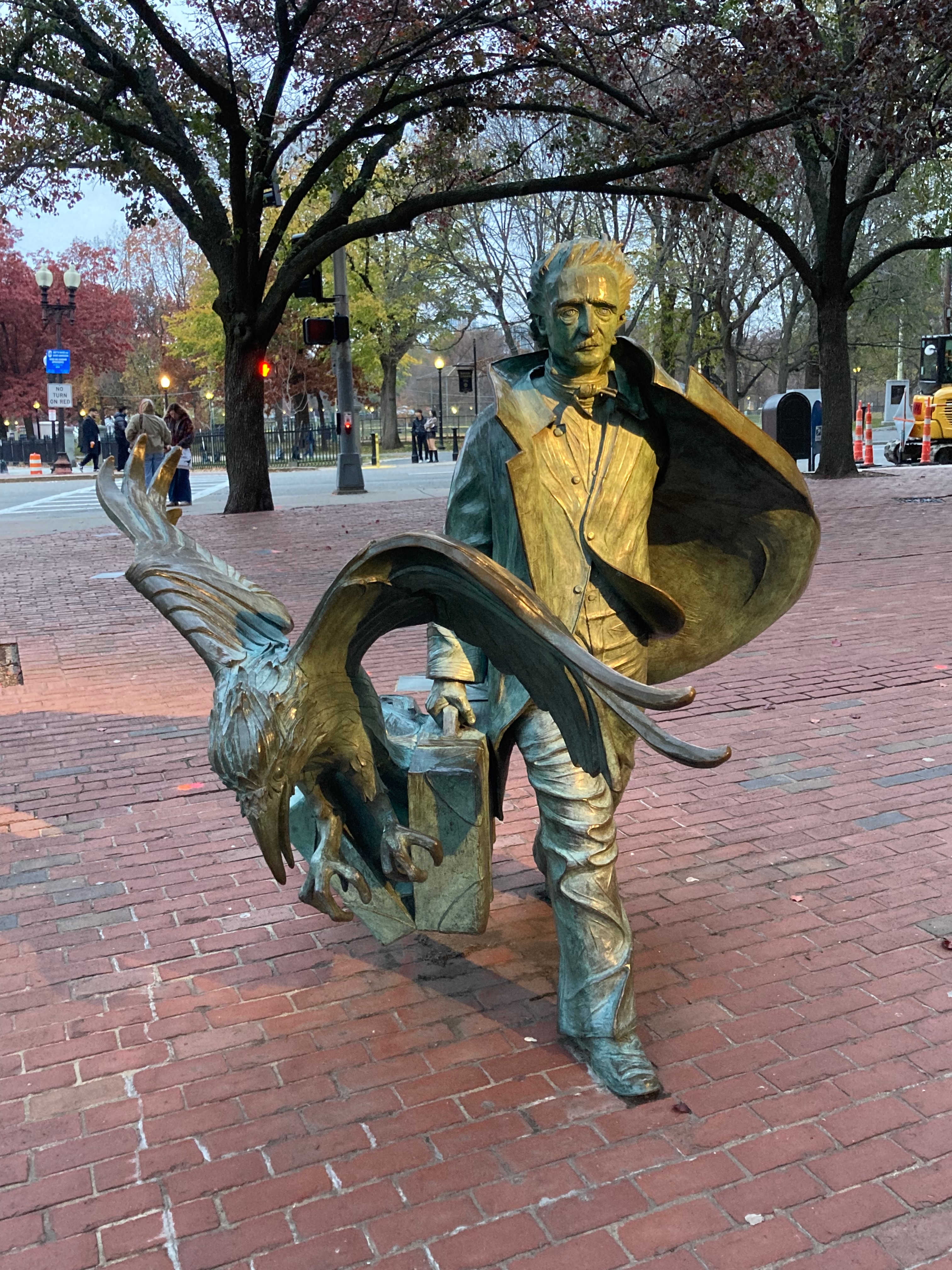
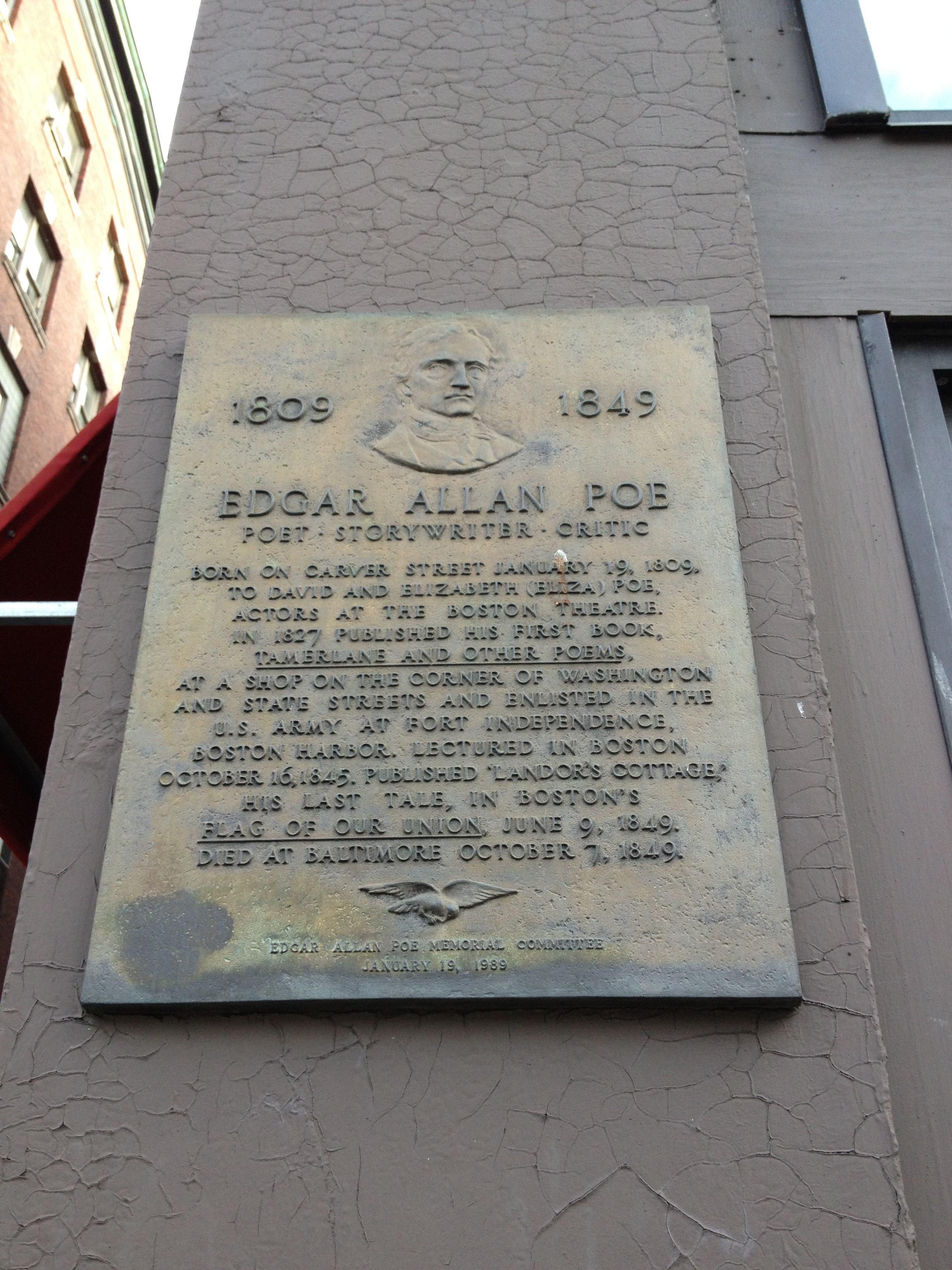
So, the movie posits a deceiving entity that kills teens who contact it.  I suspect I need to watch the prequel to find out why.  It does manage to have a few scares, but it’s mostly about atmosphere.  I agree with Poe on this point—atmosphere’s often the point of a story.  Although the critics are right (who discovers a body in the basement and goes to an asylum for advice instead of notifying the police?), some of us do watch horror films for this kind of haunted house experience.  And while I’ve got Poe in the room, the threat to young ladies is there.  One thing missing, though, is any talk of religion.  No Ed and Lorraine Warren warnings of demons.  This is a straight-up nasty dead person who likes to kill those who want to communicate with their dead friends.  It does create a mood.  And it cries out for a prequel.


Hungry Eyes

They’re watching.  All the time.  I may be a quasi-paranoid neo-Luddite, but I have proof!  Who’s the “they”?  Technology nameless here forevermore.  So my wife and I attend Tibetan singing bowls once a month when we can.  It’s the night I get to stay up late even though it’s a “school night” and get bathed in sound.  Our facilitator is a kundalini yoga instructor.  To those of you with experience, you know what that means.  At the end of each session we sing the “Longtime Sun” song.  Each and every month the next morning I groggily look it up.  I know it’s a recent song (hey, I’m in my sixties) but I can never remember by whom.  So for the record it was written by Mike Heron of the Incredible String Band and it’s part of a piece called “A Very Cellular Song” on the 1968 album The Hangman’s Beautiful Daughter.  (Now I remember!)  Okay, so I’ve got that out of my system. (I must add that this is disputed, with some claiming it’s an old Irish blessing. But note, AI only complicates the issue because it doesn’t do actual research.)

Incredible String Band: Image credit—Bert Verhoeff / Anefo, under the Creative Commons CC0 1.0 Universal Public Domain Dedication, via Wikimedia Commons

So how’s that proof?  Well, there’s an unconventional website I check daily.  Are you surprised?  Really?  To get headlines I have to reload it daily and the ads sometimes refresh.  I checked this site a mere five minutes after searching “Longtime Sun” for maybe the fifth time and the ads in the refreshed page were for singing bowls.  Just five minutes earlier I’d been searching a hippie tune and already they were preparing ads for me.  You see, “Longtime Sun” is a standard of many (I gather from the interwebs) kundalini yoga classes.  So much so that it’s commonly said that this is a traditional Tibetan song.  Well, I suppose to call it “Very Cellular,” or even “Hangman’s Daughter,” might harsh the experience a bit.

Kundalini yoga is very esoteric stuff if you read a little more deeply.  For me such reading is an occupational hazard, so I’ve read enough to know that many respectable people might be a bit shy upon hearing the details.  That’s not to say that it’s ineffectual on the level of singing bowls.  I have great respect for esotericism, although Hinduism isn’t in my background.  But if “they” know what kundalini teaches, what kinds of ads might begin to show up on the websites I visit?  What’s truly amazing is that a web search for a specific song brought up an ad for something that would be puzzling, were a reader innocently wanting to find out about “A Very Cellular Song.”  For academic purposes, for instance.  Of course, they know, you can merch anything.  You can trust the internet only so far. And they are watching.


Festival Spirit

Festivals.  These common events, often outdoors, are ways to be around other people while not really seriously engaging them.  I spend a lot of time by myself, or alone with family.  We don’t know many folks locally (I’m pretty sure very few locals read this blog), so online community is often how I connect.  Still, even we introverts crave the human touch now and again.  In October we attended the Covered Bridge and Arts Festival in Bloomsburg, Pennsylvania.  It is one of the largest free festivals on the east coast, and just a couple of hours from us.  While there, we learned about the much smaller Riverfest in nearby Berwick, held the same weekend.  We decided to stop there on our way home.  The thing about craft fairs is that you get used to seeing pretty much the same kinds of things over and over.  That’s fine, because we’re here for the atmosphere.

At one of these events, while my wife and daughter were examining the wares, an owner came up to me (I was just outside the tent) and said, with a bit of surprise and wonder in his voice, “You have the spirit of God.  You can tell someone who does.”  Now, this can be a sales ploy, of course, but he seemed sincere.  He really didn’t nail my spirituality, but he was correct that I am a very spiritual person.  Given his talk of Jesus, I suspect he’d have been put aback if I told him that horror films are one form of spiritual practice for me.  So I remained relatively noncommittal until he turned to my wife to tell her about the products in his tent.  Still, the encounter left me reflective.  I don’t think myself any kind of spiritual guru, but I have been singled out by a number of people over the years and I wonder what it is that they see.

Some New Agers suggest we all have auras.  That’s generally considered paranormal, of course.  I’ve known people, however, who’ve been accurately “read” by strangers who seem sensitive to such things.  Or are extremely good at cold reading.  When I go to a festival I don’t mean to have my aura showing.  I spend a lot of time alone, so maybe I’m hiding my aura in my house.  No neighbors have complained about the light pollution, in any case.  I admire those who see something special in strangers, even if it’s an attempt to get them to buy something.  That’s why we go to festivals, I guess: to have a kind of spiritual experience that comes from being with others.


Paranormal Religion

I remember well what it was like to be an evangelical.  Measuring everything by what I thought the Bible said, fearing those things that seemed to come from outside.  Being very concerned with salvation and its opposite.  At the same time, I was fascinated by the paranormal.  As I child I was teased for these interests and subsequently buried them.  Then I had a slow, protracted, and continuing waking from dogmatic slumber.  So it is natural that I would want to read R. Alan Streett’s Exploring the Paranormal: Miracles, Magic, and the Mysterious.  I didn’t know how he would approach the subject, and I didn’t know where on the evangelical spectrum he fell.  Still, I’m always interested to see how others handle what we all know—strange stuff happens and there is no real explanation for it.  Scientific method may one day be able to address some of it, but at the moment it generally falls outside the bounds.

Streett’s book is somewhat autobiographical, from his non-religious childhood, believing in parapsychology, through seminary and having an evangelical awakening, to the point that he stopped supposing such things were demonic, and on to where he stands at the moment—thinking that most such things can be explained by brain science and alternative states of consciousness.  There are a number of interesting situations and concepts described in this book; I learned quite a bit when he discussed different brain states.  I understand his theological rejection of potential realities behind the phenomena he discusses (mostly mediumship, but also reincarnation and faith healing) but don’t always agree with the conclusions.  There is much in the world that theology can’t explain.

Something that is perhaps overt between the covers, is that the paranormal is something that happens to evangelical, liberal, Muslim, Jew, Hindu, Buddhist, atheist, agnostic, and none alike.  What differs is the interpretation, based on various faith traditions and their tolerance for that which is outside.  Evangelicalism is a worldview, perhaps more so than it is a theological position.  Non-divine miracles, or whatever you want to call paranormal occurrences, don’t fit comfortably into that worldview.  Other interpreters, also raised in Christian traditions (Catholicism, for example, is quite open to mystical happenings that can fall into the paranormal category), might approach the question in a different way.  Dialogue is important, however, and trying to make sense of this world we live in, in my humble opinion, has to reach outside the reductionistic view that brains alone account for human experience.  Streett’s account offers a reasonable perspective on the issue from an evangelical outlook.