More about Nightmares

I became aware of TheoFantastique many years ago.  Being new to social media myself, I was impressed at how professional and intelligent the site was.  Eventually I decided to introduce myself to John Morehead, the creator behind it.  (It is possible to be shy on the internet, so this took a few years.)  When Holy Horror came out I asked if TheoFantastique would post a review of it and got an even better response with an interview.  Now that Nightmares with the Bible is out the tradition has been kept going.  If you’d like to see an interview on the book take a look here.  One of the topics that comes up in discussion is how popular culture—TheoFantastique is cleverly named in that regard—influences the way we think about religion.
Religious studies was, not so long ago, a growing field.  Many of us have been trying to understand why interest began to sag, somewhat abruptly, and came to the point that it now feels like an endangered species.  Two of the consequences of this are important: one is that we don’t invest in studying what motivates just about everything in American politics and society, and the second is that the average person gets her or his information about religion from popular culture.  Movies, for example, are impactful, brief, and entertaining.  Humans are visual learners and although books punch above their weight in the learning division, having someone show you something is faster and requires less commitment than reading.  Academics, most of whom love reading, have been very slow to cotton onto this fact.  Society learns by looking.

That observation stands behind both Holy Horror and Nightmares with the Bible.  Both of these explorations look at how people come to understand two aspects of religion: the Bible and demons.  Instead of attempting to tackle all of religious studies (nobody can) or all of cinema (ditto), these books look at the horror genre to see how fans come to understand the Good Book.  As the interview explores, other scholars—mostly younger ones—are beginning to realize this is where people live.  It’s rare to find someone who commits to reading an academic monograph unless they’re in the academy.  Even academics, however, watch movies.  When the locus of information shifts to popular culture we need to start taking seriously what popular culture says.  More people will watch The Exorcist than will ever read an academic monograph about demons.  If we want to understand how people understand religion—what religion is—we need to pay attention.  And TheoFantastique is a great place to start. 

Time To Think

Although I’m not Roman Catholic, I often thought about joining a monastery as a teen and twenty-something.  The idea of spending all my time devoted to contemplating the ultimate reality still has a strong appeal.  I know quite a few rationalists who have no time for spirituality, but it seems to me that we all need it for facing death.  Most people, I know, avoid the topic if at all possible.  Contemplatives, on the other hand, spend quite a bit of time preparing for it.  Since it’s inevitable that makes sense.  I often wonder why people consider the most common thing in human experience with such trepidation.  If it’s a source of anxiety, shouldn’t it be confronted?  That’s not to say we need to look forward to it, but it does mean we shouldn’t run from it either.

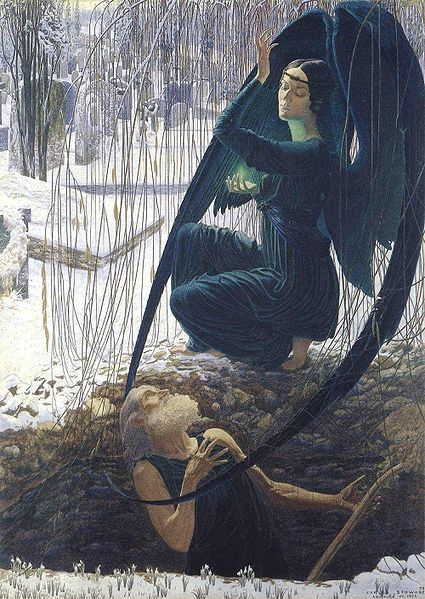
Carlos Schwabe, Death of the Undertaker; Wikimedia Commons

The combination of Christianity and rationalism, it seems to me, lead to this terror.  Christianity because it views death as an enemy, and rationalism because it has no comfort to offer.  I’ve been reading about how pre-Christian cultures thought of death.  They didn’t display the fear that Paul seems to have introduced into the equation.  Since American culture is so heavily influenced by the Bible (as was European culture before it), we have adopted the scriptural view that death is a problem.  The Hebrew Bible, in which there was no real afterlife, was less concerned with making sure you avoided Hell—they had no Hell to avoid.  The anxiety seems to have been introduced by, ironically, the concept of resurrection.

I’ve noted on pieces I’ve written for other websites that resurrection is among the favorite themes for horror films.  One of the reasons is precisely this discomfort in taking death at face value.  Our religions keep us aware of the spiritual side of our nature.  They have developed around the world in different forms and all of them address death in some way.  Most without a profound sense of anxiety.  There is some irony in cultures that adopt resurrection as a theological tenet are among those that try to avoid death most assiduously.  It plays into those cultures’ views on abortion and capital punishment.  As well as their performance of social justice.  While Paul asked death where its sting was, and seems legitimately not to have feared it, in the centuries following his position seems to have eroded.  There seems to be plenty to contemplate here, if only secular society had monasteries.


Well Grounded

Earth Day feels like it’s actually Earth Day for the first time in four years.  Many of those with more common sense than gullibility know that we have only one planet.  Even as we have achieved flight on Mars, any hope of going elsewhere (and some of us would rather not) is many years away.  Earth is our home and we can live on our planet without destroying it.  Other animals also change the environment, of course.  The problem arises when one species becomes unchecked and begins changing things for their benefit only.  Or what they perceive as their benefit only.  Life evolved on this planet deeply integrated.  The more we study nature the more we see how interconnected it is.  Thinking ourselves special, we’ve placed a wall between humankind and everything else.  It’s an artificial wall.

If you read about nature you’ll be amazed.  Trees, perhaps the true heroes of this planet, make our life possible.  They couldn’t exist without the fungi that partner with their roots in a symbiotic relationship.  If there had been no trees our ancestors would’ve been easy prey to larger predators and would likely not have survived.  Large industrial corporations destroy trees as if they’re a nuisance.  They are our life.  Even as governments with “strong men” leaders destroy the forests in “their” countries, we are losing the very biodiversity that makes life possible on this planet.  There’s room for humans to get along here without destroying the environment that supports our very life.

One of the hidden motives in this scenario is a strange development within Christianity.  A literalism that would’ve shocked even old Augustine developed around the turn of the last century.  That literalism was used by corporations that saw the earth as a resource to be exploited and claimed that we, unlike animals, owned the planet.  If you own a home would you destroy it just because you could?  What good would it do?  No, this Earth Day let’s take the time to consider our religion and its implications sensibly.  The Bible does not advocate destroying what God created.  It may have been written too early to comprehend evolution, but that was never a problem for early theologians.  When fused with capitalism, however, this religion provided everything greedy businesses needed to exploit the planet for its own purposes—the god Mammon.  Just this week we flew our first flight on an inhospitable planet far away.  Today let’s think of how we might protect the only home we have under our feet. 


Street Teaching

When I’m out on the street—not so often these days—I’m sometimes accosted with strange questions.  This has happened to me quite a few times over the years.  Recently, when I was taking the recycling out for my daughter on a weekend visit, I saw a couple guys in a car right by the receptacle.  I was wearing a mask, due to, you know,  Covid, so I wanted to keep social distance.  The one in the driver’s seat asked if I was going to dump the recycling and when I said I was his partner said “I’ll take care of that for you.”  They had a plastic bag full of cans and were loading glass bottles in their trunk.  I thanked them for their help and turned to go.  As I was walking away one of them called out.

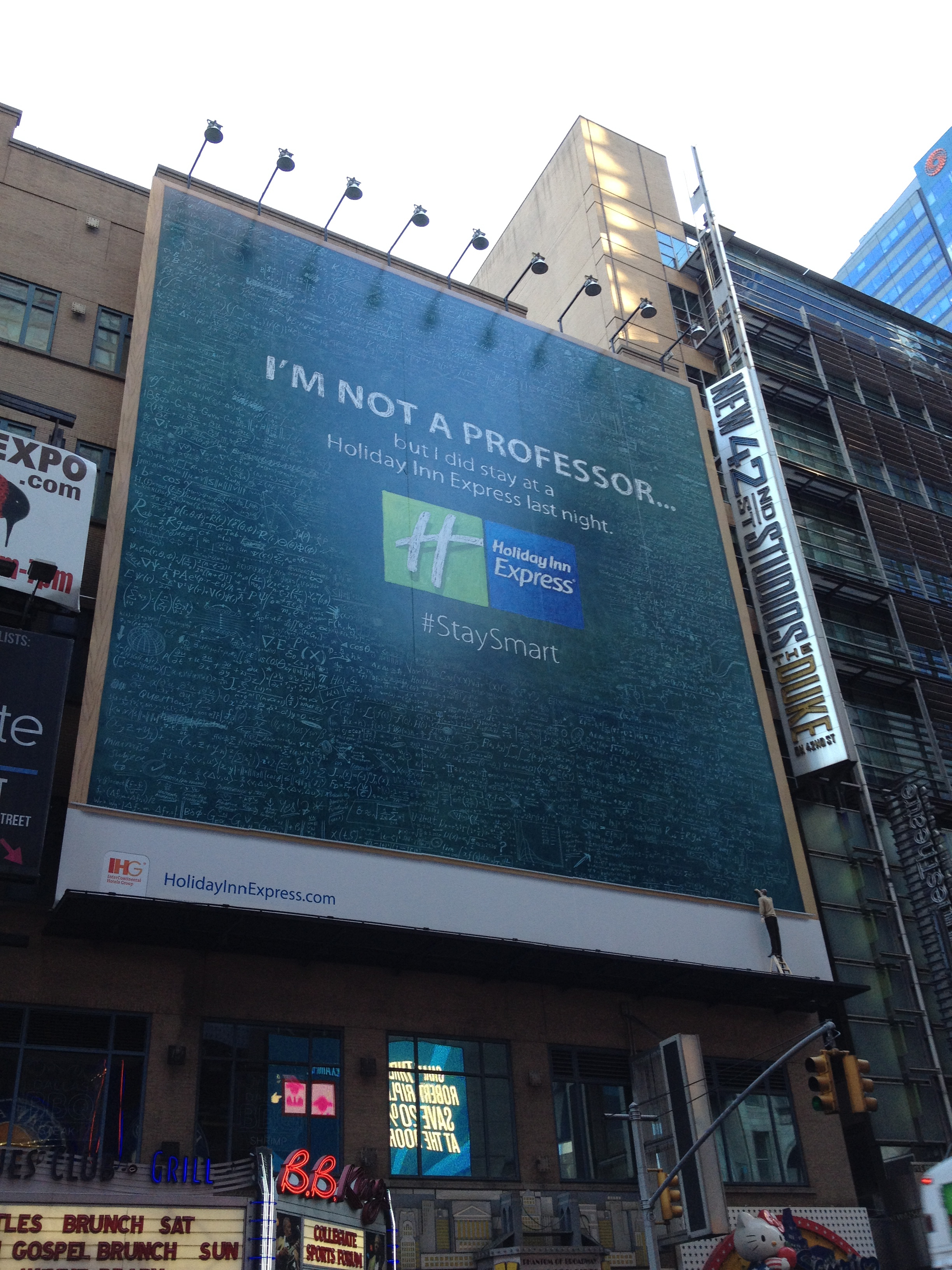
“Hey!  Are you a teacher?”  I get asked that a lot.  Only the academy refuses to recognize it.  I acknowledged that I used to be.  “What level?” they asked.  I allowed as I used to be a college professor.  “Where?” I told them most recently at Rutgers.  “What’d you teach?”  This is where it always gets interesting and I start to sweat a little.  I told them religious studies.  I also said that’s why I couldn’t find a teaching job.  “The best information we ever had on religion came from a six-year old.  You know what the F in faith stands for?”  I shook my head.  “Forgiveness.  Without that the rest of religion means nothing.”  I told them I could accept that.

Then as I was turning to go they called out, “You know the acronym for Love?  Living our values every day.”  I told them they were now the teachers and I was the student.  They responded by telling me that they’d just sold a song they co-wrote for a million and a half dollars.  I expressed surprise at that.  They told me the title and said it was recording in Nashville this week.  I congratulated them and finally was able to be on my way.  This made me reflect on the several such strange conversations I’ve had on the street.  They often begin with “Are you” and not infrequently end with “a professor.”  This is usually followed up with some kind of intelligent question.  People, it seems to me, are eager to learn.  Maybe not in the classroom, but in what is referred to as the “university of life.”  Perhaps that’s all the schooling we ever really need.


Around the Bible

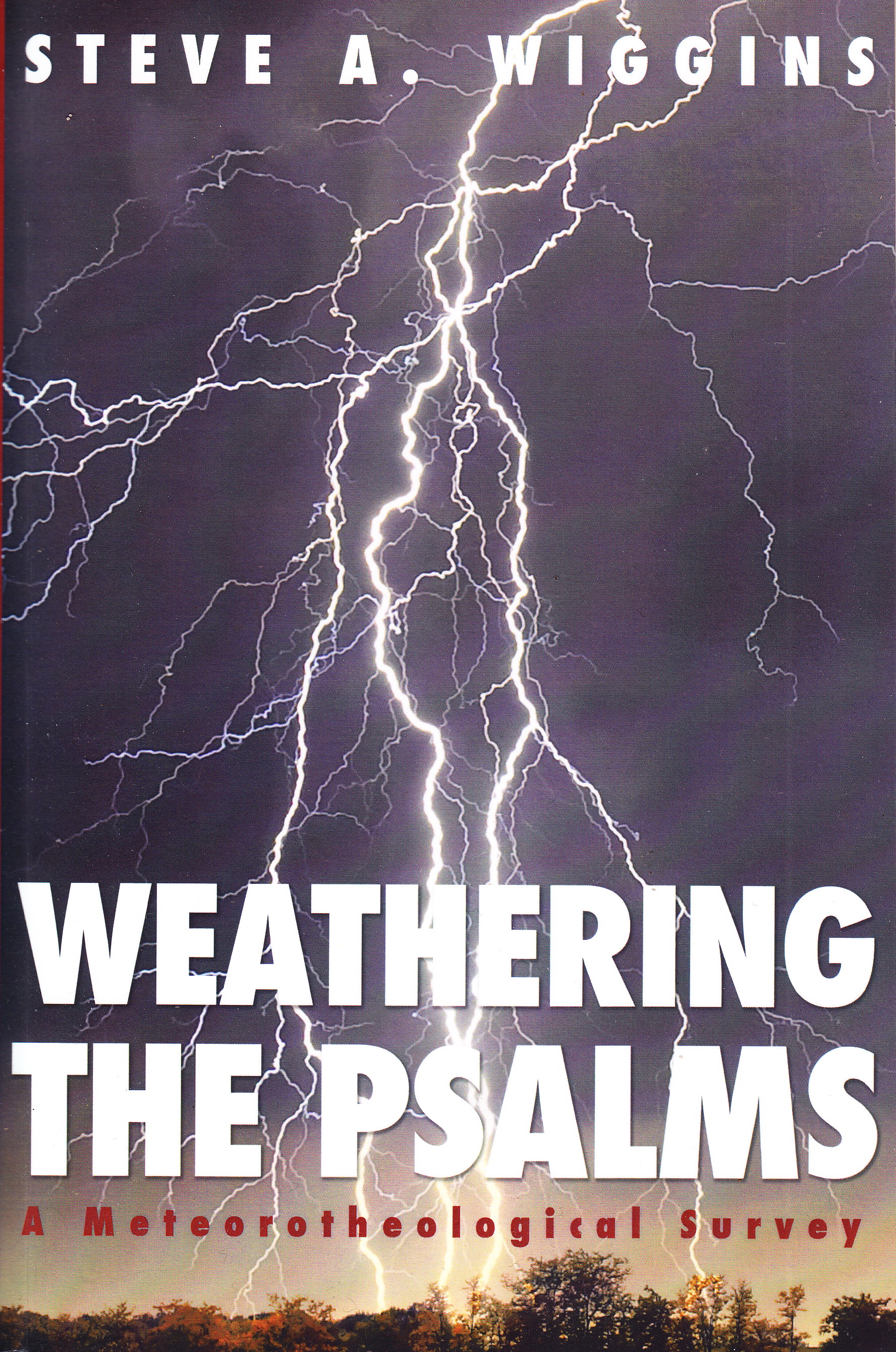
Perhaps it’s happened to you.  You grow curious about something adjacent to the action in the Bible and you go online to find information.  Instead you discover that Google (or Ecosia—plant trees!) searches round you up time and again into the biblical realm.  It seems as if nobody is interested in exploring the world of the Bible not mentioned in the Bible itself.  This has been an avocation of mine all along.  After a while you get tired of hearing what yet another commentator has to say about the Bible itself and you start to want information on, say, places Jesus didn’t go.  A startling apathy meets you online. If it’s not mentioned in the Good Book it’s not worth knowing.  Now quite apart from sending me to the pre-biblical world for my doctoral work, this was also the impetus for Weathering the Psalms.  Nobody seemed particularly interested in the larger picture.

I’m guessing this has improved somewhat in the academy, but it doesn’t translate well to the web, at least not the versions available in America.  Searches for topics around the Bible always herd you back to the Bible itself, as if it is the only reason one might be asking about the weather, geography, or natural flora and fauna of Palestine, Israel, Jordan, Lebanon, or Syria.  Who’d possibly have such an interest for its own sake?  Our bibliocentric culture seems to feed into search-engine algorithms and brings up Scripture time and again.  Try this for maps, for example.  You’ll come up with plenty showing places the Bible names.  If it’s not named there, you won’t find much.  Curiosity for its own sake isn’t encouraged.

This is related to the phenomenon of trying to search for something you don’t know the name of, I suppose.  Those who post content on the web, if they want to be successful, anticipate what others are interested in.  What of those of us who think differently?  Some of us put unusual stuff on the web, but how do you find it if you can’t put it into words?  Secular society doesn’t have much interest in the Good Book.  I’ve suggested many times why I think this is misguided—the Bible is foundational for the American way of life, whether you’re religious or not.  You might think curiosity would abound on related topics.  The thing is you have to get through all the clutter to get there.  I guess we need to be archaeologists of the web.


Holy or un?

It’s either brave or stupid.  Maybe both.  Writing about a movie you haven’t watched, I mean.  Multiple people (do I have a reputation, or what?) have pointed out to me that Good Friday (for some) is the release date for The Unholy.  Since Good Friday’s a week away I guess we’re getting an early start this year.  The Unholy is a new horror movie and although I try not to watch trailers before seeing a movie—too many of them show too much in advance—I already have a sense of what it’s about.  This post isn’t really about the movie, however.  It’s about the bigger issue.  The concern many have is that it’s being released on Good Friday.  One thing I’ve learned is that to get attention you have to shock people, no, Donald?  Getting noticed is difficult and outrage generally works.

Friday, for many, is movie night.  Good Friday is, for some Christians, a day for church.  I’ve yet to have an employer (other than Nashotah House) that recognized it as a special day at all.  Easter always falls on Sunday so there’s no need to give time off work, at least in this capitalist, Christian culture.  But if you try to release a horror movie that day, people notice.  Mel Gibson knew that crucifixion could make the basis of a horror film, and people noticed.  Sitting over here in the backwaters just outside academe, I took to horror as a means of keeping my book writing active.  One reason was that horror gets people’s attention.  (It also helps if your books are reasonably priced.)

As a young man I used to spend a good deal of Good Friday in church.  Since I was serious about school I’m thinking we probably had the day off in my district.  Attending a Christian college, followed by seminary, I suspect these also paid attention to the liturgical year.  Then in the real world I learned the truth—it’s just another day.  A day for going to work and increasing the profits for whatever company may have hired you.  When the day’s over you’ll be inclined to relax, and perhaps watch a movie.  Right now going to a theater opens the possibility for horror itself so I won’t be there on opening night for The Unholy, but I think there was some savvy thinking going on, in any case.  And it may just be that the movie was titled specifically to fit the occasion.


Clearly Conspiracy

What an odd place to find ourselves in.  Some evangelical Christians, who used to be guardians of decency and moral human behavior, now have to have their clergy explain to them why Trump wasn’t the messiah he’d been touted as for the last four years.  A piece in the Los Angeles Times recently described the struggles of one such minister with his congregation that had fully bought into the conspiracy theories Trump promulgated in order to mask his own lack of care for his country and its citizens.  Conspiracy theories have become big business in academia with faculty from many departments exploring them.  I haven’t seen much in the way of religion departments participating in the discussion, but I think they should.  Why?  Religions are all about getting people to believe and act in prescribed ways.

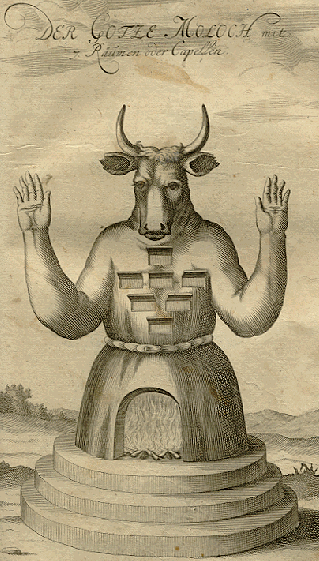
Image credit: Johann Lund, Wikimedia Commons

Not that religions alone can explain this.  Psychologists and sociologists must have some important insights as well.  I used to tell my students that not all religions are about beliefs.  Some have to do with behaviors—acting in a certain way, regardless of belief, is to be part of it.  Certainly that explains part of the membership in the cult of Trump.  Many who follow it must know in their consciences that a man who defrauds the government he “governs,” who actively womanizes, and who displays overt racism can’t be the ideal evangelical.  Ah, but the conspiracy theories explain it!  Pay no attention to the man behind the curtain, right?  You can sure get away with a lot that way.

Religions have a lot to teach us about both strange behaviors and strange actions.  Many years ago someone pointed out to me as I was enumerating what I considered odd beliefs of a New Religious Movement just how odd Christianity looks from the outside.  When I stopped to think about it, this made sense.  The unconventional aspects of the faith had become naturalized because I’d been taught all my life that they were true—unlike all other religious beliefs.  Not only that, but I had been taught that accepting them without question was the only way to avoid Hell.  Over the years the strangeness became normal.  Trump and his conspiracy theories had their way smoothed by an evangelical narrative of unquestioning belief instead of an examined faith.  Now many ministers, awaking sober, are having to try to convince their flocks that they’d accepted lies for truths.  It’s an uphill battle, unfortunately.  Religions, after all, have been about getting followers to believe without questioning, or, apparently, considering the source.


Horror and Theology

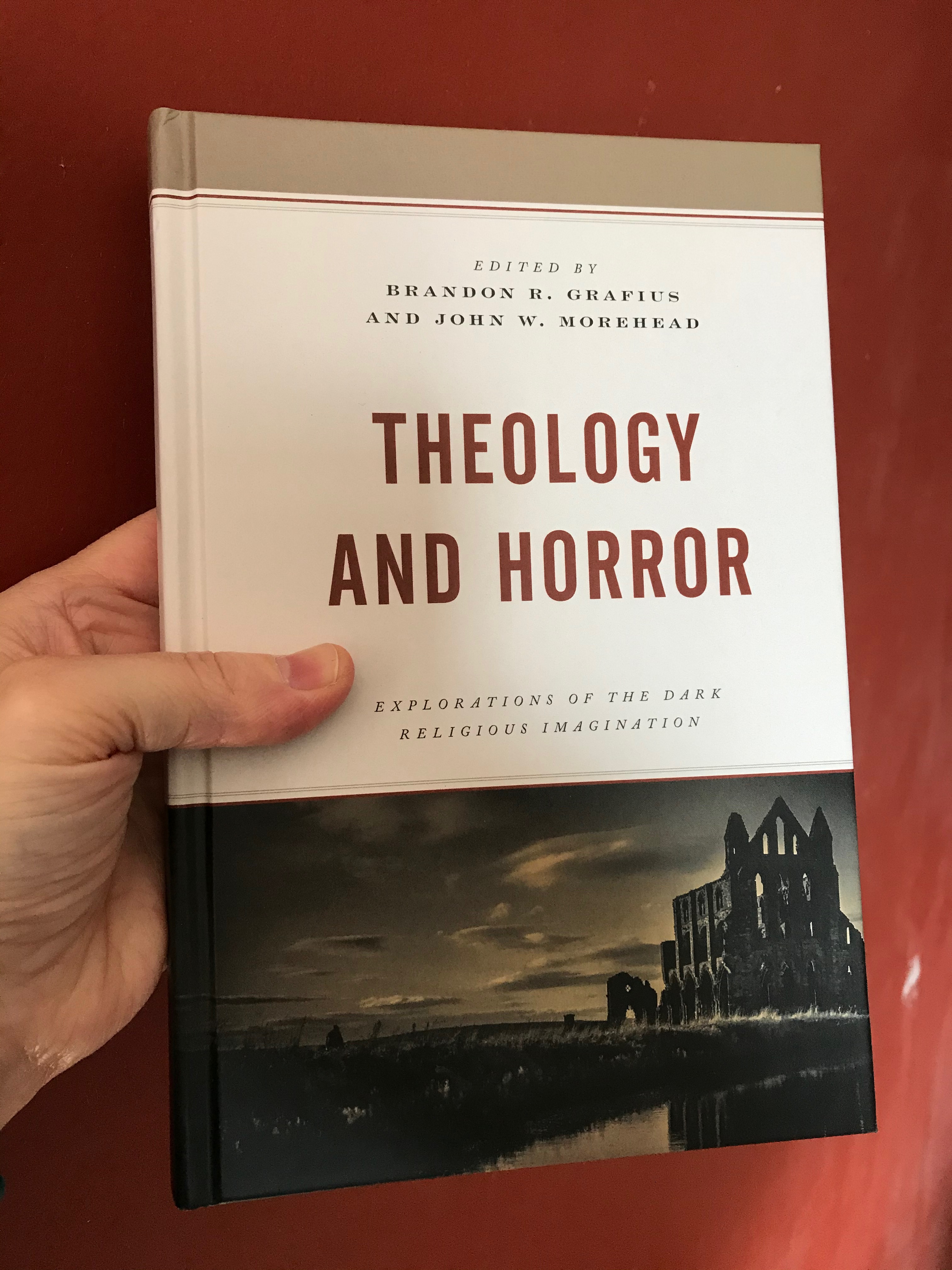
The idea may be catching on. The idea I mean is that horror and religion have something to do with one another. I have to confess that I’ve been one of the (non-academic) explorers of this approach and I was flattered to have been asked to contribute an essay to the just released volume Theology and Horror: Exploration of the Dark Religious Imagination, edited by Brandon R. Grafius and John W. Morehead. My article looks at the origins of horror in biblical (and perhaps pre-biblical) storytelling. In fact it is one of the oldest forms of exploring what it means to be human. Perhaps it began its life as an evolutionary fight or flight response, but it eventually came to represent a way of dealing with the human condition. Horror is generally traced to the gothic novel tradition, but I suggest it goes back much further.

This volume contains twelve essays on a variety of topics, along with an introduction by the volume editors. Since my copy only just arrived in Friday’s mail I haven’t had the opportunity to explore it yet, but I’m looking forward to it. Ironically, it’s an area that I began probing only after the academy no longer required my services. As I reflect on that ubiquitous “why” question I often come back to that fact. Nothing like having your career yanked out from under you makes you consider horror as a kind of therapy. Things could be worse. Besides, horror frequently demonstrates coping skills. And change is constant. Learning to adjust when the monsters of capitalism loom can make you think of religion—trust me.

Individual scholars have examined the connection between religion and monsters before—there’s a pretty obvious connection in that case—but sustained discussion of how horror informs religion is new. The developments are sometimes edgy, but I get the sense that they’re honest. It goes back to that flight or fight response. What happens if you hang around to look? Might not something become clear that was only viewed through a blurred lens before? And the goal isn’t to cause fright. Indeed, it’s just the opposite. Frights will come, and if you’ve anticipated them you might have coping skills at hand. Besides, the frisson can be enticing in its own way. Receiving a new publication can be its own source of thrills. I guess I knew this volume was coming but I’d been busy enough to have shoved the thought aside. I’m delighted it decided to interrupt the mundane, just like monsters often do.


Being Equal Again

Things creep up on you.  Like the equinox.  It really should be a holiday, but then again today’s already Saturday.  And from today, for the next six months, there will be more light than darkness.  It was an occasion ancient cultures marked and celebrated.  For us, unless it happens to fall near Easter (it’s still a couple weeks away this year), it’s an item in the news feed and nothing more.  It is, however, an opportunity to celebrate our place in nature.  The temperatures are beginning to warm just a bit around here, despite the flecks of snow in the air just three days ago.  The more tenacious of the spring perennials have already begun to shine green.  Things have begun to come back to life.  That’s why Easter is always in the spring.

Today it will be light as much as it is dark.  Balance.  Our old wobbly earth strikes this metaphorical fulcrum twice a year, giving us a glimpse of what lies ahead.  Birds, those great prognosticators, have been showing up to let us know things are about to change.  Finches, robins, starlings, and mourning doves have been conspicuous the last few days.  Even as the dirty, icy snow piles continue to hold on in their private mountains, they too seem to know time has come to be moving on.  Change is the way of nature.  This just happens to be the half of the year when we can see what we’re doing.  At this great balancing point of the year we should take the opportunity to ask if we like where we’re heading.  Do we welcome the light?

Soon enough we’ll begin to take it for granted.  Life will continue its busy ways even as we tell ourselves summer is the time for vacations.  Perhaps so.  But let’s linger in this moment.  Take a few minutes to ponder what it means to be in balance.  Equality.  It feels like something worth celebrating.  Corporate American parsimoniously counts days that might be considered grudging respites from trying to cop a profit.  Although we’re given Christmas off it can’t abide that moving target called Easter, which always comes on a Sunday anyway.  Here in that calendrical holiday barren zone between Presidents’ and Memorial days, we’ll always find spring, if we look for it.  It’s evident in the changing of the light, even if there’s still a chill in the air.  Even as our bosses ignore it, the red buds begin to appear on the trees.


The Spiritual Life

Genuine spiritual experiences don’t sit well with a nine-to-five job.  When something truly profound happens to a person s/he requires time to think about it.  Ponder the experience.  If such a thing occurs on a Sunday (imagine that!), the next morning, still reeling, you need to go to work.  Perform duties that no longer seem significant.  And continue to do so for four more days, until the fire has gone out.  This paradox has plagued me for some time.  Perhaps it’s the fate die cast for an editor who can’t just read submissions for their financial payoff.  Who asks, “What if she’s right?”  Doesn’t that affect everything?  Especially in the case of a religion editor.

Blown away.

I first noticed this in college.  Even there the schedule was quite flexible, according to classes you had to take.  The professors were sincere in their presentation of ideas you should take seriously, but then in the work world your boss indicates that you’re not being paid to do that.  You’re being paid to produce.  Contribute to the machine.  Cogs and sprockets don’t think.  They do.  Then a significant weekend would come (or a holiday, say) where the message would really speak to me.  Change my outlook.  Until Monday morning.  The outlook would still be changed, of course, but the demands on routine would not also be changed.  It’s quite a dilemma.  As the great contemplatives throughout history have known, these ideas must be wrestled with.  Conversed with.  Tried on for size.  Walked with.  Such things can’t be done in the context of what you’re paid to do.  “Do it on your own time.”

What is your own time?  The weekend, essentially.  Work expands to fill the quiet times of weekdays.  Your time is owed to somebody who pays you less than the national average to do something any nonspiritual person could do.  Such is the danger of being open to new ways of looking at things.  Vacations need to be planned.  They are rejuvenating, but spiritual experiences can’t be planned.  They just happen.  HR has no algorithm for them.  Not exactly sick days or floating holidays.  And what if you need more than one day?  That meeting that was scheduled for Tuesday, what about that?  As if such things were really important.  Perhaps you too had the professor late for class because s/he was struggling with an idea, an experience that fit her or his specialization.  There were always office hours to recover.  That’s all fine and good, but it’s time for work.


Come People and Consider

“Thou, O king, sawest, and behold a great image. This great image, whose brightness was excellent, stood before thee; and the form thereof was terrible.  This image’s head was of fine gold, his breast and his arms of silver, his belly and his thighs of brass, his legs of iron, his feet part of iron and part of clay.”  So Daniel answered the megalomanic king Nebuchadnezzar, according to chapter 2.  This is some Scripture that CPAC has chosen to ignore, or at least not bothered to read to the end.  In truth I was always bothered when Daniel said “Thou art this head of gold”—which seems to be more brass-kissery, if you get my drift, than prophecy.  But dear CPAC, the statue of Nebuchadnezzar crumbles when the kingdom of God arrives, unable to stand on its feet of clay and iron.

Image in public domain, courtesy Wikimedia Commons

I’m not one to tout Daniel as prophecy, but seldom have we seen such things come true so literally.  If we turn to the other testament, in a somewhat politically incorrect aphorism a personage of the gospel of Matthew quoth, “they be blind leaders of the blind. And if the blind lead the blind, both shall fall into the ditch.”  Funnily, those who claim to support a “Christian” America have failed to read even the surface of the Good Book.  Without the Bible what is fundamentalism?  That image in Daniel 2 is considered an idol.  After all, when the Trump of antiquity built a statue all were required to fall down before and worship it.  Those who didn’t were thrown into the fiery furnace.

The Conservative Political Action Conference has sent shivers down the collective spine of our nation.  Even as it was going on I was standing in the rain signing petitions for local Democratic candidates because going inside meant being potentially infected by the Republican disease known as Covid-19.  Apparently half-a-million dead is never enough for those who believe in a social darwinism although they claim to base their lives on the book that says all this took a mere seven days.  Although Daniel gained great fame and wealth by telling the king what he wanted to hear, during a party a few short chapters later he saw a hand writing on the wall.  “And this is the writing that was written, Mene, Mene, Tekel, Upharsin.”  And although given a third of Belshazzar’s kingdom that very night it was all lost to Darius.  “Who hath ears to hear, let him hear.”


Still Standing

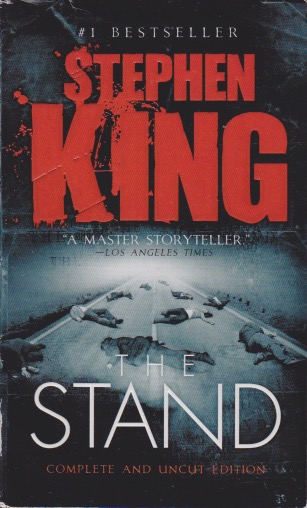
Investment.  Time is an investment, and I recently invested in Stephen King’s The Stand.  You have to realize that I made this decision sight-unseen.  More than one person whose opinions I value told me I should read it.  I had no idea it would be 1,400 pages and would dominate my life for a solid month.  Still, I’m glad I read it.  In case you haven’t, and intend to, there may be some spoilers below.  This is one of the King books I read without knowing the plot or the ending, so if you’re in that boat, skip a paragraph or two.

I hadn’t intended The Stand to be plague reading.  It just turned out that way.  The book is about a variety of flu that kills nearly the entire population of the world.  It’s only at the very end that you learn it’s a parable.  The ending also explains some of the apparently unrelated filler that makes the book so terribly long.  In any case, after wiping out much of the world, the story narrows down to several of the survivors and how they end up dividing into two camps: those who want to cause misery (think Republicans), and those who want to reestablish civilization.  Of course there are several unpleasant instances along the way.  The camp of violent ne’er-do-wells settles in Las Vegas under the demonic leadership of Randall Flagg—his identity only becomes clear at the end—while the good guys, under Mother Abagail, choose Boulder.  A confrontation is inevitable and when the smoke clears we learn that Randall Flagg is, essentially, civilization itself.  Perhaps Christianity.

Of all of the Stephen King novels I’ve read, this one has the most overt Christian imagery.  In fact, in his introduction to the expanded edition he refers to it as a “long tale of dark Christianity.”  There’s quite a lot of theological dialogue along with gruesome deaths.  The pacing often makes the story seem quite long.  Well, it actually is.  I suspect it was this Christian imagery that had friends recommending it to me.  The idea that evil is essentially our culture that comes around and kills us is both profound and paradoxical.  As well as “Christian.”  All along the good guys want to reestablish the cooperation and comforts of civilized life.  It was “civilization” that unleashed the killer virus, however, and herein hangs the tale.  I’m glad to have read it, and I have to confess that I miss the bleak world King created, after living with it for so long.  And it turns out to have been plague reading both literally and symbolically.


Knowing Everything

Of all the jobs I’ve held, being an editor is the only one where strangers send random emails trying to convince me of God’s reality.  Granted, part of that may be because email is now so common as to be passé among the younger crowd.  When I myself was younger it was still just catching on.  Still, part of these strange emails is likely based on the evangelical compulsion to make others see things their way.  Someone who edits biblical studies books might seem like a good target.  I got another such email just last week, and as always, I wondered over it.  What kinds of assumptions must random strangers make about biblical studies specialists?  One of these assumptions, it’s clear, is that they suppose we are atheists.  They know this without even asking.

Technology has made such blindsiding communication easier.  It didn’t invent it, though.  It took a lot more effort to write up a letter, address it, buy a stamp, and mail it than it does to sit down at a keyboard, click, and they start proselytizing away.  In my earlier days, in other incarnations of a career, I received unexpected missives from time-to-time.  And certainly as a seminary professor you had students who had already figured everything out by the time they’d gotten to matriculation.  Many of them were coming to seminary to teach rather than to learn.  Such can be the arrogance of faith.  I fear that many of them graduated with their biases intact.  Education, perhaps, doesn’t work for everyone.

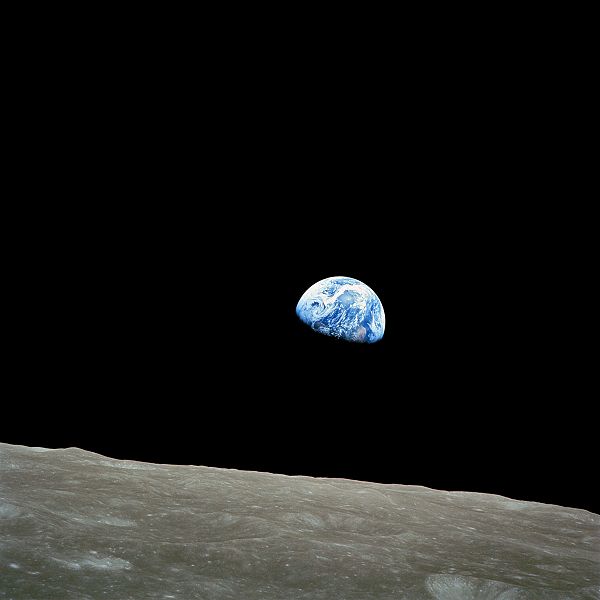
Photo credit: NASA

Having it all figured out is something many of us strive for.  We want things to make sense.  We want our spirituality to fit into this increasingly materialistic world.  Some of us go to seminary and/or graduate school to help us make sense of things.  We encounter minds further along the journey than our own, and, if we’re open, we learn from them.  For me, it’s difficult to understand how education isn’t always a humbling experience.  Oh, I get emails from academics who think they’ve figured it all out as well.  Such communications always make me sad.  The human enterprise, such as it is, has spanned millennia and true progress has only been made when people were humble enough to admit that they didn’t know everything.  They would eventually invent the internet and email.  Then those who already knew all the answers could send them to strangers to convince them of their own great learning.


The Land

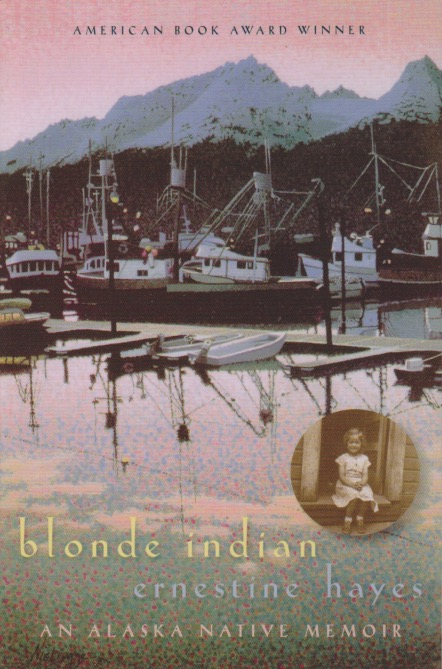
It’s always a pleasure to find an author from whom you want to read more.  It was my wife who told me about Ernestine Hayes’ The Tao of Raven.  We were both so taken by the book that we turned to Hayes’ prior Blonde Indian: An Alaska Native Memoir.  Learning how badly the United States has treated the indigenous population of this continent is one thing.  Learning how badly we still treat them is quite another.  For all of that Hayes writes a memoir that is reflective and perhaps sad, but seldom angry.  The stories told in Tao of Raven start here—we meet the characters who will be further developed in the next installment and become even more curious about them.  The reader wants to reach out and help.  To tell the government, “enough!”

The indigenous peoples of North America (and likely South too, for that is a realm requiring further learning) feel, and have always felt, a close connection to the land.  Europeans see land as a resource for exploitation, not for living in harmony with.  We came, we took, we destroyed.  As if that weren’t bad enough, we left the original inhabitant trapped in grinding poverty, shoving them into places we wouldn’t see.  Until we discovered something we wanted on that land, and then we shoved them again.  The impetus to do this was, unfortunately, Christianity.  I doubt it’s the religion Jesus had in mind, but then he lost control of it millennia ago.  Believing in one’s divine mandate is a sure way of making unwarranted claims on what belongs to someone else.  Remember “thou shalt not steal”?

Hayes’ reflective style is an honor to read.  Feeling a part of a place is a rare privilege.  Born into a mobile society enamored of technology, the modern American has difficulty feeling too attached to any one place.  Of course, many people stay close to where they were born, but to become a “professional” you have to leave.  Blonde Indian is about returning home.  The land knows us.  Many of us don’t know it back.  It’s just a place to set our feet temporarily until a better opportunity comes along elsewhere.  Being tied to no land we lose something of our souls.  Our connection with nature.  With the planet itself.  Hayes is a gifted writer with a story that must be heard.  Wisdom comes through on every page.  We would do well to pay attention.


One Day or Another

Although normally a time for celebration, Mardi Gras, I’m told, was subdued this year.  Today is Ash Wednesday but many of us feel like we’ve been living a year of Lent already.  I once told a fellow office worker on Ash Wednesday, “I think about death every day, I don’t need a yearly reminder.”  Looking out at the old snow, melting, freezing, refreshed with occasional flurries, I’m reminded of the cycles of nature.  I’ve been watching the turn of the year’s wheel.  Over the solstice I looked into Yule, and just a few days ago considered Imbolc.  The wheel of the year is a symbol for modern earth-based religions seeking to be kept in sync with nature.  It is a cycle, slowly turning.  Death, in this way of thinking, is part of a larger system.  It seems appropriate to consider it this Ash Wednesday.

I say it’s Ash Wednesday but it would be more correct to say “for many Christians it’s Ash Wednesday.”  Cultural imperialism is difficult to shake.  With the pandemic still embracing us tight we haven’t had much reprieve from thoughts of death these many months.  Thinking of the wheel of the year, however, may bring hope.  A wheel in motion spins around to a new beginning that, in the nature of circles, is equally at every point.  New beginnings are offered every day.  While we’ve never been in a year of isolation before, there is nothing that hasn’t been before.  Self-aggrandizing dictators, world-wide pandemics, calls for social justice and fairness, have all come around before this.  They may come around again.  The main thing is to keep it moving.

It moves, in fact, without us.  One of our human foibles is being species-centric.  When we discuss, in a pique of teenage angst, of “destroying life on earth” we really mean destroying humankind and perhaps many other species as well.  Not all.  With a kind of collective insanity we go about warring against our own kind, exploiting all other species we deem valuable, and talk as if that’s all that matters.  Today, for some, it is Ash Wednesday.  For others it is World Human Spirit Day.  For many of us it’s just another workday among many very similar, cut from the fabric of a year that has no even spokes to keep it rolling.  Beneath our feet this orb spins on, regardless.  The cycles continue, with or without us.  How wonderful it would be if we could actively contribute to their progress.

Photo by Ameen Fahmy on Unsplash