The Night before Reading

Like many people bound to their circumstances by work (and now a mortgage) I see travel to far-off places is a dream.  On my personal bucket-list is Iceland.  Perhaps that’s a strange place to yearn for in winter, but it’s on my mind today because of Jolabokaflod.  I’ve posted on Jolabokaflod before, but in case the concept is unfamiliar I’d summarize it by saying Icelanders, who are exceptionally literate, give each other books on Christmas Eve and spend the dark hours reading.  For the past three years I’ve taken part in a reading challenge that lists a book in translation, and invariably I choose one by an Icelandic author.  Publishers in Iceland, being less corporate than our native species, accept books for publication somewhat more readily—I’ve been shopping a novel around for nearly a decade now and I’ve read worse.  If it doesn’t jack up the dollar signs, so nobody around here’s interested.
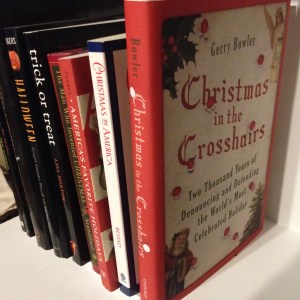
I’m sure it’s not all sweetness and light in Iceland.  I suspect, for one thing, it’s hard to be vegan there.  Then there’d be the need to learn Icelandic.  The nights would be even longer in winter, but then, those long nights would be filled with books.  I sometimes imagine how different America would be if we loved books that much.  I remember well—as you may also—the classmates who grumbled about “having to read” as part of their school curriculum.  And this began well before high school.  Young people’s bodies are full of energy and they want action (which can be found in books, I might add) and new experiences (ditto).  Our culture feeds them the myth that such things lead to happiness.  Instead, they find sitting still tedious.  When life leads them to commute, they fill bus time with devices.

The other day I had an electrician in our house—the previous occupants had some strange ideas about power distribution.  He, as most visitors do, commented that we have a lot of books.  I’m beginning to feel less apologetic about it than I used to.  We have books not only because it’s been part of my job to read, but because we like books.  One of the painful memories of 2018 was the loss of many volumes due to a rainstorm that flooded our garage right after our move.  It still makes me sad to go out there, remembering the friends I lost.  Nevertheless, it’s Christmas Eve, at least in my tradition, and the thought of books combined with the long hours of darkness brings a joy that I’d almost characterize as being Icelandic.  At least in my mind.  Jolabokaflod might well be translated, “silent night, holy night.”


Reflecting on Light

Now that we’re approaching the winter solstice, light is pretty much on the minds of those of us in the northern hemisphere.  Or lights.  The use of Christmas lights and Hanukkah lights may have symbolic value to the religions that promote them, but both also reflect the pagan use of sympathetic magic to bring back the light.  Human beings tend to be visually oriented, and many of us feel the increasing darkness deeply.  Days are brief enough to be awake for the entirety of daylight’s duration, and then you still have to get home after work.  After dark.  All our enlightened hours are spent for the benefit of the company.  It takes its toll.  And so we string holiday lights, bringing cheer into the preternaturally long hours starved for illumination.

Although the snow hasn’t stayed around here, I did notice an interesting reflection of light outdoors the other day.  The windows of a house were casting a light-shadow on a fence that had the look of a cross.   It took some convincing to assure me that this was pareidolia—the assigning of intentionality to random “signal.”  We see faces where they don’t really exist, and when we see crosses in this evangelical haven of America we have to assume they’re intentional.  Sometimes, however, they’re simply a trick of the light.  The sun has a low angle this time of year, and the light that is otherwise scattered back into what is wonderfully termed airglow—the natural illumination caused by sunlight as its luminosity brightens the daytime sky—is focused lower.  Light takes shape and sometimes it seems religious.


In New York City, where repeated patterns are pervasive, such reflections often appear on neighboring buildings as “X-Files” symbols of Xs in circles, giving the city a mysterious look.  Out here, however, they appear as crosses.  You see what you want to see.  Or, sometimes you can’t help seeing what appears utterly obvious to credulous eyes.  I’ve had people insist that crosses like this are intentional.  In reality, they’re a natural result of rectangles reflecting the morning light when the sun follows its low profile ecliptic during the waning of the year.  That doesn’t mean that it can’t be read for something else, of course,  Religion is all about interpretation.  Light forms patterns and seems strong enough to banish darkness.  And given how many hours it’s dark these days, I’m willing to take what help I can get.  The solstice will soon be here.


Epistle Writer

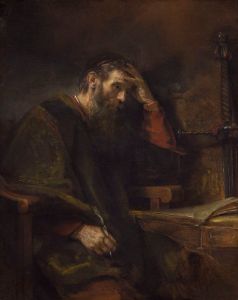
I’ve been reading about Paul.  You know, that Paul.  What has struck me from this reading is that if he weren’t in the Bible rational people would likely think Paul was writing nonsense.  Getting into the Good Book is a big score, for sure, but a close look at what this particular apostle wrote does raise eyebrows, as well as questions.  Over my editing years I’ve discovered quite a few methods of dealing with the saint from Tarsus, but what they really point to is the elephant in the room—we don’t really know what Paul was on about.  A few basic facts stand out: the Paul of Acts doesn’t match the Paul of the authentic letters, and although Paul never met Jesus he became the architect of much of Christianity.

There’s a reason that I focused my doctoral work on the Hebrew Bible rather than the New Testament.  Still, it remains fascinating to look closely at Paul’s claims.  At some points he sounds downright modern.  Like a Republican he declares that he can be tried by no human power.  Specially selected by God himself, he can’t be judged by the standards of normal people.  This is dangerous territory even for those who eventually end up in the Good Book, especially since it wasn’t written as an abstraction, but to a specific readership in a specific place dealing with specific issues.  Galatia wasn’t the same as Corinth.  The issues at Philippi weren’t the same as those in Rome.  Yet, being in Scripture makes all his musings equally inspired.

The more we learn about Scripture the more difficult it becomes.  Perceptions evolve over time, and we know nothing about how various books were selected.  There are no committee minutes.  We don’t even know the committee’s name or if it was ad hoc or standing.  With repeated and long-term use these books became Bible.  Take Paul’s letters—it’s virtually certain that we don’t have them all.  He makes reference to letters that we don’t have.  What might he have written therein?  Is part of divine revelation missing?  The discovery of other gospels and many contemporary religious texts to those that made the Bible cut raises questions that can only be resolved with the category “inspiration.”  Christianity isn’t unified enough to add any more books, although some sects do nevertheless.  Paul is very much like that—an example of not being subject to human trial.  For a founder of a major religion we know surprisingly little about him.


The Dots

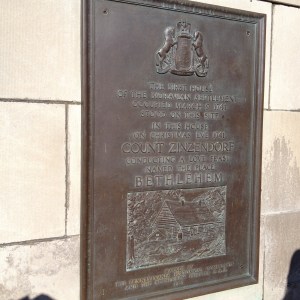
Connections have always fascinated me.  Maybe it’s because life is a random stream of stuff constantly thrown at you that makes a mockery of any plans you might try to implement.  Me at Nashotah House?  Really?  Nevertheless, these events shape us and everything that happens thereafter is seen in light of them.  So when connections occur amid this continual flux, I sit up and take notice.  For example, I had never thought of moving to eastern Pennsylvania.  Now, around Christmastime, I find myself not far from Bethlehem.  Bethlehem was so named because it was founded on Christmas Eve by Moravians who’d settled in the area.  Although not counted among the most numerous of Protestants today, Moravians had a profound effect on the founder of Methodism, John Wesley.  In fact, he met Count Zinzendorf, whose name appears on this handsome plaque in historic downtown Bethlehem, at a pivotal moment in his own spiritual journey.

Having grown up Fundamentalist, the United Methodist Church would not have been our choice, although we had unwittingly attended one of the Methodist offshoots—the Church of the Nazarene—from time to time.  In one of those unplanned things, we found ourselves in Rouseville, Pennsylvania, where the only Protestant church was United Methodist.  Once ensconced in the UMC it was my plan to become a minister in that tradition.  That led me to Boston University School of Theology where I first learned about the Wesley-Zinzendorf connection.  It was also there that I met my wife.  And subsequently joined the Episcopal Church.  Why?  John Wesley had been adamant that his followers not drop out of the church in which he was an ordained priest.  I was only following instructions.

Had that not happened I would never have had my first, and so far only, full-time academic job.  Nashotah House was conservative, and I was not.  We nevertheless had a connection.  Growing up I’d barely heard of Wisconsin, let alone planned to live there.  When Nashotah no longer required my services my career had to change as well.  None of this was in the plan.  Who plans to move to New Jersey?  And now everyone thinks of me as an editor, a fallback position if there ever was one.  Since I work in New York City, moving back to my native Pennsylvania wasn’t really on the agenda.  An outside agent led to that.  So I find myself near Bethlehem in the Christmas season, staring at Count Zinzendorf’s name, which I first heard of in a seminary now far away.  Connections, even with those long gone, are always worth noting.


Evangelical Angels

Angels are everywhere at this time of year.  The Christmas stories of the gospels of Matthew and Luke have made them an indelible part of the tradition.  It’s not unusual for entirely secular individuals to be decorating with them and they are generally without controversy in public displays of holiday spirit.   A colleague once asked me why Americans were so credulous when it comes to a belief in angels—the numbers of believers are quite high, statistically.  I wonder if it’s because we need them.  Considering that the Republican Party is the Evangelical’s party, it’s no small wonder that even atheists embrace angels.  We all could use a little help from on high.  This time of year, such hope can be disguised behind tinsel and bows.

America must seem a strange country to those who immigrate (or had immigrated, when that was possible).  We wear our religiosity—and this is not the same thing as true religion—not only on our Christmas trees, but even on billboards by decidedly secular highways.  It’s as if even all the things America stands for, such as love of money, guns, and automobiles, only hold together with the saccharine glue of a sickly sweet religion.  A Bible-believing nation that has no idea what the Bible actually says and lauds a president who breaks at least a commandment a day and gains no reprimands.  We have shown our red neck to the rest of the world and yee-haw we are proud of it.  And we got the Good Book to prove it.

After all this shakes out we’ll be needing some angels, I suspect.  My colleague felt that sophisticates, big city skeptics, ought to be more willing to dismiss unenlightened beliefs such as those in spiritual beings.  The thing is, spiritual beings serve a very useful purpose.  They keep us honest—and I don’t mean in an Evangelical way; I’ve seen Evangelical honesty and it’s as corrupt as the Devil.  No, I mean that angels are important to show that we have hope.  Maybe they are secular angels—even the Bible doesn’t give any description of them at all, so how can you tell a secular from a religious angel?  That lack of pedigree doesn’t mean we don’t want them watching over us.  Belief is an important part of being human, secular or not.  The billboard space tends to go to those who want your money, and that applies to the ones that appear to be religious as well.  If this is the way the religious behave, we’d better hope there are angels everywhere.


Russian into Things

It’s the holiday season.  The people I overheard at the bus stop the other day were discussing shopping on the bus.  It can be a long trip from here, and evening traffic out of New York (ironically) is quite heavy this time of year.  Bored commuters, sitting on the bus with their phones, shop.  I couldn’t help but notice that I was the only one with the overhead light on during the fully dark ride home this week.  At one point the driver seemed to think it was a mistake on my part and snapped it off.  I carry a book light with me for just such eventualities, but I had that odd feeling one gets when everyone else got the memo but you didn’t.  In any case, I was reading a physical book, not shopping.

Then I read about a book I need for my research.  Problem is, I don’t have an institution, or a wealthy sponsor, so I often buy books used.  Back in my teaching days Amazon was new, and the idea of buying books online foreign and unfamiliar.  Now you can’t find a bookstore when you want one.  In any case, this particular book was on offer on eBay.  Now, I haven’t used eBay for quite a while.  I never think of it as a place to find reading material, but there it was.  Who would’ve thought research would ever lead in this direction?  The price was reasonable, so I signed in as a guest and placed my order.  With out of print books like this you run the risk of price-gouging or sudden unavailability—the independent researcher’s nightmare.

When the confirmation page came up, I couldn’t help but notice that the header was in Russian.  I wondered if Trump’s dream had really finally come true, or if the eBay on which I ordered an out-of-print book was really a trap.  How do you find out?  Who do you tell when your current government is completely at the beck and call of the Russian government?  I was in a brown study for a while.  The book, used, on Amazon was listed at over a thousand dollars, and this for a paperback published in 2009.  People will pay quite a lot for certain books, even if they don’t retain their resale value.  Ideas, it seems, are worth more than money.  But we no longer have a government to protect our interests.  Not even research, it seems, is safe any more.

If you squint, he could be St. Nick


Christmas at the Bus Stop

I had to make one of my periodic treks into New York City this week.  Unlike most years when a warm spell comes after the onset of winter, we’ve kind of fallen straight to the heart of the season this year and those of us standing in line for the bus were experiencing it via wind chill.  The cold got some regulars to talking about Christmas.  Although I’m not the oldest one who makes this long trip, the majority of the commuters this far out have yet to attain my years.  Those chatting at the stop had kids at home that still believe in Santa Claus.  It made me recall how we trick our kids with all kinds of quasi-religious folkloric figures, but also how seriously some adults participate in the mythology as well.

Among those chatting, the leaving out of cookies and carrots was almost canonical.  The cookies are for Santa, of course, and the carrots for the reindeer.  The more I pondered this, the more it became clear that this is a form of thank offering.  The story of Bel and the Dragon, in the Apocrypha additions to Daniel, tell of how priests leave out food for an idol.  The offering is gone in the morning and the credulous worshippers assume the statue has eaten it.  Religious offerings, except those entirely burnt up, were often used to support priesthoods.  Santa has his elfly acolytes, of course, but the priesthood for his cult is that of parents eager to make Christmas a special time for their children.  Capitalism’s big pay-off.

Then one of the commuters mentioned how she had her husband leave a footprint in the fireplace ash to add verisimilitude to the ruse.  We never had a fireplace when I was growing up, and I often wondered how Santa got in when we had no chimney to come down.  In any case, my hazy morning mind thought once again of Daniel and Bel.  The way that wily Daniel exposed the fraudulent priests was by sprinkling—you guessed it—a fine layer of ash around the offering after the priests had “left” for the night.  In the morning he showed the people the footprints of the deceptive heathens to the people.  The statue hadn’t eaten the food after all!  Serious consequences followed.  Christmas, despite its commercialization, brings fond childhood memories to many of us, and we’re reluctant to let that go.  The one man in on the discussion (it wasn’t me) said that when he was growing up they had a somewhat different offering.  “My dad,” he said, “told us to leave Santa a beer and a sandwich.”  This guy’s name might’ve been Daniel.


Carrie On

Stephen King was still a fairly new writer when I first read “Lawnmower Man” for an English class in high school.  Carrie had been published by then, but I didn’t read any more Stephen King until after my academic job ended.  (There is, for those who are curious, a correlation between that traumatic change and my interest in horror.)  Like many, I suspect, I saw some of the movies before reading the King books behind them.  With a writer as prolific as King there’s always the issue of where to start, and I’m often subject to the selections independent bookstore owners make.  I seldom buy fiction through Amazon—I have to see the book for it to grab me (a kind of King thing to happen).

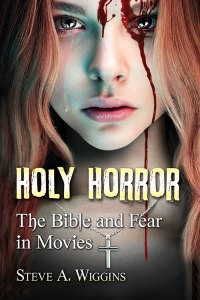
A used copy of Carrie recently came my way.  Now, I’ve seen the movie (both versions) many times; it is discussed at some length in Holy Horror.  I’d not read the novel until now.  Obviously there are differences between book and movie, but as this was Stephen King’s debut novel it struck me just how central religion was to the fearful scenario he paints.  That’s pretty clear in the film, I know, but it’s even more so in the novel.  Carrie is made into a monster by religion.  One could argue that she was born that way—telekinesis as a genetic marker is also a theme in the book, although absent from the films.  Still, it is Carrie’s rejection by others, largely because of her religion, that leads her to use her powers to destroy Chamberlain, Maine.

In a strange way, Carrie is a coming-of-age story from a girl’s perspective.  Strange because King is a man and some literary magazines won’t even accept stories written from the point-of-view of someone of the opposite gender.  Men can’t know what women go through.  Indeed, most of the male characters in the story are less than admirable, while some are downright wicked.  The real question is whether religion saves from wickedness or causes it.  There’s not much ambiguity here on the part of Mr. King.  Holy Horror, although it deals with movies and not novels,  makes the point that films based King don’t infrequently use religion as a source of horror.  Long-time readers of this blog know that I frequently make the point that this genre, more so than most, relies on religion as an engine to drive it.  And religion also has a role in repressing women.  Coincidence?  Ask Carrie.


You’re History

A story from Inside Higher Ed discusses a study of history majors and their rapid decline.  This occurs during a sudden onset of “job related” majors and the graph accompanying the article shows how STEM has taken over higher education.  These are the fields with actual occupations awaiting them at the end of the degree, while disciplines such as history and religion (also very near the bottom) have less clear career paths.  Indeed, when I’ve been in the job market I find that a religion degree is less than useless, no matter what the department recruiters tell you.  If you’re not bound for the clergy you undertake the study at your own peril.  History, I expect, suffers from a similar dynamic, but the peril in this case is to all of civilization.

We’ve seen over the past two years how a stunning lack of knowledge of history sets a nation on the path to chaos.  Businessmen with no classical education don’t make good national leaders.  Knowing where we’ve been, as Santayana so eloquently stated, is the only thing that keeps us from repeating past failures.  History is our only safeguard in this respect.  Over the Thanksgiving break I spent a little time delving into family history.  Since I don’t come from illustrious lineage, I felt the frustration of finding out what happened to obscure people from the last couple of centuries.  Lack of history on a personal level.  On a professional level, my doctorate is really in the history of religions (ancient religions) and I’ve become keenly aware of just how little history there is to the very popular modern Fundamentalist movement.

Maybe I said that wrong.  They do have a history, but the belief system that is touted as ancient is really quite modern.  Anti-modern, in fact.  When historical knowledge is lacking, however, people can make all kinds of claims based on nothing more than wishful thinking.  History keeps us honest.  Or it used to.  When we’ve outlived the need for history we’ve started down a path unlit by any embers of past human foibles.  We’ve been living in a culture in love with technology but not so much with critical reflection of where such innovations might take us.  Doctors are beginning to complain that they spend more time on their computers than with their patients.  The time freed up by the internet has been taken up by the internet.  And when all of this comes to its natural culmination, we would be well served by historians to make a record of what went wrong.  If we could find any.


Mythic Truth

“Myth embodies the nearest approach to absolute truth that can be stated in words.”  I recently came across this quote from Ananda K. Coomaraswamy.  Coomaraswamy was a philosopher and metapmhysist from Ceylon, and like many eastern thinkers had a more holistic view of the world than western rationalism.  We’re taught from a young age that myth is something false, not true.  This colloquial use of the word is so common that those of us who’ve specialized in myth slip into it during everyday conversation.  Words, however, have uses rather than meanings.  Coomaraswamy was engaging this reality in the quote above.  Words can take us only so far in exploring reality when we have to break into either formulas or poetry.  Although they are under-appreciated poets are the purveyors of truth.

Having studied ancient mythology in some detail, it became clear to me as a student that these tales weren’t meant to be taken literally.  Instead, they were known to be true.  It takes a supple mind to parse being true from “really happened,” as we are taught in the western world that on what “really happened” is true.  In other words, historicism is our myth.  Meaning may not inhere in words, but when we use words to explore it we run up against lexical limits.  Is it any wonder that lovers resort to poetry?  On those occasions when I’ve been brave enough to venture to write some, I walk away feeling as if I’ve been the receiver of some cosmic radio signal.  We have been taught to trust the reality of what our senses perceive.  Myth, and poetry, remind us that there’s much more.

The Fundamentalist myth is that the Bible is literally true.  If they’d stop and think about it, they’d realize the mockery such thinking makes of Holy Writ.  The Good Book doesn’t look at itself that way.  In fact, it doesn’t even look at itself as a book—an idea that developed in later times.  The time and the cultures that produced the Bible were cool with myth.  They may not have called it that but the signs are unmistakable.  Ananda Coomaraswamy knew whereof he wrote.  The closest to absolute truth we can come takes us to the end of declarative, factual writing.  Scientists writing about the Big Bang devolve into complex mathematical formulas to explain what mere words can.  Myth is much more eloquent, even if we as a society, dismiss it along with other non-factual truth.


Where Was I?

Finally!  I have sent my proofs and the index for Holy Horror back to McFarland and I find myself in that state following intensive concentration on one thing.  Well, as much as work will allow such concentration.  Those who write books know how difficult it is to switch gears from fifth back to first while driving at highway speeds.  As soon as the email arrived stating that the proofs were ready, I dropped everything to get them read, outside work hours, of course.  With mind focused on a single goal—get the job done—I’ve managed to forget where I was before being interrupted by my own work.  I recall it had something to do with demons, though.

Perhaps the most taxing part of trying to write while employed full time is keeping track of where you are.  The luxury of spending hours outside of class doing the index, for example, is compressed into the little free time I have between writing for this blog and work—between a blog and a hard place, as it were.  Indexing, which can be quite pricey when a professional does it, is  much easier with a searchable PDF than it ever was going through a printout page-by-page to find obscure references you forgot you ever wrote.  It reminded me of the time I had Owen Chadwick over for dinner at Nashotah House.  I recalled someone asking him about something he’d once written and he looked puzzled for a moment and then replied, “One writes so many things.”  Indeed.  Millions and million of words in electrons, if not on paper, mark the status of a life.  And indexing will prove it to you somehow.

This morning I awoke with the proofs and index safely emailed back to the publisher.  What was I doing before that?  I know that work is looming just a short hour or two ahead, and I need to accomplish part of my life’s work before going to work.  I can’t afford to waste this time.  Nightmares with the Bible is coming along nicely.  A very drafty draft of the book exists.  I have some more research to do, however, and the annotated bibliography—ah, that’s where I left off!—is still a shambles.  Not only that, but I’ve got a stack of reading on the topic next to my chair.  Time to put on a pot of coffee and warm up those typing fingers.  I’ve got real work to do.


Christmas Time

As children we can’t wait for Christmas because we’ll be getting things.  Now that I’m older I try to avoid the frenzy building up to the holiday, although I look forward to the vacation days that I’ll cash in to take time to be with family rather than business.  It’s not that I don’t like holidays—it’s just I’m no fan of hype.  Still, now that December is nearing, and Thanksgiving has reminded us that work isn’t everything, I can feel the anticipation.  Yesterday I attended the Christkindlmarkt  in Bethlehem.  Amid the backdrop of the truly colossal, rusting stacks of the former Bethlehem Steel plant, this is a seasonal event with nothing but good spirit.  People of all descriptions were crowded into the massive event, but rudeness and complaining were strangely absent.  Everyone seemed to be having a good time.

When I worked at Nashotah House, the atmosphere for Advent was austere.  We weren’t really encouraged to look forward to Christmas, bringing a tree home before the 24th was frowned upon.  It was a time to reflect on our sins, not to anticipate our rewards.  Still, I had a kind of epiphany among the secular crowds seeking to get into the spirit of things yesterday.  Bethlehem is a city that has known hard times.  Its industrial base eroded away, residents were left unemployed and wondering about a very (and increasingly) uncertain future.  Recasting itself as the Christmas City is a way of throwing new light on a holiday famous for its commercialism.

Christmas can be about resurrection.  It’s a season to think of birth.  It matters not if the mother is a virgin or if the child is for an exclusive sect.  People throng here for hope.  Beauty in the midst of ruin.  Some businesses clearly spend all year building up to Christmas, selling ornaments so delicate that I feared even to look too hard at them lest they shatter.  Handcrafted goods that represent the livelihood of others who compel strangers that art is worth more than money itself.  Wandering through the four tents of booths, the feeling of resurrection was palpable.  We were all here seeking something.  Loosening the grip on the wallet just a bit.  Wanting to make others happy for a while.  Birth is the symbol of hope.  Advent, it seems, need not be a dreary season of wallowing in unworthiness, awaiting a mythology taken too literally.  The proof of the goodness before us is just down the road in Bethlehem.


Post Thanksgiving

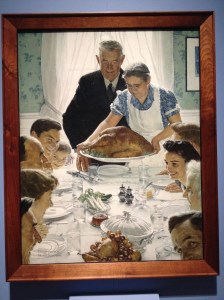
Yesterday morning, like many others mesmerized by the commercialization of holidays, I had the Macy’s Thanksgiving Day Parade on the television.  I can only speak from my own experience, of course, but I know that growing up poor we used to watch this, and that my wife’s family, from different circumstances, also watched it.  The friends with whom we ate our main meal watched it, and given the advertising revenues, I imagine many other people tune in every year as part of the holiday tradition.  What struck me were the testimonials just before or after the commercial breaks.  Celebrities shared what they liked about the holiday and many of them, unsurprisingly, focused on food.  Many indicated that overeating was pleasurable.  I began to think of what it means to be a nation of foodies.

Not everyone is of a cenobitic sensibility, but focusing on the food seems to be paying more attention to the finger pointing at the moon than to the moon itself.  Commercials for television shows of sweaty, nervous chefs wanting to be recognized as the best cooks in the world struck me as somewhat decadent.  Like many professionals I’ve had occasion to eat in “fine restaurants” from time to time.  Do I remember the food for long afterward?  No.  More often I recall the people I was with.  What we talked about.  The food, chefs may be pained to hear, was incidental.  There were deeper issues afoot.  If the internet’s any indication, I’m in the minority here.  Foodies rule.

Special foods on holidays are, naturally enough, a holiday tradition.  Many have their origins in the changing foodstuffs available as the seasons wend their way through their invariable cycle.  Thanksgiving is like the ancient festivals of ingathering—the celebration of plenty ahead of the lean months of living on what we’ve managed to store for the season when winter reigns.  Some animals cope by hibernating until food becomes available again.  Others scavenge their way through chilly, snow-covered days.  Gluttony, however, isn’t primarily a sin against one’s body; it’s the sin of taking more than one’s fair share.  Unequal distribution of wealth is a national sin that grows worse each year.  On Thanksgiving there are many people who don’t have enough to eat.  Jobs can be lost through no fault of one’s own, and want can haunt late November just as readily as jouissance.  Driving home we passed a shopping mall brimming with cars after darkness had fallen.  The larger holiday of Black Friday had begun.


Proof in the Pudding

Writers anticipate and dread proofs.  After several months of delay, I have received the proofs for Holy Horror—it should be out in the next couple of months for both of you who’ve asked about it.  Anticipation is pretty straightforward, but why the dread?  Those of us who write books have to deal with the fact that publishing is, by nature, a slow business.  What I’m proofreading now is material that I wrote a couple of years ago; the final manuscript was submitted back in January.  The internet has accelerated the pace of everything, and now that I have a daily record of my public thoughts on this blog, I can see how my own outlook has changed in that time.  Reading proofs reminds you of whence you came, not where you are.

I suspect that has something to do with the internet and instant access to information.  I also suspect that’s why many of us trust books more than the “open web.”  The oak that has taken centuries to grow is a hardy tree.  The handcrafted piece of furniture lasts longer than the mass produced.  Books, hopefully, stand the test of time.  Writing is an exercise in building eternity.  These thoughts, the author hopes, will be around for some time to come.  As long as libraries endure.   Looking at the proofs, there’s pressure to get things right.  Was I correct in what I wrote down so long ago?  Since then I’ve read dozens of books more.  I’ve even written the draft of another book myself.  I face the proofs and shudder.

Part of my angst, I suppose, is that Holy Horror will likely sell better than my previous two books.  It may actually get read.  No, it won’t be any kind of best-seller, but perhaps a few hundred people will read it.  That’s a lot of pressure for those of us who’ve primarily written for other academics.  Perhaps this fear is the reason I’ve moved to writing about horror films.  Those of us blocked from the academy have to build our own credibility, one book at a time.  Reading the proofs, although already dated, I find myself liking this book.  It was fun to write, and it has a good message, I think.  Even prestige presses know that books about horror films are of popular interest.  As I read through where my mind was in days stretching back before the nightmare of Trump, I see that I had only just started on this path.  Before me are the proofs of that.


Pleasant Dreams

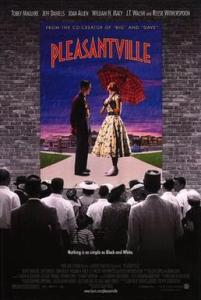
The last time I watched Pleasantville I didn’t have this blog running to discuss it.  It was also during the Obama administration where it felt more like nostalgia rather than a documentary.  In case you’re not familiar, Pleasantville is a movie about how a nerdy teen, David, and his cool sister Jennifer get sucked into a 1950’s sitcom, “Pleasantville.”  They find themselves in black-and-white and in a world as regimented as Stepford, but somewhat more humorously so.  As Jennifer is eager to get back home, she introduces this colorless world to sex, and as the two-dimensional characters begin to experience strong emotions colors start to appear.  The “picture perfect” Pleasantville begins to let the plastic facade of the 1950s slip to reveal a complex and messy world of true humanity beneath.

Watching the film in the age of Trump, as with most things, interjected a current of fear.  The townspeople feel threatened by those who are different, colorful.  They want everything just as it was—women serving their husbands, everyone the same hue, and pretending that sexuality doesn’t exist.  It may have been originally intended as an homage to the the 1960s, but what became clear in an age of MAGA is that crowds easily respond to suggestions of hatred.  Many of those in the group, individually, are “coloreds” themselves, but fear to let it show.  Conformity is much safer even if it means hating those who are different.  I wasn’t alive in the 1950s, but the superiority of the white man apparently was.  One of the characters is, tellingly, named Whitey.

Initially drawn to the film seeking biblical references (occupational hazard) I knew there was an Eden scene before I first watched it.  Margaret, on whom David has a crush, has discovered actual fruit at Lover’s Lane.  She brings him an apple which, the TV Repairman (if you’re lost, please watch the movie—it’s quite enjoyable) points out, is a form of sin in this world of simple answers and unspoken repression.  A mash-up of Jasper Fforde and American Graffiti, the film exposes the lie behind the idea that all were put on earth to serve the white man.  Jennifer discovers books and stays behind in colorized Pleasantville to go to college, something of a rarity in those days.  Although the movie bombed at the box office, it has a serious message to convey.  There was no perfect 1950s iconic America.  The process of becoming great is one of evolution, rather than that of a fabled Eden, available only in black-and-white.