Quoth Hardy

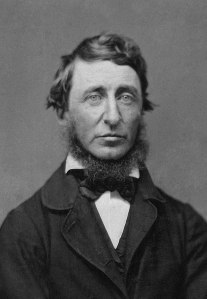
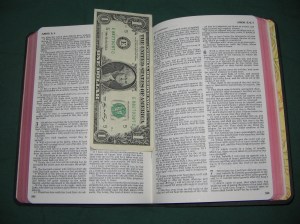
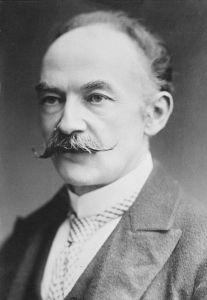
There are days when the quote from an author is the best thing to happen to me.  You probably know those kinds of days—days when there’s nothing really to stay up for so you go to bed early.  Lengthy days when your Muse wins easily any game of hide-and-seek.  You see, I save most of my fiction reading for bedtime.  If I turn in soon enough I can read quite a bit before falling asleep.  Not to sell you a false bill of goods, but that’s not the source of the quote.  It actually came to me from an unrelated email about the Bible.  The quote, while lengthy, comes from Thomas Hardy:

By the will of God some men are born poetical. Of these some make themselves practical poets, other are made poets by lapse of time who were hardly recognized as such. Particularly has this been the case with the translators of the Bible. They translated into the language of their age; then the years began to corrupt that language as spoken, and to add grey lichen to the translation; until the moderns who use the corrupted tongue marvel at the poetry of the old words. When new they were not more than half so poetical. So that Coverdale, Tyndale, and the rest of them are as ghosts what they never were in the flesh.

This comes from a letter to Professor D. A. Robertson of the University of Chicago, dated to February 1918.  Hardy was a known critic of religion, but like most writers of his day he knew the Bible.  Now, I’d never generally put myself on the same page with Hardy, but something similar to this thought had occurred to me long before I saw this quote.  We treasure ancient writing simply because it has survived.  This should be a sobering thought to any of us who try to forge our thoughts into words.  We have no way of knowing if, at the time, an author was considered great.  Merely the passage of time can make writing unfashionable in its age appear brilliant.  Like rocks tumbling over each other at the base of a cataract, they find polish over time.

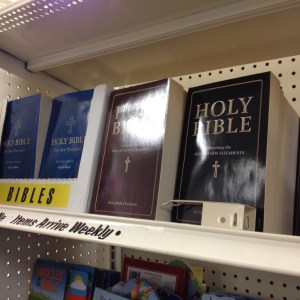
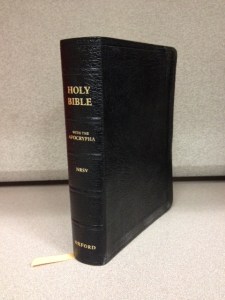
My particular context for receiving this emailed quote was the King James Version of the Bible.  Often considered sacred in that translation, it was not uniformly well received when first published.  There had been English Bibles before, and since the Good Book is the foundation of western literature, a new translation commanded attention.  It had its critics, but over the centuries the translation itself became holy, whether it deserved it or not.  Similarly, Martin Luther’s translation of the Bible helped to codify the German language.  We shouldn’t be too quick to dismiss Scripture, not for its theology, but for its immense influence on western thought.  As Hardy noted, it may be the passage of time that makes writing great.  Even so we might be wise to pay attention.


A Saint Lent

Photo credit: Andreas F. Borchert, Wikicommons

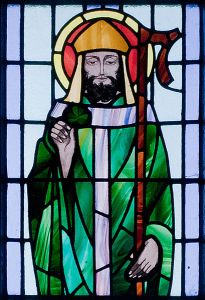
Lent, among the denominations that observe it, is intended as a time of intense reflection.  Beginning on Ash Wednesday the fact of one’s own mortality becomes a foremost consideration as the faithful are reminded that they will die.  It has always struck me as paradoxical that St. Patrick’s Day always falls in Lent.  Those who abide by the liturgical calendar readily acknowledge that Lent is a punctuated season; saints’ days and feasts can still occur, temporarily disrupting the heavy contemplation.  While at Nashotah House we never celebrated St. Patrick beyond a brief mention during a collect of the seventeenth.  His day, rich in Celtic mythology, it seems, was inappropriate to the mandated gloom so highly valued by the soul-sick.  Having some Irish ancestry, I always felt a little slighted by this aloofness regarding a saint most people can actually name.

College campuses, I later learned, tend to schedule their spring breaks to include Saint Patty’s Day because of the damage drunken students may exact.  The stereotypical besotted Irish have become an excuse for excess during Lent, although, I suspect the forty days have little to do with it.  A saint becomes a justification for sin, it seems.  And Lent continues the morning after.  There’ll always be Lent.  The tray holding the ashes of last year’s palm branches is never empty.  Two once religious observations clash in mid-March of each year.  During a brief spell the historically oppressed Irish are celebrities for a day.  Such are the vicissitudes of liturgical calendar clearing.

Today many people celebrate a saint they wouldn’t otherwise recognize.  One that mythically drove the snakes from the Emerald Isle, and who perhaps hid a pot of gold at the end of the rainbow.  A holy man who has made it possible for anyone to be Irish for a day.  Leprechauns and clovers are in fashion as the ironic luck of the Irish closes down major thoroughfares for parades in the midst of ashes and dust.  Outside there may be snow or budding trees.  Perhaps both at once.  There’s a richness to these conflicting symbols that belies the commemoration of a missionary with alcohol.  The day is part of the complex of equinox holidays, whether intentional or not.  The green man of yore begins to awaken as light starts to outstrip darkness for half a year.  We’ve had enough of dusk.  Anticipate the light.  The rules state that Lent will still be here tomorrow.  But the light is beginning to grow. 


Culpability Defined

What seems to be lacking in the United States government is any realization that actions have consequences.  While in Christchurch, New Zealand at least 49 people have been murdered only for being Muslim, Trump feels that tweeting “heartfelt” condolences somehow exculpates him from fostering an atmosphere of hatred.  Indeed, the main shooter in that travesty cited Trump as an inspiration.  The sickening lack of awareness that deeds have consequences has once again led to a body count.  Meanwhile in these states the Republican Party refuses to condemn the daily and consistent message of racism coming from an edifice that is more and more appropriately called the “White House.”  Do you have to pull the trigger to be guilty?  History will decide.  

Politics has always been a crooked game, but until 2016 most elected to the highest office—God help us, even George W. Bush—realized that the office had responsibility associated with it.  It wasn’t a place you could play loose and easy and tweet from the hip and think it was your right as “just another citizen.”  Muslims have been part of American culture from very nearly the beginning of this experiment in colonialism.  Freedom of religion was one of the pillars of democracy that Trump has been chopping down like a cherry tree while tweeting “No I didn’t.”  The GOP applauds.  Here’s how to instill one religion as the norm, not considering the consequences.  Massacres in the name of Christ don’t make you Christian.  Not cutting history class should be a requirement to run for elected office.  Or at least taking basic civics.  Instead we have a government that refuses to recognize that it can inspire murderers around the globe and then offer heartfelt condolences with no apologies.

Where is the condemnation of racism?  Where is the line between black and white?  Where is the sense of any culpability for creating and sustaining the warm, moist environment where the bacteria of hatred thrives?  When you awake to the news that yet another white supremacist has taken inspiration from an angry white man who has nothing to be angry about and has consecrated murder as patriotism how can you look the world in the eye?  Hiding behind a tweet does not bring back the dead.  How do we get the message through?  Millions of us have repeatedly marched in protest.  We flipped one house of congress and we daily sign petitions until our fingers bleed but no response comes from those who won by a mere technicality.  If there are indeed ghosts in this world there will be mass immigration and it shall be richly deserved.


If It Itches

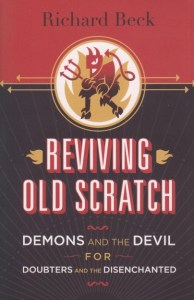
The problem, or rather a problem, of growing up Fundamentalist is taking things literally.  I suppose we’re all born naive realists, learning only later that things aren’t what they seem.  One of the dynamics of finding something new to say about demons involves an unconventional method of research.  Richard Beck’s Reviving Old Scratch: Demons and the Devil for Doubters and the Disenchanted is a case in point.  Being part of a series called “Theology for the People,” this book is not an exploration of literal demons or the Devil.  Well, it kinda is and kinda isn’t.  It is an engaging and often insightful treatment of the question of evil and what to do about it.  Evil is a question, but most of us, at least pre-Trump, could recognize it when we saw it.

Beck is a professor of psychology.  This meant that at several points I found myself pausing to consider some of the points he was making.  Some parts didn’t work for me—welcome to the world of reading—but others were eye-opening.  One thing that all books about the Devil seem to have in common is the observation that evil is clearly present in our world.  Governments, and Beck uses Rome as an example, easily become oppressive and harmful to the weak and powerless.  As a volunteer in a prison ministry, Beck knows whereof he speaks.  When governments are run by the unstable (think of the one with a toothbrush mustache or any other who declare themselves geniuses) oppression follows.  Evil not only bobs in the wake of oppression, it is oppression.  Beck has a Christian anchoring—call it theology—behind this, but it clearly works even without that.

Getting over my literalism, I know that academic books about demons or the Devil come with more serious titles and more hefty price-tags.  The value of a book, however, has to do with more than the cash you shell out for it.  Beck does a service by offering a theology that isn’t too theological.  I’ve known many candidates for the ministry who lost their compassion by getting tangled in the weeds of theology.  Even to the point of making sarcastic remarks to someone who wanted to help them when they fell on the ice.  I know myself, and I have to learn to trust those who practice theology in ways that I do not.  This may not be conventional research, but it is important reading.  Old Scratch, after all, is not just in the details.


Frankly

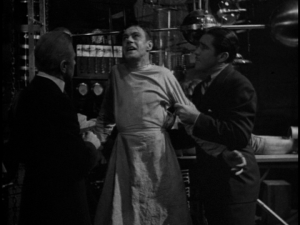
Even in the 1960s, if I recall, Dracula and Frankenstein really weren’t that scary.  I mean this in the sense of the 1931 Universal movies that began the entire trend of “horror” films.  They were, nevertheless, monarchs among those of us who claim the sobriquet “monster boomers.”  (I’ve never considered myself as part of any generation, but there’s so many people that you’ve got to sort us somehow.)  Recently I talked my wife into watching/re-watching these two films with me.   The pacing makes it seem like everything in the 1930s was stuck in slow motion.  The frights are difficult to feel, given what we’ve seen in movies since then.  And they are both, it occurs upon reflection, movies in which religion is the norm against which we measure monsters.  God is assumed.

Dracula, of course, fears the crucifix.  His chosen home in England is a ruined abbey.  Although the source of his monstrosity is never discussed, he is intended to be an embodiment of evil, draining the life of innocents.  Renfield craves flies and spiders in order to ingest their life.  Christianity can’t tolerate such evil and Dracula must be staked (off screen).  Frankenstein’s monster is much more obviously theological.  Opening with a warning to the audience that the film may shock due not only to its frights, but also because of Henry’s desire to create life, the film has philosophical discussions between Henry and his associates, and ends with the moral dilemma of what to do with an evil created by human hands, yet clearly alive like other people.

Metaphorically speaking, these first two horror films set the stage for later developments in the genre.  It isn’t so much fear and startles that define the genre as it is a deep dread of offending the powers that be.  Childhood was so long ago that I can no longer recall just which movies I saw on Saturday afternoons, but these two were among them.  Even as I was beginning the spiritual journey that would assure my job was never far from the Bible, I recalled with fondness the frissons of watching Dracula and Frankenstein—and then the host of other Universal monsters such as The Wolf-Man, The Invisible Man, and The Creature from the Black Lagoon (the last being scary in the classical sense).  The world in which they operated was deeply religious, for even the gill-man was an implicit condemnation of evolution.  These monsters were informing a religious outlook that would last a lifetime.  Going back to Dracula and Frankenstein is like turning back to the first page of Genesis and beginning again.


Christianity sans Christ

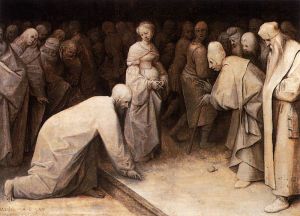
Pieter Breughel the elder

“He that is without sin among you, let him first cast a stone at her.”  (Please pardon the sexist translation, but the King James is in the public domain.)  That verse, and many others, have been going through my head since my former United Methodist Church decided to close its doors to those who are different.  The reason this verse sticks out is pretty obvious—according to the Good Book we’re all sinners.  The “Christianity” that the UMC has embraced is that of Paul, not that of Jesus.  In fact, Jesus seems to have exited, stage left.  You see, only with a great deal of casuistry of exegetical caliber can anyone claim that Jesus (aka God) said anything about homosexuality.  Not a single word.  His response in the famous story of an adulteress (what of the adulterer who partnered in her crime?) caught in flagrante delicto, he gave our opening quote.

At one point Peter, exasperated with his master’s kindness, sputtered how many times did he have to forgive—seven times?  More like seven times seventy.  The one without sin has itchy fingers where stones are abundant.  Once at Nashotah House we had a student from Kenya.  He was already a priest, and he had a family back home.  At one point I asked him about his wife.  He informed me that his brother now had her as wife while he was gone.  It was the way of their culture.  This same student—for we are all students all the time—had harsh words for American sexual practices.  He later tried to find a way to stay in the United States, leaving family behind.  The Bible may turn a blind eye to polygamy, but polyandry is definitely stone-worthy.  Who is without sin?

Ironically the UMC has lined up against the Gospels.  Christianity’s sexual hangups began with the apostle from Tarsus, not the carpenter from Nazareth.  We have been forced to see, time and again, what comes of making priests remain celibate.  It’s against nature, and none of us has a free hand to grope for a stone.  Instead, we queue up ready to judge.  Love, the church says, is wrong.  God, says the Gospel, is love.  There’s a mansion with many rooms above our heads.  We’re not told if the doors come with locks or not.  Unless this seem unnaturally profane, anyone who has truly loved another knows it is more than just a physical act.  Such spiritual intimacy is difficult to spread too thinly without cheapening it to the point of a tawdry sit-com.  Even then, however, we shouldn’t judge.  There aren’t stones enough in the world for that.


Like a River

It still gives me the creeps, to be honest.  Although a myth, well, let’s not dignify it with that noble term—although an urban legend, the origin of the “peace sign” with “Nero’s cross” upset me as a child and still has its hooks in me.  I remember distinctly the Christian comic book that showed a “Christian hater” turning a cross upside-down and breaking it.  The physics of it puzzled me even as a youngster—to break something like that you needed to have some kind of tension.  Snapping two arms off a cross simultaneously must’ve required some kind of magic.  In any case, it was a scary thought.  Now I’ll be the first person to admit that I need more time to study the symbols here, but it seems that “Nero’s cross” was a myth—er, urban legend intended to demonize the peace sign.

The “peace sign” has a documented history going back to the 1950s.  Gerald Holtom designed it based on the superimposed semaphore letters N and D which stood for “nuclear” and “disarmament.”  This was part of the British Campaign for Nuclear Disarmament, a cause that even then evangelical Christians did not support.  Being hawkish, this aggressive, masculine belief system wanted no long-hairs wearing a sign that to them looked like an inverted, broken cross.  Back in Nero’s day crucifixions were disturbingly common.  I suspect many people would’ve been only too happy to see crosses broken and government behaving a bit kinder.  Did they actually circulate a “Nero’s cross” as a hate sign for Christians?  You have to wade hip-deep through Evangelical websites claiming so before you can get anywhere near a site that has actual history on it.  Even then you’ll be left scratching your head.

Some liturgical vestments (sorry to talk shop) such as a chasuble, occasionally have a cross with “broken arms” on them.  Back in the 1950s Evangelical cats hated Catholic dogs and even as a kid I heard rumors about how such symbols were “anti-Christian.”  Were they inverted “Nero crosses?”  Religious symbols have long, rich histories.  We know that the “peace sign” first appeared in the 1950s to protest nuclear buildup.  We know that Evangelicals prefer to sacrifice doves on the altar of “national security.”  Might as well use some olive branches for kindling while you’re at it.  Although I know the origins of the “peace sign,”  I still always hesitate a moment before using it.  Such is the power of early indoctrination.  Even if it defies the laws of physics. 


Sixes and Sevens

Few eras conjure mental images as readily as the sixties.  As the first decade of my life, I idealize them a bit, I suppose.  I wasn’t old enough to appreciate the truly wonderful and troubling things going on around me, and being raised in a Fundamentalist family I probably couldn’t have enjoyed many of them in any case.  Morris Dickstein’s Gates of Eden: American Culture in the Sixties was written in the seventies.  Since he’s a literary scholar much of the culture he analyzes is print culture, emphasizing the works of Jewish novelists and African-American writers.  That fits the sixties image pretty well.  He also looks at the music, but not as much as I had anticipated he might.  For me the music of the decade conveys what it really was about.

At one point Dickstein describes the political situation in the fifties that led to this incredible decade.  I had to remind myself that this was written forty years ago, for he seemed to be describing, with eerie prescience, the world of Trump and his followers.  Repressive conformity and the superiority complex of that era led to a breaking point where individual expression tumbled long-held rules and regulations that had tried to repress women and those that didn’t fit the WASP mold.  Most of us thought those controlling, catatonic days were over for good.  It seems we underestimated the will of those who lack imagination of where things might go if freedom were allowed to be free.  Some people, it seems, believed the sixties were a disease to be cured.

Historians who have a wider grasp than I do say that time has to pass before accurate pictures can emerge.  Instant potted histories tend to miss much of what becomes clear only with the slow passing of further decades.  To me the music defines them.  I only started to become culturally aware in the seventies, and that was in a small town.  When I learned to look back, largely in the eighties, I could see, and hear, that I’d lived through an extraordinary time.  The nineties, largely spent at Nashotah House, were again isolated from culture.  Who knows how this new millennium will be assessed?  Has a new music emerged that will help define us?  Or will it be, as Dickstein unwittingly projects, a new era of acceptance, love, and peace?  Or did the world really end at the millennium?   It could be, we might dare to dream, that a new decade as remarkable as the sixties is waiting to usher in Eden again.


Edifices

In a process that’s been going on for decades, church buildings have been sold and repurposed.  Part of the reason is the fact that spirituality has come to resemble a free market and there’s increasing competition from the Nones.  Thinking back over a lifetime of attending various services, many of which seemed to do nothing more than demand I pull out my wallet, I can understand this lack of public engagement with established religions.  At the same time the rather shallow, but emotionally based evangelical tradition continues to grow, largely based on the emotional payoff it gives.  Ironically, it makes the claim that it’s the doctrine responsible for this appeal, but it seems more likely that it’s the way the doctrine allows you to feel about yourself that’s the key.  And still the wallet comes out as the mega-churches grow.

There’s a profound beauty in dereliction.  Some of the more solidly built structures—for even the way a church was constructed was a theological statement—have lent themselves to creative reuses.  I’ve visited churches converted to used bookstores, and this seems fitting.  The trade-off of doctrine for knowledge is appropriate.  In Pittsburgh, years ago, I was intrigued by the Church Brew Works.  Occupying a closed Roman Catholic Church, the brew pub is a trendy gathering place and the titillation of drinking in a once hallowed location is part of the draw.  People find such irony irresistible, it seems.  Better than letting an abandoned building simply fall to ruin.  When it first opened some were scandalized—a lingering belief in sacred places may account for this.  People were married here.  Baptized.  Funerals were held.

While walking through an unfamiliar neighborhood recently I found a church building that has been converted to a spa.  The idea struck me as so counterintuitive that I had to think through the implications.  Churches, for all their faults, are places advocating spiritual growth.  Whether or not it takes place is quite a different question, of course, but this is all about interior life.  Spas are about the surface, physical beautification.  Indeed, often personal pampering.  This is building space come half circle.   An edifice built of heavy stone, implying the gravity of the business inside might have eternal consequences is now a place to beautify the body.  Perhaps the building itself has gone through a similar process.  What used to advertise to the world that depth could be found  here has now become merely an exterior.  Market forces dictate what it will become on the inside.


Lore of the Folk

Once in a great while you read a book that has the potential to shift paradigms.  The unusual and provocative Raising the Devil: Satanism, New Religions, and the Media, by Bill Ellis, is such a book.  Perhaps the main reason for this is that Ellis is a folklore scholar who takes his subject seriously.  He cites some unusual sources non-judgmentally, but critically.  He suggests that folklore can actually dictate reality for its believers, while not demanding that it defines how everyone else sees the world.  This fine parsing allows him to examine the satanic cult scares of the 1980s and ‘90s with a kind of passionate dispassion.  He traces the historical contexts that made such panics possible, all the while keeping belief structures in place.  In the end, the giving in to this folklore on the part of society can lead to tragic results.  Understanding folklore might well prevent that.

Since our prevailing cultural paradigm is a materialism based on empirical observation, at least among those deemed “educated,” it is easy to lose track of how belief constructs our worlds.  Ellis finds the cradle of satanic panics in the Pentecostal tradition where deliverance ministry—a Protestant form of exorcism—takes seriously the belief in demons of many kinds.  This leads to a study of ouija boards and Spiritualism.  Although neither led to Pentecostal theology, both play into it as doorways for demonic activity, in that worldview.  Add into this dissociative identity disorder (what used to be called, and what Ellis refers to as “multiple personality disorder”) and the recipe for a spiritual mulligatawny is simmering away.  You need not believe what the victim says, but if s/he believes, you must pay attention.

Outside the strict confines of Satanism, other cultural phenomena allowed for panics to grow.  Popular narratives, largely false, of satanists cum evangelists (think Mike Warnke) mingle with cultural fears such as the Highgate Vampire scare and cattle mutilations to make a narrative of satanic ritual abuse believable.  A folklorist sees the connections that a strictly wielded razor by Occam tries to shave away.  All of this fits together.  When we don’t pay attention to how real this is to those involved, a half-baked public panic can erupt.  Ellis suggests such circumstances might well have led individual witch hunts into large-scale witch crazes.  While both are unfortunate, the latter tend to lead to many, many ruined lives.  The subtle awareness that one need not believe in order to understand those who do is something worth pondering.  Reality may be far more complex than the activity of electro-chemical signals in a strictly biological brain after all.


Yes or No

Reading about demonic possession is enough to scare you away from ever using a ouija board.  In fact, I’ve never played with one; growing up my strict religion would’ve prevented it in any case, and already as a child I’d been warned of the dangers.  During my research for Nightmares with the Bible, I’ve been reading quite a bit about ouija.  Originally a species of divination, the ouija, or spirit board, became popular during the growth of Spiritualism.  Spiritualism is a religion based on the idea that the dead still communicate with the living, ensuring believers that life continues beyond death.  It still exists, but not with the numbers that it boasted in the early days.  Among the solemn admonitions of Ed and Lorraine Warren (about whom I’ve posted much in recent months) was that ouija boards opened doorways for demonic entities.  Some of their stories are quite scary.

Image credit: Mijail0711, via Wikimedia Commons

Whatever else you can say about America, a fact beyond dispute is that if something can make a buck it will be marketed and sold.  So it was with ouija boards in the 1970s.  I remember seeing them on the shelf with other games at local department stores.  Even then I knew they weren’t a toy and I wondered how anyone could be promoting them for general consumption.  At Grove City College—that bastion of undergraduate conservatism—stories circulated about how students (usually coeds) were attacked in their locked rooms after playing with ouija boards.  This is, I was later to learn, a staple of collegiate urban legends.  At the time, however, I took it very seriously.  

Thus it’s strange when I find out that others my age were more curious about them.  Recently at a party with friends around Valentine’s Day, the question naturally came up of how some of us met our spouses.  One of the women mentioned that before she’d met or even heard of her future husband (who has an unusual surname) a ouija board spelled out his name.  She later met and married him, not on the board’s recommendation, but she remembered that years before she’d been given a hint.  Now these friends are not cheats and liars—they’re not even Republicans.  They’re people we trust.  On our drive home that night my wife mentioned she’d used a ouija board once, with friends, back in her high school years.  She asked the name of her spouse (long before we met) and came up with Sam.  I’m no Sam, but when we first met in grad school I was still going by my stepfather’s surname and my initials were S-A-M.  Coincidence?  Probably.  My future wife did not pursue me; indeed, it was the other way around.  Even so, there in the dark on the nighttime highway I felt a familiar frisson from childhood concerning a form of divination that seems to know more than it should.


Love, Not Fear

How do we celebrate Valentine’s Day when our governments advocate hate?  You have to wonder when the autocrats last fell in love.  Building entire polities on hatred harshes the elevated feelings of letting love, well, love.  The only time Republicans seem to smile is when they’re taking advantage of someone else.  But it’s Valentine’s Day, so I’ll try to think charitable thoughts about even them.  

My reading recently has been taking me into the realm of sin.  Let me rephrase that—I’ve been reading a lot about sin recently.  One of the more striking aspects about badness is that it seems closely related to love, or at least lust.  I’ve often pondered why Christianity especially has tended to treat sex as bad.  While all religions take an interest in sexuality, not all of them declare it a negative aspect of life.  In fact, many see as it quite the opposite.  Since I like to trace things to their origins, I wonder why this might be.  Why did Christianity, whose putative founder declared the greatness of love, decide that although love is well and good that making it is problematic?

Paul of Tarsus, whom some credit with being the actual founder of Christianity, considered his celibate lifestyle to be superior.  While he didn’t mandate it of his followers, he highly recommended keeping their commitments to divine causes rather than to prurient human ones.  He believed a second coming was going to occur any day now, and that was nearly two millennia ago.  He was also, through no fault of his own, an inheritor of an incorrect understanding of gender and sexuality.  Even today there’s much about these that we don’t understand, but we do have more evidence-based ideas about what’s going on.  And not surprisingly, we tend to find that love is good and expressing it (appropriately) is also good.  Valentine, after all, was a saint.

Looking out my window, it’s still clearly winter.  There’s snow on the ground from the most recent storm and I’m aching from the upper-body workout that it required to get it off the walk.  But still, in the pre-dawn hours I start to hear—rarely but clearly—the birds begin to sing.  The amaryllis on the sill has sprung into full bloom.  The thing about love is that there’s enough to go around.  It’s a renewable resource.  If only our leaders showed a fraction of interest in it as they show in hate and fear. 


Weaponized Scripture

One of the many questions that haunt evangelical Christians is whether it is okay to watch horror films or not.  The same applies to whether it’s okay to listen to rock-n-roll (even as it’s reaching its senior years).  Cultural accommodation is often seen as evil and evangelicalism, as a movement, is frequently offered as a culture all its own.  I recently rewatched Brian Dannelly’s Saved!, a coming-of-age comedy about a group of teenagers at American Eagle Christian High School.  Gently satirical, it portrays well how evangelicals try to redefine “cool” in a Christian mode.  Taking tropes from pop culture and “baptizing” them, Pastor Skip—the principal—assures the young people that they’re every bit as cool as secular culture icons, only the Christians are going to heaven.

The film came out when I was teaching at Nashotah House.  That seminary also had problems with secular culture, but in a completely different way.  Its method was basically to ignore that culture.  Isolated, Anglo-Catholic, one might even say “Medieval” but for the sanitation, it was likely not a safe place for a professor to be watching such films.  Evangelicalism and right-wing Catholicism were beginning to find each other.  Once the cats and dogs of the theological world, they were becoming more like goldfish in their bowl, watching a strange and unnerving world just outside the glass.  A world in which they couldn’t survive.  Now, Saved! is only a cinematic version of this, but it has a few profound moments.  Mary, the protagonist, comes to see the hypocrisy of both the school and her former friends when she supports a boyfriend who is gay.

At one point her friends attempt an intervention.  They try to exorcize Mary, and when that fails one of them throws a Bible at her.  Picking it up, Mary says “This is not a weapon.”  Since this movie isn’t by any stretch of the imagination horror, I didn’t address it in Holy Horror.  As I rewatched it in the light of that book, however, I recognized a motif I did discuss in it.  The use of the Bible in movies is extremely common.  That applies to films that don’t have an overt Christian setting such as this one does.  The iconic Bible is a protean book.  Despite what Mary says it can indeed be a weapon.  It often is.  Many of us have been harmed by it.  Christian separatist culture has its own dark side, even if it’s carefully hidden, its adherents think, from the secular world outside the fishbowl.


Terror Text

Dystopia reading and/or watching may be more practical than it seems.  History often reveals authors who may be accused of pessimism more as prophets than mere anxious antagonists.  Two books, according to the media, took off after November 2016.  One was George Orwell’s 1984,  and the other was Margaret Atwood’s The Handmaid’s Tale.  I’d read both long before I started this blog, but I recently asked my wife if she’d be interested in seeing the movie of the latter.  While teaching at Rutgers, I had a 4-hour intensive course and to give students a break from my lecturing I’d have us discuss Bible scenes from secular movies.  The Handmaid’s Tale was one of them.  Watching it again last night, I realized the problematic nature of Holy Writ.

The Handmaid’s Tale is a movie (and novel) that involves what I call “Bible abuse” in Holy Horror.  That is to say, the Bible can be used to oppress rather than to liberate.  To cause human suffering instead of eliminating it.  Sure, to make Atwood’s dystopia work a future catastrophe of fertility has to occur, but the military state, the assumed superiority, and the will to control on the part of men are all too real.  We’ve witnessed this in the United States government over the past two years.  A lot more has been revealed than personal greed—that side of human nature that quotes the Good Book while doing the bad thing.  In the movie it’s literally so, while our “leaders” are only a metaphoric step away from it.  Although it’s not horror, it’s a terrifying movie.  I still have trouble watching The Stepford Wives.  Why is equality so easy in the abstract, but so difficult when it comes to actual life?

Aggression is not a social value.  This is perhaps the most ironic aspect of using Scripture to enforce oppressive regimes.  The whole point of the New Testament is self-denial for the sake of others.  That may be why the only Bible reading in the movie comes from the Hebrew Bible, the story of Jacob and Rachel.  Although this isn’t one of the traditional “texts of terror,” to borrow Phyllis Trible’s phrase, it nevertheless illustrates the point well.  A culture that values women only for their reproductive capacities is dystopian to its very core.  When a book, no matter how holy, is divorced from its context it becomes a deadly weapon of blunt force.  Atwood moves beyond Orwell here—the government that sees itself as biblical can be far more insidious that one that only weighs evil on the secular scale.  Not only the Bible ends up being abused.


May Care

The thing about the Devil is that evil is no laughing matter.  Darren Oldridge had no easy task limiting the dark lord to The Devil: A Very Short Introduction.  He nevertheless does an admirable job packing lots of provocative stuff into a small package.  The historian of religion part of me found his short history of Satan in chapter 2 a compelling synthesis of the character’s background.  Longer sources get tangled in theological weeds once the New Testament’s over, what with erstwhile saints being recast as heretics over some minute point of doctrine.  Lots of ideas about the Devil were floating around in those days, even as they are today.  A particularly important point, however, is made early in this book: even during the Enlightenment most intellectuals—including scientists—assumed the reality of the spiritual world.  It was only when materialism alone came to reign that there could be no Devil because there could be no spirits.

A vast disconnect continues to exist between “public intellectuals” and hoi polloi.  The vast majority of people in the world are religious.  Even in, especially in, the United States a great number of people believe in the Devil.  Many of those same people can’t recognize political evil when it stands naked before them.  Here’s the irony of it all: Oldridge discusses how an evil system, let’s say Nazism, blinded many otherwise decent people to the evil they were asked to perform.  Rhetoric that demonized the other, when dispersed over large crowds, has historically had that effect.  Today we see “Christians” claiming that a social system of helping those in need is of the Devil.  The greatest weapon of the prince of darkness is the sincerely believed lie.

Lies have always been associated with the Devil.  When the number of untruths coming from the White House has broken the very meter for measuring lies, those who claim the name of the crucified man who advocated care for the poor shout all the more loudly.  Not at the lies, but at those who don’t accept them.  Historically, the reign of facts has kept some checks on the Devil.  Even Jesus accused Herod of watching Fox—or was it being a fox?—too bad there are no facts to check.  Oldridge doesn’t tip his hand as to whether there is an actual Devil or not.  Society has, however,  no trouble making up its mind.  All they need to do is turn on the television.