Just As I Was

It was kind of a game. A game to teach us about important people, living or dead. The fact that we were playing it in high school history class, taught by one of my favorite teachers, made it even better. Everyone wrote a name on an index card—a person in the news or somebody from American history in the past. A student sat facing the class while the teacher selected a card and held it over the student’s head, so we could all read who it was, all except the chosen one. Then s/he would ask questions to guess whose name was written. I remember very well when the teacher picked up my card and read it. He said “that’s really a good choice!” The name led to a bit of joshing. “Is he alive or dead?” the student asked. “How can you tell?” joked our teacher. It was the one name the selected student couldn’t pin down, no matter how many questions she asked.

It’s fair to say that Billy Graham had a profound influence in my life. As a curious—and very frightened—child, whenever his crusades were on television I would watch, transfixed. I responded to his altar calls at home. Multiple times. My emotions were overwrought and I’d awake the next day feeling redeemed, for a while. I had no real mentors in my Fundamentalism. Ministers preached, but they didn’t explain things. Not to children (what was Sunday School for, after all?). All I knew was that when the rhetoric reached Hell, and the possibility I would die that very night, repentance seemed like the only logical option. The reality of the choice—a black and white one, no less—could not be denied. Either you were or you weren’t.
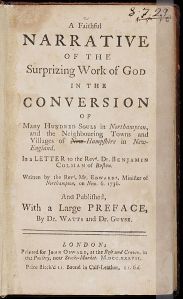
Source: Beinecke Rare Book & Manuscript Library, Yale University via Wikimedia Commons

As my point of view eventually shifted around to that of my high school teacher—I was in college at the time—I began to realize that Graham’s version of Christianity wasn’t as monolithic as it claimed to be. Once you experience other people’s experience of religion, if you’re willing to listen to them, it’s pretty hard to hold up the blackness and whiteness of any one perspective. Over the years Graham tainted his pristine image in my eyes by his political choices. His son now stands as one of Trump’s biggest supporters. Now that Billy Graham has gone to his reward, I do hope that the Almighty doesn’t hold his mistakes against him. He had no way of knowing that his sermons were terrorizing a little boy in western Pennsylvania into a career track that would never pan out. Largely because other followers of Graham’s so decided. It’s kind of like a game.


Lent Presidents

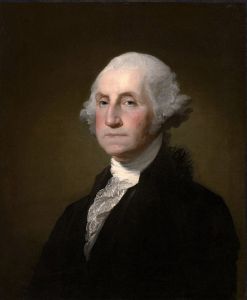
Surely it’s appropriate that President’s Day falls in Lent this year. We as a nation, if we are wise, will repent of the horror we’ve elected upon ourselves. Those ashes on our foreheads remind us that sins come on a national scale as well as an individual. Any nation touting supremacy is in need of Lent, even if it’s founder’s day. Especially if it’s founder’s day. It’s difficult to believe that either George Washington or Abraham Lincoln would’ve truly thought the United States better than other nations. Having a secure and free place to live wasn’t an exercise in supremacy, but in the belief that people should be able to govern themselves. An Easter, if you will, of beliefs.

Symbolism is a major part of any religious holiday. The eggs, rabbits, and butterflies of Easter all represent something just as the burnt palms from last year’s Palm Sunday do. George Washington never chopped down the cherry tree—that was a story made up many years later. It was, however, a symbol to represent a truth. To represent a president who couldn’t bring himself to lie. The fact-checking statistics show that the current incumbent of Washington’s chair lies over five times a day. Listen closely here, for this is symbolism—yes, he did chop down the cherry tree. Where do you think those ashes on your forehead have come from?

An administration where supremacy is daily in the news is surely a sign of trouble. This President’s Day a national S.O.S. goes out, but to whom can supremacists call for help? They are already the greatest in their own minds. Supremacy was the hubris of Rome that eventually ensured its fall. The belief that the Roman male was the most supreme human template possible—far above women, slaves, and foreigners—was held until the day the Vandals and Visigoths came to the door. Preoccupied with its own greatness, it was an empire unable to see the symbolism clearly on display all around it. By that point it had become a “Christian nation”—a state with God’s own blessing on its white males and their entitlements. The insanity borne of excessive pride was no stranger to the seat of the emperor. Less than fourteen-hundred years later a new government would form. It’s leader so full of integrity and dignity that the common person believed he couldn’t cut down a cherry tree without telling the truth. And this year his birthday falls in Lent.


Ashy Valentines Day

It’s been 73 years since it’s happened. Happy Valentines Day! And depressing Ash Wednesday. This is more of a popular culture conundrum than a sacerdotal one. I noticed in my many years at Nashotah House that Saint Valentine doesn’t make the liturgical calendar. This struck me as odd, but perhaps it shouldn’t have. The church has always had a difficult time with love. At least when it starts to get physical. Even if Valentine was a saint—and nobody knows for sure which Valentine it was—he surely didn’t become beatified because of his amorous inclinations. Nothing helps to put you out of the mood like being told “You are dust, and to dust you shall return.”

As a society we’ve been living in an Ash Wednesday that has been prolonged for over a year now. A government of St. Narcissus, for the only love there is love of self. Yet when I thumb through the liturgical calendar Valentine’s still not there. Ironically evangelicals—the name now belongs to those who support Trump—dismiss love as having anything to do with Christianity. This isn’t about love. It’s about showing hatred to the poor and stranger, the kicking out of those in need. It’s about military parades and “Sieg Heils” and law makers who vote themselves even more power with our tax dollars to fund their insidious schemes. There’s no need to gerrymander around the church—it’s on your side. Is it Ash Wednesday or is it Valentine’s Day? Surely it can’t be both.

Love is valued only in so far as it can be commodified. If you can get people to spend money on cards and chocolates and condoms then you’ve got a holiday worth celebrating. Otherwise you might as well join old Job sitting on his ash heap. The last time these holidays coincided the world was at war. The President had set up safety nets to catch those who were the victims of the greed that led to the Great Depression that is now all but forgotten. Nazis were a bad thing then. Now all we have to do is blubber about “fake news” and declare the truth a lie. Christians prefer Ash Wednesday to Valentine’s Day anyway. I admit to feeling a bit conflicted about this. Patriots and lovers used to be compatible concepts. We’ve been told that America is being made great again, but they called that Depression great too. From where I sit it looks an awful lot like Ash Wednesday to me.


Apologizing for Whatever

Maybe you’ve felt it too. The insecurity of liking something other people don’t. Having grown up an Evangelical, I had to try to explain myself at multiple points for liking scary stuff. I love Halloween. I spent my young Saturday afternoons watching monster movies on our black-and-white television. After losing a long-term job at a decidedly gothic seminary, I began consoling myself with horror films. I don’t know why. I also don’t know why other people shun those of us with this particular habit. It’s not like I’m going to make you sit down and watch them with me if you don’t want to. You don’t even need to buy my book, and if you do (thank you!) you don’t have to read it.

One of the issues I’ve often grappled with is why “Christians” dislike horror. Reading the accounts of the martyrs is way worse than almost anything I’ve seen on screen. Revelation, let’s face it, is a horror show of Schadenfreude and ultra-violence. The Calvinistic idea that God would create the vast majority of people to burn in an eternal Hell of fire for reasons best kept to himself (yup, he’s a guy) is hardly charitable. So why do Christians say you shouldn’t watch horror? One of the observations from this lowbrow viewer is that the message behind horror is often good. Moral. Ethical even. We have trouble getting around the form of the message to see its substance.

I seldom talk about horror movies. Maybe that’s why I write about them so much. But the fear of judgment remains strong, even with maturity. The lurking Evangelical fear is that watching horror will entice the young to become interested in evil. I think it’s fair to say that all Christians are somewhat fascinated by evil—where does it come from? Why doesn’t God stop it? Horror films seldom glorify the monster. The protagonists, often flawed, fight evil and sometimes succeed. Do I really need to justify this interest at all? It’s no exaggeration to say that, although no longer an Evangelical I still feel the weight of both their stares and those of others who can’t understand why a nice guy watches such unbecoming things. My book doesn’t answer those kinds of questions, but it may contain implicit answers within. Of course, you’ll only know that if you read it. Not that I’m asking you to do so—it doesn’t even have a title yet.


A Concept

Pardon me for being perplexed in public. You see, things aren’t as clear cut as they used to be. In the world in which I grew up Evangelicalism was good and Satanism was bad. Very bad. It still has the ability to scare people straight. A recent NBC story my wife sent me titled “Satanic Temple challenges Missouri’s abortion law on religious grounds,” by Corky Siemaszko, shows how the GOP has turned the tables on this equation. The Christian Right has utterly aligned itself with the pro-life camp. Most people would agree, I suspect, that abortion shouldn’t be the first choice of birth control options, but life comes with many unpredictable circumstances. There are times abortion is the most humane option and the burden falls almost entirely upon women. It’s not an issue on which men are competent to decide.

The evangelical posturing on the issue—which has, by the way, changed in recent years—has placed the weight fully on women. A rutting male, like a bull elephant in musth, can hardly be responsible, so the thinking goes. Or, to put it more politely, boys will be boys. Women suffer on the tusks of this tautology; it’s no wonder Satan has horns. Only women conceive, so men can make the laws and feel empowered by a male god who, you know, understands where they’re coming from. Missouri Satanists are striking back. The problem is the state requires women to be presented with indoctrination that says life begins at conception before electing for an abortion. Does life begin at conception? The Bible says “no.”

Biblical science was primitive. Ancients understood there was a connection between sex and pregnancy, but infant mortality rates ran very high. Life, in the biblical view, started at first breath. Spirit, breath—the very word for “soul” in the Bible—was the marker of life’s origin. The Bible may not advocate abortion, but in a world where few children made it past five, there was a shortage of surviving progeny. So it turns out that in Missouri Satanists are actually advocating the biblical view while the Evangelicals are violating the constitution by misreading it. Life begins at conception isn’t a scientific premise, it’s a theological one. A theological one on which Christians disagree. And Satanists. In their efforts to keep men on top of women, the Christian Right has no support from the Good Book on the matter of conception. Of course, why read the Bible when you can get what you want by quoting only your favorite verses? After all, God, they say, is a “he.”


Good News Shipping

“And all the ships at sea,” was the closing of Walter Winchell’s radio broadcast introduction. The phrase has a certain poignancy about it—a cross between Melville and Edmund Fitzgerald. The idea of being isolated at sea is foreign to most people, but it is truly as far from others as you can get on this planet. In ancient times the sea was considered evil. It was well-nigh unsurvivable and chaos monsters dwelt in its depths. In the book of Revelation, in God’s kingdom “the sea shall be no more.” But the economic fact is, it’s still cheaper to ship by sea than to fly things from here to there. Amazon seems to have made us forget just how complex delivery is. I was forcefully reminded of this the other day when I received an email saying that the Bibles were at sea. Literally. They’re on a boat in the middle of the Pacific, along with who knows what else.

This is only a parable

The vastness of the ocean makes humans painfully aware of our smallness. As does the Bible. I remember thinking, as a child, that those offering printed salvation did so from the goodness of their hearts. That may be part of the story, for sure, but Bibles are big business. Not as big as they used to be, but still not inconsequential. This was captured well by the character of Big Dan Teague in O Brother, Where Art Thou? “It all about the money, boys!” he shouts as he robs Everett and Delmar. Yes, that evangelist giving away Bibles may have your soul in mind, but your pocketbook too. Like those Bibles snuggled against crates of condoms and smart phones, it’s just business. You’ve got to keep the bottom line in mind.

Bibles can be a lucrative business. The Bible is, however, a large book—expensive to print and bind because it requires special paper thin enough to hold all that text. Such specialized work done domestically would drive the price of the Good Book out of comfortable profit margins. So the word of God is printed overseas and sent across the ocean by boat. There’s a parable deep within this hidden life of Scripture. The romance of the high seas—being completely isolated from land and its comforts. “Here be dragons,” the Hunt-Lenox Globe famously proclaimed, and that’s a parable too. That Bible in your hands comes with considerable cost. Even in a world where drones for personal delivery are not far off, the sea still surrounds us.


Heal and Farewell

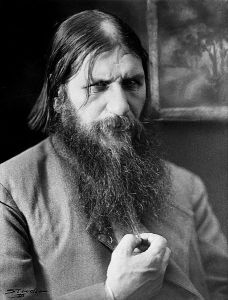
What could Aimee Semple McPherson have in common with the devious Russian monk Rasputin? Apart from being contemporaries for a couple decades, they were both faith healers. Well documented cases exist for both of them, and the medical profession has started to come around to the idea that belief can, and does, heal. The stories of Sister Aimee’s healings, witnessed by thousands, make me fear being thought gullible just for bringing it up. That doesn’t mean it didn’t happen. Cases exist even today where healing inexplicably takes place before scientific eyes. Often it occurs in response to religious stimulus. We may have proof that it happens, but we tend not to believe. This is a curious state of affairs. We trust in reason to the point that it may prevent us from being healed by faith.

Some object, of course, to the theological element. It’s pretty tricky to believe God has healed you if you don’t believe in God. The thing about faith healing, though, is that it seems to work no matter the religion of the person healed. This, it would seem, suggests we should be applying our rational minds to understanding belief. Instead we use it to find new ways to make money or to build smarter weapons to kill one another more efficiently. The more we come to understand the physical world around us, the less we know. As our research institutions take on the shape of the businesses that increasingly fund them, interest in this phenomenon shrinks. Medicine, in all its forms, is big money. Living in central New Jersey you can’t help but notice the palatial campuses of the pharmaceutical companies, nor ignore the mansions on the hill they have built. If only we could believe.

Faith healing was this aspect of her ministry that propelled Sister Aimee to fame. She constantly underplayed it, not wanting to be considered a healer of bodies so much as a healer of souls. Rasputin, of course, had political motives. Both lived—not so long ago—when faith was taken very seriously. Judging from the posturing around the least religious president in decades, whatever faith is left has been sorely effaced. Maybe it’s our minds that have the capacity to heal, but even that well seems to have been drained with the leaky bucket of rhetoric. History can teach us so much, if we’re willing to invest in it. How does faith healing work? I have no idea. Nor, it seems, does anybody else. So it will remain until it becomes commodified.


Breakfast of Champions

In my efforts to become vegan, I’m finding dairy to be the hardest element to replace. I’m reminded of this every morning since the day begins with cereal. Most people don’t realize that cereal for breakfast is largely of religious motivation. The original Kelloggs were Seventh-Day Adventists, and therefore vegetarian. To promote both health and animal-free diets, they gave a big push to the idea the day should start with cereal. It’s a touch dry, however, and water on your flakes leads directly to paste. So I’ve been experimenting with alternate milks. Often I use soy milk, but it has to be the right brand. Some of the offerings on the market have that oily aftertaste characteristic of soy beans. Not sure of the legality of hemp milk these days, I recently tried oat. Oat milk should taste like oats, i.e., it shouldn’t have much taste at all.

The moral crisis came as I poured it into my oatmeal. You see, there’s a biblical injunction to cooking a calf in its mother’s milk. This is the reason meat and dairy can’t be mixed in kosher settings. Scholars debate the basic concept behind this regulation. Like eating a bird and its eggs, some suggest, this depletes nature and should be avoided. At least one generation should have a chance to avoid exploitation. At least until it grows up. But what of the oats and their oat milk? Have I gone too far? What hidden principle am I violating, however unintentional, here? This is the problem with any religious thinking—taken to extremes it begins to break down. Some of the earliest gods, after all, were agricultural deities.

Agribusiness is huge. People gotta eat, right? And it is one of the most massive environmental hazards humans have ever concocted. Industrial farming is the largest producer of methane and the largest user of potable water, by far. Keeping animals for our food is literally destroying our planet. Religions, interestingly, quite often concern themselves with eating habits. It’s strange how most of them in this country are silent regarding what is obviously an ethical issue. After all, we adapted to the cereal for breakfast lifestyle because of religious conviction. It’s difficult to change eating habits. That’s my current struggle. I could pour the oat milk over corn flakes, I suppose. But then again, the Bible forbids mixing fabrics from different plants. What’s an aspiring vegan to do?


Christian Sister

Difficult to believe as it may be, some of the biggest superstars in America’s history have been clergy. The case has been firmly made that George Whitefield, the evangelist, was the first to hold “rock star” status in these United States. He drew stadium-sized crowds before there were stadiums and was, perhaps, the most famous man in the country. Fast forward a number of years and we find a name that may not ring so many bells today. Aimee Semple McPherson, however, was more famous than Hollywood actors and most political figures of her day. The founder of the Foursquare Gospel church was, in the roaring ‘20s, one of the most recognizable names in America. It may not count for much, but even in rural Pennsylvania we learned about her in American History class in high school four decades after her time.

I read quite a lot about American religion, and Aimee Semple McPherson frequently comes up. I knew little about her, however, until reading Daniel Mark Epstein’s Sister Aimee: The Life of Aimee Semple McPherson. While it has its faults as a biography, it does convey a fair image of who this fascinating woman was. An evangelist when few women preachers existed, she was creative, crowd pleasing, and remarkably broad-minded for a Fundamentalist. Her personal life was full of drama—three marriages and at least one kidnapping episode—wealth, and want. She trusted Jesus implicitly and often suffered alone in silence. Secretly she befriended Charlie Chaplin, a man drawn to her stage presence but not her religion. It’s difficult not to like this woman who insisted on doing things her own way, and who ended up alienating her family (apart from her son) by doing so.

There can be no doubt that Aimee Semple McPherson believed what she said she did. Although she didn’t approve of theater she brought theatrics into church via her famous “illustrated sermons.” She pioneered radio evangelism, which subsequently grew into a hackneyed soapbox for lesser thinkers. She was a faith healer, a world traveler, and a woman who genuinely cared for the poor. Epstein’s book tells the story with heart and a touch of hagiography, but it is an entryway into one of the lives that shaped Jazz Age America, even if it is now largely forgotten behind flappers and Fitzgerald. It’s hard to believe that some of the most famous people in American history were religious leaders of their time, especially when we see what’s on offer in that arena today.


Fool’s Paradise

What with all the Bible-trumping going on these days among the desiccated religions right, I thought it might be helpful to turn back to the Good Book itself. Since we have a self-proclaimed stable genius in house there should be nothing to be concerned about. What, me worry? Right, Alfred? One part of the Bible frequently cited by fundies and others who want to appear chic is the “Wisdom literature.” Although the category itself has come under scrutiny these days it’s still safe to say that Job, Proverbs, and Ecclesiastes have quite a bit in common with each other. Proverbs is a repository of pithy aphorisms. Indeed, it can sound downright modern in many respects (but hopelessly patriarchal and chauvinistic in others, unfortunately). One of the things Proverbs does is condemn fools. The sages of antiquity had no time for stupidity. Remember, we’ve got a stable genius—don’t worry.

Like Laplanders and their many words for “snow,” the book of Proverbs uses several terms for fools. There is, for instance, the innocent fool. This is the person who simply doesn’t know any better. Often it’s because of inexperience. This kind of fool can learn from failures and may go on to better things. Far more insidious is the willful fool. This is the person proud of his or her ignorance. Proverbs goes beyond calling such a thing unfortunate—this kind of foolishness is actually a sin. Not only is the arrogant fool culpable, they will be judged by God for their love of stupidity. As a nuclear super-power it’s a good thing we have a stable genius with the access codes. Otherwise those who thump the Bible for Trump might have a bona fide sin on their hands.

Image credit: Pamela Coleman Smith, Wikimedia Commons

The only kind of fool that’s tolerable in the world of Proverbs is the one that’s able and willing to learn. This means, in the first instance, being humble. Refusing to admit mistakes, forever posturing and preening, this is a certain recipe for incurring divine wrath in the biblical taxonomy of fools. According to biblical wisdom literature, such people get what they deserve. The modern evangelical often has little time for such books. Aside from a misogynistic slur or two, there’s nothing worth quoting from Proverbs that you can’t find in Benjamin Franklin or even in ancient Egyptian records. When you stop to think, however, that the Bible’s said to be inerrant, you’ve must take Proverbs and what it says about fools into account. But then again, what Fundamentalist ever really reads the Bible?


Augustine’s Secret Sin

I’m curious: what do you think of Augustine? Augustine of Hippo was an odd blend of saint and sinner. I don’t mean “saint” in the sense of being so designated by the Roman Catholic Church, but in the sense of having reputable and progressive ideas. For example, Augustine argued that science, such as it existed in his day, had to be taken into account when understanding Christianity. If the Bible’s account of creation didn’t match what we knew of the world, then literalism had to go—that kind of thing. This was quite liberal for someone in the fourth-to-fifth centuries. He believed in reason, to an extent. The sinner side of the equation goes beyond his Manichean days, however. The sins I’m referring to are his dangerous and long-lasting theological assumptions that’ve helped to hold back civilization throughout history.

It was Augustine, for example, who gave us the idea of original sin being involved in sexual reproduction. The church has always been cagey on why we should reproduce when the second coming is right around the corner, but Augustine declared that from our very conception (which he couldn’t understand scientifically) we were tainted with sin. But that’s not the particular sin to which I’m referring. Augustine also spread the persistent idea that curiosity itself was a sin. Christianity, in his view, was a “need to know” religion, and curiosity about the natural world could lead to uncomfortable answers. He held this in tension with his belief that we should accept what science teaches, but there were many questions, he decided, we simply shouldn’t ask.

Religions have often come to this crux. Science has a strong explanatory track record. Religion is frequently based on old texts, written in an age when science was but an infant. As the power of rationality grew, the role of miracles shrank. Over time the proof of theological structures began to crumble. And since life was all about correct theology, those edifices had to be shored up against the onslaughts of reason. If this sounds hopelessly outdated, I’ll have to confess that many of my students at Nashotah House believed reason was tainted by original sin. Augustine had the answers they believed; somehow rationality had stopped with him. Human curiosity, Augustine felt, was a sin. All questions should’ve ended with his arguments. It’s this kind of theological bravado that gets us into the mess we find ourselves in today. Voting blocs that never question what their religious leader tells them. Never curious enough to ask “Why?” Augustine was a brilliant man, in many respects. He was also a sinner of the highest degree.


What Year?

Dave Barry’s end of year review is part of our annual ritual for changing over the calendars. For those unfamiliar with Barry’s work, he was a columnist with the Miami Herald and is the author of numerous humor books. Known for his light touch, as well as his friendship with Stephen King, Barry has a way of finding the fun in what are often trying times. It should be no news that Barry’s work was quite easy this past year. 2017 was so bizarre that few humorous garnishes were required to make it look ridiculous. Even as Barry embellished the facts just a little bit, 45 was starting off 2018 in an even more unbelievably surreal mode. Congressional Republicans, of course, noses permanently stained brown, lock step with him.

I have to wonder when world leaders became so unaware. Perhaps because of the ad hoc declaration of fake news people like Trump think they can rewrite history. History, however, takes a long view. There’s no doubt whatsoever that the Trump administration will be remembered (if there are any of us left here to do so) as one of the strangest and most foolish periods of American history. Even Rome, of course, had its Caligulas. The thing was the evangelical would’ve despised the antics of such an emperor. If Trump had an ass he’d make it a senator. And the GOP would quickly confirm it. Rumor has it that he’s already attempted this.

Those who ignore history, to paraphrase George Santayana, are condemned to live through it again. And Trump, it is clear, doesn’t know history. As the Roman emperors grew more and more decadent, the Visigoths quietly awaited the implosion. When we see the beast and the false prophet squabbling we know that the end of time is near. A cold snap hits the east coast and the pretender-in-chief says we could use some global warming. Global warming, of course, is what triggers such erratic weather. The problem is you have to read to find out such things. And you have to read what you, as emperor, have decreed to be fake news. Historian Barbara Tuchman once stated that you need about fifty years to pass before writing history about an event. Right now we have a White House trying to rewrite history of last January, as if anyone alive then is incapable of remembering what happened a paltry year ago. And what a paltry year it was. Read Dave Barry’s take and find out for yourself.


Sticky Labels

Who gets to decide on their own label? We all generally know how we’d like people to think of us, but labels are limiting and divisive. An article by Tom Gjelten on NPR describes why “2017 Has Been A Rough Year For Evangelicals.” The label “Evangelical” is so protean that most people outside the specialist camp really have no idea what it means. A colleague of mine at Nashotah House used to defensively declare himself an Evangelical while holding somewhat progressive social views. I know Evangelicals who find the whole Trump charade distasteful and, quite frankly, wrong. They are, however, pasted with a label that has passed its expiration date. This label doesn’t come off easily.

The real issue is not Evangelicalism, but politics. In the version of Evangelicalism in which I was raised was non-weaponized. Yes, we believed that others should convert to “true Christianity” but whether they did so or not was their decision. In college, fellow Evangelicals in a very conservative setting declared that legislative morality was no morality at all. This was in the Reagan Era, when the GOP “discovered” the huge “bloc” of untapped voters—the Evangelicals. They discovered that this particular bloc could be rather easily swayed from voting in its own best interests, socially and financially, but emphasizing certain hot button issues. It was a political game that many Evangelicals simply didn’t recognize. You love Jesus, you vote Republican. Now these Jesus lovers must love Trump.

This discord is what Gjelten is addressing. Some Evangelicals are discussing changing their label. This can happen, of course, over time. The Moral Majority became the Religious Right became the Christian Right. Powered by televangelists when television was king, they now have to try to control the internet so the mediating influence of secular thought can be dammed. Among the casualties along the way is Jesus. The modern Evangelical movement no longer adheres to the teachings of the carpenter from Nazareth. The issues on which he spoke plainly and repeatedly have been relabeled as “liberal” and therefore evil. If you can keep the Jesus brand, eviscerated of its core beliefs, you can gather a bloc of dupes who’ll flush their own healthcare and financial wellbeing simply because sheep will follow any shepherd. Ironically, the Bible itself warns of the dangers of following false shepherds. None of that matters anymore. And those who joined the group because of that Bible wonder now who they really are.


Honest Doubt

Kurt Vonnegut was never required reading in my high school English classes. I read Slaughterhouse-Five when I was in seminary, and picked up a few of his other titles in the dearly departed Boston Book Annex. A couple of these used books have been waiting patiently over the decades, and so I selected Cat’s Cradle to be perhaps the last book I finish this year. As far as I can recollect, the Vonnegut books I purchased while in seminary had no particular order or reason. A friend had recommended The Sirens of Titan, but Cat’s Cradle was what would now be called an “impulse buy.” Reading it, I rediscovered why I like Vonnegut so much. I also found out the book revolves around religion.

Regular readers know that I tend to find religious themes in secular books. It’s partially human radar and partially an unfortunate occupational hazard. Occasionally I’m pretty certain the author had no intention of including or developing the themes I discover. Cat’s Cradle, however, places religion front and center. The story involves a journalist on the trail of one of the developers of the atomic bomb. He unintentionally coverts to Bokononism, a religion made up by a castaway on the island of San Lorenzo. The religion, based on the teachings of a still-living sage, revolves around the idea that all its sacred writings are lies. Think about that a moment.

Lies, in which we’ve all had a crash course since January, are among the most insidious of human accomplishments. We value and crave the truth. We all believe that we believe it, but there are differing opinions as to what it is. Some opinions are backed with evidence, and others with flimsy fabrications. To declare a religion based on lies is, of course, to undermine the whole enterprise. Vonnegut was a noted iconoclast, but there’s a brilliance in declaring a religion to be knowingly based on falsehood. In fact, we’re seeing it happen before our very eyes. The religion formerly known as Christianity, once upon a time, took into account the teachings of Jesus of Nazareth, as recorded in the gospels. Modern Christianity—Evangelicalism—has completely thrown Jesus out of the equation in all but name. Branding, after all, is everything. This modern faux religion suggests hating your fellow creature, taking advantage of the poor, and believing falsehoods to be the most sincere of truths. It’s alive and released on the earth even now. And it is far more scary than even ice-nine.


Nothing Better

While it may seem that the largest challenge on a blog like this is writing all these words every day, that’s often not the case. Early on in my blogging life, I learned that images draw readers in. That may no longer be the case, but I do try to ensure that my posts have apt illustrations. Due to the fact that I can’t keep up with technology, I no longer know where these images are even stored, so when I was seeking a picture—amid thousands—that I had saved on my backup drive, I came across a series of photos taken in central Pennsylvania. These showed some road-cuts with obvious and impressive folding of geological layers characteristic of orogenous zones. Geologists only discovered the earth was ancient in the nineteenth century, and evangelicals have been disputing it ever since.

Genesis, so the spotless thinking goes, says the world was created in six days. So, by God, in six days it was created! When Darwin simply put the pieces of the puzzle together, evangelicals objected loudly. They started electing US presidents in the next century—a blink of the eye in geologic terms. They don’t dispute non-biblical dinosaurs, however. Their kids would object. The impressive sedimentary layers (or for that matter, igneous or metamorphic) were, they claim, made by God to look old. To fool us. That’s the kind of deity he is. So I got to thinking of a “to do list” for a God with nothing better to do than to oversee intricate and complicated layers of rock that make sense in geological time, but which, apparently, are only planted here to test the faith of brand-spanking new Homo sapiens.

One thing such a deity might do is take care of social injustice. Since he is a father, I suspect we ought to listen to his son, my evangelical friends. Jesus of Nazareth seemed pretty set on helping other people and everyone loving one another. This was, of course, between stints of helping make the planet look older than it actually is so that sinful scientists could trick their compatriots into going to Hell by believing false evidence. There are so many things you could do if you had the time to make such intricate traps. Why not write another book, for example? The Bible could use a good sequel. But no, it is far better to spend divine time making a world look older than it is. And if I had been able to save the time looking for that image that took over half an hour to find, a post such as this would’ve never been created at all.