Irrational Revelation System

In an article on Obamacare in last week’s paper, Kathleen O’Brien pointed out an interesting dilemma. Some religions, such as the Anabaptist traditions (Amish, Mennonites) must comply with modern regulations on healthcare or face a fine. Under pressure, the Internal Revenue Service grants exemptions to some such religions, but those religions have to have been established before 1950. Maybe I’m paranoid, but just having read about Scientology, I have to wonder about two things: what is the IRS doing defining religions, and why 1950?

Photo credit: Ad Meskens, Wikimedia Commons

Photo credit: Ad Meskens, Wikimedia Commons

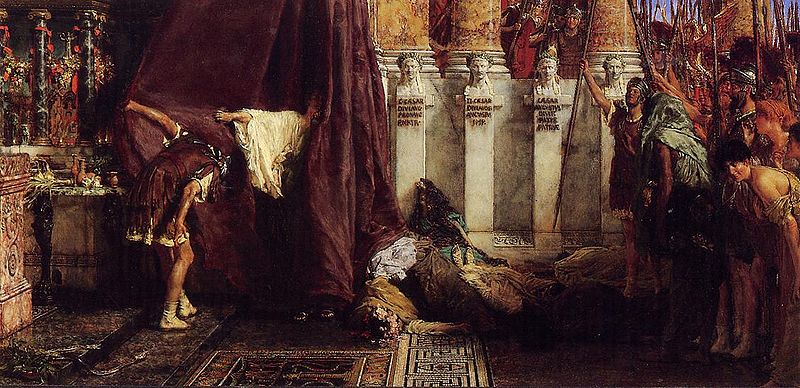
1950. Like the Roman Empire, frustrated with new religions (like Christianity) popping up all over the place, governments sometimes default to a religion’s age as a sign of its validity. Rome required conformity, but Judaism, demonstrably already an ancient religion, was granted an exemption from some of the regulations. We have a tendency to think that if a religion is valid, it must have been discovered/revealed long ago. All religions, however, were new at one time. Even the first shaman offering the first propitiatory gesture to the first recognized nature spirit, was experimenting a little. Did that stop in 1950? That line in the sand must stand for the cutoff date for new religions. Why? Well, you see, it has to do with money.

The IRS, as an organization, doesn’t really care what you believe. As long as it includes paying your taxes. One of the burdens of citizenship, too quickly forgotten, is that life together in a complex society is not possible without incurring considerable costs. Religions have long claimed tax-exempt status under the rubric of disestablishment. If they pay the government, then it is like the government is receiving kickbacks from the Almighty. The biggest donor should get the biggest favors. Soon you have a state church. So it is just easier to let religions be tax exempt. But since nobody has ever adequately defined what a religion is, the doors have been wide open for entrepreneurs in the faith industry. Instead of letting religious experts decide how to define a religion, that has become a government job. I picture a simple, bearded Amish man pulling his buggy up outside the IRS headquarters in a frenetic Washington, DC to go argue his case. Don’t worry, Bruder. Divine revelation, whatever that is, apparently stopped in 1950 and you’re clearly pre-McCarthy era. Suddenly a whole lot of things seem to start making sense.



History Department

Rather like an embarrassing personal blemish, many universities tend to hide the fact that they were originally servants of the church.  Ouch!  I know that hurts.  When I was working at Routledge I had to educate some of my fellow employees about the strange interaction between religion and higher education.  Most of the earliest universities were founded primarily as theological colleges.  That stands to reason, since as light slowly began to dawn at the fading of the Dark Ages, the practice of literacy had largely been the domain of clerics, and even today, the clergy are among society’s most dependable readers.  Universities sprang up because churches desired leaders who were informed—educated, even.  Men (at that point) who knew how to reason well.  This impetus eventually led to the kind of thinking that allowed science to emerge, although it soon had fights with its parents over who had the better perspective.  Some things never change.

University or church?

University or church?

Even considering the Ivy League here in the United States, we have schools that were generally founded for clerical purposes.  Harvard was founded mainly to train Puritan ministers.  Yale was intended to provide clergy and leaders to the colony of Connecticut.  Brown was founded by Baptist clergy, while Columbia owes its origins to the missionary wing of the Church of England.  Princeton was founded for the training of Presbyterian clergy.  Dartmouth’s Puritan clergy founded wanted a school for preparing missionaries.  Even non-sectarian Penn had clergy among its early leaders.  Cornell was the lone gunman of the truly secular schools.  The pattern even reaches to state universities that now cower at the thought of expanding or sometimes even maintaining their religion departments.  Rutgers, where I had the privilege to teach as an adjunct for a few years, was originally founded as an enterprise of the Reformed Church in America, scion of the old Dutch Reformed Church, thus giving rise to the small New Brunswick Theological Seminary that still sits in the middle of the College Avenue Campus of the State University of New Jersey.

Every now and again, I ponder this state of affairs.  Religion, love it or loath it, is foundational not only for higher education, but for civilization itself.  If the evidence of Göbekli Tepe is to be believed, religion may have been the very glue that brought societies together in the first place.  Despite the decline in mainline denominations, public survey evidence indicates Americans are just as religious as ever, or at least spiritual.  How quickly we forget that it was biblical mandates to go out and spread the news that led to the idea of a literate, educated society.  The lure of money and technology is great, and has managed to reshape the higher education landscape.  If you look, however, at the lists of institutions of higher education in the United States, even today, the largest subset is either currently affiliated with, or had been founded by, Christian groups wanting to offer education to their children. Today there are still hundreds of universities and colleges affiliated with religious groups.  Somehow I get the sense that the affection showed is not completely mutual.


Take a PAAS

Like so much of life, PAAS Easter Egg coloring kits were the result of an accident. To be more specific, a chemical accident in New Jersey, something which is far from rare. This particular accident, however, had a fortuitous side-effect: the brightly colored (but not radioactive) Easter Egg dye that many of us associate with childhood. Around 1880 Newark druggist William Townley spilled colored dye onto his suit, leading him to individually package holiday colors, according to a story in the New Jersey Star-Ledger. That individual packaging allowed for a full set of egg colors to be sold together and the PAAS brand was soon launched.

The idea of coloring Easter Eggs, like so many Christian traditions, likely has pagan roots. Eggs were a sign of new life with the coming of spring in many cultures (although boiling the poor things rather defeats the purpose). Christians adopted the egg as a resurrection symbol—the chick pecking out of its shell was like the resurrected Jesus bursting from the tomb, albeit somewhat less dramatically. Watching a newborn chick hatch is an emotional experience. At the 4-H Fair, standing around the incubator in the chicken tent, you can see wobbly, uncertain, tiny birds tentatively trying to assess this strange new world that is colder and somehow more compelling than life in the shell had ever been. The mighty son of God they’re not, but they are much more like us, looking for answers and taking small steps until they’re more certain of what they face.

DSCN4483

The coloring of eggs has origins lost in antiquity. Nobody’s quite sure why it was done beyond the fact that they look nice. Romans ate eggs as part of their spring celebrations, and Christians came up with a story to explain colored eggs. The legend claims that Mary Magdalene, in trying to convince the emperor of the truth of the resurrection, turned eggs from white (or brown, as they likely were in those days) to red in her open hands. This proof, however, failed to convince the Caesar. What seems certain is that pagans liked coloring eggs so this provided a new source of evangelism to the Christians who assimilated the practice. Like Christmas, the Easter Egg has become a thoroughly cultural symbol—since Easter comes on a Sunday employers aren’t obligated to give the day off, so everyone can celebrate. Children hunt eggs on the White House lawn and we can still expect everyone to be in the office on Monday morning. Resurrection, after all, can only reach so far.


Jesus of Hollywood

What hath Hollywood to do with Boston? Not enough, apparently. In this week’s Time magazine, an article entitled “Films Are His Flock” by Josh Sanburn revisits the ark. Actually, it throws the doors open a little wider—it looks at Hollywood’s effort to woo the religious. Ironically, although universities all across the country offer courses in religion in popular culture and the Bible in popular media, they are constantly trying to rid themselves of the detritus known as biblical scholars. High brow is in, while Hollywood makes no secret of its love to the common people. For Americans the common person is religious, or at least doesn’t block out religion like the educated crowd does. And they come with pockets lined. Religious movies, if marketed well, can be phenomenal successes. In my four years teaching at a secular state university, my Bible classes were filled to capacity each semester. Still, Rutgers coyly refused to hire me full-time. “There’s no interest,” they seemed to say. “Nobody reads the Bible.”

Meanwhile, according to the article, Jonathan Bock, founder of Grace Hill Media, a marketing firm that sells the Bible to Hollywood, knows a good thing when he sees it. Noah is about to come splashing into theaters. Son of God has already incarnated. Exodus is yet to come. And those are only the movies that are explicitly religious. I had no trouble pointing out to my long-suffering January term classes that religion plays a role in many movies, most of them explicitly secular. Those in Hollywood know that religious themes—the Bible even—resonate with the general public. Having grown up in, or maybe even below, John Q. Public, I have always known that the Bible makes good movies. Doubt it? Ask E.T. As he appeared risen, ascended, and glorified, the stranger from above wearing a white shroud and backlit with a nimbus, many of us squirmed in our seats for we had seen a clever representation of our Lord.

Perhaps it is resistance to the McCarthyism of the 1950s that so many intellectuals associate with religion, but academics just can’t seem to understand that this is important. The Bible business is a multi-million dollar industry, and yet, universities would prefer to ignore the implications. Meanwhile in Hollywood, they’re trying to make sure they get the blend just right. Theatrics and theology. You’ve got to be careful whom you choose to offend. The Last Temptation of Christ, based on a novel written by a devout Nikos Kazantzakis, just didn’t perform as a Scorsese movie. It is the job of people like Jonathan Bock to figure out why. And it isn’t hard to see that it’s a buyers market on America’s left coast. Indeed, without a hint of cynicism the Bible will bring in a flood. But that’s just academic. Or it should be.

Noah looks down over Times Square

Noah looks down over Times Square


10 More Questions

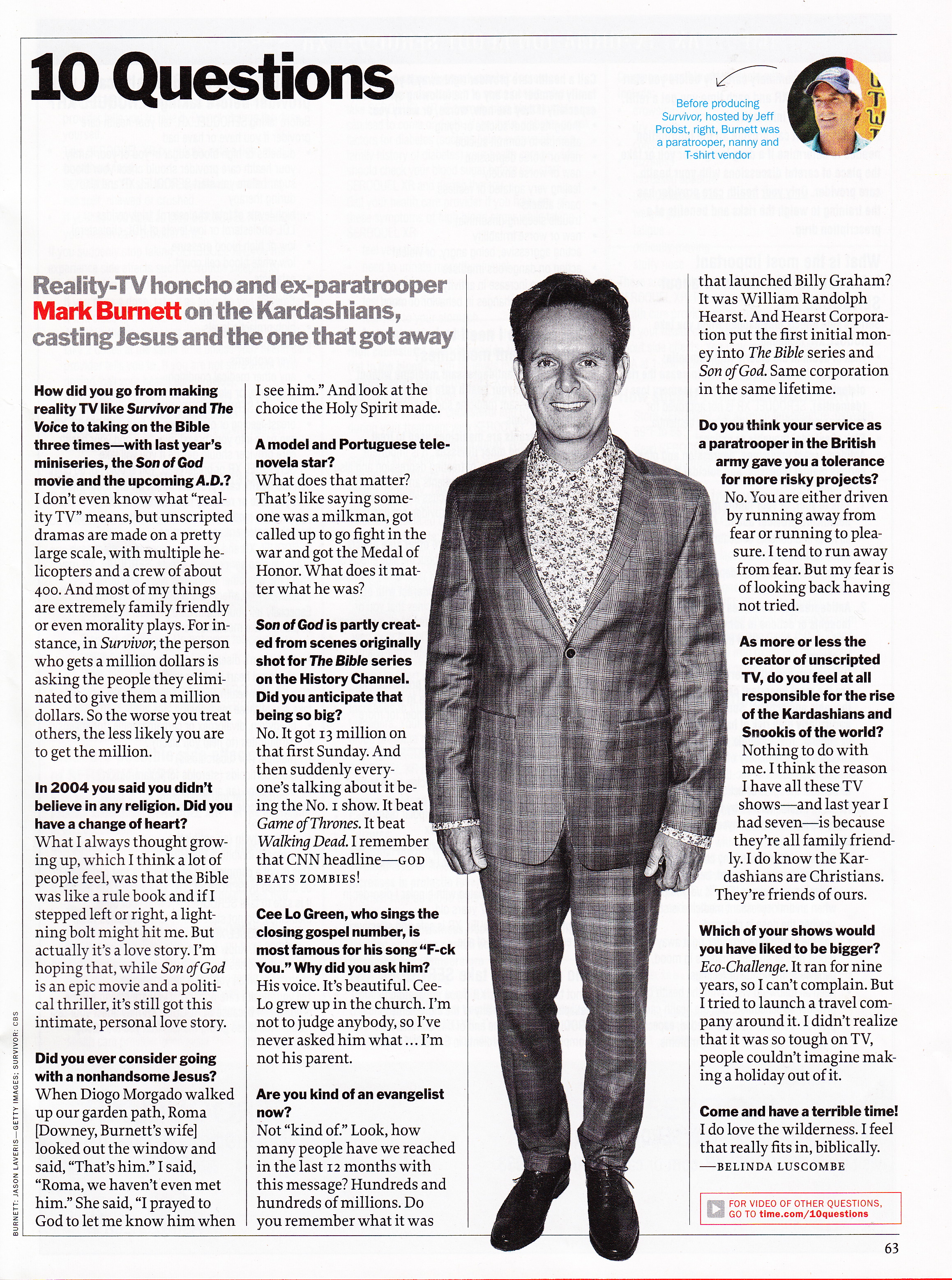
10QuestionsI don’t watch television. This is not some moralizing, high-brow stance—it’s just the fact that it isn’t cost-effective with the little time I have for the tube. Growing up, however, television was at times my best friend. I see we’ve grown apart over the years. Who’s to blame? In this week’s Time magazine, the 10 Questions are directed to Mark Burnett, whom, prior to reading them, I couldn’t have identified with my TV Guide atop a Bible. Burnett is the mind behind the movie Son of God, originally a History Channel television show that managed to beat out even Game of Thrones. The laconic remarks left to Burnett reveal a man somewhat cagey about religion, but with a sense of mission nonetheless. What had never occurred to me is that even evangelists have corporate sponsors. According to Belinda Luscombe, Burnett said, “Do you remember what it was that launched Billy Graham? It was William Randolph Hearst. And Hearst Corporation put the first initial money into The Bible series and Son of God.” The first money into the son of God, Billy Graham, and the Bible. Who can match such a pedigree?

The public airing of faith lacks something without big money. The Crystal Cathedral, Lakewood Church, Heritage USA. Where would we be without the media moguls to lead us? There’s gold in them thar hills. All it takes is those willing to ask the gullible to mine it. Where your treasure is, there will your heart be also, n’est-ce pas? Seems like the Son of God raced past the Lego Movie on its opening weekend, but fell behind Non-Stop, although he’s still gaining. This is the sign of true divinity. Who will ultimately win? Does anybody have an ark?

Crystal Cathedral Ministries went bankrupt in 2010 and sold the Cathedral to the Catholics. Heritage USA lost a slug-out with Hurricane Hugo, as Jim Bakker was checking into a cell with Lyndon LaRouche. Can even the Son of God rock the critics with such a record? Mark Burnett is also credited with helping to create reality television. As we watch the rise and decline of the Duck empire, and the tearful admissions of personal failings from evangelists so rich that we have to admit a funny thing happened on the way to the Compaq Center, can there be any doubt where reality really lies? Who can really tell the difference between The Bible and The Game of Thrones?


Which Bible?

No doubt the Bible holds a privileged place in western civilization. Arguably, it is the most influential book that exists in terms of its cultural influence in this hemisphere. Not that the Bible has had an easy ride of late. Many are vocal about its shortcomings, notably its violence and steadfast consistency with its own social mores of patriarchalism and election. Unfortunately these critiques sometimes (often) discourage people from reading it. (It is a very big book.) Having spent a good deal of my career dealing with the Bible, however, it is like a friend. Most friends have a habit or two that drive you to the brink of madness, but still, you know and trust them and tend to see the good rather than the flaws. The Bible is a holy book with warts. I cringe when I read parts of it. I’m not quite ready to let it go yet, however.

One reflection of this ambivalence I see often is that scholars (among others) have now taken to spelling the Bible without a capital letter: the bible. Perhaps it is the latent editor in me, or perhaps it is the Chicago Manual of Style that hangs like Damocles’ dictionary above my head, but like it or not, the Bible is a proper noun. In English we capitalize proper nouns. On Twitter, Facebook, or YouTube (all of which my computer auto-corrects to capitalized proper nouns), I understand. Most hands don’t get sufficient pinkie exercise to make that stretch to the shift key. But in academic writing? I’m pretty certain that e. e. cummings had nothing to do with the title, and other than loss of prestige, I’m unsure how to explain it. I have read book proposals from biblical scholars (biblical, by the way, is an adjective and does not require capitalization unless it is part of a title) who leave Bible all in lowercase letters. Have we come to this?

Leaving the “Holy” out of the title is academically sound. After all, Holy is a confessional modifier, and scholars strive for neutrality. With the proliferation of bibles—everything from Beer Bibles to Gun Bibles are out there, all capitalized, I note—we should take care to treat the Bible with grammatical care. It shows nothing of one’s faith commitment to capitalize it properly. God, on the other hand, may be used as either a proper noun or a common noun. Usage dictates capitalization. In the Bible Elohim is more often a title than a name. I knew civilization was in trouble the day I saw the phrase “butt crack” in an article in the Chronicle of Higher Education. The least we can do to combat the decline is to stretch that pinkie once in a while as an offering to the god of good grammar.

Bible


Devil’s Advocate

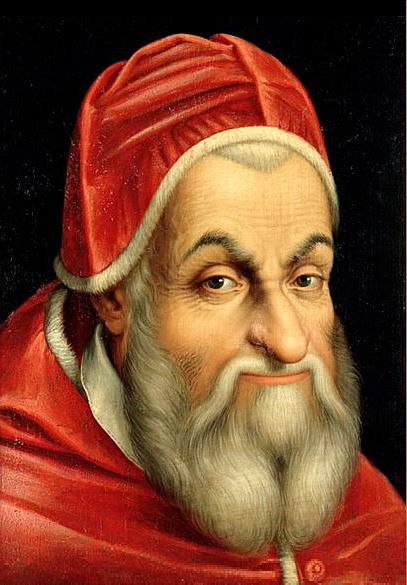
At fives and sixes, the Pope who gave us the devil's advocate.

At fives and sixes, the Pope who gave us the devil’s advocate.

When two people in completely isolated incidents tell me the origins of the term “Devil’s advocate” within a week, I figure it’s time to do a post about it. We’re all familiar with the term, and we know that it means taking the point of view of the “bad guy,” just for argument’s sake. In fact, the Devil’s advocate may not believe his (usually it is a he) own arguments, presents them to make sure the results are correct. The Devil’s advocate was an official office in Roman Catholicism beginning in the late 16th century. The actual title was Promoter of the Faith and the reason such an office was necessary was that so many people had been put forth as potential saints that the church experienced an embarrassment of riches. Canonization, the process of becoming a saint, has a number of hurdles to clear for the would-be paragon. Claims, often extraordinary, were made for miracles associated with the favored ones and the Devil’s advocate was intended to research and present contrary evidence. This made it more difficult to achieve sainthood, but in theory, at least, kept the number of candidates down to only the most deserving. There was no literal devil involved.

Those of us who grew up Protestant often had recourse to only faulty knowledge of Catholicism. We were sometimes taught that it was based on magic, what with the priest speaking in Latin and making mysterious motions with his hands. That meant, for some, that Catholics seemed particularly gullible and would believe things the rest of us wouldn’t. The Catholic Church, however, has often providing its own policing. Not as eager as Pentecostals to accept mundane miracles, when a pareidolia-inspired leakage of water or an anomalous burning of toast occurs, the Catholic Church is quick to debunk claims of miracles just because an underpass stain or a bit of bread looks like a famous religious figure. If you squint enough. The Devil’s advocate was a similar safeguard.

On the opposite side of the equation, I’ve often heard sermons among some evangelical groups claiming that we’re all saints. (Their membership, that is.) Who shouldn’t claim the name when they walk the walk? Many of these saints fail to inspire in the way of those of yore. Some of the beloved cultural heroes that keep coming back in various forms have saintly origins: Santa Claus and Saint Valentine are two that come to mind at this time of year. Some Protestants who may not have been perfect, however, should somehow qualify. Martin Luther King, Jr., another figure of the winter season, by his contributions to justice issues, might be one who would qualify. I’m sure there are many others. The fact is that making a principled stand against the wickedness that sometimes passes for the status quo is difficult and leaves one open to criticism and resentment. A Devil’s advocate might be just what society needs when looking to make saints out of mere mortals.


Porcine Prognostication

Punxsutawney Phil phled his shadow this morning, leaving many despairing another six weeks of winter, which meteorology seems to dictate anyway. I used to tell my students that Phil is a most peculiar prophet, in that he is, presumably, neither Christian nor Jew, but rather of the rodent religion (whatever that may be). People pretend the little guy has powers beyond those of the average mammal when it comes to predicting vast, chaotic systems. If a groundhog flaps his eyelids in Pennsylvania, prepare for plows and shovels and more thermal underwear. Playing into this annual phenomenon is the provocative persistence of the idea that prophecy is prediction. As much as scholars attempt to expunge the idea that foretelling wasn’t what prophets were ever really about, the populace likely wouldn’t have paid them any attention, had the possibility not presented itself that these preachers knew something the rest of people didn’t.

Prophecy is a strange phenomenon. We claim that we would like to know the future, but I’m not sure that we really would. Knowing that we’ve set ourselves on many tracks that inevitably lead to tears, do we really want to know? After taking my daughter back to college, we sat in a fast-food place to grab a bite on the way home. It had been snowing again, as it will do in the winter, and the television in the corner was blaring on about another apocalyptic band of snow. A bearded and burly Pennsylvanian at the next table turned to me, attracted, I supposed by my own facial hair, and said, “What about this global warming?” I nodded politely, not being very burly myself, but I thought of the fact that global warming does mean more severe winters in some places and warmer conditions in others. It is marked, scientists predict, by erratic weather, not a constant sauna in those regions accustomed to snow.

Although a Pennsylvanian by birth, I have noticed that my ancestral New Jersey does not receive much snow. Until this year. We’ve had the white stuff on the ground for over two weeks in a row. Yes, it snows in winter, but not usually here. I shiver and think of global warming. It is a chilling thought. Punxsutawney Phil may live far enough inland not to have to worry about learning to swim, but the same can’t be said of the inhabitants of most of the major cities of this country. We know it is coming, but we turn a blind eye. Progress in the name of unbridled big business interests brighten a future otherwise a bit more gloomy than we might prefer. Phil ducks back into his burrow and the rest of us clutch our coats a little tighter around us. Prophecy is a mixed blessing indeed. We already know the outcome before the groundhog awakes.

An agnostic groundhog ponders the inevitable (photo credit: I. EIC)

An agnostic groundhog ponders the inevitable (photo credit: I. EIC)


Stealing God Blind

Photo credit: Raul 654, Wiki Commons

Photo credit: Raul 654, Wiki Commons

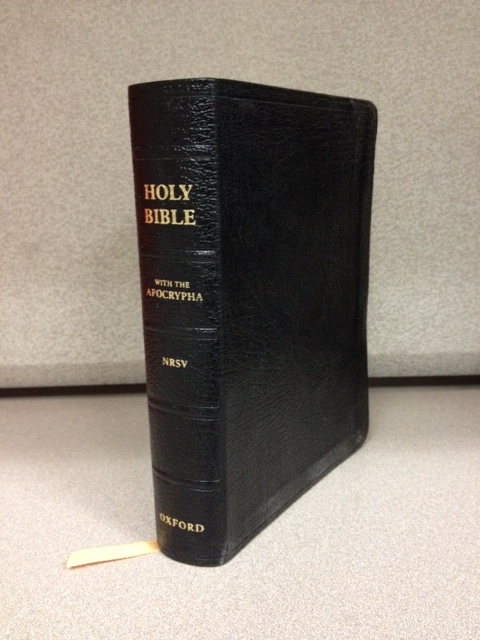
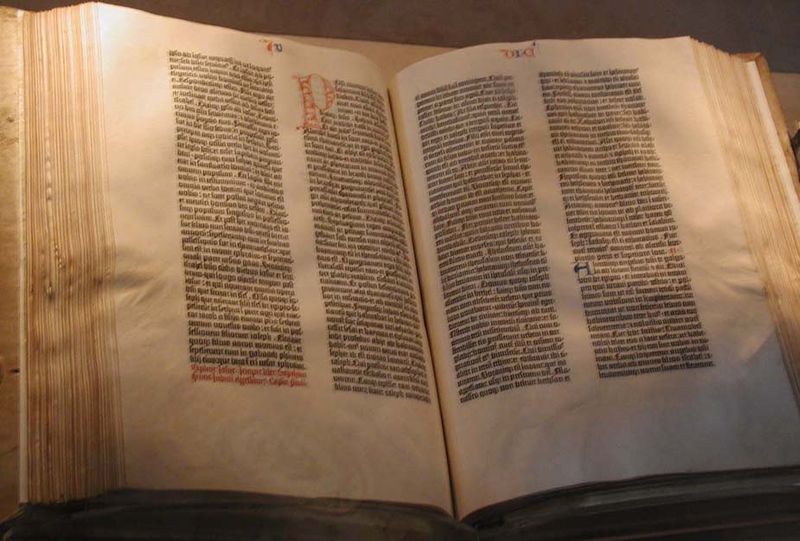
A friend who also works in the book trade recently revealed that the section in one of the few remaining brick-and-mortar book stores most liable to theft is Bibles. I’m not really surprised, I guess. Faith can do strange things to people, giving them justifications for thievery in the name of a higher authority. What it really doesn’t reflect, however, is just what a financial liability a Bible can be. My friend speculated that people believe that the Bible should be free, and, in a sense they have a point. If it is the word of God, as they likely believe, then it should be in the public domain. The problem is, the Bible’s not as simple as all that. The problem begins with the fact that “the Bible” does not exist in any definitive form. Every single one of the original manuscripts has long been lost and we have copies of copies of copies, etc., of those putative manuscripts. And they are in foreign languages—technically dead languages, at that. (Although Greek and Hebrew are still spoken, the biblical forms of those languages died out long ago.) So, are the Hebrew and Greek texts in the public domain?

Maybe, but. The texts from which translators make English (or other modern language) Bibles are based on compilations of various documents that have come to represent the accepted, textually correct ancient language versions of the Bible. These are protected by copyright since they are relatively modern editions. Some of the older ones are available in the public domain, but they are outdated. Even skipping all that, when we get to English Bibles, such as the King James Version (but not the New King James Version, where the “new” modifies “version,” presumably, and not “King James”), the text is in the public domain but the printed book still costs money to manufacture. One of the problems with Bible mythology is that some think this implies that Bibles just drop down from God. In actuality, they have to be edited, typeset, printed, shipped, and stocked, and the people who do this work have to be paid. In short, free text is not free.

I work for a major (but by no means the biggest) producer of Bibles. Even in my short time at the press, I have come to realize that Bible publishing is complex and expensive. Sure, you can print cheap editions and give them away like the Gideons do, but they have financial backing to buy and distribute cheap words of the Lord. There’s a sense of entitlement here: if God spoke, wasn’t it to all people? What about the Quran? The Book of Mormon? Science and Health? Some may castigate the Bible, but it is a genre-defining true original. And although one of the ten commandments declares stealing is wrong, some wonder how this can possibly apply to Bibles. It’s the middle-men and women. Stealing a Bible is cheating someone from a bit of their livelihood. Even if the Almighty turns a blind eye.


Sidekick

I have moved from the territory of Sharon to that of Laura. New York City is a conglomeration of smaller neighborhoods, and even Midtown Manhattan hosts hundreds of smaller sub-divisions. Although I’ve never intentionally consulted a psychic, I do tend to notice them. Once while on a visit to Galena, Illinois during the summer, we stumbled on a psychic booth where the proprietor was giving free readings. With some trepidation, we let her give our daughter a reading, just for fun. I don’t recall what she said, or even what her name might have been. There’s just enough fear of the unknown left in me to compel me ever want to visit a psychic, even if it is for entertainment purposes only. Clearly, however, there is a market. Where the market makes a hole someone will fill it. So I pondered Laura the psychic.

IMG_1178

The other day I passed her sign. Like most psychic ads I see, Laura’s sign makes use of religious symbols; the cross, bird, crescent and star, all thrown together amid an interfaith openness from which most religions might learn a lesson. Are psychics religious? I suppose that’s a personal question. The phenomenon of psi, if it does exist, and if it does involve spooky influence at a distance, tends to be classed with the supernatural. A few brave universities have from time to time explored the phenomenon, whether or not commercial psychics have it, scientifically. They set up controlled experiments and have even obtained statistically significant results. I’m more inclined to doubt statistics than the outcomes. Statistics are the tools of markets, and markets, well, make me shiver.

IMG_1183

Then I passed another sign. This one, just a block or two from Laura, seemed to suggest that witchcraft might unleash my potential and power. That sounds like a good thing. But then I noticed the FOX logo at the bottom. Another quality program, it seems, has fallen to the spell of witchcraft. It did confirm, however, that it is all about money. One size does not fit all. Religion adapts to fit a free market economy. Totalitarian states either attempt to disband religion completely and/or build up a national mythology that supplements traditional teachings. It doesn’t take a psychic to see that coming. As long as there’s money to be made, who’s complaining?


The Devil Made

Some things you just don’t mess with. Just in case. For a variety of reasons, not least of which is lack of biblical support, many Christians no longer believe in Satan, or “the Devil.” As I written before, the Hebrew Bible has no such diabolical character and he seems to have been devised from an old Zoroastrian dualistic belief system when he finally does appear. In other words, Satan is not among the core beliefs of the Judeo-Christian tradition. Nevertheless, according to an Associated Press story the Satanic Temple is petitioning to have a statue of Satan placed on the capitol grounds in Oklahoma City. The action was prompted by the placing of a Ten Commandments monument in this public space, and, invoking the freedom of religion clause, the Satanic Temple has decided to play tit for tat. Either religion is free, or it’s not.

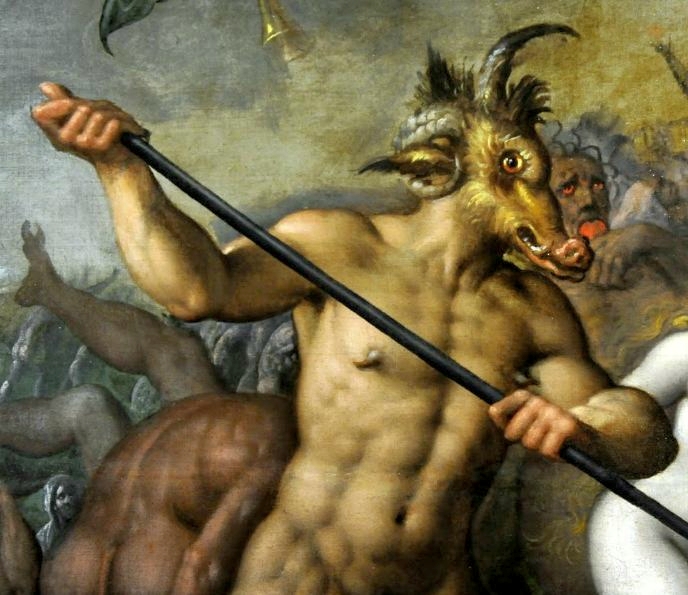
Backer_Judgment_(detail)Although the Satanic Temple claims to be sincere in its beliefs, the group’s website indicates that it understands religious belief in a metaphorical way, and that it wishes to parse superstition from religion. This envisions revising Satan as an “icon for the selfless revolt against tyranny,” according to the AP story. The commissioned monument includes a Baphomet-style Satan (goat head and beard, wings and pentagram—you get the picture), that features—sure to raise the ire of Oklahomo sapiens—children gathered around the dark lord. It will double as a seat where individuals may sit on Satan’s lap, although I’m not sure what they might be asking for. Various representatives of the Sooner State say they’re all for religious freedom, but Satan just has no place in the conservative breadbasket of the nation.

Provocation occurs on both sides in this trial of wills. Justice can be realized without Moses’ top ten on every courthouse lawn. The Code of Hammurabi demonstrates that. People are capable of enacting justice without God, or the Devil, telling them to do it. The triumphalism of religion is the heart of the issue. In a world daily aware of those outside the neighborhood, finding that other religions exist and thrive is an affront to the “one true faith,” whatever it may be. It may be that Jews, Christians, and Muslims have no problems with the ten commandments. Other religions might. Leading with having “no other gods before me” starts the conversation off on an awkward tone. The solution may be as simple as amending the commandments to add just one more. If we can see our way to doing that I have one that I’d like to propose: “thou shalt not let thy religion cause childish behavior.”


Blessed Art Thou?

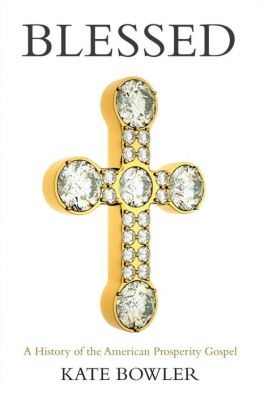
blessed“Con man” derives from the disparaging use of the term “confidence man,” as applied to those whose promised deliverables never appear, if they ever existed at all. History is filled with roguish con men who populate movies and popular biographies. Among their ranks have been hawkers of spiritual wares, but the institutionalization of religious profiteering is fairly new. Even growing up in a Fundamentalist setting, I don’t recall ever hearing of the “prosperity gospel.” Although I can’t in good conscience accept the distorted theology of the literalists, at least I can say that they are mostly an honest bunch with a high threshold for supernatural interference in daily life, if sometimes rationally challenged. The prosperity gospel is far more insidious.

Kate Bowler’s Blessed: A History of the American Prosperity Gospel was my first attempt to deal with the phenomenon academically. Bowler traces the movement to strains that appeared earlier than I might have guessed. Nevertheless, its fruit is rotted on the tree of greed, and it has nothing to do with historical spiritual seeking. One of the few things over which the Bible doesn’t equivocate is the corrupting influence of wealth. The needle has been jammed into the eye of the gospel in this confidence scheme. “Verily I say unto you, That a rich man shall hardly enter into the kingdom of heaven.” How did this become transformed into “bring your family jewels if you don’t have cash; our accountants can liquidate your heritage for the extreme comfort and obscenely expensive lifestyle of your ‘pastor’”? In a church of 10,000 how much does your pastor care for you? I would never join a church where the shepherd did not know my name.

Bowler does an admirable job maintaining academic neutrality in Blessed. She explores the central concepts, copied from the very entrepreneurial ledger of the root of all evil. Nevertheless the prosperity gospel remains terribly hollow, shallow, and callow. The mere suggestion that wealth equates blessing in a world where millions suffer for lack of basic needs is unconscionable. One could even be justified in saying “wicked.” What kind of god takes food from the mouth of a hungry child to give it to those who have more than enough? I grew up knowing some want. I also grew up knowing that my grandmother had religiously supported a millionaire who said, “expect a miracle” week after week and then claimed the Lord would take him if he didn’t raise 8 million dollars in the first three months of 1987. Meanwhile the Evangelist still enjoyed great wealth for two more decades when he heeded the call home. All the while those far more worthy perished for lack of bread and clean water. This is neither prosperity nor gospel. Of this I’m utterly confident.


White Christmas Revisited

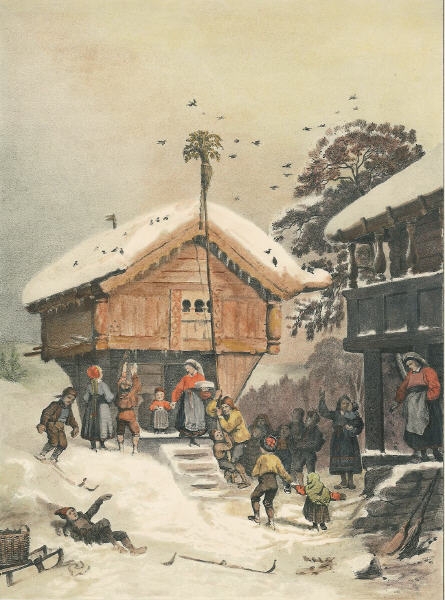
In the light of yesterday’s post, I’d like to tip my metaphorical hat to Brian Regal of Kean University for a piece he wrote in the New Jersey Star-Ledger. Entitled “The Real Meaning of Christmas,” Regal’s piece shows the striking disconnect that comes between the image of a “Christian” Christmas and the oft-ignored words of Jesus that make him such a great example to follow. We want the image and the affidavit without having to do the hard work of loving those we don’t like. This really seems to be the heart of what was once know as gospel—it’s okay to be who you are (for those of that bent, “who God made you.”) Too often “Christian” has come to mean someone who wears their hair far shorter than Jesus, who shuns those welcomed by Jesus, and who smile far more than Jesus. My Bible says “Jesus wept.” I don’t recall any verses reading, “Jesus put on his ‘I love you’ smile.” Ours is a society that wants it both ways—all for me, but isn’t that what Jesus really wanted? You know, he must’ve smiled a lot.

Regal rightly points out that the majority of Christmas traditions are admittedly pagan, and we are glad to baptize them as long as we don’t have to let the homeless into our churches or admit equal rights to those of all genders, races, and orientations. What seems to be the real desideratum is a “white” Christmas. A white, affluent Christmas. The very idea of the ownership of a holiday characterized by giving is a phenomenon worth serious study. Religion can certainly be used to justify such self-centeredness, but it is condemned by that very same faith. What are people worried about? Christmas has been a commercial holiday essentially from its origins in the modern period. It is one of the few holidays to which nearly everyone looks forward, at least for a break from work or school, if not for a windfall of new stuff.

Privilege as blessing is a perverse theology, as is shown repeatedly in the Bible. Israel’s long line of descent is chosen from the least, the youngest, the meek. Now we are constantly told that God rewards those who are blessed, and that the poor and underprivileged have only themselves to blame. At Christmas time it may be worse than many other seasons of the year. We want not only to keep good cheer, we want to keep a holiday only partially of our own making for ourselves, and then congratulate ourselves on just how good we are. It would seem that the spirit of Christmas might lie, as the pagans said, in giving. I am not a fan of commercialism, as my regular readers know. I can’t help but think that believing one deserves special rewards for righteousness in their own eyes will only have the opposite effect. Remember: he sees you when you’re sleeping, he knows when you’re awake…

Adolph_Tidemand_Norsk_juleskik


Won’t Someone Think of the Gods?

The annual holiday tradition of fighting over peace on earth has begun. It’s difficult to attribute blame since the “Keep Christ in Christmas” crowd do have a certain historical parsimony about them. Still, it was with tongue frozen in cheek that the Freedom From Religion Foundation put up a billboard in Pitman, New Jersey, with the message “Keep Saturn in Saturnalia.” Won’t someone think of the gods? In just the short span of my lifetime (well, half-a-century is really not that long) many assumptions about American religiosity have come to be questioned. There are those who seriously believe the Greco-Roman gods exist and they do have a right not to have their religion belittled. Those who find all religions laughable, I suppose, have the right to belittle. Some are devoted to Saturn. Others take seriously the Norse gods. Belief is like that—rationality is not a huge part of it.

Megyn Kelly, an anchor on Fox News, boldly declared this past week that Santa is, by dint of historical fact, white. I suspect she wasn’t thinking of Nicholas of Myra, but rather the jolly (white) man with glandular problems and the magical ability to visit every house in the world in a single night. The historical Saint Nicholas was born in Turkey. Kelly also made an unequivocal claim for Jesus’ whiteness, although he was clearly Semitic and historical records about him are extremely dicey. Conservatism, it seems, can only be pushed so far. I tend to think the problem is with making people into gods. Once a person becomes divine, in a monotheistic system—apart from all the theological casuistry than ensues—the nature of godhood is irrevocably associated with one race only. Of course Kelly, and many Fox News fans, have co-opted Christ from Judaism and suppose he was rather Nordic, as an article on CNN’s Belief Blog notes. Kind of like Thor, for what carpenter doesn’t know how to use a hammer?

To keep (white) Christ in (white) Christmas does betray a lack of familiarity with the Christmas story. Apart from angels appearing to some shepherds, the event was obscure—in the part of town across the tracks. Even the wisest men in the world had to stop and ask directions because they couldn’t find the place. The first Christmas, in as far as we can reconstruct it, was a silent affair with only the sounds of birth and the quiet desperation of a working class family far from home. No malls stayed open late that night.

The solstice is literally the darkest day of the year, the time when the slow return to light begins its weary trek over the next six months. We think of the cold, the dark, and hope for peace. No matter the holiday tradition, you’d think that peace would be one thing we could all agree upon. But gods are jealous beings, and, technically, they belong to no human race at all.

O holy night?

O holy night?


Help from Above

Frisbee, like Kleenex and Band-Aid, is a brand name that has become generic. Since at least the time of ancient Greece people have been fascinated with flying discs, and like many kids of my generation I grew up with a Frisbee or two around the house. We didn’t have much money, and in my younger days I remember playing “frisbee” with the lids to large margarine tubs—it’s more difficult to get these to do tricks, but they fly passably well with the right flick of the wrist. When I got to college I started to hear about a new game called “Frisbee golf.” It usually involved a group of friends and their flying discs picking out a target and seeing who could get their Frisbee there in the fewest tosses. Well, college was a couple decades ago (ahem), and who has time for Frisbee in the serious adult world of trying to stay employed? When some friends asked me to join in a game of disc golf over a recent weekend I knew a couple of things had happened. First, Frisbee had been either usurped or commodified to the point that it was either illegal or gouache to use their discs to try to hit “that tree over there,” like the redneck with his shotgun on a Friday night. Second, to play the game you needed to have the right equipment. Out on the course we came across a couple of guys with “golf bags” full of discs that they had to flip through like so many CDs before each toss. I felt woefully amateur. Like golfing in jeans.

IMG_1140Fortunately my friends had discs. Scientifically engineered discs, no less. Different “Frisbees” (not a technical “Frisbee” among them, not even a Wham-o) with different weights and characteristics made for specific tasks. I thought of the famous sculpture of the discus thrower and wondered what Plato would’ve made of all this. Since we were a large group with limited discs, we each chose one to be “our” disc so that we could follow it. It was either a rare show of masculine aggression or perhaps religious curiosity that drew me to the distance disc called Archangel. Bright orange, the Archangel was emblazoned with an actual heavenly being with his (a masculine angel, this) sword. He wore a vaguely Egyptianizing headdress that brought to mind the plagues of Egypt. The disc was heavy compared to a Frisbee, and had an edge like a, well, a sword. A dull sword of course, maybe wooden as opposed to steel. That disc could fly (although it didn’t improve my score much).

Angels have had a long fascination for us mere mortals. Originally a class of messenger gods in antiquity, monotheism forced them into a subservient role where swiftness was essential. For some, such as the Angel of Death (more likely the source of the imagery behind my Archangel), weaponry was essential. Unlike the Angel of Death my aim wasn’t very accurate. Or maybe that is just like the Angel of Death. No firstborn were slain by an hour’s diversion of tossing some Frisbees around, but my thoughts had been driven back to the biblical origins of my implement. I wondered why there was no archangel of peace. A few days later it was announced that Nelson Mandela had died. My thoughts went to Gandhi. To Siddhartha Gautama. Even to Jesus. Yes, there have been those who’ve insisted on the way of peace. And many differences might be settled by a friendly game of Frisbee golf, minus, of course, the copyright infringement.