Whence We Are

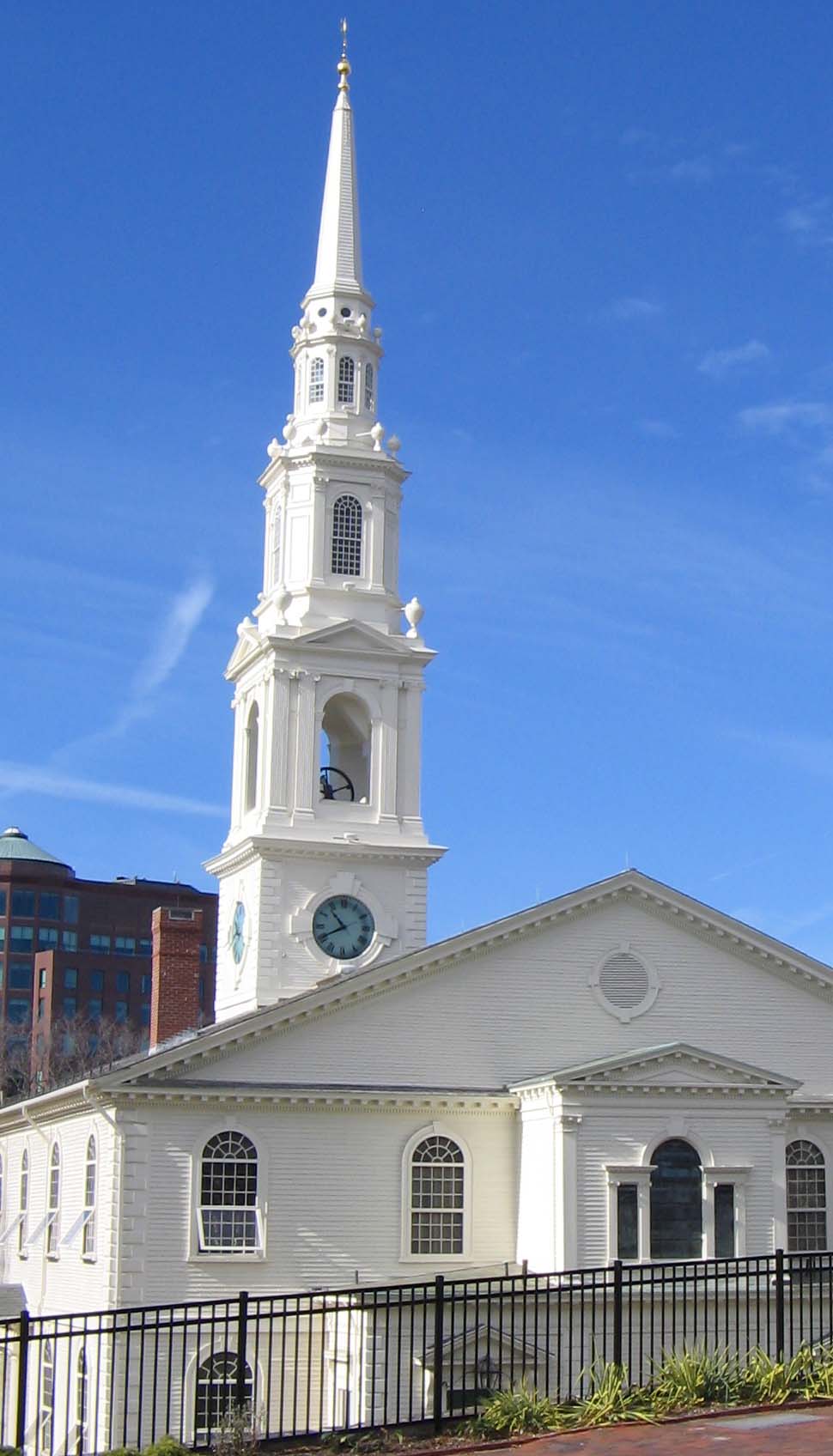
Rootless.  Or perhaps a better word is “wandering.”  Although I was born in Pennsylvania, neither of my parents were and back another generation, few of the grandparents stayed where they were born.  Being an American mutt also means not having terribly strong ties to a parent-land.  But still, I’m surprisingly attached to Pennsylvania.  It’s a fascinating place.  One of only two colonies to actively promote religious freedom, it seems an ideal place for spiritual seekers such as yours truly.  I’m driven by an obsession to find the truth and this takes me to some pretty strange places.  Pennsylvania has an interesting religious heritage.  Founded by Quakers who nevertheless wanted diversity (or at least permitted it), my home state attracted a wide range of—particularly German—religiosities.  Not only were there Lutherans, there were also Moravians (pietists),  Mennonites and mystics.

Rural Germans kept many superstitious practices alive.  Many early Americans did, actually.  Daniel Leeds was a banished Quaker.  Now, without doing a ton of research (for which I don’t have time at the moment) you can’t find out much about Daniel Leeds (i.e. he has no Wikipedia article).  He was a rival printer to Benjamin Franklin, and a bit of a freethinker.  His family was later literally demonized as being the origin of the Jersey Devil.  Leeds was influenced by the mystic Jacob Boehme (who does have a Wikipedia article).  Böhme, as his friends knew him, also influenced Johannes Kelpius, and thereby Johann Conrad Beissel, a couple of good Pennsylvania German mystics.  Leeds began to have ideas too outré for the Quakers, and, I like to think, inspired future Pennsylvania mystics.  Leeds died in 1720 and deserves at least a Wikipedia piece.

Pennsylvania housed some pretty interesting religions over the years.  The Germans with their folk beliefs (Benjamin Franklin didn’t care for Germans) would go on to influence a number of American folk traditions.  I often wonder whether, if Pennsylvania had not displayed religious tolerance, things would’ve developed radically different in the early United States.  It does happen that, although a mutt, much of my heritage is teutonic, and I seem to share the religious curiosity that these folk displayed over time.  Upstate New York also had its fair share of new religions as well—beating out their southern neighbor and longest border sharer.  Of course, I have ancestry in upstate as well.  Perhaps it was inevitable that, being born in Pennsylvania, I would turn out the way I did.  Wandering and all.


Christian Horror

Following the lead of a friend (I don’t regularly read Christianity Today on my own), I found “How Horror Uncovers Our ‘Holy’ Hypocrisy,” by Sara Kyoungah White.  It seems that some evangelical Christians have begun to notice the popularity of horror movies.  This isn’t the same as condoning, of course, and this article took me back to the writing of Holy Horror.  One of the reasons for the book was that, at the time, few people (very few) were exploring religion and horror.  Web searches inevitably brought up the question “is it okay for Christians [subtext, “evangelicals”] to watch horror?”.  Since that time I’ve been exploring why the connection of horror and religion is so appealing.  If you’re a daily reader here, no doubt you’ve noticed it before.  I read on, noting that White has a difficult time finding anything redeeming in horror, apart from trying to stretch it to cover the usual evangelical concerns.

Photo by Stefano Pollio on Unsplash

Some of us, however, are seeking a kind of holy grail—an articulation of how horror contributes positively to spirituality.  That it does is beyond question.  The real puzzle is why.  It might help if we had a better definition of spirituality.  What exactly do we mean by that?  Even some of my Unitarian friends are put off by the word.  Still, it’s part of the human make-up.  You might call it “mind,” “psyche,” “personality,” “spirit,” “consciousness,” or “soul”—or any of a host of other words—but there’s something about people that makes us reflect on realities outside ourselves.  Some of do it with a great deal of awareness that we are undertaking such a quest.  Others may seldom or never think of it consciously.  We all do it, however.  We don’t all use horror to help us think through, or experience it.

I have long used movies for therapy.  It’s only been in the last several years that I’ve begun to notice that horror puts me into a spiritual frame of mind more than other movies tend to.  White notes “nearly every one of the top horror movies of all time deal with some kind of Christian theme or portray a Christian character.”  Some of us have noticed that in the course of our exploration of the genre.  Of course, that depends on how we decide on “the top horror movies of all time.”  The list she cites is the ever-shifting IMDb “Top 50 Horror Movies” list, which has far too many recent films on it.  Still, her claim holds if you go back to the classics and move forward.  There’s definitely a connection there, and, I suspect, it has nothing to do with the showcasing of our sins.


In the Air

It’s a strange but strong connection.  Between Halloween and me, that is.  I’ve always loved the holiday.  I don’t like being scared, however, and gory horror movies aren’t my favorites.  Still, I’m not alone with my fascination.  Lesley Pratt Bannatyne has written a couple of thorough books on the holiday.  Halloween Nation: Behind the Scenes of America’s Fright Night looks at various aspects of Halloween as it’s celebrated in America.  It’s both an imported and exported holiday, of course.  The raw materials came in mostly from Celtic countries—Ireland in particular—and got mixed in with other traditions here before being sent out to the rest of the world as it’s now known.  The thing about Halloween, or any holiday, is that it’s impossible to capture all of it in a book.  Halloween has many associations and a good few of them are explored here. Halloween’s in the air as retail stores know. So let’s take a look.

Bannatyne’s chapters on ghosts, witches, and pumpkins are particularly good.  The pumpkin connection, which is an American innovation, is particularly telling.  It’s been a few years since I’ve carved a jack-o-lantern, but it is one of the fond memories of childhood.  The challenging orange palette that has a wonderful evocative smell and feel.  Bannatyne gives good information about pumpkins and how they’ve become central to the holiday.  Indeed, the symbol that gives Halloween away is the jack-o-lantern.  I found many little gems throughout the book.

Halloween Nation is amply illustrated, in full color, no less.  Bannatyne has a good idea of what Americans do for fun.  Capturing the fulness of the holiday in one book may be impossible, but here you’ll have tours of zombie walks, fan conferences, the Greenwich Village parade, over-the-top haunted house attractions, naked pumpkin runs, and pumpkin beer breweries.  You’ll learn about the history of trick-or-treating and how grown-ups came to embrace what really took off as a day for childish pranks.  Halloween is an expansive occasion.  Holidays also have their own local flavors.  My early memories are of small town celebrations where even poor folk like us could join in the fun.  Nashotah House, for all its problems, did Halloween well when I was there.  To really do it right takes time that seems difficult to come by these days.  It’s just as easy to cue up a horror movie and promise to do better next year.  Still, every year I hope to cut through the jungle of obligations and give the holiday its due.  It’s usually a work day (Tuesday this year), but at least now I’ll be better informed about what I wish I were doing instead.


Still Not Resolved

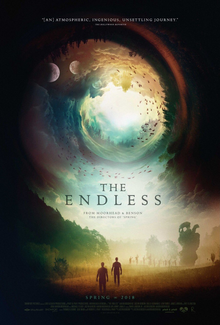
Yesterday I posted about the independent movie Resolution.   It’s actually part of a set, the other half of which is titled The Endless.  In The Endless the director and cinematographer, and co-directors of both films, interject themselves into the story.  While some suggest it’s only a partial sequel, to me it felt like a part of the same tale, giving, as it were, resolution to both movies.  Philosophical horror is something I always associate with Thomas Ligotti, but Justin Benson and Aaron Moorhead have given it a double punch with these two films.  So a pair of brothers (Justin and Aaron) go back to visit a “UFO cult” in which they were raised.  This immediately puts you on edge because Aaron doesn’t seem convinced that it was such a bad life, compared to that which they’ve been able to find on their own after leaving.

There’s definitely something very weird going on at Camp Arcadia, though.  Justin had convinced Aaron that it was a suicide cult (think Heaven’s Gate), but it turns out that everyone’s still alive, and apparently thriving.  Their means of livelihood was threatened when Justin went public that they were a cult, but they’re nevertheless glad to see their ex-members.  Once they get integrated into the camp, characters from Resolution begin appearing.  Both movies feature the same monster and the same means of delivering messages via media—often outdated.  The brothers come to understand that they are being trapped in a time loop and—spoiler here—that the cult members are in a sense dead since they live the same loop over and over.

In addition to being philosophical horror, The Endless contains substantial theological sophistication as well.  Discussions about God, and church, and belief systems run through the movie.  Thinking deeply can lead to horror scenarios such as this.  People tend to feel trapped when caught in nothing but repetition.  We’re curious and we seek a variety of experiences and new stimuli.  Eastern religions recognize the problem as well and offer ways to break out of the cycle of reincarnation (samsara).  The idea of using such things to suggest that this kind of repetition is a monster—when Justin sees it he’s convinced it’s a monster—is rich fodder for a thoughtful horror film.  At the end, it seems that “UFO cult” is an unfair characterization for the commune at Camp Arcadia, but, with enough determination, it’s just perhaps possible to break out of the cycle.  This one’s worth pondering.


America the Religious

One of the truths that doctoral work teaches you is that if you look closely at something, minute differences appear.  Those interested in historical subjects write up syntheses that cover over many of these minute differences until somewhat of a false impression might occur.  Consider Puritan New England.  The image is a familiar one to the American imagination.  Rigid, pious, fearful church-goers predominated.  Stern, often acerbic, ministers were voices of authority.  But in actual fact, maybe a third of those eligible to be so in Puritan New England were church members.  Many lived in remote locations and used folk traditions (what the church would condemn as “witchcraft”) to meet their spiritual needs.  This was DIY religion.  And yet, the overall picture is of an uptight, strict, Calvinistic world.  That’s only part of the story.

Controlling the narrative is a powerful thing.  For example, the religious right has often flouted the idea that America was very religious from the beginning.  The “falling away” from the church is only the result of modernism.  Before that, they claim, pretty much everybody was religious.  This is patently untrue.  But if the narrative is believed, it becomes powerful.  Historians face a dilemma here.  Not every single little detail can be written about anything.  If you read a history of, say, the United States, do you think everything is in those thousand pages?  No, not by a long shot.  Entire books written about a single individual don’t cover everything.  The temptation is to present an approximation that covers the general trends.  Those of us who study religious history have an extra hurdle—what people say they believe and what they actually believe might be quite different.

Demographic studies that show only a third of New Englanders were church members indicates that two-thirds of the story remained untold.  The city on a hill may have been an ideal, but most of the people lived in the valley.  People prefer a happy story, of course.  That’s natural enough.  When we look for facts sometimes the story can grow a little confused.  Shrink that history of the US down to a single state and it’s still unwieldy.  Even a single city.  Choices have to be made and approaches have to be decided.  What really happened?  You can bet your bottom dollar that it was a lot more complex than any history book indicates.  People prefer mythological national narratives to naturalistic ones.  When we buy into simple materialism we often mistake our mythic past for a factual one.


Seminary Daze

It’s surprisingly easy to throw away an expensive career that once held much promise.  It really involves just a two steps: spend thousands of dollars earning a Ph.D. in religious studies, and take a job in a seminary.  It’s disheartening to watch colleagues going through this as seminaries contract, then close.  I know how it feels personally.  You’re suddenly aware that your years and years of training have made you practically unemployable.  If you do find a job it won’t pay as well.  Chances are you won’t enjoy it either.  Having taught in a seminary will mark you in academia as one of those “uncritical believers,” and, well, nobody wants to touch one of those.  While I would’ve taken a regular seminary job after my doctorate, my wife remembers me lying awake at night asking “Am I cutting off my career if I take a job at Nashotah House?”  The answer: yes.

I’ve been watching colleagues have their worlds torn apart as seminaries try to figure out how to stay open when institutional churches are dying.  Megachurches don’t require a seminary degree to run—natural grifters do it quite well with no advanced education, thank you.  But mainstream churches have been losing members, and therefore financial support, for years now.  And seminaries supply a commodity no longer in demand.  This may have been a trend when I started out back in the eighties.  If so, nobody told me about it.  I walked into this career naive and came out jaded and cynical.  My motives were to help other people.  It’s getting harder and harder to find jobs where you do that any more.  At least while being able to keep body and soul together.

Thing is, it takes years to earn the degrees you need to teach in a seminary. You have to think ahead.  When I started out, trends suggested a huge glut of jobs in the teaching market.  That never panned out, of course, as human predictions seldom do, and the decline in jobs has been pretty steady over the past thirty years.  Back in the eighties seminaries were doing okay.  Growing, even.  I do hope it didn’t have anything to do with me, but I hit this surprisingly fragile market at just the wrong time.  After having been overboard without a life preserver myself, it pains me to watch colleagues facing the same fate themselves.  Religion hasn’t disappeared—it’s simply taken on new forms.  Those forms don’t require seminary. Those of us who followed the rules on how to teach religious studies, however, somehow find ourselves in disposable careers.


Speaking of The Wicker Man

The TheoFantastique website is older than my blog and, I suspect, has more followers.  I was immediately struck when I first found it in my early days of blogging.  Seeing that the fantastic—genres that include sci-fi, horror, and some adventure material—often comments on and often uses religion as its milieu, the site features many posts about topics I find compelling.  Over the years I’ve had the opportunity to get to know John Morehead, the creator and builder of the site and he has kindly agreed to interview me about each of my books that deal with these topics.  The links to those interviews (which can all be found on YouTube) are on the “Social Media & Interviews” page of this blog.  Just yesterday John recorded and posted an interview on The Wicker Man.

There is a small community of us that explore these connections between religion and pop culture.  My interests, as careful readers will know, is really with monsters but I’m still learning how to write about such things and, more importantly, to do so with limited resources.  That often means analyzing films because they are accessible whereas research trips to libraries and locations that monsters dwell isn’t really conducive to a 9-2-5 job with no sabbaticals or even summer or holiday breaks (capitalism is relentless).  I can take in a movie or two over a weekend without leaving home and I can use my writing time to explore them.  Thus Holy Horror, Nightmares with the Bible, and The Wicker Man were born.  And interviews about them can all be found on TheoFantastique as well.  There’s also much, much more there.

By the way, John is also quite a capable author and editor.  He’s got wonderful books to his credit as well.  Some of them appear on this website and the others I haven’t got around to reading yet.  (My “to read” list is about as long as the Burj Khalifa is high.)  I often think that being a full-time reader should be a job.  It is, I guess, if your own books sell well enough.  Otherwise you need to work around the long days at the office to make ends meet.  But I digress.  In this era of information via recorded media, online interviews are key to getting word out about your book.  Coincidentally, quite unexpectedly a single hardback copy of The Wicker Man arrived just yesterday as well.  That always helps when it comes to bookends.  But it may help to watch the interview before just diving in.


Curious Valley

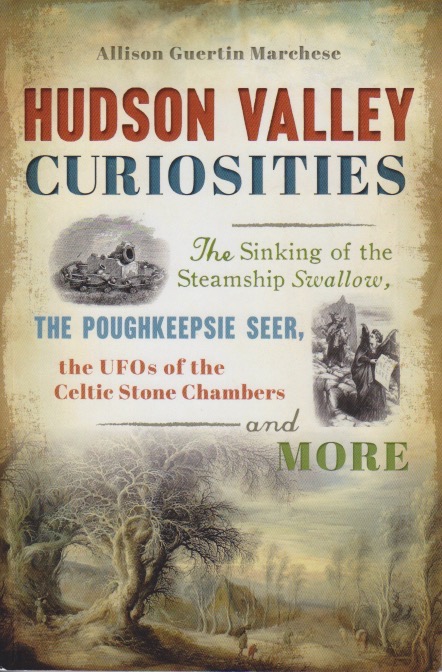
Another of my guilty pleasure reading categories is local history, written by locals.  As a genre these books may not always go back to primary sources, and they may get a fact or two wrong, but still they’re endlessly fascinating and I always learn something (which is the point of reading, after all).  I enjoyed Allison Guertin Marchese’s rambles along the Hudson Valley.  I’d encountered some of these tidbits before, but most of them were new to me and show just how interesting a place this particular river valley is.  Living in a strange world is so much more beguiling than a prosaic, predictable place.  Still, you’ve got to accept that anything can happen.  Unlike many such books, Hudson Valley Curiosities does not focus on paranormal, although ghosts and UFOs turn up a time or two.

Since this region is about 145 miles from end to end, the book divides it into lower, middle, and upper regions and gives about equal time to each.  The curiosities range from mastodons to prohibition busters, from shipwrecks to Shakers.  I’d never made the connection with the Shakers and the Hudson Valley before.  While the Shaking Quakers had their origins in England, they eventually migrated to the New World, settling in the northern end of the Hudson Valley.  The book points out that they were noted inventors, living by their own means as they did, they came up with their own solutions to problems.  Another aspect of these curios is the number of them that involved women who took on the cause of women’s rights.  The first female candidate for President of the United States, Victoria Woodhull, is discussed, as is Deborah Sampson, the woman who dressed as a man to fight in the Revolutionary War.

Marchese provides a helpful bibliography as well.  As someone trained in historical method, I like to go back to the sources.  Of course, that means assessing both publisher and author, and taking into account what passed for facts at the time.  History is an endlessly fascinating enterprise.  Many historians, however, leave out the controversial or questionable materials that a local historian is inclined to leave in.  That’s what makes books like this such a guilty pleasure.  Who doesn’t like to look behind the curtain now and again and see what’s happening out of the public eye?  And it’s helpful to keep in mind that by far the most of history takes place far from the headlines.  That’s where real life happens, no matter how strange.  And it’s a guilty pleasure to read about it from a local who finds, gathers, and preserves the stories.


Good Book Selling

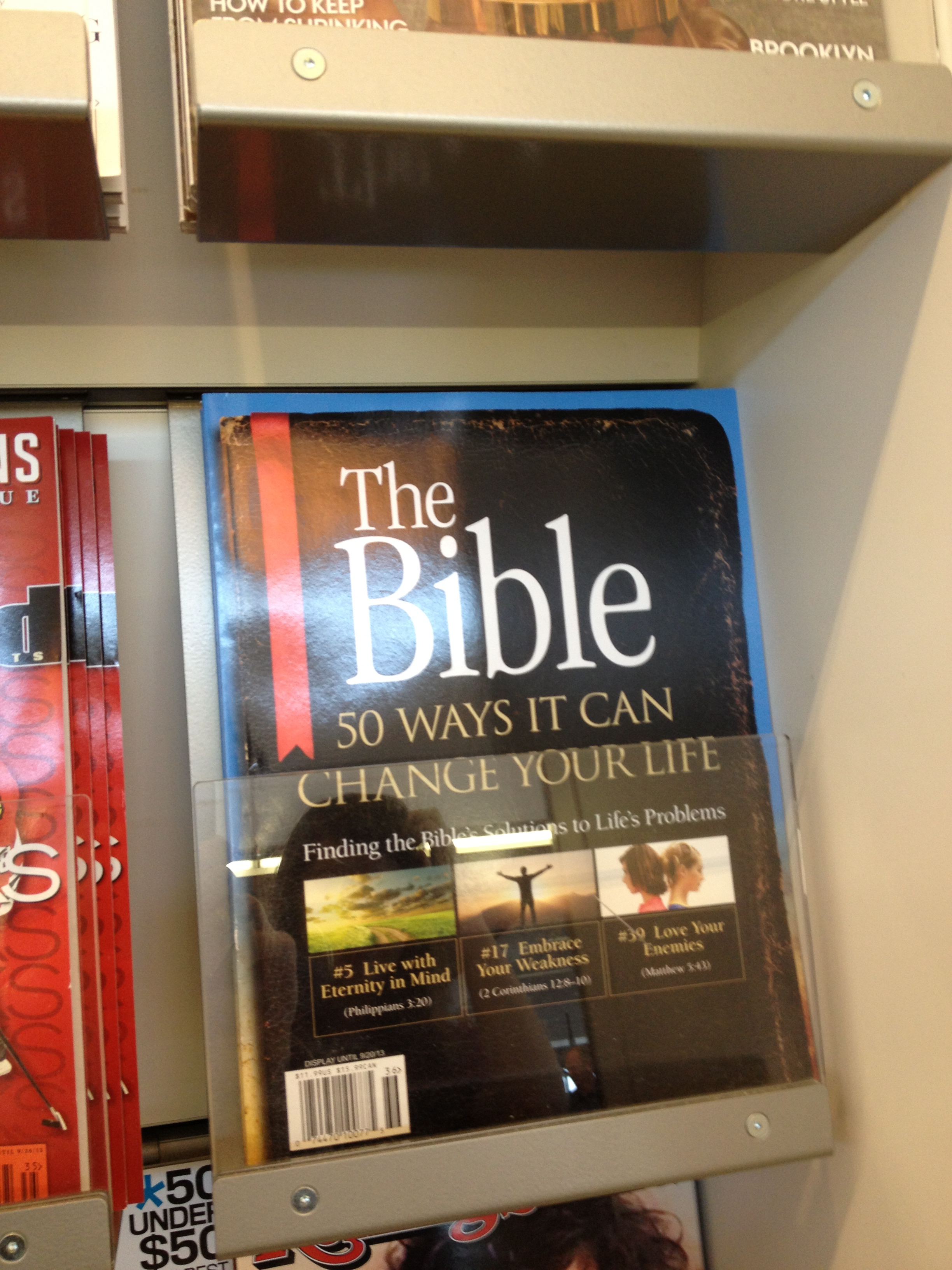
A few weeks back, probably several now actually, the New York Times ran a story about the Bible.  In this age of declining interest in the Good Book such things catch my attention.  Of course, the reason that the story ran was because of the money involved.  Let me explain.  Or at least give the headline: “Oldest Nearly Complete Hebrew Bible Sells for $38.1 Million.”  Money talks, even when it comes to Scripture.  The story was about the auction of the Codex Sassoon, which went to a museum.  Most regular Bible readers aren’t aware of the textual criticism behind their favorite translations—yes, even the good ol’ King James.  You see, no original biblical manuscripts survive.  Not by a long shot.  Every biblical manuscript in the world is a copy of a copy of a copy, etc.  And these copies differ from one another.  Often quite a bit.

Textual criticism is the job of comparing manuscripts and using scientific—yes, scientific—principles to determine which one better reflects what was likely original.  Since we don’t actually have the original we can’t say.  Those who hold views of extreme reverence for one translation or another have to resort to divine guidance of the textual critics to make the case.  For example, they might argue that God inspired the translators of the King James to follow one manuscript rather than another.  The King James was based on manuscripts known at the time (only about six of them) and far older manuscripts—inherently more likely to reflect earlier views and potentially closer to the original—have been discovered since then.  And are still discovered.  That was one of the reasons behind all the fuss over the Dead Sea Scrolls.  They represent some of the earliest biblical manuscripts ever found.

The Bible is an identity-generating book.  In this secular age, the failure of “the educated” to realize this simple fact often leads to underestimation of the importance of religion.  It motivates the largest majority of people in the world.  We should pay attention to it.  It doesn’t make headlines too often, though.  Instead, politicians who pretend they respect the Bible but live lives about as far from its precepts as possible, gather the limelight.  When money gets involved the Bible becomes interesting again.  We think about that thirty-eight-million.  What we might do with that kind of money.  How we might be able to pay somebody to paint that fence that desperately needs it, or better, to help those in desperate need.  The many victims of capitalism.  Where their heart is, there their treasure will be also.


Devil Talk

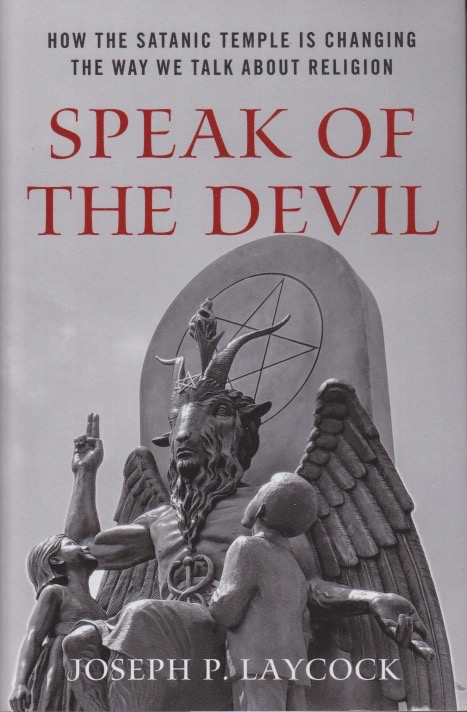
Around here, an after-school Satanic Temple club, prompted by an after-school evangelical club, led to a lawsuit where our tax dollars are being wasted.  Many local people wondered what was going on and I knew I had a book on my shelf that would help to answer that but I had to find the time to read it.  Joseph P. Laycock has been writing fascinating books for a few years now.  I picked up his Speak of the Devil: How the Satanic Temple Is Changing the Way We Talk about Religion just after it was published, but it always takes some time for me to get to books that I know I’ll have to spend time with.  I was right about spending time—there’s a lot packed in here that requires some thought.  I was vaguely aware of what the Satanic Temple is but had difficulty distinguishing it from the Church of Satan.  (I have a book on the latter, but it’s quite big and I haven’t found the time for it yet either.)  Laycock spells it out clearly.

The book begins by discussing how the Satanic Temple entered public consciousness in 2013.  Yes, it’s only been about a decade.  If you think it’s more than that, you may be confusing it with Anton LaVey’s Church of Satan.  They are different organizations.  One thing they have in common is that neither promotes belief in a literal Satan.  Both also rely on shock tactics to get their point across.  The Satanic Temple is a socially conscious organization that reacts to provocations of conservative Christian groups to try to establish their brand of Christianity as the officially sanctioned state religion.  And the evangelical groups have been making in-roads for years.  Playing the innocence card, “We’re just mainstream America saying what everyone’s thinking,” they put religious monuments in public spaces, start public meetings with Christian prayers, and receive state funding for their programs.  Often unchallenged.

Laycock’s not discussing evangelicals, but rather how the Satanic Temple arose in response to efforts to establish one form of Christianity as state sponsored.  There’s a ton of information in this book.  Among the many takeaways for me was the discussion of how good and evil are determined.  This is obviously directly relevant when Satan is involved, especially since the Devil is a post-biblical development.  The Satanic Temple, which doesn’t teach that there’s a literal Devil, attempts to counter the standard narrative by doing good deeds in the name of humanism.  You might be able to guess the conservative Christian response to that.  If you can’t, this book will help to spell it out for you.


Mystical

I would never have experienced Tibetan singing bowls were it not for a family member’s cancer diagnosis.  Something you quickly learn is that many resources are available to help you cope.  One of those local to this area was/is Tibetan singing bowls.  I had no idea what to expect, but as a lifelong explorer of religion, I had gathered that the session would likely involve ways of thinking more common in East Asian cultures.  I was taken, however, on a spiritual journey.  In a darkened room with twenty-to-thirty cancer survivors, on our backs on the floor, we experienced sound.  Now, my musical training and ability are quite limited.  I could not identify most of the instruments (I kept my eyes closed), apart from the singing bowls which I had heard in other, western religious contexts as well.  I’ve had mystical experiences before, but I don’t know you well enough to tell you all about them.

Photo by Magic Bowls on Unsplash

The first thing I noticed this time was the color blotches in my closed eyes.  Everyone sees those kinds of things, but as the sounds increased the colors began to range outside their usual purple into whites and yellows.  It was almost like a segment from Fantasia.  The colors then began to take shape, some forming into flowers.  I knew my imagining mind had taken hold when images began to appear.  Although it was my usual bedtime by this point, I was fully cognizant of being awake.  There was no real storyline, but I was conscious of losing my sense of individuality and becoming part of the greater whole, which is what being a being on a small planet is all about.  As the sound meditation wound down, I realized that it had been many years since I’d put myself into such an environment.  It took some time to reorient myself.  When we arrived at home I was, paradoxically, too relaxed to fall asleep.

One of my college professors warned me against mysticism.  Mystical experiences are rare, in my life anyway, but unforgettable.  If you live long enough and pay the right kind of attention, however, you can find them.  They leave you with a profound sense of hope.  I’m not about to go off and join a Buddhist monastery, but Thomas Merton reminds us that Buddhism and Christianity are perfectly compatible.  This particular college professor was afraid, I surmise, that spiritual experience might outstrip dogged devotion to a single book.  Mysticism can take you to places that convince you what passes for reality is not all that’s real.  Being with lovely people who’ve had to face cancer is a spiritual experience in its own right.  Why shut out the light inside?


Animate Magnetism

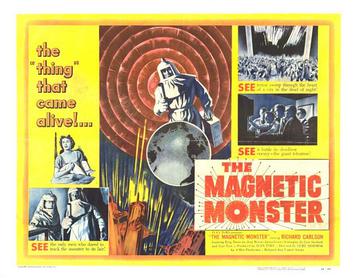
The Magnetic Monster is listed as sci-fi and horror on industry websites.  It falls into that period when horror had shifted to Hammer Studios in the UK and the US had entered that white-shirt, button-down period known as the fifties.  There were still monsters out there but they generally had to do with radiation.  In this case, it’s magnetism and its relationship to electricity.  The movie came out in 1953 and introduces what may have been the forerunner of the X-Files, namely the Office of Scientific Investigation, the OSI.  This team of A-men (yes, this was the fifties) study anomalies in order to keep America safe.  There were a total of three OSI films, of which this is the first.  The eponymous magnetic monster is alive only in a philosophical sense—it’s actually an irradiated element gone wild.

An unrestrained scientist had subjected a radioactive isotope to alpha particles for several days and this started a chain reaction.  He takes the substance onto a commercial airline—in his carry-on, no less (it was the fifties)—but the plane is diverted so the A-men can intercept it.  Every eleven hours this isotope divides and doubles, eating all the energy around itself to do so.  This creates an immense magnetic field.  So immense, in fact, that in a mere matter of days it will throw off the earth’s core and our planet will spin helplessly off into space!  Don’t panic, dear reader, the A-men are on the job.  They find a scientific means of overfeeding this monster and destroying it, which is why we’re all still here.

Interestingly, this is one of the more highly rated movies of the era, perhaps because of its scientific optimism.  Scientists can solve all our problems.  And yet you’ll find them without fail in church on Sunday morning.  The fifties were developing a kind of split personality for this country that was trying to hold two conflicting impulses together in an attempted fusion.  The problem is, overthinking either (or both) of them would demonstrate that they really have separate paths to take.  They may well be compatible, but in ways that relegating religion to Sunday morning simply doesn’t work.  Even today many scientists—generally not the outspoken kind—still hold religion and science in tension.  There is something to this impulse we call religion, but it always seems to have to wait while we use science to destroy the monsters we create ourselves. 


Early Halloween

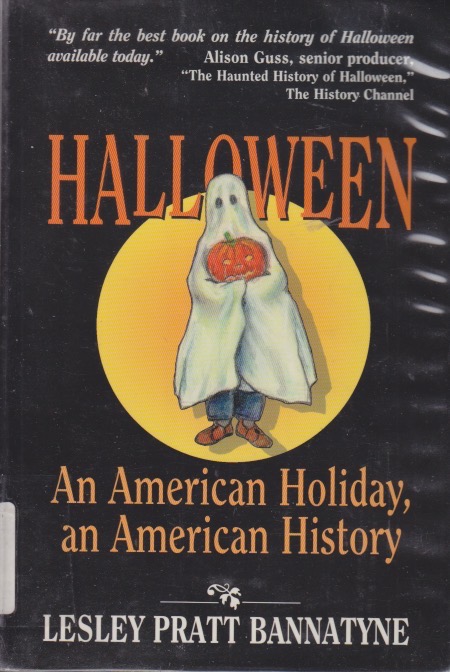
Call it seasonal disorientation syndrome, but I’ve been reading about Halloween.  I’m pretty sure I’m not the only one thinking about it.  Stores will begin Halloween displays next month, if the usual pattern recurs.  So why not do a little advanced study?  Although I’ve written about holidays myself, they’re unruly subjects to handle.  Lesley Pratt Bannatyne is a name familiar to many fans of Halloween.  Her 1990 book Halloween: An American Holiday, an American History kickstarted renewed interest in the holiday and has been followed by other studies, even occasionally with academic presses.  Still, holidays are difficult to pin down.  One of the most obvious reasons for this lies in the fact that before the world became über-connected, holidays were largely local celebrations.  Trends traveled slowly and not everybody agreed on which holidays to celebrate.

The early days of Halloween are the most difficult to piece together.  This is clear in Bannatyne’s book also; we simply don’t have the written sources we’d like.  The ancient Celts, although great strides have been made through archaeology and close examination of ancient writings of outsiders, remain poorly documented.  They didn’t leave archives like the classical writers of Greece and Rome did.  And clearly Halloween has its earliest known celebration as Samhain among the Celts.  Once Bannatyne gets to America, however, there’s a trove of information in her book.  Her chapter on the celebrations among the original thirteen colonies is quite good at demonstrating regional differences not only for religions, but for tolerance for something like Halloween.  Fall festivals predated Halloween as we know it (if we really do know it), and she does a good job of demonstrating how the melting pot effect made Halloween national.

One of the problems with any history is that one event can change everything.  This book was written three decades before Covid-19 and the pandemic was one of those events that did change everything.  It makes it seem as if we were much more carefree back in the eighties when Bannatyne’s book was written.  Halloween was just starting to become an adult holiday again back then.  In the ensuing years it has become even more so.  Communities are seldom what they used to be with the extreme mobility of much of our society, but many still find a way to agree to the terms of Halloween.  Historians of holidays have a difficult task, and we’re still learning about ancient cultures and their modern manifestations.  This is a good book to start that exploration—I know it taught me a thing or two.


The Ology

It’s good to refresh yourself once in a while.  I attended a Calvinist college and my doctoral program was in the context of an institution strongly influenced by Calvinism.  I took courses based on Calvinistic theology.  Jon Balserak’s Calvinism: A Very Short Introduction was really a refresher for me and I have to admit that it sparked a pretty strong reaction.  For one thing, many Calvinists unthinkingly accept the tradition in which they were raised.  (Call it indoctrination, literally.  This is true of most religions.)  Those I know seldom believe what Calvinism teaches, for it presents God as a monster. (This is me, not Balserak, and I mean this in the kindest possible way.)  You see, doctrinally Calvinists have to accept Scripture literally and if you do that you come up with all kinds of contradictions.  (The amount of special pleading is mind-boggling.)  The way the Calvinists landed on this was that God created us for his glory, which will be shown in predestining large numbers of people to Hell.  These people can do nothing to change that since God doesn’t really love them.  What would Jesus say?

I argued quite a lot with professors at Grove City College.  I was raised a Fundamentalist, but of the free will stripe.  The Methodist Church, which I eventually joined, was not Calvinistic in outlook.  (Neither are Lutherans or many others.)  Still, Calvinism has unduly influenced American culture—I wish the book would’ve focused more on this.  We are, culturally, heirs of Calvinism.  This little book points out one obvious way this is so, namely, the separation of church and state.  There are many other features that could be pointed out, but the book aims to be universal and this is therefore not a theme.

The book approaches Calvinism theologically.  There’s quite a lot of “shop talk” here that I imagine might put off those who don’t really care to know who said what about a particular point of doctrine.  Balserak points out that Calvinism is complex and there is no one way of looking at everything, but there are clearly some non-negotiables.  These non-negotiables are precisely what prevented me from ever trying Calvinism on for size.  I’ve moved through various religious outlooks on my journey that is geared toward finding the truth.  Calvinism never tempted me, nor did it ever seem to make sense.  It was as if the tradition accepted that Zwingli and Calvin and company had gotten the basics all correct and every act of theology since then involves a casuistry to prove the early teachings correct.  Why not question things?  Well, I guess they’re predestined not too.


Baptist to the Future

Setting aside their smartphones and MAGA hats for a moment, the Southern Baptist Convention voted to exclude women pastors this week.  The photos seem to show a rather dour delegate pool that seems ready to head to the apothecary for some leeches to take care of this headache.  The conservative mind is a curious place.  I can understand wanting to slow change down—it is moving at a scary pace, leaving many of us concerned and confused.  Yet the idea that nothing has changed in two millennia isn’t only demonstrably wrong, it’s something that history demonstrates is a relatively recent, and reactionary, idea.  The fundamentalist brand of religion that elevates the Bible to godhood has only been around for about a century.  It’s a reaction to a hundred-year-old modernism that, in spite of all the evidence, closes its eyes.

Fear is natural enough.  Some of us actually watch horror movies voluntarily, after all.  But when fear overtly drives your religion isn’t it time to stop and ask what you’re doing?  The Southern Baptist Convention ejected its largest church, Saddleback, which had achieved national influence under Rick Warren.  According to the New York Times, Warren himself addressed the Convention citing none other than Billy Graham in his defense of women pastors.  The convention overwhelmingly voted to excise its most successful church for fear of that dreaded slippery slope of liberalism.  We’re fixated at some sexual level, it seems, and afraid of what might happen if we admit that even as AI is taking over our world, things may have changed.  At least a little.

The Bible is a sacred document with a context.  That context was patriarchal and it held considerable sway for about two millennia.  Power is difficult to relinquish.  When you get to call all the shots you don’t want to be reminded that those shots are wounding and killing innocent people.  “It was just better that way,” people think, ignoring the very Bible they worship.  It’s a point of view I understand, having grown up in it.  I remember reading with the juvenile furrowed brow of some tender twenty years how C. S. Lewis simply couldn’t see how women could be priests.  And then noticed how Baptists and other Protestants embraced Lewis although they condemned his idolatrous Anglicanism.  Sometimes it’s difficult to believe we’re actually in the twenty-first century with AI knocking at the door.  And we still can’t get over women wanting to be in the pulpit.

What would Roger Williams say?