Friend of Jonah

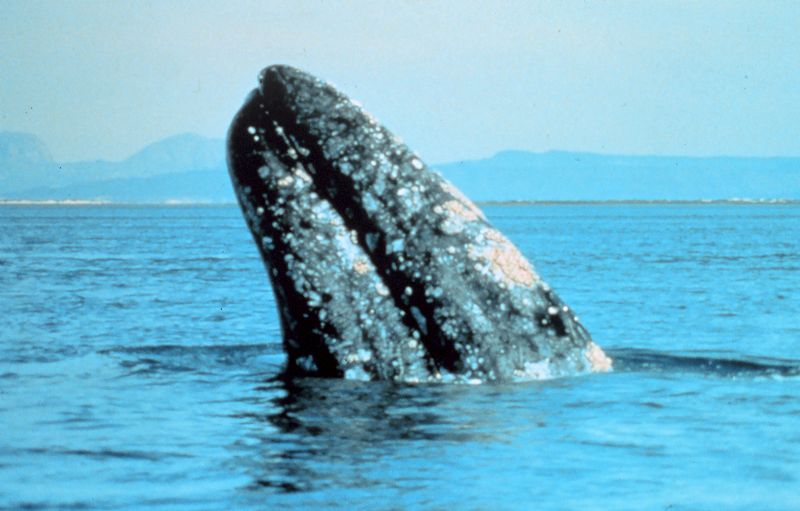
Last year a gray whale was spotted off the coast of Herzliya in Israel. As in the days of Jonah. Actually, we need to turn the clock back a little further. According to Arthur Max of the Associated Press, the gray whale was hunted to extinction in the Atlantic already in the eighteenth century. This whale, therefore, had to travel north of Canada from the Pacific Ocean through channels that are normally frozen. Global warming has opened these passageways and plankton last seen in the north Atlantic 800,000 years ago have begun to reappear. If Jonah was smart, he’d have stayed in that whale and would’ve just kept going.

Big business stands to lose the most from cleaning up the environment. It cuts into the bottom line. Happily, if brainlessly, joining the laissez-faire coven are many of the “Religious Right” who see destruction of the environment as part of God’s plan. So much for “and behold, it was very good.” When free market economists first met the conservative evangelicals it seemed that they had little in common beyond similar haircuts and a desire to turn time back to the 1950s. Since then they’ve joined to become a very powerful force in American politics, preventing any headway to improving the globe for others, even if it isn’t a personal concern of theirs. So much for “do unto others as you would have them do unto you.”

Each year in my Prophets class I have students that are far more concerned that a literal Jonah was swallowed by a literal whale rather than hearing the message Jonah proclaimed: repent or face destruction. If we turn the thermostat up a few degrees more each year maybe Jesus will finally jump on that white stallion and split the Mount of Olives. You can’t quite see the Mediterranean from there, but if you could you might spot a lonely gray whale. You don’t need to look for the little man inside. That whale is the sign of Jonah.

Wave to Jonah for me!


Reverend Sanders?

According to the Associated Press yesterday, Yenitza Colichon was sentenced to 18 months’ probation for child neglect and cruelty. The charges stemmed from a 2007 religious ceremony in which her seven-year-old daughter was made to watch a chicken sacrifice in New Jersey, and the girl was fed the animal’s heart. The practice is part of the Palo Mayombe religion of central Africa. This whole incident highlights the vital question of when religion crosses the line into child neglect. Many of us bear scars—some psychological, some physical—from our religious upbringings. It has been concluded by psychologists that children do not possess the level of abstraction necessary to deal with religious concepts until they are about the age of twelve. Parents, often fearful of eternal consequences should their children depart the one, true faith (whatever that is), begin religious instruction early, often passing their children off to others who are in no real sense an expert in the religion itself.

The United States embraces, on paper, the concept of freedom of religion. Rightly, it seems, the strong arm of the state will step in when a child is endangered or neglected. The unanswered question is at what point does this neglect or endangerment occur? Authorities turn a blind eye if the faith is time-honored, and, especially, if it is of European/American extraction. Typically of the monotheistic variety. What is standard practice for other religions, as this case demonstrates, may be called into question. Sacrifice is also at the heart of the Judeo-Christian tradition. Sublimated into different forms for both political and theological reasons, those of us in that tradition have abstracted sacrifice to bloodless words on a page. When we see red, child neglect and cruelty are cited.

Religions frequently make extreme claims over the lives of their adherents. Most religions relax such claims for children, but others continue ancient practice that is tacitly condoned. Sometimes those permissible rites cause real physical pain and scars. If under the hand of a moyel, okay; if scarification in African tradition, not okay. Religions denigrating personal achievements of the young, setting them onto a path of failure, okay; religions ritually killing animals, as even the Bible demands, not okay. Without making any judgment on specific religious outlooks, the reality of lingering effects remains. Are the terrors of Christian nightmares inspired by tales of Hell any less cruel than watching a domesticated animal die? Is eating a chicken heart any less unusual that fish on Fridays? Is being unfamiliar with a religion grounds for dismissing its authenticity or claim for equality? Some of us find animal sacrifice distasteful, but if we proclaim a tidy sacrifice each Sunday, and share it with our children, that particular rite/right is protected by law.

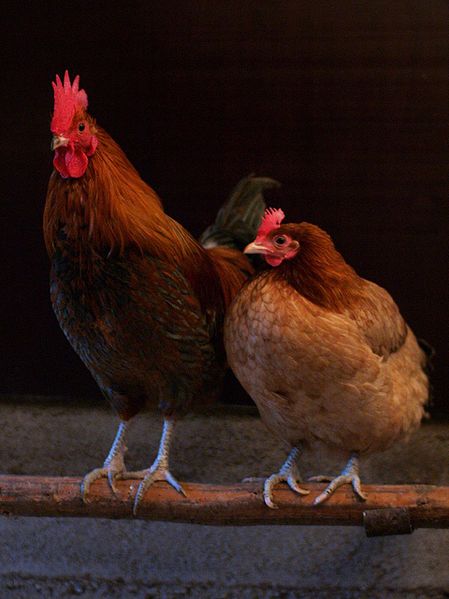
What would (wiki-commons) chickens do?


Religious Raven

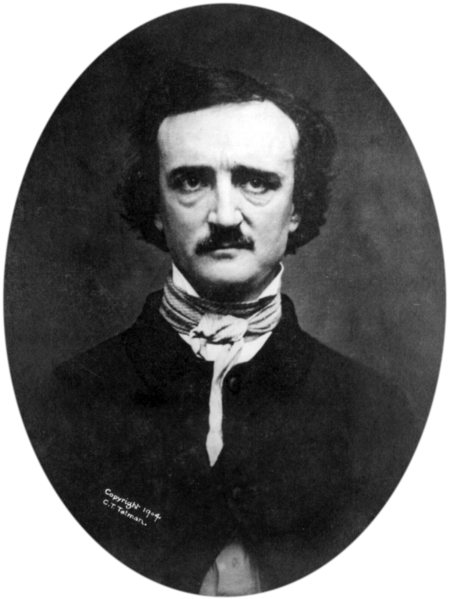
Having seldom achieved any sort of public recognition in my youth, I have been gratified to observe the approbation my daughter frequently earns. One such instance occurred yesterday as she won an Outstanding Presenter award at the state level of 4-H. For her presentation she introduced and recited Edgar Allan Poe’s “The Raven” from memory. As much as I like to take credit for some of her taste in literature, her remarkable memorizing ability that has impressed several judges and parents along the way is the result of her own determination. “The Raven” has always been among my favorite poems. As I listened to my daughter’s recitation yesterday, once again the wealth of religious and biblical images stood out.

Starting subtly with the perching of the raven on a bust of Pallas, Athena, the protective goddess of Athens itself, Poe adds the supernatural to his lamentation on the death of his wife. The bird’s origins on “the night’s Plutonian shore” also point the reader to the classical underworld toward which the poem inevitably points. The last five stanzas, where Poe’s verse turns directly toward his black thoughts at the decline of his wife, introduce the presence of seraphim—the turning point in the poem—angelic beings mentioned as attendants to God’s throne in Isaiah. The divine presence, however, offers Poe no comfort as the raven refuses to relinquish his memories of his love. Asking with Jeremiah (and citing the bird as prophet) if there is balm in Gilead, the poet is informed no such comfort exists. Calling God in Heaven as witness the bereaved asks if in Eden (Aidenn) he will be reunited with his bride, only to be informed such will not be the case. The raven, compared to devil, thing of evil, and a demon, represents for Poe the ultimate reality.

“The Raven” is a dark poem, tinged with religious imagery that was freely drawn upon in the nineteenth century. Having heard it recited many times over the past few months, I have come to believe that Poe would have been in accord with my belief that religion and fear are close siblings. When the climax of the author’s pain and sorrow is reached, the religious imagery predominates. This is a paradigm of many human lives. How many non-religious folk seek to make their peace with the supernatural when death is imminent? “Eleventh hour conversion” may be a trite trope, but it does point to something that Edgar Allan Poe recognized long before me—when we find ourselves most afraid religious impulses are frequently at hand.


Now Locusts?

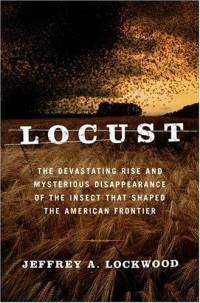
With the same page of the newspaper lamenting flooding in Iowa and drought in Florida, it seems that nature has turned against us in an almost biblical way. A more biblical plague than locusts would be hard to conceive, however, so when my wife pointed me to a current video of a locust invasion in Russia, I took notice. In the United States we seldom consider locusts since they have largely ceased to be a problem with the extinction of the Rocky Mountain locust for unknown reasons, last century. One of the more interesting books I’ve read over the last few years was Jeffrey Alan Lockwood’s Locust: The Devastating Rise and Mysterious Disappearance of the Insect that Shaped the American Frontier. Because the locust is not an American problem, biblical literalists like to transform biblical locusts into something else. The transformation is not necessary. We’ve eliminated the large predators from our planet, and the small ones often go unnoticed.

Each year as I lecture on the book of Joel, I spend a little time with locusts. The Asian varieties of locusts tend to reproduce rapidly and prolifically in the desert. Quickly exhausting the sparse food supply, they take to the air and fly for, literally, greener pastures. They can fly for three days without stopping which means they are suddenly there and eating everything. They look like divine judgment. Each locust eats its own body weight in green matter daily, and when a swarm can contain over 100 billion locusts, that can add up to 50,000 tons of food a day. Like poorly mannered house guests, locusts stay until all the food is gone, then leave. They are fully capable of devastating entire nations.

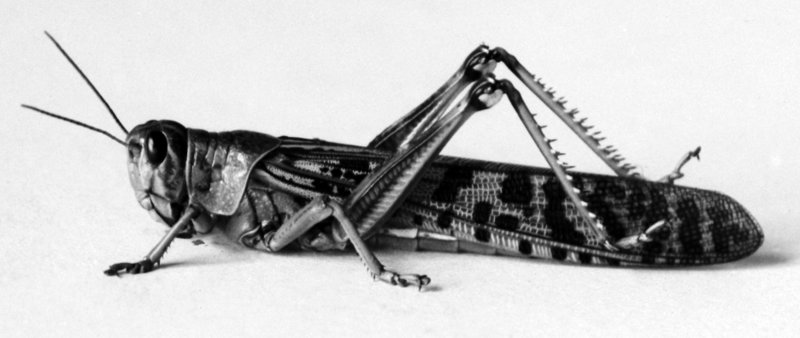
An actual biblical locust, vintage 1915.

Hal Lindsey famously converted Joel’s locusts into military helicopters, claiming that they presaged the end times. Decades later we are still here and so are, apparently, the locusts. They are part of evolution’s great machinery. The biblical view that we are the purpose behind that machinery has caused endless problems for the ecosystem. Locusts are a problem because they consume the food that we would otherwise eat or waste. In the struggle for survival, as Joel attests, it is not always the biggest that win.


And I Feel Fine

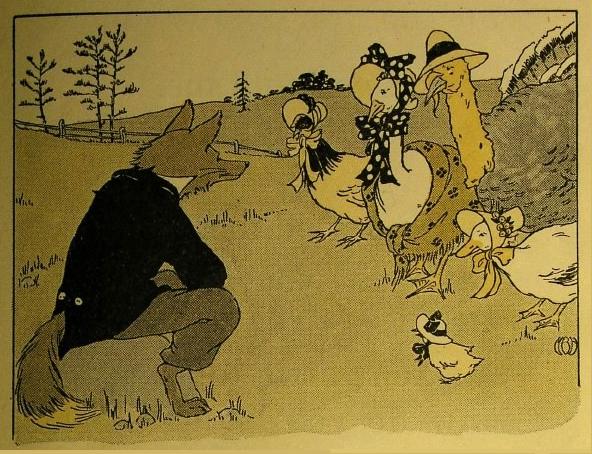
“Is something supposed to have happened?”—Jane Banks in Mary Poppins. The world was supposed to have ended yesterday, but I haven’t yet looked out my windows to make sure. I suspect that everything is pretty much the way it was on Friday. Nevertheless, I have to admit to a tiny bit of relief. I do not believe in a mythic end of the world, and yet there is always that taunting doubt that maybe somebody knows more than me. To calm my jitters, I watched Chicken Little last night. This particular Disney movie has never been one of my favorites, but yesterday it struck me as a parable for our times. Even better, the original folktale is a parable for our times. No one knows when the story originated; it is an example of a folktale that belittles paranoia and the mass hysteria that tends to accompany it. A common ending has a fox eating all the concerned animals as they make their way to the authorities.

Our culture is rife with end-days beliefs. Since this is an idea clearly traceable to non-biblical origins, one might suppose that Fundamentalists would eschew it, but as we have seen the last few days, quite the opposite is true. Those who like Chicken Licken or Cocky Lockey go around declaring the end of all things clearly believe they will be rewarded for their special efforts. Instead, history will class them along with Goosey Loosey and Turkey Lurkey—those who are easily led. Perhaps the oddest result of this recent scare is that many people will not abandon the belief, but will simply push it off. We have another scheduled apocalypse for the end of 2012. Is it because we are now so closely connected by the umbilical Internet that our natural fears have become international?

The claims seem to be arriving thick and fast. I remember the end of the world scare of 1979 when I was in high school. There seemed to be a hiatus until 1999, and since then the dates have begun to bottleneck. What we are seeing is the role-playing of a Christian mythology, and herein is the real danger. A true believer can try to initiate the end times. We only need recall 9/11 to test that. Like most religions, Christianity has developed its own unique mythology that freely borrows elements from both other religions and popular culture. The apocalypse has a history, you know. Overall the false scare of the end of all things has been good for this blog. It was not without irony that I noticed my post for May 21 was number 666. But like the clock that is still ticking, this post will clear that hurdle, and the world will be around for a long time yet to come. Now I need to go and pull back the curtains, just to make sure, and keep an eye out for Foxy Loxy.


Dog Gone Rapture

With the world about to end tomorrow, a friend pointed me to a story of a savvy entrepreneur. The idea is so obvious that I’m completely jealous I didn’t think of it myself. Among the Fundamentalist camp it is widely acknowledged that animals don’t have souls. They do, however, make wonderful companions nevertheless. When their good Christian owners are raptured to the skies, Rover is consigned to a cruel death by starvation if his soulless biological form is left inside. Poor soulless, sinless Rover! Reason (such as any theological thought can be called “reason”) and emotion clash. Bart Centre comes to the rescue. His company will break into the now abandoned private property that God had blessed you with, and rescue your pet. For a reasonable fee. As an atheist, Centre is pretty sure he won’t be going anywhere.

At notable—and even some rather forgettable—points in human history, people have guessed that it is all about to end. This is a strange belief when parsed apart from its original context. Ancient mythical thought tended to be holistic. We humans, with our own cycle of births and deaths, have trouble imagining anything that doesn’t follow the same pattern. All things must have beginnings and ends. Zoroastrianism began as a persecuted sect among the Old Persian religious realm. Persecuted sects tend to want an end to the suffering, and so it is no surprise that Zoroastrians gave us the end of the world. When Judaism was under the severe predation of Antiochus IV Epiphanes, it too looked for a radical change. Christianity under Nero and Domitian looked for a triumphant culmination of a universal purpose. And no end came. Instead, under Constantine Christianity gained a privileged position. With only periodic outbreaks, concern for the end of all things was pacified.

Today with the ease of lifestyle among most American Christians, it is surprising to see such antipathy toward the world. In the words of the Metatron, “Was Wisconsin really that bad?” Or maybe I have read it wrong. Perhaps this is the final culmination of the Prosperity Gospel: Christians have got it so good that the only way to better their lot is to end it all? Religions have always demonstrated their acquisitiveness either in terms of souls or currency. When you’re on top of that world, what direction is there to go but out? But you can’t take it with you, including your soulless friends. Perhaps that’s the real lesson in all of this: humans struggle to mix reason and emotion into one psyche, despite their diverse evolutionary paths to consciousness. We may readily accept the mythical but still wonder who will take Rover for his walk.

Cafe Press's take on the issue


Conscious Cats

To pass yet another rainy Saturday, and to celebrate Earth Day, my family went to watch Disney’s African Cats yesterday. An avowed nature-film junkie as a child, I watched Mutual of Omaha’s Wild Kingdom on a weekly basis and have supplemented that fare with nature films throughout my life, when possible. It disheartened me a little to learn that some of the adventures were spliced together from different filmings, but I always believed every word avuncular Marlin Perkins said. After all, the show ran on Sunday nights, and who’d dare lie on a Sunday? Noting the humor even as a child when Marlin Perkins would stand back as Jim Fowler wrestled the anaconda or outran the crocodile, I could not get enough of authentic nature footage. As a child, wildlife sightings were limited to squirrels and rabbits, a number of birds that looked disconcertingly similar, and many, many bugs. Once a king snake slithered down an alley down the street, and we felt like Marlin Perkins, keeping our safe distance.

A trend in recent years has been to anthropomorphize animal films to engage children’s interests. So it was with African Cats. Each lion and cheetah family was described in human terms with human motivations, longings, and emotions. It is clear from watching many, many episodes of Zoboomafoo with my daughter (we even saw the Kratt Brothers live at a New Jersey Greenfest a couple years back) that animals genuinely do experience emotions. Anthropomorphizing them, however, has always disturbed me. I’ve been a vegetarian for well over a decade now, believing that animals have the same right not to be eaten that I fervently hope they respect in me. But placing them in the same level of consciousness as humans increases the suffering in our world a little too much. Both lions and cheetahs die in this G-rated movie. That is the unfeeling course of nature. Suffering comes at the level among humans of being aware of this misfortune, and taking it to heart. Theodicy is among the most intractable of theological problems.

Today as millions of Christians celebrate resurrection, my thoughts are with the animals. African Cats shows incredible footage of millions of wildebeest migrating, but packages them as mere prey for the hungry lions. What of the inner life of the wildebeest? In our society where the few lions demand the best while countless prey animals go about their daily grind, eking out a living from an unfeeling earth, the subtle message was almost overwhelming. Yes, the vast wildebeest herd can spare a member or two to predation. What if that member is you or me? It is the trick of numbers and the curse of consciousness. I respect and admire our animal co-inhabitants of our planet, but without the myth of resurrection isn’t giving them consciousness just a little bit too cruel?

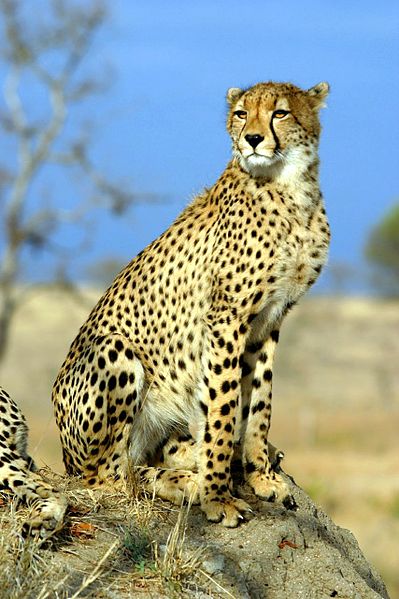
James Temple's cheetah from Flickr, via WikiCommons


Cat Tales

Several years ago a cat named Rusty, aka, Firestar, came into our lives. Since my wife is allergic to cats Firestar is, of course, a fictional character. I’ve written about the Warrior series of tween books by Erin Hunter before, and last night I was reminded of the centrality of religion to the story. My daughter has been a fan of Warriors since fourth grade. One of the few luxuries we allow ourselves is the (now mandatory) purchase of the newest installment on the very day of its release. Waiting even one day cannot be tolerated. Although my daughter is among the more wizened readers of the series, her devotion is undying. She’s the kind of fan publishers (and some deities) covet. Last night I took a break from grading student papers to take her to see Erin Hunter at the kick-off book signing for the latest release in the series.

What a publisher loves to see

I have to admit feeling a bit out of my league waiting in a massive line where the average age is, on the whole, several decades below mine. There was even some question as to whether we would even be admitted since we had the dreaded B tickets rather than the highly prized A stubs. Having read the first twelve books as bedtime stories quite a few years back, I hadn’t expected the founder of the quaternity of Erin Hunters to be quite so witty. As she explained (mostly to the adults present, I believe) her interest in devising the series, she cited “religion” as the second of her interests. In the series, tribes of feral cats each have a shamanistic “medicine cat,” and the spirits of the departed cats play an influential role. Ms. Hunter also explained that the clans could be taken to represent different religions, all struggling to coexist.

Now I could understand that I was clearly in the world of fantasy. Religions, like all human institutions, are prone to corruption. Lofty ideals, inspiringly presented by insightful founders, soon come to be used as weapons and tools to win control over other people. Since religion is understood to be sacred, few suspect the insidious uses to which the various tenets of belief-systems may be put. Those of us who have toiled long among the religiosphere must become more circumspect about our surroundings or be consumed by them. Many of us know firsthand what darkness religions are capable of generating. In fact, it is something that even cats recognize, if Warriors be a reasonably reliable guide through this tangled forest. And like cats, many religious warriors can barely keep their claws sheathed.


Anubis Rising

As if reality weren’t haunting enough, I’ve been continuing my quest to find the scariest fiction book written. I’ve borrowed suggestions from others, but it seems that the fear factor is a decidedly personal thing. Nevertheless, the suggestions are often enlightening as well as provocative. I recently finished Dan Simmons’s A Winter Haunting. Simmons’s work had previously been unexplored by me, so this was a foray into the unknown. Of course, I read horror with an eye toward the sacred and I’m seldom disappointed. In A Winter Haunting the sacred appears in the form of Egyptian religion. Simmons makes very effective use of hellhounds, tracing them back to Anubis.

Now Anubis lays me down to sleep

The religion of ancient Egypt had a morbid preoccupation with death – or maybe it was just a healthy recognition that it is inevitably coming. Many of their gods eventually ended up patronizing the dead in some way. Andjety, Ptah, Min, Osiris, Isis, Nephthys, Maat, and Thoth, as well as Anubis, regularly appear in the cult of the dead. And, of course, pyramids represented the stairway to heaven long before Page and Plant. Death and its psychological angst have been crucial to the development of religion from the beginning. The Egyptians honed it to a fine art.

Anubis was likely associated with the dead because of the scavenging of wild canines at shallow graves. Magic, a phenomenon anthropologists have difficulty distinguishing from religion, dictates that the source of the problem should be appropriated as its cure. To protect the dead, the scavenger of the dead transformed into Anubis. Simmons did his homework, for this transformation is well represented in A Winter Haunting. Without knowing this particular plot device, I had been reading about Egyptian funerary cult independently of the novel and this coincidence proved entertaining as well as informative. I won’t be sleeping with the lights on, though. The search continues.


Myth of Jerusalem

As I stood atop the Mount of Olives watching the sun set over Jerusalem several years ago, I had difficulty believing I was actually there. For a working class kid who’d only ever been to Canada before (and only because we lived not too far from Niagara Falls), this was a moment like a scene from the Bible itself. Jerusalem is a city of myth and dream, and it represents just how seriously mythology may be taken. A new book, Jerusalem, Jerusalem: How the Ancient City Ignited Our Modern World, by James Carroll, was reviewed in Sunday’s newspaper. I have not yet read the book myself, but a couple of lines from Tom Mackin’s review leapt out at me: “Jerusalem is as much a symbol as a reality. Because most Orthodox males spend their time studying the Torah, they are unemployed. Piety brings poverty.” This is editorializing with parsimony.

Those of us raised to believe that pursuit of the highest calling of humankind is that of seeking the divine often end up forced to live the consequences. This pursuit does not pay, unless one is willing to sell one’s soul to become a televangelist. Unemployment has a way of sharpening one’s focus. The message repeatedly heaped upon you by society is that you have nothing of value to contribute. True, religious founders often declare the ineffectual satisfaction of lucre, but then, most of them didn’t have a child to put through college. Having spent nine years after high school studying the Torah (and Prophets and Writings and documents written long before any of this), I see now what could not be seen then.

When I watched the sun set over Jerusalem with some friends, a stray cat wandered over, looking for affection. Or, more likely, food. I had some scraps that I shared with the hungry kitten when it unexpectedly bit my finger and scampered away. My friends, concerned for rabies or some other infection, rushed me down the Mount of Olives and into the Holy City seeking a holy pharmacy. Little did I know at the time that a myth was being enacted at the expense of my aching finger. Acts of kindness are rewarded with the hand that feeds being bitten. I had to come down from the mountain, earn a doctorate, and be dismissed by well-groomed evangelicals before I could finally see that the symbol was the same as reality. I need to read this book to restore my faith in mythology.

More and less than it seems


Dog Gone!

Religion is a strange attractor. Maybe not in the exact same sense as in chaos theory, but in reality it brings together mental states so bizarre that science fiction and fantasy writers have a buyer’s choice. Yesterday the New York Daily News reported on a South Carolina woman who hanged and burned a one-year old pit-bull puppy. Why? The bitch had bitten the woman’s Bible. Citing the animal as a “Devil dog,” the southern woman became a vigilante for the Lord. Now she’s being tried on charges of animal cruelty. This story touched me in a number of ways.

With family roots in South Carolina, I can conjure up images of this happening. Having known many, many Fundamentalists, it seems even more plausible. Given the constant barrage of contrary messages descrying the presence of evil in the world, all the sudden any mutt can become Mephistopheles. Begging off the Baskervilles, the demonic hound has a long pedigree in mythical imagination. It is well known that the Bible cites dogs as unclean animals, but it is their charnel character that leads to the development of the full-blooded hellhound. Prior to the Hebrew Bible, in ancient Ugarit dogs had an infernal connection. It isn’t seen clearly, but the association is there. Snatches of the underworldly dog appear long before Cerberus, and last well nigh into the twenty-first century.

Hel and his hound

Unfortunately for the deceased canine, it is a myth. Hellhounds still abound in popular media, everywhere from The Omen to O Brother, Where Art Thou? Dogs, however, were among humanity’s earliest partners in the survival game. From about as early as I can remember, we always had dogs in the house, and nary a demonic encounter. We never put them on trial, even when house-training was in progress and an accident occurred.

The news story reminded me of an episode of Dragnet I saw as a child. A woman was arrested for murder, and Sergeant Friday, in his unflappable voice, told his partner it was because the victim had shot one of her books. In the final fade out, after Bill Gannon asked what book it had been, Friday holds up a Bible with a bullet-hole through it. I was a little confused. Was the woman guilty or was someone shooting a Bible just cause? The episode did not answer the moral dilemma. I can’t even remember the outcome. But in 2011 things haven’t much changed. If he goes to South Carolina McGruff better watch what he takes a bite out of, or it could be lynching time again.


Misjudging Dinosaurs

Two dinosaurs diverged in the middle of evolution, and I’m not at all sorry that they both flourished. One became an herbivore, harming no one but plants, while the other grew into a carnivore, eating its siblings. That’s the way of this evolutionary universe. The Eodromaeus and Eoraptor split took place near the very inception of the dinosaur form, with the most basic of existential options: eat or be eaten. Noted paleontologist Paul Sereno has been excavating these Argentinean Lilliputian dinosaurs and has detected that the species, while similar, had irreconcilable food preferences.

Dinosaurs are often relegated to the age of children. When we grow up, we’re supposed to take interest in more modern developments and leave the dinosaurs in the dust. Their value, however, is often underappreciated. We learn about our world by examining theirs. Identification is subtle and sometimes wrong. Little Eoraptor is now thought to have been the plant-connoisseur, despite the terrifying, Jurassic Park-sounding name. We call them what we think they might be. Further discovery often changes the complexion of the picture.

When forced into a choice of more adult occupations, perhaps I unwittingly rebelled, choosing to study ancient religions. Like dinosaurs, religions evolve. As a child it was far easier to tell the preferences of dinosaurs since their morphology often gave them away. Religions are much more subtle. We are told that some dinosaurs survived in the form of birds. Many, many millennia of evolutionary pressure reduced their size and morphed their scales into feathers. Sometimes it’s hard to recognize a carnivore even when it’s just outside your window. That’s the way it works. Some follow the herbivore track, others prefer the way of the carnivore.

It's not the Eoraptor you think you know (from WikiCommons)


Which Witch?

Witches have been flying all over the Internet the last few days. A story from AP Online, picked up by several websites, reports that witches in Romania are planning to cast spells on the government. Now, I have to admit to having been tempted to cast a few spells myself during the Bush years, but since I don’t believe in magic the desire simply fizzled. These witches, however, are serious. Cat excrement in hand, the carcass of a dog nearby, these witches are outraged. Perhaps even more surprising is that some government officials are taking it seriously too, according to the article. The reason for the hexes? Romania has just started charging witches income tax.

Romania is a nation that evokes the darkness of primal forests haunted by werewolves and terrorized by vampires. The one-time domicile of Vlad the Impaler, the region has retained this mystique into the twenty-first century while elsewhere rovers roll around the surface of Mars and instantaneous world-wide communications are available at the press of a button. I am nevertheless encouraged by this display of activism. These supernatural citizens are challenging what they perceive to be unfair government practices. Statesmen wear purple on auspicious days to mitigate the effects of enchanters who are in touch with the financial struggles of the vast majority of religious specialists. Most of us just sit back and take it.

Meanwhile, as thousands of blackbirds fall from the sky, members of our own government are posturing to take back the modest health care improvements President Obama has helped to institute. Emotional Republicans are getting ready to strike back at programs designed to help those less fortunate than they are (apparently so they’ll have someone to pray for at grace over meals). “Are not two sparrows sold for a farthing? and one of them shall not fall on the ground without your Father” (Mt 10.29). Never mind casting spells, the government will always find ways of making life less comfortable for those they see as threats. Which witch would you choose? I’d select the one with a moral compass, even if she has cat excrement in her hand.


Resurrection From the Crab

My daughter loves cats. We have, however, lived in apartments since having been forced from our four-bedroom house at Nashotah. That means we’ve been at the mercy of various landlords for our choice of allowable animal comfort. Most landlords disallow cats and dogs, so we’ve gone the route of caged or terrarium pets. Birds, reptiles, and arthropods are fascinating but hardly cuddly. All three taxes share the phenomenon of molting, and once out of their artificial environments they are also all difficult to get back in. Our current non-embraceable companions are hermit crabs.

If early Christians had known of hermit crabs, I am sure they would have used them as symbols of the resurrection. (They could have used Baal as well, but that was a non-starter I’m afraid.) Our adventure began in a mall. The salesman told us, in broken English, that they would live two or three years, with proper care. We purchased one and were chagrined when it died shortly after, just when my daughter was hosting her cousin for a week-long visit during the summer. Shocked and tear-stained, we went back to the mall for a replacement crab. Later that week, crab number one (Sparky by name) suddenly reappeared. What we assumed was the corpse of Sparky was only his (or her – I have no idea how to tell) molted exoskeleton. It hung limply out of the shell like a deflated crab, but inside a new incarnation was preparing its epiphany.

This drama has enacted itself many times. This past week Sparky’s companion really died. Since the crabs are not the center of attention during the holiday season, I was the only one with this esoteric knowledge. The pile of legs and vacant shell were a little gruesome, but tucked into the corner of an out-of-the-way aquarium, they attracted no other attention. I resolved to bury the little guy. Today as I prepared to take care of his crustacean cadaver, I was astounded to find him (or her) alive and well and inhabiting a different shell. Resurrection. Our crabs have outlasted their projected livelihoods and are into their sixth year with us. Every time one dies, he (or she) comes back. If they couldn’t use Baal or Adonis, early Christians might well have caught on to the symbolism of the humble hermit crab.

I was dead, but now I am alive