Bad Dog!

A few years back, it was, when I saw my first video of a robo-dog.  I don’t mean the cute ones that you might fool yourself into thinking, on an off day, might be a real mammal.  I mean the bare-bones, mean-looking robot kind.  If was, of course, being developed by military contractors.  Then just days ago I saw something truly frightening.  In a video from China, one of these robo-dogs with an assault rifle and a ton of sensors mounted on it, was remotely air dropped by a drone and began policing the area.  Knowing that fleets (I’m not sure that’s the right word) of thousands of drones have been coordinated for entertainment purposes, and aware of how much money and tech militaries have, well, let’s just say nightmares aren’t just for sleeping any more.

Image credit: DARPA, public domain via Wikimedia Commons

Dogs, until they mostly had it selectively bred out of them, are killers by nature.  The wolf has to be a predator to survive in the wild.  As much as we like bipedalism, it has to be admitted that four legs (or more—imagine the robo-centipede, if you dare!) benefit locomotion quite a bit.  You may get a lower angle of view but a boost for speed.  And if you see a robo-dog, especially one with a machine gun for a nose, running is where you’d want to excel.  But we’ve taken our companion—our “best friend”—and made it into yet another engine of fear.  As someone who grew up with an inordinate number of phobias, I really don’t need one more.  Of course, it’s a truism that if a technology comes from the military it will be cause for alarm.

I’m capable of dreaming.  I can dream of peace and cooperation and what we could build if we didn’t have to worry about the aggressive, the greedy, and the narcissist.  Those who never learned to play well with others but who make money easily and spend it to bend the world to their bleak, bleak vision that lacks a happy ending for all but themselves.  I can envision meeting people who are different without the first thought being exploitation—what can I get out of them?—or fear that they wish to harm me.  Humans are endlessly inventive, especially when it comes to ways to harm one another.  If our creativity could be set toward working for the benefit of all, dogs would be for petting and drones would be for seeking out new ways to solve the problems that beset us all.  Instead we make them into new nightmares.


Stinging Days

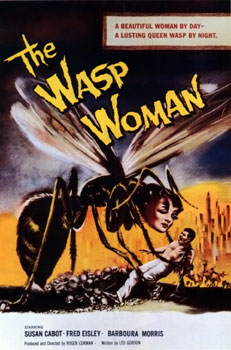
It doesn’t take much to encourage wasps.  Even after a few unseasonably cold weeks in autumn, one warm day will bring them back, poking along the siding looking for a nesting place.  My most recent stinging incident occurred in October.  It’s fitting, then, I suppose, that to try to keep awake late one October weekend afternoon that I watched The Wasp Woman.  These creature features were what I grew up with, and this was a Roger Corman brief film from 1959.  In fact, it was so brief that eleven minutes had to be added to make it a stand-alone television release.  It was originally part of a theatrical double feature.  Finding out about added time explained why Dr. Zinthrop’s accent changed from the first eleven minutes to the rest of the film.

Women have the same right as men to be made into monsters, of course, but there’s a poignancy to this storyline.  Janice Starlin is the owner of a cosmetics company but profits have been declining since she’s showing signs of aging.  Her customers want a younger looking woman providing their beauty products.  As is to be expected for a movie from the fifties, it’s a pretty sexist storyline.  Still, through the plodding plot the viewer can’t help but to feel for Ms. Starlin.  So when Zinthrop shows up with an extract made from wasp royal jelly (a secretion that actually comes from honey bees) that reverses aging who can blame her for trying it?  Of course it turns her into a giant wasp woman.

These kinds of mad scientist movies with their inevitable results perhaps injected a sense of caution into those of us who grew up watching them.  They weren’t great works of art, but that doesn’t mean they didn’t have something to say.  What I heard, watching this one, was that women exploited for beauty products suffer from natural aging processes.  And any formula that reverses aging come with its own set of problems.  The only other scary part of the film was when employees have to get to the upper floors to prevent Starlin from killing people, they have to wait for the elevator.  Their sense of frustration, although funny, is nevertheless a reality of working in a high-rise.  These movies from the late fifties seem to me to be a cry for help.  The sexist, button-down, white shirt world isn’t all it’s advertised as being.  Mad scientists are needed to help us cope.  Or at least stay awake on a sleepy October weekend afternoon.


Double Feature

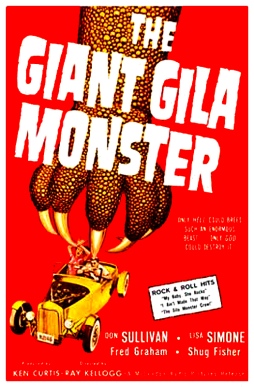
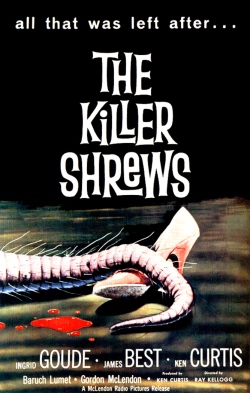
Creature features were a regular part of my youth, and, I suspect, where my appreciation of horror films began.  Nobody was really afraid of Godzilla or other monsters that were clearly people in rubber suits.  The use of forced perspective to make regular-sized animals into giants was obvious even to a child, but that didn’t make such movies any less fun to watch.  The Giant Gila Monster and The Killer Shrews both involve gigantic versions of rather small animals and both of them were produced outside of the studio system by Gordon McLendon, the owner of a chain of drive-in theaters.  Looking for B-movies for double features, he decided to make a couple of his own.  These two didn’t cost that much, but the special effects artist, Ray Kellogg, agreed to do them if he could be the director.  Together they make quite a double-feature of their own.

The Giant Gila Monster is never explained beyond the effectively shot beginning stating the who knows how big some things grow in the unexplored west.  Not even using a real gila monster, the lizard (unlike Komodo dragons, which one expects, were too expensive and untamable) isn’t aggressive and seems, from my perspective, to be just barely putting up with the fake trees and models it has to crawl over and around.  And everyone, apart from Mr. Wheeler, is nice.  The local Texas teens want to drag race but Chase Winstead, the gold-hearted mechanic, keeps them in line.  It’s a perfect world, in a Republican kind of vision, except for that darned giant lizard.  Winstead even figures out a way of getting rid of it so the authorities don’t have to.

The Killer Shrews, in reality puppets and dogs dressed up as shrews, is more adult-themed.  Four scientists on an island—contradicting the voiceover at the opening—have bred giant shrews.  The supply-boat captain and his Black mate are trapped on the island by a hurricane, where the mate predictably gets eaten by the escaped shrews.  McLendon himself appears as an over-the-top nerdy scientist while the producer, Ken Curtis, appears as another, more action-oriented man of science.  In a move a little unexpected for the fifties, Dr. Craigis’ bombshell blonde daughter is also a scientist.  But she’d be willing to be a sea-captain’s housewife if only she could get away from these awful shrews!  There’s a bit more tension in this one as one of the scientists is already engaged to Miss Craigis, but he’s a drunk and she wants out.  So might some audience members, but both films found international distribution and made money.  Now widely available for free, they are a slice of childhood served up in giant proportions.


Gorilla Thinking

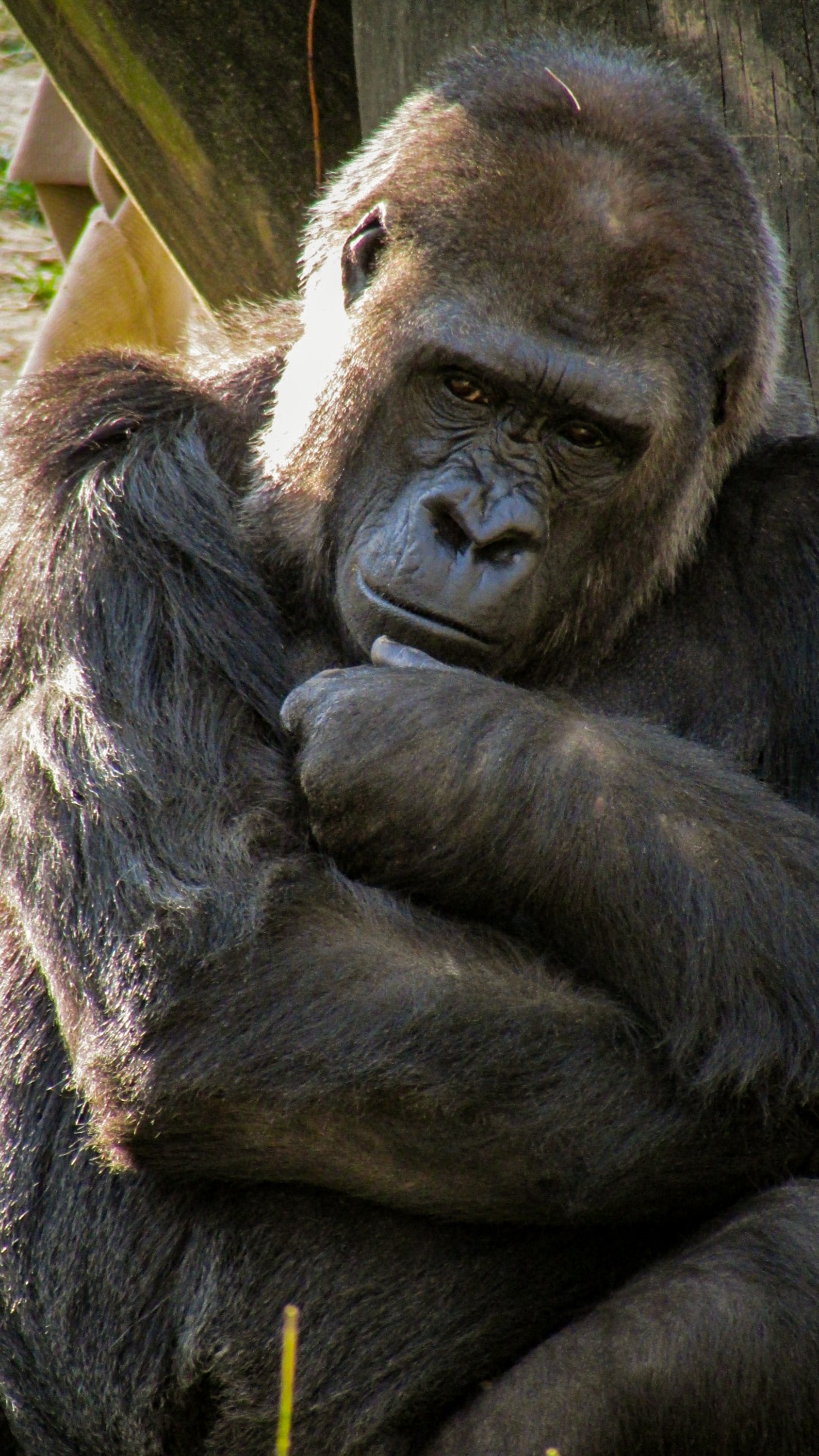
We don’t understand consciousness, but we want to keep it all to ourselves.  That’s the human way.  Or at least the biblically defined human way.  Animals, however, delight in defying our expectations because they too share in consciousness.  Take gorillas, for example.  Or maybe start with cats and work our way up to gorillas.  We all know that cats “meow.”  Many of us don’t realize that this sound is generally reserved for getting human attention.  Cats tend not to meow to get each others’ attention.  According to Science Alert, gorillas in captivity have come up with a unique vocalization to get zookeepers’ attention.  Not exactly a word, more like a sneeze-cough, this sound is used by gorillas at multiple zoos for getting human attention.  Even if the gorillas have never met in person.

Photo by Joshua J. Cotten on Unsplash

This is a pretty remarkable demonstration of consciousness.  What’s more, it’s an example of shared consciousness.  The same vocalization shared over hundreds of miles without a chance to tell each other about it.  We’re very protective of consciousness.  As a species we like to think that consciousness is uniquely human and that it’s limited to our brains.  Moments of shared consciousness we chalk up to coincidence or laugh off as “ESP.”  Funny things happen, however, when you start to keep track of how often such things occur.  It might make more sense to attribute this to moments of shared consciousness.  In our materialist paradigm, however, that’s not possible so we just shake our heads and claim it’s “one of those things.”

Animals share in consciousness.  We don’t always know what their experience of it is—indeed, we have no way to test it—but it’s clear they think.  I live in a town, so my experience of observing wild animals is limited to birds, squirrels, and rabbits, for the most part.  I often see deer while jogging, and the occasional fox or coyote, but not long enough to watch them interact much.  But interact they do.  Constantly.  These are not automatons going through the motions—they are thinking creatures who have sophisticated ways of communicating with each other.  Ours includes vocalization, so far uniquely so in the form of spoken language.  The great apes—chimpanzees and orangutans, according to Tessa Koumoundouros—also vocalize and do so with humans.  Now we know that gorillas do too.  And we all know that a barking dog is trying to tell us something.  If we took consciousness seriously, and were willing to share it a bit more, we might learn a thing or two.


The Birds and the Bees

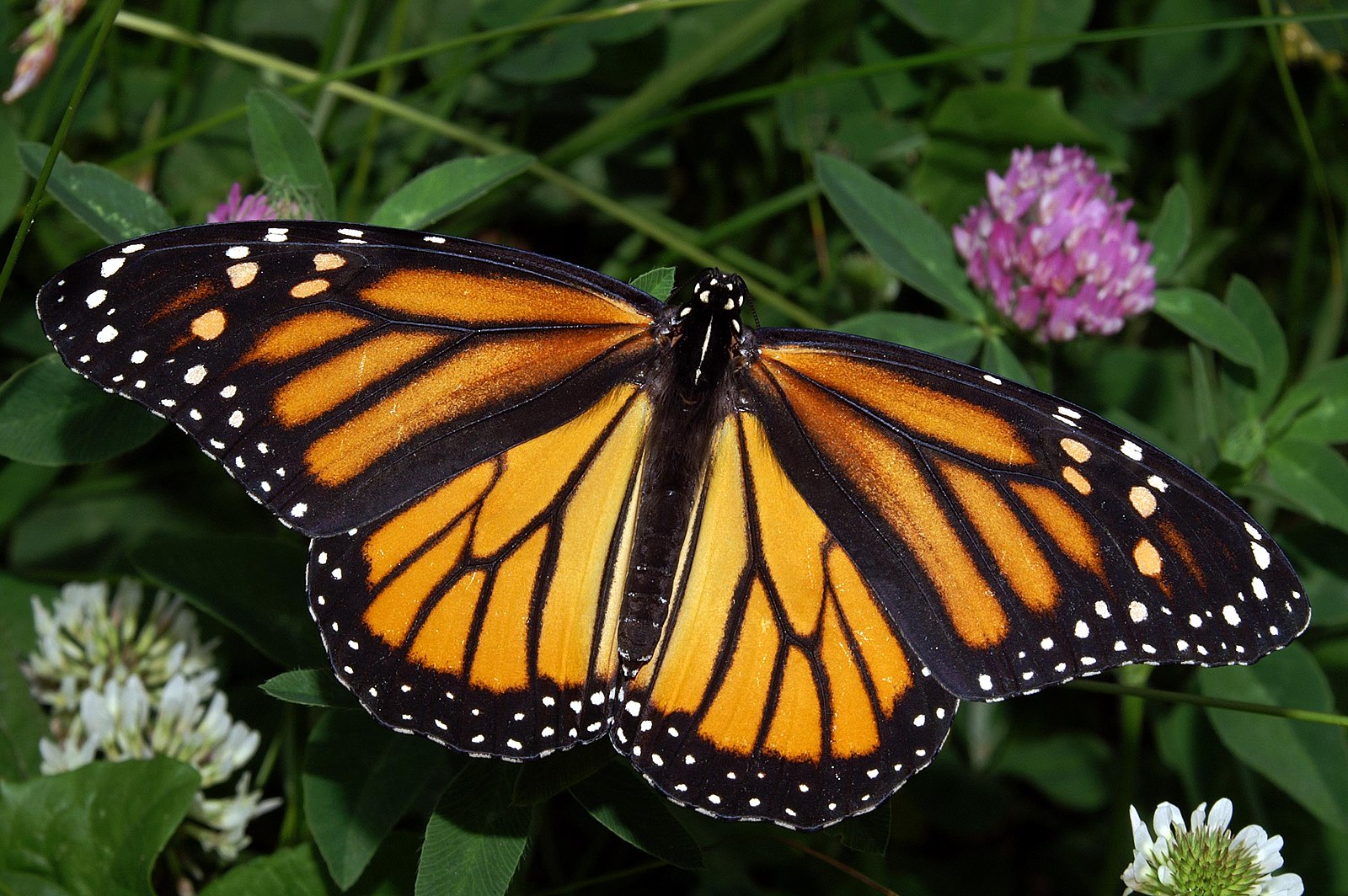
Our house came with a wood-plank fence surrounding the yard.  This is a dog neighborhood and just about everyone has a fenced in yard to keep their dogs in check.  It’s more the birds and bees that have me worried, though.  The fence, which is in need of some attention, is bare pine stained redwood.  As the stain fades carpenter bees find it irresistible.  These insects are great pollinators and we don’t like to gas any creatures just doing their evolutionary job.  Painting that fence will be a summer-long project and one that requires far more sunny weather than we tend to get around these parts.  So we have a fence with several carpenter bee homes.  (These are ubiquitous insects in this area, with lots of people complaining about them.  We have, however, the only wooden fence in the neighborhood.)

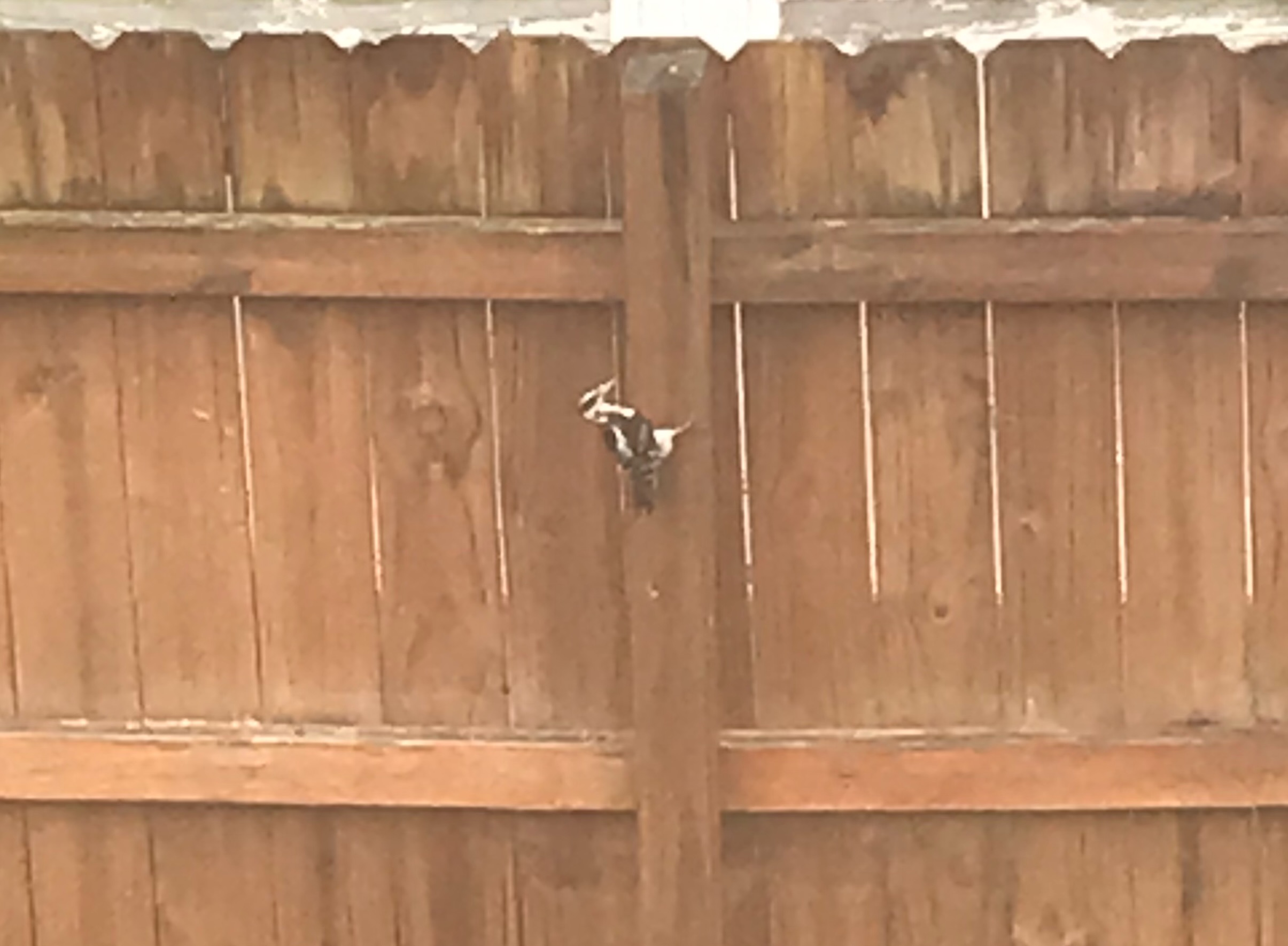
The other day I heard a knocking while I was working.  I looked out the window to see a downy woodpecker, well, pecking at the site of one of the carpenter bee homes.  This industrious little fellow had three holes in the post by the time I got downstairs to startle him or her away.  Now, you have to understand that this is a large fence.  We didn’t put it up but we have to keep it up.  Then I thought, “I was worried about the carpenter bees.  Why should I be worried about the woodpeckers?”  Holes can be patched, and fences can be painted.  I hope the neighbors don’t mind a white fence.  In any case, I left the woodpecker alone after that.  Besides, I can’t be outside all day long—I have a day job.

Over the next several days the pecker became a regular visitor.  I’d be working and then I’d hear a now familiar knocking.  I decided to watch once.  I keep a pair of binoculars in my office because I see lots of birds that I want to identify—there’s a park across the street.  At the risk of the neighbors thinking I was spying, I trained them on Downy.  It was amazing how effective its bill is on a four-by-four.  It quickly cleared a hole, stuck its beak in, and pulled out a fat carpenter bee grub.  Down it went.  A centimeter to the right it repeated the procedure.  Carpenter bees, which are so territorial when building their nests, seem to have forgotten their young.  Perhaps it’s for the best.  This bird was one well-fed flier.  And I’d finally learned what they mean about the birds and the bees.


Ravens and Teachers

Humans, it is claimed, have a theory of mind.  What this means is that we know what others are thinking, or better, at least we can anticipate what they might be thinking.  This allows us to be self-aware and live in a complex society.  We can see someone else and infer what’s going on in his or her noggin.  This is often considered a uniquely human trait, but I’m not sure how widespread it is.  You see, I frequently run into the situation where someone expects something of me without telling me.  It happened just recently with an organization to which I belong.  I’m a very busy person.  I suspect most of us are—not having time to accomplish everything we need to get done.  If someone wants something from me I have to be told what it is and I have to be told in detail.

One of the things my students always said was that I was a good teacher.  The reason for this, I think, is that when I explain something I back up a bit before the beginning.  I try to assume no knowledge on the subject before going in a bit more deeply.  This method works because of my personal theory of mind.  These people wouldn’t be taking a class on this subject if they already knew the stuff I could assume.  For understanding something new, things have to be explained thoroughly.  That doesn’t mean taking a lot of extra time, but it does mean not assuming others know what I know.  For many people this is difficult.  We’re all busy.  We tell others “Do this,” without explaining what exactly “this” is.  The results are predictable.  It happens all the time in work emails.

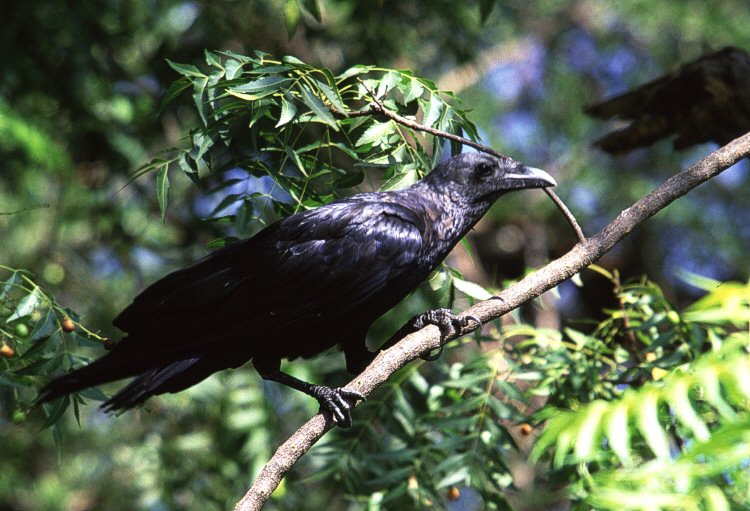
I’ve recently written of teachers and ravens.  The effective among the former understand the value of full explanation.  The latter have a theory of mind that allows them to go as far as to try to fool others by giving not enough information.  We might learn a lesson either by sitting in the classroom of the former or by watching the ravens that skulk on the edge of civilized areas.  What they have in common is the ability to realize that others operate with limited information.  In order to learn, information has to be conveyed and conveyed well.  Even now colleagues at work are surprised at when I explain something that it’s done thoroughly and clearly.  When I receive information it’s often piecemeal and frustrating.  The reason, I infer, is that we don’t spend enough time paying attention to either our teachers or the ravens.

Image credit: Wikipedia Commons, public domain

Following Instinct

An article from the Christian Science Monitor a few years back made me think how common knowledge runs ahead of science, but without the rigorous evidence.  The article is “Ravens might possess a Theory of Mind, say scientists.”  Of course they do.  The ravens, that is.  So do many other animals.  It’s pretty obvious when watching them interact on a daily basis.  We’ve over-flogged the idea of “instinct,” using it as a way of preserving the biblically-inspired idea that people are separate from animals.  We can be an arrogant species.  We say we get to determine when other species are intelligent or not.  When they do something smart we say, “That’s just instinct.”  Is it?  How do we know that?  And isn’t “instinct” one of the greatest fudge factors ever invented?

We do not know what consciousness is.  We claim it for ourselves and a few of our favorite animals only.  The ravens in the article show by their behavior that they know, or assume they know, what others are thinking.  I’m always struck how experiments set up to measure this assume a human frame of reference.  Paint a spot on an animal and place it in front of a mirror.  If it shows curiosity about the spot it has a self-awareness, a theory of mind.  Maybe other species aren’t as concerned about zits as we are.  Maybe they consider it vain to fawn over themselves.  Maybe they use sight in coordination with scent and hearing to identify themselves.  No matter what, at the end of the day we must say how our intelligence is superior.  (Then we go and elect Trump.)

Need I say more?

Scientists have to be skeptical—that is their job.  Looking for evidence and coming up with hypotheses and theories and whatnot.  That’s how the scientific method works.  The scientific method, however, isn’t the only way of knowing things.  We learn and animals learn.  We like to think our “theory of mind” makes us unique, but watching how animals interact with each other, even when they don’t know someone else is watching them, shows more sophistication than we normally allow.  Nobody has to be convinced that the corvids are intelligent birds.  Their lives are different from the nervous little finches and wrens, however.  Does that mean wrens and finches have less developed minds?  I think not.  Until we learn how to think like animals we have no business claiming that they have no theory of mind.  Maybe if we could define consciousness we might have a claim.  Right now, though, all we have are instincts to go on.


Smaller Wolves

It was in Maine.  In 1987.  I can’t remember how Paul and I found this place to camp.  I don’t remember making reservations, but we drove along in his 1968 VW Beetle, unpacked a tent along a  rutted logging road, and set up camp for the night.  We were there to try to find moose.  In the middle of the night we were awakened by howling in the woods.  We were many miles from any other humans and nobody knew where we were.  Were there wolves in these woods?  Paul turned to me.  “Wolves don’t attack people, do they?” he asked.  I said no.  He pulled out a very large knife.  “I was in the civil air patrol,” he explained.  “You know what to do with this, right?  If a wolf bites your arm, cut your arm off and run away.” Not the best advice.  As we drifted off to sleep we were awoken again by furious sniffing outside the tent.  The next morning we saw no moose but found tracks all around our temporary home.  We convinced ourselves they were wolf tracks.  They were actually tracks of coyotes.

Most people in America have a coyote story to tell.  I can’t recall how I learned about Dan Flores’ Coyote America: A Natural and Supernatural History.  I’ve always been drawn to nature writing, but it was probably the “supernatural” that caught my attention.  This is a fascinating book with a rollercoaster ride through emotional responses.  Flores makes the case that Coyote was the first god of America.  Indian mythology is full of this character and his antics.  But the heart of the book focuses on the many decades of efforts—still ongoing—of the government to eradicate coyotes.  Millions of them have been killed for spurious reasons, largely because the government pays attention to ranchers who pay a lot of money to be minded.  Coyotes naturally find their balance in nature, which we insist on disrupting.  One of their survival strategies has been to move east.  Even moving into cities.

I’ve heard coyotes in Wisconsin, and I saw at least one while out jogging in the early mornings there.  Since moving east I’ve not spotted any, but they are, I know, here.  I’m largely on the side of nature, but the first ever documented adult human wolf fatality took place in another place I’ve camped, Cape Breton Highlands National Park in Nova Scotia, in 2009.  Reading this made my human pride rear up—we don’t face predators well.  The book goes on to touch on how I, and many others my age, learned of coyotes—through Wile E. in animated form.  This book is difficult to read in many parts, but it is an absolutely mesmerizing journey through many lenses of what it means to be American.  Whether you’re canine, or human.


Normal Paranormal

One of my favorite televisions shows of all time is The X-Files.  I didn’t watch it when it originally aired, but eventually got a hankering to see it on DVD.  There are many reasons to like it, including its originality and the dynamics between Mulder and Scully and the sense that governments really do hide things.  As I rewatch episodes I see how much religion plays into it as well.  This post is actually not about the X-Files proper, but about a place in Bethlehem I recently discovered.  I’m not a preachy vegan, but I do like to support the establishments who make such lifestyles as mine much easier.  It was thus that I discovered Paranormal Pizza in Bethlehem.  I wondered about the name, figuring that it was paranormal that you could have non-dairy, non-meat pizza at all.

To celebrate Earth Day we decided to check it out.  The menu has a set of fixed items, each named after an X-Files character.  I was glad to see that I’m not alone in my appreciation of the show.  The pizza’s very good, and I’m sure the college-age crowd that was there would agree with me.  I did wonder how many of them knew the X-Files.  Is it still a thing?  Maybe recent government disclosures have brought it back into the public eye.  Hey, I’m a Bible editor, about as far from the public eye as you can possibly get.  Vegan pizza on Earth Day, however, just felt right.

Foodiness seems to be trending.  A great many options are available in the land of plenty.  Still, I know that vegetarians and vegans in developing countries exist, and many of them for similar reasons to me.  They know animals think and feel.  We promote the myth that they don’t so that we don’t have to feel guilty about exploiting them.  It seems to me that many of our world-wide problems would start to vanish if we realized we can evolve out of being predators.  Cashews and almonds can become cheese.  Soy beans and wheat can become meat.  And peanuts are about the best food ever, in any form.  Then there’s the natural fruits and veg.  Industrial animal farming is perhaps the largest polluter of our planet.  Yesterday was Earth Day.  I was eating a pizza made from wheat, tomatoes, and cashews.  These ingredients might seem a bit unusual.  Paranormal, even.  But that’s precisely the point.  I won’t be waiting until the next Earth Day to go back for more.


A Bird’s Life

Among the early signs of spring are birds.  Cold and silent, winter mornings have their own form of beauty, but hearing the birds is cause for hope.  The bird world looks cheerful and peaceable but it is a competitive and often harsh place.  My office window looks out onto a porch roof and a stand of trees across the street.  Electric wires constitute a part of the scene as well, giving birds plenty of places to alight and negotiate their bird business.  Like humans, birds are vulnerable, particularly when they’re young.  While teaching at Nashotah House, walking home from chapel one morning after a thunderstorm, I found a baby bird, not yet fully fledged, dying on the sidewalk.  I glanced up and couldn’t see any nests.  I’m not much of climber anyway.  Not knowing what to do I scooped it up and took it home where I could put it in a box.

I didn’t have an early class that day so I called a wildlife rescue center.  Being the days before the internet took over, this was a matter of looking it up in the yellow pages.  We piled the family in the car and drove it down.  They’d told me to keep it warm and try to comfort it.  My daughter held it.  Once we got there they said they weren’t sure if it would survive.  It was weak and chilled, but they would do what they could to revive it.  For several days we all worried about that hatchling.  I thought it might’ve been a finch because of the beak, but otherwise we knew little about it.  Several weeks later the rescue center called.  Our rescue was ready to be released—did we want to do it?

They handed us a brown grocery bag that weighed next to nothing.  “Open it when you’re outside near where you found it,” they said.  Back on campus we opened the bag and our foundling flew off so fast we could barely see it.  Adult birds, confident and socialized, seem more sure of themselves.  They perch out in the open even though hawks scan the area, and even the occasional eagle.  They go about their bird business with a confidence I sometimes envy.  They don’t worry about a 925.  They know what nature’s about.  They may have survived a near-fatal childhood.  They may have pushed siblings out of the nest to have thrived.  They peck and flap at each other in their efforts to mate.  And, above all, they carry spring on their wings.


Raven about this Book

Some books are meant to be looked at.  Being busy most of the time, even on weekends, I’m guilty of not enjoying art enough.  The Book of the Raven: Corvids in Art and Legend is a work of art.  In it Caroline Roberts and Angus Hyland have compiled paintings, photographs, and prints that feature ravens, crows, magpies, and jays, interspersed with facts, poems, excerpts, and bits of lore.  It’s not a comprehensive book, nor is it intended to be.  It is, however, a deeply moving book for a certain kind of person.  It was an accidental find in a visit to The Book & Puppet Company in Easton.  When we’re in town we like to support the independent bookstores.  (I was saddened to discover that Delaware River Books, one of the two used bookstores in town, had recently closed.)

Corvids are, on a scale, about as intelligent as we are.  They think, solve problems, make tools, and recognize human faces.  They remember acts of kindness and reciprocate.  They recognize their dead and they also play.  They’re very much like us.  The book includes, of course, Poe’s “The Raven,” but also other poems that draw inspiration from these smart, magnificent birds.  The artwork is arresting.  One of the great sins of modern life is its busyness that robs us of the time for appreciating art.  And reading.  Learning how to thrive in a world that has become purely about profit and ownership.  Art is intended to be shared.  An artist produces so that others might see.  A author writes so that others might read.  And corvids exist to bring wonder into our lives.

I find the strident call of jays comforting.  I often hear them even on my winter walks.  There are murders of crows in the neighborhood from time to time.  They gather on roofs and in the trees across the street.  Recently I spied a large black bird while on my daily constitutional.  It had left a tree full of crows and was flying straight down the path toward me.  As it flew overhead I had a good look at its tail in flight—one of the best ways to tell a raven from a crow.  It was indeed a raven, and even common ravens are rare in this area.  We live on the edge of their habitat.   I was honored by its momentary attention.  I wished I had more time, perhaps to follow that magnificent corvid and to learn from it.  Instead, I will ponder The Book of the Raven with wonder.


Leathers

It’s an occupational hazard for the vegan Bible editor.  Leather.  Leather Bibles, although expensive, are popular.  If you want free fetishistic deliveries of colored leather to arrive at your door, well, it’s part of a Bible editor’s life.  Morally I’m opposed to leather and I eagerly await the day when cactus leather is considered a suitable alternative.  Leather began being used in bookbinding early on, when books were treasured possessions.  It was readily available because animal slaughter was a part of everyday life.  It’s also extremely durable.  These days it’s just a status symbol.  When Bibles are produced there’s generally a market for whatever translation in leather.  In my time I’ve seen some well enough used to perhaps justify such extravagance, but not very often.  Usually it’s merely for show.

There’s an entire vocabulary associated with leather bookbinding.  Tooling, or engraving the smooth leather to look like something else, embossing, or pressing a design in the leather, gilding, or the use of gold paint on leather, and dentelle, or having a border run around the outside edge.  All of these were (and still are) signs of the artistry of the binder.  The practice dates back to before the nineteenth century when books were bound by booksellers, not publishers.  Perhaps this is why we shouldn’t judge a book by its cover.  In any case, apart from tradition there’s no need to kill animals to bind books any more.  Law books and Bibles are the major purveyors of leather binding.  It continues simply because it continues.

One term used for traditions unwilling to change is “hidebound.”  While this seems originally to have referred to emaciated cattle, it has come to be associated with codified, as in leather books.  Pigskin, or other cheaper hides, are often used.  Or “bonded leather,” which is as much plastic (if not more) than actual leather.  The Bible isn’t a terribly animal-friendly book.  Dogs are unclean and cats aren’t mentioned at all (except the large, wild kinds).  Yes, there are shepherds—both good and bad—but sheep were kept to be exploited.  And perhaps turned into leather.  There’s something strangely symbolic about this.  And not in a propitious way.  Where does obeying the rules get you?  Sheep are praised for their docility, their willingness to be thoughtlessly exploited, slaughtered, skinned, and eaten.  To do the job, a Bible editor must learn about leather.  Perhaps its a profession best left to carnivores.


Lenten Friday

I thought something was on fire when I first saw it.  A plume of black smoke rising against a backdrop of lowering, sullen clouds in a late winter sky.  Then I remembered that there’s a pet crematorium in that part of town.  I was witnessing the end, the smudged spirit of someone’s departed companion.  It made me reflective.  We currently have no pets.  (We can barely afford keeping ourselves going without adding another mouth to feed.)  Having grown up with a variety of animals–dogs, cats, birds, fish, turtles, guinea pigs—and having kept fish, a bird, and a couple hermit crabs for our daughter, I know the connections we make with our animal kin.  They teach children about death.  And they have the capacity to make all of us reflect on what it means to be alive.

I’ve buried my share of pets, but I have no idea what happened to the larger ones.  The cats.  The dogs.  It was pretty obvious when a dog died.  The cats, which were outside pets, tended simply to disappear.  There were no dog grave markers and I still have no clue what the grown ups did with the carcasses.  I once visited a pet cemetery; it was an oddly moving place.  Although we’re taught theologically that animals don’t have souls, it feels like part of ours dies when they go.  That strange teaching is courtesy of the Bible and it manages to hold sway in both science and religion.  And so another puff of black smoke rises from down the block.

Religion has a tremendous influence on us, whether we’re personally religious or not.  Since humans have always eaten animals, it’s likely that the earliest religions helped to assuage the guilt of killing something that so obviously has feelings and thoughts and could, in other circumstances, have been us.  When monotheism came in there was a great reduction in souls.  Humans alone made in God’s image learned to dominate other animals.  Today we have feedlots that are animal Hells while we pat Fido on the head and mourn his passing.  I somehow doubt that we’ll ever find ourselves back in the natural world.  We’ll likely go extinct before that happens.  Until that day, however, some of our saddest memories will be from when our beloved companions pre-decease us.  You can never be certain which way your thoughts might turn when lowering, sullen clouds fill a late winter sky.


Getting Your Goat

I have to confess to having known very little about goats.  Although one book does not an expert make, I still feel that I know quite a bit more now than when I started Sue Weaver’s masterful The Goat: A Natural and Cultural History.  I can’t convey it all to you here (that’s what the book is for), but I can offer a few highlights.  I do have to say that books that measure animals by the human exploitation of them tend to bother me a bit.  There’s something about reading how they make good pets but then they taste good too.  Especially since one of the takeaways is just how intelligent goats are.  I suspect even smart animals wouldn’t hang around if they knew their owners were licking their chops behind their backs.

Goats were very early among the domesticated species.  People do keep some breeds as pets, kind of like herbivorous dogs.  Goats require stimulation and tend to be playful and curious.  And they put up with humans quite well.  They climb.  You can find goats in trees in some locations since they do like to ascend whatever they can.  I remember seeing goats on the roof of a restaurant in Wisconsin (I can’t remember the name of the place, but I do recall the goats were supposed to be there).  Having not grown up on a farm I’ve never been too close to goats, but this book does make me interested in knowing more.

The book is heavily illustrated and it describes several varieties of goats as well as general goat physiology and behavior.  In fact, it answers that age-old question of how to tell the sheep from the goats.  Behaviorally they’re quite different, with goats being more individually minded and not always acting as a herd.  More individualistic, they nevertheless crave company.  And it is this difference between the sheep and the goats that starts to give the latter a bad name, perhaps because of their willfulness and individuality.  Goats are good followers, but on their own terms.  Sheep apparently don’t think much about it.  They follow any leader.  Historically, and unfortunately still, in some locations, goats have been preferred sacrificial animals.  Indeed, some gods, such as Pan, are portrayed with caprid qualities.  It is the intelligent, it seems, that are often targeted by the gods.  In any case, goats have long had associations with the divine in human minds.  And Weaver’s book parses goats in great detail.


A Little Fuzzy

Animals don’t obey the law.  As I observed just a few days ago on this blog, they don’t recognize indoors or outdoors.  And they certainly don’t respect private property.  Conflicts are sure to arise.  Mary Roach turns her impressive writing skills to address this, and related issues in Fuzz: When Nature Breaks the Law.  I’ve read an academic book on this subject as well, and I have to say that one wasn’t as much fun.  Roach has a way of bringing the humor out of even potentially trying subjects such as how do we scare carrion birds away from human corpses?  How do we eliminate pests that we’ve accidentally introduced?  (Think of rabbits in Oceania.)  How do we stop birds from getting sucked into jet engines?

Although the book handles these with a light touch, as with most of Roach’s work, it also raises some serious issues.  Solutions to introduced species can involve poisoning that also kills native species it’s designed to protect.  Genetic engineering may have (likely will have) unforeseen effects.  What is a dominating species to do?  We have laws about ownership, after all, and we expect them to be obeyed.  Squirrels, for example, won’t care that you just had to have a sink replaced at great expense.  They’ll gnaw their way in anyway, creating a new crisis right on top of the old one.  Deer cross highways, their brains not yet evolved enough to interpret what a car is—they’ve only been around for just over a century.  (The cars, not the deer.)  They sometimes cross runways too.  (The deer.)  We like animals well enough in the wild— in fact we long to see them.  When they get into our space, however, our rules don’t apply.

As long ago as the Bible, and perhaps before, the question arose of punishing animals.  If your ox gores someone what should you do with it?  I’m not sure Homo sapiens are the best species to be making such decisions.  We’ve shown colossal poor judgment (think of Trump and try to disagree).  We’re actively destroying our own environment, the terrestrial equivalent of defecating in our own fishbowl.  What gives us the right to punish other creatures who are more in tune with what nature tells them to do?  Perhaps the biggest takeaway from all of this is that we may try to make the rules, but the rest of the planet responds to what we might call a higher power.  I’m glad that writers like Mary Roach can show the fun side of it all.