Thinking Big

Depending on who you are the Bigelow Institute for Consciousness Studies (BICS) may set your eyeballs to rolling.  You might know that extremely wealthy Robert T. Bigelow made his fortune as a hotelier and then began investing his money in aerospace technology.  He publicly admits to believing that aliens are already among us, and has contributed to advances in space travel components.  (It seems that many of the uber-wealthy are looking for a way off this planet at the moment.)  Not an academic, Bigelow is keen to admit his interest in what is often laughingly labeled the “paranormal.”  If you’ve got money you really don’t need to worry about what other people say.  I recently ran across an announcement regarding the winners of a BICS essay contest regarding the survival of consciousness after death.

As I’ve noted before on this blog, the paranormal and religion are close kin.  Nevertheless it does me good to see that so many people with doctorates (both medical and of philosophy) entered the contest.  I’m glad to see not everyone is buying the materialist narrative.  We’ve been so misguided by Occam’s razor that we can’t see reality is more complex than they teach us in school.  Churches may not be doing it for us any more, but it does seem that “there’s something out there.”  With a top prize of a half-a-million dollars, there was certainly a lot of interest in this enterprise.  If you go to the website you can download the winning papers.

Consciousness remains one of the great unexplaineds of science.  Answers such as “it’s a by-product of electro-chemical activity in the brain” don’t mesh with our actual experience of it.  Indeed, we deny consciousness to animals because our scientific establishment grew out of a biblically based worldview.  Even a century-and-a-half of knowing that we evolved hasn’t displaced the Bible’s idea that we are somehow special.  Looking out my window at birds it’s pretty clear that they’re thinking, solving problems.  Dogs clearly know when they’re pretending, as in a tug-of-war with its weak owner.  We don’t like to share, however.  Being in the midst of my own book project I really haven’t had time to read the essays yet.  I do hope they come out in book form, even though they’re now available for free.  I still seem to be able to carve out time for a book, which is something I consciously do.  I’m not convinced by the materialist creed, although I’ve been tempted by it now and again.  I like to think that if I had money I’d spend it trying to sort out the bigger issues of life, no matter what people call them.


Global Swarming

It’s a veritable horror trope.  The swarm, that is.  We fear being overwhelmed by vast numbers of apparently innocuous insects or arachnids, although they are much smaller than us.  It’s their logistical superiority, and perhaps their utter disregard of personal space.  Summer at Nashotah House was the time of the earwigs.  They came out in such numbers that no room in the house was safe from them.  There was a horror element to pulling your toothbrush out of the holder only to find one hanging onto the place you were about to put your fingers.  Or opening the refrigerator to find that one had crawled into the butter.  Any time you picked something up you might find an earwig under it.  They would crawl up the walls and across the ceiling.  Other places on campus would be overrun with ladybugs or black flies.  It was in the woods, after all.

Most places we’ve lived since then have had their native bug that gets in, often in numbers.  Our current nemesis is the box elder bug.  Although harmless, it is a true bug in every sense of the word.  I’m Buddhist in my desire not to kill and there are too many to catch and take them back outside.  Fortunately they’re pretty localized—they like my study, probably because its southern exposure means it gets sunshine even into December.  We’ve had some cold days but November has been experiencing global warming and the box elder bugs, clueless, wander all over the place.  Most of them are near the end of their life and die after poking around for a few days.  Others are quite frisky.  Some remind me of horror movies from the fifties.

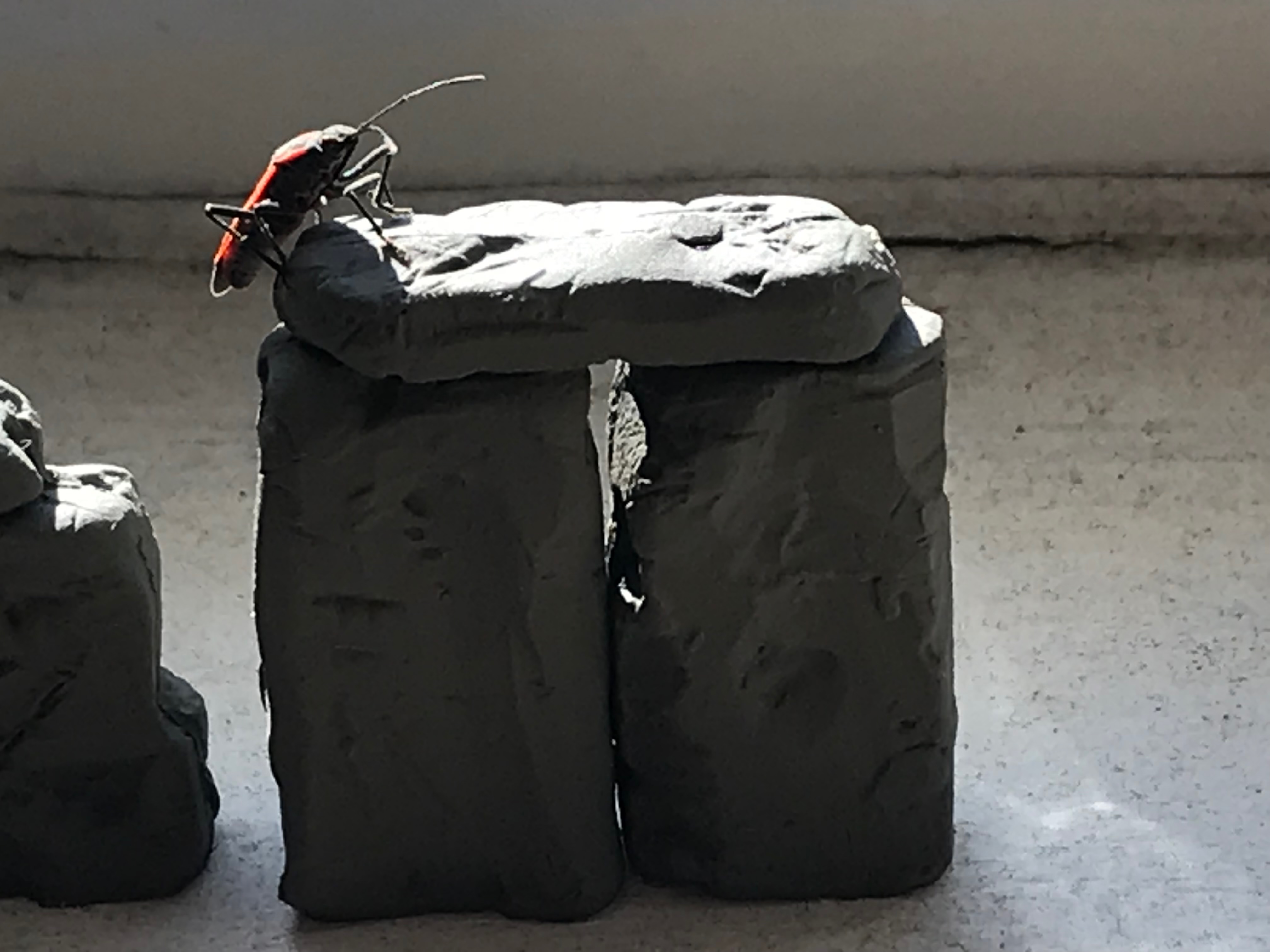
I have one of those desk set Stonehenge models.  I don’t have the space to set it up fully, and the die for the model was obviously done with poorly sculpted clay, so it takes some imagination to think the trilithons resemble those of the actual site.  When I noticed a box elder bug crawling over one, however, it took me back to Tarantula and other such films where the menace wasn’t just a little old bug, but a huge one.  Our monsters these days have shrunk, however, and fear comes in small packages.  Box elder bugs are harmless but annoying.  Of course, they’re still out this year because we’ve warmed the place up for them and even in November they, well, swarm.


Religious Dinosaurs

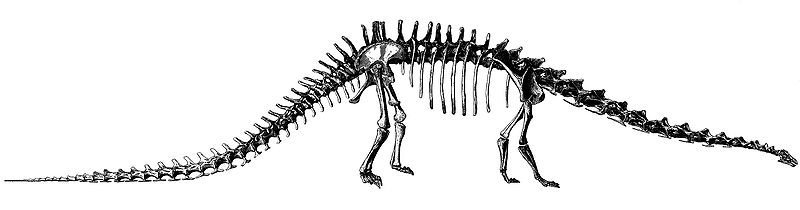
Dippy is, apparently, a common name for pet diplodocuses.  The statue of a diplodocus outside the Carnegie Museum in Pittsburgh is fondly known as “Dippy,” as is the fossilized remains of one such dinosaur from London’s Natural History Museum.  The London Dippy is on tour, or at least has been.  I learned about the fact that Dippy was in Norwich Cathedral just a day or so after the exhibit closed (I wouldn’t have been able to make it in any case; I mean I haven’t been able to get to the Pittsburgh Dippy and I live in the same state).  There are still plenty of photos on the cathedral’s website.  It’s a striking juxtaposition.  A massive stone building constructed to a medieval conception of God and one of the best examples of evolution, far older than the church on several orders of magnitude, peacefully coexisting.

John Bell Hatcher, public domain, via Wikimedia Commons

American evangelicalism has a much harder time accepting science.  I’ve been writing about change recently.  One of the changes in western thinking has been to move from the “I told you so” of clerics to the “I can show you evidence” of scientists.  Those who like others to tell them what to think have a difficult time letting go of medieval notions of the world—that it’s flat, and young, and about to end, as if God has a very limited imagination.  We now know that the world has been here far longer than one interpretation of the Bible posits, but that doesn’t make it any easier to have a conversation about it.  Many religions want to claim knowledge that can’t be questioned.  And yet, dinosaurs and cathedrals seem to mix well.

The assumption that those who think differently are evil, or are inspired by evil, is one of the most insidious children of monotheism.  With one God comes the idea of only one way to understand that deity and all other interpretations come from that divinity’s arch-enemy.  It’s a view of the world that struggles with change.  Historians, even those of us who focus on the history of religions, tend to take a long view. It’s possible to trace the development of ideas that have lead to the strange juxtapositions of our modern world.  Apologists so convinced of their interpretation of Genesis that they think the Bible wouldn’t have found dinosaurs worth remarking about, for example, and then cramming them on the ark.  Others, it seems, welcome dinosaurs into cathedrals.  Which is a better way to be humble before God?


Walking Bear

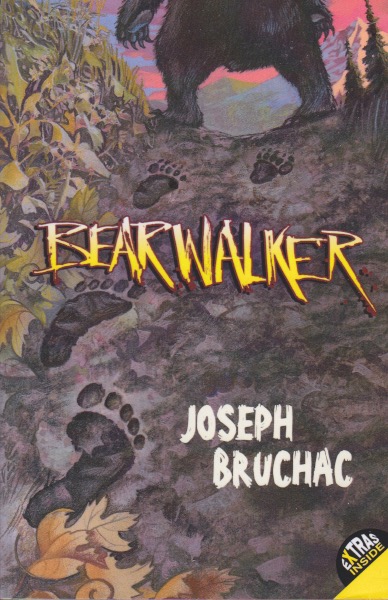
Indigenous peoples have been on my mind over the past several months.  Indeed, I read books by American Indian authors with awe.  In this darkening time of the year the Indian monsters join those of European descent in my imagination.  The wendigo has become somewhat popular in recent years but the bearwalk, or bearwalker, remains obscure.  Although a novel for young readers, Joseph Bruchac’s Bearwalker is a genuine horror story and the author is of American Indian descent.  It took someone giving it to me as a present (mainly because it was for young readers) to get me to pick it up.  I’m glad I did.

As might be expected for young readers there’s some blood but not gratuitous violence.  There are skillful twists in the novel and Bruchac knows how to put his protagonist on a cliff, as the old adage goes, then throw stones at him.  In this case, Baron, a thirteen-year-old Mohawk boy, is tormented by the bullies at his school.  Befriended by a respected teacher, he attends a three-day camping trip to the Adirondacks where a family dispute has led to a plan to terrorize the camp and force its sale.  The plan is to make it the scene of a mass murder with the school children present.  It’s here that Baron is able to demonstrate his worth to his classmates by escaping from the would-be killers and bringing help.

Throughout the story bears feature.  There’s some question as to whether there is a real bearwalker present, but the idea is there.  As with literature for young readers there’s some protective layering—no sex or strong language, for instance—but violence, at least in intent, is clearly there.  It is a very good story with suspense and excitement enough to keep even an adult horror fan going.  The main reason I’d had my eye on the book was to learn how the bearwalker might appear in it.  And also to see the story told from a First Nations’ point of view.  Like Baron in the story, American Indians I read aren’t aggressively angry about the way their people have been treated (which they certainly have a right to be).  There’s nevertheless a sadness and inevitability there.  Still, there’s also a pride in being part of an ancient and surviving culture.  There’s also quite a bit of symbolism in the story; Baron’s parents both proudly serve in the military, despite what the nation has done to their people.  And more subtle indications occur here and there that mainly adults would notice.  Although for young readers this is a real horror story, but one with a conscience.


Sky Dwellers

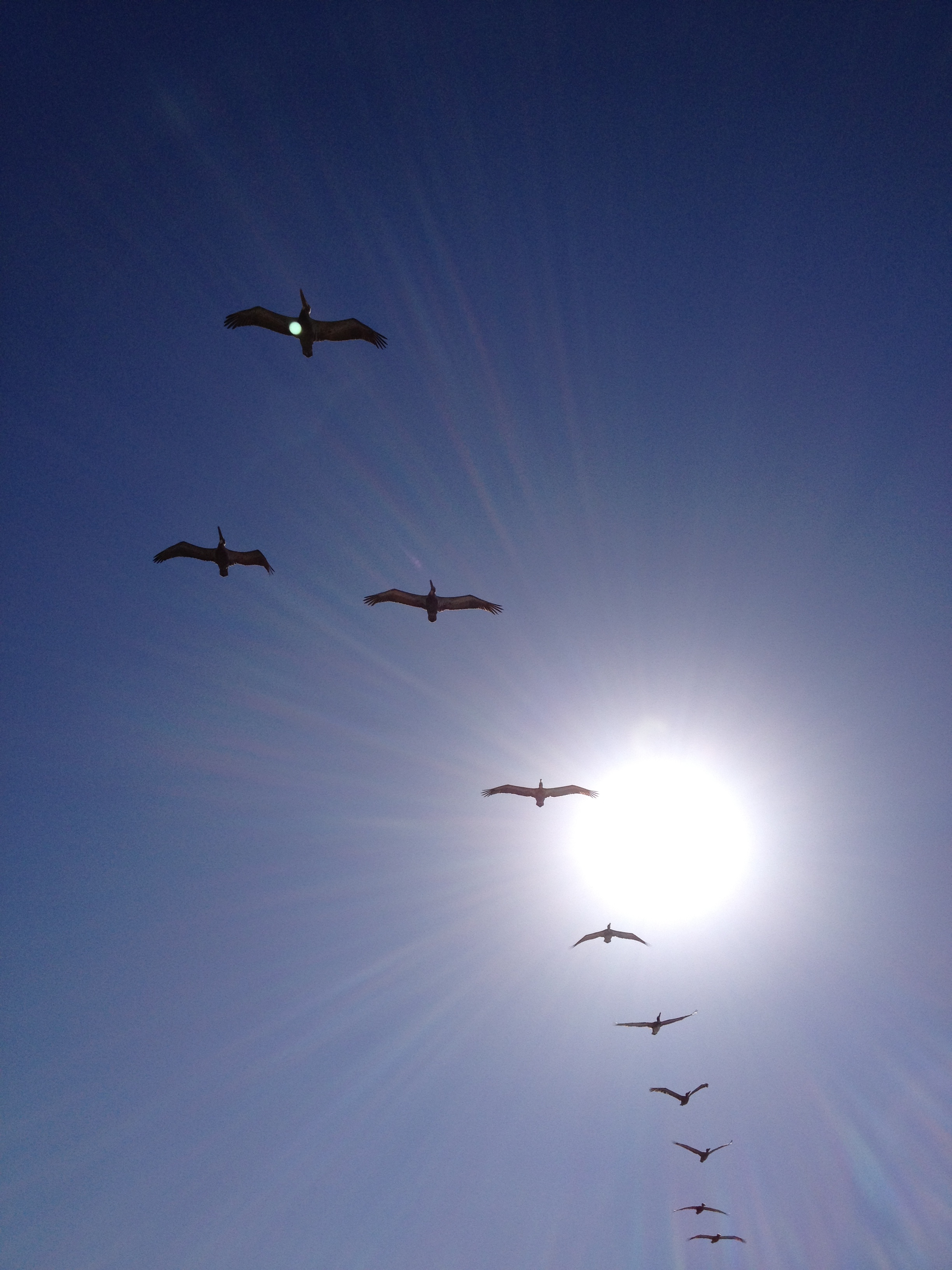
If the atmosphere’s an ocean, we’re all bottom-dwellers.  Ancient peoples populated the sky above with incorporeal beings, starting with a god, or gods, at the top.  Beneath that great being were other, for lack of a better term, spiritual beings.  Angels, etc.  Eventually, the lower you got in the sky, the heavier bodies became until those of us bound to our planet by gravity (for which they had no concept) were pretty much stuck on earth.  Although this may not seem like it, it was an early form of scientific thinking.  Birds fly.  The first thing you notice upon lifting a bird, is how light it is.  (Bird lifting may be rare to those of us in modern times, keeping the wonder intact when we actually encounter it.  I was once handed an owl-hawk or some such raptor, at a street vendor stand at Stratford-upon-Avon.  As the handler slipped the glove on and asked me to hold my hand out, I prepared for like a five-pound bag of flour.  Instead I could barely tell that the bird, larger than a bag of flour, was even there.  “Light, isn’t he?” the vendor asked.)

Back to science.  If birds, which are light, can fly in the air—some at great heights—it must be that sky-dwelling beings are lighter.  Lighter than birds.  In the Middle Ages, in Europe, this proto-scientific thinking was applied to theology.   Monastics and scholastics tried to determine what exactly spiritual bodies were made of.  Keep in mind that their world consisted of a basically flat earth with a very large dome over it.  That dome had layers—the sun and moon lived in one, the stars lived in one, and then spiritual beings all the way up to God (since monotheism reigned by then).  Stories of angels and demons mating with humans circulated.  How was that possible if they were pure spirit?

It stands to reason that clouds also inhabit the skies.  It doesn’t take much of a scientist to associate heavy clouds with rain.  Logic suggests clouds are made of water.  Perhaps then spiritual bodies were some kind of vapor.  Lighter than air they inhabited realms far above the clouds.  They descend by gaining weight, perhaps like clouds.  These otherwise ethereal beings would be unknown to us, they dwell so high.  They have to come down to deal with us.  There may be realms even lower, but if the atmosphere’s an ocean, early science suggests, we are indeed bottom dwellers.


Insect Inside

It seems a shame we don’t have an accurate name to classify all of them.  Insects, arachnids, and arthropods, I mean.  Those creatures smaller than us that inspire fear.  I suspect I’m not alone in experiencing a profound ill-at-easiness for some time after a close encounter with various of these small creatures.  Some experiences can be sublime, such as the other day when praying mantis on the glass of our front door provided a wonderful opportunity to look at a marvel from a seldom seen angle.  More often, however, the response is one of terror at being outnumbered, out-gunned, or out-run.  Spiders can be speedy as well as scary and I often yield the floor to them.  If I’ve got an empty peanut butter jar handy I try to catch and release, but I’ll look with worry at the spot of the encounter for days.

Photo by Rosie Kerr on Unsplash

Or the flying, stinging things.  Mostly they’re good for the environment and I don’t like to kill anything.  The other day, however, while returning the recycling bin to the garage I failed to notice paper wasps had built a nest (in just a day, since I’d taken the bin out only the afternoon before) above the door.  They were offended that I’d invaded their space—their concept of time is completely off from that of creatures that tend to live decades and want to stay in the same location for years at a time—and decided to attack.  This was a new stinging experience for me.  One flew down and stung my face then quicker than lightning landed on my right hand and bit again.  Its poison burned, I can tell you.  I’ve had run-ins with lots of stinging things in my time, but the shock probably added to the hurt.  I couldn’t even get the garage door shut, as previously mentioned.  

The next morning I awoke unsettled.  Houses have cracks and crevices.  They settle over time and critters can find their way in.  I understand.  Everyone needs a home.  But opening a door and being unexpectedly attacked hardly seems fair to me.  I hadn’t even seen the nest.  It’s easy to forget, in this virtual world of pandemic proportions, that we share the planet with a wide variety of others.  The large predators are mostly gone.  The countless small ones are still here, however, and many of them enjoy the way we’ve warmed the place up for them.  I have a feeling that when we finally outlive our welcome on our home, the insects, arachnids, and arthropods will be glad to stick around.


Like a Hurricane

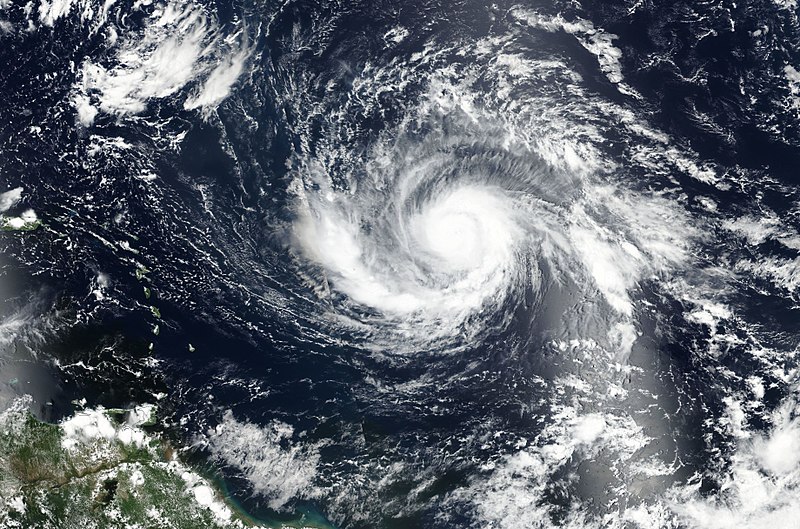
Around here we welcomed September in with the remains of Hurricane Ida.  For the second summer in a row, far inland, we’ve sustained hurricane damage.  For storms like this it’s not so much a question of if there will be damage, but rather “how much?”  It was complicated by the paper wasps.  It’s like a 1970s natural disaster movie.  It starts at the end of August.

I was going out to put the recycling bin away (more on this later).  When I opened the garage door I was stung three times by a paper wasp (or maybe two)—twice on the face and once on a finger.  The previous day when I’d taken the bin out there hadn’t been a nest, but 24 hours later, angry waspids were protecting their territory.  I couldn’t even get the door closed.  We don’t have any bug-killing spray on hand since we believe in live and let live.  But I do need to get into the garage.  Due to my weekly schedule I couldn’t get to the hardware store before Friday.  Fine, let the Hymenoptera have the garage.

The next day—actually later that day—Ida began to arrive.  We’ve had extensive roof repairs since moving in here.  We’ve had two-thirds of it replaced entirely.  Then the rain started.  The plumber came before it got bad to replace a cast-iron radiator that we had moved so I could repair the drywall behind it.  While doing that I repaired the ceiling where water from ex-Hurricane Isaias leaked through.  The roofer had patched this part after Isaias, so we thought we were good.  By mid-afternoon there was water dripping from the ceiling again and the repairs I had made crumbled into the bucket set there to catch the water.  So it goes.  Outside the street was closed due to flooding.  I couldn’t get into the garage to check for damage because, you know, wasps guarded the only door (still open).

It used to be that weather was a neutral topic to discuss.  Of course, it’s become politicized now.  Having a climate-change denier in the White House for four years made the topic dangerous to raise.  This area used to never get hit too badly by hurricanes.  Global warming, however, has changed everything.  I got up the morning after wondering where to start.  It was still dark and a cricket had come inside to get out of the weather.  It chirped as I came down stairs.  Everything will be all right.

Our unofficial rain gauge

Friendly Food

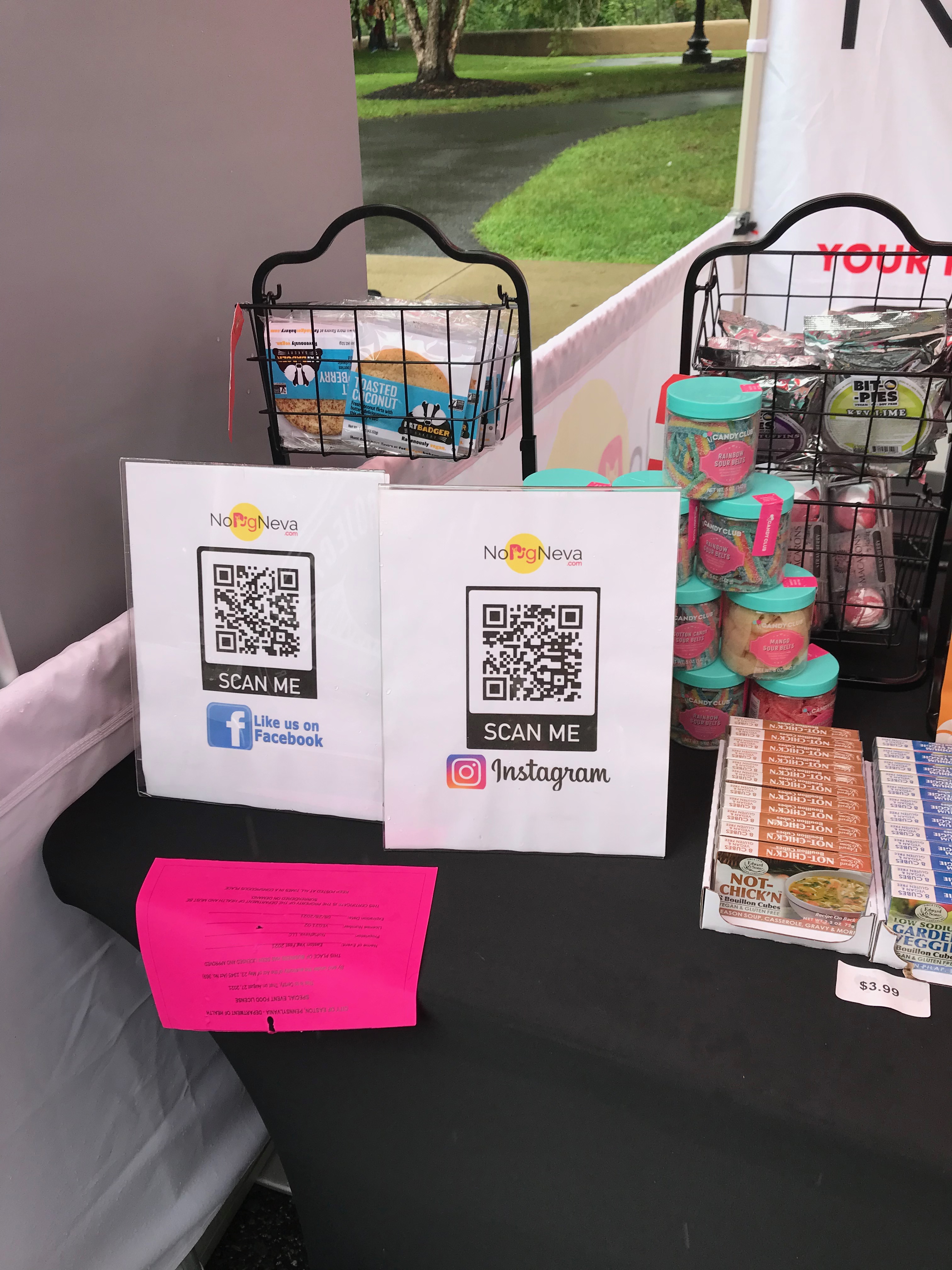
The rain felt like relief after the most recent heat wave.  We’d long planned to attend the Easton VegFest regardless.  Summer is the season for street festivals and it’s always a strange kind of affirmation to find one dedicated to vegans.  And to see so many people at it.  The cities of the Lehigh Valley have quite a few animal-friendly options for eating, and although the VegFest isn’t huge it’s a good place to find others who realize that our food choices matter.  So it was that we came upon the booth for NoPigNeva.  Now, if you’ve ever tried to shop for vegan food—I know there must be a few of you out there—you know how catch-as-catch-can it is.  Around here lots of grocery stores carry vegan items, but what you’re looking for may not be there.  Even WholeFoods in Allentown has a limited selection.

NoPigNeva is a supply company run by black women.  It supports worthy causes.  And it makes finding what you’re looking for essentially one-stop.  I’m no businessman, but I do wonder why, when they keep selling out of vegan stock, stores don’t get their orders refilled right away.  It’s almost as if we don’t want to believe people will buy it.  Vegan food has come a long way even in just the last five years.  I know that when I became a vegetarian almost two decades ago now I felt there was no way to get enough to eat as a vegan.  Options seemed so limited.  That’s no longer the case.  I’m guessing the success of the Impossible Whopper caught everyone (except consumers) by surprise.  Even now, if you order one (hold the mayo, please) you’re pretty much guaranteed it won’t have been sitting on the warming shelf.

There’s big money in the food industry.  I’m not a foodie, although it’s become fashionable to be one.  I do, however, think about whether my food is causing harm.  There is, I realize, no way not to impact the environment or other living creatures when eating.  Lessening that impact, however, and supporting historically oppressed groups feels good.  There is a morality to mastication.  Most animals, it seems, have evolved a fear of being eaten.  Perhaps we’re only starting to understand that breaking chains might have to begin with us.  Any industry (big agriculture) that tries to make it illegal to see where your food comes from is hardly to be trusted.  I trust more those willing to come to a street fair on a rainy Saturday afternoon to show that there is a better way.


Being Prey

Since we’ve thought our way to the top of the food chain, I suspect we’ve forgotten what it’s like to be prey.  All our top predators are pretty much under control—so much so that when a lion, tiger, or bear kills a person it makes the news.  Even sharks are in decline.  This thought comes to me while on my morning constitutional I spy with my old eye young rabbits.  Lots and lots of rabbits.  During the summer they appear in such profusion that I suspect most of us don’t stop to look at them any more.  We don’t really eat them any more (and besides, I’m a vegan), so what use are they too us?  They’re here to be prey animals.

A lot happens in the dark.  I’m an early riser and sometimes I hear the animals cavorting in the night.  Sometimes I find what’s left of a bunny in the back yard—evidence that someone was hungry during the wee hours.  What must it be like to be a food animal?  Rabbits have a reproductive biology that permits a doe to become pregnant before she has born the litter she’s already carrying.  This seems to be evolution’s way of ensuring survival for creatures so often eaten.  Emotional ties between parent and child must be passing at best.  When I see the young out on their own I often wonder how they can care for themselves at such a tender age.  Of course the average lifespan of the eastern cottontail is only 15 months with merely a quarter of the population making it to two years.  After that they may have one more year.  They rarely ever die of old age.  No time for emotional attachment.  Either that or it’s brief but very intense.

We take a fairly long lifespan for granted.  It’s sometimes difficult to realize that for most of human history life expectancy—for those who survived childhood (not many)—was the forties.  For women it was more likely the twenties.  Young couples started families early and kept the kids coming.  We were not exactly prey, but like the rabbits we had to learn to say goodbye too soon.  We’ve thought ourselves to not only the top of the food chain, but to the point of prolonging our lives so much that deaths can be utterly devastating.  I look at the rabbit nibbling the overgrown grass in my backyard and smile.  The only yard nearby without a dog, I like to think they feel safe here, even if just for a little while. From the perspective of prey, every second counts.


Evolving beyond Fear

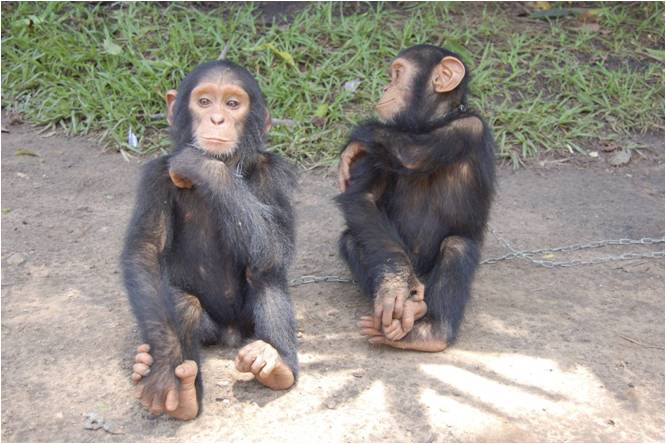
Live Science recently reported on a story that may shed light on human evolutionary behavior.  While my conclusions are speculative, they make sense, given the circumstances.  Titled “Albino chimp baby murdered by its elders days after rare sighting,” the story by Nicoletta Lanese describes how an albino chimp caused a fear reaction among its community shortly after it was born.  A few days later it was killed by the chimps.  Scientists must be careful not to attribute human motive to such attacks, and so they note that this particular community has a tendency toward infanticide, but that doesn’t explain the initial fear reaction.  An individual who was “different” appeared and the response was one of deadly violence.  We’re far from understanding human motivations, let alone those of animals, but it’s difficult not to see this as typical human behavior.

Photo credit: Afrika Expeditionary Force, via Wikimedia Commons

Just because a behavior has evolved doesn’t mean it’s inevitable.  We evolved out of our need for tree dwelling in order to open new potential habitats—an experiment that proved wildly successful.  Can we not evolve out of fear of those who are different?  That seems to be the idea behind recent diversity and inclusion initiatives.  There are those who still resist them, but examine their beliefs and you’ll soon find fear of those who differ.  This atavistic tendency is remarkably close to the chimp behavior in killing an albino.  If we are to remain civilized, we must name such fear for what it is and grow beyond it.  Conservatism is often based in fear.  Fear of change is natural enough, but had our ancestors given in to it we’d still be in the trees.

We need to admit that the lives of those different matter. How long will we allow difference be a reason to fear other human beings?  The story on Live Science is difficult to read.  The chimp behavior is so typically human that we can feel sympathy for the murdered infant and his mother.  Fear, if left unattended, can bring us to this.  The antidote is education.  The more we learn the better we can cope with fear, which is, after all, a natural and necessary response to an evolved world.  Our fear of being prey has caused us to drive extinct most of our natural predators.  The world is hardly a better place for it.  Might not weighing fears and thinking through reasonable solutions be a better coping technique?  Fear can revert a human back into an animal state.  Or it can drive us toward improvement.


Yellow Jacket Redux

Back before what year it was really mattered, I stepped on a yellow jacket nest.  (I know I wrote about this last summer, but there’s a point being made here.)  So traumatic was the ensuing horror scene that I literally did not wear shorts (other than those obligatory for gym class) for at least a decade.  I’m still reluctant to do so.  The south side of our house is the best real estate in town.  For bugs.  After last year’s unfortunate yellow jacket massacre, I went out and patched every hole I could find and reach.  I missed one.  (Actually, it is where previous owners didn’t bother to reattach a porch light after installing a new porch.  The gap was too big to use filler and I was trying to figure out how to do the repair when it got cold out last fall.)  So the jackets are back.  Ironically, not two feet from where they settled last year.

I really don’t want to kill the little buggers.  I have respect for all of life, and if they didn’t regularly get into the house I’d leave them be.  They’re only doing what they evolved to do.  At times it seems like all of life is an experiment presided over by some alien race, curious about what would happen if a few select species were given an intellectual boost.  You see, these yellow jackets are smart.  They’re problem solvers.  When I realized what they were doing—it was already too late—I started going outside at 3 a.m. (I’m awake anyway) and duct-taping the gaps shut.  I did this three days in a row before I realized what would happen if the police drove by.  A guy in a hoodie in the dark, standing next to a window on someone’s back porch with a roll of duct tape in his hand?  How do you explain your way out of that one?

Nature couldn’t have given these yellow jackets a real analog for duct tape wrapping the entry to their home, but each day they came back and buzzed around it contemplatively.  I figured the stickiness of the tape (I could barely get it off my fingers) would dissuade them.  They began digging under it.  Not only that, they began building an exterior entrance tunnel.  Soon they had an even better fortified nest with an easily guarded means of ingress.  Their brains may be small, but working together they can accomplish truly remarkable things.  More so, in many ways, than this human who watches them with fear and reverence.


How You Feel

Image credit: NASA, public domain via Wikimedia Commons

Have you ever had someone tell you how you should feel?  This always feels like an odd thing on the receiving end.  Each of us is born, learns from our experiences, and confronts emotions.  Many people believe that they might improve others’ lives if only others would feel the way they think they should.  Interestingly, and simultaneously, at work and in social settings we’re being told to honor diversity.  We are to respect the feelings of others, no matter how uncomfortable they make us feel.  Who is the guardian of others’ feelings?  Emotions are tricky to figure out.  We can clearly see them at work in animals—the age-old flight or fight response, for example, is based on fear.  Still, based on their own experience and temperament, one animal will run while another in the same circumstances will attack.

Emotions don’t come with an instruction manual.  For a not insignificant outlay of resources you may hire a professional to help you work through them.  Or you might learn to trust your emotions.  They evolved for a reason.  Telling someone else how to feel invalidates their experience.  If they feel frustrated, or lonely, or angry, aren’t those legitimate human responses when neither fight or flight works?  Human societies create great complexities.  Some of us like things the way they were.  Many of us currently alive are only a generation away from people who grew up with horses clopping down the street and now all of life is virtually virtual.  How does that make you feel?  How do you even assess what the right feeling might be?

Advice givers mean well.  Perhaps your emotional state causes them discomfort.  If only you would cope the way that they cope then we could all go home happy.  The lament, however, is a time-honored means of expressing frustration when things just aren’t going your way.  We like to believe that good people prosper and that things work out for them in the end.  We like to believe lots of things.  We also have plenty of feelings about them.  Invalidating others’ experience may make us feel better about ourselves.  After all, we have just given valuable advice to someone who hasn’t experienced the situation like we have.  Being a parent may be the best way of learning to empathize and help another human being deal with the always tricky realm of emotion.  The important thing is to let others know that, no matter what somebody else says, only they know how they are feeling.


Plants Saving Planet

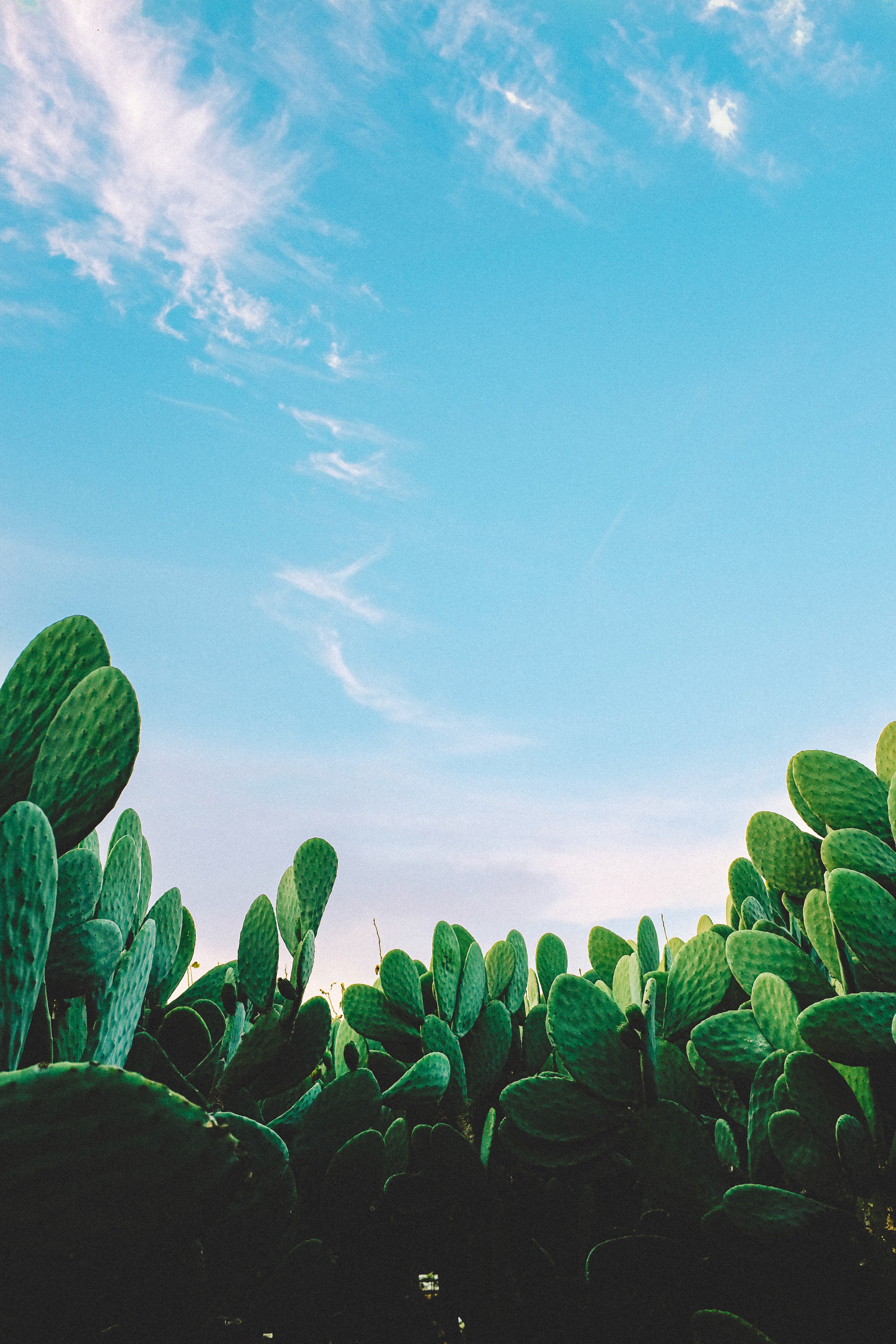
Dot mx is not a normal extension for me to see.  Sometimes being north of the border can skew your view.  Then someone pointed Desserto out to me.  This is the kind of thing that benefits from sharing (see that share button below?  Why not click it?).  Desserto produces leather made of cactus.  Not only is industrial cattle raising the most polluting industry in the United States, it also involves great cruelty.  Cactus leather, however, is renewable, requires no irrigation, and actually decreases the carbon in the atmosphere.  A typical north of Tijuana attitude is that such a brilliant idea should occur here.  The fact is, those who live in the desert may well be the voices crying in the wilderness.

Photo by Ashim D’Silva on Unsplash

Desserto doesn’t make leather items.  They produce the leather and sell it to manufacturers of durable goods.  I would kick my shoes off right now and buy a pair made from cactus leather.  For years I’ve been trying to find something to replace the leather that seems to be the only option.  Faux leather made of plastic isn’t environmentally friendly.  It seems that the best we can do is find something that will do the trick without the pollution both of cattle raising and of tanning.  To me this idea seems absolutely brilliant.  There are otherwise unarable deserts aplenty.  There are limited lands in the drought-ridden west where huge cattle lots create fear, terror, and tremendous waste.  If ever there was a case for putting two and two together, I’d say this is four.

I’m delighted to see this happening in Mexico.  I don’t have much skill in the manufacturing department, but I would be happy to purchase items from those who do.  Too often we look at land that doesn’t fit our paradigms for “good land” and assume there’s no use for it.  Perhaps we should start encouraging cacti and allow American Indians to have some of their former land back.  Everybody wins, except maybe big agra.  Large corporations may qualify as persons under the law (which to me is only asking for trouble for all people except those on the top of the false humans, legally recognized).  Their interests are more equal that the interests of the rest of us.  It’s easier to degrade the environment than it is to change.  Still, looking at a really good idea that could save the planet and provide something useful seems, to me, like an idea worthy of sharing.


All You Sea

Speaking of large ships, in honor of World Ocean Day, which was June 8, I had planned to watch Seaspiracy.  A Netflix original documentary, this really is a must-see film.  Not to pass the buck, but I’ve long believed it will be the younger generation that will take the initiative to improve conditions on our planet.   I’ve seen my own insanely selfish and aging generation (with even more aged and selfish senators) continue to exploit this planet like there’s no tomorrow.  If you watch Seaspiracy you may see that it’s closer to true than you might think.  There may be no tomorrow if we don’t change our ways right now.  Borrowing its title from Cowspiracy, another important documentary, Seaspiracy looks at the fishing industry and its devastating effects on our oceans.

There’s a lot of sobering stuff here.  It begins with plastics.  Single use plastics, and even recyclable plastics, are everywhere.  They kill sea animals, they break down into micro-particles and infiltrate everything.  Chances are you have lots of plastic in your body just from living in an environment where it’s everywhere.  Ali and Lucy Tabrizi take you on a very disturbing journey where governments keep secrets about their roles in depleting the oceans and where large corporations kill observers at sea where there’s no chance of the truth being discovered.  They take you to the claims behind “dolphin safe” tuna and other fish.  They take you to where the market price on illegally caught blue fins can bring in three million dollars per fish.  And they’re caught in great numbers.

The oceans, according to current projections, could be empty in 27 years.  If current practices don’t change, there could be basically nothing left by 2048.  Why?  Because humans are hooked on consuming.  Some critics complain the date should be 2072, as if that isn’t just kicking the can down the road.  I became a vegetarian many years ago, after leaning that way many years before that.  It took Cowspiracy to make me go vegan. We eat without thinking about where our food comes from.  Our industrial food practices are literally destroying our planet.  Having given up fish along with other meat, I didn’t think much about fishing.  Seaspiracy shows why fishing is everyone’s concern.  It’s largely unregulated, unenforceable laws apply, and companies try to make consumers feel better in their acceptance that some fish is safe for endangered species.  This documentary shows once again how the price of eating animals, and doing so on an industrial scale, is simply not sustainable.  My generation is perhaps too lazy to change its ways.  Our only hope is that the younger generation takes the state of this mess far more seriously than we do. And perhaps thinks before putting things in their mouths.


Museum Time

It was a very strange feeling.  Wearing masks, yes, and socially distancing, we went to a museum.  Casting my mind back, I can’t recall the last time I was in a museum.  On a family visit to Ithaca we decided to go to The Museum of the Earth.  Ithaca is a small town, and this is a small museum, nevertheless the first place Google (or Ecosia) brought up for fossil identification was The Museum of the Earth.  On Saturdays a paleontologist is on hand to help identify the traces of life from millions of years ago that lie scattered around for anyone to pick up.  Collecting fossils has a treasure-hunting vibe to it, and it’s great to find anything beyond the usual, ubiquitous sea shell imprints.  Don’t get me wrong—I love sea shells with their symmetry and flowing lines.  Some of them even look like angel wings.  But there’s a draw to the unusual.

Some time back I’d found a fossil in the Ithaca area that I couldn’t identify.  It was Saturday, and we’d all received at least our first vaccination.  And I had to wait in line to get an identification.  It was cheering to see so many people—with limited, timed entry—coming to a museum.  The specialist confirmed this to be an interesting fossil.  She identified it as a bryozoan, ancient animals related to coral.  This one, she suggested, based on the age of rocks in this area, was likely Devonian.  The age of fishes.  I was glad I hadn’t wasted her time, and I was glad to have an expert eye on something that, let’s be honest, often functions like pareidolia to the laity.

Years ago I took my daughter to an open house day at the geology department at the University of Wisconsin in Madison.  If it weren’t for the calculus requirements (and I even tried to teach myself calculus because of it), I was seriously considering going back to school to study geology.  There is an organic connection between biblical scholars interested in the first eleven chapters of Genesis and paleontology.  I get too busy, it seems, to go down to the local creek to look for fossils.  Perhaps it’s for the best because our house would be full of rocks (even more than it already is).  The earth is a great museum.  Even so, it felt like an alien activity, late in this pandemic, to remember what it’s like to explore these treasures indoors, with strangers.  It felt as if time was actually progressing.