Excavating above Ground

It’s like a horror movie. You’re about to enter a place where the dead were laid to rest. You’re out in the remote Orkney Islands, and nobody knows you’re here. This cairn, although it has a modern entryway, is prehistoric, and to get to the burial chamber you have to descend the stone stairs into total darkness. There’s no towns anywhere nearby. The guidebook advices bringing a trustworthy flashlight. At the bottom of the stairs, as the daylight from the door fades, you face a tunnel lined with stone. You have to stoop to walk through it until you come to the burial chamber itself. Completely isolated from the rest of the world. It makes you stop and think.

While I was a student at Edinburgh, my wife and I made two trips to the Orkney Islands to explore the antiquities. The expense of getting to the islands north of the mainland is the most prohibitive part of such a journey. Once on the islands you find things relatively inexpensive, and safe. As the local at the car hire asked us, “It’s an island—where would a criminal go?” Nobody locked their doors. But the tombs. Orkney, being relatively unpopulated, hosts more available antiquities per square mile than just about anywhere else in Europe. Tramping through barren grasslands where you might encounter a few sheep, you can hike to a burial chamber that was built thousands of years ago and, after archaeologists tidied it up, has been left for you to explore on your own.

My wife sent me a link to Historic Environment Scotland’s Sketchfab page. Using photogrammetry, the site offers three-dimensional, manipulable images of the various cairns and soutterrains you can find on Orkney. You don’t need to crawl through the damp chambers on your hands and knees, or even bring a flashlight. The technology brings back memories, but I do wonder if something hasn’t been lost here. There was a reckless sense of discovery being a young couple in an isolated, underground chamber where no one, not even my doctoral advisor, knew where we were. No smartphones, this was off-the-grid living. Not once did we encounter anyone else in these Neolithic chambers. Gray skies and windswept cliffs. Puffins cowering in the lee of a North Sea gale. None of this can be experienced on this armchair odyssey, but it can certainly be recalled. And after exploring the exotic underground chambers, I know I have to make my way to a similarly windowless cubicle above the ground and have the audacity to state that this is the world of the living.


Fictional Facts

“If you want truth,” Indiana Jones famously said, you need to go to philosophy class. The sad fact is most people have little practical training when it comes to such issues as discerning truth. Some time ago I read an article about how fake news travels faster and is more deeply believed than actual truth. I suspect that’s because the truth is hard. The age-old trope used to be a wizened elder sitting atop a mountain in the lotus position. A lifetime of thinking through the labyrinthian corridors of wishful belief to get to what is finally and unassailably true. Our president, with the full complicity of the Republican Party, is out to dismantle the concept of truth once and for all.

Indiana Jones was contrasting facts to truth in this scene from The Final Crusade. The idea was that facts sometimes make you question truth. In GOP University, however, facts have alternatives. He who bellows the loudest is the harbinger of truth. Never mind that still small voice that comes after the raging wind. The voice that can stop a fiery prophet in his tracks—a man who could raise the dead, for crying out loud—but even his successor called Herod a FOX. In the culture of the shrug, who really cares? Finding the truth is so much navel-gazing. There are real enemies to bomb and somebody has some money that I can take away and claim as my own. To do so we can make up facts as we go along and lies will see us through. With the Evangelical seal of approval.

Even with rumors of a fifth film swirling, I miss Indiana Jones. In his formative days fascists were the enemies, even of the Republicans. Although he was showing his age in Crystal Skull, Jones still couldn’t countenance oppressive regimes. Scientific studies show people would rather believe fake news. We’re hopelessly prone to fantasy, I guess. Even as I volunteered on the archaeological dig at Tel Dor, although I had little money a fedora was required. There was a difference, however. I knew I really wasn’t Indiana Jones. I was digging for facts so solid that they could be held in my hand. Unlike Dr. Jones’ students, I did go down the hall to Dr. Trammel’s philosophy class. Surrounded by the young Republicans of Grove City College, none of us doubted that truth was spelled with a capital T. Now Truth is apparently an artifact buried in the sand, awaiting a hapless archaeologist to bring it to light. Amid all the forgeries that non-specialists can’t tell apart.


Lazing Around

I was a science nerd as a kid. Well, at least I had a real soft spot for charismatic megafauna, but who doesn’t? We had those cheap, plastic figurines of dinosaurs that we incongruously mixed with our mammoths and cavemen—wait, no. We weren’t allowed cavemen because people didn’t evolve. Nevertheless, we didn’t see any problem putting glyptotherium in combat with t-rex. Pleistocene or Triassic didn’t matter—they weren’t here now. Extinction is the great equalizer. One of the figurines that always intrigued me was the giant ground sloth. I mean, here was a creature bigger than it needed to be. Not hurting anybody, it just wanted to eat leaves and laze around. A lifestyle that sounds attractive to this day.

Photo credit: Postdlf, from Wikimedia Commons

Human beings, in a process that is still continuing, wiped out animals bigger than themselves. The story is poignantly told in footprints discovered in White Sands National Monument. A Washington Post piece by Ben Guarino tells how paleontologists discovered a human footprint embedded in that of a giant sloth. Reading the story I couldn’t help but wonder if this was the very last one in existence. What if we’d uncovered the story of extinction in real time? Sloths, apart from being named after a mortal sin, never harmed anybody unprovoked. Simple vegetarians—principally vegans, apart from the occasional accidental bug, actually—they were the ultimate victims of human greed. It is virtually certain that we drove them extinct just like we did the dodo and the fiscally conservative Republican. Not exactly fast food, sloths couldn’t really outrun us, and like good Trumpists, we took advantage of their weakness to our own gain.

Or loss. There are no giant sloths left. We’ll never thrill to the sight of a living eucladoceros, or wonder at chalicotheres roaming the savanna. We’ll never run for our lives from an African bear otter (the mind reels). Our world becomes poorer for our presence, it seems. We moved from huddling in fear in our caves out to take on the beasts with our technology. Once we cottoned onto the concept, we refined it until we could drop an elephant with the single pull of a trigger. Our destruction of megafauna continues at an alarming and accelerating rate. Evolution does have quite an imagination, after all. Like human beings, it can take sins and make them larger than life. And “thou shalt not kill,” we say, applies only to our species.


One Isaiah

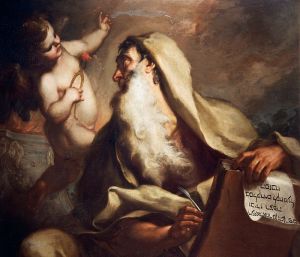
Everyone wants to be remembered. While many don’t wish to be famous, we all hope that someone notices the noteworthy things we’ve done. By any measure Isaiah of Jerusalem seems to have succeeded. Every year around Christmastime his words, set to music, are sung in churches around the world. He gets regular readings among those who attend synagogue and even those who take secular Bible classes have to reckon with him. Isaiah even attracted imitators before his book was finally compiled. According to the Good Book he was a trusted advisor to King Hezekiah. But what do we know of him as a person? Biographical episodes in his book are rare, unlike those of his fellow major-leaguers Jeremiah and Ezekiel. Who was Isaiah?

It’s not Christmastime, so why am I writing about him now anyway? Well, a friend pointed me to a recent archaeological discovery from Jerusalem that is a broken seal impression (technically called a bulla) that may have originally read “Isaiah the prophet.” The news was broken in Biblical Archaeology Review, but it can be read about for free here. Eilat Mazar, the archaeologist publishing the inscription, notes that it reads “Yesha‘yah[u] nvy…” As often happens in archaeology, the end of the inscription is missing. In case your Hebrew’s even rustier than mine Yeshayah sounds a lot like Isaiah—go ahead, sound it out. The word prophet is nvy’. Don’t let that apostrophe fool you; it’s a full-fledged consonant in Hebrew. If that final letter has been reconstructed correctly the seal would read “Isaiah the prophet.”

My friend asked me what I though of this. My initial impression is that it would be odd for anyone to sign themselves with the title “the prophet.” If they did it would require a bit more hubris than I mentally attribute to Isaiah. You see, a prophet was selected, so they believed, by God. Chosen even among the chosen people. It wasn’t a pleasant job—once again, Jeremiah’s jeremiads come to mind. Would someone have signed himself “the prophet”? We don’t have a terrible lot of information from the ancient world about individuals. What we do know is subject to exaggeration and other forms of hyperbole. Did Isaiah, mouthpiece of Yahweh, carry an official seal declaring that the contents were bona fide possessions of a man who saw God sitting on his throne and survived to tell the tale? Or is it a hopeful reading of those who want to demonstrate the Bible is true? It’s a question the reader must decide, for, as always seems to happen, the evidence is broken just at the crucial point.


Dominus Flevit

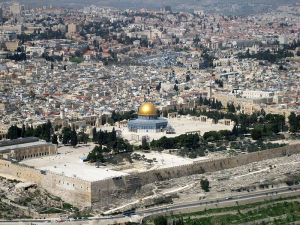
I couldn’t believe I was actually there. Ever since I was a child I’d read about this place. The city conquered by David and visited by Jesus. The city around which most of the Bible rotated. Jerusalem the golden. One of the perks of working on an archaeological dig was the opportunity for weekend travel, and here I was, amid camels and cars and churches and synagogues and mosques, in Jerusalem. No amount of reading prepares you for such an experience. Suffused with the rich mythologies of three major religions, this city is like a dream. So much had happened here. The church I was attending at the time was only the latest in a long succession that informed me that God himself had actually been killed here and had risen again. The ultimate game-changer. The once in forever event of all time had taken place right here.

Gnu Jerusalem from WikiCommons

But this was not a city at peace, despite its name. There was a bombing the first weekend I was there. Young men and women in military garb carried scary looking weapons openly in public. Even civilian bus drivers wore pistols. Jerusalem had a long history of violence, but that didn’t justify it. If God had really been here—in either Jewish, Christian, or Muslim contexts didn’t matter—how could this city be so prone to terror? In the old city old men sat around hookahs, placidly smoking. Tourists, many bearing crosses, thronged. Jerusalem, however, was also a very political place. The fragile, Christmas bulb-thin peace of the region involved the city being divided up and not being claimed by Israel alone. Even that man driving his goats through these ancient streets knew that.

Trump, to the cheers of evangelicals who want nothing so fervently as the end of the world, has said he’ll recognize Jerusalem as the capital of Israel. This political move of weaponized ignorance will almost certainly lead to war in the Middle East. Another war. An illegitimate presidency leaving a frothing sea of corpses in its wake. Negotiating in this part of the world is like haggling with that street vendor for a pair of sandals. You go back and forth on the price. You act insulted and walk away. You come back and haggle some more. It’s a delicate dance. This is no place for egomaniacs who can’t understand such subtleties. Just ask the last Caligula who wanted his statue set up as a god in this city. Jerusalem is home to too many jealous gods, and those who are self-appointed divinities will only leave the city, the world, in tears.


Digging Even Deeper

What does it mean to exist for someone else? Isn’t this the very definition of slavery? Yes, we may voluntarily give ourselves to someone for the sake of love, but woe to the person who thinks he owns his spouse. Human beings may be an acquisitive lot, but that doesn’t excuse it. To be civilized, after all, means to be more advanced than we are by nature. These thoughts follow on hearing one of my colleagues interviewed on Game Plan on Bloomberg. In the light of the Harvey Weinstein scandal, Francesca Levy and Rebecca Greenfield are interviewing people in different professions to see what inappropriate treatment women receive at the behest of men. Their job is, unfortunately, not one where it’s difficult to find examples. In this particular case, they interview Beth Alpert Nakhai of the University of Arizona. Dr. Nakhai is an archaeologist and she describes the perils faced by women in the field.

In 1987 I volunteered on the dig at Tel Dor in Israel. I had just graduated from seminary, didn’t have a job, and was pretty sure I’d be going on to graduate school. Tel Dor, like many digs, had different loci excavated by different university teams. I was on the Boston University area, B1, next to the section being worked by one of the universities in California. At one point one of the seasoned men—I can’t remember who—remarked to me that digs in Israel were great because of the three A’s: “alcohol, adultery, and archaeology; in that order.” It was intended as a joke, but it had that time-worn feel of a sentiment that’s been around for a while. At the time I thought little of it. I was there only for the last A, and, had circumstances been different, I might’ve made that my career choice.

Listening to Beth’s interview, however, showed me the darker side of careless remarks like this. Archaeologists often work in remote locations where local laws treat women differently than men. University professors have great power over graduate students and are able to make or break careers. Often married men leave their families in safe locations while they spend their summers directing teams that include female students and other volunteers. I’d never thought of the experience from that angle before. As a man I didn’t have to worry about anyone coercing me into an unwanted physical relationship far from prying eyes or legal systems which, at least in theory, protect women. The truly sad thing about all this is that forces are, especially now, at work to make women victims again even in this country. The point of archaeology is to try to understand civilization writ large. And yet, civilization in the advanced world is now moving backward. How long before we too are buried under a pile of shiftless dust waiting to be discovered by some future excavators whom we can only hope are more advanced than we are?


Spirits and Souls

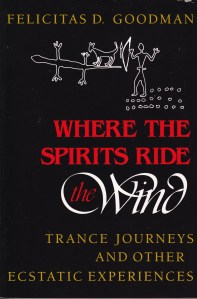
I first became aware of the work of Felicitas D. Goodman because of her classic text on spirit possession. Published by the reputable Indiana University Press, that book has become a standard for anthropological understanding of a strange phenomenon, which includes demonic possession. I found Where the Spirits Ride the Wind: Trance Journeys and Other Ecstatic Experiences in a used bookstore. Recognizing Goodman’s name, and always eager to learn about spirituality, I picked it up, It’s one of those books that makes you wonder. In an effort to experience trance states, Goodman began to experiment with various posture represented in the archaeological record. When she taught classes where students had no foreknowledge on the postures, she found they they reported similar visions during their trances while using the same posture. Matter, it seems, can effect mind.

I couldn’t help but wonder, as I read her account, what Indiana University Press must have thought about what they were publishing. This could be some serious woo, depending on how far you’re willing to go with Goodman. She was a doctorate-holding professor, so academic convention suggests she should be taken seriously. The BISAC classifications (those categories that often appear on the back cover of a book) tell the reader that this is Anthropology and Psychology of Religion. Neither field tends to give a whole lot of credence to the supernatural. At least not necessarily. And yet, there it is. Neither field really captures what Goodman describes in this book. Nobody really doubts that trances can happen; alternate states of consciousness are acknowledged phenomena. What we don’t have, however, is an explanation of what’s really going on.

A good deal of the this book consists of her students’ accounts of their visions. Although a native of Hungary, Goodman, through fieldwork and experience, became quite adept at Native American and other indigenous religious practices. The images that suggested the postures to her come from archaeological contexts around the world. This suggests that, according to Goodman’s worldview, these are some universal experiences. Attaining trance states, like meditation, takes practice. They can shift perceptions of reality. We tend not to hear too much about religion faculty who explore such things too openly. It’s a dangerous move in academia. Ironically, the institutions we build to understand our world tend to restrict themselves to the physical world or those fields that make ample lucre. I’m impressed that, even if by labeling it anthropology or psychology of religion, at least one university press took a chance at offering an exploration that might have some real world consequences.


Nicholas of Myra

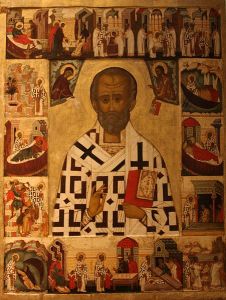
It may be a little early to start thinking about Christmas, but archaeologists don’t often worry about timing. A piece in the Washington Post announced something of potential interests to hagiographers everywhere—Saint Nicholas may still actually be in his tomb. According to the article by Cleve R. Wootson Jr., bandits broke in and stole the relics of the saint centuries ago. In fact, they took them to Bari where a thriving cult grew up around the giving bishop. It seems, however, that they got the wrong tomb. If the analysis is correct, Nicholas of Myra is right where they put him sixteen centuries ago.

Photo credit: Bjoertvedt, via Wikimedia Commons

None of this, however, impacts Christmas as we know it. The relationship between the historical Saint Nicholas and Santa Claus is a wide-ranging and fascinating one. Stories of generosity surrounded Nicholas during and after his earthly life. It took centuries of evolution to get from that to what we now accept as standard Christmas mythology. In the early—pre-rampant capitalist—United States Christmas wasn’t much observed. It was even illegal in some places. Too Popish to appeal to the dissenter sensibilities that made up the colonial majority, the holiday season simply did not exist. It was, in the words of C. S. Lewis, “winter without Christmas.” For those of us who grew up with warm memories of presents, special foods, and days off the obligations of school, such an existence is difficult to imagine.

The feast of Saint Nicholas falls on December 6. Because of its proximity to the revisionist birthday of Jesus on December 25, the gifts of the Magi and the storied presents of Nicholas to families in need eventually merged. The holy days eventually became spending days and the whole jumble of Yule and other solstice celebrations got mixed into a wonderfully tolerant holiday. And all this time we thought Saint Nicholas was missing. He was missing in his own grave.

Miracles are attributed to the relics of saints. I suspect they work even if the wrong bones are plundered. Belief is like that. Historically, little is actually known of Nicholas of Myra. Little is known of Jesus of Nazareth, for that matter. The holiday that grew up in the wake of those willing to give, and to give to those who were undeserving, is a lesson that seems to have been interred with their bones. “So let it be with Santa,” you can almost hear Mark Antony say, standing before Congress, itching to slash any safety nets so one-percenters can have the happiest holiday season ever. Yes, Saint Nicholas is well and truly dead.


Ocean Blue

I suspect with Trump in office Columbus Day will get a boost. After all, it’s the narrative of the white man coming to America and improving on what anybody else had done. Making America great, one might say. That wobbly narrative has been justifiably under fire for some time. Not least for historical reasons. We know beyond reasonable doubt that the Vikings were here before Columbus. Ironically, the savage Vikings appear the more benign of the two. A friend recently sent me a story from Realm of History that asks “Did The Irish Reach The New World Before The Vikings And Columbus?” The story by Alok Bannerjee tells of St. Brendan, a sixth-century Irish monk who may have made the voyage even before the Vikings. And don’t get me started on the Bat Creek inscription or the Kensington Runestone.

The problem with early history is that it’s early. Evidence, when it exists, is rare and often perishable. We know that the technology to cross the Atlantic existed at least as early as the Phoenicians. And we know that no matter how crazy others tell us we are, people are insanely curious. And those who go down to the sea in ships might even make it into the Bible. Objections to anyone making it to the “New World” prior to the Vikings tells us something of the nature of orthodoxy. Yes, historians and scientists have it too. Orthodoxy is where evidence crosses the line into belief. And belief, as I’ve often said, is difficult to dislodge.

So, am I throwing open the doors for any who wish to claim they were here first? Hardly. Well maybe. My own opinions aside, when unorthodox evidence arises, what should we do? The traditional response of “when in doubt, throw it out” may not serve us well. Perhaps we should have a shelf, or locker somewhere. A receptacle in which we might store the stories. When I was a kid learning about Columbus, teachers doubted Vikings had made it this far. Orthodoxy has had to back off on the Norsemen, of course, since archaeology now backs them up. Vineland was a reality, it seems. Even before the purported Irish or Phoenicians, the first nations were here. Where is their federal holiday? We don’t like to think about that. Far too much investing in “superiority” has gone into it. It’s Columbus Day and most of us are at work anyway. Some of us dreaming of new worlds all the same.


Diverse Colors

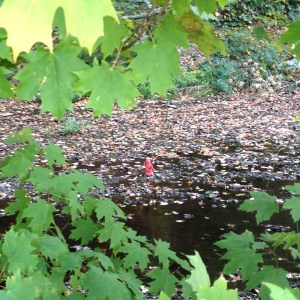
After a warm snap, we’re not at peak color here in New Jersey. Some trees have changed, yes, and leaves have begun to fall, but green prevails. While on a walk with my wife—a luxury only available on weekends with my commuting schedule—I spotted a bit of red amid the leaves on a local stream. Litter, and not just the leaf kind, is a bit of a problem in Jersey, but this splotch of red seemed intentional. It was taller than it was wide. It was standing in the middle of a shallow brook. Its placement looked intentional. What couldn’t be discerned from the bank is just what this was. It might be a Buddha. It might be Ganesh. It does seem, no matter how it’s reasoned out, to be religious.

Archaeologists often find objects with no known utility. If an artifact has no practical function such an object is generally deemed religious. For much of human history, before the madness of capitalism, people owned only the necessities. Life was hard and lifespans were short. Accumulating stuff as an end in itself was a luxury only for kings and priests and the relatively few merchants in urban settings. An object found from that time, then, with no known function, must somehow be religious. An object of cultic devotion. Those of us trained in the history of religions would sometimes laugh at this predisposition. Religion is the basket for anything that can’t be otherwise explained. So it seemed with this red statue—it was clearly human-made—standing in the stream. We were walking by a ritual site, perhaps. Maybe it was just a joke.

Then I recalled Ganesh Chaturthi, the ritual submersion of Lord Ganesh that transpired in late August this year. It is a numinously charged season, this descent into autumn. My Jewish friends have just celebrated a new year. Pagans made proper observation of the equinox. Preparations, at least of the commercial kind, are well underway for Halloween. They are all colors. Although spring’s first buds are welcome after a monochromatic winter, soon we transition into the green of summer. We miss the benefits of many colors. At moments like this on the banks of a brook with yellow and brown highlighting the green that remains on the trees, I’m again reminded how wonderful diversity truly is. I am in the presence of a god. It may not be my deity, but I’m not threatened by the difference. Nature is a patient master for those willing to attend to the lessons.


On Jordan’s Stormy Bank

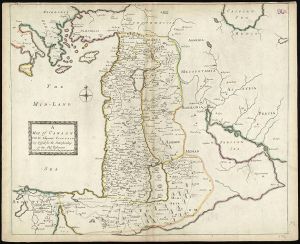
All you have to do is spit in the cup. Well, you have to do it quite a few times, but that’s the basic idea. Then you send the contents to a religiously motivated lab and your genetic ancestry will be emailed back to you. (There will be a fee involved, of course.) Genetics, a science of which Darwin didn’t have the benefit, is capable of mapping out where various “races” originated and ended up. Enter the Bible. One of the most disputed groups among scholars of the ancient Near East is the Canaanites. There was, as far as we can tell, no “nation” called “Canaan.” No people called themselves “Canaanites” but the term was used by others to designate them. Yahweh had a vendetta against them and ordered them wiped out. And, according to parts of the Bible, the Israelites acquiesced. So where are the Canaanites?

Image credit: http://maps.bpl.org, via Wikipedia Commons

According to a Washington Post article by Ben Guarino, DNA sequencing has revealed that they’re still there. This should come as no surprise to most anthropologists. Racial purity is always partially a myth, since “race” is no barrier to love. Or at least lust. And genetic traits don’t lie. Tracing ancient DNA from “Canaanite” (I’m getting myself scared using all these scare quotes) burials, scientists have discovered the biblical nemesis still survives in abundance, especially in Lebanon. Interestingly, on a cultural level, there is no distinction between Israelite and Canaanite. They are virtually identical. This creates one of the many embarrassments for biblical scholars, since the differences should be more than just skin deep. As with so many cases of racial distinction, the reality is mostly imagination.

Literalists, of course, have been in a rear-guard position for well over a century now, so the news should cause minimal shock. The problem will be keeping them from finding new excuses to carry out an extinct mandate. Biblical scholars, that heathenish race, long ago capitulated with the enemy. You’d expect no less from those who would dare use reason when approaching Holy Writ. It’s the real-world application that’s a problem. What do you do when the biblical enemy is found, hiding in plain sight like a purloined Lebanon? The solution might be as old as the story itself. Darwin didn’t have genetics, but he did have the Bible. The issue in the nineteenth century was what to reject when worldviews clashed. The answer was to jettison the godless science. We can only hope that this time-honored technique will prevent future crusades fomented by scientific discovery.


Devonian Dreams

Toothbrush and dental pick in hand, I go at it. Not that I’m a professional, mind you, but curiosity drives me to this. You see, this crinoid before me is at least 358 million years old and anything that can make me feel young deserves all the attention I can give it. Crinoids are also know as “sea lilies,” but they aren’t plants. They’re actually echinoderms, and the fossils I’ve found in the past have only been cross-sections of their “stems,” a stone circle, as it were. This one has tendrils visible, and I can’t believe that it was a chance find on one of my recent walks through Ithaca’s gorges. I’m dreaming Devonian dreams, and I want to brush away the plaque of the eons and see what I’ve actually found.

Fossils are a kind of eternal life. The creature that died to leave this impression lives on as a monument in stone. It reminds me of my unfortunately brief stint as an archaeological volunteer. Scraping away dirt to reveal a piece of pottery that hadn’t been touched by human hands for 3,000 years. Of course, that’s merely a second ago when you’re talking about something pre-Carboniferous. The dinosaurs won’t even show up for another 100-million years. And I think I have to wait too long for the bus. Time, as they say, is relative. Did this medusaized creature before me realize just how terribly long it would take for enlightenment to arrive? And how so very swiftly it could fall one foolish November night? Careful, this fossil’s fragile.

I grew up among the Devonian substrate in western Pennsylvania. The Bible on my shelf told me to disregard the evidence before my eyes. Some clever true believer had declared Noah’s flood the culprit, never bothering to explain how freshwater fish showed up after the deluge. Those we tried to keep in our aquarium never seemed to handle the slightest disturbance of their salinity. The ages of the literalist are by definition short-sighted. 6,000 years seems hardly enough time to account for any sedimentary stone, let alone that riddled with fossils. I’m hunched over my bit of slate, dental pick hovering nervously over what will never come again. The Bible behind me says it’s an illusion. You may be right, Mr. Scofield. You may never have evolved. But as my fingers glance a creature dead before even the crocodile’s grin I have to declare that I have.


Gilded Age

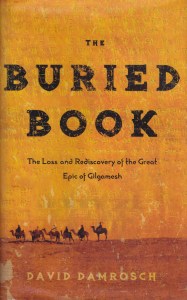
What relevance could the Gilgamesh Epic possible hold for contemporary people? Well, one of my colleagues has said that every book is now about Trump. While I resist such thinking, he has a point. Even in reading David Damrosch’s The Buried Book: The Loss and Rediscovery of the Great Epic of Gilgamesh it’s hard to avoid making comparisons. The famous epic is about a bully king who is eventually humbled by the gods. That should make the contemporary association clear enough. Damrosch’s book, however, is actually about how one of the world’s classics—if not the first classic—was lost to the human race and rediscovered only in the nineteenth century. The cast of characters involved in finding the text is colorful and tragic, rather like the epic itself.

Hormuzd Rassam, associate of some of the largest names in Assyriology, was a native Iraqi whose role in the recovery of antiquity was overlooked in his lifetime. Although Rassam did much of the actual finding he was unfortunate enough not to have been born English. While Sir Henry Creswicke Rawlinson and Sir Austen Henry Layard, and even the irrepressible George Smith, gleaned fame over the rediscovery of the glories of ancient Iraq, the very model of a modern Middle Easterner simply didn’t receive his fair share. Rassam wrote books that were essentially ignored. The moving tale of his treatment makes this already gripping story poignant. The Epic, however, not only became world famous—it forced scholars to reevaluate how to interpret the Bible. Although not the earliest flood story, already in the mid-1800s it was recognized that the flood myth in Gilgamesh had more than just a passing influence on grand old Noah.

One of the stories behind the preservation of Gilgamesh is that of Ashurbanipal, the Assyrian emperor. Ashurbanipal believed that to be a world leader one had to be well read. He was the most powerful man in the world in his time. The idea of government is useless without the corrective of history. That doesn’t mean people should only look backward, but those who refuse to look back at all are doomed to make mistakes that go all the way back to the Bronze Age and before. In fact, Stone Age mistakes can (as we are living to see) be repeated even in a nuclear age. That’s part of the charm of Gilgamesh. Reading the classics serves a higher purpose than might be obvious at first.


Spiritual Spelunking

Looking at the headlines it’s sometimes difficult to believe we’ve evolved. I still trust evidence-based science, despite official government policy, however. So when a friend sent me a story about a new human cousin I knew it was worth a look. Homo naledi bones date from much more recent times than they should. At less than 400,000 years old (which means they might fit GOP ideology pretty well) they are almost contemporary with Homo sapiens. And, apparently, they buried their dead. Now much of this is still speculation. The bones were found in caves with openings so small that onlyfemale spelunkers could fit in, and the question of whether dropping bodies in a hole counts as burial has raised its head. Still, the human family tree is being redrawn, and in a way conservatives won’t like.

I became interested in evolution because of Genesis. My mother gave us a few science books as children even though we were Fundamentalists. One of them talked about evolution and I was intrigued. Clearly it didn’t fit with the creation story—I was young enough not to notice the contradictions between Genesis 1 and Genesis 2—and yet scientist believed it. They likely weren’t Christians, I reasoned. College gave the lie to that deductive thinking when I ran into Christians teaching the required “Science Key” who believed in, and yes, taught, evolution. I’d missed something, obviously. Once I discovered evolution could coexist with Scripture I was eager to learn as much as a non-biologist could. In my teaching days I focused on the early part of Genesis and even began to write a book on it.

Image credit: Margaret A. McIntyre, from Wikimedia Commons

It’s much more honest to admit that we’re related to the rest of life on this planet than to set ourselves aside as something special. Evolution has done something that the Bible never could—brought all living things together. There are too many towers of Babel and chosen people themes in Holy Writ to allow for real parity with our fellow humans, let alone other creatures. Yet the human family tree is wondrous in its diversity and complexity. We now know that Neanderthals were likely interbreeding with Homo sapiens and I wonder how that impacts myths of divine chosen species. Did Jesus die for the Neanderthals too, or just our own sapiens sapiens subspecies? You can see the problem. For a literalist it’s just easier to crawl into a cave. But only if the opening is large enough to admit males, since the Bible says they were created first, right?


Comet Tales

Göbekli Tepe, apart from being impossible to pronounce correctly, is a site of embarrassment to historians. First of all, this archaeological site in Turkey is too old. Abandoned around 9000 BCE—some 5000 years before the Sumerians show up with their writing—Göbekli Tepe had already gone through several phases of elaborate building and willful destruction. A large “temple” has been unearthed there with elaborately carved plinths that suggest a mythology at which we can only guess. Conventional wisdom states that the state came first, then organized religion. Göbekli Tepe suggest that it was the other way around—religion came first. We have no writing to go by here, however, just towering monoliths that make us scratch our heads in wonder. We are the apes.

Hyakutake, 1996. My first comet.

A friend pointed me to an article in New Scientist that suggests one of the Göbekli Tepe “carvings show comet hit Earth and triggered mini ice age.” That’s a lot of ice. And eisegesis. Part of the problem here is that old scientists tend to sweep anomalous evidence off the table. It’s an admitted part of the empirical method. If a single anomaly stands against a host of conventionally expected results, the anomaly goes into the bin as an outlier. Göbekli Tepe, as real as it is, is an anomaly. Reputable books on it written in English by archaeologists and historians do not exist. Embarrassed turning away and staring at shoes ensues. The site is just too old, too sophisticated, and too far outside convention to be dealt with rationally. You can read a lot into an isolated carving, especially when accurate information is lacking.

To give you some perspective: the great pyramids of Egypt date from the Old Kingdom of Egypt, after 3000 BCE (remember, we’re counting backwards here). Stonehenge’s main phase (the famous blue stones) was a couple of centuries later than the Great Pyramid of Khufu (Cheops). Göbekli Tepe had closed up shop some 6000 years prior. By comparison, more time had passed between Göbekli Tepe and the Great Pyramid than between the Great Pyramid and us. We, with the internet in our pockets and humans walking on the moon, preparing to go to Mars, are only less than 5000 years from jolly old Khufu. Göbekli Tepe, with its inscrutable carvings, shouldn’t be there. And yet it is. Standard procedure suggests it be ignored. So far, conventional historians have done just that. And in my opinion that’s worse than an ice age brought on by comets written on a stone that nobody can read.