Stone Age Henge

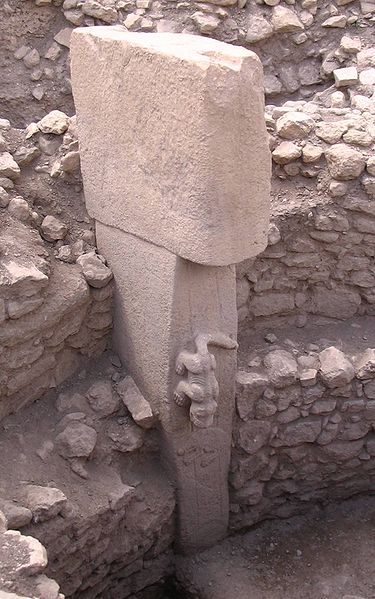
At a hotel during a recent excursion, I saw a National Geographic (I think) special on Gobekli Tepe (this is the fate of those of us kept from a daily sustenance of academic listservs bearing the most exciting news). Gobekli Tepe is an archaeological site in Turkey, discovered several years ago by Klaus Schmidt of the German Archaeological Institute. It is an odd site, dating back to some 11,000 years ago, that consists of megalithic (big stone) constructions earlier than Stonehenge or the great pyramids of Egypt, both dating from the Bronze Age, roughly. The complex of odd buildings seems to be religious in function because they bear no practical purpose, and the implications of the site are that our earliest steps towards civilization have been misinterpreted from the beginning. We have been taught that domestication of plants and farm animals led to fixed centers of living. Gobekli Tepe suggests that religion led to settled life and farming came later.
375px-GobeklitepeHeykel

The implications of this are rather startling for those of us who’d been working on the assumption that religion developed as a way of keeping the gods happy after people had the luxury of surplus food brought on by agriculture. It turns out that hunter-gatherers learned to live in settled locations because of religion. That is, religion, instead of being just another component of culture, is what led to culture in the first place. In a climate where the most vocal intellectuals insist that religion must be shut down, chopped off at the roots, and burned in the oven of rationality, we see that none of us would be enjoying our urban lifestyles if religion hadn’t brought us together in the first place.

There is no doubt that religion may be taken to extremes, and that when it is, it becomes dangerous. Religion, however, is no foe to rational thinking. Gobekli Tepe is a site of astounding engineering for Stone-Age hunter-gatherers. Engineering is applied science, and so these people were using their understanding of the world to establish a ritual site for the practice of their religion. They needed to live nearby, although they still had to spend their days chasing animals and gathering foodstuffs along the way. Religion made them realize that life together was a necessity for humanity to thrive. We should take a more balanced view before declaring religion a source of evil only. We may never be able to coax the gods into the laboratory, but that doesn’t mean that they don’t have a very important function for human civilization. If they are taken in reasonable doses, they might even lead to astounding transformations.
Sea Wonders

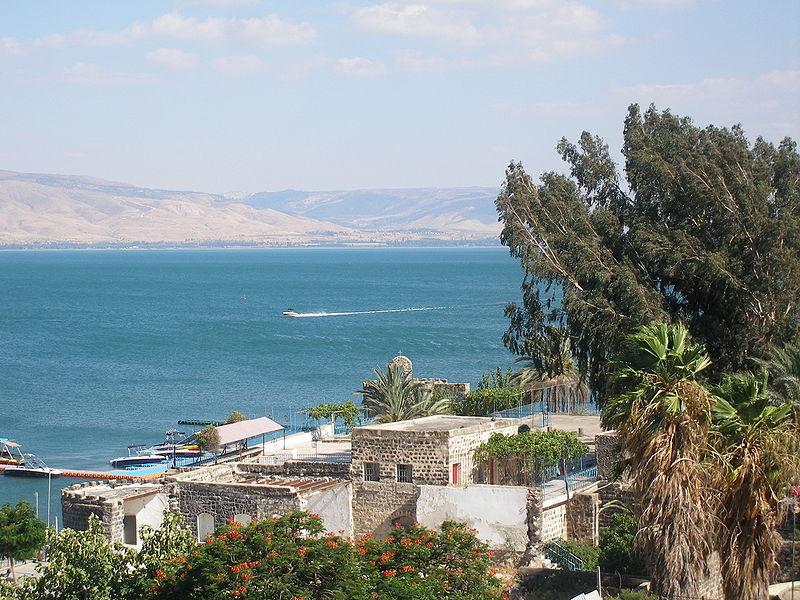
There’s a hole in the bottom of the sea, if we are to believe childhood songs. News reports this past week, however, have suggested that just the opposite applies to the Sea of Galilee. According to Science on NBC, a huge stone structure, larger than Stonehenge, rests at the bottom of the lake over which Jesus reputedly walked at the height of a storm. To the untrained eye, this stone pile looks like just that—a stone pile. The problem is that there is no natural source for the mound, and it seems highly unlikely that it was built under the water. This astonishing find is only one of the many underwater structures known that seem to defy conventional chronologies and logical behaviors. If this gigantic cairn was built on land, the means remain a problem. It is one thing to climb a conventional pyramid, complete with ramps and sledges, and quite another to mount a mound of apparently random stones to drop another on top. Perhaps it was built under water after all, like one of those tantalizing toys where you try to land your penny in the cup at the bottom of a tank of water.

Pacman's Sea of Galilee from Wikimedia

Pacman’s Sea of Galilee from Wikimedia

Ancient monuments are one of the great fascinations of antiquity. When no rational explanation is forthcoming, a religious one will be declared. Without written records, we know nothing of the real purpose of Stonehenge or Avebury, let alone Galilee-henge. With the pyramids of Egypt we have a better set of data, and we can feel justified calling them religious structures. But why were ancient people building massive rock mounds in what was to become the Sea of Galilee? The place has irrevocable religious associations to the modern mind. Did it possess such connections in the deep pre-Israelite period as well? The false mountain of Silbury Hill, not far from Stonehenge, comes to mind. People are mountain makers.

Cairns have been among the most persistent of human monuments, but what makes this new finding of interest is its location. Baptized in the very lake that holds the headwaters of River Jordan, the mysterious mound has already claimed its sanctity. Who built it, why and when, will take backseat to the fact of its holy location. Archaeologists will eventually dive and probe and will declare an anthropologically sound explanation for this newly found, artificial, miniature mountain. Mountains and gods go together, however, as readily as offering plates and churches. Whatever this newly discovered structure may turn out to be, it will always be a religious site for those who believe.


In Touch with History

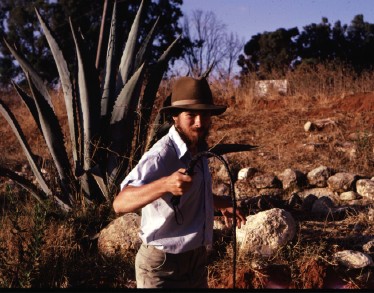
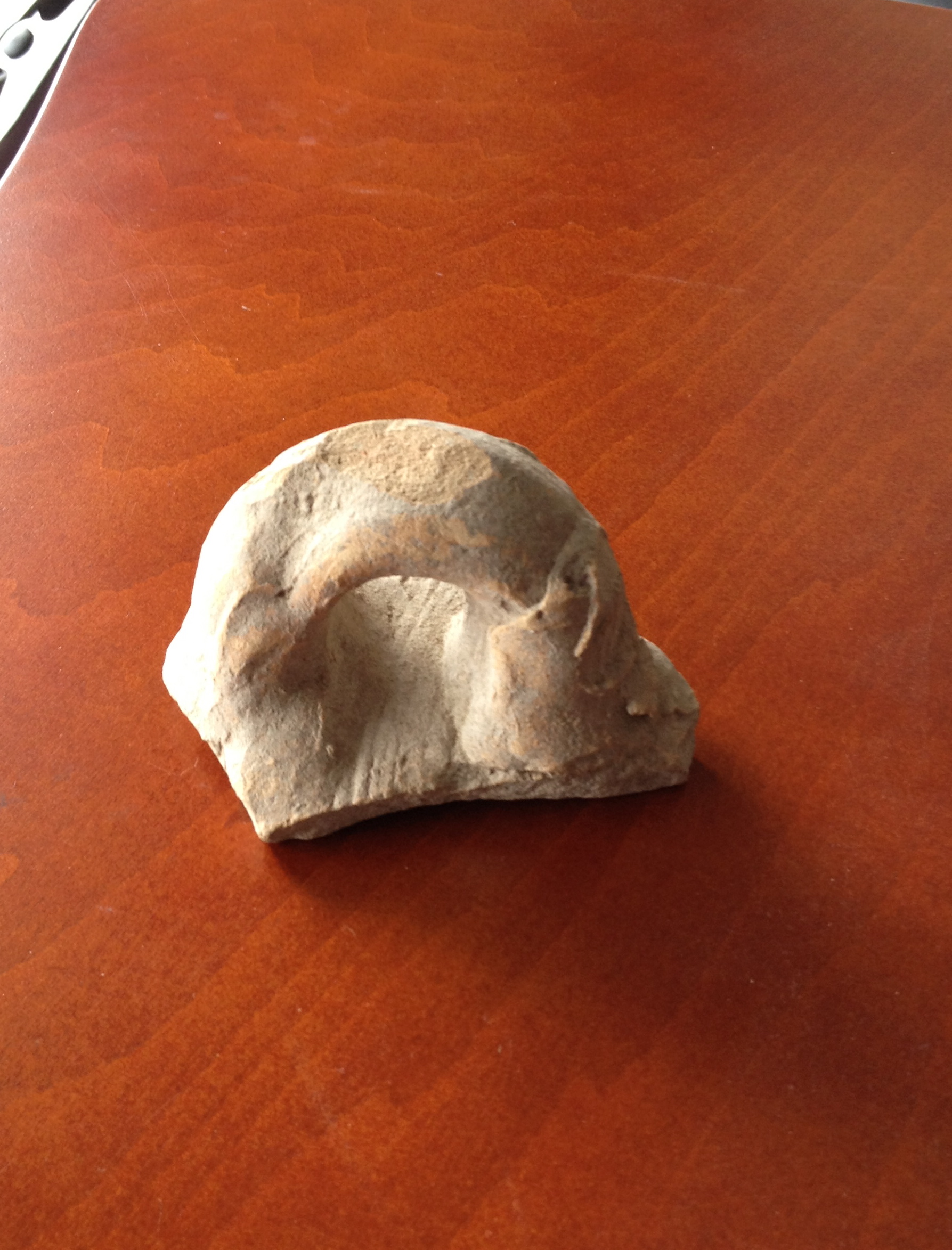
A friend recently sent me a package with a Roman jar handle from Caesarea Maritima. It’s not everyday that I receive 2000 year-old artifacts in the mail. Holding that ancient jar handle reminded me of my short stint as a wannabe archaeologist, not far from Caesarea at the site of Tel Dor. There’s no thrill like unearthing an artifact that has been buried for millennia, knowing that you are touching something a fellow human being dropped for the last time back in the days of the early Roman Empire. It is a humbling experience. In all probability the final touch was a heave into the dump, since clay jars are easily broken. But as I finger this ancient piece of useless junk, I can plainly make out how fingers like mine twisted the clay and pressed it on the jar body, much as I once did in art class, decades ago. I am connected with a stranger over the millennia by this simple bit of clay. We are united in an ancient family.

IMG_0555

Archaeology began as a biblical venture. Anyone who watches Raiders of the Lost Ark with archaeological sensibilities, after rolling their eyes (yes, it’s deserved) can’t help but realize a kernel of truth is buried here. Archaeologists don’t search for the ark, but it was religion that gave them the idea in the first place. Travel to the Middle East and begin digging up the places mentioned in the Bible. Those early archaeologists wanted to prove that the Bible story happened just as it was laid out. Only it didn’t. Archaeology soon began to reveal a more complicated picture. Jericho was uninhabited in Joshua’s day. And was there even a historical Joshua? What began as a charge to demonstrate that the Book of Books never gets it wrong transformed into a science with its immutable commitment to objectivity. And objects.

The desire for historical proof meets a deep need in people. We want to know what really happened. This simple jar handle before me tells a mute story of a person like most of us—never famous, never noticed in the noise of first century Palestine. Just some Jane or Joe throwing out the trash. That is the story of archaeology. That is the story of human life.

Every once in a while I ponder how insignificant we are. The vast majority of us will be remembered only a few years or decades beyond our demise. What will our artifacts say about us? One of the relics that will be found in the rubble of my life will be a Roman jar handle from an even earlier age. Long ago deemed junk by a person so different, but not so very different, from me. It was discarded two millennia ago. When it was found in the twentieth century it was a treasure. Thanks, Susan, for putting me in touch with history.


Rock Hard Cafe

IMG_0518

At first glance it may not appear to be much. A small chunk of rock, probably limestone. Hardly large enough to be used in a sling against a giant in a pinch. Still, it is special. What makes this rock special is the context from which it was removed. A friend has recently returned from Israel and he brought this rock for me. It is from the Mount of the Temptation, atop which sits a lonely monastery cared for by a single, elderly monk. The thought of someone thinking of me in such a (literally) God-forsaken wilderness is touching. My brief travels through the desert of Judea offered plenty to occupy my restless mind. I’m pretty sure we zoomed by the base of the Mount of Temptation in an air conditioned bus one day on our way to somewhere less desolate. Or more. The sharp-voiced little skeptic in my head immediately kicks in: if Jesus was alone when tempted, how could anybody possibly know where it happened? I can’t picture him leading a tour there later—“and this is where I almost turned stone to bread; don’t those pebbles look like challah to you?”

But then, it’s not about historical accuracy. This little stone in front of me is a symbol. Broken off of the karst geography of the rocky spine of the Holy Land, this shard is meant to remind me to avoid temptation. A nearly identical piece of stone from Israel sits among my teaching trinkets. One of my students went to Israel back in my days at Nashotah House and returned with a bit of limestone for me. She said, “you can keep it as long as you put it on top of my gravestone when I die.” This was a custom I’d observed long before I’d even heard of Nashotah House. Long before religion grew flinty and unyielding. Stones bear remembrance. Although Israel is not as arid as many people believe it to be, rock is a natural resource of uncommon abundance. We age and die, but the rock remains. The rock remembers.

My six weeks in Israel were spent among the rocks of an ancient settlement known as Tel Dor. Archaeology, I learned, is mostly just removing the dirt from the rocks in the ground—at least at the entry level. Those stones tell a story. They were once a city, a district administrative center. Now they lie in dusty profusion, and only the most ardent of Bible readers will recall ever seeing Dor’s name in the pages of Holy Writ. Built by Solomon, the Bible grandly claims. Now all is ruins. The grandeur of a king toppled with the passage of time. My mind is drawn back to a treeless stretch of a mountain devoid of even the hardiest plants. A person can grow mighty hungry there. Mighty hungry indeed. Temptation comes, unbidden. Life is an unbroken chain of temptation, for those willing to be honest in the desert. That little stone is, in truth, bread.


Leggo My Congo

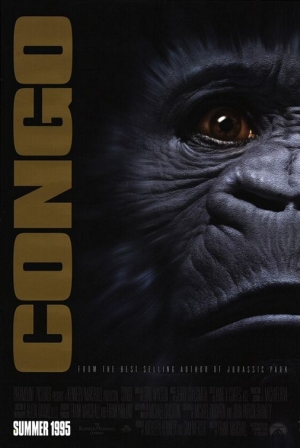
When I first saw the trailer for Congo, back in 1995, I was a new father and my interest in talking apes understandably took a back seat. While the movie sat back there like a quiet child, it was slowly forgotten. Something prompted my memory over the weekend, so I finally watched it. Now, I had plenty of time to read the negative reviews, but I have a soft spot for both talking apes and bad movies. The really fascinating aspect of Congo, however, was the fantastic liberties it takes with the ancient world, particularly the kingdom of Solomon. Solomon has been under investigation over the past few decades. Archaeologists have not found evidence of the biblical opulence concerning both his wealth and fame. It seems likely that he was an actual king, but the king of a small nation that did not have quite the pull that later tradition granted to it. Still, Solomon has become a cultural trope for great wealth and splendor, and if a movie-maker wants an easy frame of reference, well, some people will recognize old Sol. Those who do recognize Solomon probably won’t have a ready inventory of his assets to interrupt their enjoyment (that presumes a lot) of the movie.

The motive factor that brings our unlikely traveling companions together in Congo, are the fabricatedly mythical diamond mines of King Solomon, located in the Congo. A self-styled archaeologist and professional con-man from Romania assists to finance a flight to Africa to help return a homesick gorilla (Amy) who also, by the way, talks. The only realistic aspect of the heroes is that the university professors are the ones who are completely broke and have to rely on corporate funding to get their monkey off their back (well, actually she’s an ape). And then there is the huge communications giant (TraviCom) that needs the diamonds for their communications equipment. And a bunch of Africans who just want to stay alive (most don’t succeed). Solomon was never really associated with diamonds in the Bible. His wealth is described in terms of gold, silver, bronze, peacocks, and suprizingly, apes. Why and how he would have managed a mine in central Africa when even the Egyptians didn’t travel there is never explained.

Well, I shouldn’t be so hasty about the Egyptians. Our Romanian con-man is also able to translate Egyptian heiroglyphics, liberally scribbled on the walls of the fortress surrounding Solomon’s mine. These preserve the story of the “myth of the killing apes” that generated an honest-to-god guffaw from my cynical self. New mythology and corny characters aside, the movie didn’t fail to reach me. I’m always a sucker for talking apes and under-funded education, both of which represent a kind of extinction. If Solomon really had a reach all the way to the Congo, and if he extracted the huge diamonds the movie showed scattered around on the surface of the ground and if universities could actually get media attention for causes other than the shortcomings of their football programs, there could be cause for hope. In what is a bit of probably unintended social commentary, after the mine is destroyed in a volcanic eruption, only one diamond remains. And that diamond benefits neither the single surviving African nor the underfunded university professor. It becomes a weapon in the hands of a large, private corporation.


Ancient Wisdom

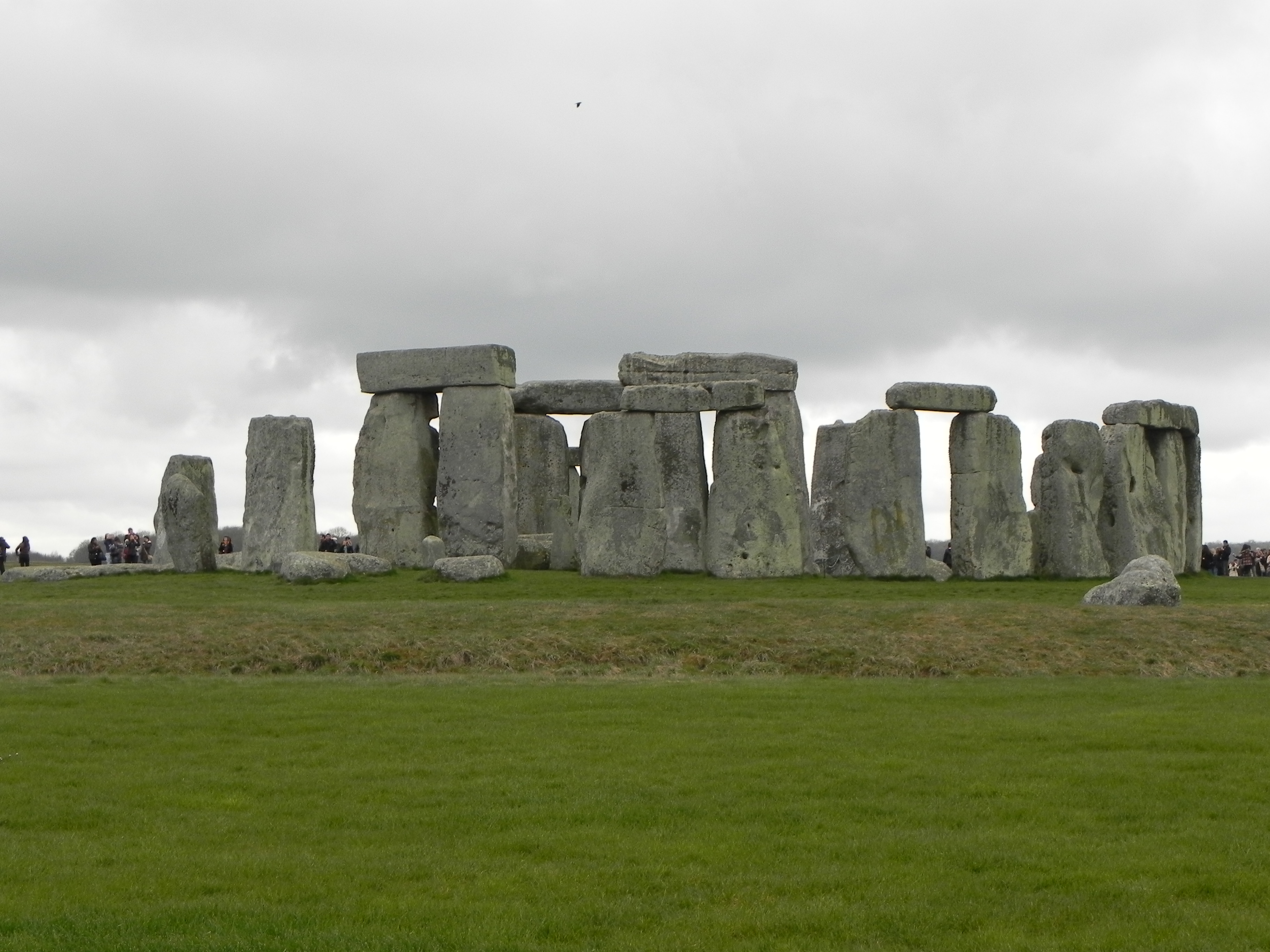
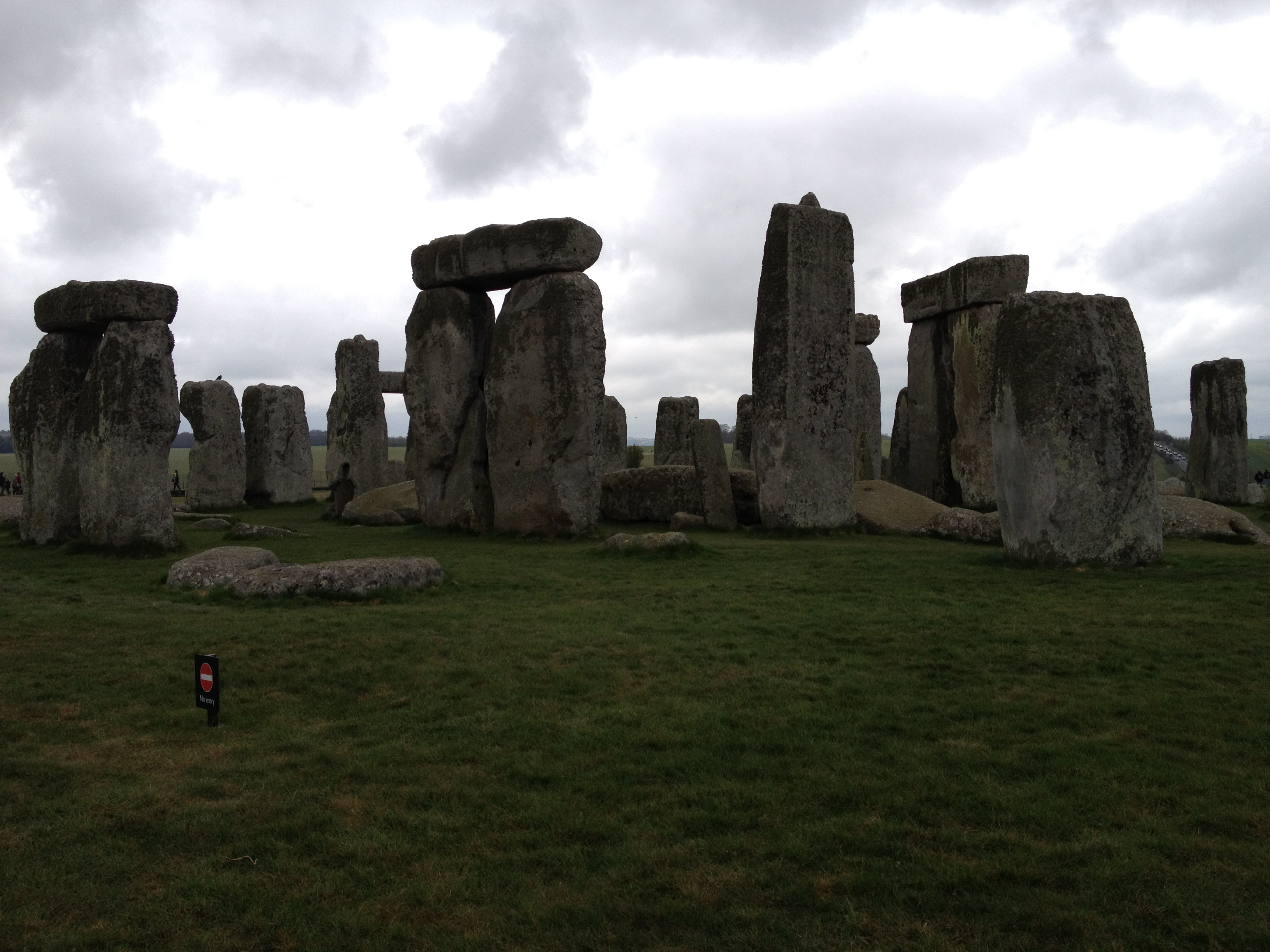
The Huffington Post recently ran a story on Stonehenge. Part of the endless fascination with the ancient monument is that no one really knows why it was constructed. Given the tremendous amount of effort the building represents, it is clear that this was important to the cultures constructing it. The article in Huffington cites archaeologist Mike Parker Pearson as suggesting that Stonehenge was a monument to the unification of Britain. While not as sexy as explanations that draw on human sacrifice, precision astronomy, or alien visitation, something rings true about it. In the long course of human development, we’ve had to overcome many, many hardships. At one time humans were relatively easy prey animals for large predators. Our evolution didn’t endow us much in the way of body armor or built-in weaponry. Our eyesight and other senses pale next to various other animals. Even with all these deficiencies, our biggest challenge hasn’t been nature, but other people.

Archaeologists have also been discovering that a peaceful prehistory to humanity does not match the facts. Warfare and strife have been as much a staple of human behavior as the perennial hunt for food and safe shelter. Civilization involved cooperation at unprecedented levels. People had to trust one another and work to maintain the infrastructure that allowed diversification of talents and abilities. Fighting and wars still occurred, of course, but less frequently and with less brutality. With economies of surplus, however, capitalism also eventually evolved. It is an aggressive organism. It is visible in the greed embodied in the thought process that the only good in life is financial and the only worth of humans can be calculated in dollars and cents. It is this thinking that has erected the monuments more familiar to us today in our cities and centers of civilization.

Stonehenge could never have been a money-making venture (not until the development of capitalism at least). It is in the middle of nowhere, in a sense. The Salisbury Plain is fairly empty—no large cities nearby, no grand scenery as one might find in Cornwall or the Grampians. According to the theory, its location has to do with it being in a very rough middle between various regional cultures. Building impressive monuments is very difficult to do if one has to watch constantly over one’s shoulder. I suppose in my Romantic notions Stonehenge will always represent a mysterious past suffused with unanswered questions. For the present, however, Pearson’s explanation seems more than likely—it sounds absolutely vital in a world so dangerously divided as ours. Perhaps it is time to start a truly monumental building enterprise involving every nation. It will give future generations something to wonder about.

Time to build another henge.


Buying the Truth

Every now and again the Chronicle of Higher Education dips its trowel into the biblical archaeology debate. Those of us who’ve made extensive arguments based on ancient texts and artifacts know the territory a little too well. Archaeology, which largely grew out of biblical scholars attempting to “prove the Bible,” eventually started on its own track of scientific respectability with the predictable result of distancing itself from the Bible occurred. So far, so good. Then biblical criticism took a turn towards post-modern sensibilities. The truth cannot be known, and therefore the safest approach is to stop seeking any truth at all. Archaeologists in the know joined this venture (biblical scholars and archaeologists often cross borders in this exotic land), and began to deny historical Israel, as well as the rightly dismissed historical Abraham and Moses. Once you’ve walked a few leagues down that path, however, it is difficult to turn back. This is, of course, an over-simplified account of a complex dynamic, but the issues raised, as seen in the Chronicle, are real. Our perspective flavors our interpretation. If you don’t believe in a historical Israel you’ll never find one, no matter how hard you look. (A similar dynamic is at work in studies of religions and “paranormal” phenomena.) The word “evidence” is finessed as readily as fine hair treatments and the kinds of evidence that convince vary depending on the scholar. It is safest to admit we don’t know, sometimes.

The more troubling aspect, as far as I’m concerned, comes when the Chronicle introduces the concept of corporate sponsorship to archaeological digs. As an erstwhile volunteer on a dig (somewhere back in the Iron Age, it feels like now), I know that archaeology is frightfully expensive. There’s nothing like being on a dig to witness firsthand the amount of labor that goes into removing all that dirt–carefully! Carefully! Universities can’t afford it (stadiums don’t come cheap, you know!), so many digs rely on corporate donors–often television and film companies. And if you’re paying for footage, you want something to bring in watchers. An unnamed archaeologist quipped honestly in the Chronicle, “I don’t agree with everything they say in the films, but they pay me an awful lot more than I could ever earn from writing or teaching.” There it is, staring us straight in the face. The truth goes to the highest bidder.

That may sound benign enough, but in Israel especially, archaeology has high political stakes. You see, politicians are easily swayed by the “we were here first” argument. To get an idea of its specious nature, just ask a Native American! Proving the veracity of a David or Solomon no longer just gets God off the hook, it also builds the basis for claims against people who’ve been here an incredibly long time. The sad reality is that in archaeology, as in higher education, money speaks with an inordinately loud voice. As an agreed means of exchange, money is certainly important, but is it “true”? For those who’ve stopped short of the post-modern abandonment of that great philosophical ideal of Truth, we should be wary of allowing lucre to decide the issue. Those with money already help to decide what courses will be taught and what tels will be excavated. We run a real risk when we let those same people decide what will be considered the truth. In a society enamored of media and its ease of use, the truth is sometimes what comes across the television. There is another way, but it involves heavy digging and lots of reading. Maybe next time—but for now just pass the remote.


Artifacts or Theodicy?

Last week the Huffington Post ran a story that ties archaeology, religion, and monsters together in a package too neat for some researchers. Digging in a sixteenth-century grave for plague victims (something that strikes me as being so foolhardy as to be religious) archaeologists found a corpse with a brick in its mouth. The preliminary conclusion? Sixteenth-century Italian plague-weary society was attempting to stop a vampire. The find has, of course, been disputed. Other archaeologists, the story notes, claim that a loose brick could have fallen into the cadaver’s agape mouth just making it resemble the little-known technique of stopping a vampire by bricking its mouth open. This story, written with Huffington Post’s usual pluck, raised an issue I quite often encountered as a doctoral student in ancient Near Eastern religions: anomalies are generally categorized as religious.

When my wife first pointed this story out to me I thought I might learn something of vampire lore—itself inherently religious—from the sixteenth century. The fact is, however, that artifacts (including people) under the ground accumulate a lot more than dirt. Mystery attends the lives of yesteryear, and the further back we go in time the less we understand. It was a standing joke among those of us in the textually-based field of religious studies that any artifact for which no function could be discerned would most certainly be labeled “religious” by archaeologists. When no logic attends an action, call it religious. This might be a motto for academics and their approach to the study of religion. There are some who claim religious studies is not a proper field of inquiry at all. Excuse me, but where are you intending to fly that plane?

Vampire scares (whether or not that’s what was found in Italy) do, however, follow their own logic. Although early scientists may have made connections implicating rodents (and their fleas) as carriers of plague, the average citizen would have only seen the supernatural dimension. Morbidity on the scale of the Black Death is almost inconceivable and as Europe suffered through periodic outbreaks of plague it seemed that a good God couldn’t be behind it all. Evil creatures, such as vampires, get God off the hook. They are a device of theodicy. “Theodicy” is the jargon for the theological justification of God in a world full of suffering. When God’s goodness effaces to such a point that people grow frightened, well, isn’t it just easier to say a vampire is behind it all? The conclusion that logic draws is quite different. Nevertheless, I think I’ll be replacing the garlic on my nightstand with a brick. What will the archaeologists of the future say?


Gods Will Be Gods

“And it came to pass, when men began to multiply on the face of the earth, and daughters were born unto them, That the sons of God saw the daughters of men that they were fair; and they took them wives of all which they chose.” Genesis 6 begins with one of the most unusual stories in the entire Bible. And that’s saying something! The sons of God mating with the daughters of men? A couple verses on we hear about giants roaming the earth in those days, presumably the children of this divine-human miscegenation. What is this stuff straight from pagan mythology doing in the pages of Holy Writ? Over the centuries, translators have tried to tidy up the boldly direct language of the King James here, making the sons of God into angels or some lesser beings. It is too hard to accept that sacred scripture admits of polytheism.

Monotheism, it is clear, came to the Israelites somewhat late in their history. The Bible is full of bold clues that other gods exist, and, worse yet, they are sometimes as powerful as Yahweh. In the light of later theological development, translators often bow to popular pressure and clean up the Bible’s language a bit. Fact is, Israelites, like most ancients, lived in a world populated with mythical creatures. Gods galore, monsters, demons, angels, witches, giants—they all haunt the pages of the western world’s sacred book. But that’s not what we expect the Good Book to say. The Hebrew text here is unequivocal, these are the “sons of God” we are talking about. Either that, or worse, “the sons of the gods.” More and more deities.

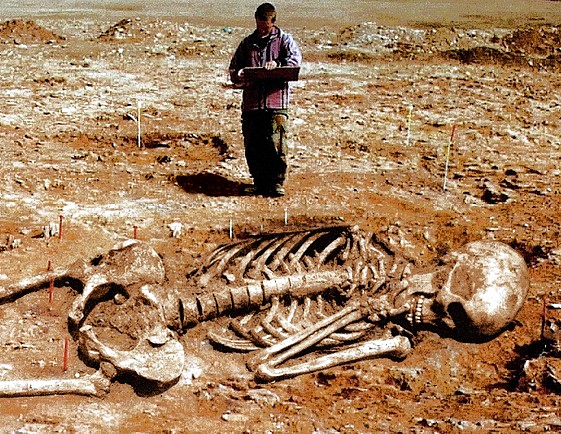
We can’t be sure why the ancient believed in monsters and giants, but it seems likely that such creatures had explanatory value for their world. Lacking science—paleontology was millennia in the future—they had to explain the huge bones found in the earth. We do know that dinosaur bones had been discovered in the Mediterranean basin in antiquity. These big bones often look human to a non-specialist. Heads are frequently missing. It has been suggested that these give rise to our biblical giants. Yet another response has been the recent trend of fundamentalists with Photoshop skills to post photos of archaeologists actually discovering giants on the Internet. Some of these doctored images are very impressive. It is an effort to save the Bible from the truth. A Bible that requires saving, however, should give even the most fervent believer pause for thought. Isn’t it just easier to suggest the sons of God were typical guys and that little has changed since the world was young?


Egyptian Afterlife

The day after Maurice Sendak died, Google’s doodle celebrated Howard Carter’s 138th birthday. Although Howard Carter’s name may not immediately ring a bell, his work still affects all of us in the western world in profound ways. An inspiration for both Indiana Jones and Lara Croft, Carter is best remembering for discovering the intact tomb of King Tutankhamen in the Valley of the Kings. This discovery generated a neo-Egyptian revival in western culture, notable in the Art Deco movement and the Egyptianizing architecture it inspired. As Google’s doodle shows, we are still reaching back to ancient Egypt to find some kind of meaning for ourselves today. In a world of gadgets and hi-tech baubles, we still cast an envious eye towards the dwellers along the Nile.

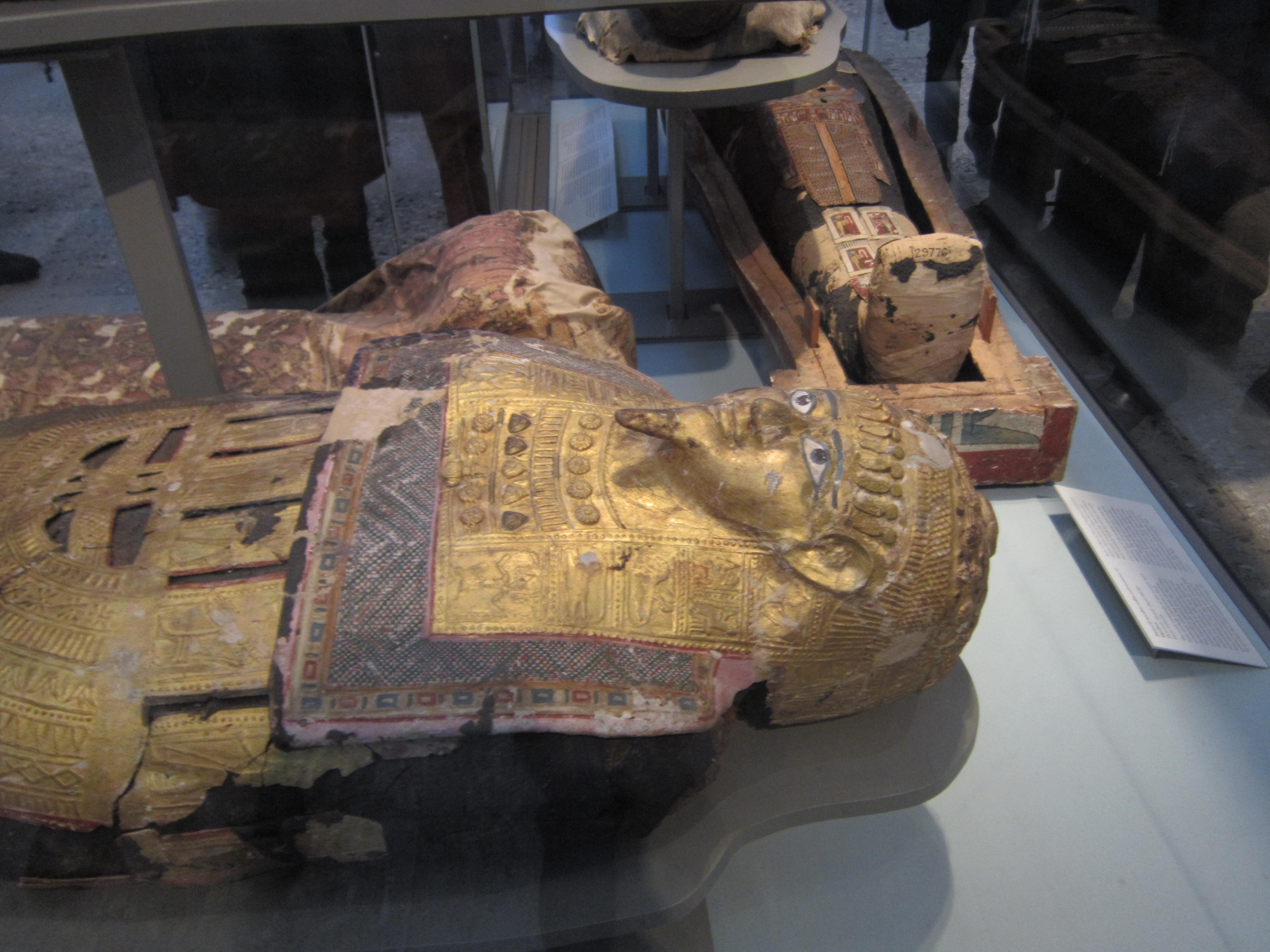
It is difficult to assess why the Egyptians are so enduring. They were, after all, polytheists and occupied a country that is now part of the “Middle East.” It is, however, a mystique that they held even in antiquity. Raiders and invaders who came to Egypt ended up trying to walk like the Egyptians rather than attempting to force them to follow foreign ways. The ideal in ancient Egypt was a stable cosmos. In a perfect world Egypt would be an island of calm and tranquility. For this they had their strong kings to thank, and they spared little expense to build him tombs that would remain the largest buildings on earth until Eiffel began to tinker with steel.

Perhaps the characteristic we most admire about the Egyptians is their unshaken confidence. Assured that they were in the favor of the gods, they took that assurance to the grave. Even as the neighboring Israelites still confined the dead to a gloomy underworld, the Egyptians were constructing an afterlife that would keep the good times rolling as long as time itself survived. A great deal of effort was expended on the pampering of the dead. Funnily enough, in our Christianized nation the confidence of divine pleasure only seems to be enacted in the limiting of the rights of others. And when it is all over, the righteous still fear death. Google has an almost unlimited choice of inspirations for its doodles, but Howard Carter seems especially appropriate on a day when we remember those who are willing to go to dangerous places where the wild things might lurk yet.


Pharaohs of Stonehenge

Stonehenge on Easter Sunday is a remarkably popular place. Tourists from all over the world crowd the pathway around those ancient stones as if they hide some arcane secret in their tumbled, massive form. Stonehenge may be the most iconic location in Britain, surpassing even such modern structures as Westminster Abbey and St. Paul’s Cathedral. Far pre-dating the art of writing, the purpose and nature of Stonehenge involve considerable speculation, but given the unquestionably costly years of labor required to plan, dig, transport, and align the monument, it stands to reason that it must have been religious in nature. One of the standard—perhaps even hackneyed—critiques of archaeological interpretation proves true in this case: if you can find no sensible reason for it, it must be religious.

The main phase of Stonehenge, the one that incorporates the iconic monoliths instantly recognizable today, came under construction some six hundred years after the pyramids of Egypt. In the case of the latter we know their language and we know the motivation behind the structures. More than just buildings to demonstrate the power of the king, they were celestially aligned portals to the afterlife. Although the Egyptians had no word for religion, the pyramids were as religious as the great temples that would soon surpass them in the energy consumption of the empire. In England of the time, we know no names, nor even an accurate assessment of the “nationality” of the inhabitants. Even nations, as we know them, did not yet exist. The builders of Stonehenge surely had something close to our concept of religion in mind. Otherwise, like the great cathedrals of millennia later, it would have been simply a waste of time and resources.

Wiltshire Downs on the Salisbury Plains is studded with ancient locations of significance. On the near horizon, among the eternal green of the English countryside, are dozens of barrows where people of unknown significance are buried. In that respect Stonehenge is emblematic of the individual struggle for eternal recognition. The name Menkaure stirs instant recognition among few. His pyramids stand as eternal monuments to a decidedly faded greatness. Stonehenge and its environs hold the remains of unknown numbers of unknown nationality bearing unknown names. It symbolizes the fate of us all. Yet on Easter, many believers in resurrection crowd in and gaze in awe at a pagan monument to human striving that no one truly understands.


Watch Your Tower

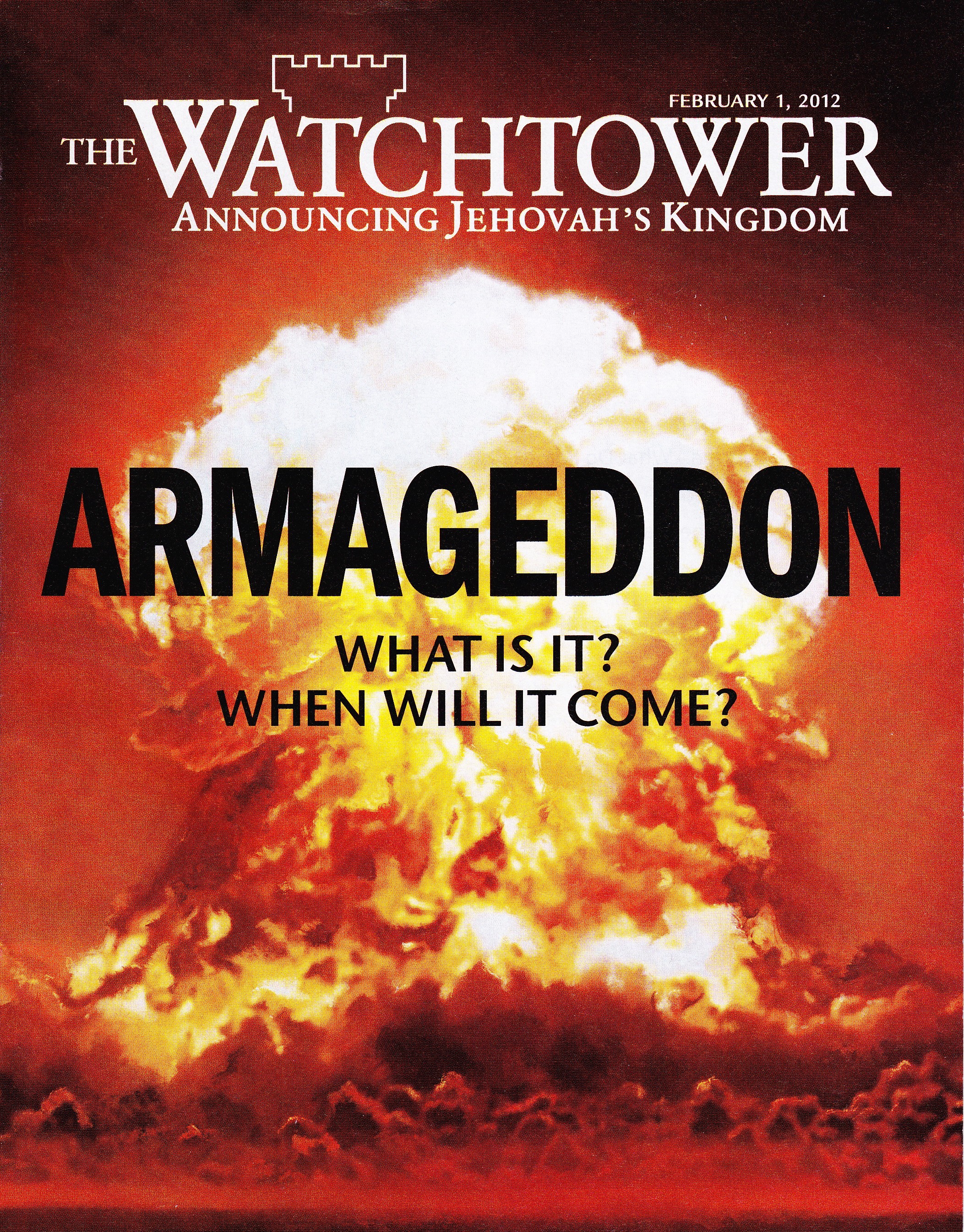
So when the smoke clears from another leap day barely survived, and my Apocalypse calendar tells me about the looming end of all things, and the Jehovah’s Witnesses stop by and leave a Watchtower with the headline “Armageddon” at my door, I start to get a little paranoid. Did I miss the memo on this? I tend to be suspicious of any religion that is less than 150 years old—call me a historical snob in that respect. By the time of the nineteenth century of the Common Era, we were getting industrialization, evolution, and the Whig party sorted out. It was hardly a propitious time to be starting new religions. Well, I was curious about Armageddon, so I read a bit of the Watchtower in any case. It goes best with salt.

“The original Hebrew word Har-Magedon literally means, ‘Mountain of Megiddo.’ Although no such literal mountain existed, a place known as Megiddo does exist.” So I learned. But there was a mountain at Megiddo. Literally. I’ve been there. It’s not an impressive mountain like the Front Range of the Rockies, but it is sufficient for the purposes of the Bible. Megiddo overlooks the broad plain of the Jezreel Valley. In ancient times such valleys were highly valued for fighting because of a basic engineering difficulty with chariots: they don’t work well on hills. Chariots have open backs, so falling out would hamper effective up-hill battles (literal ones), and your chariot bumping into your horses or chasing them downhill would have resulted when the fighting was done. Or when you were fleeing. Valleys like Jezreel were perfect for fighting. And Megiddo has a front-row seat on its little mountain. The site of Megiddo has been excavated by archaeologists and is well worth the time it takes to get there.

By coincidence (or is it?) my apocalypse wall calendar begins March by saying, “Make Archaeology Your Friend.” Hmm, is there a message somewhere in here? When the Jehovah’s Witnesses and the Mayan interpreters agree, should we not at least admit a little doubt? I don’t think so. Both traditions, as certain of special revelation as they may be, are human attempts to make sense of our world. We know of nothing that doesn’t end. The great Eastern religions seem to have caught on more readily to the idea of impermanence than Western cultures have, but they all share this in common—it’s gotta end sometime. I would, however, point out to Mr. Santorum, as he begins to think about his concession speech, that the Jehovah’s Witnesses seem to agree with the amateur Catholic on the part about Satan. My Watchtower says “Satan will marshal the nations for an assault on those who worship Jehovah God.” Perhaps politicians should stick to following the Mayans.


Lost Knowledge

While an actual apocalypse for many turkeys ensued on Thursday, Fox News announced that a second reference to the Mayan apocalypse has been “admitted” by Mexican authorities. So I guess the world will end next year after all. And it figures, I just finally got a full-time job. For some reason, for all of our modern technology and scientific knowledge, many people still fear ancient “prophecies.” This remains true after countless failed apocalypses, two of them just this year proposed by Harold Camping in the name of the Almighty. People who trust the science of their cell phones—which, from any trip to the airport or bus station proves, humans are incapable of surviving without—nevertheless fear the “lost knowledge” of the ancients who believed myths were the most parsimonious means of comprehending a cold and uncaring universe. Yes, I’ll trust my entire life, finances, travel plans, social calendar, to a plastic box barely the size of a credit card. But if the Mayans said the world was going to end… these are the Mayans, after all! The Mayans!

Never mind that we know little about this antique people; we have had predicted ends to the universe from disaffected visionaries and disgruntled prophets ever since the Zoroastrians suggested this might not go on forever. And now that two predictions appear to coincide, it looks like its time to sell some stocks, cash in some IRAs and party like it’s 1999. When 2000 came in with its baleful symmetry, as some saw it, with events two millennia earlier, not many were dissuaded from the concept that never emerges. Doesn’t the book of 2 Peter state that the universe is reserved for a fiery destruction? Perhaps the Mayans had access to Holy Writ?

The fact is that most cultures concoct origin myths, stories of beginnings. The way the mind works, it is almost a necessary corollary to construct myths of the end as well. And somehow we trust that arcane knowledge on such matters is more accurate than the scientific scenario that, given the limited longevity of any single species, no humans are likely to be present when old Sol balloons out to be a red giant. Far more spectacular to suggest some ancient sage or savage saw it coming and grow anxious with the waiting. Strangely, many people seem ready to discard all the progress, the monuments, the essence of our humanity for the sake of ancient predictions. 2013 does not seem so far away. Many of us are planning to be here, even if they find an entire library of Mayan predictions. Perhaps the truest prophecy of all is that we, as humans, make our own future no matter what other humans have said in the past.


Cthulhu’s Revenge

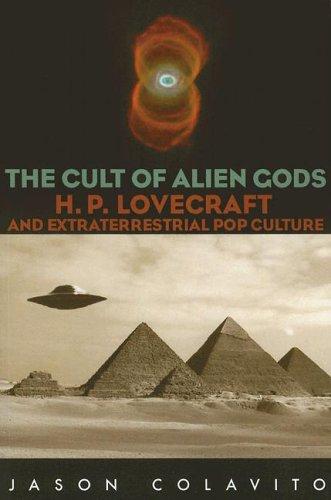
H. P. Lovecraft. Monsters. Aliens. UFOs. Ancient Egyptians. Sumerians. Is there nothing this book doesn’t have? Having read many of H. P. Lovecraft’s stories over the years, I have always been taken by how, as a writer, Lovecraft disappeared from public attention only to spring back in the 1990s. I discovered Lovecraft while doing research on Dagon, the putative “fish god” of the “Philistines.” Every time I typed the name of the deity into Google, I came up with pages and pages of Lovecraft. In my lonely room on a gray Wisconsin campus, I began to read his stories and shiver with fear as I walked across a dark parking lot to my car. Jason Colavito obviously has a great appreciation for Lovecraft as well, and his book The Cult of Alien Gods: H. P. Lovecraft and Extraterrestrial Pop Culture is a fun read for a November night. Colavito suggests that the “ancient astronaut” craze that has informed many a young mind stems back to Lovecraft’s fiction. Cthulhu and his ilk.

I’m not sure that Colavito convinced me that the ideas of ancient aliens began with Lovecraft, but he does an excellent job of exposing the foibles of many theorists who build houses of cards on shifting sand. One of the most interesting connections Colavito makes is that Creationism and Ancient Astronaut-ism are not dissimilar. “Both are, in essence, a concession that science is the ultimate arbiter of truth, and both seek to (mis)use science to give absolute authority to their beliefs” (331-2). This is an aspect of Creationism I hadn’t considered before. In the uncompromising desire for scientific respectability, the only option open is to bend science to the will of religion. This distortion must be carefully executed, convincing the followers that true science has validated a religious ideal. Rhetoric and occluding argumentation must be utilized carefully here. It seems Cthulhu has world domination in his squishy mind again.

Lovecraft famously gave us fantasy worlds where ancient space creatures left their impressions as gods upon a vulnerable humanity. Mysteries of the past—and Colavito doesn’t deny there are mysteries—are so easily explained by dei ex machina, and working with fantasy is so much easier than working with physics. To approach the mysteries with an answer already in hand, however, is to deny science its glory. As a civilization we owe much to a scientific understanding of the universe we inhabit.


Jesus? No News

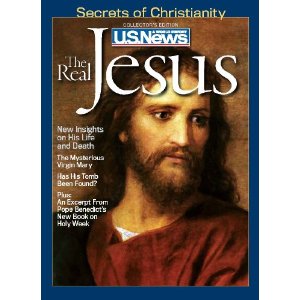
Stepping into the Port Authority Terminal in New York City may be the last place I expected to see Jesus. But there he was, at Hudson News, his beneficent face forming a repeating mosaic before the hurried and harried commuters rushing to get to work. U.S. New & World Report’s special issue features Jesus. Obviously. Racking my half-asleep brain, I couldn’t think of any reason for this sudden popular epiphany; it seems out of sync for Christmas and Easter, and no big news discoveries in the archaeological world had been recently announced. Perhaps the editors know the American Academy of Religion and Society of Biblical Literature annual meeting is coming up next week. Getting 10,000 scholars of religion together in one location is enough to make even the most hardened skeptic pray for a miracle. So, what are these “Secrets of Christianity” that call for a special edition?

The sidebar taunts: “New Insights on His Life and Death,” “The Mysterious Virgin Mary” and “Has His Tomb Been Found?” I am curious about what makes Mary mysterious; she is a minor character in the Gospels who rose to a mysterious prominence only with Catholic hagiography. Well, the sidebar does also state that the special edition has “An Excerpt From Pope Benedict’s New Book on Holy Week.” Spoiler alert! Please keep in mind that Holy Week is months away yet. Perhaps it is in response to the overly religious tussle that is going on with Republican presidential candidates. What was once a forbidden topic of discussion is now headline news, and the average person might feel the need to brush up on Christianity 101. Problem is, apart from the Gospels—and their brief is not always historical—we have very little in the way of evidence about Jesus. In the first century he was just another radical rabbi, not likely to have garnered much public notice until after his martyrdom. That means that the smallest nuggets become huge in a world where we simply don’t know.

The cycling and recycling of Jesus into the public consciousness is big business in America. With the frenetic faith claims of political candidates lacing the headlines, it is almost like a high school locker room with each contender claiming to have the bigger God. Cracking open the magazine on my lunch hour confirmed my suspicions—there’s nothing here that scholars haven’t known for years. Problem is, scholars don’t speak on a level that most people can hear. I don’t recall the last time I saw a professor taking a bus or hanging out in a bus terminal. That’s the thing about Jesus, you can always find him hanging out with the common folk. If religious specialists would learn to speak in plain language there wouldn’t be so many “Secrets of Christianity.”