The Hunter

Orion seems to have tripped in his journey across the sky last night. I can remember being told of generals falling in battle, and now I hear how they fall in bed. Nobody really expects Sunday School behavior from an aging warrior, but the brass is used to issuing orders and expects unquestioning obedience. Now we delve into their personal lives and are surprised to find, what? Sex? Sex scandals have become a major source of “news” over the past several years and General Petraeus is only the most recent in a long line of politicians and power-mongers who’ve been caught in compromising positions. How very primate of us. I often think how in the categories of sin we include getting caught in affairs among the most horrible. But also among the most common.

Given the other activities of generals—waging wars and ensuring that enough of the enemy die to gain compliance—you might think that keeping them safely between the sheets might be the best thing for the greatest number. I don’t know the ins and outs of the story, but with the scandal running across the headlines it is pretty obvious that we’re all past the shock of Sandy and election night. Time to find other peccadilloes to amuse us.

If we cast a wide enough net, however, it won’t haul in generals only. No, we find politicians of all orders, televangelists, football coaches and all kinds of other leaders entangled in it. The thing that they seem to have in common is lack of commitment. Or restraint. That worries me a bit when it comes to leaders. None of us is perfect, I realize, but certain activities are taboo and those who ride the trajectory to fame violate those taboos at their own peril. It is the story of David and Bathsheba. I am, however, reminded of the mighty hunter Orion. The various myths tell it differently, but in one popular version it was the jealousy of Artemis that felled him. Perhaps that is why he seemed off-balance as I watch him fleeing the rising sun outside my window.
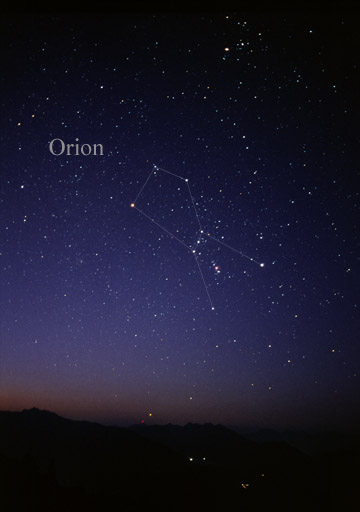
Till Credner’s Orion from Wikipedia Commons
Where is it?

When I step outside to pick up the morning newspaper, I always look at the sky. I think this is a very early evolutionary trick. It may be because there was a time when primates were smaller and birds of prey larger, or it may be because some big cats like to drop on prey from trees. It may be simply that we don’t like to get wet, especially unexpectedly. For whatever reason, the sky is a source of endless fascination. Helen T. Gray, in a piece written for the Kansas City Star yesterday, ponders the place of Heaven in the space age. 80 percent of Americans report believing in Heaven, she points out, and she describes how Heaven has shifted from an improbably physical place to a transdimensional or neurologically embedded place. We, as a people, believe that there must be a better place than this. No matter where we locate it, Heaven is always a decided improvement on this place where too many people suffer too much and all of us suffer some of the time.

I once considered astronomy for a career. My high school, built in the fretful days of the Cold War, had an actual planetarium as the space race was burning over the red line. I took a high school class in astronomy and when I got to college I followed it up with an undergraduate course in the same. While I enjoyed learning about all the strangeness of space, it soon became clear that astronomy was simply another word for mathematics; the class involved intensive equations stressing a regularity that Metamucil would be proud to claim. And, of course, since we live on a sphere every direction is up. The belief in a better place is nothing if not resilient. It survived the knowledge that “up there” is either nowhere or everywhere, depending on your point of view. Most theologians after Galileo’s day finally admitted that. When I go for the paper, I still look to the sky, however.

In Hebrew the word translated “heaven” is the same word that is translated as “sky.” The Hebrew Bible knows no separate place called Heaven, but the latest parts do indicate a life restored after death. I wonder if Rick Nowels and Ellen Shipley might not have gotten it right when they wrote the song that would help solidify Belinda Carlisle’s solo career. Maybe Heaven is a place where love prevails. Not just the erotic love of pop music, but the love that sees not a Muslim, an African, a Hindu, or an Oriental, but human beings. That stranger experiences those same feelings, hopes, aspirations that all of us do. He or she should not be left shivering, hungry on the street corner begging for quarters to buy his or her next meal. If it’s clear outside I linger as I gaze at early morning stars and planets, feeling deep yearnings I can’t hope to express. No, Heaven may not be a Mormon planet where you get to become God after you die (ahem). Heaven is not a mansion in the clouds (I’m sure some satellite would’ve picked it up by now). Heaven is not where I get to go and you don’t. Heaven is here and now, but we all have to work for it.


Unbelievable Voyage

In Sunday’s paper a story from the Los Angeles Times reported that Voyager 1, now 35 years old (and a technological grandfather, considering how quickly technology develops), is poised to leave the solar system. It is the first mechanical device, at least designed and launched from earth, that will do so. The spacecraft, billions of miles away, sends signals that take 17 hours to reach earth. It is boldly going where no man [sic] has gone before. The vastness of open space was one of the initial challenges to the traditional theology that had developed in an unbroken sequence from the time of the Bible down to the days of Copernicus and Galileo. Nobody was sure what was out there, but certainly Heaven had to be somewhere and God was clearly above us, so, in a marriage of convenience, God reigned in the unexplored sky. Voyager 1 bears a gold-plated plaque that attempts to describe who and where we are. Sent into the neighborhood where God used to live, Voyager was announcing that we were ready for celestial guests.

Many scientists don’t take seriously the idea that we’ve already been visited. The internet, however, has become a great clearinghouse for those intrigued by extraterrestrial life. I found a website this weekend that had located at least three different life-forms in just one of the Mars rover Curiosity’s pictures. We are lonely without heavily denizens. Stephen Hawking famously warned, a couple years back, that if they’re there, they’re probably not friendly. His paradigm, however, was based on earth psychology. Most of us know how far to trust that!

The fact is, we’ve been beaming our existence into space since the invention of the radio. Our electronic signals are, according to physics, pretty close to eternal. Electromagnetic waves just keep going and going, putting all manner of Energizer bunnies to shame. Long before Voyager 1 reaches the cusp of the solar system, our light and sound show has been announcing that this is where the godless party is and has been for over a century. Voyager 1 is far less than a needle in the cosmic haystack. It is more akin to a molecule or an atom. Will it find God out there? I highly doubt it. Nevertheless, when I went out to get the newspaper before dawn this morning, I spent an extra few moments looking at the stars and wondering.


Martian Religion

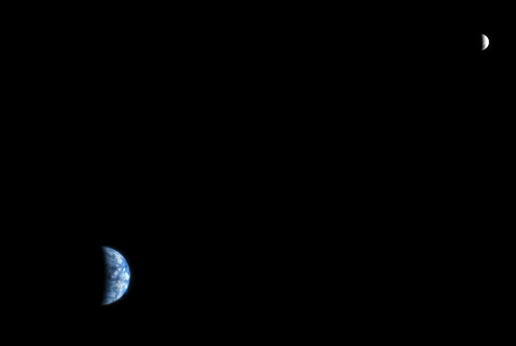
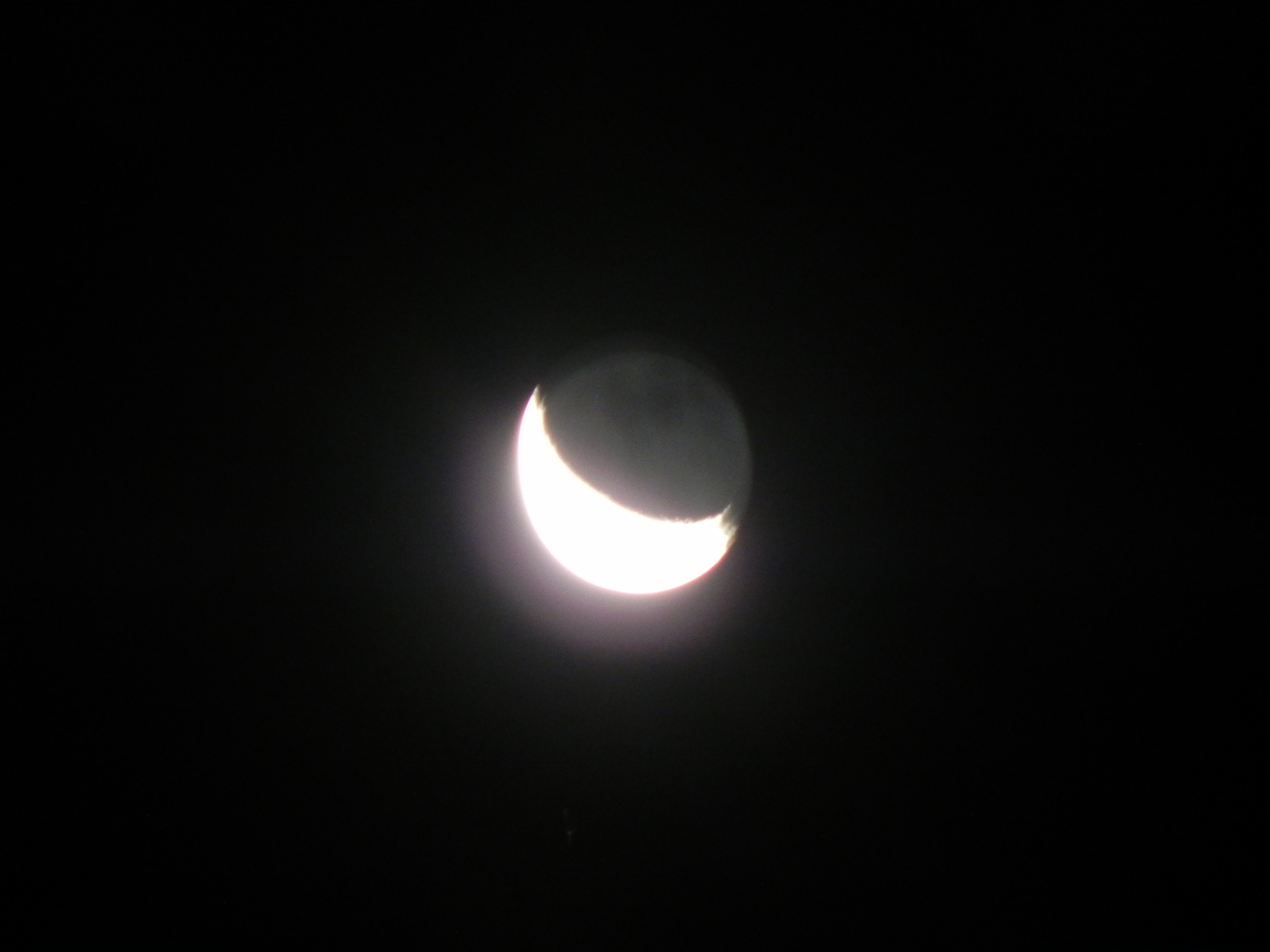
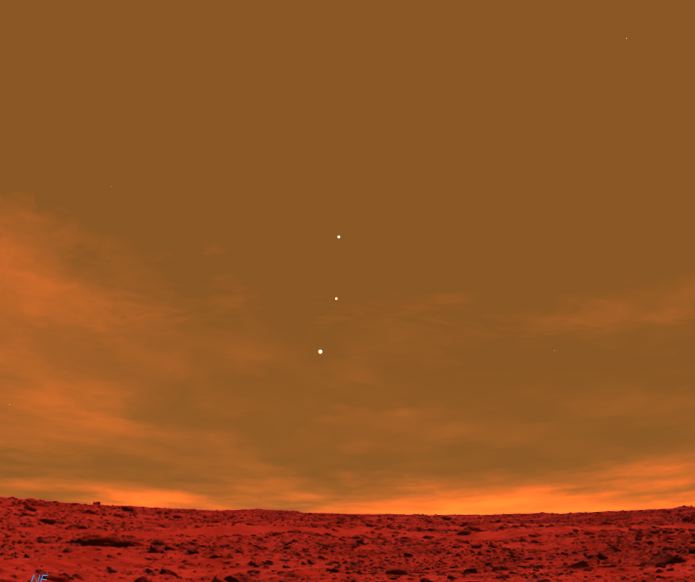
The early morning sky has been putting on a beautiful, celestial waltz this week as the crescent moon, Venus and Jupiter swing close then part along the ecliptic. On such days it is easy to see how ancient people would have attributed motive and intentionality to the solar system—there’s definitely something going on up there. Then we get the images from the Mars rover Curiosity, showing us ourselves, lost in space. One of the truly iconic photographs from the last century was the earthrise taken from the moon. Until that moment it was difficult to conceive that we really were spinning through space, unattached to any biblical pillars with an affixed firmament above. Now we are looking at ourselves from a distance of some 225 million kilometers, and our troubles have never seemed less significant, our god never smaller. We are the eyes in our own sky—or, more impressive yet—the eyes from some other planet’s skies. I can’t see how this would fail to have religious implications.

Is this real life, or just fantasy?

Religion often involves introspection—looking at oneself from the outside, or from another perspective. Our religious ancestors, who had no way to assess what the planets were with their conceptual framework, generally assumed them to be alive. Some cultures called them gods, others creatures, but their movement in the sky is often lost on modern people who only occasionally glance at the sky, when their smartphone is taking a little too long to download something. How sobering it is to consider that we are one of those bright dots when seen from Martian eyes. (Unfortunately I’ve been unable to confirm the stunning image that’s been circulating on the Internet claiming to be from Curiosity.) Ancient religions, by necessity, are geocentric. The earth is all they knew. Of course, religions have grown increasingly defensive as new realities have been discovered; even the Book of Mormon was written before the planet Neptune was decisively named and claimed. Changing worldviews is never easy.

From NASA’s photo library

Religion is often a coping mechanism to keep us grounded. Many concepts of divinity are celestially based—pointing to some divine realm in the sky. That is the perspective of an earthling. Once in space, what direction is God? We find that our up and down, near and far, are only relative terms. What the means is that increased knowledge forces further reflection on religious beliefs. We can’t stand still and let the universe revolve around us like an obsolete firmament. Religion must engage reality to remain relevant. And right now reality is rolling across the surface of Mars, looking homeward with alien eyes. How small our steeples and cathedrals look from our solar system sibling’s perspective.


Holy Grand Central

Staring out over 42nd Street is the massive triumvirate of Mercury, Minerva, and Hercules. Once the largest group sculpture in the world, the famous facade of Grand Central Terminal is photographed daily, and the number of tourists thronging the concourse make it perhaps the sixth most visited tourist destination in the world. While visitors’ shutters clatter away, photographing the statuary and starred ceiling, I wonder how many stop to consider the religious nature of much of this New York City icon. Mercury, of legendary speed, seems an appropriate mascot for a transportation hub. Along with the remainder of the Greco-Roman gods, however, he has been pigeon-holed as “mythology” and is considered a quaint, if picturesque, archaism. How easily we forget that the religions of the classical world were serious attempts to make sense of their universe. Mercury was borrowed from Hermes, a god who had the task of being a psychopomp—a guide to the underworld. (Somehow very appropriate for the immense subterranean world of Grand Central.) In our monotheistic supersessionism, we recast other faiths as myths, forgetting their gravity.

Over on the east side the terminal passageway leads through the Graybar Building onto Lexington Avenue. The external friezes are of art deco vintage and show what appear to be angels flanking two of the entrances. My limited architectural knowledge prevents me from finding an actual description of what the figures represent, but it is safe to say the wings upon the back generally qualify a character as somewhat more than human. Graybar eventually became Western Electric and the original company is on the Fortune 500 list (again, I tread in unfamiliar and somewhat scary territory here). Angels watching over the common person? If so, perhaps we need to seek an upgrade. William Henry Vanderbilt, president of Central Railroad, once famously declared, “the public be damned,” in a moment of unexpected candor, showing where the common person stands in the Weltanschauung of the wealthy.

Back inside Grand Central, the famous celestial ceiling always draws considerable attention. Those who know the stars have noted that there is a backwards nature to the array—it does not match any actual outdoor sky. Explanations vary, but it is said to be a “God’s eye-view” of the stars. As we stand below, staring up, we gain a divine view on the celestial sphere. Many thousands of people pass through Grand Central every day. Few, I suspect, stop to consider its role as a monument to the influence religion has in the secular world. Certainly there was no religious motivation behind getting the working public to the city on time. We are the chattels of the wealthy, showing up to our jobs on time. As usual, we are unaware of the power of that which tends to carry on, unobserved. The mythologies of different peoples blend here, but perhaps the greatest myth of all is that the wealth from the gods will trickle down to the average human passing through this sacred edifice.


Liberating Science

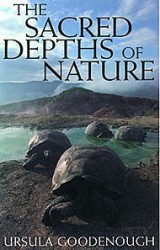
The fact that prominent scientists occasionally take time from their busy schedules to fire off a broadside against religion and religious believers freely bare their fangs at science shows that we need some efforts at reconciliation. I am reminded of schoolyard bullies when specialists in either realm make claims of exclusivity. Religion and science are both here to stay, and they’d better learn to get along. I just finished reading the remarkable little book The Sacred Depths of Nature by biologist Ursula Goodenough. While declaring herself a non-theist, Goodenough, the child of a Methodist minister, preserves a profound respect for the sacred in a concept she calls “religious naturalism.” Her brief book, which a colleague compared to a daily devotional, contains more good sense than all the enraged professionals bellowing at each other from either side of an unbreechable gulf. Uncompromising in her science, Goodenough is not suspicious of the human religious impulse, but embraces it in the expressions of nature. It is an approach I found liberating and amazingly conciliatory. It lacks the territoriality of Stephen Jay Gould’s Non-Overlapping Magisteria (NOMA) and preserves the integrity of the human person in all its complexity.

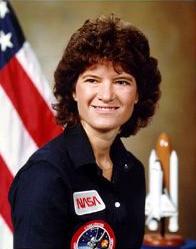
The day I finished the book the headlines of the paper announced the premature death of Sally Ride, another woman who moved science in the right direction. Ride’s sister is a Presbyterian minister, while Ride herself was a physicist as well as the first American woman in space. Aboard the space shuttle Challenger, she made history also as the youngest American in space. Typical of the imperialist national attitude that unfortunately still reigns supreme, space had been tacitly declared a man’s world. Sally Ride shattered that glass ceiling at 17,500 miles per hour. Even so, change seems to have decelerated once again to far below sub-orbital speed. Religion is partly to blame. A deep component in our culture, religions in the western world have traditionally asserted male superiority. Even those who claim God to be sexless can’t really conceive of a big person without some gender. The day after her death and the headlines had shifted from mourning to astonishment that she was gay.

The loss of Sally Ride is a loss to science, for she was in the heaven formerly occupied by God, showing women the way. I am, however, comforted by the efforts of Ursula Goodenough to keep the dialogue open. Too often, it seems, that conflict is the cost of disagreement. One of the observations of astronauts is that long periods confined with the same small coterie of people lead to inevitable disagreements. The question facing us all—for our planet is not so large after all—is how we will choose to deal with differing worldviews. It was declared that science would eventually bury religion, once reason had taken hold and superstition had run its course. Although the grave was dug, it has never been filled. Maybe we should all read the sensible approach of Goodenough and just be glad that we’ve all had a chance to be here at all. And remember Sally Ride as a fearless explorer, a hero rather than a spectacle.


Explanatory Value

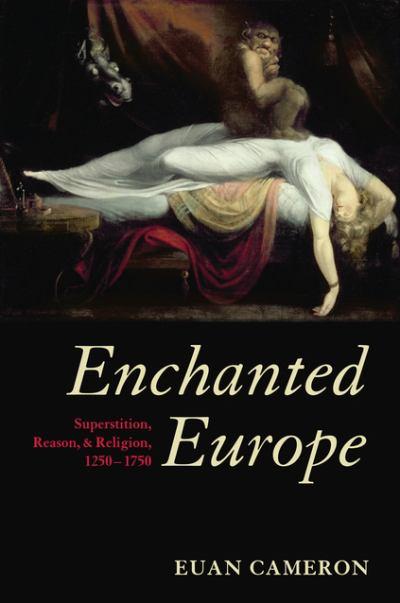
The dividing line between superstition and religion is thin and growing more effaced all the time. Nowhere does this become clearer than in studies of the history of religion. One of the critiques early made between “true religion” and superstition is that the latter involved magic, but today anthropologists find that line difficult to discern as well. Many religions are defined by their insistence on supernatural occurrences. The world as is, is by definition, secular. That’s one of the reasons Euan Cameron’s Enchanted Europe: Superstition, Reason, and Religion, 1250—1750 is so interesting. Cameron, an historian with a precise grasp on theological nuance, traces Christian responses to the world of the supernatural through the Middle Ages. Various theological responses are then explored as the author searches for that elusive distinction that makes one belief religious and another superstitious. It is really a matter of perspective.

Nowhere is this clearer than in the late Middle Ages. As Cameron notes, physics, to the mind attuned to God’s direct intervention in the cosmos, looks like the occult. How could a person seriously believe that two physical bodies, such as the sun and earth, or earth and moon, could attract each other? If you put God back into the equation just to take him out for an instant, this sounds extremely occult. Does not attraction imply volition? How can physical objects attract one another? Thus scientists such as Galileo and Newton often found opposition for their ideas based on the fact that science and superstition can also bear a passing resemblance.

As science’s superior empirical evidence became clearer, the God who’d stepped out of the room temporarily was eventually locked out. This vast universe could be explained without the supernatural at all. What was needed was better glasses. Microscopes and telescopes, and now cyclotrons and space telescopes, provide a consistent and ever sharper image of a universe that gets along just fine without the divine. But what of superstition? Has it gone away? We still routinely construct buildings without thirteenth floors. The sigh of relief from the worker or guest on floor fourteen seems never to be obviated by the fact that they are really on a renamed, empirically thirteenth floor. Your daily newspaper (although quickly growing extinct) will still offer you your horoscope before you hurry off to the lab. Call it what you will—superstition, religion, occult, magic—as long as we’re human no scientist or theologian will ever convince us that there’s not at least some whisper of a ghost in the machine.


Making Light

Back when I was a starry-eyed camp counselor in the Western Pennsylvania Conference of the United Methodist Church, “Christmas in July” was a chic (in as far as Christians can be chic) trend. Kids lucky enough to be at camp that week were treated to a neo-Christian holiday that included a half-birthday for Jesus and cheap gift-giving. (The fact that Jesus’ birthday, in as much as it can be determined, is mid-way between December and July seemed a strangely mute point.) Our “gifts” were generally manufactured from natural products found in the woods and were a diversion to help the homesick campers concentrate on the truly Christian practice of getting stuff. Interestingly, here on Midsummer (the solstice is actually the first day of astronomical summer, but our pagan forebears were more into astrology, it seems, than astronomy) we are on the second most-celebrated holiday in the northern latitudes. With its midnight sun in the far north, and warm temperatures starting to make a regular appearance, light outweighs darkness for just a little bit, and life is never easier than this. No wonder Midsummer appeals to the archetypal mind.

Of course, Christianity could not accept a purely natural holiday, attributed as it was to the beneficence of heathen gods. In an even more dubious exercise than fixing the date of Jesus’ birth, Midsummer became the nativity of John the Baptist, or St. John’s Eve. While some scholars dispute the historical existence of Jesus (not terribly convincingly), the case against John the Baptist might be a little stronger. The prototypical forerunner, the herald announcing something greater than himself is so uncharacteristic of religious folk that it lends itself to considerable doubt. John is described like Elijah, one of the greatest prophetic figures of biblical times. John’s birthday? Anybody’s guess. Since he is second to Jesus, put his birthday on the opposite solstice. (I realize the solstice was June 20; at this early hour of the morning, I think today may also qualify.)

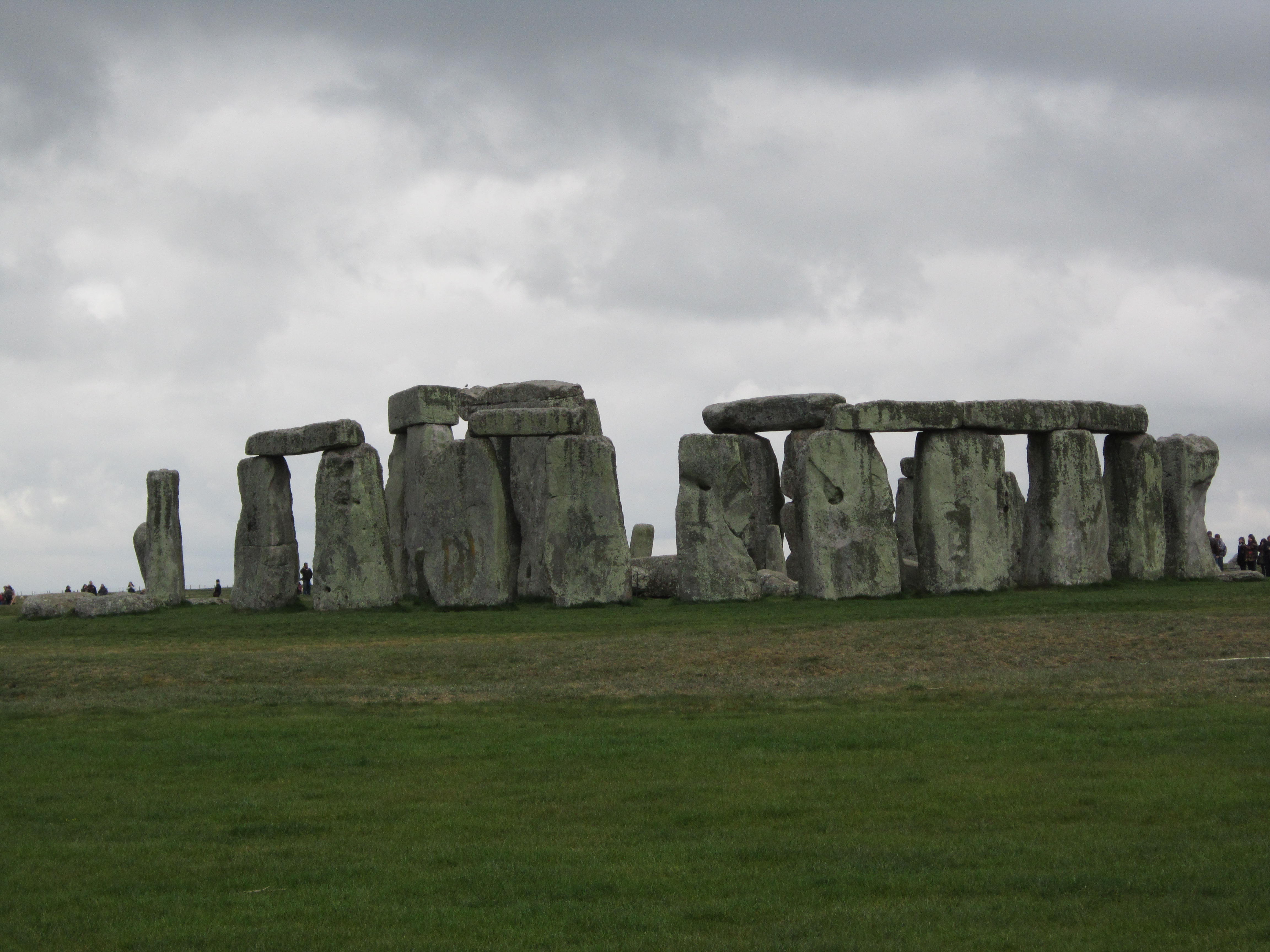
Back at Easter, historically near the vernal equinox, I found myself at Stonehenge. Knowing I was missing Druid priests by a full set of quarter days, it was still an exhilarating experience. Ancient people welcomed the return of increasing light with religious fervor. The effort it took to move these monoliths to the barren plains of Salisbury is nearly unimaginable. They represent, at some level, the invincible nature of the sun, our warmth and light. In physical, astronomical, terms they had no idea what the sun might be. It was, undoubtedly, the source of light and warmth, and even every lizard and turtle sunning itself on a rock participates in welcoming its return. So we’ve come to the solstice once again. It is the high point of the year. Now we begin our slow descent back into nights that will grow longer until the winter solstice once again reverses the trend. We don’t need Christmas in July–we already have it in June.


Leap Day

Why isn’t Leap Day a holiday? From ancient times early civilizations that used a solar calendar realized that the 365 day year doesn’t really work out. (Must have been a calculation error in the divine calculus on day one, I suppose.) Even though the solstices and equinoxes come and go with astronomical regularity, the earth’s orbit around the sun is a little out of sync with its wobble on its axis. The difference doesn’t make itself very apparent in a year, or even a decade. If you let it keep going, however, the calendrical months, like the seasons themselves, begin to migrate. Given enough time January would become summer in the northern hemisphere. Intercalary solutions ranged from adding extra days to saving them up, in some cultures, and adding an extra month to the year. The error of the gods then slipped back into mathematical precision. The one thing that the ancients recognized in common was that this extra time was a gift, a day to be celebrated. In the modern, post-industrial world, it is just another day to go to work while politicians get an extra day to campaign.

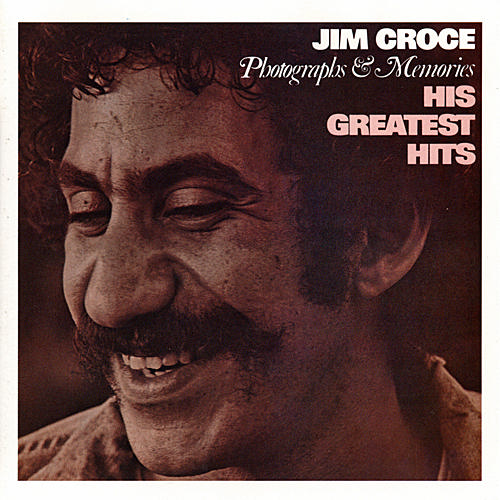
Time is perhaps the greatest theological challenge. People have limited time. Since we seek pleasure and comfort—even when we don’t attain it—most of us prefer to remain alive to try again. We sometimes forget how great a gift this is. One of my favorite songs growing up was Jim Croce’s “Time in a Bottle.” But alas, time is a bandit—as Jim Croce’s tragically short life illustrates a little too well. As the ultimately unrenewable resource, time reminds us of the folly of politicians and the fickleness of fame. Wasting time is the greatest sin imaginable.

Above all, time is a religious problem. Faced with human mortality, all religions address, in some way or other, what happens after the end. When time runs out. We can’t conceive this world without us, but as the calendar implacably shows, it’ll get along just fine. That’s why today should be a holiday. It is a freebie—one of those rare, saving up for a rainy day moments when after four years of scrimping we’re given a new day. It has celebrate written all over it. Time is a bandit, robbing us of the sensibilities of our ancient, cultural forebears who used this time to party while we use it to labor. “Time in a Bottle,” it is said, was written for Croce’s son A. J. The son is a musician like his late father. As I sit here hearing the seconds tick away on the clock, I realize that every great once in a while the bandit gives as well as takes. In that light, every day is a holiday.


Close Commandments

Okay, so I’ll admit that Jeffrey Kripal’s Authors of the Impossible put me in the mood for Close Encounters of the Third Kind. Watching this movie always calls for an investment of time and some emotional energy since it does drag a bit and there are some ponderously majestic scenes that simply make me want to scream. As I powered up the old DVD player this weekend, however, I received an epiphany while watching the movie for the first time in years. Early on during Richard Dreyfuss’s breakdown, the kids (incongruously) gather around the television with excitement to watch the Ten Commandments. The reason, clearly, is that they want to stay up late, and even having to watch Cecil B. DeMille’s warhorse is an adequate excuse. I’ll admit that it was one of my motivations for watching the lush, but equally dull, Ten Commandments as a child. Yes, I took it to be a pious attempt to render God’s literally true memoirs into celluloid, but its 4-hour running time did promise to keep me out of bed until after ten.

Young Moses experiences a theophany.

As my wife and I watched Close Encounters over the weekend, I realized for the first time that much of the cinematography is based on the Ten Commandments. Dreyfuss is a visionary, a prophet, if you will. He is drawn to a sacred mountain (Devil’s Tower) where, like Moses, he makes his way up and down, unable to decide whether to enter the divine presence or not. One of the pacing problems in the book of Exodus is the mental image of an 80 year-old Moses laboriously making his way up and down Sinai as God sends him on various errands. I imagine the children of Israel having time to cast a whole herd of golden cattle. As the UFOs make their grand appearance somewhat near the end of Close Encounters Roy Neary (Dreyfuss) and Jillian Guiler climb the mountain, see the theophanic display, and start back down. Only to go up again. On their way to Devil’s Tower they drive by several dead animals, like those struck down in the fifth plague of Exodus. The army forcing the people out of the area is itself an exodus. The return of those kidnapped by the aliens is a kind of letting go of those held captive. Apparently the Egyptians and aliens have a long history anyway.

I have no idea if Steven Spielberg was intentionally modeling Close Encounters on the Ten Commandments, but corollaries are clearly there. 1977 had not yet witnessed the decline of Erich von Däniken’s star, catapulted into orbit by Chariots of the Gods? where once again we find God driving spaceships and giving the Egyptians a hand with those pesky pyramids. Even the surnames of the characters seem to be a play on their biblical roles. Roy Neary, the one who draws near to God, the only one selected to literally ascend to heaven at the end, and Jillian Guiler, whose suspicion keeps her earthbound with her son Barry, who bears an eerie resemblance to the childlike aliens whom he befriends. Berry is the movie’s Joshua, the one who will keep the faith alive for the next generation. The story came to Spielberg, according to the media, when he saw a meteor shower in New Jersey as a youth. I missed last week’s meteor shower in New Jersey, and my baby ark on the Nile never sailed.


Lost Knowledge

While an actual apocalypse for many turkeys ensued on Thursday, Fox News announced that a second reference to the Mayan apocalypse has been “admitted” by Mexican authorities. So I guess the world will end next year after all. And it figures, I just finally got a full-time job. For some reason, for all of our modern technology and scientific knowledge, many people still fear ancient “prophecies.” This remains true after countless failed apocalypses, two of them just this year proposed by Harold Camping in the name of the Almighty. People who trust the science of their cell phones—which, from any trip to the airport or bus station proves, humans are incapable of surviving without—nevertheless fear the “lost knowledge” of the ancients who believed myths were the most parsimonious means of comprehending a cold and uncaring universe. Yes, I’ll trust my entire life, finances, travel plans, social calendar, to a plastic box barely the size of a credit card. But if the Mayans said the world was going to end… these are the Mayans, after all! The Mayans!

Never mind that we know little about this antique people; we have had predicted ends to the universe from disaffected visionaries and disgruntled prophets ever since the Zoroastrians suggested this might not go on forever. And now that two predictions appear to coincide, it looks like its time to sell some stocks, cash in some IRAs and party like it’s 1999. When 2000 came in with its baleful symmetry, as some saw it, with events two millennia earlier, not many were dissuaded from the concept that never emerges. Doesn’t the book of 2 Peter state that the universe is reserved for a fiery destruction? Perhaps the Mayans had access to Holy Writ?

The fact is that most cultures concoct origin myths, stories of beginnings. The way the mind works, it is almost a necessary corollary to construct myths of the end as well. And somehow we trust that arcane knowledge on such matters is more accurate than the scientific scenario that, given the limited longevity of any single species, no humans are likely to be present when old Sol balloons out to be a red giant. Far more spectacular to suggest some ancient sage or savage saw it coming and grow anxious with the waiting. Strangely, many people seem ready to discard all the progress, the monuments, the essence of our humanity for the sake of ancient predictions. 2013 does not seem so far away. Many of us are planning to be here, even if they find an entire library of Mayan predictions. Perhaps the truest prophecy of all is that we, as humans, make our own future no matter what other humans have said in the past.


Cthulhu’s Revenge

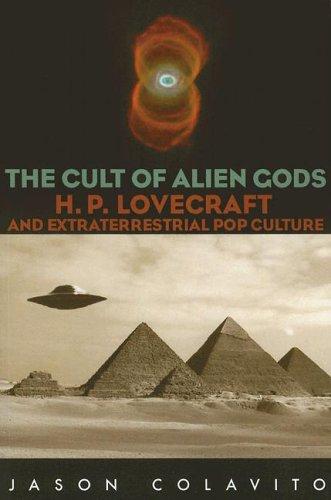
H. P. Lovecraft. Monsters. Aliens. UFOs. Ancient Egyptians. Sumerians. Is there nothing this book doesn’t have? Having read many of H. P. Lovecraft’s stories over the years, I have always been taken by how, as a writer, Lovecraft disappeared from public attention only to spring back in the 1990s. I discovered Lovecraft while doing research on Dagon, the putative “fish god” of the “Philistines.” Every time I typed the name of the deity into Google, I came up with pages and pages of Lovecraft. In my lonely room on a gray Wisconsin campus, I began to read his stories and shiver with fear as I walked across a dark parking lot to my car. Jason Colavito obviously has a great appreciation for Lovecraft as well, and his book The Cult of Alien Gods: H. P. Lovecraft and Extraterrestrial Pop Culture is a fun read for a November night. Colavito suggests that the “ancient astronaut” craze that has informed many a young mind stems back to Lovecraft’s fiction. Cthulhu and his ilk.

I’m not sure that Colavito convinced me that the ideas of ancient aliens began with Lovecraft, but he does an excellent job of exposing the foibles of many theorists who build houses of cards on shifting sand. One of the most interesting connections Colavito makes is that Creationism and Ancient Astronaut-ism are not dissimilar. “Both are, in essence, a concession that science is the ultimate arbiter of truth, and both seek to (mis)use science to give absolute authority to their beliefs” (331-2). This is an aspect of Creationism I hadn’t considered before. In the uncompromising desire for scientific respectability, the only option open is to bend science to the will of religion. This distortion must be carefully executed, convincing the followers that true science has validated a religious ideal. Rhetoric and occluding argumentation must be utilized carefully here. It seems Cthulhu has world domination in his squishy mind again.

Lovecraft famously gave us fantasy worlds where ancient space creatures left their impressions as gods upon a vulnerable humanity. Mysteries of the past—and Colavito doesn’t deny there are mysteries—are so easily explained by dei ex machina, and working with fantasy is so much easier than working with physics. To approach the mysteries with an answer already in hand, however, is to deny science its glory. As a civilization we owe much to a scientific understanding of the universe we inhabit.


Expanding Universes

If you’re one of those people who has trouble finding your car keys, it looks like things are only going to get worse. We all knew the universe was expanding, but now that the smoke has cleared from this year’s Nobel Prizes (there was smoke, wasn’t there?) it is now common knowledge that instead of slowing down, the expansion is actually accelerating. Kind of makes you wonder who’s driving. Being somewhat of a science news junkie, I already knew of the increasing rate of expansion, but seeing it in the news again made me ponder the theological implications of it all (despite not being a theologian). Where do we locate Heaven in a rapidly expanding universe that is ripping itself apart? Why didn’t the prophets in the Bible see this coming? What is anybody doing about it?

Physicists have had to postulate a new culprit in this unexpected scenario. Dark energy must be driving the expansion and the universe most be mostly composed of dark matter. Besides apparently being the substance between the ears of Tea Partiers and certain public officials, nobody really knows what dark matter is. The darkness of the name here is to be understood as “unknown.” We can’t see it or sense it, but it can be weighed—at least on a universal scale. Not only are we not the center of God’s universe, we are vastly outnumbered by something that we can’t even see.

Of course, it will only be a matter of time before some religious specialist suggests that God is the dark matter or the dark energy of the universe. Classic god-of-the-gaps thinking. If we can’t explain it, it must be God. That God, however, suffers the embarrassing phenomenon of shrinkage. At one time that Gog (God-o’gaps) was in control of the weather, until NOAA came along. At one time that deity held the nucleus of atoms together, until the strong and weak nuclear forces were discovered. At one time that God knocked off the dinosaurs. Well, maybe the jury’s still out on that one. The danger of conflating God with science is the inevitable effacement of divinity. Our universe has proven unfriendly to deities. Depending on how medieval we’d like to get, we might suggest that dark matter must be all those angels dancing on the heads of pins. While you ponder that one, I’m going to look for my car keys while I still can.

There it goes...


Lamp of the Gods

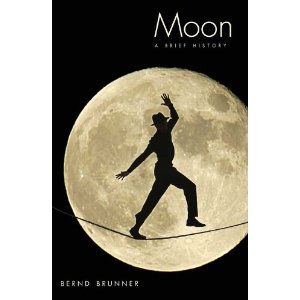
Long venerated as a god, the moon has fallen to such a declination that it scarcely attracts the notice of most people anymore. While some governments are busy making plans to reach the moon—notably those with the largest populations—the rest of the developed world looks to the nighttime sky and lets out a yawn. The poignant little book called Moon: A Brief History, by Bernd Brunner, offers a moving tribute that is part science, part history, and part whimsy. Very few heavenly bodies have undergone the dramatic plummet in interest as our familiar old moon. It remains the proximate cause for werewolves and the occasional harvest-season horror movie, but since the Cold War has ended and we no longer need to prove ourselves to anybody, attention has shifted toward more distant and abstract targets. Maybe Mars, or one of Jupiter’s moons holds the fascination we so long for. The moon, apart from a brief flare of interest when water was discovered there, has died a slow death in the human imagination.

In ancient times, the moon was often considered superior to the sun. Sure, it’s not as warm—downright cold at times—but its light is more gentle, more forgiving. The traveler’s companion, the moon illuminated the way before headlights were invented. The god of the moon (its gender was slippery in parts of the ancient Near East) sometimes topped the pantheon. Even today in Islam, the memory of the high god’s crescent moon can be found atop mosques throughout the world.

What happened to the moon? Famously Carl Sagan, himself an astronomer, wrote about The Demon-Haunted World. In this book he decried the human tendency to look for supernatural causation; the universe is entirely natural. Many have used his reasoning as a nail in the coffin of God. Clearly he was right in many cases, but, as Brunner shows, science can rob even a deity of its shine. Writes Brunner: “Its significance and roles have always varied across cultures and eras—from heavenly god to symbolic guardian or judge, to the scene or stage of spectacular visions and visits, to being ‘just’ and object of scientific investigation.” Once we’ve been to bed with the moon and look at it scientifically, its luster is lost. “Maybe we should try sometimes to un-think our scientific knowledge of the moon,” Brunner opines.

I was one of those thousands planted before the television on 21 June 1969 to watch the first men on the moon. Amid the turmoil of earth, it was a sublime, even a religious moment. In the end a dozen men walked on the moon before it was forgotten. Like the dozen disciples, they alone have been near the truly sublime. With Brunner I too would suggest that we not be too quick to forget our constant companion.


Ezekiel’s Equinox Paradox

Like the great celestial wheels of antique imagination, the seasons continue their wearisome roll across the earth. On a day long marked as a holiday among those more closely attuned to nature than most modern people in developed nations, we face the beginning of autumn. Change is in the air and already the gray skies that have predominated the eastern seaboard over weeks since Irene seem to have winter on their minds. Changes always call to mind how the human mind tends to divide what it sees into categories. The Bible is one place that this tendency is crucial. The whole scheme behind clean and unclean comes down to the need to make discrete that which nature shamelessly blends. When it comes to deity, the party line has always been (at least in the monotheistic religions) that God is like one of us. We can’t imagine human very well without gender, and so God becomes a guy. Notwithstanding protests to the contrary, early religions did take that distinction literally; divinity and masculinity were of a piece.

This fact makes it all the more intriguing when the Bible itself offers a few passages that call this orthodoxy into question. A few verses explore the trope of God as female, but they quickly back away and revert to the male God when taking on more literal terms. Hebraic culture was monistic, not dualistic. God as “spirit” was not really a possibility in the Hebrew Bible. God as a big man fits the picture better. One of the voices that claims dissent is that of Ezekiel. No surprise there—Ezekiel has been analyzed as everything from a dreamer to a dropper. Ezekiel’s understanding of God, however, is deeply imbued with temple imagery. Ezekiel was a priest without a sanctuary, and so his view of God suffered from temple vision. Nevertheless, the strange account of Ezekiel’s vision of Yahweh coming to Babylonia that opens his book demonstrates a startling lack of clarity when it comes to divine gender.

When two people meet, as psychologists have long noted, the first bit of information they attempt to discern is gender. Perhaps it’s the old fight or flight reflex from our reptilian brains, or maybe it is the opportunistic mating behavior that so obviously characterizes our species, but we are very uncomfortable when we can’t make a gender assignment. It is the whole premise behind Saturday Night Live‘s old sketch of “It’s Pat.” When Ezekiel first espies God he describes the deity in terms of glowing metal. But notice that he begins, “And I saw as the colour of amber, as the appearance of fire round about within it, from the appearance of his loins even upward, and from the appearance of his loins even downward, I saw as it were the appearance of fire, and it had brightness round about” (1.27). Beginning at the loins the prophet looks the deity up and down and concludes God is like fire. This image does not long survive the vision, for Ezekiel quickly reverts to masculine imagery for God. Even in the face of evidence that God is not gendered, the faithful must make him so, for the age-old appurtenance of male superiority suffers immeasurably without the camaraderie of God.