Material Whirled

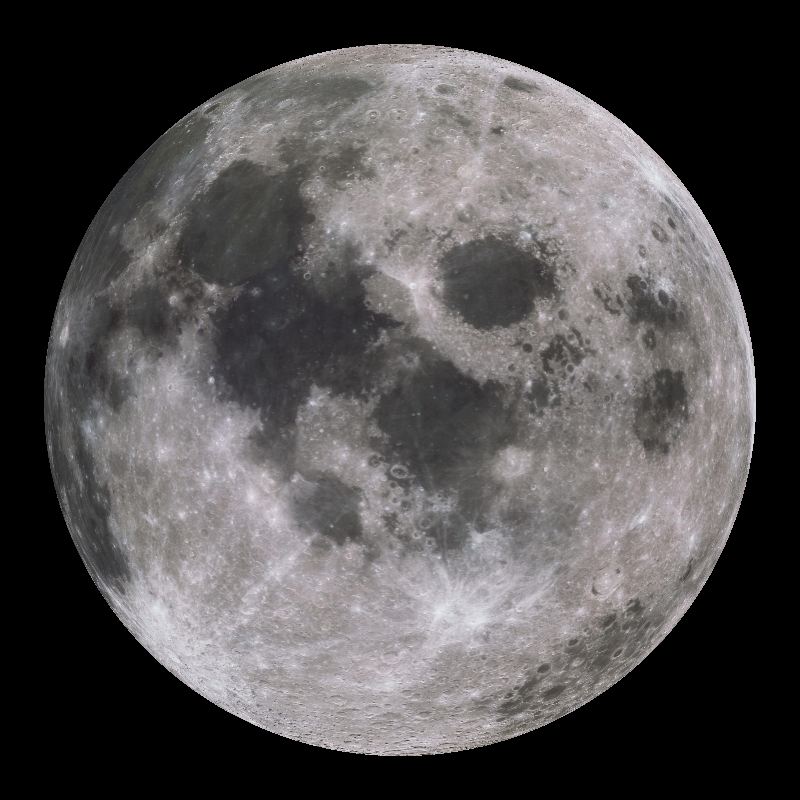
With the moon and Jupiter waltzing slowly so high in the sky, radiating such brilliance early in the morning over this past week, it is understandable how ancient people came to see the gods as material objects. The course of progression seems to have been physical gods to spiritual gods: the earliest deities ate, drank, made love, fought. They were of the same substance as humans, or at least of the same psychological makeup. The Egyptians, Zoroastrians, and Greeks all toyed with ideas of beings of “spirit”—non-corporeal entities that did not participate in our material world, but were able to influence it. In the world but not of it. The tremendous gulf between great goddess and material girl was born. Today that concept is taken for granted, especially in western religions. We are locked into physicality while God is free to come and go.

Many religions respond to this by suggesting that we should look beyond the physical to the majesty hidden from biological eyes. And yet, physical creatures that we are, we are drawn back to material means to demonstrate our spirituality. One of the perks of working for a publisher is the constant exposure to new ideas. At Routledge I have been learning about the rising interest in material religion: the manifestation of religion through physical objects and rituals. This aspect of religious life easily devolves into a cheapening of faith into mass-produced, religious knickknacks and kitsch. Some mistake this for the real thing. While living in Wisconsin, my family used to visit the spectacular Holy Hill, the site of a Carmelite monastery atop a large glacial moraine. On a clear day you can see Milwaukee from the church tower. It is a large tourist draw.

No visit to such a shrine would be complete without the obligatory stop at the gift shop. Even the non-believer feels compelled to buy some incredibly tasteless artifact to keep them grounded in reality. Many of the items—giant glow-in-the-dark rosaries, maudlin mini-portraits of the blessed virgin Mary (BVM as the insiders call her, not to be confused with BVD) and the crucified Lord on all manner of crosses, line the walls and shelves. This commercialization is not limited to the Catholic tradition. Evangelical groups realize the importance of branding as well, passing out cheap merchandise (or better, selling it) with Bible verses emblazoned on it. These signs of faith sell themselves, but they blur the sacred distinction between human and divine. Does religion point to a reality behind the physical? This is its claim, but what is the harm in making a bit of cash on the side, just in case?


Capricorn Too

While seeking the official Flat Earth Society website (don’t ask) I became aware of the fact that several such societies exist. Frequently used as a slur against Luddites and troglodytes alike, the Flat Earth Society would best be classified as a modern religion based on ancient paradigms. This is clear when considering the motivation of Samuel Birley Rowbotham, the erstwhile founder of the movement and author of Zetetic Astronomy. Rowbotham also published a broadside entitled “The Inconsistency of Modern Astronomy and its Opposition to the Scriptures!!” (c. 1850, exclamation points in the original). Those who still doubt the religious nature of the movement should consider that the full-text of Zetetic Astronomy is available on Sacred-Texts.com. The objection to non-geocentric astronomy, although now based on several factors, is religious in origin.

The clashing of worldviews is inevitable when empirical evidence comes into play. As early as the days of Pythagoras and Aristotle thinkers were questioning how physical reality fared against apparent reality. As animals who evolved to cope with apparent reality, the fact that the earth bolts around the sun at a dizzying speed is of little practical value to humans. Making that successful hunt, however, depends on the beneficence of the gods—incredibly important. In such scenarios religion wins out against science every time. The truth of actual existence is more fascinating but indescribably less rich than a mythological worldview. Instead of Dagan, Baal, Zeus, or Thor, we have static electricity. Sure, lightning still behaves in unpredictable ways, but there’s not a god out their hurling it towards sinners. Abstruse laws of fluid dynamics and the flow of electrons determine what is actually happening. Yet we flock to theaters to watch Thor.

While most educated religious believers seldom put too much credibility toward the biblical worldview, they often sense relief at having “flat earthers” to ridicule. Ironically, the stated goal of websites such as Sacred-Texts.com is to promote religious tolerance. For most modern believers, already under the gun of science, tolerance is understood to extend to religions like ours. Those that are outside: modern paganism, flat earth beliefs, ufo religions—such belief-structures deserve ridicule. Is such a mentality not indicative of a certain level of discomfort with “mainstream religions” as well? No matter how far Hubble peers, even to the ends of the universe, it spies no God. No matter how deeply geologists sound, no Hell is beneath our feet. We cannot easily let go of such concepts, no matter how pre-Enlightenment they may be. It may be a good exercise for modern-day people to occasionally read Zetetic Astronomy to remind ourselves that religion comes in all shapes and sizes.


A Midsummer’s Daydream

Solstices and equinoxes are among the earliest religious festivals in the world. While there is no means of proving this, the signs are fairly indicative; ancient peoples were close watchers of the sky. Like many other species of animals, they used subtle clues to help them determine which direction to go at what time of year. Once agriculture developed, the sky contained the key of when to plant and when to harvest and when to thank the gods. It is no surprise that when the classical religions developed many of their festivals centered around, especially, the equinoxes and the winter solstice. Did they even bother with the summer?

The summer solstice tends to get lost in most modern festive calendars: it is summer, a time when we are busy relaxing—the crops are in the ground, firewood need not be gathered just yet, and life is perhaps just a tiny bit easier (except for those poor kids who still have to finish out the school year!). No cause for wonder that this particular holiday (traditionally Midsummer) is most evident in northern Europe where in just six months days will be dreadfully short and very cold. Midsummer celebrates light, fertility, and healing. Some traditions claim that witches meet on Midsummer as the sun begins, once again, its inexorable journey south (from the northern hemisphere perspective) nearly to disappear in the dark December.

The modern day Midsummer celebration held by reconstructionist Neo-Pagans is Litha. The name is borrowed from the Venerable Bede but the observance of the solstice is certainly authentic. It is often celebrated with fires to shorten the already apocopated night. It is the time when darkness is at bay. It is perhaps telling that the major religions have little to add to days of relatively carefree existence. People need their religion when things go bad, but when the struggle is minimized we might leave angry gods behind for a while and just bask in the ease of it all. But, as the Neo-Pagans and witches know, the longest day of the year also foreshadows the darkness that, until this day next year, will never again allow us as much light.

Northern European Midsummer's bonfire


Stephen Hawking’s Heaven

CNN’s Belief Blog, apparently open to contributions only by “successful” (i.e., university employed) religion scholars, nevertheless occasionally comes up with a thoughtful story. One of yesterday’s posts focuses on the fact that Stephen Hawking says Heaven is a “fairy story.” First of all, I have admit being surprised to see that Hawking is still in Cambridge—I could have sworn he was working in the Princeton public parking garage because it is his voice that comes out of the ticket machine. (Times being what they are for academics, I figured he might have needed a second job.) Ah, but appearances can be deceiving! I have had great respect for Stephen Hawking for many years. My own scientific interests must be relegated to a decidedly lay position among the collegiums of scientists, but Hawking writes books that people like me can (mostly) comprehend. Echoing an idea I stressed earlier—we came to the same conclusion independently—Hawking noted in a recent interview that Heaven is an idea devised to cope with fear.

Cosmologists, such as Hawking, speak with authority on the literal heavens. Ironically, the word “heavens” continues to retain its usefulness, even among scientists, for describing everything that is out there. Humans are assuredly small and our place in the universe is miniscule. In our heads, however, we conceive lofty ideas that seem to place our own consciousness outside the unlimited bounds of this universe. Is it any wonder that we can concoct gods? As deeply as they peer into the cold, dark recesses of outer space, astronomers and cosmologists find no room for Heaven. This cosmic inn, no matter how many aliens there may be, is largely empty.

What I find interesting is that journalists of religion find skepticism among scientists newsworthy. While being a rational thinker, as science demands, does not necessarily forego divine entities, using gods as explanations and having trans-dimensional heavens tucked away behind some far asteroid does somehow devalue the power and majesty of our eternal home. We expect our scientists to be skeptical—we wouldn’t often visit a doctor who sacrificed a goat on every office visit to consult its entrails concerning our health. And yet it is newsworthy when a scientist says in a forthright statement that Heaven does not exist. It would be like an evangelical preacher saying evolution never happened. The biggest miracle of all may be that whether it is Dr. Hawking’s doing or not, I actually manage to find parking in Princeton.

Billions and billions, but no angels with harps...


Mary in the Sky with Sequins?

Shortly before Easter in the district of Yopougon in the Ivory Coast, a large group of Christians saw the Virgin Mary against the sun. UFO enthusiasts saw an alien in the same event. Several eyewitnesses ended up blind after staring into the sun. The video of this purported miracle is available on YouTube,

but even watching the “miracle” on a dim computer monitor hurt my eyes. If you want to see Mary, I suggest a good pair of Ray-Bans. The alleged vision occurs a couple of minutes into the video – let the audience reaction be your guide if you decide to watch. All that I saw was what may be categorized as an optical illusion or pareidolia, although it does look a bit like a walking person. Objective information on this miracle is decidedly lacking on the web.

I never pretend to have the answers on unexplained phenomena. I find human arrogance amazingly resilient despite all that we still don’t comprehend. In the midst of all that might exist out there in the 99.99 percent of the universe we haven’t explored, I remain skeptical that we know all there is to know. One thing is certain, however; if something unknown appears in the skies some will call it Mary, others Jesus, and yet others an angel. (Conspiracy theorists claim it is Project Bluebeam.) Religious belief and paranormal belief are close cousins. Both involve explaining something that science cannot yet comprehend. If the figure were moving any faster, I might be inclined to accept that it is Carl Lewis.

In an unrelated story, it seems that the Allen Telescope Array of the Search for Extraterrestrial Intelligence (SETI), Frank Drake and Paul Allen’s baby (anticipated by Carl Sagan), is being shut down. Earth-based governments are reassessing spending priorities and finding a cosmic big sibling who might help us out of our mess down here has become a luxury we can’t afford. ET may phone from home, but on this end the receiver will be off the hook.

Religions tend to bolster the self-importance of human beings. While I believe we are ethically and morally bound to help one another, I find it difficult to believe, when looking at the way governors are operating today (Christie one of Time’s 100 most important people? Christie eleison!) that Homo sapiens are anywhere near the top of the cosmic intelligence scale. I just hope that if it is Mary in the sky with sequins that she remembered to bring her SPF 2012 sunscreen along.


Inspired Lunacy

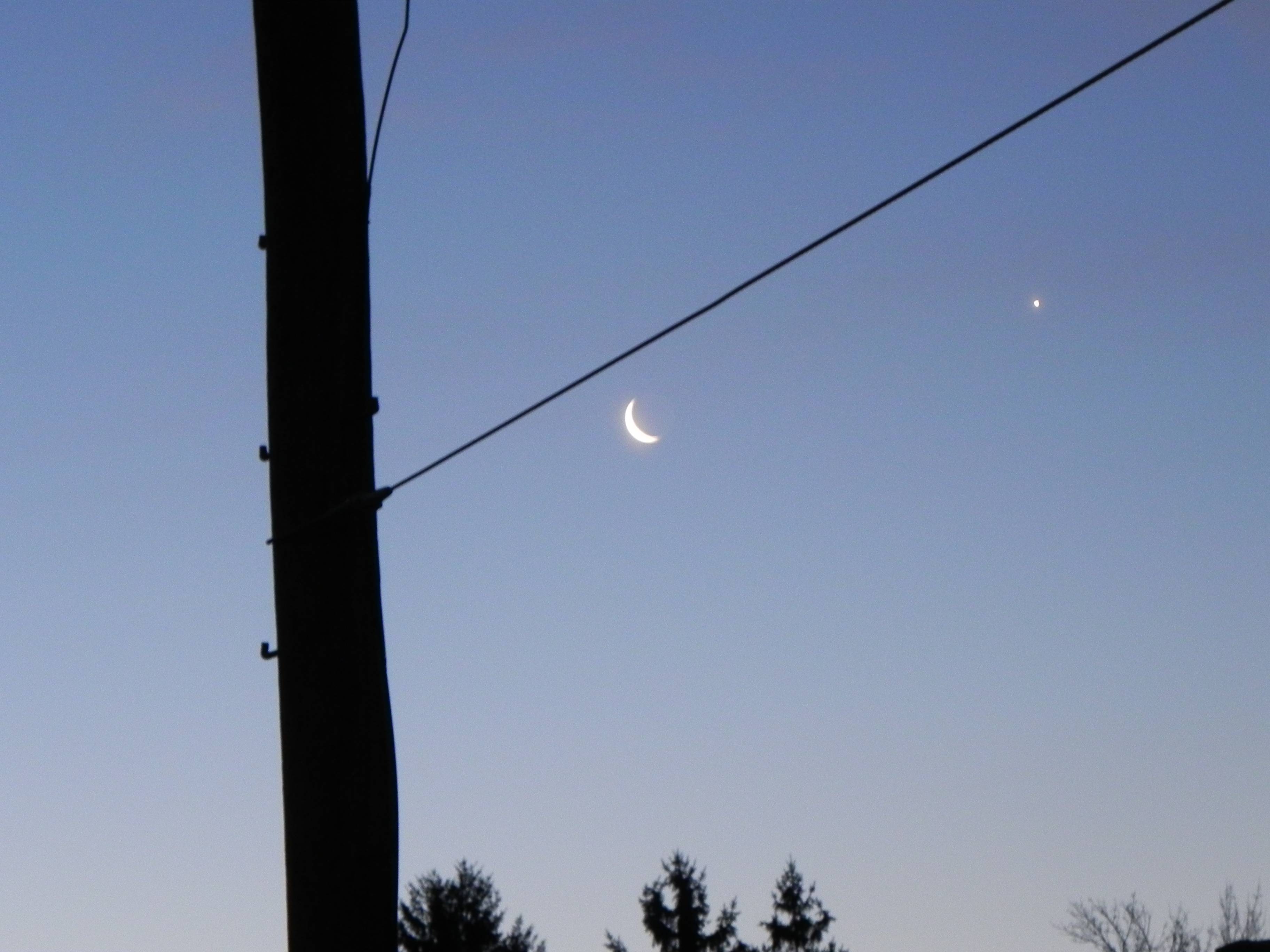
The moon is too easily ignored. Perhaps we fill our nights with too many other diversions that we easily overlook the millions of tons of rock high over our heads. When I introduce students to the importance of the moon in ancient religions they often seem surprised by the fact. The moon? It gives no heat, it is constantly changing, and sometimes it disappears altogether. Rather wimpy god to worship, don’t you think? Tonight the moon is back in the public eye because it is in perigee, its closest approach to earth in 18 years. In the facile language of the media, it is an “extreme super moon” (sounds like something you could buy at Wal-Mart). As with most ancient Near Eastern religions, modern perceptions, often vaguely scientific, do not encompass the enormity of phenomena before we became masters of the night.

The moon races Venus to perigee

In some ancient Near Eastern religions the moon was superior to the sun. We know that the moon’s light is reflected from the sun – something that did not fit their cosmology. Instead, in those regions often brutalized by a hot sun, the moon appeared kinder, gentler. It’s light helps to make many nights less intense and it never burns you. Since it is easier to stare directly at the moon, it makes an effective timepiece as well. Its changes are periodic and predictable. For a world without electricity, where nights were only infrequently shortened with oil lamps, and where daylight savings time would have made no sense, the moon ruled.

Actually, the moon played a role in developing the concept of the Trinity. Three great luminaries regularly appear in our skies: the sun, moon, and Venus. These days when most people have difficulty locating Venus, and generally no interest to do so, it goes without recognition that it is the third brightest natural object in the sky. In fact, Venus is bright enough regularly to stimulate UFO reports. A celestial triad thus ruled the skies of antiquity, and in many of those cultures the moon was the greatest of the three. So give the moon a few minutes of your time tonight as it gets closer to the earth than it will be again for many, many years. Perhaps it may give us a bit of understanding on the origins of some of our religious ideas that persist to this day.


Cyclotrons and Stardust

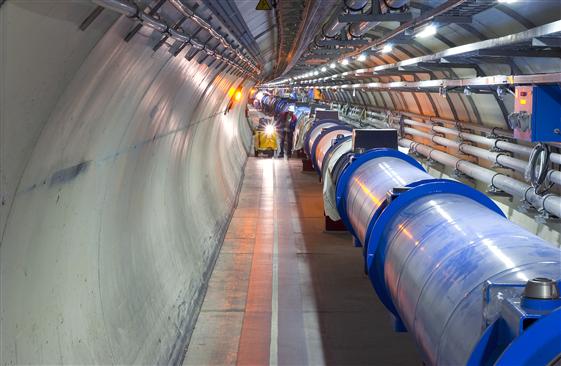
While recently watching an episode of Morgan Freeman’s Through the Wormhole, a connection emerged between religion and science. In an episode entitled “What Are We Really Made of?” the viewer is taken deep into CERN, and shown the tunnel where the Large Hadron Collider slithers like a 17-mile metallic snake coiling back on itself. In a quest for what ultimately constitutes sub-atomic particles, the script informs us, when the Collider is up to full speed it will recreate conditions as they were nanoseconds after the Big Bang. Scientists will be witnesses to creation itself. Their book of Genesis, however, will not be as easy to read as the one we currently have.

From CERN's website; the apocalyptic LHC

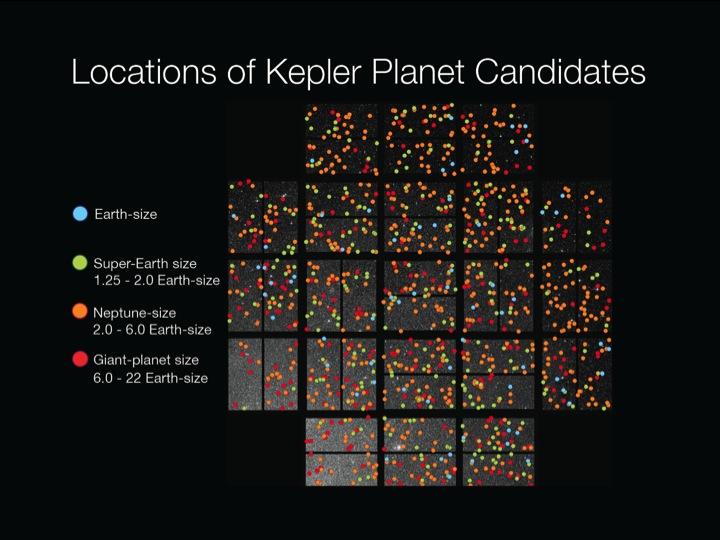
CERN represents perhaps the most sophisticated scientific instrument ever built. And the Kepler Space Telescope, one of the far-sighted members of our arsenal of understanding, has discovered rocky planets like our own 2,000 light years away. When the light of their sun left, Christianity was just beginning. Since then, millions of earthlings have died because of religious fanaticism. The deeper we peer, the less unique we become. Life is surely out there, and maybe building cyclotrons larger than CERN. The more we populate the universe, the lonelier we feel.

Kepler's guide to planets, from NASA

Scientists are also closing in on the creation of life itself. Working with self-replicating collectively autocatalytic peptide sets, they are nearing the point where we might say life has emerged independently in a laboratory. Where might religion be then? Human initiative in discovering the secrets of nature has balanced a divine creator on a precarious precipice. If life may emerge from a large soup of non-living peptides, and if we push the moments from the Big Bang back to merest fractions of a second while waving to our neighbors light-years away, have we consigned God to the unemployment line? I feel in better company now, although the light may have taken eons to arrive this far.


Hanny’s Voorwerp Factor 5

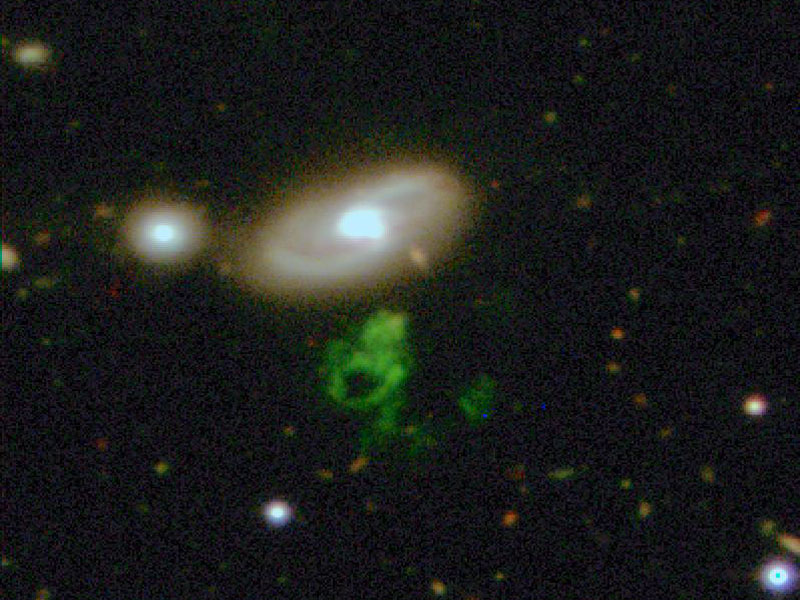
Staring at the mysterious green blob of Hanny’s Voorwerp, it’s hard not to imagine being Captain Kirk sitting cantilevered forward in that famous chair on the bridge of the Enterprise. Even for those of us who are not Trekkies, the giant space nebula looms between galaxies where no one expected stars to be born. Their own private intergalactic nursery. With my mind already on Star Trek, I think of the web-page sent to me by one of my winter term students at Rutgers: the Memory-Alpha Bible page. Since my loyalty to Star Trek only reaches as far as the occasional viewing of an episode for light relief – and only from the original series at that – I had no idea that the Memory-Alpha wiki had bloomed into existence like Hanny’s Voorwerp itself. This wiki dedicated to everything Star Trek has 32-and-a-half-thousand pages on every angle of creator Gene Roddenberry’s unintentional universe.

The Bible page’s first paragraph (accessed 1/12/11, sometime around 7 a.m. EDT) reads: “The Bible is a collection of ancient Earth writings usually bound together as a book. The Christian Bible is divided into the Old and New Testaments; however, other translations and versions exist and vary by faith groups. It is among these faith groups that the Bible is considered a sacred text, which is generally viewed as having been inspired by one of the Human gods.” Someone takes his/her future, wiki-writing persona very seriously. Nevertheless, it is a perspective that could be helpful in handling a Bible that has grown politically powerful without being understood here in the paltry twenty-first century.

The page also lists all of the episodes where the Bible is referenced or alluded to in Star Trek. As my student pointed out, almost all of these references (in the original series) are to the Hebrew Bible, with very few being from the Christian Scriptures. This makes sense, given the context of the 1960s when McCarthy’s aroma still hung heavily in the air and the war in Vietnam was daily in the newspapers. To offer up television fare that might have been considered “unchristian” in any way was a faux pas in such tortured times. The Hebrew Bible is great for providing allusions to paradise and apocalypse, but the words of Jesus were taken with a solemnity far too great to allow for fictional space explorers’ banter. So maybe it’s just an accident of astronomy that the amorphous, green cloud of Hanny’s Voorwerp appears to be wearing a galactic halo.

Hanny's Voorwerp on NASA-view


FIRST Things First

Being a religion specialist in a crowd of engineers is a surreal experience. Indeed, the clash of worldviews could hardly be more apparent, shy of crossing the border into Iran. I support the efforts of FIRST Robotics because they encourage children to excel in science, math, and engineering. My own childhood, however, was dominated by an overbearing religion that forever scarred me with a fear of Hell that I still can’t quite shake. Somewhere out there behind the stars there must be a horrid place engineered for the eternal torment for sinners like me, for the Bible tells me so. Speaking of stars, the live feed to kick off the FIRST Robotics Competition is sponsored by NASA. Yesterday was the international kickoff for this year’s competition, and as president of my daughter’s robotics team, I naturally sat among the well-paid engineers and professionals as we watched Dean Kamen unveil this year’s assignment.

The kind of guy who stands alone at parties

The FIRST kickoff video is available online for those who missed the event. The organization grants millions of dollars in scholarships to deserving students, funding college careers for the future of humanity. As I watched the live feed yesterday, a profound angst settled on me. Successful guys my age working for companies flush with money described how the latest medical and humanitarian breakthroughs were being made in the sciences. I have a part-time job with no medical coverage, and know, somewhere deep inside, that if something goes seriously wrong I will be permitted to go the way of all flesh, without benefit of these great technologies. And without the benefit of spiritual reward. A lost child of the cosmos. A life spent in the pursuit of truth, yet ending up with empty hands at the end of the day.

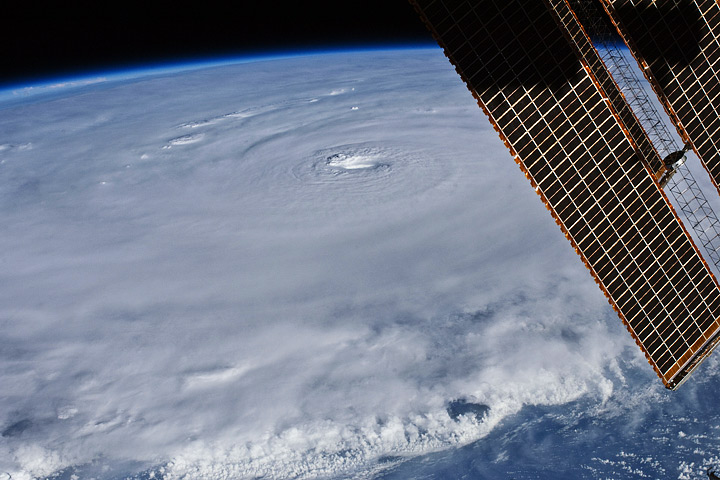
The eye in the sky is watching you

As a child I was a charter subscriber to Discover magazine. One of my earliest career ambitions was to be a scientist. One of my favorite classes in high school was physics. I was, however, haunted by the knowledge that the clergy had divined Hell behind all of this; only those who sought the keys to the kingdom would be spared. In college I majored in religion and took classes in astronomy, still flirting with my first crush. Now, an unemployed religion professor, I watch as day by day my specialization become more and more obsolete. No matter how far our telescopes peer into the universe, they just don’t spy God in an unguarded moment, captured by candid camera. Those with the money say truth lies in the progress of science, others in the unethical life of corporate America. The future lies anywhere but here in the world of religion. As I tell my students: be very careful in choosing a career. The best of intentions will lead to the worst of anxieties unless the way of the universe is truly comprehended.


Astronomical Chances

I am sure that I am not alone in the sense of relief that the solstice has finally arrived. Light will gradually begin to increase as the northern hemisphere slowly wobbles back toward the sun. And if I didn’t have another final exam to administer a little later this morning I would’ve stayed up to see the total lunar eclipse last night. Conditions were perfect, if cold, for viewing the event in New Jersey. NASA states that the last time a full lunar eclipse occurred on the winter solstice was in 1638. Those of us who survived to see last night’s events, whether with our eyes on the skies or on the Internet, have witnessed a rare astronomical coincidence. So rare, I’m sure, that some people have taken it as a sign.

This is the season for signs in the sky. The Gospel of Matthew narrates how Zoroastrian astrologers followed a star to Bethlehem. Over the years many astronomers have puzzled over what this anomaly might have been. (They might benefit from reading a little mythology now and again.) While still in Wisconsin my family went to see a University of Wisconsin planetarium show on the subject, and these family-fun science-and-religion public-relations events are anything but rare. It is in the spirit of the season.

Ancient civilizations bestowed upon us the gift of looking for signs in the sky. In antiquity’s three-tiered universe, the gods literally lived “up there,” so portentous occurrences above our heads were a bellwether of divine intention. Religious specialists had to be able to interpret the omens in the air. That fascination has remained with humanity ever since, no matter how rational we’ve become. While driving home in the relatively developed region of New Brunswick a few weeks ago, I saw a meteor. This was remarkable because the light pollution of multiple streetlights along with the volume of raging traffic headlights was intense. My eyes were glued to the taillights before me when it fell. It felt like an epiphany – it was the brightest meteor I’d ever seen, and over the years I suppose I’ve seen my fair share. It left me with the feeling that something momentous had occurred, an emotion that persisted for a few days. No wonder ancient astronomers found the night sky so impressive. The only negative aspect of the lengthening of the days is the corresponding shortening of the nights.


Not As We Know It

According to an article from the Associated Press yesterday, scientists are having to rethink life. Some of us do that on a regular basis anyway, but there is actually cause for this scientific reevaluation. Bacteria have been discovered in Mono Lake, California, that utilize arsenic to sustain life. The article also notes the announcement that the number of stars in the universe has recently been increased on a magnitude of three times the old estimate and that potentially life-bearing planets are regularly on the increase. Seems that we may no longer be alone. No one knows what forms life may take “out there.”

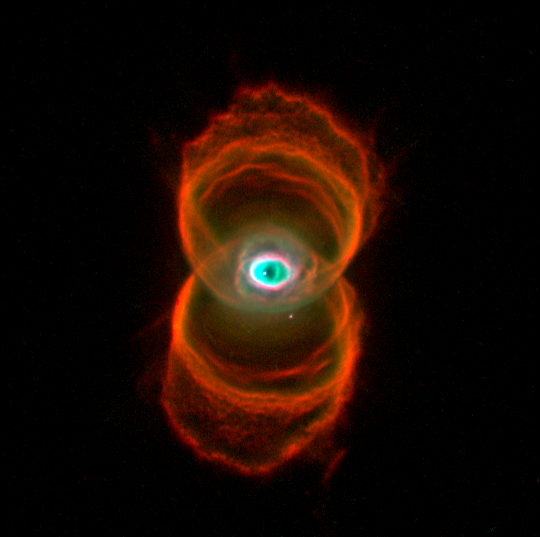
The eye of a lesser god?

I wonder what impact new life forms will have on religion. I suppose there’s not a revelation immense enough to shock a true Fundamentalist from his/her confident “God could do that” outlook, but when we find life not as we know it, does it not affect all of our worldview? Even the definition of life is up for grabs. Is the earth itself alive? Did the animists have it right all along? Does arsenic-based life have a soul once it evolves to hominid status? Would they have equal opportunity housing? When such revelations come to light, I would find it comforting to have Mr. Spock at my side, stating in his flat, unemotional voice, “It’s life, but not as we know it.”

Life was complicated enough to begin with, what with trying to hold down two part-time teaching jobs and many secretive efforts to launch new careers. Religion can’t let go of this information, however, as one of the prime definitions of the divine is as the guy who creates life. Religions such as Buddhism and Jainism – religions that believe taking any life is wrong – will certainly have more work cut out for them. When it is boiled down to its prime components, religion is ultimately concerned with life. Monotheism has no room for a Hades or Ereshkigal. One might only wonder who the gods of the arsenic eaters might be.


Physics of Religion

As an observer on life’s sidelines, I rarely participate in the action. The subject matter is more important than the critic, so I tend to respond in this blog rather than create. Once in a great while, however, someone I know shows up in the media. A number of years back Neal Stephenson introduced me to George Dyson. I instantly felt an affinity for him, and found his book Darwin Among the Machines a great triumph of intelligible science writing. It was no great surprise, then, when George was mentioned in an article in December’s Atlantic magazine, comparing his outlook to that of his father, physicist Freeman Dyson. I was intrigued by physics in high school, but my overwhelming supposition that religion explained life overruled this predilection and so I’ve ended up an unemployed religion professor than a scientist. In the article, however, author Kenneth Brower brings these things together.

Brower asks a pointed question: how can a physicist as brilliant as Freeman Dyson hold factually inaccurate and apparently misguided ideas about global warming? The story contrasts Freeman with his son George as exemplars of two different religions. George represents the environmentalist religion while Freeman represents the belief in humanity’s ability to solve any problem. The use of religion as a means of distinguishing these views again raises a question of definition. I don’t dispute the use of the word – it is entirely apt in this context – but the functional definition here is that religion equates to something deeply believed. I am a little troubled by this. Not because no gods or deities or supernatural forces enter into it, but because for years many evangelicals have boldly declared that science itself is a religion. That idea has been used as leverage to get Creationist ideas equal time with those of science because it comes down to purely a matter of one religion against another.

Belief is a phenomenon that is not well understood. Most people have no difficulty accepting the truthfulness of factual data. Seldom do even religious zealots doubt two plus two equals four. At a more theoretical level, however, facts become formulas incomprehensible to most of us and critics are quick to call this “religion.” Faith in human ability to solve the riddles of the universe. Where is the line with religion crossed? In the year 2000 Freeman Dyson received the Templeton Prize, an honor reserved for those who make significant contribution to the spiritual dimension of life, often with a scientific component. It is the dream of every religionist to be considered for this great honor. Once again, however, the further out we peer into our universe, the more the lines become blurred. That does not worry me. What concerns me is how such ambiguity will no doubt be used by Creationists and their Neo-Con supporters who are only too glad to have a scientist of Freeman Dyson on their side. When religion trumps science not even 2 + 2 = 4 is secure.

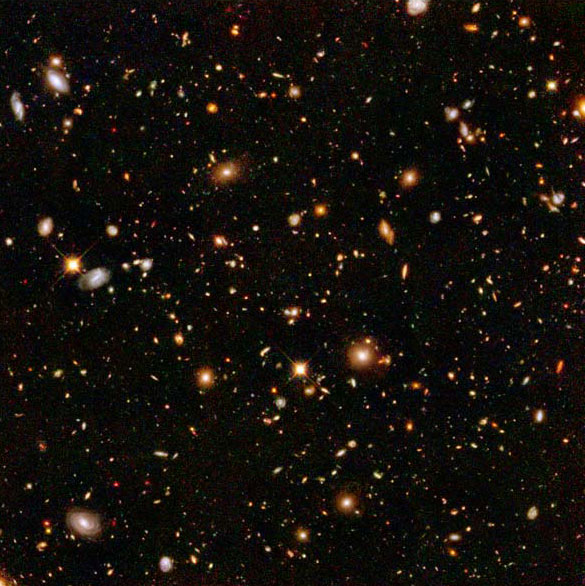
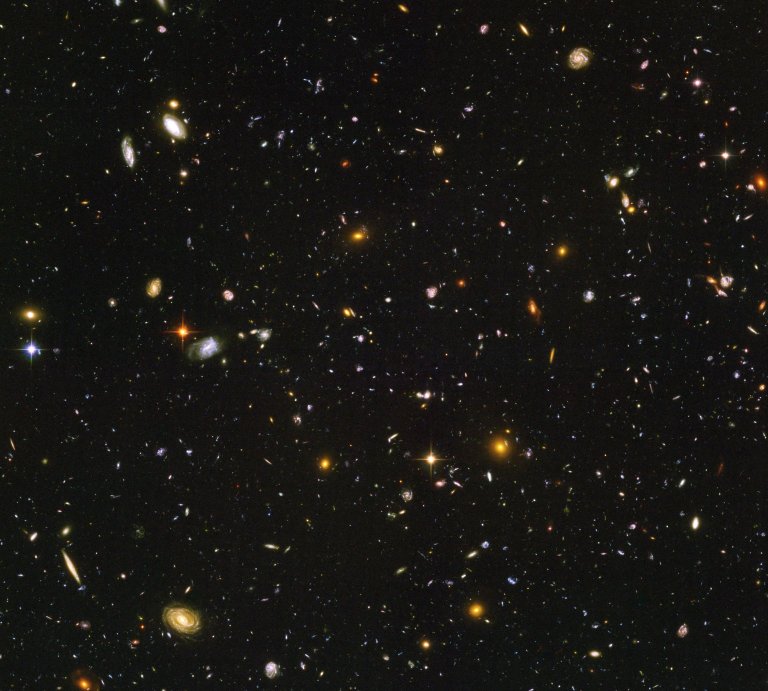
Hubble's ultra deep field has yet to detect any deities


Goldilocks Comes of Age

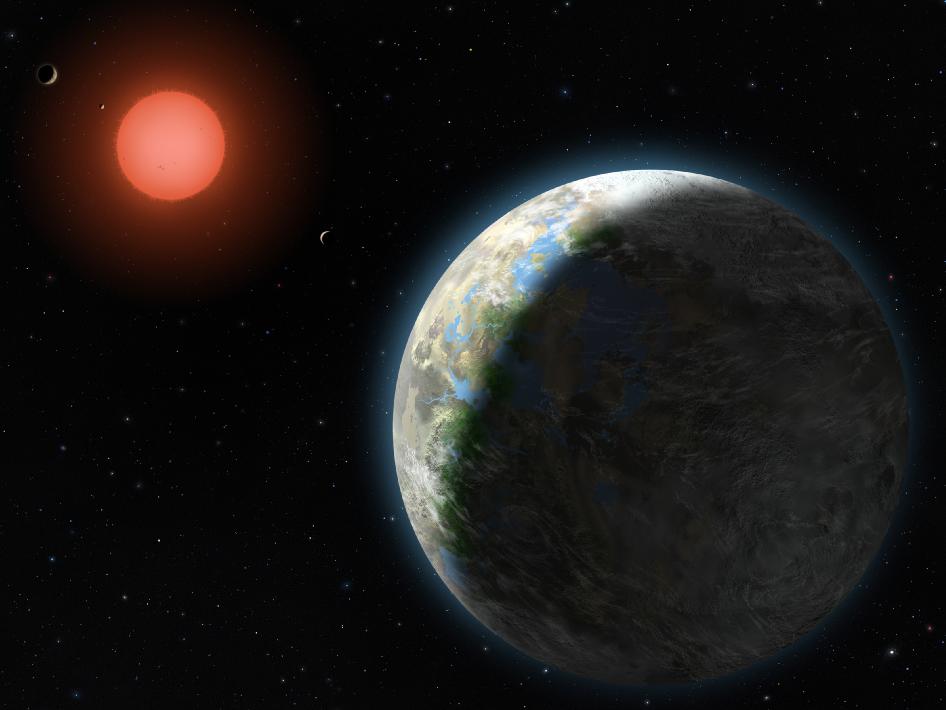
NASA's Goldilocks, image credit Lynette Cook

“Even a simple single-cell bacteria or the equivalent of shower mold would shake perceptions about the uniqueness of life on earth.” So writes Seth Borenstein of the Associated Press concerning GJ581g, a newly discovered “Goldilocks planet.” This extra-solar-system planet is just the right distance from its sun, which is neither too hot nor too cold, and just the right size, neither too big nor too small, to hold an atmosphere and liquid water. This is the necessary environment for life as we know it to evolve. Like the life in the grout in my shower. It is an exciting prospect. This discovery suggests that other planets contain the right stuff for primordial soup, and the implication is, once again, that the earth must relinquish its place at the center of the known universe.

It is a curious notion that we share, quaintly parochial, that the earth is somehow special. The idea is an inherently religious one. Ancient peoples, beginning at least with the Sumerians, understood their world as apparent reality. The sky moves around us, not vice versa. Human beings, the apex of primate evolution, see the universe through self-crafted lenses. Lenses that we keep close to our eyes at all times. If there is life out there, and they come here, they will be the outsiders. We were here first. The Bible helps to shore up this homocentrism; the crowning achievement of divinity, according to Genesis 1, is us. Even scientists have long been reluctant to release the idea that we might just be one among many, a single, relatively common occurrence of life in a vast, indeed endless, universe.

Our species evolved as a religious one, feeling that God somehow gave us opposable thumbs and flexible vocal cords for a reason. (Presumably because God has opposable thumbs and flexible vocal cords.) From the very earliest of times we have considered ourselves unique on this planet and unique in this universe. Although reason has long suggested otherwise, and although scientists would often be the last to admit that it is a religious idea, we have grasped tightly to human singularity and defied the universe to prove us wrong. Once we actually discover that life out there, what will we do? If our past track record is any indication, we’ll head to that planet with Clorox in our hands and a divine mandate in our heads.


Sinful Moonsters

Wednesday night a student asked me about the moon god Sin. The name “Sin” has nothing etymologically in common with the usual English word for wrongdoing; they are simply homonyms. Nevertheless, when students first encounter this odd juxtaposition they often think that there must be something to it. This particular student pointed out that many activities classified as sinful take place at night, under the moon. Could they be connected? Linguistically, no; but it did get me thinking about the idea of the moon’s baleful influence on various creatures of the night.

Serious academic works seldom take vampires, werewolves and witches, some of the moon’s most infamously unholy acolytes, to be worthy of valuable research time. Meanwhile Stephanie Meyer and company are laughing all the way to the blood bank. Popular culture gives credence to the children of the night that the academic world ignores. I tried to do a little research on the moon and its mythology only to find that most moon books deal either with serious attempts at astronomy or serious attempts at astrology, neither of which I was seeking. I wanted to know when the moon had slipped from being the gentle god/goddess of the night into its role as the overseer of evil.

Evidence was scant, but it seems that in the Middle Ages, maybe influenced by late Roman ideas, scholars began to recognize the moon’s potential as a dismal influence. The moon has long been popular in folklore as a source of lunacy and luck. Lovers crave the moonlight, but so do teenage vampires and raging werewolves. This is, apparently, a concept of no great ancient pedigree. In any case, the moon here has nothing to do with sin.


Talking Past Each Other

My first two sections of Mythology class met yesterday, and my post on Stephen Hawking was still fresh in my mind. As predictable as clockwork, religious leaders have begun to respond the Hawking’s new book, not yet released. Theodicy in overdrive.

I am not qualified to assess Hawking’s scientific findings. As much as I daydream about having followed my childhood ambition to be a scientist, I find myself in religionist garb teaching university courses among the humanities. What is ironic is that theologians feel that they have to answer Hawking’s conclusions. An article on CNN has the rebuffs of a number of British clerics, including the Archbishop of Canterbury. The main thrust of their comments is that the God Hawking dismisses had already left the theological classroom (the God-of-the-gaps) while the God the major monotheistic religions serve is less of an explanation of the universe and more of a method of determining what it means. So, I guess, this God of meaning may or may not have created the universe, but let God be God and mathematics and physics be damned.

Unless the theologians are better trained than most, the intricacies of M-theory are far too complex to be understood by workaday religious practitioners. The theory is backed by mathematical formulas that are far more frightening than Tiamat, Ahriman, and Azazel bunched up in a cosmic tag-team match against the nice world theologians have created. For my part, I am happy to let the physicists deal with the numbers and symbol systems while I sit by trying to explain what mythology really is to my undergraduate audiences.

Who's looking down today? Uncle Earl?