Out There

Do you see them?

While recently re-watching an X-Files episode, I noticed something odd.  A quick online search revealed that I wasn’t the only one to notice this particular quirk, and, in fact, there had been considerable previous discussion on it.  What really struck me wasn’t the resolution of my question, but the fact that so much had already been written on a single episode of a single television program.  It’s one of the problems with trying to keep up with pop culture—there’s so much out there (besides just the truth!).  I’ve been exploring pop culture with the Bible for a number of years.  There’s plenty enough in the X-Files to warrant a larger project, but even without that, there’s just no way to keep up.  You could spend your life trying to unpack what several people wove into a single program.  Each episode took considerable thought, planning, and resources.  Once it was out there, reception history began.

So much of scholarship is analyzing what someone else has done.  Some monographs are more footnote than actual text.  What I’ve been suggesting regarding pop culture is that it is the way people understand religion.  The information people receive often comes from what modern authors and screenwriters compose.  A few X-Files later, during a religiously themed episode, something was implied to be in the Bible that’s not.  Again, I address this directly in Holy Horror, but every time I see an example, it catches me by surprise.  The average viewer doesn’t know to research what they’re being told and if it’s played straight, as it was in this episode, it becomes part of the truth that’s out there.

Those interested in how beliefs develop and change over time have recently begun to ask about the average person instead of “official religion.”  In antiquity this is difficult to gage since the average person was illiterate and poor.  Even in modern times with relatively high amounts of literacy and everyone writing on the internet, trying to understand religion is difficult.  Now it’s a matter of too much information.  Fan sites exist for popular media.  The canons of Harry Potter fandom alone would require a lifetime of study.  Limiting oneself to the X-Files might be a start.  My own publication history with pop culture and religion began with Sleepy Hollow.  It could have just as easily begun with the X-Files.  No matter where you choose to begin understanding religion, you’ve got your work cut out for you. And this post has just added to it.

The Unholy Trio

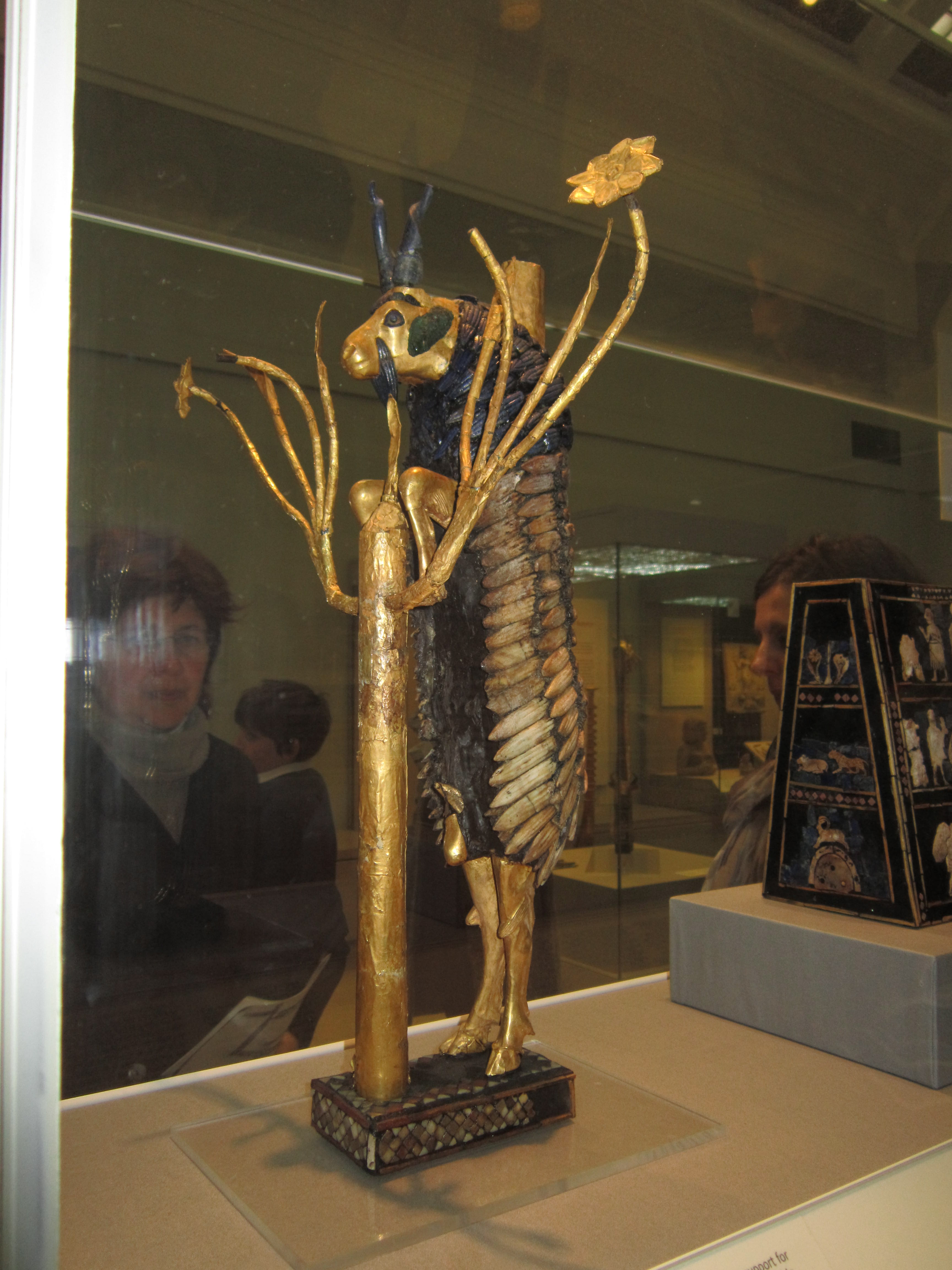
Culture has a powerful prophylactic component.  People don’t want to be seen questioning authority and accepted “truths.”  This is especially the case as they grow out of their teenage years and learn to fit in as part of the herd.  Some subjects make this particularly clear because cultural biases deride them, never giving them a fair chance at consideration.  I’ve run into a number of these over the years, but an example will bring these abstractions to clarity.  Recently a commentor sent me to the video “Kaneh Bosm: The Hidden Story of Cannabis in the Old Testament.”  The idea is one I’ve addressed before—that cannabis was used in incense combinations in the biblical world.  Now, I haven’t done research on this, but what becomes clear is that many scholars over the years have dismissed the idea out of hand because, well, it invokes pot.

The reason marijuana—something I’ve never used and have no desire to try personally—has been demonized is one of considerable interest.  This is especially the case since it appears to have been widely used in antiquity.  No respectable biblical scholar, however, would be caught suggesting that it might have been incorporated in the rites of ancient Israel.  The modern stigma of cannabis, in other words, discounts the possibilities that in ancient times it was used in sacred contexts.  The “war on drugs” in the United States was largely led by religious conviction.  The heirs of Christian prohibition.  Sure, some drugs can lead to real problems.  The deeper issue, however, is that society’s structure leads people to the place where drugs seem to be the only answer.  The civilized response?  Make them illegal.

That mark against controlled substances colors our view of history.  If such things are illegal now then they must never have been used.  Chemical analysis of various utensils (what might be called “paraphernalia” today, indicates that ancients knew of and used cannabis.  Our ordered view of ancient Israel as receiving the one true and utterly sacred faith preclude the possibility that our demonized substance could’ve been used in ancient times.  I’ve noticed this with the other topic of the documentary—Asherah.  Conservative scholarship still denies that ancients might’ve thought Yahweh had a spouse.  (My own work does not deny this, but simply questions the nature of the evidence; I think it is likely people believed Yahweh had a consort.)  So we once again collide with a “no go” topic.  So, after we admit the possibility of drugs and sex, so the thinking goes, what we we find next—ancient rock-n-roll? 


Reviewing Nightmares

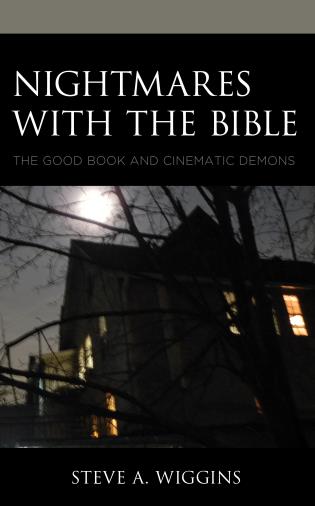
If you’ve wanted a copy of Nightmares with the Bible but the cost is a little dear, I might recommend you look on the Reading Religion website where, as of my last look, a free review copy is available.  The catch is you have to write a review.  This is, of course, first come, first served service.  I tried, more than once, to get Holy Horror listed on their website for review, so I’m glad to see one of my books finally made it.  The idea of the horror hermeneutic seems to be catching on.  Technically speaking, however, what I’m doing is more history of religions than hermeneutics.  History of religions, at least part of it, examines whence ideas arise.  Nightmares asks that question specifically about demons.

The specific focus on horror in religion is a fairly new field of study.  Biblical scholars—indeed, those who specialize in very old fields of study in general—must keep looking for new angles.  Unlike any other piece of literature, the Good Book has been the target of scholarly interest from the very beginning of the western academic tradition.  It’s easy to forget, when looking at many secular powerhouse schools, that the very idea of higher education arose from what is now the discipline of the lowest paid of academic posts.  Being so old, religious studies, known at the time as theology, is hardly a venerated field.  I tend to think it’ll come back.  If you look at what’s happening in politics in this country, it’s bound too.  And yes, there will be horror.

Horror studies in the field operates by recognizing that horror and religion share common ground.  Like religion, horror is considered backward and uninformed.  Neither is really true of either horror or religion, but perception becomes reality for most people.  Finding themselves in remedial class together religion and horror have begun to speak to one another.  Horror has quite a following, even if those who like it keep mostly quiet about it.  The same is true of religion.  Many of the most effective horror films bring religion directly into the mix, often making it the actual basis of the horror.  The first books that I know of that brought the two explicitly together only began appearing at the turn of the millennium.  At first there were very few.  Now an increasing number of tomes have begun to appear.  For better or worse, two of mine are in the mix.  If you’d like to review the most recent one, you might check out Reading Religion, and maybe spare a kind word or two for what are, after all, baby steps.


Learning from Nature

Netflix is one of those companies that has shown that new models for providing both television and movies are emerging.  Of course there are many subscription services, but Netflix rose to the top of the pile during this pandemic.  I don’t watch it much, since my time is generally otherwise spoken for, but I did have a chance to watch My Octopus Teacher, a documentary about Craig Foster’s relationship with an octopus.  The story unfolds over a year in which Foster comes to know, and to be recognized by, an octopus.  Quite apart from the Cthulhu references that may come to mind, octopuses are often skittish, highly intelligent mollusks.  Perhaps what made this movie such a surprise hit was just how emotionally attached viewers become to the cephalopod through Foster’s relationship with her.

Photo by Serena Repice Lentini on Unsplash

Almost immediately in the documentary, the viewer is struck by just how intelligent octopuses are.  The particular personality—and there is no other word for it—featured in this film is able to think and solve problems.  Not only that, but she is capable of forming a relationship with a human being she came to trust.  For many decades we’ve been taught that animals are like automatons, reacting with stock behaviors, because they can’t think.  Any claims to animal intelligence were chalked up as “anthropomorphism,” or inappropriately allowing animals to share in that coveted human trait of being “intelligent.”  The idea comes from the Bible and not even scientists would question it for the longest time.  Spending part of each day with one octopus, however, gives the lie to animals being subject to programmed behavior.  Like both Heisenberg and Schrödinger demonstrated, being involved in the scenario necessarily changes it. 

Animal intelligence has great implications for religion, of course.  This is perhaps why it is such a taboo subject.  What does it mean if animals can think and act intentionally?  Does it imply morality?  Foster implicitly raises that very question as he tries to decide whether to keep the pajama sharks away from the octopus he’s befriended.  Is he watching nature or has he become a part of it?  Our religions are often our ethical signposts.  In more recent years ethics has been shifted to the philosophy department since many people outwardly distrust the obviously mythical aspects of religious stories.  Nevertheless, the implications are clearly there.  Doesn’t it make a difference that our world is filled with other intelligent beings apart from those of us with opposable thumbs?  Watch My Octopus Teacher before deciding on an answer.


More about Nightmares

I became aware of TheoFantastique many years ago.  Being new to social media myself, I was impressed at how professional and intelligent the site was.  Eventually I decided to introduce myself to John Morehead, the creator behind it.  (It is possible to be shy on the internet, so this took a few years.)  When Holy Horror came out I asked if TheoFantastique would post a review of it and got an even better response with an interview.  Now that Nightmares with the Bible is out the tradition has been kept going.  If you’d like to see an interview on the book take a look here.  One of the topics that comes up in discussion is how popular culture—TheoFantastique is cleverly named in that regard—influences the way we think about religion.

Religious studies was, not so long ago, a growing field.  Many of us have been trying to understand why interest began to sag, somewhat abruptly, and came to the point that it now feels like an endangered species.  Two of the consequences of this are important: one is that we don’t invest in studying what motivates just about everything in American politics and society, and the second is that the average person gets her or his information about religion from popular culture.  Movies, for example, are impactful, brief, and entertaining.  Humans are visual learners and although books punch above their weight in the learning division, having someone show you something is faster and requires less commitment than reading.  Academics, most of whom love reading, have been very slow to cotton onto this fact.  Society learns by looking.

That observation stands behind both Holy Horror and Nightmares with the Bible.  Both of these explorations look at how people come to understand two aspects of religion: the Bible and demons.  Instead of attempting to tackle all of religious studies (nobody can) or all of cinema (ditto), these books look at the horror genre to see how fans come to understand the Good Book.  As the interview explores, other scholars—mostly younger ones—are beginning to realize this is where people live.  It’s rare to find someone who commits to reading an academic monograph unless they’re in the academy.  Even academics, however, watch movies.  When the locus of information shifts to popular culture we need to start taking seriously what popular culture says.  More people will watch The Exorcist than will ever read an academic monograph about demons.  If we want to understand how people understand religion—what religion is—we need to pay attention.  And TheoFantastique is a great place to start. 


Who’s Upstairs?

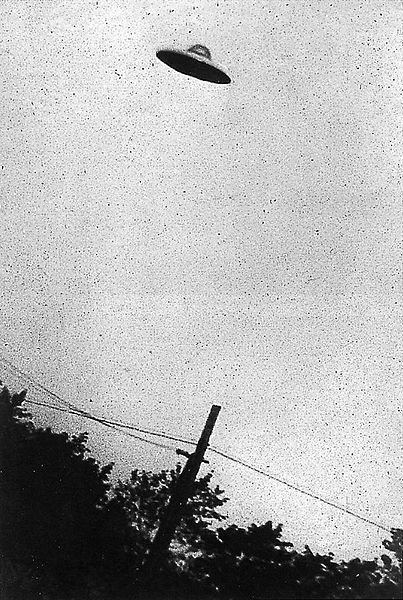
The other day the New York Times ran yet another article on UFOs.  This topic, which has been maligned since the 1940s, is now being discussed without mockery in the mainstream media.  Perhaps following the Trump presidency nothing’s impossible to believe.  There are, interestingly enough, many writers who connect UFOs with religion.  And these aren’t all writing about UFO religions, of which there are many.  Exploring the Outer Edges of Society and Mind ran a piece on biblical UFOs earlier this month.  The topic was taboo, of course, when I was teaching (I remember a colleague laughing when I told him I covered it in a course called Myth and Mystery) but it too is now becoming mainstream.  I don’t need to summarize the Outer Edges piece here since it’s easy enough to follow the link and read, but I would point out that a longstanding connection exists between UFOs and religion.

A spate of books on UFOs came out in the seventies and eighties.  Some of those more or less overlooked by the media focused on religion—often the Bible—and how UFOs play into it.  Quite often the biblicist writers identified these unknown objects in the skies as either angels or demons.  This continues to this day with some congressional leaders (many of whom are too religious for the good of the nation) averring that UFOs are “demonic.”  Frankly, if demons are incorporeal, I wonder why they need to fly around in saucers.  Perhaps they too grew up eating too much Quisp for breakfast.  In any case, the connection was made early and it remains.  When we see something in the sky we used to give it a religious explanation.  Now we chant “drones.”

In his article David Metcalfe begins by noting the forthcoming publication of Alan Steinfeld’s Making Contact: Preparing for the New Realities of Extraterrestrial Contact with the mainstream publisher St. Martin’s Press.  The difference between yesteryear with its Quisp and its flying saucer houses, and today is that people are starting to be serious about the topic.  This, I expect, is one of the benefits of increasing technology.  People are seldom without a camera in their pocket these days and although there are plenty of drones and other strange things flying around, the classic UFO hasn’t gone away.  A generation of people endured ridicule and scorn for being gullible.  Now the gray lady herself is asking questions with nary a smile.  Perhaps we’re becoming more tolerant and perhaps we’re more willing to believe we’re not alone in the universe.  Some would claim that even the Bible got in on the act millennia ago.

Image credit: George Stock, via Wikimedia Commons

Around the Bible

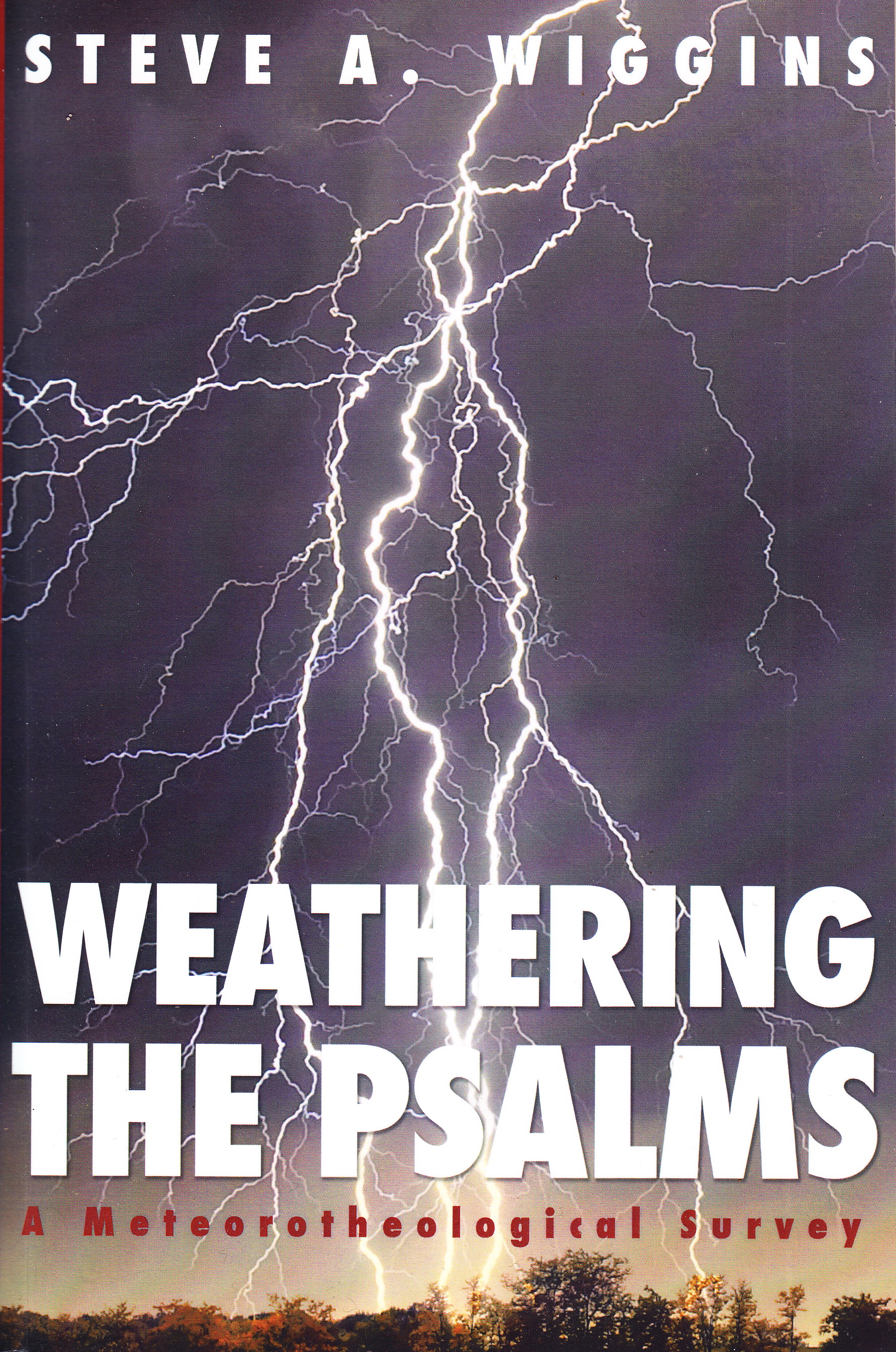
Perhaps it’s happened to you.  You grow curious about something adjacent to the action in the Bible and you go online to find information.  Instead you discover that Google (or Ecosia—plant trees!) searches round you up time and again into the biblical realm.  It seems as if nobody is interested in exploring the world of the Bible not mentioned in the Bible itself.  This has been an avocation of mine all along.  After a while you get tired of hearing what yet another commentator has to say about the Bible itself and you start to want information on, say, places Jesus didn’t go.  A startling apathy meets you online. If it’s not mentioned in the Good Book it’s not worth knowing.  Now quite apart from sending me to the pre-biblical world for my doctoral work, this was also the impetus for Weathering the Psalms.  Nobody seemed particularly interested in the larger picture.

I’m guessing this has improved somewhat in the academy, but it doesn’t translate well to the web, at least not the versions available in America.  Searches for topics around the Bible always herd you back to the Bible itself, as if it is the only reason one might be asking about the weather, geography, or natural flora and fauna of Palestine, Israel, Jordan, Lebanon, or Syria.  Who’d possibly have such an interest for its own sake?  Our bibliocentric culture seems to feed into search-engine algorithms and brings up Scripture time and again.  Try this for maps, for example.  You’ll come up with plenty showing places the Bible names.  If it’s not named there, you won’t find much.  Curiosity for its own sake isn’t encouraged.

This is related to the phenomenon of trying to search for something you don’t know the name of, I suppose.  Those who post content on the web, if they want to be successful, anticipate what others are interested in.  What of those of us who think differently?  Some of us put unusual stuff on the web, but how do you find it if you can’t put it into words?  Secular society doesn’t have much interest in the Good Book.  I’ve suggested many times why I think this is misguided—the Bible is foundational for the American way of life, whether you’re religious or not.  You might think curiosity would abound on related topics.  The thing is you have to get through all the clutter to get there.  I guess we need to be archaeologists of the web.


Who Says Suez?

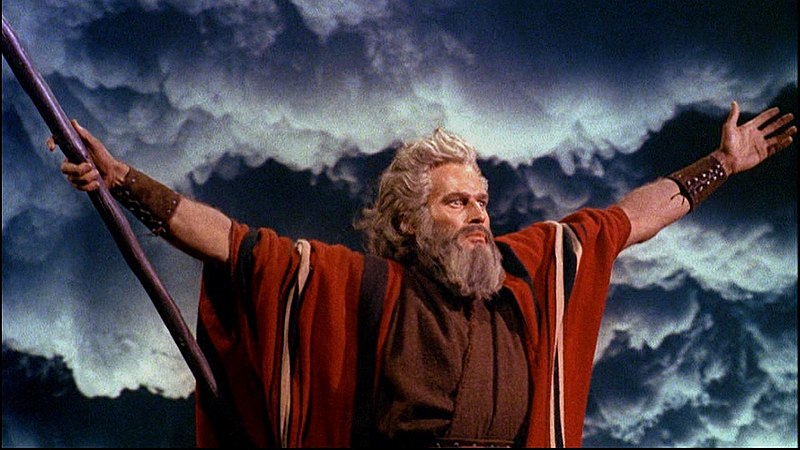
“Where was Moses when the lights went out?”  That’s one of the few sayings I remember from my grandmother.  She lived with us when I was a child and she’d say that when someone came in too late to help with something.  I always thought it a strange expression since Moses didn’t do miracles on demand, but I still remember it—kind of a miracle in its own right.  The expression came back to me when hearing about the MV Ever Given in the Suez Canal.  This massive cargo ship, buffeted by high winds, has choked the canal that links the Red Sea to the Mediterranean for days.  This shortcut means ships don’t have to round Africa to get to European and American ports.  While the problems of this one ship play out, over 150 others are waiting to pass through and goods could be delayed for weeks around the world.  I’m glad we have toilet paper.

Image credit: Ten Commandments trailer, via Wikimedia Commons.

Now Moses was known for have a role in the dividing of the Red Sea.  Of course, the name of the body of water is debated.  The Good Book actually says “Reed Sea” and nobody’s really sure where that is.  Besides, the miracle isn’t really credited to Moses.  God did the deed through, well, a strong wind.  If the waters could be divided perhaps present-day crews could figure out how to free the ship.  Photos of a bulldozer that looks like a Tonka next to the colossal freighter give an idea of the scale of the problem.  People building things so large that they can’t control them.  And the forces of nature seem happy to remind us that we’re not in control, right, Moses?

And everything, we assume, will go smoothly if left to its own devices.  How often do we really worry about the Suez Canal?  Or large ships, for that matter?  Theses things should go just as clockwork, we suppose.  Until our order from Amazon is inexplicably delayed.  The pandemic, Post Office troubles, and unexpected bad weather have caused major shipping delays around here over the past several months, and now we have no Moses when we need him.  According to Exodus, God lives right next door on the Sinai peninsula.  That’s where Moses first met him.  If we had a true prophet these days (let the reader apply wisdom here) there would be no concerns for something as simple as a wedged ship.  But we can’t even find Moses when the lights go out. 


Horror and Theology

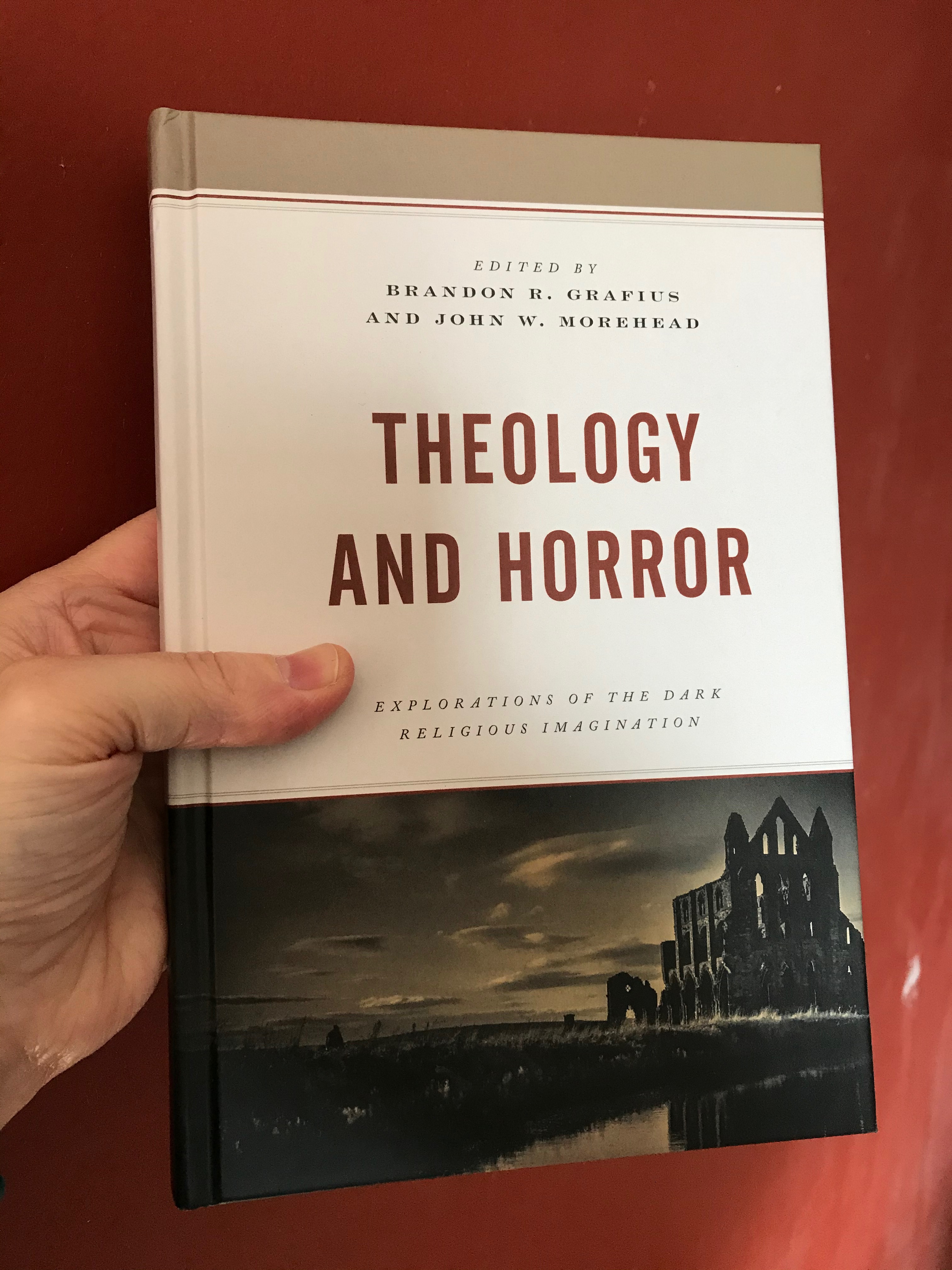
The idea may be catching on. The idea I mean is that horror and religion have something to do with one another. I have to confess that I’ve been one of the (non-academic) explorers of this approach and I was flattered to have been asked to contribute an essay to the just released volume Theology and Horror: Exploration of the Dark Religious Imagination, edited by Brandon R. Grafius and John W. Morehead. My article looks at the origins of horror in biblical (and perhaps pre-biblical) storytelling. In fact it is one of the oldest forms of exploring what it means to be human. Perhaps it began its life as an evolutionary fight or flight response, but it eventually came to represent a way of dealing with the human condition. Horror is generally traced to the gothic novel tradition, but I suggest it goes back much further.

This volume contains twelve essays on a variety of topics, along with an introduction by the volume editors. Since my copy only just arrived in Friday’s mail I haven’t had the opportunity to explore it yet, but I’m looking forward to it. Ironically, it’s an area that I began probing only after the academy no longer required my services. As I reflect on that ubiquitous “why” question I often come back to that fact. Nothing like having your career yanked out from under you makes you consider horror as a kind of therapy. Things could be worse. Besides, horror frequently demonstrates coping skills. And change is constant. Learning to adjust when the monsters of capitalism loom can make you think of religion—trust me.

Individual scholars have examined the connection between religion and monsters before—there’s a pretty obvious connection in that case—but sustained discussion of how horror informs religion is new. The developments are sometimes edgy, but I get the sense that they’re honest. It goes back to that flight or fight response. What happens if you hang around to look? Might not something become clear that was only viewed through a blurred lens before? And the goal isn’t to cause fright. Indeed, it’s just the opposite. Frights will come, and if you’ve anticipated them you might have coping skills at hand. Besides, the frisson can be enticing in its own way. Receiving a new publication can be its own source of thrills. I guess I knew this volume was coming but I’d been busy enough to have shoved the thought aside. I’m delighted it decided to interrupt the mundane, just like monsters often do.


Uncial Nuncio?

I recently wanted to make a donation online.  As usual in these litigious times, there was a disclaimer that I had to read.  Since this was a respectable organization I decided I’d better do it if I was claiming I had.  Of course it was long and boring—lawyers talk to each other like academics do—but what struck me along about clause 6 is how these agreements suddenly go into ALL CAPS.  That seems to imply—but I’m no lawyer—that the rest of the agreement is less important.  Were it ever to come to court, would the judge say “Well, this part is clearly shouting, so you should’ve paid attention to it.”  Do lawyers need to resort to using all caps to make their point?  When do emojis start entering contracts?

When I was little I considered being a lawyer.  I’ve got a good head for rules and a fair reasoning ability.  My mother told me I was too honest to be a lawyer, and that dream died on the cutting-room floor.  Well, not exactly died.  I still think about it.  Never seriously enough to consider law school, but I am still legally minded.  Those sections of the Bible that have rules and regulations made sense to me.  You may not like them, but it’s best to have it in black-and-white.  These are the laws by which you live.  The rest is interpretation.  You might expect the ten commandments to be in all caps, but they’re not.  Perhaps they’ve been a bit crowded by the other stuff I’ve been cramming into my head over the years, but rules are rules, are they not?

Isn’t it somewhat disturbing that legal process resorts to shouting for the part they really want to apply?  We all know, at some level, that even contracts are negotiable.  Even after being signed.  It comes down to whether the party of the first part really believes a violation is worth suing the party of the second part.  In other words, it comes down to a cost-benefit analysis.  Contracts, after all, are promises on paper.  Not everyone keeps their promises.  And what does it say about us that we expect the party of the second part to do a, b, and c.  OH YES, AND X, Y, AND Z?  Something secret is being said here, and it’s something only a lawyer would understand.  Or maybe those who regularly issue contracts.

Photo credit: US Army, via Wikimedia Commons


Looking Up

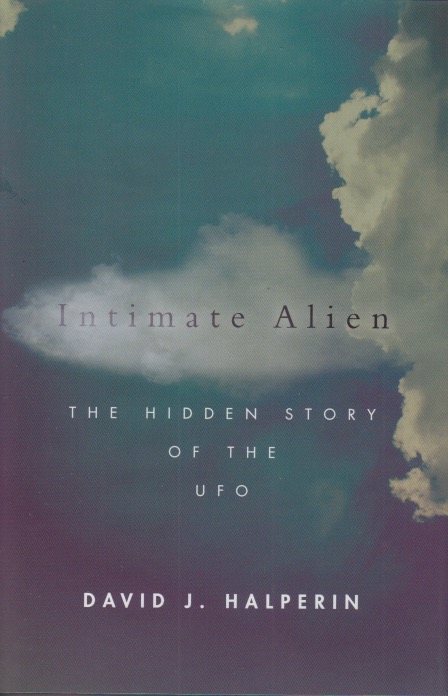
A few days ago—maybe weeks—I posted on discovering David J. Halperin’s website.  His book, Intimate Alien: The Hidden Story of the UFO, had been on my reading list since it came out.  Like Diana Pasulka and Jeffrey Kripal, Halperin is a religion scholar exploring UFOs.  “In its essence,” he writes, “the UFO is a religious phenomenon.”  I would tend to agree although Halperin holds a somewhat different interpretation than many ufologists do.  Noting the deep, Jungian connections with such archetypes as quaternaries, and the profound experiences of death and sex, Halperin builds a case for UFOs as a modern myth.  Myth in the sense that we religion scholars use it, that is.  Myth is not a falsehood, but its exact opposite.  Myth is truth expressed in ways that aren’t, and can’t be, literal.

Using this impressive interpretive matrix he considers some of the classic—and a few novel—cases such as the Socorro, New Mexico case and Roswell.  He traces the phenomenon to its modern beginnings in 1947, but interestingly for a biblical scholar, considers seriously what Ezekiel might have seen.  Here the quaternaries come in quite helpful.  He spends considerable time on the abduction phenomenon, exploring what needs such stories might meet.  Many of them involve individuals in unusual social circumstances and that adds credence to his interpretative model.  He also considers the adjunct Men in Black.  I had been unaware of the Shaver Mystery until reading this book.  He ends by considering John Lennon’s famous New York UFO sighting.

Halperin offers a non-dismissive paradigm that allows for a high degree of rationalism.  Since I’ve suggested elsewhere on this blog that the paranormal is kin to religious studies, I’m always glad to see some validation of this when someone publishes a successful book on the subject.  Outrè topics, if they’re to be considered at all, fall within the open borders of religious studies.  Ironically perhaps the most human of the humanities, it is a field rife with unusual experiences that sometimes lie beyond the reach of empirical measure.  UFOs represent the problem of occasional phenomena.  You can’t get them into the laboratory and they aren’t repeatable.  How are we to study them?  Since several military organizations, including the US Navy, are now taking the subject seriously, it would seem that academic fields should follow.  Most don’t, or won’t.  Religious studies is braver, it seems to me, than many disciplines.  It takes on the unusual and tries to find respectful ways to understand what it finds.


Come People and Consider

“Thou, O king, sawest, and behold a great image. This great image, whose brightness was excellent, stood before thee; and the form thereof was terrible.  This image’s head was of fine gold, his breast and his arms of silver, his belly and his thighs of brass, his legs of iron, his feet part of iron and part of clay.”  So Daniel answered the megalomanic king Nebuchadnezzar, according to chapter 2.  This is some Scripture that CPAC has chosen to ignore, or at least not bothered to read to the end.  In truth I was always bothered when Daniel said “Thou art this head of gold”—which seems to be more brass-kissery, if you get my drift, than prophecy.  But dear CPAC, the statue of Nebuchadnezzar crumbles when the kingdom of God arrives, unable to stand on its feet of clay and iron.

Image in public domain, courtesy Wikimedia Commons

I’m not one to tout Daniel as prophecy, but seldom have we seen such things come true so literally.  If we turn to the other testament, in a somewhat politically incorrect aphorism a personage of the gospel of Matthew quoth, “they be blind leaders of the blind. And if the blind lead the blind, both shall fall into the ditch.”  Funnily, those who claim to support a “Christian” America have failed to read even the surface of the Good Book.  Without the Bible what is fundamentalism?  That image in Daniel 2 is considered an idol.  After all, when the Trump of antiquity built a statue all were required to fall down before and worship it.  Those who didn’t were thrown into the fiery furnace.

The Conservative Political Action Conference has sent shivers down the collective spine of our nation.  Even as it was going on I was standing in the rain signing petitions for local Democratic candidates because going inside meant being potentially infected by the Republican disease known as Covid-19.  Apparently half-a-million dead is never enough for those who believe in a social darwinism although they claim to base their lives on the book that says all this took a mere seven days.  Although Daniel gained great fame and wealth by telling the king what he wanted to hear, during a party a few short chapters later he saw a hand writing on the wall.  “And this is the writing that was written, Mene, Mene, Tekel, Upharsin.”  And although given a third of Belshazzar’s kingdom that very night it was all lost to Darius.  “Who hath ears to hear, let him hear.”


Many Moons

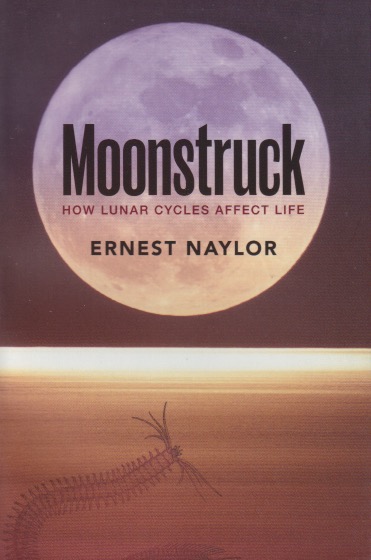
Scientists, often with their base matrix bound up with the local religion, are frequently interested in  myth.  And sometimes religion too.  This is no surprise.  Many of us go into religious studies because of its influence on our lives and scientists, who measure and analyze material realities, must be curious when their results challenge some religious or mythic assumptions.  So it is that Ernest Naylor addresses mythic beliefs about the moon’s influence on animals and what scientific findings on the same show.  Although this book wasn’t exactly what I thought it would be, Moonstruck: How Lunar Cycles Affect Life does address the subtitle assertion quite directly.  Naylor, a marine zoologist, knows about tides—caused by the moon—and their effects on marine organisms.  That connection is the main focus of the book, with occasional forays onto dry land.

What caught my attention right away was that when discussing myth and religious ideas, Naylor describes two stories as biblical: the woodcutter banished for gathering on the Sabbath and Judas’ banishment.  Both of these, he seems to believe, have the Bible banishing the criminals to the moon.  That was news to me.  There may well be folklore with such associations, but a simple opening of the covers of the Good Book would dispel this particular “myth.”  Neither the sabbath wood-gatherer nor Judas were banished to the moon after their deaths.  The former presumably went to Sheol and the latter presumably to Hell.  For me this illustrates yet again how many ideas professional people outside the guild suppose to be “biblical.”  The Bible says very little about the moon.  One New Testament demoniac is described as “moonstruck,” but beyond that the occasional references are mainly just to the moon qua moon.

The Bible’s a big book.  Everyone in western society knows it’s an important book but few read it.  Even fewer deeply engage with it to understand its original context and message.  We hear stuff and we’re told it’s in there, and we believe it.  I first noticed this in high school.  Classmates would tell me “the Bible says…” (you can fill in the blank with just about anything, this isn’t a quiz).  Almost always they were wrong.  By that point I’d read the Good Book many times cover-to-cover.  I owned concordances and knew when foreign matter was introduced.  The thing about the Bible is that it’s fairly simple to look it up.  Moonstruck focuses on marine animals and tells interesting connections to the moon.  It has a chapter on humans and the moon, finding little direct biological influence.  It’s an informative book, just don’t use it to verify what’s in the Bible.


Welcome Home

It feels like we’ve got our country back.  I’m not talking about just Democrats, but all Americans.  The last wicked four years felt like a nightmare to millions.  May such evil never happen again.  Many thoughts are vying for attention in my head with the end of the Trump era.  We now have only our second Catholic president, following a heathen one (I fear this may insult heathens, my apologies if it does).  We have finally, after far too many years, have a female vice-president, having been robbed of our first female president by the electoral college four years ago.  Like many Americans, I came away from the inauguration yesterday with the feeling of relief that a person with human sympathies, who doesn’t pathologically rely on lies, is in the White House again.  Listening to the oath of office I wonder how 45’s hand didn’t burn off on the Bible four years ago.

The inauguration is, of course, a ceremony of civil religion.  The family Bible upon which President Biden (how right that feels!) placed his hand is an American institution.  Quite often families have had a particular Bible in which to keep family records and important data (in the days before the internet collected all that).  Not only that, but Biden was actually able to quote the Bible, and not from one of those verses everyone knows from overuse.  What a difference from the cynical, lackadaisical holding up of an unread Bible after teargassing non-violent protestors for a photo-op.  No matter what his detractors may say, Joe Biden actually is a Christian, something that cannot be said of the former incumbent by any meaningful use of the word.

On the night of January 19, Biden began the new administration with a moving candlelight vigil for the 400,000+ Americans who’ve died from Covid-19.  Until that moment, the White House did not care about them at all.  The program included a rendition of Leonard Cohen’s iconic “Hallelujah.”  Interestingly Cohen’s ambiguous line was altered to “I know there’s a God above,” for Americans of a certain stripe need that kind of reassurance.  Compassion.  This is one of the central messages the Bible offers.  We should care for and love one another.  It has been four years since Americans have heard that message.  The evil times through which we’ve suffered are not gone for good, but never has an inauguration been so sorely needed by a country that likes to think itself chosen.  At least we have our country back, no matter party or creed, and that is worth celebrating.


Prophet Margins

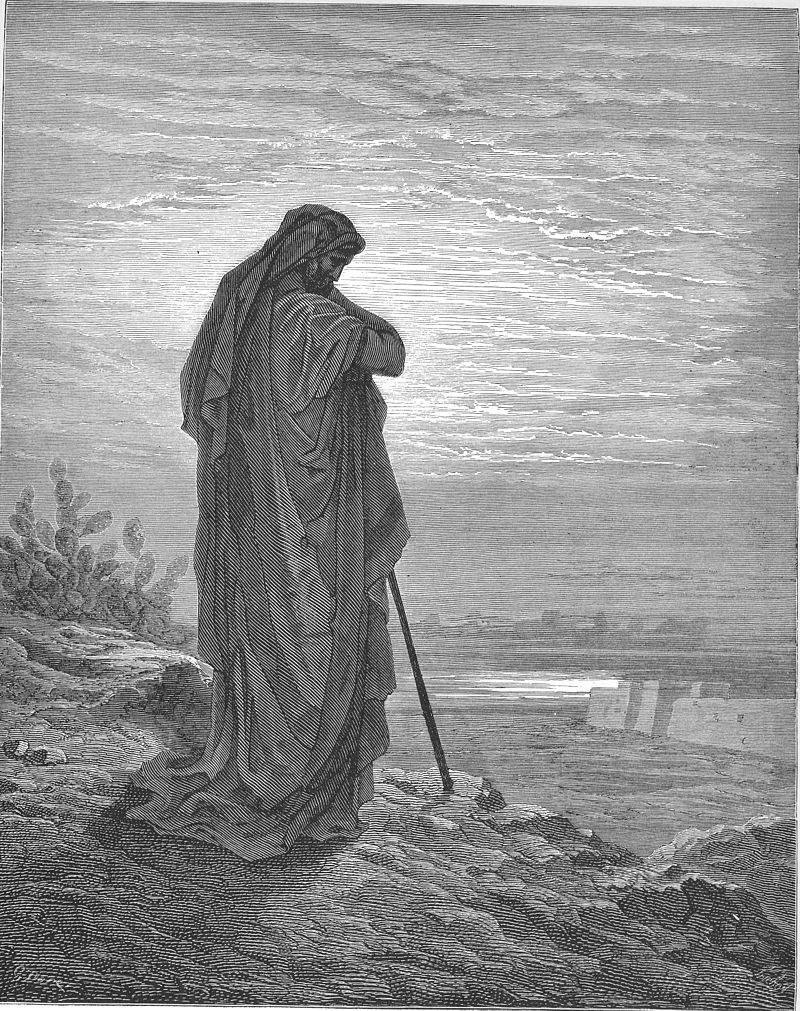
One of the most misunderstood of biblical phenomena is prophecy.  One of the reasons it’s so misunderstood is that other ancient peoples came to associate it with predicting the future.  Now, what prophets said often had implications for the future, but they were more forth-tellers, as they say in the biz, than fore-tellers.  Amos, for instance, was a prophet concerned with social justice.  We know little about his life, but we can discern that ancient prophets could be paid to become “yes men” (“yes persons” just doesn’t sound right, and most were male) for the establishment.  Kings then, as now, surrounded themselves with sycophants who would tell them their policies were approved, or even ordained by God.  Amos was not one of those.

Amos points out in the book attributed to him that he was no paid prophet.  He was an honest worker with a great concern for social justice.  He lived in a prosperous time, but the wealth disparity between the rich and the poor troubled him.  (Amos has never been a favorite among prosperity gospelers, since his message has always been recognized as authentic among both Jews and Christians and he condemns the inequality rampant in society.)  Many in the eighth century BCE believed ceremonial actions—like, say, holding up a Bible in front of a church—pleased God.  Amos boldly declared such things sickened God as long as society favored the rich at the expense of the poor.  There’s a reason Evangelicals and Republicans tend to avoid Amos.  “But let judgment run down as waters, and righteousness as a mighty stream,” is not an easy thing to hear when you’re busy giving tax breaks to those who earn more than enough while refusing basic health care to the poor.

Prophets tend to speak of the future in conditional terms.  If your ways don’t change, then this will happen.  Some Christians, anxious to prove that Jesus was the messiah, came to see prophets as great predictors of the future.  Amos would likely have taken exception to them.  Even in his own day Amos made people uncomfortable.  His favorite image for God was that of a lion ready to attack.  His contemporaries told him to shut up.  Amos then made the famous statement that he was no professional prophet.  He would not adjust his message so that the comfortable could feel good about themselves.  If Amos were in America the last four years would’ve had his throat raw with pointing out to “Christians” how they’d come to misrepresent everything the prophets stood for.  We need more like him today.