Erase This

Over the years I’ve read a fair bit about Eraserhead without having ever seen it.  Approaching it I had little idea what to expect—normally classified as body horror, there’s a fair amount of debate as to whether it should be considered horror or not.  Now that I’ve finally seen it, I’d probably call it existential horror.  There are no jump startles, and the quirkiness makes it almost funny at times.  To me it suggests the horror of finding oneself in a world where the most desirous things are also those that scare us the most.  If you’ve not seen the movie this may not make sense to you.  David Lynch, the writer and director (and producer), went on to find fame in more mainstream media, but Eraserhead made the National Film Registry’s preservation list, which says something about it.

Comparison is sometimes fittingly made to Kafka.  Life itself can be traumatic.  Body horror tends to focus on the abject aspects of being incarnated.  We associate intimately with our bodies, but they do things we don’t understand and which sometimes alarm us.  The absurdity of this situation wasn’t lost on the great existentialist writers of the last century.  Faced with these circumstances we carry on because it’s not clear what else to do.  So Henry Spenser doesn’t emote very much.  Life does weird things to you and sometimes just watching the strangeness unfold is the best option.  This level of vanity brings old Qohelet to mind, for even the Bible realizes that some things just can’t be explained.

In an interview on the film Lynch cites the “little torments” of those in the workaday life.  It’s difficult not to feel like a mere cog when your wage is premised upon the amount of time you spend on the clock.  Even for professionals.  The stark divide is like the industrial wasteland the film so ably portrays.  This isn’t where anybody wants to be—no, it’s where one finds oneself.  Comforts are few and the background noise is constant.  Although Eraserhead isn’t widely known among the general public, its influence on other filmmakers is clear.  I could help thinking “oh, this is where that idea comes from.”  Probably most strongly that related to Brazil, a film I saw twice in one week in the theater (something I’ve not done with any other movie).  Having worked within the system, following all the rules only to find they don’t really mean you’ll end up where you hope, the theater of the absurd has always felt natural to me.  I should’ve watched this sooner.


Rel Stud 101

There’s no such thing.  Religious studies, that is.  I first heard this a decade ago while working as religious studies editor for Routledge.  My supervisor stared at me with such knowing eyes that all I could do was nod.  I figured that since I’d spent my entire career in religious studies I’d probably know if it existed or not.  I’ve heard the statement a number of times since then and have come to realize that what it means is this: unlike other academic disciplines, religious studies has no single, central topic of study and no agreed upon methodology.  It consists of scholars trained in a variety of fields looking at different aspects of religion from different perspectives.  There’s even little agreement as to what religion is.

Religious studies is an outgrowth of biblical studies.  Studying the Bible was a long preoccupation with Jews and Christians.  Long before there were universities there were places you could study the Good Book in depth.  When enough time had passed history of Christianity and theology were added to the mix.  It was only fairly recently, about the late nineteenth century, that scholars of Christianity began to wonder about other religions.  The earliest religious studies were Christians studying other faiths.  Now, of course, religious studies exists in a number of universities and colleges (but by no means all of them) and nobody really stops to think how this came to be.  Students are very interested in religions, but as a major it offers few career options (yours truly is a case in point).  It’s a discipline under duress.  Pretty stressful for something that just doesn’t exist, isn’t it?

My suspicion is that many who entered this limbo started out as I did—a curious Christian wanting to know as much as possible about what I’d been taught.  You learn to think along the way, with somewhat predictable results.  Sometimes it takes years to dawn on you.  In other words, I doubt that many entered this field consciously thinking “I want to learn religious studies as a discipline.”  Like a pitcher plant, however, once you fly in there’s no way out.  Instead we have to find tools to study this strange and slippery environment into which we’ve fallen.  Otherwise we’ll simply be digested.  I made it through three degree programs in this field without ever encountering this idea that apparently has been long known.  Numbers are declining, which makes those of us in here how long our odyssey might continue.  If it even exists.


Numbers Game

I once asked a movie expert—this must’ve been when I was regularly on a campus somewhere, but not Nashotah House—how many movies had been made.  He sighed and said “There’s no way to know that.”  What I was thinking at the time was the Motion Picture Association of America (now the Motion Picture Association) number that comes near the end of the credits.  I wondered how many of those there were.  Of course, the number keeps changing.  It doesn’t account for television movies or straight to video, although, I see it does now include Netflix.  In any case, I was really interested in the statistics.  I still am.  I may not be a math person, but big numbers are intriguing.

The more I read about movies, and I seem to be moving in that direction, the more I realize how nobody can be an expert on all of them.  Even those of us with decades of experience watching horror can’t keep up with that genre.  Many of the books I’ve read are by authors whose families don’t like horror, so they have to carve out time alone to see the films.  This is on top of their jobs, which for some, admittedly, is film analysis—perhaps they’re the lucky ones.  I selected many films to discuss in Holy Horror.  There’s no index of the Bible in films, as useful as such an index would be.  As I continue to watch, and sometimes rewatch, I keep finding more and more material.  At some point, however, you just have to say “what I have written, I have written.”  But how many movies actually engage the Good Book?  There may be a way to know that, but it will take a lifetime of research.

Speaking of large numbers, the stats for how many Bibles are sold each year is a phenomenon unto itself.  It seems inevitable that it would find several of the cracks in American culture and leak in like rain water.  At times it’s the antidote to horror, while at others it’s the dote itself.  Holy Horror was never intended to be comprehensive.  It limited itself in intentional ways.  As I was writing it my naive question kept coming back to me.  When I research a topic I like to read as much written on the topic that I possibly can.  Of course, I spend over eight hours a day for most of the year doing something else.  The number of days like that, I suspect, is frightfully large.


Angel of Harvest

It’s been a few weeks ago now, but one October Saturday we attended the Lehigh Valley Vegstock.  Autumn is the season for harvest festivals and a surprising number of them are now catering to vegetarians, or even vegans.  When I say that, it probably calls to mind a certain kind of individual—perhaps an aging hippie who’s probably into New Age and alternative spiritualities?  If so, you’re not the only one whose thinking goes along those lines.  Among the recycled, reused, and other earth-friendly tents was one that offered contemporary spirituality.  A lot was going on behind my mask so I forgot to take the name of the actual vendor, but I did find the use of angels interesting.

No, I haven’t been living under a rock.  Well, maybe I have.  Even so, I know that angels are popular and have been for several years.  Some people who find themselves uncertain about God are still down with angels.  Back in college—who knows anything at that age?—I did an independent study on angels.  The professor (who’s still at Grove City) didn’t provide much direction, and I soon found there wasn’t too much in our library about the subject.  Like demons and other monsters, scholars tend to shy away from the topic.  That, and I hadn’t yet learned how to use Religion Index One.  Now, of course, there’s the internet.  In any case, the idea of angels stayed with me through my teaching career.  After all, studying ancient gods does bring you into close proximity with other spiritual beings.  Even so, I was interested to see Archangel Metatron on the Vegstock vendor table.

Metatron isn’t biblical.  He makes his first appearance in Jewish literature, including the Talmud and Kabbalah.  Although my research interest was always toward the earlier era of the spectrum, it seems that much of our angelology was percolating during the period after the Hebrew Bible was written.  Jewish scholars were working out the complex spiritual world and later Christian writers would attempt to systematize it.  It is possible, and it appears in some traditions, that Metatron was actually Enoch, translated.  Enoch, who is biblical, receives just a few words in Holy Writ, but he eventually grew in importance.  Genesis indicates that he walked with God and was no more.  What happened to him?  Metatron was one possible answer.  There are other Metatron origin stories, I’m sure.  And one of them was right there in Tatamy in the midst of a harvest festival.


Interview Two

October turns the northern hemisphere mind toward Halloween.  It must be strange to receive northern media while living in the global south—Halloween occurs just as spring is getting underway.  I guess that’s what May Day’s for.  In any case, in the United States Halloween thinking is in nearly full swing.  My last two books, while not Halloween themed, look at horror films which, in keeping with October, are on everyone’s mind this season.  And it’s been quite a week for interviews.  The second half of my podcast interview on The Incarcerated Christian was posted yesterday.  If you want to hear more fun Q & A with Robin and Debra, click here.  I’ll post more about this Friday, but tomorrow my interview with Eric Ziolkowski of Lafayette College will air as part of the Easton Book Festival.  The festival’s going on right now, so be sure to check out the offerings online.

One bit of advice that I give as an editor: if you want to make it as an author you need to promote your own work.  Some of us were reared to believe that it’s in poor taste to do this, but in the internetted world it’s pretty much a requirement.  Something I learned from political activism is that every election is local.  Getting noticed also has to start in your own backyard.  I love doing interviews.  It’s always flattering to know that someone’s read your book and wants to know more about it.  I’ve started to explore the newish area of religion and horror.  From what we see in the news, it seems like it’s an area that’s likely to take off.  But only if those who work in it get their stuff out there where it can be seen.  (Or heard.)

Neither Holy Horror nor Nightmares with the Bible have sold very well.  They’re expensive, and academics, who will spend money on books, are still trying to decide if this area’s worth exploring.  I admit that there’s a puerile kind of naughtiness to taking monsters and “low brow” entertainment as a subject of study.  Horror, however, has lots of fans.  Perhaps not in the academy, but in the real world.  I like to think such marginal areas bring people together.  Horror, like demons, isn’t going away any time soon.  Instead of running away from what you fear, why not try embracing it?  If not even that, please consider the free content available on The Incarcerated Christian and the Easton Book Festival.  After all, Halloween’s just about here…


Documenting Horror

Watching documentaries always seems to raise questions.  I recently found A History of Horror with Mark Gatiss on YouTube.  Produced by the BBC in 2010, the set of three episodes is a selective walk through the horror genre through the eyes of an insider in the film industry.  Divided over three segments, he covers early horror (primarily Frankenstein-related movies), British horror, and the American horror revival beginning in the late 1960s.  It occurred to me while watching this that horror is often—but not always—an intellectual genre.  Many of the plots and ideas are sophisticated and puzzling.  At one point Gatiss says it is nearly the perfect genre for movies.  I would tend to agree.  Many of the payoffs of horror are the reasons I go to see a movie.

Of course, documentaries involve interviews.  While discussing religion and horror—the two are closely related—in the third segment, he considers the impact of what I termed the “unholy trinity” in Holy Horror: Rosemary’s Baby, The Exorcist, and The Omen.  His primary interview for this set was with David Seltzer, the screenwriter for the last of these.  At this point my memory took me back to an interview on one of the extras for my DVD edition of The Omen.  In that interview Seltzer mentions that the antichrist is at that moment (clearly this was shot shortly after the movie came out) walking the earth.  In my mind I compartmentalized this to interpret his stance as that of a religious conservative.  The idea of the Antichrist, after all, is post-biblical, at least in the sense that end-time scenarios are developed.

The Gatiss interview was filmed many years later and he asked Seltzer if he believed in the Devil.  “No,” Seltzer laughed, stating that if he did he wouldn’t work on movies like The Omen.  People’s opinions change over time, of course.  And the Devil and the Antichrist are two separate characters as they develop after the Bible was completed.  Still, I had to wonder if his earlier interview included that comment about the Antichrist being alive now wasn’t intended as a bit of spooky propaganda for the movie.  It’s difficult to know what someone really believes.  Most people mouth what their ministers say, not really considering where said clergy get their information.  For these many years I’ve been thinking that The Omen was considered as some kind of documentary by the screenwriter.  Documentaries always seem to raise questions.


Sodom

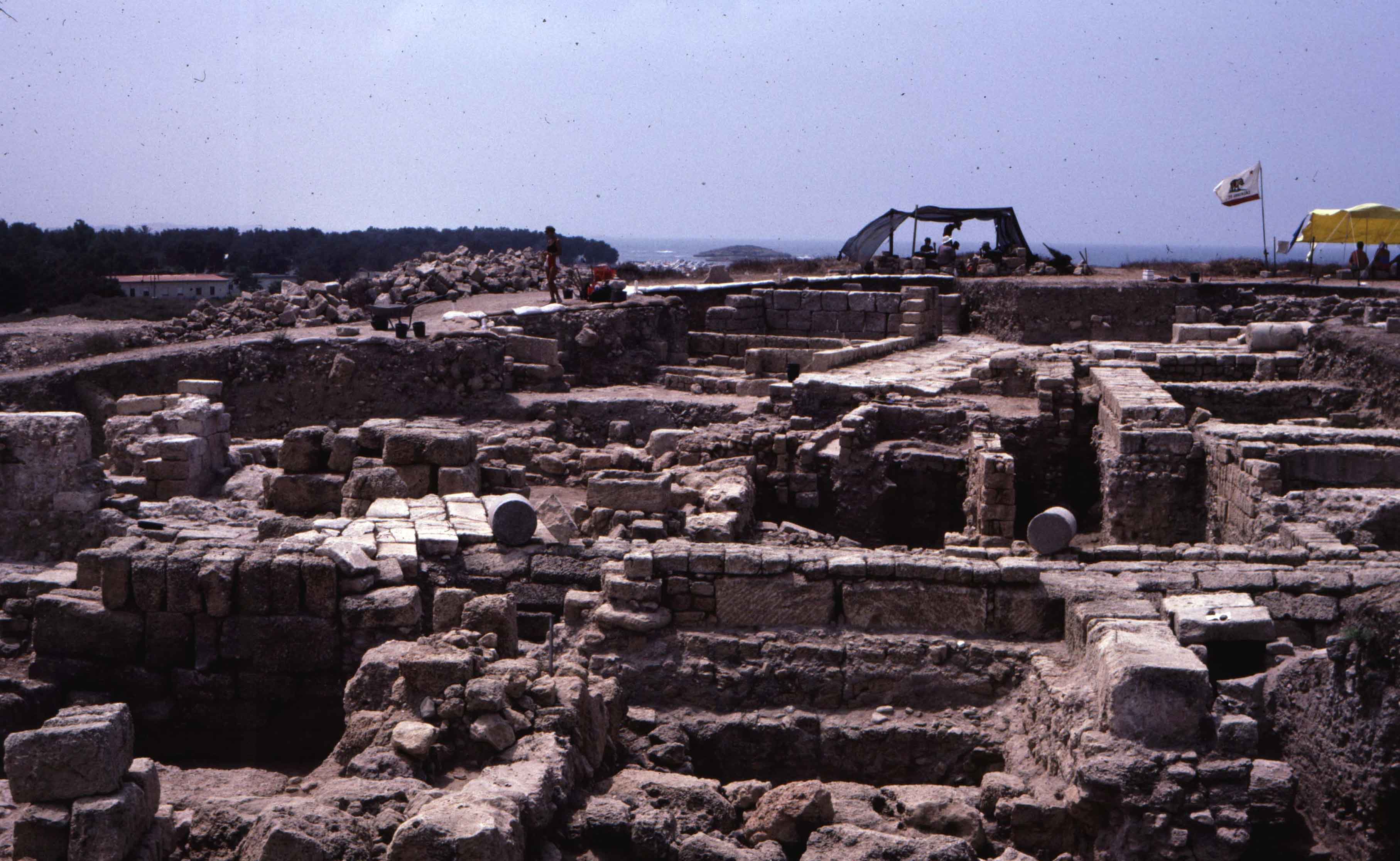
Look!  Up in the sky!  It’s a bird!  It’s a plane!  It’s an asteroid coming to wipe out a city!  One of the cottage industries outside biblical studies is the interest in finding historical events to explain Bible stories.  A few years ago it was proposed, with some degree of probability, that the flooding of the Black Sea by the Mediterranean, validated by archaeology, led to the story of Noah’s flood.  I recently saw a story suggesting that the destruction of Tall el-Hammam by an asteroid about 3,600 years ago might’ve been the basis of the story of the destruction of the cities of the plain, Sodom and Gomorrah  most prominent among them.  The piece by Christopher R. Moore in The Conversation describes the moments of horror—mercifully brief—as the space rock exploded above ground and wiped the city from the face of the earth.

Since this happened near the location of Jericho, the destructive shock waves knocked its walls down, leading to another biblical tale.  I often wonder about these “theories.”  They show just how deeply biblical our society is.  The frame of reference is already there.  People know about Sodom and Gomorrah.  They know about the flood.  They know of naked Adam and Eve and a snake wrapped around a tree.  When a disaster happens in the right region, and before the biblical story was written, it is suggested as the etiology of the tale.  Many have tried to explain the plagues of Egypt using similar methods.  Our culture seems to long for some skyhook on which to hang our biblical hat.  Some indication of why people put such strange stories in the Good Book.

Biblical scholars look too, but with a different perspective.  Etiologies are stories of origins.  Traditionally the Genesis account of the cities of the plain is understood as an etiology of the Dead Sea.  A unique geological feature of this planet, it is, in a word, weird.  The story of Abraham’s nephew Lot seems to explain it.  The article makes a compelling case for a heavenly fireball at about the right time that wiped out a settlement of about 8,000 people.  Genesis wasn’t written yet at 1600 BCE, the time of the event.  Since the impact site wasn’t far from the Dead Sea it seems to fit  the bill for a valid etiology.  None of these events proves biblical stories true, but they do show possible avenues of transmission.  This one definitely has me wondering.

Image credit: Daderot via Wikimedia Commons

Thoughts on Job

The book of Job has been on my mind lately.  Leave aside the remarks of Eliphaz, Bildad, Zophar, and Elihu, it is one of the most honest books ever written.  Many people think Job is trying to answer the question of why the good suffer.  If so, it does a poor job.  No, Job is an exploration of suffering, and Job really isn’t looking for an answer why.  Instead, he simply wants his pain to be heard.  No fixers, no advice.  Simply to be heard and to know he’s been heard.  You see, in the world of the Bible words were significant.  Many prophetic utterances were simply that—utterances because it needed to be said.  Job ups the ante quite a bit, however, when he begins to wish that God would answer him.  God, after all, is responsible for his pain.

William Blake’s Job

The world is full of sadness.  Some people feel the sadness of others deeply.  We all strive for some kind of equilibrium, some balance.  There are, however, a lot of people out there that truly do suffer and for no particular reason.  Job is a polarizing book.  Many people dislike it intensely.  I suspect that some of them don’t like to think of the world in this way.  Those who do good should be rewarded.  (The book makes plain that Job is perfect.)  Those who do evil should be punished.  Job makes clear that that’s not the way the world actually works.  For reasons we can’t know (who’s privy to the divine council and its deliberations about our fates?) we may end up losing our hopes, dreams, health, and wealth.  Job is kind of a horror story.

There are those who read Job and argue from the point of view of his friends.  In the book itself God condemns the outlook of the friends, noting that Job—no matter how challenging his words were—spoke honestly.  Life is seldom fair.  We as human beings must strive for fairness as best we’re able since we sense that it’s morally good.  Indeed, much of the Bible upholds fairness.  The book of Job questions it.  Not it’s goodness or morality, but rather why the world doesn’t reflect it.  When someone is suffering one of the most helpful and difficult things we can do is listen to them.  We need not open our mouths to fix, suggest, or advise, like Eliphaz, Bildad, Zophar, and Elihu.  We simply must let the words be said.


Defining God

What, exactly, is a god?  Our viewpoint, which is largely based on the culture that grew out of the Bible, may not encompass all the possibilities.  I remember reading, as a child, that God—the only true god, of course—was omniscience, omnipotent, and omnipresent.  These three omnis sure impressed me as a kid.  Since I read this in the back matter of a Bible I knew it had to be true.  And since there was only one, all false gods weren’t gods at all.  Divinity had to be defined in the same way as the biblical God.  More advanced study over the years led to the realization that gods weren’t necessarily immortal, and that the Good Book itself didn’t present God as omniscient (he has to ask people things), omnipotent (he can’t make Israel be faithful), or omnipresent (just ask any Psalmist).  So the question of definition arises.

There are cultures, it turns out, where people are gods.  At least some form of divinity.  Clearly we don’t create physical universes, but like the biblical God we’re larger and more powerful than some other creatures, and we often impose our will upon them.  Some people believe themselves to be deities.  Others suggest we have a spark of divinity in ourselves and that each person participates in the divine.  The fact is we have no way to measure this is a laboratory.  Defining deity is a matter that must be left to “theologians,” but that won’t prevent the average lay person from deciding for her or himself.  Nobody really reserves the right to decide definitively when it comes to gods.

Many cultures have included people, often in leadership roles, who were declared gods either during or after their earthly lives.  Who’s to say they’re wrong?  Science is no help here as the supernatural is outside its current remit.  It can only measure empirically.  The intangible is a whole other universe.  Deciding what a deity actually is may be an impossibility.  Those of us reared in monotheistic traditions suppose that a single, personal, divinity stands behind all of this.  Notwithstanding Xenophanes’ horses, our gods tend to be human at least in form.  In collegiate discussions, one conservative roommate would clap his hands over his ears if we began talking about God in non-anthropomorphic terms.  One of my friends likened God to a “cosmic aerosol” (this really sent my roommate over the edge).  What do we really know about gods?  Without a scientific method to help, it remains an open question.


Just Like Us

Jordan Peele has been noted for his intellectual, black horror films.  His work is good at making clear that African-American experience is different than white experience in America.  That was especially on view in Get Out, a haunting treatment of being “the other.”  His more recent Us, two years old already, takes a somewhat different angle but still comes to a similar point.  Since the movie has a notorious twist ending that I’d rather not spoil for anyone slower than I am, I’ll try to focus on the film’s use of Jeremiah 11:11—“Therefore thus saith the Lord, Behold, I will bring evil upon them, which they shall not be able to escape; and though they shall cry unto me, I will not hearken unto them.”  This message of the prophet was a warning that Jerusalem would fall to the Babylonians, but clearly it has wider applications.

It’s safe to say, I suppose, that the movie is about substitute people.  Each person has a doppelgänger that shares her or his soul, but is a puppet—it’s not too far to stretch to say “slave”—that must do whatever it is we have it do.  When those doubles, or shadows, arise and organize, things start to get real scary real fast.  Although the metaphors run deep, the biblical citation comes near the start of the movie, setting the tone of what follows.  This is divine judgment for the mistreatment of others.  While it isn’t ostensibly about race, at least not obviously so, the story follows the black Wilson family as the uprising begins.

Jeremiah’s message, although delivered to a specific situation at a particular time in history, could well apply whenever one people threatens another.  Like most prophecy, it’s less about prediction than it is about changing behavior.  Jeremiah presents a good warning tone because he was a prophet who loved his people but also saw that they had to fall in order to be redeemed.  His is a strong message for a country at a crossroads.  Peele has a lot going on in this movie and I suspect more than one viewing will be necessary to pick up on some of the points.  Not all parables have a single message.  Not all prophets are heeded in their time.  Jeremiah 11:11 provides context, and it rewards the biblically literate who know the context it which it originally applied.  Fitting it into the world of black horror is an example of how prophecy continues to be relevant.


Mystical Trip

It’s easy to believe we live in a “post-Christian” world.  People aren’t tied down by Scripture strictures the way they used to be.  Sunday mornings are free for lots of people.  We don’t spend our time hunting for heretics.  One thing that might not be obvious, however, is that our underlying culture is deeply Christian.  Beyond mere assumptions, this goes down to the very presuppositions of the way we think.  While society might not be overtly Christian, it remains so at a deeper level.  I’m reminded of this when I’m out and about (which is starting to happen again) and able to hear, or overhear, people talk.

Grounds for Sculpture is a whimsical, fun space to visit in New Jersey.  It consists of acres and acres of a former fair grounds with sculptures of many different kinds scattered along the shore of a small lake on one end and a busy road on the other.  Many of the statues were designed by Seward Johnson, showing people in a wide variety of activities.  Since the displays change over time multiple visits are rewarded with new insights and displays.  It seems to be a popular place since pandemic restrictions have started to lift.  So much so that the usual seclusion that is part of the charm of a visit is somewhat stifled.  In a typical art gallery, the visitor has some space to reflect and contemplate.  The sheer number of visitors leads to a “wild animal in Yellowstone” situation where, if a creature dares appear, it’s immediately swamped by city-dwelling humans who’ve never seen a bear in the wild before.  This leads to some interesting overhearing.

One of the sculptures I don’t recall having seen before is “Mystical Treasure Trip.”  It is a fantasy scene in which a couple, attired in what could be biblical garb, is sailing across the water in a boat filled with gold.  Perhaps it’s the dress of the characters.  They look like Mary and Joseph, perhaps fleeing from Herod, but with a boat full of gold.  Overhearing others commenting on what they thought it was I heard “they’re going to the ark.”  Admittedly, this is something I would never have come up with on my own.  Noah, according to Genesis, was six centuries old at the time and was commanded to collect animals, not gold.  Material for trading would’ve been pretty useless in a world devoid of other people.  Still, when our imaginations stretch for the interpretation of something we don’t understand, often they reach for the Good Book.  It’s its own kind of mystical trip, really.


Review Copy

You reach an age, or maybe a stage, where it’s difficult to recall details.  Too many emails about too many things and you just have trouble recalling where you read this or that.  Someone a few months ago, perhaps on this blog, lamented not being able to afford Holy Horror.  I wanted to let that person (or any other interested party) know it is now available free—for review—on Reading Religion.  Feel free to drop me a comment if you don’t know how to get this thing started.  When I was a grad student I learned about reviewing.  It was the way to get ahold of expensive books for free.  I’m no longer able to do them (conflict of interest), but I still think they’re one of the greatest perks for the literate.

Reading Religion does not require a Ph.D. to permit an interested party to volunteer.  Since it’s a religion site, many clergy do reviews.  If you’ve been talking to anyone about Holy Horror (and I’m just sure you have!) and they want to read it, let them know.  There’s nothing more embarrassing to have nobody wanting to read your book when it’s available for free.  Besides, reviews are how people find out about books.  Over half-a-million new websites are created each and every day, my friends.  We’ve got to help each other out!  I’ve been providing free content here daily for twelve years now—I need someone to review my book.  I know people are busy.  There are an estimated 1.7 billion websites, many with multiple pages.  Who has time?

I try to post about lots of books here on Sects and Violence in the Ancient World.  I know it’s not a frequently visited website (I’m a realist) but I know at least two publishers have taken blurbs from my words here to promote their books.  Those of us who read have to stick together.  Writing, to me, is how you pay back for all the reading you get to do in life.  It helps, of course, if people know about your books.  By the way, if you have an interest in religion at all you should check out Reading Religion.  It’s a great site to figure out what’s going on in books.  And you might even find something there you’d like to read.  I’d do reviews myself, but that’s no longer permitted.  I’ll put my thoughts here on this blog, though.  It’s only doing to others what I would appreciate being done back.


Strange Reading

What more can you say about the Bible?  A lot’s been said already.  So much, in fact, that nobody can read all of it in a lifetime.  That realization started to come to me as I was trying to find everything that had been written about Asherah—who’s mentioned in the Bible—to write my dissertation.  I didn’t find everything, but I found a good deal of it.  Enough, in any case, to write my cautionary words about the subject.  Kristin Swenson’s A Most Peculiar Book brings the insights of a fellow traveler to the fore.  In a serious yet lighthearted way, she points out, as the subtitle says, The Inherent Strangeness of the Bible.  In other words, it’s not what most people—especially those who speak the loudest about it—think that it might be.

There are many angles from which to approach the Good Book.  One size most definitely doesn’t fit all.  A book like this would benefit from being read by those who take the Bible literally, but one of the problems is that literalists have no motivation to read such a book.  Indeed, their trusted leaders actively warn against it.  Such treatments are dangerous at best, and are possibly demonic.  One of my professors once put it well: fundamentalism isn’t a theological position, it’s a psychological problem.  In any other area of life those exact same literalists will apply reason and logic.  When it comes to their beliefs, however, refusal to engage with the tools that make their lives otherwise successful becomes an eleventh commandment.

Swenson points out things that will likely be old news to biblical scholars.  Having been through all this in a way ourselves, we remember what it was like to become “woke.”   To those raised as literalists, this is no small ask.  It stabs at the heart of everything you’re raised to believe.  The fear is that there’ll be nothing on the other side, at best, Hell at worst.  These are very real fears.  They may never completely leave, no matter how long you’ve been awake or how much rational coffee you’ve drained.  Such fears deserve a sympathetic hearing.  Without it I’m not sure any progress can be made.  Strip below posturing and bravado and you’ll find fear.  I do hope A Most Peculiar Book will find its way to such folks.  Swenson shows there is life after biblical studies and her book has some fun facts for those unfamiliar with the book about which there’s somehow never enough to say.


Mapping the Apocalypse

“Is this the end of the world?”  The question came up often early in the pandemic.  The end.  It’s so logical that just about every religion addresses it.  It bookends “the beginning” with the symmetry that we so covet that it’s almost impossible to think the world won’t end.  Even astronomers tell us the sun will betray us, eventually becoming a red giant and consuming our home planet.  Apart from being the greatest equalizer, however, religious speculation places the end way, way before then.  A friend sent me an article in National Geographic by Greg Miller titled “These 15th-Century Maps Show How the Apocalypse Will Go Down.”  It describes literal maps of the eschaton, and guess what?  It was right around the corner back then too.

Maps to the end of the world have been around for a long time.  With a bizarre Schadenfreude, many Christian groups eagerly anticipate the end of all this.  I grew up with charts and maps telling just how it was going to happen.  Like all of you, I’ve lived through many ends of the world.  These folks must be the strangestly optimistic bunch on the planet—when it fails to come on schedule they pencil in another date, preferably in their own lifetime.  They want to see it.  It will, after all, prove that they were right and the rest of the world was wrong.  Who wouldn’t want that kind of validation?  The apocalypse has been around since long before the fifteenth century.  It started in the New Testament, if not before.

This eagerness to end the world would be considered pathological were it not religious.  We’ve been about the closest we’ve been to a human-made apocalypse under Trump.  Make no mistake, some Christians were banking on it when they cast their ballots.  We tend to overlook this destructive way of thinking because some biblical literalists (and they don’t all agree, just put a premillennialist together in a room with a postmillennialist and watch what happens) claim that it’s what the Good Book says.  The rest of society, disinclined to look it up for themselves, accept that roadmaps to the end of the world exist in the Bible.  They don’t, but that doesn’t prevent everyone from fifteenth-century monks to present-day televangelists declaring when it will be.  That there is an end is taken for granted.  The astronomers look at their watches and sigh that we’ve got a couple billion years left, at least.  No, the pandemic wasn’t the end of the world although many Christians were hoping it just might be.


No, uh, It Won’t

Irony comes in all shapes and sizes.  Over the past several decades various fundamentalist groups have built replicas of what they believe to be life-size versions of Noah’s ark.  All of these are approximations because the cubit was never an exact measure.  Nobody knows what gopher wood was.  Most of them ignore the fact that the story of Noah clearly borrows from the more ancient Mesopotamian flood story where the measurements of the ark differ.  In any case, these arks—some containing dinosaurs and others not—are made for convincing people that Genesis is to be taken as history.  While there is some irony in that itself, the larger irony comes in the various proofs that are given that such things really would work to preserve all species since evolution could not have happened.  To work such models have to be seaworthy.

One such ark, according to the BBC, has been detained in Ipswich because it is unseaworthy.  An ark may be useful on dry land for drawing tourists, but would such a large boat work on the open ocean?  All of this brought to mind a Sun Pictures documentary from my younger days.  Giving the ark a makeover, various literalists re conceived the classic design from children’s Bibles to a more boxy, sturdy shape.  This was based on alleged encounters with the ark on Mt. Ararat.  To test this new design, the producers made a scale model and tested it in a pool of water and declared it eminently seaworthy.  Of course, there’s no way to make water molecules shrink to scale to test whether a full-sized ark could actually handle the stresses and strains of a world-wide flood.

Ship building is an ancient art.  Peoples such as the Phoenicians, the neighbors of ancient Israel, achieved some remarkable feats in ocean travel without the benefits of modern technology.  They didn’t have boats large enough to hold every species of animal that exists today, but they sure knew how to get around.  The real issue with literalism is the failure to recognize ancient stories for what they were—stories.  Such tales were told to make a point and the point was often obvious.  The obsession with history is a modern one—indeed, the ancients had no concept of history that matches what our current view is.  Borrowing and adapting a story was standard practice in those days.  Unaware that centuries later some religions would take their words as divine, they told stories that, in the round, just wouldn’t float.