Ravages and Kings

I was recently thinking about King Saul. If it’s been a while for you, Saul was the “first king” of Israel, according to the books of Samuel. Saul had a problem. That problem’s name was David. David was younger, more popular, a gifted musician and lady’s man. In sudden fits of rage Saul tried to kill David, more than once. An unstable man was in charge, but claiming God’s sanction he was safe from any kind of impeachment. In the words of Mel Brooks, “It’s good to be king.” So Israel limped along under weak leadership until Saul got himself killed in battle. I couldn’t help think that this story shows just how relevant the Bible remains today. Mad kings are difficult to displace. They have their fans and, to quote Alfred, “some men just want to watch the world burn.”

David’s reign was no picnic either. He had his Bathsheba affair, and was constantly making war as well as love. He pretended to be insane to save himself from Saul, but he was loved by Yahweh and thrived. Oh, and he wrote the book of Psalms. It’s a bit of a shock when this much feted king gives Solomon, his son, his last words. Instead of some pious sentiments or perhaps a last-minute poem, his final instructions are a hit list. “I promised not to kill Shimei, but you made no such promise.” Wink, nod. And Solomon reigned, bragging of groping a thousand women. One of the one percent, he was fabulously wealthy and ultimately couldn’t hold his kingdom together. And none of this is even prophecy!

Why do we put up with mad kings? The world is full of good, and able people. They have a very difficult time getting elected in a democracy. They had trouble even when it was a monarchy. Yes, power corrupts. We know that. Those who are truly mad, however, learn to live by gaming the system. Lies are alternative facts and truth is fake news. Other elected officials, apparently incapable of reading the newspapers, follow the leader. Like lemmings, they ignore the cliff just ahead. Ironically the Bible has a role to play in all this madness. In fact, many people seem to think Israel had a cozy little history. They’re the ones who’ve never read the Good Book. Even during the golden reign of David there were schisms and political murders. All you need to do, however, is say God told you to, and even a madman can become a saint.


Not So Gnostic

A certain, amorphous indignation comes over those of us trained in history when we encounter abuses of the same. In my case, some thought me conservative when I argued in my first book that Asherah as Yahweh’s wife wasn’t nearly the slam dunk some scholars were making it out to be. Don’t get me wrong, I wanted to see Yahweh as happily married as the next deity, but it was a matter of the evidence being weak and not thoughtfully examined. That is to say, I sympathize—maybe even empathize—with Philip Jenkins. His book, Hidden Gospels: How the Search for Jesus Lost Its Way, is an historical dressing down of many in the New Testament scholarly community who’ve perhaps let a bit of historical rigor slip in order to understand the world of early Christianity.

You see, once upon a time, scholars took the Gospels as, well, the gospel truth. Contradictions were simply harmonized or glossed over. When newer ancient material began to be discovered, however, adjustments had to be made. Perhaps the “orthodox” story of Christian origins wasn’t the only option available. In the twentieth century some spectacular manuscript finds were made, including the “library” of Nag Hammadi—largely Gnostic—and the Dead Sea Scrolls. New understandings of early Christianity were possible when these texts were considered. Some scholars engineered sweeping theories about revolutionary ideas concerning Jesus and his buds. Jenkins laments the lack of historical precision that many of these reconstructions demonstrate, and he comes across as somewhat annoyed.

Sensationalism, as we all know, sells publications and gets presidents elected. We all like a good story. In the case of Jesus, this means that the reconstructions of scholars often challenge traditional views, and popular publications love it. Jenkins finds it distasteful. Although this book is well written, as all of Jenkins’ material tends to be, it probably doesn’t do his arguments any favor to have retained the tired trope of heresy. Heresy means nothing without a supernatural bias, something that historians must avoid. Heresy, after all, assumes that one and only one version is correct (orthodox) and the four Gospels demonstrate that such a simple dichotomy is more difficult to sustain than it might appear to be. Yes, the Gnostic texts may not be as early as the traditional Gospels, but the ideas may have been circulating from near the beginning. We know surprisingly little about Jesus, so it’s not unexpected that rumors would’ve flown, even in antiquity. A solid source of information on some of the early “other gospels,” Jenkins’ book serves as a useful reminder that history is almost never as simple as it seems it should be.


Museum Piece

So the Museum of the Bible is now open in Washington, DC. It actually opened while a quorum or more of biblical scholars were busy making their way to Boston for the annual meeting of the Society of Biblical Literature. Many of the guild realize that the museum’s a conservative, evangelical venture, but it brings some attention to the beleaguered field and so it’s strangely welcome. This shows itself in the rather surprising names on museum publications. Renowned scholars don’t seem to think through the implications of supporting such places with the star appeal of their names. Indeed, many in the professorate are starved for attention—I’m not judging; I implicate myself even by making such a suggestion. When such an institution opens, it validates those it implicitly condemns.

A Bible museum?

Scholars can be woefully naive. Visiting places such as the Museum of the Bible, or the Creation Museum, or the Ark Encounter, pumps money into the already very well-funded Christian right. Such believers are extremely political and seek to get candidates like Trump elected. By slaking our puerile curiosity, we’re funding those who’d have us stripped of our very freedom to believe as we do. The paper trail’s there for any who wish to follow it. Supporting such ventures in any way will lead to headaches in the future. Sure, I’d love to see dioramas of dinosaurs on the ark so that I could feel superior for a little while. There’s a price for such vanity, however, and that price is the loss of freedom itself. We see it at work in our government at this very moment.

Museums are places for artifacts that are outdated. This is an ironic statement to make concerning the Bible. Especially by those who believe it is the final word. Why put that word into a museum? The irony’s worth it if enough paying customers arrive. Scholars meanwhile try to find ways to analyze this. Articles and books are appearing, stating what we already essentially know. The Green family, motivated to repressive political action because of their Bible belief, have spent money to build an elaborate museum, money that could’ve been used to help the poor. The book that appears in that museum suggests that the poor should be our concern. And although it actually does say that idols shouldn’t be worshiped, it has the great potential to become one itself. All you have to do is pay the admission price to find out.


The Pace of Progress

Scientists tell us the earth is slowing down. It’s only by a fraction of a fraction of a second, but like a top set spinning these endless revolutions can’t go on forever. Although the evidence all points in this direction, it feels like it’s speeding up. How else can I account for the apparent loss of time I’ve been sensing? Let me contextualize that. I’ve been attending the Society of Biblical Literature and American Academy of Religion annual meeting since 1991. That first meeting in Kansas City’s acid-etched in my friable consciousness with the long hours waiting for interviews that never came and no mentors to show me what to do. Those three-and-a-half days stretched on into an endless Tom Sawyer summer. I was anxious to get back to my wife in Edinburgh to and finish my dissertation. Fast forward a quarter of a century.

My days are now filled with back-to-back meetings. Normally by now I’d have had a leisurely perambulation among the bookstalls (where I spend all day) taking in the volumes the competitors publish, noting what I need to read. Instead, the time has been shortened. I have to keep a constant watch on my watch for the next appointment. Hearing about new books being born rather than tending the infants that surround me. We are a thriving population of readers here. Although it looks like a large crowd, I know that in reality we don’t make much of a dent. Boston’s big enough to absorb us and all our feverish ideas. When wakefulness arrives at my usual New York commuting time, even the nights seem to be shorter. Where has the time gone?

Most of those I meet have no idea I write books of my own. It was a process started long before the conferral of a diploma from a university far away. The earth is spinning in that direction, I’m told, so I should be in the tailwind of Edinburgh all the time. I’ve grown old with some of these colleagues. Those I’ve known since I was a young man, thinking he knew something about life, learning how little he really knew in this very city. I’m pretty sure I know even less now. The world, for example, seems to be speeding up to me. In fact I know it’s slowing down. Days are growing longer, but there is ever more yet to do. And all I want to accomplish right now is to walk around a bit and browse the books that others have written. I’m absolutely sure the earth is indeed speeding up.


Some Bible Lovers

I’m on a train heading to Boston. If you notice a dearth of religion scholars in your neighborhood this weekend, it’s because it’s time for the American Academy of Religion and Society of Biblical Literature annual meeting. If a religious emergency comes up, take two of your favorite scripture and call the office next week. Viewed from the outside, this must be one of the stranger scholarly gatherings. A few thousand people get together in posh hotels and convention centers to exchange ideas about which the larger world cares very little. Ironically, the vast majority of people in the world are religious, but as a society if we know enough about the Bible to get us through the most recent indiscretion, so we’re good. Let the scholars have their fun.

This year there’ll be a session on monsters and monster theory that I helped to organize. That doesn’t mean I’ll get to attend it—the conference is a very different beast for those on the exhibit hall floor—but I’ll have the satisfaction of knowing that it’s happening. Years ago I discovered that many of my colleagues who are teaching shared an interest in monsters. Many of us weren’t aware of the others because this isn’t the kind of thing you talk about in polite company. One thing an editor may be is a vector. We hear what widely separated people are working on. Every great once in a while we’re able to put the pieces together. So it was with monsters. There seemed to be a critical mass, and two or three colleagues took the idea and ran with it. Or ran from it, whichever you do with monsters.

For me Boston will be a series of meetings that will blend into one another until I’ll have to consult my notes to remember anything at all. If I could feel this wanted outside the conference I’d never have to dream of being a rock star. You see, editors are the gatekeepers of academic publication. For those lucky enough to have teaching jobs, it’s publish or perish, so the editor is a vital link. The rest of the year we fall into the background. Emails go ignored. Reminders are forgotten. Requests unanswered. But here, out on that carpeted concrete, we’re the ones they’ve come to see. What we do in the conference matters very little to the world at large. But we do it anyway. We gather together just before Thanksgiving, thankful to be reminded that there are others like us.


Persecution Myth

The myth of persecution is a great cover. Christians, we are accustomed to think, are timid and loving individuals eager to turn the other cheek. In this sophisticated world of science and technology, they might appear a little naive, but they’re not really out to hurt anyone. Or at least some of them aren’t. I grew up among what would now be called Fundamentalists. Harsh to their own sins, they’d not imagine harming others. The story went that in the Roman Empire days it was open season on Christians and the oppressors liked nothing better than killing off a dozen before breakfast. That myth has largely been debunked by historians. Yes, there were some brief periods of intensive persecution, but for the most part the early Christians were left alone.

Many of the more zealous among the literalist sects today feel the loss of that mythology keenly. What can you do when you learn that your primitive ancestry wasn’t as heroic as you thought it was? For some, that myth must be kept alive today. When it is acknowledged that our world has become a smaller place because of technology, we get exposed to those who give the lie to our prejudices. Moral Muslims (despite the media portrayals), Hindus, Buddhists, and even secular humanists, abound. News, however, thrives on negativity. After all, it too is a capitalistic enterprise. We see the violence, the hatred, the bigotry. The myth lives on. Christian Dominionists have simply given up on the rest of the race. The Bible, after all, says few will be saved. And they have thrived for decades based on the simple fact that nobody takes them seriously.

I have seen the lack of compassion in evangelical eyes firsthand. A coldness that declares education to be evil since the only truth was revealed long ago in unchanging form. The word of God stands forever. It says so itself. And among the most despised of all human beings are those who study that word instead of “just reading” it. Those outside this camp know there is no such thing as “just reading.” They also know that we have no original biblical manuscripts at all and that translations are merely approximations. It’s difficult to build absolute laws on approximations. Among themselves these groups claim that legislation to treat others equally is a direct affront and insult to them. In fact, they claim they are persecuted because of the fair treatment of others. The thing about democracy is that any system can be gamed. Even Putin can be your friend, for this is the world of myth.


Bible Practice

In a strange kind of oneupmanship, the horrendous murders in Sutherland Springs overshadowed the story of Scott Ostrem’s multiple shooting at a Walmart in Colorado. Ostrem apparently shot at random and killed three people. No motive is known, but when his apartment was searched a stack of Bibles was found. Plenty of people have Bible stacks in their houses—I know I do—but the odd element here is guns. The “reasoning” behind the NRA’s convoluted logic is that guns are for self defense. Everyone ought to have them, along with their Bible stacks. When those voices in your head begin to speak, which you grab—gun or Bible—may make all the difference. Fact is, you don’t have to be mentally stable to buy guns. And no matter how much the NRA says you should shoot back, guns in the hands of madmen obey no rules.

Trump promised to make America great again. One of the statistics at which we excel—indeed we’re a world leader—is gun deaths. We also do pretty well at opioid overdosing. Politicians can’t seem to figure out that the underlying causes here are related to the society they’ve built where you can’t ever get ahead and no matter what you do the 1 percenters will get richer while you spend your days struggling to get to the point when you can climb back into bed and sleep it off until it all starts over again. Watch them in congress. See them trying to thrust more money upon the wealthy. See them pocket the funds the NRA so generously offers. And then read the statistics. Some inexplicable disconnect exists that no amount of drugs will bridge. We are a hurting nation. And stacks of Bibles aren’t the answer.

A Bible stack in its natural habitat

In antiquity there was an ideal. Not that it ever existed in practice, but at least they had the idea. The ideal was that there was nothing wrong with wealth as long as the wealthy first ensured that everyone had enough. Then they could go on an accumulate as much as they wanted. The problem of course is that nobody knows what enough is. When do you know that you have enough? Today there’s no ceiling cap. Take your pick: money, guns, drugs, Bibles. You can have as much or as many as you wish. In just about any combination. Any combination that doesn’t involve money. Only the 1 percenters should be entitled to that. And the rest of us here below and fight it out over the remaining three.


Joshua Fit

“Horrible things are going to happen!” shouts Grandpa Simpson. He ends his epiphany in church with the strange words “Epa, epa!” The Simpson’s Movie, among many other popular outlets, has had some fun at the expense of the Environmental Protection Agency. Over the years many people have concluded that it is ineffectual and that the heart of the government isn’t really behind it. One of the Dominionist creeds is that the government as we know it must be disbanded. Trump has been working hard at that, on his breaks from the back nine, since January. Appointing heads of agencies tasked with dismantling them, the underlying plan (not Trump’s, for he has no plan) is to take the current government apart while self-important Republicans simply can’t understand that they’re being used as pawns to be sacrificed as soon as a knight or rook comes along. Bishops don’t seem to be of much use anymore.

So when the head of the EPA cites the book of Joshua as science, some were surprised. Scott Pruitt, according to a story on BuzzFeed my wife sent me, has decided that the Old Testament is the new frontier. You have to choose who you’re going to follow. As for Pruitt and his house, it will be the Lord. And by “Lord” I mean money. Those who stand to gain by deconstructing the EPA are big businesses. Those who stand to loose? Only Homo sapiens and every other species on the planet. Although, in all fairness, rats and cockroaches have a way of thriving in our wastelands. In fact they seem to be thriving in Washington DC. I almost tripped over a rat on my way to work just the other day. They’re not just for the subway tracks anymore.

The Bible is the most abused book in history. This is what idolatry looks like. You take an object and make it a god. Nobody would be more surprised to find their words worshipped than those who wrote the Bible. Not one of them realized that their words would be taken the way that they are today. It’s pretty obvious that Paul of Tarsus would’ve taken a little more time in his letter writing had he known they’d be one day mistaken for God’s words instead of his own. And Joshua—well, we don’t even know who wrote that material. Whoever it was believed the earth was flat and that to stop a day from progressing all God had to do was hold the sun still for a day. No hot mitts needed either. This is, after all, the most powerful government in the world.


Kings of Israel

Eating out is something that has become more of a habit than it should. Still, when we get together with friends it’s a cause for celebration, and a restaurant is usually somehow involved. You only live once. Well, maybe. In any case, while waiting for a seat at a new place I happened to glance over at the bar. Two huge bottles of wine stood there. I asked our friends if they knew what they were called. I can’t recall how I’d learned, but the proper name for them is “Jeroboams.” Jeroboam, in case your reading of 1 Kings is somewhat rusty, was the first king of Israel when the “United Monarchy” split into Israel v. Judah after Solomon’s reign. The curiosity of my friends led me to research the subject a bit. What I found was alcohol of biblical proportions.

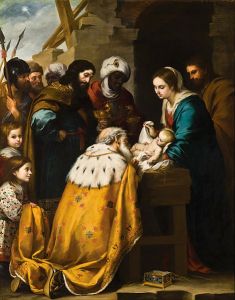
Another name for the same size bottle as a large Jeroboam is Rehoboam. Rehoboam was Solomon’s son, the king of Judah while Jeroboam took over Israel. Moving up to a 6 litre bottle the name becomes Methuselah. Methuselah, of course, is the Bible’s oldest man. Symbolically, if you do the math, he drowned in the flood. Nine litres will be called a Salmanazar, also known as Shalmaneser, a king of Assyria who attacked Samaria. Twelve litres, and perhaps the namers were getting a bit tipsy here, is either Balthazar or Belshazzar. The former, while not biblical, is the name of one of the three Magi from the visit of the wise men. Belshazzar was, according to Daniel, king of Babylon and is somehow scripturally mixed up with Nebuchadnezzar. Nebuchadnezzar, by the way—famous for his madness in Daniel—denotes 15 litres. An 18 litre bottle, depending on which line you’re following (if you can) is either Melchior—another of the Magi—or Solomon, the father of Rehoboam and one time boss of Jeroboam. The 27 litre bottle is called Goliath, for obvious reasons. And if you’re still standing, the 30 litre bottle may either be Midas or Melchizedek. The latter is the mystical king of Salem, later to be called Jerusalem.

I’m personally no fan of wine, so much of this was news to me. Not all bottle sizes are biblical, but many of them are. Spirits, in all seriousness, were taken to be related to the spirit world in ancient times. And the Bible, a book most familiar to those engaged in the industry of wine, was a natural place to find often ironic names. According to John, Jesus’ first miracle was changing water to wine at the wedding at Cana. Prohibitionists shudder to read that the carpenter from Nazareth changed six jars, each holding between 20 and 30 gallons, into free spirits. Wine bottles, perhaps to society’s benefit, never grow so large. But it’s time to go, our food has arrived.


Uncomfortable Truth

Ugly. That’s not a word I use lightly. The phenomenon of racism is ugly. More than that, it’s insidious. I recently attended a community course on racism sponsored by the Central Jersey Community Coalition. Since our government won’t condemn racism our communities must. This five-hour course was an eye-opener for me. I had known that race was a social construct with no basis in biology or any kind of science. What I hadn’t realized is that race was invented as a means of maintaining “white” power. And it was done so deliberately. The course leaders outlined the history of the modern concept of race and showed how it is primarily an American phenomenon (not exclusively, but it was intentionally orchestrated here). The idea was to keep property in the hands of wealthy whites.

During the discussion many topics came to mind. The primary two, for me, were capitalism and the Bible. These strange bedfellows are far too comfortable with one another. Both can be made to participate in the racism narrative. Capitalism appeals to the basest and most vulgar aspects of being human. Greed and selfishness. Wanting more for me and less for you. As one participant put it, it’s a zero-sum game. Your loss is my gain. We support this system every time we buy into the myth that life is about consuming. Buying more. Contributing to the economy. That which is lost is mere humanity. This is the narrative our government has adopted. The election of one of the uber-wealthy has demonstrated that with a nuclear missile shot heard round the world.

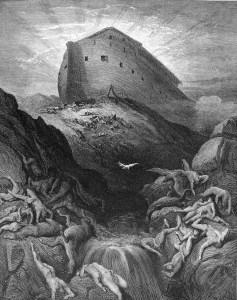
And what of the Bible? As the story of the flood unfolds in the book of Genesis, Noah develops a drinking problem. Naked in his tent, his shame is seen by his son Ham. Hungover the next morning, the only righteous man alive curses his son’s progeny. Then after the tower of Babel story, those cursed races, in biblical geography, end up in Africa. Christian preachers long used this myth as the justification of slavery. Races, after all, were decreed by God at that very tower. The tower shows us for who we truly are. Human hubris led to divine folly. And now we have a nation of liberty built on the basic premise of inequality. Racism is beyond ugly. It’s evil. The Bible may be complicit, but we need to take over the narrative. Race does not exist. Scientifically there is no such thing. Although race doesn’t exist, racism most assuredly does. Like all evils we must bring it to the light to make it disappear.


Books Anonymous

If you stick with something long enough, you’ll get onto all the mailing lists. These days even if you innocently click on an internet ad it will come back to haunt you for weeks on every web-page your visit. One kind of ad I don’t mind is the book catalogue. For those of you old enough to remember print catalogues, you’ll know what it was like, paging through. You’d see volumes you didn’t know about, but suddenly you couldn’t live without reading them. Around the time of the American Academy of Religion and Society of Biblical Literature Annual Meeting, your mailbox would fill up with these catalogues from anyone who publishes books on religion. Not a single year passed when I didn’t come up with a wishlist based on those catalogues.

The other day one arrived called simply “The Religion Flyer.” I flipped it over to see from whom it came. No indication. Inside the offerings were largely Catholic. But then some evangelical publishers appeared there too. And the Society of Biblical Literature. The only commonality I could find here was the Bible. These were biblical books. Again, as I taught Bible for nearly two decades, this was no surprise. Still, who was to benefit from these sales? I’ve been in publishing long enough to know that books aren’t produced if they aren’t projected to make money. Sad, but true. So who sends out a catalogue with no contact information? Who benefits? The backside has a list of bookstores, along with an order form. As in the catalogue itself, the stores are mainly Catholic, with a few Evangelicals thrown in. The Society of Biblical Literature, which sells its own books, didn’t make the cut.

Could this be truly altruistic book advertising? Not many people suppose that biblical study is good for the world, so I admire the conviction of these stalwarts, whomever they may be. Publishing is a business like any other. The powerful voices that say knowledge should be free don’t, I notice, office their classroom instruction without university tuition to pay their salaries. We’re all the victims of capitalism, I fear. Someone, or ones, took from the limited time that they have to produce a catalogue simply to promote the subject. They were likely hired to do so—I’m not really that naive—but they did so without drawing attention to their own efforts. There once was someone who said that acts of goodness should be done by one hand without the other hand knowing. Not many believe that any more. Even though it’s biblical. Who benefits? Those who have eyes to read.


Good Wrinkles

Since I was late getting my Banned Book in order this year, I went to something that I could read within a week. While my bus time is generally reserved for non-fiction reading, I had to pick something fairly easy so that I could get back to more serious stuff. Madeleine L’Engle’s A Wrinkle in Time was published the year I was born, and I’d never read it. It has ended up on banned and challenged lists every decade since it was published, so I was prepared for some radical stuff. Instead what I found was a well-written book for young readers that quoted the Bible quite a bit and even had a worldview that was appropriate to the Gospel of John. When the Murry children try to name the forces that fight the encroaching darkness, the first name offered is Jesus. The differences between good and evil are the subject of discussion among the characters and it’s pretty clear there’s an obvious distinction. So why is it a challenged book?

Never underestimate the sententiousness of the self-righteous. Objections to a medium, and characters—perhaps best understood as guardian angels in the book itself—perceived as witches, have led to the now familiar accusations of the occult. Here is a book that quotes the Bible, upholds the distinction of good and evil, and encourages children to fight for the former rather than the latter. Yet it also teaches tolerance. Parents who want children to think that only those like them can possibly be righteous start to shudder a little at that. The only good heretic is a dead heretic.

When I saw just how benign A Winkle in Time was, I had to think back over my own Bible. In addition to stories of horrendous violence, explicit sex, and with even a “witch” or two, the Bible contains diverse views. Paul argued with Peter in public, after all. Madeleine L’Engle was concerned about the book burning tendencies of Nazis. We now seem to think that the place for illiteracy is in the White House and, more recently, Alabama. Reading the news convinces me more and more each day that a steady diet of banned books is just the catholicon our society needs. Different viewpoints, like the rays of the sun, will shrink the mildew that finds its ways into dark corners, rotting the very fabric of our universe. A Wrinkle in Time may not sway adults in the same way it has engaged the wonder of children for the past half-century, but it is a start in a battle against darkness that is never-ending. There’s always time to read a banned book.


Biblical Hurricanes

Say what you will about western Pennsylvania, but it was a location fairly safe from natural disasters. My hometown was too far inland for hurricanes to cause much damage. A little too far east for Midwest tornadoes to touch down (mostly). Adequate-to-too-much rain, so wildfires didn’t occur. Not on any fault-lines that invited earthquakes, and volcanoes only thousands of miles away. We did get floods along the rivers during spring, but if you lived up the hill they weren’t much of a personal threat. It felt safe from the big news items of today. Leaving home for the sake of finding work moved me into Tornado Alley for many years, and currently, in New Jersey, in the range of hurricanes now and again. Still reeling from Hurricane Harvey and lack of effective national leadership, Irma is devastating lives, and Jose is in her wake. Then a massive earthquake rocks Mexico. It feels like the apocalypse.

Image credit: NASA, public domain via Wikimedia Commons

Ironically, many people read the Bible as a linear story from the creation of the world in Genesis to the end of the world in Revelation. They make an obvious set of bookends. Unlike western Pennsylvania, Israel lies on a fault-line that means earthquakes are not uncommon. Droughts occur. And being right on the path between major empires, it was frequently subject to human disasters such as invasions. It was not the most secure place to write a book that would change worldviews for millennia thereafter. What is so fascinating about this is that the message (or more properly, messages) of the Bible gets lost in the conceit that this is somehow a story of the history of the world with lots and lots of pages of preachy stuff between the exciting bits at the beginning and the end.

In times of natural disasters, people turn to the Bible for comfort. There are verses, often pulled from context, that do a fine job of that. Nevertheless, the Bible is an enormously complex text. Of its many books, Genesis and Revelation have had disproportionate influence on society. Any natural disaster big enough can be called “biblical.” Since the time of William Miller and John Nelson Darby, such disasters have been interpreted as heralding the end of the world. It is scary to see the devastation a single hurricane can cause. When it is followed closely by a second, one can’t help feeling a bit like Job. The apocalypse, however, is a misreading of Revelation. The book ends with Heaven on Earth. And if you can find a quiet place to read, you’ll find plenty of unexpected stuff tucked away in the middle. Just don’t take it too literally since that too leads to disasters.


Overlooked Scripture

In this great Trump Tower of capitalism in which we all live, I often wonder about the overlooked Bible. Fundamentalist Trump supporters certainly know how to thump it, but do they know how to read it? This thought occurred to me as I was rereading the story of Ananias and Sapphira in Acts 5 recently. The narrative isn’t hidden or obscure. Here’s how it goes: the earliest Christians were communists. Literally. Peter himself was involved. After Jesus’ ascension, his followers pooled their resources and divided them up by how much each person needed. Ananias and Sapphira, a husband and wife duo, sold their property and presented the money to Peter and the collective. They held a little back, though, just in case. The result? Peter saw through the lie and they died instantly. The point was pretty clear—Christians don’t hold anything back for themselves. They live communally.

Obviously, this didn’t last very long. Let the one without a savings account cast the first stone. In fact, by half-way through Acts the holy experiment is already forgotten. Nevertheless, it was the ideal. Christians were people who took care of one another, especially the poor. By the time communist governments (which didn’t work because people are people) took hold, Christians were dead-set against them. Okay, well, they were godless—but the idea behind them was biblical. Today any form of socialism is soundly condemned by most evangelicals. Apparently they don’t read the book of Acts any more. There was no moment when this commune was castigated in Holy Writ. It simply vanishes without a whimper to be condemned as utterly evil in these latter days.

The wedding between capitalism and Christianity has proven an enduring one. Capitalism allows, indeed pretty much mandates, selfishness. It’s difficult to live in such a system and not feel entitled to more than you already have. Who ever says, “No thanks, I don’t need a raise. I have enough”? Those who attempt communal living are generally called “cults” and the suspicion is omnipresent that the leader isn’t holding (usually) himself to the same standards as the pedestrian members. The story in Acts 5, however, is even more extreme. After Ananias lies to Peter and dies on the spot, his wife Sapphira comes in just as those who buried her husband are returning. Peter baits her with a question about how much money they received for their property and when she concurs with her late husband, the undertakers have a second job for the day. This is a faith taken seriously. It was bound not to last.


First Look

Youth might be described in a number of ways. One, of course, is in biological years. Another may be in exposure to experiences which change your life. There was a time, for example, when you can’t believe you were ever so naive. No matter how youth might be defined, a patina of fond memories tends to cling to images from that time with the passage of years. For me, unsurprisingly, those images are frequently books. I still recall the cover images of books from my tweenage years, and often think that if I found such books in a second-hand store, I would buy them for their ability to conjure past times. One such book comes not from my physical youth, but from my days teaching at the University of Wisconsin, Oshkosh. It was at that time, when the internet was also still young, that I began to try online research into H. P. Lovecraft. I found an edition of his stories titled The Shadow over Innsmouth for sale on a used book website. I was under-employed, but it was cheap and my curiosity inflamed.

Mainly I was interested in what I would now call the reception history of Dagon. Dagon is an ancient Mesopotamian deity mentioned briefly by name in the Hebrew Bible. He is also part of the pantheon of gods borrowed and invented by Lovecraft to populate his eldrich, watery world. I purchased this book for the titular story, where Dagon doesn’t actually appear, but his worshippers do. It is often claimed to be Lovecraft’s best story. As I sat down to read the whole book, however, I was struck by the strangeness of the collection. This edition, from 1971, included such unusual choices as “The Transition of Juan Romero,” “In the Walls of Eryx,” and “The Festival.” Also bundled here was the Houdini ghostwritten “Imprisoned with the Pharaohs.” When I first purchased the book I’d only read “The Shadow over Innsmouth” and “The Colour out of Space.”

As my interest in Lovecraft grew, I acquired other, more representative editions of his work and have consequently read most of his oeuvre. It was that sense of yesteryear, however, that led me back to this browning, aged collection. It was, in truth, the cover. Looking at it brings back that very office in Oshkosh where I sat as I found the edition online for less than five dollars. No doubt, I was younger then. The call of Cthulhu has echoed across the web since then. For me, however, the first exposure will always be a beat-up paperback that I ordered secondhand.