Bible Hobby

Hobby Lobby needs a hobby. Besides the Bible, I mean. The amorphous media has been buzzing about the new Bible Museum set to open in Washington DC soon. The Lobbyists seem to think the Bible will save America. Not the Bible exactly, but their narrow, constricted, and uncritical view of the Bible. Seems a lot to expect from a museum. Museums, the Green family apparently hasn’t considered, are monuments to the past. When I last saw the politically incorrect Elgin Marbles I didn’t feel inspired to run out and build a parthenon. Instead, I simply wondered about the past and how it must’ve been cool back then. I didn’t want to live there though.

I’m sure there are great plans for the Good Book in the Bible Mausoleum. Looking at displays of the same text over and over can surely get a little dull, if we’re being honest with ourselves. I like Bibles as much as the next guy. Actually, I probably like them more than the next guy, but that’s beside the point. I don’t need to go to a museum to see them. There are Bibles all around my office, a mere arm’s length away. Here at home I can take in many of them at a glance—there are Bibles on three sides of me even as I write this from my favorite chair. Saving a nation that’s had the Bible from the very beginning sounds just a touch ambitious to me. But then, I’m no billionaire with nothing better to do with my money. There’s probably a tax write-off in there somewhere.
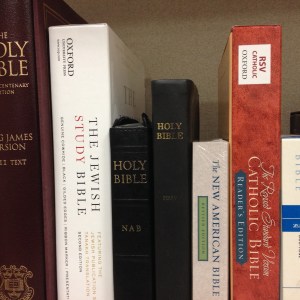
The thing about the Bible is, once you learn about it you can’t unlearn what becomes clear along the way. Cover your eyes or ears if you will, but we know the Bible had a long and complex history before becoming “the Bible.” It doesn’t have much of a plot without Revelation tacked onto the end—and seriously, that was one of the reasons it made it into Holy Writ to begin with! The circumstances that led to the Bible were often quite profane, in fact. It was the recognition of it as a sacred book that was a religious activity. The next step was to spread it as far as possible. That’s pretty much been done. The end result? The election of Donald Trump. If that’s salvation we’re all screwed. At least when we’re all standing in the bread line we’ll have a museum to visit while we wait. And it will be an encomium to something that was great once upon a time.
Apocalyptic Dreams

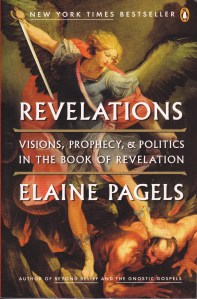
Words. They can be slippery sometimes. Take for example the word “revelation.” It can be secular or sacred, and if the latter, general or specific. Many recognize it as the title of the final book of the Bible, and some can’t even get enough of it and make it plural—Revelations. “Revelation” is actually a translation of the Greek word apokalypsis, the “original” title of the book. It has been a source of contention as well as fascination just about since John—whoever he was—put quill to parchment. Elaine Pagels, whose work is always rewarding to read, plays on the singular/plural convention that raises the ire of many a biblical scholar. Revelations: Visions, Prophecy, and Politics in the Book of Revelation is a refreshing change from what I read in college and seminary. No book exists without a history and that of the Apocalypse is colorful indeed. And it revolves around what has been traditionally taught about “revelation.”

The current final book of the New Testament presents itself as a revelation. It isn’t, however, the only book from this time period to do so. Many revelations existed, as did many gospels, in the first couple centuries of the Common Era. Some early leaders of the Christian movement who became inordinately influential decided that John’s revelation would be okay to keep but the rest should be destroyed. And they very nearly were. Some were recovered by the fortuitous discovery of the Nag Hammadi library in Egypt. These texts have preserved some of the other gospels and revelations that rivaled those of the current canon. It is in her close observations about their continuities and the motivations behind the politics of early Christians that Pagels sheds fascinating light on how Revelation became a tool of manipulation in a power struggle, primarily for centralized religious control of Egypt. Looking at headlines even now we know that it never really worked.

Revelation very nearly didn’t make the canonical cut. Many church leaders of the fourth century believed it spurious and not entirely helpful. It has, however, arguably become the most influential book of the Bible. Evangelicalism is hard to imagine without some kind of end times dispensational viewpoint that owes its existence to John of Patmos. Reformers, while not caring for the book, saw Revelation’s usefulness as a cudgel to strike at Rome. The papacy likewise saw it as a vivid threat against reformers. Those who took sola scriptura a little too literally used Revelation as the focal point of their hope and practice. Today we’re left with Left Behind and the Rapture and the Antichrist, whether they occur in Revelation or not. (They don’t, but who’s counting?) Pagels will give anyone plenty to think about here, and she’ll do it in surprisingly few words.


On Jordan’s Stormy Bank

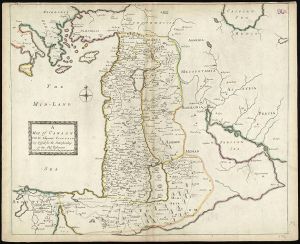
All you have to do is spit in the cup. Well, you have to do it quite a few times, but that’s the basic idea. Then you send the contents to a religiously motivated lab and your genetic ancestry will be emailed back to you. (There will be a fee involved, of course.) Genetics, a science of which Darwin didn’t have the benefit, is capable of mapping out where various “races” originated and ended up. Enter the Bible. One of the most disputed groups among scholars of the ancient Near East is the Canaanites. There was, as far as we can tell, no “nation” called “Canaan.” No people called themselves “Canaanites” but the term was used by others to designate them. Yahweh had a vendetta against them and ordered them wiped out. And, according to parts of the Bible, the Israelites acquiesced. So where are the Canaanites?

Image credit: http://maps.bpl.org, via Wikipedia Commons

According to a Washington Post article by Ben Guarino, DNA sequencing has revealed that they’re still there. This should come as no surprise to most anthropologists. Racial purity is always partially a myth, since “race” is no barrier to love. Or at least lust. And genetic traits don’t lie. Tracing ancient DNA from “Canaanite” (I’m getting myself scared using all these scare quotes) burials, scientists have discovered the biblical nemesis still survives in abundance, especially in Lebanon. Interestingly, on a cultural level, there is no distinction between Israelite and Canaanite. They are virtually identical. This creates one of the many embarrassments for biblical scholars, since the differences should be more than just skin deep. As with so many cases of racial distinction, the reality is mostly imagination.

Literalists, of course, have been in a rear-guard position for well over a century now, so the news should cause minimal shock. The problem will be keeping them from finding new excuses to carry out an extinct mandate. Biblical scholars, that heathenish race, long ago capitulated with the enemy. You’d expect no less from those who would dare use reason when approaching Holy Writ. It’s the real-world application that’s a problem. What do you do when the biblical enemy is found, hiding in plain sight like a purloined Lebanon? The solution might be as old as the story itself. Darwin didn’t have genetics, but he did have the Bible. The issue in the nineteenth century was what to reject when worldviews clashed. The answer was to jettison the godless science. We can only hope that this time-honored technique will prevent future crusades fomented by scientific discovery.


Making Lovecraft

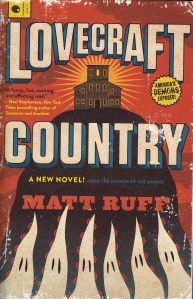
Perhaps it’s all just coincidence, but once in a while a number of unexpected things come together. Since I do a lot of reading this often happens in the context of books. The current case begins with my first noticing Matt Ruff’s Lovecraft Country. I saw a review online, and since I enjoy contemporary novels that build on the worlds created by H. P., I added it to my reading list. The first coincidental aspect of it was that I found in Buffalo Street Books in Ithaca. Like most independent bookstores, it’s not huge, so the selection of books that cater to my odd tastes is always adventitious. I found it on the staff recommendation shelf and recalled that it was on my reading list. A second coincidence came in finding Neal Stephenson’s name under a cover blurb. My brother-in-law’s name is enough to get a book onto the bestseller’s lists, but I had no idea this kind of book would be to his tastes as well.

I began reading it right away. The third happenstance is that Ruff crafted a biblically literate story here. In a day when those of us associated with the Bible are definitively passé, it is nice to see popular fiction fighting back a little bit. Not that Ruff is advocating or proselytizing, but his finely tuned story is definitely enhanced with a bit of biblical knowledge. He’s unapologetic about it. In our religion-critical outlook these days we sometimes forget that the Bible has several stories that maintain, and even reward, contemporary interest. The most obvious example in Lovecraft Country is the story of Cain. There are plenty of others that can be dug out as well, and Ruff even leaves some on the surface so that they aren’t hard to find. Not that this is a religious book. It’s just not afraid of religion.

Some may find that odd in a homage to the noted atheist Lovecraft. What they may not see is that the master himself used religion from time to time in his tales of horror. Also, for those who are willing to be honest, we know that an unsavory racism resided in Lovecraft’s outlook. Ruff, like other writers who see the positive side of this author’s work, tells a story of African-American struggles in the “idyllic” 1950s. The protagonists, dropped into a world of real Lovecraftian magic—and in a very self-aware way—are all a close-knit black family and their friends. Which led to another coincidence. Quite unconnectedly, I’d been reading Dr. Jekyll and Mr. Hyde. This plays an important part in the story as well. Sometimes reading itself can lead to a cascading set of coincidences. Lovecraft Country is one instance where it happened, but that may just be my unusual taste in books.


Spice of Life

So it finally happened. Sean Spicer, I mean. Resigned. It must’ve been an impossible job, lying for a liar. The art of lying requires a knowledge of what’s true in order to be effectively done. Since truth is a commodity decidedly rare in Washington, DC, and imports aren’t reliable, to be a liar’s liar takes some considerable skill. Now, all people lie from time to time. Politicians more than most. If you’re too naive to believe that, well, I’m the president of the United States. Tweet. QED. I was in Washington the day of the inauguration from Hell. I was there for purposes of participating in the Women’s March the next day. A curious family member attended the inauguration and swore to what the cameras revealed—it was poorly attended. The next day the otherwise muddy mats—why they chose white I’ll never know—revealed the line where the crowds had stopped the day before. It wasn’t very far back, if I believe my own eyes.

The doleful night of nights, Sean Spicer made his first press appearance. It was the best attended inauguration ever, he lied. Those of us in DC at the time stared at the television screen in disbelief. Shortly after that we were informed that “alternative facts” revealed the way the president preferred to view reality. It has stayed that way pretty much ever since. The amazing thing is that Spicer lasted this long. Trump appointees come with a short shelf life. Behind-kissery will only get you so far. The funny thing was to watch the interweaving of untruths as Spicer spouted a falsehood only to have Trump trump him with yet a different post-truth answer.

The problem with dishonesty is that it quickly snowballs. In the case of the present administration it started well before January and the season for snow. Now it’s July and the melting is picking up speed. Past presidents, as bad as some may have been, seem to have had, at least to a reasonable degree, the greater good of the country in mind. Now we’ve got a commander-in-chief who takes everything personally and who can’t keep a press secretary even after he bans cameras from the room. And still his supporters think he’s doing a great job. Meanwhile, Spicer’s made a celebrity of himself. His resignation comes as no surprise since Trump staffers constantly find themselves living the lie. And for those Tea Partiers who still support 45, it would be a good idea to learn what it means to “bear false witness.” Oh, and the Bible says “thou shalt not” just before that.


Devonian Dreams

Toothbrush and dental pick in hand, I go at it. Not that I’m a professional, mind you, but curiosity drives me to this. You see, this crinoid before me is at least 358 million years old and anything that can make me feel young deserves all the attention I can give it. Crinoids are also know as “sea lilies,” but they aren’t plants. They’re actually echinoderms, and the fossils I’ve found in the past have only been cross-sections of their “stems,” a stone circle, as it were. This one has tendrils visible, and I can’t believe that it was a chance find on one of my recent walks through Ithaca’s gorges. I’m dreaming Devonian dreams, and I want to brush away the plaque of the eons and see what I’ve actually found.

Fossils are a kind of eternal life. The creature that died to leave this impression lives on as a monument in stone. It reminds me of my unfortunately brief stint as an archaeological volunteer. Scraping away dirt to reveal a piece of pottery that hadn’t been touched by human hands for 3,000 years. Of course, that’s merely a second ago when you’re talking about something pre-Carboniferous. The dinosaurs won’t even show up for another 100-million years. And I think I have to wait too long for the bus. Time, as they say, is relative. Did this medusaized creature before me realize just how terribly long it would take for enlightenment to arrive? And how so very swiftly it could fall one foolish November night? Careful, this fossil’s fragile.

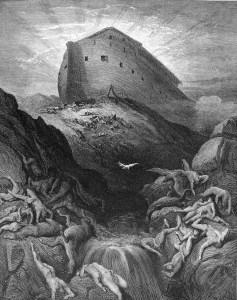
I grew up among the Devonian substrate in western Pennsylvania. The Bible on my shelf told me to disregard the evidence before my eyes. Some clever true believer had declared Noah’s flood the culprit, never bothering to explain how freshwater fish showed up after the deluge. Those we tried to keep in our aquarium never seemed to handle the slightest disturbance of their salinity. The ages of the literalist are by definition short-sighted. 6,000 years seems hardly enough time to account for any sedimentary stone, let alone that riddled with fossils. I’m hunched over my bit of slate, dental pick hovering nervously over what will never come again. The Bible behind me says it’s an illusion. You may be right, Mr. Scofield. You may never have evolved. But as my fingers glance a creature dead before even the crocodile’s grin I have to declare that I have.


The Ezra Puzzle

America loves the Bible. Thing is, most Americans have no idea how complex the Bible actually is. Jewish, Protestant, Roman Catholic, and Christian Orthodox Bibles all have different contents. I was reminded of this the other day while trying to look up 4 Esdras. If you’re scratching your head saying, “4 Esdras? Is that even in the Bible?” it only makes my point. The books we call “the Apocrypha” are also known as “the Deuterocanon” by Catholics. The reasons are complicated, but the Apocrypha consists of books that were never in the Jewish Bible. Jerome, the 4th-5th-century biblical scholar translated the Bible into Latin (it was originally written in Hebrew and Greek, mostly). When he came to the Apocrypha, he translated those books too, but with a special heading saying they weren’t in the Jewish Bible. During the Middle Ages the headings were often left out and the Apocrypha was included with the “Old Testament.” During the Reformation, Protestants rejected all kinds of excess, including excess scripture. The Apocrypha was out. The Counter-Reformation, living up to the title, led to the definitive inclusion of the Apocrypha in Catholic Bibles. Meanwhile, different Orthodox groups kept some, rejected others, and added still others. When Americans say “the Bible,” they generally mean the Protestant Bible.

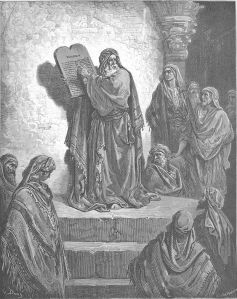
There are some implications to be thought through here, given that we’re talking about holy writ. Not all Christians agree on the same Bible. What’s more, the disagreements about what to include started pretty early. Does it count if you swear on an incomplete Bible? Would a New Testament do in a pinch? What if you’re Jewish? Having a national holy book is somewhat problematic when we can’t all agree on the contents. Many people would have some trouble opening right to some of the less popular books, say Ezra. Unless you’ve got a New Testament only, you’ll have Ezra. Go ahead, take a look. (It’s somewhere in the middle.)

Everybody’s complete Bible has the book of Ezra. So far, so good. 1 Esdras (“Esdras” is Latinized “Ezra”) is not in the Deutorcanon of the Catholic Church. It is, however, included in an appendix. It is part of the Orthodox canon, and it also goes by the names of 2 Esdras and 3 Esdras. Just to make it interesting, the Vulgate, or Latin translation of the Bible associated with Jerome, calls Ezra and Nehemiah 1 Esdras and 2 Esdras. Need a score card yet? It gets more confusing later! So 1 Esdras is either Ezra, 2 Esdras, 3 Esdras, or 1 Esdras, depending on whose Bible you’re borrowing. But where’s 4 Esdras? Well, there is a 2 Esdras (not the same as 1 Esdras or Nehemiah) in Slavonic, but not Greek, Orthodox Bibles. 2 Esdras is known as 3 Esdras and 4 Esdras, the latter when it is in the Vulgate appendix. The fun’s not over yet! 2 Esdras is broken into 3 parts and they are called 5 Ezra, 4 Ezra, and 6 Ezra. There is, however, no 1, 2, or 3 Ezra (unless the Latin name is Anglicized). If you’ve got a headache, take two Esdras and call me in the morning.


Fundamental Law

Last year I posted a piece on Fundamentalist Church of Jesus Christ of Latter-Day Saints fugitive Lyle Jeffs. The occasion for my venturing into this sect was that Jeffs’ lawyer, after Jeffs had escaped house arrest claimed the Rapture was responsible for his disappearance. Now that an unraptured Jeffs has been recaptured, I begin to wonder about the special immunity of lawyers. Surely Jeffs’ attorney knew that his client hadn’t been spirited to heaven in the fictional escapade we all know as the Rapture. Indeed, all criminal lawyers—or at least most—know the facts behind a case before they step into the courtroom. While their witnesses are guilty of perjury if they lie under oath, lawyers, through careful wording, are permitted to insinuate the opposite of the truth with no hint of wrong-doing. It’s just their job.

Legalism and religion go hand-in-hand. After an interesting preamble, the Bible begins by laying down the Torah. Among its stipulations is not bearing false witness. But then, that was before the modern legal system. Religions tend to serve as moral compasses—and that’s the phrase that’s frequently used. A compass helps to find direction, ensures that we go the right way. What exactly the right way is can be a matter of debate, however. It all depends on where it is we want to go. When religious law, such as polygamy among Fundamentalist Latter-Day Saints, and civil law (generally recognizing one spouse at a time) clash, lawyers debate with the comfort of knowing they need not be accountable for the truth.

I’m no legal expert—in fact, I wouldn’t even have known about this had not a friend sent me the piece by Ruth Graham on Slate—but the question does trouble me. Religion is often all about laws. Specialists in Islam are called jurists, and in Judaism rabbis know the Torah inside out. Religious laws sometimes—often, actually—conflicts with the laws of the land. Believers either accommodate the differences or get into trouble in the secular courts. It’s headline news when religious law becomes civil law in this modern day and age. Isn’t there something cynical, however, when a lawyer pleads the Rapture as probable cause for a disappearance? Knowing the law, they need not reveal the truth they know. And yet, if you personally implicate any wrongdoing in another you can be sued for liable or slander. Lyle Jeffs wasn’t in heaven. He was living out of his car, keeping off the grid. Of course, following religious law can be like that some times.


Heresy Collection

Geology isn’t a great avocation for those of us with an unsettled existence. Having grown up with a fondness for fossils—maybe because they were so transgressive—my initial collection was tossed out because of a family move. Rocks are too heavy to take with you. I made the mistake of thinking, back in my Nashotah House days, that I was settled enough to let my rock-hounding sensibilities loose. Not that fossils were common, but Wisconsin has some great geological formations and I joined the Wisconsin Geological Society and even dragged my family along on some field trips. By the time Nashotah informed me my talents were no longer required, I’d amassed a few boxes that I was embarrassed to admit to the movers that, yes, contained rocks. New Jersey also has some great locations for rock-hounding, but my sense of being subjected to sudden, geologic career shifts has kept me from picking up nearly as many stones as I’d like to bring home.

The Museum of the Earth, here in Ithaca, is a dangerous place for someone like me to visit. I thought I had my fossil-collecting habit under control. The gorges in this region are famous for their fossils. Wandering through the museum, reflecting, as it does, the immense stretch of prehistoric time, it was obvious how arrogant humans are for assuming “control” of the planet. We’re so terribly late as to be classified as invaders on this planet. The world got by just fine billions of years without us. Perhaps that’s why I experienced transgressive fossils so captivating as a child. Ironically I found them in the creek bed right behind the Fundamentalist church we attended and where we were taught that evolution never occurred. I was fascinated by what I’d now call the juxtaposition of evidence and faith. We never questioned the reality of fossils. It was their interpretation that was the problem.

You can hold in your hand the most solid evidence that life evolved and call it heresy. Those delicate impressions of creatures dead for millions of years argue eloquently against Genesis and its mere 600 decades of world history. For me the fossils always won. On trips home from the seminary I would gather more fossils to add to the growing museum of time I’d been amassing in my basement. Then a Fundamentalist administration took the same approach as my exasperated mother trying to pack to move. Jettison the fossils. They’re heavy and they kind of make us uncomfortable anyway. Maybe the idea of too much time is something the biblically constrained simply can’t face. And when I see a fossil right there on the surface in one of Ithaca’s many gorges, perhaps I need to learn simply to let it lie.


Classical Education

Andrew Dickson White famously wanted Cornell University, unlike what would become known as the other Ivy League schools, to be non-sectarian. Most Ivy League universities were founded as seminaries or with the strong influence of churches. On farmland gifted by Ezra Cornell, in Ithaca, New York, the school became one of the first truly secular world-class universities. As I approached Ithaca over the weekend, my wife told me that the town had once been briefly known by the name of Sodom because the remote location’s reputed notoriety for sabbath breaking, horse racing, and profanity. It is now considered one of the most enlightened towns in the country. Famous for its waterfalls and gorges, one of the cascades is still rejects the biblical slur with the sobriquet “Lucifer Falls.”

Many place names—indeed, much of American culture in general—reflect(s) the Bible. Ours is a culture in denial of just how formative religion has been for who we are. Because of our willful blindness on this point we sometimes run the risk of being entrapped by our heritage. Despite how much we’ve educated ourselves we still see what we want to see. Our religious heritage is often considered an embarrassing family secret rather than the path by which we came to be a civil society. Religion is so frequently portrayed as an evil force that it’s easy to forget just how much we owe it for our evolution. Even education itself had a religious motivation since teaching students to read was often done with the intent that they should read the Bible.

Like nearby Binghamton, Ithaca has a statue dedicated to Martin Luther King, Jr. It bears a biblical quotation from Amos without embarrassment. Ithaca today is a livable, socially conscious community. Recycling is strongly encouraged while cars are not. Hardly a hotbed of immorality, it is one of the great examples of an American college town. Ideas are welcome here. Befitting its classical heritage of education, the city is named after the island ruled by Odysseus, according to Homer. Indeed, Ulysses lies just down the road. Homer (and yet another town in the area bears that name) presented Odysseus as among the smartest of the Greek kings. Like most classical Greeks, Odysseus was only too conscious of how the gods could interfere with one’s life. Instead of denying the obvious, however, religion was recognized as a necessary source of culture. Not that it always has to be taken too seriously. Maybe it shouldn’t be completely ignored either.


Ammonia Avenue

It’s 7:00 p.m. I’m still sitting on a bus, in unmoving traffic a mere three miles from home. I stepped out of my front door over 13 hours ago and I have only another hour before retiring to start it all over again tomorrow. My phone’s down to a charge level that the effort of getting a non-wifi connection will only drain it completely. I have no idea why I’m being rerouted. Later I’ll learn that we’ve been instructed to shelter in place because of a N-Aminoethylpiperazine spill. Better living through chemicals. I’m sheltering in place, all right. This bus is my ark.

There’s much about this complex world that I don’t understand. I readily admit that I don’t know much. One thing I do know is that I live my life trying not to impact others negatively. I’m reminded of this every time someone blows a cloud of smoke into my path, plays their music so loud that even they can’t really hear it, or spills Aminoethylpiperazine all over the place. I don’t haul corrosive chemicals (beyond what may be trapped in my gray matter) through anybody’s hometown. I think of that scene from Close Encounters of the Third Kind—a dangerous chemical spill. Evacuate Devil’s Tower. There’s nothing to see here, folks. It strikes me that this is a larger ethical issue. The right to use, and potentially destroy, somebody else’s space. If you inhale Aminoethylpiperazine fumes, it can be fatal. It may take longer, but the same is true of second-hand smoke. The things that go beyond our own personal self-abuse into the realm of harming others. Somebody call an ethicist!

Commuting isn’t really a lifestyle choice. There may be a few stalwarts on this bus that really enjoy it, but from hearing the weary conversation of the regulars somehow I doubt it. We’ve been rerouted to New York City for our jobs. Our free time is consigned to an aluminum lozenge on wheels. Sometimes it actually moves. Have you ever tried to read a book when the head of the snoring guy next to you keeps falling into your lap? I think about those animals on the ark. Life is more than eating and breathing. You’ve got to have some space to move about. Even when I wake up I’m not in the same position as when I went to sleep. Of course, ethics demands I look at it from the other’s point of view. Someone needed a truckload of Aminoethylpiperazine, and they’re disappointed that it never arrived. Just don’t breathe too deeply. This flood can’t last forever.


Overdone

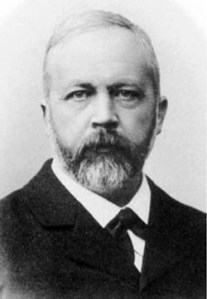
One of the things you see quite a lot of as an editor is “the next big thing.” Authors with an ego that awes me ensure me that this book will be the sea change we’ve all been waiting for. Things will be different after this is published. I don’t blame them. The trades all say that you’ve got to convince the editor that this project is worth her or his while. Overstating the case is par on this course. All of this got me to thinking. If you’ve read biblical studies seriously you’ll recognize the name Wellhausen. I don’t even have to use his first name—you know who I mean, right? Well, we’ve gone beyond the days when you could be a Wellhausen. When I was a student people spoke of the Wright, Bright, and Albright school. We knew who each of these gentlemen was. Now there are so many spoons in the pot that we’re not even certain what’s cooking.

Have you seen this man?

I’m not sure what the attraction to advanced degrees in this area is. If my case is anything to go by (and I don’t claim that it is) you grow up in a Bible reading family and you want to take the next logical steps. When you’re far enough along on the path to realize what’s happened, it’s too late to turn back. Many things in life are that way. There is a tipping point, a moment of crisis, then nothing will be the same. Then you learn you’ll never be the new Wellhausen. There was only one, and that was a couple of centuries ago now. I run into some pretty strange stuff when it comes to ways of reading the Bible. When the dust settles, however, we’ll still be counting J, E, D, and P on our fingers.

This isn’t a field for fame. Don’t believe me? Approach a stranger on the street and ask them if they know who Wellhausen is. Alas and alack, one of our greatest names is nobody outside the academy! In my own days among the privileged professorate, I never suspected I’d be anything but one of many voices trying to be heard. After all, my training was really more in history of religions than Bible in the first place. Dead languages had to be negotiated, but that’s all part of becoming an expert in something nobody really cares about. But then I think of Wellhausen. There was a time when all of this could make a nation such as Germany sit up and take notice. That day was centuries ago, and I’d better check that pot—I think maybe whatever’s in it may be done.


O Absalom

It feels like confession every time I go to get my hair cut. I sit in the chair and a girl younger than my daughter looks perplexed when I explain it’s been a few months since my last shearing. “Forgive me, daughter, for I have sinned…” Haircuts take too much time is the truth of it. I’ve never been one to worry overmuch about outward appearances. I’m an internal kind of guy. I’ve never liked shaving and I can’t really see giving up ten more minutes of my busy morning than I have to, only to hover a sharp blade near my already beauty-challenged face. No, the scissors trim takes just a few minutes once a week or so, and everything’s good for a few more days. But the haircut is more on Absalom’s time schedule. Frankly, I just don’t think about it. Suddenly hirsute.

Absalom’s hair was both his pride and his fall. Usurping the kingdom from David, Absalom had a head of hair that left the girls screaming. Then, routed in the forest, his head got caught in a tree. The Bible doesn’t say specifically that it was his hair, but use your imagination. In antiquity, hair meant something. Alexander the Great was known for his luxurious locks. Even the word “Caesar” means “hairy.” Hair was considered a natural head covering, a kind of piety that required little effort. Ironically in evangelical circuits the Roman haircut and clean-shaven look predominated. I had a job after college that required me to shave my beard since “customers don’t trust a man with facial hair.”

But I’m not into hair for the fame. I just don’t have the time. Weekends are scarce and short and I’ve got a lot to do. I’ve got a book that needs publishing and a life that needs living. I can do it with long hair. I can’t do it without time. Absalom spent his free time plotting. His coup was the result of careful planning. I’m sure he didn’t stand there outside the city gates thinking, “people would like me better if I had short hair.” Quite the opposite. In this country of clean, biblical living, however, we’ve opted for the razor and scissors. I’ve had people ask if a beard is hard to keep clean, as if I’m a dirty old man under these silver strands. Hair and beards can be washed and be as hygienic as any person can be in New York City. I just take care to duck when I go under trees.


Analyze This

Reading other people’s scripture is a privilege. Although somewhere in my long study of the history of religion I must have read excerpts of The Analects, I have not concentrated on reading them through before. Reading other people’s scripture is like being invited into their houses. You can learn a great deal in a little time, but that doesn’t make you an expert. Confucianism is about the same age as classical Judaism. The foci of the belief systems are clearly culturally bound, and those of us raised in cultures heavily influenced by Judaism and Christianity find scriptures like The Analects somewhat bewildering. For those raised in Confucian cultures, the Bible must also be like coming into an unfamiliar country. That’s the way scriptures are, and it doesn’t mean that any are more or less valid than others. That’s often difficult to accept.

I don’t know much about Confucianism, but it is clear that The Analects are intended as a guide particularly for those who seek public office. In Confucian thought, unlike that of the current United States, only the brightest are believed to be worthy of high office. Indeed, it is impossible to read The Analects at this time in history and not see that Trump is so wrong in multiple languages. Master Kong’s description of “the small man,” the petty sort who has no business governing, is the job description of the GOP right now. Is it possible that one political party has ruined two religions? Probably far more.

Learning—even in small increments—of the religions of others takes away the need to feel superior. In fact there are many commonalities between religions, particularly on the ethical front. Reading other people’s scriptures isn’t easy. There’s so much that’s foreign in them. But like the fact that foreign trade brings desirable things from abroad for us, so should be the study of other religions. There is much of value here. I don’t read Chinese. I’ve never been to China. Reading The Analects, however, demonstrates that the noble minds of different cultures have much to learn from one another. No scripture is perfect. All are necessary. It’s only when one faith decides that it alone is true that religious strife begins to replace religious respect. I’m not about to become a Confucianist, but I do have a a slightly better sense of what it might mean to be one. And small steps can lead to impressive places for those willing to learn.


Filmy Substance

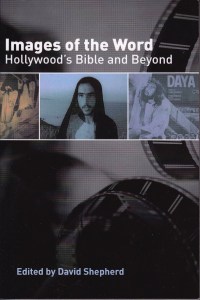
It’s all about Jesus. Well, that’s an overstatement, even in context. One of the amazing things to me about books addressing the Bible in film is just how often Jesus movies come up. If it’s not Jesus movies, it’s movies that have a “Christ figure” or some such Christian trope. Don’t get me wrong—I have no issues with Jesus. It’s just that the Bible and film have so much more in common than this. David Shepherd’s edited collection, Images of the Word: Hollywood’s Bible and Beyond, has some insightful pieces in it and some of what has become “standard fare” already in a field that’s so new. I found Richard A. Blake’s response fascinating. Maybe this was because he doesn’t approach the topic from a biblicists’ point of view.

I’m not really complaining about scholars who look to cinema for a rich source of reception history. I do it myself from time to time. Most of the books on this topic are collections of essays and collections are, by default, uneven. There’s an amazing amount of biblical material in movies that simply goes overlooked. Also, I would suggest, movies offer valid interpretations of the Bible. Somewhere along the development of the discipline we seem to have slipped into thinking that only certain people can legitimately interpret the Good Book. If it is a sacred text, however, it is as much in the public domain as any text can be. And texts in the public domain can legitimately be interpreted by hoi polloi. That’s the nature of being a text with universal assertions, I suspect. Directors and writers, therefore, are legitimate interpreters. We could learn a lot about the Bible from going to the theater.

Like many who’ve taught Bible to undergrads, I sometimes discussed films with them. I always believed students were legitimate interpreters of Scripture, too. This is a dialogue. One of the more interesting aspects of Shepherd’s collection is the pieces that focus on non-Hollywood movies. I don’t see a problem discussing Hollywood since we can assume a larger body of those who’ve seen the film. It is nice, however, to be reminded that “foreign” films also delve into what is sometimes treated as propriety material by Christians. Hindu representations of the life of Jesus? That’s a very interesting idea! Of course, not everyone likes to know how “outsiders” see them. That’s one of the beauties of using cinema as a means of interpreting the Bible. Those of us who study it don’t have the money to influence movies enough to make them in our image. It’s fun to watch someone else’s interpretation.