Revisionist History

I recently came across a website with academic papers available on it.  Although the internet has yet to achieve its promise as a locus of solid academic material, such sites are becoming more common.  I’ve been uploading my own papers onto Academia.edu since they seem to be old enough not to impact anyone’s sales aspirations.  In any case, this particular website I found noted that a paper had been updated at such-and-such a time, and that anyone who had downloaded the previous version should delete it and use the new one instead.  This is a dilemma.  I know of publishers who make corrections without issuing new editions.  When I buy a book, what it actually says will depend on the printing rather than on the edition.  I wonder if such retractions are really fair.  How does one know when she’s reading something outdated?
 
Picture this: a young kid, perhaps an unknowing fundamentalist, reading his Bible.  Then he gets a newer copy of the same translation.  But soon he notices that there are differences.  Although the example may sound overly Talmudic, it is factual.  Bibles, being printed in large quantities, are especially susceptible to error.  When did the printed word become something that’s negotiable?  I’ve been pondering clay tablets and their apparent immutability.  Contrary to popular belief, most clay tablets weren’t fired—it was a lot of effort for something that had limited value.  Some tablets show signs of erasure or additional words being added.  In the case of clay, this is often very clear.  Besides, the readers were few and specialists.  They knew what they had.  But for a modern person staking the salvation of her soul on a document, is it not problematic to change a jot or tittle (of which not the least shall pass away)?  Has technology made us immune to fixed texts?
 
Back to the website I found.  What if I downloaded the faulty paper and wrote my own paper based on it?  How would I know to go back and check to see if a new version had been uploaded?  Am I to spend all my time revisiting web pages to see what has changed?  Knowledge itself seems now to have become whimsical.  What is true depends on the date and time you accessed it.  Perhaps I’m just a dreamer, but there was a time, it seems to me, before post-modernism, when you might purchase a book and be fairly certain of what you had.  Errata sheets (or the more fancy addenda et corrigenda) didn’t intrude into the typeset page.  You could still read correctly, assured that someone had spotted and acknowledged the mistake.  We have, I fear, outlived the need for sic.  And it is only a small step from siclessness to truth that changes second by second. Is this the siclessness unto death?
IMG_1363


An Apple a Day

Corporate logos are among the most instantly recognizable symbols in the world. Even in “developing” countries, kids know what the golden arches represent. Not a real fan of large corporations, I still buy things not knowing who the manufacturer is, if it is something I need. I find the frenetic need of non-profit organizations—even colleges and universities—to “brand” themselves vulgar and distasteful. Why do those who truly have something to offer feel like they have to snuggle up to Wall Street and its resident demons? Still, the corporate logo has a way of drawing attention to products. And sometimes we look for more significance in them than they actually have. Keep in mind corporations’ goals are merely to separate you from your money. Often it doesn’t take much thought.

IMG_2585

When I was a child I thought the golden arches were supposed to be french fries. And when I started to use computers—always Apple—I wondered if their logo might not be the most infamous bitten apple of all, the apple of Eden. Forbidden knowledge. It seemed to fit perfectly. Too bad it’s incorrect. Interviews with Steve Jobs, Steve Wozniak, and various marketing designers have revealed that the Bible had nothing to do with it. The original Apple logo was Isaac Newton under an apple tree with the apocryphal fruit falling toward his head. It was felt that this detailed and complex logo didn’t have the instant recognition that a trademark requires, and so a marketing firm came up with the apple we all recognize. Initially it was a rainbow apple, but now the mere outline tells us what we need to know.

But what’s with the bite mark? Surely that must be a throwback to Eden? No, apparently not. We don’t know that Newton ate his apple, but a stylized apple looks a lot like a stylized cherry. The bite mark was added to the logo for scale. You don’t want to confuse the buyer. Corporate logos are markers that say, “place your money here.” Non-profit organizations used to exist to provide valuable services—services that couldn’t be rendered in matters of dollars and cents. Now there is no other way to show value. We have followed the false idol of corporate thinking and the only way we can imagine to draw attention to what we offer is to brand ourselves. So it has always been with cattle, where branding was much more obvious. Yes, those who follow corporations should remember that the brand began with red-hot iron and it left an indelible scar. Of course, I’m writing this on an Apple computer.


Babylonian Boogle

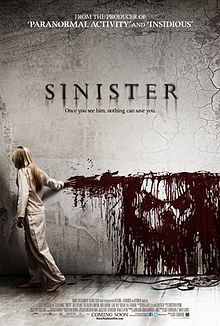
220px-SinisterMoviePoster2012

I confess. I’ve fallen behind on my horror movies. My work schedule doesn’t allow for much down time, and on weekends when I spend time with family, well, horror films aren’t their favorites. So on a weekend afternoon when I was alone, I finally saw Sinister. I remembered seeing ads for it a few years back, but far enough back that I didn’t know what to expect. As I’ve often asserted on this blog, horror frequently draws its spookiest material from the deep well of religion, and Sinister once again emphasizes this point. With clear connections to The Shining and Ringu, Sinister does keep you in its web. Of course, ritualized murders are by their nature scary, since those who perpetrate them have taken leave of reason. I don’t read true crime because I have to sleep, and I’d rather not know what some psychopath has eating his brain as he plans his sacrifices. So it comes out in fiction.

The protagonist, crime-writer Ellison Oswalt, consults with a Professor Jonas, whose name those acquainted with the Bible can’t separate from Jonah, to find out about ritual crimes. Jonas informs Oswalt that the occult symbols found at a couple of the murder sites are unconventional. He eventually traces them to Bughuul, a Babylonian deity that eats children. The religious element couldn’t be clearer. Bughuul, who is a god fabricated for the movie, is effectively frightening in the film. But for the ritual element to the murders, the story might have passed as just another gruesome offering to audiences who want a little fright in their October. Religion makes it scarier.

The second appearance of Professor Jonas reveals that, like Ringu, watching the films that tell the story is dangerous. He delves into iconography. Icons, according to orthodox tradition, take part in the reality they represent. Bughuul knows that, and merely by watching the films, or looking at pictures (icons) you open a portal between his world and that of the viewer. By the time Oswalt learns this it is, of course, too late. Again, the element of terror is introduced through religious thought. Bughuul (Mr. Boogle) is a morbid iconographer. The reality of the evil is represented in the “artwork” itself. Once you’ve seen an image, you can’t unsee it. So it is that Sinister draws on religion to plumb the depths of fear. It is surprisingly effective, even on a sunny afternoon when I’ve had too much time alone.


Fundamental Fear

Something truly scary landed on my desk. Working for an organization that has many different departments, there’s no way to know everyone. So when something bible-ish arrives in the mail, it gets directed to me. Now, I don’t follow the afterlife of creepy religious people through prison, so it took a few minutes to remember who Warren Jeffs is. I knew I’d read about him but I couldn’t remember where. Then I remembered the Fundamentalist Church of Jesus Christ of Latter-Day Saints. Jeffs was once the head of this church before being put into prison for child sexual assault crimes. So why had he sent a copy of Jesus Christ Message to All Nations to my publishing house? It is already published, and it is rather modeled on the Bible, at least at a surface level. No letter, no instructions. Just a book that I felt I needed to wash my hands after touching.

IMG_2571

I’d not heard of this book before. The author is boldly listed as Jesus Christ. “President Warren S. Jeffs, Mouthpiece of God” it says, given credit for, I suppose, putting pen to paper. What’s to prevent me, I wondered, from claiming God wrote what I framed into words? It is far too easy a claim to make and the credulous follow where the bold lead. That’s the way human authority, unfortunately, often works. Someone with a surfeit of testosterone declares that he speaks with absolute authority—I think of angry atheists as well as televangelists here. Such sense of irrational conviction must feel god-like. I can only guess from the sidelines. And I wonder about those who wrote what are recognized as scriptures in other religions.

Did those who wrote the books of the Bible, for instance, ever feel that they were writing unquestioned truth? Might they not have been a bit more circumspect? Maybe they were writing in the heat of inspiration, but not with the confidence of claiming divinity. Somehow I doubt even that. Writing is a human activity. The creator of an entire universe shouldn’t need to use it. Still, religions are often built around written texts. Parts of the New Testament claim to come from Jesus of Nazareth, although he’s not the actual writer. I guess he must have been working on later works of which I’ve never heard. And I do wonder how the doctrine of the faulty vessel applies in cases like this. I know better than to ask a Fundamentalist of any stripe, because I already know the answer they would give.


The Bald Truth

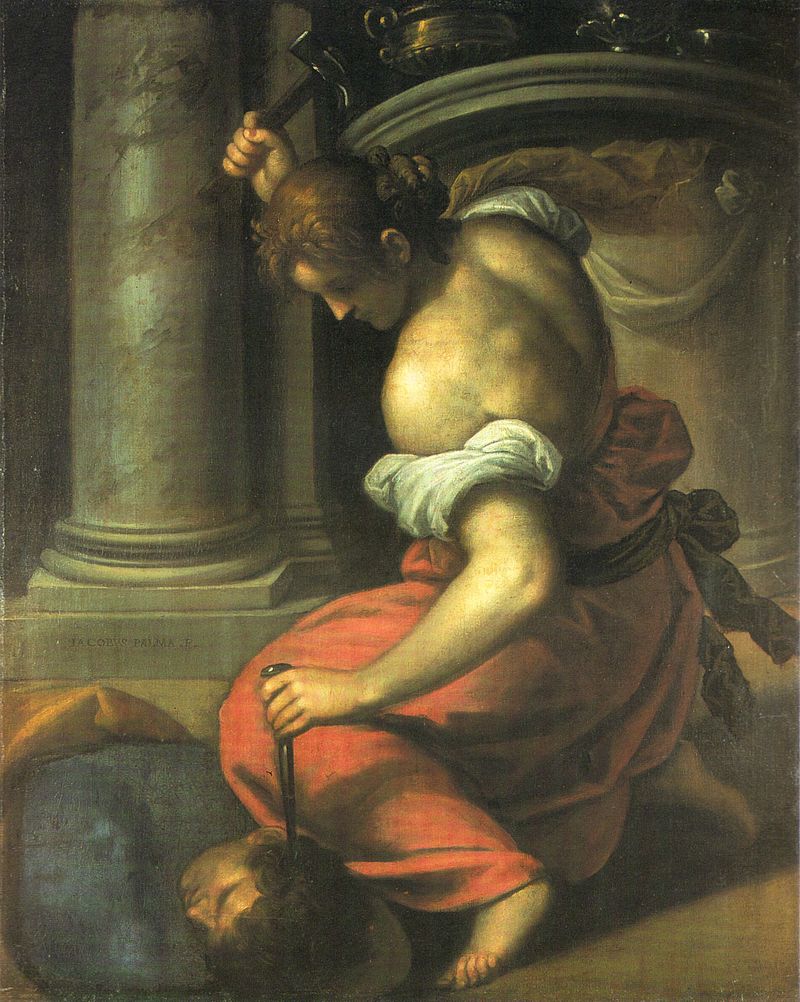
The book of Judges is one of the most fascinating in the Bible. The “judges” are colorful characters, often rule-breakers, who ultimately seem to deliver the early Israelites from their enemies. Many of their names are familiar: Samson, Gideon, and Jephthah. Well, Jephthah may be a stretch for those who haven’t read the book lately. Anyway, among the most interesting facets of the book is the fact that there are female judges. The most prominent is Deborah. Although she doesn’t seem actually to fight in battle, she leads Barak and he is able to defeat the Canaanites, through the agency of God, of course. The story is told in great detail of how the Canaanite general Sisera gets his chariot bogged down in the mud, flees the field, and finds the tent of Jael, who invites him in. After she lulls him to sleep she drives a tent peg through his skull, killing him. Jael is celebrated for her part in the deliverance.

Gory images aside, I’ve been thinking of Sisera. I wonder what he looked like. I realize that he may not have been an historical person, but still. The Bible is generally shy about describing the outward appearance of people. We get a few people with details revealed, but Sisera is not one of them. The reason I’m wondering is that I’ve got an image lodged in my head. A childhood story that we were read about Deborah showed Sisera as a bald man with a beard. Totally bald. I know that complete baldness can and does occur, but the little iconography of Canaanites we have doesn’t show them as being particularly bald as a fashion statement. As I was reading about Sisera the other day I tried to picture him as a man with a headful of hair, and I just couldn’t do it. The image was too mentally jarring. Sisera was bald.

The images that we’re shown as children, especially for powerful stories, have a way of becoming canonical. It’s like learning to tie your shoes. The first way that leads to success is the right way. We never need to learn another. How many images of Sisera does one person need to have in his or her head anyway? So my Sisera is bald. Religions often provide us with images that impact us for the remainder of our lives. The impressions laid on young gray matter are not easily erased. Now that I know many of the stories in the Bible have no historical veracity, I still can’t help but think of the early images I learned. These are the canonical images and anything else is too difficult to contemplate. My Sisera will always be bald.

Palma got it wrong.

Palma got it wrong.


What’s a Bible?

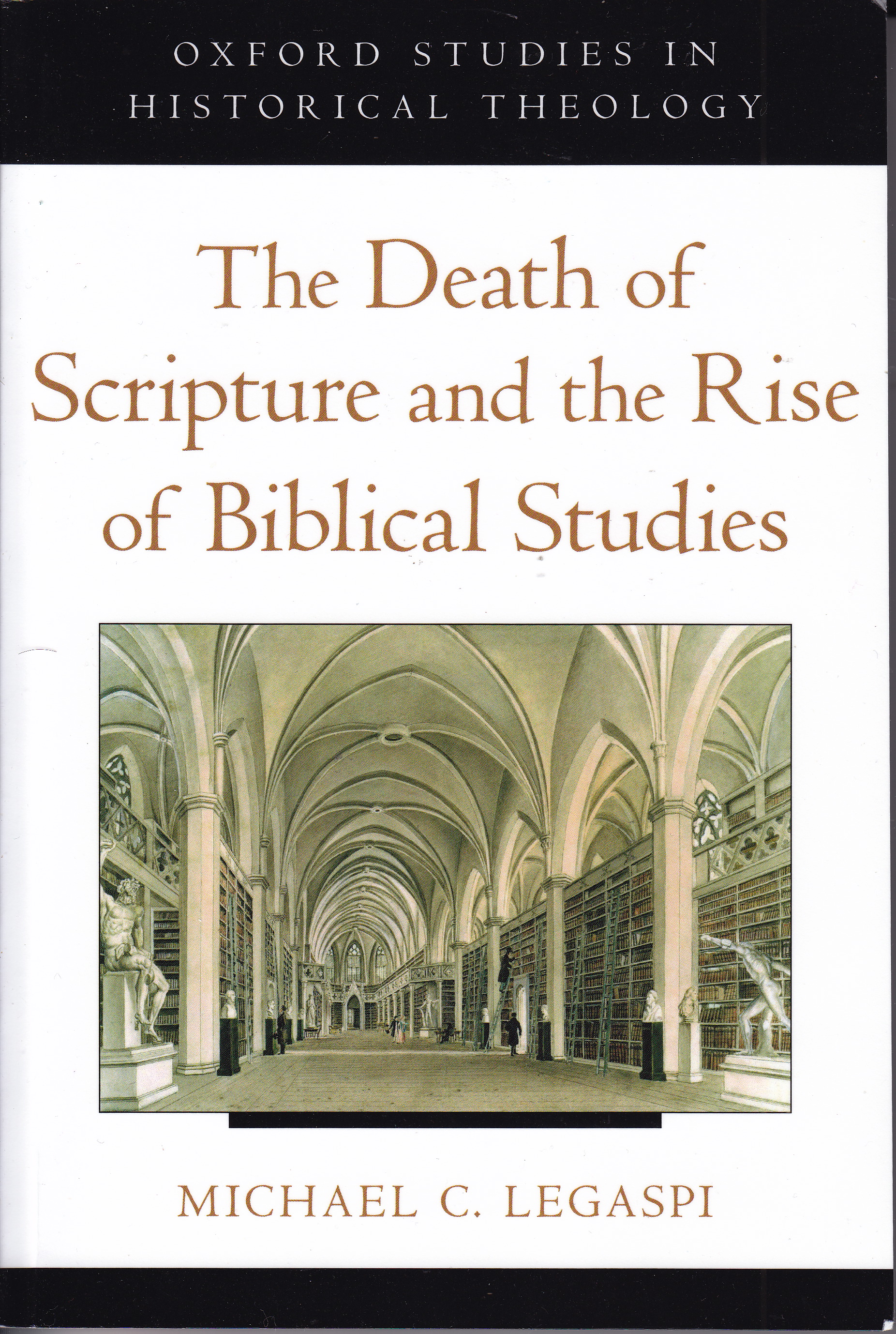
LegaspiWhat is the Bible? This might seem a strange question coming from someone who holds a doctorate in what has sometimes been characterized as biblical studies. Still, it is a valid question. The fact is, very different things are referenced by the word “Bible.” This is made abundantly clear in Michael C. Legaspi’s The Death of Scripture and the Rise of Biblical Studies. Legaspi points out that the Bible hasn’t always been the central force of Christian identification that it seems to have become. Martin Luther was largely (but not solely) responsible for the view that the Bible alone is sufficient for eternal well-being. Historically it had been much more complicated than that. The church had traditions and sacraments, Judaism had Talmud and rabbinic interpretation. The idea that the Bible alone was necessary was more radical than it might seem in today’s secular world. The problem was, the Bible isn’t an easy book to understand.

It has long been recognized that the Enlightenment and the Reformation went more or less together. The mysticism and mystery of “superstition” were bound to fade in the brilliance of pure reason. The Bible, however, still held a revered place, and it had to be studied. The sea change of the scriptural Bible to the academic Bible took place largely in Germany. No surprises there. What Legaspi demonstrates is that this study was closely bound with the university as an organ of the state. Germany didn’t boast the oldest universities in the eighteenth century, but it could claim the most intellectually rigorous. Among its biblical scholars, indeed, perhaps the one who led to the creation of the academic Bible, was Johann David Michaelis. The book is mostly about Michaelis and his influence and background in biblical studies. Clearly, applying university treatment to an ancient text was not going to be Sunday School.

By the time people like me began advanced study of the Bible, the “academic Bible” was about all there was. Many of us with serious training in the field watch in wonder as some (many) theologians take the Bible literally. They use ideas and concepts that biblical scholars have long recognized as artifacts of antique understanding. The problem is once you’ve gone down this path, there’s no going back. You can’t unlearn the academic Bible. So, what is the Bible? Obviously, it’s going to depend on who you ask, but it is clear that no one answer will satisfy all takers, even if they all claim to share a single faith. And should you venture to those hallowed halls of higher education, you’ll find the Bible is studied here, as are dinosaurs and an earth that is a few billion years old.


Eleventh Commandment

Those who know me are sometimes surprised to learn that one of my favorite quick meals is grits and black-eyed peas. For a northerner that’s a bit strange, perhaps, but my father was from South Carolina and my mother often cooked “soul food” at home. Over the years I’ve experimented with ways of preparing this simple lunch, and I’ve found that with a little cheese and a bit of hot sauce, this makes a filling and tasty dish. A few weeks back I posted on Burning Bush hot sauce. I saw it on a tourist trip to Whole Foods. I was very pleased and quite surprised when the president and chief sauceror of Burning Bush emailed me, thanking me for my post. He even kindly sent me a bottle of Burning Bush hot sauce to try. Well, this was a chilly weekend up here in Jersey, so I splashed some Burning Bush on my grits and had my own kind of down-home religious experience. It sure beats the usual tabasco that, like my father, I usually shake over my grits.

I’m sharing this personal religious experience with you to encourage you to have a religious experience. Try some Burning Bush for yourself. If you look back at my post Mind Your Manna, you’ll find a comment from said president and chief sauceror giving readers of this blog an exclusive discount on web orders. Check out that post for the discount code. Also take a little time to browse around www.burningbushhotsauce.com. Burning Bush is kosher and it doesn’t just spice up grits. My favorite part about it is that it isn’t the product of a large corporation. Being one of the little guys, I prefer to help out others like myself. The one percent already have far more than enough.

Burning Bush

As I’ve confessed before, I’m not really a foodie. Still, sometimes something simple like a new flavor can improve your life. As a matter of fact, when the Burning Bush came to my door on Friday, I planned the coming week’s meals around the fact that I now had something new to try in the kitchen. I suspect I shall be very holy by the end of the week. Just like the Bible, the story of Burning Bush starts in a garden. The best things in life generally do. I’d rather support David than Goliath. Why skimping on the flavor end of things? Why not have a religious experience while you eat? Let Nestle, Unilever, General Mills, and Kellogg hobnob with each other. Remember, when it comes to hot sauce, every drop counts. Why not give Burning Bush a try? And just for reading this blog you get an exclusive discount.


Soaring Prophets

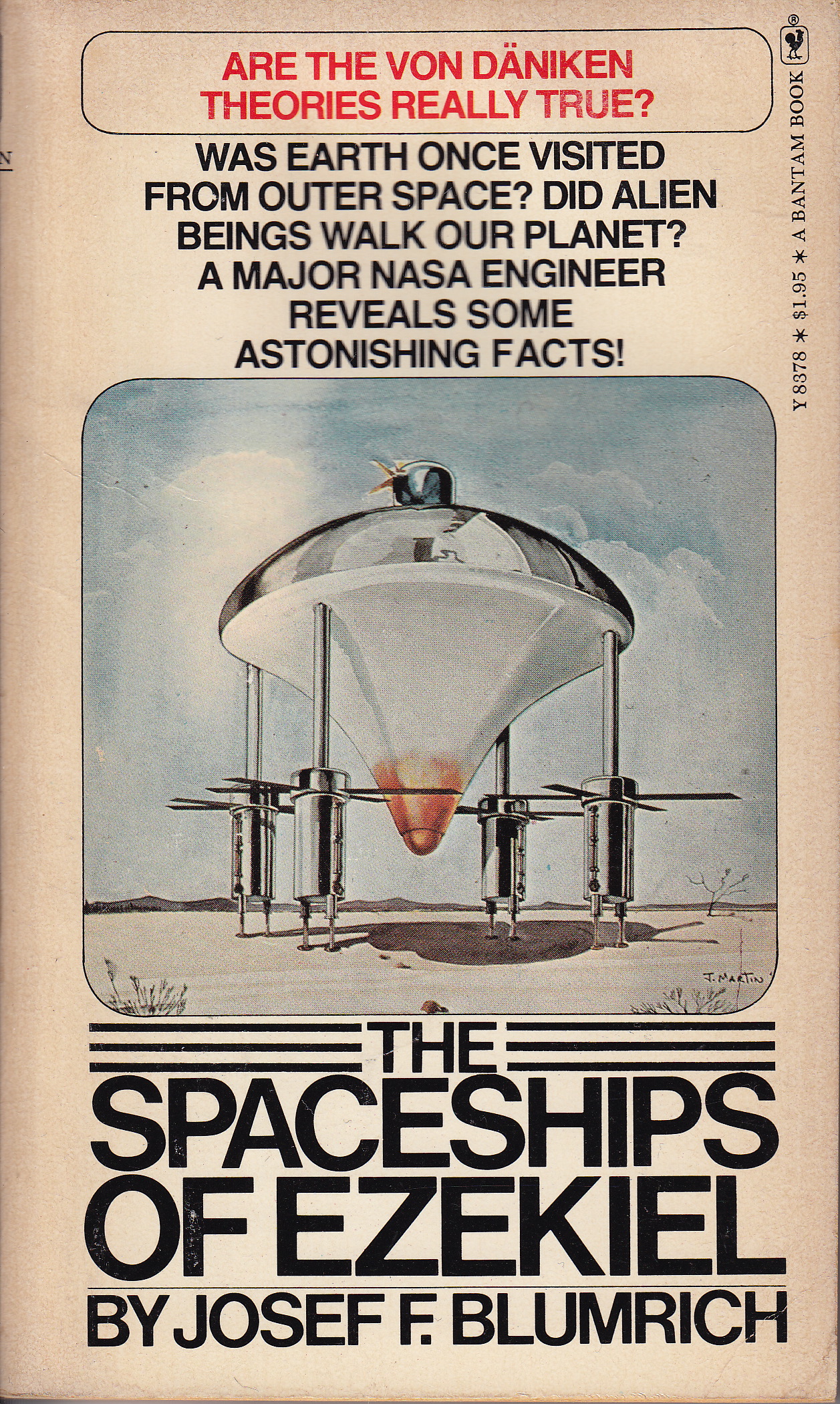
EzekielSpaceshipOkay, so I pulled the book off the shelf, and I feel now like I need to read it. Call it an occupational hazard. Josef F. Blumrich’s The Spaceships of Ezekiel, despite its von Däniken-like sales, has never been taken seriously by biblical scholars. Blumrich, no doubt a brilliant engineer, simply had no street cred among biblicists. His handling of biblical passages is awkward and he leaves out anything that really can’t be explained by his theories. Not exactly professional exegesis. He suggests, of course, that the “chariot” vision of Ezekiel was, in fact, a spaceship. The figure Ezekiel assumes is God is actually a commander of the ship and the message (which accounts for the vast majority of the book) really doesn’t matter in this context. In my earlier post, having not read the book then, I made the error of supposing that the helicopters were impractical in space. Reading it, I instantly saw my error. This was engineered as a landing craft from the mothership circling the earth above our heads. Boy, do I feel stupid now.

The overall mistake Blumrich makes is the “unforgivable sin” of eisegesis. Suspecting that he has a well-engineered spacecraft on his hands, he draws out the implications—such as the propellers—which would not be necessary, but must be there because of a “literal” interpretation of Ezekiel. Once the eisegesis is done, it can be used to explain further episodes throughout the prophetic book. The message of Jerusalem’s destruction and the hopeful prospect of a return from exile get lost in the space dust raised by these propellers. Blumrich was quite right, however, that technical people and humanities people need to be willing to learn from one another. Ezekiel may have seen something unexplained, but his function was that of a prophet, and prophets say the strangest things.

Even more odd, from my unprofessional reading, was the sense that Blumrich saw capitalism as the default economic system of the galaxy. Time and again he mentions how expensive such interplanetary travel must have been. How do we know, I wonder, that aliens like to exploit each other as capitalists do? If they are a more advanced species, surely they must have an imagination that reaches beyond one percent controlling 99 percent of the wealth to aggrandize themselves. I can imagine a society without money. A society with fair trade where everyone is cared for by medical individuals who don’t charge an arm and a leg to treat an arm and a leg. A world where doctors don’t worry about being sued by lawyers. A world where dreamers are free to dream and society values it. Ah, I’d better be careful since, it seems, I may be beginning to sound like a prophet.


The Climate of Belief

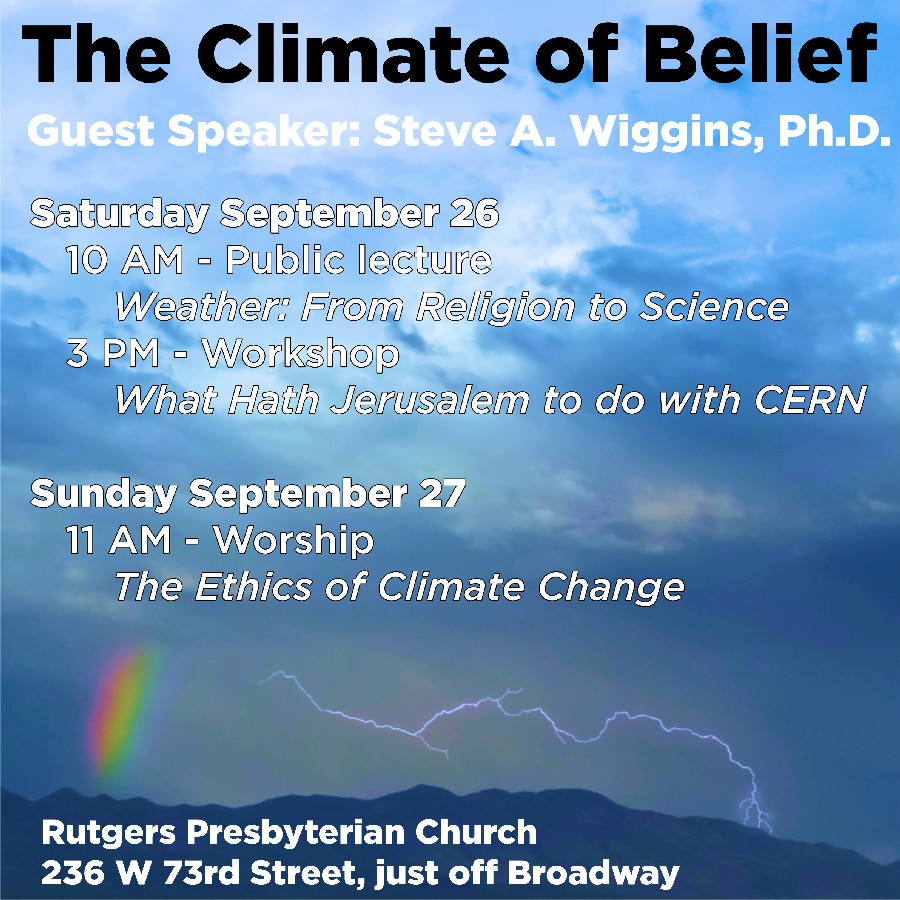
As I’ve noted before, in our culture where an individual voice is hard to hear, those without institutional affiliation are generally considered self-promoting hacks. That’s really too bad, given that so many highly educated people end up in menial positions—our society’s “greatest resources” squandered away behind a counter or sequestered in a cubicle. So it was my great honor to be asked to present Rutgers Presbyterian Church’s Autumn Guest Lecture this year in Manhattan. When I taught at Nashotah House invitations to speak came frequently, even though it was a small school. I even once received an invitation to talk when I was an adjunct at Rutgers University. Since “going corporate,” it seems, I have nothing to say. It really is wonderful to be asked to speak again. Practicing my talk brings back many fond memories. Lecturing is in my blood. The Pastor asked me to come after my book, Weathering the Psalms, was published. Never intended as a best-seller, it has quietly sat on the sidelines, like its author.

weather wiggins ii sml

I suppose a bit of shameless self-promotion might be in order, but of course, I will feel ashamed for pointing out, when it’s all over. If you happen to be in New York City this coming Saturday and Sunday, so will I. Rutgers Presbyterian is located on the upper west side, not far from Lincoln Center and the Museum of Natural History. I’m always glad for an audience. See? Now I feel bad for having said so. My theme over the weekend will be “The Climate of Belief.” In addition to the weather, we’ll be talking about religion and science. Two worldviews that seem to be in constant conflict are not really the bitter enemies they seem to be. I won’t give away any spoilers since then you’d have no reason to come to my New York debut.

Further along, I am scheduled to give a paper at the Society of Biblical Literature annual meeting in the Society for Comparative Research on Iconic and Performative Texts (SCRIPT) session on sensing scripture. My talk on that occasion will be on how the Bible is presented as an iconic book in the first season of Sleepy Hollow. Be sure to mark your November calendars now! It’s not too often that a person with no institution willing to back him gets to speak twice in a year. Someone who’s in a position to hire professors once told me that with so many candidates out there, you have to wait until you fall in love with one. Being a Don Juan, whether in amore or academia, has never been my strong suit. Still, if Elijah is to be believed, even an unamplified voice may carry. I’ll utter my “yop” for those who wish to listen.


Ezekiel’s Drones

Drones have become a fact of life. Our robotic future is already present as unmanned vehicles do the bidding of their remote commanders. They are our conscience-free assassins and our great UFO hoaxes. They offer a chance to view the world from an angle previously limited to those with access to airplanes and pilot’s licenses. And academics are now starting to take a serious interest in the ethics of such remote viewing and remote warfare. Human to human interaction has always involved emotion. That’s what we’ve evolved to be—emotional thinkers. Even animals react emotionally to each other and to us. The drone removes all feeling from the equation. Programmed to fulfill a function, like Hal, it simply does as it’s told.

EzekielSpaceship

All this thinking about drones reminded me of a book that someone pointed out to me decades ago. I have a copy that I’ve never read, but I suppose eventually I should. This post isn’t about the book per se, but about the cover image (yes, people do judge books by these). Some time ago, I watched a young person playing with a quad. That word is so ubiquitous that I need to specify that I mean quadcopter. Quadcopters are popular drones, available for children’s amusement as well as for military and industrial utility. Their arrangement of four horizontal propellers gives them stability and maneuverability, as well as their sometimes annoying mosquito hum. The quad I saw reminded me of this book gathering dust on my shelf. Josef Blumrich wrote The Spaceships of Ezekiel to suggest that the psychedelic prophet saw space aliens coming to earth. I wonder if, in the light of developments, this thesis calls for refinement.

On the cover of the book is something that looks very much like a quadcopter. Even as a teenager, I wondered what these propellers would do in space travel. If there’s no atmosphere to give them lift, then they are rather superfluous and potentially an impediment. I would think that aliens would be a bit more advanced. Now that quads are a reality—just a block from work I can see a toy store clerk regularly flying one over the streets of Midtown—maybe Ezekiel was seeing into the future. Is that something prophets ever did? The biblical scholar in me says “no,” of course. Prophets were forth-tellers, not fore-tellers. Even so, I have a book in front of me that calls my beliefs into question. In the end, I suspect, that’s what most books are intended to do.


Biblical Violence

756px-Winchester_House_910px

Sarah L. Winchester, it is said, was a haunted woman. The widow of William Winchester, she was heir to the tremendous amount of money brought in by sales of the renowned Winchester rifles. Fearing the haunting of all those killed by the weapons, she built what has now become a tourist attraction—an unfinished mansion that was intended to prevent those ghosts from living with her. With the spate of recent multiple shootings, we might wonder how many other gun manufacturers are living haunted nights in their comfortable homes. A recent petition has been circulating to stop Spike’s Tactical from producing The Crusader assault rifle. Predictably, the sales have been so overwhelming that the religious rifle is on backorder.

The Crusader, as the photos reveal, is emblazoned with Psalm 144.1 “Blessed be the Lord my Rock, who trains my hands for war, my fingers for battle.” It also features a Crusader’s cross and trigger setting labeled, Peace, War, and God Wills It. Blasphemy in carbon fiber. I suppose I’m hopelessly naive, not being aware that guns could be purchased online, but the overwhelming demand is nevertheless disheartening. It used to be that the Christians were the good guys. You certainly didn’t have to worry about them shooting you. That was the job of the heathen. So many multiple shootings took place this summer than I couldn’t keep track of them all. I live in a world where guns play no role and I wonder if everyone wouldn’t be happier if we didn’t lay down our arms and learn how to get along.

Of course, the Bible is a book where violence against enemies is permitted, and, in places, even encouraged. Society has repeatedly declared that there is no need for experts trained in how to interpret the Bible, and this is what happens. Psalm 144 is a poem for deliverance from enemies. Historical criticism would likely place the piece as written during a time of war. The era in which the majority of the Bible was written was anything but peaceful. Those parts of the Good Book that are particularly extolled are often those that suggest that the answer to war is peace and that setting aside your own will for the well-being of others is something we should all be doing a bit more often. But we cannot deny that “Peace, War, and God Wills It” aren’t part of the violent worldview we also encounter in sacred writ. I wonder what Mrs. Winchester would have had to say about such mixing of the Bible with guns.


Psychobabel

Evolution, we’re told, has one goal: survival. As an unthinking process of nature, evolution “programs” us all to desire survival for ourselves and our offspring. Even attributing that purpose too it is to suggest it’s more a willful agent than a blind process. People, on the other hand, are meaning-seeking creatures and so there’s bound to be some disappointment involved. I was just discussing with a friend how it seems that people just can’t agree on evolution mostly because of the strident claims on both sides. The New Atheists make claims beyond the evidence that survival to reproduce is the “only” role of evolution and we are “just” animals with too much gray matter, and that consciousness is “merely” electro-chemical activity in our brains. Creationists, for their part, say evolution couldn’t possibly account for structures as complex as we see in nature, and therefore a deity much be involved. The rancor grows until both sides end up despising the other. People who look for the middle ground are not newsworthy and fade into the scenery. I wonder if we’re evolved to ever get along.

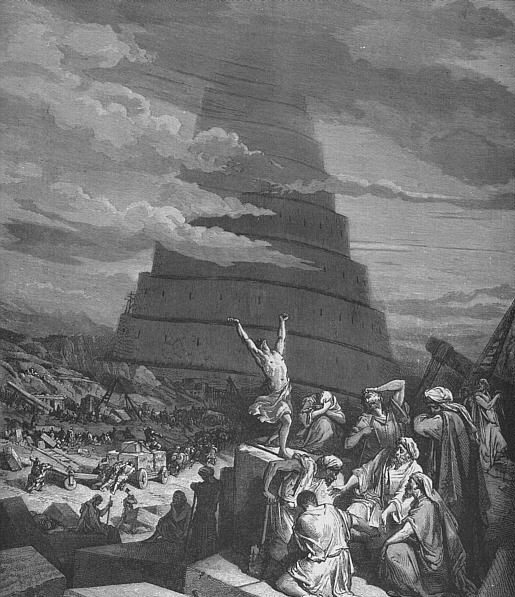
My wife mentioned that it’s like the Tower of Babel story. Here is the tale of God making humans inevitably talk past one another. We can’t understand and so we argue and criticize and insult. A more scientific explanation might be that perhaps we’ve tipped the evolutionary balance with our species-specific success. We are by tar the most numerous species of any large animal. (At least that we know of.) Having put ourselves as lords and masters of the food chain our challenges have become mental and we turn ourselves to the question of who’s right instead of simple survival. Sacred books can’t guide the discussion, but reason alone. And reason, as we all know, has its limits.

Confusion_of_Tongues

The great irony in all of this is that, if we’re evolved to seek meaning, we’re not equipped to find the truth. As neuroscientists have pointed out, the brain’s function is survival, not truth finding. Our desire to know the truth is a human avocation abstracted from consciousness. We’ve not adequately defined consciousness, but since there aren’t many large predators hunting us down anymore, that brain-power has been diverted elsewhere. Despite all this, we don’t see world peace spontaneously breaking out. Even on a smaller scale we find prejudice and hatred and insane mass production of weaponry when our only predators are ourselves. Evolution, we’re told, has only the goal of survival. Being an unthinking principle, even ascribing it this much conscious decision-making is merely a matter of convenience. Does the Tower of Babel mean we must hate those who differ from us, or does it perhaps suggest that the real goal is better understanding?


School Bible

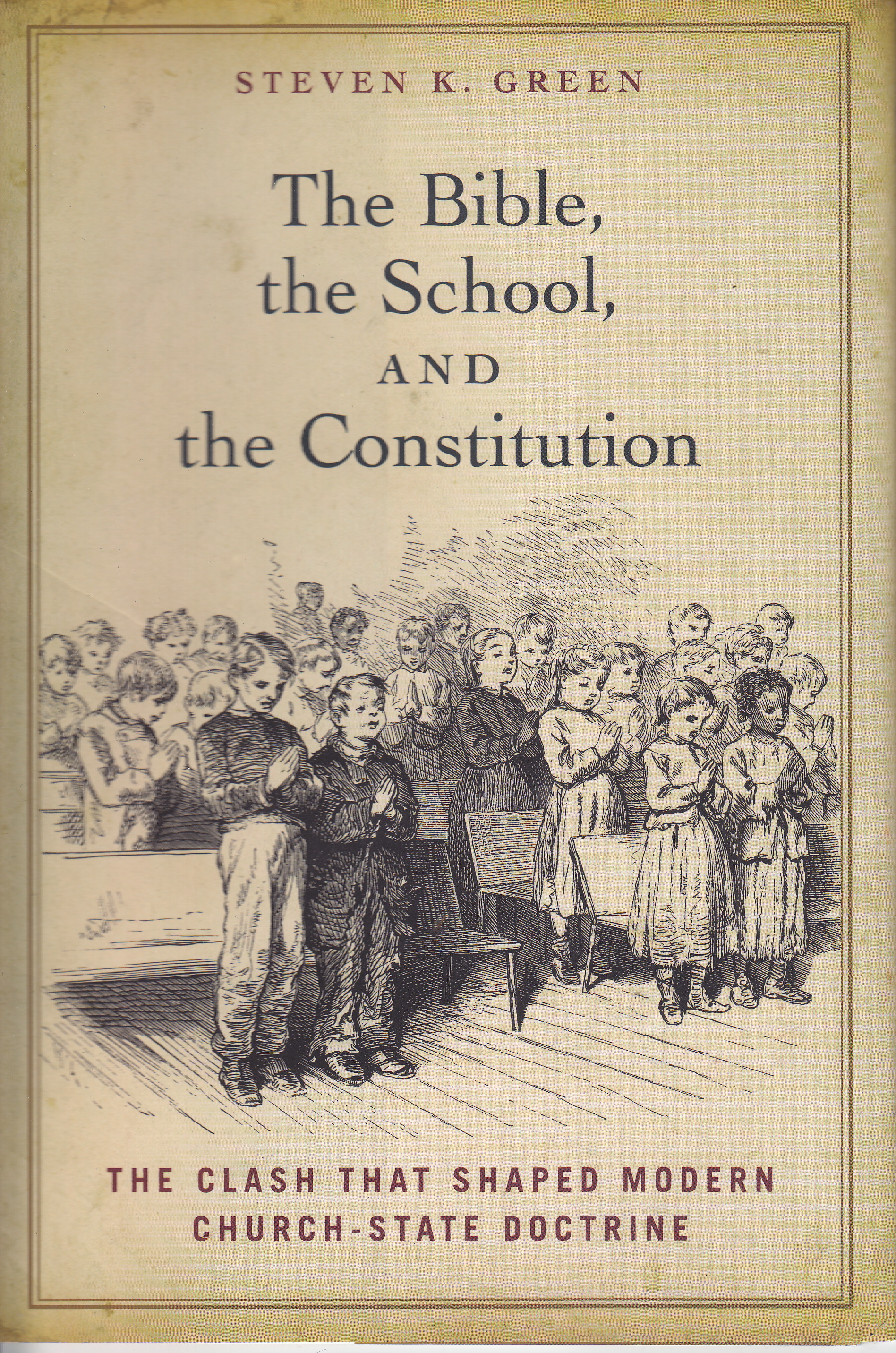
BibleSchoolConstittnAs a very young scholarlet, I recall the horror expressed when some form of prayer was expelled from public schools. It had to have been in the late ’60’s. Maybe early ’70’s. The nation, it seemed, was headed for Hades in a hurry. Little did I know that this was part of a long, drawn-out—tired, even—battle. Steven K. Green’s The Bible, the School, and the Constitution: The Clash that Shaped Modern Church-State Doctrine gives pretty close to the full story. Bible reading in public schools was foundational, in the beginning. In the early days of public education, the Bible was ubiquitous. It was considered non-sectarian since practically everyone was a Protestant. When the religious mix of the country began to diversify in the mid-1800’s, a new dynamic emerged. People got upset. There were riots. People were killed. Legislation was proposed that would explicitly add God—Jesus even—to the Constitution. Who knew?

Green’s study takes a close look at the various cases that arose around the time of the Civil War regarding the Bible in school. Protestants, it seems, didn’t appreciate that Bible reading, in the King James Version, without comment, violated Roman Catholic policy. The first to challenge Bible reading in public schools were Christians. Secularists only joined the fray later. I’m oversimplifying, of course. Some Catholics wanted equal time, the reading of the Douay Bible instead of King James. Others wanted Catholic schools to receive state funding. Nobody was really aware of other religions such as Hinduism or Buddhism. It was a country of limited religious imagination. Various groups tried in various ways to get God—their God only—into schools as the default deity. And so the fun continued.

For me, it was eye-opening to realize that all of this isn’t new. The legislation, since long before my grandparents were born, has been heading in the direction that led to the aggrieved tears in my youth. Green points out, however, that the conflict has never been completely resolved. School vouchers and a long spate of evangelical presidents have had their impact on our children. The Hades that we feared has only come with the weaponizing of our culture, largely by those who want Bible reading back in the schools. The thing we fear finds us through the thing we love. Ironically the issue never seems to be education. God or guns—it’s the power that we want. The early debates revolved around morality. How could kids be moral without Bible reading? How the definition of morality has changed. We, as a nation, still can’t figure out religious freedom or how to let kids be kids.


Mind Your Manna

Foodies have gained a respectable place among the ranks of social critics. Major newspapers and many, many websites tell us how to eat better. Eat healthier, or with more style, or more adventure. Our intricately interconnected world has made obscure ingredients fairly easily found and since we no longer rely on what can grow around here, the enjoyment of food has become a source of quasi-religious meaning for some. What was once a basic biological necessity has become a valued source of culture. We can tell a lot about a person by what they eat.

Like many average people, we shop in the more reasonably priced supermarket near us. We don’t make much money and why pay more for what you can get for less? Over the holiday weekend we bucked the trend and went to Whole Foods as a kind of holiday treat. We had a gift card and we hadn’t been to a Whole Foods since a friend introduced us to the chain in Madison, Wisconsin. We remembered that it was aligned with our ideals: sustainability, simplicity, and the desire to live well. Also, it is very expensive. Like most healthy options in our culture, they’re not really affordable to those of modest means. Still, the store was crowded. To be fair, this is down by Princeton where quite a few well-heeled New Jerseyans reside. The store was welcoming with less crass capitalistic drives to purchase more, but despite its organic feel, it was very much a grocery store like any other. Most familiar brands are missing since what we normally eat is processed to the point of filler, but the hidden foodie in us all appreciates the nutrients nature has co-evolved along with our taste. It seemed like the place for an epiphany.

IMG_2480 copy

Then I spied Burning Bush hot sauce. “Sets the soul afire,” the bottle proclaimed. Quite apart from demonstrating the relevance the Bible still has, this sauce had religious implications. If a hot sauce can hand down commandments, it is a powerful comestible indeed. I have to admit that I’m not a real fan of hot sauces. My taste in foods is pretty simple, if vegetarian. Nevertheless Moses doesn’t stand alone among biblical figures who spice up our food. On a brief layover in Phoenix I spied a whole rack of hot sauce, some bottles suggesting that the heat came from the very nemesis of the burning bush. Hell seems to be another favorite location to be trumpeted by the painful food connoisseur. When we want to claim the extremes, in terms of food, we turn to either Heaven or Hell. William Blake would’ve appreciated this irony. As for me, taking my commandments with mild salsa is just fine. Anything more than this would seem to be a sin.

IMG_2396


Weathering Academia

Come the end of September, I’m scheduled to give a talk at Rutgers Presbyterian Church in New York City. I’m personally very flattered by this because, as it has become clear to me, an academic without a post is mute. I’ve seen colleagues who teach at schools I’ve never heard of consulted by the media—and there is obviously more to it than this—because they have teaching positions. Those of us who used to be professors apparently forgot everything when we take jobs out of necessity. That’s why I’m so flattered. My talk will be on the larger issues behind my book, Weathering the Psalms. I never expected this book to be a bestseller. I knew that it was, in some sense, incomplete. Academic books are the kinds of things you write when you have an academic post. When your day is not programmed with “enter this data, follow up on that book, and when you have time, get other people to write books.” People, of course, with university posts. The rest of us know not whereof we speak.

It’s funny. Back when I was teaching, even if it was only at Nashotah House, I used to be asked to give little talks all the time. It was rare for a year to pass without someone asking me to lead a seminar or share what I’d learned with some august body. That tapered off once I became an adjunct, although a Presbyterian Church in Princeton once invited me to speak because I was teaching at Rutgers (the university). And as I prepare my talk in my free time, I wonder about a society so tied up with name prestige that someone who has something interesting to say is just a crackpot unless a college or university or seminary or think-tank hires them. There are many of us—hundreds, if not thousands—who know as much as our university colleagues about a topic. An individual doesn’t have a name big enough to flash around, so we don’t get asked to share. Keep your hand down and your head down on the desk, please.

IMG_2416

In any case, it has been good for me to come back to the weather and think through some of the larger implications. I’d just had the book declined by a big name academic press when Nashotah House terminated my position. For many years I couldn’t look at the manuscript since it seemed a symbol of my failure. No, the book isn’t everything that it could be, but there is some good information there. The larger implications are actually of some importance here. The weather is studied both by science and by religion. Both understand aspects of it that the other misses. I’m looking forward to exploring this with the good folks of Rutgers Presbyterian who were kind enough to invite a guy with nothing more than a book and an obscure name to come and talk about something that most academic colleagues just don’t notice.