Backyard Archaeology

Among safe topics for discussion among strangers and casual acquaintances, the weather tops the list. It affects each and every one of us continually, and there’s nothing we can do about it. The ideal neutral subject. In fact, however, the weather is highly freighted with religious thinking, deeply sublimated. If you listen closely, you will hear it. Well, this year, at least in the northeast of the United States, winter has been the topic. We still have snow on the ground in New Jersey, and it has been here continually since January. The thaw has begun, however, and when I went to fetch the paper I noticed a newly melted item on the lawn—an archaic newspaper. Obviously the paper-deliverer missed the front steps that day, and by the time I stepped outside it had already been buried. Curious, I brought it inside to get a first-hand look at the past. It was the Monday, February 3 paper. The day after the Super Bowl. Apparently nothing much else was happening in the world a month ago. I don’t even know who played in the game.

IMG_1237

Religion and sports have a long pedigree. One of the first books I signed up at Routledge was on religion and sports in American culture. Routledge decided to sack me before the book was published, so I haven’t had the opportunity to see it yet. Nevertheless, it is clear that the meaning once provided by the strong arm of the Lord is now covered by the stronger arm of the athlete. I’ve watched in fascination as reporters question the players after the game, panning for bits of wisdom as if they might actually get us up off the couch and lead us to a few minutes of physical glory. Instead cliches trickle out: “we saw what needed to be done and did it.” “I took it to the next level.” “First of all, I want to thank Jesus.” Each one like a nugget of pure gold. I still don’t even know who was playing.

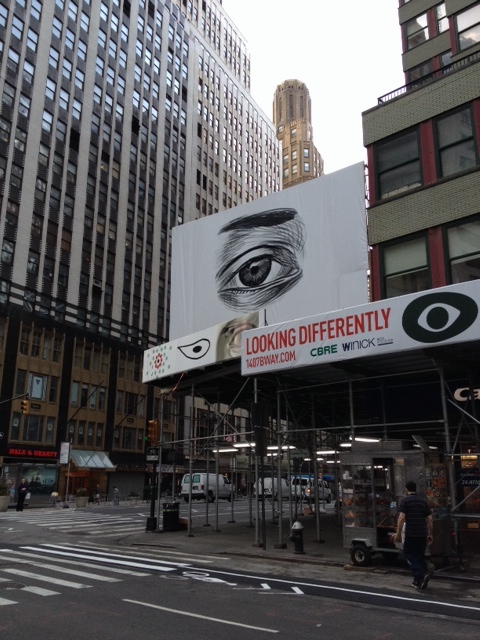
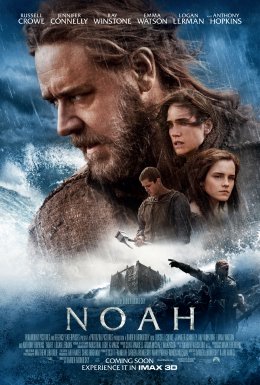
On my kitchen table, however, sits a soggy newspaper with the answers to that. The news is old news. And damp. We’ve had an entire Olympics since then, and war seems to be breaking out in the Crimea. Wait a minute, what century is this again? It seems that no matter how old the news is, it still isn’t old enough. One of the oldest news flashes received by humankind, if the Mesopotamians are to be believed, is that there is a huge flood coming. I turn on my browser and lo, a flood indeed! Noah will be released later this month. Posters began to appear in Manhattan as soon as the Super Bowl cleared out. Move on to the next big thing. And, unbeknownst to me, a newspaper laid buried beneath the snow, containing all the information I needed to know. I’m still wondering how that flood turned out.


Weathering Qohelet

Over the weekend I finished the initial formatting of Weathering the Psalms, my long-suffering book on the weather terminology in the Psalter. While I’ll have to give it another going over, a strange cocktail of feelings has come over me in the process. Scholars age quickly. The time between putting that last period on that last sentence and the book showing up in a few dozen hands is generally over a year. You feel outdated. Not only that, but this book was finished, for all practical purposes, a dozen years ago. In this world of endless, indeed, almost insane academic publishing, many books and even more articles have appeared that I should have read, pondered deeply, and incorporated into my work. That, however, is a luxury reserved for those society deems fit to place in colleges, universities, and seminaries. The predominant feeling, apart from relief, was a kind of melancholy, however. The book represents a world that no longer exists. Indeed, a young scholar who no longer exists.

From the day I started teaching at Nashotah House in 1992 (or even before), I knew it would be a limited-time engagement. The then dean, interviewing me, knew that I was too liberal to fit the medieval theology then current (and still current) at the school. As a teacher of the “Old Testament,” however, the damage I might do was deemed minimal. I wrote several articles on my beloved Ugaritic, but no job interviews came. Those who’d sussed the system suggested I try publishing biblical material—after all, that’s where the jobs are. (Ha!) So I began. Weathering the Psalms took several years to research and write in scholarly isolation. I began rising at 4 a.m. to find the time to do the writing. Most of the book was written between four and six in the morning. Yes, it’s rough. And tentative. A young scholar unsure of himself. Now I’m an old man even more unsure of himself. Still, there are insights in that outdated tome that I hope some will find worth their time.

I have a photograph of myself that my daughter took at the time. I was putting on my boots to go shovel some snow. The face in the photograph is young. Optimistic, even. I was facing the weather. I’ve come to realize that all photographs are lies. They capture an instant of time that has already vanished. In my case, a livelihood. A dream that was shredded on the plains of some theologian’s ideological Somme. Winters seem to have become much harsher since then. Colleagues who’ve found jobs prosper while the rest of us fight against nightmares and that sense that all we ever tried to do was, in the end, vanity. One of the questions in the study, The Bible in American Life is, which is your favorite book of the Bible? Mine has always been Ecclesiastes. And even as I make final preparations to ship my manuscript to Wipf and Stock, I know that the preacher is right: there is nothing new under the sun.

snowman


Royal Reading

Post-Christian America still reads its Bible. One of the perks, such as it is, of working with Bibles is getting such vital news early. The Center for the Study of Religion and American Culture at Indiana University-Purdue University Indianapolis (IUPUI) has just released a study that was underway when I visited the school a couple years back. “The Bible in American Life,” available online, presents the results of a scientific survey of Bible reading in the US. Suffice it to say, we’re not done with Holy Writ just yet. In our world of high tech gadgets where the waves and particles that make the internet possible penetrate our bodies constantly, it is sometimes easy to forget that the Bible in many ways made this all possible. Both the good and the evil that drove western civilization to colonize its world had at least some dusty memory of “manifest destiny” embedded in sacred writ about it. And those who take the Bible seriously have continued to read, mark, and inwardly digest it.

The Bible in American Life, already picked up on by major media, indicates that about half of the population of the United States reads the Bible outside of worship. Perhaps not surprising given the still faltering civil rights dream, African-Americans are the biggest Bible reading demographic in the country. In fact, the study states, race is the single largest indicator of probable Bible reading. Those who are low on the economic scale also tend to read Scripture more. Those for whom “success” isn’t what it seems to be at first. Those whom “success” has passed by. Even Hispanic readers outnumber the white majority. People who have been distracted by material success, predictably, have little time for ancient wisdom. Still, half the country does turn to the Bible on occasion. Among the more interesting demographics is the fact that nones—those who are unaffiliated with any religion—also turn to the Bible for learning about life.

434px-King_James_I_of_England_and_VI_of_Scotland_by_John_De_Critz_the_ElderThe media seems to have picked up one of the major points as well—few Bible readers turn to Holy Writ for political advice. To hear the news weavers tell it, politicians and rabble-rousers trawl the Bible for its scant words about homosexuality and abortion—issues ignored by Moses and his ilk, for the most part. In fact, most people rate such issues very low on their scale of why they turn to the Bible. It is read more for consolation than for political intrigue. Having just about finished my formatting of my book on the Psalms, it warms my heart to read that the Psalter tops the list of favorite books of the Bible, narrowly inching out the Gospel of John. The study doesn’t, and can’t, come right out and say it, but the Bible is read by people to help them feel better. They still prefer the King James by a considerable margin. And in this world of self first, they can still read, “For what shall it profit a man, if he shall gain the whole world, and lose his own soul?” Even though Bible readers are, in the majority, women. Good old King James still shows the way, as the ruling white man always has.


The Varieties of Biblical Experience

Working with Bibles can be a heady experience. I mean, the sheer numbers are staggering. A whole herd of cattle must be slain annually just to manufacture the covers for all the Scofield Bibles in the world. What is it about literalists that demands animal sacrifice to read the words of the Prince of Peace? Bibles, Bibles everywhere, and not a word to read! According to statisticbrain.com, there are over 6,001,500,000 Bibles in print. That’s closing in on a parity with the world population, only one billion to go. There are websites dedicated to selling only Bibles. Nearly any bookstore will have at least a shelf full of them. I even ran across the website of an enterprising individual who seems to have figured out that there’s a market for taking Gideon Bibles from hotel rooms and selling them online. The Bible business, in the words of Big Dan Teague, “is not a complicated one.” And every year more are printed. Full-text versions are freely available online at any number of sites, and still more can be sold.

IMG_1235

I often ponder the western love affair with the Bible. My entire career, with all its ups and downs, has been fashioned from an early intrigue with holy writ. In the beginning was the Bible. And culture followed in the footsteps of holy scripture. It’s not difficult to see why. Even further back than ancient Palestine, people worried about dying. Consciousness is funny that way—it has trouble conceiving of the world without itself. The Bible, for many centuries, offered the accepted solution to the death equation. You may have to die, but you don’t have to stay dead. Today we think of zombies as those refusing to remain lifeless. The Bible begs to differ, unless, of course, you’re reading the Zombie Bible. And still the presses roll on.

Considering the profit to be turned by selling Bibles, I wonder that more don’t show the cynicism of Big Dan. Is no one suspicious that printing the Good Book is called an industry? What other book, so freely given away, can sustain such a massive global market? I have to plead guilty myself to having a least a dozen different Bibles within easy reach every day. They even have their own separate labels at Barnes and Noble. So as I sit down planning on how to grow this ever-expanding market even more, I think of the many other industries that rely on mine. We have spun off worlds that orbit around the Bible. It is, despite the many nay-sayers, the cornerstone of modern Western civilization. If a tree falls in the woods, a Bible may be printed from it. Which of the 57 varieties do you take with your daily bread?


Bread Line

“Her smoke rises up forever,” apart from describing the fall of Babylon the Great, can also describe our toaster. The thing has been with us for many years now and the lifespan of a toaster is often measured in months rather than decades. I suppose I could go to the store, but the internet is right here, so when I began searching for toasters I found, yes indeed, The Jesus Toaster. I’m sorely tempted. Of course, I haven’t had breakfast yet, but I wonder whether this device is diabolical or devotional. Often it is difficult to tell the difference. Pareidolia, the tendency to see human faces and forms where they don’t exist (false positives), seems to be an evolutionary device to get us to pay attention for possible dangers in our environment. Now that we live hermetically sealed lives, our minds still find faces, and often attribute religious significance to them. We’ve all read of cases of Jesus casting his divine face upon a humble piece of toast, or a tortilla. Or a bruised toe or a garden shrub—the holy visage is not just for breakfast any more. So some clever wag decided to engineer a toaster that puts Jesus right on your bread. A private sacramental, still, you might want to go lightly with the jam. But is Jesus toast used for good or evil? What is your houseguest is Hindu or Jewish? Will they awake to conversion or controversy?

JesusToaster

The association of Jesus with bread is deep and abiding. Seminary students everywhere learn that Bethlehem, the place where Jesus was born according to Matthew, means “house of bread” in Hebrew. We know that Jesus had a reputation for feeding vast crowds with a few loaves of bread. By the time we get to the Gospel of John he is lingering long over the matzah at the last supper after claiming that he is the bread. In many churches he is weekly served in pressed little wafers without much flavor, but, we are told, with infinite substance. Jesus and bread go together like, well, bread and butter.

So, should I buy the Jesus Toaster, as seen on TV, or just some regular box of hot coils to warm my mornings? I’m not sure there’s ever any going back once you’ve seen the other side. But wait, there’s more! You can buy a Poe toaster, or a Virgin Mary toaster. They may have a surfeit of meaning, but do they satisfy as toast? As I sit here the time for work draws inexorably closer, and I haven’t decided on my toast yet. Does the Jesus Toaster do bagels? Will my English muffin include Joseph of Arimathea? Does whole wheat toast suggest an African Jesus? My morning has suddenly become too full of options. Besides, the day is usually downhill from here. I think maybe I’ll just have cereal instead.


10 More Questions

10QuestionsI don’t watch television. This is not some moralizing, high-brow stance—it’s just the fact that it isn’t cost-effective with the little time I have for the tube. Growing up, however, television was at times my best friend. I see we’ve grown apart over the years. Who’s to blame? In this week’s Time magazine, the 10 Questions are directed to Mark Burnett, whom, prior to reading them, I couldn’t have identified with my TV Guide atop a Bible. Burnett is the mind behind the movie Son of God, originally a History Channel television show that managed to beat out even Game of Thrones. The laconic remarks left to Burnett reveal a man somewhat cagey about religion, but with a sense of mission nonetheless. What had never occurred to me is that even evangelists have corporate sponsors. According to Belinda Luscombe, Burnett said, “Do you remember what it was that launched Billy Graham? It was William Randolph Hearst. And Hearst Corporation put the first initial money into The Bible series and Son of God.” The first money into the son of God, Billy Graham, and the Bible. Who can match such a pedigree?

The public airing of faith lacks something without big money. The Crystal Cathedral, Lakewood Church, Heritage USA. Where would we be without the media moguls to lead us? There’s gold in them thar hills. All it takes is those willing to ask the gullible to mine it. Where your treasure is, there will your heart be also, n’est-ce pas? Seems like the Son of God raced past the Lego Movie on its opening weekend, but fell behind Non-Stop, although he’s still gaining. This is the sign of true divinity. Who will ultimately win? Does anybody have an ark?

Crystal Cathedral Ministries went bankrupt in 2010 and sold the Cathedral to the Catholics. Heritage USA lost a slug-out with Hurricane Hugo, as Jim Bakker was checking into a cell with Lyndon LaRouche. Can even the Son of God rock the critics with such a record? Mark Burnett is also credited with helping to create reality television. As we watch the rise and decline of the Duck empire, and the tearful admissions of personal failings from evangelists so rich that we have to admit a funny thing happened on the way to the Compaq Center, can there be any doubt where reality really lies? Who can really tell the difference between The Bible and The Game of Thrones?


No, Uh

Noah2014Poster

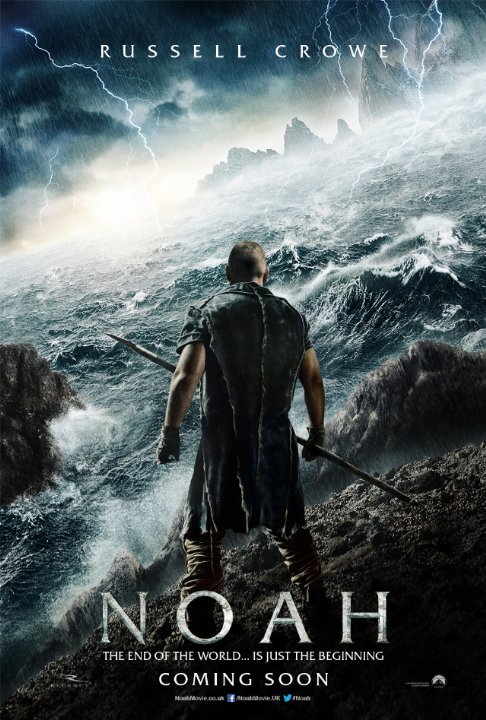
“Give me any two pages of the Bible and I’ll give you a picture.” The words belong to Cecil B. DeMille, according to Stephen Whitty’s weekend write-up about Bible movies in the New Jersey Star-Ledger. The story was inspired by a trio of big-budget Bible films—Son of God, Noah, and Exodus—set to be released this year. While Mel Gibson put me off of Jesus movies, perhaps forever, I’ve been planning to see Noah ever since my wife first pointed the poster out to me in a local theater lobby last month. The flood story has always spoken to me, lasting well beyond the nursery years with all the fluffy animals aboard the ark. One of the points that Whitty is making, however, is that Hollywood knows something the New Atheists do not—there’s big money in religion. People will pay to see it on the big screen. The Bible still speaks to a secular nation.

Noah’s story has been dramatized many times over in the entertainment media. It is often a theme in popular fiction, although well hidden, and reemerges in the occasional search for the lost ark documentaries or Veggie Tales shorts. There’s something timeless about the world-wide flood. For me it seems to go back to the thrill of the impossible. Those first eleven chapters of Genesis teem with the surreal world of lifespans centuries long, primordial gardens full of good food, gods intermarrying with humans, and waters that cover any number of sins. There’s a robust, adventurous air to such stories—they push on the boundaries of human experience and burst beyond them. It doesn’t matter whether Noah’s ark is round, boxy, or extraterrestrial—the flood’s the thing. It appeals to imagination like less mundane disasters simply can’t.

I don’t go to the movies to learn about the Bible. I can do that right at home with a single outlay for a relatively cheap book that can be read over and over again. No, it is these early days of the Bible that give rise to the prepositional phrase “of biblical proportions,” that the movies show so well. I’m not sure that I’ll be able to make the transition from Batman to Moses when Exodus comes out later this year, but next month I do plan to let the waters of the largest event in earth’s fictive history wash over me with all its CGI glory. Seeing is not always believing, but the flood is one of the most powerful stories ever told. Who can resist the calling of deep unto deep? Be warned, the entire theater will be in the splash zone.


Weathering the Psalms

Book contracts make me happy. In the case of an academic out of water, they are rare. Few people care what a PhD has to say unless s/he has a university appointment to back him or her up. Still, I wrote Weathering the Psalms while I was fully employed at Nashotah House. I carved the time out by waking at 4 a.m. to do my writing (a practice that has stayed with me ever since), and from 1995 to 2000, the bulk of the book slowly emerged. The day I was terminated at Nashotah I was working on a revision of the manuscript, a bit uncertain of what direction to go. After the trauma of that day, I couldn’t face my little project without the anxiety of association tainting the effort. It seemed to represent my failures in finding the job I knew I was meant to do. Such potent reminders soon weary even those of us who awake well before the sun.

Working in isolation, I had noticed that the weather is a very common motif in the Psalms. The problem is, any attempt to fit the evidence into an overarching scheme is artificial. I undertook a survey of all the weather references in the Psalms, and explained them as scientifically as a layman could. The result was not the smoothest reading, nor was it tied together with a strong thesis, but it was important. Although I have not been in a position to keep up with the research such a project requires, I’ve not seen anything similar emerge. The weather, however, still happens. And people still blame it on the divine. In ancient times there was no natural world. What we call nature was actively directed by the divine. The weather is probably only the most obvious example. We all know the phrase “everything happens for a reason.” This encapsulates the biblical view of the weather. This winter with its series of storms has reminded me of this, forcefully.

Photo credit: Don Amaro, wiki commons

Photo credit: Don Amaro, wiki commons

Ironically, editors started to show interest in the project only after I’d abandoned hope of ever getting it published. It was the fruit of my despair. It represented several years of my academic life, but, like its creator, it was growing older. So last week when a contract landed on my desk from Wipf and Stock, a profound happiness settled in. A sense of completion. I am not in a position to update the contents, but at least one academic publishing house sees the worth in the manuscript that came from so much personal experience. A decade is a long gestation period. I suppose if I had to write the book today it would reflect much more the experience of world-weariness that comes from not ever finding the job you know you were meant to do. Nevertheless, it is a small offering to the deity of the weather, and I am glad that, come next year, others will be able to share in my struggles to make sense of that world.


A Toy Story

As a life-long pacifist, it might seem strange that I find myself waxing sentimental over a military-themed toy. You see, I just found out that G. I. Joe is turning fifty. For those of us who grew up in the 1960s, G. I. Joe was the acceptable “boy doll” (now, technically, “action figure”) that all the guys had. Some of us had several. We didn’t have much money, but Christmas always gave an opportunity to accessorize Joe with either the latest developments (life-like hair in a buzz cut, pull-string vocalizations, “kung-fu grip”) or the many vehicles that could be purchased separately. As the Vietnam War wore on, Joe turned his interests to science and humanitarian causes, but boys like to anthropomorphize as much as girls do, and Joe continued to get himself into many bizarre adventures. At least in our apartment he was known for fighting dinosaurs, robots, medieval knights, and even General George Custer. Joe was a fighting kind of guy. He had guns and gear and shoes that were almost impossible to remove when you wanted to change uniforms (only when Mom was out of the room). So G. I. Joe has been around for half a century now. I can’t remember childhood without him.

G. I. Joe often had near fatal encounters in our home. One of them, the talking one with life-like hair, suffered a severe war wound that left his bottom half completely dissociated from his top. I don’t think we kept the lower abdomen and legs—there was something slightly unnerving about plastic buttocks—but I did keep his top half, the talking bit. It shocked me when my Mom asked if she could take him to church. We were a “Bible believing” family since it was the days before people much talked about Fundamentalists. My mother was a Sunday School teacher. (Thus my early amazement at the magic of flannelgraphs, still primarily used for religious teaching.) We didn’t believe in evolution, and we certainly thought war was a bad thing. I did wonder, though, why Mom wanted to take a toy to church, particularly a dismembered, violent one.

Being the son of the teacher did have some perks. I knew enough to read my Bible and learn the lessons, but we were not given sneak previews for Sunday School. Seeing the trailer might make actually attending superfluous. So when Joe went to church I learned why: people are not animals. The pull-string voice box, although the sounds emerged from holes in his perforated chest, was proof. People talk, animals don’t. We didn’t evolve after all. The other kids were seemingly impressed by my evangelistic Joe. Who would’ve thought that “G. I. Joe, U.S. Army, reporting for duty” could have ever converted a lost soul? On Ebay, I see, some of these vintage talkers can fetch up to $600. Mine, I’m sure, ended up in a landfill somewhere in rural Pennsylvania where, I have no doubts, he is still preaching to the other toys about the dangers of evolution.

The ultimate adventure...

The ultimate adventure…


Dromedary Dilemma

Photo credit: John O'Neill, WikiCommons

Photo credit: John O’Neill, WikiCommons

This past week two friends have pointed me to news articles about camels. In the modern, western imagination camels are biblical animals, pushing their way onto the ark, carrying long-suffering patriarchs across the desert, and squeezing through the eyes of needles. These news stories indicate that camels were actually not introduced into the Levant until about the tenth century B.C.E., i.e., a few centuries too late for poor Father Abraham, whom, according to Genesis, was a noted camel owner. Of course, the reason that this is news is because Fundamentalist groups insist that every word of the Bible is literally true. If it says Abraham had camels, then, by gosh, camels he had—archaeological evidence or no. One story points out the problems for Zionists, for whom claims on the land derive from the mandate to Abraham (and, presumably, his camels). Biblical scholars have long been aware of the complex methods of scripture writing, and no camels are no problem. The bigger issue, I suspect, is that Abraham has been awol for some time as well.

Abraham, as the progenitor of the three major monotheistic religions, bears a tremendous weight on his weary shoulders. It is the weight of history. Or lack thereof. I may be a few years outdated here, but the earliest figure historically attested in the Bible is (or was) Omri, the king of Israel who spawned the notorious Ahab. Prior to that, historical records are pretty silent. Yes, I know the Tel Dan stele mentions “house of David,” but that is like mentioning Willy Wonka’s chocolate factory—it doesn’t make Mr. Wonka any more real (even though you can buy a Wonka bar at some candy stores). That means that, in the jumble of biblical history, everyone in Genesis falls into the questionable historical category. Even if Moses (himself historically dubious), wrote Genesis (and he didn’t), he wouldn’t have known Mr. Abraham personally. He had been long dead. If he’d ever been born. I’m getting worried about his camels.

Religions have often tied themselves to historical claims. Such claims are always tenuous and negotiable. For instance, I watched a movie about Abraham—Lincoln, it was called—where I learned quite a bit that I didn’t know about a very historical Abraham. At the same time, I knew the movie wasn’t history. When we rely on history to cite our superiority (often one of the functions of religion), we had better be willing to take the risks. The first biblical historical figure is a “bad guy” king of a secessionist kingdom, this time in the north. Even once we learn that the storied characters of the Bible may have never trod the earth, we don’t leave them as camel fodder. They are part of the tradition, whether they participated in history or not. I realize, however, for some it would be easier to swallow a camel than to strain out this particular gnat.


God and King

Bible01

The King James Version of the Bible is in the public domain. (Except in Britain, where it is still royal prerogative to print the King James, and it has be licensed to Oxford and Cambridge University Presses.) In any case, that means that just about anywhere in the world, anyone can take the text of the King James, reproduce it, and sell it. In this day of electronic books, that means many King James Bibles are available online, as well as in print. Just look on Amazon. The other day, I was looking for King James editions when I noted a dilemma. When you’re listing your Bible on Amazon, who do you cite as the author? Seems pretty bold to list yourself as the either author or editor of the KJV, so there have appeared a number of improbable authors of late. The first one I noticed listed the author as El Shaddai. Either an Amy Grant fan or an educated reader, this editor chose the phrase generally translated as “God Almighty” as the author. A good, strong name. It may derive from the phrase “god of the mountains,” or a bit more racily, “god of the breasts.” El Shaddai was likely a pre-biblical god that eventually got merged with Yahweh.

Bible02

The second version (which looks the same to my untrained eye) lists a trinity of authors: Holy God, King James, and Joy Mayers. What a triumvirate! I’m not sure who Joy Mayers is, but I would certainly blush in the presence of gods and kings. Particularly Holy God. Interestingly, this is not exactly a biblical title for the deity. We do get the encomium “holy” applied to God, but I’m not sure that it ever appears as a name. Well, at least we can look up King James and Joy Mayers. The next edition I found listed the author as the safely hedged “God-inspired” (hyphen and all). The problem is that God-inspired might be taken a couple of ways. One, and likely the intended way, is to see the author, whomever it may have been, as divinely inspired. Another option, and one which sounds more exciting to me, is to think of a coffee-fueled deity scribbling away under the heat of inspiration. The inspired god, writing under a nom de plume, gave us the King James (if that was his real name).

Bible03

The last one I found was the most parsimonious. The author was listed as Anonymous. This comes the closest to the historical truth of the matter. We know very little about the writers of the Bible. Probably the best attested is Paul, along with his companion Pseudo-Paul. We know this historical person wrote a number of letters. There’s little reason to doubt that people named Matthew, Mark, Luke, and John wrote some gospels. Who these people are, we don’t rightly know. Once we get back to the Hebrew Bible we find authors writing about their own deaths, and events that take place thereafter with embarrassing frequency. It could be that people saw further back then, not having to strain their eyes at a computer daily. Of course, if it weren’t for computers, we couldn’t sell our own Bibles on Amazon. I’m just waiting until I learn the actual author’s name before I post mine for sale.

Bible04


Asp and Receive

Among the X-Files episodes that bothered me the most was “Signs and Wonders,” where Mulder and Scully visit the snake-handlers. The human fear of snakes is so deep that it reaches back beyond our split from chimpanzees—our curious cousins who also fear serpents. The reality show Snake Salvation, which I’ve only seen once, has lost its star due to, you guessed it, snake-bite. I don’t rejoice in the death of Rev. Jamie Coots; it is tragic when a person with such faith falls victim to it. Nobody castigated Steve Irwin for swimming with rays, however. It comes with the job. Snake-handling tends to be an off-shoot of an extreme literalism. Many of the rest of the Christian mainstream are content to know that the snake-handling passage (note the singular) in Mark is a disputed section of the Gospel. It is likely not original and carries weight only for those who accept the King James without question. It doesn’t command the handling of snakes; it is merely a suggestion.

774px-Snakehandling

According to the story on USA Today, Rev. Coots refused medical treatment after his bite and soon died. Snake bites are not as fatal as they once were—with proper treatment they are often survivable. The faith, however, that declares asps risk-free comes with a caveat that doesn’t allow for medical intervention. If it’s your time, it’s your time. If it weren’t for reality television, probably none of us would even know. Snake-handlers do get bitten from time to time, just as surely as Baptists dry out once they get out of the water. It is the way of nature. Religion tends to view itself as capable of overcoming nature in various ways, and that seems to draw in the reality TV crews.

Not only Jamie Coots, but the famed evangelical Duck Dynasty took a hit recently. That’s because the stars are only people. When we put them on the magic box we either worship them or wait for them to fall. Authentic faith, I firmly believe, does not come through television. Shortly after the invention of the tube, evangelists found their way onto the airwaves. But reality television is necessarily about the slightly off-kilter, those who aren’t like the cookie-cutter executives in Manhattan or Los Angeles. Chances are they’ll be from the south and people will watch with incredulity. Isn’t that what belief is all about? Faith is a wonderful thing when it works. Like most non-empirical phenomena, however, it doesn’t always work like view on demand. Snakes evolved to bite, and people evolved to believe.


Snow Job

Snow does not get mentioned very often in the Psalms. Sometimes it surprises people unfamiliar with Israel that the Bible mentions snow at all. It does, and snow does fall once in a while on the higher elevations of the hills of the Levant. This year has been a memorable one for snow in the New York City area. Generally speaking, the coastal cities of the northeast are not known for their snow. This year, however, global warming is flexing its muscles as erratic weather brings storm after storm to the region. Interestingly, an internet rumor of a thirty-inch snowstorm (supposed to have come earlier this week) demonstrates just how gullible we’ve become. If it’s on the internet it must be true.

A story in the New Jersey Star-Ledger traces how the rumor began, starting with an experimental weather model by a credentialed meteorologist, which, in the keyboards of novices, grew to biblical proportions. Fact checking is something we just don’t bother with any more. The facile understanding of “global warming” as tropics for everyone shows that. The internet makes information—true or false—available at nearly the speed of light anywhere on the globe. Except where the power is out, perhaps due to weather. Not only does knowledge spread quickly, ignorance is just as fast. People weary of snow are perhaps more open to suggestion than others. We don’t hear our Minnesota or Wisconsin friends complaining (at least not too much).

There was a time when the standard sources of authority determined what we would believe. We didn’t accept just anybody’s word for it just because they had a Facebook account. For all the debunking that we hear about, it is easier to preach than to practice. Don’t get me wrong, sledging to work through piles of snow is not fun and the old circulation isn’t as vital as it used to be, so I have to add more layers than is practical to keep warm. But I’m not expecting palm trees and rain forests in Manhattan any time soon. Nor am I expecting a three-foot dump of snow. I know better than to trust what I read on the internet. After all, they even let me post things on it every day. Talk about your theoretical blizzard…

DSCN0099


Which Bible?

No doubt the Bible holds a privileged place in western civilization. Arguably, it is the most influential book that exists in terms of its cultural influence in this hemisphere. Not that the Bible has had an easy ride of late. Many are vocal about its shortcomings, notably its violence and steadfast consistency with its own social mores of patriarchalism and election. Unfortunately these critiques sometimes (often) discourage people from reading it. (It is a very big book.) Having spent a good deal of my career dealing with the Bible, however, it is like a friend. Most friends have a habit or two that drive you to the brink of madness, but still, you know and trust them and tend to see the good rather than the flaws. The Bible is a holy book with warts. I cringe when I read parts of it. I’m not quite ready to let it go yet, however.

One reflection of this ambivalence I see often is that scholars (among others) have now taken to spelling the Bible without a capital letter: the bible. Perhaps it is the latent editor in me, or perhaps it is the Chicago Manual of Style that hangs like Damocles’ dictionary above my head, but like it or not, the Bible is a proper noun. In English we capitalize proper nouns. On Twitter, Facebook, or YouTube (all of which my computer auto-corrects to capitalized proper nouns), I understand. Most hands don’t get sufficient pinkie exercise to make that stretch to the shift key. But in academic writing? I’m pretty certain that e. e. cummings had nothing to do with the title, and other than loss of prestige, I’m unsure how to explain it. I have read book proposals from biblical scholars (biblical, by the way, is an adjective and does not require capitalization unless it is part of a title) who leave Bible all in lowercase letters. Have we come to this?

Leaving the “Holy” out of the title is academically sound. After all, Holy is a confessional modifier, and scholars strive for neutrality. With the proliferation of bibles—everything from Beer Bibles to Gun Bibles are out there, all capitalized, I note—we should take care to treat the Bible with grammatical care. It shows nothing of one’s faith commitment to capitalize it properly. God, on the other hand, may be used as either a proper noun or a common noun. Usage dictates capitalization. In the Bible Elohim is more often a title than a name. I knew civilization was in trouble the day I saw the phrase “butt crack” in an article in the Chronicle of Higher Education. The least we can do to combat the decline is to stretch that pinkie once in a while as an offering to the god of good grammar.

Bible


Myth-story

ChristMythTheoryEither there was, or there wasn’t. An historical Jesus, I mean. I just finished reading Robert M. Price’s The Christ Myth Theory and Its Problems, and I have to admit that it raises some interesting points. In short, Price positions himself among the Christ Myth school—scholars who doubt that there was an historical Jesus. This proposition may come as a shock to many who are raised never to question the orthodoxy of religion handed down from parent to child. Given the popularity of Christianity worldwide, it may seems like a difficult premise to accept. Price suggests that the figure of Jesus might’ve been a midrash (commentary) on Hebrew Bible texts. When you look closely at many of the Gospel episodes, they are couched in language from the Hebrew Bible, and for those familiar with ancient midrash, the elaborations he proposes aren’t that far-fetched. The real question, for me, is a bit more broadly based—how do we ever know what really happened? Religions, as I suggested yesterday, are echoes from the past. The past, despite the internet, is inaccessible to us beyond what ambitious writers and artisans have left behind for us. The bulk of making history is interpretation.

This should give us pause. Yes, there are undeniable events, witnessed and recorded by many. What really happened, however, is an atomistic enterprise. Take Lincoln’s assassination, for example. It happened, we’re pretty sure. What happened, we reconstruct from what we have left for us in witness accounts. But as National Treasure 2 shows, a little imagination can throw the whole picture askew. Or even closer to our own time—what really happened at John F. Kennedy’s assassination? Some of the facts we have, others we never will. Some posit high-level withholding of information. Try to put that together with a truly messianic figure that some claim is actually divine. The Gospels differ a bit on the details, particularly after Jesus’ execution. What really happened? A harmonization of the Gospels? Anything at all? Who was there to see it?

Religions are deeply tied to past events. Even the modern religions that are constantly emerging—new ones are formed on a nearly daily basis—soon distinguish themselves because of their histories. To get at those histories that we didn’t witness, we need to rely on the records of those who did. Some of those religions just won’t take off—the Shakers, for example, are slowing going extinct. The Oneida Community is already gone. Others, like the Church of Jesus Christ of Latter-Day Saints, scrape the stratosphere with their success. And these are just examples of religions from the Second Great Awakening. Did Joseph Smith really meet all those figures he claimed? How can we know? When it comes to Jesus, we might think we’re on solid ground (as Smith would agree, if he existed). Price asks us to consider that assumption anew. Direct evidence may not be plentiful, but on the strength of ancillary evidence, most of us see Jesus as historical. Of his life we have very little. What you make of him, however, is a question of faith. And interpretation.