Faith and Freedom

Schadenfreude is not my usual response to the downfall of a religious leader—with perhaps the exception of televangelists. After all, religious leaders are only human. Occasionally one crosses a very serious line, as the news about Nechemya Weberman, a Hasidic counselor who was found guilty of molesting a girl under his profession care, reveals. The sad part of this situation, apart from the tragic consequences for his victim, which are very serious in their own right, is that the Satmar Hasidic community insisted that it should have had the right to do its trial in secret. Sects that take their cue from the Bible are seldom fair to women. The Bible, after all, is not a very female-friendly tome, no matter how much feminists may try to rescue it from its androcentric world. Religions based heavily on the Bible feel they have the right to judge by their own standards—something a secular court can’t understand. It is back to the paradigm of the two swords here.

What are we to make of the civil crime that violates no religious laws for any one sect? What is wrong in one book is all right, or at least forgivable in the other. For a secular crime committed in a closed religious community in a country of religious freedom, who is to decide? These questions are decidedly more than rhetorical. Any religion that says women are here to serve men—and there are a disturbingly large number of such religions—can claim that God trumps gent d’armes every time. What’s more, they believe the decree is eternal and they are violating the divine will if they don’t keep to it. This situation is nothing new; at least as early as Tiglath-Pileser III, and probably earlier, ancient religions sometimes had to compromise under the hegemony of a higher power. But they were only biding their time until the political situation would grant their autonomy once more.

DSCN1828

It is simplistic to suggest that the two swords represent the two hemispheres of the brain, but we do have a rational versus emotive issue here. Rationally, would an unseen force endowed with a human personality demand the unfair treatment of some people simply because of an unexplained favoritism? It does not seem likely. But religions are seldom logical. “Credo quia absurdum,” Tertullian is remembered as sighing—“I believe because it is absurd.” Theologically profound? Certainly. Helpful in society? Not so much. Freedom of religion is a classic ouroboros, a serpent biting its own tail. Religions are free to declare their own beliefs, but their own beliefs may challenge the very authorities who grant them that privilege. Secular authority may have the ability to put to death, but resurrection is the prerogative of religion.


Rachel Weeping

“In Rama was there a voice heard, lamentation, and weeping, and great mourning, Rachel weeping for her children, and would not be comforted, because they are not.” I just can’t get it out of my head. The tragedy of Newtown, Connecticut is the madness of Herod repeated over and over again. I stand outside my daughter’s room and weep as she sleeps, terrified of what we’ve become. For the right of one person to own guns, twenty-eight are dead. The balance of power is way off-kilter, like a fishing vessel in a perfect storm. Those who protest are those who are unarmed who wish to remain that way. The bravado of the NRA says, “I would protect them, if I were there.” If I were there. I would feel no safer. Where was the NRA in Stockton, California, Iowa City, Iowa, Jonesboro, Arkansas, Littleton, Colorado, Red Lake, Minnesota, Nickel Mines, Pennsylvania, Blacksburg, Virginia, DeKalb, Illinois, Oakland, California, or Newtown, Connecticut? Polishing their rifles in readiness, no doubt.

The time has come to put an end to easy access to guns. Life was more civilized in the days of the flintlock and musket—at least people had time to react or flee before another shot was loaded. Instead we tell people they will be safer if they can squeeze off forty-one shots before that crazy idiot shoots another. Drop to your knees and beg for mercy, you’ll be safer. While you’re down there, say one for a nation that loves its firearms more than its children.

Days like this it feels like God has us in his sights. The longer I ponder this the blacker my thoughts grow. We may blame the madman, but it is society that allows this to happen. Herod was king, and even the mother of God fled. But what of those left behind in Bethlehem? They paid the price for a man in love with power. I see a man in a cage, being sprayed by an upright ape holding a firehose. The man is one of the most vocal supporters of the NRA, but now he is the inferior being. “It’s a madhouse!” he cries. Yes, Mr. Heston, it is a madhouse indeed. Only those aren’t apes outside the cage, and those are firehoses in their hands. On further reflection, perhaps they are truly apes. Rachel is weeping for her children, while Herod reloads.

Slaughter of the innocents, 2.0

Slaughter of the innocents, 2.0


Accidental Abortion

There comes a time in life when you realize that if a small town you know makes it into the news headlines, it is likely tragic. So it was when I read this morning that a man in Mercer, Pennsylvania—just a few miles from where I grew up—shot and killed his 7 year-old son, by accident. I grew up in a part of the country that has a love affair with guns. This may have been understandable in the days when a stroll to the outhouse could mean chancing a bear or cougar encounter, but these days bear sightings are rare and cougars, well, almost unheard of. The man was trying to trade in a couple of guns at Twig’s Reloading Den. Climbing back into his truck, the handgun discharged, killing his son. This is very tragic, yet the officer making a statement said something chilling. The man thought the gun was unloaded but, “This happens all too often where people think the gun was empty.” All too often. All too often.

I grew up in western Pennsylvania, and if Facebook is anything to go by, it has become consistently more Evangelical since I left. And that is saying something. In my younger days I wore a large cross around my neck and took my fair share of ribbing for being religious. Now I see those with whom I attended school posting on all manner of conservative causes, including the contradictory anti-abortion and loosening of gun control. This is not a phenomenon restricted to western Pennsylvania. At Nashotah House it was alive and well. Several students kept guns in their dorms, protested against the violence done to the unborn, yet called killing heretics “retroactive abortion.” It was their smiles when they said such things that frightened me. Wait until they grow up to kill them.

Like any insecure person I sometimes think a gun for protection might be good. I especially think this when I’m in the grizzly bear habitat of the Pacific Northwest, miles from civilization. I picture myself shooting into the air with a rifle that out-Thors thunder itself, a mighty man. Yet the only time I actually saw a grizzly bear I immediately jumped out of the car to snap a picture or two. I dream of going back to the days before guns were invented, but this evil genie has been let out of the bottle. There’s no getting it back in. Are we vulnerable without guns to “protect” us? Yes. But my reading of the Bible my Evangelical friends so often cite insists that turning the other cheek is the way to show that you believe it. A seven-year-old is dead not far from my hometown. His father was trying to sell guns at a store that doesn’t even buy guns. The boy died in the gun store, and yet my fellow Americans feel safer knowing they’re armed. I hope your hometown stays out of the news.

Feel safer?

Feel safer?


Rock Hard Cafe

IMG_0518

At first glance it may not appear to be much. A small chunk of rock, probably limestone. Hardly large enough to be used in a sling against a giant in a pinch. Still, it is special. What makes this rock special is the context from which it was removed. A friend has recently returned from Israel and he brought this rock for me. It is from the Mount of the Temptation, atop which sits a lonely monastery cared for by a single, elderly monk. The thought of someone thinking of me in such a (literally) God-forsaken wilderness is touching. My brief travels through the desert of Judea offered plenty to occupy my restless mind. I’m pretty sure we zoomed by the base of the Mount of Temptation in an air conditioned bus one day on our way to somewhere less desolate. Or more. The sharp-voiced little skeptic in my head immediately kicks in: if Jesus was alone when tempted, how could anybody possibly know where it happened? I can’t picture him leading a tour there later—“and this is where I almost turned stone to bread; don’t those pebbles look like challah to you?”

But then, it’s not about historical accuracy. This little stone in front of me is a symbol. Broken off of the karst geography of the rocky spine of the Holy Land, this shard is meant to remind me to avoid temptation. A nearly identical piece of stone from Israel sits among my teaching trinkets. One of my students went to Israel back in my days at Nashotah House and returned with a bit of limestone for me. She said, “you can keep it as long as you put it on top of my gravestone when I die.” This was a custom I’d observed long before I’d even heard of Nashotah House. Long before religion grew flinty and unyielding. Stones bear remembrance. Although Israel is not as arid as many people believe it to be, rock is a natural resource of uncommon abundance. We age and die, but the rock remains. The rock remembers.

My six weeks in Israel were spent among the rocks of an ancient settlement known as Tel Dor. Archaeology, I learned, is mostly just removing the dirt from the rocks in the ground—at least at the entry level. Those stones tell a story. They were once a city, a district administrative center. Now they lie in dusty profusion, and only the most ardent of Bible readers will recall ever seeing Dor’s name in the pages of Holy Writ. Built by Solomon, the Bible grandly claims. Now all is ruins. The grandeur of a king toppled with the passage of time. My mind is drawn back to a treeless stretch of a mountain devoid of even the hardiest plants. A person can grow mighty hungry there. Mighty hungry indeed. Temptation comes, unbidden. Life is an unbroken chain of temptation, for those willing to be honest in the desert. That little stone is, in truth, bread.


The Last December

December 2012—it is supposedly the last month in the world. Yesterday did dawn with the date being 1212012, but since the local tree farm opened its gates yesterday, my family set out to select a tree anyway. As we wandered amid the pines it was clear that for many the iconic sign of Christmas is the tree. We learned on our first year in New Jersey that you’d better not wait until reasonably close to Christmas to pick out a tree—we visited this very lot then only to discover that precut trees were all that were available (and they were from Pennsylvania) and we had established a tradition of picking our own. Getting to know the tree first. Walking around and looking from all angles, trying to learn if it was healthy or too dry. Were there any gaping gaps that would be an obvious problem? Hard to tell when the tree is wrapped up in fishnet plastic and tucked into a corner like an old umbrella. Here, so close to the Big Apple, you need to claim your tree early. If you don’t want to cut it down right away, you can tag it—claim it as your own and come back later to chop it down. We weren’t the only ones taking great care in selecting.

IMG_0514

Tree farming is a business with a long view. Trees don’t mature overnight. When it’s the last month of the world, one must take these weighty things into consideration. Even before this terminal date, you would need to make an awful lot of money in just one month of the year to keep the business going. Maybe they need a green Christmas. Of course, greenery in winter symbolizes life in the midst of death. The germanic originators of the tradition were keeping a very appropriate pagan idea alive when they dedicated their trees to Christmas. Last year when we couldn’t have a real tree, it felt like we’d lost a friend. Our tree farming friends know that feeling very well.

The “Keep Christ in Christmas” signs and bumper stickers have begun sprouting up in yards and on bumpers in their annual exuberance. Funny thing is, Christmas has its base in ancient pagan customs. To hear the Bible tell it, Jesus’ birth was an understated event. The only people who had an angelic concert were some shepherds (we don’t know how many) on the hills outside of a small town. And, as far was we can tell, it would have probably been in April. As the days grow wearily short, however, we need a little light to keep us going. That was the pagan wisdom behind the Yule Log and various festivals of light to encourage nature to bring some brightness back. These short days can be difficult enough even in the age of artificial light and constantly glowing electronic screens. And knowing this is the last month of the world, we want to festoon our trees with tiny pinpoints of expectation and hope that nature somehow gets the message that we’ve had enough of darkness and wish for a 2013 redolent with light. But we’ll just have to wait and see.


Bible-Landia

It takes a mighty powerful stimulus to get the media to pay attention to biblical scholars. It is no surprise, therefore, when the Society of Biblical Literature meets with the American Academy of Religion each November that, for a few days a year, Bible becomes chic. This year various newspaper articles appeared, perhaps warning Chicagoans what all these crusty professors were doing invading their fair city, but the one that caught my eye was in the Chronicle of Higher Education. The Chronicle is the purveyor of all that is high-brow and sophisticated, epithets seldom applied to the Bible. The story in November 19’s edition made this clear by throwing in a little scandal—some Bible scholars believe the Bible to be “morally bankrupt.” Now there’s a twist. Nor is it really that hard to understand. Anyone who’s read the Bible seriously will have to admit to having squirmed a time or two at the moral implications. Dashing babies heads against the rocks will be one of those places.

IMG_0513

In a society accustomed to seeing in black and white, morally at least, it is difficult to get the religiously convicted to admit that the Bible is a pastiche. Some parts are morally sublime (yes, even in the Hebrew Bible where “love your neighbor as yourself” originates) while others are ethically execrable (can I get an amen from the babies?). It is always interesting to see friends quoted in the media. I taught Hebrew Bible for 18 years without anyone really being that interested (including most students). I guess maybe I wasn’t radical enough. To me the Bible has to be viewed in balance, the moment one falls on their knees before it the corruption has begun. Interestingly, the article focuses on the New Testament side of the equation. That’s where the sexier conflicts wallow.

People arguing about the Bible. Is there anything more representative of American culture? It happens every four years, at least. Ironically the Bible quite often stresses the unity of those who believe. With thousands of denominations mutually excommunicating each other, one has to wonder if the Bible is living up to its full potential. Not that anyone will notice. Amid all the well-heeled, tenured professors, satisfied with their lot in life mill the hundreds who’ve spent thousands earning their advanced degrees. They are the lost generation—those for whom there are no, never were any, jobs. They are every bit as capable, and in many instances even more capable, than their tenured compatriots. The level of concern, at least at a visible level: nil. That, more than anything, indicates to me the true morals of studying the Bible.


Theology of the Apes

“Alter what you believe to be the course of the future by slaughtering two innocents, or rather three now that one of them is pregnant? Herod tried that and Christ survived.”

“Sir President, Herod lacked our facilities.”

So the conversation between Dr. Otto Hasslein and the President goes in the 1971 continuation of the saga, Escape from the Planet of the Apes. Few probably pondered the weighty theological significance of this dialogue; it is not represented on IMDB’s quotes page from the movie. In fact, many critics aver that the Planet of the Apes movies devolved as they went on becoming less and less original. Nevertheless, the number of serious issues thoughtfully addressed in Escape made it one of the most well received pieces in the series. The world was a scary place in the early 1970’s, as I experienced it. It was easy to believe that we were on the brink of our own destruction—there were enough nuclear warheads to assure mutual destruction, and even a little boy in Rouseville, Pennsylvania could believe that his small town was significant enough to be a target. That message I’d heard as early as the final scene of the original movie.

The Planet of the Apes series is profoundly theological. I rewatched Escape from the Planet of the Apes recently, and was struck by just how many social issues were addressed. Consumerism, abortion, racism, espionage, the arms race, and even eugenics. In each instance the humans are inferior to the apes who had not even developed the combustion engine before learning to fly a spacecraft back through time. The conservative fear of Dr. Otto Hasslein drives the plot; he is ambivalent about the apes and what they portend. It is the destruction of his own comfortable way of life. He suggests quietly killing the apes, succeeding where Herod failed. (Think through the implications!)

“Before I have them shot against the wall I want convincing that the writing on the wall is calculably true,” the President biblically insists.

“How many futures are there? Which future has God, if there is a god, chosen for man’s destiny? If I urge the destruction of these two apes, am I defying God’s will or obeying it? Am I his enemy or his instrument?” Otto Hasslein does not know. His science which tells him there is no God also worries him that he is the very enemy of the non-existent deity. No, the Planet of the Apes movies are not the most profound films ever to escape the camera, but there is, as in any good theology, the raising of questions. And like any theology worthy of latter-day Herods, there will always be far more questions than answers.


Ruby Tuesday

If you’re reading this, you survived Cyber Monday. Not that I personally remember the Middle Ages—I have no desire to return to them—but there was a time when nearly every day of the year was known by a saint’s name. Even as an Episcopalian, nominally Protestant, I was surprised just how many red letter days there were. Black letter days seemed special by comparison. Now, however, our days are named by the shopping expectations. Not only do we have Black Friday and Cyber Monday, we have the moveable feasts of “shopping days before Christmas.” And many other holidays participate in this bonanza dedicated to Mammon. Halloween is a major cash-generating holiday and Valentines can be counted on for buying love. St. Patrick’s for buying green with gold. Ironically, all of these were once, at some remote time, holidays decreed by the church. Many of them are even older than that, going back to pagan times, but religious nonetheless.

In a sluggish economy such times are indeed anticipated. Still, I don’t hear of the one percenters suffering during these difficult times. “Let them eat cake,” Marie Antoinette once was supposed to have said. Cakes are celebratory desserts, of course. We make them everyday occurrences with birthdays that should, in theory, keep the river of cash flowing all year long. The great corporate cathedrals require the offerings of the average citizen, and they insist on far more than a tithe. Then the investment firms complain that people don’t think ahead and save their money for retirement. We see many who live long enough to experience want in their declining years. There should be an app for that.

I wonder if there is something much deeper going on. Those who run so fast usually have something from which they wish to hide. There is the story of King Herod who, according to popular reconstruction, tried to buy the favor of his subjects by monumental building. Herod was not a popular king, and he had a reputation for being bloodthirsty when enraged. It is difficult to verify, but the basics of the story still ring true; when his way of running society was threatened he decided to kill the innocents. Such stories, one might hear a pontiff declare, fall within the genre of the folktale, the story told to make a point. What might that point be? Might it not be that each day is itself a gift and that spending money is not the only way to make time sacred? Of course, as long as you’re online, why not just PayPal your way to true happiness?

A techno-log on Cyber Monday.


Au Fait in the Manger?

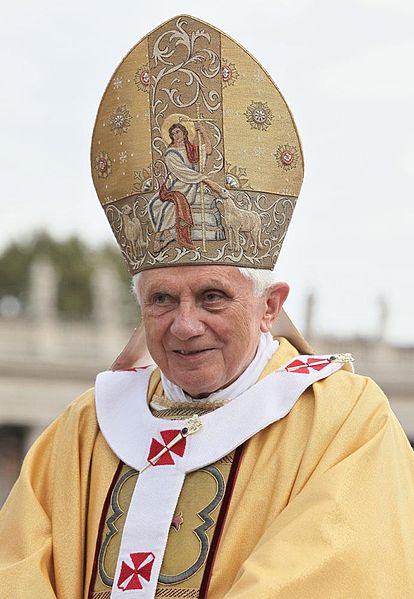
On Friday CNN ran a story about the Pope’s new book “debunking” myths surrounding Christmas. The headline certainly looked intriguing, but it turns out that the “myths” debunked are those of a very dim magnitude. Is anyone surprised—gasp!—that Jesus wasn’t actually born on December 25? And, guess what—those cows you’ve always seen in the manger? The Bible doesn’t actually mention them! Angels aren’t at the manger either! What kind of Christmas will this be? A biblical one, it sounds like. I haven’t read Jesus of Nazareth—The Infancy Narratives, but it really doesn’t sound like I need to. The Bible is very spare on stories about Jesus’ birth; nobody knew he would be a Lloyd Webberian superstar at that point, so we have a few loose traditions that tell of humble origins in an obscure setting. Not very good for commercial interests, however, and besides, the average person doesn’t read the Gospels to find out about Christmas. There are far too many television specials to be bothered with “Lo, there were in the same country…”

Christmas was not a big deal until relatively recent times. Now, don’t get me wrong—I’m not a grinch who believes the holiday shouldn’t be celebrated. I see nothing wrong with people giving things away, even if it is to pretend that they are celebrating an ancient Roman-occupied Judean birthday. This is the essence of what being religious should be all about; holidays should be occasions for thinking about others before one’s self. In my lowly opinion anyway. We’ve built an entire economic cycle on it, however, otherwise Black Friday might just be a free day to spend with family and friends instead of being trampled to death at Wal-Mart. Perhaps if society could find a way to distribute wealth more equitably every Friday would be in the black.

The Pope’s new book is an attempt to make the Catholic tradition appear up-to-date with scholarship. Plans are for the book to be published in an entire Septuagint of languages with a print-run the envy of nearly every academic editor in New York. The problem is there is no real news here. News should be, by definition, new. A book by the Pope declaring the true equality of all people, throwing open full sacerdotal participation to women as well as men, and the distributing of papal wealth to the poor—that would be a Christmas present worth the waiting! Instead, when you pull the shiny paper off this book on December 25, you’ll only discover that you’ve received it on the wrong date and there will be no angels singing. The cattle will be lowing, however, if you can use your imagination.

What’s wrong with this picture?


Hallowed be thy Kane

Watching the alien burst from Kane’s distended abdomen as he appeared to have eaten too much seemed somehow appropriate on Thanksgiving. I’m well aware that my taste in movies does not always match expectations and few bother to comment on my idiosyncratic observations. Nevertheless, it had been years since I’d watched Alien and on this particular holiday it felt like synchronicity. I’ve seen the film a few times before, but this is the first time since starting this blog. Not surprisingly, some biblical allusions popped out at me as I watched the crew of the Nostromo struggle with alien life. And I’d just read of NASA’s “exciting discovery” on Mars, a discovery whose official announcement for which, like Christmas, we’ll have to wait until December. Learning that the gut-busting alien was modeled on Three Studies for Figures at the Base of a Crucifixion by Francis Bacon (a contemporary one) only sweetened the analogy.

Character names hide aspects of personality and intention. Sometimes the writers may not even be aware of all the shades of gray. The alien’s first victim is Kane. On paper he seems an ordinary citizen, but on the screen the euphony with the first human child, Cain, is obvious. As Parker is lamenting how large the alien has grown in just a short time, science officer Ash whispers, “Kane’s son.” Or is it Cain’s son? Cain, the infamous ancestor of the sinful Grendel and any number of other villains of literature and cinema. Cain is, significantly, the first child born in Genesis, himself the genesis of sin in the world since his murder of his brother is the first act that the Bible declares a “sin.” The alien, born worlds away, conforms to biblical expectations.

Since Ash is actually an android and has no real feelings, he admits the alien to the ship and protects it until he is destroyed by his shipmates. He represents unfeeling science amid the horror of human bodies being invaded and rent apart. When accused of admiring the alien, the resurrected (!) science officer states, “I admire its purity. A survivor… unclouded by conscience, remorse, or delusions of morality.” Is he not really describing science itself? Religion is running rampant on the Nostromo. As Ripley sets the detonation charges and finds her escape blocked, she races back to the console and cancels the self-destruct order which the HAL-like Mother ignores. In a secular prayer Ripley calls out to Mother who, like any deity, does not answer all human pleas. And even as she escapes the detonating ship, Ripley will find that Cain’s son is still lurking in the corner of the emergency shuttle, for the science can never truly escape from Genesis.


After the Gold Rush

The morning I flew to Chicago for the American Academy of Religion and Society of Biblical Literature annual meeting, the headlines in the morning paper were about the rocket attacks in Tel Aviv. Ironically, the in-flight magazine cover on United, I noticed as I fastened by seat belt securely low across my waist, read “Three Perfect Days in Tel Aviv.” The irony wasn’t so much funny as it was sad. The situation in the Middle East is hopelessly entangled, but it all comes down to our obsession with dividing people into groups. Religious, ethnic, social: somehow we are not like them. We’re better, superior in some way. It matters not that proving superiority is a purely subjective enterprise. After all, we just know it. When history places one persecuted group in a position of persecuting another group, well, I’m afraid we all know what happens.

The problems in the Middle East are largely biblical and predominantly petroleum-based. Even those who tend to read the Bible figuratively can see a land claim based on an Abraham who probably never existed as strangely literal. Especially when there’s oil in them thar wells. Isolationism served the United States well until it was discovered that they had more black gold than even Texas does. Establishing a foothold in the region was not such a subtle policy; the x-ray vision of politicians funded by heavy industry saw beneath the sandy soil to the real deity that lay beneath. Dig a well, hit a gusher, and, like the Bible says, “he anointeth my head with oil, my cup runneth over.” Good news for modern capitalists. But some people will have to die.

As I sat in the lobby of a posh hotel, waiting for an appointment, I heard a fragment of a conversation as a couple of scholars rushed by. They were discussing the aftermath of the rocket attacks on Tel Aviv. One suggested to the other, in the context of how many Palestinians might die in retaliation, “well, if they can keep the numbers down…” and then they were gone. My mind jumped to The Prisoner. “I am not a number, I am a free man!” crashed in my head with the way that the dead in the Middle East are piled up as “the numbers.” I’m sure it was only intended as a convenient turn of phrase. Outside the hotel lobby the striking workers from the Hyatt labor disputes were protesting in a cold, crisp Chicago morning. They were soon cleared away. My fear, Number Six, is that you are wrong. We are all numbers, even the best of us.


AAR/SBL Chicago

On just about any playground you’ll spot the kid who’s watching from the side, instead of playing with the others. That’s me. I don’t suspect that anyone starts life wanting to be left out, but some of us—attuned to the subtler messages of life—become aware that we’re not really invited or welcome. That sensation bathed me in its eldritch light once again while waiting for my flight to Chicago for the American Academy of Religion and Society of Biblical Literature annual meeting. I’ve often wondered what it must be like for those innocent aeronauts not clued in that the Friday before Black Friday (the real holiday, I’m led to believe) that flights to a specified city will be choked with crusty professors of religion. Sitting in Newark Airport and hearing the word “Ugaritic” from the seat behind me, I knew it had begun. I turned around. No flash of recognition. If was as if I hadn’t spent years learning that obscure language and publishing in the main journals. The invisible man.

The airport before the AAR/SBL annual meeting is a theological locker room where the guys gather to compare the size of their, um, theses. It’s pretty hard not to overhear, once you’re tuned in to your specialization, as colleagues lay out their publications, invited papers, international travel plans. I’ll admit to being jealous. They’re living the life for which I trained. I had taught for nearly twenty years and was never really invited to play. Now here I sit, knowing what Ugaritic is among the perplexed business travelers, but I’m not one of the big boys.

I realize that outside the rarified world of higher education Ugaritic matters even less than the homeless unfortunates shivering in the streets of Manhattan or Chicago. Back in the brief days when I tried to be a player, I remember attending an Ugaritic conference here in Illinois. Crowded into an elevator with renowned colleagues, one of them joked, “If this elevator falls, the field of Ugaritic studies may never recover.” An exaggeration, but not by much. Present company excepted. Of that august group, only one was asked to step off into the void. His exit was barely noticed. Ugaritic studies thrives. The poor beg for alms. And one kid, even though he now understands the rules of the game, still watches from outside.


Night of the Johnstown Flood

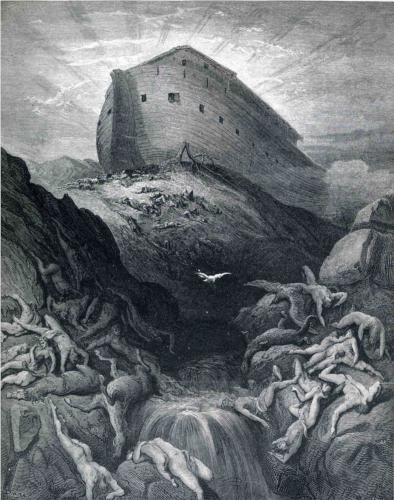
Floods always have a whiff of old Noah about them. I first heard of the Johnstown flood from a minister who has had a profound impact on my life. He had been in Johnstown for the 1977 flood, and that led me to learn a little bit about America’s first great natural disaster. I decided to follow up David R. Montgomery’s flood book by David McCullough’s The Johnstown Flood. Like most stories of human tragedy, this devastating flood combined elements of human culpability with nature’s own inscrutable workings. The 1889 flood came during an unusually heavy rainstorm. Some years before, an exclusive millionaire’s club had repaired an artificial dam rebuilt for the recreation of the wealthy high above the town. Records show the repairs to have been lackluster—at one point they purchased hay to act as cheap fill. Although the members knew of the danger they did nothing to avert the deadly potential a breech in the dam would inevitably cause. When the dam burst during the storm, over 2200 people died.

Wrenching, like most natural disaster accounts are, the story of human misery raises questions of theodicy and basic humanity. Members of the club were those who ran Pittsburgh in the days before their steel mills fell silent. Apart from a few like Andrew Carnegie, who gave generously to those in dire need after the tragedy, most of club members gave nothing to the relief effort for what their negligence helped cause. They hadn’t even hired an engineer to consult about their dam project when they decided to rebuild it. Lawsuits filed failed to touch them; the suffering of thousands failed to move them. Fast forward just over a century—as the towers of the wealthy came down the working class tried to save as many as they could, some at the cost of their own lives. We all know who are regarded as the heroes.

“Was it not the likes of them [club members] that were bringing in the [foreign workers], buying legislatures, cutting wages, and getting a great deal richer than was right or good for any mortal man in a free, democratic country?” McCullough’s words, explaining the sense of those who’d lost everything to the idle dalliances of the leisured class, still ring true in the world of one percenters. Often it takes a tragedy to bring society’s inequalities into focus. As a nation we’ve gone on to have even more costly disasters since May 31, 1889, but the instability built by corporate greed has kept pace, indeed, perhaps even surpassed what it was back then. “And God saw that the wickedness of man was great in the earth, and that every imagination of the thoughts of his heart was only evil continually,” or so I have it on good authority.


The Hunter

Orion seems to have tripped in his journey across the sky last night. I can remember being told of generals falling in battle, and now I hear how they fall in bed. Nobody really expects Sunday School behavior from an aging warrior, but the brass is used to issuing orders and expects unquestioning obedience. Now we delve into their personal lives and are surprised to find, what? Sex? Sex scandals have become a major source of “news” over the past several years and General Petraeus is only the most recent in a long line of politicians and power-mongers who’ve been caught in compromising positions. How very primate of us. I often think how in the categories of sin we include getting caught in affairs among the most horrible. But also among the most common.

Given the other activities of generals—waging wars and ensuring that enough of the enemy die to gain compliance—you might think that keeping them safely between the sheets might be the best thing for the greatest number. I don’t know the ins and outs of the story, but with the scandal running across the headlines it is pretty obvious that we’re all past the shock of Sandy and election night. Time to find other peccadilloes to amuse us.

If we cast a wide enough net, however, it won’t haul in generals only. No, we find politicians of all orders, televangelists, football coaches and all kinds of other leaders entangled in it. The thing that they seem to have in common is lack of commitment. Or restraint. That worries me a bit when it comes to leaders. None of us is perfect, I realize, but certain activities are taboo and those who ride the trajectory to fame violate those taboos at their own peril. It is the story of David and Bathsheba. I am, however, reminded of the mighty hunter Orion. The various myths tell it differently, but in one popular version it was the jealousy of Artemis that felled him. Perhaps that is why he seemed off-balance as I watch him fleeing the rising sun outside my window.

Till Credner’s Orion from Wikipedia Commons


Bedrock

Sadly it is a rare occasion to read a truly stupendous book. There are lots of wonderful books in the libraries of the world, great and small. When I read a tome that brings two of my favorite subjects together in a genteel cotillion, subjects which are generally portrayed as aiming heavy weapons at each other from deeply sunk trenches, it deserves the epithet of stupendous. David R. Montgomery’s The Rocks Don’t Lie: A Geologist Investigates Noah’s Flood is one of those books. By page 8 I was thinking that Montgomery was someone with whom I’d feel comfortable raising a glass and sharing a story. He is a rare, serious scientist who considers that maybe religious stories have something to tell us about being human. The book, as the subtitle indicates, is about the Noah myth. Geology is the science that has taken the brunt of (the relatively new religion of) Creationism’s umbrage. Still, like a rational scientist, Montgomery doesn’t get mad or fly off into hyperbolic denunciations. He takes his rock hammer and taps until the flood myth crumbles.

Unlike many sober writers on the subject, Montgomery considers the possibility that folklore may in fact give clues to science. Those cultures that have flood stories, he patiently explains, probably has reasons to tell such myths. In this one book we are taken on guided tours of the Grand Canyon, bits of the Himalayas, “ancient” Mesopotamia, the scablands of eastern Washington, and even the Creation Museum in Petersburg, Kentucky. At each station, we learn a bit about floods and rocks and fantasies. Although not a biblical scholar, Montgomery obviously did his homework and gives a fresh view of how Christians went from non-literalists in the first centuries of the church, through the scientific revolution, only to become literalists in the geologically very recent twentieth century. Creationism has nothing to do with real floods and quite a lot to do with personal insecurities.

It must be easy for scientists to trumpet bravado throughout the infinite universe. The scientific method is our best testable explanation for the physical world. Montgomery resists that temptation, realizing that religion does count for something after all. Religion evolved for a reason. Maybe it isn’t scientific, but it helps people to make sense of their world. Instead of characterizing religion and science as combatants in a war, Montgomery likens the opposition to a dance where the partners sometimes step on each other’s toes. I read his book dreaming my geological dreams, lost in deep time, and thinking that the world is maybe even more wondrous than miracles could ever convey. And we have occasional floods, and floods sometimes give us reasons for going on. There’s perhaps something religious about that.